Bourbon Bivalves at the Tides Inn

With warm weather on the horizon, The Tides Inn in Irvington awakes from its winter slumber in preparation for adventure seekers, weekend travelers and the area’s newest band of visitors—foodies.

Last season, the waterfront resort introduced an array of new culinary and boozy experiences that allow visitors an in-depth look into the region’s centuries-old community of watermen, cunning Prohibition-era tactics and cutting-edge, modern creations.

The Northern Neck—the northernmost peninsula on the western shore of the Chesapeake Bay— has long been recognized as a sleepy stretch of coastline dotted with quaint riverside towns. The Tides Inn is challenging that stigma by drawing attention to its exceptional seafood fare, crafty libations and gastronomic inventions inspired by local influences. Fervent to experience the innovation firsthand, I packed my bags and ventured to Irvington, arriving just in time for happy hour.

With a palate that longs to acquire a taste for distilled spirits, I swapped the wine list for The Tides’ signature bourbon tasting. The luxe experience was first introduced last spring in the cavalier Eagle Room. The back wall of the private space is comprised entirely of rectangular walnut lockers formerly used to store liquor behind lock and key during Lancaster County’s mid-20th century dry spell. The discreet cases are now brimming with The Tides’ private label bourbon and strive to assert Irvington as not only a premier wine destination, by virtue of the nearby The Dog and Oyster Winery,
but as a showroom for exceptional spirits.

For nearly three months, The Tides team collaborated with distiller Brian Prewitt of A. Smith Bowman Distillery to craft the perfect bourbon to be poured exclusively on the Carter’s Creek property. Aged for 11 years and three months, the Tides Inn Single Barrel Bourbon was bottled May 2018 and breathes fragrant notes of vanilla, caramel, toasted nuts and fig. Subtle aromas of apple and dried cherries also surface as the full-bodied bourbon opens in the glass.

Its draw is as smooth as the creek at sunrise and pairs superbly with the blackened mahi, seared scallops, fired Naan and cheesy starters prepared by Executive Chef TV Flynn. Also on the whiskey docket are Bowman’s original John J. Bowman, the oaky and mellow Bowman Brothers and the port barrel finished Isaac Bowman.

I chased the tasting with dinner in the elegant Chesapeake Restaurant, ordering its signature Lancaster Lemonade as my nightcap, and indulged in everything seafood. The table overflowed with velvety shrimp and grits, softshell Chesapeake Bay crabs, buffalo-style Angry Oysters, oysters on the half shell with tequila lime mignonette, and to extend my whiskey experience, a plate of bourbon-glazed fish bites.

While savoring every bite of the remarkable cuisine, I was struck by the true tide-to-table philosophy carried out by the inn. The centerpiece of each platter—be it oysters, crab or fish—had been caught by local watermen just beyond the restaurant’s waterside windows. Wanting to know more about the society of Rappahannock River watermen, we arranged a voyage on the Miss Nicole with third-generation oysterman, Captain William Saunders, for the following morning.

bourbon bivavles tides innRelentless thunderstorms drenched Irvington overnight, but cooler temperatures and overcast skies appeared come morning. Although the stormy weather prohibited me and other passengers from experiencing the shucking and tasting of bivalves typically associated with The Tides’ Virginia Oyster Academy, it prompted an exceptional lecture from Saunders.

Having spent the better part of his life on the Rappahannock with his father and grandfather, Saunders is nothing short of an oyster expert. He, along with Virginia’s River Realm diplomat, Joni Carter, explained that Irvington once hosted the most competitive real estate market in the Northern Neck. The prices for riverfront homes skyrocketed and wealthy investors came flocking, repurposing old homes and empty lots into million-dollar residences surrounded by intricate landscaping.

While the properties are stunning, Saunders and Carter explain that the stormwater runoff from the landscaped coastline is ridden with excess sediment and pesticides that threaten the livelihood of oysters. Chemicals from grass, flower beds and the like stunt the growth of oyster spat (baby oysters) and poison the farm-raised beds grown by local waterman. With stricter laws regulating the quantity and size of oysters watermen can harvest, every loss is detrimental. Nonetheless, Saunders happily informed us that foreign shellfish were being introduced to the river to increase oyster immunity to harmful diseases, and in turn, prevent depletion.

Insightful discussions on oysters continued for the remainder of our hour-long voyage, only to be interrupted by the raising of a crab pot or telling of a captivating anecdote from Saunders’ 30-plus years on the water.

Once back in port, I mounted one of The Tides’ complimentary beach cruisers and peddled through downtown Irvington, stopping for a latte at The Local and paying a brief visit to the acclaimed Hope and Glory Inn before returning to the property for Afternoon Tea.

Like the bourbon tasting, Afternoon Tea is a recent incorporation. It is hosted every Sunday afternoon in the Chesapeake Club and brews six varieties of organic teas from North American’s only tea plantation, the Charleston Tea Plantation. Opting for taste of the South, I ordered a pot of the Plantation Peach black tea.

Accompanying my piping hot kettle were a honey pot, cream, sugar cubes and a three-tier serving stand laden with miniature eats. Anchoring the stand were four savory starters—a multi-grain chicken salad sandwich; cucumber, arugula and sprouts on brioche; an open-face smoked salmon on pumpernickel rye; and lastly, a turkey and cheddar pinwheel smeared with apple butter.

The second tier presented a biscuit and fruit scone garnished with a bright purple orchid. The two pastries were also served with boats of local jam and British-style clotted cream. Crowning the tower was my personal favorite—dessert. The plate of true decadence offered a cheesecake lollipop, chocolate covered strawberry, chocolate ganache cake bite and a lemon bar dusted with powder sugar.

Relishing my final hours in Irvington, I biked over to The Dog and Oyster for a pre-dinner wine tasting and spoke with owner Dudley Patteson about the Northern Neck’s vinicultural history. By sunset I was feasting at the riverside tasting bistro, Merroir, and savoring a relaxed and delicious close to my ephemeral escape to The Tides. Bourbon Bivalves at the Tides Inn


The Hunger to Learn

New Leadership Recharges CVCC’s Culinary Program

Photos by Ashlee glen


Central Virginia Community College’s Culinary Arts program is not only teaching students how to be chefs, but it’s also landing them jobs in the real world—thanks to Mena Hughes, the program’s new director. Hughes, who has been teaching at CVCC for the past nine years, has certainly breathed new life into the program since taking over in August 2018, working hard to connect students with jobs as soon as they graduate.

Hughes is no stranger to the local restaurant industry, which means she has quite the impressive array of contacts. She’s worked for more than two decades in Lynchburg, including 11 years at T.C. Trotters (currently Brauburgers of Rivermont) and 12 years at Oakwood Country Club, where she was the executive sous chef and then became Vice President of Operations.

“Besides teaching classes, a large part of what I do involves placing my students in jobs,” Hughes says. “I know most restaurant owners and chefs in the area, which makes networking fairly easy. I get calls daily with needs for line cooks or pastry chefs, and we prepare students for those jobs.”

CVCC’s culinary program features a two-year curriculum that prepares students for moving into the culinary arts field. Classes include Principles of Culinary Arts, which teaches basics such as industry terminology and equipment; Principles of Baking; Plate Presentation; Sanitation and Safety; Nutrition for Food Service; Meat, Seafood, and Poultry Prep; Recipe and Menu Management; and Food Production Operations. According to Hughes, the students’ favorite classes include Principles of Baking and Plate Presentation—where students are taught intricate skills such as creating roses and other flowers out of tomato skins and fruits.

“For the most part, the first hour of class is spent in an actual classroom setting where we read chapters, have group discussions, and teachers share their real-life experiences,” Hughes says. “Then, we spend an hour in the kitchen where students work in teams and have a recipe to follow.”

At the beginning, Hughes explains the teacher will demonstrate while students work simultaneously. As students advance, they will begin to make recipes on their own while the teacher observes.

“A beginner dish would be chicken marsala that consists of chicken breast, sautéed mushrooms in an easy-to-make sauce, and red potatoes,” Hughes says. “An advanced, more elegant, meal would be a French veal chop with a demiglace, served with parmesan risotto and twice-baked cheesy potatoes.”

Each year, Hughes likes to take her students on a field trip that includes a tour of a local establishment. For example, last year they went to Westminster Canterbury, an assisted living community in Lynchburg, to see recent renovations with their food services. This year, they will tour The Virginian Hotel downtown.

“I would love to be able to take my students to a food show, such as MetroCooking DC,” Hughes says. “They have a ton of big-name chefs there, demonstrations, signings, and a lot of different vendors, so I think that would be a very unique experience.”

Hughes’ future plans with the program also include getting more involved with local high schools and setting up more boot camps so that students and teachers can visit CVCC and see demonstrations. She also would like to see advanced baking classes added to the program.

“A lot of my students have requested advanced baking classes,” Hughes says. “I think it would be very beneficial as there are so many new restaurants and bakeries in the area, so I see a need for that.”

Hughes is always looking to continue her education as well. Every once in a while, she visits France and takes a pastry class or two while there to learn new recipes and bring them back to her students.

There are currently 43 students in the program who range from recent high school graduates to adults going back to school in order to change career paths. One could even just take one or two classes if they’d like as long as there is an opening.

As far as student success stories go, there are many. One young woman opened up a food truck in Lynchburg upon graduating; another student became a chef on a cruise ship; one is now the restaurant manager of Small Batch Barbecue; another is a pastry chef at Westminster Canterbury. The possibilities available to students after they graduate are endless. Christopher Schulze plans to apply to work as a chef in the yachting industry, a resort, casino, or possibly overseas when he graduates from the program in just a few months.

“With a culinary degree, a lot of doors open for students in so many fields to choose from,” Schulze says. “I’m very excited to start my career. I’ve had so much fun with this program and the people I have met— I will always remember them and the fun times we have had making amazing dishes and bettering ourselves with skills to be the chefs of the future.”

Schulze says when he first learned of CVCC’s culinary program, he had to check it out. After walking through the kitchen and meeting the chefs, he felt that it was a perfect fit. He believes the instructors really care about their students and what they are teaching them, making sure they are giving students the experience necessary to further themselves out in the culinary world. In turn, Hughes loves that her students come to her with a hunger to learn.

“Most of my culinary students come to me with true passion, and that is something you can’t teach,” she says. “We can provide them with skills and experience, and we then make their passion a reality.”


Hosting in Your Home

Local Pros Share Their Best Advice

Home-sharing, if you aren’t familiar, is an ever-growing lodging option for travelers. Here in Lynchburg more than 400 homes, whether standalones or portions of personal homes, are available to rent through websites such as Airbnb. Some visitors stay for one night and some rent for weeks at a time.

Local hosts who offer their spaces have mastered the art of welcoming guests for any length of time. Whether you simply want to overhaul your guest room or want to start hosting guests yourself one day, we share some of their top tips to make sure your visitors feel comfortable and relaxed.

Set the Stage: Intentional Decor
You may not be starting with a blank slate in your guest room(s), but it never hurts to take a fresh eye to it. Does your space say, “Well-Worn Duvet Cover Paired with Mismatched Pillows” or does it have a cohesive, purposeful look? Moving towards a well-designed space doesn’t have to break the bank; it does require purging
the clutter and changing your perspective.

Try not to think of the guest room as a drop zone for everything you couldn’t find a place for elsewhere in the home—it should be purposefully designed with your guest’s needs in mind.

Part of that means intentionally leaving empty space. Host Emily Rymer has started managing and staging Airbnb spaces for other local hosts, and one of her priorities is “keeping the decor simple and having plenty of space for [guests] to utilize…[having] an open surface where the guests can place their bags,” she says. “No one wants to bend over to the floor every time they need something” from a suitcase, so a couple luggage racks would be helpful. Also keep a hamper accessible for collecting dirty laundry and linens, and place some hooks on the back of a door to accommodate coats, bags and bath towels.

Amy Corbett, who hosts three of her own rentals and manages Airbnb spaces for clients with her business Belong Here, says “less is more” when it comes to decor. She recommends that you “decorate with items that have both function and aesthetic appeal.”

A great example of this would be a classic letterboard that displays both the WiFi network and password; while informative, it’s also appealing.

Corbett adds that you don’t need to be afraid to “blend styles or mix old with the new” as long as things are clean and neatly done. Hiring a professional can help define a vision for your space if it needs a total overhaul.

Host Sarah Boettger says she wants her guests to “rest, relax and breathe” while they visit, so she uses “soothing wall colors” and eliminates visual clutter.

Host Hannah Richardson agrees, saying “clean and elegant” are her goals with decor, avoiding anything “wild or busy” in favor of neutral colors. Corbett says you can “create calm with a coordinated color scheme and by adding texture” in the finishes.

Our hosts agree that investing in a well-made mattress and highly-rated linens will go a long way in giving your visitors some quality shuteye. Hosts Missy and Jason Phelps keep a box fan and sound machine available as well to accommodate different sleep preferences. Extra blankets and pillows can be stowed in a nearby closet.

Several hosts incorporate local art and photography in their decor because “guests like to learn about the local area,” host Nina Davenport says. Likewise, she displays a large U.S. map for her visitors to mark with a pushpin where they’re from.

When in doubt, Corbett says, “There’s nothing more welcoming to me than a simple solid color wreath on a door!”

The Essentials: Keep It Easy and Functional
“When preparing to host,” Missy Phelps says, “We try to think of all the things we would appreciate if we were traveling.”

Be mindful that guests have to take care of daily tasks just as they would at home, so that includes everything from showering and makeup application to preparing
their clothes for the day. A good exercise to increase your awareness of a guest’s needs is to spend some time in your guest space imagining how well it functions. Host Ginger Christmas says she does this several times a year to ensure the space is well appointed and that everyday needs are taken care of.

Nothing is worse than running out of something and having to bother your host after everyone’s gone to bed (or, before they’ve woken up in the A.M.). So, many hosts say stocking the bathroom is essential, from the small items that make a big difference: cotton balls, Q-tips and tissues, to the large items you may overlook out of sheer habit: hair driers, trash cans, and, yes, even extra toilet paper. The goal, says Corbett, is that your guest never runs out of anything. To keep things easily accessible, she recommends using a label maker to organize the closets and bathroom cabinets. In addition to extra toiletries, consider including a small First-Aid kit with Band-Aids, antibacterial lotion and small bottles of ibuprofen and Tylenol (do be sure these are child-proof and out of reach from tiny hands!).

Phelps says she wants to provide what guests need to “look their best,” so that also includes a full-length mirror, an iron and ironing board, clothes hangers and hooks plus a well-lit bathroom space.

For linens and towels, hosts all said the same: clean, plush and in ready supply. Host Dominique Gendrin says it’s worthwhile to pamper your guests with plenty of “large size towels, fairly high end soaps and shampoos.”

Atmosphere, Hygge and More
“To me, welcoming spaces are well-designed and calming; after a long, stressful day of travel, I want a guest to arrive and feel as though everything they need is at their fingertips,” Corbett says.

Rymer loves including fresh flowers while Phelps agrees that any effort to “bring the outside in” will make your space feel more finished. “This is as simple as walking outside and clipping some beautiful branches off a tree,” she says.

To make a space more inviting, Davenport says she avoids overhead lights in favor of soft lighting such as lamps. “I want my guests to feel at home,” she says. That means she also outfits the space with “comfy throws and pillows.” Gendrin does this as well, bringing in lots of armchairs, rugs, large mirrors and lamps for ambience.

Phelps keeps the electric fireplace going, offers an oil diffuser and has soft music playing.

And don’t forget the easy snacks (think packaged nuts or granola bars) and bottled waters, which many hosts said they keep readily available. Danielle Bifulco, who has been hosting for five years, keeps a coffee bar with all the essentials stocked for her guests; a Keurig makes this a simple option. Christmas also includes tea with her coffee bar paired with some Scottish butter cookies and a personalized note. Several hosts recommended offering your favorite blend from a local coffee shop.

To help your guests acclimate, Boettger places local magazines (hello, Lynchburg Living!), maps of the area, and a list of local restaurant recommendations around the seating area. Richardson leaves out a fun game or puzzle for guests to try near a comfortable couch.

Most of all, remember that the friends and family who visit you are the reason behind it all; they are, as Ralph Waldo Emerson said, the true ornaments of a house.


Artists Profile: Kate McClure May/June 2019

Portrait Artist

Lynchburg Living Editor Shelley Basinger: What brought you to Lynchburg?
Kate McClure: We moved here last summer from Waco, Texas. My husband Paul got a job at University of Lynchburg as a professor of sociology.

SB: Had you all heard of Lynchburg before?
KM: Paul went to Washington and Lee for undergrad so he had been to Lynchburg. I had never been to Lynchburg but immediately fell in love with it.

SB: We love hearing that! What reeled you in?
KM: The charming homes, the mountains, the downtown area. It’s just got a great, warm welcoming feel but there are still big things happening here. And the art community is amazing. It’s tight knit yet there are so many opportunities.

SB: When did you first discover your artistic talent?
KM: I’ve always been good at art—drawing and painting—from my earliest memories. I’ve always been an artist and I can’t imagine not being one now.

SB: Were your parents supportive?
KM: Absolutely. As a child, they recognized my talent and put me in special art classes, including an art academy where I grew up in Memphis. My mom said I was like a sponge. I would see something then sit down and paint something like it. I was always absorbing, always inspired, always painting… on everything. I once tried to paint a design on the door frame of my room and my parents were like “No, no, no, no!”

SB: We’ve had moments like that in my house, too! So, you ultimately decided to pursue art as a career path?
KM: Right, I went to Auburn and majored in fine arts with a focus on painting. I studied classical art in Florence for a little while. I’ve taken different workshops and classes along the way so I’ve had a lot of training and great experience. Over the years, I sort of found my niche in terms of what I enjoy and how I can also make a living, which is portraits with a focus on children.

SB: Walk us through that process. When you have a portrait client, how do you get started?
KM: With kids especially, I talk to the parents about the child’s personality so I can really capture that. Then I take photos of the child and that’s what I work from. I really love to capture something, a moment where they are really natural and not forced. Because kids just have that wonderful quality about them. Then I choose a photo that I think best showcases the child’s personality.

SB: Parents can be tough to please sometimes. Do you ever get nervous before you hand over the final product?
KM: I used to in the beginning but I don’t really anymore. I’ve done so many of them. But I’ve never had something not work out. I wouldn’t show it to a client if I didn’t think it was exactly the way it should be.

SB: How long do you spend on each piece? Do you paint every day?
KM: Not all day every day but I typically book up six months to a year in advance. So when I start on it depends on when I have the next spot open.

SB: You also have your own artwork on the side.
KM: In my spare time, I focus mainly on painting landscapes. Most of the portrait work I do is more realistic so when I get to do landscapes, I like to play around with color and get more loose and abstract.

SB: Are the landscapes a way to sort of get the creative juices flowing?
KM: Exactly. It’s nice to switch back and forth because I will go to landscapes or my own art and then I will miss portraits again and vice versa so I think it’s important to switch it up.

SB: What types of scenes inspire you?
KM: Since moving to Virginia, the landscape here is so beautiful and that is really my main inspiration. But it’s always based on something I see. The mountains, the fall colors, the birch trees, the farmhouses. Things like that.

SB: What do you do with your landscapes and other artwork?
KM: I had a show in Lynchburg in March and have another show happening Memphis in a couple of months. I sell out of my studio to anyone interested in those pieces.

SB: What’s next for you?
KM: I will always be doing my portraits. I work with lots of families, and I love that. Since moving here and being able to settle, I’ve been able to focus on showing my own artwork, which is really fun and exciting. I hope for more opportunities down the road to expand on that.

SB: You are proof that making a career out of art is possible. Do you have any advice for aspiring artists?
KM: I’m really passionate about this because there is so much training on how to make art but training on how to market and sell art is harder to find. I was lucky and found a woman out of California who has a business training course for artists. I worked with her for several years and it made all the difference. I think artists need to get that training if you want to do it full time and it be your main source of income.

SB: You need to have a strategy.
KM: Exactly. Not just, “I’m hoping somebody will see me.” It doesn’t work like that. The competition is too great. Also, my advice to aspiring artists—work really hard at developing your craft and be patient. I think back to when I started doing this full time 10 years ago and how far I’ve come. You have to be patient but if you stick with it and are committed then doors will open.


Get The Scoop

Mouthwatering images flood social media at the start of “ice cream season”

Ever find yourself scrolling through Instagram… then grabbing your keys for a quick ice cream run? Local ice cream shops certainly know how to make our mouths water, don’t they? And many times, their savory photos aren’t hasty cell phone shots—they are professional, planned images that make customers want to line up for a scoop, stat. Share your favorite ice cream dish with us this spring and summer by using the hashtag #lynchburgliving!


A 20 Second Transformation

The story behind a “game changing” smoothie company that formed its roots in the Hill City

If it wasn’t for a chance encounter at a Christmas party in Lynchburg over a decade ago, Tiffany Tatom might never have met Mary Cope. But meet they did—and over a three-hour conversation, they realized how much they had in common. They also had no idea at the close of that conversation they’d one day go into business together as health coaches and, later, as the founders of Live Pure Smoothie Cubes.

During that first meeting, Mary told Tiffany she was currently enrolled at the Institute for Integrative Nutrition (IIN) in New York City. Meanwhile, Tiffany had been suffering with digestion issues since childhood. She had seen countless doctors, who had run many tests, but no one could give her any answers—and no one ever asked what she was eating. At the age of 30, she developed a perforated ulcer in her stomach and had emergency surgery. Years after the surgery she continued to suffer and desperately wanted relief.

A week after meeting Mary and learning about IIN, Tiffany signed up as well and started working toward her career as a health coach. “I learned about every diet imaginable and was taught from the most prominent doctors from all over the world. I began learning about my body and the connection between food allergies and intolerances and how they can affect our digestion,” she explains.

On a personal level, she realized she had many food intolerances that were causing those painful stomach issues. “As I learned about what did and did not affect me, I slowly modified my diet and my life literally changed. I rarely have any symptoms, have so much energy and overall feel great,” she says.
After graduation, Tiffany began health coaching—teaching clients to read nutrition labels, “clean” up their pantries, cook healthy meals, make good choices at the grocery store, and use diet journals.

Then in 2013, Tiffany and Mary joined forces to start a corporate wellness company where they worked with more than 1,000 people. They kept hearing the same complaints—clients wanted healthy food… fast. “We found that people are simply confused by what to eat and often feel defeated. We had to reteach their brains to eat real, whole food,” Mary says. “We also taught people how to prepare food quickly. Everyone is so busy and preparing a healthy meal seems daunting. We took their favorite recipes, cleaned them up and made sure they had a feasible list of go-to items.”

The women also wanted to get greens into everyone’s breakfast but knew no one wanted to start the day with a salad. That’s how they ended up in the smoothie business.

“We wanted to offer something that hit all the marks for all walks of life. Fast and delicious—no more throwing out old produce—and fuels you to get to the next meal,” Mary says.

Their green smoothie, they now call the Game Changer, was born. It includes greens (such as spinach) for energy, peanut butter to keep you full, cinnamon to reduce inflammation, as well as a date, a banana and probiotics. It helped their clients cut down on processed sugar, gain energy, lose weight and so
much more.

But even with those incredible results, they didn’t stop there. Once Tiffany and Mary perfected the Game Changer recipe, they pictured their smoothie arriving ready-to-go in a neat cube. All someone would have to do was add a liquid, blend and sip away.

After a trial and error process—a lot of taste testing, dumping and starting over—the superfood smoothie cube was created.

“The hard part is getting all the nutritionals to meet our standards while keeping the flavor and consistency on point. It’s easy to make a smoothie taste great with lots of dates, bananas, and honey. But we wanted to keep our smoothies with no more natural sugar than if you were to eat an apple,” explains Tiffany. “I can tell you once we got it right we both knew it. Especially when we would taste test them with kids. Kids don’t lie.”

In 2017, they launched Live Pure Smoothie Cubes, which can be shipped to every state in the US except Alaska. They currently have seven flavors that can be mixed and matched to create well over 15 smoothies.

For flavor inspiration, Live Pure looks at flavors in ice cream, blended coffee drinks, and juices. They follow the trending ingredients but also utilize classic healthy foods with staying power.

Each ingredient has a purpose. For example, the Acai Maqui Smoothie is loaded with antioxidants, which help protect your cells. “The acai berry may support weight loss, healthy skin and can be anti-aging. We added strawberries and raspberries because they are high in dietary fiber, and manganese, which aids in digestion. Fiber also helps you feel full!” Tiffany explains. This particular smoothie also includes the metabolism boosting maqui berry and lucuma, a superfood to help promote hair, skin and nail growth.

In addition to fruits and vegetables, every smoothie contains healthy fats to keep you feeling full and satisfied. They grind their own almond, cashew and peanut butter. And, as promised, superfoods are included in every cube. (A superfood is a nutrient-rich food considered to be especially beneficial for health and well-being.)

Also, there are approximately five billion CFU’s of high quality probiotics in each smoothie to help boost immunity and gut health.

The results are real. Tiffany and Mary say their smoothie cube customers report successes such as lower blood pressure, bad cholesterol and blood sugar. Customers have also told them about reduced inflammation and pain. Other benefits include weight loss, increased energy, and clearer skin.

“I am a true believer that cutting refined sugar and adding high antioxidant and nutrient dense raw foods to your diet can do wonders for your skin. When I make a continuous effort to cut out processed foods or use our smoothies to replace any sugar cravings, I can tell a real difference,” says Mary.

They found most clients with acne, eczema, and digestive issues were often gluten- or dairy-intolerant. Live Pure smoothies are vegan, gluten free, dairy free, and organic.

Live Pure tries to source their ingredients flash frozen but, when possible, they prefer to buy local and support farmers. Customers often comment on how fresh the frozen smoothies taste and Tiffany says this is because they only source from reliable and certified suppliers to ensure the perfect flavor every time.

Smoothies are great healthy meal replacements as well as pre-workout snacks (giving your body energy in the form of carbohydrates). You can also blend one after you hit the gym.

“Just grab your favorite cubes and add in some grass-fed collagen to support your joint health or a clean protein powder. A scoop of nut butter is one of our favorites too. Post workout snack—done in under a minute,” she says.

Quick, convenient, healthy—the Live Pure team created a product to check off all three boxes to encourage healthy eating (or in this case, sipping) because that is the cornerstone for a healthy lifestyle.

“We are what we eat,” says Tiffany. “When we eat real food that is nutrient dense and is bioavailable we absorb the nutrition in our cells and literally start to feel good, even great, and sometimes amazing.”

Learn more about Live Pure Smoothie Cubes at livepure.love. They are available on Amazon.


Just How Easy Is It? A Live Pure Smoothie How-To!

INGREDIENTS
10 cubes
1 cup of liquid

DIRECTIONS
Blend for 20 seconds

It’s that easy. As for your liquid. Live Pure recommends unsweetened vanilla almond milk or coconut milk for the best results, since many nut milks can contain a lot of sugar. “The little touch of vanilla enhances all of our smoothie cube flavors,” Tiffany says.

The team also suggests using filtered water, coconut water (especially pre- and post-workout because of naturally occurring electrolytes) or organic grass-fed milk.

“If possible buy organic plant based milks to avoid harmful pesticides,” says Tiffany. “Kroger has a line called Simple Truth Organic that we recommend.”


Lessons from a Garden

By Kaye Moomaw
Photos by LaShonda Delivuk

In this age of screens and 24-hour-a-day availability, we all need ways to unhook from electronics. Going outside and participating in the natural world improves both your physical and mental health. The same is true for children.

Bedford Hills Elementary School in Lynchburg has been using their school garden since 2008 to help young students explore nature while learning at the same time. “The garden functions as an outdoor classroom for the school and we have great, creative teachers who use it in all different ways,” says Kris Lloyd, who founded the Roots and Shoots Garden when her children were students at the school.

As a member of the Hill City Master Gardeners, Hillside Garden Club and Blue Ridge Conservation Coalition, Lloyd is committed to enriching our local gardening community—starting with our youngest members. “The garden makes them so curious—even if we are simply weeding they look at the roots, worms and insects. They ask the best questions!” she says.

Now that temperatures are warmer and days are longer, you can turn your home garden into a classroom for your children or grandchildren. You don’t need any strict curriculum—just go outside and simply see what’s happening around you. Below are a few ideas to get you started:

Plant some flowers, herbs or vegetables together. Your garden doesn’t have to be big; one cherry tomato plant that a child tends to all by himself has huge rewards. Watching the vines grow, flower and then seeing baby fruit ripen to red is the beginning of a love of growing things. Even a child who has never liked tomatoes will usually try one, and most often exclaim it is the “best tomato ever” when they have grown it. Squash is satisfying for kids to grow.

It has big flowers, big leaves and makes a satisfying “pop” when you pick it! Watermelon and pumpkins will probably come to mind if you really get excited about growing as a family. They are a bit more complicated—however, your student may enjoy measuring the vine as it crawls across the yard.

Practice math skills by having your child count how many tomatoes, green beans or zinnias they pick. An older child can keep a running total and practice addition skills. They can estimate what they think their total yield off one plant will be. Then, see if their prediction was correct. All of these abstract math and science skills in books come to life when your young gardener is at work.

Use field guides, binoculars or a hand lens to encourage observation of plants and animal life.

Teach your children at a young age that not all bugs are “bad.” A few good tools can show you what eggs, pupae, caterpillar and moth of the same insect look like over the course of the garden season. These observations they make deepen a child’s understanding of the natural world and teach them about different life cycles. In the Roots and Shoots Garden, a former father of some students donated bird boxes. Today, the purple martins and bluebirds are enjoyed and observed by everyone. “Students have also loved tracking the bluebird trail boxes with the bluebirds and tree swallows. That activity leads to great discussion of habitat and what it is about our schoolyard habitat that birds like so much,” says Lloyd.

Encourage your child to keep a nature journal with a picture of a bird nest and/or bird. Record how many eggs are in the nest.

Look up and see how many days the mother bird has to take care of the babies until they are fledglings. Watch for the day they fly away. Did they all make it? There are great STEM (science, technology, engineering and mathematics) skills at work here as well as spelling and composition.

Find ways to tell the history of your crops. You can check out some Native American history books from the library and teach your children about the three sisters—beans, corn and squash. Or, plant a garden that includes some of your family favorites and make recipes from your grandmother. I have some Norwegian heritage, and my grandmother was a mid-westerner. I could plant rhubarb and make her jelly and sweet rolls as a way to showcase my family heritage. If you are Irish you could talk about the Great Potato famine. The possibilities are endless to connect your garden, nature and the stories we share.

Use plants or produce for some “hands-on” activities. Make a special “living” fort out of sunflowers lashed together at the top. Or, construct a green bean teepee: using tomato sticks or dowels, plant runner beans so they will climb up the sticks entwining them until covered. They can rule over their own green kingdom that they help take care of. A personal garden spot made for a child invites relaxation and discovery.

Research how to plant according to the lunar cycles.

This is a great project for a junior high student. You can plant the various crops at just the right time for good seed germination and harvesting. This information is available in the Farmers’ Almanac. Now, you’re discussing astronomy and probably looking at constellations together.

With any of the above activities, try to let the child lead the conversation when something has made them curious. Ask questions that further the development of their use of the scientific method by letting them propose the answer. Then work together to research if they are correct. You will also have to work with younger children on how to “be gentle” when exploring nature, especially with a bird’s nest.

You don’t have to give your child a quiz at the end of the day, when your time in the garden is over. Know that by introducing your child to the world of gardening, you are making an impact on their life that will carry on into adulthood.

“If you grow lettuce and peas and radishes to make a salad as a second grader, or help feed the worms in the worm bin, or watch the caterpillar go through its life cycle in your classroom, you will be more engaged with the natural world as an adult,” says Lloyd.

“I think there is lots of joy in that for many adults.”


Getting Serious About Oral Care

Local Experts Explain How Healthy Dental Habits Can Prevent Major Complications

It’s been drilled into our brains since we were children—brushing, flossing and going to the dentist regularly prevents cavities. The older we get, however, we learn that neglecting our pearly whites can lead to even more serious issues than just a filling.

One of those issues is periodontal disease, a chronic inflammatory disease. “This is a pretty serious condition because if left untreated the teeth can become mobile and eventually fall out, even in the absence of any cavity,” says Dr. Elena Black, a dentist with advanced specialty training in orthodontics at Appalachian Orthodontics of Lynchburg.

As Dustin S. Reynolds, DDS, MS, explains, if tooth decay goes untreated, “it can reach the pulp or ‘nerve’ of the tooth causing serious problems.” Those problems include broken teeth, pain, swelling, and infection in the head and neck. As an endodontist at Forest Hill Endodontics, Reynolds focuses on saving a person’s natural teeth.

According to Black, periodontal disease has been linked to cardiovascular conditions. “To date, research has shown that people with gum disease have two to three times the risk of having a heart attack, stroke, or other serious cardiovascular event,” says Black.

Reynolds also confirms a strong link between the heart and oral care. “The mouth is the gateway to the rest of your body,” he says. “Research has shown that approximately 40 percent of the bacteria found in patients with heart disease actually comes from your mouth.”

Dry mouth, a common side effect of taking multiple medications, can lead to serious dental problems, Reynolds explains. Another major concern, though less frequent, is oral cancer.

Treating or correcting advanced oral problems includes deep cleaning and root planning, gum and/or bone grafts, root canal therapy, extraction of teeth, and implants to replace lost teeth.

Preventing these serious issues is not difficult. Brush twice a day, both Reynolds and Black agree, for approximately two minutes each time. “An easy way to do this is the divide the mouth into 4 quadrants and spend about 30 seconds in each quadrant,” Reynolds says.

You should floss every day as well, and don’t forget to schedule those check-ups at the dentist at least every six months. Aside from deep cleaning your teeth, your dentist will screen for oral cancer and make sure you aren’t developing any other serious issues.

Black also says some people may need to consider orthodontics to maintain the best oral care possible. “For example, if there is a lot of tooth crowding, the auto-cleaning of the mouth and flossing is hard to be performed and sometimes even access for a professional cleaning is difficult,” Black says. “So having orthodontic treatment to align the teeth and correct the bite will help with overall subsequent health of the entire mouth.”


Foamy Fine Art

Local baristas explain how they turn your latte into a memorable design… that you almost hate to sip

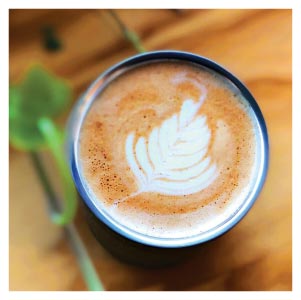
A hiss of steam, and the dance begins. Steady hands raise a small, metal pitcher near a steaming cup of espresso. Blink and you might miss the delicate movements—all in the wrist—as the creamy stream is pushed under the dark liquid, then, as the pitcher draws back, a few gentle wiggles precede a steady whip, following through, turning a roasted beverage into a work of art.

People love their caffeine, but today’s coffee shops offer much more than a mere fix. Increasingly, cafés have become artistic hubs for the community (Lynchburg has no shortage of “it” joints serving up some mean java). Of course, the coffee has to be good. But customers also want an experience, something “snapworthy” to share with their digital community.

latte art“I would say, especially in coffee, presentation is important just because it is a science and an artform combined,” Becca Laughlin, a barista at Third Wave Coffee, said. “If you go somewhere and you see latte art … it is a good sign that the person making your drink cares, or at least to some degree knows what they are doing.

“Customers, they love [latte art],” she continued. “Even if I pour something and I am like, ‘Oh man, that is terrible,’ people get so excited. They are like, ‘That is so cute, oh my gosh.’”

Golf Park Coffee Manager Haylynn Gaunt said that as Lynchburg’s scene is growing, so is the expectation that comes with personality-driven businesses.

“When I came to work in Lynchburg, people were surprised when I would hand them a latte with something pretty in it,” she said. “When I was introduced to coffee, it was mostly in bigger cities [like Baltimore, New York, and Washington, D.C.], so every barista is pouring good latte art consistently. I just came to expect that.”

With the right equipment, and practice, adding that artistic flair atop a homemade drink is possible.

latte art

Haylynn Gaunt, manager at Golf Park Coffee on Bedford Avenue, has been creating latte art for a little over two years.

“For the most part, anyone can do it; you don’t have to have this special talent or necessarily be good at art to be good at it,” Gaunt said. “It is a lot of attention to detail. You have to be paying attention to the point that [during] each pour you do you can adjust yourself.”

“You want to be relaxed,” Laughlin added.

“If you are tense, it is going to make it a lot more difficult. A lot of it is muscle memory and just learning what that feels like. You can practice pouring with water with the pitcher in the sink.”

To create art with a latte or cappuccino (the difference being the amount of milk; lattes have more), one needs to be able to pull a shot of espresso and steam milk properly. Alternative milks tend to not pour as well as whole milk.

“It’s the fat content that makes a big difference in the milk,” Laughlin said. “The fat percentage in whole milk seems to work the best. It is possible with alternative milks, it’s just much, much, much, more difficult.”

Both experts said to get a really great drink with really great art, it’s best to invest in your equipment. As it relates to the espresso, a fresh shot is all you’ll need, but it probably won’t taste as good from a low-end machine.

To get started, Gaunt explained: “A big part of it is having a good foundation—hot espresso with that crema on top. The crema, the foam on top of the espresso when you pull it, is what allows you to sink the milk underneath and give that contrast as you pour.”

Laughlin stressed the importance of properly steamed milk to both taste and the process. “The way that you steam the milk also has to do with taste, even down to the temperature that you steam the milk,” she said. “If you burn the milk, it is not going to taste as sweet. … If you don’t steam the milk properly it is pretty much impossible to make any kind of art.”

Place the steam wand close to the bottom of the pitcher, she said, tipping the pitcher to allow the milk to aerate. When the milk is done, it should look like wet paint when you swirl it around. This is called microfoam—the steam has created tiny, unseen bubbles that texture the milk when you swirl it around.

From there, it’s all about getting the mechanics of pouring down. And having a good pitcher will make all the difference. Pitchers vary in the amount they hold and how wide the spouts are. Baristas differ in their preferences, but typically a narrower spout is better when pouring less milk, such as for a cappuccino.

“When you pour, it is different between the height, the flow of how you are pouring,” Gaunt explained. “You start up really high so that the milk is a thinner stream and sinks underneath the crema, so you are hiding it but it is keeping the same color while also diluting the espresso. Then, it will raise up as you pour more in and then you can actually do the art.”

Holding the cup in one hand, aim the pitcher for the deepest part, at first.

“After you kind of create a good base,” Laughlin said, “swirl it around to make sure it is all even. Once you are ready to start pouring the design, you bring the pitcher down closer to the espresso. Then, it is this very delicate—very small movements. You would kind of start with the pitcher close to the milk and it is kind of a push, depending on the type of design you are making.”

The most basic design is a monk’s head, a circle. If you pull through you get a heart.

For a rosetta, another basic design, Laughlin explained: “You would start with a push and then a very, very light wiggle. It is not aggressive. It is not your whole arm. It’s all in the wrist. Little wiggle and then pulling back at the same time.

And then when you get to the end you would hold it and then pull it up a little more. That is what creates the heart on the top. And then it is a pull through, evenly.

“Tulips are layers,” she added, “so you would push-push-push, so you are pausing instead of pulling through.”

Bolder designs often come from combining mechanics of others.

“You are trying new movements but they are all building on those foundations,” Laughlin said. Seeing those designs on top of one’s drink adds more than a layer of cream; it adds a flair that invites appreciation.

“If you pour latte art and it isn’t great, it is going to taste the same as if you were pouring it pretty,” Gaunt said.

“Art kind of adds a touch and makes people remember it more. It’s marketing, really. For the coffee industry presentation is important. People want to take photos of it and get more excited about it.”


Lemon Crumb Seared Scallops with Lemon White Bean Purée

By using a layering technique and garnishing with sprigs of onion, this main course is an easy way to practice your food presentation skills. We recommend a rectangular shaped plate.

Ingredients
Scallops
12 large sea scallops, cleaned (take foot off and patted dry)
2 tablespoons canola oil
2 tablespoons cold butter
Thyme leaf
Lemon wedge
1 bunch spring onions, sliced thinly at angle for garnish
Lemon White Bean Purée
1/2 cup melted butter
2 cups canned white beans, well rinsed
1/3 cup grated parmesan cheese
1 tablespoon olive oil
Grated zest of 2 lemons
Juice of 1 lemon
Salt and pepper to taste

Instructions
Melt butter for the white bean purée in a saucepan. Add butter to blender with white beans, grated parmesan, olive oil, lemon zest, and lemon juice, and blitz until smooth.

If the mix is too thick you can add a little water until desired consistency is reached.

Place in saucepan and keep warm over low heat.

Pat scallops dry and season with salt. Sear scallops salt side down. After about 1 minute, flip scallops and add cold butter, thyme leaf, and a lemon wedge (squeeze some of the juice).

Take off heat. When plating, spoon some of the pan juice over the scallops.

Pour the melted butter in a separate skillet and toss in breadcrumbs. Sprinkle in salt and zest of lemon. When breadcrumbs are crispy (about 1 minute), add fresh parsley and toss.

To plate, put large scoop of bean purée on plate and with back of spoon spread it out the length of the plate. Place 3 scallops on top of the purée and top with lemon crumbs. Drizzle a little of scallop pan juices over all. Garnish with sliced spring onions.