The Buzz Nov/Dec 2019

BEHIND THE SCENES
While a high of 89 degrees didn’t really get us into the spirit, Mikael Blido’s delicious treats sure did.

On September 21, this issue’s Taste contributor invited us to his Forest home to show off three baked goods. He prepared everything beforehand and had it ready to go. (One reason why we love Mikael!)

Photos of the festive bread and cookies in the sunroom were easy; photographer RJ Goodwin used a chair to get an overhead view. Mikael provided plenty of fresh holly to add a subtle holiday touch.

Then, we took the cake inside to get straight on shots. It took a little finagling to make the white Christmas lights cooperate in the back corner but with RJ’s expertise, a warm glow behind the masterpiece was achieved.

And you better believe the team chowed down when the last photo was snapped. ’Tis the season!

Learn how to make Mikael’s cake and other goodies on page 92.


Local Openings & Closings
Hello! to a new location of Ford Mays Wealth in Wyndhurst.
Hello! to Peaksview Brewery and Games on Timberlake Road, set to open this winter.
Hello! to Gentleman John’s Classic Barber Shop on Main Street.
Goodbye to Phase 2 on Odd Fellows Road. The venue’s final concert is Nov. 2.
Hello! to seafood restaurant Crab Du Jour on Wards Road.
Hello! to Rolled Cold Creamery on Main Street.
Goodbye to vegan restaurant Urbavore on Church Street.
Hello! to Gilded on Church Street, featuring gifts, cards and coffee.
Hello! to Three Roads Brewing Company (formerly Third Street Brewing Company in Farmville). The brewery will open a location on Court Street in early 2020.
Hello! to Starr Hill Brewery on Main Street, opening early next year.


Mark Your Calendars November/December
Downtown Lynchburg
Tree Lighting
Nov. 30, 4 – 7 p.m.
Officially kick the Christmas season into high gear with this second annual event at the Craddock Terry Hotel. This also marks the beginning of the holiday lights on the Bluffwalk—grab a hot drink and take in the sights as you do some shopping!

Christmas at Hydaway
Dec. 5-7, 6 p.m.
Come get into the spirit at Camp Hydaway! Enjoy an outdoor walk through Christmas scenes and lights while enjoying hot cocoa and cookies. There will also be bonfires, photo booths, Christmas crafts and more. Better yet—it’s free!

A Holly Jolly Christmas Home Tour
Dec. 8, 1 – 5 p.m.
Five historical Bedford homes will be covered in Christmas spirit thanks to five local garden clubs. They range from “The First Lady of Bedford Avenue” built in 1866 to a Spanish-style home built in 1930. Stop by the Bedford Welcome Center during the tour for refreshments and walk through the Festival of Trees. Purchase tickets at the Welcome Center.

Happy Holidays with the LSO
Dec. 13, 7:30 p.m.
Sit back celebrate the most wonderful time of the year with the Lynchburg Symphony Orchestra. You’ll hear holiday favorites—from beloved hymns to music from Disney’s Frozen. Get your tickets early because last year’s 1st annual event sold out! Find tickets at academycenter.org.


The New Boar’s Head

A $15.5 million renovation is helping the iconic resortdefine southern hospitality for the 21st century

For years Charlottesville’s iconic Boar’s Head Resort has been quietly updating its image. But last May it unveiled the equivalency of a facelift: A $15.5 million renovation of its central inn and restaurant aimed at redefining Southern hospitality for the 21st century.

“The past three years have brought a lot of positive changes,” says Communications Manager Joe Hanning.

“Our goal has been to retain the best of our historical heritage and character, but take a big step into the future. We wanted to revitalize the Boar’s Head experience in a way that will bring a more accessible local presence and appeal to the tastes of well-heeled millennials and modern travelers alike.”

The journey began with the addition of executive chef Dale Ford in late 2016. He’d spent 25 years helming some of the finest resort kitchens in the Southeast and was tasked with rebooting the Old Mill Room restaurant.

“When the restaurant opened in 1965, it was the standard bearer for high-end cuisine in the region,” says longtime Charlottesville food writer Shea Gibbs. Chefs sourced trout from onsite streams and bought meat and produce from local farmers decades before the farm-to-table movement took root. Such practices won the restaurant a four-diamond rating from AAA in 1987 (about 650 in North America enjoy the distinction).

But eventually area eateries caught up. Booms in the late ’90s and 2010s brought a fine dining renaissance to Charlottesville. Seasonal, locally sourced menus became the norm. A treasure-trove of artisan producers arose to meet demand.

“This area is like a heaven for chefs that want to cook with local ingredients,” says Ford.

Moving to Charlottesville brought unprecedented solicitations from farmers asking what he’d like them to grow. “Our farm community is world-class. They strive to understand a restaurant’s needs and go the extra mile to try to meet them.”

Ford fast developed partnerships with more than 20 local farms and food artisans. Organic heirloom produce came from Rockingham County’s Wayside Farm, heritage-breed meats from Waynesboro’s Autumn Olive Farms, homemade sausage from Madison butchery Papa Weavers, mushrooms from Sharondale Mushroom Farm, award-winning regional cheeses from Caromont, and much more. Ford used the items to reinvent the classic Southern staples the restaurant was known for. He updated bar menus to include products from the best regional vineyards, distillers, brewers and cidermakers. Partnerships with Charlottesville’s Three Notch’d Brewing brought custom, small-batch beers on tap. Nightly vegan specials were added.

But Ford’s ambitions went further. The rise of a farm-to-table ethos had shifted social tastes—formal dining had all but vanished; the era of smart casual ensued. Ford loosened dress codes and hired staff that would create a friendly, people-first atmosphere that catered to urban sophistication but brought a sense of relaxed countryside luxury.

“You tell me a place has a suit-and-tie dress code and I think of stodgy senior citizens sitting in a vacuum of silence,” jokes Hanning. “That formality was a barrier between us and a lot of people—particularly younger locals and travelers. [The demographic] had a tendency to misidentify us as an old-school country club for Southern aristocrats.”

Ford and Hanning agreed: Renovations were necessary.

The building housing the inn, main lobby and restaurant was built between 1819-1830. The National Trust for Historic Preservation named it an official Historic Hotel of America in 2001. But its last major update came in the 1960s—and it showed.

“The rooms were pretty cloistered; they didn’t encourage mingling or socializing,” says Hanning. There were dark color schemes, dim lighting, antique leather, and décor suggesting Antebellum-era hunt experiences. “It felt like a winter hunting lodge. It was definitely dated.”

The overhaul began in Feb. 2018 and took 15 months to complete. The resort asked Atlanta-based architectural design firm, Johnson Studio at Cooper Carry, to totally reimagine the property—most notably the main entrance, lobby, bar and 130-seat restaurant.

The results are nothing short of fantastic.

Guests enter the lobby by way of an elegant porte cochère with stone columns and slate shingles. Inside, they find a series of large open rooms with bright colors, loads of soft-seating options and walls hung with local art. Dividing walls have been removed or replaced with French doors. Enlarged windows fill rooms with sunlight and lend an open-air feel. Cocktail waiters patrol the area, which is open to the public. The space flows into the restaurant, but feels more like a sister lounge than a waiting-room.

The restaurant—renamed The Mill Room—has repackaged its nearly 200-year-old hardwood flooring, exposed rafters and massive hand-hewn support beams. Their impressiveness is augmented by vintage chic additions that infuse the room’s warm historical character with a hip, Brooklyn-esque allure.

Sculptural glass globes hang from minimalist wrought iron fixtures. They’re ringed with bronze and outfitted with soft vintage bulbs. A black, glass-backed bar runs the length of the dining room bringing a speakeasy feel. It is manned by an able mixologist and flanked by a big, walk-in wine closet with windows. The room is anchored by a fireplace and antique hand-carved surround, but opens onto a wall of windows offering natural light and views of a nearby lake and green, rolling hills.

Ford has made further additions behind-the-scenes. In late 2018 he enlisted the help of Charlottesville ag-tech firm, Babylon Micro-Farms, to transform an empty stone building into a state-of-the-art hydroponic garden. He worked with the Thomas Jefferson Center for Historical Plants to obtain seeds for heritage varieties of salad greens and edible flowers. The system yields about 300 heads of lettuce a week and enables the restaurant to source 100 percent of its salad ingredients in-house. It is the first in the U.S. to achieve the feat year-round.

Ford will also use the facility to sprout plants for an onsite farm garden, which will launch in 2020.

“We view these projects as the announcement of an entirely fresh Boar’s Head Resort experience,” says Hanning. “Our aim is to bring our world-famous Southern hospitality into the 21st century. We want people to come here and think, ‘Wow, so this is what the New South is all about—amazing!’”


Gardening Gadgets for Gifting

We all secretly want our present to be the receiver’s favorite—something they weren’t expecting and something that also gets used again and again and again.

If you are shopping for a loved one with a green thumb this holiday season, I have you covered. Below are nine of my favorite lawn and garden items that I hope will bring someone you love joy all year long!

folding pruning saw

Corona RazorTOOTH Folding Pruning Saw—This tool is always in my tool bag. It is big enough to get jobs done that loppers can’t. They are especially helpful when pruning roses and other ornamental shrubs that need shaping.
Find at Ace Overstreet Hardware, locations in Lynchburg and Forest: www.acehardware.com.

Womanswork All Leather Gauntlet Gloves

Womanswork All Leather Gauntlet Gloves—Winter chores call for tough gloves. These are particularly designed to wear when cleaning up “thorny” things like roses. They protect you all the way up to your elbows.
Find at womanswork.com.

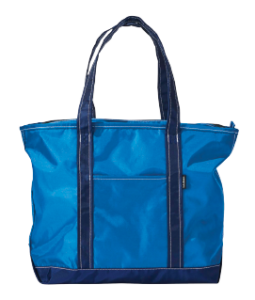
LL Bean Everyday Lightweight Tote

LL Bean Everyday Lightweight Tote—This lightweight tote holds everything I need except loppers. You can pack your thermos, water bottle, gloves, tools, zip ties… everything. It opens wide so it’s easy to find what you are looking for—and it washes like a champ! This tote is also durable too. I’ve used it every day for a solid year with no rips or tears. There is even a monograming option for the ultimate personalized gift.
Find at LL Bean, www.llbean.com.

Joyce Chen 51-0621 Unlimited Scissor

Joyce Chen 51-0621 Unlimited Scissor—I keep this in my kitchen drawer. It’s perfect for cleaning up vegetables from the garden or for meal prep. They are also helpful for trimming flowers while arranging them at your sink. If you only have one scissor in your kitchen drawer, this should be it.
(Oh, and it will do a number on chicken and fish as well!) Find on Amazon.

Gardener’s Workshop Trapezoidal Hoe

Gardener’s Workshop Trapezoidal Hoe—I’ve had this same hoe for about six years now. This tool lets you stand up to tackle a wide variety of weeding jobs. It can be used on the angle for tight work around plants and shrubs. Or, use the whole blade for larger weeds or wide-open spaces.
Find at www.thegardenersworkshop.com.

John Scheepers Amaryllis Bulbs

John Scheepers Amaryllis Bulbs—When the winter hangs on, we starve for the bright colors of our spring and summer gardens. Unusual amaryllis are sure to brighten up every corner of your home. No harder than paper whites to grow and much more stunning, there are lots of varieties to choose from. John Scheepers has a beautiful collection.
Find at www.johnscheepers.com.

Wheeler Munroe Leather Company Tool Belt

Wheeler Munroe Leather Company Tool Belt—Made in North Carolina, these tool belts are a dream. Mine is always on my side so I can have my clippers, phone or paper with me. I have the Floral Belt model. I’ve had it at least five years and it still looks great. I’m waiting on something to break so I can get the model with more pockets. (Maybe they’ll see this magazine story and mail me one.
I have a Christmas wish list too!)
Find at www.wheelermunroe.com.

Gardener’s Workshop Soil Blocking Kit

Gardener’s Workshop Soil Blocking Kit—After you’ve gardened for a while, you get bored with having access to only a few plant options. You crave more variety! This gift opens up the world of seed starting in a way that has changed our world at Irvington Spring Farm. We used to spend so much more on plugs. (Plant plugs that were shipped in these tiny cell trays by the box full.) Not anymore thanks to this cool method we saw on Lisa Zeigler’s site. These soil blocks are the most successful and forgiving system possible. You can have all the flowers and/or vegetables you can dream of because you start them yourself and aren’t dependent on what our nurseries alone can provide.
Find at www.thegardenersworkshop.com.

Element Sprinkler Hose

Element Sprinkler Hose—This hose did a great job keeping my gardens watered. I put a three-way hose valve onto my spigot and hooked up three at a time to cover a wide bed. It’s lightweight and doesn’t tangle up as easily as some other hoses do. Find at Home Depot.


O’ Christmas Tree Farm

Local growers offer a variety of trees— and lots of holiday cheer

Whether it’s a long-held family tradition or an experience waiting to be crossed off your bucket list, there’s something enthralling about the hunt for the perfect Tannenbaum. Perhaps it’s the visions of family gathered around on Christmas morning, warmed by kinship and good cheer; perhaps it’s the memories made along the quest, traditions formed and Kodak moments captured while the kids are still getting along.

Whatever the reason, Central Virginia is home to a handful of tree lots and farms where traditions new and old find their roots. Even if your family swears by artificial trees, it’s worth taking a day to explore someplace new where you can stop and smell the pine needles, sip a warm drink and snap some Christmas card photos.

These particular farms are family-friendly and guaranteed to make spirits bright:

Green Needles Christmas Tree Farm
Over the river and through the foothills, eight acres of white pines and Canaan, Douglas and concolor firs grow in the blissful solitude of Green Needles Christmas Tree Farm. Owned and operated by Jon Perdew, the farm is a 30-minute jaunt from Lynchburg and mere miles from regional icons like the James River and the Blue Ridge Parkway, making it the perfect destination to behold the scenery of the season.

Perdew purchased the farm from its previous owners 14 years ago, and although farming and agriculture don’t flow through his bloodline, they’re second nature to him. The Maryland native worked as an irrigation contractor in his home state until his children’s higher education brought the Perdew family south, where he tried his hand at growing Christmas trees.

Fraser firs are hard to come by in Central Virginia because of the region’s climate. However, Perdew knows that some people have their hearts set on bringing one home, so Green Needles provides a selection of fresh, pre-cut Frasers grown in Floyd County each season.

Besides the ample selection of trees, homemade wreaths and the occasional appearance by Mama Crockett’s Cider Donuts and Sourdough Pizza Company, Green Needles offers fun for all ages. Find one of the three tire swings hanging around the farm or sip hot chocolate and mosey out to the foot bridge overlooking the pond.
And if you don’t get enough of the rambling landscape when you visit to score your tree, you can reserve the farm’s old Christmas shop-turned-Airbnb for a night or two in the off season. In the warmer months you can find Perdew at the Forest Farmers Market with the fruit and flowers that also sprout at the farm.

Green Needles Christmas Tree Farm
1175 Yew Tree Lane, Coleman Falls, VA 24536


Dancing Hill Christmas Tree Farm

Dancing Hill Christmas Tree Farm
Considered one of Bedford’s best-kept secrets, Dancing Hill Christmas Tree Farm will make you feel right at home among the towering trees, sprawling fields and glimpses of Blue Ridge Mountain vistas.

A Bedford native and retiree from the Virginia Department of Forestry, owner Richard Miles began planting trees in 1980 to learn more about the process as he helped others establish their own tree farms and to add a little extra cash to his children’s college fund.

Miles’ plan sprouted, quite literally, into a local legacy. Of the farms in the region, Dancing Hill is one of the oldest individually-owned—and with the help of his children, Miles plans to keep the farm up-and-running as long as he can.

On the farm’s 35 acres (six of which belong solely to the trees), Miles hosts an array of white and Scotch pine, blue spruce and small assortment of firs. Like Green Needles, Dancing Hill also offers pre-cut Frasers from Rifton Farm and Nursery in Floyd County.

Pack a picnic lunch and tailgate in the field, then wander over to the gift shop to find the perfect keepsakes for all your loved ones before cozying up on the front porch with a cup of hot chocolate. And don’t forget to pose for some family photos with the antique sled or the handcrafted Santa Claus, snowmen and reindeer displays—this year’s Christmas cards will be a hit for sure.

If your schedule is too full of festivities to visit on the weekend, the farm is open seven days a week. Just 10 minutes from local eateries in downtown Bedford, you and the kids can easily grab lunch and head for the Hill.

Dancing Hill Christmas Tree Farm
1401 Dancing Hill Rd., Bedford, VA 24523


Ingemont Farms
On the outskirts of Roanoke, Ingemont Farms is a quaint and cozy winter wonderland. The farm is nestled on a hilltop overlooking nearby mountain ranges and five acres of picturesque terrain where the friendly farm dogs Jake and Jed frolic and roam.

When owner Geoff Trevilian’s grandfather started Ingemont Farms, their staples were blueberries, pigs, chickens and eggs. Trevilian added Christmas trees 40 years ago, fostering a passion for the green giants that had taken root in his childhood. When Trevilian was growing up, his “job” was to pick out the family’s tree every year; as an adult, it seemed fitting to be a place where other families could establish the same tradition.

Aside from his grandfather’s influence, Trevilian was greatly inspired by late local forester Robert Kennedy and attributes much of his success as a tree grower to Kennedy’s skill and bestowed wisdom.

At Ingemont, you have your choice of white pine, Leyland cypress, Douglas fir and a few Frasers, as well as Canaan Valley firs which, according to Trevilian, are a great replacement for Fraser firs if you can’t find the perfect one. You won’t see any pre-cut trees at Ingemont, however. According to Trevilian, it’s important to the farm that its visitors know their trees were grown there.

The farm has a “you pick, we cut” method to ensure the quality of the cut and the safety of the procedure. But if that goes against your tradition, Trevilian says not to worry—visitors are free to cut their own trees if they’d like.

Ingemont opens for tree-hunting Friday, Nov. 29 from noon till dark and every Saturday and Sunday to follow until Christmas. Weekday visits to the farm can be made by appointment.

Ingemont Farms
1697 Camp Jaycee Rd. Blue Ridge, VA 24064


Tree Tips
If you’ve never gotten a Christmas tree straight from the farm before, the excursion may seem like a daunting task. Luckily for rookies, Perdew, Miles and Trevilian offer a few simple tips:

  1. Plan ahead. Trees looks much smaller in the field than they do indoors; Perdew suggests measuring the space your tree will occupy in your home and having a gameplan for how you’ll get it there so you don’t end up with an oversized tree awkwardly anchored to the top of your vehicle.
  2. Fragrance. Consider which fragrance you want wafting through your home. It may sound odd, but according to Miles, different trees have different smells. Because of their sap, some spruces tend to release an unpleasant aroma, while pines smell more earthy and Leyland cypresses emit a somewhat fruity scent.
  3. Watering. You’ll want to get your tree in water within five hours of cutting it if at all possible, adding water each day as needed. Trevilian suggests adding water twice a day for the first few days after bringing the tree inside.
  4. Ornaments can make or break your tree (literally). The heavier your ornaments are, the stiffer you’ll want your branches to be. Miles suggests hanging weighty ornaments closer to the center of the tree and filling the outer branches with the lighter, more delicate ones to avoid a Christmas catastrophe.


Art for Achievement

Lynchburg’s “largest art auction” will help high schoolers pursue their dreams

By Teresa Davis | Photos by Bryant Haskins

What happens when a community comes together because of a shared love of art and a united passion to help local students? The result is Art for Achievement—a fundraising effort that combines the talents of dozens of local artists to raise money for Lynchburg Beacon of Hope, a nonprofit focused on helping students attain post-secondary education.

While the grand finale for Art for Achievement is a beautiful formal gala at the Virginian Hotel on Nov. 9, the work to create the centerpiece—a giant mosaic display of artwork—began many months ago.

Lynchburg Beacon of Hope is known for its cornhole tournament fundraiser each year, which is a grand success. But this year they wanted to add another event to their calendar. Inspired by a fundraiser they saw in another state that involved the creation of a huge wall of local artwork, Beacon of Hope’s board members creatively and collectively started working on a plan for a similar art-focused fundraiser and gala. They asked the Lynchburg Art Club for help.

The Lynchburg Art Club was founded in 1895 by Bernhard Gutman, who at the time was the supervisor of art for the Lynchburg Public School System.

To this day, members of the Art Club create scholarships for local students who are planning to attend art school after graduation. Collaborating with Beacon of Hope for Art for Achievement only expands on that mission; they were thrilled to help.

The Art Club didn’t want any financial gain from the project, specifying that all money raised be given directly to Beacon of Hope. They only wanted exposure of their artwork in the community.

Members of the Art Club were asked to create Lynchburg-focused paintings on 10’x10’ canvases to contribute to the giant mosaic. But you didn’t have to be a part of the club—young artists from both city high schools as well as other talented community members contributed canvases as well.

“The enthusiasm about this project has been tremendous right from the start,” said Kathy Busch, the Art Club’s past president and current committee member. “We wanted 100 10’x10’ canvases, but eventually 130 were purchased.”

The painted canvases were placed on multiple display panels, 20 per panel, creating the multi-piece mural wall. When the display boards were placed side by side, the 130 canvases created a larger-than-life display of art.

Local artist and Art Club member Lisa Richards painted three canvases in the mosaic, and she donated two larger floral paintings for the gala’s live auction. She has enjoyed seeing the community be so engaged by an art-focused event.

“This is a great way to help the students to be able to achieve their goals,” Lisa said, adding that it’s also a great way for local artists’ work to be seen, too.

Ted Batt, director of visual arts at the Academy Center of the Arts, donated two sculptures to the live auction and also helped install the mosaic.

“This event just represents the really strong and vibrant community of artists we have here in Lynchburg,” he said.

The mission of the event also hits close to home. “I wholeheartedly believe in it, having two high school students myself. Making sure every student has the chance to start out on the right foot,” he said, adding that his son is currently attending Central Virginia Community College and his daughter plans to do the same, then transfer to Virginia Commonwealth University.

The staff and supporters of Beacon of Hope, which was established in 2011, work diligently to inspire and assist students who are currently attending Lynchburg City Schools in pursuing post-secondary education, including two- and four-year colleges, military enlistment, trade schools, technical degrees, and industry certifications.

The nonprofit has nestled itself alongside Lynchburg’s public schools. Its purpose is to focus intently on working with students in the 9th through 12th grades, helping each student prepare a plan for their life after graduation.

However, they also work with younger students to ignite a spark of excitement. Beginning in Kindergarten, students are entered into Beacon of Hope’s Kids 2 College program, where they are taught to start dreaming about whether they want to attend college and what they want to be when they grow up. In 8th grade, students participate in Beacon of Hope’s College Readiness Symposium and are given the opportunity to visit a nearby college campus.

Inside Heritage and E.C. Glass high schools there are Beacon of Hope Future Centers. These labs create a safe space where students can seek guidance on post-secondary planning and much more. This year, a third lab was established at the Amherst campus of CVCC.

But one of the most exciting accomplishments of Beacon of Hope, and the purpose behind the Art for Achievement fundraiser, is the Stay Close, Go Far Promise Scholarship. Last year, Beacon of Hope created this scholarship to help bridge the gap between the amount of money students could obtain from FAFSA® (Free Application for Federal Student Aid), grants, and scholarships… and the actual cost of tuition.

When the dollar amount of financial assistance falls short, Beacon of Hope has promised that any student who has attended Lynchburg City Schools for four years (from 9th through 12th grades) can receive what they call a “gap scholarship” to help with the costs of attending CVCC or other area schools. Scholarship amounts vary depending on where the student wants to enroll.

This Stay Close, Go Far Promise was made to help students over a five-year span. More than $5 million dollars has been raised for this scholarship fund by local individuals, businesses, and foundations, and due to the program’s large popularity with students, Beacon of Hope is seeking to raise $2 million more.

According to Joan Foster, who serves on Beacon of Hope’s Board of Directors and on the fundraiser’s development committee, the goal of the Art for Achievement fundraiser on Nov. 9 is to raise money to be used towards this promise.

“We are truly coming together and working together collectively for the future of our students, and for the future of our community,” she said. “That’s a good day in Lynchburg when two groups can come together to do that.”

This new and exciting partnership with the Art Club has given Joan plenty of hope.

Art For Achievement
Saturday, Nov. 9, 6 – 9 p.m.
The Virginian Hotel, Lynchburg
Tickets: $50
Live music, cocktails, canapes. Live and silent auction of local artwork, including canvases.


Living Out Loud Nov/Dec 2019

The Ripple Effect Continues
Charlene Morell, a local woman featured in our September/October issue for her living organ donation that sparked four others, wrote to Editor Shelley Basinger about what she described as the “amazing” article: “[Shannon] did a beautiful job capturing the full story and all that God wrote into our lives.”

And even better? One of the other donors mentioned in the article, Crysti, received a call at her job from someone who read our story and wanted to learn more about living organ donation for a loved one. “I know God is going to continue doing great things through this,” continued Charlene.

Welcome to Lynchburg

Mary Smith picked up a copy of the September/October issue at Neighbor’s Place: “Just wanted to say, being new to the area, Lynchburg Living is really great!”

Thanks for reading, Mary! We truly aspire for our magazine to be a resource for readers—from natives to newcomers.

Small World!
Upon reading our feature about Stanhope Johnson, Carolyn Gills Frazier, author of Stanhope, chronologically, thanked us for a “lovely and lively” article on Lynchburg’s renowned architect.

She also let us in on an interesting connection found within the pages of the September/October issue: “The articles on Stanhope and Farmville have ties to each other. Stanhope designed the Weyanoke Hotel. Stanhope’s niece, Helen Bond Reveley, whom you quoted, is the mother of Taylor Reveley IV, who is the president of Longwood.”
Who knew? Thanks for sharing Carolyn!


Acing Financial Aid

Free Grants And Low-Cost Loans For College Might Be As Close As Your Laptop

High school seniors sweat two questions every fall: Will I get into college, and how will I pay for it?

Chances are, they and their families started agonizing over these challenges years ago, and that’s good: Their forward thinking is beneficial, especially when it comes to paying the high price of higher education, which ranges annually from $25,290 to $50,900 (see box). Planning hopefully means they’ve saved money—but, understandably, they still might not have enough stashed away. Most often, that is the case. The National Center for Education Statistics reports that in 2016, 85 percent of bachelor’s degree-seeking students received financial aid. According to Big Future, an online student planning tool offered by College Board, the SAT-creator, about 57 percent of financial aid is in the form of grants, and 34 percent in federal loans.

Tina Russell, director of financial aid at Christopher Newport University, describes these two types of aid as gift aid and self-aid, which can also include work-study jobs.

“Gift aid—grants or scholarships—is the best type of aid,” she notes, “as it does not have to be repaid.”

Exploring how much aid a student may qualify for is a multi-step process. Those who have specific colleges in mind can visit each school’s website and find a net price calculator. A student can enter his and his family’s financial information, such as income and bank accounts, to receive an estimate of his bill at the school, regardless of the listed price.

To qualify for aid, students must fill out the FAFSA—the free application for federal student aid. It opens online each year on Oct. 1. Again, the student will enter his and his parents’ financial information and answer other questions. At the end of the report, he can see a guide as to what he might expect for aid—either as grants he doesn’t need to repay or loans that can be paid back shortly after college graduation. Some federal loans do not accrue interest during college, while others do. Most students qualify for the loans, and the loan amount increases from $5,500 freshman year to $7,500 senior year.

Students forward the completed FAFSA® to each school they’re applying to. Some colleges ask for more detailed financial information as well. The schools then use the data to make a financial aid offer, which could also include funding from the state, the school and private sources.

“The best solution for seeking the best terms for aid is to research and apply for all aid sources, including scholarships, early,” Tina advises. “Contact each institution to ensure you have completed all required steps. Not all institutions are in a position to negotiate. Private colleges typically have an advantage when it comes to negotiating the terms of an aid package.”


Average Annual Cost of College in 2018

In-state public colleges: $25,290
Out-of-state public colleges: $40,940
Private colleges: $50,900
Source: ValuePenguin


From Belgium to Bedford County

Step away from the toaster and stop by Waffle Mania for fresh, breakfast-inspired delights

By Shelley Basinger | Photography by RJ GOODWIN

As a mom of three boys, Susan Merkle—owner of the new Waffle Mania food truck in Forest— is accustomed to making sure everyone is fed and happy. “They are always hungry!” she laughs referring to her sons, now ages 17, 20 and 24.

Aside from eating (especially chocolate, a family favorite), her boys also love to ski—a family tradition. Susan grew up skiing in northern Wisconsin and met her husband on the slopes of upper Michigan.

Since the boys were little, the family has traveled to fantastic ski resorts across the country—from Colorado to West Virginia. At a slope in the Lake Tahoe area, they were introduced to something that could satisfy their sweet tooth—and fill up those hungry boys at the same time.

“When we were out skiing, sometimes we would find these niche markets of Belgian waffles, the real sugar waffles,” she says.

“We would smell them from the chair lift and just had to have them. We made it our mission to find them when traveling!”

More recently, they had the idea to bring the unique dish to Central Virginia. First, though, they had to figure out how to make them.

“In Belgium, they use a dough. They don’t make waffles with a batter,” she explains.

Hailing from the town of Liege, Belgian Sugar Waffles are made with a yeast-based brioche dough studded with special pearl nibs of sugar. “When the dough hits the cast iron, it carmelizes. So you get this crunch on the outside but the inside is soft and chewy,” Susan says.

After checking that off their list, the Merkles did some quick research and determined a food truck was their best avenue for distribution. The rest was a family effort. Susan’s husband played a big role in finishing out the truck; the boys helped create the menu and name each dish. (For example, a popular dish is Da Bomb, a Belgian Sugar Waffle topped with vanilla ice cream, hot fudge, peanuts and lots more. “That’s such a boy name,” Susan jokes.)

Susan—who has a chocolatier, marketing and information technology background—says they’ve had all hands on deck since opening the truck in June. “It’s been a lot of work… even more work than I realized!” she says. Aside from working the truck, she designed their website, maintains an up-to-date calendar of where they are, and utilizes an email list for customers.

She thanks a partnership with Carol’s Place Restaurant for their consistent presence. You’ll usually find the bright yellow food truck parked there. Another huge perk—customers can enjoy their waffles at a couple of tables beside the truck or head inside to the enclosed patio at Carol’s Place. It’s already been a spot for family gatherings and birthday parties, she says; customers can enjoy their food without worrying about wind, rain or extreme temperatures.

The Waffle Mania food truck also travels to local events; on Sundays, you’ll find them at Apocalypse Ale Works for the brewery’s Sunday Funday.

Aside from Da Bomb, Susan says customers are loving their Fruit Mania (topped with bananas, strawberries, chocolate fudge and powdered sugar) and the seasonal Apple Fest (topped with a warm apple spice mix and whipped cream).

They’ve also added a savory Southern dish to the menu: Chicken-n-Waffles combines their classic Belgian Sugar Waffle with chicken tenders, maple syrup, glazed walnuts and strawberries. Availability varies—Susan says that’s because they quickly sell out when it’s offered!

With only a few months under their belt, Susan says they are happy just getting into a groove. With an indoor eating space option and a versatile menu that can be enjoyed from summer (with ice cream) through the winter (with coffee), she believes their future is bright.

“People keep asking me if I’m going to have another truck, start a franchise,” she says. “Let’s just see how this goes for now. We are having so much fun.”


2019 Community Impact Appreciation

The Community Impact Awards honor Lynchburg for-profit businesses that are making a tangible, measurable impact on their communities. That impact might be the result of any number of activities including job creation, workforce development programs, volunteer efforts, or innovative business models that promote a healthy work environment. The 2019 Community Impact Appreciation honors local businesses for their work in the community.


Getting School in Virginia

The Common-wealth Is A World-Class Higher Education Destination For Local And Out-Of-State Students Alike

For Virginia residents and out-of-state students alike, the commonwealth’s higher education institutions offer exceptional value and a wide range of programs to meet the needs of all types of students. Whether you are a student athlete looking to play at the collegiate level, a nontraditional student seeking to advance your career, an aspiring doctor, or something in between, Virginia has a higher education program where you will thrive.

During the 2018–2019 academic year, there were 521,471 students enrolled in Virginia’s higher education institutions, according to the State Council of Higher Education for Virginia. And it isn’t just enrollment that’s impressive. The commonwealth also boasts the second-highest public four-year graduation rate in the country. And in 2017, Virginia was named the No. 1 state for higher education by SmartAsset, a finance website. SmartAsset also noted that Virginia always ranks in the top 10 states for higher education.

According to SmartAsset, “Virginia’s public colleges and universities effectively educate their students. Virginia has one of the highest average graduation rates in our study at 70 percent. And, the average 20-year return on investment for graduates is $442,660, which is the fourth-highest ROI in our study. Additionally, the student-faculty ratio in Virginia rates seventh lowest in the nation.”

Virginia is home to 15 four-year public universities, 13 of which offer graduate programs. Students seeking associate degrees can choose from one of 23 two-year schools in the Virginia Community College System, or the Richard Bland College of William & Mary. There are also 28 private college options in Virginia, a great choice for students seeking small classes with an average student-faculty ratio of 11:1, more personalized attention and a focus on opportunities for campus and community involvement.

While Virginia colleges boast programs that encompass all areas of study, one major area of growth that sets the state apart is technology. When Amazon was considering Virginia as a site for its new headquarters, Virginia Tech promised to build a 1 million-square-foot Innovation Campus, and George Mason University vowed to open a new School of Computing and an institute for digital innovation. Amazon selected Northern Virginia as the site of their new $2.5 billion headquarters, so these schools are now working to hold up their ends of the bargain. Additionally, Northern Virginia currently has 33,000 unfilled jobs in cybersecurity, and universities are prioritizing technology programs to meet increased demand in the region.

Students pursuing careers in the medical field are also drawn to Virginia’s higher education institutions. Virginia’s four medical schools—Virginia Commonwealth University (VCU) School of Medicine, University of Virginia (UVA) School of Medicine, Eastern Virginia Medical School (EVMS) and Virginia Tech Carilion School of Medicine—are all highly ranked institutions. And while the cost of earning a medical degree is always substantial, Virginia doctors see a high return on their investment. Graduates who decide to practice medicine in the state can expect to earn 436 percent above the national median income for all occupations.

Many aspiring lawyers also set their sights on Virginia universities. Of the nine law schools in Virginia, UVA, William & Mary and Washington and Lee University rank the highest. UVA Law is the second-oldest continuously operating law school in the country and is perennially ranked among the nation’s top 10 law schools. William & Mary was the first university to offer a professional law education back in 1779. Additionally, William & Mary was ranked No. 1 on the list of Top 10 2019–2020 Military Friendly Graduate Schools and No. 5 for best law schools for government jobs, according to PreLaw Magazine. This year Liberty University School of Law placed 7th out of 203 schools for passing the bar exam, based on the American Bar Association’s pass rate data.

Virginia universities also draw top-notch athletes with their exceptional athletic programs. This year, the UVA Cavaliers took home the NCAA men’s basketball championship—one of the most recognized college athletics championships. The Cavaliers also won the 2019 NCAA men’s lacrosse championship this past year for the sixth time in their history. Virginia Tech, James Madison University and Old Dominion University all boast excellent athletic programs as well, providing student athletes with many options for playing their sport while receiving an exceptional education.

No matter what type of higher education program you are looking for, there are myriad factors that come into play when deciding which institution to attend. But if you’re seeking a world-class education, an excellent student-to-faculty ratio and a high return on your investment, looking no further than the commonwealth certainly has its benefits.