Shoes With A Mission

Liberty alumnus tells story through new book about life in war-torn Congo.

Even after running through the Congolese jungle barefoot, Liberty alumnus Emmanuel Ntibonera says he still spends most of his days not wearing shoes.

“I think part of me is sick of shoes after seeing them piled up in my home for so long,” he laughed. “Every inch has boxes of shoes. It got to be too much. I don’t even want to wear them anymore.”

Ntibonera has spent the last several years collecting more than 70,000 pairs of shoes for the people of Congo, a mission he details in his book Congo Sole, which came out in October. The book tells the story of Ntibonera and his family as they escaped war-torn Congo and came to the United States.

“The biggest takeaway I want people to get from the book is that there is hope,” Ntibonera said.

“Though we may fall, you can get back up. There is nothing you can’t overcome. I look back at everything that I’ve been through, and see? I’m still standing because I have hope in the Lord.”

Humbled Beginnings
Born in Congo as the oldest of nine siblings, Ntibonera said he and his family had a fairly normal life before the war.

The Ntiboneras lived in a seven-bedroom house, which was part of a larger compound his dad owned and rented out. While they lacked American comforts such as running water or taking the bus to school, the Ntiboneras were surrounded by a loving community where everyone looked out for each other.

But that all changed in 1996 when Africa launched into war as Rwanda invaded what is now the modern-day Republic of Congo, which led to violence and genocide across the country.

At the time Ntibonera was eight years old.

“War broke out as me and my family sat down for dinner,” Ntibonera explained during his Liberty University Convocation appearance last November where he shared his testimony. “Chaos, people running. You could hear gunshots in every direction and every corner of the country.”

In that moment, Ntibonera said he and his family prayed for peace as they sat in the darkness. Over the radio, they learned that rebel forces had taken over their city.

As a large family, the Ntiboneras began to make a plan to leave the city alongside their extended family knowing that there was danger ahead as they trekked throughout the jungle. Ntibonera said his family kept saying, “Keep moving forward.”

“As my bare feet carried me, one step at a time, my eyes and ears absorbed horrors I’ll never forget,” Ntibonera describes in his book. “Limp bodies, painted with dry blood, were laid out on the side of the road. Women’s screams, muffled by rows of vacant houses, turned my stomach, even though I was too young to fully understand what was happening.”

Suddenly, his family members were refugees in their own country, but Ntibonera said his father vowed that they would not die in Congo. Eventually, the family fled to Kenya. There they filled a tiny apartment and waited for a door to open so they could come to the U.S. In 2009, it did, and the family found themselves settling in Greensboro, N.C.

congo sole

“We suddenly had to adapt to a new place and culture,” Ntibonera explained. “The Lutheran Church helped us get to America and they were able to set us up with a social worker for the first six months of our time in Greensboro, but then we were on our own.”

As Ntibonera became more settled in America, he decided he wanted to pursue an education and found himself applying to Liberty University—only an hour and a half up the road from their new home.
“It was hard being away from my family,” Ntibonera said. “We had this bond. We had been through so much together and we had been together my whole life.”

But Ntibonera said God was preparing a place for him at Liberty, and he didn’t know it at the time, but it involved 20,000 pairs of shoes.

Finding sole in tragedy
Ntibonera said he soaked up life as a student at Liberty, where he heard from speakers from all over the world during their twice weekly Convocation.

But the person who stood out from the stage the most was Senior Vice President for Spiritual Development David Nasser. Like Ntibonera, Nasser himself was a refugee after fleeing Iran as a child.

“Here was a man who was a refugee who was speaking to thousands of people,” Ntibonera said. “It made me feel like he could do anything.”

As Ntibonera sat in Convocation each week, he also heard about humanitarian trips Liberty students would take to serve people all over the world.

“I remember they were talking about students going to Rwanda and I thought, ‘Why can’t they go to Congo too? It’s right there’,” he said. “I told my siblings that someday, someone was going to talk about the Congo from that stage.”

At the same time, Ntibonera said God was stirring something in his heart that it was time to remember where he came from and give back to his people who were still hurting halfway across the world. As he went through his closet, it came to him: shoes.

“I remember thinking, ‘Why do I have so many pairs of shoes?’,” he said. “At one time, I didn’t have any and I was praying out to God for a pair.”

Ntibonera said that many children in his country did not have shoes growing up, which put them at risk for disease, sometimes even fatal ones. Sending shoes to Congo could potentially save lives, he thought.

Ntibonera began collecting shoes on his own, filling any space he could with shoes. But soon he was overwhelmed and realized that if he was going to accomplish his goal, he needed help. He decided
to turn to Nasser to see if there was anything Liberty could do.

He emailed Nasser for a meeting and within a few hours of talking, Nasser set a plan in motion: they would host a campus-wide shoe drive with the help of NBA player Steph Curry and his wife, Ayesha, during Convocation.

“God ordained that meeting,” Ntibonera said.

Liberty’s Vice President of Spiritual Development Josh Rutledge said after their initial meeting with Emmanuel, it wasn’t his story that stuck out.

congo sole

“A lot of young people, especially students, have remarkable stories,” he said. “But Emmanuel’s story was tied in with a dream and a personal plan of action, and not only that, it was a plan he was pursuing regardless of whether anyone else got on board with it or not. That’s always going to stand out. When someone says, ‘Look, here’s what I feel called to do, and here’s the steps I’ve taken to make it a reality. Would you like to join?’ That’s Emmanuel. He’s not out looking for permission to do something. He’s out extending invitations to join him in something he’s already doing.”

Then in March 2017, Ntibonera’s declaration came true. During the Curry’s March 2017 Convocation visit, Nasser invited Ntibonera to share his story from the Convocation stage.

“I remember before Convocation sitting in the green room with Steph wondering how I got here,” Ntibonera said. “Part of me just wanted to sit back and take it all in from the audience and just see what God was doing.”

More than 20,000 shoes were donated by not only the Currys and sponsors such as Nike and Under Armour, but by the Liberty student body.

“I think our students are often the ones leading the way at LU when it comes to service and ministry,” Rutledge said. “We’re always much more interested in joining with what they’re already doing than trying to invent something new. Emmanuel’s mission had a very practical call to action. ‘Do you have a nice pair of tennis shoes lying around that you’d be willing to donate?’ That was it.”

Since then, Ntibonera said that he has raised more than 70,000 shoes for the people in the Congo and has traveled to the country to deliver them more than three times.

“There is still so much work that needs to be done there,” he said, noting that sales from his book, Congo Sole, will go toward building a community center in the country where individuals can seek medical care, counseling, and start businesses.

“My people have been through so much,” he said. “There is so much trauma and hurt. A pair of shoes is a start but can only last so long. I want to be able to support them long-term.”

Ntibonera, who now lives in Nashville, said Lynchburg played a huge part in his story and helping him grow into the person he is now.

“Lynchburg was my temporary home, but in a way, it will always be home,” he said. “Liberty impacted my life in so many ways. It was incredible to see students and people from the community come behind me and say, ‘Yes, we want to help’.”



Bang For Your Buck

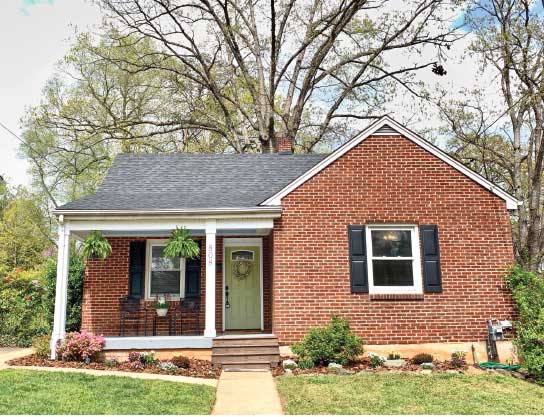
Home needs a refresh?

Whether you are itching to sell in the new year or are contently settled in your forever home, seasoned renovators recommend tackling one of these projects in 2021.

Paint, paint and more paint.
Dig out those old gym shorts and roll up your sleeves—because the number one way to add value to your home is to paint it.

“I call it an emotional change,” says Daryl Calfee, owner of Penny Lane Properties, which specializes in renovating old houses. “It’s the hands down best return-versus-cost improvement you can make.”

paint color trend

Statistics show on average, just painting the exterior of a home can improve its value by five percent—that’s a large chunk of change. Painting the inside is also effective, especially for those who plan to sell their home in the new year.

“A well-chosen palette that brightens, refreshes and even smells new goes a long way with buyers,” Calfee says.

Painting is also the number one recommendation from Josh Redmond, local real estate agent who also renovates homes to sell or rent, and Owen Hurst, who has years of home renovation and woodworking experience. Since 2014, the two have partnered on more than a dozen local renovation projects.

“We use ‘Repose Gray’ for a reason. It works in any space, large or small, with any style or color,” Redmond says of their preferred paint color, adding that it is a true gray that doesn’t pull from other colors such as blue or purple.

A neutral paint color is ideal when considering a home’s resale value, which Redmond says is something he’s often asked about when homeowners are considering home renovations.

paint colors do matter

“It’s helpful to know if the time and investment you make in your home will increase the value for potential buyers down the road,” he explains. “If you enjoy the changes, and they can improve the home, that’s a win-win.”

For those with no plans moving in the near future, below are a few much brighter paint recommendations.

Update landscaping.
Another exterior update that can drastically increase the value of your home is landscaping, one of the building blocks of impeccable curb appeal.

“It’s the first thing that gives people a ‘wow’ factor within seconds of pulling up to your home,” Redmond says.

For many homeowners, a landscaping update might not be a massive overhaul—just a few loads of mulch and a sunny Saturday’s worth of work.

updating landscaping

“Start by trimming existing bushes and plants, rake out all clippings and leaves, make sure to pull weeds and spray weed killer for the future, then put down a good landscape fabric, if you haven’t before. Finally, when all else is done, you can mulch,” says Dan Vollmer, associate broker with REMAX 1st Olympic and home project enthusiast, who adds that removing dead trees should also be a priority.

If you need to plant brand new bushes, shrubs or small trees, consider your houseʼs style and architecture—for example, if there’s not a lot of interest in the front, you would choose higher plants or shrubs. Your local nursery can help you make selections.

According to Lynchburg Living gardening contributor Ashleigh Meyer, the biggest problem for most who DIY their landscaping is planting too deep. “The root collar needs to be about two inches above the existing grade. This is right where the stem transitions into the first/highest root,” she says. “You also want to make sure the hole youʼre planting in is nice and wide so that roots spread out rather than encircle the stem.”

Change out light fixtures and/or hardware.

Older light fixtures can really date a home, says Vollmer—but new ones don’t have to break the bank or require an expensive bill.

“Shop local stores and online sites for great deals, and try to stick to the same finishes throughout,” he explains.

update light fixtures

Along with your fixtures, consider changing out your door handles and hinges too—even faucets. “There are lots of options and styles for this,” says Cole Rice, real estate agent with Lauren Bell Real Estate. “Brushed nickel, matte black, oil-rubbed bronze, even gold—it’s coming back!”
Refinish wood floors.

They are often the “ta da” discovery of home reality shows—the moment when gorgeous hardwood floors are unearthed below faded linoleum or lime green carpet. If you have hardwoods that have seen better days, now may be the time to shift your home improvement focus down.

“Refinished wood floors are worth their weight in gold,” says Calfee. “Walking into a home with refinished wood floors immediately gives a high-end feel and the reflection of light brightens the room.”

Calfee says you can expect to pay around two to three dollars per square foot to have your floors professionally refinished or you can rent a sander and products yourself from ACE Hardware locally. Keep in mind while this is not an extremely difficult DIY project, it is time intensive and requires multiple steps to complete.

Become a master of plaster.
Before there was drywall, there was plaster—a material most likely used in homes built before the 1950s. If you have an older home, this refresh project is for you.

“Repairing plaster walls offers an organic texture and elevated value that sometimes drywall lacks,” Calfee explains. “Ceilings can and will be a pain, so covering them with drywall at times makes sense if they are too far gone to repair.”

If you want to add subtle texture and value to drywall, Calfee says use Roman Clay. It’s simply
applied with a putty knife and will give your walls a subtle marbling texture.

DIY a new backsplash.
According to Hurst, one of the best ways to make a big impact in your home is to go for a new kitchen backsplash—and to try it yourself.

“I originally taught myself how to do it years ago by watching YouTube tutorials—there are so many out there and really good ones to learn from,” he says. “If someone is willing to take on the project, they could do it in one weekend and have a big impact for a pretty low cost.”

Hurst installed a traditional white subway tile in his own kitchen when they renovated last year; he and his wife love it for the simple, classic look and how the white tile brightens their space.
It’s also the best option for beginners. Subway tile is typically very affordable and is the easiest to install in Hurst’s opinion.


Editor’s Letter Jan/Feb 2021

Roll out the red carpet and give me a trophy, because I actually kept one of my New Year’s Resolutions last year.

As 2020 began, I told my husband, “I’m going to reclaim reading this year.” As a child, my nose was always in a book. (Humble brag: I was the number one Accelerated Reader in my elementary school for a couple of years in a row.) But through the years, reading became less of a priority, usually saved for the beach or a plane ride.

So, I set a modest goal to read 15 books in 2020. I figured that was reasonable after only reading maybe one or two books each year in the recent past. Well, not only did I reach that goal (in September as a matter of fact) but I also managed to read five more titles before the ball dropped.

I can now officially say that reading has reclaimed one of my top hobby spots. Getting lost in a book at night after my kids have gone to bed gives me something that’s just for me—it’s a way to refill my cup when I’m often running on empty.

I think there is a stigma that New Year’s Resolutions, or goals in general, have to be something that’s either super hard or something we don’t really enjoy. But with all that’s going on in the world, who has time for that?

As I saw on a fitness-related Instagram post the other day:
If you don’t like running, don’t try to run as a way to shed pounds. If you love breakfast, don’t choose the intermittent fasting diet.

Remember to be true to yourself when goal-setting or resolution-making as we enter what’s expected to be another roller coaster year. And also, remember to take care of yourself first, before trying to help others. There is a reason why flight attendants tell you to put on your oxygen mask first. An empty cup has nothing to pour out.

What will you change this year to improve your life? I would love to hear from you.

Also, book recommendations are welcome—I’m shooting for 30 in 2021.

All my best,

Shelley Basinger, Managing Editor
Shelley@lynchburgmag.com


Homeopathy Mental Health

Using natural remedies to treat anxiety, depression

Disclaimer: Always consult your doctor first before stopping prescription medications and/or trying new treatments.

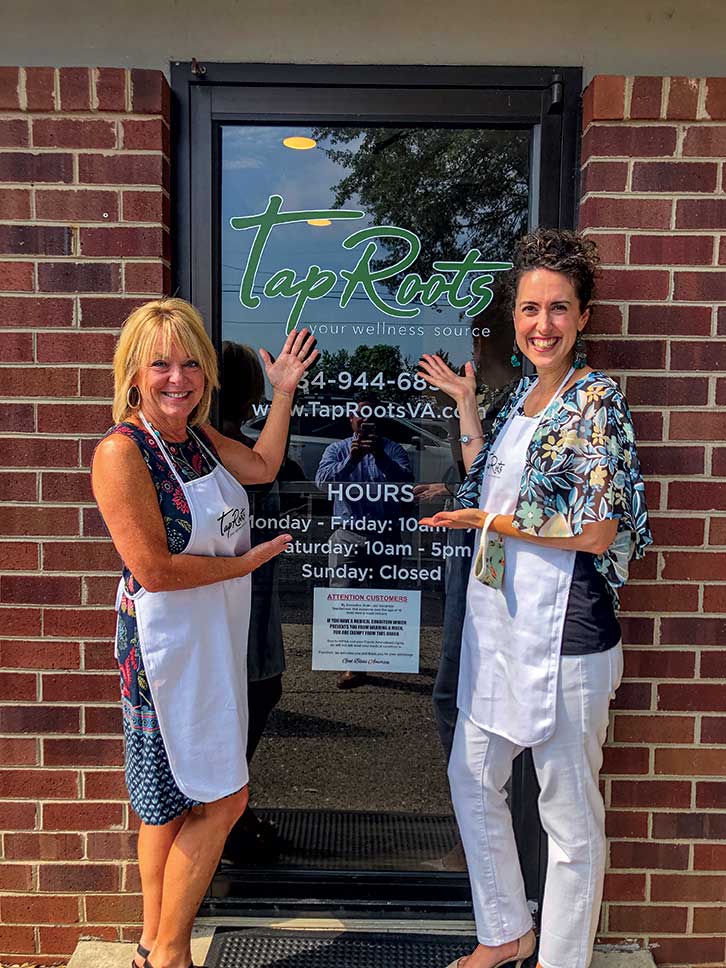
Kari Wagner realized the risk of opening a shop during a pandemic, particularly one that sold homeopathic remedies. Even so, she saw the need in the community, and could sense how the uncertainty and isolation of our current reality was causing more people to feel afraid, worried, anxious and overwhelmed.

“So many of these young people right now, especially with all the lockdowns and not being able to interact with friends, you can see the anxiety that they’re experiencing,” Wagner says. “There are so many unknowns right now.”

Kari Wagner owner tap roots
Against all odds, TapRoots was established, together with co-founders Carolyn Keeling and Dr. Keith Austin. With it, a wellspring of information and resources became available for Lynchburg residents who were looking for a more natural solution for their ailments.

Faced with the option of habit-forming, side effect–laden prescription medications, for many, homeopathic medicine is an attractive alternative.

What is homeopathy?
According to the National Center for Complementary and Integrative Health, homeopathy, also known as homeopathic medicine, is a medical system that was developed in Germany more than 200 years ago. It operates on two theories: “like cures like,” the concept that a disease can be alleviated by a substance that creates similar symptoms in healthy people, and the “law of minimum dose,” which surmises that the lower a medication dosage, the more effective it is.

“Homeopathy treats a person as a whole whereas a prescription medicine is going after that one symptom,” Wagner explains. “With homeopathy, all of the medicines are made from plants, minerals, some chemicals, things like that. But when they’re homeopathically prepared, they’re diluted to such a minute amount that there’s not even a molecule left of the original substance—in that little pill.”

For example, in order to treat poison ivy, the poison ivy plant is diluted and used to counteract the poison ivy in the bloodstream, Keeling explains.

At TapRoots, the owners stress that they maintain a network of medical doctors who practice integrated medicine to refer to their customers who may have acute symptoms that need more attention.

Dr. Kimberly Combs of Central Virginia Family Physicians often has patients who are concurrently taking homeopathic remedies for a variety of conditions. Dr. Combs says that she always checks to make sure whatever they are taking is not interfering with what she has prescribed. However, as a proponent of the benefits and uses of CBD (Cannabidiol), she feels it is only appropriate to remain open to the alternative treatments being presented to her.

“I always try to give them a chance. And I would say, you know, ‘What do you think?’ And [the patient says], ‘Well, I would like to try this.’ And I say, ‘Okay, so what do you think the benefits are?’” she says, adding that she and the patient make a decision together about whether the remedy is a good fit.

Dr. Combs says there are situations that necessitate a traditional physician. But since psychiatrists in particular stay so busy with higher risk patients, she understands why some try to circumvent the system with other methods.
“With homeopathy, there are no known interactions and the medicines have been around for over 200 years,” Wagner says. “So you would think if something was going on, we’d know about it right? So it’s safe, it’s effective, it’s affordable and it’s non-habit forming—it’s not a prescription med.”

How does homeopathy heal the mind?
Depression and anxiety are among the most sought after concerns Wagner and her team hear at their new store. They recently held a Facebook Live event featuring 20-year certified homeopath Melissa Crenshaw, who answered commonly asked questions about anxiety and depression treatments and gave some insight into how these remedies work in comparison to an antidepressant.

“A lot of people know about the gut-brain connection.
So, when the gut is damaged, oftentimes, the mind is unwell. Homeopathy can go in and heal the gut, which then helps the mind,” Crenshaw explained. “So, the antidepressants are a manmade chemical that goes in and changes the way you think. And yes, it can help you feel better.”

But she goes on to ask: “When you stop taking that antidepressant, what happens? You go right back. Homeopathy actually uproots the condition so that you don’t have to take the homeopathic medicines anymore.”

Crenshaw said she started using homeopathy because of her anxiety and depression. “I was on a medication,” she said. “And I liked it, it made me feel better. But when I learned that there was a better way that could actually uproot it that wouldn’t have long-term side effects, I wanted to give it a try. And it worked. And I haven’t looked back.”

What are the remedies for mental health issues?
Crenshaw says sepia is what changed her outlook on homeopathy 20 years ago, and highly recommends the remedy for both acute and chronic anxiety.

Wagner says they have a few other tried-and-true remedies they share with their customers: Aurum metallicum: For those who have an exaggerated sense of duty combined with feelings of guilt and anxiety about perceived failings. Treats severe depression and chronic insomnia.

Lycopodium: Can help those who lack confidence, feel intimidated by people they perceive as powerful, fear failure and experience intense, vivid fears.

Gelsemium: Relieves apprehension accompanied by weakness, trembling, dizziness, headaches and difficulty to focus. Often effective for people who feel inadequate.

Ignatia amara: Helps with grief or loss and mood swings.

Phosphorus: Thought to be good for social people with anxiety. When anxious or vexed, their thoughts get scattered and they have a difficult time focusing or getting things done.

With all of the available remedies to be had, homeopathy can be an overwhelming venture for those looking to dig in. But, Wagner says there are ways to safely and correctly find the appropriate remedy.

“You connect yourself with like-minded people, you find a doctor who’s open to integrative medicine, you plug into whether it’s online groups, or coming into a place like TapRoots,” she says. “And you share stories, you do your research.”

Keeling believes that homeopathy can be empowering. “There is a kind of power that you feel when you realize that you can come in, you can find the solution or the remedy, you’re not having all these copays, and you’re able to help self-diagnose, and self-treat. And you have these kind of incredible results.”


Bigger Than Bagels

Bacon St. Bagels Offers Fresh Breakfast and Work Culture Perspective

When Jordan Nickerson and Jordan Hawkins sat down to discuss potential business ventures in January 2019, they didn’t know that their meeting would end with serendipity in the shape of a bagel.

“I said, ‘I know this is kind of out there, but I’ve always thought it would be really cool to open a bagel shop,’” Hawkins says. “Jordan was taken aback because that morning he and his wife, Holly, were on a walk and he mentioned to her that having a bagel shop in Lynchburg would be awesome.

We saw it as a sign to move forward.”

On November 6, 2020, their vision became a reality when Bacon St. Bagels opened on Rivermont Avenue. The community response to the grab-and-go bagel shop was immediately—and continues to be—overwhelmingly positive.

bagelThe menu boasts several types of New York–style bagels with a variety of toppings, specialty breakfast sandwiches, and coffee from Staunton-based coffee shop Crucible Coffee.

New York–style bagels are boiled before they’re baked, a process that locks in flavor and gives the bagels a delicious chewy density.

Hawkins’ favorite sandwich on the menu, The Lenora, is named after his grandmother. “She was Italian, so the sandwich has mozzarella, tomato, basil pesto, and a balsamic glaze,” he says.

The Nickersons and Hawkinses first met and became friends at Liberty University. The Nickersons opened the successful ice cream shop Rookie’s in Forest and Hawkins worked in local restaurants before deciding to start a business together.
When it came to selecting a location, downtown Lynchburg was the clear winner. Nickerson specifically was very taken with the standalone building on Rivermont that now houses the shop.

“I love standalone buildings,” he says.

“They offer so much space for charm, creativity, and flair.”

The shop got its name from Nickerson’s childhood home street in Massachusetts.

“I’m a huge breakfast food fan, so it’s ironic that I lived on Bacon Street!” says Nickerson. “We had about five names on the board, and Holly came up with that one.”

The brand is built not only on affordable and delicious breakfast options, but also on a positive work culture that values individual employees and customers as well as the community at large.

“I’m very thankful that I get an opportunity to sink my teeth every single day into what I’m passionate about: entrepreneurship and creating healthy and exciting workplace cultures,” Nickerson notes. “I would say we’ve already established a really healthy culture in our building. I love the opportunity to kind of challenge the status quo in the food work culture industry.”

“Our motto is ‘bigger than bagels’,” says Hawkins. “A lot of people are miserable going to work because they feel that they aren’t cared for or valued, and if we can change that, even just for our employees, then it will be worth it.”

In the future, the team hopes to add a takeout window and online ordering and to ultimately expand.

“We want the shop to grow into its potential, and we want to steward it really well,” Nickerson says.


Bacon St. Bagels

306 Rivermont Ave., Lynchburg
Open daily from 7 a.m. to 2 p.m. or until items sell out
www.baconstbagels.com


Art For All

The Bower Center’s mission continues to evolve, with new offerings in 2021

The year 2021 marks 15 years since the Bower Center for the Arts first opened its doors. What initially began as the Bedford Academy for the Arts with a broad mission of “promoting the cultural arts” has evolved—big time.

The Bower Center

Over the years, the center has become an access point for the arts in Central Virginia and a downtown anchor for the Town of Bedford. And even though the center hosts national juried exhibitions that attract artists from across the nation, it continues to honor its original mission of providing cultural arts to the community with an enhanced focus on making the arts accessible to all, which serves as the heartbeat for this nonprofit.

Celebrating Creativity & Self-Expression
On any given day, you might find executive director Susan Martin greeting a host of tiny toddler ballerinas skipping through the Bower Center’s doors, or you might find her collaborating with professional artists and educators on how to best deliver a watercolor workshop over a digital platform. She might be answering questions on upcoming pottery classes or overseeing the next community art installation in the front window of the center.

Gallery admission is always free of charge—that’s just one way the Bower Center fulfills its mission of eliminating barriers and improving accessibility to the arts. “Providing high-quality art classes at an affordable price tops the list,” Martin explains, noting that the center plans to expand its current scholarship program to include adults.

“We want to be available to different audiences and more individuals in the community in different ways,” she adds, which includes expanding existing partnerships and entering collaborations with Bedford Domestic Violence Services and the Department of Social Services.

Equal parts community art center, renowned gallery, and performance venue, the Bower Center serves as a gathering place for anyone interested in any kind of art. From community art events to “2nd Friday” programs and paint nights, “we want this to be a place for community connections, for building relationships, growing your creativity,” Martin explains. “That’s the direction we’re going in—we want to celebrate creativity in all its shapes and forms.”

the bower center live music

Serving the Community
The center serves up offerings from a diverse menu of creative programs and opportunities designed to inspire, encourage, and promote artistic expression in a variety of forms. Some classes take place year-round, and others are Saturday morning one-time workshops; many are now available online. Whether someone is interested in photography, fiber arts, creative writing, jewelry-making, or learning to play the bass guitar, the options are varied and nearly endless. Essentially, if someone is interested in learning more about the visual, literary, or performance arts, they will find a class or workshop to meet their needs at the Bower Center—and if they can’t, they can make a request.

In fact, the center invites those requests as it relies on community feedback to curate appealing offerings and to meet community needs. It was because of such input that classes in fiber arts and pottery appeared on the class schedule along with more single-session workshops and an extensive youth art program, including a new program for homeschool students.

While the center was providing after-school enrichment classes to students through its partnership with Bedford County Public Schools, it also recognized that Bedford County is home to one of the largest populations of homeschool families in the state. With that in mind, the Bower Center created Homeschool Mondays in order to better serve the homeschooling community. This program, made possible by grants from the Pacific Life Foundation, the Nora Roberts Foundation, and the Rea Charitable Trust, invites homeschoolers to the center every Monday for age-appropriate art classes and workshops.

Expanding Services in Times of Uncertainty
Martin shares that the recent pandemic compelled the center to consider ways to improve services and reach more people, including those unable to take part in multi-week, live classes.

“It made us start looking at how we better serve our community instead of just doing what we always did,” she says.

With that in mind, the Bower Center pivoted, putting all of their exhibits online along with the family art scavenger hunts to encourage families to appreciate and enjoy art together. Even paint nights went virtual, with Bower supplying at-home art kits. Even in the midst of pandemic-related challenges, the center sought out ways to make the arts fun, interesting, available, and safe.

Adding virtual components and live-streamed classes helped the Bower Center continue providing services during an otherwise uncertain time, and these changes have helped guide future plans. “Even though life won’t always be the way it’s been during the pandemic, we want to continue growing and offering things in different ways,” Martin explains.

wellness bower center

Wellness, Creativity, & the Healing Arts
Not only will the Bower Center welcome new faces onto its board in 2021, but it will also support the expansion of a dream that has been long-discussed ever since it opened its doors 15 years ago. This will be the year the center brings expressive arts therapy and the healing arts into focus. The healing arts, which consist of music, movement, poetry, and visual art, are frequently used to promote wellness, deal with stress, and provide avenues for meaningful self-expression.

The center has offered wellness classes periodically over the years, and yoga and Tai Chi have been calendar mainstays. The demand for more “Music and Mindfulness” workshops continues to grow along with requests for more workshops in the healing arts. The center will launch regular workshops and offerings in the healing arts in 2021. Plans also include partnering with area funeral homes to provide art therapy sessions with local grief support groups.

“We know that art is healing and we want to help each other connect, communicate, and share through the arts,” Martin explains. “Through this pandemic, we know people have to have opportunity to express themselves, and we want to help them in any way we can to provide a safe and healthy environment to engage in the arts.”


Living Out Loud Jan/Feb 2021

Blind Billy Update
We have received so many positive comments about our feature, “Blind Billy’s Beacon,” found in the November/December issue of Lynchburg Living. Reader Linda Marion wrote us to say, “This story truly warmed my heart.”

The article focused on a painting by local artist Kevin Chadwick of Blind Billy, a beloved fifer and slave in Lynchburg who died a free man after members of the community purchased his freedom. The painting was part of a live auction at the Art for Achievement virtual event to benefit Lynchburg Beacon of Hope. Organizers tell us the painting sold for $14,500 to a “syndicate” of individuals who plan to hang it at E.C. Glass High School. Overall, the nonprofit made an astounding $86,000 at the event to fund scholarships and other resources for high school students.

“The event was just amazing! Truly. Thank you so much for everything you did to help us, Shelley,” Beacon of Hope Executive Director Laura Hamilton wrote to editor Shelley Basinger.

You’re Welcome

After seeing our article about The ETC Shop, a nonprofit consignment store benefiting the Lynchburg Junior Woman’s Club, Susan Kidd sent us this kind thank you:
“We are so excited to have this recognition and share space in the magazine with so many other wonderful groups! Thank you so much! Reaching this milestone has been such a blessing and this is the icing on the cake!”


We Want To hear From You!
Send us an e-mail to shelley@lynchburgmag.com. Correspondents must identify themselves; names may be withheld on request. Lynchburg Living may edit or condense.


Camellias Stars of the Winter Garden

Winter can be somewhat depressing for those of us who love to look out the windows and see a beautifully lush and colorful landscape. It seems as though the gardens and flowers we maintained through the warmer months have been washed in a sea of gray and brown. Not so inspiring.

But chilly doesn’t have to mean charmless.
Enter: Camellias. These evergreen queens of the winter landscape thrive in our region and add a burst of color and class to our otherwise empty garden beds. Beloved for their glossy and substantial foliage, elegant cold-season blooms and overall versatility, they really are the gem of the year-round garden.

They thrive in more acidic soils and prefer shade, making them great for filling in those difficult-to-cultivate spaces, and with so many varieties, there is a camellia for every landscape.

Camellia Types
Camellias are originally native to Southeast Asia where they’ve been a treasure of meticulous Japanese gardens for hundreds of years. Their blooms tend to come in shades of red, pink, and white with waxy evergreen foliage. In the United States, we primarily cultivate two species of camellias: Sasanquas and Japonicas. Sasanquas bloom from early to mid-season, beginning in late fall and continuing through the first part of winter.

Japonicas begin their blooming season in late winter and show off their color through the spring. Of course, each of these species has hundreds of hybrids. Planting a few carefully selected types will result in an almost year-round display of showy, eye-catching blossoms.

Basic Care
Maybe their reputation for being difficult plants to grow comes from their high-class, rose-like appearance. It’s really a myth that these shrubs are challenging, and they actually grow well with little attention as long as they are properly planted in the right spot.

While camellias can be planted in winter, it’s best to wait until spring so that they have time to take root before the cold weather comes. This is generally a good rule of thumb for anything you might want to plant.

white camellia

Choose a location in your yard with a lot of shade. That’s right—these beauties are shade lovers! If you’re like me, you’re constantly on the hunt for ways to fill out those darkened spaces and camellias make excellent candidates. Like a proper Victorian lady, they need to be sheltered from the hot midday sun. Some varieties can handle more sunlight than others—so do some research before planting—but most prefer a bit of sun in the morning, then cool, dappled light throughout the afternoon. They like the consistently moist soil that shade provides, but they don’t like wet feet, so you’ll want to make sure the soil is well-drained to prevent rot and disease. Nutrient-rich, organic material with a slightly high pH is ideal.

As with most garden shrubs and trees, correct planting is absolutely vital to healthy growth and a long lifespan (camellias can live for more than a hundred years). One of the more common planting mistakes is burying the plant too deep. So dig a hole that is just deep enough to cover the root ball. It’ll need to be at least twice as wide so that the roots can spread out. If the roots encircle the ball when removed from the pot, carefully cut the encircling roots and spread them away from the root ball. Fill the hole back in with healthy organic material, and water generously. Mulching will also aid in water retention, protect the roots from extreme temperatures, and prevent weeds from overtaking the space. Just be sure to keep the mulch out of direct contact with the stem.

As your camellias continue to grow, make sure they are watered regularly.

They do not handle drought well, especially during the blooming season. Otherwise, caring for them is pretty simple. They don’t typically require fertilizing, and they only need to be pruned for aesthetic purposes. Left to their own devices, they will likely grow quickly and bloom prolifically.

Camellias in the Landscape
Because of the multitude of varieties, camellias can serve a number of purposes in the landscape. They can grow to be quite large—between six and 12 feet in height and width! However, different varieties grow to different sizes, and most can be pruned to maintain your desired aesthetic.

Thanks to their thick, appealing foliage they make
great screens. They can be used as hedges for a little privacy from your neighbors or to hide unsightly fences and foundations.

Some varieties are prone to keeping a low, sprawling profile and can make for unique and attractive ground cover.

For a more formal focal point, they can be trained and shaped as small, winter-flowering trees. They can also be used as espaliers, growing up and spreading along flat, vertical surfaces such as walls. This requires a decent amount of work, but for those who enjoy pruning and training plants, camellias are a great choice. Sasanqua varieties work best for this purpose.

When thinking about adding them to a full, year-round landscape, consider planting camellias among azaleas and rhododendron, which have similar needs and structures. They can fill in the space with color when your camellias are out of bloom. Hydrangeas make another dramatic summer-blooming companion. Of course, anything you plant with camellias will need to be shade-tolerant, but don’t worry about giving the camellias too much shade. As long as they get just a little sunshine at some point in the day, they will be fine. Use them to fill in the understory below crepe myrtles and Japanese maples. Scatter some hostas throughout and you’ll have yourself a perfect shade garden with year-round color.


Best Beach Getaways

Try Wildlife Refuges Off-Season

Fall, winter and spring can provide the best beach time, especially when a pandemic requires us to keep our distance from each other.

Sunrises come later and sunsets come earlier. Dolphins still play in the waves and crabs scuttle across the beach.

For bikers, hikers, paddlers and surf fishers, the weather can be balmy or brisk, but not suffocating, and for birders, it’s the best time of year.

Virginia’s Back Bay National Wildlife Refuge, established in 1938 to protect migratory and wintering waterfowl, supports up to 10,000 snow geese and a large variety of ducks and other waterfowl during the annual peak migration, usually in December and January.

The refuge encompasses nearly 10,000 acres of beach, dunes, woodlands of live oak and loblolly pines, farm fields and marshes, along with the freshwaters of Back Bay.

Located just north of North Carolina, this coastal refuge also provides habitat for threatened and endangered species including sea turtles and piping plovers, small shorebirds that are declining rapidly.

More than 300 species of birds have been observed at Back Bay, primarily during winter months. Mammals include river otters, mink, opossums, raccoons, foxes, and white-tailed deer.

Canals provide a glimpse of venomous cottonmouth snakes, swimming across the water, along with brown and northern watersnakes. On warm days, a variety of turtles, including red-bellied, painted, eastern mud, and snapping, may warm themselves on logs or lurk beneath the surface.

This slender strip of land is covered in common reeds, which can reach 15 feet in height, providing cover for many animals, including humans as they stroll along boardwalks.

Groundsel or sea myrtle, with lovely white flowers, attracts butterflies and other pollinators, and provides seeds for birds.

Wax myrtle, a traditional source of wax for bayberry candles, is a favorite of the
wintering yellow-rumped warbler.

On a visit in October, the refuge was full of yellow in the form of goldenrod and smooth beggarticks. Great Plains lady’s tresses, a spiky plant with white blossoms, and blue mistflowers, could be spied along the trail.

Entrance to the refuge is just south of Sandbridge, a long narrow barrier island, 16 miles south of Virginia Beach.

We stayed at an Airbnb at Surfside at Sandbridge, an RV resort, just north of the refuge and enjoyed views from our canal-side porch. For dinner, we ordered takeout from the nearby Baja Restaurant with its many seafood options. For a breakfast treat, the homemade doughnuts at the Sandbridge Seaside Market are not to be missed.

travel

A short stroll from our Airbnb mobile home took us to the Atlantic Ocean, where only a handful of people splashed along the water’s edge, tossed in a fishing line, or flew kites.
A five-minute car ride took us to the entrance to Back Bay National Wildlife Refuge. Outdoor trails are open a half hour before sunrise and a half hour after sunset, and there is no entry fee from Nov. 1 to April 1.

All vehicles must park at the visitor center, which was closed due to COVID-19. To protect wildlife, no dogs are allowed in the refuge.

From the parking area, folks can walk along boardwalks to Back Bay or to the ocean. You can also bike or hike the four-mile trail to False Cape State Park or continue to the North Carolina line for an 8.8-mile trek one-way.

Several adventurous types were backpacking into False Cape, where primitive tent camping is available for a complete getaway.

While at Sandbridge, we couldn’t resist a trip north to Kiptopeke State Park, where the annual hawk migration count was underway. To get to the eastern shore, you must traverse the Chesapeake Bay Bridge-Tunnel, which is an amazing experience in itself.

The Bay Bridge-Tunnel is a four-lane 20-mile-long vehicular toll crossing that provides direct access from southeastern Virginia to the Delmarva Peninsula (Delaware plus the Maryland and Virginia Eastern Shore).

Spectacular views of the Chesapeake Bay along the bridges also offer glimpses of brown pelicans and black-backed gulls, the largest gulls in the world. As you take two plunges under the bay in two separate tunnels, you appreciate the engineering required to disappear under the water as giant cargo ships ply overhead.

As you leave the bridge, you enter the Eastern Shore of Virginia National Wildlife Refuge, one of the most important avian migration funnels in North America. This 1,100-acre refuge is the scene of a spectacular drama as millions of songbirds and thousands of monarch butterflies and raptors converge on their journey south. Favorable weather patterns push migrating species through the area in waves.

Numerous tree swallows swirl overhead and monarch butterflies float aloft. Protected habitats such as these provide critical stopover areas where birds, monarchs, and dragonflies can rest and feed before resuming their arduous journey.

We saw several sharp-shinned and a handful of cooper’s hawks and bald eagles at the refuge before continuing on to Kiptopeke. While it turned out to be a slow day for migrating raptors, we saw hundreds of pine siskins and a dozen red-breasted nuthatches, northern species which only venture south when there is a poor seed crop in Canada.

Another winter getaway awaits near the Maryland state line at Assateague Island National Seashore, famous for its wild ponies and the annual summer roundup at Chincoteague.

To our south, the Outer Banks of North Carolina are also thick with off-season delights. Pea Island National Wildlife Refuge offers some of the best winter birding.

The refuge is 13 miles long and covers 5,834 acres of land, located on the north end of Hatteras Island. The bird list for Pea Island boasts more than 365 species; the wildlife list has 25 species of mammals, 24 of reptiles, and five of amphibians.

These refuges are among 567 National Wildlife Refuges administered by the U.S. Fish and Wildlife Service, many along the East Coast.

No matter what coastal wildlife refuge or state park you choose, you have many choices for outdoor activities, wildlife viewing, and the peace and serenity of open spaces.


The Easiest Homemade Guacamole Recipe Ever

Need to whip up an easy, yet healthy, appetizer? This recipe is for you.

Avocados are an excellent source of healthy fats such as omega-3 fatty acids, which are beneficial to your brain and skin. They are also an excellent source of vitamins C, E, K and B-6, as well as folate, magnesium and potassium. Better yet? Homemade guacamole is a winter-friendly dish. Avocados are typically available year-round, thanks to the hard work of growers in Mexico and parts of South America.

Gluten Free
Paleo | Vegan

Ingredients:
3 avocados, peeled, pitted and diced—dicing gives it a chunkier texture
1 lime, juiced
1 teaspoon sea salt
1 large jalapeño, diced (seeds removed)
1/4 cup of fresh cilantro, chopped
1 teaspoon minced garlic
(or garlic powder)

Directions:

Mix the ingredients together in a bowl (yep, that’s it!) and enjoy with chips or over your favorite tacos or tortilla soup—but do so quickly, because it will go fast!


April Likins lives in Forest and is an Institute for Integrative Nutrition- and Duke Integrative Medicine-trained health coach. Learn more at aprillikins.com.