Living with the Waltons

A Dedicated Fan of Earl Hamner Classic Creates a Unique Nelson County Destination

Forty-nine years ago a television classic was launched when the first episode of The Waltons appeared on CBS. The Depression to WWII-era series harkened to a simpler time, though a harder life.

If one word could describe The Waltons, it’s wholesome. Families could comfortably watch the show without worries about R-rated content.

And if one person could be called the show’s No. 1 fan, it’s Carol Johnson, who opened John & Olivia’s Bed & Breakfast in Nelson County in 2019 and named it after the parents on The Waltons.

PHOTOS BY ASHLEE GLEN

The house is a replica of the Hollywood set of The Waltons. “Downstairs looks almost exactly like it,” Johnson says proudly as visitors take a tour. Upstairs, however, she had to reconfigure the set to accommodate the five bedrooms for her bed and breakfast.

Johnson has meticulously decorated the house to match the set. “I’ve gotten things from all over the United States,” she said.

She exudes enthusiasm for everything about The Waltons and has memorized countless facts about both the fictional characters and the real-life ones they were based on.

She said her whole life changed in 2012 while binge-watching The Waltons. A commercial encouraged fans to travel to Los Angeles for the 40th anniversary of the show.

PHOTOS BY ASHLEE GLEN

A native of Ukiah, California, Johnson had never lived anywhere else. She spent 30 years working as a bookkeeper for an orthopedic surgeon, while her husband ran a logging company.

She decided to attend the reunion, where she met the cast and became a major groupie, flying around the country to watch various cast members in theater productions, including Michael Learned, who played Olivia, and Richard Thomas, who was John-Boy.

PHOTOS BY ASHLEE GLEN

In 2014, she helped support the filming of a documentary on Earl Hamner, the writer and TV producer from Schuyler, Virginia, who based The Waltons on his novel, Spencer’s Mountain, which in turn was fashioned after his own childhood. Hamner also provided voice-over narration for The Waltons.

A prolific writer, Hamner also created Falcon Crest, another long-running TV series. He wrote six novels, three nonfiction works, and a number of episodes for TV shows including The Twilight Zone, Gentle Ben, and Nanny and the Professor.

Johnson struck up a friendship with Hamner and visited him in Los Angeles just a month before his death at age 92 on March 24, 2016.

PHOTOS BY ASHLEE GLEN

In 2017, as the 45th anniversary rolled around, Johnson flew to Virginia and volunteered at the Walton’s Mountain Museum, and 15 original cast members showed up at Hamner’s birthplace.

Johnson was among the fans interviewed by The Nelson County Times, and when Hamner’s Schuyler home went up for sale the same year, a reporter gave her a call to ask her about it. She said she would buy it, and she did, beginning what would become her collection of Hamner-related properties.

Visitors can now tour the 1915 Hamner house, which is also full of early 20th-century furnishings including a few original pieces.

PHOTOS BY ASHLEE GLEN

Hamner actually had seven siblings, but the TV series combined two of the boys into one character. “Hollywood didn’t want to pay for the eighth child,” Johnson said.

Hamner was the oldest of the real-life siblings. Hamner’s family moved to Schuyler, where the economy was based on soapstone mining by New Alberene Stone.

When the Great Depression hit, the mines closed, and Hamner’s father could only find work as a machinist at the DuPont factory in Waynesboro, about 30 miles away. Because the roads were so bad, Earl Sr. lived at a boarding house in Waynesboro during the week, only traveling home on the weekend.

The commute required a six-mile walk to the bus and his return walk on a snowy Christmas Eve in 1933 provided the inspiration for Hamner’s 1970 novel, The Homecoming, which became a TV Christmas special.

PHOTOS BY ASHLEE GLEN

Johnson’s bed and breakfast attracts fans from all over the U.S. to stay in a room that replicates the one TV parents John and Olivia slept in. Or they can choose the grandparents’ bedroom, the girls’ room, the boys’ room, or the “Writer’s Room.” Some guests are moved to tears by the experience. “People come crying in and out,” Johnson said.

One visiting couple offered to donate money for elaborate Christmas decorations, but Johnson told them what she really needed was help decorating. The couple came from Washington, D.C. last year to help and will be bringing five couples with them in November to decorate for this Christmas.

Now 55, Johnson moved to Schuyler full-time in March to attend to her Hamner projects, but she still travels back and forth across the continent to visit her family. She also bought another building just up the road, an old school house built in 1917 that will take major renovations.

She has a handful of folks working with her to keep the operations going. “It takes a village to run this village,” she said.

Giving tours and hosting fans in both houses obviously brings Johnson great joy, but she says she’s not the only one: “It makes people happy.”

Even if you’re not a fan of The Waltons, a visit to Schuyler is a trip back in time, and the history of the small town is told through the life of Hamner and The Waltons at the Walton’s Mountain Museum, right across the road from John & Olivia’s Bed & Breakfast.

PHOTOS BY ASHLEE GLEN

The museum, which is the old school building from where Hamner graduated in 1940, is not affiliated with Johnson’s properties, but you can hardly pass up the chance to visit all three.

The museum is owned by the nonprofit Schuyler Community Center on Walton’s Mountain, which also provides a place for residents to hold programs, take their children to play, and create community spirit, said Alison Morgan, a volunteer at the museum.

The museum boasts five replicas of the TV sets of The Waltons as well as a recipe room for the Baldwin sisters’ still. A 30-minute documentary on Hamner loops for visitors, who can also buy items at “Ike Godsey’s Store.”

The Walton’s Mountain Museum is open daily from May to October and weekends only in March, April, and November, and is closed Easter Sunday. Admission is $10 for those 13 and older.

Johnson offers tours of the Hamner House daily from 10 a.m. to 5 p.m. except for Easter, Thanksgiving, and Christmas. Admission is $10 for those 7 and older, and $15 to add John & Olivia’s Bed & Breakfast to the tour.


Finding Sanctuary

HOW TO TRANSFORM YOUR THOUGHTS WHEN LIFE GETS TOUGH

“The unthankful heart discovers no mercies; but the thankful heart will find, in every hour, some heavenly blessings.” – Henry Ward Beecher

We often see cards, plaques and decorations boasting words such as “grateful” or “give thanks.” Don’t we all wish for more sentiments of gratitude and appreciation these days? Yeah, me too!

Rising quickly in my professional journey, this driven, energetic and successful young professional was on her way to a life of comfort and contentment. But what happens when the plans you’ve made, the life you’ve built, comes to a screeching halt? Can you be grateful? Can you find the good?

How do you find and maintain gratitude and joy when you get a cancer diagnosis? When you lose a family member suddenly? When you walk alongside an addict who’s trying to get sober? When you can’t get up every day and do the job you love?

Well, I learned how because that was my life in 2017. My husband and I had purchased a 17-acre farm in Bedford County and were on our way to open the vision God had given us—the Sanctuary Farm and Retreat Center, a place for people to come for rest, peace, dreaming and praying in solitude.

Our full-time jobs were going great. Our families were happy. And just like that, everything changed. Within one year, I was on hiatus from work after having a double mastectomy due to breast cancer, my father-in-law died of pancreatic cancer, we were caregiving for loved ones as a result of a family member’s addiction—all within the same year. We learned how to fight for the very thing we were building, for “Sanctuary,” and we were learning how to live a life of gratitude, despite all that was happening in our lives.

With a background in psychology and as a life transformation coach, I had studied the brain. But knowing how the brain works and leaning into the research are two different things. Research has proven that thoughts create actions, and actions create habits, and habits create life patterns. Meaning, what you think about matters.

People tend to filter events and circumstances in one of two ways: with a positive lens or negative lens. You know the old adage, “Is your glass half full or half empty?” Turns out, science has proven that if you’re a glass-half-empty thinker, it leads to more mental and physical stress and has been known to increase the prevalence of certain health conditions such as cardiovascular disease, hypertension, immune function, and panic attacks, just to name a few.

But, there’s hope! By shifting the way you look at things on a regular basis, numerous studies show you can transform your thinking patterns and, ultimately, transform your life. I learned how to do this through my own hard circumstances and you can too.

Here are four ways to find your own Sanctuary and live “in gratitude.”

1. Think about what you’re thinking about. By bringing your default negative thoughts to the forefront and questioning them, you actually stop the subconscious negativity from having free reign.

2. Eliminate extremes. “I’ll never be able to.” “Things can’t change.” “That won’t work.” All of these statements limit or rule out possibilities. Instead of these statements, open your mind up to possibilities. Here are some questions to help get you out of extreme thinking:
• What’s possible here?
• What could I do differently?
• What’s one step I can take?
• What am I in control of?

3. Reframe. When negative things happen or you find yourself defaulting to glass-half-empty thinking, learn to reframe. When I received my breast cancer diagnosis, fear, worry and dread for what was to come were consuming me. I had to learn to reframe thoughts and feelings away from the negative. Here are some questions to help you reframe:
• What are my options?
• How can I best prepare for the journey ahead?
• What can I learn through this about myself and my strength?
• What are the opportunities in the midst of the “hard”?
• What can I still do despite this challenge?

4. Celebrate what’s good. When life isn’t going as planned or you have a season of hardship, it’s important to find and celebrate the good. Some ways to do this include:
• Slow down and savor the first sip of your morning coffee.
• Play your favorite music and linger in your comfy chair for a few minutes.
• Journal the positives in your life.
• Do something healthy for yourself daily.
• Subscribe to positive podcasts or TED talks, and get in the habit of making these part of your daily or weekly routine.
• Be a “noticer” of the beauty in a day.


Sources:

www.mayoclinic.org/healthy-lifestyle/stress-management/in-depth/positive-thinking/art-20043950

www.amazon.com/Deadly-Emotions-Understand-Mind-Body-Spirit-Connection/dp/0785288082

greatergood.berkeley.edu/article/item/how_gratitude_changes_you_and_your_brain


Editor’s Letter Nov/Dec 2021

An Accidental Tradition

A few years ago, my husband and I were looking for ways to spice up our Christmas a bit—or maybe it was to feel a little less lonely. With all of our relatives living out of town, and with little kids now in the equation, we had made the decision to always spend Christmas at home, instead of on the highway.

As we approached Christmas in 2018, I said to John, “Why don’t we see if some of our friends want to come over on Christmas night?” I honestly figured everyone would be busy with their families and didn’t have high expectations. But one after the other they all said, “Yes!” And on Dec. 25 of that year, we closed out our Christmas Day at a table full of friends, sipping cocktails and playing hilarious board games.

The next year everyone asked us, “Are you going to have people over again?”—and there you have it. An accidental tradition that is still going strong.

Traditions are defined in two ways: customs/beliefs that are passed down through the generations or something that is done time after time or year after year. They are important because when everything else is in chaos, traditions are something you can count on, keeping us grounded to our past and connected to our families and communities.

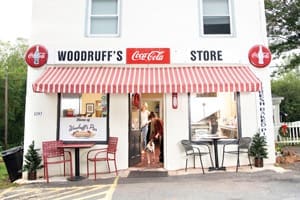
The concept of traditions is a common thread in this issue of Lynchburg Living—and it was a little by accident, to be honest—starting with our cover story about Woodruff’s Café and Pie Shop in Amherst County (page 133). It was an absolute joy to spend time at the shop with owner Angie Wilson and her family as I learned what has kept this shop going through the ups and downs. Hear what their well-known mother, Mary Woodruff, instilled in them, even up to the day she died earlier this year at 104 years old.

Another tradition many in this area know about, but may not know the backstory of, is the Troops Rally in downtown Lynchburg—a straightforward gathering of veterans 20 years ago that turned out to be a recurring weekly event (page 106). We are also highlighting a tradition that’s 50 years strong in the Hill City, the Virginia Christmas Spectacular at Thomas Road Baptist Church (page 53).

As you rush around to finish your Christmas shopping and make it to all of those holiday events, remember to step back and give your traditions the respect, and the breathing room, they deserve. They don’t have to be complicated, specific or even have a long history.

As I’ve learned, sometimes you just have to create your own.

Cheers,

Shelley Basinger, Managing Editor
Shelley@lynchburgmag.com


FAITH FAMILY AND THE RIGHT FLOUR

THE WOODRUFF’S CAFÉ AND PIE SHOP TEAM SHARES THEIR SECRETS TO SUCCESS

Photos by Ashlee Glen

Darnette Hill sits at a corner table folding boxes for what’s expected to be another bustling day at Woodruff’s Café and Pie Shop in Amherst County.

It’s Wednesday morning—since they’ve been closed since Saturday, they know customers will start rolling in right when the doors open at 10 a.m. The display case is full, and the shop’s ovens are working overtime, filling the tiny cinderblock building with mouthwatering scents of cranberry, sweet potato, and chocolate.

As she folds, Darnette and her twin sister, Darnelle Winston, laugh—with happy tears in their eyes—as they tell stories about “Mama,” who passed away in May of this year at 104 years old. Mary Woodruff, the matriarch of the family pie shop, used to fold boxes at the very same table and loved chatting with customers as they waited for their orders.

“She was here every day, no matter what,” said Winston, who works in the front part of the store and occasionally bakes.

“And Mama was negative about nothing. She was always positive,” added Hill. “We never thought about it until after she was gone just how positive she was.”

It was Mary’s positivity, along with the constant support of the whole family, that has kept Woodruff’s Café and Pie Shop going through the years, explained Angie Scott, owner of the shop and younger sister to Darnelle and Darnette: “‘Just have faith, Angie,’ Mama would always say.”

But it wasn’t always easy.

IN THE BEGINNING

Woodruff’s opened in January 1952 as a general store on land owned by Scott’s grandfather, selling gas and oil, chicken and hog feed, and grocery items. Her father built it with friends out of cinderblock.

“They did very well, the whole community stopped in,” Scott said. “A lot of people didn’t have cars so they would walk to the store.”

Woodruff’s was also home—Scott and her sisters lived with their parents upstairs, above the store. She recalled their unusual alarm clock.

“Mama would be so busy down here that she would take a broom and bang it into the ceiling that was right below our room,” Scott chuckled as she reenacted her mother’s morning ritual.

Thirty years later, the general store closed, unable to compete with big grocery chains. The building sat empty for a while before becoming an apartment and then a fish market for a couple of years.

In the ’90s, Scott’s wheels started turning as she attended a family reunion on her father’s side and learned more about the history of her family in the area near the shuttered store.

“I just really wanted to carry that history on,” she said.

A SLOW REVIVAL

With a 10-year background in the restaurant industry and a community college degree, Scott followed her heart and reopened Woodruff’s in 1998.

“It was small, I wanted it to be a little café,” she explained, adding that the dessert case didn’t come until later when she wanted to offer something sweet for lunchtime customers.

“I started going through cookbooks and finding recipes from family. Of course I used my mom’s sweet potato pie recipe,” Scott said.

By the early 2000s, she was branching out and baking other types of pies—but business was still slow. Scott even got a second job waiting tables to make ends meet. She was starting to feel like her faith in the business was running out.

“But the Lord kind of did some work in those 10 years and sent people that would help me,” said Scott.

One of those people arrived in 2012, a Southern Living writer who happened to be in the area for an assignment about apple orchards. Someone told the writer to stop by Woodruff’s for a slice of pie.

“I was making apple pie that day when she came in. She took a bite and said, ‘This is the best apple pie I’ve ever had’,” Scott said. “We were in their fall issue in 2013. Things started to turn around then.”

Things turned around so much that they had a hard time keeping up with demand, especially with just one oven at the time.

“I was turning people away because at 11 o’clock the pies were gone. So I had to bring in another oven,” she said.

More publicity came in 2015 when PBS produced a show called “A Few Good Pie Places.” Then in early 2020, the pinnacle of media coverage—the Today show came to Amherst County for a feel-good story about Mary and her role at the shop. It’s not uncommon now to have visitors from all over the country.

“We had a gentleman and his mother come from Ohio just this last weekend. They said [our shop] was on their bucket list. So we were able to give them a history and talk to them,” Scott said. “They bought five pies. People do that type of thing all the time.”

They now have five standard ovens, and recently added a dough press machine to save time making crusts. Scott’s next goal is to upgrade the space to a commercial kitchen.

MORE OR LESS

So what makes a Woodruff’s pie so irresistible that it’s worth a six-hour drive? Like many seasoned family cooks who have spent years creating the same recipes—it’s often kind of hard to explain.

“We don’t have many rules, I guess you would say,” Scott said. “Just trial and error.”

One of those trial-and-error experiences was finding the right flour.

“I had bought this expensive flour and it just didn’t work. We ended up using Walmart flour,” she said, adding that a customer offered to test it for them. Turns out, their favorite flour was low in gluten: “If the gluten [in your flour] is too high, you won’t get a good crust.”

The crust is the foundation of a good pie—and you might be surprised who is behind the Woodruff’s batter.

“Larry is the backbone of the kitchen,” explained Scott of her husband, an often unsung hero in all of the shop’s publicity through the years. “He is the best cook out of all of us. He makes all of the pie batter. He makes crumble, which is a big deal. He also makes our chicken salad and pimento cheese. We really couldn’t do this without him.”

Larry and Angie agree—it all comes down to timing. First, don’t overmix your dough when making pie crust. Next, according to Larry, how long you let the dough sit after mixing can affect how easy it is to work with if you are making a lattice top (his specialty).

“If she rolls this out and it sits for a few minutes, it seems to fall apart. If we use it right away, it doesn’t have to be quite as thick,” he explained.

They use a milk wash instead of an egg wash for the tops of their pies. Why? “Because we got tired of cracking so many eggs!” Scott laughed. “Milk does the same thing.”

When it comes to your fillings, follow your favorite recipe (and use fresh, local ingredients if possible) but don’t be afraid to experiment. For example, your family might like the taste of cinnamon a little more or less than a recipe calls for. You’ll actually see “more or less” several times in the pie recipes Scott shared with us on the following pages.

Finally, a little trial-and-error tip about fruit pies: “Put them on the lowest grate in your oven. I finally figured that out,” Scott said. “That will keep them from getting soggy.”

BEING MERRY WITHOUT MARY

Heading into the first holiday season without “Mama” will be an adjustment for this close-knit family. Partly because Mary Woodruff adored Christmas—from the caroling to the decorations—and equally loved a good snow.

But it may be her grateful spirit they remember—and try to emulate—this time of year.

“If someone gave her the smallest gift she would just love it and praise them for it. She was always so grateful for every single thing she received in her life,” said Hill.

Every single thing including that cozy corner table where Mary had the opportunity, every single day, to do what she loved the most—help the family business thrive.

“Even on her death bed and she only had weeks left, she was like, ‘I need to go over to Angie’s and fold some boxes’,” Scott recalled. “It’s been different without her and it always will be, but we are doing okay.”


TRY A PIE
Angie Scott shares a few of their top-selling recipes, but they are keeping their crust concoction under wraps. Use your own recipe or pour these fillings into a store-bought crust for an easy dessert option.

Cherry Pie

Ingredients
4 cups tart cherries
1 1/4 cups sugar
Pinch of salt
Butter
1/3 cup clear gel (a modified food starch found in baking aisle)
Dash of cinnamon or nutmeg

Instructions
Mix or toss ingredients lightly. Spoon into unbaked pie crust. Dot with butter. Top with lattice or regular crust. Brush crust with milk or egg wash. Sprinkle with sugar. Bake at 375 for 40 min.


Apple Cranberry Pie

Ingredients
6 cups apples (your favorite)
1/2 cup fresh cranberries
1 cup sugar (more or less)
2 tablespoons flour
Pinch of salt
3/4 teaspoon cinnamon
1/2 teaspoon nutmeg
1/2 teaspoon orange extract (more or less, optional)
Butter

Instructions
Mix dry ingredients. Dot apples with orange extract or a little fresh zest. Toss all together with cranberries. Spoon into unbaked pie crust. Top with crust or use cookie cutters to decorate. Dot with butter.

Bake at 375 for 55 minutes. When cool drizzle with icing. (You can make your own with confectioner’s sugar and water.)


Mama’s Sweet Potato Pie

Ingredients
2 hand-sized sweet potatoes (about 2 pounds), well cooked
1 1/2 stick butter
2 cups sugar
1 cup whole milk
4 well beaten eggs
1 pinch salt
2 teaspoons vanilla
1 teaspoon lemon extract
2 teaspoons nutmeg

Instructions
Mix well. Pour into two large unbaked, 9-inch, deep dish pie crusts. Bake at 375 degrees for 1 hour.


Pecan Pie

Ingredients
1 cup pecan halves
1/2 cup pecan pieces
1/2 cup sugar
1/2 cup brown sugar
1 cup light corn syrup
3 eggs
1/2 cup butter
1 teaspoon vanilla

Instructions
Layer pecans in pie crust. Mix all other ingredients together and pour over pecans. Bake at 350 degrees for 1 hour.


HANDMADE HOME FOR THE HOLIDAYS

Photos by Daryl Calfee

All Belinda Kelly wants for Christmas is power tools and vintage furniture.

Walking through the pink door of Belinda’s home explains why these are a few of her favorite things. The mid-mod furniture rehabber and decor DIY-er has managed to bring both a heaping handful of holiday magic and modern style to her once unassuming 1950s brick house in Campbell County. But the transformation couldn’t have happened without her trusty tools.

“We bought it from the original owners and builder, which was really fun,” she said. “They had maintained it really well but it visually still looked like it was 1959. Which is what we wanted actually, we wanted something that was well maintained but we could come in and make it exactly what we wanted. So we were super happy to find it.”

The home is the second fixer-upper for Belinda and her husband, Ian. Their first home was in truly rough shape when they bought it and, without much in the way of reno resources, Belinda decided to take matters into her own creative hands.

“My husband wasn’t super into building things when we first married but I was like, let’s get some power tools! We can totally do this! And he was totally down,” she recalled with a laugh. “When we bought our first home, I had just had a baby and I’m looking around this house and we didn’t have stuff to fill it and I thought, this feels sad. So I started picking pieces up and refinishing them or painting them, finding things that I liked and changing them to make them more of what I wanted, for less.”

Before long, Belinda’s talent for hunting down that perfect piece in imperfect shape led to not only lovely furnishings for her own home but also new opportunities as others began to take notice. She began selling her refurbished furniture on Facebook Marketplace, gained a following on Instagram (@belinda_fern), and started getting asked by followers and friends alike to help them design their spaces.

“It turned from selling to also people saying, ‘I like the style of your house, can you help me decorate? Can you come help me with my Airbnb? Can you help me design this space?’ So it’s turned slowly into me doing things for other people, from designing to decorating, redoing furniture to furnishing places, and things like that. It’s been a really fun creative outlet,” Belinda explained.

With more experience under their tool belt, the Kellys bought their current house and second fixer-upper. Dark wood walls, walled-up rooms, and centrally located stairs to the basement posed some unique challenges. Belinda focused on the positives she saw, like the original brass hardware and the mid-century style front door, and decided that—once again—it was power tools to the rescue.

“We took down a bunch of walls, took out a couple of doors,” she recalled. “We built the [stair] railings and installed those [around the newly opened stairwell] and built the cabinets on the other side. I love it now. It turned out to be one of my favorite things about the house.”

With the small footprint now much larger and brighter on the main floor, Belinda shifted her focus to the kitchen, where she painted the cabinets and backsplash, built a cabinet to surround the refrigerator, added new pulls, sewed curtains for the windows, and installed new IKEA countertops.

Unsurprisingly, Belinda’s hands-on approach to life has rubbed off on her son, who has been around the couple’s numerous projects since he was born.

“He has his own little hand tools and he will come and do things with us. He is definitely interested in building things, he is constantly creating things out of cardboard, and has shown interest in the projects we are working on,” she said.

As evidenced by the carefully curated pieces and the “where’s all your stuff?” vibe, Belinda has given thought and intention to each part of her home. Neither sparse nor superfluous, each room is warmly but precisely styled, with a place for everything and everything in its place.

“I like things a little more minimal than probably most people. I’m not a hard-core minimalist at heart but I like things to be pared down and feel like they can breathe and be uncluttered,” she explained. “This is also why I like the streamlined feel of mid-century pieces. They have a lot of clean edges, there aren’t a lot of extra curves and things like that going on. They just feel nice and modern, which appeals to me.”

This love for mid-mod style did pose a bit of a challenge for Belinda when it came to holiday decor. With a husband she describes as a “Clark Griswald Christmas lights” kind of guy and a son still young enough to appreciate the wonder of the season, Belinda has invested in discovering items and ornaments that she loves.

“I definitely lean a little Scandinavian anyway, so I started searching for Scandinavian Christmas decor, which is a lot of reds, which I don’t normally do, but I do like little touches of red at Christmas, and little ceramic houses and little trees. So I feel like I’m finally finding what I really like, which is kind of a mix of a bit traditional but also a bit more modern. I really like how it looks this year,” she said.

The one departure from her “less is more” mantra is the tree, which is strategically busting at the seams with ornaments that somehow appear both artfully placed and perfectly at home on each branch.

“It’s big, it’s got lots of stuff on it, [my son] loves to stand and look at the different ornaments and pull them off, and sometimes the dog pulls them off too!” Belinda said. “It’s different than I would normally lean if I were to go pick something, but I actually really love this tree. It has a lot of family ornaments. I really like that we have handmade ones that my husband’s grandmother made and stuff my son has made. It all gets thrown on there.”

Included among her favorite ornaments are those her son has created over the years and one that a friend made for them the year Belinda and Ian got engaged. Traditions in the Kelly household are simple but memorable: making Christmas crafts and an abundance of cookies, plus an annual voyage to Busch Gardens Christmastown. The presents under the tree are carefully chosen, reflecting their home as a whole.

With stockings hung by the chimney with care, no power tools in sight, and unfinished furniture projects tucked away in the basement (for now), Belinda enjoys pressing pause on all of the busywork so she can be present for her family during the memorable holiday season.

But when the New Year arrives, she already plans to add a new skill to her list: “I really want to learn to weld.”


Behind the Scenes Nov/Dec 2021

Stealing the Show

After having to reschedule once due to heavy downpours and storms, we were more than ready to hit the ground running at our cover shoot at Woodruff’s Café and Pie Shop in late September.

The most memorable part of the shoot was a four-legged “extra” who really, really, really wanted to be in the spotlight. The local dog is known to spend some time around Woodruff’s, but they told us they had never seen him be quite this clingy before. (It probably didn’t help that shop owner Angie Wilson was holding a delicious pie in front of her while posing for a photo outside. What dog could resist that?!)

He was particularly fond of editor Shelley Basinger, partly because she spent most of the shoot petting him while holding him back as photographer Ashlee Glen took photos.
He even tried to get in Shelley’s SUV when she left!

Turn to page 133 to see our cover story about Woodruff’s in our Taste department!


The Troops Rally

Lynchburg’s Longest Weekly Consecutive Event Shows Support for Veterans, Active Military and Their Families

Vietnam War veteran Steve Bozeman didn’t realize what he had gotten himself into on Nov. 30, 2001 as he organized a peaceful gathering in downtown Lynchburg. Little did he know, that event would have massive influence on the greater Lynchburg veteran community and surrounding areas in the years to come.

Following the tragic events of 9/11, President George W. Bush deployed troops to Afghanistan. The world watched as the United States plunged into conflict with radical terrorist groups the Taliban and Al-Qaeda.

Photos by Ashlee Glen

Meanwhile in Lynchburg, a protest opposing the war occurred on the steps of Monument Terrace in downtown Lynchburg, an iconic city location. In response to this protest, 80 veterans and patriots, led by Bozeman and several others, gathered on the other side of the street to peacefully counter the demonstration and show support for the war efforts in Afghanistan. At that point, there were no American casualties in what would become a near two-decade feud.

Following the counter-protest, World War II veteran James Hazelwood asked Bozeman, “Is everyone coming back next Friday to have a second rally?”

Photos by Ashlee Glen

“Well, I didn’t plan on it myself,” Bozeman replied. It just so happened that the following week, Dec. 7, was the anniversary of Pearl Harbor, the infamous Japanese air strike in 1941 that claimed nearly 2,400 American lives. Upon this realization, Bozeman agreed: “Hell, yeah I’ll come back!”

Several others gathered at Monument Terrace on Dec. 7, 2001, to commemorate the lives lost at Pearl Harbor and to again show support for American troops in Afghanistan.

“Then we came back the third week, and people just showed up, and the momentum built up from there,” Bozeman said.

Photos by Ashlee Glen

Since that first Nov. 30 gathering, the weekly Friday meeting known as the “Troops Rally” has taken place every consecutive Friday, totaling more than 1,040 weeks. Veterans, families of veterans, and members of the city and surrounding areas congregate to remember the sacrifices and celebrate American heroes.

“You can’t walk away from the Troops Rally without having inspiration in patriotism that’s displayed there every Friday,” Bozeman said. “To me, this is very fulfilling. My heart swells with all the things that we have done for two decades now. And it’s only starting.”

The weekly gatherings are as unique as their meeting place: Monument Terrace. This iconic downtown Lynchburg location honors the lives lost throughout America’s darkest conflicts, beginning from the Civil War.

The landmark has 132 steps and is decorated with several markers and monuments. Even since being renovated in 2002 and fully renovated in 2004, the Troops Rally has found ways to remain near the monument every Friday. There is even a designated “veterans’ room” 100 feet away from Monument Terrace that houses pictures, plaques, and posters, as well as other memorabilia.

Photos by Ashlee Glen

“There’s always an obstacle,” Bozeman said. “Marines have a saying, ‘improvise, overcome, and adapt,’ so we’ve figured out how to get through all of that.”

Meetings always end with the singing of the National Anthem, followed by announcements and the toll of the bell eight times at one o’clock—signaling “ending the watch.”

The group has campaigned for different local veterans’ efforts, including holding fundraisers for Richmond’s Hunter Holmes McGuire Hospital and supporting the National Center for Healthy Veterans Valor Farm in Altavista.

“The mission statement has always been ‘support our troops’‚” Bozeman said. “We do that, and we also support each other. The word has gotten out there that this is going on every Friday. The media has helped get the word out.”

Photos by Ashlee Glen

Between 50-80 participants, mostly Vietnam War veterans, attend the weekly gatherings on average. But thanks to heavy media coverage over the years, hundreds and even upwards of 1,000 have shown up depending on the occasion. On Sept. 10, the eve of the 20th anniversary of 9/11, the entire street was blocked off for the event.

The impact of these simple Troops Rallies can be felt throughout the Lynchburg community. Many nonprofits that specialize in veterans’ issues have found roots in the community because of the activism and attention brought about by the Troops Rally. One of these initiatives is the Lynchburg Area Veterans Council, a publicly supported 501c3 that for seven years has helped veterans avoid homelessness.

Photos by Ashlee Glen

The Lynchburg Area Veterans Council, which started in the American Legion building on Greenview Drive, has received grants from Pacific Life and the Greater Lynchburg Community Foundation. It also organized and executed two veterans’ parades, the first ever in Lynchburg since 1938.

“If we didn’t have the weekly Monument Terrace Troops Rallies going on for 20 years, I don’t think there would be a Lynchburg Area Veterans Council,” said Tom Current, a retired army Colonel in Special Forces, and the president of the Lynchburg Area Veterans Council.

Eighteen months ago, the Lynchburg Area Veterans Council purchased the birthplace and childhood home of Desmond T. Doss, a Lynchburg resident and a Medal of Honor recipient who saved 75 people during World War II. The Garfield Avenue property is being used to house previously homeless veterans. The City of Lynchburg even adopted a proclamation making Oct. 12 Desmond T. Doss Day in Lynchburg.

Photos by Ashlee Glen

The National Center for Healthy Veterans at Valor Farm, a nonprofit that helps veterans avoid suicide and reintegrate into society, recognized the tremendous veteran support in Lynchburg and the surrounding area.

“Veterans share this bond, and I’ve tried to figure out what that is, and I think I have the answer,” Current said. “Veterans served different capacities, and we all put the mission ahead of our own desires. We put ourselves second. That takes character. That’s what binds all these different veterans, different ages, different services….”

Photos by Ashlee Glen

“There are a lot of good Americans who have character and understand what it means to have a heart of a servant,” he added. “And that’s why I have hope.”

Bozeman, who has attended over 1,000 meetings, said that the purpose of the Troops Rallies has always been and will always be about supporting troops, veterans, and their families. He doesn’t see the weekly gatherings ending anytime soon.

“Everyone feels connected. Everyone is glad about what is going on in Lynchburg,” Bozeman said. “The future is unknown. We still have troops all around the world. So, I don’t see these Troops Rallies going away.”


THE CHRISTMAS CACTUS TRADITION

We take part in many horticultural holiday traditions in the United States, but there’s only one that is beautiful, long-lasting and great for gifting: the Christmas cactus.

Your Christmas tree will eventually turn brown and end up on the curb along with your wreath. Your poinsettia will lose its eye-catching color. But this unique winter-flowering plant can live for literally hundreds of years. Also, cuttings are often given as gifts and passed down through generations, making them the perfect candidate for a special holiday tradition.

There are three popular holiday cacti: the Easter cactus, the Thanksgiving cactus, and the Christmas cactus. Though they can be difficult to tell apart, there are a few subtle differences. The “leaves” of the Christmas cactus will be softly scalloped or bluntly serrated, while the Thanksgiving cactus will be sharply serrated with a claw-like projection on its edges. The Easter variety has very rounded leaf edges.

Cultivating a Christmas Cactus

If you have an established plant, you can actually coax these holiday cacti into blooming with just a few tricks, but you need to get started on this well before your desired bloom date. About six to eight weeks before you want to see some color, you’ll want to make sure your plant is moved to a cool, dark location.

Though the Christmas cactus is native to the rainforests of Brazil, they are actually stimulated to bloom with low lighting and cool weather. Fifty-five degrees is ideal. You’ll also want to make sure they receive 12 to 14 hours of darkness a day. This seems counter-intuitive, but these conditions actually encourage the cactus to put on heavy buds, because the plant thinks it’s dying. In an effort to reproduce, the cactus will bloom.

During this period, water sparingly—only when the soil dries out. At every other watering or so, you might want to use a gentle fertilizer higher in phosphorous. You’ll notice a lot of little buds developing on your plant in no time.

Once your plant is heavy with buds and ready to bloom, put it on display and it will be sure to wow your guests and add a burst of natural color to your Christmas decor. These plants can be kept to bloom on their own time on a shady porch or in your house. Just be sure to maintain mild conditions, dappled sunlight and a humid but not overly wet environment.

A Green Gift to Others

Of course, if you plan to gift cuttings of your cactus, you’ll want to avoid taking the cuttings while the cactus is in bloom or heavy with buds. A few weeks before Christmas is a great time to take the cuttings and propagate individual plants. Better yet, if you get them repotted before Thanksgiving and gift them on turkey day, your friends just might get lucky and have their own blooms by Christmas

These cacti are “epiphytes,” like the very trendy air plant. In their natural environment, they grow on other plants. As such, they prefer a loamy potting mix over traditional soil. Prepare a pot with a moist (but not soaked) cactus or succulent blend soil. You can find this at most garden centers. You can also make it yourself by mixing your own blend of 50 percent peat moss and 50 percent perlite.

Look for healthy leaf segments on your mature Christmas cactus. Then, choose a piece with at least two or three healthy segments above the bottom. The more leaves, the better, as long as you don’t leave the parent plant with too few.

Carefully twist the lower leaf segment off of the plant, being sure to get the very bottom of the segment where it attaches to the top of the one below. You should pull out a small root with it. Then bury the cutting about half way up the bottom segment into the prepared pot, just deep enough so that it can hold itself up.

Some people elect to let the cutting “heal” overnight before repotting it. Your baby cacti will need to be watered or misted only when the top layer of soil is dry. Watch it closely though—this soil type dries out quickly. Once a good root system is established (after about two weeks) you can water more heavily—but remember these plants do not like wet feet.

This plant truly embodies the spirit of the season: offering up beautiful cold-season color, requiring virtually no work, and even doubling as a sentimental and lasting Christmas gift.


Sparking Joy

PHOTOS BY ASHLEE GLEN

A stroll in Downtown Lynchburg is now a lot brighter with the installation of Art Alley, a vibrant public art display that includes an outdoor gallery, large-scale murals and a painted street.

“The vision for Art Alley came out of a desire to bring more life, color, and vibrancy to our growing Downtown,” said Ashley Kershner, executive director of the Downtown Lynchburg Association (DLA).

Art Alley, located at the end of 11th Street (between Commerce Street and the Bluffwalk), is described as a placemaking project. These projects focus on transforming public spaces and improving the quality of life in the area.

Susan Brown, program director of the DLA, led the way in the planning for Art Alley with her art-focused background.

“When it came time to get deep into planning for Art Alley,
I was thrilled,” said Brown. “I tapped into my inner museum nerd and it gave me a chance to use my art history degree.”

Brown and the DLA put out a call for artists to submit artwork centered around the theme of “sparking joy.”
They received so many incredible submissions, the Spark Joy Gallery now includes 11 pieces from local artists (see list below). The DLA had originally made room for eight.

The various murals seen in Art Alley took a lot of time, planning and elbow grease to complete. Lisa Jonas illustrated the street mural; DLA staff and 50 volunteers helped paint it. Local artist Christina Davis illustrated one of the featured murals, Tales from the Garden. Emily Herr, of Richmond, created another mural called The Secret Recipe on the garage door. The mural was inspired by her time visiting Lynchburg. Deidre Stone painted the two sets of doors located in the alleyway—inspired by the sun, moon and stars, they make great backdrops for photos.

As you shop local this holiday season, be sure to stop by and see this new, very joyful, addition to Downtown Lynchburg.

Featured Artists in Gallery

Morning Glory by Kate Mitchell

Winter’s Morning by Hanan Davis

Color Sorbet by Morgaine Godwin

I Can, Too by Russ Voelker

The Warm After Winter by Megan Davies

Peace Out by Meg Weston

Playful Clouds by Deliece Blanchard

Cosmic Kiss by Ella Morrison

The Cry of Jazz by Angus Carter

My World by Summer Raulersen

Escape by Emily Stilwell


Author Profile Leah Weiss Nov/Dec 2021

Author, All the Little Hopes (2021)

Although I hadn’t met Leah Weiss in person yet, once I walked up to the bright orange front door of her Lynchburg home, I had a preview of the personality I was about to encounter. Before I could even knock, Leah was welcoming me into her warm living room with unique artwork covering every wall. Many of the pieces were created by her son, local artist Paul Clements; Leah crafted many others herself through the years.

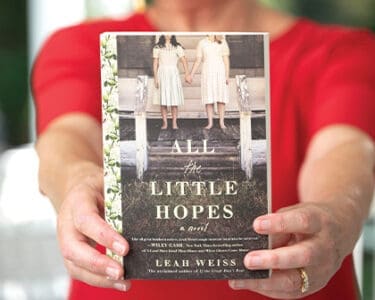
But I wasn’t there to talk about the visual arts—but rather the literary arts, Leah’s rising fame and how she became a bestselling author after retirement. Her first book, If the Creek Don’t Rise, has sold over 100,000 copies since it came out in 2017. Already following in its footsteps is All the Little Hopes, released last July and named a Best New Book for Fall by Country Living Magazine.

Shelley Basinger: I was so happy to learn from your bio that you are a fellow Tar Heel! North Carolina is the setting for All the Little Hopes.

Leah Weiss: We are Tar Heel sisters, aren’t we? I was born in eastern North Carolina, and that’s where my mother grew up as well. She was one of 15 children, born in 1926 on a tobacco farm, with no running water and no electricity. Back in 2004, when I was still working at Virginia Episcopal School as Assistant to the Headmaster, I hoped to write memoirs about her life. I recorded our afternoon conversations. I remember her saying, “I never thought anyone would be interested in my simple life.” We didn’t know at the time that she had lung cancer and would be gone in five months.

SB: I’m sure you treasure those conversations now. What did you learn from her that helped you lay the foundation for this book?

LW: One afternoon, she said German POWs helped with the tobacco market in 1944. I had never heard of Nazis in Carolina. I ended up talking to a historian in my birth town of Williamston, NC, that was home to one of the 18 NC camps utilizing 10,000 POWs working tobacco, peanuts and cotton. I visited Williamston’s museum and saw photos and read articles. And yes, 355 Germans had lived and worked in there for two years. I thought they would be the heart of the next book.

SB: What changed your mind?

LW: The memories that community told about the Germans were tender ones. While I knew I wanted to include them in the book, I needed a grittier plot with a darker underbelly. Enter Nancy Drew, my childhood idol. She was exactly the assistant I needed.

SB: Nancy Drew worked perfectly with your two main characters, who I instantly adored in different ways.

LW: After trial and error, I ended up choosing two 13-year-old girls as narrators of a war story that spanned three years. I named one Lucy for my mother and the other Allie Bert for her mother. They were different but united by their youth and their insatiable curiosity. Nancy Drew became a tool to get the girls into trouble as they solved a local mystery that in their mind grew into The Case of the Three Missing Men.

SB: What is your approach when determining a plot line? Do you plan it out or let it evolve?

LW: I’ve tried outlining (which is logical), but my characters never follow directions. My goal in both books—besides putting tension on every page—was to find interesting characters to tell the story. I look for a balance much like a delicious buffet: starchy, sweet, spicy, and some quirky characters thrown in for good measure. It takes a variety of unforgettable characters to create a cohesive community.

SB: What type of writing training or education do you have?

LW: I don’t have much formal training and always tell people I’m still learning the craft. I wrote some short stories beginning with my mama’s memoirs, then wrote a book that didn’t sell. I took my first writing class in 2014 at Wild Acres near Little Switzerland, NC. It’s a magical creative center with many different offerings besides writing. Ever since, I’ve returned for the two-week Writers Retreat and Workshop.

SB: What positive role do you think reading plays in our often chaotic world?

LW: Imagination is an amazing gift, something we are born with but it needs to be fed or it becomes stilted. Reading takes us everywhere. And I love reading out loud and encourage the practice. My background was in music, so I love the rhythm and poetry of language.

SB: And finally, my favorite question. What’s next for you? Will there be a book number three anytime soon?

LW: How I wish I had a clear vision today, Shelley, but the good news is that a premise is percolating. For now, I’m enjoying this wonderful ride with All the Little Hopes and hope it will have the staying power of If The Creek Don’t Rise.


You can find signed copies of Leah’s book, All the Little Hopes, at Givens Books on Lakeside Drive.
Visit her website, www.leahweiss.com, to learn more and also send her a message.