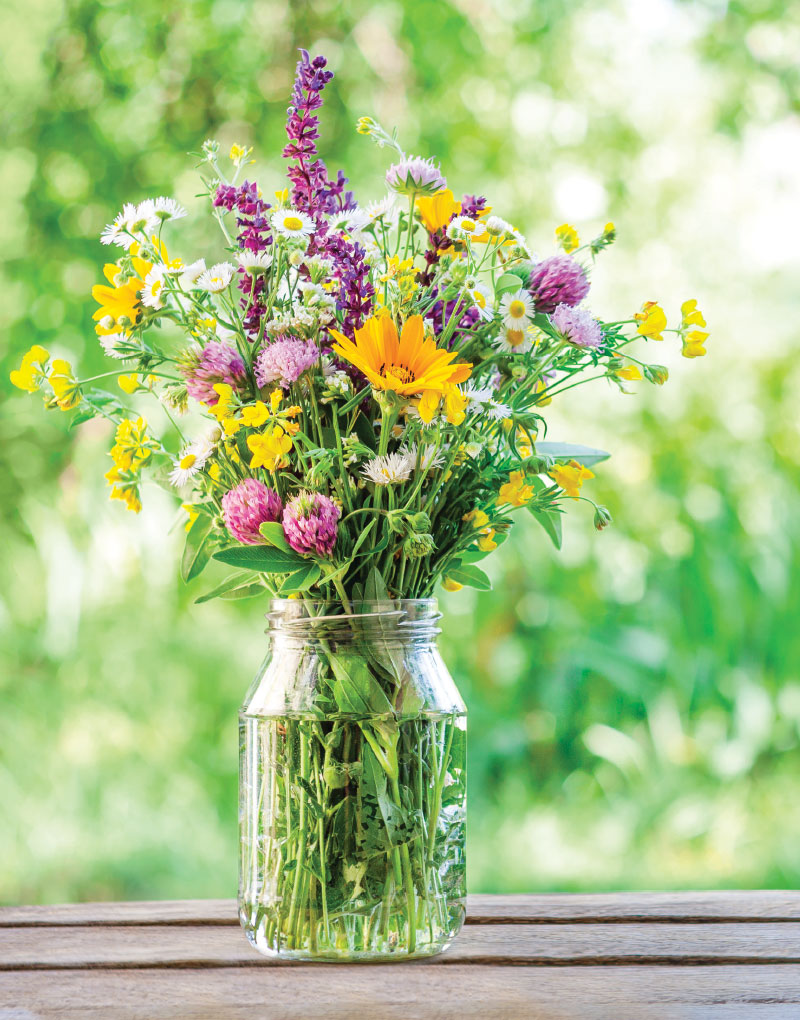
Decorating with Plants

Without a doubt, houseplants are having a moment. From major retail collabs with plant wizards such as Hilton Carter or local Facebook listings with propagated plants for sale, they’re everywhere lately. Interior design is no exception to this trend and proves that you can integrate plants in some unexpected but accessible ways.

Here are the best tips we gathered to get you started from local experts Emily McGowan, Owner and Lead Designer for Elm Home Design, and Tera Janelle of Tera Janelle Design.

Why Try It?

Yes, it’s a trend right now, but plants are timeless, says McGowan, “Plants in a home add so much warmth…[and they] add interest and texture without making it look too cluttered.”

For Janelle, bringing the outdoors in is part of her routine. “Each year when spring arrives, we pick up ferns and set them in large planters around the house, both indoors and out,” she says. “They can be a bit messy, but they always bring a sense of breezy spring and summer to the house.”

In the cooler months, Janelle adds “dry, decorative grasses to the bar cart for some seasonal coziness.”

Where To Start
“The best advice I could give is to start simple and small,” says McGowan.

When choosing new plants, she always speaks with the horticulturist: “I explain what I’d like the plant to look like, how large I want the plant to get, and how much time or energy I want to put into it, etc.” These questions can help guide you to the right selections.

McGowan says while “Google is your friend” for immediate questions, purchasing from “local nurseries is your best bet; they will always have a wealth of knowledge.”

Ultimately, McGowan recommends choosing a plant because you “love the shape and look of it.”

Where to Place Them
McGowan loves a classic vignette when staging a room with plants. Start with a coffee or side table and “stack two to three books and with a small potted plant on top of them,” she says; or “place a pretty, potted plant on open shelving, countertops, entry tables, etc.; plants literally will work anywhere!”

For Janelle, she prefers specific plants in certain spaces. “Potted orchids are one of my absolute favorite potted plants,” she says. “They can last a month or longer and can be found affordable at the grocery store; I love them on a bathroom vanity or in a shower, and they thrive in the humidity.” Hanging plants can also do well in smaller spaces such as bathrooms; both pothos and hoya plants fill out nicely and are resilient.

In a kitchen, Janelle will add potted herbs—great for cooking, while also “lending a casual English feel” to the space. McGowan loves small potted plants by the sink. For the island, “a collection of oversized branches is one of my favorites,” Janelle says. “Butterfly bush branches, Japanese maple, forsythia, magnolia, and even ‘scrub trees’ are a few easy-to-find favorites.”

Finally, don’t neglect even the most mundane spaces in your home such as your pantry and laundry room. “Blooms feel casual and inviting,” says Janelle, “And they bring a dose of fresh air to the workhorse rooms of the house.”

Vessels
Keep in mind the general aesthetic you want for your home when choosing how to display your plants. Take a small maidenhair fern—for a classic, traditional feel, you can nest it inside of a bust (a popular choice right now) or, for a more down-to-earth approach, select a simple terra cotta pot (these patina over time for some added charm).

Both McGowan and Janelle recommend baskets to house larger plants. “I love [fiddle leaf figs] set in affordable baskets, with plastic planter liners tucked inside,” says Janelle. Situate these larger plants (say monstera, snake, or rubber plants) near a fireplace, in a corner, or, says McGowan, next to a console table.

Janelle recommends always keeping several clear vases of different shapes and sizes on hand; “I’ve purchased these everywhere from Walmart to Goodwill to Pottery Barn,” she says. “They are super versatile and great for gifting cuttings from your yard and garden.”

For something unique, think outside the box. With the proper lining, pitchers, distinctive mugs, and baskets can all be repurposed to house a plant.

The Importance of Patience
My grandfather has cared for hundreds of houseplants throughout his lifetime; his best care tip: “Be patient; things take time.”

McGowan echoes this wisdom, saying, “It’s a commitment to have some plants, and you have to be willing to take the time to care for them. In the long run, it’s worth it to have that greenery in my spaces.”



Living Out Loud March/April 2022

Social Media Buzz
Lots of readers were quick to weigh in on social media about our Top Teacher surprise at Brookville High School. In January, we caught math/physics teacher Corey Bonheim off guard with the news that he was selected as the #1 Lynchburg Living Top Teacher.

Jordan Evans wrote on Facebook: “He made physics so much fun. He completely deserves it!!!” Tiffany Burnette added: “So well-deserved. I always looked forward to his class. Congrats!”

Check out the full list of Top Teachers starting on page 89!

Community Calendar
Want to spread the word about your organization’s event? We’ve set up a new community calendar on our website where you can submit all of the information easily!

Just visit www.lynchburgliving.com/calendar-of-events/ to get started.


Home is Where The Art Is

Madison House of The Arts Uplifts the Community Through Art and Outreach

The energy in the room was palpable.

The sounds of voices and live music intermingled jubilantly as the tantalizing smell of pizza wafted through the air.

At the center of the scene was a young man playing his bass, his entire being radiating joy. It was his 18th birthday, and he was celebrating it at Madison House of the Arts, a nonprofit organization dedicated to uplifting the Lynchburg community through art.

“I don’t think I’ve ever seen an 18-year-old that happy before,” recalls Christopher Townsend, Director of Madison House of the Arts. “His birthday will be memorable because Madison House gave him what he needed at that time. It was a sober environment, he was surrounded by most of his close friends, and they were just enjoying pizza, cake, music, and conversation.”

This and other experiences of joy, belonging, healing, and hope are everyday occurrences at Madison House, which has evolved a great deal since it opened about five years ago.

Madison House began as a small arthouse gallery in the basement of Carrie Robinson’s home on Madison Street. “Carrie started it to help local artists get their work out in the community and keep the money they make from their art and to allow people—especially those living in lower-income housing—to get together to see that art,” Townsend says.

When Robinson moved, Townsend wanted to continue to run the gallery while also adding a community outreach component. His outreach ideas centered around helping people fulfill basic human needs and providing a safe space for people to express themselves.

“I know an investor named Rachel Burns,” he says. “She was very interested in the arthouse and in the mission that I had for it, which was basically to use art as a stepping stone to community outreach: feeding people, clothing people, giving individuals a bigger voice, and allowing people to start programs within the arthouse. I also wanted to create a safe, sober environment for individuals who are on their recovery journeys.”

On July 30, 2021, Madison House officially became a nonprofit. The Board of Directors was selected thoughtfully to ensure that the nonprofit can succeed in its missions; to that end, two board members work in the mental health field.

artist profile“When forming a board, I wanted to make sure that we were using art in the right way,” Townsend notes. “We try to create a therapeutic environment where we can use encouragement and sincere love to breathe life into people.

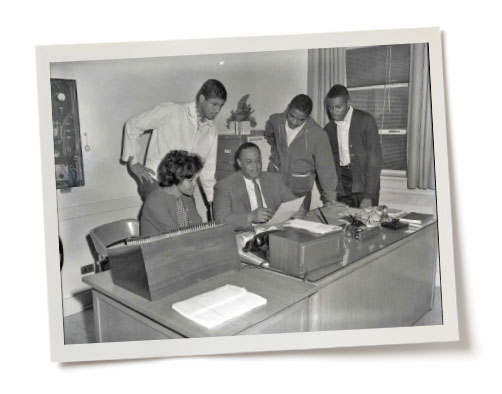
It comes down to actually listening and caring about people’s dreams and about where they want to go in their lives.”

In addition to listening and encouraging self-expression, Madison House first and foremost helps people take care of their basic needs.

Two of the most pressing issues that Madison House tackles are food insecurity and clothing needs, and it does so through a community table in front of the house.

The community table offers free canned and boxed foods, beverages, hygiene products, and clothing items to anyone who needs them. Cash and item donations from the community help keep this table—and a recently opened pantry inside the house—stocked. Everyone at Madison House is a volunteer, and all donations go toward services and programs.

“We now have a pantry inside called Leah’s Place,” says Townsend. “It allows individuals to come inside, have coffee, and get food essentials and clothing items.”

Madison House also offers use of bathroom and shower facilities, counseling, and connection to shelter resources for homeless individuals.

When it comes to art, Madison House offers a myriad of different programs that allow participants to express themselves creatively and observe others doing the same.

Currently, open jam and art sessions take place Monday, Thursday, and Sunday nights from 6:00 to 10:15 p.m., and the Blacklight Poetry Lounge occurs Saturday nights from 7:30 to 11:30 p.m.

“The poetry lounge allows individuals to come in and do spoken-word poetry,” Townsend notes. “We’ll be streaming outside spoken-word artists in and [streaming] in-house artists out. One of our board members, Angelina Dawn, is a spoken-word artist who draws a large crowd. The spoken-word community has a powerful voice, especially in the African American community. A program like this offers a really good platform for people to speak, and the only rule we have about speaking is that we don’t allow hate speech.”

Townsend is particularly excited about a program planned for the spring that will allow young people to enjoy a comprehensive music-making experience, the “in Tune” music program.

“We’re partnering with the UP Foundation and a business called The Vinyl Foundry,” he says. “The program is going to be a donor-based program, where individuals can donate on a monthly basis. We’re hoping to take on at least ten participants under the age of 21 at a time. Participants will get to learn about the basics of music, write music, and record music.”

In an effort to further convey the importance of giving back to the community, Madison House will require participants to perform community service.

“In order to get their recording time at the music foundry, participants have to do community service, and the funds from the donations will be dispersed from us to The Vinyl Foundry to record their music,” adds Townsend. “I spent the majority of my professional career before COVID on the road with artists and musicians, and I try to let young people know that being an artist or a musician is a form of serving. You are serving a basic human need by connecting.”

After all, meaningful connection is the cornerstone of Madison House’s mission.

“We pride ourselves in going out into the community and asking people what they need,” Townsend notes. “I think that all of our artists really try to connect with the community and use their art to try to relate to and raise awareness about those needs. A lot of our youth especially have something to say about what’s going on around them. I feel like the house has become a place for youth to learn more about who they are.”

The fact that Madison House is just that—a house—contributes to its ability to make people feel comfortable and safe.

“There’s something about this home that’s really inviting,” says Townsend. “A house is made up of different rooms with different personalities, and when people step in here, they’re immediately drawn to different parts of the house. It doesn’t matter if we all get along; it just matters that we’re all a part of the home. We all bring something to the table.”

In the future, Townsend hopes that Madison House will “grow responsibly” and that he and other volunteers can continue to help people in the same way that a certain musician helped him years ago.

“I don’t think I ever would have been able to get here without two things: God and the experience of touring with the musician Matisyahu, who gave me a chance when I needed it the most,” he says. “Because an artist breathed life into an artist, it gave me hope for my future. You’ve got to breathe life into people and let them know that they’re going to be OK.”


Photos by ROGER PRICE


Editor’s Letter March/April 2022

The Best Learning Experience

In March 2016, I got a text from a friend, the former of editor of Lynchburg Living, telling me about her old spot opening up. “I thought of you,” Johanna Calfee said.

At the time I was five months pregnant with my daughter, and had just left the local TV industry for a marketing job, so I wasn’t really envisioning another career change. But the more I learned about the Lynchburg Living editor position, I realized it was one of those opportunities you just couldn’t walk away from. Before I knew it, I was officially accepting the job.

In the months that followed, I got a crash course in the magazine world.

I learned that a “dummy book” may sound stupid, but it’s actually the layout of the entire magazine. I learned writing a two-word headline can sometimes take days. I learned there is a difference between a hyphen and a dash…and that there are actually two different kinds of dashes.

I learned that I had a lot to learn.

While I had grown accustomed to the simple, no-fluff copy needed for TV news, this job challenged me to go back to the creative writing roots of my childhood and teen years, where there is room to elaborate. My first long-form feature was a lesson in patience, organization and time management.

And after spending about nine years working in local media, I thought I knew pretty much everything about greater Lynchburg—but turns out I didn’t even know the half of it. From the scope of our nonprofit community to a plethora of amazing artists, I re-discovered this region from a different viewpoint—and I have absolutely loved it.

But in life, sometimes it’s about learning when to move on.

As I approach nearly six years in this position, I have made the very difficult decision to move on to a new career opportunity. I am grateful to have been given the enormous responsibility to lead this magazine and its sister publications and extend a huge thank you to the leaders in our home office for entrusting me with these pages.

I particularly want to thank my co-worker, friend and Lynchburg Living art director, Chris Meligonis. He has held me together through challenging deadlines, two fussy babies, and all of the personal and professional in-between. If you want to know who the true backbone of this magazine is, it’s Chris.

I can honestly say I am moving on to my next chapter with more appreciation for the magazine industry, creative writing, and, most of all, the incredible community we all call home.

And also, I must add, a life-changing understanding of hyphens.

All My Best,
Shelley Basinger, Managing Editor
Shelley@lynchburgmag.com


Legendary Educators

Lynchburg’s past is full of inspirational figures, but those who have shaped the minds of young and old alike have always been our teachers.

With the help of the Lynchburg Museum System, we took a look at three of those impactful educators who lived, worked and taught here in our city and were the ones to pave the way during a time when it may not have been as celebrated as it is now.

amelia perry

Amelia Perry Pride (1857-1932)
Not only was Pride an African-American elementary school teacher and principal for 30 years, she was also well known for her larger contributions to the Lynchburg community.

Pride attended Hampton Institute, now Hampton University, and returned to Lynchburg to begin her teaching career, where she was one of the first Black teachers in Lynchburg City Schools. She later became principal of Polk Street Elementary School.

In 1897, Pride established the former Dorchester Home on Pierce Street or what some called the “Old Folks Home for impoverished former slave women.” According to a city historical marker, it provided shelter, fuel, clothing and food for its residents until their deaths.

The marker also states that, “Following Hampton Institute’s principle of uplifting her race through self-help, Pride was a passionate advocate of African American and Virginia Indian education.”

Pride provided scholarships for many young women seeking higher education and established sewing and cooking schools for women and men entering vocational fields. Her namesake lives on at the Amelia Pride Center on the grounds of Dunbar Middle School, which houses several alternative and adult programs.

Edward-Christian-Glass

Edward Christian Glass (1852-1931)
Glass was Lynchburg’s long-time public school superintendent and namesake of E.C. Glass High School on Memorial Avenue.

According to Museum Director Ted Delaney, Glass’s most monumental contribution to our community was that he ensured that public education in Lynchburg was viable at a time when many citizens opposed the idea of taxpayer-funded, government-run schools.

Glass became superintendent of Lynchburg’s public school system in 1879 at the young age of 26 and served for nearly 53 years, according to a city historical marker. He established and for 18 years oversaw a summer teachers’ institute that trained thousands of teachers from Virginia and beyond.

Glass co-owned and co-edited the Virginia School Journal, which for years was the official organ of the state’s Department of Public Instruction and the Educational Association of Virginia. Glass was president of this association and twice served on the State Board of Education.

According to the marker, Glass wrote several textbooks, including Glass’s Speller. Lynchburg High School was renamed in his honor in 1920, and a new E. C. Glass High School opened in 1953.

CW-Seay

Clarence W. (or “C.W.”) Seay (1900-1982)
Seay was an African-American, long-serving principal of Dunbar High School from 1938 to 1968. At the time, Dunbar was Lynchburg’s secondary school for African Americans. According to Delaney, he was the last principal before integration and a beloved advocate for his students and faculty.

Seay believed in the connection between school and community. According to a historical marker in the city, he shaped Dunbar High School into a school of academic excellence, holding that a “successful school and its community are inseparable.”

According to the Lynchburg Museum, Seay spoke out against injustices within the education system and encouraged Black schools to hire Black educators, administration, and personnel, and to seek Black leaders for the School Board.

He later became the first high school principal elected to the presidency of the Association of Colleges and Secondary Schools. After his retirement in 1968, Seay taught at Lynchburg College, now University of Lynchburg, and held the position of Assistant Professor of Education. He was the first and only African American to be employed by the school at the time.

He later served two terms as Lynchburg’s first Black city council member since the 1880s and the first Black vice mayor.


Impressive Upgrades

Behind-the-scenes at three local business makeovers

When it comes to interior design and style, there is often a lot of focus on our homes and personal spaces. But timely renovations and updates are just as important in the business world too. These improvements—whether they are large or small—can substantially improve the overall ambiance for employees and customers, leading to less turnover and, hopefully, an improved bottom line.

Here, we spotlight three recent business overhauls that show a dramatic transformation from start to finish.

Milano’s Enoteca & Italian Ristorante
Renovations Started: Late Spring 2021 | Renovations Completed: Aug. 2021

Local favorite Milano’s Enoteca & Italian Ristorante in Boonsboro is almost unrecognizable after a major renovation last year.
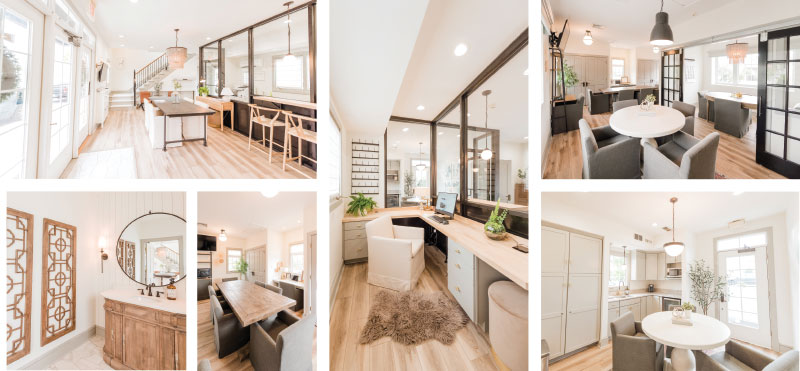
“The life cycle of a restaurant’s décor should change about every 10 years. For some it might be a few coats of paint and for others it goes a lot further, like we did,” says Chef Jason Arbusto.

Before the updates, the style inside the restaurant was dated—brown wood furniture, red carpet and yellow walls.

Arbusto and owner David Abdshah hired Sarah Girten of Sarah Girten Interior Design to oversee the renovations. They all sat down and sketched out their ideas, agreeing that a clean, modern look would carry the restaurant into the future.

“Our new aesthetic was aimed to be appealing to all ages. It is bold, but in a sophisticated and fun way. We also wanted it to be able to stand the test of time,” said Girten.

The red carpet was replaced with an eye-catching wood-grain laminate design. The front wall turned into a stunning focal point; it is now a vibrant blue and is used as a display for wine bottles.

Black metal partition screens, made locally, provide some privacy for patrons without feeling bulky. Murals and various patterns of wallpaper are scattered through the space.

“We really loved the idea of the décor being an experience. Each section has its own unique décor, which we did intentionally, so there is a different vibe depending on where you sit,” said Girten.

But probably the biggest change at Milano’s during this makeover was the addition of a new patio.

“Outdoor seating is huge for us; it’s the most popular when the weather permits,” said Arbusto.

When joining the restaurant in early 2021, Arbusto had updated the restaurant’s menu, keeping classic favorites while adding some new homemade dishes. After those changes, he says they “wanted an ambiance or vibe that matched the food we were serving.”

Now, he is confident that the two go hand in hand.

Lynchburg’s Finest Real Estate
Renovations Started: Feb. 2021. Renovations Completed: May 2021

Lynchburg’s Finest Real Estate has been located in Wyndhurst since 2015. While they love their location, the two-story building on Goldenrod Place was due for some updates.

“The layout felt uninviting, which is not at all who we are. We were definitely stuck in the late ’90s, early 2000s with the design,” said Betsy Ferguson, principal broker and owner. “By changing the entire floor plan of the main level we are able to physically show a warm welcome to each person that comes through our doors.”
Ferguson oversaw the project with general contractor Joel Olenik. She also designed the floor plan by hand and chose all interior elements and furnishings.

The first order of business was to remove the large, bull pen–style front desk that used to be located right inside the front door. In its place now is a wooden conference table surrounded by white, cloth-covered chairs. A large beaded chandelier overhead gives the space a warm glow.

Glass-enclosed offices line the back of the room, giving staff privacy while also keeping visitors in sight and allowing more natural light. The black partitions pop against light wood furniture, including bar stools and a counter work station. Matching cognac chairs offer more seating downstairs for agents.

“To keep our package affordable for our agents we chose not to use the traditional desk fee,” she explained. “What we quickly found out is that without assigned office spaces we eliminated the ability for someone to close a door and talk behind. It truly has set an open tone for the entire culture of our office and agent atmosphere.”

The makeover also included the downstairs powder room as well as the second floor, where they removed a wall. Now, Ferguson can host weekly training sessions for agents with ease.

“Our agents and clients love the bright, light and warm atmosphere. With no assigned offices there is a seat for everyone at the table, to grow, collaborate and belong,” she said.

river ridgeRiver Ridge
Renovations Started: July 2019. Renovations Completed: Ongoing Through 2022

Lynchburg’s River Ridge Mall has been a regional shopping destination since it opened in 1980—but in the years leading up to the first wave of renovations in 2019, the mall had seen better days.

“The national landscape for malls has been ‘cloudy’ over the last decade. River Ridge, like many malls built in the ’70s and ’80s, was due for a facelift,” said Lauren Spencer, marketing manager for JLL, the mall’s management company.

River Ridge is owned by Liberty University; the multi-million dollar renovation project is a collective effort by LU’s executive leadership and their architects/contractors.

Just look up to find one of the most transformational elements of the mall’s interior redesign. Raised ceilings with both natural light and light sculptures give shoppers what Spencer describes as an “uplifted and invigorating shopping experience.”

The center court area was another spot that immediately saw major improvements, including a large format fireplace, amphitheater and restaurant-style dining at Iron & Ale Bistro. More recently, the Food Hall was remodeled with a contemporary design aesthetic and the addition of new eateries. Outside, “fresh-faced, large and inviting main entrances” were also updated.

“The rebranding of River Ridge invokes a modern-yet-timeless feel that provides first-to-market retailers with the urban-esque design they are accustomed to in larger cities,” said Spencer.

An indoor-outdoor shopping experience has been at the center of the overhaul at River Ridge. The East End redevelopment, featuring national retailers such as Dick’s Sporting Goods, was completed in late 2020. Currently, the West End is in its final phase of redevelopment and will offer the first restaurant—Papa Gallo—with indoor and outdoor accessibility as well as green spaces for family and community events.

As updates continue in 2022, Spencer says they are already seeing the hard work pay off: “Our retailers have seen a significant increase in their foot traffic, especially during the 2021 holiday season, where many retailers saw some of their highest numbers in sales compared to the past few years.”


Designing a Cutting Garden

Having a cutting garden is good for the soul. It’s a good place to clear your head, observe nature and give the kids a few chores to “build character.”

As the owner of Irvington Spring Farm, I enjoy sharing our fresh flowers with locals—but I also enjoy sharing my expertise with those who want to make their own garden at home. Here, I walk you through some of the top factors to consider:

Take Inventory
To get started, take a walk around your yard, and see what you already have. Many common shrubs and trees can be used as cut greenery for flower arranging. Camelia, abelia, boxwood varieties, crabapple and evergreens are all options. Do you have clematis, ivy, honeysuckle, or sweet pea? Those vines can all be used for cutting. If you currently have any kind of landscape plantings, test them, and see if they work as cuts.

When plants are just emerging in the spring and have tender new leaves, they are not nearly as hardy. If you try something in May and it fails, try it again in June. It just might work then.

wildflowersLocation Selection
To bloom well, most flowers need full sun. Watch the way the sun moves around your yard and find an area that receives close to six hours of daily sun. Your spot should also have good drainage, good air circulation, relatively level ground, fencing and loose rich soil.

Humidity can cause a lot of fungus and mildew issues. Choosing resistant varieties and providing both good light and air flow is your best defense. To achieve good air flow, don’t crowd your garden next to your house, garage, or densely planted shrubs. Plants, like people, want to be able to feel the breeze blow through!

To check soil drainage, test the site you are considering.

Dig a planting hole 12 inches deep by 12 inches wide and fill it with water. Does the water stand in the hole?

Does it drain?

Does it drain slowly? You should be able to see water in the hole for about 10 minutes.

Water
You must have water easily available to keep your plants receiving the equivalent of an inch of rain a week. Drip irrigation systems and lay flat hoses are more efficient than both hose and overhead watering systems. Don’t water in the heat of the day as this increases plant stress and can cause disease issues. Watering early in the morning is best.

If you want to be a conscientious water user, consider drought-tolerant native plants such as mountain mints, monardas, rudbeckias, coreopsis species or herbs.

Soil Prep
Now, you are ready to prepare your beds for seeds or tender young plants. Loose, well-draining loamy soil is ideal. Garden writers are encouraging us not to till soil like our predecessors did. If you construct raised beds, you can create the perfect soil and have very few residual weeds as well. The term raised bed simply means an above-ground garden. It can be soil layered on top of the ground, a lasagna-style layered garden (for more information on this, I recommend visiting: growmyownfood.com

lasagna-gardening-101/), or a formal-built garden frame filled with purchased garden soil. However you choose to design your bed, three to four feet wide is usually good.

A soil with good loam will form a ball when you squeeze it together in your fist but easily crumbles apart when you poke it. These home tests obviously can be subjective. To request a soil test, call the Lynchburg office of the Virginia Cooperative Extension at (434) 455-3740.

Planting
Creating a garden is like painting a picture. There are so many colors and forms to choose from that you will be constantly curating your collection. It is extremely important when choosing plants that you know how tall they will get. Read the label on your plant or seeds and know what its growing habits are.

Include perennial plants where you can because they will save you money over time. They can be divided every three years or so, thus increasing your available plants, or trade them with friends for new varieties you don’t currently have. Think about having perennial plants that go through the whole season—from early spring favorites such as primrose, Lenten rose or columbine to fall-blooming asters and sedums. Garden Phlox is a nice medium-size perennial flower to have for cutting. Peonies are always a favorite, and they bloom for 50 years or more.

Annuals must be planted every year and they give gardens color quickly. To keep them blooming they must be deadheaded, which is when you cut old blooms off the plant. If you allow your flowers to make seeds, they will stop blooming. Zinnias and cosmos are prolific bloomers. Sunflowers, not so much. They must be replanted every two weeks to have successive blooms available.

Bulbs and tubers are another category in the cutting garden. Tulip bulbs allow you to grow an amazing array of color and form, if you can keep animals away from them. Orienpet lilies, also bulbs, have an amazing fragrance and are long-lasting. Dahlias, grown from tubers, are the fall queens. There is surely one that will become a favorite in your garden.

If you have multiple beds, don’t forget to use cover crops on rows that are done for the season. Cover crops help keep your soil well-fed so it in turn can keep producing well for you. (You can study more about cover crops at Johnny’s Selected Seed: www.johnnyseeds.com.)

Leave your garden debris along your path somewhere, perhaps at the end of the bed. This provides habitat for native bees and other creatures, such as toads and turtles, that will share your garden.

Maintenance
To keep your cutting garden looking its best, you need be attentive to it. A daily walk in the morning or evening to deadhead and watch for insect or other plant health issues will keep problems in check. You should harvest your flowers in the morning before it is too hot or once the temperatures drop in the evening. Always place your stems in water as soon as you can. Recut your flower stems after three days and fill your vase with clean water.

When you do diligent planning work, choose the right plants for your space, pay attention to the amount of water they are receiving and do your best to keep your plants deadheaded, your cutting garden will reward you with both bounty and beauty.

Irvington Spring Farm
Irvington Spring Farm offers cut flower seed trays, individual plants they think are worth adding to your garden, as well as dahlia tubers. Gardening classes on different topics are offered throughout the season. Learn more by following them on Facebook, Instagram and TikTok or visit their website, Irvingtonspringfarm.com.


It’s almost time for Lynchburg Garden Day!

It’s almost time for Lynchburg Garden Day! April 26, 2022

From unique architecture to stunning landscapes, Lynchburg is home to some truly beautiful homes and gardens. Every April, in coordination with the Garden Club of Virginia’s Historic Garden Week, a group of local homeowners sign up to make their abodes open to the public for a self-driving tour known as Lynchburg Garden Day.

Whether you are a veteran to this event or brand new to the excitement, here is a preview of the homes and events this year, as described by the Lynchburg Garden Day co-chairs:

236 Irvington Springs Road:
(Kaye and Ben Moomaw)
Situated on 120 acres that was once the site of a working dairy farm, the Moomaw farmhouse was built in 1997 to accommodate a busy family of eight. While part of the property known as Irvington Spring Farm has welcomed tour visitors in the past, this is the first time the family’s home and personal garden has been showcased on Historic Garden Week.

1912 Quarry Road: (Becky and Bobby O’Brian)
Located on a quiet street, on land that was once a quarry, this elegant Cape Cod, built by Bobby O’Brian’s parents in the early 1950s, remains a loving family home. Tastefully decorated throughout and filled with an extensive collection of family antiques, portraits, and art from their travels, the homeowners have created a home that is both welcoming and highly functional for entertaining three generations of family and friends.

4941 Locksview Road: (Lisa and Jim Richards)
Based on the George Wythe House in Williamsburg, this home was designed by the homeowners and built in 1995. The two-story, brick Georgian honors colonial architecture while incorporating modern conveniences. The homeowner’s artistic eye is evident in collections of porcelain as well as French and English antiques throughout the home. An extensive display of paintings by Lisa Richards—a skilled portrait, landscape, and botanical artist—provides a connection to the garden beyond.

1503 Langhorne Road:
(Manisha and Hunter Wynne)
Gracefully situated on an estate lot, this Tudor house, built in 1928 as one of the first homes on Langhorne Road, opens its doors to Historic Garden Week for the third time. The home is an excellent example of this medieval style of architecture with its steeply pitched slate gabled roof. Asymmetry, handmade textured brick, embedded half timbers and a brick barrel arched entryway dominate the façade.

Special Exhibit at Randolph College
Your tour ticket also includes a floral exhibit at Randolph College’s Maier Museum. The College and members of both the Hillside and Lynchburg garden clubs have collaborated to showcase a must-see exhibition of floral arrangements interpreting four selections from the private collection at the Maier. Ticketholders are also encouraged to stop by the Dorothy Crandall Bliss Botanical Garden while on campus.

Find tickets at vagardenweek.org/tickets and stay connected by following Historic Garden Week Lynchburg on Facebook and Instagram.


Plant-Based Pleasures

You may not believe me when I say it, but a plant-based meal can be just as delicious and satisfying as a meat-based meal—and it can be quick, easy and affordable to boot. The key to plant-based pleasures is simple: Skip the fake ingredients and go back to the roots!

First, let’s get some things out of the way regarding my view of plant-based eating. Yes, I eat meat. No, nothing plant-based can ever be as delicious as barbecue ribs. Yes, plant-based is a just a buzzy way to say “vegan.” No, you will not become protein deficient from one meatless meal. Yes, your kids will (probably) like it.

In his book The Omnivore’s Dilemma, food writer Michael Pollan verbalized a food philosophy that really resonated with me: “Eat food. Mostly plants. Not too much.”

The first statement, “Eat food,” refers to the idea of avoiding heavily processed foods and instead focusing on simple ingredients. In the context of plant-based ingredients, that is solid advice.

Walk down the aisles of any modern grocery store and you will find an abundance of vegan foods that are made to replace something they are not (think “Beyond Meat” or vegan cheese). My advice: Skip the wannabees and instead look to the cultures that have cooked vegan for centuries for plant-based advice. Recipes from places such as India and Morocco often boast amazing flavors—and many are meatless.

Chickpea Curry
This Chickpea Curry recipe is a prime example of all the things that are great about plant-based dining. It’s quick and easy to make, has no strange ingredients, is filling and healthy—and, is absolutely delicious!

Time: ~30 minutes | Serves: 4-5
Ingredients
2 tablespoons olive oil
2 red bell peppers, cut into 1/2 inch pieces
1 1/2 teaspoon kosher salt
1/2 teaspoon black pepper, freshly ground
1 fresh jalapeño, seeds removed, finely minced
4 garlic cloves, minced
1 tablespoon fresh ginger, finely minced
1 tablespoon curry powder
2 cans of chickpeas (15 oz.), drained and rinsed
1 can diced tomatoes (14.5 oz.)
1 can coconut milk
1/2 cup of parsley, chopped

Instructions
Heat the oil in a Dutch oven (or other large, thick-bottomed pot) over medium heat
and add the bell peppers. Cook until they
just begin to brown, about 5 minutes.
Add jalapeño, ginger, garlic, curry powder, salt and pepper and cook about 30 seconds. (Don’t let the garlic burn!)
Add chickpeas, tomatoes and coconut milk and bring to a boil. Simmer for about 20 minutes while stirring occasionally. While stirring, mash about a quarter of the chickpeas. Add the parsley. Serve over rice and enjoy!

avocado-toastBetter Avocado Toast
Avocado toast is not only the greatest culinary contribution of the millennial generation, but it’s also a wonderfully versatile meatless meal, snack, or brunch. Try this version that kicks up the flavor profile a couple of notches with lemon and olive oil.
Time: 10 minutes | Serves: 2
Ingredients
1 large, ripe avocado
2 large slices of crusty
bread, toasted
2 tablespoons olive oil
1 teaspoon lemon zest
1 pinch of salt, pepper

Instructions
Toast the bread slices under a high-heat broiler on both sides. Cut the avocado in half and remove the pit. Using a large spoon, scoop out the flesh from both halves. Thinly slide one half, longways, and mash the other half.
In a small bowl, mix olive oil, salt, pepper and most of the lemon zest. Add the flesh from the mashed avocado half and mix. Spread the mixture evenly over the two slices of toast and arrange the sliced half on top. Sprinkle with the remaining
lemon zest and, if you like, some finishing salt (such as Maldon). Serve as is, or with a poached egg!

lemon-shelleyThe Lemon-Shelley
Since we are celebrating the culinary pleasures of plants—and the departure of our fearless editor, Shelley Basinger (be sure to read her editor’s letter)—we cannot skip over the wonder that is a well-crafted cocktail. This recipe showcases plants to the extreme with herbaceous chartreuse (infused by 130+ plants), gin (juniper berry, herbs and spices), agave syrup (agave plant—no, it’s not a cactus) and the queen of citrus: lemon.

Ingredients
2 oz. gin
1/2 oz. chartreuse (green)
1 oz. agave syrup
Fresh-squeezed juice from 1/2 lemon
Sparkling water to taste
Lemon peel or a sprig of your favorite herb
for garnish

Instructions
Add a scoop of fresh ice to a cocktail shaker. Add the gin, chartreuse, agave syrup and lemon juice. Fill an old-fashioned glass (the low, wide kind) with ice. Strain cocktail into glass, topping off with sparkling water. Garnish with a twist of lemon—or a sprig of your favorite herb!


Photos by Ashlee Glen


Private School Philosophies

A Guide to the Guiding Principles of Five Local Private Schools

Choosing the best private school for your child involves a great deal of decision-making, and it can be hard to know where to start. Fortunately, many answers you seek stem from an understanding of a school’s overarching philosophy. To aid in your research of these guiding principles and how they can help children succeed, we asked five local private schools to share and expound their philosophies.

James River Day School
Fostering a lifelong love of learning is the cornerstone of James River Day School’s educational philosophy. The school serves qualified children in kindergarten through eighth grade.

“We cherish [students] as individuals, challenge them as scholars, and help them develop as leaders,” says Peter H. York, Head of School. “Character education is not only built into our curriculum but is also deeply embedded in our everyday routines and practices.”

James River’s curriculum emphasizes both educational and life skills, with York adding that students develop strong skills in the areas of reading, writing, problem-solving, calculating, creating, critical thinking, and reflecting.

“Essential life skills such as organization, time management, and self-regulation are also woven into their educational journey,” York explains. “Our curriculum is carefully developed and constantly reviewed by our educational experts to make sure our students are well prepared for high school and beyond.”

Arts, athletics, and citizenship also play important roles in James River’s philosophy. Beginning in kindergarten, students are exposed to visual and fine arts, world languages, physical education, and community service opportunities.

“With this intentional focus during these developmentally formative years [K-8], we are able to give each student an opportunity to create a strong foundation to tackle any challenge that may come their way,” says Maryanna Stands, Associate Head of School for Advancement and Director of Admissions.

Liberty Christian Academy
Liberty Christian Academy’s philosophy focuses on building strong relationships among students, families, and teachers.

“Our educational philosophy begins with a partnership,” says Amy Love, Director of Curriculum. “Our role is to come alongside parents as they raise and educate their children. We also believe that every student has God-given potential and we provide opportunities for students to realize that potential.”

A wide variety of academic, artistic, and athletic opportunities are available to LCA students.

“We provide a wide variety of opportunities for students because we know our students have different gifts and areas of interest,” Love notes. “By offering so many different opportunities for students, we can better meet their individual needs.”

LCA’s curriculum emphasizes active and engaging instruction and meeting students where they are academically.

“We offer AP, Dual Enrollment, and Honors classes for students who want a higher level of academic rigor,” says Love. “We also offer a Resource program to provide additional support for students with specific learning needs.”

The school’s extensive selection of electives, fine/applied arts programs and clubs can also help students realize their potential.

“We want students to get involved and to try different activities, so we offer a variety of clubs, National Honor Society, Beta Club, an award-winning theater program, and a strong athletic program,” says Love.

New Covenant Schools
New Covenant Schools was founded in the classical, Christian tradition, and its educational philosophy is built upon the three tenets of the Trivium: knowledge, understanding, and wisdom.

According to Headmaster John Heaton, classical education does not adhere to a specific curriculum, but is considered an approach or a way of looking at the world.

private school uniforms“In its broadest objectives it is concerned with promulgating the best of that which has been thought and said by great minds of the past,” says Heaton. “It is helpful to think of it as a conversation into which we lead our students as participants. We introduce them to the primary languages of that conversation—Latin and Greek—and we introduce them to the great questions that have been the subject of this long discussion.”

That being said, New Covenant’s curriculum is comprehensive and dynamic. They begin younger students with reading, writing and basic arithmetic, but along the way students begin to learn the “languages of music, math, and persuasion,” Heaton explains.

“They are required to study art, which is yet another means of human expression. Broadly speaking, classical, Christian education will include as much as it can of all that is good, all that is true, and all that is beautiful. With these guiding principles, the classical, Christian educator creates a curriculum that stands apart from contemporary educational fads,” says Heaton.

New Vistas School
New Vistas School’s philosophy centers around the belief that students with learning, attention, and social/emotional challenges learn best from a variety of educational approaches.

“New Vistas provides a safe, nurturing environment that fosters the development of personal characteristics, including responsibility, self-discipline, and respect for others—all necessary for productive citizenship,” says Sally James, Development Director.

The school’s approach to academics helps students adapt and succeed, by using the most recent research in Learning Disabilities, Dyslexia, Attention Deficit Hyperactivity Disorder, and High-Functioning Autism Spectrum Disorders.

“Multisensory education involves the use of visual, auditory, and tactile pathways used simultaneously to enhance memory and learning, as well as daily homework and regular quizzes, tests, and progress reviews to determine learning and continued learning needs,” says James.

Community service and enrichment programs also play integral roles in the school’s curriculum.

“All young people benefit from adult guidance regarding social skills, civic responsibilities, and service to the wider community,” says James.

New Vistas also offers an overarching system of support and encouragement.

“Faculty and staff realize learning has not always had a pleasant outcome for some of our students,” says Lori Eaglin, Ed. S., Head of School. “We teach in a way where students can build on their own strengths while being supported in areas of weaknesses.”

ONE Forest School
ONE Forest School utilizes a traditional forest school philosophy, which focuses on emotional intelligence—a child’s EQ or Emotional Quotient.

“This can be holistically accomplished by connecting children with nature,” says Catherine Eubank, Director.

She adds that a forest school philosophy also promotes an active teaching approach where children are asked to engage in their own learning, leading to benefits such as improved critical thinking skills and increased retention and transfer of new information.

A project-based STREAM (Science, Technology, Robotics, Engineering, Arts, and Math) curriculum reinforces this philosophy.

“Our STREAM focus is on American history, which helps foster a sense of community and belonging, as well as a feeling of patriotism for our country,” says Eubank.

“We utilize a place-based education for our learning so we center our focus on Virginia history as much as possible.”

The school’s outdoor setting allows students to engage in activities such as shelter and campfire building, whittling, and forest exploration.

“Using the forest as our classroom, with no desks or textbooks, has many benefits,” says Eubank. “They include improved energy levels, physical and emotional resilience, conflict resolution, higher self-esteem, and bolstered leadership skills. A mindful nature connection can also provide opportunities for positive social interactions and help give one a sense of meaning and purpose in life.”