The “barkitecture” trend is inspiring homeowners and designers to create pet-friendly kitchen and bath designs and more
Gone are the days when the most man’s best friend could hope for in the way of shelter was a simple canine-sized box with a roof and an open door in the backyard. While many dog parents would argue their pups consider every square inch of their human homes to be their own personal playgrounds, others are going the extra mile with dog-friendly remodels and special features.
Some may protest that our obsession with providing our pets with every imaginable creature comfort has become, well, the hair that wags the dog. But, to be fair, these “barkitecture” designs are often meant to make our human lives easier, cleaner, and safer as much as they are intended to please our pups—because, let’s face it, dogs are deliriously happy just to be around us. The term barkitecture began as a way to describe tricked-out dog houses but has come to refer to a variety of Fido-friendly upgrades, with kitchen and mudroom designs among the most common.
“Today, homeowners embracing barkitecture customize their pet-friendly homes with aesthetically pleasing and luxury features like hidden food storage and watering stations, as well as places to shower and groom their pets,” noted a press release from Ferguson Bath, Kitchen & Lighting Gallery. “Mudrooms specifically designed for families’ best friends are becoming increasingly popular additions, as they make the care and feeding of animals more effortless and convenient. Additionally, they keep the main living spaces clean and free of pet hair.”
A dramatic uptick in pet ownership during the pandemic may have contributed to the barkitecture trend as people spent more time in their homes and perhaps developed a deeper appreciation for the value pets can add to our lives.
On the following pages are some specific tips provided by Ferguson Bath, Kitchen & Lighting Gallery for getting in on the trend.
Photo courtesy of Ferguson Bath, Kitchen & Lighting Gallery
Add a dog wash station in the mudroom.
If you have a mudroom, it’s the perfect place to add a dog wash station. Install a handheld showerhead and use a tiled area with a drain to make it easy to clean up muddy paws and allow your dog to shake off fur. This station near the home’s entrance will make it quick and easy for everyone to clean up before coming in.
Install a hidden food and watering station.
Photo courtesy of Ferguson Bath, Kitchen & Lighting Gallery
Hide or recess food storage compartments within kitchen cabinetry. Many of these built-in feeding stations are usually incorporated into the center island and creatively incorporate a pot-filler faucet at their pet’s water bowl level. While this certainly is more aesthetically pleasing, removing the food and water bowls from the floor also thwarts the danger of tripping over them.
Homeowners who serve fresh foods or subscribe to a food delivery service requiring refrigeration for their pets can install an under-counter refrigerator dedicated to Fido’s culinary delights.
Barkitecture in the kitchen and bath can be seen as a way to add luxury and aesthetics to a pet-friendly home. These areas are popular additions for homeowners with pets because they provide a space for feeding, grooming, and storing food. Most importantly, they keep the main living spaces clean and free of pet hair.
2023 Lynchburg Living Idea House: The Stories These Walls Could tell
Lynchburg Living’s 2023 Idea House is Full of History
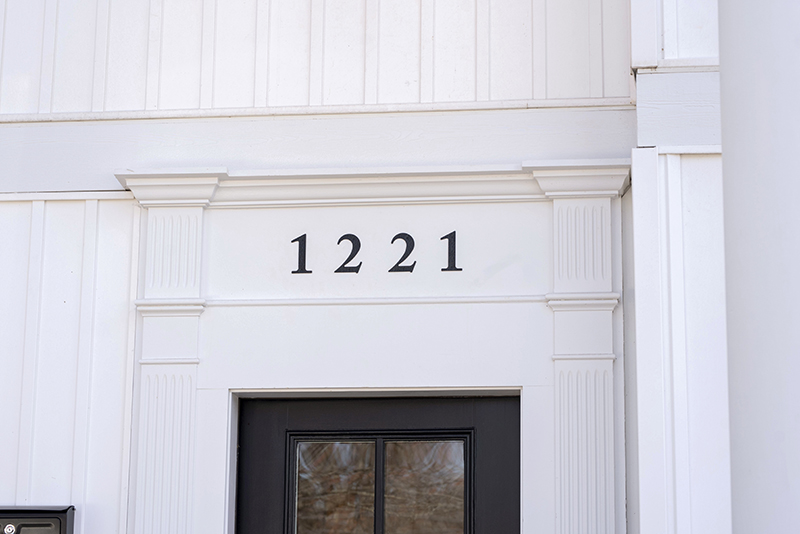
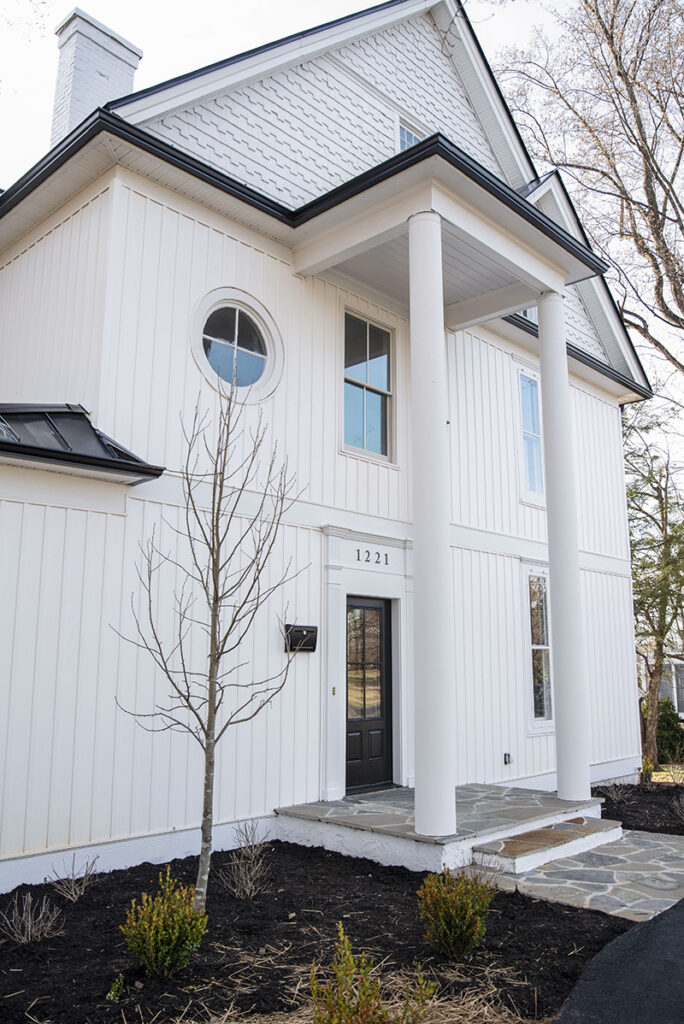
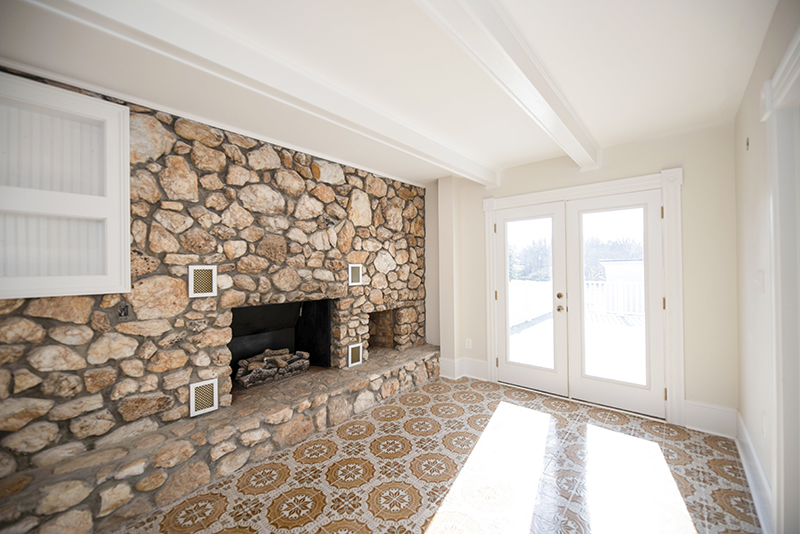
The walls at 1221 Oakwood Street in Bedford practically sing with stories from its past. They tell tales of summertime pool parties, when neighborhood kids would flock in mass to its backyard, barely kicking their shoes off before cannon-balling into the 12-foot-deep pool. They recount quiet spring mornings, when the chill of the air beckoned for a fire to be lit in the stone fireplace, cup of coffee perched just so on an armchair while its owner gazed out the glass door into the misty acreage beyond. If you were to listen closely enough, you’d hear the subtle thrum of a record playing, its music keeping time with the bustling party that weaves throughout the first floor and gushes into the front and back porches—nothing but shrills of excitement, outbursts of laughter, and maybe some neighborhood gossip for good measure.
Photos by Ashlee Glen
The story of 1221 Oakwood Street—this year’s Lynchburg Living Idea House—begins with General William R. Terry of the Confederate Army. Terry was a merchant who became brigadier general in the Confederate Army during the Civil War and later served part-time in the Virginia Senate, representing Bedford County. A native of the Town of Bedford, then called Liberty, Terry returned home after the war and worked to further establish his roots.
“General Terry is well known in Bedford,” said Scott Elliott, President of Custom Structures, this year’s partner in the 2023 Idea House. “He came back here after the Civil War and lived in the house across the street. He ended up getting with his brother-in-law, Beaufort, and they developed Longwood Avenue and Oakwood Street. Around 1860, his sister and brother-in-law built this house.”
The “house across the street” is none other than Historic Oakwood Plantation, a looming manor home that dates back to 1780 and was originally owned by Terry’s grandfather.
It’s unclear who owned 1221 Oakwood Street after Terry’s death in 1897, but the next owner of note was another well-known local, Earl Childers.
Childers had only a 9th-grade education, but it was clear that he was a man of considerable mechanical ingenuity and resourcefulness. As the owner of Childers Foods, Inc., Childers developed a “belt machine” that was designed to facilitate the separation of chicken meat from the bone. Just a few years later, he developed a second machine known as the “shaker machine,” which further refined the processing of deboned chicken parts. In the mid-1960s, he began selling that food product to Gerber Company for use in baby food. Later, his company was purchased by McCormick & Company, of commercial spice fame.
“Earl Childers lived here for 68 years,” explained Elliott. “He was an inventor and developer and was known to have a lot of parties here. He added onto the house numerous times and is the one who added the pool.”
In those 68 years under Childers’ ownership, the Bedford community came to know the Oakwood home as a gathering space. In fact, Lynchburg Living’s editor even swam there as a child.
Of course, over time, as historic homes can do, 1221 Oakwood fell from its original glory. When Elliott and his wife, Meredith, purchased the home in 2020, they had an undertaking ahead of them.
“This is the oldest home Scott and I have worked on together, but certainly not the oldest home Custom Structures has worked on,” said Meredith.
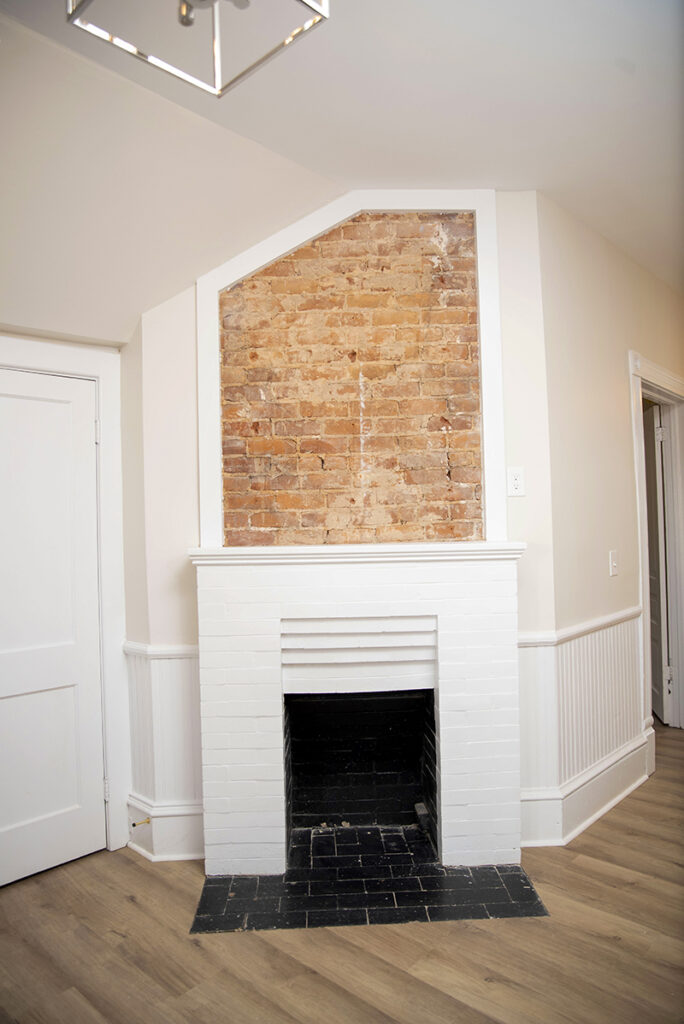
“When we started doing work on the house after we purchased it, we had to jack up the rear addition and put up proper structural supports,” furthered Scott. “We also discovered eight fireplaces in the home, on every level of the home.”
A New Story for an Old Home
As Meredith and Scott walked through their new purchase, they took their time getting to know its nuances and quirks, including the happy discovery of hidden fireplaces throughout the home.
“That was the fun part about this,” Meredith remembered. “Going room by room and trying to find all of the fireplaces. That’s the neat thing about a home with this much history, you never know what you’ll find—it’s like a treasure hunt.”
It was a priority for the Elliotts, the Custom Structures team, and their Idea House partners to maintain the integrity of the 19th-century home while bringing it into the modern era, suitable for a large family to live, play, and grow in.
Communal Spaces
“My main priority was that I wanted to make it more modern,” Meredith said. “I wanted to make the eating and living spaces feel open, where families could eat and have TV time.”
Between the kitchen and dining area, the Idea House team removed a dividing wall between the pantry and kitchen to create a more open-concept space that allowed for an easier flow from one room to the next.
“The kitchen was very small originally, with just one small window,” Meredith said. “We really worked to open up that space and I love what the oval windows, which aren’t original, added.”
Nestled between the two oval windows is an impressive Bertazzoni 48-inch gas stove, a high-performance stove that uses the same paint as Ferrari, the luxury car company. Throughout the downstairs space, original glass weighted windows cast light through their waved panes, and original wainscoting adds texture and charm.
The built-ins in the dining room—added when Childers owned the home—were given an upgrade with white quartz countertops and elongated gold hardware to match the kitchen to serve as a casual buffet area for morning breakfasts or late-night parties.
“We tried to keep as much of the existing features as we could,” said Scott. “But at the same time, we made sure we updated the home to make it more of an open floor plan.”
A House with Many Rooms
The impressive 4,100+-square-foot home has five bedrooms and three and a half bathrooms, with one main bedroom on the first floor and one main bedroom upstairs. The walk-in closets in the main bedrooms—complete with rows of shelves for shoes and bags—were original to the home, which came as a surprise to the Elliotts. Each main bedroom has its own bathroom, with the downstairs bathroom featuring sleek brass fixtures and a soaking tub you could get lost in.
“When we bought the house, there was a hot tub where the bathroom is now and it was all covered in carpet,” laughed Meredith.
In the upstairs bathroom, meant to be shared by the youngest members of the family, the Idea House team added three identical vessel sinks rather than little ones elbowing each other for room while they brush their teeth.
Ready for the Next Hundred Years
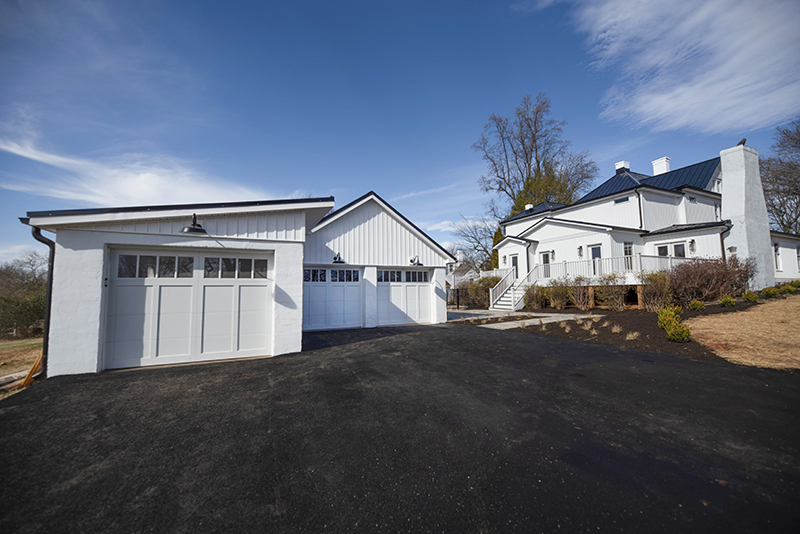
In addition to the interior restoration, the Idea House team built an entirely new deck, converted the existing two-car garage to a three-car garage and a pool room, and replaced the metal roof.
“We added new board and batten vinyl siding to the house and parged the foundation with a similar texture that is on the front wall,” Scott said.
The historic home also received the addition of two HVAC systems, one for the downstairs and one for the upstairs.
“The house originally had oil heat, so we rewired the entire house,” Scott furthered. “The deck was also in bad shape, so we tore it all down and built a new deck.”
The 12-foot pool, beloved in its heyday, was converted to salt and received a stunning facelift around its perimeter.
“They don’t make 12-foot pools like that anymore,” Scott ruminated.
In truth, that same sentiment could be applied to the entirety of the 1221 Oakwood Street home. From its grandiose structure to its nearly innumerable fireplaces to the masonry work that has weathered the home’s long history, “they don’t make them like that anymore.” However, thanks to the craftsmanship of the Idea House team, the house will continue into a new chapter, one that’s hopefully full of summer pool days and evenings that turn into mornings with strangers that quickly become friends.
Photos by Ashlee Glen.
A New World from the Old World
What the Revitalization of the Tutelo Language Will Mean for the Monacan Indian Nation
“A language is not just words. It’s a culture, a tradition, a unification of a community, a whole history that creates what a community is. It’s all embodied in a language.” – Noam Chomsky
Throughout its history, the Monacan Indian Nation has demonstrated astounding resilience in the face of obstacles orchestrated by those who wish to eradicate its identity. The Monacan community has not only overcome these obstacles, but has also utilized them as opportunities to reclaim and strengthen its identity time and again. To say the least, the journey has been arduous and the victories hard-won, but the Monacan people have continued to reclaim and revitalize the aspects of their identity that have been taken from them.
One such aspect is the Monacan language, Tutelo, which is in the process of being recreated, restored, and cataloged. The importance of language to a community’s identity cannot be overstated; when a community’s language dies, that community must then use the words—which, as Chomsky said, are never just words—of others to refer to itself. The Monacans’ reclamation of Tutelo is monumental, a fact made even clearer as one learns about the journey that led to this reclamation.
Hundreds of artifacts line the walls of the Monacan Indian Nation Ancestral Museum, from items found on Monacan land to those lovingly passed down through generations. The Museum is open Tuesday through Saturday from 10 a.m.-3 p.m. and on Sunday by appointment, and the entry fee is $5. Photos by Ashlee Glen.
The Monacan Indian Nation is headquartered on Bear Mountain in Amherst County, and its citizens are descended from Eastern Siouan groups from Virginia and North Carolina. The Nation’s efforts to attain state and federal recognition—which it did in 1989 and 2018, respectively—demonstrate the Monacans’ longstanding strength and ability to turn obstacles into opportunities.
In fact, the earliest documentation of Monacan presence in Virginia—documentation that was ultimately integral in the Nation’s achievement of federal recognition—details the capture of a Monacan man.
“The history of our people dates back to 1608 as far as physical, handwritten proof of us being here in the state of Virginia goes,” said Lou Branham, Director of the Monacan Indian Nation Ancestral Museum. “It goes back to a personal journal kept by Captain John Smith. He ran across a Monacan named Amoroleck, took him captive, and questioned him about the Powhatan Confederacy. This document was very important when it came to the Bureau of Indian Affairs and us getting federal recognition.”
In the 1920s, Dr. Walter Plecker enacted what Branham calls a “paper genocide” of Virginia-based Native Americans by eliminating the option to identify oneself as an indigenous person when responding to the census. Plecker, along with the Anglo-Saxon Clubs of America, persuaded the Virginia General Assembly to pass the Racial Integrity Act of 1924, which stated that it was illegal for whites and non-whites to marry, and which recognized only two racial classifications: “white” and “colored.”
“Plecker was in a position of power—he was the head of Vital Records and Statistics for 32 years—and he believed in eugenics,” Branham noted. “He thought that you were either white or you were colored; to him, no Native Americans existed.”
The Monacan Indian Nation’s original territory would have been the majority of the Piedmont area and parts of the Blue Ridge, even stretching down into modern-day northern North Carolina. Today, that footprint is much smaller. However, the land that the Ancestral Museum sits on is sacred to the Monacan Indian Nation and is now protected and preserved as a historical site. Photos by Ashlee Glen.
As a result, Monacan people who moved away—often to marry whom they wanted and to generally escape the rampant racism in the area—would frequently be unable to locate family members upon their return.
The United States Supreme Court overturned the Racial Integrity Act in 1967, thus allowing Native Americans in Virginia to marry whom they chose and to change their birth certificates—for a fee, until 1997—to accurately convey their identities.
“When we went for state recognition, we had to mail off our birth certificates,” recalled Branham. “If we hadn’t gone for state recognition, we never would have known that that documentation had been changed.”
Branham chooses to see Plecker’s contemptible actions as a catalyst in the Monacan Nation’s journey to fully reclaim its identity.
Lou Branham, Director of the Monacan Indian Nation Ancestral Museum. Photos by Ashlee Glen.
“I’m a firm believer that in our walk in life, we have ups and downs and many side roads that are taken,” she stated. “Plecker was just a part of the plan that happened to happen to the Monacan people.”
Branham’s father, Ronnie, started the Monacan tribe as an entity along with his first cousin and founder of the Monacan Indian Nation Ancestral Museum, Phyllis Hicks. Ronnie Branham was the first elected chief of the Nation, and Hicks was an ordained minister who pastored the church that resides on the Monacans’ seven-and-a-half acres of land alongside the tribal schoolhouse (once used as both a school and a community meeting space) and the museum.
Photos by Ashlee Glen.
“This land is the heart and soul of our community,” said Branham. “If you take this away, it’s almost like ripping a heart away from a body. The history of generations and generations of our family—of kids playing in the creeks and running through the woods, of people going to the church and the school and attending functions—is here. Here I promote no negative energy. Everything here is positive for me because this has always been a positive and peaceful place in my life.”
As the Monacan Nation’s recent federal recognition continues to open doors to various government programs—including a community health services program that will be open to Native Americans from any tribe and to community members who are Medicaid and Medicare recipients—the restoration of the Tutelo language has come to the forefront.
The process was initiated by the late George Whitewolf, who was a Monacan medicine man, in 2000. According to Branham, Whitewolf spent a great deal of time with the Lakota tribe and shared their language, Lakhota, with the Monacan tribe upon his return. These interactions prompted further research of Lakhota and other Siouan languages, and the Monacan people ultimately discovered that they spoke Tutelo.
The near-extinction of Tutelo resulted largely from colonization. Additionally, the last native speaker passed away around the year 2000.
“A lot of it had to do with colonization and eugenics,” Branham noted. “The United States’ political ideology of things is that they wanted to colonize Native Americans and make them conform to non-Native ways.”
Photos by Ashlee Glen
A group of historians and linguists, led by indigenous historian and language activist Dr. Marvin Richardson of the Haliwa-Saponi Tribe, is working with Living Tongues Institute for Endangered Languages to create a Tutelo-Saponi Monacan Living Dictionary. This online dictionary is accessible to the general public and continues to grow at a steady pace.
“We’ve got to recreate words and grammar,” stated Branham. “We’re currently working on creating words and phrases, but it’s hard to do the verbs right now. We actually have about 700 entry words so far, but by the end of 2023, we hope to have 3,000.”
For Branham, the revitalization of Tutelo is important on both a personal and a wide-scale level.
“When I was little, I remember my grandmother using certain words and phrases, and my father would say, ‘You can’t teach her that,’” she recalled. “My great-grandmother said, ‘If we spoke our language, we could risk having our homes burnt down.’ I think it’s a shame that you have to live in fear just because you have different cultural beliefs and speak a different language.”
As Branham continues to build bridges with community organizations to raise awareness of and garner support for the Monacan Indian Nation, she is excited to see the bridge between the Nation’s past and future become fortified by Tutelo’s return.
“It’s going to open up a new world from the old world,” she said. “It’s our old, traditional language, but to so many it’s going to be something that’s brand new.”
What’s Old Is New
A hobby and passion become a business for one local woman
Photographer. Writer. Modern day treasure hunter.
Those are the words that describe Lynchburg local and vintage enthusiast Kelly Whitmore. But unlike some treasure hunters, Whitmore is more than happy to share her finds with the world.
As she watched her house fill with vintage finds over the years, Whitmore opened her Etsy shop and business, Golden Eclectic, where she sells curated goods that she finds at estate sales and thrift and antique stores.
“That’s why I went with the name,” Whitmore explained. “Not only does it represent the ‘golden era,’ but eclectics are more than just one type of item. It’s a hodgepodge of things.”
Whitmore started her business back in summer 2021 and sold her first piece on eBay.
“It was a [vintage] La Choy bottle in this beautiful emerald green,” Whitmore said. “I even had the original stopper with it, which was extremely rare, and I sold it to a collector who was looking for one in that exact color. I was so nervous shipping it because it was my first sale.”
Luckily the glass made it safe and sound—with the collector even commenting on her great packing ability.
Photos by Ashlee Glen
But looking for vintage items is more than going from store to store. According to Whitmore, it also includes hours of research.
“The amount of time you spend looking up a certain piece depends on what it is,” she said. “If it’s something more common, it won’t take me long to look something up online. But sometimes with a certain piece, there won’t be anything on it.”
To Whitmore, it’s a learning process. Over the last few years, her sales have connected her to experts and collectors that have knowledge she can glean from.
“I’m definitely not an expert,” she joked. “When I see something that I love, I usually buy it on the spot and do the research later. But I’ve always loved history, so I love trying to find information on something.”
Whitmore says she’s drawn to glass objects, especially swung vases.
“When it comes to my favorite era, I’m torn between the art deco era and mid-century,” she said. “Really I just love a piece that I think is beautiful.”
And sometimes, those beautiful pieces happen to be worth something. At an estate sale in Roanoke, Whitmore fell in love with a $6 cubed fractal.
“The estate sale was actually for the man who was Debbie Reynolds’ ex-husband,” she said. “He had lived in Vegas and had all these interesting pieces he had collected over the years. I went home and found out the fractal was worth [hundreds of dollars]. And I only paid $6 for it.”
But for Whitmore, the true value of an item is the story it tells.
“When you go to an estate sale, you see what people have collected over the years and spent their time building a collection,” she said. “It can be sad sometimes, but in a way their legacy gets to live on.”
What she loves most about thrifting is not only finding unique items, but also that it helps encourage sustainability.
“I love that Gen Z is bringing thrifting back to the forefront,” Whitmore said. “We have mass produced as a society…but [thrifting] can be a great resource where you can find a great piece, but don’t have to add more to our environment.”
If you’re getting inspired to hit the local Goodwill, Whitmore offered some tips for those looking to start thrifting.
“Start with what you love,” she said. “Research the era you want to focus on. See what certain companies made and it can help start a pathway to finding great things. Support your local antique stores. Sometimes things may seem expensive because they’re being sold at market value, but you can still find some amazing, affordable pieces.”
As she continues to grow Golden Eclectic, Whitmore plans on posting to her Esty and social media accounts as well as hitting local markets. But her eventual goal is to focus on thrifting as a full-time gig.
Photos by Ashlee Glen
“As an artist, I love this as a creative outlet,” Whitmore said. “I’m single with two dogs so I have the space to fill my house with all kinds of antiques. I would love to spend my time traveling around the country and filling up an RV going to estate sales.”
Whitmore also encourages others to explore their passion and creative endeavors because you never know where it might lead.
“Imposter syndrome is very real,” she said. “Admit you’re not an expert but give yourself grace [when starting something]. You’ll never be as great as you want to be, but you will be greater than you think.”
You can find Golden Eclectic on Etsy at www.etsy.com/shop/GoldenEclecticCo or on Instagram @goldeneclectic.
Earth-Friendly Energy
Earth Right Mid-Atlantic emphasizes honesty and transparency in reaching Virginia residents
Through educating Virginia residents on the importance of energy efficiency and providing them with the resources necessary to make it a reality, Earth Right Mid-Atlantic aims to serve the community with honesty and integrity.
Earth Right Mid-Atlantic, based in Lynchburg, provides a variety of different energy options for homeowners as well as small businesses. Founded in 2019 by current CEO and owner Corey Argentino, the business provides citizens across the state of Virginia with affordable energy options.
According to the company’s website, its mission is “that through honest and transparent conversations, we make energy efficiency improvements and solar solutions simple and affordable so that you and others can reap the benefits of smarter, cleaner energy.”
Photos Courtesy of Earth Right Mid-Atlantic
One of the ways in which the company aims to complete this mission is through installing custom designed home solar panel systems.
“The advantage with solar is it gives [customers] the opportunity to control their costs,” Argentino said. “Solar gives them an opportunity to produce their own power and also take advantage of the federal tax credits that are out there for the consumers.”
Despite the work that the company does with solar power, Argentino stressed that solar energy is only one of the services that the business provides to customers. Before the company looks at installing solar panels, workers first assess the home with thermal imaging to find any energy inefficiencies. Argentino noted that doing so helps determine how many solar panels will be needed while also finding ways to provide further long-term comfort to the residents.
Photos Courtesy of Earth Right Mid-Atlantic
“A lot of people, when they want to install solar on their house, just look at, ‘Hey, this is how many solar panels I need.’ But the goal is really to make the house energy-efficient first,” Argentino said. “By making the house energy efficient, you will need fewer solar panels and solve all of the internal energy issues. So, it’s really important to focus on the efficiency of the home when considering solar.”
For customers not eligible for solar options, the company provides other options for energy efficiency to ensure that they too are not wasting energy and operating efficiently in their homes.
With a wide range of both domestic and international energy companies available to homeowners, Earth Right Mid-Atlantic sets itself apart from the competition by properly informing customers of exactly what they are paying for and helping them select the best options.
“So many people are not educated when it comes to the solar industry and they’re being tricked and talked into something they may not be fully educated about,” Argentino said. “We take a different approach. We educate all of our consumers first. Education is key. We’ve got to make sure they understand what they are doing and that’s really important to understand what they’re getting themselves into, if it makes sense for them, or doesn’t make sense for them.”
“We take a different approach here than just ‘slam it down your throat, here you go.’ We give you all the options and all the resources upfront to make an educated decision,” Argentino explains.
“The whole point is for someone to have someone to talk to after the fact, to work with them and answer their questions,” Argentino added, noting that many of the company’s competitors have recently gone out of business due to a lack of communication with customers. “We put more of our effort in post-sale rather than we do presale because we believe that that’s the most important part. Our reviews tell the story.”
Earth Right Mid-Atlantic is currently headquartered on a 4.5-acre property on Timberlake Rd. and is finishing up construction on an educational, interactive solar energy showroom. Housed in a 19,000-square-foot building formerly used by Point Source Audio, this addition allows potential customers to see firsthand how the company operates as well as witness the power of improved energy options. Instead of simply being an impersonal company that consumers cannot interact with, Earth Right Mid-Atlantic makes it easy to visit them in person and contact them with any questions.
Earth Right Mid-Atlantic CEO and owner Corey Argentino with wife Lisa. Photo by Ashlee Glen.
In addition to the sales side of the operation, Argentino also emphasizes giving back to the community and partnering with local humanitarian organizations. Through partnerships with nonprofit organizations such as Habitat for Humanity, Young Life, Fellowship of Christian Athletes, the Forest Youth Athletic Association, and others, Earth Right Mid-Atlantic provides a helping hand to those in need.
This can especially be seen through the business’s recent donation of a solar energy system to the Forest Youth Athletic Association.
“We have a lot of employees here in Lynchburg and we’ve created our own little community. We do a lot of stuff within the community,” Argentino continued. “We donate to a lot of charities within the town. We really believe in putting a lot of our resources back into our own community. We do a lot of that here. We sponsor a lot of events. We provide a good living for people that live here.”
As the company continues to grow and thrive, it receives greater recognition on both the local and national levels. In February, Inc.com announced that Earth Right Mid-Atlantic is one of the fastest growing businesses in the country. This accomplishment demonstrates the effort that the business has put into being successful.
By relying on homeowner education, the business continues to receive support in the Lynchburg community and beyond.
Smiles Per Hour
Cycling Without Age Makes Biking More Accessible
Fortunately for those who lead an active lifestyle, Lynchburg and the surrounding areas are home to many unique outdoor activities—from hiking at the Peaks of Otter or a relaxing walk down the Blackwater Creek Trail to a drive through the Blue Ridge Parkway. For the less able-bodied in our area, however, maintaining an active or outdoorsy lifestyle is a less viable option as time goes on. >>
However, a simple idea that migrated from Copenhagen to Lynchburg is helping the 50-plus community lead a more active lifestyle. Cycling Without Age (CWA) is an organization with a simple premise: to give folks an outdoor tour of their city with a unique twist. Rides are offered to passengers in a modified bicycle called a “tri-shaw,” which is part rickshaw and part tricycle. The “pilot” or cyclist leading the tri-shaw guides their passengers through different city paths while stoking good conversation.
Photo By Ashlee Glen
Jimmy Roux, a University of Lynchburg communications professor and avid cyclist, was researching different bicycle commuting options for work when he happened upon a Ted Talk on YouTube. Ole Kassow, CWA’s founder, explained how the once-avid cyclists of Denmark were now constrained to park benches or their homes due to their age. His desire to reinvigorate their love for the wind in their hair and the city helped create the first CWA chapter in Copenhagen and spawned roughly 2,000 more around the world.
Roux and his wife were inspired and determined to bring CWA’s mission to Lynchburg. In 2021, the Lynchburg chapter was formed. According to Roux, Lynchburg is the third city in Virginia to have a CWA chapter, right behind Williamsburg and Richmond.
Despite launching during the pandemic, when many businesses were closing its doors, Roux seemed to thrive, as CWA’s model was a natural counter to the more negative aspects of the pandemic.
“I think people thought it would be a hindrance. But the pandemic helped us,” Roux said. “Since it’s outdoors I think it’s less restrictive for us. The people seemed to be willing to go outdoors and participate.”
One Friday each month, Roux and any other volunteer pilots would partner with Westminster Canterbury to offer rides to residents. CWA also partnered with Lynchburg Parks and Rec for a similar model of offering rides one day out of the month.
CWA has only one tri-shaw, but Roux and his fleet of pilots are managing to provide dozens of elderly with their unique experience.
“The first season we had 39 passengers, this last season we had 105 passengers, so we’re growing,” Roux said.
According to Roux, a season spans a calendar year. Being a nonprofit, CWA relied on donations and grants to raise money for their current tri-shaw, which costs roughly $12,000. Roux says they are currently halfway-funded for a second tri-shaw.
CWA’s board is also composed of volunteers. Bikes Unlimited owner John Seinar now serves as president of the board as of 2022.
“Being involved in the cycling community, CWA was a natural transition for me,” Seinar said.
The tri-shaw is housed at Bikes Unlimited, and Seinar was pivotal in guiding Roux and CWA in servicing and constructing the tri-shaw.
Despite their positions on the board, Roux and Seinar are still avid tri-shaw pilots.
“I got a little choked up when I gave my first ride as a pilot. It was more monumental than I thought it was going to be,” Seinar said.
Photo By Ashlee Glen
He recalled his passengers being a father and son who were just having an open conversation during the ride.
“You get to hear people’s stories. You get to talk to them and get to know them as a pilot,” Roux said. “We’ve had people who’ve never been on a bike before.”
Roux’s favorite part of his job is being a pilot and just sharing the experience he has being outdoors with his passengers.
“We just wanna have fun. I think the pure enjoyment of it all is key,” Roux said.
Both Roux and Seinar agree that CWA’s current and persisting challenge is simply spreading the word.
“We’ve gotten so much support from everyone so far,” Roux said.
More awareness of Lynchburg’s chapter brings more volunteer pilots and more funding for additional tri-shaws.
Seinar envisions expanding CWA’s reach beyond just the 50-plus age criteria to others wanting to experience the outdoors in the back of a tri-shaw.
“Anybody and everybody. It doesn’t matter how they’re on a bike, we’re just interested in getting people on a bike. I think it could be really meaningful for a lot of different people in town,” Seinar said.
Volunteer pilots and those who would like to be passengers can sign up online at cyclingwithoutage.com/lynchburg.
Calm & Clean for Spring
Cleaning Tips For Your Home & Planet
As the weather turns and the temperatures rise, there is no better time to get busy with spring cleaning around your home. Many of us are attempting to limit exposure to toxins and keep our cleaning products as natural as possible, so the hope is that this budget- and environmentally-friendly list of tips below encourages you to clean up your housework protocol and reduce the amount of paper waste you produce while you’re at it.
1. All-Purpose Cleaner
In a reusable spray bottle, mix equal parts water and white vinegar. Toss in a rosemary sprig and some lemon rinds and let the vinegar infuse anywhere from a few days to a few weeks. Check to make sure your specific countertops and appliances are compatible with a vinegar-based cleaning solution first, but this fresh smelling mixture is great for floors, trashcans, bathrooms—you name it. Cinnamon, cloves, and orange peels are other possible additions for this cleaner. Use your imagination and your house will look and smell naturally fresh in no time.
2. Surface Cleaner
Mix warm water with baking soda to create a safe, effective countertop and appliance cleaner. This combination with a little less water can also be used to make a paste to clean tough stains on toilets. Pour it down your garbage disposal when finished for a quick clean of that so often neglected area.
3. Laundry Detergent
There are dozens of homemade laundry detergent recipes online with the most common consisting of Borax, washing soda (not to be confused with baking soda), a Fels-Naptha soap bar, and water. This combination and entire process can appear daunting, but once you make it initially it becomes second nature and lasts forever. Homemade detergent is also incredibly affordable and effective so you may never go back to store brands.
4. Swap Out Dryer Sheets for Dryer Balls
Not only are dryer sheets a fire hazard and terrible for the environment by providing daily waste, but what do they really do besides add a layer of artificial scent to your already clean laundry? Dryer balls, most often made of wool, are safer, more sustainable, and chemical-free. They help your laundry dry faster, thus using less energy, and prevent your laundry from clumping together. Dryer balls last until they start to unravel, often up to 1000 washes, then it’s time to toss.
5. Drying Rack or Clothesline
Laying clothes flat to dry or placing them on hangers over a drying rack or on a clothesline (if you have the outdoor space for one) saves loads of energy, prolongs the life of your clothing, and can prevent wrinkles.
6. Glass Bottles and Dispensers
Stop buying throw-away, single-use plastic dispensers of soap, shampoo, conditioner, and cleaners. Using glass soap dispensers and spray bottles, even when filled with store-bought economy-size refills, is better for everyone. Bonus points if you make your own products!
7. Reuse Household Items
Cut up old T-shirts and use worn-out washcloths as cleaning rags. If you get the newspaper, using yesterday’s paper with a splash of apple cider vinegar as glass cleaner will leave your surface shiny, plus streak- and toxin-free.
8. Natural Sponges
Natural sponges have antimicrobial properties and last longer than synthetic sponges. Disinfect them every few weeks by soaking in water and baking soda and letting air dry. Natural sponges can also be safely washed on hot in the washing machine to kill bacteria.
9. Compost
Composting can seem like a lot of work at first. Start slowly with a container that has a sealed top. Throw in eggshells and coffee grounds. When it’s full, spread the mixture as a fertilizer over flower beds or onto your lawn. As you get more into the process, you may want to invest in an actual compost bin and start adding in fruit and vegetable scraps, even human hair! You will be amazed at how much less your trash bin is filling up and how much better your garden and yard begin to look.
10. Recycle
Look up what pick-up recycling options are available to you in the city or county to make recycling as easy as possible. If you don’t want to pay for pick up or it isn’t available in your area, find the closest drop off location and take your plastics, glass, paper—whatever your location accepts. Some even allow you to throw it all in together without having to sort, which is often most people’s complaint about recycling.
11. Weed Killer
Get rid of the chemical fertilizers that do long-term damage to your soil and, better yet, heat things up around the house. Boiling water is an instant weed killer that contains zero chemicals. Be careful not to splash the water on plants or flowers you want to remain intact as there is no going back once the water has touched the landscaping.
This list is certainly not comprehensive and is only meant to inspire and encourage you to do what you can in your household. For the rest of this year, if everyone works to reduce their impact, imagine the possibilities. Wishing you a clean and healthy spring!
“You Must be a Friend!”
A cozy cafe inspired by a beloved children’s book
Deep within a whimsical bookstore, and among the pages of an old children’s book, lives a stuffed bear named Corduroy. The little Corduroy bear was the inspiration for Lynchburg’s latest cafe, of the same name, nestled in the back of Givens Books and Little Dickens.
Longtime patrons will remember the Drowsy Poet in that space. After the owners of the Drowsy Poet retired, Givens approached Jordan and Holly Nickerson—owners of Rookie’s and Bacon St. Bagels—to fill the space.
“The idea was initially for another Bacon St. Bagels. I didn’t think Bacon St. made sense for the space,” Creative Director Holly Nickerson said.
Photos by Ashlee Glen
Before Corduroy the bear, friend and manager at Bacon St. Bagels Court Smith served as the initial inspiration for Corduroy Coffee + Kitchen.
“I got involved with these guys at Bacon St. The coffee scene has always been something that I’ve really dreamed about. I got into coffee when I was in college,” Smith said.
Smith’s love for coffee and his aptitude for leadership helped to define what would eventually become Corduroy. Not only was Smith made general manager of the cafe, but he was also brought on as part owner.
“We really want to invest in our people. We want to leave them better than we found them. That was why, when this opportunity presented itself, my first thought was for Court,” Corduroy Regional Lead Jordan Hawkins said.
Photos by Ashlee Glen
Hawkins acts as the creative force behind the kitchen aspect of Corduroy. With an offering of familiar and unique dishes, Hawkins feels Corduroy’s menu sets them apart from most cafes in the area.
Although Rookie’s and Bacon St. have proven to be successful, Hawkins felt that their concepts called for a more limited menu.
“What was exciting about Corduroy was the opportunity to have a little more creative freedom to do what we wanted to do with the menu,” Hawkins said.
Photos by Ashlee Glen
Before the coffee and food were implemented, Holly designed the cafe with the existing space in mind.
“There’s this added element of everything that Givens and Little Dickens contributes to this space,” Holly said.
Corduroy recently added a unique snack menu for afternoons and evenings and hopes to add wine soon as well.
The design is purposeful and evocative. Deep greens and stark whites adorn the space, and the added lighting keeps the space vibrant without interrupting the cozy atmosphere of the book shop. The seating is soft corduroy, and even the wood paneling at the front counter evokes the gentle ridges of the fabric.
“There’s a lot of DIY stuff on this project,” Holly said.
“I’ve loved working on the space and making it look like a fresh cafe in Lynchburg.”
Having just opened in November of 2022, the Corduroy team is excited to expand and serve the community they already have established.
At A Glance:
Corduroy Coffee + Kitchen Located in Givens Books & Little Dickens 2236 Lakeside Drive, Lynchburg VA 24501 (434) 385-5027 • corduroycoffeekitchen.com