Lynchburg Restaurant Week 2025

Experience Lynchburg Restaurant Week
June 14-21, 2025!

Get ready to indulge in the culinary delights of Lynchburg during this year’s Lynchburg Restaurant Week, brought to you by Lynchburg Living magazine. From June 14 to June 21, nearly thirty of our city’s best restaurants will open their doors, offering specially crafted three-course menus that showcase the local flavors and talent that make our food scene so exceptional. Whether you’re revisiting old favorites or trying something new, this is the perfect opportunity to savor the hard work and creativity of our local chefs.

From innovative appetizers to mouthwatering entrees and decadent desserts, Lynchburg Restaurant Week invites you to enjoy delicious meals, all while supporting our community’s vibrant restaurant culture.

And don’t forget—if one of our participating restaurants leaves you wowed, you can cast your vote at lynchburgrestaurantweek.com!

The winning restaurant will receive well-deserved recognition and exciting prizes. We hope you’ll join us in celebrating the flavors that make Lynchburg unique.


Trafficked for Adoption

A Lynchburg Woman Learns to Forgive After Being Kidnapped as a Child

By: Megan L. Horst | Photos By: Ashlee Glen

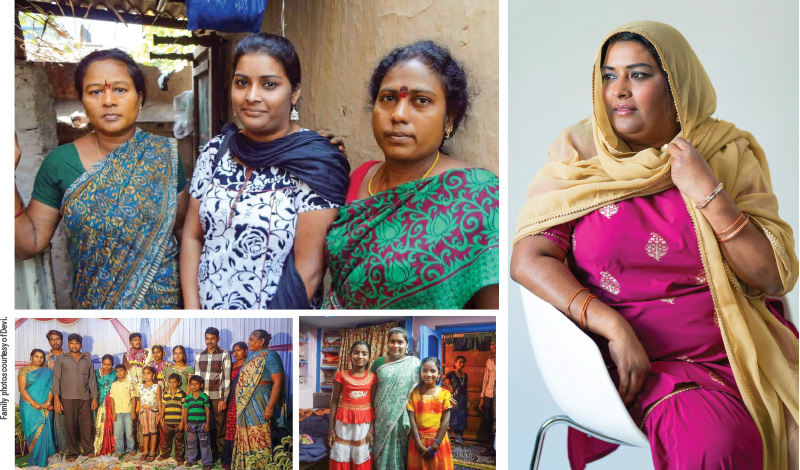
In the small rural village of Kakinada, India, lived a young girl. Born into poverty, captured, and trafficked before she was even eight years old, Devi reflects on her hardships and faith in Christ that has not only sustained her but allowed her to forgive those who kidnapped and abused her.

When Devi was a young girl, her mother ended up living on the streets and, out of necessity, turned to a life of prostitution.

“[At the brothel] we lived in one bedroom with six people,” Devi said. Her two brothers also lived with them. Devi worked a number of jobs, as do many children in India who are born into poverty. She recalls cleaning houses, selling snacks at the theater, and her favorite job—selling spices at the bazaar.

“Child labor is very common in India,” Devi said.

When the brothel was eventually shut down, Devi and her family ended up on the streets. Her mother became ill, and she was taken to a hospital with horrendous living conditions. Regardless, Devi did not want to leave her mother’s side.

“I slept under her bed on the floor,” Devi said.

“I just wanted to be with her.” After nearly a month of taking care of her mother in the hospital, a man who noticed their situation approached them, offering to take Devi to find work.

“Again, child labor is common in India,” Devi said. He promised to take Devi to a workplace and bring the money Devi earned back to her mom, assuring Devi she could come back to visit. Although she did not want to go, she knew her wages would help with her mother’s medical care. She never imagined that her mother would pass away that same night, and that would be the last time she saw her.

The man took Devi on a nine-hour train ride to an orphanage, where he was compensated for bringing her.

“He sold me to that orphanage,” Devi said.

“I remember them exchanging money in front of me.” At that moment, Devi knew she had been trafficked.

Devi soon discovered that she was not alone.

There were many other children who had been trafficked. The “orphanage” had a valid license; however, it was, in fact, a front for child trafficking. All the children at the orphanage had been kidnapped and were held until someone overseas wanted to adopt them.

“Every kid in that orphanage had a story to tell,” Devi said. When a child was brought to the orphanage, their hair would be cut, their names would be changed, and they would be told that their families were dead. Changing their identity and leading them to believe there was no family to be reunited with was a deterrent to running away.

Devi explained that they were not treated well and were put to work in the rice field, on the farm, and in charge of caring for the younger children. The girls were physically, sexually and mentally abused, but whenever prospective parents came from overseas to visit the orphanage, they would “put on a show.”

“They’d get all these workers to come and pretend they were working there,” Devi said. “We put on nice clothes, and they fed us. It was like a showcase.” Although the children were all kept in one room, there were other rooms in the orphanage, such as a dining room, that were kept nice and only used when prospective parents came to give the illusion that the children were well cared for.

“It was all a lie,” Devi said. “Behind the curtains, no one knew what was happening.” Most of the children were eventually adopted. The international parents who paid high adoption fees had no knowledge that the child they adopted had been a victim of human trafficking.

Like many of the children, when Devi learned she was going to be adopted and taken away from India, she tried to run away with other girls from the orphanage. Their plan did not work, and they were caught, brought back to the orphanage, and badly beaten.

In 1998, after being in the orphanage for two years, Devi was adopted by a family in Virginia.

“I didn’t want to be here,” Devi said, remembering the days following her arrival. “I hated it here.” Aside from dealing with the trauma she had endured, without knowing any English, coming to the U.S. was challenging for Devi, and she struggled to communicate with her new American family.

“She [adoptive mom] labeled everything in the house to teach me,” Devi said.

Once she was able to communicate, Devi told her adoptive parents what had happened to her and explained she was not even an orphan; however, they were skeptical of what she claimed.

“Who would believe a kid?” Devi said. Her adoptive parents were given death certificates of Devi’s biological parents, however, the certificates were fabricated. Around the same time Devi was trying to convince them of her story, there were two other girls from the same orphanage who had been adopted by a family in Alabama, and they were speaking out about their story. Their adoptive dad worked to bring awareness to the child trafficking ring that was fronting these adoptions. The orphanage was eventually exposed, and the owner was arrested.

When Devi was in high school, she returned to India and was reunited with her family.

“When we got there the first day, to my hometown, the streets where I grew up, everyone was still there,” Devi said.

She discovered that her town and family had looked for her after she disappeared, but with limited resources, they could never find her and assumed she was dead.
Although Devi’s parents were Hindu, she had heard about Jesus as a young child. While in the orphanage, she did not know Jesus as her Savior yet, but there were times as a child when she felt the Lord’s presence and comfort.

“I didn’t become a believer until I came to my U.S. adoptive parents,” Devi said.

“It came easy to accept it because I was aware of it. It clicked.”

Trying to heal from her experiences, in 2012, Devi again returned to India for a visit and decided to find the location of the orphanage, which had been converted into a glass business. Upon visiting the location, she came face-to-face with one of the people who had run the orphanage. He claimed not to remember her, but she remembered him.

“You don’t have to remember me,” Devi told him. “I was just a number to you. You were making money out of us.”

When Devi was about to leave, he asked if she hated him, and she said no, but she hated the system and what was done to so many children. She explained that the only reason she was able to forgive him and the others who abused her was because of the Lord.

There are still times that Devi strives to feel close to her Indian heritage by cooking Indian food, watching a movie, and crying over the memories of her past, but then she can let go of the hurt and move forward, giving it “all to the Lord.” She said you must decide how you allow your past experiences to affect you.

“You have to make that decision,” she said. “It can eat you up; let the poison get the best of you, or you can make peace with it and move forward.”


A Cozy Corner of Norfolk Avenue

The Milams’ Craftsman Home Filled with Love, Laughter, and Good Food

By: Megan Williams | Photos By: Ashlee Glen

On a warm Spring Wednesday night, the red door on a cozy 1920’s Craftsman swings open. Warm light spills onto the porch and the sounds of a ruthless game of Clue pierce the otherwise quiet street. Amidst the squeals of a guess-gone-wrong, you hear chips clanking into a bowl, ready to be served alongside freshly made onion dip. If a neighborhood kid were to pass by at this moment, they’d surmise their own clue: Game night at the Milam’s is on and all are invited.

“If the red door is open, you’re welcome to come in,” said Hart Milam, who has lived in the charming one-and-a-half story home since 2019 alongside her husband Nick, their two children Wesley (11) and Cora (8), and their dog Mojo, who joined the family a few years after they moved in. “This is a very close-knit street. My kids are always included in neighborhood activities, and we always do the same.”

Hart and Nick met in 2012 while they were both living in DC. Neither had any intention of leaving the Northern Virginia area but a job opportunity relocated the Milams to Lynchburg in July of 2019.

“We had no intention to staying for more than a year and were actively seeking rental opportunities,” Hart recalled. “We decided that purchasing a home might be a better option because of the interest rates at the time. We did not like a single house we looked at, and we searched for about two months until I was told about our current home. It sat vacant, so I reached out to the owner in late September, and we walked through it the next day. Nick and I remained silent during the walkthrough with the owner, but as soon as we got in the car, we knew it was the house for us. We put the offer in, and it was officially ours in October 2019. It’s hard to believe it will be almost 6 years.”

Hart had always had an affinity for Craftsman-style homes, gravitating toward the timeless functionality that the homes have.

“I love the characteristics and charm,” she said. “When we were house hunting, we looked at a few homes for sale on Norfolk Avenue. Having lived in Washington, DC, then eventually when we lived in Winchester, and our suburb in Northern Virginia, I loved the ability to walk to restaurants and shops. When we were walking the sidewalks of Norfolk Avenue, knowing how convenient businesses on Rivermont are to the street, it was a no-brainer for me. I was determined to live on Norfolk.”

The Milams immediately got to work transforming the home into a space that worked for their family, and that would continue to work well as their children grew.

The original kitchen had a peninsula countertop that was, according to Hart, “perfectly workable and fine,” however the counter height was six-inches higher than standard height and needed to be adjusted. They were able to retain most of the overhead cabinets but renovated the base cabinets to a more accessible height.

“We renovated the kitchen with Ikea cabinets!” Hart said. “It took over 250 boxes being delivered to our home and a lot of manpower from our family to help build out. My father-in-law, Mike, would leave his day job as a pulmonologist to help Nick build cabinets after work. We subcontracted the work in the kitchen to gut, place tile, but the rest of it was a lot of DIY. We had moving boxes everywhere in the middle of renovations, refinishing floors, building kitchen cabinets, and we eventually moved in December 2019 with a lot of work still to be done. I was determined to have Christmas breakfast in our new home, so we had to have our granite countertops installed on Christmas Eve!”

For the Milams, the kitchen is the heart of their home and family. After Hart returns home from work, where she is in Admissions at Randolph College, just a three-minute walk away, she can be found in the kitchen, doling out snacks for her kids or assessing the ingredients in the fridge for dinner.

“Coming from a strong Filipino and Italian background, I was taught not to waste,” she said.

“If all you have is rice and eggs, in Asian culture, that’s a meal in and of itself.”

Go-to meals on busy weeknights while the Milams navigate work schedules, their daughter’s dance practice schedule, and both children’s lacrosse schedules include pasta, salmon rice bowls, and even charcuterie platters where the kids can graze while catching up on homework after a practice.

“I try to incorporate as many of the same ingredients as possible across the week to avoid waste. But if I walk by a full lobster tank at the Boonsboro Kroger, I will make an impulse purchase for lobster rolls,” she laughed.

While the Milams keep meals simple during weeknights, Hart will go over the top for certain occasions or meals.

“One afternoon this winter, all of the neighborhood kids came in from playing outside. For snacks, I brought out the Brookstone S’mores Maker and they made s’mores in the dining room. Nick and I love to have people over, planned or unplanned—anywhere from pizza parties with the Ooni to me forcing everyone to watch Duke Basketball—and everyone knows we will always have some snacks or a cocktail waiting for you whenever you come over! I love to be a little over the top in parties and themes, and I’m so glad my family and friends indulge my sometimes-unhinged behavior,” she smiled. “Last year, I threw my daughter a [Taylor Swift] Eras themed birthday party complete with t-shirts, koozies, and a ‘merch table’ with glasses and tattoos!”

Hart and Nick’s children are front and center in their home, from the snacks they love to the hobbies they are cultivating. It’s a space of warmth, joy, and color, and it creates a beautiful background where their children can experiment and thrive.

The built-ins in the living room, original to the home, are brimming with family photos, assembled Lego projects, records their daughter is enjoying, and books that the kids can quickly grab and tuck into. It’s the home of a family who loves being together and loves to be at home.

“On a Saturday morning, Cora will wake up first and turn on the record player—usually Taylor Swift. That’s what we will wake up to,” Hart shared. “If it’s a warm morning, we will take out the flat top grill and make breakfast outside.”

The Milams’ home is more than just a place to live—it’s a hub of connection, creativity, and community. Whether it’s a spontaneous game night, a themed party, or simply sharing a quiet breakfast outdoors, Hart, Nick, and their children have built a space that reflects their love for each other and the neighborhood they’ve come to call home. It’s a place where the door is always open, and everyone is invited to join in the warmth and joy that fills their home.


Artist Profile: JoAnne Becker

Making a Difference

A local artist uses her skillset to create beautiful works and foster Lynchburg’s growing art scene

By: Christian Shields | Photos By: Ashlee Glen

Tucked away on the third floor of the Bailey Spencer Hardware building on Lynchburg’s main street, the Studio 3 Art Gallery provides patrons with a wide range of artistic expertise, all courtesy of owner JoAnne Becker.

From woodworking to abstract paintings, portrait photography, family history books, and more, Becker has a self-described “compulsion to create things.” This desire to create beauty causes her to try her hand at many different art disciplines with a high level of success. This often leads to unique combinations of photography intertwined in other art forms, such as her custom cigar boxes.

“It’s a good day when I create something interesting,” she said with a smile.

Becker originally moved to Lynchburg from Maine eight years ago. During a conversation with Bailey Spencer owner Michael Pearl five years later, she was offered the chance to rent the third-floor studio space and she jumped at the opportunity.

While Becker places high value on her creations and takes pride in her work, she refuses to hoard these treasures or over price them for her own personal gain. She instead keeps her prices reasonable and also features low cost items to ensure everyone who walks into her studio can take something home if they choose.
“Really the impetus for this is I love what I do, and I want to share that with people,” she said. “It makes people feel good to have their portraits done.
I get satisfaction taking photographs, but it’s also really rewarding to see them go somewhere where people will enjoy them. Whether I give them away or sell them, it’s the same feeling.

It’s not about the money, it’s about sharing what I do.”

This heart for the community extends beyond Becker’s approach for selling her own products. On Saturdays, she hosts a maker’s market in which local artists of any age can set up a table in her gallery to sell their wares. Rather than seeing other artists as competition, she sees them as fellow craftsmen.

“Art is very personal, so it’s hard for some artists to put their work out there for everyone to see, it definitely was for me,” she said. “I am grateful to be able to help young artists at Studio 3 and watch them gain the confidence and fortitude they need for success.”

This summer, Becker will hold her first solo art show, “Beauty of the Unexpected,” at the Up Front Gallery at the Academy Center of the Arts, with an opening night on June 6 from 5 to 8 p.m. The show will run through July 26.

Explore JoAnne’s paintings and photography at joannebecker.com and connect with Studio 3 Art Gallery on Instagram at @studio3lynchburg.

You can find JoAnne’s custom cigar boxes online at creativecigarboxes.com.


A Weekend at Caesars Virginia

A New Chapter for Danville

Photos by: Ashlee Glen

Imagine stepping into a world of bright lights and anticipation, where the thrill of the roulette wheel competes with the high-energy sounds of slot machines. Every step you take brings you closer to the electric buzz of excitement—a buzz that encapsulates the new heart of Danville, where Caesars Virginia reigns as a beacon of both luxury and possibility.

For those unfamiliar with the region, Danville has long been known for its industrial past, primarily tied to tobacco and textiles. Yet in recent years, the city has reinvented itself. Once a hub of manufacturing, Danville has begun to flourish as a small city of innovation, bringing in new businesses, restaurants, and attractions. The arrival of Caesars Virginia, located on the site of a historic textile mill, is both a testament to this transformation and a catalyst for even more development.

The Building: Merging History & Modernity

Caesars Virginia’s location—just off the Dan River—has been carefully chosen to reflect both the city’s industrial heritage and its bright future. The casino sits on the same grounds that once housed a textile mill, with the iconic smokestacks still standing tall as a symbol of the city’s past. This historical integration is particularly meaningful in Danville, where old factories are being repurposed into trendy restaurants, breweries, and offices. Caesars preserving these smokestacks during construction was part of a broader effort to honor the city’s roots while building for its future.

Inside, the property radiates modern luxury. The Caesars name brings with it a promise of world-class amenities, and the resort does not disappoint. With 320 hotel rooms, including 28 suites, the space offers a welcoming atmosphere for all visitors. Whether you’re a high-roller or someone just looking to unwind, the accommodations are designed for comfort and luxury. The hotel’s grand aesthetic extends to the casino floor itself, where 1,500 slot machines and numerous table games create a buzz of activity. The venue also features a World Series of Poker room and a state-of-the-art sportsbook, making it an exciting destination for both seasoned gamblers and those looking for a little thrill.

A New Experience for the Region

The allure of Caesars Virginia isn’t just in the gaming. The resort has a strong emphasis on providing a full experience for visitors, with something for everyone—whether you’re a foodie, a spa enthusiast, or someone looking for a relaxing weekend. The highlight for many is Ramsay’s Kitchen, by multi-Michelin-starred chef and television personality Gordon Ramsay—the first of its kind in Virginia—where diners can indulge in world-class dishes. Additionally, there’s Dan Dan Noodle Bar, where guests can enjoy Pan-Asian inspired dishes such as sushi or stir fry; Starbucks; and a variety of local eateries like those found at the 500 Block—managed by local restaurateur Steve Parry and local property developer Rick Barker—offering everything from pizza to BBQ.

For those looking to relax and unwind, the spa and pool areas provide serene retreats, while The Pantheon, a 2,500-seat entertainment venue with 30,000 square feet of showroom space, promises a variety of entertainment options. Scheduled to host headliners such as Wynonna Judd and ZZ Top, The Pantheon is poised to become one of the area’s premier venues for major acts. Visitors can expect performances ranging from country and rock to stand-up comedy, further establishing the casino as a vibrant cultural hub.

Despite its focus on gaming, Caesars Virginia also caters to those who might not be interested in placing bets. Families, couples, and even solo travelers can enjoy the resort’s non-gaming offerings, making it a versatile destination for a weekend retreat.

The resort’s integration with the Danville community is also a key element of its success. Partnerships with local businesses and attractions—such as wineries, breweries, and sports teams—allow visitors to experience the best of Danville beyond the casino walls.

Danville’s Revival

The impact of Caesars Virginia on Danville has been significant.

The casino’s opening has sparked a wave of new investment in the area, with construction cranes dotting the skyline and new businesses popping up regularly. The local economy has seen a noticeable boost, as more visitors are flocking to the region to experience the resort. Caesars has hired hundreds of local residents, injecting much-needed jobs into the community. It’s clear that the property’s success is tied closely to its relationship with the local community.

“We are not just a casino,” said Chris Albrecht, SVP & General Manager of Caesars Virginia. “We are part of the fabric of Danville’s growth, and we
want to be a positive influence for years to come.”

The casino’s offerings—ranging from gaming to dining and entertainment—are designed to complement the local economy, with a focus on collaboration rather than competition. By working with local partners, Caesars is helping to create a stronger, more diverse economy for the region.

Center BarPhoto Courtesy Caesars Entertainment

Center Bar. Photo Courtesy Caesars Entertainment

A Weekend Experience at Caesars Virginia

A weekend at Caesars Virginia is an immersive experience. Whether you are drawn to the gaming floor, looking to indulge in fine dining, or seeking relaxation in the spa, there’s no shortage of things to do. For those staying overnight, the hotel’s luxurious rooms provide a quiet sanctuary after a day filled with activity. Guests can unwind with a drink at the casino bar, take in a live performance at The Pantheon, or simply enjoy the scenic beauty of the Dan River.

On Saturday night, the casino floor is bustling, and the excitement is palpable. Guests move from one machine to the next, trying their luck on everything from classic slots to the latest video games.

The energy is contagious, and for many, it’s the perfect way to spend an evening. For those less inclined to gamble, the live music and comedy acts
provide another form of entertainment. You can stroll through the casino, taking in the excitement of the environment, without feeling the pressure to place a bet.

For those looking for a slower pace, a visit to the spa is the perfect way to rejuvenate. The wellness offerings at Caesars Virginia are designed to provide guests with the ultimate relaxation experience, with massages, facials, and other treatments that focus on well-being. The resort’s commitment to offering something for everyone is evident in its diverse array of amenities.

Looking Ahead

Caesars Virginia is more than just a weekend destination; it’s a glimpse into the future of Danville, where history meets modern luxury and a city’s potential is being realized with each passing day.

As the casino continues to grow and evolve, one thing is clear: the best is yet to come for Danville—and for those who choose to make it their getaway.


Wholesome & Hearty

4 Plant-Based Recipes to Try

Eating plant-based doesn’t mean you have to sacrifice flavor or satisfaction. In fact, plant-based meals can be as filling and comforting as any traditional dish, without missing a beat. Whether you’re a long-time plant-based eater or just starting to explore, these recipes offer inventive and accessible options that anyone can try. From a hearty curry to a zesty salad, these dishes are packed with fresh, nutritious ingredients that will keep you feeling energized. Ready to dive into some delicious plant-based cooking? These four recipes are here to inspire your next meal.

Chickpea & Spinach Curry (photo above)

A one-pot wonder, this creamy and flavorful curry brings together chickpeas, spinach, and a blend of aromatic spices. The coconut milk creates a rich base while the spices add warmth and depth to every bite. Served with basmati rice or quinoa, this dish makes for a satisfying meal that’s as comforting as it is healthy.

Ingredients:
2 tbsp olive oil
1 onion, chopped
3 cloves garlic, minced
1 tbsp grated fresh ginger
1 tbsp curry powder
1 tsp ground cumin
1/2 tsp ground turmeric
1 can (14 oz) coconut milk
1 can (15 oz) chickpeas,
drained and rinsed
1 can (14.5 oz) diced tomatoes
4 cups fresh spinach
Salt and pepper, to taste
Fresh cilantro, for garnish
Cooked basmati rice or quinoa, for serving

Directions:
1. In a large pot, heat olive oil over medium heat. Add the onion and sauté until softened, about 5 minutes. Add garlic and ginger, cooking for another 1-2 minutes.
2. Stir in the curry powder, cumin, and turmeric, and cook for 1 more minute until fragrant.
3. Add coconut milk, chickpeas, and diced tomatoes. Stir well and bring to a simmer. Let it cook for about 10-15 minutes, allowing the flavors to meld together.
4. Stir in spinach and cook until wilted, about 3-5 minutes. Season with salt and pepper to taste.
5. Serve over basmati rice or quinoa and garnish with fresh cilantro.

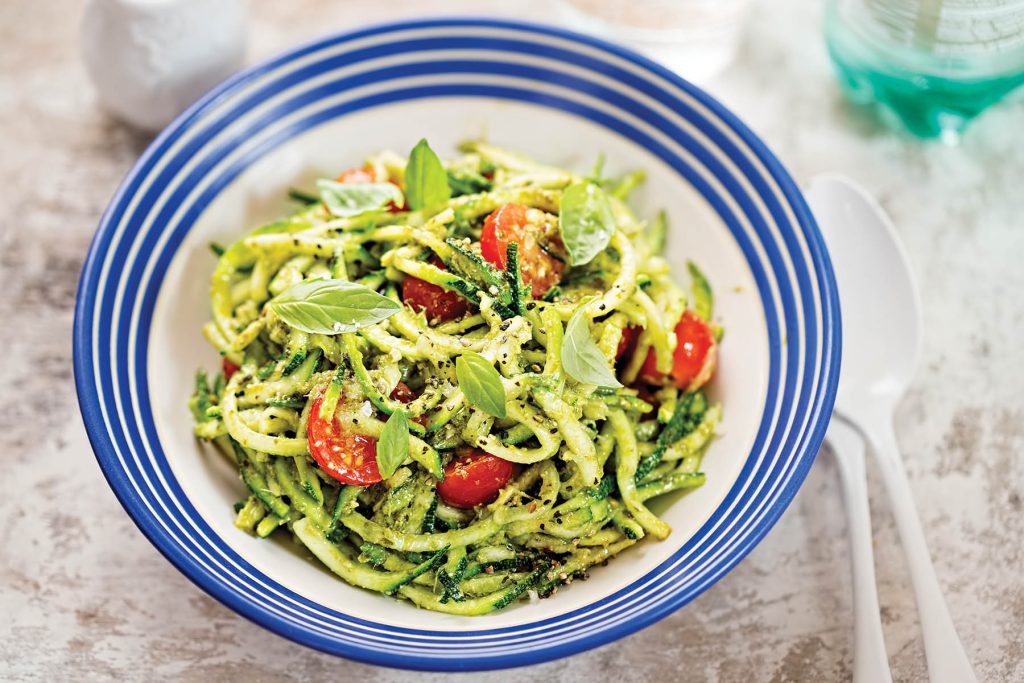
Spiralled courgette spaghetti with green pesto and cherry tomatoes

Zucchini Noodles with Pesto & Cherry Tomatoes

This fresh, vibrant dish is light yet satisfying, with spiralized zucchini noodles tossed in homemade pesto and juicy cherry tomatoes. It’s a gluten-free, plant-based alternative to traditional pasta, perfect for a quick and delicious weeknight dinner.

Ingredients:
4 medium zucchinis, spiralized
1 pint cherry tomatoes, halved
1/4 cup toasted pine nuts (optional)
1/4 cup fresh basil, chopped
1/2 cup pesto (store-bought or homemade)
Salt and pepper, to taste

Directions:
1. In a large bowl, toss the spiralized zucchini noodles with pesto until well coated.
2. Gently fold in the halved cherry tomatoes and chopped basil.
3. If desired, sprinkle with toasted pine nuts for added crunch. Season with salt and pepper to taste.
4. Serve immediately as a light lunch or dinner option.

Cooking Roasted Cauliflower and roasted chickpeas salad, with pomegranate, kale, with spices, oil and lemon dressing. Vegetable winter season food on a light background. Vertical image.

Roasted Cauliflower & Chickpea Salad with Tahini Dressing

This roasted cauliflower and chickpea salad is a warm, hearty meal packed with protein and fiber. The smoky, roasted cauliflower pairs beautifully with crispy chickpeas, all tied together with a creamy tahini dressing. The perfect balance of flavors and textures, this salad works well as a main or a side dish.

Ingredients:
1 head cauliflower, cut into florets
1 can (15 oz) chickpeas, drained and rinsed
1 tbsp olive oil
1 tsp ground cumin
1 tsp smoked paprika
Salt and pepper, to taste
4 cups fresh arugula or kale
1/4 cup tahini
2 tbsp lemon juice
1 tbsp maple syrup
1 garlic clove, minced Pomegranate seeds, for garnish
Water, as needed to thin the dressing

Directions:
1. Preheat the oven to 400°F (200°C). Line a baking sheet with parchment paper.
2. Toss cauliflower florets and chickpeas with olive oil, cumin, smoked paprika, salt, and pepper. Spread evenly on the prepared baking sheet and roast for 25-30 minutes, until cauliflower is golden and chickpeas are crispy.
3. While the vegetables roast, whisk together tahini, lemon juice, maple syrup, garlic, and a pinch of salt in a small bowl. Add water a tablespoon at a time until the dressing reaches your desired consistency.
4. Once the cauliflower and chickpeas are done, toss them with the arugula or kale in a large bowl. Drizzle with tahini dressing and garnish with pomegranate seeds if desired. Serve immediately.

Baked sweet potato stuffed with tomatoes, chickpeas, onion and avocado. Close up. Vegan food concept

Stuffed Sweet Potatoes with Black Beans & Guacamole

These roasted sweet potatoes are the perfect vessel for a savory black bean filling and topped with creamy guacamole. It’s a nutrient-dense dish that’s packed with fiber, healthy fats, and protein. Plus, it’s easily customizable with your favorite toppings.

Ingredients:
4 medium sweet potatoes
1 can (15 oz) black beans, drained and rinsed
1 tsp ground cumin
1 tsp chili powder
Salt and pepper, to taste
1/2 cup guacamole (store-bought or homemade)
Fresh cilantro, for garnish
Lime wedges, for serving

Directions:
1. Preheat the oven to 400°F (200°C). Pierce sweet potatoes with a fork and place them on a baking sheet. Roast for 40-45 minutes, or until tender.
2. While the potatoes roast, heat black beans in a small saucepan over medium heat. Stir in cumin, chili powder, salt, and pepper. Simmer for 5-7 minutes until heated through.
3. Once sweet potatoes are done, slice them open and fluff the insides with a fork. Top with black beans, a generous scoop of guacamole, and fresh cilantro.
4. Serve with lime wedges on the side for an added burst of freshness.


From Passion to Plate

Klaire Maranto Turns Love for Food into a Thriving Lynchburg Business

By: Olivia Carter | Photos By: Ashlee Glen

Klaire Maranto never imagined she’d run a thriving meal prep business here in Lynchburg. But a tablespoon of love for food, a few teaspoons of passion for helping others, and a large cup of faith led her to launch Klaire’s Kitchen in 2021.

Since then, her small idea has become a weekly staple for many of her clients in the area.

“I have always been a lover of health, fitness, and food and I come from a really big Italian family, so we always were in the kitchen,” Maranto said. “It was always just a way that you showed love or you brought a meal to someone when someone was in need. You’re always making food.”

Her connection to cooking, paired with a keen understanding of nutrition, became the foundation for what is now Klaire’s Kitchen.

But she says the journey to launching a business was far from straightforward.

Like many others, she found herself at a crossroads during the COVID-19 pandemic. A 2020 graduate of Liberty University, she returned home to Buffalo, New York, only to be met with a bleak job market.

“Nobody was hiring. And I was like, ‘You know what? This is maybe my time to get all the nutrition certifications that I want,’” she said.

While she initially intended to use her expertise in a traditional job setting, something unexpected happened. Maranto started coaching family and friends on healthy eating habits, helping them with meal planning and giving them guidance on nutrition. Without realizing it, she was laying the groundwork for her future business.

When she and her husband moved back to Lynchburg for his law school studies, she took a job at a gym and noticed a consistent pattern.

“People would come in and be like, ‘What are you eating? It smells so good.’ And I’d be like, ‘Oh, you know, I just meal prepped,’” she said.

That curiosity quickly turned into meal prep requests.

“I actually love doing this,” she said. “These people are so happy when they get their food. It’s making their life so much easier.”

After a brief stint working at a local weight loss clinic, Maranto felt compelled to make a change and decided to meal-prep for others full-time. It was a bold move, especially since she and her husband were both young and in the midst of building their future.

“He was like, ‘You just went to school for four years to do something completely different,’” she laughed. “But I really feel like this is what I’m supposed to be doing.”

Initially, she assumed that her primary clientele would be fitness enthusiasts, athletes, and college students looking for convenient, healthy meals. But to her surprise, her customer base expanded far beyond that.

“It’s actually been completely the opposite,” she said. “It’s been pregnant and postpartum moms, working parents, a lot of professionals, a lot of teachers, doctors, lawyers, other small business owners that are like, ‘I don’t even have time to go do anything. I can’t cook my own food.’”

Through trial and error, Maranto has her finger on the pulse of what Central Virginian’s palates are craving.

“Everybody loves Mexican food. So the beef burrito bowls, the chicken burrito bowls, we have a beef enchilada skillet,” she said. “Everyone loves the side salads as well as this one meal that has sweet potatoes, ground turkey, kale, bell peppers and goat cheese,” she said.

She said people can still eat what they want, such as pasta, but enjoy it in the correct portion size.

“You’re getting a cup of pasta instead of the two and a half [cups] fixing it at home,” she informed.

One group of customers in particular has touched Klaire’s heart: the elderly.

“Those people have such a special place in my heart at the kitchen, because they’re talkers,” she said fondly.

“I love being around people and they’ll come in and tell me all about their week and what’s going on.”

What started as a small-scale operation has grown significantly, with customers coming to rely on Klaire’s Kitchen not only for nutritious meals but also for the personal touch she provides.

“It’s not just about the food,” she said.

“It’s about connection and making people’s lives easier.”

Klaire’s Kitchen operates with accessibility in mind.

There are no subscriptions, no commitments, and no minimum orders.

“It’s literally, like, if you want to try one meal, you just order and try,” she said.

Each week, customers place orders and meals are ready for pick-up on Mondays at her new location at the corner of Old Forest and Wiggington roads. This system allows flexibility for busy individuals and families who might not want the pressure of a meal plan but still need healthy options available.

Although meal prep businesses are common in larger cities, Maranto had noticed that Lynchburg lacked similar offerings.

“I actually met with someone, a meal prep business owner [in New York], and that was super insightful,” she said. “But here, there was really no one doing this.”
She started with modest expectations.

“I really went into it like, ‘Hey, as long as I can pay my bills and as long as I’m happy doing something that fuels me, I’m good,’” she said.
But demand quickly grew.

“I had people just calling me saying, ‘Hey, I hear you cook for so and so, would you do it for me?’”

When Klaire first moved back to Lynchburg, she and her husband expected their stay to be temporary.

“We had this idea that we were going to be here for three years and then move somewhere else,” she said. But as Klaire’s Kitchen grew, so did their sense of belonging.

“We can’t walk away from this now,” she said. “The business has grown so much, and I’ve built this incredible community here.”

She credits much of her success to Lynchburg’s strong network of small business owners and supportive residents.

“People here really want to support local businesses and that’s something special,” she said.

She said her business isn’t just about selling meals, but about helping and serving people.

“If you’re passionate about something, you have to go for it,” she said. “I’m so glad I took that leap, because now I get to wake up every day and do something I love.”


Forging Excellence

Ironclad Coffee Brings Innovation and Community Spirit to the Hill City

By: Emeri Glen | Photos By: Ashlee Glen

A series of happy clicks greet patrons as they walk into a green-filled room. The source of the clicking? Two Vestaboards above a bar featuring rotating jokes that flip every couple of minutes. Behind the bar, baristas wear crisp, black shirts and welcoming smiles as they ask coffee-seekers about their day, skillfully making espresso and other colorfully-named drinks. Excellence pervades Ryan and Kelly O’Rourke’s Ironclad Coffee.

The inspiration for the O’Rourke’s first Ironclad location in their hometown of Richmond began to take root when they lived for a time in Galway, Ireland.

“We started out with a hobby roaster…and I could see my husband Ryan was really getting into it,” Kelly said.

She explained that, when it came time to come back to the U.S., Ryan considered becoming a barber for a time but couldn’t pursue the idea due to an old football injury. And so, the O’Rourkes decided to lean into what they had already found a small amount of success in: Roasting beans.

This dynamic duo started small, roasting their own beans—purchased from farms that benefit their communities, were sustainable, and were dedicated to treating their workers well—and selling to local coffee shops, but found that the feedback regarding quality was inconsistent. Determined to showcase the best that their beans had to offer, the O’Rourkes upgraded their roastery to a café. Seven years later, two coffee shop locations in Richmond were followed by Lynchburg’s new addition, which has decidedly made its mark on the Candler’s Mountain area.

The carefully curated atmosphere of the cafe is classy, with gold accents, jazz playing in the background, and a grand piano sitting in the center of the space. The O’Rourkes’ business has come a long way from its beginnings in Ireland, but they still pay homage to their roots. In fact, you can find traces of these ties in one of their drinks, the Connemara Cappuccino.

The drink is smoked on the counter using real peat shipped from Ireland.

“It’s very nostalgic, because [peat] is what we burned in our little house,” Kelly said.

In addition to the Connemara, the café boasts a pomegranate and lime espresso tonic and browned butter chocolate chip cookie milk latte. Their bakery has a diverse menu, including consistent classics and more experimental items, all of which you can watch being made over the open bar.

Kelly noted that this layout choice was a departure from their other locations, saying “It’s incredibly rare to go into a shop and have everything being made from scratch.

We wanted to make sure that people knew that this is what was happening.”

Part of the O’Rourkes’ dedication to excellence is their desire to partner with the Lynchburg community. They use Homestead Creamery milk (which is very low in lactose) and desire to continue to foster an environment that makes all ages feel welcome and special. During “Tiny Tuesdays,” kids five and under receive a little packet with craft supplies, a “Babyccino” (steamed milk), and a muffin with the purchase of mom or dad’s drink. They also plan to have live jazz events in the future.

To learn more about the O’Rourkes and their Lynchburg location, visit ironcladcoffee.com.


Grinnin’ Bear Tavern

A Local’s Dream and A Community’s Treasure

By: Jeremy Angione | Photos By: Ashlee Glen

After years in a mix of careers in entertainment and manufacturing, local Chris Seigla decided to serve his community by opening a restaurant. Formerly Spring House Dining and Reception Hall, Seigla bought the Richmond Highway building in October and turned it into the Grinnin’ Bear Tavern.

After years of passing the building while helping with his family’s food truck, Butts Up BBQ. Seigla’s curiosity compelled him to check the place out.
After bringing his wife in to see it, he suggested they buy the building.

“Have you lost your damn mind?” she asked.

After his wife explained all the risks and considerations in owning a restaurant, Seigla decided he was still up for the challenge. The true reality check for Seigla was the amount of “red tape” involved in food service.

“That was the biggest hit for me; the amount of stuff that we had to go through just to be able to cook a hamburger and sell it to somebody,” Seigla said.

Despite the challenges, Seigla remained excited for the opportunity, describing himself as an “eternal optimist.” In preparation for their grand opening, Seigla posted a six-minute video on Facebook, introducing himself, Grinnin’ Bear, and his vision for its impact in the community. According to Seigla, the video was viewed more than 100,000 times.

Because of the unexpected exposure, Seigla says that “everything got thrown into fast forward.” Grinnin’ Bear Tavern held a grand opening March 8. In what became the saving grace for the day, Seigla and his staff approached neighbors of the business to ask for permission to have their patrons park along the road in front of their houses, if necessary.

It was necessary.

“Our grand opening was terrifying. You’ve got to be ready for 10,000 people, but you’ve also got to be ready for 100 people to show up,” Seigla said.

Despite the spacious rooms, large deck, and all the preparation Grinnin’ Bear’s team could muster, the day still proved a challenge.

“We got our butts whipped,” Seigla joked.

Fortunately, according to Seigla, patrons who did not want to bear the crowded venue during the grand opening were understanding and pledged to return another time.

“The support and encouragement that we got from the people around here and the community in general—it’s been unbelievable. I thought it would take a year to get to the point where people knew who we were, knew what we were about, and knew my face. It happened in two months,” Seigla said.

With lessons learned since opening day, Seigla and the Grinnin’ Bear are already planning events, new menus, and infrastructure updates. Chief among those updates are refreshing the decor, installing a proper HVAC system, and expanding parking to take advantage of the 5 acres of land the Grinnin’ Bear Tavern sits on.

Seigla believes the back room and deck will be key in making the tavern a full-fledged event space, with the ability to host several events simultaneously, thanks to retractable partitions throughout the large room.

According to Seigla, the Grinnin’ Bear event space has already been booked 22 times this year. As a former wedding DJ, Seigla is confident that he can show his patrons a good time.

“If I can give them a good meal and a cold beer, then I think this thing could be something really special,” Seigla said.

As a born and raised local, Seigla wants the Grinnin’ Bear to be a boon for the community and all his neighbors whenever possible. The Grinnin’ Bear staff will often bring the fire department, and even one of their elderly neighbors, food, to make sure they are taken care of.

According to Seigla, he wants to do everything from sponsoring little league teams to donating to the local Humane Society.

“We want to be a service to this community. I want to be something to people. I want these people to know, I live 2 miles up the road.

This is where I’ve been my whole life. I want people to know that we want to be a part of this for reasons other than just making money,” Seigla explained.
In accordance with their values of community, Grinnin’ Bear Tavern’s menu is full of what many would consider “comfort food.” What sets it apart, according to Seigla, is the true homemade nature of many of their dishes and their affordability.

With his mom and stepdad helping in the kitchen, Seigla is enthusiastic about the love and quality ingredients that go into Grinnin’ Bear’s simple menu. The tavern’s menu is what you might imagine a bar menu would look like, with items such as a BLT (Seigla’s favorite), mozzarella sticks, or a Philly cheesesteak. Seigla also made a point to highlight their foot-long hotdog that he says you can’t really find anywhere.

What elevates those classic food items is the commitment to making things in house. From housemade condiments to thoughtfully sourced meats, a Grinnin’ Bear Tavern meal provides guests with a generous, plate-filling portion at dive bar prices.

Every Sunday, Grinnin’ Bear offers a breakfast and lunch buffet that Seigla believes will be a staple in the community once it gains traction. According to Seigla, the Sunday buffet was a tradition at Spring House that he’d like to continue in the community.

“The stuff that we’re doing is food that you can’t just go buy anywhere. Rather than trying to do a bunch of stuff right now, let’s do 10 dishes and let’s do ’em really good,” Seigla said.

Seigla also plans to bring the tavern’s menu on the road by converting Butts Up BBQ to a Grinnin’ Bear food truck in October.

Aside from the large and varied spaces, and unique menu, the thing that makes Grinnin’ Bear Tavern the place to visit is Seigla himself.

“I’m the grinnin’ bear. I’ve got these dents on my face ’cause all I do is smile, man,” Seigla exclaimed.

Seigla recalls his time working at Paradise Lake getting paid to wear a Yogi Bear costume. Coincidentally, Seigla is also a Chicago Bears fan. Although Seigla says the name is just one he’s always liked.

“This world’s got enough problems. If for an hour of your day or week, you can come in here and you’re not worried about that stuff, that just swells my heart up,” Seigla said.

Currently, the Grinnin’ Bear Tavern is only open on Fridays, Saturdays, and Sundays. However, the Tavern will sometimes open for special sporting events, such as March Madness.


150 Years of Impact

The Miller Home for Girls’ Legacy of Empowerment and Transformation

By: Olivia Carter | Photos By: Ashlee Glen

For 150 years, the Miller Home for Girls has provided a safe place for young women in need, guiding them toward stability, self-sufficiency, and a brighter future.

Executive Director Stacy Garrett, who has led the organization for two decades, passionately upholds the mission that has remained steadfast since the home’s founding in 1875: to care for girls and help them build a positive path forward.

“Miller Home opened its doors in 1875 and has been taking care of girls who needed a safe place to live, redirect their path, and become smart, intelligent, well-rounded individuals who can go back into our community after the age of 18,” Garrett said. “That has always been our mission.”

Above: When first established, the Miller Home was known as the Lynchburg Female Orphan Asylum. At that time the home could care for approximately 100 girls at once and it was located in a four story building on a working farm. The Asylum was located on Memorial Avenue where E. C. Glass High School and The Plaza are today. Photo courtesy of Lynchburg Museum System.

Above: When first established, the Miller Home was known as the Lynchburg Female Orphan Asylum. At that time the home could care for approximately 100 girls at once and it was located in a four story building on a working farm. The Asylum was located on Memorial Avenue where E. C. Glass High School and The Plaza are today. Photo courtesy of Lynchburg Museum System.

Originally established as the Lynchburg Female Orphan Asylum, the home primarily served orphaned girls. Back then, a guardian, family member, or parent could drop off a girl and she would remain at the home until she married or finished school. In the 1950s, the institution was renamed the Miller Home of Lynchburg and the term “orphan” was phased out as societal needs and the structure of child welfare evolved.

Today, girls come to the Miller Home in various ways.

Many are placed by a guardian or through the Department of Social Services due to changing home circumstances, truancy, or court orders. The home serves as an alternative to detention centers, offering preventive care rather than treatment.

Miller Home

“We’re not a treatment facility; we are a preventive care facility,” Garrett said. “We aim to smooth out a bumpy road and build a network of professionals to help these young women transition back home, move into foster care, or age out and become independent members of the community.”

Dr. Selinna Creasy, volunteer while in college, full-time staff member, and Board of Directors member, said as a volunteer, she witnessed firsthand the organization’s profound impact on the community.

“Inspired by the dedication of the staff and the lives being transformed, I transitioned into a full-time staff role, contributing to the mission that I deeply believe in, ‘Changing Lives, One Girl at a Time.’ Over the years, my commitment to Miller Home grew stronger, eventually leading me to serve on the Board,” Creasy said. “As the current vice president of Miller Home for Girls, this progression has been incredibly fulfilling, allowing me to support and advocate for a place that continues providing hope and strength to so many. It’s a privilege to be part of such a legacy and I look forward to seeing what the future holds for Miller Home.”

The Miller Home focuses on three key areas to support the girls in their care: academics, mental health, and life skills.

“We work to ensure our girls are engaged in school, attending every day, and striving for academic success,” Garrett said. “We also connect them with professional counseling services to help them develop problem-solving and coping skills, particularly if mental health is a factor in their placement.”

The Miller Home also helps girls develop essential life skills.

“We teach them how to keep their rooms clean, cook meals, do their laundry—basic skills they need to be self-sufficient,” Garrett said. “By combining these three aspects, we help them build a strong foundation for the future.”

Unlike some institutions, the Miller Home does not offer in-house counseling. Instead, they partner with outside professionals to ensure an unbiased perspective on each girl’s progress.

“Having a third-party professional involved means we’re not the only ones making the call, especially when it comes to mental health,” Garrett said.

The Miller Home has never relied on state, federal, or city funding to sustain its operations. Instead, it has thrived for 150 years thanks to unwavering
community support.

“The reason our doors are still open is because of our community,” Garrett said. “Through donations, volunteering, and in-kind gifts, our supporters ensure we can continue our work. But it’s getting harder. With economic uncertainties, people are more cautious about giving, yet the needs of our girls remain.”

Local organizations, civic groups, and businesses have played an instrumental role in keeping the home running. St. John’s Episcopal Church, Park View Community Mission, Food for Thought, the Lynchburg Hillcats, and Liberty University have all contributed through fundraising, pantry donations, and volunteer efforts.

Phil Vassar, a country music artist, has partnered with the home since 2008.

“We are incredibly grateful for the Greater Lynchburg Community Foundation’s grants, which have helped us purchase necessary items,” Garrett said. “And our community always steps up, whether it’s Dave and Chris Henderson at Water Dog supporting our fundraising events or Starr Hill Brewery organizing an Angel Tree for us. The generosity is overwhelming.”

The Miller Home has an ability to tailor individualized service plans for each girl. As one of only three programs in Virginia licensed by the Department of Social Services under minimum standards, the Miller Home develops monthly goals and structured plans based on each girl’s specific needs.

“We don’t take a ‘one-size-fits-all’ approach,” Garrett said. “Each girl has her own plan, reviewed on a monthly basis. Because we have a small number of residents, usually eight to ten girls, we can work with them closely and ensure they are making progress.”
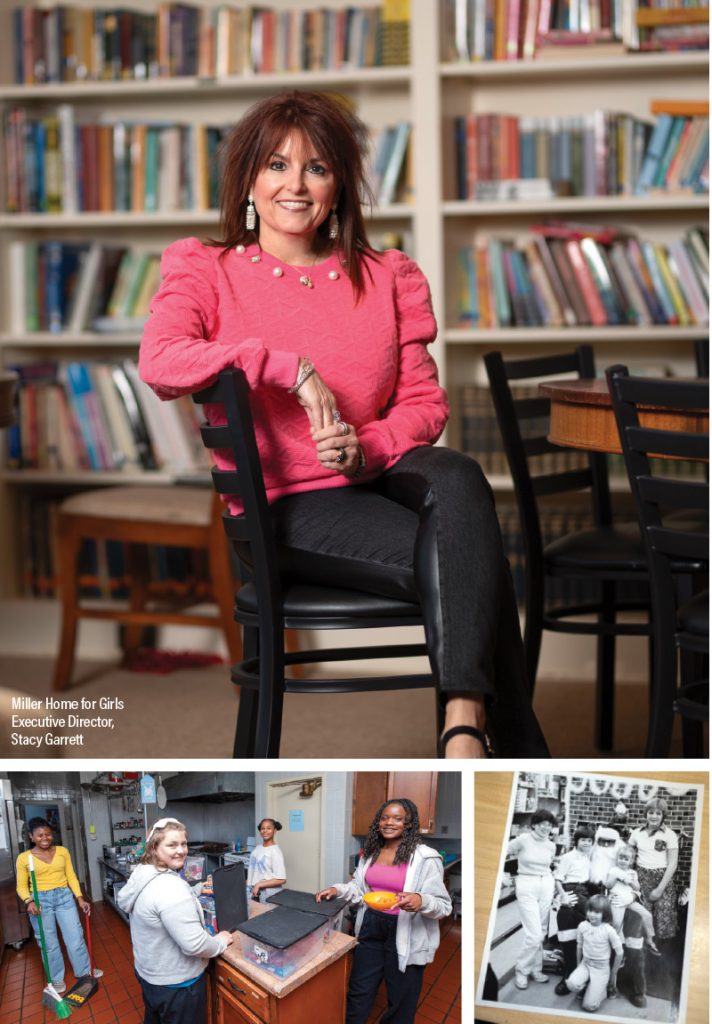
She said it’s this hands-on approach that is one of the reasons the Miller Home continues to thrive and make a lasting impact.

Justine, who was a resident from middle school until her first semester of college, then becoming an intern and a full-time staff member with Miller Home, said the impact that the organization had on her life as a resident inspired her to want to come back and complete an internship.

“During my internship a full-time position opened and I decided to take it and become a Child Care Worker,” she said. “Miller Home has had such an impact on my life that I wanted to come back, stay involved, and keep Miller Home in my life.”

Over the decades, the challenges faced by the girls at the Miller Home have evolved.

“In the past, our girls had to sew their clothes and work on farms. Now, we’re dealing with issues like technology, social media, vaping, and the aftermath of COVID-19,” Garrett said. “But our mission remains the same, which is to provide a stable, nurturing environment that prepares them for a successful future.”
One of the most significant measures of success is the transformation that takes place in the lives of the girls.

“Success for us isn’t about numbers, it’s about the quality of the time we spend with these girls,” Garrett said. “It’s seeing a girl make the honor roll for the first time, getting a job, opening a bank account, or applying to college.”

The consequences of not having a place like the Miller Home are stark. Without its support, many of these young women could face homelessness, fall into gang-related activities, or continue cycles of instability, Garrett said. Instead, they are given the chance to break generational patterns and build a better future.
“We’ve had girls who are the first in their families to go to college,” Garrett said. “They learn to trust people outside their immediate family, gain self-worth, and see possibilities they never imagined.”

Kayla, current intern for Miller Home, said her time at the nonprofit has been one of the greatest blessings of her college journey.

“I’ve witnessed firsthand the profound impact Miller Home has on the lives of the girls it serves, and the incredible difference made when dedicated individuals, like the Miller Home staff, step up to care for them every day,” she said. “Miller Home is not just a building or a temporary place for the girls to stay, it’s a true home, where they can find safety, support, and a sense of belonging.”

Every single day, the staff gives 100 percent to these girls, Garrett said.

“We make sure they are fed, safe, clothed, and supported,” she said.

“That’s the heart of what we do. I definitely think our community is proud of it and I appreciate them riding along with us and we need their support to keep us here for another 150 years.”