All Aboard: Take Amtrak to Alexandria for a Car-Free Getaway

Virginia’s fall colors are calling, and there’s no better way to enjoy them than by train. Rolling hills, historic towns, and vibrant forests transform into a tapestry of red, orange, and gold each autumn, making the journey itself just as memorable as the destination. For those who prefer a stress-free getaway, Amtrak provides a seamless route straight into the heart of Alexandria’s Old Town, where history, culture, and seasonal celebrations await.

The Journey: Relax and Enjoy the View

Autumn in Virginia has long been celebrated for its vibrant foliage, and traveling by train allows you to see it in a way that simply isn’t possible from behind the wheel of a car. Wide windows frame landscapes of farmland, forests, and rivers, while the gentle rhythm of the train encourages passengers to slow down and savor the scenery.

On board, travelers can settle into roomy seats, read a book, enjoy Wi-Fi access, or simply sip a coffee while watching the fall colors roll by. Without the stress of traffic, tolls, or parking, the journey itself feels like part of the vacation. And unlike airports, where security lines and waiting times add layers of hassle, Amtrak stations are designed to get you on your way quickly and comfortably.

Direct service to Alexandria makes it especially easy. The city’s Amtrak station is located in the heart of Old Town, just steps from King Street, meaning that the moment you disembark, the best of Alexandria is right outside the door.

A Walkable Autumn Escape

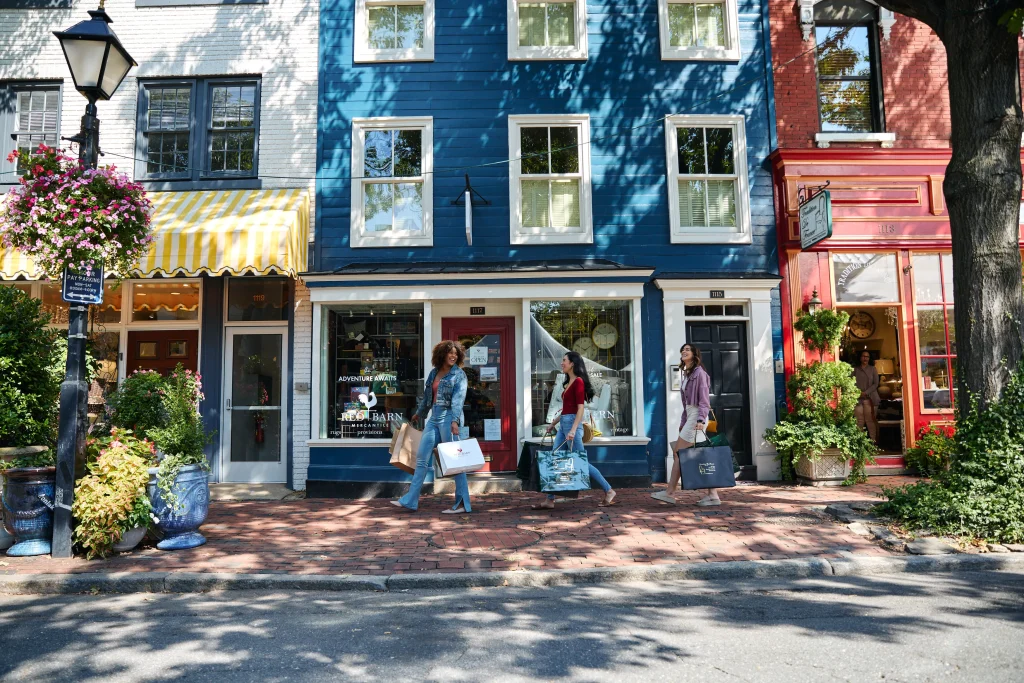
What sets Alexandria apart from many other fall destinations is its walkability. Once you arrive, there’s no need for a car. Old Town’s cobblestone streets are lined with independent restaurants, boutiques, and historic attractions—all within easy walking distance.

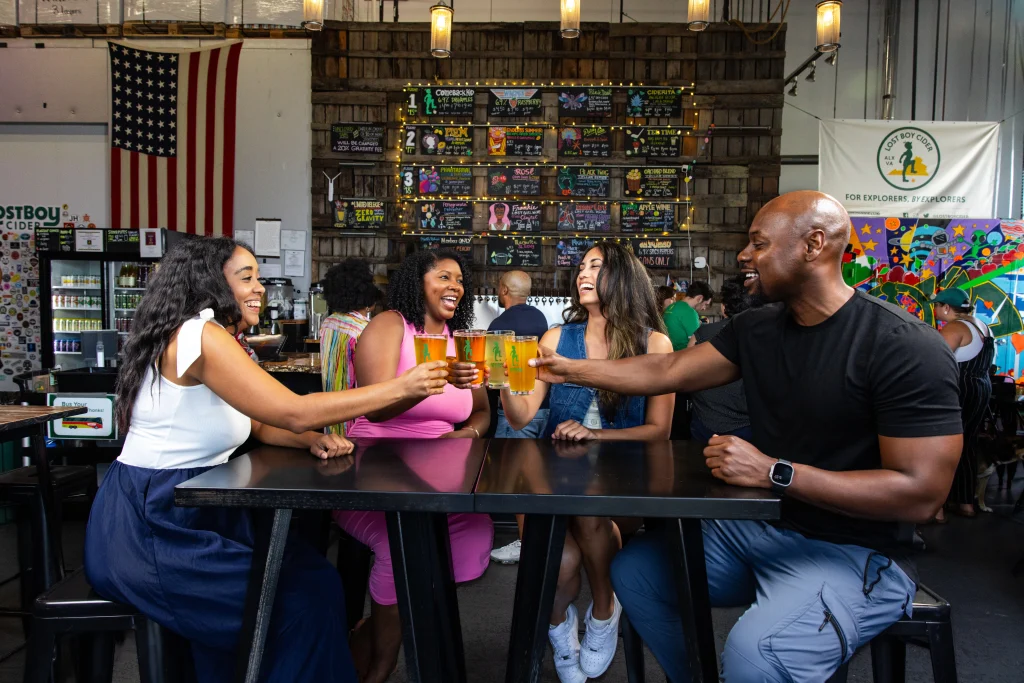
King Street, the main thoroughfare, stretches mile after mile, connecting the Amtrak station to the city’s bustling waterfront. Along the way, you’ll discover more than 200 shops and eateries, ranging from cozy cafés to chef-driven restaurants showcasing seasonal flavors. Stop for a bowl of pumpkin bisque, indulge in warm apple cider, or linger over a locally brewed craft beer.

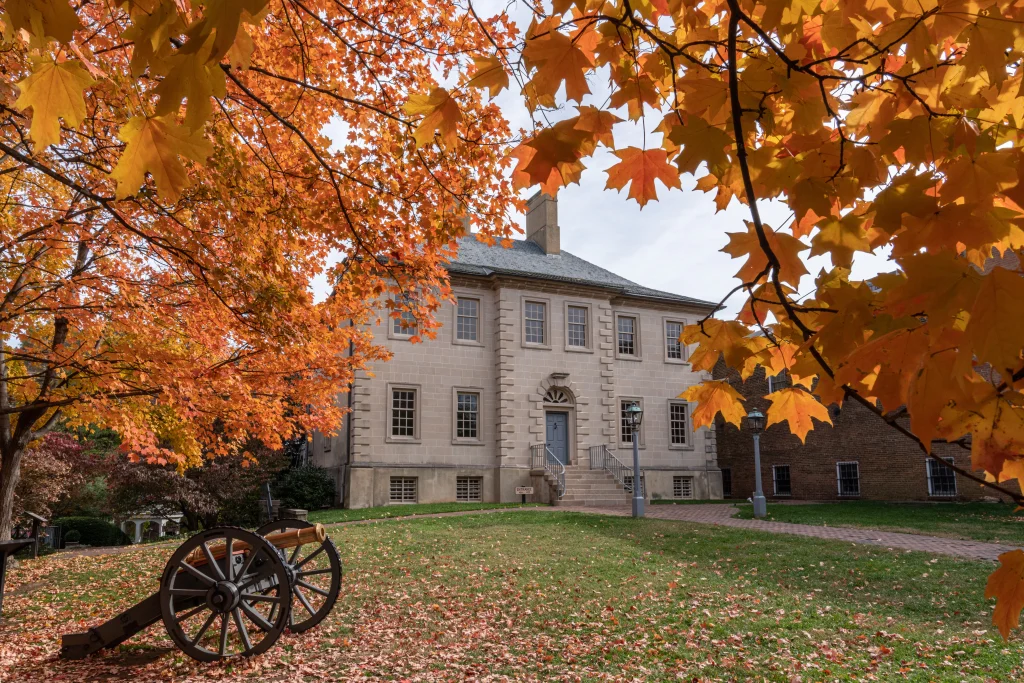
The city’s historic charm is enhanced by the backdrop of autumn. Trees along the sidewalks blaze with bright leaves, while the crisp air encourages visitors to linger outdoors. Alexandria frequently appears on lists of the nation’s most picturesque small cities, and it’s not hard to see why during this season.
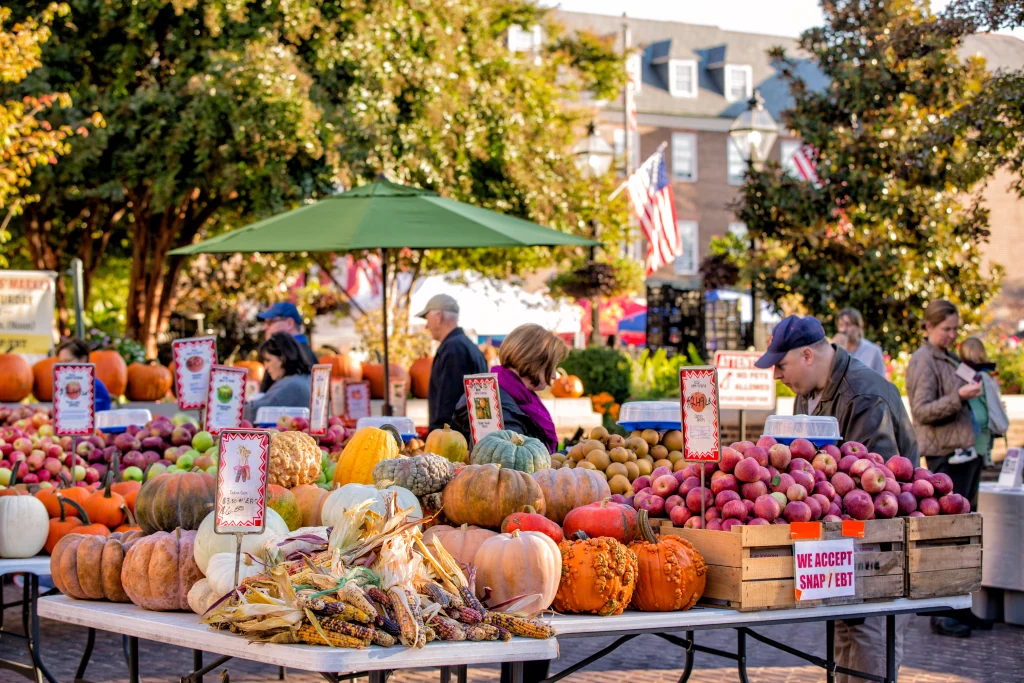
Photos courtesy: Visit Alexandria

Fall Festivals and Seasonal Celebrations

Autumn brings an especially rich calendar of events to Alexandria, making it an ideal time to visit. Outdoor art festivals draw regional and national talent, filling streets and parks with sculptures, paintings, and handcrafted goods. Oktoberfest celebrations add a lively, European flair, complete with beer gardens, music, and traditional fare.

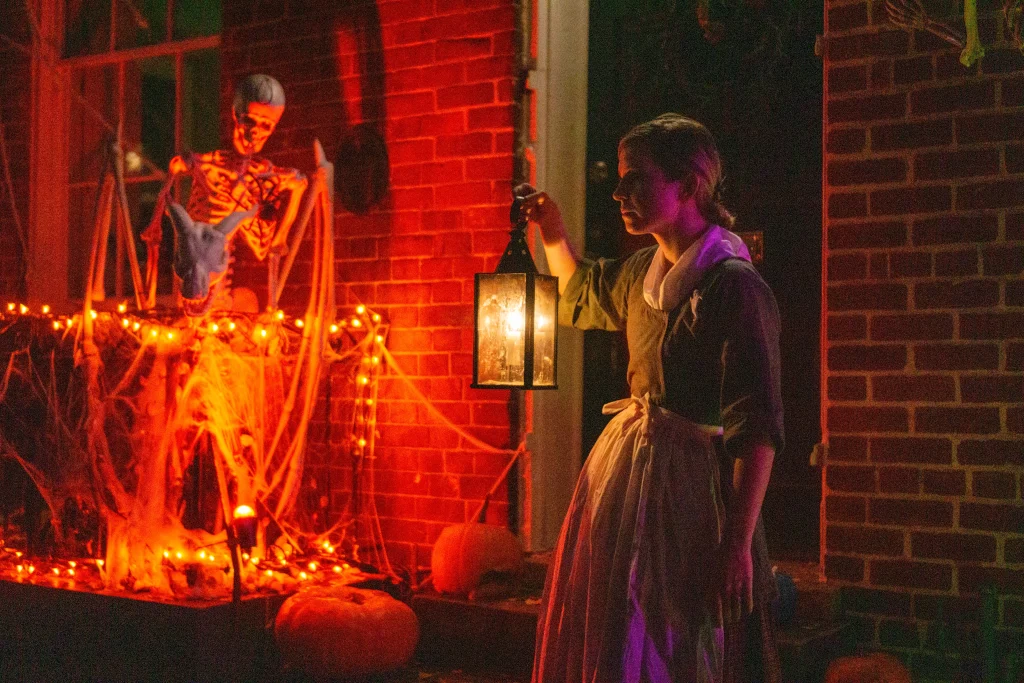
For those who enjoy history with a touch of intrigue, the city’s famous ghost tours offer a spirited way to explore. Led by costumed guides, these lantern-lit walks wind through alleys and historic neighborhoods, sharing stories of Alexandria’s centuries-old past. Whether you believe in spirits or not, the experience provides both entertainment and a unique perspective on the city’s history.

Other seasonal highlights include open houses at Alexandria’s historic homes, waterfront concerts, and family-friendly harvest festivals. With so many activities within walking distance of the station, visitors can craft an itinerary that’s as relaxed or as packed as they choose.

The Waterfront: Where History Meets the Present

No trip to Alexandria is complete without time at the Potomac River waterfront. Recently revitalized, the area offers new restaurants, public art installations, and pedestrian-friendly spaces that capture the city’s balance of old and new.

Fall is an especially appealing time to explore the waterfront, when the river reflects the fiery colors of the trees along its banks. Grab a bench to watch boats drift by, or stroll along the promenade to catch performances, pop-up markets, and seasonal festivals.

For a deeper dive into the past, visit the Torpedo Factory Art Center, a converted munitions plant now home to working studios where visitors can interact with artists and purchase one-of-a-kind pieces. Or, step back even further in time with a tour of Alexandria’s historic sites, from George Washington’s Mount Vernon (just a short drive or bike ride away) to preserved colonial-era homes in Old Town.

Insider Tips for a Car-Free Visit

To make the most of a fall trip to Alexandria, keep these tips in mind:

  • Stay Local: With so many inns, boutique hotels, and Airbnbs located right in Old Town, you can book accommodations within walking distance of the station and leave your car-free adventure intact.
  • Use the King Street Trolley: This free service runs the length of King Street, connecting the Amtrak station to the waterfront. It’s a convenient option if your feet get tired from exploring.
  • Plan Around Events: Check Alexandria’s events calendar before you go. Festivals and tours fill up quickly in the fall, so booking tickets in advance ensures you don’t miss out.
  • Pack Layers: Fall weather in Virginia can shift from sunny and warm to cool and crisp in a single day. A scarf and light jacket make outdoor exploration more comfortable.

Why Alexandria in the Fall?

While Alexandria shines year-round, there’s something particularly special about visiting in autumn. The combination of walkable streets, seasonal food and drink, historic ambiance, and festive events creates an atmosphere that feels both cozy and celebratory. It’s a destination that appeals to couples seeking a romantic weekend, families eager for hands-on history, or friends planning a cultural getaway.

And best of all, thanks to Amtrak, the trip is as easy as it is enjoyable.

Plan Your Getaway

This fall, Amtrak is offering 15% off travel to Alexandria from anywhere in Virginia, making it the perfect time to book a trip. Whether you’re coming from Lynchburg, Norfolk, Richmond, or beyond, you can skip the traffic, enjoy the ride, and step right into the heart of Old Town Alexandria.

Plan your car-free fall escape at Amtrak.com and discover why the journey—and the destination—are equally unforgettable.

2026 Best of Lynchburg

Voting in the Lynchburg Living Best Of Readers’ Choice Awards is a great way to support the places you frequent and the people you love here in the greater Lynchburg area. We rely on readers like to you to determine who the best businesses and individuals are in our region in a variety of categories from everything Food & Drink to Home & Garden and beyond. Winners will be those who receive the highest number of votes overall in their categories at the conclusion of the contest. We thank you in advance for your participation and look forward to sharing the results with you in our January-February 2025 issue of Lynchburg Living!

The Lynchburg Best Of Awards: 
VOTING PERIOD: August 6 – September 22, 2025

Access our voting tookit here! VOTE here.

Rules and Regulations

  • You may vote one time per category for the duration of the contest (a nomination counts as a vote!).
  • Lynchburg Living reserves the right to modify any categories and/or contestants.
  • A contestant may be nominated in a maximum of six categories. Any nominations following their sixth category will be removed.
  • Duplicate Submissions by the same entrant will be subject to disqualification. Any attempt by any entrant to obtain more than the stated number of entries by using multiple/different social media or email accounts, identities, registrations and logins, or any other methods will void that entrant’s entries and that entrant may be disqualified. All terms and conditions of any utilized social media apply. Multiple entrants are not permitted to share the same social media or e-mail account. Use of any automated system to participate is prohibited and will result in disqualification. In the event of a dispute as to any social media or e-mail account, the authorized account holder of the email address used to register on the platform will be deemed to be the entrant. The “authorized account holder” is the natural person assigned an email address by an Internet access provider, online service provider or other organization responsible for assigning email addresses for the domain associated with the submitted address. Each potential winner may be required to show proof of being the authorized account holder.
  • A contestant will be immediately disqualified if they are found guilty of violating one of the following contest rules:
    • Exchanging a good or service for votes (including bribes, sales, discounts, free, etc.)
    • Exploiting a competing contestant negatively for personal gain or votes
    • Participating in fraudulent voting (3rd party resources, fraudulent emails, etc.)

If you see someone guilty of any of the above, please report to mbethune@vgnet.com


2026 Best Of Central Virginia Weddings

Wedding planning doesn’t have to be stressful—all it takes is the right resources in your corner and you’ll be getting hitched without a hitch. Consider our Best of Central Virginia Weddings your resource guide to finding the right venue, attire, photographer, caterer, and more.

Newlyweds, industry colleagues, and our readership nominated and voted on the
people and businesses listed in 30 categories. With these picks in hand, your wedding day will be one to remember.


Every Stitch a Story

Preserving a Hidden Language of Freedom

By: Shannon Kelly | Photos By: Ashlee Glen

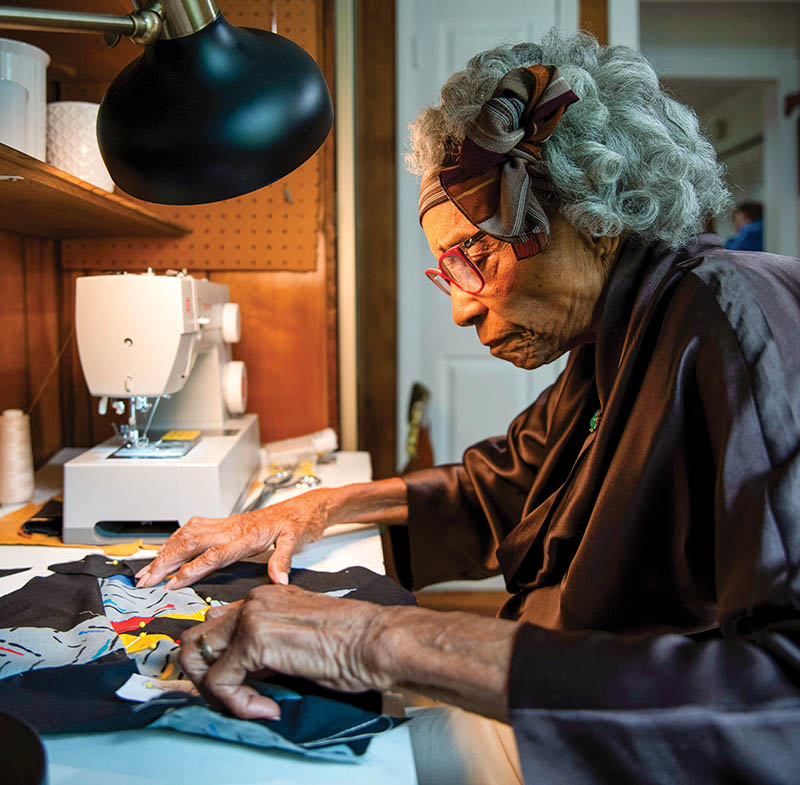
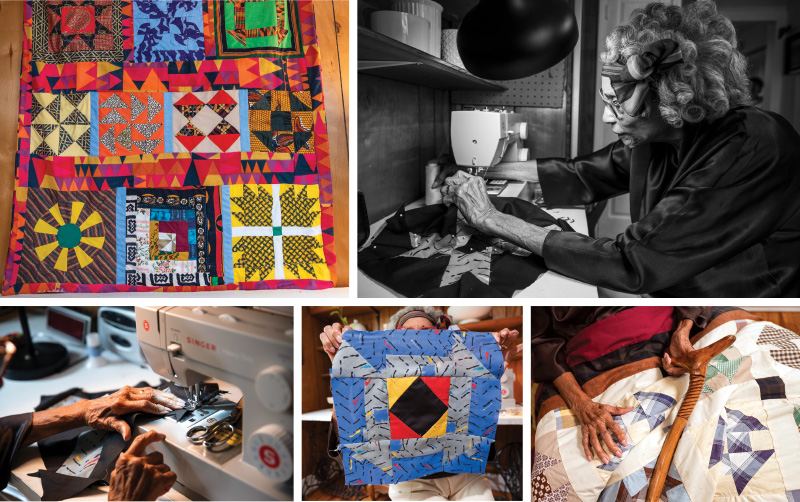
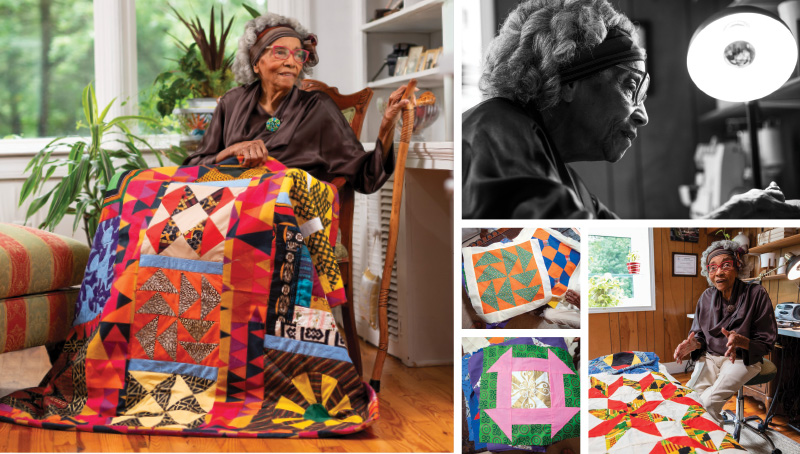
At 99 years old, Edith Younger Edmunds is still stitching—and with every thread, she’s weaving a deeper connection to her heritage. What began as a childhood pastime has evolved into a late-in-life mission: bringing the story of the Underground Railroad to life, one quilt pattern at a time.

Edmunds has been quilting since she was seven, but it wasn’t until her 80s that she discovered a powerful intersection between her lifelong craft and the coded patterns once believed to guide enslaved people to freedom.

Though the historicity of the quilt code is disputed, it is nonetheless a fascinating story, and the distinct patterns are a rich part of art history.

As children, Edmunds and her twin sister—two out of the family’s twelve children—used scraps from their mother’s sewing projects to create patterns, which they sewed onto magazine pages. The result was a quilt, which the girls’ father proudly showed off any chance he got.

“He called it a spread. ‘Go get that spread so I can show it to my friend.’ He said, ‘This is what my girls did, my twins did, seven years old.’ He was so proud of us doing that,” Edmunds said.

When she got older, Edmunds got paid to do alterations and saved some money to buy her first sewing machine, which had a treadle. Later, she bought a motor to modify it.

“I put that motor on myself, and that made me be able to sew a little faster, and I could get things done quicker,” she remembered.

Edmunds was a stay-at-home mom after she started her family, but once her daughter, Amy, started school at Sinai Elementary, Edmunds got a job as a teacher’s aid there—but she never stopped sewing. She went on to work in the fabrics department for Belk’s, where she spent 18 years of her career.

“I crocheted, I did needlework, I did embroidery. All of this was a part of my…I call it my career of sewing,” she said.

Edmunds passion for sewing and, in particular quilting, pivoted and grew when she learned about how textiles were said to be used in the Underground Railroad.

“I guess it probably was about 15 years ago, may not have been that long. I was reading a little magazine called Guidepost, and in that little book, it had a picture of the Underground Railroad in it… I ordered the pattern of the Underground Railroad, and I made the first hanger, and it turned out so pretty,” she said.

From there, Edmunds tackled more patterns and learned about their symbolism as she went. She read books on the history of the Underground Railroad, and when the movie Harriet came out, she and her daughter both loved it; Harriet Tubman’s story spurred Edmunds’ interest in the Underground Railroad.

In 1860, around the time of the Civil War, Virginia had the largest enslaved population of all the Confederate states. Four generations of the Edmunds family have come from Halifax County. According to the 1860 census, enslaved people made up the majority of the county’s population. Nelson Edmunds, Amy’s great-great-grandfather, was born on the Red Field plantation there.

He would have been five or six years old at the time of emancipation, Amy—who researches her family’s genealogy—said.

While none of her ancestors ever escaped —at least not to the Edmunds’ knowledge—Edmunds was nevertheless fascinated by the inventive ways abolitionists, allies, and escapees operated the famous covert network. The story of the quilt code is one where messages were hidden in plain sight, under the guise of commonplace household items that would seem totally innocuous to individuals who weren’t in the know.

These quilt patterns were fascinating and also challenging for Edmunds to undertake.

The Crooked Path, for example, is tricky to achieve due to the cut of the pattern.

“That means that… you can’t walk straight,” Edmunds said. “They walk zigzag, so if somebody is trying to catch up with them, they can’t follow their crooked road.”
Whether taking a crooked path or a straight one, passengers on the Underground Railroad could identify allies by a “shoofly” pattern, made with four triangles around a center square.

“The shoofly is a person who would secretly help the enslaved. By that, I mean…this secret person would hide the enslaved in caves, or a church, or graveyard. He would do that, risking his own life,” Edmunds explained. “He would give them clothes to clean themselves up so they could go downtown and pass as free. They would be dressed in clean clothes, because when you’ve been walking to escape, your clothes get dirty.

So, this shoofly, he would help them.”

The bear paw pattern is characterized by four squares in the center, with outer edges that look like a bear’s paw.

“That bear paw, it tells the enslaved to follow the bear. It would go to where food and water were,” Edmunds said.

The flying geese; the bow tie, or hourglass; Jacob’s Ladder; nine-patch; the North Star; all these patterns are associated with the tradition of a quilt code.

Pattern recognition was the key to reading these symbols, Amy said: any colors could be used, but the colors themselves did not hold meaning.

“To look at the bear claw, somebody may have made it using blue and red. Somebody else may have made it using all black, but they would have had to have been able to focus on that design, to recognize it, no matter what the color or how incremental the seamstress had made the different parts, but to still be able to see that overall design,” she said.

These patterns could theoretically be combined to form messages, as well.

“That’s part of the intrigue in creating these images. It’s like, how many messages can I combine? Or, what if I wanted to try to create a message that has multiple meanings? And you can do that. You can imagine that, but I also have such an appreciation for the eye that the guide must have had, to be able to see the design so clearly, in spite of it being different every time,” Amy said.

Quilting takes a lot of time, and a lot of materials. Enslaved women who endeavored to make any of these patterns likely had extremely limited resources. Amy added: “There was no JoAnn’s Fabric.”

“From our perspective, it was difficult for us to imagine them making a full-sized quilt with a repeating pattern of the same square. It occurred to us that it is possible that they may have made something similar to a string quilt, and then just attached almost like an applique, one of these patterns,” she said. “If you knew what you were looking for, you would recognize it.”

Perhaps due to limited textile resources, the patterns were sometimes etched in dirt or marked elsewhere in another fashion.

Travelling the Underground Railroad was treacherous for anyone involved.

Out of the numbers of enslaved people who fled, relatively few made it all the way to freedom, Amy said.

Edmunds has been on a mission to educate others about the Underground Railroad, and the story of the quilt code, sharing her interest in the general history of the system, but also her perspective as a seamstress.

She has visited schools where she showed children how mathematics and art collide when it comes to quilting, hoping to inspire them, and demonstrate how the subjects they learn in the classroom apply to real life. The wagon wheel pattern is a prime example.

“The wagon wheels have a lot of different angles to be cut, and put together,” Edmunds said. “I told them, I said, ‘Now, all these pieces are not the same. You’ve got a rectangle, you’ve got a triangle, you’ve got a square.’ I said, ‘You’ve got to know how to measure to get those angles just right. If you don’t, your pattern’s not going to come out right.’”

Edmunds has done a variety of other engagements where she educates communities about the Underground Railroad and the quilt code. She brings samples of her work along, displaying them for audiences to examine as she delivers an informational presentation. She has participated in television interviews, a segment with NPR, and worked with various news outlets.

At 99 years old, quilting and educating remain Edmunds’ passions. She has no plans to slow down. She brings textile projects with her even on car rides. Looping is one of her more recent practices, in addition to embroidery, crochet, and quilting.

“I just like staying busy,” she said.


2025 Lynchburg Dental Guide

Not sure where to go for your oral health or dental treatments in the Lynchburg area?

Look no further than the experts referenced in our Area Dental Guide. From braces for your kids to the dental professionals you want in your corner when there’s an issue, we have you covered.


The Raven Lounge

Where Poe Meets Pinot

By: Jeremy Angione | Photos By: Ashlee Glen

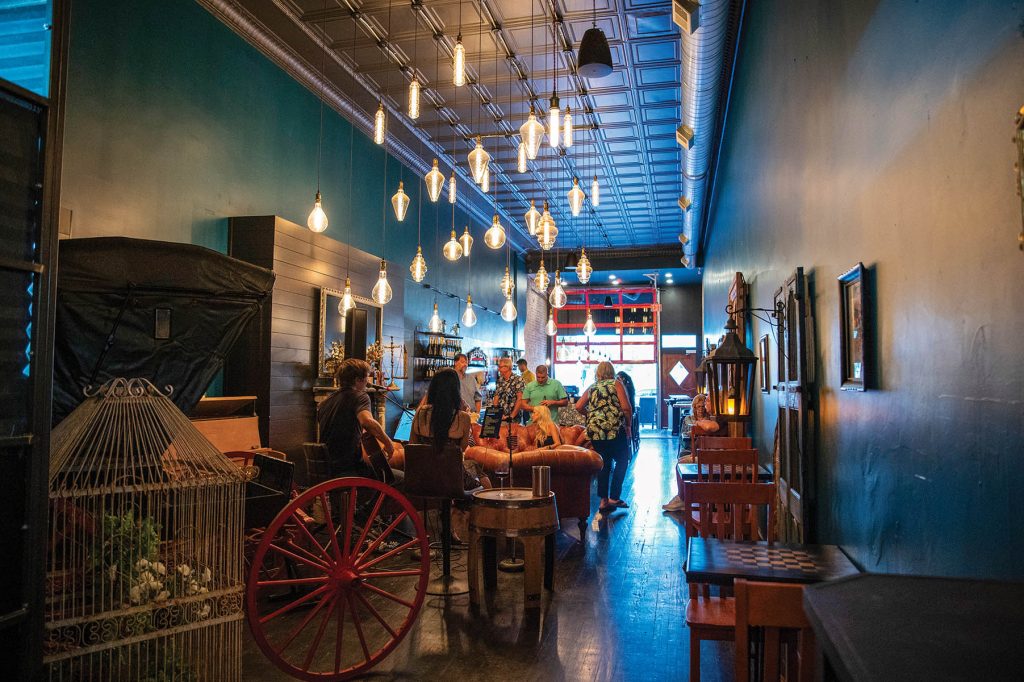
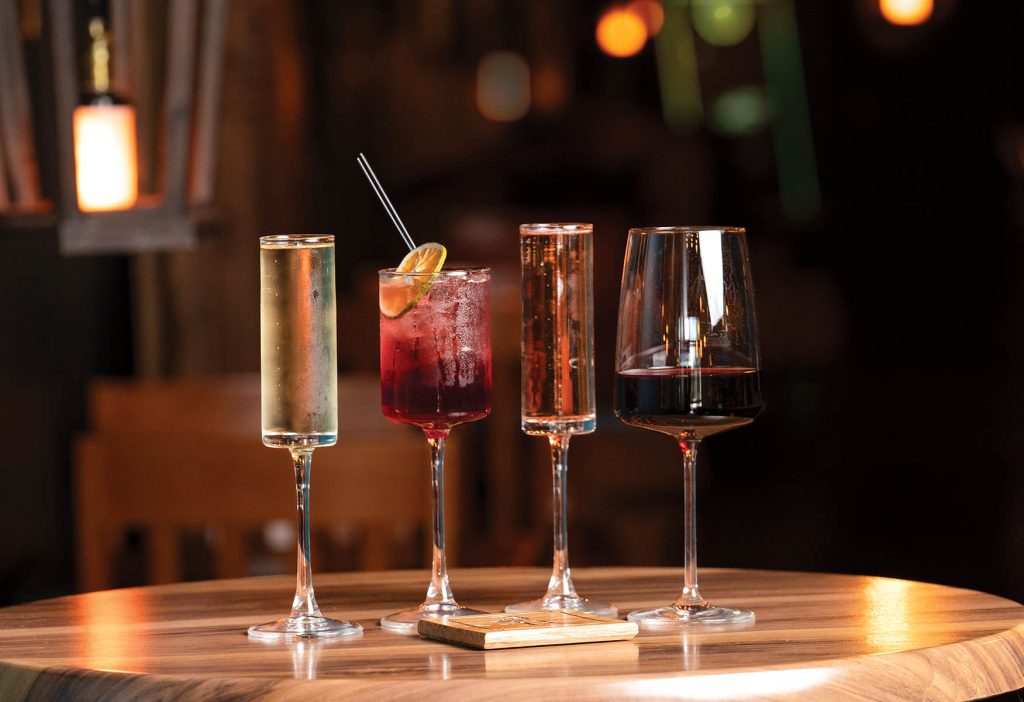
Dark walls, golden light, and the soft hum of a melody—The Raven Lounge invites guests to slow down, sip something new, and immerse themselves in a space where every detail tells a story. Inspired by the poetic gloom of Edgar Allan Poe and the celebratory culture of Louisiana, it’s Lynchburg’s latest Main Street addition—and its most evocative.

The wine and charcuterie bar opened May 10, through the combined efforts of co-owners and partners Jenee Davis and Bryan Fitz.

“This is kind of just an extension of our relationship. We do music together, we do life together, and now we do the Raven together,” Davis said. “It’s driven by love, for sure. It was definitely a place where me and [Bryan] could create something together.”

Despite the darker undertones of Poe and his works, the Raven Lounge remains cozy, intimate, and fun. Davis says much of the decor was actually already hers. There is even a horse-drawn carriage that acts as a focal point of the space’s design language.

Davis admits that the dark, dreary vibe of Poe’s 19th century era is a big part of her personality.

“I think my soul is stuck in that era,” Davis said.

Aside from the design of the space, Davis asserts that the quality that truly shapes the Raven Lounge is music.

Davis, originally from Louisiana, envisioned a space that reflected the cultural richness she grew up with—a place where music, food, and conversation came together effortlessly. She felt downtown Lynchburg could benefit from a more casual environment that celebrates creativity without the formality of a sit-down dining experience.

Although Davis is not a Lynchburg native, she’s called it home for the last 20 years and even raised her children here. The Raven Lounge was meant to be the type of place she wanted to experience with her family for years.

“We just wanted somewhere that people could experience something a little different. It’s also a platform for new musicians who haven’t played before. It’s a great opportunity for them to take the stage and have their first experience playing for the public,” Davis explained.

As a musician herself, Davis understands the value of having a dedicated space for artists and musicians to share their craft. She and partner Bryan Fitz form their own band called “Atlas Moon.” Together, they also play every Wednesday night at the Raven Lounge as a pair under the name “Jenee and Fitz.”

According to Davis, while the Raven Lounge certainly isn’t the first to incorporate music into their identity, the start times and duration of music performances sets Raven Lounge apart from other downtown businesses.

“Sometimes our music starts at 6.

In the fall we want to do music during the afternoon. I think that’s kind of what sets us apart. We’re gonna fill a time gap more than anything,” Davis said.

Aside from music, the Raven Lounge has opened its doors to all kinds of performers. The Raven hosts exclusive after-hour service for performers, staff, and audience members of the Lynchburg Symphony Orchestra and the Academy.

“We’re trying to figure out how we can be the focal point for the arts. I don’t think people realize how artsy and creative this town really is.” Davis claimed.

Despite opening in the slower summer months, Davis says that the community has responded positively to the Raven Lounge. According to Davis, the silver lining of the opening in the slow season is the ability to steadily test things out for the lounge.

“We’re going to have to find our niche. We’re learning with Lynchburg. People love the menu, small plates, and wine selection. We do carry wines that a lot of people don’t carry, at good price points,” Davis explained.

Thus far, Davis says that the Raven Lounge has appealed to everyone from older wine drinkers and young art lovers. While the lounge is a bar, Davis felt it best to subtract a mainstay of most modern bars—TVs.

“We wanted people to interact.

We want you to talk to people and meet people, like humans used to do,” Davis exclaimed.

With only a few months in business, Davis already has big plans for the Raven Lounge in the Fall.

“For Halloween, we are going to partner with some of the local art and theater programs, and we want to do skits and ticketed events,” Davis said.
Similarly, the lounge will receive a winter makeover for Christmas.

“We’re going to make it a winter wonderland. If I have to get a snow machine up in here, we’re gonna do it,” Davis joked.

Wine tastings and pairing events will also be available in the fall. Currently, the Raven Lounge is open for venue rentals every Saturday, during the day.
The Raven Lounge’s menu will also see growth with the addition of tapas style food items. Currently, guests can enjoy the elegance of curated charcuterie boards, or comfort foods like the Raven’s “fancy” grilled cheeses.

According to Davis, certain items such as breads, cheeses, and some wines are locally sourced. Many of the wine cocktails are also made with local, fresh, and housemade ingredients.

While the Raven Lounge certainly has a distinct identity that stands out among other downtown businesses, Davis asserts that it does not have to be just one thing.

“Just like poetry, the Raven is open to interpretation. It may be a different feeling for you than it is for me,” Davis mused.


From Grass to Garden

A Beginner’s Guide to Rewilding Your Landscape

For decades, a lush green lawn was the hallmark of a well-kept home. But more and more homeowners are trading in their turfgrass for something wilder—and more purposeful. Whether inspired by declining pollinator populations, increasing water bills, or the simple desire for a more beautiful and ecologically rich yard, rewilding is having a moment.

Rewilding your landscape doesn’t mean letting it go untamed. Rather, it’s a thoughtful process of transitioning away from traditional grass lawns to native plantings, meadows, or habitat gardens that support biodiversity and require fewer resources to maintain. If you’ve been eyeing your patch of grass and wondering how to begin, fall is actually the perfect time to start laying the groundwork. Here’s how.

Step 1: Start with a Plan

Before you dig in, take a step back. Consider how much of your yard you want to rewild—some people begin with just a corner or border, while others go all-in. Walk your property and note areas of full sun, part shade, drainage issues, or spots prone to foot traffic. These observations will influence the types of plants you choose.

Then, ask yourself a few key questions:
• Do you want a wildflower meadow, a pollinator garden, or a mix of native grasses and shrubs?
• How formal or natural should it look?
• Will you need to maintain some lawn for pets or play?

Sketching out a rough map or plan can help you visualize the change—and stick with it when the grass starts to go.

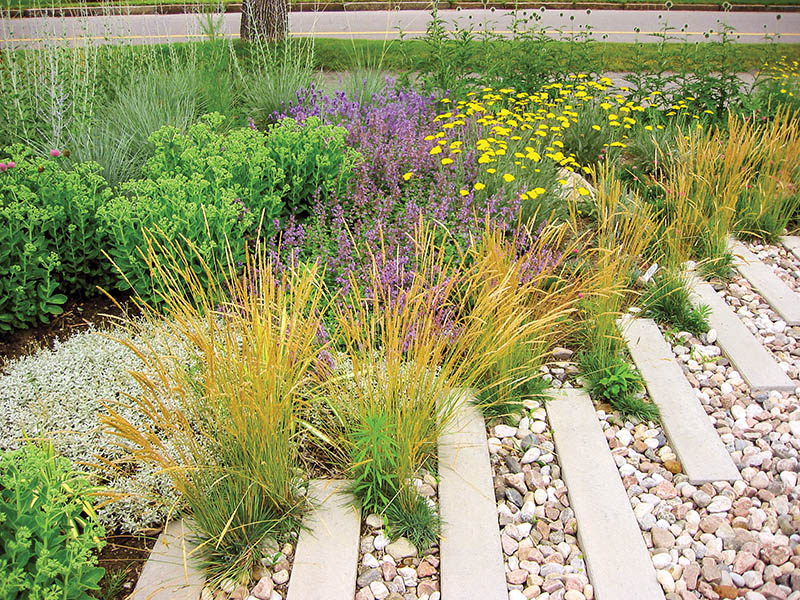
planting suitable for dry climates

Step 2: Remove the Turf

Turfgrass is persistent. Removing it is the first and most labor-intensive part of rewilding. There are a few methods to consider:
• Sheet Mulching (Lasagna Method): Best started in fall. Lay down cardboard or newspaper directly over the grass, then top with layers of compost and mulch. By spring,
the grass will be smothered, and the soil will be richer.
• Sod Cutting: Use a sod cutter to remove grass manually. This provides an immediate blank slate but can disrupt soil health.
• Solarization: Place clear plastic sheeting over the area during the heat of summer. This “bakes” the grass and weed seeds, preparing the site for fall planting.

For small patches, a shovel and persistence may do the trick. For larger spaces, combining methods—like solarizing one area and sheet mulching another—can be effective.

Step 3: Test and Amend the Soil

While many native plants are forgiving, it’s helpful to know your soil type (clay, loam, sandy) and pH. Home soil test kits or local extension offices can help you assess.

Avoid the temptation to over-amend—many native plants thrive in poor soil. Still, incorporating a bit of compost into compacted or depleted areas can give young roots a boost.

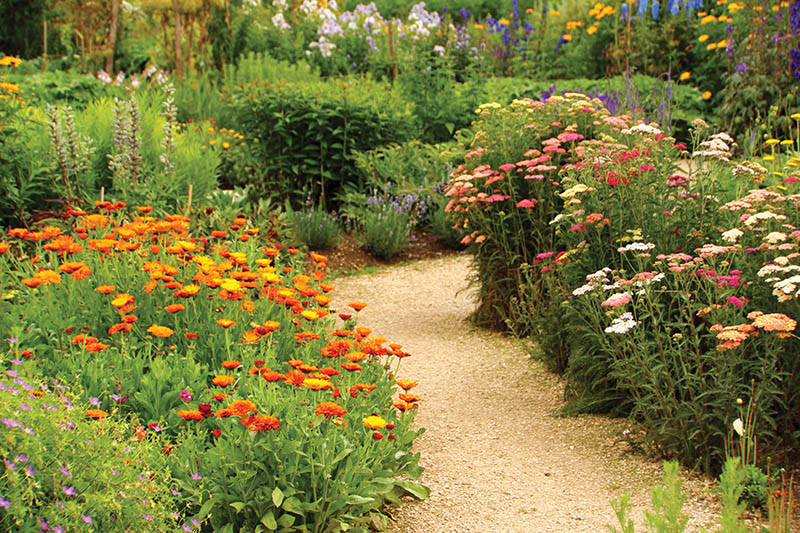
Footpath in awonderful herb and flower garden

Step 4: Choose the Right Plants

One of the joys of rewilding is discovering the diversity of plants native to your region. For Central Virginia, that includes black-eyed Susans, purple coneflower, bee balm, milkweed, little bluestem, switchgrass, and more.

Fall is an ideal time to plant perennials and grasses—cooler temperatures and autumn rains help roots establish before the dormant winter period. Even if you don’t plant this fall, it’s a great time to plan and source plants for a spring installation.

Consider using a mix of:
• Native grasses like little bluestem or Virginia wild rye
• Perennials for color and pollinators—think goldenrod, asters, and Joe-Pye weed
• Shrubs like buttonbush or winterberry holly for structure and wildlife value

Local native plant nurseries or Master Gardener groups can help you find plants well-suited for your yard’s conditions.

Step 5: Planting and Mulching

Planting in fall typically runs from late September through mid-November in our region. Space plants according to their mature size, even if they look sparse now.

Mulch around new plants with shredded leaves or natural wood mulch (but avoid dyed mulch). This helps suppress weeds and retain moisture, especially in the first year.

If you’re seeding a meadow, fall is also ideal for “dormant seeding”—spreading seed just before winter so it naturally stratifies and germinates in spring. Prepare the soil surface, rake lightly to incorporate seed, and press down gently to ensure good contact.

Step 6: Embrace the First-Year Wildness

The first growing season will look different than a manicured garden. It may take a year or two for your rewilded landscape to fill in and begin to self-sustain.

Expect some weeds—early maintenance includes hand-pulling or cutting back aggressive invaders. Watering is also crucial in the first season, especially during dry spells.

In winter, leave seed heads and stems standing to provide food and habitat for birds and beneficial insects. What might look “messy” to some is actually part of a healthy, functioning ecosystem.

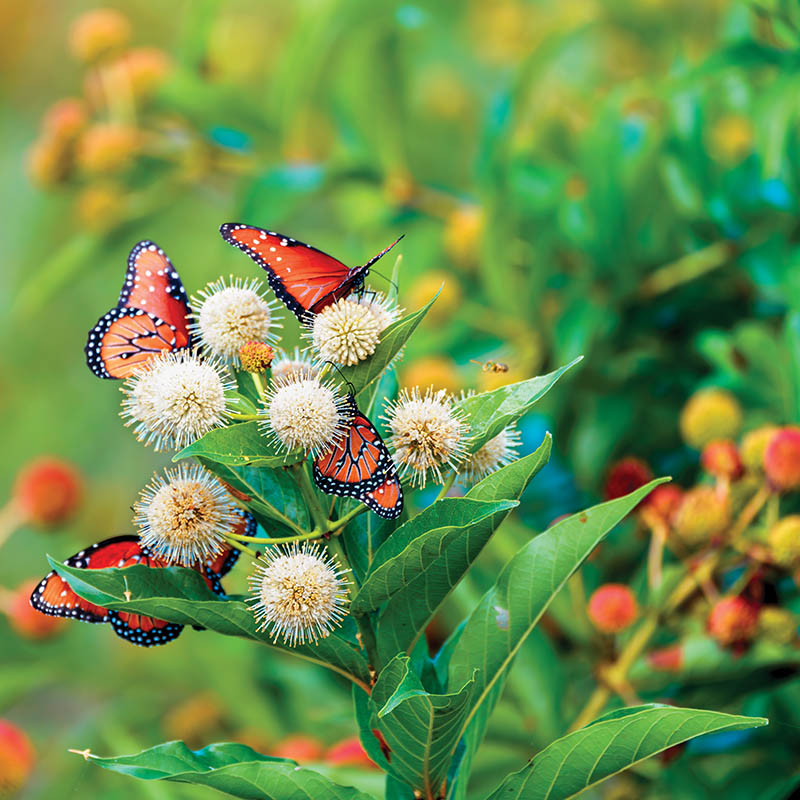
A group of brightly colored Monarch butterflies, or Danaus plexippus, feeds on a Buttonbush, or Cephalanthus, on a very warm summer morning near a lake in Texas. A lone honeybee approaches to join them.

Step 7: Long-Term Care and Evolution

After the first year, your rewilded garden will require far less work than a traditional lawn. Native plantings generally don’t need fertilizer, and once established, they’re drought-tolerant and low-maintenance.

Cut back dead stalks in early spring (not fall) to allow overwintering insects to emerge. Re-seed or divide as needed, and enjoy the evolving beauty of a space that reflects nature’s rhythm.

Small Steps Make a Big Impact

If the idea of transforming your entire yard feels overwhelming, start small. Convert a strip by the sidewalk into a pollinator border. Replace part of the backyard with native grasses. Every square foot of rewilded land makes a difference—for butterflies, birds, bees, and for you.

With fall on the horizon, now is the perfect time to begin the transformation. The rewards are plentiful: less mowing, more beauty, and a yard that gives back.


Photo Finishes

Thinking about replacing or refurbishing your kitchen cabinets? Here is a designer’s guide to finish types, colors, and combos

By Jaime Simpson

I could happily discuss cabinets all day. There is just so much to love about them! Cabinets provide storage, allow for a higher level of organization and make items easier to access (especially with inserts and gadgets).

And that is just the functionality. There is a plethora of style and finish options available to put the icing on the cabinet cake.

The main finish options for cabinetry are stained, painted or laminated. Metal cabinet doors are increasing in prominence as well, especially for outdoor kitchen spaces.

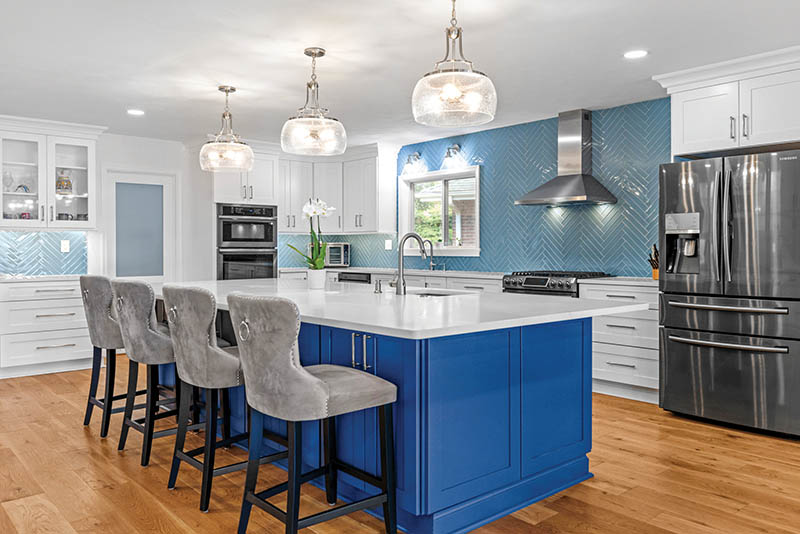
Stained cabinetry is available in many wood species and in many colors. Warm, cool, light, medium and dark stains can be achieved depending on the preferred look. Most cabinet manufacturers offer paint colors in white, grey, blue and an off white/cream/ecru look. Other colors are available depending on the customization options, while fully custom cabinetry has no limit on paint color options.

Laminated cabinet doors are typically constructed of a plywood core with a laminated surface; these laminates can offer a modern wood grain look, texture or high gloss effect that cannot be easily achieved with wood or paint.

Each finish type has its own beauty and glory. Though one finish and color throughout a kitchen space is lovely and can be a timeless look, you don’t have to choose just one.

Here I have included some thoughts about how to approach using one or more finishes and colors.

One Cabinet Finish/Color / Top Photo Courtesy of Accent Kitchens, Photo By David Uhrin

  • Use this option if you are looking for a classic and streamlined look.
  • Consider pattern or texture in the countertop and backsplash to provide interest.
  • Choose flooring that provides contrast with the cabinetry.

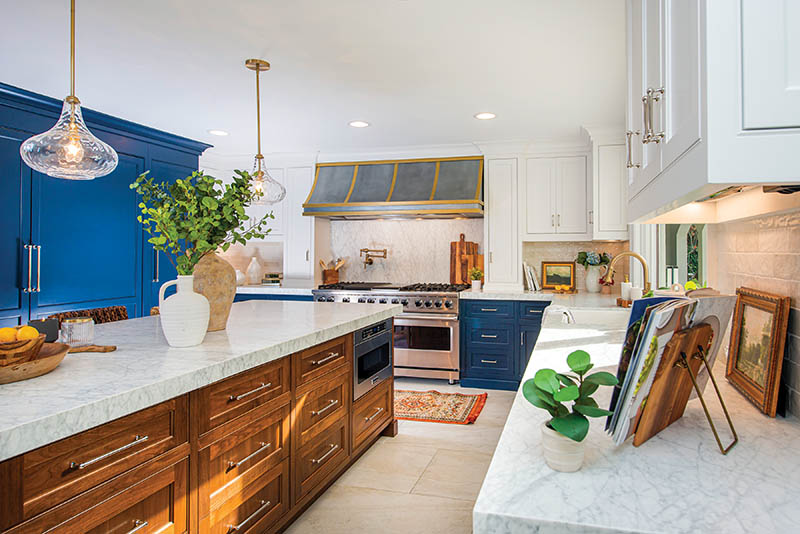
Two Cabinet Finishes/Colors

  • Start with one main finish—whether stain, paint or laminate.
  • Use the second finish/color as an accent or highlight—perhaps the island, base cabinetry, or tall cabinetry.
  • Look for a backsplash or countertop that can unify the two finishes.
  • Find a flooring option that can still contrast both cabinet finish options.

Three Cabinet Finishes/Colors

  • Start with one main finish in this case as well. Use the second finish as a more prominent accent, and the third finish in smaller doses.
  • Stay more subdued with the countertop and backsplash patterns so the various elements don’t compete.
  • Find flooring with minimal pattern, and that coordinates with the third finish.
  • For example, the base and wall cabinetry are the main finish (a white paint) the island and range hood are the second finish (a sage green paint), and floating shelves are a third finish (a walnut stain).

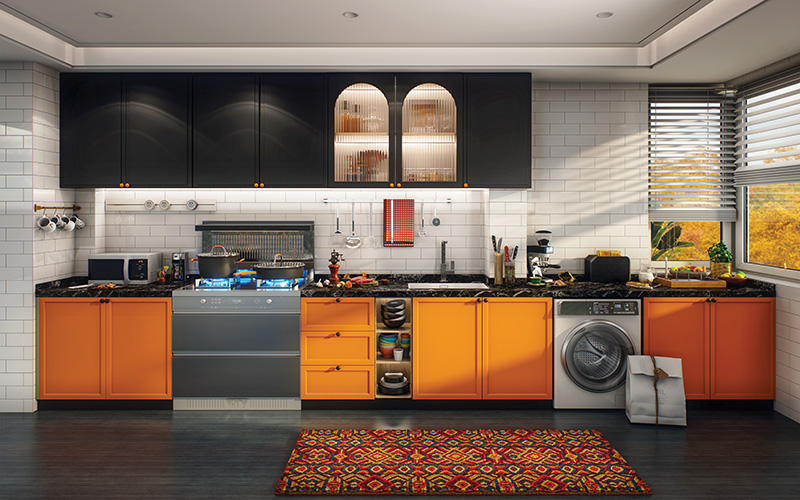
Four Cabinet Finishes/Colors

This is where it gets really fun.

  • If you love eclectic and maximalist styles, don’t be afraid to mix it up.
  • Contrast is the key here—ensure that all the finish tones are clearly different and defined to maintain the presence of each.
  • For example, the base cabinets could be one paint finish (blue), the wall cabinets another paint finish (white), the range hood could be a third paint finish (black), and the island cabinetry could be a contemporary wood-grain laminate (zebra wood).


Hip to Be Square

Squared Biscuit Co.’s Cutting-Edge Take on a Breakfast Staple

By: Emily Mook | Photos By: Ashlee Glen

For many of us, the pastimes and projects we pursued during the height of the COVID-19 pandemic proved to be provisional, but for some, these pursuits took root and blossomed into long-term, life-changing ventures. Jacob Laverty, founder and owner of Squared Biscuit Co., falls into the latter camp, and as a result, Lynchburg’s breakfast (and brunch) game is stronger than ever.

“I always knew that I wanted to own a restaurant with a simple concept that focuses on the ingredients,” Laverty said. “During COVID, I started randomly making buttermilk biscuits and refining how to make them. I studied classic and modern recipes to help come up with the biscuit recipe that we use today. Once I started getting the recipe honed in, I thought that I could try my chance with the [Downtown Lynchburg Association’s] Launch LYH program and see what could come from it.”

Laverty entered and ultimately left the 2023 program and promised himself that he would reenter in 2024; he did so, secured a grant, and opened Squared Biscuit Co. on Fifth Street on June 20, 2025.
Since opening, the restaurant has already become a downtown fixture known and sought after for its signature-shaped take on a breakfast staple: the square biscuit. In addition to its aesthetic appeal, the square biscuit reduces waste.

“The main advantage of the square biscuit is that it produces less waste than the standard round biscuit,” noted Laverty. “While it doesn’t fully eliminate the waste, we use whatever excess we have to create some pre-meal bites for our customers.”

Squared Biscuit Co. also prides itself on fresh, high-quality, and largely in-house-made ingredients and on efficiency. Biscuits are made fresh daily and without lard or liquid shortenings, and everything—even the pickles featured on their Nashville Hot Fried Chicken Biscuit—is made in-house (except for the hash browns). As Laverty puts it, the restaurant is “not a fast-food place, but we make quality food quickly.”

Specialty menu offerings include the aforementioned Nashville Hot (Laverty’s personal favorite due to its “balance of flavors, the heat, and the homage to Nashville”), Pimento Cheese and Hill City Hot Honey Fried Chicken Biscuit, Chipotle Onion Bacon Jam Biscuit, Smashed Sausage Biscuit, Biscuits and Sausage Gravy, and the Croque Madame, a decadent biscuit featuring ham and cheese smothered in a creamy béchamel sauce and topped with a sunny-side up egg and chives. Biscuits composed of various combinations of the classic ingredients—including ham, sausage, bacon, egg, and cheese—are also available, as are a variety of sauces, sides, and drinks.

Community is the cornerstone of Laverty’s business model. As such, he strives for a “simple, yet elevated” approach and vibe and offers a “variety of sandwiches and various pricing tiers.” He also has several plans in the works that will undoubtedly strengthen that community connection even more.
“Squared always has our community in mind first,”

Laverty remarked. “We know that downtown is a food desert, which is why we plan to add a grocery section in the future to help combat this need. We are also getting ready to launch our website, which will allow people to put in bulk orders with at least 24 hours’ notice, and we have a few dinner events up our sleeve that we will be announcing soon.”

As these developments take shape and Squared continues to grow and evolve, Squared Biscuit Co. will continue to serve its customers with a square meal and a comfortable and welcoming space to simply be.

“I’ve always loved the large city style of restaurants that are inconspicuous on the outside, but filled with delicious foods and great people,” said Laverty. “Squared is a place to bring friends or somewhere to just unwind and catch your breath.”


Painting with a Purpose

Emily Flint reflects on personal life through art

By: Christian Shields | Photos By: Ashlee Glen

With a passion for painting and a heart for her family, local artist Emily Flint tackles tough, personal mental health struggles through her craft.

Growing up in a family of artists and art enthusiasts, Flint found a deep appreciation for beauty at a young age. She attended Savannah College of Art and Design and Virginia Commonwealth University to pursue degrees in photography and art education, respectively. In 2009, she discovered a specific affection for painting and has continued that pursuit ever since.

The mother of three girls, who she affectionately refers to as her “little muses,” Flint draws heavily from the themes of family and emotion to cultivate her masterpieces. In doing so, she not only hopes to develop a stronger relationship with her children but also provide herself an outlet to release any pent-up tension.

“It’s vital for me right now, because, for one, I find parenting to be pretty stressful,” she said. “This is a way for me to process that stress in a positive way. It’s also a way for me to refocus on my kids and see them in a different light. … My hope is that it is making me a better mom, so I can show up better for them.”

Flint also draws heavily from her past and current mental health struggles, illustrating them on the canvas through the symbolism of stinging insects.

“[Mental health has] come such a long way since I was a child as far as awareness and stigma, but there is still a stigma attached to certain mental illnesses,” she said, noting she has battled major depression since the age of 12 and has a long history of anxiety and ADHD. “I am pretty passionate about being honest and being vocal about mental illness and how it can show up.”

While she often begins her pieces with a surreal idea of what the finished result will be, she is also not afraid to just get messy with the paints and find catharsis in the process.

Flint joined the Lynchburg Art Club three years ago but has become much more involved in the past year, now serving as the group’s head of marketing. Through everything she does, she hopes to be a light in the lives of others and help them find a sense of belonging.

Emily Flint, Artist

“To feel like you’ve impacted someone [to change their lives] is really special,” she said. “Often, artists have a lot of guilt or a feeling that their art isn’t important enough to pursue. Sometimes I have wondered whether this is a worthwhile venture. To feel like you’ve actually connected with somebody and actually helped somebody through something would be the ultimate goal.”

Flint has exhibited her work in Lynchburg and nationally. This year she has participated in the Lynchburg Art Club’s Georgia Morgan Show, Portrayed: A Juried National Exhibition of Portraiture at Norfolk’s d’Art Center, The Academy Center of the Arts National Juried Art Exhibition, and Steven Francis Fine Art’s A Show of Portraits: Phillip Geiger and 23 Artists. She is currently showing at the Axis Gallery in Sacramento, California, and participating in the 52nd Annual Lynchburg Art Festival.

Readers interested in learning more about Emily Flint and her craft can connect with her through her website, emilyflint.com, and Instagram account, @emilyflintart.