Seasonal Sips: The Ultimate Fall Mocktail Recipe

As the heat of the summer finally starts to burn off and the leaves begin to turn, it’s the perfect time to indulge in cozy, comforting flavors. Whether you’re hosting a family gathering, planning a cozy get-together with friends, or simply seeking a relaxing drink for yourself, this fall-inspired mocktail is the ideal way to embrace the season’s best flavors. Featuring the rich, sweet notes of apple cider, the warmth of cinnamon, and a touch of clove, this drink will have you feeling the fall magic in every sip.

Apple Cinnamon Spice Mocktail

Ingredients:
3 cups apple cider (preferably fresh-pressed and local!)
1 cinnamon stick
3-4 whole cloves
1 tablespoon local honey
Juice of half a lemon
Sparkling water or club soda (for a fizzy touch)
Ice cubes
Apple slices, fresh rosemary sprigs and cinnamon sticks (for garnish)

Directions:
1. In a small saucepan, combine the apple cider, cinnamon stick, and cloves. Heat over medium-low heat, allowing it to simmer gently for about 10-15 minutes. This will allow the spices to infuse the
cider with rich, warming flavors. Stir occasionally.

2. Once the cider is infused with the spices, remove it from the heat and strain out the cinnamon stick and cloves. If desired, stir in honey or maple syrup to sweeten the cider. Let it cool to room temperature or refrigerate for a quicker chill.

3. Once cooled, pour the spiced cider into a glass filled with ice. Add a squeeze of lemon juice to brighten up the flavor.

4. For a fizzy twist, top the drink with sparkling water or club soda, giving it a refreshing effervescence that elevates the autumn spices.

5. Garnish with a slice of apple, rosemary and a cinnamon stick for that extra seasonal flair.

Serve chilled for a refreshing, fall-inspired mocktail.

Serving Suggestions:
Large Gatherings: To make this mocktail in bulk, simply scale the recipe and keep a pitcher of the spiced cider base on hand. Guests can pour their own and top it off with sparkling water as desired. You can prepare a big batch ahead of time, and simply add ice and fizzy water when it’s time to serve.

Family-Friendly Version:
This recipe is great for families. The sweetness of the apple cider combined with the warm spices makes it appealing to kids and adults alike. Feel free to reduce the amount of honey or syrup for a less sweet option.

Tips for Customizing Your Mocktail:
Add More Spice: If you prefer a spicier kick, consider adding a few more cloves, star anise or even a dash of ground ginger to the mix.

Make It a Hot Drink:
For those cooler evenings, enjoy this as a warm beverage by skipping the sparkling water and serving it straight from the pot.

Flavor Variations:
Swap out apple cider for pear cider for a twist, or use a splash of cranberry juice for a more festive fall look.


The Case for Keeping It

Rethinking the Renovation Mindset

It’s easy to get swept up in the promise of a fresh start. The blank slate. The trendy backsplash.

The Pinterest-worthy after photo. But what if the most compelling, most personal design choice you could make wasn’t new at all?

As the renovation boom continues across the country, many homeowners are beginning to rethink the impulse to gut, replace, or cover up what’s already there. Whether it’s original tile, natural wood trim, a quirky built-in cabinet, or an antique fireplace, there’s a growing movement toward preservation—and for good reason.

Holding onto original features isn’t just about honoring the past. It’s about embracing character, sustainability, and in many cases, a better return on investment.

Before you pick up the sledgehammer, it might be worth asking: What’s worth saving?

Embracing the Charm of Imperfection

The truth is, older homes were built differently—and often more durably. Solid wood doors, hand-crafted trim, plaster walls, and detailed millwork can be difficult and expensive to replicate today. Even common elements, like mid-century tile or built-in shelving, were designed with a level of intention that mass-produced materials sometimes lack.

There’s a soul to an old house. When you walk in and see worn hardwood floors or a creaky staircase, there’s a story.

Those imperfections can be beautiful if you let them be.

Preserving original features can create a layered, lived-in feel that brings depth and authenticity to a space. It can also help your home stand out in a sea of renovations that often follow the same trends.

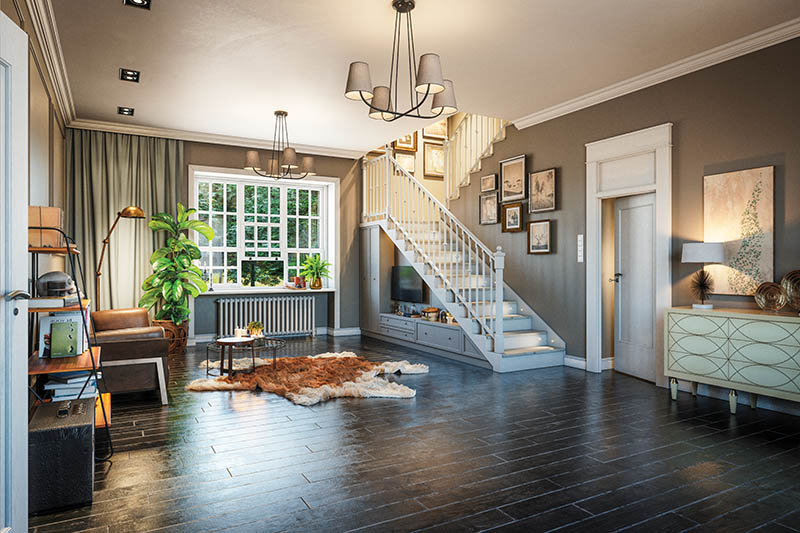
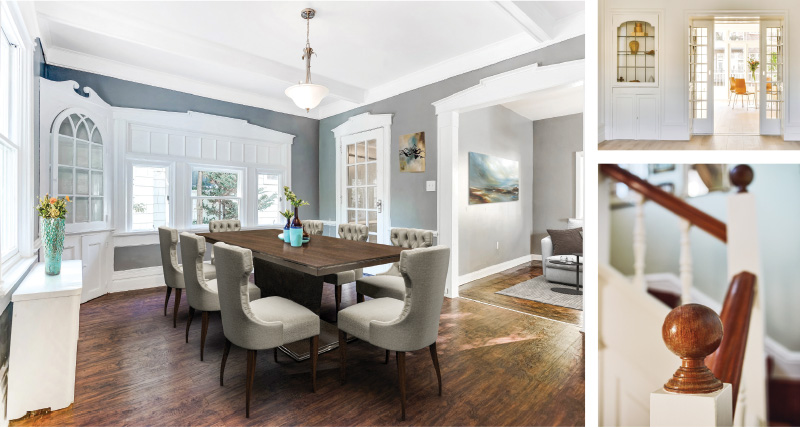
Digitally generated elegant Scandinavian style home interior scene.The scene was rendered with photorealistic shaders and lighting in Autodesk® 3ds Max 2020 with V-Ray 5 with some post-production added.

Digitally generated elegant Scandinavian style home interior scene.
The scene was rendered with photorealistic shaders and lighting in Autodesk® 3ds Max 2020 with V-Ray 5 with some post-production added.

From Functional to Focal Point

Rather than viewing older elements as obstacles to be updated, consider how they might become focal points instead.

Take vintage tile, for example. That powder blue bathroom tile from the 1950s might not match your usual aesthetic—but with the right supporting elements, it can become a retro-chic statement. Brass or matte black fixtures, white walls, and minimal accessories can help highlight the tile rather than fight against it.

The same goes for original fireplaces. Instead of covering up a dated mantel or painting over brick, lean into it. Restore the wood, limewash the brick, or simply keep it as-is and let it ground the room with texture and warmth.

Sometimes the best design decision is doing nothing at all. Or doing just enough to protect and showcase what’s already there.

Tips for Thoughtful Preservation

If you’re ready to rethink your renovation mindset, here are a few ways to preserve character while still meeting modern needs:
1. Restore, Don’t Replace
Refinish wood floors rather than replacing them. Strip and reseal original doors or trim. If cabinets are solid wood, consider repainting or refacing rather than tearing them out.

2. Blend Old and New
Let original features shine by surrounding them with modern, minimal design. A sleek sofa or contemporary light fixture can balance the patina of an older space.

3. Respect Scale and Proportion
Many original elements—like doorways, ceilings, or moldings—were designed with specific proportions in mind. Keep additions and updates in harmony with those original lines for a cohesive look.

4. Update Function, Not Just Style
Keep that quirky built-in, but make it useful—add lighting, repaint the interior, or use it for a modern purpose like barware or board games. You can also retrofit older cabinets with soft-close hardware or install energy-efficient inserts in old windows.

5. Salvage and Reuse
If you must remove something, consider salvaging it for another part of the house—or donating it to a local reuse center. Vintage materials are not only valuable but often higher in quality than what’s available today.

Sustainability and Storytelling

Choosing to preserve instead of replace is also a deeply sustainable choice. Demolition and new materials contribute to landfill waste and increased carbon emissions. In contrast, restoring what already exists minimizes waste and often reduces overall renovation costs.

And then there’s the emotional value. That worn banister your child slides down every morning. The original transom windows that let in just the right slant of afternoon light. These elements tell a story—your home’s and your family’s.

When you live in a space that’s not perfect but has a history, it grounds you.

You become part of something bigger than just the latest trend.

When to Let Go

Of course, not everything can or should be saved. Water damage, mold, structural issues, and hazardous materials like lead paint or asbestos may require removal for safety reasons. In some cases, preservation isn’t practical—and that’s okay.

But for everything else? It’s worth pausing before you replace.

The best homes often reflect a balance between old and new, polished and worn. They evolve slowly, lovingly. And sometimes the most meaningful design choice isn’t about what you add—but what you choose to keep.

5 Original Features Worth Saving

Before you demo, take a second look—these vintage details can add charm, value, and character to your home.
1. Hardwood Floors
Even if they’re scuffed or hiding under carpet, original wood floors are often solid and salvageable. Refinishing can restore their luster and preserve their timeless appeal.

2. Trim and Molding
Crown molding, picture rails, baseboards, and window casings add architectural depth. Solid wood trim is hard to replicate and worth keeping whenever possible.

3. Built-In Cabinets or Nooks
From hallway linen closets to breakfast benches and phone niches, built-ins offer functional storage and personality. Fresh paint or hardware can give them new life.

4. Original Doors and Hardware
Solid wood doors—especially those with panels or glass—are sturdy and stylish. Keep the vintage knobs and hinges for added character (or clean them up for a polished antique finish).

5. Fireplace Surrounds
Whether brick, stone, or tile, an original fireplace brings warmth and texture to a space. Even a non-functioning fireplace can serve as a cozy design anchor.

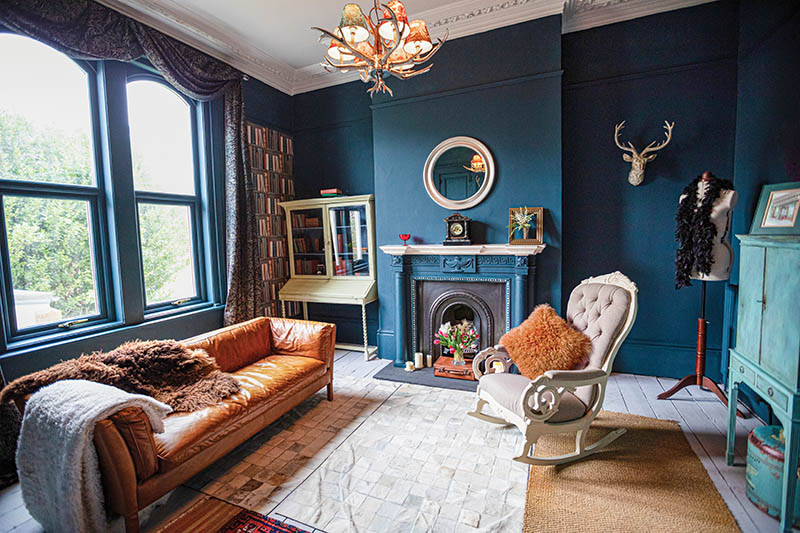
Drawing room with high ceilings and architectural features

Drawing room with high ceilings and architectural features


Painting the Town

A Walking Tour of Lynchburg’s Public Art

By: Olivia Carter | Photos By: Ashlee Glen

Once upon a time in Lynchburg, there were no murals, no public art, simply blank spaces everywhere. Today, the reality couldn’t be more different. Schools, theatres, businesses, apartments, and even parking garages are bursting with creativity and color. Today, we can find these pops of colorful art all around the city, and even by foot. No admission at the door.

Art Alley

The Downtown Lynchburg Association (DLA) officially opened Art Alley on Oct. 1, 2021, in downtown Lynchburg. Located at the intersection of Commerce and 11th Street, this once blank canvas in the heart of the city was transformed into a vibrant alleyway for locals and visitors to enjoy. The space now serves as one of several entrances to the Bluffwalk and has been upgraded into an inviting gateway to this popular public amenity. The goal in creating Art Alley was to revitalize an overlooked area and establish it as a dynamic public art destination.

Art Alley features work from a variety of regional artists and is designed to draw visitors while supporting nearby local businesses.

The Academy Center of the Arts Mural

This mural was painted in 2013 by artist Megan Wells and remains on the Academy’s gallery and office building along Main Street in Lynchburg. The 131-foot by 51-foot mural is one of many large-scale works of modern art that have become part of the downtown landscape. Chosen for its depiction of Lynchburg’s arts, nature, and culture, the mural took Wells most of the spring of 2013 to complete.

She incorporated timeless symbols such as the cardinal and dogwood flowers, representing Virginia’s state bird and flower, as well as a musician to reflect Lynchburg’s live music scene and a silhouette of the downtown cityscape.

The mural, often referred to as the “LYH” mural, was designed to reflect the vibrancy of Lynchburg and the surrounding region, according to Lynchburg’s tourism website.

Unspoken Vibes

Located on 13th Street on the side of the Craft Crucible building, Christina Davis originally painted a mural entitled “Make Waves” in this space. Davis’s “Make Waves” stood as a vibrant tribute to Black women in Lynchburg—bold, larger-than-life, and a powerful celebration of creativity and resilience. It quickly became a local landmark.

In a transformative follow-up, the mural was reimagined as “Unspoken Vibes.”

This updated piece bursts with jewel-toned energy and sunshine, now conveying a message of happiness and optimism. Davis described it as “another shout‑out to the women of Lynchburg breaking barriers, enriching culture, and inspiring the next generation,” expressing art’s ability to be “silent, but yet very loud.

Cityscape on the Bluffwalk Steps

The Cityscape on Lower Bluffwalk is especially striking when illuminated at night. This piece spans the length of the Lower Bluffwalk 11th Street Terrace steps and ramp, showcasing a depiction of the downtown skyline.

Commissioned in the spring of 2014 by Lynch’s Landing—now known as DLA—the Cityscape was part of the Lower Bluffwalk art plan aimed at enhancing the area’s visual appeal. The work was created by local artist Paul Clements, who is also known for designing the LOVEworks sculpture located at the Percival’s Island trailhead.

Helping Hands Mural

Located at the corner of 9th and Commerce Streets, this mural was created in memory of Bev Cosby, a prominent minister and advocate for social change during the 1950s and 1960s. Painted in 2004 by artist Michael Cooper, the mural measures 25 feet by 50 feet and was completed in just 10 days.

The hands depicted in the mural are modeled after the hands of individuals who were close to Reverend Cosby, symbolizing the power of collaboration and community.

Amazement Square Parking Lot Mosaic

Located near Amazement Square at Jefferson and 9th Streets, this expansive mosaic mural was part of the CityArts Mosaic Mural Project and was unveiled in November 2012. What makes this project unique is that it was created entirely by students from across Central Virginia, under the guidance of professional artist Beryl Solla. The project spanned multiple summers, offering students a hands-on opportunity to contribute to public art.

Covering more than 4,800 square feet, the mural is one of the largest in Virginia and depicts the history of Central Virginia—from the era of the Monacan Indian Nation to present day.

Water Bearer Statue on the Bluffwalk

This bronze statue, located on the Lower Bluffwalk at 12th Street in Lynchburg, just above the James River, originally appeared in 1883 atop the Clay Street Reservoir, serving as Lynchburg’s first piece of public art. Crafted from zinc and ordered from a catalog, it commemorated the reservoir’s filling thanks to a new dam across the James River. Over time, the zinc figure weathered and collapsed under its own weight (an estimated 300–400 pounds) and shattered. In 2013 locals began efforts to revive it; rather than repairing the fragile original, sculptor Ken Faraoni recast the statue in bronze, a two-year, challenging endeavor.

The newly cast bronze statue was unveiled in summer 2015 as part of the $5.8 million Bluffwalk pedestrian project. The Lynchburg Historical Foundation and Save Our Sculpture committee raised funds—about $35,000 to $40,000—to support the restoration.

Midtown Outdoor Gallery

Located at 2520 Fort Avenue, the Midtown Outdoor Art Gallery (MOAG) features several striking outdoor art installations, including the nationally recognized mural “Make Waves” by artist Christina Davis, and the gallery’s newest addition, “American Woman?” by local artist Michelline Hall.

The gallery was the vision of Randy Smith, owner of the creative collective Craft Crucible. His goal in establishing MOAG was to expand the presence of public art and murals beyond downtown, bringing artistic vibrancy to Lynchburg’s midtown area. “American Woman?” is a series of stylized portraits of Black and brown women that explore themes of identity, culture, ancestry, and beauty standards, as described in Hall’s artist statement. The installation spans a 120-foot-long wall on the backside of a commercial building, providing an expansive canvas for the display of 10 large-scale photographs. Each image is mounted on 4-by-8-foot frames and fully exposed to the elements.

“You Matter” Mural

Located on Jefferson Street, this mural was unveiled in May 2022 by Lynchburg’s Mayor’s Youth Council as part of their #YouMatter series. Positioned across from the skatepark near Amazement Square and best viewed from the entrance to the Blackwater Creek Trail, the colorful mural features radiating stripes with the uplifting phrase “You Matter” prominently displayed. Designed to destigmatize youth anxiety and stress, it encourages mental health awareness, sends a reminder that “it’s ok not to be all right,” and promotes community support.

The Midtown Parking Deck Murals

Located in downtown Lynchburg at the corner of 10th and Commerce Streets, these murals were completed in 2022 by DLA. The murals transformed the formerly plain, gray structure with vibrant art across its four levels. The project wanted to achieve two goals: enliven downtown’s visual landscape and promote awareness of a free parking deck available during nights and weekends. The mural has two design themes: geometric patterns and floral motifs.

It was completed by a volunteer team—including community members, artists, families, and DLA staff—who collectively spent around 200 hours painting after 200 hours for planning and prep.

Starry Night Ceiling Mural

Bobby Fuller completed this mural at 1024 Main Street and it can best be viewed by looking upwards to the ceiling of the entranceway where visitors will see a serene, starry night sky. Right next door is his Free Clinic Mural at 1016 Main Street.

In a 2017 Lynchburg Living feature, Fuller talked about his nickname, “Bartertown Bobby,” stating that it’s a stage name that comes from him being a drifter and wanderer.

“I’ve never really had a home or have been accepted,” he said. “I wanted to have my own town so I created one. Kind of like a place where I’m welcome and people like me, even if I’m the only one.”

City Auditorium Murals

These murals at 1112 Main Street were completed in 2022 by Stephen Kissel and commissioned by DLA as part of its Placemaking Initiative to revitalize and enliven underused public spaces.

Kissel, known for his roots in graphic design and illustration, has been active in the local arts scene for years, including leading public collaborations and participating in projects like “Art on Main.” The murals inject a bold, cartoon-inspired energy into the facade, adding playful pops of color to the auditorium building. The artwork transforms the space with visual storytelling through stylized characters and color-rich scenes.

Creating Our Culture Mural

This mural at 1217 Main Street was completed in 2022 by artists Christina Davis, Twon Smith, and Jawansa Hall and was commissioned by Downtown Lynchburg Association. Designed to promote, elevate, and raise awareness of Lynchburg’s artists of color, the mural includes a QR code linking to a dedicated website featuring the work and stories of eight local BIPOC (Black, Indigenous, and People of Color) artists.

5th Street Stairs

At the intersection of Fifth Street and Rivermont Ave, these stairs connect Rivermont Avenue to the Lynchburg Regional Business Alliance building.

Best viewing is to stand at the foot of the stairs and look both down and up to appreciate the full artistic effect—the river flows up the risers toward Rivermont.

This mural was completed in 2019 by Vector Space’s Public Art Camp students under the guidance of local artists Nugent Koscielny and Elise Spontarelli. Six teens participated in a week-long summer camp where they collaborated on designing and painting the artwork and even helped catalogue public art in downtown. They chose a theme tied to the nearby James River, mirroring its flow on the stairs with scenes of sunset, Blue Ridge Mountains, animals, and clouds.

5th Street Mural

Located at 605 Fifth Street, this mural was also completed by Christina Davis in 2023. Vector Space along with the Fifth Street Community Development Corporation, DLA, University of Lynchburg, and the City of Lynchburg collaborated to bring this mixed media piece of art to life. Davis was joined by University of Lynchburg art students who added metal elements to the work.

The mural honors the contributions of employed workers and community members in the 5th Street neighborhoods. Their work includes hairdressers, gardeners, educators, and artists.

Downtown Lynchburg Mural

Located at 522 Fifth Street, this vibrant, postcard-style mural was completed in 2018 by artist Arnulfo Jacinto in collaboration with local business owner Jason Arbusto. Inspired by 1940s postcard designs, the mural spells out “Lynchburg” in bold, block letters. Each letter is filled with iconic city imagery, ranging from local landmarks and landscapes to cultural symbols such as Monument Terrace, Amazement Square, Point of Honor, and the LOVE sign at Percival’s Island.

Walking Route Overview

• From the river’s end of downtown, start at the Amazement Square Mosaic and “You Matter” mural on Jefferson Street near Blackwater Creek Trail
• Head to 9th & Commerce to view the Helping Hands mural
• Walk north along Commerce to Midtown Parking Deck murals (10th & Commerce)
• Head east to Art Alley (Commerce & 11th), Bluffwalk Cityscape, and the Water Bearer statue (11th & 12th St)
• Walk south along Main Street: Academy Center, Starry Night, City Auditorium, Creating Our Culture
• Head southwest down 5th Street for Downtown Lynchburg, 5th Street, and Madison murals, as well as the 5th Street stairs
• Then head northeast to 13th Street for Unspoken Vibes and Craft Crucible
• From there, walk or drive to Midtown Outdoor Gallery (2520 Fort Ave)
Crafting Change

The Scrappy Elephant’s Sustainable Approach to Arts and Crafts

By: Emily Mook | Photos By: Ashlee Glen

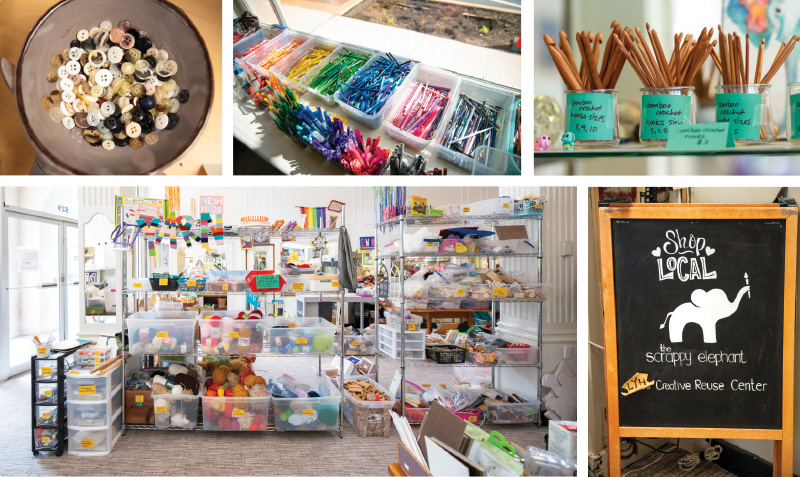
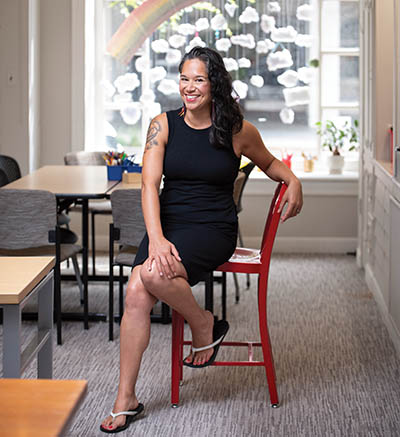
One of the most remarkable aspects of art is its ability to transform raw materials into a unique expression of creativity. When those materials are sustainably sourced, something even more remarkable occurs: as the materials are given new life many times over, several processes of transformation ensue and a mosaic of creative expressions exists within a single work of art. Of course, the environmental impact of creative reuse is also noteworthy; diverting materials from landfills helps curtail the production of methane and toxic chemicals that are harmful to the environment and to all living beings. Sarah Sweet is passionate about creativity and conservation, and she has built a business—with shops in both Charlottesville and Lynchburg—that is leading the charge in promoting both of these practices. That business, The Scrappy Elephant, has kept a staggering 199,431 pounds of materials out of landfills since opening in 2020.

After Sweet, a painter and former art teacher, had her daughter in 2013, she found herself grappling with increased concern for the environment. Determined to find meaningful ways to help mitigate the planet’s ongoing climate crisis, she discovered a creative reuse shop while on a trip in Nashville that would inspire her to ultimately open her own.

“As soon as I walked into Turnip Green Creative Reuse, I felt like I found what I was searching for,” Sweet recalled. “It was a place that combined my love of art and a way to positively impact the planet. I began researching Creative Reuse Centers as soon as I got home and visited as many as I could drive to in order to learn more.”

While networking with other CRCs around the country, Sweet made up her mind to open her own center and received some helpful advice from Utah-based CRC The Clever Octopus: choose a memorable name. Her choice, “The Scrappy Elephant,” is not only memorable, but also fitting for a female-led CRC and deeply meaningful to Sweet.

“When I was in Ghana, I had the amazing opportunity to see elephants in the wild,” she said. “I fell in love with them. And since elephant families are led by females, and this is a female-founded business, I knew I had to use them in the name. And I went with scrappy because it’s a scrap store! Also, a little from our website: ‘Elephants are creative communicators, kind, loyal, self-aware, and some of the most intelligent animals that exist. They can also paint!

Scrappy Elephant

The elephant embodies all the values The Scrappy Elephant holds dear: We are a place where creativity and kindness abound and where the makers who come here are aware of their impact on the future of this planet.’”

The Scrappy Elephant started as a 400-square-foot pop-up shop in Palmyra before expanding to an 800-square-foot space, also in Palmyra, in September 2020. In August 2022, the shop moved into what would become its central hub: an 1,800-square-foot space in Charlottesville. As the shop’s popularity grew, so did its square footage; it doubled in size in January 2024 and added on an 800-square-foot classroom space in July 2024. Then, as more and more Lynchburg residents visited the shop and expressed wishes for a CRC in Lynchburg, Sweet set her sights on opening a second location.

“After expanding a lot in 2024, I promised my team that 2025 would be a year to rest—but then a CRC near Lynchburg closed, and resting is not a strong suit of mine!” Sweet exclaimed. “We discovered the Launch LYH program and knew the timing was right to look into expanding into a new location and to spread creative reuse down south.”

Sweet opened a pop-up shop on Main Street in April 2025 and, after receiving one of the Downtown Lynchburg Association’s Launch LYH grants in June, Lynchburg’s branch of The Scrappy Elephant became a permanent fixture. Alongside these physical expansions and upgrades in both locations, staffing and offerings have also increased.
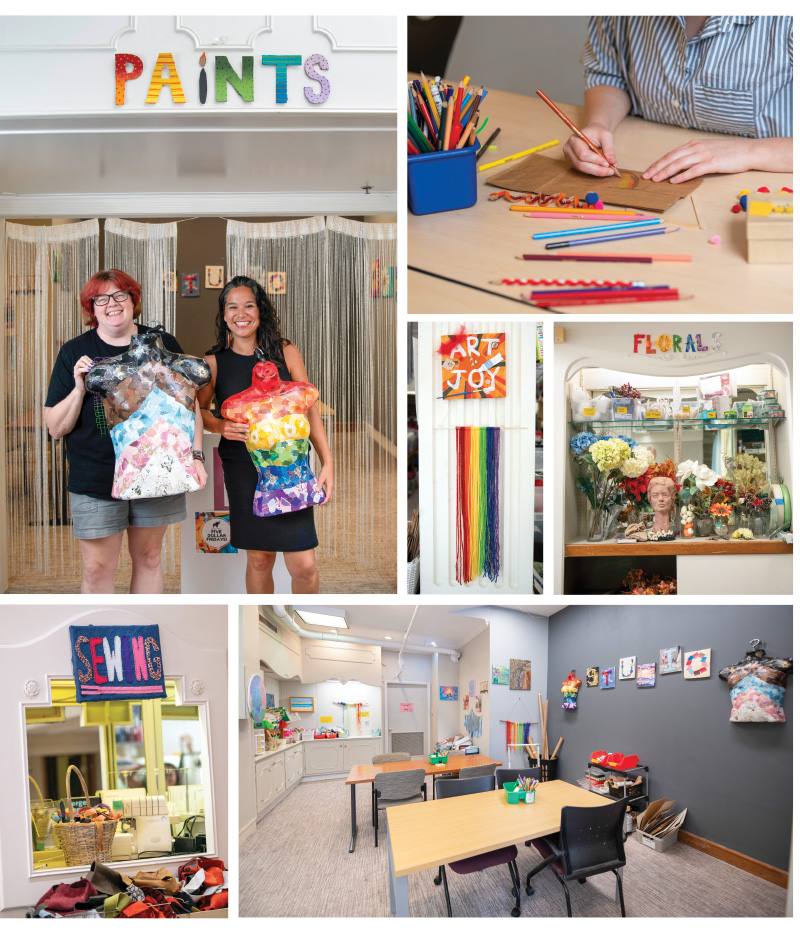
“We have also grown our staff (ten people now!) in our class and camp offerings, and we now have something called the Artful Elephant—we rotate eight artists every three months and give them the space to sell their work,” remarked Sweet. “We have always supported several nonprofits with our nonprofit rewards program; when customers shop, they receive a button that represents 50 cents and they choose which nonprofit they’d like to support. Each nonprofit then gets to come shopping for art supplies each month. Now, we are able to support even more with our Lynchburg location.”

Lynchburg’s current nonprofit participants are Amazement Square, Riverviews Artspace, The Arc of Central Virginia, Vector Space, and The Academy Center of the Arts.
Community members play a crucial role—in the capacities of shopper, donator, and even art class teacher—in helping The Scrappy Elephant achieve its mission of fostering creativity and creating joy while also reducing landfill waste.

As shoppers, customers can fill small, medium, or large bags for a fraction of the cost of new supplies. There is also a studio space available to rent for an hour of creative play or for two hours for parties.

As donators, community members are asked to check the shop’s website for a list of accepted items and to bring items in bags or boxes that they don’t wish to keep. Upon receipt of materials, staff members weigh and sort them meticulously to ensure an optimal shopping experience.

Finally, community members with art education experience are encouraged to inquire about teaching opportunities at The Scrappy Elephant.

“Most of our teachers are Scrappy customers,” Sweet noted. “Whenever people ask about teaching, I’ll have a chat with them to learn about their teaching experience, and then, if they are qualified, I put their class on our schedule.

Class prices are set by each teacher, and teachers receive 60 percent of whatever the class earns. In Charlottesville, we offer a wide variety of classes: mosaic, watercolor, bookbinding, crochet, knitting, sewing, printmaking, and more. In Lynchburg, we are slowly building up our class schedule. We have two amazing local Lynchburg teachers who have already taught classes and are offering more. One of our staff members, Marie, is going to be teaching some classes as well. If anyone is interested in teaching, please contact us!”

Of course, with increased participation comes an increased need for parking; as such, Sweet is hoping for a move this fall to a space with attached parking spots. More generally, she hopes to see an ever-increasing focus on conservation over consumption.

“Almost all of us have enough—if not too much—stuff,” she said. “I think it is important to stop and think before making purchases of any kind.

Owning this business has changed my shopping habits dramatically; I rarely shop for myself anymore and when I do, I almost exclusively shop secondhand. You can find almost everything you need at secondhand stores. I think it is important to think about voting with our dollar. There are many businesses that exist today to do good in the world and that put people and the environment before profit.”

The Scrappy Elephant undoubtedly does good in the world and possesses a unique ability to honor the past and, in so doing, also enrich and protect the future. There is also something singularly beautiful about knowing that a material that once helped someone express their creativity could someday help someone else express theirs too.

Sweet relishes the opportunity to facilitate this collective, cyclical process of making art and marvels at its far-reaching positive impact.

“So many people have been so grateful over the years to be able to bring us their deceased loved ones’ supplies, knowing that they will get used and loved again,” she stated. “So many people have been grateful to bring their supplies somewhere when they are moving so they don’t have to pack them all up and carry them along. So many people have gotten back into making art because of the Scrappy Elephant. So many people have started new hobbies after taking classes here. One person even told us that one of our meditation boxes (a simple upcycled cigar box filled with colored pencils, coloring pages, and a journal) saved her life and pulled her out of a deep dark hole. I love hearing how Scrappy is people’s happy place.”


Carved in Stone

Craftsmanship and Collaboration Leave an Enduring Mark at the Woodsmalls’ Nelson County Home

By: Anna Eileen White / Photos Courtesy: Jonathan Mitchell, Simply Branding

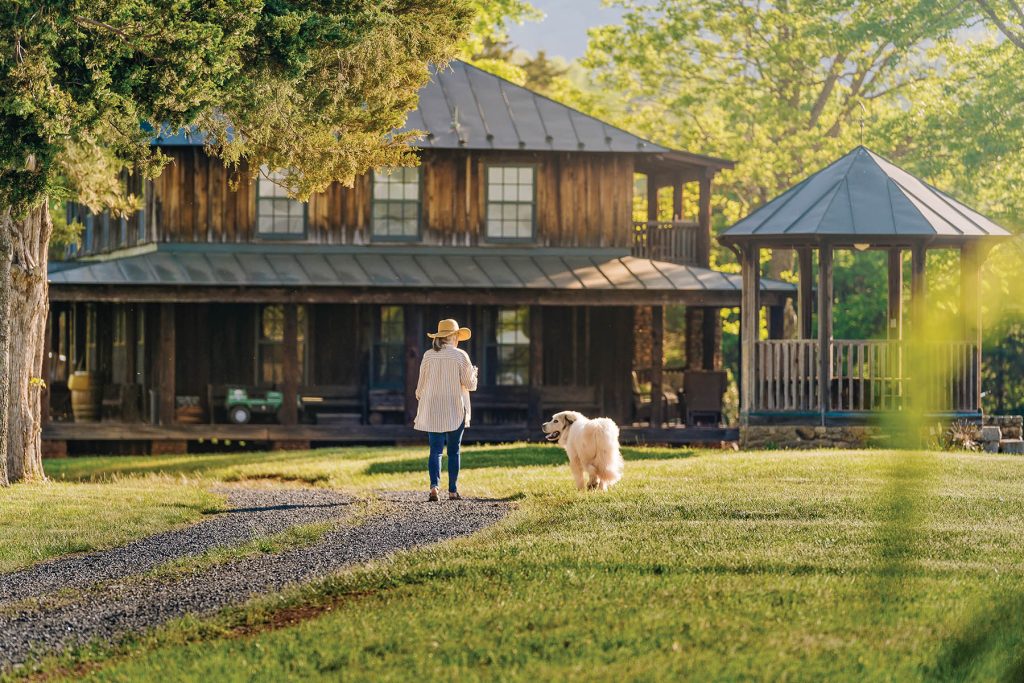
Tucked where winds sweep between blue peaks and race among receding foothills, a lodge and cottage stand. Framed by summer’s mature greens, panoramic pastureland, and layered ridges, the two buildings watch over storied grounds—grounds that owners Don and Barb Woodsmall have spared no expense coaxing back to life and infusing with their own stories. These buildings are Roseland Lodge and Helen’s Cottage.

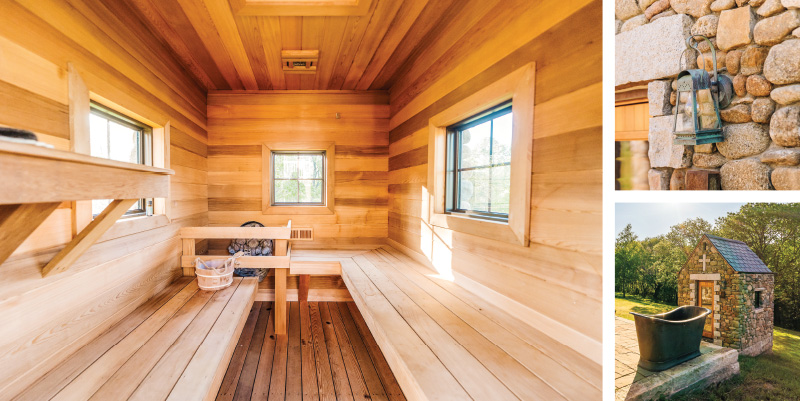
Since 2005, Don and Barb have completed project after project here, most recently engaging Corey and Lindsey, founders of Shrader Stone, to build a sauna using river rock gathered from the property and granite lintels salvaged from Danville textile mills. The natural edges and organic tones seem to breathe in tandem with the surrounding landscape, a result of “thinking about what nature and the landscape are telling us,” according to Lindsey.

Don first thought the property had potential when he saw the 180-degree views; “It’s just unbelievable,” he said. A lover of history, he values the location’s authenticity, a quality that Corey says made their collaboration a good fit, “having other people around you that share the same vision and level of care about what’s happening is really nice.”

Corey and Lindsey specialize in creating unique outdoor spaces using Old World stone masonry techniques and natural gardens that emphasize native plants. Though they both have their own specialty—Corey, masonry and Lindsey, gardening—they’re closely involved in each other’s process and share a love of sustainability, history, and working with their hands. “I love that type of project where the last time it was reassembled and touched by human hands was maybe 200 years ago,” said Corey. The Woodsmall estate fits the bill.

Roseland Lodge, which the Woodsmalls reserve as a guest space for friends both local and from distances as far away as Germany and Ireland, was constructed in 1922.

It was originally built using dead American Chestnut trees harvested from the area that were killed by the Chestnut blight. The original owner could hardly have imagined that an emphasis on local and salvaged materials would be revered so many years later.

In 1990, the building stood in disrepair and was acquired by Mark Smith, a Lynchburg figure known for his collection of rare automobiles housed at the corner of Main and 13th Streets in downtown Lynchburg prior to his passing. “He loved bringing things back to their original glory, but not making them unnaturally shiny and sparkly,” Barb said of Smith.

The Woodsmalls bought the property from Smith in 2005.

The Cottage, which the Woodsmalls have made their home, holds its own touching history. Upon learning that a nearby 80-year-old neighbor was born in the cottage in 1928, the Woodsmalls lovingly designated it “Helen’s Cottage.” A plaque now hangs in her honor by the front door, commemorating the friendship that grew between them before her death in 2015.

While both the lodge and the cottage have been through many iterations since Helen’s birth and death, the Woodsmalls’ updates all have one element in common: permanence. That’s what draws Don to stone.

“You never have to do anything to it, and 200 years from now, it’ll still be there,” he explained.

Corey said they’d originally thought of building double-faced stone walls on the sauna, but landed on a single-faced stone wall to preserve heat efficiency in the winter. Some of the river rocks were pulled from the perimeter of nearby fields where farmers deposited them over the centuries, others directly out of the Tye River where Corey and his team often retreated for lunch during construction. “It is just impossible to leave a good rock sitting there on the riverbank once you’ve seen it,” he said.

The sauna was Corey’s first experience with Cotswold architecture, a special request from Don, who loves the English style featuring stonework and a steep roof pitch with no overhang. Don also requested that Corey use minimal mortar, a technique which means the mason must work with the natural contours of the stones. “A lot of guys put stone up and put a foot of mortar around it and then another rock way over here,” Don explained. “That’s easy, anybody can do that, but to make them all fit together like Corey did, that takes talent.”

The salvaged lintels, some still sporting flecks of paint from their more polished days, form steps descending from the patio to the sauna. Quoins and headers chiseled from the same lintels accent the doorframe along with a cross. Don says the cross represents his and Barb’s worldview, a worldview he hopes his grandsons know and share when they own the property one day.

One more step forward through the doorway and the resinous scent of cedar hangs in the air—this spot is Don’s retreat at the end of most days, an easy choice seeing as he can heat the sauna with the touch of a button on his phone.

“It was great collaborating with a long-time friend and long-time customer,” said Corey, whose craftsmanship is seen elsewhere across the property in the form of lintel steps, pillars, and foundation work. Lindsey agreed, “We have the most fun clients. There are faster and cheaper ways to do this, but I think we’re all getting tired of things that break.”

For the Woodsmalls, these thoughtfully crafted outdoor spaces are perfect for enjoying mornings and evenings accented by bird songs and wildlife sightings, but the stories of friends from far and near enjoying the spaces with them seem to be their favorites. Barb’s top memories on the patio? “I think it would always involve grandkids,” she said, smiling.


Let the Floor Do the Talking

When it comes to home design, we often focus on what’s at eye level—paint colors, artwork, statement lighting. But some of the most impactful design choices happen beneath our feet. Bold area rugs, painted wood floors, vintage tile, and graphic runners can define a space just as effectively as a feature wall or chandelier. In fact, when thoughtfully incorporated, the floor becomes the feature.

Whether you’re decorating from scratch or looking for a way to refresh an existing room, letting the floor take center stage can elevate your home’s personality while still remaining functional. Here’s how to make the most of what’s underfoot—without overwhelming your space.

Go Bold with Area Rugs

Rugs are one of the easiest and most flexible ways to introduce color, pattern, and texture. They can serve as a visual anchor, define distinct zones in an open floor plan, or breathe life into a neutral room.

Oversized or graphic rugs work especially well in minimalist spaces, where they can become the central focal point without competing with other decor. Vintage or Persian-style rugs can add warmth and history, particularly when layered into contemporary or industrial rooms.

Painted Wood Floors with Personality

Painting a wood floor might sound sacrilegious to some homeowners, especially in historic homes—but under the right circumstances, it’s a design-forward move that can completely transform a space.

Painted floors can brighten a dark room, hide imperfections, or add unexpected charm. From classic white or soft gray to checkerboard patterns and colorful borders, the options are practically endless. Painted stairs in particular offer a narrow canvas for creativity—try numbers, stripes, or even ombré effects.

Painted floors tend to work best in rooms where wood isn’t pristine to begin with—think enclosed porches, attic bedrooms, or cottage-style kitchens.

TIPS FOR SUCCESS
• Choose the rug first when possible, and let its colors inspire the rest of the palette.
• Don’t be afraid of color, but consider sticking to one bold element—if the rug is loud, keep furniture and accessories more subdued.
• Use rug pads to add cushioning and prevent slipping, especially in high-traffic areas like hallways or kitchens.

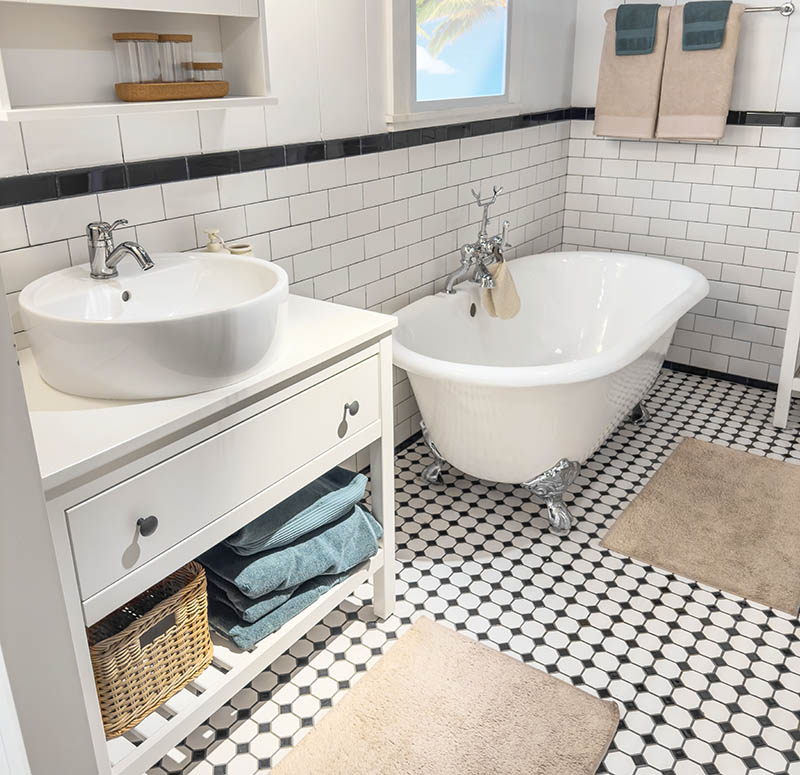
Free standing bathtub in a stylish bathroom

Celebrate Original Tile

There’s a reason vintage tile has made a major comeback in recent years—it’s full of character, often handcrafted, and always full of story. Whether it’s a patterned hex tile from the 1920s or a colorful mid-century mosaic, original tilework deserves to be celebrated, not torn out.

In older bathrooms, lean into the nostalgia by pairing vintage elements with updated fixtures that complement its character—perhaps a modern sink or floating vanity that doesn’t block the view of the floor. In entryways or sunrooms, patterned tile can become the entire design concept.

Even newer homes can benefit from tiled floors with personality. Consider encaustic-look tiles in laundry rooms, bold cement tiles in powder rooms, or terrazzo in modern kitchens.

TIPS FOR SUCCESS
• Prep is key. Sand, clean, and prime thoroughly for a durable finish.
• Choose a floor paint formulated for high-traffic use, and allow plenty of curing time.
• Consider stencils or masking tape to achieve crisp lines or geometric designs.

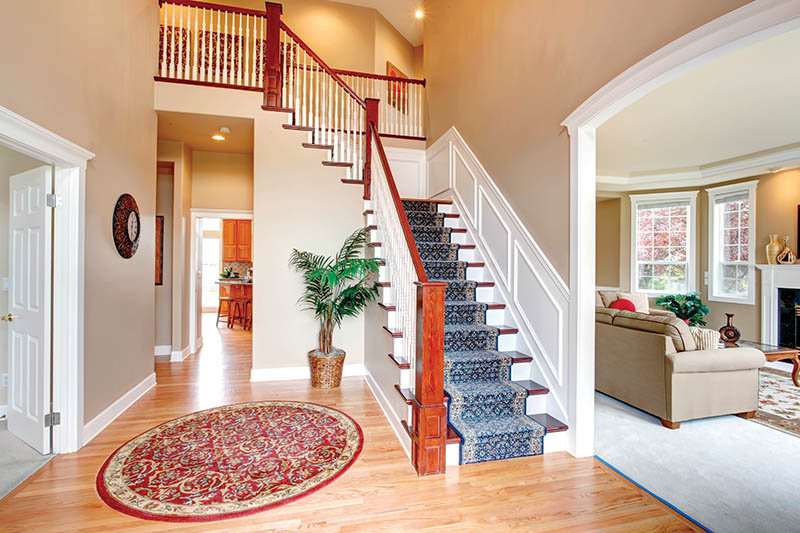
Hardwood hallway with red round rug and palm tree. View of staircase with blue rug

Statement Runners for Style & Function

Hallways and staircases are often overlooked when it comes to design, yet they’re some of the most frequently used spaces in the home. A vibrant runner can soften these transitional areas while adding unexpected color and energy.

Patterned or vintage runners are especially effective on stairs, where the repetition of each step enhances the visual impact.

In long hallways, a runner can break up monotony and create rhythm. Bonus: They help reduce noise and protect high-traffic surfaces.

TIPS FOR SUCCESS
• Clean and reseal vintage tile to restore vibrancy and protect from moisture.
• If the pattern feels too busy, balance it with solid colors on the walls and ceiling.
• Avoid placing rugs over tile unless it’s for warmth or safety—let the craftsmanship show.

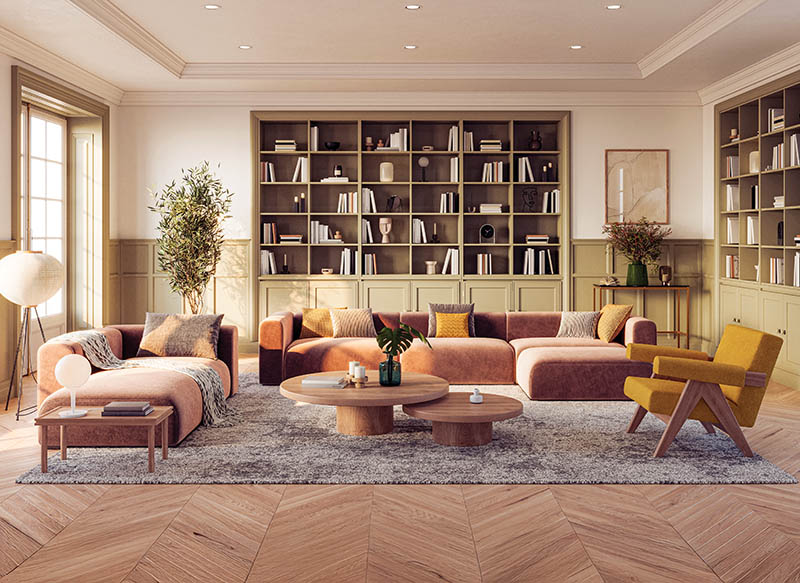
A stylish living room interior featuring modern designer furniture, wall paneling and elegant accessories

Balance Is Everything

The key to using the floor as a design element is balance.

If your flooring is loud, keep the surrounding elements clean and intentional. If your room is minimal, a floor with personality can become the showstopper. Not every room needs a statement floor—but every home can benefit from at least one.

Entryways, powder rooms, and stairwells are great candidates for bolder underfoot choices, while main living areas might benefit from subtler grounding tones.

When done thoughtfully, floors don’t just support the design of a room—they define it. They set the tone, carry the eye, and tell a story that no wall color can quite match. So next time you’re planning a room refresh, look down. You might already be standing on your next design idea.

Tips for Success
• Use a stair rod or rug tape to ensure safety on stair runners.
• In hallways, leave a few inches of flooring visible on each side for a tailored look.
• Don’t shy away from layering—a flatweave runner over hardwood or tile adds texture and warmth.


Finding Your Palette and Yourself

Discover Your True Colors with Expert Wardrobe

Stylist Emily Burnette | By: Izzi Diaz Young | Photos By: Ashlee Glen

In so many ways, color defines our lives. From the indigos of an evening Lynchburg sky to the deep browns that make up our morning coffees, color is more, and can do more, than we often even realize. One of these methods in which a Pantone can unknowingly alter our days is through the clothing we adorn ourselves in. These shades can either complement us or clash with us, and sometimes, we don’t even know which is doing which.

Enter Emily Burnette, a luxury personal and wardrobe stylist. Excelling in the elevation of fashion, Burnette specializes in styling, image consulting, and color consulting. In aiding individuals with discovering their best looks, Burnette offers a transformative experience, from head to toe.

Growing up in Lynchburg, Burnette one day realized her dreams of fashion excellence were greater than what her quaint town could offer, so she decided to pack a suitcase and start her new life in New York City. In New York, she started her career in fashion, learning everything there was to know about the many levels of luxury retail and personal styling.

“I think we always want to go as far from home as possible to really get to know ourselves and discover what we want out of life,” Burnette said. After her dream took her to The Big Apple, then to Los Angeles, she explained, “Now, I split my time between Southern California, Central Virginia, and the Carolina coast.”

From a young age, Burnette discovered she loved color theory, and furthermore, color consultation; an experience in which any individual can discover the most flattering hues for their specific hair and skin tone. This process helps uncover what colors you not only will look your best in,
but also feel your best in.

“In college, I really enjoyed all of the art classes and color theory principles, so styling and color consulting just came naturally to me,” she explained. “When I recognized this gift—paired with a natural curiosity to experiment with clothing, everything clicked, and I realized it was a path.”

When meeting with Burnette for a consultation, clients can expect an experience hard to find elsewhere.

She noted, “Five minutes into a session clients say, ‘Wow I never would have picked that for myself!’

That right there is a testament to trying something new, and just the sheer transformation that clients experience during a color analysis or personal styling session.”

This session, which is offered virtually and in-person, begins with a personalized color analysis by Burnette herself. Here, she takes note of your unique colors, represented through the shades that shine through different complexions and hair strands within your appearance. This allows for the process to fully begin, experimenting with various hues to see what suits you most. The client will receive a personalized color card full of notes from the session to take home at the end, as well as professional styling advice on how to wear their custom colors and combine them to produce the best results.

Burnette recommends having your color analysis completed first, as it serves as an entry point into the greater investments to be made by her clients. The next step, styling, is where the color analysis truly comes to life.

“For styling, I offer a signature package where we start in your closet and analyze the foundation—think closet edits, identifying gaps and opportunities. This is followed by shopping a custom digital styling lookbook, then finally, an integration session where we combine new clothing pieces into your existing wardrobe and style outfits for you to reference well after I’ve left your closet,” she stated.

Though a study into your particular shades might seem unimportant initially, it serves as one of the most empowering and uplifting experiences to treat yourself with. Burnette’s clients don’t just gain a newfound, enlightened glimpse in the mirror or a different color introduced into their wardrobe, they gain a deep-rooted confidence in themselves; an opportunity to step into the world with a freshly discovered self-assurance.

“I see women hold their heads up higher, I witness them close their biggest deals yet, launch businesses, show up and stand up for themselves, and do it easefully. That’s what it’s all about. If I can play a small role in a woman earning more money and prioritizing herself, then my job was accomplished. A wardrobe that works for you can do just that,” Burnette beamed.

Even with the accessibility provided by Burnette’s business, fashion of any tier can seem ever-daunting to some, novices or not. Acting on the desire for a change is sometimes intimidating, and if you aren’t quite ready to make that jump into a full analysis, Burnette recommends starting by asking yourself a few questions that can help you become your best self, even on your own.

She recommends firstly starting with your own wardrobe evaluation, asking yourself, “What colors do you see reflected in your closet? What colors are missing?”

Then, go a bit deeper into why those colors are or are not the ones which you find yourself donning daily. She suggests contemplating, “What are you always gravitating toward? What are you shying away from? What do you feel most confident in?”

Once pondering those questions, you might feel ready to get started on revamping your closet on your terms, or you might realize you need a professional, like Burnette, to advise you on where to go next.

When she’s not doing her one-on-one sessions, Burnette can be found out-and-about doing what she does best: holding pop-ups in the local community.

She said, “I partner with local retailers and brands to offer mini color consultation pop-ups—an accessible price point that provides a broad yet impactful overview to help you get started on your style journey!”

As she notes on her business cards and websites, style is personal. It has meaning. It can represent not only the most optimal hues for you, but so much more. A color can be the connection between your best features and your best memories. A way to show others who you are, and what you’re passionate about. The reds in the shirt you bought last week? Not only does it make your eyes light up, but it showcases your inner passion for life. The yellow in the skirt you were gifted by a friend? It makes your smile shine brightly and exudes the joy you have inside.

“It’s about feeling seen, empowered, and at ease in your own skin. When you know what works for you—and why—you save time, gain clarity, and move through life with more confidence,” Burnette concluded. “That’s why it matters. Because how you dress isn’t superficial; it’s deeply personal.”


Bone Broth, Organ Meats, and the Nose-to-Tail Comeback

A Trend in Nutrient-Dense Animal-Based Foods

Few trends have gained as much traction in recent years as the return to nutrient-dense animal-based foods. Once staples in many traditional diets, bone broth, organ meats, and the nose-to-tail philosophy are making a strong comeback in kitchens across the country. With a focus on sustainability, flavor, and nourishment, these foods are now at the forefront of a new wave of eating that emphasizes whole-body health.

Bone Broth:The Healing Power in a Bowl

Bone broth, a deeply nourishing liquid made by simmering bones, cartilage, and connective tissue, has long been lauded for its therapeutic properties. In recent years, it has become a go-to superfood, popular for its ability to support joint health, boost the immune system, and promote glowing skin. The slow-cooking process extracts collagen, gelatin, and minerals from the bones, offering a rich source of glycine, proline, and amino acids—compounds essential for healthy bones, skin, and tissue repair.

As more people seek alternatives to processed foods, bone broth’s return is driven by its whole-food appeal. Unlike synthetic supplements, bone broth offers a natural, bioavailable way to replenish the body’s nutrients, making it especially appealing to those seeking to improve digestion, support detoxification, and bolster immunity.

For many, bone broth is a nostalgic reminder of home-cooked meals, passed down through generations.
But for the modern cook, it’s a versatile addition to everything from soups and stews to smoothies and sauces. The trend is clear: bone broth is no longer just a health trend; it’s becoming a pantry staple.

Organ Meats: A Forgotten Superfood

Once relegated to offbeat menus or considered “acquired tastes,” organ meats are now seeing a resurgence in popularity. High in iron, zinc, and B vitamins, organ meats such as liver, heart, and kidneys are some of the most nutrient-dense foods you can consume. These cuts pack a punch when it comes to vitamins and minerals, often far surpassing the nutritional profile of more commonly consumed muscle meats.

For centuries, organ meats were considered vital to human health. In fact, many early cultures prized organ meats over muscle meat for their superior nutrient content. Yet, as consumer preferences shifted toward leaner cuts, organ meats slowly fell out of favor. Now, with growing awareness around food waste, sustainability, and health, more people are embracing these cuts as part of a nose-to-tail approach to eating.

Nose-to-tail eating encourages utilizing every part of the animal—ensuring that nothing goes to waste while maximizing the nutritional benefits of all parts. By consuming organ meats, individuals can tap into a wealth of nutrients that are often absent from a typical diet, from vitamin A in liver to coenzyme Q10 in heart.

For those hesitant to dive straight into organ meats, many chefs are creatively incorporating them into dishes where their flavor is subtle yet nutrient-dense. Whether in sausages, pâté, or even ground into burgers, organ meats are finding new life in modern recipes.

The Nose-to-Tail Approach: Redefining Sustainable Eating

The nose-to-tail philosophy is more than just a culinary trend—it’s a movement toward sustainable eating that prioritizes minimizing food waste while maximizing the nutritional benefits of every part of the animal. This approach not only makes use of the full animal but also provides a more cost-effective way to eat healthfully.

As awareness of the environmental impact of industrial meat production grows, many consumers are seeking ways to make their diets more sustainable. Eating nose-to-tail helps to reduce waste, supports local farmers, and ensures that every part of the animal is used in ways that respect its full nutritional value. This sustainable approach is particularly relevant in a time when mindful consumption is at the forefront of many food conversations.

By embracing nose-to-tail eating, individuals are helping to bring back a traditional approach to food that honors both the animal and the earth. In doing so, they’re rediscovering the way our ancestors once ate: with reverence, balance, and a deep connection to the food on their plates.

As the trend toward nutrient-dense, whole-animal foods continues to rise, it’s clear that bone broth, organ meats, and nose-to-tail eating are here to stay. Whether you’re looking to boost your immune system, improve digestion, or simply eat more sustainably, these traditional foods are making their way back into modern diets with good reason. By embracing the full potential of every part of the animal, we can nourish our bodies, reduce food waste, and reconnect with the ancestral roots of our culinary practices.

Pouring chicken bone broth from a ladle into a vintage plate, with fresh vegetables in the background

Pouring chicken bone broth from a ladle into a vintage plate, with fresh vegetables in the background

Homemade Chicken Bone Broth

Ingredients:
Leftover chicken bones (from a rotisserie chicken, roasted chicken, or chicken carcass)
1 onion, quartered (no need to peel)
2 carrots, roughly chopped
2 celery stalks, roughly chopped
3 cloves garlic, smashed
2-3 sprigs fresh thyme
(or 1 teaspoon dried thyme)
2-3 bay leaves
1 tablespoon apple cider vinegar
(helps extract minerals from the bones)
10 cups cold water
Salt and pepper, to taste

Directions:
1. Place your leftover chicken bones in a large stockpot or slow cooker. If you have any leftover skin, cartilage, or wings, add them as well—everything is good for the broth!

2. Add the onion, carrots, celery, garlic, thyme, and bay leaves to the pot. (Editor’s Note: I often will store vegetable scraps—think carrot peels, onion ends, celery leaves—in a bag in the freezer and toss them into my bone broth. It’s a great way to use up scraps!)

3. Pour in the cold water, ensuring that the bones and vegetables are covered. Add the apple cider vinegar and let it sit for about 30 minutes before heating. This helps draw out the minerals from the bones.

4. If using a stockpot, bring the mixture to a boil over high heat. Once boiling, reduce the heat to low and simmer, uncovered, for 4-6 hours. For a slow cooker, cook on low for 8-12 hours. During the simmering process, skim off any foam or impurities that rise to the surface.

5. After simmering, strain the broth through a fine mesh strainer or cheesecloth into a large bowl or another pot. Discard the solids (or compost them if desired).

6. Taste the broth and add salt and pepper as needed. Let it cool, then transfer it to jars or containers for storage. The broth can be stored in the refrigerator for up to 5 days or frozen for up to 3 months.

This homemade bone broth is perfect for sipping on its own, adding to soups, or using in cooking for added depth of flavor. It’s a cost-effective way to make the most out of your leftover chicken, while also providing a nourishing base for your meals. Enjoy!


Up for Adventure in Culpeper

Main Street renaissance, Blue Ridge charm are a gateway to great food, wine, shopping and outdoor fun

By: Leona Baker / Photos courtesy of Visit Culpeper, West Park Gardens or by Lisa Davenport

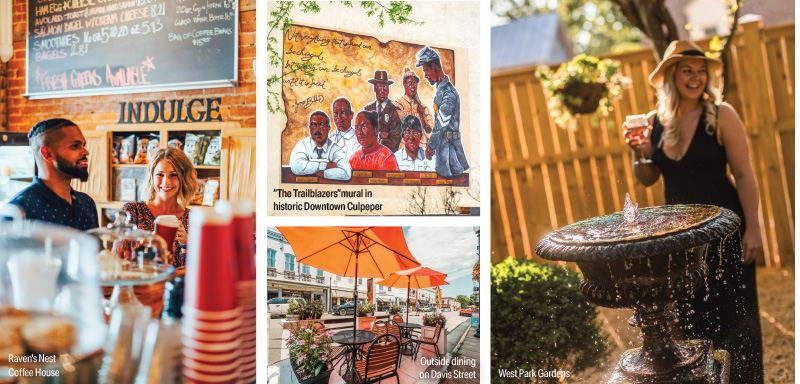
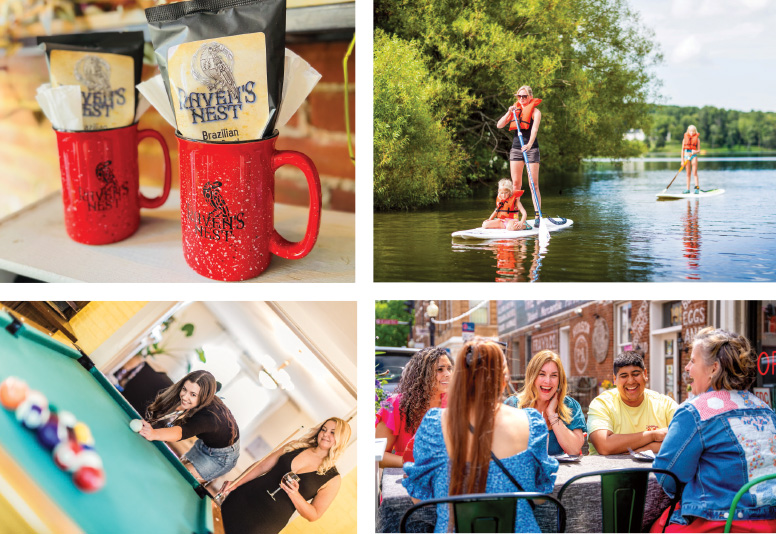
Tucked into the main living room, cattycorner to the pool table and a retro Pac-Man table game at West Park Gardens—a 1920s era home turned short-term rental for overnight stays and special events in Culpeper, Virginia—is a colorful, chalkboard-style display inscribed with ideas for where to “Eat,” “Drink”
and “Play” during your visit.

Based on my recent two-night girls’ getaway with a friend to this historic town on the edge of the Shenandoah Valley, which included jaunts to nearby wineries, restaurants, shops and more, you are going to want to do at least a little of all the above and then some if you plan a visit of your own.

Part of the Virginia Main Street revitalization program, downtown Culpeper has experienced a much-deserved renaissance that showcases its quintessential VA vibes, unique crossroads location, role in American history and gorgeous natural surroundings along with boutique retail, dining, special events and nightlife.

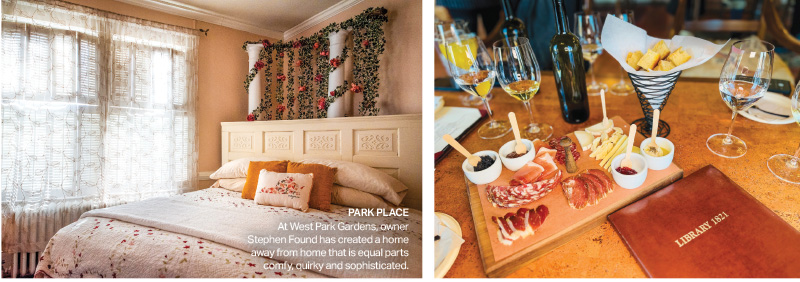
I might have been perfectly content to spend my whole visit at West Park Gardens, where owner Stephen Found has created a home away from home that is equal parts comfy, quirky and sophisticated. From its three spacious second floor guest rooms to the home’s stunning secret backyard garden—where the renovated Garden Cottage with its own kitchen, loft bedroom and private balcony is also available for overnight stays—this is easy Southern living at its best.

West Park’s first-floor common rooms beg you to sit and stay a while, play a game, read a book, or just admire the eclectic assortment of art, antiques and charming tchotchkes. There’s a welcoming dining area for breakfast bites and coffee, a period butler’s pantry and, just beyond a throwback beaded curtain, an enclosed sunroom with golden yellow walls, old-fashioned diner stools along one wall, plants aplenty and even a dartboard.

Once we did venture out the front door and down the sidewalk, we found lots to do and see nearby, including in the downtown area, which is a quick five- to 10-minute walk from West Park Gardens or just a few minutes’ drive.

Culpeper also happens to be geographically situated smack in the middle of a circle of destination towns and attractions that make great day trips—from Lake Anna and Luray Caverns to Harrisonburg and Charlottesville.

World-class hiking, Blue Ridge Mountain scenery and some of Virginia best wineries are also on their doorstep. Here are a few ideas for adventure in and around Culpeper.

Start with Bites and Brews

Our quest for caffeination was percolating from the moment we spotted bags of a local roast bearing a black bird logo on the kitchen counter at West Park Gardens. So, we flew right down to the Raven’s Nest on Davis Street in downtown Culpeper.

A “community living room and coffee house,” it’s everything you want in a cozy coffee shop, plus they serve specialty adult libations like a Garden Gimlet or Barista Sour along with wine, beer, cider and a menu of sandwiches, bagels, avo toast, pastries and more.

If you’ve got baked goods on the brain, you’re going to want to rise and shine for Knakal’s Bakery, because people queue up on the regular to savor the glazed donuts, polka rolls, cakes, cookies, yeast biscuits and apple bread at one of Culpeper’s oldest family-run businesses, in operation since 1935. Just note they are closed on Sunday and Monday.

We had a delightful dinner at Grass Rootes, a farm-to-table restaurant housed in a historic industrial building whose brick walls with hand-painted signage, exposed beams, wooden floors, fireplaces and barred basement door speak to its storied past as a tobacco warehouse, stables, tin shop, Civil War jail and hardware store.

Today, Grass Roote’s guests are greeted by a huge, stylized portrait of Anthony Bourdain and a wall-sized quote from Prince’s “Purple Rain” before they enjoy well-crafted classics like Pan-Seared Salmon with creamy orzo, Crispy Duck Breast with red wine risotto, Spaghetti and Meatballs or Bone-in Pork Chops with garlic whipped potatoes. They also serve brunch and creative cocktails and feature live music in “The Burrow,” AKA basement: ghost stories optional.

Other Culpeper food and drink options: Beer Hound Brewery, Burnt Ends BBQ, La Chiapaneca, Flavor on Main, Far Gohn Brewing Company, Grill 309, HFR Contemporary Kitchen & Bar, It’s About Thyme, Pinto Thai Culpeper and Shawn’s Craft BBQ.

Get on a Roll for Good Wine

It’s a crime to drink and drive. But it would also be a crime not to visit at least a couple of the many wonderful Central Virginia wineries within easy driving distance of Culpeper. Good thing we’ve uncorked a perfect solution that is stylish, fun and safe to boot.

I highly recommend booking with Central Virginia Wine Tours, based in Orange and owned by Stephen Sanford, who may also be your personable and patient driver. Select a Cadillac Escalade, shuttle or a limousine bus, grab your significant other, friends, family and fellow wine lovers and leave the driving to the pros.

You can choose one of their preplanned tours or design your own. Brewery tours are also available. We decided to keep it simple by visiting two of the region’s most celebrated wineries for sips, snacks and what turned out to be a truly unforgettable meal.

Perhaps the most recognizable name in Virginia wine for good reason, Barboursville Vineyards is steeped in tradition, its location on a historic vineyard estate on the slopes of the Southwest Mountains a combination of Old-World elegance and modern refinement.

We nestled into a long wooden bench in Barboursville’s Library 1812 Tasting Room for six-wine flights, a small plate of Pappardelle Bolognese from their Trattoria-inspired menu and a lovely charcuterie board. These paired perfectly with our selections from the wine menu, which showcases Barboursville’s wide variety of wines including the Cabernet Francs and Bordeaux-style red blends for which they are well known, such as their signature Octagon.

At the sleek and inviting Early Mountain Vineyards, we were treated to selections from their Virginia Table small plates menu—from Kaluga Caviar gaufrettes with crème fraîche, chive and potato to Grilled Bison Ribeye with shallot confit and rosemary demi-glace to Chocolate Cremeux with pickled cranberry and anise.

This luxurious feast of shareables was a complete culinary experience paired with the sommelier’s picks, beginning with their Brut Sparkling NV and featuring reds such as their RISE blend of Merlot, Cabernet Franc, Petit Verdot and Tannat. Established in 2012, Early Mountain has quickly made a name for itself as a leader in the industry, known for its dry wines and focus on low-intervention winemaking embracing Virginia’s terroir.

Where to wander for even more wine: Barboursville and Early Mountain are less than 35 miles from Culpeper.

Some other suggested wineries nearby are DuCard Vineyards, Lake Anna Winery, Mountain Run Winery, Narmada Winery, Old House Vineyards and Prince Michel Vineyard & Winery.

Hit the Shops or Head Outdoors

Get Retail Therapy Downtown. Check out Le Monkey House for edgy and irreverent gifts, our favorite being the cheeky “Where The F*** Is Culpeper?” swag; The Cameleer for handcrafted home decor, pottery and textiles from more than 80 countries around the world; Fulton Found for “curated goods for the rugged spirit”; or Green Roost for ethically sourced, curated apparel, home goods and more.

Hike, Bike, Paddle, Backpack.

Culpeper is a short drive from the Thornton River Gap entrance to Skyline Drive and Shenandoah National Park, making it a great starting point for exploring legendary trails and scenic views. Don’t miss Old Rag and Mary’s Rock. There’s also great camping, glamping, kayaking and more at Rappahannock River Campground and paddling and fishing at Lake Culpeper.

Even More Outdoorsy Stuff.

Explore Virginia’s newest state park, Culpeper Battlefields State Park; camp, zipline or climb at Verdun Adventure Bound; charter a fly-fishing trip with Middle River Outfitters; hunt for culinary delicacies with Virginia Truffle Hunting; hike or take a tour of Virginia Bison Company at Cibola Farms; or get a view from the skies with Skyline Heli Helicopter Tours.

Cinema and Civil War History.

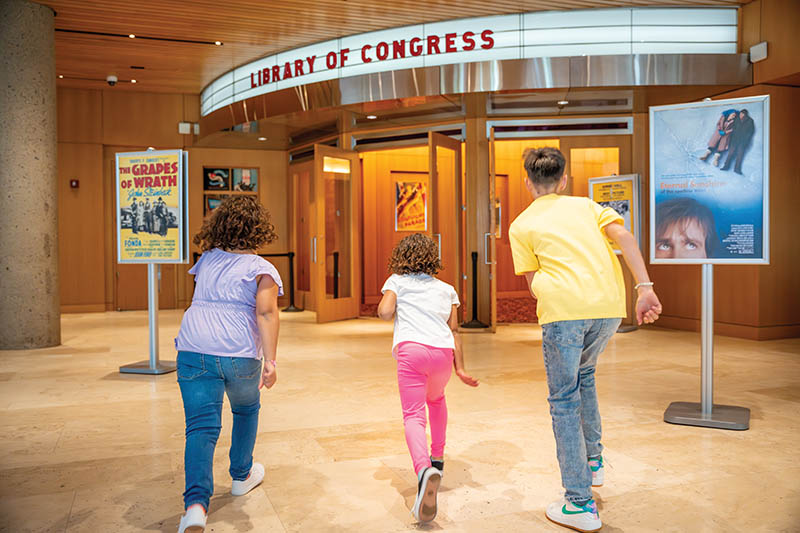
Culpeper was a crossroads for Union and Confederate forces, playing a key role in Civil War events. Learn more at various historic sites in the area or tour the Museum of Culpeper History. The town also happens to be home to the U.S. Library of Congress collection of historic films, and the nearby Packard Campus Theater hosts screenings of films from the silent era to modern day.

Throw In Some Throwback Fun.

For some family-friendly or rainy-day to-do’s, it’s game on at Throwbacks Arcade downtown, which boasts more than 70 classic arcade cabinets and pinballs.

Saddle up for the 4th Annual Culpeper Rodeo on August 30, check out State Climb indoor rock-climbing gym or Puzzle Room Live, an interactive, fully immersive escape room.

Visit stayculpeper.com to book a room or the Garden Cottage at West Park Gardens. Follow @westparkgardens on Instagram.

West Park Gardens is one of a variety of overnight rentals, B&Bs, boutique hotels, camping and glamping options in or near Culpeper. You can find others as well as more great ideas for things to see and do including seasonal special events at visitculpeper.com.

See also culpeperdowntown.com.


A Light-Filled Life

How Michele Fredericks Shapes Space with Purpose

By: Robyn Forbes / Photos Courtesy: Studio Møre Designs

When Michele Fredericks moved back to Lynchburg in 2018, she employed her architectural and design expertise on a small team in town. Just two short years later she would open her very own studio, Studio Møre Designs. As owner and principal designer, Fredericks provides residential and interior design services and consults on commercial projects. Studio Møre Designs has received a Lynchburg Best of Business Award from Lynchburg Business magazine and a Readers’ Favorites award from Central Virginia HOME magazine. After connecting with Fredericks for an in-depth conversation about her stylistic journey, her motivation for making, and her governing approach to handling clients and their concerns, I quickly understood her natural acquisition of the people’s favor.

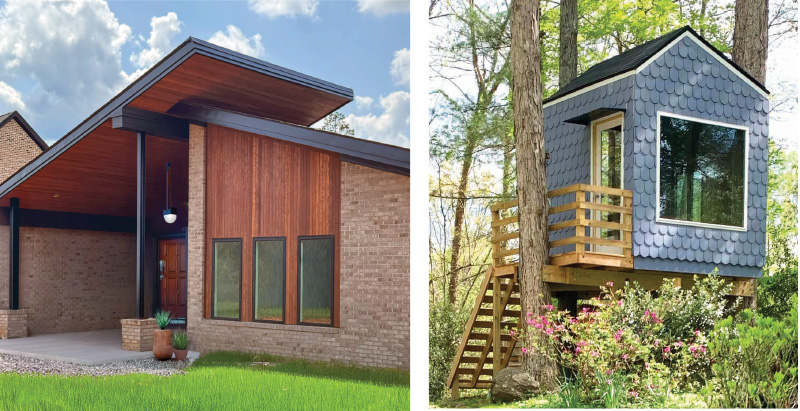
I pulled into Fredericks’s driveway on a rainy afternoon in the spring and immediately recognized a familiar structure across the lawn—a treehouse, neat and painted a powdery blue. I had seen the treehouse on her website.

Later, I learned that the historic split-level home where Studio Møre Designs was born, continues to be one of Fredericks’s most intimate and challenging projects.
“One of my favorite design projects so far has been my own home,” she shared.

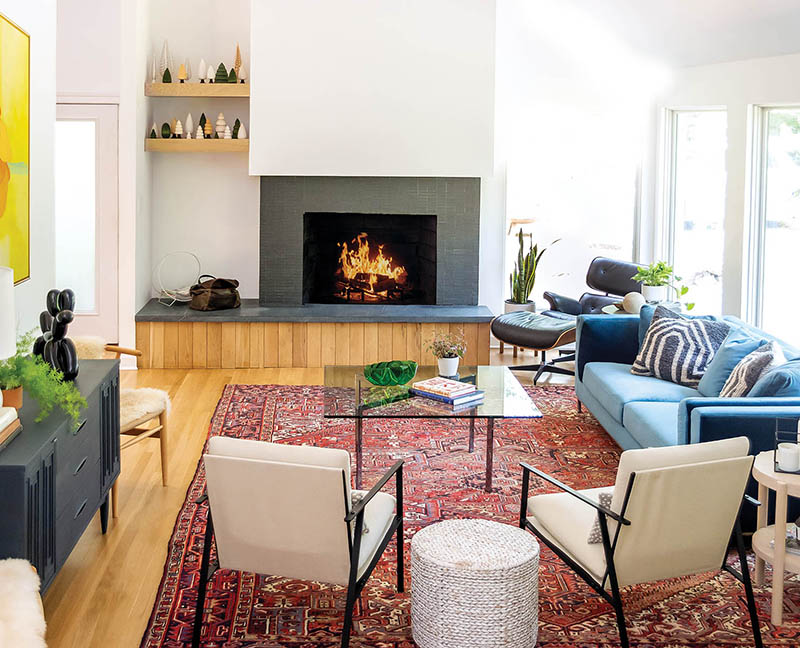
Frederick's living room was featured on the cover of Lynchburg Living September/October 2021. Photo by Daryl Calfee

Frederick’s living room was featured on the cover of Lynchburg Living September/October 2021. Photo by Daryl Calfee

The space is open and generous, and there is so much light. It spills in from overhead by way of a modern skylight and through countless windows. I wanted to venture beyond her artsy home office and just lounge. It felt like a place to linger.

Fredericks believes anyone can have a home that feels so. It doesn’t take much.

“Natural light and well-placed windows have a huge impact, not just on the look of a space, but on your mood, your health, and overall sense of well-being,” she told me.

She credits her travels with affording her experiences which have deeply influenced her personal design approach. She has lived in Hawaii, Argentina, Tennessee.

It was time spent in Europe, however, that most poured into her palette.

She found the practicality and intention signature to the European style to be irresistibly magnetic. A self-proclaimed DIYer, Fredericks encourages those looking to revamp their space to do their research about what’s safe and effective, and to consider function as the primary element in their approach. Aesthetics are secondary.

“For me, the European influence is less about aesthetics and more about the simplicity and intention behind how people live,” she explained. “When spaces are designed with function as the priority, beauty often follows naturally. One of the key takeaways I carry with me is the deliberate use of color—or, sometimes, the intentional choice to hold back. I love bold, vibrant hues and am never afraid to use them, but placement and purpose are everything. It’s all about balance and creating impact through thoughtful design.”

For all of its globally sourced influences, Studio Møre is a deeply local voice in Lynchburg’s design scene. Honoring local architectural heritage is just as integral to Fredericks’ process as thinking outside of the box.

“To be a truly Virginia-based design studio,” Fredericks said, “I believe you have to understand the region’s unique architectural character. For example,
we build with brick because it literally comes from our soil. Many homes have basements due to the terrain, and screened porches are a must because of the bugs. Especially here in Central Virginia, quality matters. New construction has to measure up to the historic fabric of the area—think grand old homes, commercial buildings with soaring 14-foot ceilings and massive windows. That level of quality sets the bar high, and it’s a standard I truly enjoy designing toward.”

Fredericks’ website describes her work as “designing spaces where people want to be.” Doing so well starts with connecting with people and finding out what matters to them most.

“I’ve always been a people person, so getting into residential design just made sense,” she said.

“I really enjoy getting to know my clients and helping them create spaces that feel like them, the kind of place they’re actually excited to come home to.”

Consulting on commercial projects has also allowed Fredericks to be a part of shaping the city she calls home.

She’s currently contributing to two mixed-use spaces in the Lynchburg and Danville areas that will each provide much needed residential and commercial real estate.

“As a designer, you get all kinds of projects. Some are all about creativity and big ideas, and others are more focused on problem-solving and client care,” she explained. “I treat them all with the same level of attention. No matter what the project looks like, whether it is a tight budget, very specific taste, or a unique type of space, I am always aiming to make it the best it can be.”

Five years from now Fredericks wants to be doing exactly what she’s doing now: creating inviting spaces that make people’s lives better right here in Lynchburg. I asked about her dream commercial project and expected to hear about a high-rise corporate space or perhaps a new boutique hotel. Instead?
A park—of sorts.

“This might sound a little unexpected, but I would love the opportunity to design a cemetery or mausoleum,” Fredericks shared. “I’ve always been fascinated by how cemetery design is so deeply connected to the landscape. In fact, both my undergraduate and graduate theses focused on cemetery projects.

I’d love to reimagine these spaces as vibrant, peaceful environments, with walking paths and thoughtful design elements that invite the living to spend time there and connect with the surroundings in a meaningful way.”

Studio Møre Designs is accepting new clientele with a three- to six-month wait time. If you’re itching to get your hands on one of Fredericks’ designs, check out Hideaway Modern, a curated collection of small home and cabin floor plans available online. The collection was crafted alongside longtime friend of Fredericks’ and fellow designer Bryn Wears-Fitipaldi. The two attended architecture school together and Bryn now operates her own studio in California.

Lynchburg’s creative energy and artistic network has been a pillar of Fredericks’ experience in business.

With great successes behind her and more on the horizon, she thanks her hometown for being the place she gets to make it all happen.

“The truth is, I’m able to do what I love, and do it well, because of this amazing, supportive design community,” she said. “I truly couldn’t do it without them!”