One Idea, Many Doors

How Traber Ranch’s growing collection of concepts is reshaping downtown Lynchburg—one space, one experience at a time.

By: Olivia Carter  |  Photos By: Ashlee Glen

A string of new businesses is unfolding along Main Street in downtown Lynchburg.

Owner Melanie Traber has a growing portfolio of concepts under the Traber Ranch umbrella. What started as a simple idea—a small store and coffee shop—has quickly expanded into a network of distinct but interconnected spaces: Trading Post by Traber Ranch, The Vault, TBR Bistro, Lonestar Market and Café, and the Boiler Room.

Although it may sound ambitious, Traber said that this wasn’t part of some grand master plan. “Just one thing after another is kind of how it happened.”

She saw a gap downtown at the start. “There were no stores to go to,” she said. “You have to go to Madison Heights or out Wards Road just to get something simple.”

That inconvenience planted the seed for what would become the Trading Post, a hybrid retail shop and coffee space designed to serve both practical needs and create a reason for people to linger downtown.

The building itself helped shape what came next.

“We saw the back space of it, which is absolutely beautiful, and thought, well, if we were in this, we could do the store, a coffee shop, and maybe rent out the back for weddings,” Traber said.

But like many of Traber’s ventures, the concept evolved organically.

A basement space, initially little more than a cleaned-out shell, transformed after a suggestion from her son.

“He said, ‘What if we put pool tables in that downstairs area and had that as a bar?’” she said.

That idea eventually grew into what regulars now refer to as the “speakeasy,” adding an entertainment layer to the Trading Post and laying the groundwork for a broader vision.

As the Trading Post gained traction, another opportunity emerged—one that would expand the concept beyond retail and into nightlife. Behind the original building, Traber and her team introduced a music hall complete with a stage and professional sound system, driven in part by a personal motivation.

“My husband loves live music, so we ended up deciding to build a stage and have live music events,” she said.

The result is a space that blends casual Western-inspired charm with live entertainment, creating a layered experience that invites visitors to move between spaces rather than stay in just one.

That “movement” between concepts has become a defining thread across all Traber Ranch businesses. “They’re all individuals,” Traber explained, “but they’re all so close to each other so people do like to go from one thing to another.”

Just down the road, another historic building presented a new opportunity at 1030 Main Street.

“It’s absolutely beautiful, an old bank, and the ceilings are just incredible,” Traber said.

Rather than replicate the Trading Post’s casual feel, this new business, called The Vault, leans into a more elevated nightlife experience while still maintaining the accessibility that defines Traber’s approach.

“We could rent it out on the weekends and probably do even better,” she admitted. “But we really want people to have some place to go and to get to enjoy some of these buildings.”

Inside, the space is intentionally varied. Different rooms offer distinct aesthetics, from teal-walled lounges to more dramatic bar settings, giving guests multiple atmospheres within a single venue.

Beneath The Vault is another concept: TBR Bistro, located in the former Bull Branch restaurant space.

“I think the most excitement comes from people who used to go to Bull Branch,” Traber said.

To honor that legacy, the team has incorporated subtle nods to the former restaurant, including menu inspirations and design elements. “We put a bull head up to kind of pay homage to that,” she added.

As the Traber Ranch footprint expanded, so did the practical realities of running multiple businesses, including leftover equipment from earlier ventures. Instead of letting it go to waste,
Traber saw yet another opportunity.

“We were looking at all this equipment, and it’s like, what are we going to do with all this? We could just open another coffee shop and store,” she said.

That decision led to Lonestar Market and Café, located in the former Market on Main space. Building on the Trading Post model, it offers a larger footprint, a full kitchen, and expanded grab-and-go options like casseroles and prepared meals.

The concept blends convenience with the brand’s signature Western aesthetic, while also reinforcing Traber’s original mission of making downtown more functional for everyday life.

Located beneath Lonestar is TR Boiler Room Steakhouse. Originally envisioned as a traditional full-service restaurant, the space has been reimagined as something more experiential. Instead of daily service, the Boiler Room will focus on curated events such as chef-inspired dinners, wine and bourbon pairings, and private gatherings. “We really focus on the entertainment side of things,” Traber said.

Plans also include chef’s table experiences, holiday events, and themed evenings on what Traber describes as one of downtown’s most overlooked features, including a newly renovated patio. “We’re going to do bourbon and cigar nights and wine and cheese nights,” she said.

It’s a shift that reflects a broader trend across all Traber Ranch ventures: turning dining into an experience rather than just a meal.

While the businesses are planted in downtown Lynchburg, their identity traces across the river to Amherst, where Traber Ranch spans 500 acres. There, the family raises full-blood Wagyu cattle, which translates directly to the dining concepts.

“We have a place where, if we wanted to sell our Wagyu beef, we could,” Traber said.

Despite the momentum, growth hasn’t come without challenges. From extended road construction that once reduced business by 90 percent to ongoing infrastructure issues like parking and trash services, Traber says operating downtown requires persistence. Still, she believes in the potential and necessity of creating more for the community.

In the future, Traber sees her collection of spaces not just as standalone venues, but as a connected experience. Plans are already underway for events that span multiple locations such as an “adult prom” that moves guests from dinner to drinks to dancing across the different concepts. But for now, she hopes to slow down for a bit.

“I hope that there’s a little bit of relaxation,” Traber said with a laugh.  


2026 Lynchburg Restaurant Week

Experience Lynchburg Restaurant Week
June 13-20, 2026!

Get ready to indulge in the culinary delights of Lynchburg during this year’s Lynchburg Restaurant Week, brought to you by Lynchburg Living magazine. From June 13 to June 20, nearly thirty of our city’s best restaurants will open their doors, offering specially crafted three-course menus that showcase the local flavors and talent that make our food scene so exceptional. Whether you’re revisiting old favorites or trying something new, this is the perfect opportunity to savor the hard work and creativity of our local chefs.

From innovative appetizers to mouthwatering entrees and decadent desserts, Lynchburg Restaurant Week invites you to enjoy delicious meals, all while supporting our community’s vibrant restaurant culture.

And don’t forget—if one of our participating restaurants leaves you wowed, you can cast your vote at lynchburgrestaurantweek.com!

The winning restaurant will receive well-deserved recognition and exciting prizes. We hope you’ll join us in celebrating the flavors that make Lynchburg unique.


Welcome Hill City FC

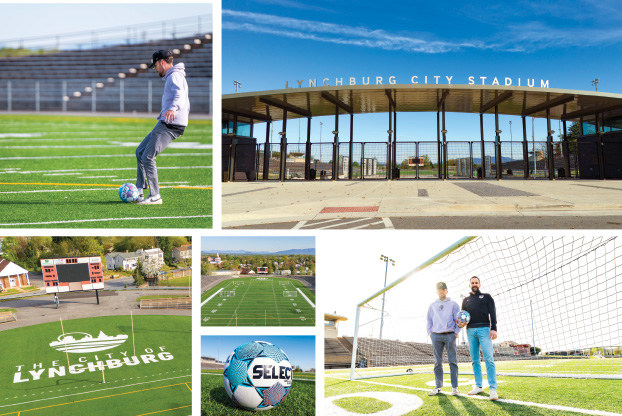
Soccer has deep roots in the Hill City, and this spring, those roots will bring forth new life when a local United Soccer League 2 (USL2) team debuts at City Stadium. 

By: Carrie Dungan / Photos By: Ashlee Glen

Hill City FC, a semi-professional soccer team, is the culmination of one local player’s dream to give back. 

Growing up in Lynchburg, Anthony Catalano first picked up soccer as a preschooler playing with the YMCA.

Those early days ignited a lifelong passion for the beautiful game. Catalano would go on to cultivate his skills on teams at Lynchburg United (now Central Virginia United), Holy Cross Catholic School, and E.C. Glass High School, before becoming a captain of the Division I soccer team at Elon University and a professional player with the Charleston Battery and Richmond United. 

Once his playing career was over, Catalano wanted to find a way to pour back into the sport that changed his life. He knew personally the difference professional and semi-professional leagues could make in a young player’s career, from exposure to higher levels of play to establishing community. 

So, in 2020, he founded the semi-pro team Apotheos FC in Atlanta, where he currently lives with his wife and three young children. 

default

“I felt like this was just a great way for me to contribute to the passion that I have and the game that gave me so much,” Catalano said. “I think it just builds so many relationships and connections from the players that you play with to the coaches that you’re coached by, and it’s just a network that opens up so many opportunities for players.”

During that time, Catalano’s love and commitment to his hometown remained strong as he and his family continued to invest in Lynchburg’s revitalization.

“I think it has everything that you could want, from a great place to raise a family to the outdoor access, to living in Central Virginia and being so closely connected to pretty much anything that you need to get to and experience,” he said. “I think it’s just a great community.” 

After finding success with Apotheos FC, and with soccer projected for its biggest growth period in U.S. history through the FIFA World Cup this summer, Catalano knew the time was right to introduce a USL2 team to his hometown. 

As a young player, he didn’t have a high-level soccer team to root for in Lynchburg, and Catalano wanted to provide that opportunity for the next generation. He partnered with Michael Hitchcock, an experienced soccer executive and owner/co-owner of nearly two dozen soccer clubs, to establish a new Lynchburg team that would serve as a source of community pride and inspire young athletes by providing a pathway to a semi-professional team. 

Like Catalano, Tyler Beck spent many of his days as a young player on Lynchburg soccer fields, including City Stadium. The current Liberty University goalkeeper always had dreams of playing professionally but never imagined it could start in his own town. 

“I knew it had the potential, but I just didn’t know that anybody could see Lynchburg for what it could be,” Beck said. “I think that the fact that somebody spotted that Lynchburg’s a perfect place for a USL2—it’s awesome.

It makes me happy because this is a really cool city.”

Earlier this year, Beck became Hill City FC’s first signed player—a milestone he will never forget. He said the honor gives him additional motivation in the team’s inaugural season as he plays on the same field where he stopped shots as a high schooler. 

“It’s exciting to know that this season has more of a weight on it in a sense that we’ve got something to prove,” Beck said. “We want to put ourselves on the map and let everybody know Lynchburg’s here and we’re not messing around.”

Beck is a cornerstone of Coach Lucas Paulini’s lineup, which consists of players from colleges and universities across the country. Paulini, who also serves as an assistant coach with Virginia Commonwealth University’s men’s team, echoed Catalano’s desire for Hill City FC players to serve as ambassadors. He said he is cultivating a team culture that focuses on commitment to the community and serving as a role model for younger players. 

“Although winning is very important, I don’t think anybody’s going to remember 10 years down the road how the team did, how many games they won, but they’re going to remember the way the team made them feel,” Paulini said.

Paulini and Catalano said one of the biggest advantages of having a USL2 team in Lynchburg is the exposure to higher-level opportunities for both the city and the players. USL recently introduced promotion and relegation, meaning teams can move up to a higher division. Many USL2 players are also drafted into Major League Soccer.

Lynchburg is now home to Virginia’s highest level of soccer competition south of Richmond with the addition of this new team. When Hill City FC players take to the turf in May, they’ll join a bustling local soccer scene of youth and college teams and another semi-pro club, creating a ladder in Lynchburg that can launch players to professional soccer careers.

Hill City FC can serve as the catalyst for those players to elevate their game.  

Opportunities with Hill City FC aren’t restricted to just players and coaches. Catalano said a crucial piece of the club lies in the support team, ranging from social media to branding and game day production. The club will remain active throughout the year, engaging with the community at events and working with interns from local colleges and universities to create the best possible environment for the next season, giving these interns invaluable experience working with a professional sports organization. 

Since its inception, the team has prioritized community engagement with locals voting to pick the team’s name, logo, mascot, and mascot’s name.

The club has also prioritized partnerships with local organizations and companies such as Collaborative Health Partners. Hill City FC creates a “shared experience” for locals from all ages and backgrounds to rally around, according to Lauren Bennett, vice president of culture and communications with Collaborative Health Partners.

“Whether it’s families attending matches, kids seeing local athletes compete at a high level, or community partners coming together to support a common goal, it builds a sense of pride and connection that extends beyond the field,” she said. “It gives Lynchburg something to celebrate together, and that kind of collective energy is incredibly powerful.”

Catalano said fans can expect an exciting game day environment, with pre-game tailgates and local vendors including Taco Jesus and Three Roads Brewing available inside the stadium. Some fans have already created a “12th man” supporter group called the River Watch to cheer on the city’s newest team. 

Beck said when he steps back onto that familiar field in May, he is looking forward to playing for something
bigger than himself as the team works together to connect both players and locals to the club. 

“I’m expecting it to be jumping,” he shared with a smile. 

Catalano concurred, reflecting on the roots he established as a high school player at City Stadium and the “electric” atmosphere he’s anticipating for home games there this season. 

What he’s looking forward to the most? That’s easy, he said. 

“The first goal that we capture, and seeing the stadium just light up,” Catalano said. “I think that’s going to be the moment.”  


Destination Sweet Briar 

Summa Cum Surprising!

By: Marisa A. Marsey / Photos Courtesy: Sweet Briar College / Photo Above Courtesy: Cole Pillow and Susan Sietz

Psst. Want the name of Central Virginia’s most appealing getaway you’ve never heard of? Sweet Briar College (SBC). OK, so you probably have heard of the esteemed women’s liberal arts and sciences college in Amherst County, hugging the base of the Blue Ridge Mountains, but bet you didn’t know that it should be on your “must-visit” list. Even if you’re not looking to matriculate.

Sweet Briar is in a sweet spot between Charlottesville and Lynchburg, and its on-campus Elston Inn—an inviting, 38-room, pet-friendly boutique hotel decorated with a light Early American touch—makes an excellent launching pad for touring the area’s rich history and natural splendor. But if
you’re into food and wine, you don’t necessarily have to venture beyond its rolling verdant hills.

That’s because sprawled across 2,840 acres, SBC grows its own vegetables, makes its own honey, and begets award-winning wines. As you drive along U.S. Route 29, you’ll espy sloping rows of cabernet franc and cabernet sauvignon vines. That’s the campus’s lower vineyard. There’s also an upper vineyard planted with chardonnay and merlot.

The focus on agriculture and sustainability at the 125-year-old college has mushroomed since devoted alumnae swooped in to save their alma mater from closure through a successful legal challenge and generous donations in 2015.

“We have an incredible campus landscape that has long been integrated with our curriculum, and with the addition of the 26,000-square-foot greenhouse, 20-hive apiary, and nearly 18 acres of grapes, we have enhanced the hands-on experiential learning opportunities for our students,”
said Dr. Lisa Powell, vice president of academic affairs and dean of the college.

In the vineyards, the syllabus covers everything from pruning and estimating yields to determining when grapes are ready to be picked. The wine is then made in a custom crush facility near Charlottesville founded by Michael Shaps, a leader in Virginia’s wine industry, where students help work the bottling line.

Apparently, someone’s been doing their homework. Sweet Briar College Farm’s debut independent vintage from the 2023 harvest shone at the Virginia Governor’s Cup competition in 2025. “Earned the Rosé,” a dry, merlot-based rosé named for the school’s tradition of bestowing a rose along with a diploma at graduation per its motto, “She who earns the rose may bear it,” captured gold, while “Leading the Way Chardonnay” and “Meadow Merlot” took home silver medals.

Over at the greenhouse, which features both soil and hydroponic growing spaces, an automated environmental control system, and pink grow lights (for an effect that upholds the school’s colors: pink and green), any of the college’s 400 students taking Ag Op (Agricultural Operations) courses get their own plot and the autonomy to cultivate whatever they choose.

The result is brilliantly colored, crinkly rainbow chard as gargantuan as if sprouted from magic beans, candy-sweet cherry tomatoes, plump eggplants, brisk lettuces like romaine, red gem, and Batavia, peppers spanning the alphabet from bell and habanero to shishito, cucumbers, a plethora of fragrant herbs, and more.

The bounty is sold to local restaurants, caterers, a retirement facility, a private school, and a distributor, and fills C.S.A. (Community Supported Agriculture) baskets for the community. The lion’s share (make that the Vixen’s share, since SBC’s mascot is a female fox) supplies Prothro, the airy student dining hall. If you stay at the Elston Inn (which serves complimentary continental breakfast including apple cake and SBC honey), you’re welcome to dine there, to savor the hyperlocal fruits of their labor, er, learning.

For a postprandial, apply yourself to 20 miles of trails that meander past two lakes and a boathouse, stables, a butterfly research garden, and a wildflower meadow. Stroll amidst the stunning Georgian Revival buildings, one of the largest collections of Ralph Adams Cram architecture in the nation.

“It’s really an all-season destination,” shared Brian Stanley, director of hospitality for the Elston Inn and its adjoining conference center which border a sanctuary of white oaks hundreds of years old. He catalogs the many campus events open to the public throughout the year such as a Van Der Meer adult tennis clinic, Richmond Symphony performances, equestrian competitions, and gourmet tastings.

Elston Inn guests are welcome to use the Fitness & Athletic Center (yes, there’s a men’s locker room—though you may prefer showering back in your room as it’s stocked with hair and skincare products showcasing SBC honey). Later, sink into a plush chair with a good book at Daisy’s Café, a cozy corner for specialty coffees, light lunches, and snacks.

There’s no whiff of institution here, especially at The Book Shop. It sells textbooks, certainly, but with fabulous fashions, home, and gift items, so much dripping in pink and green, this store deserves a Pulitzer. A Lilly Pulitzer.

If you can pull yourself away, visit Ankida Ridge, Lovingston, and Rebec, all celebrated wineries nearby, or venture into the quaint town of Amherst. Ruffles, Lace & Grace Boutique offers lovely women’s apparel, while Old Soul Vintage and Warehouse Antiques entice with shabby-chic and eclectic treasures.

You’ll find SBC wines at The Briar Patch, where three generations take pride in scratch-made American comfort food. Bonfire, known for its Southern-rooted, wood-fired cuisine, features the college’s wines, too. Chef-owner Brandon Castro Pruett established his locavore bona fides at the Biltmore, and sources SBC’s produce as well as beef from Tucker Family Farms, 5 miles away.

You might just run into Bill and Claudia Tucker there (such are the charms of small towns). They were named “Commercial Producers of the Year” in 2000 by the Beef Improvement Federation, and Bill will passionately describe how he calculates the marbling differential among his multiple breeds (though you might need a Ph.D. to comprehend his formula; just nod and savor that luscious burger).

Back at school, check out the Sweet Briar Museum and art galleries (by appointment) whose collections contain medieval manuscripts, 20th-century femmage (feminist collage), and works on paper by Rembrandt, Picasso, and Goya. Thankfully, there’s a full-service post office on campus, too; you’ll want to send postcards to all your friends saying, “Wish you were here!”  

134 Chapel Road, Sweet Briar, VA, 24595. 434-381-6100.
sbc.edu