The Expert: Robert W. Haley | The Estate & Elder Law Center of Central Virginia, PLLC Protecting Your Assets from Long-Term Care Costs
“You mean to tell me we don’t have to lose everything to pay for long-term care?” Families facing long-term care decisions often share the same concern: how to secure quality care without losing everything they’ve worked for. The reality is, without proper planning, long-term care costs can quickly drain a lifetime of savings. But there are often more options available than people realize. Here are three of the most common questions:
1. “How will we pay for long-term care?” The cost of long-term care can exceed $100,000 per year, making it one of the greatest financial risks families face. Many assume they must “spend down” their life savings, but that’s not always the case. With the right legal strategies, it may be possible to cover care costs while preserving a significant portion of your assets. Planning ahead offers the most protection, but even in crisis situations, options may still be available.
2. “When should we start planning to protect our assets?” The best time to plan is long before care is needed. Many asset protection strategies involve a five-year look-back period, meaning early planning can make a significant difference in what you’re able to preserve.
It’s also never too early to start. Even younger families benefit from having basic estate planning in place, ensuring children are protected and decisions are clearly outlined if something unexpected happens. These plans aren’t permanent; they can and should be updated over time as your financial situation and goals evolve.
3. “How do we protect our assets while covering these costs?” This is where experienced guidance makes the greatest difference. Without a plan, long-term care expenses can quickly deplete savings and put your home at risk. However, strategies such as asset protection trusts and other legal planning techniques may help preserve what you’ve worked so hard to build. The key is acting early and working with a professional who understands how to navigate these complex rules.
Planning ahead gives families more control, more options, and greater peace of mind. Even in urgent situations, there are often steps that can be taken to protect what matters most.
ABOUT THE EXPERT
Robert W. Haley is a Certified Elder Law Attorney (CELA) with nearly 30 years of experience helping families protect their assets from the high cost of long-term care. As managing attorney at The Estate & Elder Law Center of Central Virginia, PLLC, he focuses on asset protection strategies, elder law, and estate planning. Haley is the only attorney in the Lynchburg area to hold both the CELA designation and Certified Advanced Practitioner (CAP) credential, bringing a rare level of expertise to safeguarding what clients have worked a lifetime to build.
The Estate & Elder Law Center of Central Virginia, PLLC 810 Main Street, Lynchburg, VA 24504 (3rd Floor of the Truist Building) (855) 608-0177 VaElderLaw.com Location also in Danville, VA
Ask The Expert on Sports Medicine
Sponsored Content
The Expert: Ben Ferry, MD | Collaborative Health Sports Medicine
Do you have to be an athlete to see a sports medicine doctor? No. While we do work with local teams and athletes, you don’t need to be an athlete to benefit from sports medicine. We evaluate and treat a wide range of musculoskeletal conditions across all ages and activity levels. Your “sport” might be gardening, walking, or staying active day-to-day — if pain is impacting your quality of life, seeing a sports medicine doctor may help.
What kinds of everyday aches and pains are commonly treated? We treat both acute injuries and chronic conditions, with or without a clear cause. Common examples include knee pain from arthritis or meniscus issues, ankle sprains, and back pain from everyday activities like yardwork.
Additional conditions include: Patellar tendinitis (jumper’s knee), Rotator cuff tendinitis / shoulder bursitis, Hip tendinitis / bursitis, Osteoarthritis (hip, knee, shoulder), Hand and wrist conditions (trigger finger, carpal tunnel), Tennis elbow (lateral epicondylitis), and Concussions and post-concussion syndrome.
What treatment options are typically used? We focus first on non-surgical care. This may include home exercise programs, physical therapy, bracing, and medications. In some cases, injections such as cortisone or steroid can reduce pain and inflammation to support recovery. We may also use regenerative medicine treatments like prolotherapy or platelet-rich plasma (PRP) to stimulate healing.
Diagnostics may include X-rays, ultrasound, or MRI. X-ray and ultrasound are available in-office to complement a thorough physical exam. MRIs are used when more detailed imaging is needed or when symptoms are not improving with conservative care.
“I’m not injured, but exercise causes pain. Can you help?” Yes. We can identify the source of pain, assess movement patterns, and guide training adjustments. We also help patients safely return to activity while working toward their fitness goals and reducing injury risk.
“I think I have a concussion. Why see sports medicine?” Concussions, a form of mild traumatic brain injury, are commonly treated in sports medicine and can result from everyday incidents like falls or car accidents. Symptoms may include headache, dizziness, and difficulty concentrating.
While many concussions improve with time, guided care is important. We take an active recovery approach, helping patients return to work, school, and daily life safely and efficiently, moving beyond the outdated advice of complete rest.
If you develop worsening symptoms — such as repeated vomiting, severe headache, confusion, weakness, seizure, or trouble waking — call 911 or go to the nearest emergency room immediately.
ABOUT THE EXPERT
Originally from Orlando, Dr. Ferry completed his undergraduate training at the University of Notre Dame. He then attended the University of South Florida SELECT program for medical school, which included training in both Tampa, FL and Allentown, PA and additional work in leadership development and emotional intelligence. He completed his residency training in Charleston, SC at the Medical University of South Carolina, where he trained in both an academic and community setting. He completed a sports medicine fellowship at Duke University, where he had the opportunity to work with athletes of a variety of levels.
He provides sideline coverage for the Liberty University Division I and club sports athletics teams and enjoys working with students and residents through his role with the Liberty University College of Medicine.
Collaborative Health Sports Medicine 2321 Wards Road* Lynchburg, VA 24502 *Will be relocating to the Collaborative Healthplex in May of 2026 – 800 Graves Mill Road, Lynchburg, VA 24502
Ask The Expert on Alpha-Gal Syndrome / Allergy – Test Results
Sponsored Content
The Expert: Debi Farley | Acupuncture Works, LLC
What is Alpha-Gal? Alpha Gal is an allergy to the sugar molecule galactose-a-1,3-galactose that is found in all 4 limbed mammals, except humans and old world apes. All foods have proteins, fats, and carbs. Alpha Gal is the carb in the meat. This classifies Alpha Gal as a food allergy just like peanuts, shrimp, soy…
What is the test for Alpha Gal? A blood test checking for antibodies to alpha gal. This test is often listed as IGE Blood Panel for galactose-a-1, 3-galactose. This test will often list beef, pork, lamb and alpha gal with separate reference numbers and a total alpha gal number. You are considered positive for these antibodies if the number is above .10.
What does the test mean? Your body has built up an army to fight something that it thinks is harmful. These are the antibodies. It doesn’t mean the army is fighting.
The test doesn’t tell you when, how, what, and/or the severity of the reaction. It also doesn’t tell you that you can react below the number.
Many tests also include a paragraph explaining why you might have a false positive, false negative and that the test is not to be used for diagnosis and you should consult with your physician for a complete diagnosis.
The test is a guideline to be used to determine the cause of your symptoms.
Does SAAT change the bloodwork? No.
How Does SAAT (Soliman Auricular Allergy Treatment) treat the allergy? It basically turns off/blocks/desensitizes the body so that it doesn’t recognize the allergy being harmful. When you receive allergy shots, you are building up a tolerance that turns off/blocks/desensitizes the body from the allergen.
Does Acupuncture work the same way as SAAT for Alpha Gal? No, traditional acupuncture is working with the body’s immune system to reduce the allergy response. SAAT is desensitizing the body to a specific allergen.
ABOUT THE EXPERT
With over 20 years of experience as an Acupuncturist, Debi Farley is board certified by the National Certification Commission (NCCAOM), licensed by the State of Virginia as a Licensed Acupuncturist (L.Ac) and licensed in Florida as a Doctor of Oriental Medicine. She is certified in Chinese Auricular Therapy, the Soliman Auricular Allergy Treatment (SAAT) and Auricular Medicine, and is Lynchburg’s expert on treating the Alpha Gal food allergy as well as diseases the tick may give you.
It is Debi’s mission to partner with her patients to help them live their best life possible.
A Blue Ridge escape invites travelers to experience Virginia’s past—one quiet night at a time
Along the Blue Ridge Parkway, where morning fog rolls over the ridgelines and birdsong carries through the trees, history doesn’t feel distant. It feels close—something you can step into.
This summer, Love Ridge Mountain Lodging is inviting guests to do just that with Revolutionary Rest, a limited-time glamping experience designed to mark Virginia’s 250th anniversary. Available June through September, the stay offers something different from traditional commemorations: not a reenactment or a museum visit, but an overnight immersion in the spirit of the Revolutionary era.
“The spark was really a mix of geography and timing,” said owner Natasha Sienitsky. “With the 250th anniversary of the American Revolution approaching, we realized our location is uniquely historical—the Blue Ridge was effectively America’s first ‘frontier.’ We wanted to move away from dry history books and instead celebrate the spirit of that era: the sense of discovery and adventure.”
At its core, Revolutionary Rest is built on a simple idea: history is best understood when it’s felt.
“Lodging is what we do best,” Sienitsky said. “While a festival or a plaque is great, history feels much more real when you wake up to the same mountain fog and birdsong that a traveler would have experienced in 1776.”
That overnight element is what sets the experience apart. Guests aren’t just passing through—they’re settling in, slowing down, and engaging with the landscape over time. Evenings are meant for fireside conversation and stargazing; mornings begin with quiet, light, and the rhythm of the ridge.
Designed for Immersion—Without the Hardship
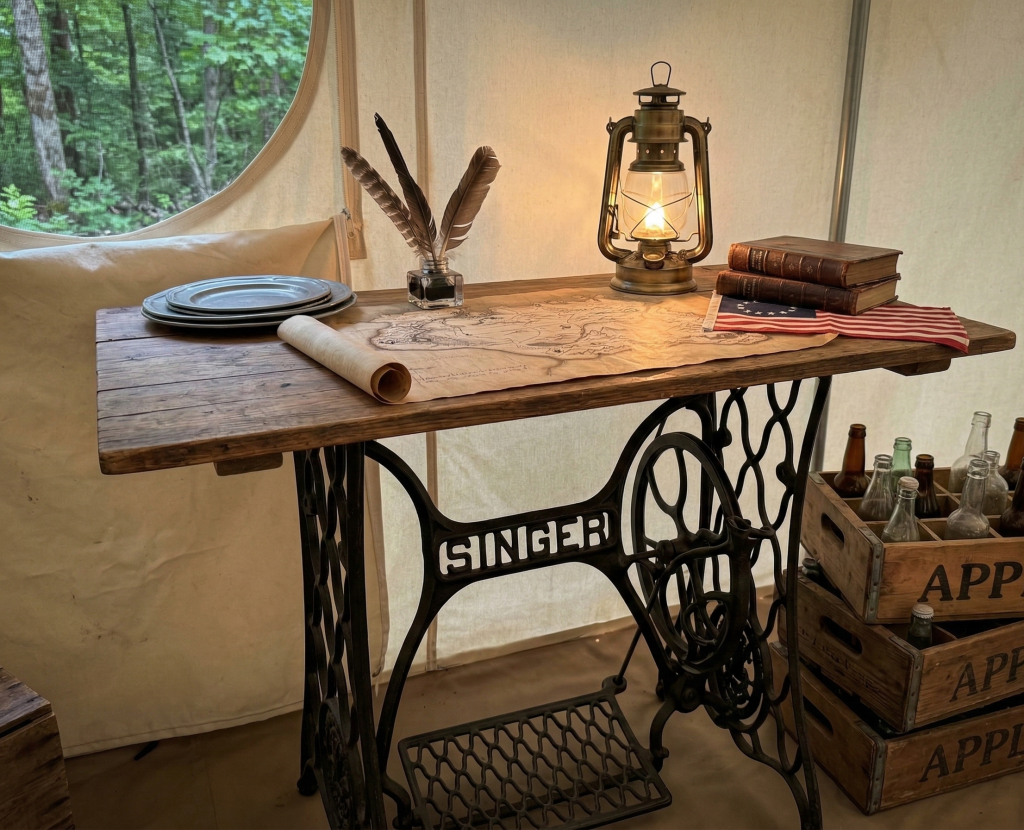
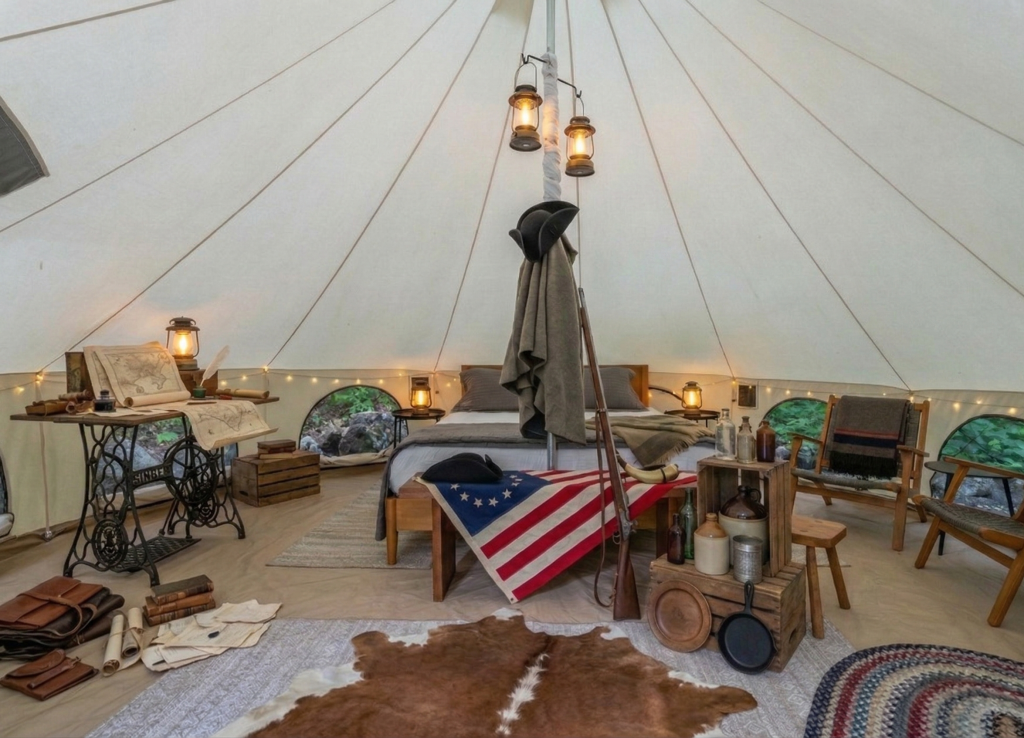
The experience centers on a colonial-inspired canvas tent, where every detail has been carefully considered to evoke the 18th century without sacrificing comfort.
“It’s about capturing the atmosphere of the 18th century without the hardships,” Sienitsky explained. “We use period-inspired textures—canvas, wood, and wrought iron—to set the stage. It’s authentic in its simplicity… but approachable because you still have a comfortable bed and high-quality linens.”
The design leans heavily on natural materials, with the tent itself acting as the primary storyteller. Lighting was a particularly important element: instead of harsh LEDs, guests are surrounded by a warm, lantern-like glow that shifts the mood as day turns to night.
Behind the scenes, modern comforts are quietly integrated. Charging ports and insulation are hidden within the design—present when needed, but never disruptive.
“We strove for ‘historical harmony,’” Sienitsky said. “You get the immersion of the past with the restorative sleep of the present.”
Writing the Moment
One of the most distinctive elements of the experience is the Letters from the Ridge kit—a small but meaningful invitation to disconnect.
Inside the tent, guests will find parchment, a quill-style pen, and a wax seal, encouraging them to write a letter during their stay. The idea draws directly from the realities of 18th-century life, when written correspondence was often the only connection between loved ones.
“We were inspired by the idea of ‘analog’ communication,” Sienitsky said. “We hope guests take away a physical memento of their stay, but more importantly, a memory of a quiet moment spent expressing their thoughts without a screen in sight.”
It’s a small gesture, but one that reinforces the broader goal: to create space for reflection in a setting that naturally invites it.
A Landscape That Tells the Story
The experience is as much about place as it is about design. Nelson County—long a corridor of movement and settlement—plays a central role in shaping the story of Revolutionary Rest.
“Nelson County has always been a place of passage,” Sienitsky says. “Whether it was the Monacan people or early settlers crossing the gaps, the terrain dictates the story.”
From the ridge, the landscape itself offers perspective. The steep terrain and expansive valley views hint at the challenges early travelers faced—and the resilience required to navigate them.
While many associate the Revolutionary War with coastal cities and battlefields, the Blue Ridge tells a different story.
“This was the backcountry that provided the timber, the iron, and food for the Continental Army,” Sienitsky noted.
Today, that same land continues to produce—this time in the form of vineyards, breweries, and artisanal goods that define Nelson County’s modern identity. Guests can explore nearby trails, visit historic sites like Monticello or Ash Lawn-Highland, or sample local flavors along Route 151 before returning to the ridge for the evening.
Who It’s For
Part of what makes Revolutionary Rest compelling is its broad appeal. It’s as well-suited for families seeking an educational weekend as it is for couples looking for a quiet, unconventional getaway.
“We see families wanting an educational but fun ‘unplugged’ weekend, couples looking for a unique, romantic atmosphere, and history enthusiasts who want to feel the era’s textures,” Sienitsky said.
It also offers an approachable entry point for first-time glampers—those curious about the outdoors but not quite ready to give up comfort.
Reconnecting With the Past—and Each Other
As Virginia prepares to mark 250 years of independence, experiences like Revolutionary Rest reflect a broader shift in how travelers engage with history. Less about observation, more about participation. Less about information, more about connection.
For Love Ridge, that connection is rooted in something simple: stepping away from the pace of modern life and into a quieter rhythm.
“We wanted to create a space where guests could step back in time to ‘revolt’ against their busy modern lives,” Sienitsky said.
Out on the ridge, under a wide stretch of sky, that feels not only possible—but natural.
The Living Music of the Hill City
Every time I go to a concert, I notice the feeling of anticipation that builds as you get closer to the start of the show.
By: Charlotte Farley / Photos By: Becky Lambert Photography, Courtesy Of Seven Hills Chamber
That moment feels especially charged when it happens inside the historic Lynchburg Museum, where people registered to vote where they got married, and where the fate of defendants on trial for murder hung in the air.
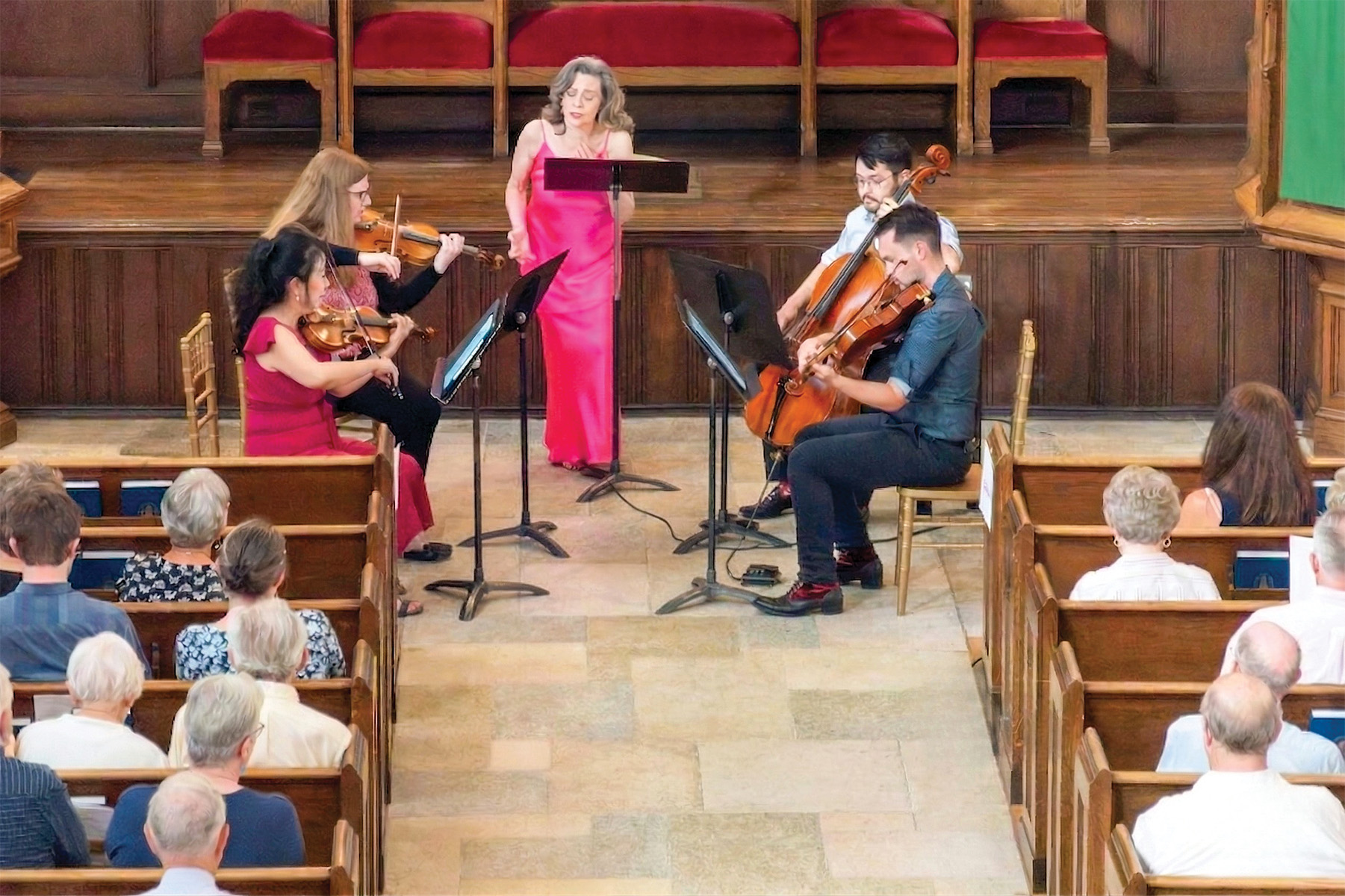
On most days, the building feels quiet, with pieces of its past on display: artifacts, photographs, and other fragments of lives that once moved through the same streets we do. But in August, the Seven Hills Chamber Music Festival will open its summer concert series inside the museum’s main hall: the former courtroom of an 1855 building designed for voices to carry.
Opening night will layer a Louis Armstrong tribute for trumpet and string quartet, Jessie Montgomery’s Strum, and newly unearthed music by Lynchburg-connected composers into a single evening.
“We have the concerts in what used to be the courtroom,” said museum director Ted Delaney. “We put the performers on the judge’s platform. And if you think about it, the building was designed for that—a group of people gathered to listen to something happening at the front of the room.”
He thinks about it a lot. “It lends itself so naturally to music,” he added. “Having live music performed in that space, to me, is one of the best uses of our very beautiful historic structure.”
Music that Lives in the Room
The Seven Hills Chamber Music Festival is heading into its sixth season this summer. If you’re a music aficionado, that might bring a spark of excitement. On the other hand, you might hear the words “chamber music” and immediately picture old-world royalty having a private concert, seeing it as formal and untouchable—and you won’t be alone there. (Back in the day, I thought chamber music meant Gregorian chanting monks!)
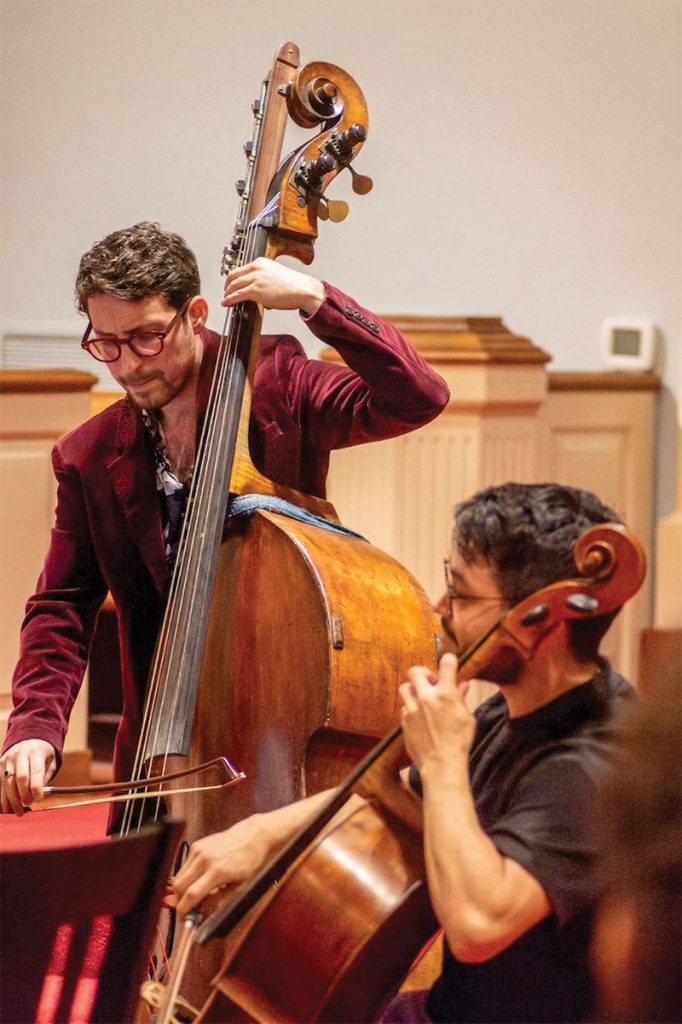
In reality, chamber music simply means a small group of musicians playing together—often one player to a part—in spaces where you can hear and see every detail. It’s music built for conversation: between instruments, between performers, and, if it’s working, between the people onstage and the people listening.
Seven Hills Chamber Music delivers a stunning Bach Brandenburg Concerto. And yes, there’s a sense of intimacy inherent to this genre with its smaller ensembles, closer quarters, and music that asks you to lean in. But Seven Hills is just as committed to contemporary work and performing (and sometimes commissioning) pieces by living composers. I still think about last season’s performance of Stir Crazy by Carlos Simon and the way the flute and violin captured, through sound, what so many of us were experiencing during that time.
More than a Venue: A Partner
For festival co-founder and Lynchburg native Dudley Raine IV, the museum concert started simply: try something different. “We had been playing in a lot of churches, and we wanted to find a space that felt a little less expected. The museum seemed like a great place to try it. We try to use Lynchburg’s history to build a theme,” Raine said, “to tell stories that might have been forgotten.”
Working with Delaney, “he found a whole trove of pieces in the archives and we found pieces and composers I never would have known about otherwise.”
That was three years ago. Since then, the relationship has grown from “a concert in a cool building” into a partnership with its own rhythm.
Festival co-founder Nicole Brancato helps shape the arc of each concert so the music, the space, and the stories all feel like they’re in conversation with one another. One past program drew on the story of Blind Billy and Tom Perkins, a local 19th-century fife-and-fiddle duo. To echo their sound inside the old courtroom, Seven Hills chose works for modern instruments carrying forward the rhythms that once floated over these same hills.
“It’s been really interesting to see the exhibits when we’re there and to start learning about Lynchburg’s history in a deeper way—especially the music,” he said.
Over time, that curiosity has started to shape the concerts themselves. That curiosity led to more research, more local names, and an expanded program, this year supported in part by a Virginia Humanities grant.
The Exchange of Energy
And then there’s the part no one can plan for: the energy the audience brings to the show.
“The last piece we did last year was [by] Kathleen O’Moore,” Raine said. “We gave the audience the music and had them sing along. It was incredible. Just this shared energy—everyone in the room participating. That was one of those moments where you think, ‘This is why we’re doing this.’”
For Delaney, that shift matters.
“Our mission is to connect people to local history,” he said. “But not everyone comes to a museum for that. Some people need a different way in.”
Music, it turns out, can be that way in.
“If someone comes for the performance, and that’s what brings them into this building, then they’re also encountering history,” he said.
A space once used for judgment, record, and decision-making is now holding something less about what was decided, and more about what can still be felt. “To have live music in that space,” Delaney said, “after everything that’s happened there—it’s really special.”
He hopes people walk back out onto Monument Terrace with a different sense of the city they just looked down on. “I want people to be so impressed that such beautiful music was composed here and that such talented composers lived here, walked the streets we do, lived in the same places we live, and work and go to school,” he said. “So many people discount Lynchburg and think, ‘Nobody of any note lived here, nothing important happened here,’ but I see the opposite. This concert is just one small way to have people see what we see.”
It helps that the music itself is anything but small. About half of the festival’s roster has roots in Virginia, and all of them bring serious credentials with them—players who have performed with major orchestras and ballet companies, on Broadway stages and at Carnegie Hall, with institutions like the Juilliard School and the New York Philharmonic, on HBO and Netflix, and at venues around the world. Some are voting members of the Recording Academy, some are Yamaha artists, and all are chamber musicians in the truest sense: collaborators who know how to listen as intensely as they play. When they gather in Lynchburg, the room is holding world-class artistry and hometown memory at the same time.
“I just couldn’t believe how good the music was,” Delaney said, remembering his first experience with this chamber music festival. “And thinking, this came from Lynchburg. Not from Europe or New York. From here.”
On August 12, the room will decide again what it’s going to be. And if you’re there, sitting in that brief, electric pause before the first note, you’ll feel it happen.
2026 LL Fun Guide
As summer settles in, there’s no better time to explore the rich history and vibrant arts scene that define our region.
From captivating theater performances to immersive historical sites, Lynchburg offers a unique blend of culture and storytelling that brings the past to life. Whether you’re rediscovering familiar landmarks or venturing to new experiences, this guide is your perfect companion for an unforgettable summer filled with adventure.
The Back Nine Golf
Experience The Back Nine Golf Simulator — where 30 minutes feels like 90 on the course. Enjoy pro-level analytics, lifelike simulation, and 24/7 access to perfect your swing anytime. Get faster results, elevate your game, and play like the pros. Whether driving, putting, or practicing, it’s golf without limits. Join today and improve year-round.
AquaZoo is home to the most unique experiences. You’ll meet a wide variety of animals from numerous different species. Discover fish, mammals, birds, reptiles, insects, and amphibians from around the planet! During this hands-on adventure, you’ll journey through the Amazon Rainforest, Caribbean, Mayan Jungle, and Pirate Island while touching and feeding the exotic residents!
Lynchburg Cooks for Change returns with a fresh, elevated twist on a beloved community tradition. This community event used to be called Lynchburg Cooks for Hunger Relief and was held at Phase 2. Come out on June 6th for an unforgettable evening filled with incredible food, refreshing drinks, live music, exciting raffles, and all kinds of auctions. Savor tastings form 221 Tap & Table, Benjamins, Charley’s and The Neighbors Place while enjoying a lively atmosphere featuring the Karlee Raye Band. This unique culinary experience brings the community together for a night of connection and purpose. Guests can also enter a raffle for a chance to win your choice of a 4-Wheeler or Jet-Ski from Polaris Motorsports which adds even more excitement to the event. But most important of all, every ticket purchased and dollar raised at this event supports the United Way of Central Virginia, our local Lynchburg Daily Bread, and our local Meals on Wheels of Greater Lynchburg making your night out both enjoyable and impactful.
History comes alive, onstage and outdoors at Thomas Jefferson’s Poplar Forest. Join us on the grounds of Thomas Jefferson’s private retreat for these special events this summer!
Don’t miss “The Day Is Past and Gone,” Teresa Harris’s poignant drama inspired by the lives of the enslaved people at Poplar Forest and their struggles to survive, with two performances only, on May 29 & 30 at 6:30 p.m.
Plus, join us for a historic salute to our nation’s 250th anniversary, with our “Independence Day Celebration” on July 4th, from 10:00 a.m. to 4:00 p.m., featuring colonial crafts and entertainment, children’s activities, and more!
Nestled on 2,847 stunning acres with old-growth forests, two lakes, and 22 miles of trails, Sweet Briar College is the perfect backdrop for an unforgettable summer experience.
Whether you’re a middle schooler dreaming of athletic glory, a high schooler ready to explore engineering, environmental science, or music, or an adult seeking creative renewal, Sweet Briar has something for you. Sharpen your skills in cross country, field hockey, lacrosse, rowing, tennis, or volleyball. Saddle up at our world-class 130-acre equestrian center. Unleash your creativity at our Summer Arts & Writing Retreat, featuring three-day workshops led by our own distinguished faculty.
With room to roam and inspiration around every corner, your best summer starts here.
Explore summer programs at Sweet Briar College today! For more information visit www.sbc.edu/summer-programs
Patrick Henry’s Red Hill
Celebrate America’s 250th Independence Day at Patrick Henry’s Red Hill in Brookneal with an unforgettable evening of history, family fun, and patriotic spirit! A direct descendant of Patrick Henry will take the stage to read the Declaration of Independence aloud and powerfully recite the famous “Give Me Liberty, or Give Me Death” speech. Enjoy a lively atmosphere with local vendors, including food trucks, plus enjoyable activities like historic building tours, Living History demonstrations, children’s games, face painting, and much more! Bring your family, friends, and lawn chairs as the night builds to a spectacular grand fireworks display lighting up the sky. Do not miss this exciting celebration of America’s founding. Still just $10/car! For more information, visit www.redhill.org or call us at 434-376-2044. Plan your visit today!
Check out www.redhill.org and head to our events page to see what’s coming up!
MasterWorks Festival
Experience extraordinary classical music this summer at the MasterWorks Festival, June 16–July 11. Enjoy over 30 free events featuring world-class performances by renowned faculty, guest artists, and outstanding young musicians. Highlights include inspiring orchestra concerts and faculty recitals every Friday and Saturday evening,as well as engaging guest artist masterclasses and recitals throughout the festival. This year’s guest artists include acclaimed soloists such as 2025 Van Cliburn Competition Finalist and MasterWorks alumnus Carter Johnson.
The MasterWorks Festival is a four-week celebration of excellence in the classical performing arts, bringing together exceptional artists and students in performances in an atmosphere of dynamic Christian faith. Come experience music of the highest caliber, free and open to the public.
How a Lynchburg teacher turned a simple spring tradition into curated outdoor experiences designed for connection, celebration, and ease.
By: Jeremy Angione | Photos Courtesy: HILL CITY PICNICS
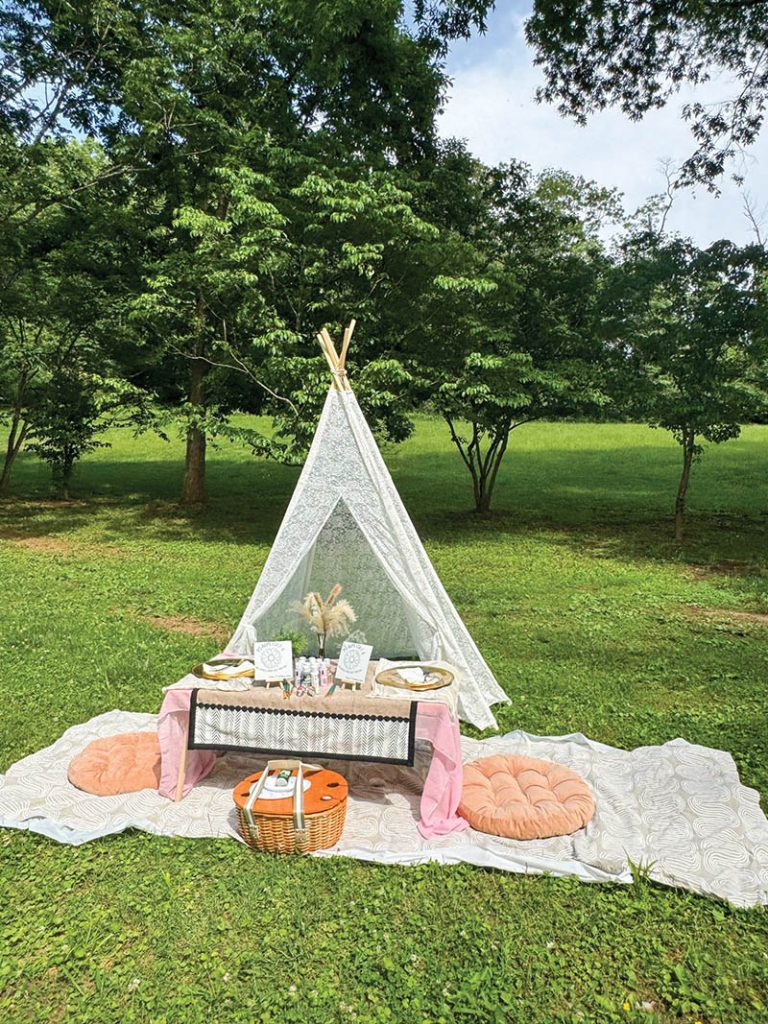
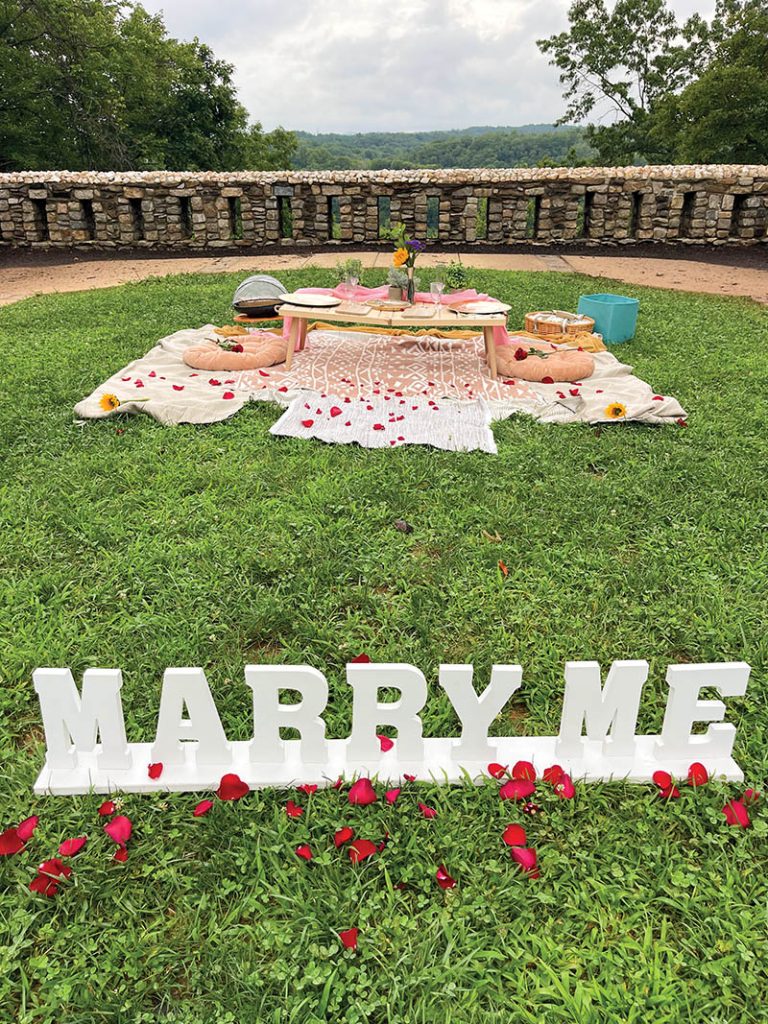
After a particularly harsh winter, Lynchburg residents are undoubtedly ready to get outside and enjoy spring—and there is probably nothing more representative of a serene spring outing than a picnic. Local schoolteacher Danielle Sarchet created Hill City Picnics to help Lynchburg residents enjoy luxury, curated picnics for any occasion.
“Hill City Picnics officially began during the pandemic as a way to help people continue creating special memories in a safe and creative way,” Sarchet said.
Aside from seeing a need for the services Hill City Picnics provides to Lynchburg, Sarchet claims the business is much more personal to her than just filling a gap in the local market. “It was also important to me to build something my son and I could share. When he was younger, he would ‘protect’ the picnic setups with his toy sword, and now he helps with setting up and breaking down when he can,” Sarchet shared.
Each Hill City Picnics setup is tailored to the moment—designed for connection and celebration,.
Creating fun, engaging, and ultimately memorable events for her first-grade students helped to inform how Sarchet curates unique experiences for her customers. She says the flexibility in her schedule allows her to still devote plenty of time to her business. Fortunately, spring and summer breaks allow her to tap into Hill City Picnics’ best seasons of operation.
“Being a single mother, that extra income is important, but I also genuinely love what I do. My passion for teaching carries over into my business. Additionally, I offer setups for children’s sleepovers and movie nights, where my fun, creative, elementary teacher personality really shines,” Sarchet said.
Hill City Picnics offers a variety of packages with different amenities and price points that cater to different budgets and occasions. Her most popular packages are the “Golden Hour Glow,” which Sarchet describes as a “romantic escape,” and the “Sweet and Simple,” which is the most affordable “chic pop-up” that Hill City Picnics offers.
One aspect of Hill City Picnics is the curation of high-quality products and amenities for each setup. Sarchet partners with local businesses and Airbnbs to help bring her vision to life.
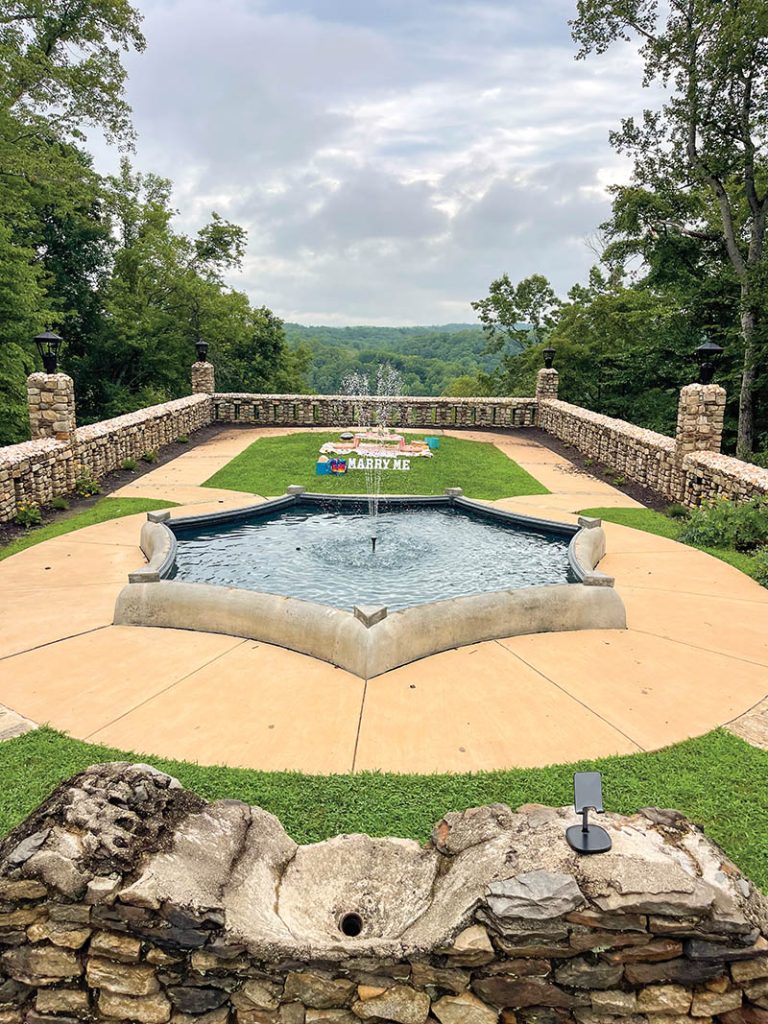
“No two setups are exactly the same. We work to tailor each experience to fit the occasion, whether it’s a romantic date, a celebration, or a gathering with friends and family,” Sarchet explained.
More than just fancy hors d’oeuvres, Hill City Picnics employs high-quality plating and personalized decor.
“I’m fortunate to collaborate with an amazing team of talented women who each bring their own expertise to the experience, including charcuterie specialists, balloon stylists, and retreat hosts,” Sarchet said.
Set against one of Lynchburg’s scenic overlooks, Hill City Picnics transforms familiar outdoor spaces into intimate, elevated experiences where thoughtful details and natural beauty meet.
Enjoying a Hill City Picnic is as simple as registering for your desired picnic package and just showing up, according to Sarchet, who aims to make the process as stress-free as possible.
“Hill City Picnics has been growing organically over the past few years, and the response from the community has been very positive. Everyone who has heard about the concept and booked a picnic has loved the experience and truly enjoyed the service,” Sarchet claimed.
To peruse the different packages and events and book a picnic, you can visit Hill City Picnics’ website: hillcitypicnics.carrd.co.
Welcome Hill City FC
Soccer has deep roots in the Hill City, and this spring, those roots will bring forth new life when a local United Soccer League 2 (USL2) team debuts at City Stadium.
By: Carrie Dungan / Photos By: Ashlee Glen
Hill City FC, a semi-professional soccer team, is the culmination of one local player’s dream to give back.
Growing up in Lynchburg, Anthony Catalano first picked up soccer as a preschooler playing with the YMCA.
Those early days ignited a lifelong passion for the beautiful game. Catalano would go on to cultivate his skills on teams at Lynchburg United (now Central Virginia United), Holy Cross Catholic School, and E.C. Glass High School, before becoming a captain of the Division I soccer team at Elon University and a professional player with the Charleston Battery and Richmond United.
Once his playing career was over, Catalano wanted to find a way to pour back into the sport that changed his life. He knew personally the difference professional and semi-professional leagues could make in a young player’s career, from exposure to higher levels of play to establishing community.
So, in 2020, he founded the semi-pro team Apotheos FC in Atlanta, where he currently lives with his wife and three young children.
default
“I felt like this was just a great way for me to contribute to the passion that I have and the game that gave me so much,” Catalano said. “I think it just builds so many relationships and connections from the players that you play with to the coaches that you’re coached by, and it’s just a network that opens up so many opportunities for players.”
During that time, Catalano’s love and commitment to his hometown remained strong as he and his family continued to invest in Lynchburg’s revitalization.
“I think it has everything that you could want, from a great place to raise a family to the outdoor access, to living in Central Virginia and being so closely connected to pretty much anything that you need to get to and experience,” he said. “I think it’s just a great community.”
After finding success with Apotheos FC, and with soccer projected for its biggest growth period in U.S. history through the FIFA World Cup this summer, Catalano knew the time was right to introduce a USL2 team to his hometown.
As a young player, he didn’t have a high-level soccer team to root for in Lynchburg, and Catalano wanted to provide that opportunity for the next generation. He partnered with Michael Hitchcock, an experienced soccer executive and owner/co-owner of nearly two dozen soccer clubs, to establish a new Lynchburg team that would serve as a source of community pride and inspire young athletes by providing a pathway to a semi-professional team.
Like Catalano, Tyler Beck spent many of his days as a young player on Lynchburg soccer fields, including City Stadium. The current Liberty University goalkeeper always had dreams of playing professionally but never imagined it could start in his own town.
“I knew it had the potential, but I just didn’t know that anybody could see Lynchburg for what it could be,” Beck said. “I think that the fact that somebody spotted that Lynchburg’s a perfect place for a USL2—it’s awesome.
It makes me happy because this is a really cool city.”
Earlier this year, Beck became Hill City FC’s first signed player—a milestone he will never forget. He said the honor gives him additional motivation in the team’s inaugural season as he plays on the same field where he stopped shots as a high schooler.
“It’s exciting to know that this season has more of a weight on it in a sense that we’ve got something to prove,” Beck said. “We want to put ourselves on the map and let everybody know Lynchburg’s here and we’re not messing around.”
Beck is a cornerstone of Coach Lucas Paulini’s lineup, which consists of players from colleges and universities across the country. Paulini, who also serves as an assistant coach with Virginia Commonwealth University’s men’s team, echoed Catalano’s desire for Hill City FC players to serve as ambassadors. He said he is cultivating a team culture that focuses on commitment to the community and serving as a role model for younger players.
“Although winning is very important, I don’t think anybody’s going to remember 10 years down the road how the team did, how many games they won, but they’re going to remember the way the team made them feel,” Paulini said.
Paulini and Catalano said one of the biggest advantages of having a USL2 team in Lynchburg is the exposure to higher-level opportunities for both the city and the players. USL recently introduced promotion and relegation, meaning teams can move up to a higher division. Many USL2 players are also drafted into Major League Soccer.
Lynchburg is now home to Virginia’s highest level of soccer competition south of Richmond with the addition of this new team. When Hill City FC players take to the turf in May, they’ll join a bustling local soccer scene of youth and college teams and another semi-pro club, creating a ladder in Lynchburg that can launch players to professional soccer careers.
Hill City FC can serve as the catalyst for those players to elevate their game.
Opportunities with Hill City FC aren’t restricted to just players and coaches. Catalano said a crucial piece of the club lies in the support team, ranging from social media to branding and game day production. The club will remain active throughout the year, engaging with the community at events and working with interns from local colleges and universities to create the best possible environment for the next season, giving these interns invaluable experience working with a professional sports organization.
Since its inception, the team has prioritized community engagement with locals voting to pick the team’s name, logo, mascot, and mascot’s name.
The club has also prioritized partnerships with local organizations and companies such as Collaborative Health Partners. Hill City FC creates a “shared experience” for locals from all ages and backgrounds to rally around, according to Lauren Bennett, vice president of culture and communications with Collaborative Health Partners.
“Whether it’s families attending matches, kids seeing local athletes compete at a high level, or community partners coming together to support a common goal, it builds a sense of pride and connection that extends beyond the field,” she said. “It gives Lynchburg something to celebrate together, and that kind of collective energy is incredibly powerful.”
Catalano said fans can expect an exciting game day environment, with pre-game tailgates and local vendors including Taco Jesus and Three Roads Brewing available inside the stadium. Some fans have already created a “12th man” supporter group called the River Watch to cheer on the city’s newest team.
Beck said when he steps back onto that familiar field in May, he is looking forward to playing for something bigger than himself as the team works together to connect both players and locals to the club.
“I’m expecting it to be jumping,” he shared with a smile.
Catalano concurred, reflecting on the roots he established as a high school player at City Stadium and the “electric” atmosphere he’s anticipating for home games there this season.
What he’s looking forward to the most? That’s easy, he said.
“The first goal that we capture, and seeing the stadium just light up,” Catalano said. “I think that’s going to be the moment.”
Destination Sweet Briar
Summa Cum Surprising!
By: Marisa A. Marsey / Photos Courtesy: Sweet Briar College / Photo Above Courtesy: Cole Pillow and Susan Sietz
Psst. Want the name of Central Virginia’s most appealing getaway you’ve never heard of? Sweet Briar College (SBC). OK, so you probably have heard of the esteemed women’s liberal arts and sciences college in Amherst County, hugging the base of the Blue Ridge Mountains, but bet you didn’t know that it should be on your “must-visit” list. Even if you’re not looking to matriculate.
Sweet Briar is in a sweet spot between Charlottesville and Lynchburg, and its on-campus Elston Inn—an inviting, 38-room, pet-friendly boutique hotel decorated with a light Early American touch—makes an excellent launching pad for touring the area’s rich history and natural splendor. But if you’re into food and wine, you don’t necessarily have to venture beyond its rolling verdant hills.
That’s because sprawled across 2,840 acres, SBC grows its own vegetables, makes its own honey, and begets award-winning wines. As you drive along U.S. Route 29, you’ll espy sloping rows of cabernet franc and cabernet sauvignon vines. That’s the campus’s lower vineyard. There’s also an upper vineyard planted with chardonnay and merlot.
The focus on agriculture and sustainability at the 125-year-old college has mushroomed since devoted alumnae swooped in to save their alma mater from closure through a successful legal challenge and generous donations in 2015.
“We have an incredible campus landscape that has long been integrated with our curriculum, and with the addition of the 26,000-square-foot greenhouse, 20-hive apiary, and nearly 18 acres of grapes, we have enhanced the hands-on experiential learning opportunities for our students,” said Dr. Lisa Powell, vice president of academic affairs and dean of the college.
In the vineyards, the syllabus covers everything from pruning and estimating yields to determining when grapes are ready to be picked. The wine is then made in a custom crush facility near Charlottesville founded by Michael Shaps, a leader in Virginia’s wine industry, where students help work the bottling line.
Apparently, someone’s been doing their homework. Sweet Briar College Farm’s debut independent vintage from the 2023 harvest shone at the Virginia Governor’s Cup competition in 2025. “Earned the Rosé,” a dry, merlot-based rosé named for the school’s tradition of bestowing a rose along with a diploma at graduation per its motto, “She who earns the rose may bear it,” captured gold, while “Leading the Way Chardonnay” and “Meadow Merlot” took home silver medals.
Over at the greenhouse, which features both soil and hydroponic growing spaces, an automated environmental control system, and pink grow lights (for an effect that upholds the school’s colors: pink and green), any of the college’s 400 students taking Ag Op (Agricultural Operations) courses get their own plot and the autonomy to cultivate whatever they choose.
The result is brilliantly colored, crinkly rainbow chard as gargantuan as if sprouted from magic beans, candy-sweet cherry tomatoes, plump eggplants, brisk lettuces like romaine, red gem, and Batavia, peppers spanning the alphabet from bell and habanero to shishito, cucumbers, a plethora of fragrant herbs, and more.
The bounty is sold to local restaurants, caterers, a retirement facility, a private school, and a distributor, and fills C.S.A. (Community Supported Agriculture) baskets for the community. The lion’s share (make that the Vixen’s share, since SBC’s mascot is a female fox) supplies Prothro, the airy student dining hall. If you stay at the Elston Inn (which serves complimentary continental breakfast including apple cake and SBC honey), you’re welcome to dine there, to savor the hyperlocal fruits of their labor, er, learning.
For a postprandial, apply yourself to 20 miles of trails that meander past two lakes and a boathouse, stables, a butterfly research garden, and a wildflower meadow. Stroll amidst the stunning Georgian Revival buildings, one of the largest collections of Ralph Adams Cram architecture in the nation.
“It’s really an all-season destination,” shared Brian Stanley, director of hospitality for the Elston Inn and its adjoining conference center which border a sanctuary of white oaks hundreds of years old. He catalogs the many campus events open to the public throughout the year such as a Van Der Meer adult tennis clinic, Richmond Symphony performances, equestrian competitions, and gourmet tastings.
Elston Inn guests are welcome to use the Fitness & Athletic Center (yes, there’s a men’s locker room—though you may prefer showering back in your room as it’s stocked with hair and skincare products showcasing SBC honey). Later, sink into a plush chair with a good book at Daisy’s Café, a cozy corner for specialty coffees, light lunches, and snacks.
There’s no whiff of institution here, especially at The Book Shop. It sells textbooks, certainly, but with fabulous fashions, home, and gift items, so much dripping in pink and green, this store deserves a Pulitzer. A Lilly Pulitzer.
If you can pull yourself away, visit Ankida Ridge, Lovingston, and Rebec, all celebrated wineries nearby, or venture into the quaint town of Amherst. Ruffles, Lace & Grace Boutique offers lovely women’s apparel, while Old Soul Vintage and Warehouse Antiques entice with shabby-chic and eclectic treasures.
You’ll find SBC wines at The Briar Patch, where three generations take pride in scratch-made American comfort food. Bonfire, known for its Southern-rooted, wood-fired cuisine, features the college’s wines, too. Chef-owner Brandon Castro Pruett established his locavore bona fides at the Biltmore, and sources SBC’s produce as well as beef from Tucker Family Farms, 5 miles away.
You might just run into Bill and Claudia Tucker there (such are the charms of small towns). They were named “Commercial Producers of the Year” in 2000 by the Beef Improvement Federation, and Bill will passionately describe how he calculates the marbling differential among his multiple breeds (though you might need a Ph.D. to comprehend his formula; just nod and savor that luscious burger).
Back at school, check out the Sweet Briar Museum and art galleries (by appointment) whose collections contain medieval manuscripts, 20th-century femmage (feminist collage), and works on paper by Rembrandt, Picasso, and Goya. Thankfully, there’s a full-service post office on campus, too; you’ll want to send postcards to all your friends saying, “Wish you were here!”
134 Chapel Road, Sweet Briar, VA, 24595. 434-381-6100. sbc.edu
Game-Day, the Easy Way
Three simple snacks for rec league mornings, pickleball afternoons, and long Saturdays at the field
There’s something about late spring in Central Virginia that feels like perpetual motion. Saturdays fill with rec league soccer games. Pickleball paddles echo across neighborhood courts. Baseball caps collect dust and sunshine in equal measure.
And somewhere between loading folding chairs into the trunk and remembering sunscreen, someone inevitably asks: “Did we bring snacks?”
Game-day food doesn’t have to mean drive-thru stops or neon sports drinks. With just a little prep ahead of time, you can pack options that are energizing, balanced, and easy to eat on the sidelines. These three recipes are simple enough to make before heading out the door—and sturdy enough to survive a morning in the cooler.
No-Bake Energy Bites
A grab-and-go bite that travels well and satisfies between plays
These come together in one bowl and require no baking—ideal for busy mornings. They offer a balanced mix of carbs, protein, and healthy fats to keep both kids and adults fueled.
Ingredients 1 cup old-fashioned oats 1/2 cup natural peanut or almond butter 1/3 cup honey 1/4 cup ground flaxseed (optional) 1/4 cup mini dark chocolate chips 1/2 tsp vanilla extract Pinch of salt
Directions 1. Stir all ingredients together in a medium bowl until fully combined. 2. Chill for 15–20 minutes to firm up. 3. Roll into 1-inch balls. 4. Store in the refrigerator for up to one week—or pack in a chilled container for game day.
Tip Swap chocolate chips for dxried cranberries or shredded coconut if you prefer a fruit-forward bite.
Citrus Electrolyte Mocktail
A naturally refreshing alternative to sports drinks
Skip artificial colors and excess sugar. This simple mix replenishes fluids and electrolytes without overpowering sweetness.
Ingredients 2 cups cold water (still or sparkling) Juice of 1/2 lemon Juice of 1/2 lime 1–2 tsp local honey Small pinch of sea salt Ice
Directions 1. Stir honey into water until dissolved. 2. Add citrus juice and a pinch of sea salt. 3. Pour over ice and store in an insulated bottle.
Optional Add mint, sliced strawberries or cucumber for asubtle seasonal twist.
Protein-Packed Yogurt Bowl (Photo at top of article)
A sideline breakfast that feels like a treat
This is the kind of snack that works just as well at 8 a.m. soccer as it does at a mid-afternoon pickleball break.
Ingredients 1 cup plain Greek yogurt 1/4 cup granola 1/4 cup fresh berries 1 tbsp nut butter or chopped nuts Drizzle of honey
Directions Layer ingredients in a jar or reusable container. Keep chilled until ready to eat.
Make It Toddler Friendly Serve components separately or reduce granola for easier chewing.