An Apple a Day

Incorporating Fall’s Favorite Fruit into Four Distinct Courses

Moving from one season to the next always necessitates adjustments—wardrobe changes, home and car tune-ups, and major schedule shifts—but the transition from summer to autumn tends to feel the least severe and most refreshing. As the cooler fall air rolls in, it also ushers in an arguably unmatched sense of possibility that gently encourages you to leave behind what no longer serves you and to start anew.

That comfortingly familiar early-fall feeling that still manages to feel bright, crisp, and new each year is perfectly represented by fall’s signature fruit: the apple. Symbolic in a myriad ways and beloved for their versatility in form and function, wide range of flavors, and many health benefits, apples have something to offer for every course. Read on for a full day’s worth of apple-centered recipes to celebrate fall’s favorite fruit and a season of new beginnings.

Breakfast

Apple Cinnamon Overnight Oats (photo above)

Nutritious, convenient, and endlessly customizable, overnight oats have become an incredibly popular breakfast option. To infuse your oats with one of autumn’s favorite flavor pairings—tart apple and warm cinnamon—try this simple, on-the-go recipe.

Ingredients (for 1 serving):
1/2 cup old-fashioned rolled oats
1/2 cup milk (dairy or plant-based)
1/2 apple, diced or grated
1/2 tsp ground cinnamon
Pinch of salt
1/4 cup plain or vanilla yogurt (optional, for added creaminess)
1 tsp maple syrup or honey (optional)
1 tsp chia seeds (optional, for a thicker texture)
1/4 tsp vanilla extract (optional)

Directions:
1. In a wide-mouth glass jar (or similar container), combine the oats, milk, cinnamon, salt, and whichever of the following optional ingredients you choose to use: the yogurt, maple syrup or honey, chia seeds, and vanilla extract.
2. Stir in the diced or grated apple.
3. Cover and refrigerate for at least 4 hours, preferably overnight.
4. Stir before eating. Add more milk as needed to reduce thickness, and customize to your liking by topping your oats with thin apple slices, extra cinnamon, and/or a dollop of your favorite type of nut butter.

Lunch

Winter salad with apple, red onion and pecans with vinaigrette dressing

Apple Cranberry Pecan Salad with Feta Cheese

As temperatures begin to drop, harvest salad and hearty soup pairings prepare for their time to shine. This light but flavorful autumn salad marries complementary tastes and textures to provide the perfect base for grilled chicken and/or the perfect pairing for a smooth and savory soup.

Ingredients (for 4 servings):
Salad:
5–6 cups spring mix, chopped romaine, or baby spinach
1 apple, thinly sliced (Honeycrisp and Granny Smith apples are best)
1/2 cup dried cranberries
1/2 cup pecans, roughly chopped
1/2 cup crumbled feta cheese
1/4 red onion, thinly sliced (optional)

Vinaigrette:
4 tbsp olive oil
2 tbsp apple cider vinegar
1 tbsp honey or maple syrup
1 tsp Dijon mustard
Pinch of salt and black pepper

Directions:
1. Combine all salad ingredients in a large serving bowl.
2. In a separate smaller bowl, whisk together all vinaigrette ingredients.
3. Just before serving, pour the vinaigrette over the salad.
4. Toss salad and vinaigrette gently and serve immediately.

Spicy baked pork chop with green apples, onion and rosemary close-up in a baking dish on a table. horizontal top view from above

Dinner

Pork Chops with Green Apples, Onions & Rosemary

Tart-sweet and savory flavors, along with rustic seasoning, combine beautifully in this classic autumn dinner recipe. This balanced entree is hearty and comforting without being heavy.

Ingredients (for 4 servings):
4 boneless or bone-in pork chops (about 1 in. thick each)
1–2 green apples, thinly sliced
1 medium red or yellow onion, thinly sliced
2 tbsp olive oil
1–2 tbsp fresh rosemary, chopped
1/2 cup chicken broth or apple cider
Salt and black pepper
1–2 cloves garlic, minced
1 tbsp Dijon mustard (optional)
1 tsp honey (optional)

Directions:
1. Preheat oven to 400°F.
2. Pat pork chops dry and season generously with salt, pepper, and half the rosemary.
3. Heat half the olive oil in a large skillet over medium-high heat. Sear each pork chop for approximately 3–4 minutes per side until nicely browned. Transfer chops to a plate.
4. In the same large skillet, pour in the remaining oil and then add apple and onion slices. Cook for 5–7 minutes, stirring occasionally, until softened and lightly browned. Transfer cooked apple and onion slices to a plate.
5. Make a pan sauce by adding minced garlic and remaining rosemary to the skillet, cooking for 30 seconds, and then pouring in the chicken broth or apple cider while scraping up the browned bits to thicken. Stir in Dijon mustard and honey if using.
6. In a greased baking dish or on a lightly-oiled sheet pan, roast the pork chops in the oven until they reach 145°F internally. This will take about 8–10 minutes.
7. Spoon the apples and onions over the pork chops and drizzle with the pan sauce before serving. Consider serving mashed or roasted potatoes or sweet potatoes on the side.

Cocktail

apple sangria made with fresh fruit and red wine

Spiced Apple Cider Sangria

This stunning but simple cocktail balances warm spiciness and cool crispness, encapsulating those early fall days before summer fully fades.

Ingredients (for 6 servings):
1 750 mL bottle wine (a dry red like
Pinot Noir or a dry white like
Pinot Grigio is best)
2 cups apple cider
1/2 cup orange juice
1/2 cup brandy
3 cinnamon sticks
2 apples, thinly sliced
1 orange, sliced
Ice
3 tbsp sugar (optional)
1 tsp cinnamon (optional)

Directions:
1. Place the apple and orange slices in alarge pitcher.
2. Add the wine, apple cider, orange juice, brandy, and cinnamon sticks to the pitcher and stir.
3. Place the pitcher in the refrigerator for at least 3 hours, preferably overnight.
4. For added fall flair, consider adding cinnamon sugar rims to your glasses before serving the sangria. Mix the cinnamon and sugar together and moisten glass rims with water, orange juice, or an orange wedge before dipping them into mixture.
5. Add ice to glasses, pour in sangria, and enjoy!




Farm-Fresh & Friendly

Rivermont Farmers Market Offers Organic Products and Opportunities for Connection

By: Olivia Carter | Photos By: Ashlee Glen

When Brian Ray first floated the idea of creating a neighborhood farmers market in Rivermont, he wasn’t necessarily planning to be the one running it.
Today, that idea is known as the Rivermont Farmers Market, which brings together local farmers, bakers, artisans, food vendors, and neighbors on Wednesday evenings at Riverside Park.

And though it’s a place to purchase food each week, it’s also become a tradition for area families.

Ray, owner of Slowpoke Sourdough, said it all started when he noticed there wasn’t a farmers market serving the Rivermont neighborhood.

“We started floating around the idea of a Wednesday market in Rivermont,” he said.

“We really wanted this one to be focused around farms and food and community—similar to the Forest Farmers Market.”

Finding the right location was the first challenge. Ray approached First Christian Church after seeing its large parking lot and central location along Rivermont Avenue.

Rivermont Farmers Market

“The church community was really on board with the market,” he said. “They were huge supporters.”

The inaugural market opened there on May 6, but the celebration was short-lived.

The following day, organizers received a call from zoning after someone filed a complaint about the event.

Rather than create uncertainty for vendors, Ray and his team paused operations while they searched for another location.

“We knew we wanted to stay in Rivermont,” he said. “We’re not trying to compete with other farmers markets. We wanted it to be really community-oriented. It’s where we live.”

That search led them to Riverside Park, where the market resumed on May 27. Although the move meant losing some of the visibility that came from being directly on Rivermont Avenue, it also created new opportunities.

“The advantage to First Christian was that we were right there on the road,” Ray said. “With Riverside Park, we’re positioned around the swing set, there’s a caterpillar sculpture the kids love to climb on, and tons of families are coming out. The vibes are the same.”

The biggest challenge now is making sure people know it’s there.

Rivermont Farmers Market

“We hear from people every week, ‘I didn’t even know this was here,’” Ray said. “‘My friend or my neighbor told me about it.’ Word of mouth is huge.”

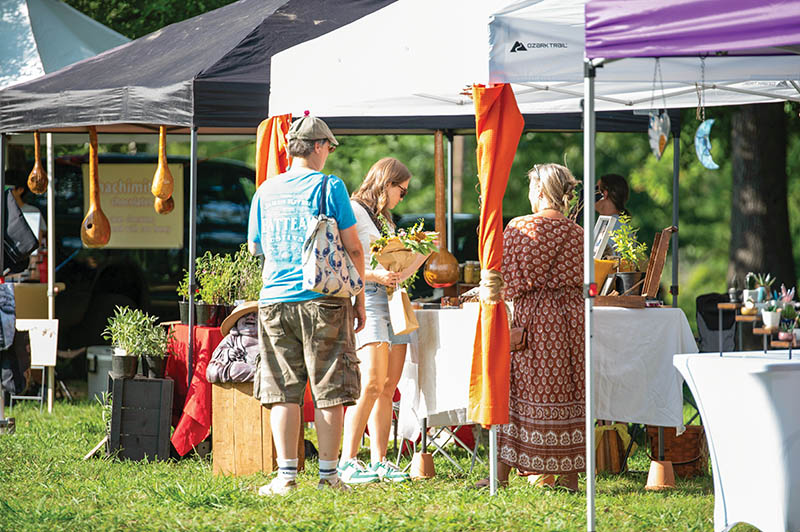
Visitors who make the trip will find a market centered on locally-grown food and locally-made products. Vendors include Great Day Gardens from Forest, SoulShine Farms from Bedford, and Restoration Acres from Big Island, along with bakers, beekeepers, potters, artists, and prepared food vendors.

Ray said one of the market’s priorities has been creating a true producer-focused experience.

“You can’t really have a farmers market without farmers,” he said.

Current offerings include fresh vegetables, fruit, eggs, honey, baked goods, meats, and artisan products. Restoration Acres also operates a convenient farm truck where customers can place orders online and pick them up through a drive-through service during the market.

New vendors continue to add variety. One chocolatier travels to Ecuador to source cacao beans before sweetening his chocolate with raw honey. A local apiary offers honey tastings that allow visitors to sample the distinct flavors created by bees pollinating different plants. Food options range from barbecue to smash burgers.

As the market grows, Ray hopes to continue filling gaps by adding more local beef producers and eventually additional dairy vendors.

“It’s not even just about the food,” he said. “Obviously what we put in our bodies contributes to our well-being more than a lot of people know.”

Most of the participating farms use organic growing practices, even if they aren’t USDA-certified organic.

Rivermont Farmers Market

“When you buy chicken from Restoration Acres, it’s not being pumped full of antibiotics,” Ray said. “You’re going to get a cleaner product when you come to the farmers market.”

Supporting local agriculture also keeps dollars circulating within the community.

“When you’re shopping at a farmers market, you’re supporting a local economy,” he said. “I know all these people now. We’ve created relationships and friendships. I don’t mind spending maybe a dollar or two more because I want to support them.”

But perhaps the greatest benefit is something that’s increasingly difficult to find: genuine face-to-face connection.

At a grocery store, shoppers often rush through aisles, use self-checkout, and head home. At the farmers market, conversations happen naturally.


“You’re actually interacting with the people who are raising the chickens, growing the vegetables, your beekeepers, your bakers,” Ray said. “You can learn so much and you can also just get to know them.”

The atmosphere encourages visitors to slow down rather than hurry through another errand.

“Sometimes going to the grocery store feels like a drag,” Ray said. “Whereas with the market, it’s just fun.”

That slower pace has become even more meaningful in the years following the COVID-19 pandemic.

“I think people are starting to figure this out,” Ray said. “You hear a lot about the mental health epidemic and isolation, especially among younger people. Screens became more central to our lives.”

Rivermont Farmers Market

The market offers a simple antidote.

“You’re outside. You’re getting sunlight. You’re breathing fresh air. It’s a really good opportunity to disconnect,” Ray said.

“I have people tell me, ‘I saw my neighbor I haven’t seen in so long,’ and they caught up. You don’t really see people sitting around on their phones.”

Ray added that community gathering spaces like farmers markets have become increasingly important as traditional opportunities for connection have declined.

“Not everybody goes to church,” he said. “The market is a place where everybody can come together. Everybody’s got different beliefs, different backgrounds, and different ideas. That’s just part of life.”

Ray isn’t interested in rapid expansion of the market but does hope the market grows steadily and organically while maintaining the sense of community that inspired it.

“I’m trying not to grow the market too quickly,” he said. “The really cool thing is that a lot of our core vendors have already said, ‘You guys are doing this
next year, right?’”

Future goals include bringing in more farms, increasing attendance, partnering more closely with the Lynchburg Community Market on programs such as SNAP benefits, and eventually hiring someone to help manage operations.

“I really don’t like to take so much credit for this thing,” Ray said. “It doesn’t exist without all the cool things other people are doing. This is just about bringing everybody together.”


Digital Fatigue Is Real

Here’s How to Reset Your Attention Span

Somewhere along the way, many of us stopped doing just one thing at a time.

We watch television while scrolling social media, we answer emails during meetings, and we listen to podcasts while folding laundry, only to interrupt both when a text message appears. Even moments that were once naturally quiet—waiting in line, sitting in a doctor’s office, or standing on the sidelines during a soccer game—are now filled by the glow of a screen.

The result isn’t simply that we’re busier. Many of us have become mentally tired in a way that feels difficult to explain.

If you’ve ever picked up your phone to check the weather and found yourself reading restaurant reviews 15 minutes later, or discovered that reading a chapter of a book feels harder than it used to, you’re certainly not alone. More and more people describe feeling distracted, overstimulated, and mentally scattered despite spending much of the day sitting still.

Digital fatigue has become one of the defining experiences of modern life.

A Mind That Rarely Gets to Rest

Although digital fatigue isn’t an official medical diagnosis, it is a very real experience. The term generally describes the mental exhaustion that comes from spending much of the day interacting with screens while constantly processing notifications, emails, headlines, text messages, and social media updates.

Our brains evolved to focus on one meaningful task at a time. Modern technology, however, asks us to divide our attention into smaller and smaller pieces throughout the day.

Researchers have found that switching between tasks isn’t as effortless as it feels. Each interruption leaves behind what psychologists often refer to as “attention residue,” meaning part of your mind remains focused on the previous task even after you’ve moved on to something else. As those interruptions accumulate, concentrating becomes increasingly difficult.

Reading on Dock Ext GettyImages-1126748708

Technology itself isn’t the problem. Smartphones help us navigate unfamiliar places, stay connected with family and friends, and complete countless everyday tasks more efficiently. The challenge is that many of the apps we use every day are intentionally designed to capture and hold our attention for as long as possible. Infinite scrolling, autoplay videos, and personalized content all encourage us to keep looking just a little longer.

Over time, our brains begin to expect constant novelty, making slower activities like reading, gardening, crafting, or even enjoying a conversation feel more difficult than they once did.

Fortunately, attention is a skill that can be strengthened.

Let Yourself Be Bored Again

One of the simplest ways to begin rebuilding your attention span is by allowing yourself to experience moments of boredom.

For much of human history, waiting simply meant waiting.

People stared out the window, watched the world around them, or allowed their thoughts to wander. Today, many of us instinctively reach for our phones the moment a few seconds of silence appear.

Consider leaving your phone in your pocket while waiting for coffee or standing in the grocery line. Spend a few quiet minutes on the porch without listening to a podcast. Although these moments may initially feel uncomfortable, they give your brain an opportunity to slow down and recover from constant stimulation.

Make Mindless Scrolling Less Convenient

Most people don’t consciously decide to check their phones dozens of times each day. The habit often happens automatically.

Small changes to your environment can make a surprising difference. Charging your phone outside the bedroom, silencing nonessential notifications, or moving social media apps off your home screen creates just enough friction to interrupt habitual checking. Leaving your phone in another room while reading, eating dinner, or spending time with family can also help reinforce that your attention belongs where you intentionally place it.

Spend More Time Fully Absorbed

Digital fatigue often leaves us in a state of partial attention. We may be occupied for hours, but very little of that time feels deeply satisfying.

Activities that encourage sustained concentration can help restore that sense of mental immersion. Reading a physical book, tending a garden, baking bread, completing a puzzle, painting, woodworking, or taking a quiet walk all require a different kind of focus than scrolling through a feed.

Many people discover that after an hour spent creating, building, or exploring, they feel more mentally refreshed than they do after spending the same amount of time online.

Happy african american young woman lying in a hammock

Protect the Beginning and End of Your Day

The first and last moments of the day have an outsized influence on how we feel.

Instead of reaching for your phone immediately after waking up, consider spending the first 20 or 30 minutes reading, enjoying a cup of coffee, stretching, or simply sitting outside. Likewise, replacing the final few minutes of evening scrolling with a book, a journal, or conversation can help your mind gradually settle before sleep.

These routines do not have to be lengthy to be effective. Even small pockets of screen-free time create opportunities for your attention to recover.

Give One Thing Your Full Attention

For years, multitasking was celebrated as a valuable skill. Researchers now understand that what we call multitasking is usually rapid task-switching, and each switch places another demand on the brain.

Whenever possible, try completing one activity before moving to the next. If you’re eating lunch, allow yourself to simply enjoy the meal. If you’re reading to your child, focus entirely on the story.

If you’re having coffee with a friend, let the conversation hold your attention without checking your phone every few minutes.

These moments of undivided attention often feel restorative because they allow the mind to settle rather than constantly shifting from one stimulus to another.

Choosing Where Your Attention Belongs

Few people want to give up technology entirely, and there is no reason to. Digital tools have made many parts of life easier, richer, and more connected.

The goal is not to reject technology but to develop a healthier relationship with it. Rebuilding your attention span rarely requires a dramatic digital detox. More often, it happens through dozens of small decisions that gradually teach your brain how to focus again.

Our attention is one of our most valuable resources. In a world where so many things compete for it, protecting that attention is one of the simplest—and most meaningful—ways to care for our overall well-being.


The Art of a Whimsical Garden

As the pace of the garden begins to slow, it’s easier to notice the details.

The frenzy of spring planting has passed. Tomatoes are beginning to wind down, asters and goldenrod are stepping into the spotlight, and mornings carry just enough coolness to invite another cup of coffee on the porch. Fall is often when we spend less time working in the garden and more time simply enjoying it.

That makes it the perfect season to add a little whimsy.

Whimsy doesn’t have to mean fairy houses or brightly painted garden gnomes—unless that’s your style. Instead, it can be as simple as creating a space that encourages curiosity, invites people to linger, and reflects a bit of your own personality. The most memorable gardens rarely feel perfectly planned. They feel collected, lived in, and deeply personal.

After all, gardens have always been about more than plants.

Create Little Moments of Discovery

One of the easiest ways to make a garden feel magical is to give visitors something unexpected to notice.

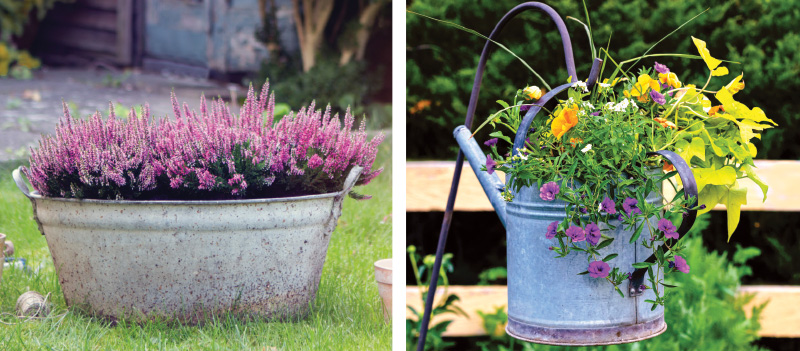
Perhaps it’s a weathered birdbath tucked beneath a dogwood, a vintage watering can overflowing with trailing flowers, or a favorite bench nestled beneath a tree. These details don’t need to be expensive or elaborate. In fact, the most charming gardens often feel as though they’ve evolved over many seasons rather than appearing all at once.

As you walk through your own landscape, notice where your eye naturally travels. A simple decorative element placed just beyond that point encourages visitors to slow down and look a little closer.

Celebrate Autumn’s Beauty

One of the greatest gifts of fall is the reminder that a garden doesn’t stop being beautiful simply because summer flowers begin to fade.

Seed heads catch the morning light. Ornamental grasses sway in the breeze. Hydrangea blooms dry into soft shades of green and bronze, while late-season perennials provide nectar for migrating pollinators. Many birds rely on those seed heads long after flowering has ended.

Resist the urge to tidy everything too quickly. Allowing parts of the garden to remain a little wild creates visual interest while supporting local wildlife well into the colder months.

Autumn often shifts the focus from colorful blooms to texture, movement, and light—and those elements can be every bit as beautiful.

Autumn decor. Pumpkins, squash, gourds, and chrysanthemums, kale arranged in a fall outdoor display. Bleached nostalgic processing.

Add Character Through Collected Pieces

Garden centers certainly offer plenty of decorative accessories, but some of the most interesting additions come from antique stores, flea markets, estate sales, or even your own garage.

Old clay pots, galvanized tubs, wooden crates, weathered ladders, enamel basins, and vintage watering cans all bring a sense of history that brand-new décor simply can’t replicate.

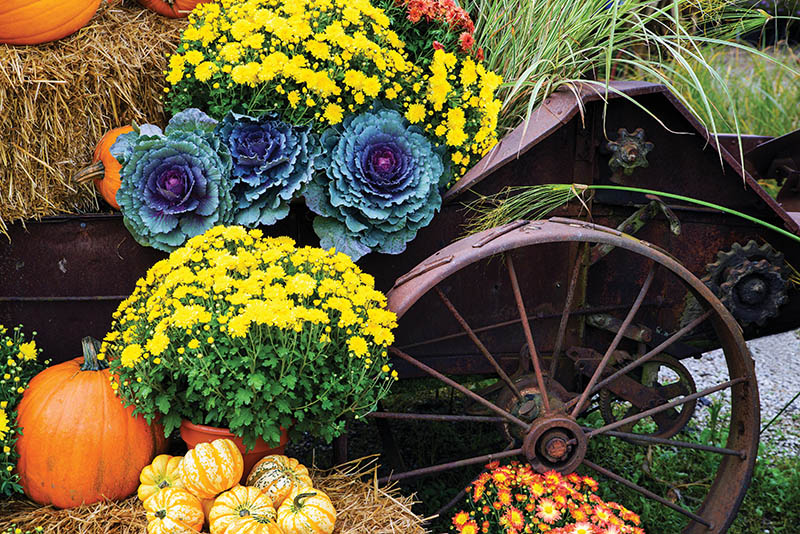
Rather than arranging everything perfectly, allow these pieces to feel naturally integrated into the landscape. A rusty wheelbarrow planted with ornamental kale or trailing ivy tells a story. A vintage gate leaning against a fence becomes a backdrop for climbing vines. These collected objects give a garden personality without making it feel staged.

Invite Wildlife Into the Garden

Nothing makes a garden feel more alive than the wildlife that chooses to visit it.

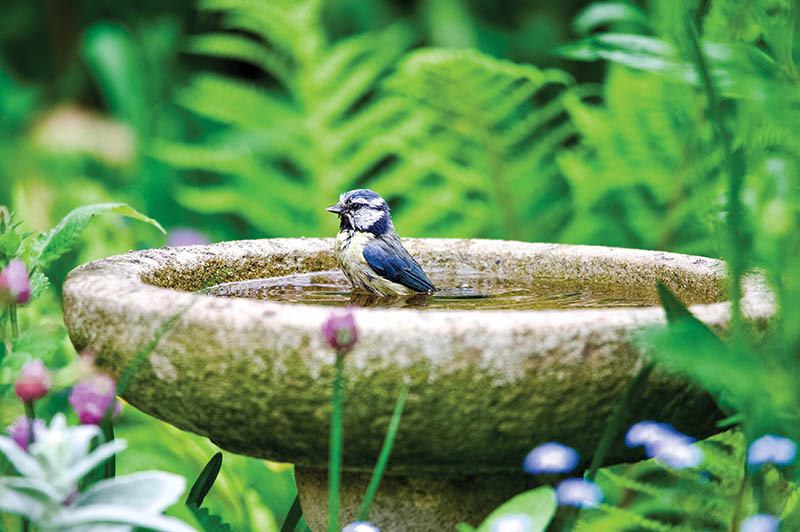
Birds splashing in a shallow birdbath, butterflies drifting among late-blooming flowers, and bees gathering nectar all create movement that no decorative object can match.

Keeping a birdbath filled with fresh water through early fall provides an important resource during warm weather. Native flowering plants, ornamental grasses, and seed heads continue feeding birds and pollinators as the seasons change.

When wildlife feels at home in your garden, the entire space takes on a richer sense of life and purpose.

Blue tit garden bird bath in a bird bath

Refresh Containers for the Season

Although much of the planting season has passed, containers offer an easy opportunity to celebrate autumn.

Replacing tired summer annuals with ornamental kale, cabbage, pansies, ivy, or chrysanthemums instantly refreshes a porch or patio. Small pumpkins, gourds, branches, and dried grasses tucked into planters add seasonal charm without feeling overly themed.

These simple updates extend the beauty of the garden while celebrating the transition into a new season.

Create Places to Pause

It is surprisingly easy to spend months tending a garden without ever sitting down to enjoy it.

Even the smallest landscape benefits from a comfortable chair, a bistro table, or a quiet bench tucked into a favorite corner. These spaces invite slow mornings with coffee, afternoon conversations, or evenings spent watching the light change across the garden.

The most inviting landscapes make people want to stay awhile.

Relaxation area in a garden

Let the Garden Glow

As daylight grows shorter, lighting becomes an even more important part of the garden experience.

Warm string lights woven through tree branches, lanterns lining a pathway, or candles safely placed inside glass hurricanes create an atmosphere that extends well beyond sunset. Gentle uplighting on a favorite tree or ornamental grass can transform familiar corners of the garden into something entirely new after dark.

A thoughtfully lit garden feels welcoming long after the flowers have faded into evening shadows.

Let Your Personality Shine

Perhaps the easiest way to add whimsy is to stop worrying about whether every choice follows the latest trend.

Maybe your garden includes brightly painted rocks made with grandchildren, a tiny fairy door attached to an old oak, colorful birdhouses, or a collection of handmade pottery. Perhaps your style leans toward a classic English cottage garden, or perhaps it’s a little more eclectic.

The best gardens are rarely perfect, but they are almost always personal. They reflect the people who care for them.


The Magic in the Gathering

Dragon Fire Games Serves Growing Local Gaming Community in New Location

By: Emily Mook | Photos By: Ashlee Glen

In his 1989 book The Great Good Place, sociologist Ray Oldenburg introduced the concept of “the third place,” defining it as a public place to meet and build a sense of community with others. Designating one’s home as “the first place” and one’s workplace as “the second place,” Oldenburg asserted that third places “allow an individual to put aside their concerns and simply enjoy the company and conversation around them.”

In today’s increasingly digital world where connection so often involves screens and where a societal push for measurable productivity causes many of us to feel caught in a constant loop between those first and second places, these third places are more important now than ever before.

dragon fire games

The Lynchburg area boasts many such spaces—some of which are free and some of which are commercial—and our communities are immeasurably enriched by these establishments. As someone who works remotely, I value opportunities to venture out and work in shared spaces even if I am not actively collaborating with others. Each third place we enjoy offers something unique and important, and local gaming store Dragon Fire Games is no exception. In fact, Dragon Fire exemplifies a third place’s ability to provide a foundation for community-building because its offerings (in terms of both products and events) and layout are centered around tactile games and hobbies that inherently bring people together—no screens attached.

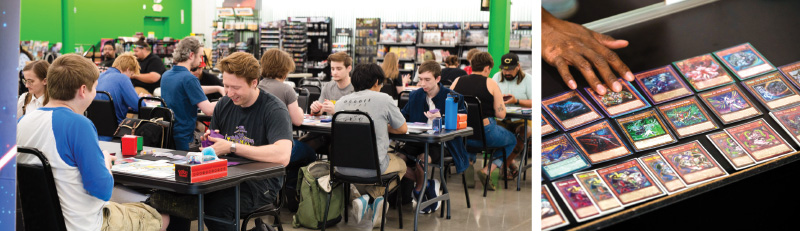
At Dragon Fire, which recently moved into its new location at 408 Federal Street, game enthusiasts of all ages gather to engage in either casual gameplay or competitive tournaments for hugely popular trading card games such as Magic: The Gathering, Pokémon, Disney Lorcana, Yu-Gi-Oh!, and One Piece and for miniature-based games such as Warhammer and Star Wars: Legion. In addition to selling products under these and other titles, the store sells a wide variety of items associated with long-beloved tabletop roleplaying game Dungeons & Dragons. Groups of people can frequently be found running D&D campaigns or painting miniatures together at one of the shop’s many community tables.

dragon-fire-games-1

But the bustling ease of a typical day at Dragon Fire Games in its large and vibrant new location doesn’t tell the full story—a story of remarkable resilience that speaks to both the dedication and determination of the store’s owner, Evan Garrett, and to the transformative power of community support.

In April, the building that used to house Dragon Fire on Memorial Avenue was the target of grand larceny and arson. Consequently, the building was condemned and hundreds of thousands of dollars worth of product was either stolen or destroyed in the fire. Garrett was already planning an eventual move to the new location when the crimes occurred, but he had to expedite that process while also working with law enforcement officials on their investigation and processing the trauma and major financial losses incurred by the crimes. Because his insurance policy covered only a fraction of that loss (a lesson that he said he has learned and applied for the store’s new building) and because several community members expressed a desire to contribute to the store’s reopening efforts, Garrett started a GoFundMe campaign. The community response to this campaign was staggering—contributions surpassed $14,000—and Garrett said he is humbled by and grateful for the support.

“That someone would want to steal from us and then burn our store down is still something I am struggling to understand, but the way the community has rallied behind us and their response to this has been absolutely incredible,” Garrett said. “The donations and support and offers of help have humbled us beyond even our greatest hopes, and we are honored and lucky to still be able to get to do the things we love: provide a safe and fun gaming environment for all groups of people.”

As he and his staff continue to rebuild in the store’s new location, Garrett is also building beyond the previous store’s capacity by adding new products and events.

“Creativity is a big part of Dragon Fire Games,” he said. “Having the opportunity and space to now host completely unique community-driven offerings such as our K-POP Photo Card Trading Meet-up as well as our upcoming LitRPG book signing of local writer E.A. Winters has me excited for the kind of events we could host in the future.”

Dragon Fire games

These ever-expanding offerings, the new building’s improved accessibility and closer proximity to downtown, and an ongoing societal shift in the perception of tabletop gaming (from a niche interest to a more mainstream pastime) have increased store traffic considerably.

Amid this exciting growth and change, however, customers who have been coming to Dragon Fire Games for years say that the strong sense of community they have experienced at the store has remained unchanged.

“When you think about the friendships we’ve made here—and we continue to make them—it’s really like a second family,” said Kathryn Kurlander.

“My husband and I have been coming to Dragon Fire Games for years,” added Nora Genter. “It’s a very open and welcoming place, and there are always friendly faces to see here. The staff always speaks to you and makes you feel welcome, and that goes a long way to making it feel like a family community space rather than somewhere cold where I just go to buy stuff. Having the opportunity to meet with friends and express your passions in a safe space, without fearing judgment, is so important.”

Whether you are a seasoned gamer or are just starting out, Dragon Fire Games has a seat at the table for you.

For more information about Dragon Fire Games, search “Dragon Fire Games” on Facebook.


Beginner Collage: Using Found Materials

Not every creative hobby requires a blank canvas or years of practice. Collage is one of the most accessible art forms because it starts with something that already exists: photographs, illustrations, maps, book pages, magazines, ticket stubs, packaging, and other printed materials that catch your eye.
Artists have been using collage for more than a century to tell stories, explore ideas, and create entirely new images from familiar pieces. The best part? There is no right way to do it.

What You’ll Need
• Old magazines (even this magazine!)
• Newspapers
• Maps
• Postcards
• Brochures or local ephemera
• Scissors
• Glue stick
• Cardstock or mixed-media paper
• Optional: markers, colored pencils, paint pens

Start with an Idea

Instead of trying to recreate a specific image, choose a theme that inspires you.
Try:
• What Creativity Looks Like
• A Place That Inspires Me
• Things I Want More Of
• The Story of a Favorite Book
• Music in Color
• My Creative Life
• A Mood, Not a Place
Think of your collage as a visual poem rather than a picture.

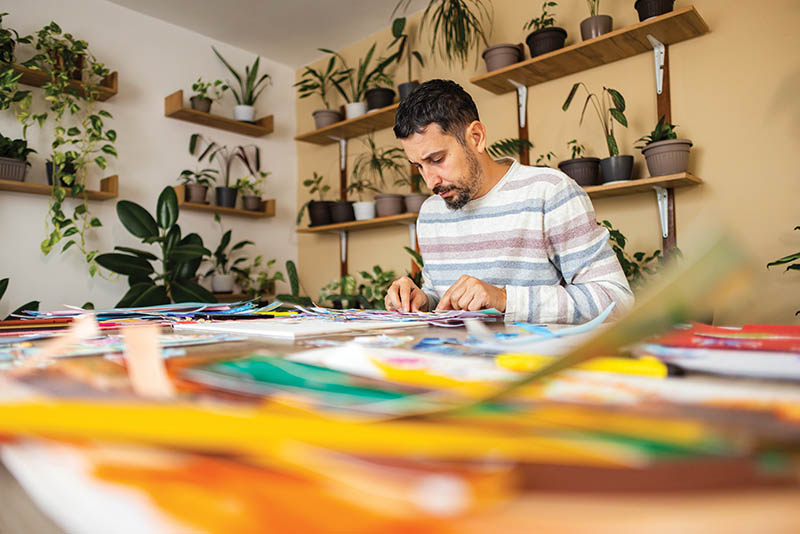
Focused artist sitting at desk

Gather Images and Words

Flip through magazines and printed materials looking for:
• Colors that catch your attention
• Interesting textures
• Unexpected objects
• Faces and figures
• Individual words or phrases
• Typography and lettering

Don’t worry about whether the pieces “go together” yet. Collect first and edit later.

Create a Visual Conversation

Lay your pieces out before gluing. Try placing unrelated images side by side and see what happens. A map next to a flower. A handwritten note beside a city skyline. A musician floating above a mountain range.

Collage often becomes most interesting when unlikely elements share the same space.

Build in Layers

Start with larger background pieces and gradually add smaller details.

Allow some pieces to overlap. Tear edges instead of cutting them. Mix images with text. Let certain elements disappear beneath others. The layers help create depth and encourage viewers to spend more time discovering details.

Add Your Own Mark

Once everything is glued down, consider adding something uniquely yours:
• A handwritten quote
• A favorite lyric
• Simple doodles
• Painted accents
• A short reflection in the margin
Even a few personal touches can transform a collection of found images into original artwork.

TIP
Many professional collage artists keep a box of images, words, and scraps that catch their attention throughout the year. Start your own collection. Inspiration often arrives long before you know what you’ll create with it.