The Living Music of the Hill City

Every time I go to a concert, I notice the feeling of anticipation that builds as you get closer to the start of the show.

By: Charlotte Farley / Photos By: Becky Lambert Photography, Courtesy Of Seven Hills Chamber

That moment feels especially charged when it happens inside the historic Lynchburg Museum, where people registered to vote where they got married, and where the fate of defendants on trial for murder hung in the air.

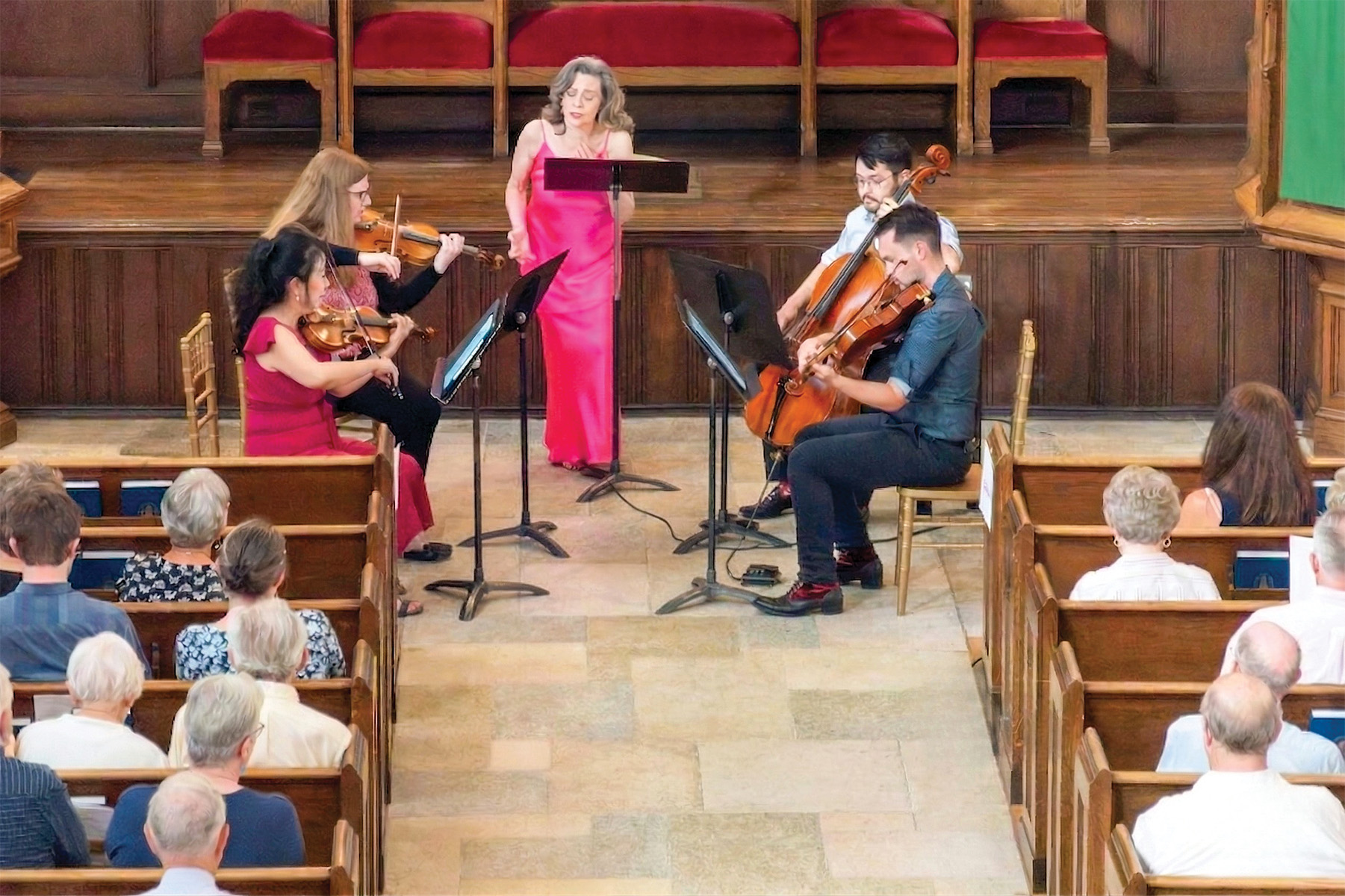
On most days, the building feels quiet, with pieces of its past on display: artifacts, photographs, and other fragments of lives that once moved through the same streets we do. But in August, the Seven Hills Chamber Music Festival will open its summer concert series inside the museum’s main hall: the former courtroom of an 1855 building designed for voices to carry. 

Opening night will layer a Louis Armstrong tribute for trumpet and string quartet, Jessie Montgomery’s Strum, and newly unearthed music by Lynchburg-connected composers into a single evening.

“We have the concerts in what used to be the courtroom,” said museum director Ted Delaney. “We put the performers on the judge’s platform. And if you think about it, the building was designed for that—a group of people gathered to listen to something happening at the front of the room.”

He thinks about it a lot. “It lends itself so naturally to music,” he added. “Having live music performed in that space, to me, is one of the best uses of our very beautiful historic structure.”

Music that Lives in the Room

The Seven Hills Chamber Music Festival is heading into its sixth season this summer.
If you’re a music aficionado, that might bring a spark of excitement. On the other hand, you might hear the words “chamber music” and immediately picture old-world royalty having a private concert, seeing it as formal and untouchable—and you won’t be alone there. (Back in the day, I thought chamber music meant Gregorian chanting monks!)

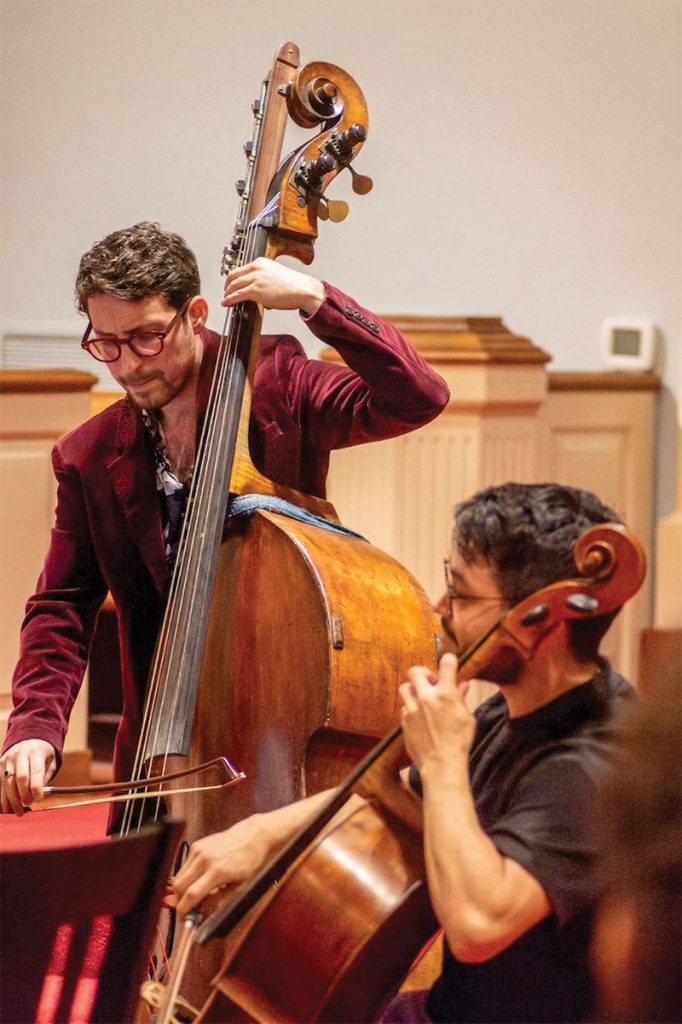
In reality, chamber music simply means a small group of musicians playing together—often one player to a part—in spaces where you can hear and see every detail. It’s music built for conversation: between instruments, between performers, and, if it’s working, between the people onstage and the people listening. 

Seven Hills Chamber Music delivers a stunning Bach Brandenburg Concerto. And yes, there’s a sense of intimacy inherent to this genre with its smaller ensembles, closer quarters, and music that asks you to lean in. But Seven Hills is just as committed to contemporary work and performing (and sometimes commissioning) pieces by living composers. I still think about last season’s performance of Stir Crazy by Carlos Simon and the way the flute and violin captured, through sound, what so many of us were experiencing during that time.

More than a Venue: A Partner

For festival co-founder and Lynchburg native Dudley Raine IV, the museum concert started simply: try something different. “We had been playing in a lot of churches, and we wanted to find a space that felt a little less expected. The museum seemed like a great place to try it. We try to use Lynchburg’s history to build a theme,” Raine said, “to tell stories that might have been forgotten.” 

Working with Delaney, “he found a whole trove of pieces in the archives and we found pieces and composers I never would have known about otherwise.”

That was three years ago. Since then, the relationship has grown from “a concert in a cool building” into a partnership with its own rhythm.  

Festival co-founder Nicole Brancato helps shape the arc of each concert so the music, the space, and the stories all feel like they’re in conversation with one another. One past program drew on the story of Blind Billy and Tom Perkins, a local 19th-century fife-and-fiddle duo. To echo their sound inside the old courtroom, Seven Hills chose works for modern instruments carrying forward the rhythms that once floated over these same hills.

“It’s been really interesting to see the exhibits when we’re there and to start learning about Lynchburg’s history in a deeper way—especially the music,” he said. 

Over time, that curiosity has started to shape the concerts themselves. That curiosity led to more research, more local names, and an expanded program, this year supported in part by a Virginia Humanities grant. 

The Exchange of Energy

And then there’s the part no one can plan for: the energy the audience brings to the show.

“The last piece we did last year was [by] Kathleen O’Moore,” Raine said. “We gave the audience the music and had them sing along. It was incredible. Just this shared energy—everyone in the room participating. That was one of those moments where you think, ‘This is why we’re doing this.’”

For Delaney, that shift matters.

“Our mission is to connect people to local history,” he said. “But not everyone comes to a museum for that. Some people need a different way in.” 

Music, it turns out, can be that way in. 

“If someone comes for the performance, and that’s what brings them into this building, then they’re also encountering history,” he said.

A space once used for judgment, record, and decision-making is now holding something less about what was decided, and more about what can still be felt. “To have live music in that space,” Delaney said, “after everything that’s happened there—it’s really special.”

He hopes people walk back out onto Monument Terrace with a different sense of the city they just looked down on. “I want people to be so impressed that such beautiful music was composed here and that such talented composers lived here, walked the streets we do, lived in the same places we live, and work and go to school,” he said. “So many people discount Lynchburg and think, ‘Nobody of any note lived here, nothing important happened here,’ but I see the opposite. This concert is just one small way to have people see what we see.”

It helps that the music itself is anything but small. About half of the festival’s roster has roots in Virginia, and all of them bring serious credentials with them—players who have performed with major orchestras and ballet companies, on Broadway stages and at Carnegie Hall, with institutions like the Juilliard School and the New York Philharmonic, on HBO and Netflix, and at venues around the world. Some are voting members of the Recording Academy, some are Yamaha artists, and all are chamber musicians in the truest sense: collaborators who know how to listen as intensely as they play. When they gather in Lynchburg, the room is holding world-class artistry and hometown memory at the same time.

“I just couldn’t believe how good the music was,” Delaney said, remembering his first experience with this chamber music festival. “And thinking, this came from Lynchburg. Not from Europe or New York. From here.” 

On August 12, the room will decide again what it’s going to be. And if you’re there, sitting in that brief, electric pause before the first note, you’ll feel it happen.  


Artist Profile: Cammy Jones

Pour Baker: Where Science Meets the Joy of Homemade Baking

Photos By: Ashlee Glen

In Cammy Jones’ kitchen, baking is equal parts creativity and chemistry.

A community pharmacist by training, Jones is the founder of Pour Baker, a Lynchburg-based small-batch baking mix brand designed to make homemade baking simpler without sacrificing quality. Her signature just-add-milk, shake-and-pour bottles streamline the baking process, taking home bakers from pantry to oven in minutes.

The idea began, like many good food ideas do, at home.

“As a pharmacist, I’ve always been drawn to precision, problem-solving, and creating something that truly helps people,” she explained. “Pour Baker started in my own kitchen when I realized that so many families wanted to bake but didn’t have the time or confidence to measure out multiple ingredients. I kept thinking, ‘What if it could be as simple as adding milk?’”

The moment the concept became something more happened when she began sharing the mixes at farmers markets across Virginia.

“When I would set up at farmers markets across Virginia, customers started asking for more flavors and telling me how easy it felt. I realized this wasn’t just a shortcut—it was a solution,” Jones said. “That’s when Pour Baker became more than an idea; it became a mission.”

Cammy Jones

Jones’ background in pharmacy shapes nearly every aspect of the brand. Developing a baking mix,
she explains, closely mirrors the process of compounding medication.

“Compounding medication and developing a baking mix are more similar than people realize,” she said. “Both require precision, balance, and understanding how ingredients interact chemically. In pharmacy, a small change in formulation can affect stability or effectiveness. In baking, the same is true. Moisture content, leavening ratios, and sugar balance all matter.”

Her scientific training informs the reliability of the product.

“My science background makes me meticulous about texture, consistency, and repeatability,” Jones continued. “Every bottle of Pour Baker is designed to perform the same way every time. That reliability is very much rooted in my training.”

Still, while science provides structure, emotion remains central to the experience of baking.

“To me, convenience should never replace connection. It should make space for it,” she said. “By simplifying the prep work, we allow families to focus on what really matters: being together and sharing stories. The warmth isn’t in measuring flour, it’s in pulling muffins out of the oven and gathering around the table. Pour Baker removes stress but keeps the joy.”

That philosophy extends to the ingredient list itself.

“As someone in healthcare, I’m very aware of what we put into our bodies,” she said. “I didn’t want to create a product filled with fillers or ingredients you can’t pronounce. Clean, recognizable ingredients were non-negotiable because trust matters.”

New flavors emerge through a blend of science, seasonality, and customer feedback.

“Science ensures the formula works,” Jones stated. “Seasonality inspires flavor profiles. But honestly, customer feedback is huge. When people tell me what they want to bake for their families, I listen.”

At its heart, Jones says, the brand is about confidence.

“Approachable baking means removing intimidation without removing quality,” she said. “It means a mom baking with her kids after work. It means a busy professional bringing homemade muffins to a gathering. It means feeling capable. Approachable baking is about accessibility, not shortcuts.”

She credits Lynchburg’s support for helping Pour Baker grow beyond its earliest stages.

“The support has been overwhelming in the best way,” Jones smiled. “People don’t just buy the product, they share it, post about it, and tell their friends. The community has shaped Pour Baker by encouraging me to dream bigger. What started as a local idea now feels like something with real staying power because Lynchburg believed in it first.”

Looking ahead, Jones sees expansion on the horizon.

“I’m excited about expanding both our product line and our reach,” she said. “There are new flavors in development and opportunities for local collaborations that align with our values. Long term, I see Pour Baker growing into a household name for simple, clean, joy-filled baking.

We’re just getting started.”

And for anyone still hesitant to bake?

“If you can shake, pour, and bake, you can do this,” she mused. “And the confidence that comes from that first successful batch? That’s everything.”  

To order and learn more visit pourbaker.shop and connect with Pour Baker on Instagram at @pourbaker.


Artist Profile: Alexandra Milhous

Perfecting Pottery: Local artist creates masterpieces, builds community in Lynchburg

By: Christian Shields | Photos By: Ashlee Glen

Through her love for pottery and people, Lynchburg artist Alexandra Milhous creates incredible ceramic pieces and educates others how to do the same.

Milhous began her pottery journey years ago as a student at Virginia Tech, where she took a couple ceramics classes while studying interior and industrial design.

After moving back to Lynchburg, she continued to study the medium and eventually purchased a kiln and other pottery equipment. Since then, she has opened a pottery studio, Firebrick Pottery, on Main Street, and has continued to improve her craft. She creates various mugs, vases, bowls, pots, and more.

“What I first fell in love with about pottery is the creative options are endless,” she said. “I could spend the next 20 to 30 years of my life exploring one technique in pottery and still not fully explore everything that is possible with that one technique.”

As a new potter, Milhous often found herself following a rigid structure with calculated stylistic decisions. Now, she takes a much more organic approach to her craft, comparing her fluid style changes to the adaptability of an octopus.

Alexandra Milhous

“I don’t want to fall into manufacturing the same thing over and over again, where you lose that handmade feel,” she said. “What I love about pottery, or anything else handmade, is as you use it, you are creating a connection with the artist who made it.”

As a result of these rapid style changes, Milhous hopes to never completely duplicate a single piece. In doing so, she allows each piece to remain unique and special.

“If you buy a store-bought manufactured bowl, your hands are probably the first human hands that have touched that bowl taking it out of the packaging.

There’s no uniqueness and not a lot of thought or care put into the making of it. It’s just a bowl. When you buy a bowl from a potter, especially a local potter in your community, they put thought and time into the bowl. They express themselves through it,” she said, joking that drinking from a handmade mug was equivalent to “drinking a page of someone’s diary.”

Through teaching weekly workshops at Firebrick, Milhous hopes to share her passion for pottery with others, helping them realize the incredible mental and physical benefits of crafting with clay.

“I’ve found a lot of joy in watching other people go through the same discovery process that I went through when first learning pottery. The magic of it. You are literally playing in mud and then you make something cool out of mud. Then you fire it, and it turns into permanent glossy ceramic. It’s a magical feeling the first time you can see a piece you made come out of the kiln and unless that piece gets smashed, it’s going to outlive you.”

Milhous currently sells her own products at Firebrick, but also sometimes advertises through her @ampotteryart and @firebrickpottery Instagram accounts.


Virginia Rep Takes a Stab at an Old Story, Gives Deathtrap New Life

By: Butch Maier / Photo above courtesy of Sutten Photography

Deathtrap, Ira Levin’s comedy-thriller play in two acts, was first staged in 1978. In January, the almost-a-half-century-old story felt new again. Plot twists drew gasps during a Saturday matinee performance of a Virginia Repertory Theatre production at Hanover Tavern, just north of Richmond. “Hanover is, honestly, one of the most charming little theaters I have ever sat in,” Virginia Rep artistic director Rick Hammerly said. “It’s only 150 seats, but you’re almost on the stage, so it’s very intimate, which is lovely.”

The sold-out crowd was as snug as a bug in a rug—or as a body on stage wrapped in a rug.

The brick production design matched the actual theater structure, adding to the atmosphere of audience members feeling like flies on a wall—with the show generating positive buzz during the intermission.

“There’s something about it that’s a little bit foolproof if you just do the script and put it up there, it’s gonna work,” said Virginia Rep actor Nathan Whitmer, who portrayed famous-but-struggling playwright Sidney Bruhl.

In Deathtrap, Sidney invites his student, Clifford Anderson (Axle Burtness), to his home to discuss Clifford’s new script, which Sidney recognizes as a potential hit. Sidney’s plans scare his wife, Myra Bruhl (McLean Fletcher), who tries to convince the two men to work together. Psychic neighbor Helga ten Dorp (Donna Marie Miller) also sees to it that she has plenty funny to say about the men’s interaction.

As Whitmer’s Sidney intensely shared his thoughts and plots aloud with a sharp tongue, Fletcher’s Myra deftly traversed a verbal tightrope between curtailing her husband’s evil intentions and enticing Burtness’s not-so-innocent Clifford to do a deal.

My favorite moment: Fletcher’s hilarious, never-ending yowl when a certain deed was done. Director Sidney Lumet’s movie Deathtrap, starring Michael Caine, Christopher Reeve, and Dyan Cannon, premiered in 1982—also the first year my family got HBO. It played over and over. Multiple times a day. I watched it again and again.

So, I had looked forward to seeing how the play, directed at the Hanover by Paul Takacs, would play on a stage. Many in the audience were seeing the story play out anywhere for the first time.

“What’s tricky in this day in age is what is theater being looked at to do right now?” Hammerly said. “We’re dealing with economic hardships—I mean, the country is. We’re dealing with a lot of stress. Do people want to be challenged? Or do they need to escape and be entertained? And trying to ride that line.

“This is a show that you can escape for two hours, and you’re on the edge of your seat because it turns and twists so much. So, I wanted to do something that would do that—that would allow people to escape, to live in a different world for a while.”

The Deathtrap world was one room that kept attendees on edge with 20-plus weapons hanging on the center-stage wall, waiting to be grabbed at any time. The actors deftly handled numerous props throughout, and every time one held a weapon, attendees anticipated a sharp plot point.

“Theater is constantly trying to bring in a new audience, and by that, I mean a younger audience,” Hammerly said. “Theater audiences tend to be a little older, and what happens when they’re no longer going to the theater? We need that next generation constantly to be stepping up. So, you can do some old chestnuts, and I think it’s going to turn off some of the younger folks.

“With a show like this, because of the themes of greed and murder—the fact that it’s a thriller, and it also has some comic stuff, it’s really engaging that I think all ages can really respond to it.” Audience members of all ages responded enthusiastically…and shortly thereafter quizzically, wondering if there was a twist they missed. They engaged in a debate about whether one actor played two characters, since a person was missing at curtain call. (The answer: No. Someone was on the mend.)

If you missed Deathtrap, I encourage you to head over to the Hanover or the November Theatre for another Virginia Rep play.

Maybe you will discover a show—either new or new to you—that will pull the rug out from under you.

For more on the Virginia Repertory Theatre season, go to va-rep.org/2025-2026.


Rich in Arts

The Richmond Scene Needs to Be Seen

By: Butch Maier

Virginia Repertory Theatre actor McLean Fletcher has worked in the arts around the world but always comes back to Richmond. “I think it’s beautiful,” said Fletcher, who also is a filmmaker and a painter. “The walkability, the drivability, the climate, the tree-lined streets.

“I feel like Richmond is an oasis for me. I have an artistic community that challenges me in a positive way. “It’s big enough to find work but small enough that you can be heard.” No matter your voice.

“It’s diverse and bigger than I think people think—broader,” Virginia Rep artistic director Rick Hammerly said. “There is everything. There is so much music.

A lot of live music, which is amazing. Actual art—painting, photography—it’s everywhere. And I think the theater scene here is really dynamic.

“D.C. has grown into a behemoth, in terms of theater. But here, there are a smaller number, but what I like is the diversity that there is. While we [Virginia Rep] are the largest theater in town, there is another theater that specializes in new plays, there’s another theater which is the gay theater, there is another that does Shakespeare.

“You have all these niches so that if you’re a Richmonder, all of your theater needs are met.”

VIRGINIA REPERTORY THEATRE

Virginia Rep, a regional professional theater headquartered in downtown Richmond, staged Deathtrap (see page 96) in December and January at the Hanover Tavern.

Deathtrap actor Nathan Whitmer and his wife, actor Emelie Faith Thompson, moved to Richmond from Northern Virginia to upsize their home as well as to “hop on the elevator as it’s on its way up” while the Richmond arts scene reaches greater heights.

“We chose this community because we knew that we could come in and keep doing the art we wanted to do and hopefully grow with this community,” Whitmer said. “There’s a bunch of driven artists here—not just in the theater but in the visual arts. We have done a lot of film projects down here over the last eight years, whether it’s commercials or short narratives, so we’ve been down to Richmond a lot, and we’ve really enjoyed getting to know the arts scene down here. We want to help to grow that.”

Upcoming Virginia Rep shows include:
• Primary Trust, March 5-29, at Theatre Gym in the November Theatre complex
• The Cottage, March 27-April 26, at Hanover Tavern
• The Musical Adventures of Flat Stanley, April 11-May 3, part of the Jessie Bogese Family Series at the November Theatre
Website: va-rep.org

RICHMOND SHAKESPEARE

Fletcher will portray Lady Macbeth in Richmond Shakepeare’s March 27-April 18 run of Macbeth at Dominion Energy Center’s Gottwald Playhouse.
Website: richmondshakespeare.org

THE BYRD THEATRE (photo above)

I had never been to the Byrd.

I have longed to have one of my movies shown in that sensational cinema location, but I have yet to make something grand enough that makes it Byrd-worthy.

In the meantime, a few hundred other audience members and I gathered to see someone else’s Byrd-worthy pic: Steven Spielberg’s Jurassic Park…a movie I had neglected to see in a theater the first time around.

I know, I know. Why? I was a college graduate when it premiered in 1993. I was “too cool” to go see a dinosaur movie. I admit my mistake. Sure, I had watched it dozens of times in the past three decades, and it was impressive every time I saw it on TV, but at the Byrd in January, it was magnificent.
The creatures were enormous.

The action was incredible. And the laughs! Every joke played. What a wonderful time was had by all. Well, except for those who were eaten.
Website: byrdtheatre.org

VIRGINIA MUSEUM OF FINE ARTS

The Virginia Museum of Fine Arts bills itself as a world-class art museum with hometown hospitality.

Case in point: The VMFA displayed a collection of more than 50,000 works of art from almost every major world culture, welcomed indie filmmakers for the James River Short Films Showcase, and hosted an elegant private wedding reception—all in one weekend.

The top prizes in the short film competition went to Richmond’s Jeremy Drummond for Monument, the Texas duo Adam Dietrich and Elliott Gilbert for J.J., Richmond’s Nathan Conrad Piskator for Computer Blue, and D.C.’s Justin Lamb for Work From Home.
Websites: vmfa.museum, jamesriverfilm.org


Richmond Theater Crowd

Richmond is crowded with theaters.

Here is a sampling of what you can see soon at several of them.

Compiled by Butch Maier / Photo By Sarah Ferguson | Richmond Ballet

March 5-29: Primary Trust, play, Virginia Rep, November Theatre

March 7: Up, 2009 movie, Byrd Theatre

March 19: Keep Shouting Sister: A Tribute to Sister Rosetta Tharpe, concert, The Hippodrome

March 19-29: Moving Art Three: New Works, dance, Richmond Ballet, Leslie Cheek Theater, Virginia Museum of Fine Arts

March 26-April 18: Macbeth, Richmond Shakespeare, Libby S. Gotwald Playhouse, Dominion Energy Center

March 27-April 26: The Cottage, play, Virginia Rep, Hanover Tavern

April 16: Alabama Shakes, concert, Allianz Amphitheater at Riverfront

April 16-May 9: 5th Wall Theatre presents Wolf Play, play, The Basement, 300 E. Broad St.

April 18: Band Geek Date Night, concert, Richmond Symphony with JMU Marching Royal Dukes, Carpenter Theatre, Dominion Energy Center

May 1: Kathy Griffin, comedian, The National


From Pierce Street to Point of Honor

A Theater Rooted in Place

By: Charlotte Farley / Photos Courtesy: Enstation Theatre Company

By the time I finally clicked on Endstation Theatre Company’s website, I felt that particular brand of guilt reserved for English majors like myself. After all, I’ve lived in this area for over twenty years. I’ve taught literature, worked with local arts agencies, and waxed poetic about “place.” And yet somehow I had missed that Lynchburg has had its own professional theater company for nearly two decades.

Sitting across from Producing Artistic Director Patrick Earl, though, my guilt turned into curiosity. Endstation isn’t trying to compete with touring blockbusters or turn out jukebox musicals. Instead, it’s doing something more rooted in this region and the people who call it home.

A Lynchburg Original

Endstation was incorporated in 2006, starting life as a small company at Sweet Briar College mounting original works, intimate Shakespeare, and adapted classics. From the beginning, its focus was to “advance the cultural history and landscape of this region,” language Earl calls “very poetic and awesome,” but also quite practical.

Underneath the lofty phrasing is a simple guiding principle he repeats to his company: serve the audience you actually have. For Endstation, that means the neighborhoods, histories, and unresolved stories of the greater Lynchburg area. “We are telling a people’s story,” he says, and he means “people” in the most local sense: the families who’ve walked Pierce Street for generations, the students bused in from area high schools, the patrons who might not see themselves on stage anywhere else.

Over the years, the company has produced more than a dozen original plays, many commissioned or developed through its playwright pipeline. Whirlwind, for instance, explored the life of Dr. Robert Walter “Whirlwind” Johnson, the first Black physician permitted to practice at Lynchburg General Hospital and a tennis coach who mentored Arthur Ashe and Althea Gibson on a court in his side yard on Pierce Street.

That attention to place isn’t metaphorical: Endstation has staged performances inside historic homes, at Point of Honor, and even in the basin of a long-closed public pool while tracing the buried history of segregated swimming in Riverside Park. There’s something sacred about telling a story in the very space where it unfolded, as if proximity itself deepens the act of remembering.

Twenty Years of Evolution

Of course, no arts organization moves through twenty years unchanged. After its early seasons at Sweet Briar, Endstation experimented with larger productions and more commercially recognizable shows, the sort many regional companies rely on to stay solvent.

On July 1, 2024, Endstation officially came under the umbrella of Randolph College while retaining its own distinct nonprofit identity. As the college’s professional theater, it enjoys a stable home base, a campus full of students, and local connections.

Fringe, Fields, and Memories

The Central Virginia Fringe Festival—launched just last year—is another extension of that impulse. “We have so many talented folks, so many talented companies,” Earl says. “We need something to celebrate that. So we said, ‘You know what, let’s start a Fringe Festival.’”

The premise is simple but generous: Endstation provides a venue and modest tech support, and invites theater companies, community groups, and individual performers to show what they’ve been making. In its inaugural year, 14 companies (including Endstation) presented nearly 20 performances over the course of the week, spread across spaces at Randolph like Smith Hall Theater and another campus performance hall.

This summer’s festival will again run Saturday to Saturday in mid-June, opening with a concert and “Fringe Feast” and closing with the world premiere of Earl’s new play, Good Birth, alongside the launch of the summer Shakespeare production.

Beginning in fall 2026, Endstation will also take over the Old City Cemetery’s candlelit tour, partnering with staff to create a theatrical experience that weaves history, performance, and memory in one of Lynchburg’s most significant landmarks. If theater at its best is an act of collective remembering, there may be few settings more suited to that than a location where names are literally carved into stone.

Shakespeare on the Hill, Free for All

If you’ve never made it to Shakespeare at the Point, you’re not alone. But the series, now heading into its third summer, may be the clearest expression of Endstation’s commitment to accessibility.

What began as a small-scale experiment at Point of Honor has grown into a cornerstone of the season. Tickets for Endstation productions top out at $35 for special events (galas excluded), with many offerings around $15 (and less for students).Through the “Serving the Audience Initiative,” Endstation has made a portion of its outdoor Shakespeare performances free to the public in recent years, with a long-term goal of making the entire run free.

“We are working to make professional theater accessible to everyone,” Earl says. That includes scholarships for their Embark Youth Theatre Conservatory, where at least 15 of 40–50 spots each year are full or partial tuition scholarships, and Theater Day at Randolph, when high school students come to campus for workshops in technical theater, stage combat, and Shakespeare.

This summer’s production, The Merry Wives of Lynchburg, adapts The Merry Wives of Windsor, keeping the language largely intact while setting it here at home. It’s a playful nod to place that still takes the text seriously, much like the company itself.

What’s Next

“If I could choose, I’d want our legacy to be that we created essentially a staged history of our community, a dramatic, historical canon for the area,” he adds. “After being around 20 years and doing 14 original shows—that’s a lot for any theater company—and that doesn’t even account for the dozens of original plays from our Playwrights Initiative.

For Earl, the heart of Endstation’s work is empathy. “Theater is uniquely suited to helping audiences experience how someone else sees the world. That is, in its essence, what theater really is,” he says.

“I want Endstation to be the end station for theater. Every community deserves somewhere they can go and hear their story, and hear their story done well, and see live performance at the best possible level without having to drive to New York or to their nearest large city—at a high level, at a professional level, and a dependable level.”

As Endstation enters its third decade, it faces the same challenge every arts organization does: persuading people to show up in person. Earl is realistic about the competition. “Every platform, screen, and phone is rival for attention, but it’s something more than that,” he says. “People go into their phones trying to find happiness and humanity. But you know where it is: humanity is going to watch humans.”

That humanity lives here: on a hillside at Point of Honor as the sun goes down, in a darkened hall at Randolph, inside a reclaimed pool basin at Riverside Park.

It’s in the moment when a familiar street name, a long‑ignored plaque, or an old family story suddenly stands up, steps into the light, and, for a moment, seems to be speaking directly to you.


Maier Museum’s New Art Exhibition is a Celebration of Paint

Exploring Real, Tangible Art in an Age of Algorithms

By: Charlotte Farley | Photos By: Ashlee Glen

I don’t know about you, but I’ve been craving a return to a more analog kind of life, gravitating toward something that I can touch and hear without needing screens and Internet service. For my birthday, my husband gave me a stereo system complete with a turntable and CD player. When I finally listened to music through those killer speakers after years of streaming on Pandora or Spotify, the sound startled me in the best way possible. It was rich. It was bold. It was beautiful. That small shift back to analog made me feel what I’d been missing, which is exactly the energy behind the Maier Museum’s new exhibition Audacity: The 114th Annual Exhibition of Contemporary American Painting.

For more than a century, this annual exhibition has showcased contemporary American art in all its shifts and reinventions, and this year’s focus on painting feels both timely and strikingly fresh. This show is indeed a vivid display of what it means to have the audacity to create something purely from one’s own hands, with one’s own imagination and heart. In other words, how dare we be human.

The History of Maier Museum’s Annual Art Exhibition

The Maier’s annual exhibition series began in 1911, when Randolph-Macon Woman’s College committed to bringing the strongest contemporary American art to its students each year. For decades, that meant painting. The show functioned as a cultural gateway that introduced both the college community and Lynchburg at large to the best work emerging in the medium.

For the first half-century, the annual exhibition centered almost entirely on painting, but in the decades since, it has expanded to reflect the growing range of media explored by contemporary American artists. This year marks the first time in nearly thirty years that the exhibit returns to painting alone, echoing its earliest roots.

“It felt like time to revisit painting,” said Martha Johnson, director of the Maier Museum.

Maier’s annual exhibition

The Spirit Behind the Art Exhibition

Johnson explained that the spirit behind Audacity grows out of the moment we’re living in. Conversations about AI—its speed, its opacity, its uncanny output—have become impossible to ignore, and so much of the imagery we encounter now is generated instantly by software. In that landscape, returning to painting feels purposeful.

“We’re all feeling some uncertainty about where AI is going—or has already gone,” she said. “It isn’t something that’s ‘coming’; it’s blown past us, and that can feel very untethering.”

For Johnson, this exhibition is “a kind of answer to what’s happening. It’s a reaffirmation, a fearless reaffirmation, of the medium of painting.” And even as the show responds to all that technological drift, she hopes its effect is simple and human. “I want visitors to be delighted.”

Meet the Artists Behind Audacity: The 114th Annual Exhibition of Contemporary American Painting

The exhibition brings together four large-scale painters (Sally Egbert, Julia Jo, Sue McNally, and Walter Price) whose canvases radiate gesture and presence, inviting visitors into the physical presence of work shaped directly by human hands. Each selection embraces that physicality. One navigates gigantic, state-by-state landscapes after time spent outdoors. Another literally tosses paint onto canvas.

“Whether you’re using a brush, tossing paint like softballs, or pouring it the way Sally [Egbert] does,” Martha said, “there’s such physical pleasure in the act itself. What painting is, for all of these artists, is the pure joy of painting—the tactility, the sensuousness, the sheer joy of a pure color.”

The Experience of Maier Museum

The Maier Museum is intentionally welcoming. Admission is always free and there are various community programs, talks, and even camps for kids and other programs for high school students. Johnson wants a visit to the Maier to feel as normal as a stop at the library or a walk in the park.

“The default for a lot of people is thinking they don’t know enough to come here, or that it’s going to be expensive,” she said. “There’s no test at the end. We’re not trying to stump anyone. We just want people to come in and spend time with the art.”

Staff members aim to offer visitors a “hook”—just enough context about process or history to spark curiosity—without flattening a painting into a lecture.
For many regulars, the museum’s permanent collection has become something of a community of familiar faces. Visitors return to particular works like old friends within the richly colored galleries.

Maier Museum’s Hours and Exhibition Details

Above all, this exhibition extends an invitation: slow down, step close, and let color work on you. As Johnson puts it, “I would love for people to have had a joyful experience—to feel that painting is still a vital force—and to have set their anxieties aside for a moment and get lost in the art.”

Audacity reminds us that standing in front of paintings can be as surprising and alive as hearing music on real speakers again. It turns up the volume on what it means to be human. And painting, it turns out, still has plenty left to say.

ON VIEW:
October 19, 2025 – March 8, 2026
More Information: maiermuseum.org
Hours: Wed–Sun, 1–5 p.m.

RELATED CONTENT:

The Cold War History of the Maier Museum

Inside the Lynchburg Art Club and Gallery


A Good and Pleasant Company Book Chronicles 250 Local Residents

250 Years of Lynchburg’s Story

By: Megan Loranger

Next year, the United States will celebrate the 250th anniversary of the signing of the Declaration of Independence. Across the nation, localities are marking this milestone through the America 250 initiative, which invites communities to reflect on their own histories and the people who shaped them. In Virginia, the effort is known as VA250, and here in Lynchburg, it takes the form of LYH250—a yearlong commemoration highlighting the individuals and stories that define Central Virginia’s past and present.

One of the signature projects of LYH250 is a forthcoming book titled A Good and Pleasant Company, set to be published in 2026. The book will feature biographies of 250 Lynchburg residents who lived and worked in the city between 1776 and 2026, capturing the breadth of lives that have contributed to the region’s story.
Ashleigh Meyer, a member of the LYH250 committee and one of more than 70 contributing writers, helped research and write several of the biographies. “We decided to create a very accessible collection of bios appropriate for students and adults alike,” Meyer said. “We also wanted something tangible to commemorate the 250th anniversary that could contribute to the ongoing conversation about regional history.”

Many of the featured names will be familiar—such as John Lynch and Anne Spencer—while others may be new to readers. Together, they represent a sweeping tapestry of Central Virginia’s history, from educators and community leaders to inventors, athletes, and advocates for freedom.

For Meyer, the project was both educational and deeply meaningful. “I came across people I hadn’t heard of before, and getting to know their stories was incredibly impactful,” she said. “It reminded me that we can all have an impact on our community and our time.”

The collaborative nature of the book reflects the spirit of the celebration itself. With contributions from more than 70 local authors, researchers, and historians, A Good and Pleasant Company stands as a true community effort—one that honors those who came before us while inspiring future generations to recognize their own role in the region’s ongoing story.

“I think there’s a lot more history under our feet than a lot of people realize, and I hope this book helps to bring more awareness,” Meyer said. “I also hope readers will remember the lives of the people who came before us and respect the work that they did—no matter how big or small—to contribute to the world we live in today.”

At its core, A Good and Pleasant Company reminds us that revolution isn’t a single moment in time but something continually renewed with each generation.
Pre-orders for the book are now open through Old City Cemetery for $15. Copies will also be distributed to public spaces and schools throughout the region. To reserve yours, visit oldcitycemetery.ticketspice.com/a-good-and-pleasant-company-pre-order.

RELATED CONTENT:

A Q&A on the VA250 Celebrations


Artist Profile: Christine Rooney

Lynchburg artist captures nature through ancient painting technique

By: Christian Shields | Photos By: Ashlee Glen

Going back as far as she can remember, local artist Christine Rooney has always had a passion for art. At just four years old, she broke her collarbone after playing and being pushed off a bed by her younger brother. While at the hospital, she was offered a roll of medical table paper by the doctors.

This simple act of kindness sparked a love for art that has continued to blossom ever since. She earned a bachelor’s degree in fine arts from the Ohio State University in 1970 and continued studies through intensive workshops in the country.

Although throughout her career she has experimented with numerous artistic pursuits, she now primarily focuses on oil, pastel, and encaustic painting.

Tracing back over two millennia, encaustic painting requires melting beeswax, resin, and pigments together and then quickly painting the mixture on wood, canvas, or another surface of choice. To keep the wax molten, she uses heating equipment which includes heat guns, blowtorches, and hot plates.

Prior to its adoption by artists, this beeswax and resin combination was used to caulk ships in ancient Greece. Encaustic work is as stable as oil paintings and has the luminosity of enamels. It is not a fragile medium and can withstand temperatures up to 200 degrees.

One benefit of this technique is it requires very little time to dry. Through encaustic painting, which Christine often combines with her oil and pastel painting for a single artwork, she seeks to capture the inner beauty of the natural world.

christine-rooney

She and four other professional encaustic artists recently presented about 50 of their encaustic works at the Academy Center of the Arts.

Christine also fosters a strong appreciation for the history of her craft and seeks to learn everything she can about it. Along with studying an artist’s life, she researches the supplies that the individual used and their technique.

“I like to be part of the ancestry and movement of art,” she said. “I want to know about the supplies that I use. I want to make sure they are archival and will not deteriorate. It fascinates me where the pigments and other materials were found and how they were applied.”

Although she previously did commissioned portraits, Christine now prefers the nature of landscapes, where she can freely apply her signature ethereal look. Her work is in several galleries and private collections.

“I see so many different colors in the landscape no matter the season, weather, or time of day,” she said. “The natural world excites me.”

With her passion for art comes a desire to share that appreciation with those around her. Christine currently teaches classes on mixed-medium, pastel, and encaustic painting and classical drawing at the Art Box on 12th St in Lynchburg. Through this work, she encourages students to find their own artistic expertise instead of simply imitating the works of other artists.

“I love exploring the way others handle their work,” she said. “I want them to explore and find their own signature style. It excites me to know that I can teach them how to use the materials I give them to come up with their own passion.”

Those interested in viewing or purchasing Rooney’s masterpieces can visit her website at christinerooneyartist.com, follow her on Instagram @cdrooney48,
or visit her studio at the Art Box.