Dice & Community

The Magic Behind Creatures & Cocktails

By: Charlotte Farley | Photos By: Ashlee Glen

Once a week, it’s as if someone chanted a few magic words to transform The Music Hall at 722 Commerce Street into an alternate world where dice determine destiny and strangers become heroes.

In a way, someone did.

The Creatures & Cocktails event is the brainchild of David Gallaher, a Harvey Award-winning writer best known for his work with Marvel Comic titles like The Hulk, The X-Men, and DC’s Green Lantern alongside projects for Ubisoft, MTV, and Taliespin. But for one night each week, he trades his writer’s desk for the role of Game Master, guiding groups of adventurers—many of whom have never played—through immersive events.

From Brooklyn to Lynchburg

A self-professed rapscallion, raconteur, and roustabout, Gallaher’s path to Lynchburg was as winding as any Dungeons & Dragons campaign. Originally from Hawaii, he grew up as a military kid, living everywhere from California to Washington to Maryland. After two decades in Brooklyn and a short stint in Paris, he relocated to Lynchburg to be closer to his parents, who relocated to the Hill City in recent years.

It didn’t take long for him to discover the Academy Center of the Arts. He began working part-time as house manager, a position that came with a perk he couldn’t pass up: two free tickets to every show. “I gave them to my mom,” Gallaher said. “And she loved it.”

But while he was there, he noticed that the Academy’s versatile Music Hall was only being used for weekend concerts, and he saw its potential as more than just a performance venue. From that spark came the idea for something approachable, creative, and unlike anything else downtown.

From Panic to Play

For those unfamiliar, Dungeons & Dragons is a collaborative role-playing game where participants take on characters, make choices, and let the roll of the dice determine what happens next. It’s focused on creativity, teamwork, and shared storytelling. And let’s be clear: there’s nothing diabolical or scary about rolling dice and playing pretend.

The spirit is whimsical, collaborative, and sociable.

“It’s all about exploring stories and experiencing fantasy together,” said Gallaher. He laughs when he recalls growing up in the 1980s, during the so-called “satanic panic” that stigmatized Dungeons & Dragons. “I wasn’t allowed to play,” he said. Ironically, he discovered the game at Scout camp and ultimately fell in love with this style of telling stories. “But even before that, one of my first role-playing experiences was a Star Trek RPG where,
for some reason, we all had to play as Muppet Babies. So Kermit ended up being a paladin.

It was ridiculous—and perfect. That kind of silly, lighthearted energy is what I try to bring into Creatures & Cocktails today.”

Elevated for Everyone

“We wanted to make an elevated experience and create an opportunity that’s only five dollars—and free for members of the Academy,” Gallaher explains. What begins as a modern music hall becomes an enchanting space complete with atmospheric lighting, thematic decorations, and carefully curated details that transport guests into another realm entirely.

Though it’s called Creatures & Cocktails, “it could have been Monsters and Mocktails,” he noted with a grin, since the event is designed for ages “8 to 80. Anyone who comes to this gets to play.”

A Night of Adventure

The doors open at 6:30, and guests can sign up for a journey, grab coloring sheets, and select a character that best represents them for the evening. These characters might include tongue-in-cheek, lighthearted versions of bards, paladins, rogues, wizards, or fighters. (Picture a bard who can’t carry a tune or curmudgeonly wizard, for example). Participants can also draw their own pieces, which the Game Master weaves into each night’s tale. “Nothing is rote,” Gallaher explained. “It’s unique to each party or group.”

What about someone whose only knowledge of D&D comes from overhearing their teenage son’s gaming sessions? “We’ll show you how to play, and you cannot fail,” he emphasized. Every adventure is designed to be welcoming, stress-free, and fun. There’s no requirement to know any rules up front.

Fantastical Friendships

Ask Gallaher why tabletop games, and his answer is simple: “I love D&D and I love people.”

That love shows in the details. Volunteers arrive an hour early to help set up, and friendships are forming organically. Gallaher loves kicking off the festivities, of course, but he most enjoys seeing the camaraderie and how people pull together to help pack up at the end of the night. “In a time when we’re all divided,” he reflected, “we can share dice, have a game, laugh, have a couple of drinks, and be present. We can forget about the outside world for a little while and enter this high-fantasy imaginary world.”

That sense of belonging clearly resonates: attendance averages 60 to 80 participants each week, and the 120-seat venue often fills to capacity.

The Team

Gallaher isn’t a one-man show here.

He’s quick to credit Allistar Barrett, who co-produces the weekly magic by inventing many of the themed cocktails and menu items, designing set pieces and decor, and more. He acknowledges the support of the Academy, as well. “They’ve been awesome,” he said. “It’s all about storytelling and creating a unique experience.”

Looking Ahead

Since debuting in July, the event has been met with such enthusiasm that Gallaher and Barrett recently secured an educational license from Hasbro to use official Dungeons & Dragons materials for the next five years.

Gallaher’s goal is to create opportunities to engage in D&D in a way that everyone feels welcome, whether that’s at the Academy Center of the Arts, in Lynchburg, or across the country. He’s already fielded inquiries about taking Creatures & Cocktails on tour, a testament to how this blend of speakeasy-meets-storytelling has resonated in Lynchburg.

From writing for The Hulk and The X-Men to guiding a table of first-time players, the medium may change, but the mission is the same: Gallaher invites people to escape and delight in a world of imagination. “Shared stories make us co-creators,” he said. “At the end of the day, people love stories. And that’s what this is all about.”

Creatures & Cocktails

When: Wednesday nights, doors open at 6:30 p.m. and the game runs from 7:30 p.m.-10:00 p.m.
Where: The Music Hall at 722 Commerce Street
Cost: $5 to enter and play (free for Academy members)
More info: www.creaturesandcocktails.com


Every Stitch a Story

Preserving a Hidden Language of Freedom

By: Shannon Kelly | Photos By: Ashlee Glen

At 99 years old, Edith Younger Edmunds is still stitching—and with every thread, she’s weaving a deeper connection to her heritage. What began as a childhood pastime has evolved into a late-in-life mission: bringing the story of the Underground Railroad to life, one quilt pattern at a time.

Edmunds has been quilting since she was seven, but it wasn’t until her 80s that she discovered a powerful intersection between her lifelong craft and the coded patterns once believed to guide enslaved people to freedom.

Though the historicity of the quilt code is disputed, it is nonetheless a fascinating story, and the distinct patterns are a rich part of art history.

As children, Edmunds and her twin sister—two out of the family’s twelve children—used scraps from their mother’s sewing projects to create patterns, which they sewed onto magazine pages. The result was a quilt, which the girls’ father proudly showed off any chance he got.

“He called it a spread. ‘Go get that spread so I can show it to my friend.’ He said, ‘This is what my girls did, my twins did, seven years old.’ He was so proud of us doing that,” Edmunds said.

When she got older, Edmunds got paid to do alterations and saved some money to buy her first sewing machine, which had a treadle. Later, she bought a motor to modify it.
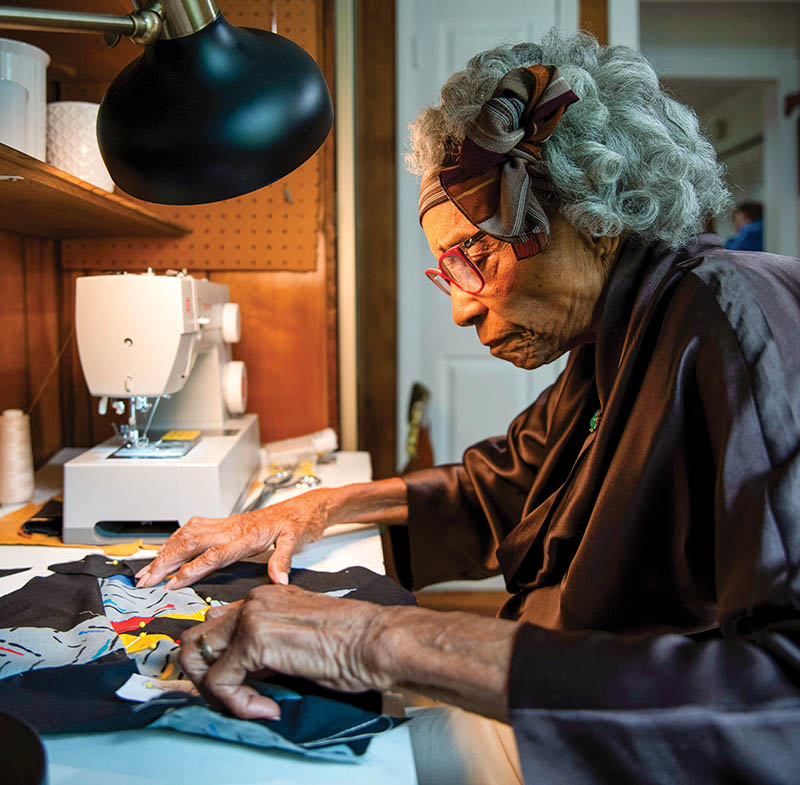
“I put that motor on myself, and that made me be able to sew a little faster, and I could get things done quicker,” she remembered.

Edmunds was a stay-at-home mom after she started her family, but once her daughter, Amy, started school at Sinai Elementary, Edmunds got a job as a teacher’s aid there—but she never stopped sewing. She went on to work in the fabrics department for Belk’s, where she spent 18 years of her career.

“I crocheted, I did needlework, I did embroidery. All of this was a part of my…I call it my career of sewing,” she said.

Edmunds passion for sewing and, in particular quilting, pivoted and grew when she learned about how textiles were said to be used in the Underground Railroad.

“I guess it probably was about 15 years ago, may not have been that long. I was reading a little magazine called Guidepost, and in that little book, it had a picture of the Underground Railroad in it… I ordered the pattern of the Underground Railroad, and I made the first hanger, and it turned out so pretty,” she said.

From there, Edmunds tackled more patterns and learned about their symbolism as she went. She read books on the history of the Underground Railroad, and when the movie Harriet came out, she and her daughter both loved it; Harriet Tubman’s story spurred Edmunds’ interest in the Underground Railroad.

In 1860, around the time of the Civil War, Virginia had the largest enslaved population of all the Confederate states. Four generations of the Edmunds family have come from Halifax County. According to the 1860 census, enslaved people made up the majority of the county’s population. Nelson Edmunds, Amy’s great-great-grandfather, was born on the Red Field plantation there.
He would have been five or six years old at the time of emancipation, Amy—who researches her family’s genealogy—said.

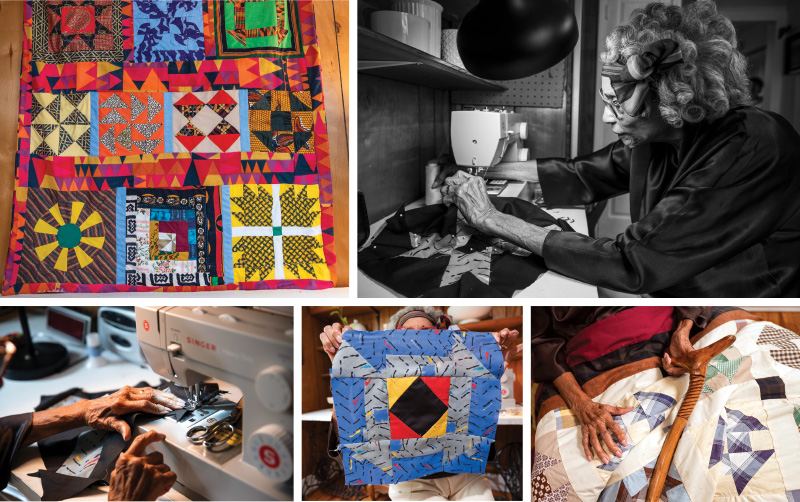
While none of her ancestors ever escaped —at least not to the Edmunds’ knowledge—Edmunds was nevertheless fascinated by the inventive ways abolitionists, allies, and escapees operated the famous covert network. The story of the quilt code is one where messages were hidden in plain sight, under the guise of commonplace household items that would seem totally innocuous to individuals who weren’t in the know.

These quilt patterns were fascinating and also challenging for Edmunds to undertake.

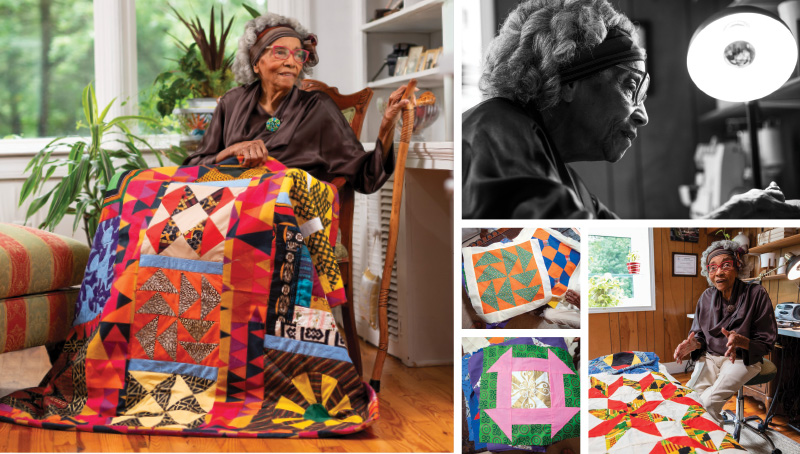
The Crooked Path, for example, is tricky to achieve due to the cut of the pattern.

“That means that… you can’t walk straight,” Edmunds said. “They walk zigzag, so if somebody is trying to catch up with them, they can’t follow their crooked road.”
Whether taking a crooked path or a straight one, passengers on the Underground Railroad could identify allies by a “shoofly” pattern, made with four triangles around a center square.

“The shoofly is a person who would secretly help the enslaved. By that, I mean…this secret person would hide the enslaved in caves, or a church, or graveyard. He would do that, risking his own life,” Edmunds explained. “He would give them clothes to clean themselves up so they could go downtown and pass as free. They would be dressed in clean clothes, because when you’ve been walking to escape, your clothes get dirty.

So, this shoofly, he would help them.”

The bear paw pattern is characterized by four squares in the center, with outer edges that look like a bear’s paw.

“That bear paw, it tells the enslaved to follow the bear. It would go to where food and water were,” Edmunds said.

The flying geese; the bow tie, or hourglass; Jacob’s Ladder; nine-patch; the North Star; all these patterns are associated with the tradition of a quilt code.

Pattern recognition was the key to reading these symbols, Amy said: any colors could be used, but the colors themselves did not hold meaning.

“To look at the bear claw, somebody may have made it using blue and red. Somebody else may have made it using all black, but they would have had to have been able to focus on that design, to recognize it, no matter what the color or how incremental the seamstress had made the different parts, but to still be able to see that overall design,” she said.

These patterns could theoretically be combined to form messages, as well.

“That’s part of the intrigue in creating these images. It’s like, how many messages can I combine? Or, what if I wanted to try to create a message that has multiple meanings? And you can do that. You can imagine that, but I also have such an appreciation for the eye that the guide must have had, to be able to see the design so clearly, in spite of it being different every time,” Amy said.

Quilting takes a lot of time, and a lot of materials. Enslaved women who endeavored to make any of these patterns likely had extremely limited resources. Amy added: “There was no JoAnn’s Fabric.”

“From our perspective, it was difficult for us to imagine them making a full-sized quilt with a repeating pattern of the same square. It occurred to us that it is possible that they may have made something similar to a string quilt, and then just attached almost like an applique, one of these patterns,” she said. “If you knew what you were looking for, you would recognize it.”
Perhaps due to limited textile resources, the patterns were sometimes etched in dirt or marked elsewhere in another fashion.

Travelling the Underground Railroad was treacherous for anyone involved.

Out of the numbers of enslaved people who fled, relatively few made it all the way to freedom, Amy said.

Edmunds has been on a mission to educate others about the Underground Railroad, and the story of the quilt code, sharing her interest in the general history of the system, but also her perspective as a seamstress.

She has visited schools where she showed children how mathematics and art collide when it comes to quilting, hoping to inspire them, and demonstrate how the subjects they learn in the classroom apply to real life. The wagon wheel pattern is a prime example.

“The wagon wheels have a lot of different angles to be cut, and put together,” Edmunds said. “I told them, I said, ‘Now, all these pieces are not the same. You’ve got a rectangle, you’ve got a triangle, you’ve got a square.’ I said, ‘You’ve got to know how to measure to get those angles just right. If you don’t, your pattern’s not going to come out right.’”

Edmunds has done a variety of other engagements where she educates communities about the Underground Railroad and the quilt code. She brings samples of her work along, displaying them for audiences to examine as she delivers an informational presentation. She has participated in television interviews, a segment with NPR, and worked with various news outlets.

At 99 years old, quilting and educating remain Edmunds’ passions. She has no plans to slow down. She brings textile projects with her even on car rides. Looping is one of her more recent practices, in addition to embroidery, crochet, and quilting.

“I just like staying busy,” she said.


Painting with a Purpose

Emily Flint reflects on personal life through art

By: Christian Shields | Photos By: Ashlee Glen

With a passion for painting and a heart for her family, local artist Emily Flint tackles tough, personal mental health struggles through her craft.

Growing up in a family of artists and art enthusiasts, Flint found a deep appreciation for beauty at a young age. She attended Savannah College of Art and Design and Virginia Commonwealth University to pursue degrees in photography and art education, respectively. In 2009, she discovered a specific affection for painting and has continued that pursuit ever since.

The mother of three girls, who she affectionately refers to as her “little muses,” Flint draws heavily from the themes of family and emotion to cultivate her masterpieces. In doing so, she not only hopes to develop a stronger relationship with her children but also provide herself an outlet to release any pent-up tension.

“It’s vital for me right now, because, for one, I find parenting to be pretty stressful,” she said. “This is a way for me to process that stress in a positive way. It’s also a way for me to refocus on my kids and see them in a different light. … My hope is that it is making me a better mom, so I can show up better for them.”

Flint also draws heavily from her past and current mental health struggles, illustrating them on the canvas through the symbolism of stinging insects.

“[Mental health has] come such a long way since I was a child as far as awareness and stigma, but there is still a stigma attached to certain mental illnesses,” she said, noting she has battled major depression since the age of 12 and has a long history of anxiety and ADHD. “I am pretty passionate about being honest and being vocal about mental illness and how it can show up.”

While she often begins her pieces with a surreal idea of what the finished result will be, she is also not afraid to just get messy with the paints and find catharsis in the process.

Flint joined the Lynchburg Art Club three years ago but has become much more involved in the past year, now serving as the group’s head of marketing. Through everything she does, she hopes to be a light in the lives of others and help them find a sense of belonging.

Emily Flint, Artist

“To feel like you’ve impacted someone [to change their lives] is really special,” she said. “Often, artists have a lot of guilt or a feeling that their art isn’t important enough to pursue. Sometimes I have wondered whether this is a worthwhile venture. To feel like you’ve actually connected with somebody and actually helped somebody through something would be the ultimate goal.”

Flint has exhibited her work in Lynchburg and nationally. This year she has participated in the Lynchburg Art Club’s Georgia Morgan Show, Portrayed: A Juried National Exhibition of Portraiture at Norfolk’s d’Art Center, The Academy Center of the Arts National Juried Art Exhibition, and Steven Francis Fine Art’s A Show of Portraits: Phillip Geiger and 23 Artists. She is currently showing at the Axis Gallery in Sacramento, California, and participating in the 52nd Annual Lynchburg Art Festival.

Readers interested in learning more about Emily Flint and her craft can connect with her through her website, emilyflint.com, and Instagram account, @emilyflintart.


Artist Profile: Elizabeth Gray

The Audacity to Try Elizabeth Gray’s Colorful Path to Creative Joy

Photos By: Ashlee Glen

Elizabeth Gray never set out to be an artist. In fact, her first creative pursuit was edible—wedding cakes, to be exact. “I was living in a small apartment while attending culinary school and found myself saying ‘yes!’ to make wedding cakes for friends,” she recalled. “It made sense—I’d always loved creating with food, especially sweets, plus I was achieving a personal goal to work for myself.”

But then, according to Gray, things just snowballed into more than she could handle for her small, in-home operation. With no space for expanding her business and health concerns mounting, Gray knew she had to pivot.

What she found was a new medium, one that began as a therapeutic outlet: hand lettering.

“What started as a hobby for stress relief has turned into so much more,” she said. “All creative things are connected in a way.”

Today, Gray is a self-taught lettering artist, illustrator, and muralist whose work blends crisp lines, vibrant colors, and a whimsical spirit that refuses to be boxed in. From black-and-white compositions to playful gel nail designs and large-scale public art, she’s continuously evolving. Her style?

artist Elizabeth Gray

“Crisp, colorful, and adventurous,” she said. “When I feel stuck, I shift.”

Gray’s creative journey hasn’t been without hurdles—chief among them, the internal doubt of not having a formal art education. “I’ve often felt less than because I didn’t go to art school,” she admitted. “But I also don’t think, had I done that, I could have specialized in lettering in the same way I have now.” Instead, she’s built her skillset through experimentation, books, online classes, and a healthy dose of “delusional confidence.”

That openness to learning, she says, allows her to trust her instincts and follow ideas—even when they seem strange. “Food keeps showing up in my work—it feels personal, and right, and it’s something I have a deep connection with.”

Virginia’s natural beauty also plays a role in her artistic perspective. Whether she’s painting state birds and blooms in a mural or simply noticing how the sunlight hits her kitchen floor, Gray finds meaning in the ordinary. “Didn’t someone call it ‘the art of noticing?’” she said. “There are SO many mediums and so many ways to express yourself—but no matter what you make, it will always be your style.”

She’s brought that personal style to partnerships with brands like OPI, Sharpie, and TikTok, always on her own terms. “They hired me for me,” Gray said. “Instead of feeling pressure to reinvent myself…I remind myself that I don’t have anything to prove.” The key, she believes, is blending strategy with authenticity.

artist Elizabeth Gray

Her murals—bold and community-minded—have taught her to problem-solve in ways that go far beyond color palettes and typefaces. “Public art always has specific goals…. Murals can make or break the vibe of a space,” she explained. “I’ve painted through intense heat, freezing temps, and utter exhaustion… but the feeling of completing a huge project like that is nothing short of euphoric.”

Equally impactful is her coloring book, a passion project born out of a desire to offer others a no-pressure space to create. “Sometimes, you don’t want to have to have the idea but you still feel the urge to create,” she said.

“I hope it encourages people to take time for themselves.”

Gray’s candor extends to her online presence, where she’s cultivated a community of fans and fellow creatives. She attributes that growth to one thing: showing up as herself. “If you’re not enjoying what you’re making, odds are, others won’t either,” she said. “Lean into what you like.”

Whether she’s filming a voiceover with wired headphones or sketching mural ideas on her apartment walls, Gray isn’t waiting around for permission. “If I had waited until I felt ready to share my work, I’d probably still be waiting,” she said. “Choose yourself… and just try something.”

That spirit—bold, introspective, and joyfully curious—is the thread running through all of Gray’s work. “Create, fail, learn, repeat,” she said. “Oh, and don’t read all the comments.”


The Music Hall: Big Sound, Intimate Setting

Academy Center of the Arts expands its reach with a space designed for connection and community

Photos Courtesy of the ACADEMY CENTER OF THE ARTS

Tucked just below the growing campus of the Academy Center of the Arts, The Music Hall is fast becoming one of the most unique and accessible performance venues in the region. Though small in size—its capacity hovers around 100—the venue offers something big: opportunity.

“It’s a small, intimate venue that puts the artist with the audience,” said Joel Williams, Director of Marketing for the Academy Center of the Arts. “We wanted to create a space that could house upcoming local and regional artists who don’t have to worry about filling 300 or 400 seats—or doing a lot of legwork to get their name out there.”

That accessibility isn’t just for performers. One of the core values of the Academy is being community-focused, and affordability played a major role in the creation of The Music Hall.

“Part of the reason we were able to reopen the Academy’s doors [in 2018] was because the community got behind us,” Williams said. “But the cost of operating an event at one of our larger venues can price some artists or performers out. This provides the same Academy quality on a smaller scale and at a lesser price point.”

The Music Hall comes fully equipped with sound equipment and a full bar, creating a professional performance experience without the pressure or expense of a large venue.

And while it lives up to its name with a focus on live music, the space is intentionally versatile—from R&B to rap to hardcore to theatrical improv.

“You won’t see the same genre over and over,” Williams noted. “A lot of venues in town are often tied to a bar, brewery, or a restaurant, where the music can be more about background atmosphere. Here, people come for the performance itself. It’s a true entertainment venture.”

Photos COURTESY of the ACADEMY CENTER OF THE ARTS

Photos COURTESY of the ACADEMY CENTER OF THE ARTS

The setup shifts based on the show. For a jazz performance or cabaret-style event, tables with small lights create a cozy, club-like ambiance. For a high-energy night, the tables are cleared to open the floor for standing room. It’s this adaptability—along with the Academy’s broader programming vision—that allows The Music Hall to bring something fresh to the table each week.

With a goal to host live shows every Friday night, the space is also a launchpad for emerging talent.

“If a show sells out and gains traction, there’s opportunity for them to come back and perform at The Warehouse [the Academy’s 600-capacity space],” said Williams.

“That gives artists a pathway to grow their audience while still staying connected to their roots here in Lynchburg.”

In addition to its performance lineup, The Music Hall is available for rent at an affordable rate. With a built-in PA system, full bar, tables, and flexible layout, it’s an ideal spot for everything from small wedding receptions to retirement parties.

Looking ahead, the team at the Academy hopes to continue using the venue as a platform for growth and inclusion.

“We’ve already had two bands ‘graduate’ from The Music Hall to The Warehouse.

That’s the goal—our venues scale with the artist’s audience. And because we’re community-driven, we want the space to continue being a resource, whether for celebration, creation, or connection.”

The Music Hall is actively seeking local and regional performers to perform in the space! If you are an artist or performer, visit academycenter.org/
music-hall-artist-submissions.


Upcoming Music Hall Shows

July 9, 16, 23: 7 PM
Creatures & Cocktails (ongoing series)

July 11: 8 PM
DAT Gold in aJe (feat. Even Back, Doe, Lil Joe)

July 18: 8 PM
The Second Wind Band

July 19: 7 PM
Downtown Comedy Crew

August 1: 7 PM
Broke Theatre Kids:
Live on Stage

August 15: 8 PM
Travis Reigh LIVE
August 22: 8 PM
Jairus Mullen & Taylor Win
“Us and Them”

August 29: 8 PM
An Evening with TJ Lawson


Nostalgia under the Stars

29 Drive-in Theater’s Old-Fashioned Charm

By: Anna Eileen White / Photos By: Ashlee Glen

Picnic tables, old patchwork quilts, and bug spray alone might be enough to evoke glowing memories of summer evenings. But, if there’s any doubt, the 29 Drive-in theater has a few more ingredients. There are sizzling smash burgers and fries, soft-serve ice cream in sugar cones, popcorn, a playground, a projector screen cozy against the wood line, and warm-hearted folks—everywhere.

The aura isn’t an accident. Jamie and Candice Ohler and son Jesse have nurtured this plot of land, located approximately five miles south of Lynchburg on Route 29, turning it into a community hub. It is currently home to two food trucks—I Scream You Scream and Gorilla Grill—the new 29 Drive-in, and a growing number of events.

Tonight, the grassy parcel is daubed in the technicolor of simpler times. Even first-time drive-in theatergoers will sense a familiarity, questioning whether they’ve been here before.

Is it the fire-kissed breezes drifting from the grill? The soft earth anchoring tired feet beneath the picnic table?

These simple motifs are summer classics, but for the Ohlers, cultivating the magic of summer evenings at 29 Drive-in has taken determination. Through challenges and obstacles, they’ve focused on serving the community and seen God’s provision in the unexpected.

The Ohlers have been in the food services industry intermittently for over two decades.

A deli, a hotdog stand, and a pizza parlor were all part of their story.

When they first bought I Scream You Scream, now in its 4th season under Ohler ownership, they were also operating Papa O’s Pizza in Forest. Initially, they operated the ice cream trailer out of a leased lot near the Route 29 Food Lion, an ideal location which they believed was unlikely to sell any time soon. It was a community staple. All was well until the lot did sell, and a major gas station began site work.

Though frustrated, they began scouting new locations. The search took them as far as Smith Mountain Lake and Bedford as they worked with multiple real estate agents and even began contacting property owners through information found in the regional GIS systems. The options were sparse.

Then, another blow hit. The walk-in cooler at Papa O’s Pizza went down. “It was just kind of one of those things where you throw your hands up and you’re like, ‘What the heck? What is going on here?’” Jamie (“Papa O” to the community) said.

Defying the discouragement, Candice made a suggestion, “Mama O, in her awesome wisdom of womanhood, basically said, ‘Let’s just get out of town. Let’s go to Rustburg and eat out at La Carreta,’” Papa O recounted.

The drive took them past an unexpected sight—a parcel of land with a newly placed “for lease” sign. They called the owner before reaching their destination and signed a lease the very next Monday. The owner later recounted the story of another interested lessee who would have gotten the space had the Ohlers called him even two hours later.

“It was a total God thing,” said Papa O.

Even with significantly higher overhead, the Ohlers were excited about the property’s potential. They moved the ice cream trailer and started dreaming. “As the season went on, our son came up with the ideas like, you know, ‘Wouldn’t it be great if we get a drive-in board meetings led to a successful trial-run in October 2024 and then the start of their first season on April 1, 2025.

Now, every Saturday at 7:15 p.m. cars roll in, ready for a show; shows that they’ve often helped pick through polls published by the Ohlers on social media.

Papa O bounces from vehicle to vehicle, finding each new batch of visitors a clear line of sight. Nothing is an inconvenience, not even the oversized pickup trucks that dominated the recent “Cars” showing and maxed out the parking space. “It’s not an issue,” Papa O explained. “That’s the fun that happens before the show!”

Everything is done with a smile and his “serve, care, inspire” ball cap is a fitting, if redundant, nod to what so clearly motivates the Ohlers. “If you focus on serving people, and those individuals can honestly feel that you truly care, it will inspire them to want to be around you and for them to do better in life as well. So that’s what we teach our staff,” shared Papa O.

Candice is focused on satisfying customers’ sweet tooths, and a queue snakes further and further away from the trailer. “We love ice cream in and of itself, but the experience with the customers and the kids having a good time, we weren’t expecting that at all. That’s just such a bonus,” said Papa O.

“All you hear is laughter and joy.

There’s something remarkable about that atmosphere.”

Feathered clouds overhead turn to pink as Jesse and team serve up a few more burgers from the window of the Gorilla Grill. The grill is his own creation and an increasingly popular lunch spot for those who work at businesses along Route 29. Diners are chatting over piles of crisp fries and sharing with friends what they can’t finish from the generous portion sizes.

Visitors fiddle with car radios and boomboxes and toss quilts over the soon-to-be dewy grass. Another douse of bug spray won’t do any harm.

Things are settling.

One couple who recently celebrated their 49th anniversary said they were regulars at their local drive-in theater while dating and newly married.

They remembered the way things were: larger than life screens and parking lots that accommodated hundreds of cars. Now, nearly 50 years later, they still have only one expectation for the evening: fun.

Papa O says he’s even seen grandparents bring their grandkids, “It’s so cool because they’re reminiscing about the days when they were young.” Motioning across the lawn he said, “I mean, look at this—seeing all these people, it just tickles you inside.”

Parents are braced for popcorn refill runs, and the best dog-sitter in the world settles in with two pups, ready to watch her late stepmom’s favorite movie.

A vintage movie bumper elicits chuckles from the crowd. It insists that young lovers refrain from public displays of affection.

Twinkling sky above, and friends all around, Papa O is right: “It’s not just a drive-in, it’s an experience and a community destination.”

For some, this is the new flavor of summer, for others, the old. For everyone, it’s a change of pace that makes room for all of the season’s best.


Trafficked for Adoption

A Lynchburg Woman Learns to Forgive After Being Kidnapped as a Child

By: Megan L. Horst | Photos By: Ashlee Glen

In the small rural village of Kakinada, India, lived a young girl. Born into poverty, captured, and trafficked before she was even eight years old, Devi reflects on her hardships and faith in Christ that has not only sustained her but allowed her to forgive those who kidnapped and abused her.

When Devi was a young girl, her mother ended up living on the streets and, out of necessity, turned to a life of prostitution.

“[At the brothel] we lived in one bedroom with six people,” Devi said. Her two brothers also lived with them. Devi worked a number of jobs, as do many children in India who are born into poverty. She recalls cleaning houses, selling snacks at the theater, and her favorite job—selling spices at the bazaar.

“Child labor is very common in India,” Devi said.

When the brothel was eventually shut down, Devi and her family ended up on the streets. Her mother became ill, and she was taken to a hospital with horrendous living conditions. Regardless, Devi did not want to leave her mother’s side.

“I slept under her bed on the floor,” Devi said.

“I just wanted to be with her.” After nearly a month of taking care of her mother in the hospital, a man who noticed their situation approached them, offering to take Devi to find work.

“Again, child labor is common in India,” Devi said. He promised to take Devi to a workplace and bring the money Devi earned back to her mom, assuring Devi she could come back to visit. Although she did not want to go, she knew her wages would help with her mother’s medical care. She never imagined that her mother would pass away that same night, and that would be the last time she saw her.
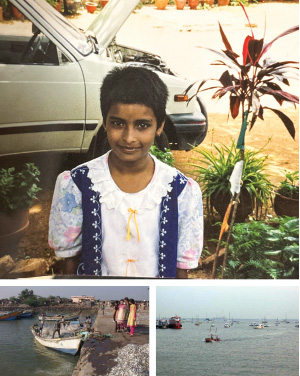
The man took Devi on a nine-hour train ride to an orphanage, where he was compensated for bringing her.

“He sold me to that orphanage,” Devi said.

“I remember them exchanging money in front of me.” At that moment, Devi knew she had been trafficked.

Devi soon discovered that she was not alone.

There were many other children who had been trafficked. The “orphanage” had a valid license; however, it was, in fact, a front for child trafficking. All the children at the orphanage had been kidnapped and were held until someone overseas wanted to adopt them.

“Every kid in that orphanage had a story to tell,” Devi said. When a child was brought to the orphanage, their hair would be cut, their names would be changed, and they would be told that their families were dead. Changing their identity and leading them to believe there was no family to be reunited with was a deterrent to running away.

Devi explained that they were not treated well and were put to work in the rice field, on the farm, and in charge of caring for the younger children. The girls were physically, sexually and mentally abused, but whenever prospective parents came from overseas to visit the orphanage, they would “put on a show.”

“They’d get all these workers to come and pretend they were working there,” Devi said. “We put on nice clothes, and they fed us. It was like a showcase.” Although the children were all kept in one room, there were other rooms in the orphanage, such as a dining room, that were kept nice and only used when prospective parents came to give the illusion that the children were well cared for.

“It was all a lie,” Devi said. “Behind the curtains, no one knew what was happening.” Most of the children were eventually adopted. The international parents who paid high adoption fees had no knowledge that the child they adopted had been a victim of human trafficking.

Like many of the children, when Devi learned she was going to be adopted and taken away from India, she tried to run away with other girls from the orphanage. Their plan did not work, and they were caught, brought back to the orphanage, and badly beaten.
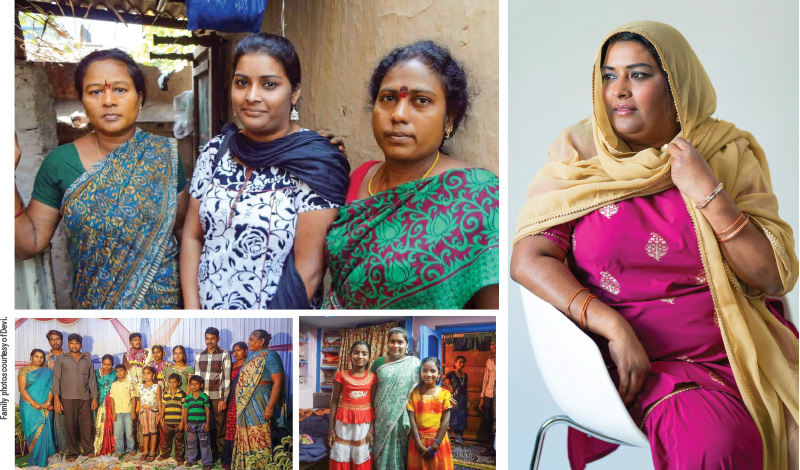
In 1998, after being in the orphanage for two years, Devi was adopted by a family in Virginia.

“I didn’t want to be here,” Devi said, remembering the days following her arrival. “I hated it here.” Aside from dealing with the trauma she had endured, without knowing any English, coming to the U.S. was challenging for Devi, and she struggled to communicate with her new American family.

“She [adoptive mom] labeled everything in the house to teach me,” Devi said.

Once she was able to communicate, Devi told her adoptive parents what had happened to her and explained she was not even an orphan; however, they were skeptical of what she claimed.

“Who would believe a kid?” Devi said. Her adoptive parents were given death certificates of Devi’s biological parents, however, the certificates were fabricated. Around the same time Devi was trying to convince them of her story, there were two other girls from the same orphanage who had been adopted by a family in Alabama, and they were speaking out about their story. Their adoptive dad worked to bring awareness to the child trafficking ring that was fronting these adoptions. The orphanage was eventually exposed, and the owner was arrested.

When Devi was in high school, she returned to India and was reunited with her family.

“When we got there the first day, to my hometown, the streets where I grew up, everyone was still there,” Devi said.

She discovered that her town and family had looked for her after she disappeared, but with limited resources, they could never find her and assumed she was dead.
Although Devi’s parents were Hindu, she had heard about Jesus as a young child. While in the orphanage, she did not know Jesus as her Savior yet, but there were times as a child when she felt the Lord’s presence and comfort.

“I didn’t become a believer until I came to my U.S. adoptive parents,” Devi said.

“It came easy to accept it because I was aware of it. It clicked.”

Trying to heal from her experiences, in 2012, Devi again returned to India for a visit and decided to find the location of the orphanage, which had been converted into a glass business. Upon visiting the location, she came face-to-face with one of the people who had run the orphanage. He claimed not to remember her, but she remembered him.

“You don’t have to remember me,” Devi told him. “I was just a number to you. You were making money out of us.”

When Devi was about to leave, he asked if she hated him, and she said no, but she hated the system and what was done to so many children. She explained that the only reason she was able to forgive him and the others who abused her was because of the Lord.

There are still times that Devi strives to feel close to her Indian heritage by cooking Indian food, watching a movie, and crying over the memories of her past, but then she can let go of the hurt and move forward, giving it “all to the Lord.” She said you must decide how you allow your past experiences to affect you.

“You have to make that decision,” she said. “It can eat you up; let the poison get the best of you, or you can make peace with it and move forward.”


Artist Profile: JoAnne Becker

Making a Difference

A local artist uses her skillset to create beautiful works and foster Lynchburg’s growing art scene

By: Christian Shields | Photos By: Ashlee Glen

Tucked away on the third floor of the Bailey Spencer Hardware building on Lynchburg’s main street, the Studio 3 Art Gallery provides patrons with a wide range of artistic expertise, all courtesy of owner JoAnne Becker.

From woodworking to abstract paintings, portrait photography, family history books, and more, Becker has a self-described “compulsion to create things.” This desire to create beauty causes her to try her hand at many different art disciplines with a high level of success. This often leads to unique combinations of photography intertwined in other art forms, such as her custom cigar boxes.

“It’s a good day when I create something interesting,” she said with a smile.

Becker originally moved to Lynchburg from Maine eight years ago. During a conversation with Bailey Spencer owner Michael Pearl five years later, she was offered the chance to rent the third-floor studio space and she jumped at the opportunity.

While Becker places high value on her creations and takes pride in her work, she refuses to hoard these treasures or over price them for her own personal gain. She instead keeps her prices reasonable and also features low cost items to ensure everyone who walks into her studio can take something home if they choose.
“Really the impetus for this is I love what I do, and I want to share that with people,” she said. “It makes people feel good to have their portraits done.
I get satisfaction taking photographs, but it’s also really rewarding to see them go somewhere where people will enjoy them. Whether I give them away or sell them, it’s the same feeling.

It’s not about the money, it’s about sharing what I do.”

This heart for the community extends beyond Becker’s approach for selling her own products. On Saturdays, she hosts a maker’s market in which local artists of any age can set up a table in her gallery to sell their wares. Rather than seeing other artists as competition, she sees them as fellow craftsmen.

“Art is very personal, so it’s hard for some artists to put their work out there for everyone to see, it definitely was for me,” she said. “I am grateful to be able to help young artists at Studio 3 and watch them gain the confidence and fortitude they need for success.”

This summer, Becker will hold her first solo art show, “Beauty of the Unexpected,” at the Up Front Gallery at the Academy Center of the Arts, with an opening night on June 6 from 5 to 8 p.m. The show will run through July 26.

Explore JoAnne’s paintings and photography at joannebecker.com and connect with Studio 3 Art Gallery on Instagram at @studio3lynchburg.

You can find JoAnne’s custom cigar boxes online at creativecigarboxes.com.


Artist Profile: Anthony Bowes

Painting with Purpose: Artist uses his talent and love for art and nature to inspire others

By: Megan L. Horst | Photos by: Ashlee Glen

As a born and raised Virginian, Anthony Bowes grew to love and appreciate the Blue Ridge Mountains and has drawn inspiration from the beauty of God’s creation.

“I’ve always enjoyed the outdoors and getting outside, so that plays a big part in my inspiration coming from the landscape,” Bowes said. He explained that when he looks at something, he sees it from the point of view of an artist.

artist Anthony Bowes

“Ultimately, my goal is to represent the thing that I’m depicting while drawing attention to how I experience God’s natural world,” Bowes said. “It’s my hope to invite the viewer to pause and reflect on the landscape in a way that is both intimate while expansive, capturing the restless beauty of the Blue Ridge Mountains.”

Bowes began his career as an artist at a young age. With the encouragement of his grandmother, who was an art teacher, Bowes first showcased his artwork at the age of seventeen. Shortly thereafter, he painted a portrait of a fallen State Trooper, gifting it to the trooper’s family.

“Their reaction to my painting changed my life forever,” Bowes recalled. “It was this painting, and how I saw it affect a family in such a positive way, that led me to truly believe in myself and my art.” This experience gave him a passion to bless families who have lost loved ones with paintings.

“I want to continue to give back in that way,” he said.

Since his career launched, Bowes has sold over 400 paintings. He has also won “Best Artist Under 30” for Plein Air Magazine, and one of his oil paintings won a second-place award at the 31st Annual Art Show of Moneta, Virginia.

Although he has been successful, he made a point to note that it has not always been an easy journey.

He desires to encourage other artists to continue pursuing their talent even when it is challenging or when you must work a side job to support yourself as an artist.

“Just because you’re doing something on the side doesn’t mean you are not an artist or any less of an artist,” Bowes said. “Just because things aren’t going the best now doesn’t mean God still doesn’t have a plan for you and the gifts that he has given you.”

Bowes said he never takes the gift the Lord has given him for granted.

He has a desire to use his talent to help others and has found ways to not only inspire people through his paintings, but also raise funds for various organizations. One of the charities he participated in was a series of auctions that benefited the Virginia Capital Trail Foundation and the Christian Wood Scholarship Fund.

“Originally, I tried to do all this stuff for myself in trying to find my identity,” Bowes said. “But now I just give glory to God for the gifts he has given to me and not take them for granted.”


A Home to All

Palmera House Opens on Bedford Avenue

By: Izzi Diaz Young | Photos By: Ashlee Glen

Cozied up near the corner of Bedford Avenue is a brand new place where friends, family, and co-workers alike can gather. This venue combines a love of community, a passion for beautiful spaces, and an appreciation for healthy meals. Open since January of 2025, Palmera House has quickly become a pillar in the downtown-adjacent community, welcoming guests with its stunning design, heavy use of natural elements, and comfortable nooks.

Owner Erica Kerns-Calfee always had the concept of a place just like this within her heart. She began her professional career in varying corporate industries, spanning from transportation to interior design. She later transitioned into retail, where she worked at Pottery Barn and J.Crew. Through these career steps, Kerns-Calfee began to better understand the customer experience: what a shopper encounters both visually and experientially is crucial to the bigger picture of any business.

As a longtime lover of Bedford Avenue in Lynchburg, Kerns-Calfee reunited with the street and the city after spending a decade in Texas. She was then, and still is, a frequenter of the businesses that are now her own business’s neighbors, such as Golf Park Coffee and The Dahlia.

“I love spaces that have a magnetic pull,” she said. “I always thought, one day, I want to create something like that. A place where people love to be.”

After returning to Lynchburg, Kerns-Calfee joined the Moore & Giles team as VP of Product Development, Merchandising, and Design, where she worked for three years.

“I have such an appreciation for leather now; its history, anomalies, and how we should choose this material over things manufactured,” she noted. “Taking what could have been waste and turning it into something beautiful and loved for generations. It’s the patina that happens over time to furniture, vessels, leather, and art that makes them so coveted and special. These are the same layers you’ll find in Palmera House.”

Her unique vision and love for all things reclaimed soon took shape into a clear picture. She discovered that the establishment once holding Elliott’s Cleaners was under new ownership by Penny Lane Properties.

Palmera House. Photos By: Ashlee Glen

“I’ve been in the corporate world for nearly 30 years, so the thought of stepping away and taking this risk felt equal parts terrifying and invigorating,” she added. “We have this one little life to live and to learn, and taking chances is a big part of what gives our lives meaning. So, I decided to go for it.”

She crossed her fingers, pitched her concept, and just like that, Palmera House was in the works.

But the transformation didn’t happen overnight. The building had nearly no roof, no working water or sewer, no working electrical, and broken windows. With the goal of adding two additional floors for apartments above the future shop, there was work to do.

Despite all the challenges these issues may have presented, her imagination cut through.

“I saw it. The exact shop, just as it stands today,” she recalled. “I could see the bodega counter, the living wall, the rugs hanging, all of it.”

From there, the process of turning an aged structure into a new and modern cafe, lounge, and boutique truly began.

“I started with the layout of the space and identifying the partnerships I would need to make it all happen,” Kerns-Calfee remembered. “Then, the collecting began. The basement of my home became an incredible Tetris-like room of furniture pieces. I love that all of them have lived a long life before now and are being rebirthed in a new space to be enjoyed and loved again.”

The intricate and distinctive design choices within the main lounge area itself are only part of the overall picture. When visitors arrive at Palmera House, it might also be in their best interest to come hungry, ready to indulge in some of the flavorful options that span across the menu of Palmera Bodega, the cafe within the business.

“The menu was another fun creative moment,” Kerns-Calfee added. “I love smoothies, bowls, and salads, so I went to work crafting a menu of items that were recognizable, but with a few fun differentiators.”

Palmera Bodega, open from 7 a.m. to 7 p.m., offers guests a menu filled with salads, smoothies, and frozen paletas, to cold brew directly from the shop’s adjacent establishment, Golf Park Coffee. After patrons enjoy their meal, they are invited to travel to the retail side of the shop, where they can discover esteemed brands such as Abigail Ahren, Berg’s Potter, and John Derian.

The living wall serves as any plant-lover’s dream and beyond, as it is overflowing with a variety of alluring plants, pots, plant-care, plant accessories, and more.

The unmistakable comfort and relaxed feel of the shop comes from Kerns-Calfee herself, as she relayed how much it resembles her own living space.

“It’s an explosion of plants and greenery, layered with antique pieces, and stacks of books in every corner,” she continued.

“Home is about surrounding yourself with the things that you love. That is what Palmera House is for me. I hope others fall in love with those things too.”
In conjunction with serving as a bustling cafe during the day, Kerns-Calfee noted her favorite time in the shop is from 4 p.m. to 7 p.m.

“I love when the sun dips, the lights are low, and there is this incredible energy shift.

We pour natural wines and open craft beers,” she said. “Friends are gathering to catch up, play cards, or decompress from the workday.”

The community that surfaces during these hours creates an extremely special time for all who step inside, including Kerns-Calfee, who is reminded of her initial prescience of the space.

Palmera House. Photos By: Ashlee Glen

When inquired about any future dreams for her business, Kerns-Calfee hopes that it will be a place where people simply love to be. She said she wants it to be the first place someone thinks of when deciding where to go, a place where people enter the doors and immediately feel home.

“I want everyone who walks in to enjoy being here: working, having meetings, and spending time with friends,” she explained. “I want them to always find warmth and kindness from our team.”

The love that Kerns has for the city of Lynchburg is evident. She fondly referred to her town as a “boomerang city,” a place where many of the current residents arrived in their youth and then left to explore other cities and opportunities. But, like so many, Kerns-Calfee made the decision to come home.

“The magnet-pull of Lynchburg stays in the heart. It is such a special place,” she gushed. “I speak to so many people who, like me, have left and returned. To come back to a city I love and create something beautiful for the people who call Lynchburg home truly feels like a gift.”

What’s next for Palmera House? In 2025, the business’s sister company, Casa Nueva on Fort Avenue near the City Stadium, will open as well. Kerns-Calfee described this venture as “a large and incredibly beautiful space that, like Palmera House, will be filled with greenery, bringing the outdoors in for private events.”

The Casa Nueva space will be available for rent, where it can hold larger events or special occasions with an overall ambience that resembles Palmera House.
“If you dream of an outdoor event, but fear the unpredictability of weather, Casa Nueva could be the perfect location! We’re hoping to have the space ready to rent in April of 2025,” noted Kerns-Calfee.

Palmera House reaches out to the community of Lynchburg, welcoming everyone in with not only idyllic ambience, noteworthy meals, and specially curated products, but with a hug and a warm presence that reminds any who enter that this place is their home, too.