Art Across the Ages

Lynchburg Art Club & Gallery Continues to Preserve—and Make—Local Art History

As I toured the Lynchburg Art Club & Gallery’s headquarters on Rivermont Avenue, I was struck by the balance between tradition and innovation and by a sense of nostalgia alongside a sense of excitement about what the future of art could look like in Lynchburg. Founded in 1895 and still going strong today, the Lynchburg Art Club is both a steward of Lynchburg’s rich visual arts history and a leading player in building its future.

LAC’s permanent collection, which currently consists of over 90 paintings, features the work of LAC members past and present and serves as an account of Lynchburg’s visual arts history. “We have the responsibility of restoring, preserving, and protecting that incredible body of work,” says Jennifer Staton, Manager of the Lynchburg Art Club. “The way I see it, we are the ones who get to tell the stories of the brilliant and forward-thinking founders who, really just as the Civil War was ending, recognized that it is the arts that bring communities together. Lynchburg truly was so far ahead of its time and an arts and culture mecca of sorts then.”

The oldest pieces in the permanent collection are those created by the founders: Bernhart Gutmann, Louise Jordan Smith, and Georgia Morgan. Gutmann was the first supervisor of art in the Lynchburg Public Schools, Smith was once head of the art department at Randolph-Macon Women’s College (now Randolph College), and Morgan was once chair of the art department at Lynchburg College (now University of Lynchburg).

“The permanent collection is used as a teaching tool for our members and the community to study, appreciate, and learn from these accomplished pieces of original art from our talented members,” says Kelly Mattox, President of LAC. “To be featured in the collection, a work has to be an original piece of art, it has to have been done by a member of the club, and it has to be in good to excellent condition. We also need the artist bio, any accolades they accomplished in their medium and artistic career, and information about the donor if they have a connection to the artist.”

lunchburg art show

The permanent collection is one of many things that found a permanent home when LAC purchased the 1011 Rivermont Avenue building and became incorporated in 1961. “We finally had a permanent home for monthly exhibits, lectures, large classroom space, special events, dinners, receptions, and First Fridays openings for the community to enjoy,” Mattox notes. “It became a destination to experience the arts in Lynchburg.”

Monthly exhibits are organized by an exhibition committee. This committee creates an annual calendar that highlights a wide variety of styles and mediums and features the work of a diverse group of artists. Exhibits often have overarching themes; for instance, a STEAM-themed show happening this September will highlight Lynchburg’s long history as an engineering and design hub.

LAC’s classes and workshops are selected by the volunteer education committee, which is led by Carolyn Prince. This committee chooses the classes, instructors, and formats based on feedback and requests from LAC members and from the general public. Both member artists and guest artists are invited to teach. “One class that has a very loyal following is Ron Boehmer’s ‘Theory and Practice of Drawing and Painting,’” Staton notes. “The class sees new students join each eight weeks or so but there is definitely a core group. I love to be in my office on Tuesday mornings when they are meeting. Ron is incredibly gifted and has created a great atmosphere where everyone is so encouraging of each other, and the works that his students produce are just spectacular.”

Additionally, the club’s event calendar, which can be found on LAC’s website, is always full of exciting options. On May 14, LAC will hold an event called “Plein air painting of a landscape with roses in oil” at Old City Cemetery. The roses will be in full bloom, and artist Julia Lesnichy will demonstrate the technique of painting these delicate flowers. On June 6, Georgia Morgan Civic Art Show winner David Eakin will be conducting a special gouache workshop. A date for the 49th autumn Lynchburg Art Festival at E.C. Glass High School will be announced in June.

For more than 20 years, the Lynchburg Art Festival has funded four scholarships for rising high school seniors from Lynchburg who major in the arts for their four academic college years. LAC also works with Beacon of Hope to help students in need. “As part of our outreach mission to the community, we have partnered with Beacon of Hope for their ‘Art for Achievement’ fundraiser for a few years,” says Mattox. “Lynchburg Art Club members paint over 100 paintings to be auctioned at their gala event. It is such a rewarding experience to generate the funds that will assist students in need with their future education.”

Mattox, who moved to Lynchburg from Richmond, believes that Lynchburg is a can’t-miss art destination for several reasons. “I was so impressed with the large number of artists who are so incredibly talented in Central Virginia and who were so helpful to me when I arrived,” she says. “I think Lynchburg stands out in Central Virginia because it has colleges that have degrees in visual arts programs and their own collections: The Maier Museum of Art at Randolph College, the Daura Museum of Art at University of Lynchburg, and Sweet Briar College’s Art Gallery.”

LAC has also helped make the Rivermont area a hub of creativity. “Along with Point of Honor, Lynchburg Art Club serves as the arts and culture anchor to this area of town,” says Staton. “LAC has shown that lower Rivermont is a safe and beautiful area that is worthy of preservation. We are excited to be the visual arts center of this up-and-coming pedestrian and biker-friendly area of town.”

Lynchburg Art Club & Gallery is undoubtedly an integral part of Lynchburg’s art culture and history. Its staff’s dedication to growing and evolving while also honoring and preserving the past points to another century—at least—of esteemed service.

“We are one of the oldest nonprofit volunteered membership art clubs in America,” notes Mattox. “This history is so valuable. Of course, we always need to change with the times and add more diversity of classes, develop more outreach programs and partnerships, welcome new members, and embrace all social media outlets. We encourage everyone to visit and celebrate our past and experience our future.”


By Emily Mook | Photos By Ashley Glen


Home is Where The Art Is

Madison House of The Arts Uplifts the Community Through Art and Outreach

The energy in the room was palpable.

The sounds of voices and live music intermingled jubilantly as the tantalizing smell of pizza wafted through the air.

At the center of the scene was a young man playing his bass, his entire being radiating joy. It was his 18th birthday, and he was celebrating it at Madison House of the Arts, a nonprofit organization dedicated to uplifting the Lynchburg community through art.

“I don’t think I’ve ever seen an 18-year-old that happy before,” recalls Christopher Townsend, Director of Madison House of the Arts. “His birthday will be memorable because Madison House gave him what he needed at that time. It was a sober environment, he was surrounded by most of his close friends, and they were just enjoying pizza, cake, music, and conversation.”

This and other experiences of joy, belonging, healing, and hope are everyday occurrences at Madison House, which has evolved a great deal since it opened about five years ago.

Madison House began as a small arthouse gallery in the basement of Carrie Robinson’s home on Madison Street. “Carrie started it to help local artists get their work out in the community and keep the money they make from their art and to allow people—especially those living in lower-income housing—to get together to see that art,” Townsend says.

When Robinson moved, Townsend wanted to continue to run the gallery while also adding a community outreach component. His outreach ideas centered around helping people fulfill basic human needs and providing a safe space for people to express themselves.

“I know an investor named Rachel Burns,” he says. “She was very interested in the arthouse and in the mission that I had for it, which was basically to use art as a stepping stone to community outreach: feeding people, clothing people, giving individuals a bigger voice, and allowing people to start programs within the arthouse. I also wanted to create a safe, sober environment for individuals who are on their recovery journeys.”

On July 30, 2021, Madison House officially became a nonprofit. The Board of Directors was selected thoughtfully to ensure that the nonprofit can succeed in its missions; to that end, two board members work in the mental health field.

artist profile“When forming a board, I wanted to make sure that we were using art in the right way,” Townsend notes. “We try to create a therapeutic environment where we can use encouragement and sincere love to breathe life into people.

It comes down to actually listening and caring about people’s dreams and about where they want to go in their lives.”

In addition to listening and encouraging self-expression, Madison House first and foremost helps people take care of their basic needs.

Two of the most pressing issues that Madison House tackles are food insecurity and clothing needs, and it does so through a community table in front of the house.

The community table offers free canned and boxed foods, beverages, hygiene products, and clothing items to anyone who needs them. Cash and item donations from the community help keep this table—and a recently opened pantry inside the house—stocked. Everyone at Madison House is a volunteer, and all donations go toward services and programs.

“We now have a pantry inside called Leah’s Place,” says Townsend. “It allows individuals to come inside, have coffee, and get food essentials and clothing items.”

Madison House also offers use of bathroom and shower facilities, counseling, and connection to shelter resources for homeless individuals.

When it comes to art, Madison House offers a myriad of different programs that allow participants to express themselves creatively and observe others doing the same.

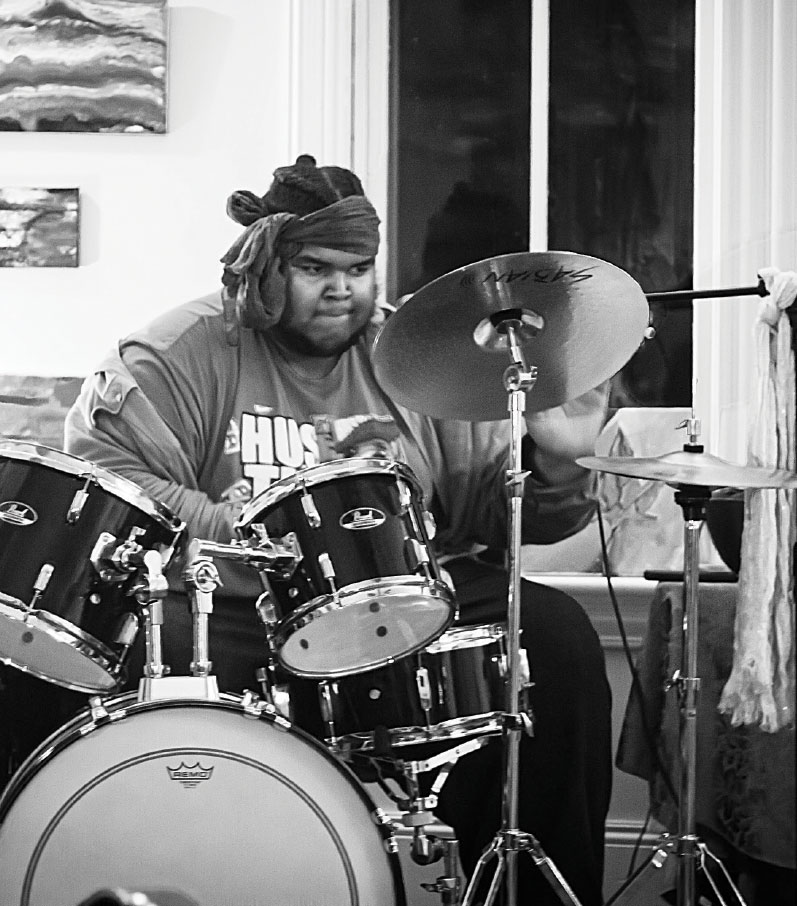
Currently, open jam and art sessions take place Monday, Thursday, and Sunday nights from 6:00 to 10:15 p.m., and the Blacklight Poetry Lounge occurs Saturday nights from 7:30 to 11:30 p.m.

“The poetry lounge allows individuals to come in and do spoken-word poetry,” Townsend notes. “We’ll be streaming outside spoken-word artists in and [streaming] in-house artists out. One of our board members, Angelina Dawn, is a spoken-word artist who draws a large crowd. The spoken-word community has a powerful voice, especially in the African American community. A program like this offers a really good platform for people to speak, and the only rule we have about speaking is that we don’t allow hate speech.”

Townsend is particularly excited about a program planned for the spring that will allow young people to enjoy a comprehensive music-making experience, the “in Tune” music program.

“We’re partnering with the UP Foundation and a business called The Vinyl Foundry,” he says. “The program is going to be a donor-based program, where individuals can donate on a monthly basis. We’re hoping to take on at least ten participants under the age of 21 at a time. Participants will get to learn about the basics of music, write music, and record music.”

In an effort to further convey the importance of giving back to the community, Madison House will require participants to perform community service.

“In order to get their recording time at the music foundry, participants have to do community service, and the funds from the donations will be dispersed from us to The Vinyl Foundry to record their music,” adds Townsend. “I spent the majority of my professional career before COVID on the road with artists and musicians, and I try to let young people know that being an artist or a musician is a form of serving. You are serving a basic human need by connecting.”

After all, meaningful connection is the cornerstone of Madison House’s mission.

“We pride ourselves in going out into the community and asking people what they need,” Townsend notes. “I think that all of our artists really try to connect with the community and use their art to try to relate to and raise awareness about those needs. A lot of our youth especially have something to say about what’s going on around them. I feel like the house has become a place for youth to learn more about who they are.”

The fact that Madison House is just that—a house—contributes to its ability to make people feel comfortable and safe.

“There’s something about this home that’s really inviting,” says Townsend. “A house is made up of different rooms with different personalities, and when people step in here, they’re immediately drawn to different parts of the house. It doesn’t matter if we all get along; it just matters that we’re all a part of the home. We all bring something to the table.”

In the future, Townsend hopes that Madison House will “grow responsibly” and that he and other volunteers can continue to help people in the same way that a certain musician helped him years ago.

“I don’t think I ever would have been able to get here without two things: God and the experience of touring with the musician Matisyahu, who gave me a chance when I needed it the most,” he says. “Because an artist breathed life into an artist, it gave me hope for my future. You’ve got to breathe life into people and let them know that they’re going to be OK.”


Photos by ROGER PRICE


Artist Profile: Lawrence Bowden March/April 2022

Flashe Artist

Lynchburg Living Editor Shelley Basinger: Lawrence, you were drawn in to the art world in adulthood. Tell us about the trip that influenced you.

Lawrence Bowden: I am an emeritus Professor of Religion and Culture (and also the husband of Lynchburg artist, Karen Bowden) so art has always been important to me. But I began painting in 1997 as part of an academic sabbatical where I studied with internationally recognized Zen painter, calligrapher, and scholar Kazuaki Tanahashi. For a decade I concentrated entirely on practicing Zen brush painting using hand ground ink on rice papers. After retiring in 2007 I ventured into acrylics and eventually discovered Flashe, a vinyl water medium I now use exclusively.

SB: How does Flashe work exactly?
LB: Flashe works much like an acrylic paint except that it uses a vinyl polymer. This allows it to tolerate layering well and, in the way I use it, to reveal forms painted just below the surface as though the painting were translucent. In fact the painting changes with the light visually as you change your angle of viewing. The gold catches the light as though it were alive. You can’t capture that with a digital image. It has to be experienced. I like that it tends to evade the camera.

lawrence bowden

SB: Your forms often look almost like cut-outs, like they’ve been pasted on. How do you get that kind of texture?
LB: It’s called layering. I use multiple thin coats of paint and that takes a good bit of time to do. But the buildup of the paint surface creates an edge to the form that is actually a micro-texture rather than a visual illusion. That’s why it looks like a cut-out that could almost be plucked from the surface. Unlike painterly globs of pigment, layering retains the appearance of being smooth and continuous. That’s a product of the repetitive, slow buildup of
color. The texture then is not a trick, it’s real.

SB: How does the concept of Zen influence your art?
LB: What Zen does (or tries to do) is to teach you how to see. Not with words; not with didactics; not even by example. The Cistercian monk, Thomas Merton, put it this way: “Zen seeks not to explain but to pay attention, to become aware, to be mindful. In other words, to develop a certain kind of consciousness that is above and beyond deception by verbal formulas—or emotional excitement.”

lawrence bowden

SB: This is a good lesson for all of us as we view different types of art, right?
LB: I’m trying to encourage everyone to look beyond the surface of things they already recognize as familiar, things that are easily named, stuff you can identify quickly and just as casually dismiss. I want to awaken the capacity to see and to see more than meets the eye. I want to cultivate a viewer’s visual intelligence because I believe that’s what art can do when it’s being “art” rather than decoration.

It can change not only what we see but how we see and so expand our awareness. And maybe change our mind… there’s magic in that.

SB: You have a show at the Academy Center of the Arts in March. Which I’ve heard is a rare occurrence!
LB: That’s right, my show “Learning from Zen” opens in early March in the Academy’s Ann White Gallery. Although my work has been juried into both national and regional shows I view my painting as part of a Zen practice and rarely choose to make a show of it. However, I am honored to say my work has been curated by jurors such as Carter Foster of the Whitney Museum of American Art, Margot Norton of the New Museum of Contemporary Art in New York, and Doug McClemont, writer for the SAATCHI Gallery and regular contributor to ARTnews.


Virginia’s River Realm

SMALL TOWNS ALONG THE RIVER BRING A HAVEN FOR RELAXATION, ADVENTURE AND MORE

Evening has begun to creep in as we pass through the 500-person riverside village of Urbanna. Perusing Virginia Street and other heart-of-town corridors brings charming clusters of beachy cottages interspersed with hedge-lined historical homes and buildings dating to the 18th, 19th and early-20th centuries. Elsewhere are brightly painted shopping boutiques, small but interesting-looking restaurants, a coffee house, an old-time pharmacy, a whitewashed brick courthouse that was built in 1745 and is now a women’s club, and the list goes on.

Like many others, I ‘discovered’ the two-county River Realm by way of the nationally-renown Urbanna Oyster Festival, a two-day event that draws about 50,000 visitors each November. Today, however, the vibe is very different. Gone are the crowds and noise, the raucous air of carnival and festivity. Also, the traffic. Now it’s just … relaxed.

I take a deep breath and, heaving a sigh, feel the workaday stress evaporate.

Reaching our destination, the Town Marina, we’re greeted by the sight of dozens of sailboats, sloops, fishing vessels, small yachts and a couple of houseboats bobbing alongside the docks of Urbanna Creek. Known as Bailey Point, the inlet opens on the smooth-flowing Rappahannock River, here about 2.2 miles wide.

We pursue wooden walkways toward the big, vintage, 50-foot-long M/V Veteran. Built in 1914, the former fisherman’s ‘buy-boat’ received a luxury overhaul around 2007. It is now used for chartered recreational, ecological and maritime history tours on the Rappahannock River and the Chesapeake Bay. Options range from 2-hour sunset and sunrise trips, to custom private outings replete with meals at dockside restaurants 5–15 miles downstream.

tides inn
Stay and play at The Tides Inn, which occupies a small private peninsula on Carter’s Creek.

Virginia tourism sites hail the Veteran as supplying one of the finest marine tours in the state, and we discover that it sets the stage for a premium experience. Sunset finds us luxuriously reclined, cruising eastward down the Rappahannock. We watch the show from the back deck over glasses of wine—a delightful 2017 viognier courtesy of Kilmarnock’s Good Luck Cellars.

Aside from a few distant fishing boats, we have the river to ourselves, and peacefulness falls like a warm blanket.

The River Realm isn’t all built up and super commercially developed, says Golden Age Charters owner-captain Mike Sheffield. “The river’s clean and the banks are beautiful. And [the people here] are serious about keeping them that way. There are all these little towns on the water, but they’re so old, they feel like they’re a part of the environment.”

As the cruise continues, we find ourselves in agreement.

Nightfall meets us disembarking at the softly lighted docks of Locklies Marina. We bid farewell to kind Captain Sheffield and the M/V Veteran and stroll toward our reserved table for two on the porch of the tiny Merroir tasting room in Topping.

Celebrated by media outlets ranging from People magazine to Saveur, the place is, of course, somewhat famous. It was here the cousin-founders of Rappahannock Oyster Co., Travis and Ryan Croxton, lit the first humble sparks of the Chesapeake Bay oyster revolution in the early-2000s. And it does not disappoint.

“Estuaries offer premium oyster farming, and the Chesapeake Bay is the world’s largest and most [environmentally] varied estuary,” says Ryan Croxton. Rappahannock capitalizes on the terroir by taking a no-limits approach to farming superior bivalves. “Our goal is to be the globe’s best oyster producer, period.”

We follow the shellfish with a sampler of tasting dishes.

These include a grilled romaine heart with anchovies and parmesan; a fresh-caught shad roe pan-fried and sprinkled with bacon and caramelized onions; and baked oysters adorned with thick, crispy pieces of Edwards ham. All are fantastic.

Merroir Tasting Room
Merroir tasting room, a top-notch oyster producer in Topping.

Dinner segues into a car ride across the Rappahannock by way of the Robert O. Norris Jr. Bridge. Turning left in the tiny village of White Stone, we proceed to the Tides Inn Resort in Irvington.

Occupying a small private peninsula on Carter’s Creek in Irvington’s National Historical Register district, the 106-room resort dates to the 1940s and offers the finest lodging in the River Realm. But that’s not all. Additional features include an array of amenities like The Chesapeake Room, a waterfront fine-dinery boasting pre fixe meals prepared by chef Alex Pasco; a private 60-slip marina replete with kayaks, paddle boats, tour ships, and sailing school; the full-service Journey Spa; the Fish Hawk Oyster Bar; and much more.

Our suite is furnished in a manner befitting its four-star rating. There are boutique leather sofas and chairs; antiques abound, including tables, lamps, dressers, chest-of-drawers and a carved fourposter bed; windows, ceilings and a pair of French doors are trimmed with ornate mahogany. Wet-bar and bathroom countertops are marble. The jacuzzi tub is backed by pearlescent tiles and looks brand new.

The bedroom’s French doors open onto a private outdoor patio. Outside, the thrumming song of insects and bullfrogs fills the night. We pass through a small gate in the fence, carefully pick through the landscaping and emerge on a manicured lawn of soft grass surrounded by what, in the darkness, look to be the silhouettes of willow trees. Overhead, the stars burn fierce and bright.

fall kayaking
Explore the River Realm through recreation like kayaking.

“Boy, we don’t get views like this in the city, do we?” murmurs my partner. With the softest of laughs, she takes a seat on the grass; like a child preparing to make snow angels, she sprawls her arms and legs.

Following her lead, I say, “No, we certainly don’t.”

To plan your visit go to VirginiasRiverRealm.com


Two Great River Realm Events To Explore This Spring

Spring in Virginia’s River Realm is a magical time. Riverbanks and creek sides erupt with new greenery and buds; historical homes bring a delight of floral eye-candy. Among residents, winter’s recent passing evokes an atmosphere of festivity and general mirth.

Interested in experiencing it for yourself? These awesome local events will make your visit all the more interesting.

The Urbanna Cup
2023 DATE: TBD. Urbanna Town Marina, Urbanna
A fantastically fun and quirky event, the regatta is a nationally sanctioned competition for cocktail class wooden boat racers. Held in waters adjacent to the picturesque Town Marina, the pier and grounds are perfect for family-friendly viewing. Events run throughout the day, with food trucks and beer and wine vendors. urbanna.com/events/

Arts in the Middle Fine Arts Festival
June 3-4, 2023. Hewick Plantation, Urbanna
Held at the edge of town on grounds punctuated by giant mature trees and a regal plantation home that dates to 1678.

The setting is as much a draw as the show itself. In its sixth year, the fest features around 100 artists from throughout the U.S., whose work spans at least seven media categories. Expect tents with regional beer, wine and champagne; two stages with continual lineups of music; and food vendors galore. www.artsinthemiddle.com


Artist Profile: Meg Davies Jan/Feb 2022

Visual Artist

Editor Shelley Basinger: Meg, have you always called Central Virginia home?
Meg Davies: I was born and raised in Lynchburg. I studied art at James Madison University and then lived back and forth between Hawaii and Uganda for several years before coming back home.

SB: When did you first become interested in art?
MD: Since childhood. I would fall asleep with crayons and markers in my bed and ask my mom “Can I draw now?” the minute I woke up. That passion for art has only gotten stronger each year and to be a professional artist is definitely living out my dream.

SB: What types of training have you received?
MD: I did receive formal training through the art program at James Madison University. But my grandmother, Pat Dougherty, is an artist and she always had room for me in her studio when I was growing up. She gave me a wonderful foundation early on and JMU helped me find direction.

SB: What inspires your art?
MD: It’s a broad answer, but life! Life is so full of places to find inspiration. I have a series of bug art, which all started by collecting cicada shells with my son.

SB: What are some of your favorite pieces you have created so far?
MD: My sketchbooks are by far my favorite works of art. However, being fairly private,
I rarely let people see them. As far as what’s out in the world, I’m most proud of work that opens people up to sharing their stories with me. The bug series did that. I quickly learned that countless people have a connection to bugs whether through nicknames, memories, or funny experiences.

SB: What types of challenges have you faced as an artist?
MD: Learning to be flexible enough to embrace change can be a challenge for me in life as well as art. When I find myself in a creative rut, it is usually because I need to change my technique for a while, the structure of my schedule, or how I let the outside world impact my art. Making changes, large or small, can open the floodgates of creativity.

SB: What are you currently working on?
MD: I am completing commissions and mapping out what I want 2022 to look like. It’ll start with another series of botanical work, which is represented with Liza Pruitt, an art representative in Richmond, and a fresh set of landscapes for Findings Art Store in the Boonsboro Shopping Center.

SB: What’s next for you?
MD: Experimenting with new techniques is something that excites me. I’ve worked the same style for years—which is great—but I’m eager to see how I can continue to grow through controlling less, playing more, and pushing my style in new directions.

SB: What advice do you have for future artists?
MD: Some of the best advice ever given to me was to simply draw, draw, draw. It is so relaxing and also provides endless inspiration for future work. Something I’ve also learned over time is to separate yourself from your artwork. Creatives put themselves out there on a continual basis, which of course comes with judgment and sometimes rejection. As much as our art is a part of us, it is freeing to realize that our worth isn’t wrapped up in the external validation. Lastly, meet with other artists on a regular basis to support each other. It’ll be good for your soul and for the art community as a whole.


STAY IN TOUCH
Follow Meg on Instagram, @meg_davies_design or visit her website, www.megdaviesdesign.com.


Back in the Groove

Lynchburg Salsa Returns to the Dance Floor

Photos by Ashlee glen

Salsa dancing is much more than a series of steps, it is a conversation between two partners built on mutual coordination, trust, and passion. It also takes fortitude and patience to master salsa, and as Abram and Genette Dahlby know firsthand, all of these things are invaluable when it comes to running a salsa dance studio as well. The Dahlbys have owned Lynchburg Salsa since January 2017, and they have navigated several challenges with the same deftness that characterizes the style of dance they teach.

Chief among these challenges is the COVID-19 pandemic. “The pandemic hit us hard,” says Abram. “We had to close our doors in March 2020 when the mandate for gyms and other things fell under the workout classification and only reopened in August 2021. It was almost 18 months in total and we are ready to build up our numbers and get people back to dancing.”

Changes in locations and times over the past several years have also affected participation. Lynchburg Salsa was originally founded by Elizabeth Pfister in 2009 and took place on Friday nights in the former Dance Theatre of Lynchburg on Commerce Street. The studio subsequently moved to The Glass House and then to Riverviews Artspace before coming back to the original Commerce Street building—now the home of Mission House Coffee—in October 2019. Classes and events now occur primarily on Thursday nights.

“Over the last couple years, we have seen Lynchburg Salsa ebb and sway with our weekly numbers due to having to change to multiple locations and different days and times,” Genette notes. “Regardless of the hardship of having to communicate new locations, times, or days, we have always had a great community that looks forward to dancing and we have seen a lot more interest in dancing since COVID has lightened up. We hope to get to the point of the fire code being the big issue each week.”

The Dahlbys fondly remember the days when participants came out in full force to dance. “When I started dancing about seven years ago, it felt like every Friday was the hottest the room could get,” Abram says. “People were always ready to dance and came out religiously.”

“The early days were so much fun,” Genette recalls. “It was the thing to do on a Friday night in Downtown Lynchburg. We always had a packed house, with a minimum of 75 students for the beginner class.
I’ve seen as many as 150 in my beginner classes before; that seems like a chaotic number, but it’s amazing to teach so many people at one time.”

According to the Dahlbys, the majority of participants are college students. Luckily, the fact that many of these students move away after graduating hasn’t proven to be much of an issue. “Since most of our population of dancers is the students in the area, we have seen them graduate and move away, but more students have come in,” Genette says.

“Lynchburg has a lot of young students constantly looking for a place to dance and get energy out,” adds Abram. “We have locals who love coming out and students who have graduated and stayed in the area and have become regulars. We have multiple colleges and an ever-revolving door of new students and people who might just want to try out salsa.”

Of course, Lynchburg Salsa isn’t just for students; it’s for everyone, including those who have no dance experience at all.

“We have some dancers who are able to pick up on the steps quickly and others who need a bit more time,” notes Genette. “We want people to come to our beginner class as many times as they want to understand the steps. We also make sure to help those who are having a harder time, typically during social dancing. Since we have a group lesson, it’s not always easy to give one-on-one help during class, but we make sure everyone knows we are here to help.”

Although mastery takes a great deal of time and effort, beginning is as easy as walking and counting to eight.

“When we walk, we transfer our weight to each foot and it’s the same in salsa,” says Abram. “We transfer our weight to different feet while counting and communicating with our body what we are doing. The count lets you and your partner move on the same timing, so the moves start and complete on the same timing. The music is the base structure and gives the dancers the same starting point and then the footwork follows the timing.”

Lynchburg Salsa’s Thursday Night Salsa events run from 8 p.m. to 11 p.m.; the first hour is a beginner salsa lesson, and the remaining two hours are allotted for social dancing. Additionally, the studio occasionally offers intermediate salsa lessons for those who are interested in more advanced instruction.

“The beginners usually are taught the basic eight count with a fun turn and cross body lead,” Abram says. “After a couple weeks and classes, participants are usually confident in leading those moves as well as maybe picking up one or two more from other dancers or instructors. The basics are the most important, but if you want to learn more intermediate moves and combinations, we offer intermediate classes when we have those who show interest.”

Special outdoor and themed events are also back on the docket. In September, Lynchburg Salsa partnered with The Lot on Jefferson to offer an outdoor salsa event, and in October, the studio held their “Salsaween” Costume Dance Party. The Dahlbys are hoping to bring back their popular Valentine’s Day Masquerade event in February.

The couple also hopes to ultimately expand their instruction offerings and be involved in more extensive salsa workshops.

Photo courtesy: Lynchburg Salsa

“We want to see over 100 people every time our doors are open—beginner, intermediate, and advanced dancers on the dance floor,” Genette says. “We also want to be able to provide more instruction beyond the basics of the class. We would even love to see weekend-long salsa fests so that more people can learn from other instructors and improve their dance skills.”

Above all else, the Dahlbys hope that Lynchburg Salsa can provide a fun and comfortable atmosphere that facilitates friendship—and perhaps even romance.

“Abe and I met at Lynchburg Salsa on the dance floor; that’s where he asked me out for the first time,” recalls Genette. “Lynchburg Salsa is a part of our love story and we hope that it is a part of others’ stories too where they have met friends and maybe, one day, their forever dance partner.”


Go Tell It On The Mountain

A LOOK BEHIND THE SCENES AND THROUGH THE DECADES AS THE VIRGINIA CHRISTMAS SPECTACULAR GEARS UP FOR ITS 50TH PERFORMANCE

In today’s age, you’re probably in one of two camps: jamming to Christmas music before Thanksgiving or strongly believing that those jolly tunes should only be played after Turkey Day.

Well, at Thomas Road Baptist Church there’s a third option: Christmas is an all-year production, at least for the Creative Team.

For the last several months, the church has been gearing up for the 50th anniversary of the Virginia Christmas Spectacular, which brings in thousands of guests from all over the area to get into the holiday spirit.

“The story goes that Dr. Falwell saw a church in California do a singing Christmas tree and he decided that he wanted [Thomas Road] to do something similar,” says Adam Lancaster, Chief Creative Officer at TRBC. “That was back in the ’70s. The Living Christmas Tree part was comprised of actual evergreen that they would spend weeks stringing together. They had to make sure it didn’t dry out between set-up and the end of performances.”

Since then, the show has become a staple of the Lynchburg area. In the early years, Lancaster says the production would run for two weekends with multiple performances in the original Thomas Road location. But after their move to Candlers Mountain in 2006, the size of the audience grew.

“In the mid-2000s, we would see between 25,000 to 30,000 people come through,” he says.

This year, TRBC will hold five performances Dec. 10-12.

“We’re bringing back the [living] tree,” Lancaster says, though it won’t be made from real evergreen this time. “We began setting it up and pulling it out of storage mid-October.”

The tree isn’t the only thing the Virginia Christmas Spectacular is known for. Each year, the TRBC team brings a little Broadway to Lynchburg with an original production that is written by a creative team under the direction of Scott Bullman, executive producer—but it still includes classic Christmas songs.

It wasn’t always a high-tech production. Over the years, the technology and scale has evolved.

For one, the tree, which now has hundreds of thousands of lights, was originally operated manually. Behind the scenes, someone was in charge of flipping giant light switches in sync with the music.

“That was a big deal back in the day,” Lancaster jokes.

But the technology quickly evolved thanks to Jon Daggett, who began getting involved in the early ’90s.

“There was a couple by the name of Rich and Kathy who oversaw the lights,” Daggett says. “They were professors at Liberty and, along with their students, would program the PC and light boards to make sure the tree was syncing up to the music.”

A musician, Daggett had an idea to create his own system. Not for the Virginia Christmas Spectacular, though, but for a holiday party they hosted. In his basement, he composed his own outdoor lighting system that he planned to show off to guests.

It was an accidental hit. Soon, the Daggetts found themselves on the local news and people flocking from all over to check out their house.

“Nowadays, it’s a common thing. People do it on their houses all the time,” Daggett says. “But this was the ’90s, where it wasn’t so common.”

This all led to Daggett being nominated to help design a system for the iconic tree at TRBC.

“I knew nothing about lighting when I started,” he says.

Fast forwarding to present day, Daggett has worked with other churches around the country to create their own lighting systems for Christmas productions. He and his wife even own their own custom light and event company in Lynchburg.

Lancaster says everyone involved with the production sees it as not only a “spectacular” show, but a way to reach out to the greater Lynchburg community.

“This has always been a unique opportunity for a city our scale,” Lancaster says. “There are so many people who have been involved—some as far back as the ’80s. Our volunteers get such joy contributing to something like this.”

Approximately 400 people give their time to the production each year—and Don Brooks is one of those long-time volunteers. Since 1983, Brooks has served in various roles from writing to acting to directing.

“I was just in the choir [to start] in the tree,” he says. “I was in the second row from the top where it was hot, and the lights would get you. I did that for a few years, but then I started getting involved with theatre at Liberty and that’s when they started doing the drama portion of it.”

Brooks says after that, he continued to audition and even got his family involved.

But participating in the Virginia Christmas Spectacular is more than just another acting role for Brooks—it’s a ministry.

“Christmas is a time that really magnifies what makes you happy or if you’re in a bad spot, that gets magnified as well,” he says. “I like to do a Christmas program that speaks to where people are at. This time, we’re dealing with COVID-19, and hurt and pain. We all have a story.”

The Virginia Christmas Spectacular is a way to bring hope, says Brooks. He remembers one year where the story portion focused on infidelity. Brooks played the unfaithful husband.

“That’s a hard subject to do when you’re trying to celebrate Rudolph,” he says. “We had several people that came up to me after the show and said, ‘Hey, I saw you in the show and wanted to let you know what you guys were talking about in that storyline is exactly where we’re at.’”

Brooks says a couple even said they came to the show knowing it was the last thing they’d do as a family before heading to divorce court. They told Brooks they had decided to focus on counseling to try to save their marriage.

“We want you to walk away and realize there is hope,” Brooks says.


Artist Hangout

Restaurant owner opens creative co-op beer house

Sean Bailey, the owner of Crisp restaurants, has always had plans for the warehouse space nestled behind the store’s downtown location, even though it has been vacant for years.

Over the past few months, that plan has turned into action with the creation of greenhaus, a one-of-kind beer garden that serves not only as Lynchburg’s latest restaurant, but what Bailey calls a “creative hub.”

“[The space was designed] to foster creativity,” Bailey said. “This is about taking some of the best creative talent in Lynchburg and making a space that’s unique, special, and serves the larger population.”

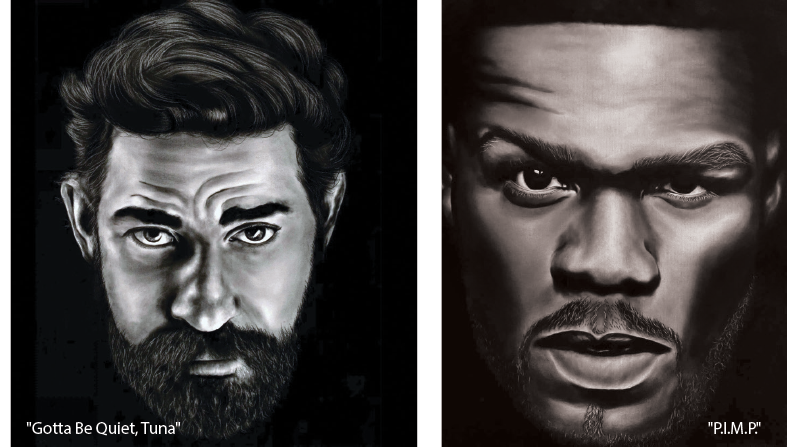
Right as you walk through the door, you get that feel. Customers are greeted with a custom, vibrant piece designed by local artist Andrew Riscart, who was featured as the Artist Profile in the July/August issue of Lynchburg Living.

“He even added a UFO on there for me,” Bailey noted.

As you enter the main dining area the space is welcoming, with lots of natural light from the garage door windows. Plants are strategically placed around the space curated by Susan Hertzler, plant supplier and manager for the greenhaus.

Even the plants serve a purpose. Hertzler curated each plant, picking out those that would thrive in the space. Each pot has a QR code, which talks about each plant and how to take care of it.

“The plants liven [the space] up. They’re alive. There’s literally life around you,” Hertzler said.

“There are also so many different colors. I don’t think people realize how many different species of plants there are that you can grow indoors or outdoors.”

Other elements include local woodwork, such as the carved bateau above the seating area, and a geometrical wall sculpture that was designed by Bailey. The sound system was designed by Lynchburg musician Ben Jacobs and was specially created to allow for anyone to perform regardless of whether they have equipment.

To summarize, if Bailey couldn’t find it, he found someone who created it. He even took on the task of constructing the back wall leading to the patio and the bar, which has self-serve taps for different kinds of beer.

“People recognize when something is built by hand,” he said. “They recognize when something is done creatively. Those are the type of places neighborhoods want to turn into an institution. They’re inspired by local creativity they find there. That’s really what we’re going for. I want people to realize that this wasn’t bought at Ikea.”

The menu serves to inspire as well. Bailey wants the food offerings to be a way for chefs and cooks to express themselves. While the greenhaus will serve traditional beer garden food, the team hopes to have rotating menus and pop-up brunches.

Bailey believes that bringing in more artists to the downtown scene will continue to help Lynchburg build a unique identity.

“The artists come in and make the place special and then everyone gets involved,” he said.

While Bailey didn’t grown up in Lynchburg, he moved to the city when he was 19 so he has seen downtown go from a ghost town to a thriving area full of shops and restaurants. He believes the momentum is there to keep thinking outside of the box and make each business become more entwined with the local creative community.

“As a person that’s slowly started one business after another, it’s easy to say, ‘Oh it’s Lynchburg. They’re not ready for it.’ But that’s a bunch of baloney,” Bailey said. “People are dying for a taste of the city. When places like this come in, it ushers the way for other people to do the same. Downtown will become the better alternative.”


Photos by Ashlee Glen


Artist Profile: Sonny Harlow Sept/Oct 2021

Decorative Artist

If you don’t recognize the name Sonny Harlow, you’ll recognize his work, whether it’s murals downtown or in homes across Boonsboro. For nearly four decades, this burly painter has focused on stenciling and hand-painting to create a unique look that not a lot of people can do—or want to do, according to him.

We caught up with Harlow after a recent kidney transplant, and though he’s promised his doctor to rest, he can’t wait to be able to paint once again.

Tobi Walsh: Sonny, how did you get started?
Sonny Harlow: I’ve been painting for 38 years. I was always scribbling on something as a kid. There was just always something in me. [When I moved to Lynchburg] I needed to find a way to earn money and I picked up some projects [in Boonsboro]. Then it was just word of mouth.

TW: How would you describe your artistic style?
SH: I’m self-taught. There was a high school teacher who showed me a lot, but I think I have my own style. I just have a lot of patience.

TW: You’ve worked on so many projects around Lynchburg. Which one has been your favorite?
SH: St. Paul’s Episcopal Church. They were renovating the church and there were no pews—nothing inside. They were trying to restore it to what it looked like back then. They had photos of the original stenciling on the ceiling and I had to recreate it.

TW: Whoa. That had to be time consuming.
SH: Yeah, it was one of my favorites. While we were in there painting, an organist would come in and practice. It sounded awesome. I still have goosebumps thinking about it. A church out in Lexington approached me about working on a similar project for them, but I had just started dialysis and wasn’t able to make the drive.

TW: Yes! You recently received a new kidney via transplant. That’s incredible.
SH: My doctor told me it would probably take a long time to find a donor so I had buckled down, but it took a lot quicker than I thought. I couldn’t do the Lexington job, but I did hand-cut the stencils for them. I was so humbled that they trusted me to do that.

TW: It seems like you have a thing for churches.
SH: (chuckles) I also worked on a mural for Tree of Life Church in their sanctuary.

TW: Any other projects that come to mind?
SH: When Amazement Square first opened, they asked me to come in and do a lot of hand-painting for some of the exhibits. I remember climbing into this tiny tunnel and doing some painting and drawing worms and bugs. I could barely fit. I worked on a few of the traveling exhibits they had at one point. There was one about ancient Egypt. They also wanted to start showing movies in the park [by Amazement Square] so I did a mural for that as well. I also helped out on a project at Point of Honor.

They were trying to recreate a specific wallpaper. So I did it by hand so part of the wall is wallpaper, the other is just a painting.

TW: Do you think hand-stenciling is a lost art form?
SH: I mean, a lot of my stencils I cut by hand. It’s not something you can go and pick out at Michaels. You need a lot of patience.

I remember a mechanic worked on my truck and said, “I couldn’t imagine painting all day.” And I said, “I can’t imagine fiddling with a wrench all day.” Not everyone wants to do it. But I like it. I like being able to take my time.

TW: And it allows you to create some really cool effects, too.
SH: I worked on a house where they wanted a certain area to look a certain way. So I took a sponge and a rag, let it dry, and then wrinkled it out to make the wall look almost like marble. I guess they sold the house, and the new owners mistook the painting for wallpaper. They tried to take it down and realized it was paint!


Photos by Ashlee Glen

GET IN TOUCH
Email Sonny at sonnyharlow6073@gmail.com


Artist Profile: Andrew Riscart July/August 2021

Intuitive Color Artist

Lynchburg Living Editor Shelley Basinger:
Andrew, the first thing we notice about your artwork is the use of color. Why do you enjoy using lots of bright hues?
Andrew Riscart: Because it’s so powerful. It leaves so much up for interpretation. It allows the viewer to take ownership from their own personal perspective.

SB: That’s why you describe yourself as an “intuitive” color artist.
AR: Right, I like to blend the real and recognizable with the abstract. I approach this by replicating recognizable characters and then manipulating color theory to interact with the viewer. I find this often requires some kind of response, but still leaves a lot up to interpretation. In short, I play with color theory while letting value do all of the work.

SB: When did you first become interested in art?
AR: When I was about five years old. I got mad that my neighbor’s cousin could draw so much better than me. I guess you could say I became determined. That’s when I really started to practice.

SB: What types of training have you received?
AR: My mother signed me up for a drawing class when I was 10. I later took a painting class at Central Virginia Community College with Kenny Weinfurtner. He showed me how to build a foundation. Over the past year, I’ve been picking things up along the way. Mostly through the internet; I study creatives that inspire me in various mediums like painting, music, poetry, and film.

SB: You’ve recently decided to make art a full-time career. How did that transition happen?
AR: It’s funny—I took a class under a very successful businessman. He kept on repeating the phrase: “What’s in your hand?” That’s where you start. If you want to be successful in business, start with what you have available to you right now. Another phrase he would say a lot is, “Your gift will make a way for you.” When I moved back to Virginia, I kept thinking back on this. The only thing I kept coming back to was painting. So, I started painting. I will ride this wave until it crashes, and then I’ll catch another one.

SB: The doors have certainly been opening for you! We are seeing a lot of your work around town.
AR: I have pieces hanging on Main Street in Dish, Starr Hill Brewery and the White Hart. I also have one inside Riverview Records, a new shop on Jefferson Street. I have some murals at the new Main Street Bar and Grill, and I’m also working on a piece for Crisp’s new beer garden. It’s expected to be open at the end of July.

SB: We heard about you from an Instagram post by Star Hill. How has social media influenced your artwork?
AR: Social media has opened a new avenue for artists, like myself, to create an audience. One we otherwise would not have been able to. It can be a powerful tool in this regard and in many others. However, social media can also be very dangerous. Unfortunately, it has become a substitute for one-on-one human connection. I’m beginning to see this can leave an emptiness in people. I believe fine art can bridge this gap between a sea of choices and what is actually physically tangible right in front of us. I continue to paint for this reason. I personally live for the one-on-one interaction painting affords me. I think this past year really put things into perspective for a lot of us. The greatest impacts are made one human interaction at a time. If we can love the person right in front of us and then they in turn love the person right in front of them, it creates a ripple effect.

SB: You’ve been getting a lot of requests for commissions. How is that going?
AR: I love doing commissions. They have been my bread and butter, if you will. However, I’m becoming more selective on what I choose. Mostly because I also need the commissions I do to fit a common vision with the style I’m evolving into.

SB: What’s next for you? Any future goals?
AR: I just want to be a part of the bigger picture.


Follow along
You can find Andrew on Instagram: @riscart