Givens Books Celebrates 50 Years of Adventure, Serendipity, and Curiosity

By: Anna Eileen White | Photos By: Ashlee Glen

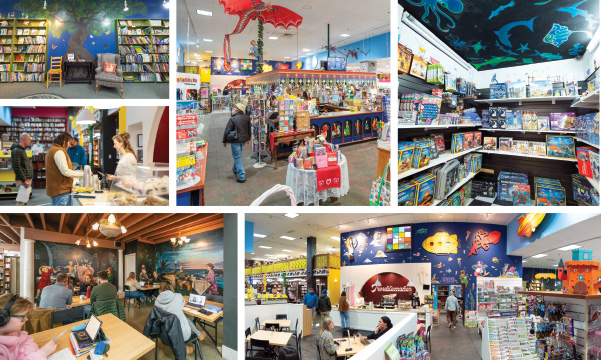
Voices ebb and flow with enthusiasm as newcomers wonder whether they’ve tumbled down the rabbit hole. Roasty aromas entice visitors past Jack and the bean sprout, between tomes, and toward the cafe.

This multi-generational wonderland began as two separate stores; Givens Books, founded by George and Sylvia Dickens in 1976, and Little Dickens, founded by their son Danny and his former wife in 1999.

The spots have been havens of play and learning for decades.

“Play and learning are just integral to being human,” said Danny Givens, owner of the now-merged stores. “I think most of us humans are born innately curious, but that can flicker out if you don’t have the right teachers.”

Danny speaks from experience.

His “insatiably curious” teacher-father and “game-for-anything” mother spent years as voluntary nomads with Danny and his siblings. They chased regional novelties; deserts and archeological digs. They chased simplicity; campfires and evening poetry readings. Danny even recalls chasing road runners across the desert on his minibike, unhindered by thoughts of safety. Above all, they chased adventure. By the time Danny was 13, he’d visited 45 states.

givens book old photos

Unknown to him and his siblings, their explorations served more than one purpose. “I didn’t know that at the same time, my father was scoping out places to open up a bookstore, which was his childhood dream.”

When their wanderings brought them through Lynchburg in 1969 they found it had no official bookstore. “My father loved the feel of Lynchburg,” recalled Danny. Four years later, in 1973, the family loaded everything they owned into a moving van, including George’s personal 8,000-book library.

“If the washer and dryer didn’t fit, they stayed, but the books went,” Danny said amusedly. “Books always took priority.”

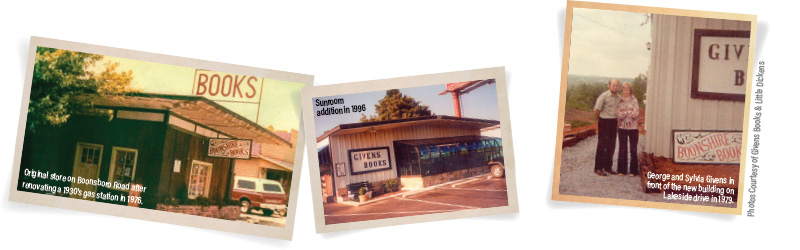
Once settled, a run-down gas station on Boonsboro Road caught their attention.

It was their next adventure. Danny, 16 at the time, helped his father renovate. Dubbed Booneshire Books, they opened the used bookstore in August 1976.
Danny’s little sister Sarah was 3 at the time and played with Barbie dolls behind the counter as books flew off the shelves over her head. “It took off,” said Danny. “There was a strong need for a bookstore.”

Boonshire Books expanded multiple times in its original location, eventually outgrowing the space and moving to a custom-built structure, where they rebranded as Givens Books. “It may not have been possible in another town,” Danny reflected. Lynchburg was small enough that residents cared about supporting local businesses, and large enough to supply sufficient clientele. It was also welcoming.

“It does say a lot about Lynchburg’s ability to accept outsiders,” Danny shared, recounting the time that a customer joked through a thick southern drawl, “Yeah, you’re Yankees all right, but we’ve accepted you.”

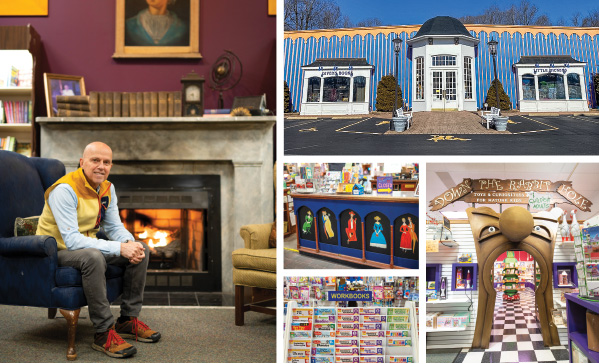
In 1989, Danny built Little Dickens next to Givens Books. Inspired by a toy store in Chapel Hill, North Carolina and made necessary when Danny’s teacher salary was halved, Little Dickens was more than a business venture. He calls it serendipity. When Jefferson Forest High School introduced German to their language program, Danny, an English and Spanish teacher, lost hours, forcing him to find another means of support. Ever a child at heart, Danny recalled the quaint Chapel Hill toy store and wanted to recreate the allure in his own style.

“In retrospect, isn’t that funny?

That little act of German being introduced acts like that can change the course of your entire life,” Danny marveled. “Little happenstance events turn into really momentous things.”

Danny outfitted Little Dickens as both a teacher supply and toy store. “This was my dream when I built it; I wanted to make it memorable, so that when you came in, you felt attached to the store, to the atmosphere, to the ambience, whatever you want to call it,” he shared. “So it just made touching toys and books much more appealing than ordering them online.”

From the start, Danny knew online shopping could drive shops like his out of business. His solution? Embrace mentalities the big retailers didn’t. “I could bore myself to tears reading books on how to be successful,” he explained.

“I’ll read poetry or psychology, but it won’t be anything on finances.” Leading with emotional intelligence, he shaped the store around curiosity, evaluating new toys based on how well they facilitated play.

In 1999, when George retired, Danny bought the bookstore. With English designer Paul Kitchens at the helm, they built the tent-striped showplace, now known and loved as Givens Books Little Dickens, on Lakeside Drive. “I was so lucky to find him,” said Danny of Kitchens. “He came up with this whimsical design and helped to make it magical inside.”

Inside, gargoyles on the surrounding walls oversee visitors’ ramblings far below. It’s “a place away from the busyness and hecticness of life,”
says Danny. Weathered gold-leaf, stuffed animals, and art supplies beckon.

While Danny envisioned competing with online retailers, he didn’t envision competing with a pandemic. Quarantine and social distancing during COVID-19 changed shopping habits, and many local businesses didn’t survive. “It was frightening at first,” said Danny.

They relied on purchases through the newly updated website. Months dragged on and they saw online sales grow.

“We were touched by that—the town has been really wonderful,” said Danny.

“I think localism has grown even stronger over the last 10 years, and we felt that during COVID.”

Now, doors wide open once again, visitors lean over their tables in shadowed corners, sharing ideas.

“I love that this is a place where there are no limits to conversation,” said Danny. “It’s safe to talk about anything.”

Danny’s family is having conversations too. Will two generations of Givens Books Little Dickens become three? Beyond the traditions of books and toys, Danny’s children don’t want to lose the hide-and-seek grounds of their childhood, a tradition they hope to carry on with their own children. While Danny doesn’t plan on disappearing any time soon, he will pass the torch to one of his daughters, allowing the store’s legacy to live on, while keeping it in the family.

“If Lynchburg wants more magic and more toys and more books, we’ll try to deliver,” he promised.

Often asked how he became “successful,” Danny eschews the word. “There are so many good people who went before me that made this possible,” he said. From his sister Sarah, who still plays an active role, to his parents, Danny won’t take credit for what he builds upon. “They had vision, guts, adventure and energy,” he said of parents George and Sylvia Givens, “and [they] took amazing risks to make the dream a reality.”


A Q&A On The Virginia 250 Celebrations

Photo courtesy: VA250 Commission

The Virginia American Revolution 250 Commission is bringing the spirit of the American Revolution to cities all throughout Virginia, with an ambitious goal of visiting every middle school in Virginia.

A hands-on, interactive, and immersive “museum on wheels,” the VA250 Mobile Museum Experience titled Out of Many, One is housed in a quad-expandable tractor trailer that is traveling throughout Virginia and beyond. Guests visiting this unique traveling museum will embark on a journey through pivotal moments of our fight for freedom while learning about the Revolution’s key figures as well as the often-overlooked stories of the Indigenous Virginians, free and enslaved African Americans, and others whose efforts secured American independence.

Here, learners of all ages experience the Mobile Museum during its visit to the Danville Museum of Fine Arts and History in May 2025.

Carly Fiorina, National Honorary Chair of the Virginia American Revolution 250 Commission

Carly Fiorina, National Honorary Chair of the Virginia American Revolution 250 Commission

“America Was Made in Virginia”

Carly Fiorina, National Honorary Chair of the Virginia American Revolution 250 Commission, shares why the Commonwealth’s story—and its citizens—are central to understanding who we are as a nation and who we aspire to be.

Q&A with Carly Fiorina, National Honorary Chair –Virginia American Revolution 250 Commission (VA250)

As the nation approaches its 250th anniversary in 2026, Virginia is preparing to take center stage. The Virginia American Revolution 250 Commission—known as VA250—is leading the Commonwealth’s commemoration of the Semiquincentennial, a nationwide reflection on America’s founding, growth, and ongoing story. Through statewide programs, local events, and educational initiatives, VA250 invites Virginians to explore how “America was made in Virginia”—and what that means today.

VA250’s theme is “America was made in Virginia.” What does that phrase mean to you personally, and why do you think it’s an important message for Virginians today?

To me, “America was made in Virginia” is a reminder that this Commonwealth was the testing ground for so many of the ideas that still define us as a nation. The promise and the problems of America showed up here first. Early experiments in representative government, but also the grave injustices of slavery and displacement. Saying “America was made in Virginia” isn’t a slogan, it’s a responsibility. It means Virginians have a special opportunity—and obligation—to understand our history honestly, take pride in our progress, learn from our failures, and carry those lessons forward. If we do that well, we help the entire country remember who we are and what we’re capable of.

Virginia played a defining role in our nation’s founding—from early democracy in Jamestown to leadership in independence. How do you see those stories continuing to shape America’s identity?

Our national identity has always been rooted in ideas, not bloodlines or borders. Many of those ideas were debated, refined, and fought over here in Virginia. The notion that government derives its just powers from the consent of the governed, that people have inherent rights, that power must be restrained—those aren’t abstract concepts. They emerged from real people, on real soil, making real choices. When we remember that, we stop treating our system as something automatic or guaranteed. We see it instead as an inheritance that must be renewed. Virginia’s founding stories remind us that America is a work in progress, shaped by character and courage, one generation at a time.

As National Honorary Chair, what aspects of Virginia’s history do you most hope people rediscover through VA250 events?

I hope people rediscover the full story. Not just the familiar names and dates, but the countless men and women—well-known and unknown—whose grit, faith, ingenuity, and sacrifice moved history forward. I want Virginians to see how enslaved people, Native communities, women, immigrants, soldiers, and citizens all played essential roles. I also want us to reconnect with the idea that ordinary people, close to the problems, have always been essential to the solutions. When people see themselves in the story—not just as spectators of history, but as heirs to it—they’re more likely to engage, to serve, and to lead in their own communities.

The Semiquincentennial is both a celebration and a reflection. What do you hope Americans take away from this milestone?

I hope Americans come away with a renewed sense of gratitude and responsibility. Gratitude that we live in the only nation in history founded on ideas about human dignity and self-government—and responsibility to live up to those ideas. A 250th anniversary is not about nostalgia; it’s about perspective. We see how far we’ve come, how much we’ve overcome, and also where we’ve fallen short. Holding pride and pain together is hard work, but it’s what mature nations do. If we can do that together, we’ll emerge from 2026 with a stronger sense of who we are and what we owe to one another as citizens.

As a former Fortune 50 CEO and Virginia resident, how do you see leadership—past and present—playing a role in our state’s story?

Leadership is always about more than titles. In Virginia’s story and in my own experience, the most important leaders are often the ones closest to the problem who choose to act with courage and integrity. Our history is filled with famous leaders, but it’s also filled with teachers, pastors, entrepreneurs, parents, and community organizers who saw a need and stepped forward. Good leadership always holds freedom and responsibility together, rights and duties together. When leaders—whether in business, government, or the community—remember that their job is to serve, to listen, and to leave things better than they found them, they carry on the best of Virginia’s legacy.

If you could choose one takeaway for every Virginian to remember about our nation’s 250th anniversary, what would it be?

I would want every Virginian to remember that our history is not just something to admire or critique from a distance—it is something we inherit and continue. We are the stewards of a remarkable experiment in self-government, born in large part here in Virginia. That experiment has endured through wars, crises, injustices, and profound change because generation after generation chose to work toward a more perfect union. The question for each of us is simple: knowing this history, what will I do—right where I am—to strengthen my community, serve my neighbors, and live up to the ideals that made America possible in the first place? 


Here’s How to Spend a Perfect Winter Day in Appomattox, VA

If you’re looking for a winter escape that has a little bit of everything and is just a short drive from Lynchburg, Appomattox is a fantastic choice. This small town offers one of the most charming and unexpectedly cozy winter getaways in Central Virginia.

By: Abby Price

I grew up here before moving to Lynchburg, and I can personally vouch for its small-town feel, quiet historic streets, welcoming community, and fun things to do in the winter. It’s the kind of place where you can slow down, learn something new, and truly savor the season.

How to Reach Appomattox from Lynchburg

Appomattox is easy to get to from Lynchburg; it’s just a 30-minute drive southeast on U.S. Route 460. It’s a scenic drive through rolling countryside that feels especially peaceful in winter.

Start Your Morning with Coffee and Antique Shopping

Start your winter morning with a stop at Baine’s Books & Coffee, where the scent of freshly brewed coffee and warm pastries instantly sets the tone for a cheerful day ahead.

I’ve been browsing the shelves here since I was a small child, and it’s still my favorite place in town to order a coffee and wander through the aisles in search of my next good read.

It’s the perfect spot to settle in with a pastry and a book as you ease into a cold winter morning.

Once you’re warmed up, I recommend wandering over to Yesterday’s Bazaar; it’s the perfect place to look for antiques downtown. This homey store is perfect for escaping the cold while browsing for vintage decor, collectible finds, or that perfect, unique souvenir to commemorate your time in Appomattox.

Spend Midday Immersed in Appomattox’s Historic Past

Plan to spend your late morning and early afternoon exploring The American Civil War Museum, followed by the Appomattox Court House National Historical Park, where winter turns the historic village into a peaceful retreat. With fewer visitors this time of year, it often feels like you have the entire place to yourself.

I recommend starting at The American Civil War Museum so you can stay warm inside while diving into the stories, artifacts, and context that shaped the end of the Civil War.

It’s a rich introduction to the events that unfolded here—and it also gives the day a little time to warm up before you head outdoors to walk the actual grounds where some of our nation’s most pivotal moments occurred.

Enjoy a Cozy Lunch in Town

When you need a bite to eat, head to Taco Wagon for flavorful Mexican food. Known for their friendly service, tasty salsas, al pastor tacos, and hearty fajitas,
it’s hard to go wrong with anything on the menu. It’s the perfect spot for a quick lunch before heading back out to explore more of what Appomattox has to offer.

Spend the Afternoon Wandering Around Holliday Lake State Park

If you’re anything like me in the winter, you enjoy finding a balance—staying warm inside, but still getting outside long enough to enjoy the crisp air without freezing.

After you’ve warmed up with lunch, head over to the beautiful Holliday Lake State Park for a refreshing walk.

If you’re in the mood for a longer adventure, the Lakeshore Trail circles the entire lake and stretches about 6.5 miles, typically taking around two and a half hours to complete. If you prefer something shorter, the Dogwood Loop is less than half a mile and can be finished in about 20 minutes.

End Your Day with a Relaxing Dinner

End your evening with dinner at Carmine’s Pizzeria, where you’ll find classic New York-style pizzas and delicious cannolis. It’s the perfect way to unwind after a day spent exploring historic sites, browsing antique shops, and taking in the town’s charm.

While traditional pepperoni and cheese pizzas are always a hit from Carmine’s, the buffalo chicken pizza is a must-try for anyone looking to add a little extra kick to their meal.

Where to Stay Overnight

If you’re looking for an overnight stay with character, I recommend The Babcock House. With six bedrooms and one suite, it offers just the right amount of rooms so it feels lively without ever feeling too crowded. The breakfast here is also exceptional.

For a more traditional hotel experience, the Appomattox Inn and Suites is an excellent choice, offering plenty of rooms and a convenient location.

Even More to Explore in Appomattox If You Have Extra Time

If you have a little extra time in your schedule or you’re spending the weekend in Appomattox, consider adding Clover Hill Village to your itinerary. This historic village, created by the Appomattox County Historical Society, features several buildings that offer visitors a glimpse into the past.

Highlights include the Civil War Winter Quarters, built to show what Confederate soldiers used during the winter months, Wesley Chapel, one of the oldest churches in the county, and Hamilton’s Blacksmith Shop, where metalwork once took place.

The area is made up of original structures that were relocated, along with carefully replicated buildings based on old photographs. Altogether, it offers locals and visitors a look at Appomattox’s rich history and what life was like in the 1800s and early 1900s.

RELATED CONTENT:

White Bard Vintage is a Timeless Treasure Hunt

Up for an Adventure in Culpeper


“We Have a Different Story to Tell”

The Masterful Making of Lynchburg at War

By: Emily Mook | Photos By: Ashlee Glen

“Teamwork gives you the best opportunity to turn vision into reality.” – John C. Maxwell

As singular concepts, creativity and collaboration undoubtedly drive change.

A painter with a brush, a writer with a pen, a musician with an instrument—these and other solo creative pursuits account for much of the world’s great art and prove that individual perspectives and pursuits can change history. Non-creative acts of collaboration also make significant impacts by creating reliable systems, maintaining structures, and improving processes that are integral to modern human existence. The novelty of creativity and the consistency of non-creative collaboration both play important roles in shaping the world around us and in shaping our own understanding of ourselves and the roles we play as individuals and as members of a collective.

Then there is the magical and somewhat elusive point at which these notions converge and creative collaboration is born. When you consider your favorite bands, films, and other joint ventures that entail the intentional sharing of creative control and presence of multiple perspectives within a single project or process, you likely experience a feeling of serendipity. The best creative collaborations can make you think, “Those people were meant to make art together.” Within minutes of sitting down to interview Greg Starbuck, Lindsey Smith, and Daniel Dixon, I was struck by that very conviction.

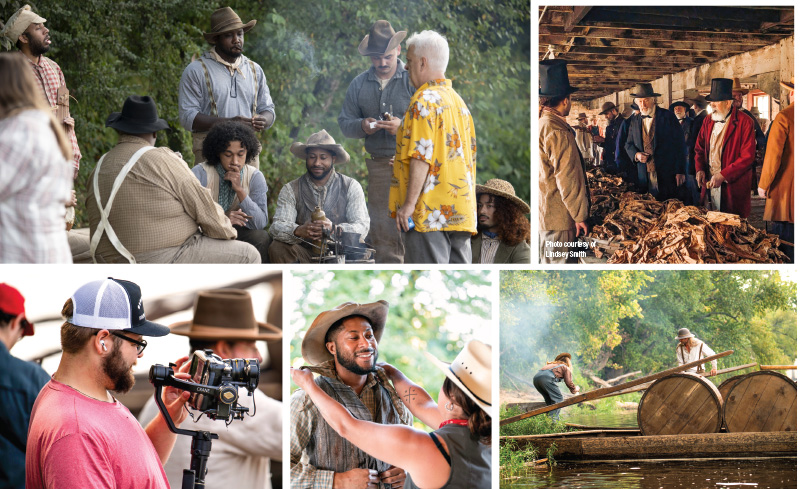
Starbuck, Smith, and Dixon are the three main collaborators on Lynchburg at War, a locally produced and filmed documentary that delves into the everyday experiences of distinct groups of people living—or stationed—in Lynchburg during the Civil War.

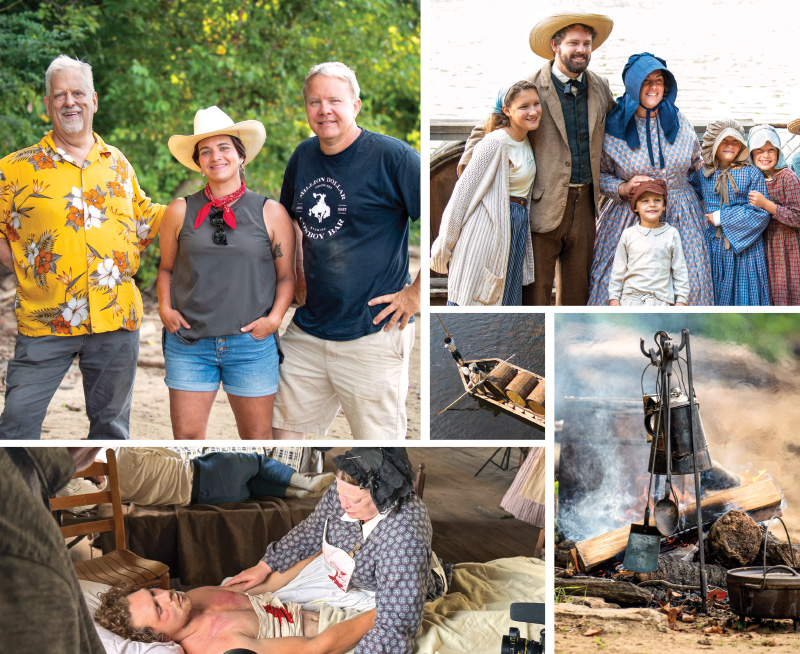
Starbuck, who has been the executive director of Historic Sandusky since 2002, is the documentary’s writer and director, Smith is its wardrobe supervisor, and Dixon is its production and set designer—but these titles barely scratch the surface when it comes to what the three have poured into the film.

“There’s not really a name for what we do,” Dixon noted. “If there’s a need to be fulfilled, we find a way to get it fulfilled. If there’s cohesiveness that’s needed, that’s what we handle. Every mile, every step of the way, the three of us are lockstep. We tend to be the triumvirate. ”

Lynchburg at War first came about after Starbuck’s 2010 film Hunter’s Raid: The Battle for Lynchburg wrapped.

“We had so much fun working on that film that as soon as it wrapped, we said, ‘Well, let’s do another one!’” Starbuck said. “We worked on it for a couple of years, set it aside, and then I started working on it again in 2016. Then a bunch of forces came together within the past year, and we thought, ‘You know, it’s time to go ahead and finish this.’”

Dixon and Starbuck, who met when Dixon’s construction company built some additions and did some renovations for Historic Sandusky when the organization was first getting its legs, worked on Hunter’s Raid together and discovered a shared propensity for pulling out all the stops.

“We are ‘more cowbell’ type people,” remarked Dixon. “Our director of photography, Rob Hodge, came to town one day. Greg had initially asked me if we could find a van that had a door in the side that we could shoot from the inside out to emulate a train car.

Well, instead of doing that, we ended up building a bunch of train cars! We built one, decided that wasn’t enough, built another, still needed more cowbell, built another, and so on. We like to max out to the extent that we can line up resources and find contributors who we know will fulfill their commitments. Doing things this way provides a real sense of enjoyment and a real sense of accomplishment.”

That level of dedication typifies Lynchburg at War to an even greater degree with the addition of Smith to the crew.

“Her qualities are endless,” Dixon said of Smith. “I knew she had a background in art, dance, and history. I asked her if she would be interested in getting involved in this project and she enthusiastically goes, ‘Oh yeah!’”

“And the next thing I know, I’m making 2,000 tobacco leaves!” Smith exclaimed with a laugh.

Those tobacco leaves, constructed from brown paper and then meticulously colorized, are just one of the myriad aspects of the film imbued with a reverent commitment to authenticity. The driving force behind this reverence is Starbuck’s extensive knowledge—bolstered by decades of research—of Lynchburg during the Civil War.

“I have collected so many primary and secondary sources and even did my master’s thesis paper on Lynchburg during the Civil War,” he stated. “The primary sources that really inform this documentary are people’s diary entries and letters. We’re trying to make the documentary really speak from their words and take ourselves out of the equation. One of the common problems of history is people interpreting it for their own purposes. We want to bring the original voices out to the forefront.”

Among those voices are those of African Americans, most of whom were enslaved and many of whom worked in tobacco warehouses and operated batteaux to transport tobacco hogsheads and other supplies during this period of Lynchburg’s history.

“The perspectives of African Americans are often lost because many of them did not write, and they were often mentioned as an afterthought in journals and letters,” remarked Starbuck. “Faithfully presenting their side of the story is a challenge, but it is critical to this presentation.”

The stories of women—especially those who assisted with war efforts—during this period are also largely underrepresented in film.

“These are untold stories,” said Smith.

“A lot of what we’re shooting has never been shot before. Anyone who has done any sort of genealogy knows that there are huge gaps in the information we have about our history. The stories that we’re telling—the Gunpowder Girls, the Ladies’ Relief Hospital, the batteaux scene—if we don’t tell their stories, who’s going to tell them?”

In addition to authentic and authentic-looking props—some owned or made by cast and crew members and others provided by Buzzards Roost antique shop owner Todd Hunley—telling these stories faithfully requires meticulously designed sets, period-accurate costuming, and dedicated actors.

“When it comes to production and set design, we don’t build from the ground up; rather, we look at how many possibilities are available to us,” Dixon noted. “You also have to shoot around so many things. Some of the places we use are very familiar to people and they would recognize them right away; for instance, we did a shoot in front of the chapel at the Quaker Memorial Presbyterian Church. So we say, ‘These are some possible places we could go; now who do we know there and how do we get access?’ We try to take each space and material we have access to and milk it like a sponge. For example, when we shot the Ladies’ Relief Hospital, we took apart all the platforms that we had used for the tobacco auction shoot and reassembled that sawmill lumber into tables, walls, and doorways.”

As far as costuming goes, LionHeart FilmWorks founder and costume designer (among several other titles) Kevin Hershberger has lent most of the film’s costumes.

His Richmond-based costume house is the largest historical costume house in the U.S. outside of Los Angeles and New York City.

“Usually, we’ll go to Richmond and pick out what we need for the upcoming shoot,” remarked Smith. “In costuming, we have to think about what the actions are going to be. Are these going to be women who are coming in from outside? Are they going to need a parasol or a fan? Are they going to take off a bonnet and hang it up? I love creating individual stories within the overall story.”

Of course, aesthetic authenticity is only half the battle when it comes to making a war documentary of such a high caliber; the actors must also imbue their roles with emotional heft and nuance.

In addition to staged scenes that have literally required the actors to get into character—for instance, the women in the Gunpowder Girls segment of the film actually assembled cartridges for a few hours—some serendipitous moments of impromptu collaboration have allowed the actors to more fully embody their roles.

“I don’t even know if this is a conscious decision, but what we do impromptu on micro and macro levels is we plan things out to a point,” Starbuck stated. “We get all the people together, and the people generally have an amazing amount of talent and creativity themselves. We put all the elements in place, and then we end up brainstorming on the spot. It just happens organically.”

A balance between fun and focus amongst the cast and crew—composed of a mix of professionals and amateurs—provides the ideal environment in which these unplanned moments can unfold.

“While we do have a great time on set, we understand that at the end of the day, we have a responsibility to tell these stories respectfully and accurately,” said Dixon.

This strong sense of community on set in some ways mirrors Lynchburg’s overarching experience after the Civil War.
“Lynchburg’s story is unique because it was really the only city in Virginia that wasn’t captured and then destroyed,” noted Starbuck. “Lynchburg’s recovery from the war in terms of economy, commerce, and race relations was probably better than any other city’s recovery in the South. There were Northern investors down here within weeks, stores were filled with goods, farms were not destroyed, and there was still some livestock here. Lynchburg resumed normal business pretty quickly, which goes against type. Lynchburg is a different story—a story of resilience, luck, and focus. We have a different story to tell.”

With filming still underway, that story is still unfolding. Starbucks hopes for a spring 2026 premiere and notes that the film will be released on Blu-ray.

As he sat back in his chair and beamed at his two closest and most trusted compatriots in this venture—this magical meeting place of creativity and collaboration—Starbuck voiced his own wonder at the magnitude of it all.

“Seeing what started as an idea in my head grow beyond my expectations has been so rewarding, as has seeing the fulfillment and joy on people’s faces both behind the scenes and in front of the camera,” he said. “We’re all dreamers. It’s hard sometimes in life to participate in something bigger than yourself and put your stamp on it. When you can give someone the opportunity to rise above the daily mundane and explore their dreams, you do it.”


Painting the Town

A Walking Tour of Lynchburg’s Public Art

By: Olivia Carter | Photos By: Ashlee Glen

Once upon a time in Lynchburg, there were no murals, no public art, simply blank spaces everywhere. Today, the reality couldn’t be more different. Schools, theatres, businesses, apartments, and even parking garages are bursting with creativity and color. Today, we can find these pops of colorful art all around the city, and even by foot. No admission at the door.

Art Alley

The Downtown Lynchburg Association (DLA) officially opened Art Alley on Oct. 1, 2021, in downtown Lynchburg. Located at the intersection of Commerce and 11th Street, this once blank canvas in the heart of the city was transformed into a vibrant alleyway for locals and visitors to enjoy. The space now serves as one of several entrances to the Bluffwalk and has been upgraded into an inviting gateway to this popular public amenity. The goal in creating Art Alley was to revitalize an overlooked area and establish it as a dynamic public art destination.

Art Alley features work from a variety of regional artists and is designed to draw visitors while supporting nearby local businesses.

The Academy Center of the Arts Mural

This mural was painted in 2013 by artist Megan Wells and remains on the Academy’s gallery and office building along Main Street in Lynchburg. The 131-foot by 51-foot mural is one of many large-scale works of modern art that have become part of the downtown landscape. Chosen for its depiction of Lynchburg’s arts, nature, and culture, the mural took Wells most of the spring of 2013 to complete.

She incorporated timeless symbols such as the cardinal and dogwood flowers, representing Virginia’s state bird and flower, as well as a musician to reflect Lynchburg’s live music scene and a silhouette of the downtown cityscape.

The mural, often referred to as the “LYH” mural, was designed to reflect the vibrancy of Lynchburg and the surrounding region, according to Lynchburg’s tourism website.

Unspoken Vibes

Located on 13th Street on the side of the Craft Crucible building, Christina Davis originally painted a mural entitled “Make Waves” in this space. Davis’s “Make Waves” stood as a vibrant tribute to Black women in Lynchburg—bold, larger-than-life, and a powerful celebration of creativity and resilience. It quickly became a local landmark.

In a transformative follow-up, the mural was reimagined as “Unspoken Vibes.”

This updated piece bursts with jewel-toned energy and sunshine, now conveying a message of happiness and optimism. Davis described it as “another shout‑out to the women of Lynchburg breaking barriers, enriching culture, and inspiring the next generation,” expressing art’s ability to be “silent, but yet very loud.

Cityscape on the Bluffwalk Steps

The Cityscape on Lower Bluffwalk is especially striking when illuminated at night. This piece spans the length of the Lower Bluffwalk 11th Street Terrace steps and ramp, showcasing a depiction of the downtown skyline.

Commissioned in the spring of 2014 by Lynch’s Landing—now known as DLA—the Cityscape was part of the Lower Bluffwalk art plan aimed at enhancing the area’s visual appeal. The work was created by local artist Paul Clements, who is also known for designing the LOVEworks sculpture located at the Percival’s Island trailhead.

Helping Hands Mural

Located at the corner of 9th and Commerce Streets, this mural was created in memory of Bev Cosby, a prominent minister and advocate for social change during the 1950s and 1960s. Painted in 2004 by artist Michael Cooper, the mural measures 25 feet by 50 feet and was completed in just 10 days.

The hands depicted in the mural are modeled after the hands of individuals who were close to Reverend Cosby, symbolizing the power of collaboration and community.

Amazement Square Parking Lot Mosaic

Located near Amazement Square at Jefferson and 9th Streets, this expansive mosaic mural was part of the CityArts Mosaic Mural Project and was unveiled in November 2012. What makes this project unique is that it was created entirely by students from across Central Virginia, under the guidance of professional artist Beryl Solla. The project spanned multiple summers, offering students a hands-on opportunity to contribute to public art.

Covering more than 4,800 square feet, the mural is one of the largest in Virginia and depicts the history of Central Virginia—from the era of the Monacan Indian Nation to present day.

Water Bearer Statue on the Bluffwalk

This bronze statue, located on the Lower Bluffwalk at 12th Street in Lynchburg, just above the James River, originally appeared in 1883 atop the Clay Street Reservoir, serving as Lynchburg’s first piece of public art. Crafted from zinc and ordered from a catalog, it commemorated the reservoir’s filling thanks to a new dam across the James River. Over time, the zinc figure weathered and collapsed under its own weight (an estimated 300–400 pounds) and shattered. In 2013 locals began efforts to revive it; rather than repairing the fragile original, sculptor Ken Faraoni recast the statue in bronze, a two-year, challenging endeavor.

The newly cast bronze statue was unveiled in summer 2015 as part of the $5.8 million Bluffwalk pedestrian project. The Lynchburg Historical Foundation and Save Our Sculpture committee raised funds—about $35,000 to $40,000—to support the restoration.

Midtown Outdoor Gallery

Located at 2520 Fort Avenue, the Midtown Outdoor Art Gallery (MOAG) features several striking outdoor art installations, including the nationally recognized mural “Make Waves” by artist Christina Davis, and the gallery’s newest addition, “American Woman?” by local artist Michelline Hall.

The gallery was the vision of Randy Smith, owner of the creative collective Craft Crucible. His goal in establishing MOAG was to expand the presence of public art and murals beyond downtown, bringing artistic vibrancy to Lynchburg’s midtown area. “American Woman?” is a series of stylized portraits of Black and brown women that explore themes of identity, culture, ancestry, and beauty standards, as described in Hall’s artist statement. The installation spans a 120-foot-long wall on the backside of a commercial building, providing an expansive canvas for the display of 10 large-scale photographs. Each image is mounted on 4-by-8-foot frames and fully exposed to the elements.

“You Matter” Mural

Located on Jefferson Street, this mural was unveiled in May 2022 by Lynchburg’s Mayor’s Youth Council as part of their #YouMatter series. Positioned across from the skatepark near Amazement Square and best viewed from the entrance to the Blackwater Creek Trail, the colorful mural features radiating stripes with the uplifting phrase “You Matter” prominently displayed. Designed to destigmatize youth anxiety and stress, it encourages mental health awareness, sends a reminder that “it’s ok not to be all right,” and promotes community support.

The Midtown Parking Deck Murals

Located in downtown Lynchburg at the corner of 10th and Commerce Streets, these murals were completed in 2022 by DLA. The murals transformed the formerly plain, gray structure with vibrant art across its four levels. The project wanted to achieve two goals: enliven downtown’s visual landscape and promote awareness of a free parking deck available during nights and weekends. The mural has two design themes: geometric patterns and floral motifs.

It was completed by a volunteer team—including community members, artists, families, and DLA staff—who collectively spent around 200 hours painting after 200 hours for planning and prep.

Starry Night Ceiling Mural

Bobby Fuller completed this mural at 1024 Main Street and it can best be viewed by looking upwards to the ceiling of the entranceway where visitors will see a serene, starry night sky. Right next door is his Free Clinic Mural at 1016 Main Street.

In a 2017 Lynchburg Living feature, Fuller talked about his nickname, “Bartertown Bobby,” stating that it’s a stage name that comes from him being a drifter and wanderer.

“I’ve never really had a home or have been accepted,” he said. “I wanted to have my own town so I created one. Kind of like a place where I’m welcome and people like me, even if I’m the only one.”

City Auditorium Murals

These murals at 1112 Main Street were completed in 2022 by Stephen Kissel and commissioned by DLA as part of its Placemaking Initiative to revitalize and enliven underused public spaces.

Kissel, known for his roots in graphic design and illustration, has been active in the local arts scene for years, including leading public collaborations and participating in projects like “Art on Main.” The murals inject a bold, cartoon-inspired energy into the facade, adding playful pops of color to the auditorium building. The artwork transforms the space with visual storytelling through stylized characters and color-rich scenes.

Creating Our Culture Mural

This mural at 1217 Main Street was completed in 2022 by artists Christina Davis, Twon Smith, and Jawansa Hall and was commissioned by Downtown Lynchburg Association. Designed to promote, elevate, and raise awareness of Lynchburg’s artists of color, the mural includes a QR code linking to a dedicated website featuring the work and stories of eight local BIPOC (Black, Indigenous, and People of Color) artists.

5th Street Stairs

At the intersection of Fifth Street and Rivermont Ave, these stairs connect Rivermont Avenue to the Lynchburg Regional Business Alliance building.

Best viewing is to stand at the foot of the stairs and look both down and up to appreciate the full artistic effect—the river flows up the risers toward Rivermont.

This mural was completed in 2019 by Vector Space’s Public Art Camp students under the guidance of local artists Nugent Koscielny and Elise Spontarelli. Six teens participated in a week-long summer camp where they collaborated on designing and painting the artwork and even helped catalogue public art in downtown. They chose a theme tied to the nearby James River, mirroring its flow on the stairs with scenes of sunset, Blue Ridge Mountains, animals, and clouds.

5th Street Mural

Located at 605 Fifth Street, this mural was also completed by Christina Davis in 2023. Vector Space along with the Fifth Street Community Development Corporation, DLA, University of Lynchburg, and the City of Lynchburg collaborated to bring this mixed media piece of art to life. Davis was joined by University of Lynchburg art students who added metal elements to the work.

The mural honors the contributions of employed workers and community members in the 5th Street neighborhoods. Their work includes hairdressers, gardeners, educators, and artists.

Downtown Lynchburg Mural

Located at 522 Fifth Street, this vibrant, postcard-style mural was completed in 2018 by artist Arnulfo Jacinto in collaboration with local business owner Jason Arbusto. Inspired by 1940s postcard designs, the mural spells out “Lynchburg” in bold, block letters. Each letter is filled with iconic city imagery, ranging from local landmarks and landscapes to cultural symbols such as Monument Terrace, Amazement Square, Point of Honor, and the LOVE sign at Percival’s Island.

Walking Route Overview

• From the river’s end of downtown, start at the Amazement Square Mosaic and “You Matter” mural on Jefferson Street near Blackwater Creek Trail
• Head to 9th & Commerce to view the Helping Hands mural
• Walk north along Commerce to Midtown Parking Deck murals (10th & Commerce)
• Head east to Art Alley (Commerce & 11th), Bluffwalk Cityscape, and the Water Bearer statue (11th & 12th St)
• Walk south along Main Street: Academy Center, Starry Night, City Auditorium, Creating Our Culture
• Head southwest down 5th Street for Downtown Lynchburg, 5th Street, and Madison murals, as well as the 5th Street stairs
• Then head northeast to 13th Street for Unspoken Vibes and Craft Crucible
• From there, walk or drive to Midtown Outdoor Gallery (2520 Fort Ave)


A Perfect Day in Lynchburg

Your Sunrise-to-Sunset Guide to Local Eats, Culture, and Fun

By: Olivia Carter

Whether you’re a longtime local or just visiting for the weekend, Lynchburg is bursting with charm, history, and hidden gems—especially in the summertime. From riverfront views and historic neighborhoods to top-tier local eats and family-friendly adventures, there’s no shortage of ways to spend a memorable day. This guide walks you through the perfect way to experience it all, from sunrise to sunset. So grab your sunglasses, some good walking shoes, and maybe a friend or two.

Morning: Rise & Dine

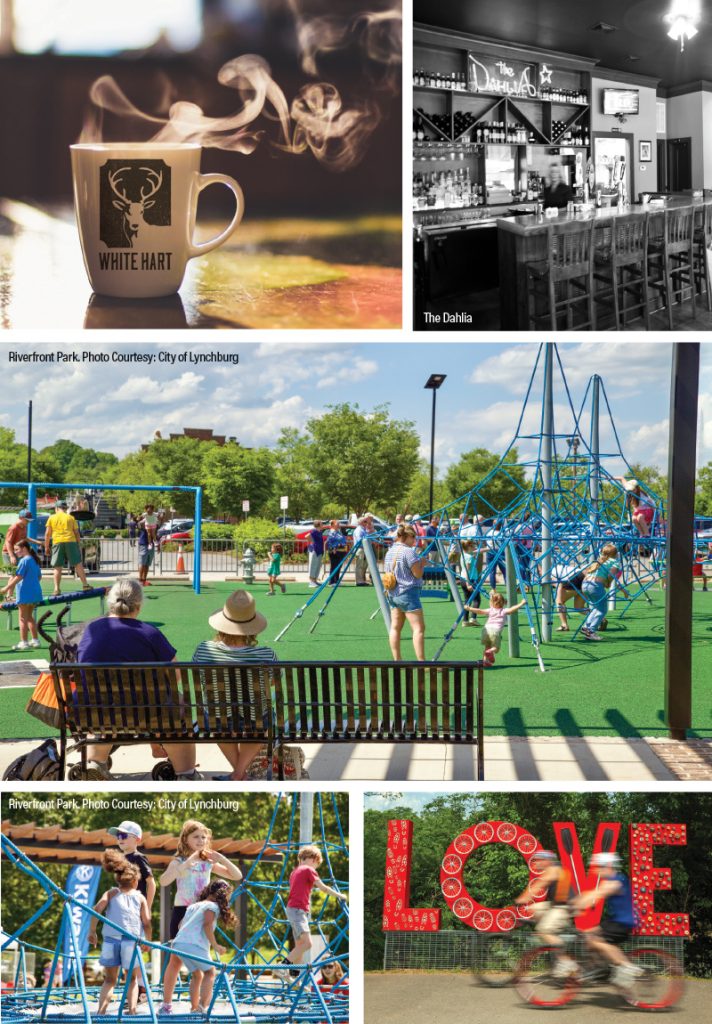
Start your day with a hearty breakfast at: The White Hart Café – Known for its cozy atmosphere and locally sourced menu, perfect for a relaxed morning meal.

Located at 1208 Main Street, don’t let the ongoing construction fool you, this block is still very much open for business! This place is known as “Lynchburg’s Living Room” for a reason. The cozy gathering space has been operating for nearly 20 years and prides itself on offering locally sourced food, freshly roasted coffee, and a relaxing atmosphere. The menu includes coffee, seasonal lemonade, matcha, various teas, and comfort food and bakery items.

The White Hart hosts events, live curated collaborations, and open mic nights, making it way more than just a coffee shop.

Owner Myke Barron has a mission of staying community-minded and has strategic partnerships with Lynchburg City Schools and Iron Lives, aiming to support education and community development. During the COVID pandemic, White Heart opened its space to the Lynchburg Community Kitchen, which helped keep the shop afloat. Support them so they can continue to support our community!

Mid-Morning: Explore Riverfront Park

Visit the newly opened Riverfront Playground – Lynchburg’s first fully accessible playground, designed for children of all abilities. Enjoy the splash pads, interactive play areas, and scenic views of the James River.

This playground, which just opened at the beginning of May, was a direct result of the partnership between Lynchburg City and the Kiwanis Club of Lynchburg. Located at 1000 Jefferson Street, this ADA-accessible playground is conveniently located between The Water Dog and the soon-to-be amphitheater (opening in 2026).

The playground features equipment such as sensory play areas, swings, and wheelchair-accessible merry-go-rounds.

Before it opened, the downtown area had no playground for children, so this addition is another great asset for families visiting Jefferson Street. Bonus: there’s also a fountain for kids to splash around in on hot days.

The park is also used for various events throughout the year such as the upcoming annual fireworks show put on by the Downtown Lynchburg Association.
The park connects to the Riverwalk trail and is great for walking, running, or biking.

Lunch: Local Flavors

Choose from these local favorites for lunch: Hit Bedford Avenue to dine at The Dahlia, Taco Jesús, or Truss – Over the past several years, this connector road from Rivermont Avenue to downtown has grown exponentially and now has a number of shops and restaurants, so be sure not to miss this secret gem that’s sure to expand even further in the future.

Head to Depot Grille – A riverside restaurant known for its American fare and historic ambiance.
At 10 9th Street, this is one of Lynchburg’s OG lunch spots downtown. They offer indoor and outdoor dining and spots to lock up your bike if you’re stopping for a bite after a ride on the trails.

Grab a Bite After the Bike Trail at Trailhead – A newer concept for downtown that offers relaxed vibes where you can seat yourself and order via QR code, is Trailhead at 1312 Jefferson Street.

The owner of Bikes Unlimited, John Seinar, opened this cool new spot right off the Riverwalk trail last year and it’s been a huge success so far. This laid-back joint has corn-hole, a firepit, and relaxed seating all over the deck and yard.

No judgement here, come as you are!

They offer a loaded menu of brews, ciders, and nonalcoholic drinks, as well as sandwiches and pizzas.

Afternoon: Culture & Nature

Engage in one of these activities:
Anne Spencer House & Garden Museum – Explore the historic home and gardens of Harlem Renaissance poet Anne Spencer at 1313 Pierce Street.

Inside the preserved home of Anne Spencer, a distinguished Harlem Renaissance poet and civil rights activist, the house remains intact with 95 percent
of its original furnishings, providing a glimpse into early 20th-century life.

The legacy lives on as the home continues to be run by Spencer’s granddaughter, Shaun Spencer Hester.

Percival’s Island Natural Area – Take a leisurely walk or bike ride along this scenic trail with views of the James River located at 1600 Concord Turnpike.

For bike rentals, stop by Bikes Unlimited at 1312 Jefferson Street. It’s a stone’s throw from the trails. Start at the LOVE sign, snap a few photos to capture your visit and hop on the trail which offers side hikes, viewing decks of the James River, and picnic spots. The entire trail spans about one and a half miles long.

Lynchburg Museum – Discover the city’s rich history through exhibits and artifacts at 901 Court Street.

Perched atop Monument Terrace in downtown Lynchburg, the Lynchburg Museum at the Old Court House offers a journey through Central Virginia’s rich past. Housed in a historic 1855 Greek Revival courthouse, the museum showcases the city’s evolution from its founding days to the present.

Evening: Dinner

Conclude your day with dinner at:
Skyline – Located atop The Virginian Hotel, offering panoramic views of downtown Lynchburg along with a menu of seafood and craft cocktails. Skyline is one of Lynchburg’s two downtown rooftop bars (also check out 7 Rooftop Bar at 1208 Commerce Street!) At 712 Church Street, Skyline sits at the top of the historic Virginian Hotel and offers captivating views of the downtown scenery. Their menu offers chef-inspired seafood dishes, local beers, craft cocktails, and international wine selections. This is the perfect spot to feel snazzy and snap a few pics of the Lynchburg skyline!

William & Henry Steakhouse – Known for its upscale dining experience and views of the James River. Downstairs, you’ll find elevated fine dining on the ground floor of the hotel.

The menu at William & Henry Steakhouse showcases USDA prime steaks, premium seafood, and a selection of appetizers and unique salads. Signature dishes include the 30 ounce porterhouse, dry-aged beef, and seafood towers. Don’t forget the world-class wine selection! The bar features a fabulous happy hour at surprisingly affordable prices in a cozy lounge space.

Optional Evening Activity:
Catch a performance at the Academy Center of the Arts or The Music Hall.

Last year, the Academy opened a new venue, The Music Hall (see page 25)! Located at 722 Commerce Street in Downtown Lynchburg. The space fosters local music and talent with a reasonable cover charge. With a 100-person capacity, this intimate space is designed to provide a much-needed home for local musicians and music enthusiasts.

In the much larger historic Academy Center of the Arts, located at 600 Main Street, performances of all kinds are found. Ranging from professional and community theater productions to concerts, dance performances, and comedy shows, there’s something for everyone.


150 Years of Impact

The Miller Home for Girls’ Legacy of Empowerment and Transformation

By: Olivia Carter | Photos By: Ashlee Glen

For 150 years, the Miller Home for Girls has provided a safe place for young women in need, guiding them toward stability, self-sufficiency, and a brighter future.

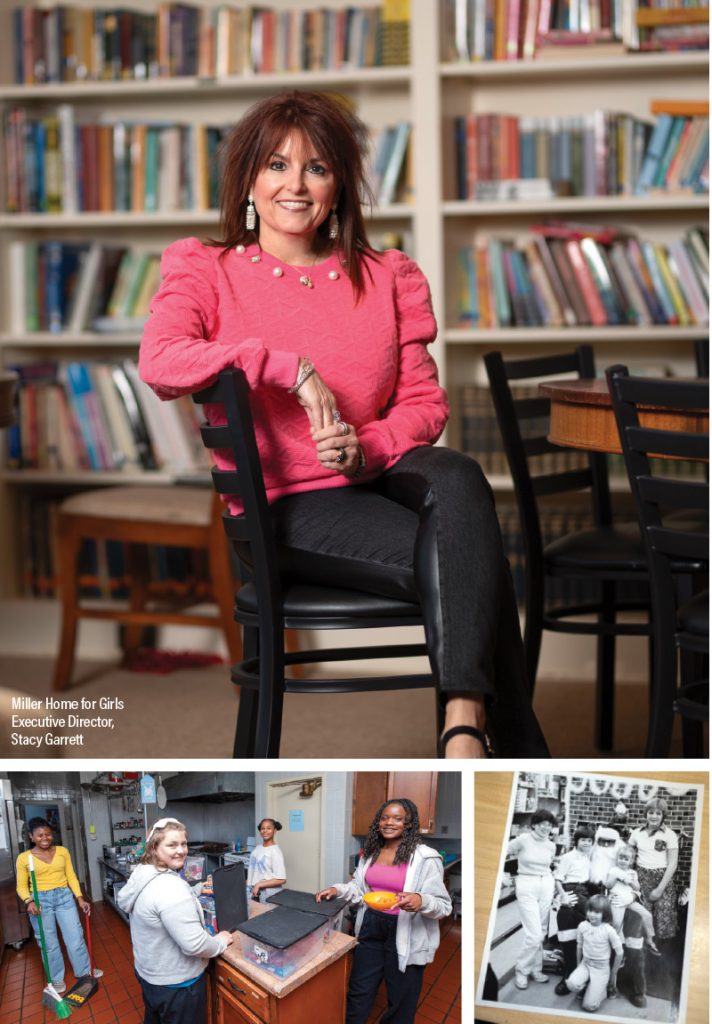
Executive Director Stacy Garrett, who has led the organization for two decades, passionately upholds the mission that has remained steadfast since the home’s founding in 1875: to care for girls and help them build a positive path forward.

“Miller Home opened its doors in 1875 and has been taking care of girls who needed a safe place to live, redirect their path, and become smart, intelligent, well-rounded individuals who can go back into our community after the age of 18,” Garrett said. “That has always been our mission.”

Above: When first established, the Miller Home was known as the Lynchburg Female Orphan Asylum. At that time the home could care for approximately 100 girls at once and it was located in a four story building on a working farm. The Asylum was located on Memorial Avenue where E. C. Glass High School and The Plaza are today. Photo courtesy of Lynchburg Museum System.

Above: When first established, the Miller Home was known as the Lynchburg Female Orphan Asylum. At that time the home could care for approximately 100 girls at once and it was located in a four story building on a working farm. The Asylum was located on Memorial Avenue where E. C. Glass High School and The Plaza are today. Photo courtesy of Lynchburg Museum System.

Originally established as the Lynchburg Female Orphan Asylum, the home primarily served orphaned girls. Back then, a guardian, family member, or parent could drop off a girl and she would remain at the home until she married or finished school. In the 1950s, the institution was renamed the Miller Home of Lynchburg and the term “orphan” was phased out as societal needs and the structure of child welfare evolved.

Today, girls come to the Miller Home in various ways.

Many are placed by a guardian or through the Department of Social Services due to changing home circumstances, truancy, or court orders. The home serves as an alternative to detention centers, offering preventive care rather than treatment.

Miller Home

“We’re not a treatment facility; we are a preventive care facility,” Garrett said. “We aim to smooth out a bumpy road and build a network of professionals to help these young women transition back home, move into foster care, or age out and become independent members of the community.”

Dr. Selinna Creasy, volunteer while in college, full-time staff member, and Board of Directors member, said as a volunteer, she witnessed firsthand the organization’s profound impact on the community.

“Inspired by the dedication of the staff and the lives being transformed, I transitioned into a full-time staff role, contributing to the mission that I deeply believe in, ‘Changing Lives, One Girl at a Time.’ Over the years, my commitment to Miller Home grew stronger, eventually leading me to serve on the Board,” Creasy said. “As the current vice president of Miller Home for Girls, this progression has been incredibly fulfilling, allowing me to support and advocate for a place that continues providing hope and strength to so many. It’s a privilege to be part of such a legacy and I look forward to seeing what the future holds for Miller Home.”

The Miller Home focuses on three key areas to support the girls in their care: academics, mental health, and life skills.

“We work to ensure our girls are engaged in school, attending every day, and striving for academic success,” Garrett said. “We also connect them with professional counseling services to help them develop problem-solving and coping skills, particularly if mental health is a factor in their placement.”

The Miller Home also helps girls develop essential life skills.

“We teach them how to keep their rooms clean, cook meals, do their laundry—basic skills they need to be self-sufficient,” Garrett said. “By combining these three aspects, we help them build a strong foundation for the future.”

Unlike some institutions, the Miller Home does not offer in-house counseling. Instead, they partner with outside professionals to ensure an unbiased perspective on each girl’s progress.

“Having a third-party professional involved means we’re not the only ones making the call, especially when it comes to mental health,” Garrett said.

The Miller Home has never relied on state, federal, or city funding to sustain its operations. Instead, it has thrived for 150 years thanks to unwavering
community support.

“The reason our doors are still open is because of our community,” Garrett said. “Through donations, volunteering, and in-kind gifts, our supporters ensure we can continue our work. But it’s getting harder. With economic uncertainties, people are more cautious about giving, yet the needs of our girls remain.”

Local organizations, civic groups, and businesses have played an instrumental role in keeping the home running. St. John’s Episcopal Church, Park View Community Mission, Food for Thought, the Lynchburg Hillcats, and Liberty University have all contributed through fundraising, pantry donations, and volunteer efforts.

Phil Vassar, a country music artist, has partnered with the home since 2008.

“We are incredibly grateful for the Greater Lynchburg Community Foundation’s grants, which have helped us purchase necessary items,” Garrett said. “And our community always steps up, whether it’s Dave and Chris Henderson at Water Dog supporting our fundraising events or Starr Hill Brewery organizing an Angel Tree for us. The generosity is overwhelming.”

The Miller Home has an ability to tailor individualized service plans for each girl. As one of only three programs in Virginia licensed by the Department of Social Services under minimum standards, the Miller Home develops monthly goals and structured plans based on each girl’s specific needs.

“We don’t take a ‘one-size-fits-all’ approach,” Garrett said. “Each girl has her own plan, reviewed on a monthly basis. Because we have a small number of residents, usually eight to ten girls, we can work with them closely and ensure they are making progress.”

She said it’s this hands-on approach that is one of the reasons the Miller Home continues to thrive and make a lasting impact.

Justine, who was a resident from middle school until her first semester of college, then becoming an intern and a full-time staff member with Miller Home, said the impact that the organization had on her life as a resident inspired her to want to come back and complete an internship.

“During my internship a full-time position opened and I decided to take it and become a Child Care Worker,” she said. “Miller Home has had such an impact on my life that I wanted to come back, stay involved, and keep Miller Home in my life.”

Over the decades, the challenges faced by the girls at the Miller Home have evolved.

“In the past, our girls had to sew their clothes and work on farms. Now, we’re dealing with issues like technology, social media, vaping, and the aftermath of COVID-19,” Garrett said. “But our mission remains the same, which is to provide a stable, nurturing environment that prepares them for a successful future.”
One of the most significant measures of success is the transformation that takes place in the lives of the girls.

“Success for us isn’t about numbers, it’s about the quality of the time we spend with these girls,” Garrett said. “It’s seeing a girl make the honor roll for the first time, getting a job, opening a bank account, or applying to college.”

The consequences of not having a place like the Miller Home are stark. Without its support, many of these young women could face homelessness, fall into gang-related activities, or continue cycles of instability, Garrett said. Instead, they are given the chance to break generational patterns and build a better future.
“We’ve had girls who are the first in their families to go to college,” Garrett said. “They learn to trust people outside their immediate family, gain self-worth, and see possibilities they never imagined.”

Kayla, current intern for Miller Home, said her time at the nonprofit has been one of the greatest blessings of her college journey.

“I’ve witnessed firsthand the profound impact Miller Home has on the lives of the girls it serves, and the incredible difference made when dedicated individuals, like the Miller Home staff, step up to care for them every day,” she said. “Miller Home is not just a building or a temporary place for the girls to stay, it’s a true home, where they can find safety, support, and a sense of belonging.”

Every single day, the staff gives 100 percent to these girls, Garrett said.

“We make sure they are fed, safe, clothed, and supported,” she said.

“That’s the heart of what we do. I definitely think our community is proud of it and I appreciate them riding along with us and we need their support to keep us here for another 150 years.”


How Her Garden Has Grown

Unearthing the Nuanced Strata of Anne Spencer’s Life, Home, and Garden

By: Emily Mook | Photos by: Ashlee Glen

A museum is a paradoxical thing: a permanent fixture that seeks to preserve the ephemeral, a stationary monument to that which once buzzed with momentum, a tangible rendering of such lofty intangibles as hopes, dreams, fears, love, and perhaps even radical change.

These paradoxes are especially pronounced when a museum was once someone’s home, as is the case with the Anne Spencer House and Garden Museum. The eclectic beauty and thoughtful sophistication of Anne Spencer’s home and the profound tranquility and majestic splendor of her garden make an indelible impression and lend themselves pliantly to an oft-told narrative of Spencer’s life: she was an introspective creative who found respite—and helped others find respite—from the turmoil of their times in the carefully curated comforts of the home and garden she and her beloved husband, Edward, built and inhabited together. This narrative is not untrue, but it is also not close to complete. Spencer contained multitudes and made waves that continue to create ripples in and far beyond Lynchburg, and she frequently did so outside the walls and trellises of her Pierce Street abode.

Spencer’s granddaughter Shaun Spencer-Hester has served as Executive Director and Curator of ASHGM since June 2010 and has made it her mission to not only maintain and educate others about the physical spaces that her grandmother held so dear, but also to uncover and make known the complex, nonphysical layers of Spencer’s life and legacy. As more and more layers are revealed, may we come to a truer understanding of the seeds of change that Spencer and her colleagues sowed and strive to cultivate the resulting crops with care.

Spencer-Hester emphasizes to Museum visitors the kineticism of the luminaries who visited Spencer and of Spencer herself.

“When people come to visit the Museum, I try to reiterate the importance of the people who came there,” said Spencer-Hester. “They came to visit Anne Spencer, but those footsteps didn’t stay there—they went out into the community.”

Among those luminaries were James Weldon Johnson, W.E.B. Du Bois, Langston Hughes, George Washington Carver, Zora Neale Hurston, Countee Cullen, Marian Anderson, Thurgood Marshall, and Dr. Martin Luther King, Jr.

The accomplishments of these and other visitors are abundant, vast, and well-known on a global scale, but many of them achieved things right here in Lynchburg that may get overlooked. It is important to note that although Spencer ended up forging personal connections of varying degrees with some of these visitors, she did not simply offer her home as a place of rest and retreat for friends; rather, she wanted to facilitate change in and beyond Lynchburg by hosting those whose work she believed in and with whom she felt collaboration would be possible and fruitful.

“The people who visited Anne were here doing big things—they weren’t just walking around downtown going to the barbershop or buying groceries,” Spencer-Hester noted. “You have to realize that, at that time, it was a different town. African Americans had to be careful about where they went around town. These people were coming to pursue whatever interests they had with Anne and connecting with other like-minded people in the area. George Washington Carver came and they talked about plants and seeds and flowers. W.E.B. Du Bois came and they talked about justice and equality, as did many of the people who came to visit. And then there were writers like James Weldon Johnson, who was compiling The Book of American Negro Poetry, who came to talk about writing and activism.”

Johnson’s collaborations with Spencer were particularly noteworthy.

“When James Weldon Johnson came to that house, he came as a guest—someone my grandparents knew only as a field secretary of the NAACP from New York City,” stated Spencer-Hester. “He and Anne met with 22 other community members and established the Lynchburg chapter of the NAACP right there in that living room. He helped bring justice to Lynchburg by joining forces with Anne and other activists in the community.”

Langston Hughes and W.E.B. Du Bois also made their mark on a local level. According to Spencer-Hester, Hughes spoke at the University of Lynchburg [then Lynchburg College] in the 1940s and “Du Bois lectured at Virginia Seminary and conducted studies on African American culture and history in this area.”

Spencer herself didn’t shy away from speaking out either.

“Anne wasn’t just this little lady sitting in her garden on Pierce Street who wanted to be left alone,” Spencer-Hester said. “She was involved and active. She was boycotting public transportation and fighting for the integration of teachers for the school system. She was doing things here in Lynchburg that I don’t think she really gets credit for. Maybe she was a quiet mover about it, but she was definitely in the meetings. She confronted Carter Glass!”

Glass was a white newspaper publisher and politician from Lynchburg who advocated for segregation. According to Spencer-Hester, the confrontation occurred when Glass and Spencer both attended a public meeting in Lynchburg about education and the hiring of Black teachers.

“Carter Glass attended this meeting—which consisted mostly of African American attendees—and he got up to speak,” remarked Spencer-Hester. “He kept speaking and speaking, and my grandmother got up and told him to be quiet and sit down to give someone else a chance to talk. It was bold for a Black woman to do that!”

Indeed, Spencer’s boldness in the spheres of community and collaboration, of letting wild things grow and of cultivating positive change as a collective, is reflected in her home and garden—both during her life and after her death. For starters, both spaces resulted from a beautiful partnership between Spencer and Edward.

“The home and garden were definitely extensions of not just Anne, but also of her family,” Spencer-Hester noted. “Edward and Anne were both instrumental in making these spaces into places where people could feel comfortable and have open discussions. I don’t think people think of Edward as an artist, but he was definitely a creative. He utilized elements of math and science to construct, and Anne brought the arts, the colors, and the patterns. Together, they had a vision of what their home and garden could be.”

Additionally, the garden was just as much a hub of activity as it was a place of quiet contemplation for Spencer during her lifetime.

“The garden is often described as this place of leisure and a place of retreat for Anne, but they also partied in that garden!” exclaimed Spencer-Hester. “They had a party for Langston Hughes that was in the house but extended into the garden. There’s an article in one of the African American newspapers that says they had 350 people there! It’s a beautiful green space that they created, but that doesn’t mean that they just used it to talk about flowers and sip on mint juleps. They were having big discussions, celebrating weddings, and hosting children’s groups like the Jack and Jill Club.”

After Spencer’s death in 1975, this spirit of collaboration continued to define her home and garden. Spencer-Hester fondly recalls a memory of her father, Chauncey Spencer, going through photos of his parents’ garden and the resulting community restoration project that helped shape the garden into the resplendent space it is today.

“When I was younger, my father was going through photographs at home and asked my sister Kyle and me to help him pick out photographs of the garden,” Spencer-Hester said. “In 1983 he started asking around town about restoring the garden. By this point, the house had been made a historic landmark, and my father started really directing his attention toward the garden. He talked to us a lot about the garden and what it meant to him and how special it was. He ended up meeting with Jane Baber White, who later told me about the meeting. She said she immediately fell in love with the garden. The collection of small black and white photographs on display at the Old City Cemetery are the photographs my father gave to Jane.”

White was a landscape designer and a member of the Hillside Garden Club.

After meeting with Chauncey, she met with Lynchburg Garden Club member and fellow landscape designer Mina Walker Wood, and together they approached the Hillside Garden Club to inquire about taking on the major task of restoring the Anne Spencer Garden.

The Hillside Garden Club agreed, and thus the restoration began.

“Folks raised funds and donated trees and flowers and E.C. Glass students helped lay down brick,” recalled Spencer-Hester. “It was truly a community project, and not just a restoration project—people learned about Anne Spencer.”

Even the plants themselves that once populated and still populate the Spencers’ garden tell a tale of gathering and collective growth.

“Anne had quite a collection of roses, and we still have many of her original roses, as well as many of her plants and trees and shrubs,” Spencer-Hester remarked. “She also grew native flowers. She and Edward would drive the Virginia highways and dig up Virginia native flowers—don’t do that today; it’s illegal!—and bring them home and plant them in the garden. They had what we consider today an early pollinator garden, and there’s still evidence of that. She also loved and grew nasturtiums and wrote about them. She had a lot of lilies as well. I’m doing research in her archives at UVA, and there’s a huge collection on her garden. I’m going to meet with the [Hillside] Garden Club at some point about planting some new plantings in the garden from this research of her magazines and of catalogs she checked off and ordered from. This garden is a living thing. It’s something you have to preserve and continuously restore.”

Anne Spencer’s legacy, too, is a living and evolving thing, and Spencer-Hester’s incredible dedication to researching and disseminating all aspects of her grandmother’s life has allowed that legacy to bloom so very brilliantly. There is a lot of love in that stewardship, and there’s also a lesson: when it comes to your elders, do a little digging. You never know what you may unearth about them, about yourself, and about the garden we’re all growing, together.
“I didn’t know a lot of these things about my grandmother,” said Spencer-Hester.

“She was really something. I’m amazed and very proud. There’s a lot you don’t know about your elders until you’re older—or maybe not even when you’re older! It depends upon whether or not you’re interested. I tell people to ask their grandparents and parents and uncles and aunties simple questions while you can: ‘Where were you born?’ ‘What were your parents like?’ Even if it doesn’t seem important to ask these questions, it is. It’s amazing how all of our stories are intertwined.”


A Guide to Everyday Giving: Ways to Support Your Community

When we think of giving back, large charitable donations or time-consuming volunteer commitments might come to mind. But the reality is that small, everyday actions can create just as much impact—especially when practiced consistently.

In times of economic uncertainty, social change, or environmental concerns, supporting our communities becomes even more essential. The good news? There are plenty of ways to get involved in Lynchburg, no matter your schedule, budget, or skills.

Easy Ways to Give Back in Lynchburg

Support Local Businesses
Every dollar spent at a local business circulates within the community, supporting jobs, services, and families. Next time you need groceries, gifts, or coffee, consider visiting a small business rather than a big-box store. Even something as simple as leaving a positive review online helps!

Donate Wisely
Instead of tossing out unwanted clothes, furniture, or non-perishable food, donate them to organizations that directly serve those in need. Lynchburg organizations like Miriam’s House, Park View Community Mission, Lynchburg’s local chapter of Food Not Bombs, Lynchburg Daily Bread, and the Blue Ridge Area Food Bank accept donations year-round to support local families.

Help Local Schools and Libraries
Many schools and libraries in the area rely on community support. You can donate school supplies, sponsor a classroom, or volunteer as a reading buddy for children who need extra help. Even just donating gently used books can make a difference!

Join a Community Cleanup or Environmental Project
Want to help keep Lynchburg beautiful? Volunteer for a neighborhood cleanup, plant trees, or help maintain a community garden. Even picking up litter during your daily walk is a small but meaningful act. The James River Association and Lynchburg Parks and Rec often host local environmental initiatives.

Cook a Meal for Someone in Need
Know a new parent, an elderly neighbor, or someone going through a tough time? Preparing and delivering a homemade meal can be one of the most thoughtful ways to show support. Local meal train groups make it easy to coordinate and provide meals for families in need.

Why Small Acts Matter

You don’t have to make grand gestures to create meaningful change. When people come together, even small acts of kindness add up:

  • A single donation can help a child stay warm during the winter.
  • A few hours of volunteering can lighten the load for a local nonprofit.
  • Supporting a local farmer or artisan helps sustain the regional economy.
  • Picking up trash makes public spaces more enjoyable for everyone.

By making small, intentional choices to support your neighbors, businesses, and the environment, you’re helping to create a more connected and thriving Lynchburg.

Want to get involved? Check out Lynchburg’s local nonprofit directory and upcoming community events to see where your efforts can make a difference.

RELATED: Lynchburg Community Champions

RELATED: More than a Meal


Hot Off the Grill

How Perky’s Started Small and Stays Steady

By: Anna Eileen White | Photos by: Ashlee Glen

Just 30 miles south of Lynchburg on Route 29, signs prohibit parking on the side of the road. Drivers may wonder why until they pass on a Saturday night.

An extensive gravel lot wraps around an unassuming grey building directly off the highway. The lot is filled; the difference of five minutes might mean waiting for a spot.

Inside, the conditions are equally snug.

Visitors stand and sit shoulder-to-shoulder in the entryway. They murmur together or squint to decipher the host of military mementos on the walls—many pieces have been gifted by past and present customers.

Once inside, countless license plates from around the world, a signed Kansas City Chiefs jersey, storied taxidermy mounts, and more greet the eye. One mount, “Max the Iguana,” was an original customer’s pet and a frequent visitor at Perky’s. After Max ate Legos to his demise, he was honored with a permanent spot on top of the beer cooler, where he commands an expansive view of the buzzing grill, bar, and dining room.

Founder Lee Perkins (“Perky” to his friends) could never have imagined the landmark this restaurant would become when he relocated from hectic northern Virginia to Altavista, looking for a change.

Perky's

What was then a floundering hamburger and hotdog joint—complete with a jukebox, pool table, electronic dart boards, and a hefty dose of trouble—was calling his name. Perky and his wife Gay (known fondly as “Miss Gay”) purchased the spot in 1993. The previous owner was facing multiple lawsuits due to frequent rowdy crowds.

Perky, a U.S. Navy veteran and former blackjack dealer, was unfazed.

“He was always about adventures and trying new things,” Gay’s son, Greg Toren, explained. “The only thing he knew about the restaurant business was that 90 percent of them failed in the first couple years.”

Perky immediately ditched the pool table to curb potential arguments between customers.

He started engaging a new customer base with creative incentives, offering the same hamburgers and hotdogs locals had grown to expect, with a side of imported beers and microbrews.

Long before imported beers and microbrews were vernacular, Perky’s big-city experiences crafted his appreciation for more than the handful of domestic beers popular in Altavista at the time.

He initiated a “Beers of the World Club.” Customers received punch cards and sampled Perky’s handpicked liquors—choices from China, Japan, Czech Republic, and Spain, among others—eventually earning a t-shirt representing their accomplishment.

Perky was sharing his passion while attracting much-needed clientele. Visitors began to see him as approachable and readily gave feedback: Altavista wanted a steakhouse.

The very next week, Perky added steaks to the menu.

Perkys food

A master of down-home marketing, Perky found novel ways to promote the new menu item. Using the cardboard from the base of a 24 case of beer, he created 24 bullseyes by drawing x’s in the circle indentations left by the cans. The first 24 customers on Saturday signed their names beside an x before Perky took the target outside. One shotgun shell later, the customer whose x took a pellet closest to the center won a free steak dinner.

Now, more than 30 years later, the steaks speak for themselves. In fact, without a reservation, visitors may not get a seat.

Toren, who has since taken over as owner and grill master, says they see approximately 250 customers filter through their 15 tables on an average Saturday evening.

Particularly fortunate visitors might catch wind of insider advice, reserving a barstool instead of a table.

Toren said that these stools are favorites among regulars, “In my opinion, it’s the best seat in the house.”

The barstools face the open grill, where Toren tends an impressive lineup of steaks, seafood, and weekly specials.

“Everything is fresh, nothing is frozen,” he explained.

Between working licks of flame to the meat’s advantage and seasoning the choice cuts with their famous in-house blended spices, Toren turns away from the grill and leans on the bar, chatting with customers. He asks them how their food tastes and how their kid’s baseball game went.

Perky's

“People feel at home when they come here,” Toren explained. He said customers love the personal connections they build with the servers, some of
whom have worked here for decades. “I’ve got a great team,” he said, adding that customers often refer to the team’s function as a well-oiled machine.

But things haven’t always been this polished.

Toren recalled the evening he took over the grill after their cook left with no notice, “I was thrown into it on a random Saturday night.”

Armed with a degree in computer programming, some experience working as the previous cook’s assistant, and his personal preference for a medium-rare steak, Toren dove in headfirst (much like Perky had done years earlier).

That was in 2002. “That particular Saturday was a record night,” he reminisced, “I had nothing sent back.” Over time, he perfected his craft with no formal training and without thermometers, instead cooking by feel, trusting his instincts, and listening to customers’ feedback.

“You hear somebody like 65 or 70 years old coming in here and saying ‘Man, that’s the best steak I’ve ever had’ and you know durn well they’ve had a lot of steaks—that makes you feel pretty good,” he said.

He keeps customers coming back by prioritizing quality and consistency. “Everybody knows my cooking style,” he said. “If they came here 10 years ago, it’s gonna be the exact same piece of meat they get today.”

These days, Miss Gay manages the business’s books from home, and Toren manages everything else.

“We do it together,” Toren shared. Perky passed away in 2011 after gradually receding from his usual role due to declining health. Still, Toren is confident he would be proud of everything the restaurant has become.

“If Perky could see it today, I mean, he would just be ecstatic,” Toren remarked, “I know it would make him happy.”

It’s 6:30 p.m., every seat is filled, and voices hum off edge-to-edge license plates. A glance at the scrapbook walls, a conversation with a familiar face, and a whiff of smoke off the grill more than explain the overflowing parking lot.

Perky's