2025 Lynchburg Dental Guide

Not sure where to go for your oral health or dental treatments in the Lynchburg area?

Look no further than the experts referenced in our Area Dental Guide. From braces for your kids to the dental professionals you want in your corner when there’s an issue, we have you covered.


The Raven Lounge

Where Poe Meets Pinot

By: Jeremy Angione | Photos By: Ashlee Glen

Dark walls, golden light, and the soft hum of a melody—The Raven Lounge invites guests to slow down, sip something new, and immerse themselves in a space where every detail tells a story. Inspired by the poetic gloom of Edgar Allan Poe and the celebratory culture of Louisiana, it’s Lynchburg’s latest Main Street addition—and its most evocative.

The wine and charcuterie bar opened May 10, through the combined efforts of co-owners and partners Jenee Davis and Bryan Fitz.

“This is kind of just an extension of our relationship. We do music together, we do life together, and now we do the Raven together,” Davis said. “It’s driven by love, for sure. It was definitely a place where me and [Bryan] could create something together.”

Despite the darker undertones of Poe and his works, the Raven Lounge remains cozy, intimate, and fun. Davis says much of the decor was actually already hers. There is even a horse-drawn carriage that acts as a focal point of the space’s design language.

Davis admits that the dark, dreary vibe of Poe’s 19th century era is a big part of her personality.

“I think my soul is stuck in that era,” Davis said.

Aside from the design of the space, Davis asserts that the quality that truly shapes the Raven Lounge is music.

Davis, originally from Louisiana, envisioned a space that reflected the cultural richness she grew up with—a place where music, food, and conversation came together effortlessly. She felt downtown Lynchburg could benefit from a more casual environment that celebrates creativity without the formality of a sit-down dining experience.

Although Davis is not a Lynchburg native, she’s called it home for the last 20 years and even raised her children here. The Raven Lounge was meant to be the type of place she wanted to experience with her family for years.

“We just wanted somewhere that people could experience something a little different. It’s also a platform for new musicians who haven’t played before. It’s a great opportunity for them to take the stage and have their first experience playing for the public,” Davis explained.

As a musician herself, Davis understands the value of having a dedicated space for artists and musicians to share their craft. She and partner Bryan Fitz form their own band called “Atlas Moon.” Together, they also play every Wednesday night at the Raven Lounge as a pair under the name “Jenee and Fitz.”

According to Davis, while the Raven Lounge certainly isn’t the first to incorporate music into their identity, the start times and duration of music performances sets Raven Lounge apart from other downtown businesses.

“Sometimes our music starts at 6.

In the fall we want to do music during the afternoon. I think that’s kind of what sets us apart. We’re gonna fill a time gap more than anything,” Davis said.

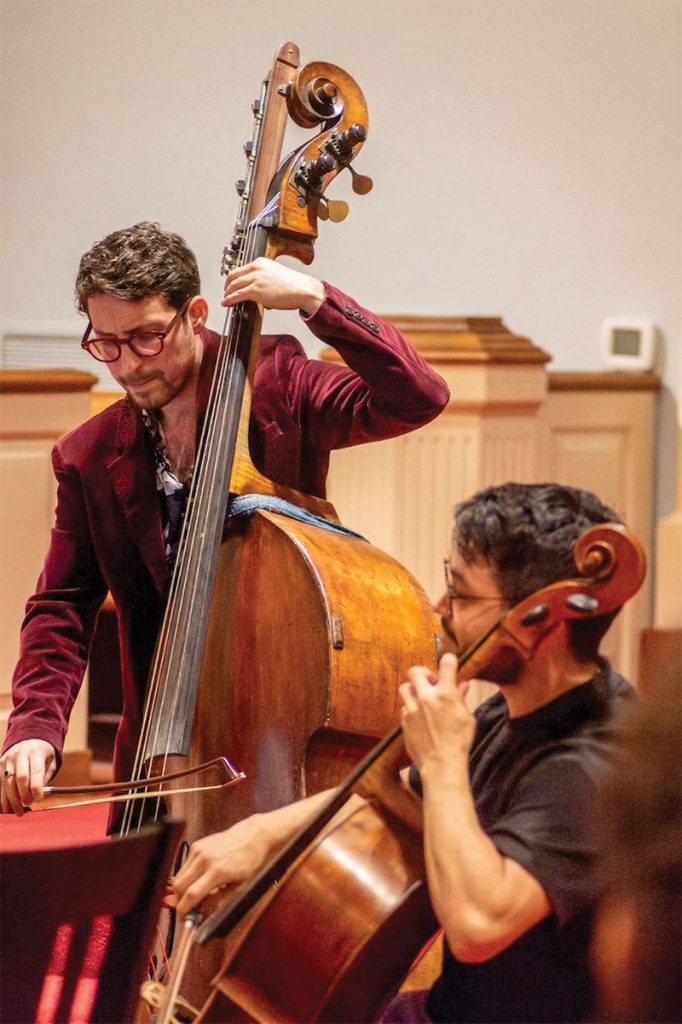
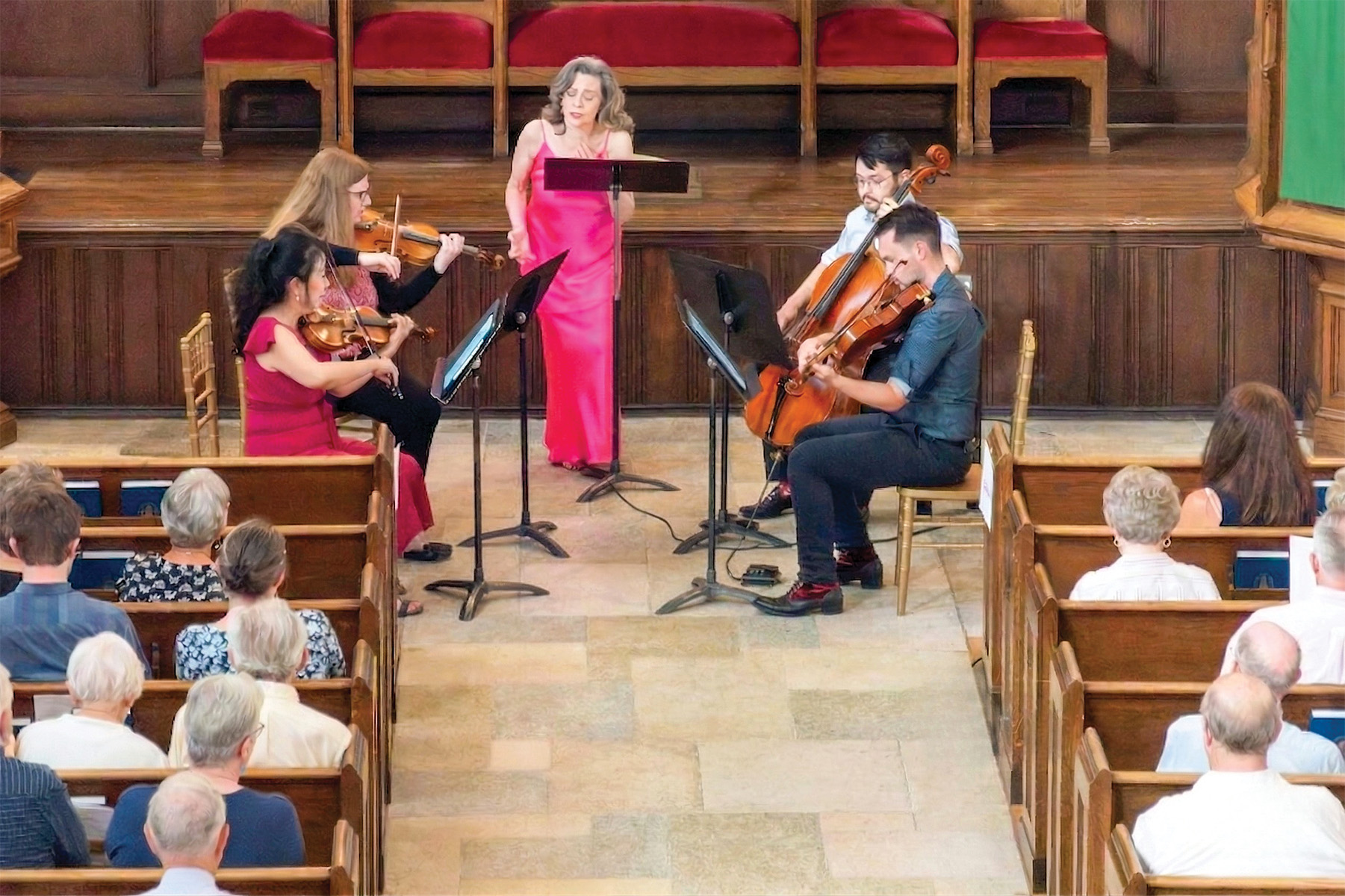
Aside from music, the Raven Lounge has opened its doors to all kinds of performers. The Raven hosts exclusive after-hour service for performers, staff, and audience members of the Lynchburg Symphony Orchestra and the Academy.

“We’re trying to figure out how we can be the focal point for the arts. I don’t think people realize how artsy and creative this town really is.” Davis claimed.

Despite opening in the slower summer months, Davis says that the community has responded positively to the Raven Lounge. According to Davis, the silver lining of the opening in the slow season is the ability to steadily test things out for the lounge.

“We’re going to have to find our niche. We’re learning with Lynchburg. People love the menu, small plates, and wine selection. We do carry wines that a lot of people don’t carry, at good price points,” Davis explained.

Thus far, Davis says that the Raven Lounge has appealed to everyone from older wine drinkers and young art lovers. While the lounge is a bar, Davis felt it best to subtract a mainstay of most modern bars—TVs.

“We wanted people to interact.

We want you to talk to people and meet people, like humans used to do,” Davis exclaimed.

With only a few months in business, Davis already has big plans for the Raven Lounge in the Fall.

“For Halloween, we are going to partner with some of the local art and theater programs, and we want to do skits and ticketed events,” Davis said.
Similarly, the lounge will receive a winter makeover for Christmas.

“We’re going to make it a winter wonderland. If I have to get a snow machine up in here, we’re gonna do it,” Davis joked.

Wine tastings and pairing events will also be available in the fall. Currently, the Raven Lounge is open for venue rentals every Saturday, during the day.
The Raven Lounge’s menu will also see growth with the addition of tapas style food items. Currently, guests can enjoy the elegance of curated charcuterie boards, or comfort foods like the Raven’s “fancy” grilled cheeses.

According to Davis, certain items such as breads, cheeses, and some wines are locally sourced. Many of the wine cocktails are also made with local, fresh, and housemade ingredients.

While the Raven Lounge certainly has a distinct identity that stands out among other downtown businesses, Davis asserts that it does not have to be just one thing.

“Just like poetry, the Raven is open to interpretation. It may be a different feeling for you than it is for me,” Davis mused.


2025 Best Of Hall Of Fame Winners

Earning a Best of Lynchburg award should be celebrated, and earning this recognition year after year earns a business a spot in the Hall of Fame.

To place in our Best of Lynchburg Hall of Fame, a business, person, or place needs to have won a gold level award in a particular category for the majority of the years since VistaGraphics first launched the contest in 2014.

Flip through to see who is the best of the best in the region!


(Voting for the 2026 Best Of Lynchburg Awards begins July 25 on LynchburgLiving.com. Look for those winners in the January/February issue of Lynchburg Living!)


Lynchburg Restaurant Week 2025

Experience Lynchburg Restaurant Week
June 14-21, 2025!

Get ready to indulge in the culinary delights of Lynchburg during this year’s Lynchburg Restaurant Week, brought to you by Lynchburg Living magazine. From June 14 to June 21, nearly thirty of our city’s best restaurants will open their doors, offering specially crafted three-course menus that showcase the local flavors and talent that make our food scene so exceptional. Whether you’re revisiting old favorites or trying something new, this is the perfect opportunity to savor the hard work and creativity of our local chefs.

From innovative appetizers to mouthwatering entrees and decadent desserts, Lynchburg Restaurant Week invites you to enjoy delicious meals, all while supporting our community’s vibrant restaurant culture.

And don’t forget—if one of our participating restaurants leaves you wowed, you can cast your vote at lynchburgrestaurantweek.com!

The winning restaurant will receive well-deserved recognition and exciting prizes. We hope you’ll join us in celebrating the flavors that make Lynchburg unique.


A Cozy Corner of Norfolk Avenue

The Milams’ Craftsman Home Filled with Love, Laughter, and Good Food

By: Megan Williams | Photos By: Ashlee Glen

On a warm Spring Wednesday night, the red door on a cozy 1920’s Craftsman swings open. Warm light spills onto the porch and the sounds of a ruthless game of Clue pierce the otherwise quiet street. Amidst the squeals of a guess-gone-wrong, you hear chips clanking into a bowl, ready to be served alongside freshly made onion dip. If a neighborhood kid were to pass by at this moment, they’d surmise their own clue: Game night at the Milam’s is on and all are invited.

“If the red door is open, you’re welcome to come in,” said Hart Milam, who has lived in the charming one-and-a-half story home since 2019 alongside her husband Nick, their two children Wesley (11) and Cora (8), and their dog Mojo, who joined the family a few years after they moved in. “This is a very close-knit street. My kids are always included in neighborhood activities, and we always do the same.”

Hart and Nick met in 2012 while they were both living in DC. Neither had any intention of leaving the Northern Virginia area but a job opportunity relocated the Milams to Lynchburg in July of 2019.

“We had no intention to staying for more than a year and were actively seeking rental opportunities,” Hart recalled. “We decided that purchasing a home might be a better option because of the interest rates at the time. We did not like a single house we looked at, and we searched for about two months until I was told about our current home. It sat vacant, so I reached out to the owner in late September, and we walked through it the next day. Nick and I remained silent during the walkthrough with the owner, but as soon as we got in the car, we knew it was the house for us. We put the offer in, and it was officially ours in October 2019. It’s hard to believe it will be almost 6 years.”

Hart had always had an affinity for Craftsman-style homes, gravitating toward the timeless functionality that the homes have.

“I love the characteristics and charm,” she said. “When we were house hunting, we looked at a few homes for sale on Norfolk Avenue. Having lived in Washington, DC, then eventually when we lived in Winchester, and our suburb in Northern Virginia, I loved the ability to walk to restaurants and shops. When we were walking the sidewalks of Norfolk Avenue, knowing how convenient businesses on Rivermont are to the street, it was a no-brainer for me. I was determined to live on Norfolk.”

The Milams immediately got to work transforming the home into a space that worked for their family, and that would continue to work well as their children grew.

The original kitchen had a peninsula countertop that was, according to Hart, “perfectly workable and fine,” however the counter height was six-inches higher than standard height and needed to be adjusted. They were able to retain most of the overhead cabinets but renovated the base cabinets to a more accessible height.

“We renovated the kitchen with Ikea cabinets!” Hart said. “It took over 250 boxes being delivered to our home and a lot of manpower from our family to help build out. My father-in-law, Mike, would leave his day job as a pulmonologist to help Nick build cabinets after work. We subcontracted the work in the kitchen to gut, place tile, but the rest of it was a lot of DIY. We had moving boxes everywhere in the middle of renovations, refinishing floors, building kitchen cabinets, and we eventually moved in December 2019 with a lot of work still to be done. I was determined to have Christmas breakfast in our new home, so we had to have our granite countertops installed on Christmas Eve!”

For the Milams, the kitchen is the heart of their home and family. After Hart returns home from work, where she is in Admissions at Randolph College, just a three-minute walk away, she can be found in the kitchen, doling out snacks for her kids or assessing the ingredients in the fridge for dinner.

“Coming from a strong Filipino and Italian background, I was taught not to waste,” she said.

“If all you have is rice and eggs, in Asian culture, that’s a meal in and of itself.”

Go-to meals on busy weeknights while the Milams navigate work schedules, their daughter’s dance practice schedule, and both children’s lacrosse schedules include pasta, salmon rice bowls, and even charcuterie platters where the kids can graze while catching up on homework after a practice.

“I try to incorporate as many of the same ingredients as possible across the week to avoid waste. But if I walk by a full lobster tank at the Boonsboro Kroger, I will make an impulse purchase for lobster rolls,” she laughed.

While the Milams keep meals simple during weeknights, Hart will go over the top for certain occasions or meals.

“One afternoon this winter, all of the neighborhood kids came in from playing outside. For snacks, I brought out the Brookstone S’mores Maker and they made s’mores in the dining room. Nick and I love to have people over, planned or unplanned—anywhere from pizza parties with the Ooni to me forcing everyone to watch Duke Basketball—and everyone knows we will always have some snacks or a cocktail waiting for you whenever you come over! I love to be a little over the top in parties and themes, and I’m so glad my family and friends indulge my sometimes-unhinged behavior,” she smiled. “Last year, I threw my daughter a [Taylor Swift] Eras themed birthday party complete with t-shirts, koozies, and a ‘merch table’ with glasses and tattoos!”

Hart and Nick’s children are front and center in their home, from the snacks they love to the hobbies they are cultivating. It’s a space of warmth, joy, and color, and it creates a beautiful background where their children can experiment and thrive.

The built-ins in the living room, original to the home, are brimming with family photos, assembled Lego projects, records their daughter is enjoying, and books that the kids can quickly grab and tuck into. It’s the home of a family who loves being together and loves to be at home.

“On a Saturday morning, Cora will wake up first and turn on the record player—usually Taylor Swift. That’s what we will wake up to,” Hart shared. “If it’s a warm morning, we will take out the flat top grill and make breakfast outside.”

The Milams’ home is more than just a place to live—it’s a hub of connection, creativity, and community. Whether it’s a spontaneous game night, a themed party, or simply sharing a quiet breakfast outdoors, Hart, Nick, and their children have built a space that reflects their love for each other and the neighborhood they’ve come to call home. It’s a place where the door is always open, and everyone is invited to join in the warmth and joy that fills their home.


A Taste of the Big City

Elevated Mexican Fare at Uno Mas

By: Anna Eileen White | Photos By: Ashlee Glen

Neon signage and greenery floating overhead usher visitors into 5th Street’s latest culinary spot. It’s almost as bright inside as outside. Walls of windows illuminate cactus-green subway tiles and conversation buzzes beneath the electric pulse of a well-curated playlist.

This is Uno Mas, and if the experience lives up to its name, visitors will be tempted to stick around for “one more.”

Upon entering, a mustard-yellow bus with a rust-speckled fender doubles as a hostess stand —this is chef and owner Alan Gutierrez’s favorite design element. He said they cut the bus in half allowing servers to walk and stand behind the dashboard. License plates and road signs reading “Uno Mas,” “Tacos BLVD,” and “Tequila Way” are affixed around the antique VW badge.

Where to sit is the first choice: pick a table or booth in the main dining room and admire colorful homages to Mexico’s Day of the Dead, find a seat at the bar, slip into the secluded side room and dine under a blue haze away from the crowd, or feast al fresco on the patio. Any location will more than complement the extensive menu of Lynchburg’s self-proclaimed “home of street tacos.”

“Everybody loves tacos,” said Gutierrez, who has been cooking for most of his life.

His menu features 10+ tacos served on house-made corn or flour tortillas with endless customizations. Choices include two styles applied to any taco—Gringo and Street. Choose Gringo and receive a taco topped with lettuce, tomatoes, crema, and cheese. Choose Street and enjoy the bright addition of cilantro, onions, and lime. Among protein choices like melt-in-your-mouth lengua (tongue) for the adventurous and tender carne asada, visitors can find a standard favorite and stick with it, or never eat the same taco twice by swapping salsa verde for a creamy avocado salsa and vice versa.

Everything at Uno Mas is made in-house, the result of skills Gutierrez has built over his 29 years.

“Since I was little, I would always cook for my brothers, my mom, my dad, and I wanted to be a chef,” he said. Born and raised in Mexico, he grew up watching his mom navigate the food industry there. He said she rarely measures, and her culinary methods are subconscious and natural, “I definitely got that from her.”

When his parents opened El Camino on Lakeside Drive, it was another opportunity for Gutierrez to explore the food industry and eventually become part-owner.
“Little by little, I started liking the restaurant business,” he explained.

Though busy splitting his time between construction in the mornings and El Camino in the afternoons and evenings, Gutierrez didn’t have any doubts when
512 5th Street came available. His dad first saw the listing.

“He showed me a picture, and as soon as he told me, I called the number,” he said. After multiple unanswered calls, Gutierrez’s persistence paid off.

“[The agent] showed me the place, that same day or the day after, and I told him I wanted it, and then we jumped on it the day after that.”

Now the location is Gutierrez’s canvas, and his preferred mediums are the sights, sounds, and flavors of the big city. He says the details are inspired by his travels, where he pays close attention to “the colors, the decorations, the food, how they present things, the drinks.” He’s taken “a little bit of everything” from favorite locations including Acapulco, Guadalajara, Jalisco, California, and Puerto Rico. “Everywhere I would go, either Mexico or bigger cities, I would look at things and get ideas,” he explained.

Despite the main dining room’s joyful allure, the patio is irresistible on a 75-degree spring evening. Sheltered on two sides by buildings, but open to 5th Street, traffic hums and occasionally roars by—an organic addition to Gutierrez’s big-city bent. Several of 5th Street’s iconic cherry trees mark a chiffony margin between the roadway and patio. On one side, life as usual; on the other, good food, good drinks, good atmosphere, and good music, according to Gutierrez.

“[People] always have a good time,” he explained. “They kind of just come and hang out, and they bring their friends, and those friends bring more friends. It’s kind of just like a cool hang-out place.”

Open since February 3rd, Gutierrez says they never truly announced they were open and didn’t do any paid advertising. Instead, they used social media and let news spread word-of-mouth.

“We just turned the lights on and opened the doors and people just started coming in,” he shared. “We’ve been getting really good feedback. I knew it was going to be successful.

I just didn’t think it was going to be this quick.”

Top-ordered food items so far include tacos, Burrito Cocino, and Maria Bonita. Gutierrez says the top-ordered drinks are margaritas and palomas. He is already envisioning a second location in the near future. “If you want to try new Mexican food that’s not at any other restaurants around,” he explained, “this is the perfect place.”

Gutierrez says it’s not just the food—he’s worked hard to create an atmosphere that visitors won’t find elsewhere. The way diners stick around, soaking up the many sensory delights, confirms that he’s concocted something magnetic.

A toddler finds his groove dancing atop the patio’s flagstone pavers and his parents join the fun in between polishing off a few more bites. Conversation keeps pace with the playlist even as daylight dwindles. “I think people just love to be here,” said Gutierrez.

Whether looking to enjoy one more drink or one more round of steak nachos, Uno Mas is meant for lingering, and visitors will surely leave with one more colorful moment in time under their belts than they began with.


2025 LL Fun Guide

As summer settles in, there’s no better time to explore the rich history and vibrant arts scene that define our region.

From captivating theater performances to immersive historical sites, Lynchburg offers a unique blend of culture and storytelling that brings the past to life. Whether you’re rediscovering familiar landmarks or venturing to new experiences, this guide is your perfect companion for an unforgettable summer filled with adventure.


Service through Sustenance & Skills

Park View Community Mission’s Comprehensive Fight Against Food Insecurity

By: Emily Mook | Photos By: Ashlee Glen

For many of us, food can be both fun and frustrating. When it comes to our culinary experiences, our emotions may range from excitement about trying a new recipe or restaurant to ennui over planning and preparation. We consider notions of form, function, and perhaps even presentation, and we may forget what a privilege it is to think about food in such certain terms and to contend with things like indecision and overwhelm rather than hunger and food insecurity.

Merriam-Webster defines food insecurity as “the fact or an instance of being unable to consistently access or afford adequate food,” and according to the 2024 USDA Food Security Report (the latest data available), a staggering 13.5 percent of U.S. households experienced food insecurity in 2023. Lynchburg’s statistics mirror that figure very closely; according to Park View Community Mission’s Food for Families Director Heather Gibson, the latest Feeding America’s “Map the Meal Gap” data indicates that 13.6 percent of Lynchburg’s citizens are food insecure. That data also indicates that surrounding counties aren’t too far behind: Appomattox is at 12.1 percent, Amherst is at 11.8 percent, Campbell County is at 11.2 percent, and Bedford is at 10.7 percent. As these numbers continue to climb globally, nationally, and locally, food-distributing nonprofits are experiencing more demand than ever before and thus need more attention and community support than ever before. Lynchburg is home to several such organizations, including the outstanding and uniquely comprehensive 501(c)(3) Park View Community Mission.

Located at the corner of Memorial Avenue and Wadsworth Street, Park View Community Mission began as a weekly Wednesday night dinner service in 1996. It was spearheaded by the late Fred Fauber and the late Larry Brooks and initially run by members of the now-disbanded congregation of Park View United Methodist Church. Those weekly dinners continue today as the Park View Café, providing at least 100 meals each Wednesday from 4:30 to 5:30 p.m. A carryout setup—introduced after the onset of the COVID-19 pandemic—allows neighbors to dine in or take their meals to go. Volunteers (and Park View staff, as needed) conduct all steps of the process.

“Typically, we have various groups cook and serve the food,” Gibson noted. “Volunteers can come and help set up, serve, and take down at the end of the dinner. If they want to cook, they can reach out to the director of the Café and she can schedule a time for them to cook. If we don’t have enough volunteers, then the staff pitches in. Due to the bad weather in February, we had a group cancel, so I cooked chili for 100.”

After 20 years of providing weekly meals, Park View added a service that would ultimately become the cornerstone of their organization: a food pantry called Food for Families. Since its creation in 2006, Food for Families has grown into Lynchburg’s largest food pantry and into the largest client-choice pantry in the state west of Richmond.

The pantry is open from 9:30 a.m. to 2:00 p.m. on Thursdays and Saturdays, and emergency food bags are available to anyone who needs them on the days the pantry isn’t open.

“We began serving groceries to about 40 families per week, and we now serve over 400 families each week,” said Gibson. “In 2024, Food for Families served 16,479 families from Lynchburg, Amherst, Appomattox, and Bedford and Campbell Counties. We receive USDA food from the Blue Ridge Area Food Bank; this food is given free to anyone living in Virginia whose yearly income is below 250% over the poverty line. We also receive weekly donations from Walmart, Kroger, Panera, Little Caesars Pizza, Flowers Foods, Tree of Life Midtown, and Starbucks. Along with these donations, we receive donations from food drives done by churches and businesses along with donations from individuals. We can always use non-perishable donations.”

Park View also welcomes non-perishable donations for its Food for Thought initiative, which provides food during the weekends to Lynchburg students in need. Launched in 2018, this initiative provides elementary school students with bags including two breakfasts, two lunches, and three dinners and middle and high school students with access to food pantries.

“Students are identified by the guidance counselors of the schools, and parents sign a permission slip to allow their children to receive food,” Gibson stated. “Each school decides how to distribute the bags at the end of the day on Fridays. Some do it in the hallways and some in the last class of the day. Foods given out include ravioli, tuna, chicken noodle soup, cups of mac & cheese, individual cereal cups, shelf-stable milk, and snacks. Food for Thought provided 38,865 weekend meal bags last year.”

Food insecurity is a complex issue that extends beyond food scarcity, and thus the fight against it necessitates holistic education and support.

Park View’s remaining initiatives—the Clothing Connection, the Community Resource Center, and the Life Skills Institute—allow the organization to address and mitigate other roadblocks to food security.

The Clothing Connection provides free clothing, the Community Resource Center provides eviction and utility assistance and matches neighbors with other organizations as needed, and the Life Skills Institute imparts practical life and career skills.

“Our Life Skills Institute provides job readiness training through the ‘Vital Skills with Jeff from CVCC’ series,” remarked Gibson. “It teaches the necessary soft skills for retention, interviews, making career goals, and networking. LSI has classes on financial wellness and computer skills, as well as a series of cooking classes through the VA Extension Office. We also provide clothing for job interviews and to start your new job.”

In addition to offering these six invaluable initiatives, Park View is dedicated to raising community awareness about food insecurity and about how to join in the fight against it.

“We have an educational component to make people in the community aware of food insecurity,” Gibson said. “The directors of the programs are always willing to discuss Park View with civic groups, college classes, and churches. We also have the Teal Bag Initiative that has a food drive and educational components. We will give any organization a presentation and will provide teal reusable shopping bags with lists of needed items. We then arrange a pickup time for the bags.”

As demand for these comprehensive services continues to rise, Park View is hoping to find a larger physical space to meet that demand.

“With the increase in neighbors, we have outgrown our physical space,” noted Gibson. “Our neighbors have to wait outside until their numbers are called before they can come inside. We are looking at options to be able to serve more families in our community.”

Community awareness and support are critical in ensuring that Park View Community Mission can continue to serve our most vulnerable neighbors. As we consider our feelings about and relationships with food, may we also consider the feelings and needs of those whose relationships with food are less secure.

“Individuals can help in the fight against food insecurity by donating to local food pantries in both time and money,” Gibson stated. “It takes quite a few people to help stock the pantry and then help our neighbors grocery shop during distributions. The most rewarding thing about my job is knowing I am helping to feed our neighbors, but the most challenging thing is making sure I have enough food to go around.”


Gardens for Mindful Eating

Growing Your Own Nutrient-Rich Produce

Gardening offers a pathway to better nutrition, improved mental well-being, and a closer connection to the food on the plate.

As communities increasingly seek ways to enhance overall wellness, the garden emerges as both a source of nutrient-rich produce and a sanctuary for mindful living. Numerous studies affirm that time spent tending a garden not only boosts physical health but also nurtures mental clarity and emotional balance.

Research also indicates that regular gardening can lower stress hormones, improve mood, and even enhance cognitive function.

A garden is more than a plot of land—it is a living classroom where the journey from seed to table unfolds. Each step, from selecting seeds to harvesting a ripe tomato, deepens an appreciation for nature’s cycles. For example, a study in environmental psychology noted that individuals who engage in gardening experience measurable reductions in cortisol levels, the body’s primary stress hormone (van den Berg and Custers, 2011). Such findings support the idea that the focused, repetitive tasks of gardening encourage qualities like patience and reflection, which are central to the practice of mindful eating.

When produce is grown in a backyard or community garden, its nutritional value is often superior to that of mass-produced items. Soil enriched with organic matter fosters robust microbial ecosystems that help plants absorb a full spectrum of vitamins, minerals, and antioxidants. Research in soil science has demonstrated that nutrient-dense, homegrown produce can contain higher levels of essential nutrients—such as vitamin C, potassium, and magnesium—compared to items that have traveled long distances before reaching the consumer. This reinforces the notion that what nourishes the body truly begins in the soil.

Nutrition experts assert that a diet abundant in homegrown vegetables, fruits, and herbs can lower the risk of chronic diseases while enhancing overall health. Diets rich in leafy greens, cruciferous vegetables, and aromatic herbs have been linked in longitudinal studies to reduced rates of heart disease, certain cancers, and metabolic disorders. In addition, research also suggests that incorporating fresh, nutrient-dense produce into one’s diet improves overall diet quality by increasing fiber intake and reducing reliance on processed foods. For those striving for a healthier lifestyle, planting a garden becomes a proactive step toward integrating more nutrient-rich ingredients into daily meals.

The benefits of gardening extend far beyond the harvest. Daily routines such as watering, weeding, and pruning provide moderate exercise that can improve cardiovascular health, build strength, and enhance flexibility. Regular gardening activities burn calories at a rate comparable to other forms of low-impact exercise. Such physical activity, combined with the restorative influence of nature, creates an environment where both body and mind flourish. Moreover, exposure to fresh air and natural sunlight boosts vitamin D production, a critical component in maintaining bone health, immune function, and mood regulation.

The garden also offers a welcome respite from the constant distractions of daily life—from incessant cell phone notifications to the onslaught of the daily news cycle.

Even short periods of time spent in a natural setting can decrease heart rate and lower blood pressure, while also promoting a state of mental calm.

The journey toward mindful eating begins with a deeper understanding of one’s local environment and the seasonal opportunities it offers. Gardeners across the country face unique challenges and rewards dictated by their specific climate and soil conditions. For instance, in zone 7, where we are, early spring presents a narrow window for planting cool-weather crops that thrive before the heat of summer arrives (see sidebar for foods that can be planted in this spring season). Recognizing these regional differences allows gardeners to plan and adapt their practices, ensuring that each seed planted can flourish and contribute to a healthier diet.

In a time when the origins of food are increasingly opaque, cultivating a garden can restore a sense of trust and transparency to your diet. The simple acts of planting, tending, and harvesting reaffirm that healthy eating is attainable through a blend of basic horticultural knowledge, patience, and a willingness to reconnect with nature.

Zone 7 Garden Planting: March & April Produce

Leafy Greens: Lettuce, spinach, and Swiss chard thrive in cooler temperatures.

Root Vegetables: Radishes, carrots, and beets can be sown early for a quick harvest.

Cruciferous Vegetables: Broccoli, cabbage, and kale tolerate the chill of early spring.

Legumes: Peas, including sugar snap and snow varieties, benefit from early planting.

Herbs: Parsley, cilantro, and chives begin well in the cooler months.


How Her Garden Has Grown

Unearthing the Nuanced Strata of Anne Spencer’s Life, Home, and Garden

By: Emily Mook | Photos by: Ashlee Glen

A museum is a paradoxical thing: a permanent fixture that seeks to preserve the ephemeral, a stationary monument to that which once buzzed with momentum, a tangible rendering of such lofty intangibles as hopes, dreams, fears, love, and perhaps even radical change.

These paradoxes are especially pronounced when a museum was once someone’s home, as is the case with the Anne Spencer House and Garden Museum. The eclectic beauty and thoughtful sophistication of Anne Spencer’s home and the profound tranquility and majestic splendor of her garden make an indelible impression and lend themselves pliantly to an oft-told narrative of Spencer’s life: she was an introspective creative who found respite—and helped others find respite—from the turmoil of their times in the carefully curated comforts of the home and garden she and her beloved husband, Edward, built and inhabited together. This narrative is not untrue, but it is also not close to complete. Spencer contained multitudes and made waves that continue to create ripples in and far beyond Lynchburg, and she frequently did so outside the walls and trellises of her Pierce Street abode.

Spencer’s granddaughter Shaun Spencer-Hester has served as Executive Director and Curator of ASHGM since June 2010 and has made it her mission to not only maintain and educate others about the physical spaces that her grandmother held so dear, but also to uncover and make known the complex, nonphysical layers of Spencer’s life and legacy. As more and more layers are revealed, may we come to a truer understanding of the seeds of change that Spencer and her colleagues sowed and strive to cultivate the resulting crops with care.

Spencer-Hester emphasizes to Museum visitors the kineticism of the luminaries who visited Spencer and of Spencer herself.

“When people come to visit the Museum, I try to reiterate the importance of the people who came there,” said Spencer-Hester. “They came to visit Anne Spencer, but those footsteps didn’t stay there—they went out into the community.”

Among those luminaries were James Weldon Johnson, W.E.B. Du Bois, Langston Hughes, George Washington Carver, Zora Neale Hurston, Countee Cullen, Marian Anderson, Thurgood Marshall, and Dr. Martin Luther King, Jr.

The accomplishments of these and other visitors are abundant, vast, and well-known on a global scale, but many of them achieved things right here in Lynchburg that may get overlooked. It is important to note that although Spencer ended up forging personal connections of varying degrees with some of these visitors, she did not simply offer her home as a place of rest and retreat for friends; rather, she wanted to facilitate change in and beyond Lynchburg by hosting those whose work she believed in and with whom she felt collaboration would be possible and fruitful.

“The people who visited Anne were here doing big things—they weren’t just walking around downtown going to the barbershop or buying groceries,” Spencer-Hester noted. “You have to realize that, at that time, it was a different town. African Americans had to be careful about where they went around town. These people were coming to pursue whatever interests they had with Anne and connecting with other like-minded people in the area. George Washington Carver came and they talked about plants and seeds and flowers. W.E.B. Du Bois came and they talked about justice and equality, as did many of the people who came to visit. And then there were writers like James Weldon Johnson, who was compiling The Book of American Negro Poetry, who came to talk about writing and activism.”

Johnson’s collaborations with Spencer were particularly noteworthy.

“When James Weldon Johnson came to that house, he came as a guest—someone my grandparents knew only as a field secretary of the NAACP from New York City,” stated Spencer-Hester. “He and Anne met with 22 other community members and established the Lynchburg chapter of the NAACP right there in that living room. He helped bring justice to Lynchburg by joining forces with Anne and other activists in the community.”

Langston Hughes and W.E.B. Du Bois also made their mark on a local level. According to Spencer-Hester, Hughes spoke at the University of Lynchburg [then Lynchburg College] in the 1940s and “Du Bois lectured at Virginia Seminary and conducted studies on African American culture and history in this area.”

Spencer herself didn’t shy away from speaking out either.

“Anne wasn’t just this little lady sitting in her garden on Pierce Street who wanted to be left alone,” Spencer-Hester said. “She was involved and active. She was boycotting public transportation and fighting for the integration of teachers for the school system. She was doing things here in Lynchburg that I don’t think she really gets credit for. Maybe she was a quiet mover about it, but she was definitely in the meetings. She confronted Carter Glass!”

Glass was a white newspaper publisher and politician from Lynchburg who advocated for segregation. According to Spencer-Hester, the confrontation occurred when Glass and Spencer both attended a public meeting in Lynchburg about education and the hiring of Black teachers.

“Carter Glass attended this meeting—which consisted mostly of African American attendees—and he got up to speak,” remarked Spencer-Hester. “He kept speaking and speaking, and my grandmother got up and told him to be quiet and sit down to give someone else a chance to talk. It was bold for a Black woman to do that!”

Indeed, Spencer’s boldness in the spheres of community and collaboration, of letting wild things grow and of cultivating positive change as a collective, is reflected in her home and garden—both during her life and after her death. For starters, both spaces resulted from a beautiful partnership between Spencer and Edward.

“The home and garden were definitely extensions of not just Anne, but also of her family,” Spencer-Hester noted. “Edward and Anne were both instrumental in making these spaces into places where people could feel comfortable and have open discussions. I don’t think people think of Edward as an artist, but he was definitely a creative. He utilized elements of math and science to construct, and Anne brought the arts, the colors, and the patterns. Together, they had a vision of what their home and garden could be.”

Additionally, the garden was just as much a hub of activity as it was a place of quiet contemplation for Spencer during her lifetime.

“The garden is often described as this place of leisure and a place of retreat for Anne, but they also partied in that garden!” exclaimed Spencer-Hester. “They had a party for Langston Hughes that was in the house but extended into the garden. There’s an article in one of the African American newspapers that says they had 350 people there! It’s a beautiful green space that they created, but that doesn’t mean that they just used it to talk about flowers and sip on mint juleps. They were having big discussions, celebrating weddings, and hosting children’s groups like the Jack and Jill Club.”

After Spencer’s death in 1975, this spirit of collaboration continued to define her home and garden. Spencer-Hester fondly recalls a memory of her father, Chauncey Spencer, going through photos of his parents’ garden and the resulting community restoration project that helped shape the garden into the resplendent space it is today.

“When I was younger, my father was going through photographs at home and asked my sister Kyle and me to help him pick out photographs of the garden,” Spencer-Hester said. “In 1983 he started asking around town about restoring the garden. By this point, the house had been made a historic landmark, and my father started really directing his attention toward the garden. He talked to us a lot about the garden and what it meant to him and how special it was. He ended up meeting with Jane Baber White, who later told me about the meeting. She said she immediately fell in love with the garden. The collection of small black and white photographs on display at the Old City Cemetery are the photographs my father gave to Jane.”

White was a landscape designer and a member of the Hillside Garden Club.

After meeting with Chauncey, she met with Lynchburg Garden Club member and fellow landscape designer Mina Walker Wood, and together they approached the Hillside Garden Club to inquire about taking on the major task of restoring the Anne Spencer Garden.

The Hillside Garden Club agreed, and thus the restoration began.

“Folks raised funds and donated trees and flowers and E.C. Glass students helped lay down brick,” recalled Spencer-Hester. “It was truly a community project, and not just a restoration project—people learned about Anne Spencer.”

Even the plants themselves that once populated and still populate the Spencers’ garden tell a tale of gathering and collective growth.

“Anne had quite a collection of roses, and we still have many of her original roses, as well as many of her plants and trees and shrubs,” Spencer-Hester remarked. “She also grew native flowers. She and Edward would drive the Virginia highways and dig up Virginia native flowers—don’t do that today; it’s illegal!—and bring them home and plant them in the garden. They had what we consider today an early pollinator garden, and there’s still evidence of that. She also loved and grew nasturtiums and wrote about them. She had a lot of lilies as well. I’m doing research in her archives at UVA, and there’s a huge collection on her garden. I’m going to meet with the [Hillside] Garden Club at some point about planting some new plantings in the garden from this research of her magazines and of catalogs she checked off and ordered from. This garden is a living thing. It’s something you have to preserve and continuously restore.”

Anne Spencer’s legacy, too, is a living and evolving thing, and Spencer-Hester’s incredible dedication to researching and disseminating all aspects of her grandmother’s life has allowed that legacy to bloom so very brilliantly. There is a lot of love in that stewardship, and there’s also a lesson: when it comes to your elders, do a little digging. You never know what you may unearth about them, about yourself, and about the garden we’re all growing, together.
“I didn’t know a lot of these things about my grandmother,” said Spencer-Hester.

“She was really something. I’m amazed and very proud. There’s a lot you don’t know about your elders until you’re older—or maybe not even when you’re older! It depends upon whether or not you’re interested. I tell people to ask their grandparents and parents and uncles and aunties simple questions while you can: ‘Where were you born?’ ‘What were your parents like?’ Even if it doesn’t seem important to ask these questions, it is. It’s amazing how all of our stories are intertwined.”