Cozy Home Decor: Transforming Your Space for Fall

As the leaves turn brilliant shades of red and gold and a crisp chill settles into the air, it’s time to embrace the warmth and comfort of fall within the walls of our homes. With a few simple tweaks and additions, you can create a cozy sanctuary that welcomes the season with open arms. Here are some tips and tricks to transform your space for fall.

1. Warm Up with Autumnal Colors

Swap out bright summer hues for deeper, richer tones that evoke the feeling of autumn. Think burnt oranges, deep reds, and earthy browns. Incorporate these colors into your decor through throw pillows, blankets, curtains, and even small accent pieces like vases or candles. These warm tones will instantly create a snug and inviting atmosphere.

2. Layer Textures for Added Comfort

Fall is all about texture, so don’t be afraid to layer different materials throughout your space. Opt for plush, soft fabrics like faux fur or velvet for throws and cushions. Consider adding a tactile element with a shaggy rug or woven tapestry. These textures not only provide physical warmth but also add visual depth and interest to your decor.

3. Embrace Natural Elements

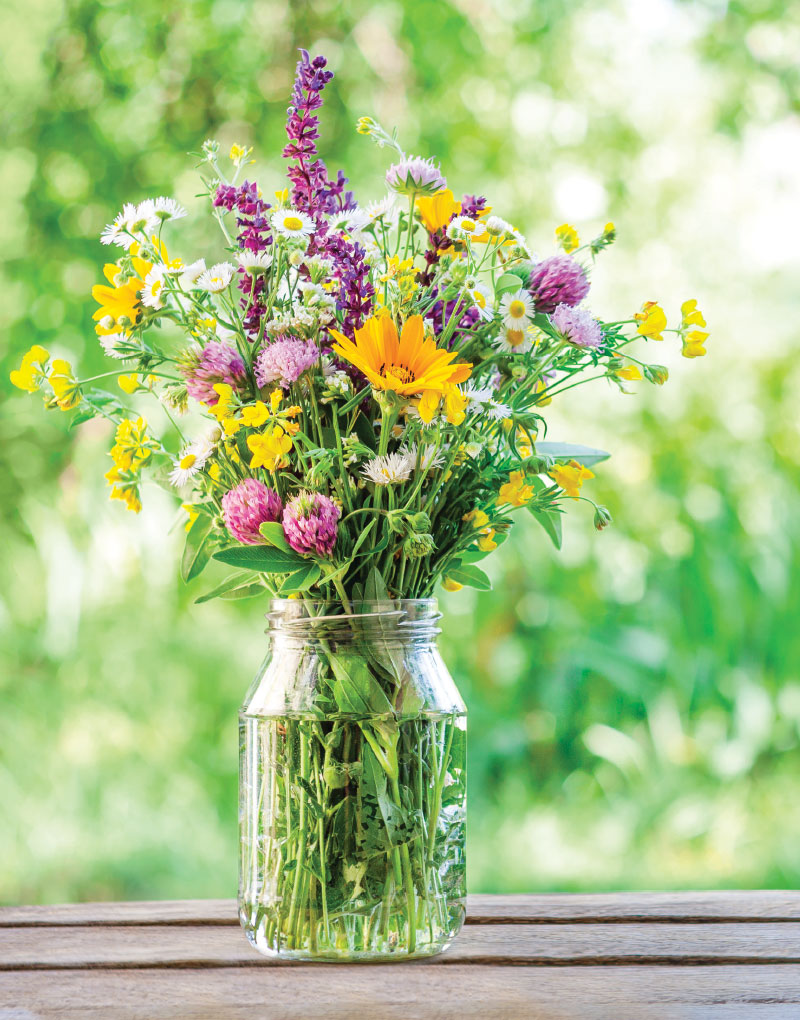
Bring the outdoors in by incorporating natural elements into your decor. Pinecones, acorns, and dried leaves make charming additions to centerpieces or table displays. Consider filling glass vases with seasonal fruits like apples or mini pumpkins for a touch of rustic elegance. Additionally, introducing potted plants or fresh-cut flowers in autumnal shades can infuse your space with life and vibrancy.

4. Cozy Up Your Seating Area

Fall is the perfect time to create a snug and inviting seating area. Consider adding extra cushions to your sofas and chairs for a plush, comfortable feel. Drape warm, chunky knit blankets over the back of your furniture for easy access on chilly evenings. Placing a soft, fluffy rug beneath your seating arrangement not only adds an extra layer of comfort but also helps define the space.

5. Set the Mood with Lighting

Lighting plays a crucial role in creating a cozy atmosphere. Opt for warm, ambient lighting with table lamps, floor lamps, and string lights. Consider using candles or scented diffusers with fragrances like cinnamon, vanilla, or woodsy scents to evoke a sense of warmth and relaxation. Dimmable lights give you the flexibility to adjust the ambiance according to your mood and the time of day.

6. Add Seasonal Decorative Accents

Incorporate fall-themed decorative accents to infuse your space with seasonal charm. Consider swapping out artwork or prints with fall-inspired pieces, such as landscapes featuring autumn foliage. Decorate mantels and shelves with seasonal garlands, wreaths, or arrangements of dried flowers and twigs. Don’t forget to update your table settings with autumn-themed dinnerware and linens for a festive touch.

7. Create a Cozy Nook for Relaxation

Designate a corner or nook in your home as a dedicated relaxation space. Fill it with a comfortable chair or chaise lounge, a soft blanket, and a small side table for books or beverages. This cozy retreat provides a perfect spot for unwinding with a good book, enjoying a cup of tea, or simply taking in the beauty of the season through a nearby window.

8. Personalize Your Space with Memories

Displaying cherished memories and personal mementos can add a warm and nostalgic touch to your decor. Arrange photo frames, scrapbooks, or even a gallery wall featuring moments from past autumns. These personalized touches not only make your space feel more inviting but also serve as a reminder of the warmth and comfort that come with the fall season.

Incorporating these elements into your home decor will not only transform your space for fall but also create a cozy haven where you can fully embrace the beauty and tranquility of the season. So, gather your blankets, light a few candles, and let the magic of autumn fill your home. Happy decorating!


5 Tips to Take Your Outdoor Spaces to the Next Level

Summer is here! If you like hosting backyard barbecues, pool parties, cocktails on the back patio, or generally entertaining family and friends outdoors, you’re probably thinking about giving your exteriors a good spruce.

The process of elevating your outdoor spaces, landscaping, and hardscaping isn’t as daunting as it may seem—with just a few simple steps you’ll be well on your way to a beautiful outdoor space that you can enjoy all summer long.

1.  A Good Scrub Goes a Long Way!

“Don’t underestimate the power of a good cleaning,” said Rebecca Mahanes with LandTech, a landscaping and pool contractor serving Central Virginia.

If your hardscape is looking a little dingy from red clay stains (thanks, Virginia!), moss, or mildew buildup, you should start your spruce with a power washing. And you don’t need to spend a lot of money renting a high-powered gas power washer, either.

“Hardscape power washing tools are available at most garden centers and department stores, and they do the job just fine,” Mahanes said. “You can use the same tool to give your wood surfaces, like porches and decks, a good thorough cleaning as well.”

2.  Get Down to the Details

The next step is to address the little things that can make a big difference. If you have a patio or walkway made of stone pavers, it’s time to refill the joints with polymeric sand and make sure your edging is firmly in place so those stones don’t begin to slide and spread. This will help prevent weed growth between the pavers, and make your stonework look fresh. If you have cracked or broken mortar in your hardscaping, remove and replace it. You can DIY this project, or call a mason to come and help you out.

3.  Deck the…Deck!

After a long, damp winter, wooden decks and porches can begin to look weathered and splintery, even if they are structurally sound. Touch up those spots where the paint or stain has faded or chipped. For the deck boards, there are special products available at home and garden centers for making wood surfaces look good as new—or better! They’re a little thicker than paint, and fill in the cracks between the wood grain, smoothing over any rough areas and creating an improved walking surface. 

“When it dries, it can even be power washed for easy future cleaning!” said Mahanes. 

4.  A Bright, Fresh Look

You may consider replacing your patio furnishings for a quick but impactful splash of color. Check out the new seasonal options for pillows, cushions, umbrellas, and outdoor throw rugs. There are plenty of fun colors and patterns to choose from that are sure to be instantly eye-catching. 

Looking for something a little bigger? Think about adding a fire pit! You can build your own or purchase ready-to-go backyard fire pits and fireplaces of all sizes and shapes.

5.  Perfect Plantings

Simply adding a few patio pots with brightly colored annuals can really liven up an outdoor space. If you’re looking to take it a step farther, new edge plantings like shrubs and flower beds can really add variety, color, and elegance to your landscape. 

Looking for plants that the deer won’t eat? 

“For shrubs, plant boxwoods,” Mahanes said. “For deer-resistant perennials, plant daffodils, iris, peonies, hellebores, lavender, foxgloves, ferns, and heuchera, to name a few.”

It’s worth noting that for some of these, the deer don’t eat them because they are toxic, so do a little research before planting if you have young kids or pets.

You don’t have to spend a fortune to refresh your hardscape this season. Any one of these little improvements can make for a great outdoor project and go a long way in sprucing up your backyard. So fire up the grill, get the marshmallow sticks ready, call the neighbors, and let the good times roll!  


A Preview of Lynchburg Garden Day

From April 15 to April 22, beautiful homes and gardens across the state will open their doors and garden gates to visitors hoping to get glimpses of heirloom blooms and inspiration for their own home gardens. Celebrating its 90th anniversary this year, Historic Garden Week is a beloved tradition.

“For more than a century, the Garden Club of Virginia has been an advocate for our commonwealth,” said the Garden Club of Virginia (GCV). “GCV has held fast to its core values: to educate, beautify, share a love of horticulture, increase awareness of important environmental and conservation issues, and to preserve historic public landscapes.”

The first garden that the Garden Club of Virginia restored was back in 1929, in Fredericksburg at historic Kenmore, George Washington’s ferry farm. Since then, they have restored gardens at UVA in Charlottesville, Bruton Parish Church in Williamsburg, and Mount Vernon.

Locally in Lynchburg, the Club has restored the carriage turnaround at Poplar Forest and restored the gardens at Sweet Briar College, the Miller Claytor House, Point of Honor, and the Anne Spencer Gardens.

This level of commitment to preservation and beautification extends to Lynchburg’s local efforts and participation during Historic Garden Week. On April 18, locals and visitors will be able to tour the private and public grounds participating in Lynchburg Garden Day, which is hosted by Lynchburg Garden Club and Hillside Garden Club.

“Along with the five lovely homes on tour, we are very excited about the opportunity to partner with Camp Kum Ba Yah,” said Edie Light, one of the team members organizing this year’s Lynchburg Garden Day. “A ‘Mother Nature’ form will be created by Garden Club members using the leftover flowers from the home arrangers. We will also have several vendors who will be selling natural and gardening items.”

In addition to the private homes that will be available for tour, a number of public spaces will be open for viewing. They include:

Point of Honor: 112 Cabell Street. Sited in Daniel’s Hill overlooking the James River, Point of Honor is an example of Piedmont Federal architecture, built c.1815 for Dr. George Cabell. Pointofhonor.org

Thomas Jefferson’s Poplar Forest: 1776 Poplar Forest Pkwy. Jefferson’s private retreat and plantation, Poplar Forest provided Jefferson with the perfect setting to pursue his passion for reading, writing, and gardening after retiring from public life in 1809. The octagonal shaped home reflects Jefferson’s idealistic design aesthetic and celebrates classical forms in architecture. A Virginia and National Historic Landmark. Free admission is for the garden only. Poplarforest.org

Sweet Briar Gardens: Route 29, 12 miles north of Lynchburg.. Surrounding the historic Sweet Briar House, the Boxwood Garden and Daisy’s Garden date to the 19th century. Gardens only. (434) 381-6163

Anne Spencer House and Garden: 1313 Pierce Street. This Queen Anne-style house was home to noted Harlem Renaissance poet Anne Spencer (1889-1975). Her garden cottage, “Edankraal,” was a retreat and source of inspiration for many poems. Listed on the National Register of Historic Places, the property is a two-time winner of the GCV’s Commonwealth Award. Annespencermuseum.com

Miller-Claytor House and Garden: 2200 Miller Claytor Lane. Lynchburg’s only remaining 18th-century townhouse was originally located downtown and was moved to Riverside Park in 1936. A Virginia Historic Landmark. Lynchburghistoricalfoundation.org

Old City Cemetery: 401 Taylor Street. Described as a “grave garden,” the cemetery is an arboretum of historic plants with specimens botanically labeled, including more than 425 antique roses, medicinal herbs, a butterfly garden and pond, shrub garden, antique daffodils, and hundreds of native and ornamental trees. The cemetery is a Virginia Historic Landmark. Gravegarden.org

“Viburnum, scilla, tulips, hellebores, Solomon’s seal, Lady Bank’s rose, red buckeye, dogwood, lilac, daffodils, tree peonies, and arum are some of the plant material seen in arrangements during Garden Day,” explained Light. “Plus Columbine, bleeding heart, lily of the valley, kerria, candy tuft, and spirea. We have had a mild winter so far and Garden Day is early. So while the [aforementioned] is what you will usually see on Garden Day, there are no guarantees that any of this will actually be blooming for this Garden Day. And that is the beauty of it…it is always different.”

Five private homes will generously open their doors to Garden Day guests, as well.

“There are five private homes and Camp Kum Ba Yah on tour this year,” said Light. “The home owners graciously allow Garden Club members to drop off gathered flowers on Sunday, turn their homes upside down by arranging on Monday and then open their homes to visitors on Tuesday. We are very grateful to all of them for their generosity. A ticket station will be at the entrance where you can either purchase a ticket or have your ticket stamped. Visitors will be greeted at the entrance and then shown the starting route. Docents will be stationed throughout the home to further help with the traffic flow and to answer questions as best they can.  Arrangements will have note cards next to them which state the composition flowers and the arrangers. It’s wonderful to see all of the beautiful arrangements in various sizes and colors.”

The private homes for this year’s Lynchburg Garden Day include:

114 Craftsman Way – Gail and J. Wayne Harris, owners

105 Lee Circle – Catherine and Mike Madden, owners

3820 Sheringham Place – Suzanne and Stephen Johnson, owners

1050 Greenway Court – Lea and Billy Barksdale, Owners

206 Saint James Place – Karen and Michael Owen, Owners

“This is the first ‘normal’ tour we’ve had since COVID,” said Light. “ If the weather cooperates, we anticipate we could have over 1000 people attend.”

Electronic tickets can be purchased in advance online at vagardenweek.org. Hard copy tickets can also be purchased at Findings, George’s Feed Seed and Grow Shop, The Columns, Farm Basket, Lynchburg Museum and Visitor Services, Lynchburg Garden Supply, Paisley’s, YMCA, and Hill House Gifts. Advanced tickets are $50.00. 

Tickets will also be sold on Garden Day at all of the home sites and Camp Kum Ba Yah. Tickets sold on the day of the tour will be $60. Single visit tickets will also be available for purchase for $15.00 per home. Cash or checks will be accepted at the home sites. All of the tickets are non refundable.

The Lynchburg Garden Day tour runs from 10:00 a.m. to 5:00 p.m. on April 18 with no rain date alternative. Attendees should wear comfortable clothing and good walking shoes, as this is a walking tour. Parking will be available at First Christian Church, First Presbyterian Church, Peakland Methodist Church, and along Country Club Lane. 

For more information about Lynchburg Garden Day or Historic Garden Week, visit vagardenweek.org

All photos courtesy of Lynchburg Garden Club and Hillside Garden Club.


Holiday Party Tips

Celebrate with ease this season

The winter holiday season is filled with get togethers, from office parties to family gatherings. If you ever find yourself wondering what to wear, when a host gift is needed, or how to throw a last-minute party together, these tips are an excellent place to start. For expert help putting together a wine and cheese pairing menu, flip to page 125.

1. What to Wear.
If you’re hosting a holiday party, let guests know what to wear! Include attire tips on your invitation. Even a simple guideline of “festive casual” or “semi-formal” will guide your guests in the right direction. If you’re attending an office party and guidelines weren’t included in the invitation, dress more formally than you would on a normal day in the office—a stylish jumpsuit, a festive sweater with dress pants, or a velvet dress with pumps are all great choices. If you’re attending an informal family gathering, opt to be cozy and comfortable!

2. Gift or No Gift?
When should you bring a host gift? As a general rule, host gifts should be given at a brunch, dinner, or cocktail party. If you’ve been invited to a large gathering, like a party or larger formal dinner, a host gift isn’t necessary.

3. Send Invites Early.
If you’re hosting a holiday party, it’s important to remember that calendars can fill up fast this time of year, especially those precious few Saturday nights in December. Send invites as early in November as possible if you’re hosting a December get together.

4. Always Overestimate.
The last thing you need to worry about in the midst of entertaining is running out of food or drinks, leaving your guests hungry and thirsty. Always overestimate when buying food or beverages. Sure, you may wind up with a heaping pile of leftovers, but you could always send a scrumptious plate of goodies home with your guests when the night is over.

5. Don’t Overdo It.
You may be tempted to make everything from scratch but know your limits if you’re hosting a gathering! Make a few signature meals that you’re comfortable making, and then make your life easier by buying the rest or sourcing food from a caterer. Same with drinks!
Have a signature cocktail or mocktail on the menu, and then snag wine from a local wine shop for the rest.

6. Have Fun!
The holiday season is what you make it, so relax and have fun! Enjoy spending time with your friends and family and remember to stay present.


A Beginner’s Guide to Vintage Furniture

Whether your home is a perfectly preserved period piece or an eclectic hodgepodge of eras, the right antique or vintage furniture can make a statement or pull a room together. But with estate sales, consignment shops, social media marketplaces, yard sales, and everything in between, where to begin with finding the right vintage furniture for your home?

Vintage vs. Antique
First thing’s first: There is a difference, albeit slight, between vintage and antique furniture. By definition, a piece of furniture isn’t considered an antique until it is at least 100 years old. Anything else younger, but still at least 20 years old, is considered vintage. “Collectables” on the other hand, can be either vintage or antique.

Original antiques—furniture that is the first of its kind and style—tend to be rather pricey depending on where you find them. Reproductions of those pieces that pre-date the 1940s will look just as beautiful, will still have excellent craftsmanship, and can be very affordable.

Where to Search
Finding vintage and antique furniture is a veritable treasure hunt full of excitement, unique finds, and, yes, some disappointment. Because you’re looking for a diamond in the rough—whether a particular style or something that is just right for your home—be prepared to go on a few furniture hunts before you find the right piece.

Estate sales, auctions, flea markets, antique stores, and social media or internet marketplaces are all perfect for finding the right vintage or antique piece for your home. The benefit of visiting a physical store, of course, is that you can inspect the piece yourself, take the appropriate measurements, and determine if the piece is really what you’re looking for.

vintage furniture

What to Look For
So how do you identify the real thing from a modern day look alike? Talk with the shopkeepers or sellers of the pieces and ask them questions about the piece you’re interested in. Store owners and workers especially are knowledgeable, not just about the type of furniture you’re looking for, but vintage and antique furniture in general. Ask them how to tell how old something is or what style something is made in.

If you find a piece that you genuinely love, inspect it for:
Reasonable and practical signs of wear and usage. Think about what the piece was likely originally used for. For example, a vintage washstand will show stress signs from where the heavy wash basin sat day after day. These signs can indicate that the piece is authentic.

Dovetailing on drawer joints. As a general rule of thumb, the farther apart and larger the dovetails, the older a piece is. If no dovetail joints are present, the piece is likely not vintage or antique at all.

Cracks, broken pieces, chips, handles that have been replaced. These will either need to be areas that you will need to refinish or repair, or will make use of the piece less-than-ideal.

Proof of provenance. In other words, proof of provenance is the proof of origin, history, or previous ownership. Real silver pieces will contain hallmarks, or furniture may bear a label or stamp from the maker. Occasionally, an original shipping address or maker’s location will be etched onto the back of a piece of furniture. These ultimately will help you authenticate the piece you’re interested in.

Collecting vintage or antique furniture for your home will certainly take longer than shopping for a brand new piece at a furniture store, but the hunt is half the fun. Part history lesson, part treasure hunt, you’re in for an adventure as you seek out the perfect piece for your home.


Finding Your Home’s Art Style

Curating art for your home is a big investment, and a lifelong journey. The first step in that journey is finding an art style that resonates with you. That art style will ultimately set the stage for the artists that you gravitate toward, the mediums that you prefer, and the overall tone that each room in your home will have.

But how do you determine which art style you love when there are so many talented artists out there? It starts with spending time with art before ever making the first purchase.

The Different Types of Art Styles
Walk into any art gallery or art museum and you’ll see myriad art styles. An expert would be able to immediately note the nuances in brush strokes, the relevancy of the time period, or the backstory of the art that makes it so powerful. But for those of us who simply want to curate an aesthetically pleasing and uniquely styled home, here are the primary art styles you can focus on.

Home Featured in Lynchburg Living September/October 2021. Photo by Daryl Calfee

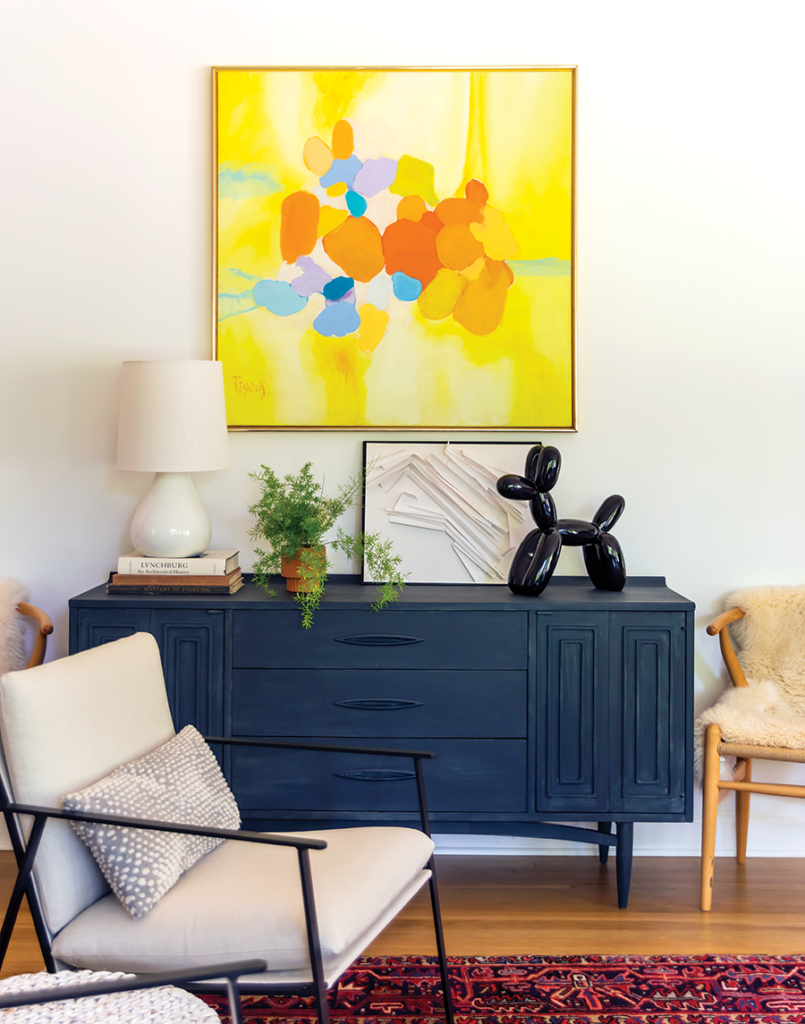
Abstract Art
Abstract art is an art style in which an artist uses shapes, colors, and textures to create an image that’s not based on reality. Abstract art can take the form of a painting, sculpture, photography, design, or any other art form that doesn’t accurately represent a subject or object.

One of the most unique aspects of abstract art is that it’s always open to interpretation. A viewer doesn’t always immediately know what the piece is about—it is abstract after all—but over time, certain emotional or intellectual qualities can be seen in the piece that can make it uniquely special to the viewer.

Contemporary Art
In short, contemporary art is art that’s made today by living artists. Because of that broad sweeping definition, it’s an art style that is ever-evolving and often reflects the complex issues that shape our diverse and rapidly changing world.

While the art world is still debating what eras technically define the contemporary art style, most can agree that the starting point is the late 1960s or early 1970s.

Within the contemporary art style, more niche movements can be found. Pop art, photo realism, conceptualism, minimalism, and street art are all styles that can be explored if you want your home’s art style to make a statement.

Fine Art
Fine art is artwork that has been created for the sole purpose of being appreciated for its beauty and intellectual or emotional influence, rather than its function. Of course, with art being so subjective, what distinguishes something as “fine art” can be left to the interpretation of the viewer.

Within the fine art style, painting, sculpture, and photography can all be explored for your home. And while there are countless fine artists across different mediums and centuries, a few examples of visual fine artists are Rembrandt, Matisse, Van Gogh, Monet, and Degas.

Home Featured in Lynchburg Living January/February 2020. Photo by Heather Kidd

Determining Your Home’s Art Style
Your goal is to create a stylish and cohesive home, so it’s important to choose not only an art style that resonates with you, but also to find an art style that accents your existing home furnishings.

When you walk into an art gallery or store, have the space you’re hoping to find art for in mind. Maybe even have a photo or two on your phone to use as a reference. Know what the dimensions of the wall are, and the existing color palette of the wall paint, furnishings, and rugs.

From there, slowly walk through the art selections and pay careful attention to the art that evokes an immediate reaction. The old adage “I’ll know it when I see it” has never been more true when it comes to choosing art for your home. If you see a piece of art and it creates a feeling of excitement or positive emotion, it may be something you can work with.

This feeling of excitement and emotion may even help you eliminate the art styles that aren’t quite for you, making your future art shopping trips even easier.
After you’ve narrowed your selections down to the pieces that resonate with you, pull out your handy reference photos and measurements and consider how the piece will work within your existing space. Consider how the colors will play with each other, or how much wall space the piece may occupy. Consider the frame that it’s currently in—if it’s framed at all—and whether the style suits your tastes or if you’ll have to budget for a reframe.

It’s important at this stage to avoid talking yourself into an art purchase. Remember, art is a big investment in and of itself, so if you have to completely rework the rest of your space to accommodate your new purchase, it may not be worth it.

Your art style is a way to express your personality within your home. And just like with any other personal style, opinions can change over time. Allow yourself to continuously explore art of all styles by supporting local art galleries and artists. Learn the colors that strike an emotion, or the details that draw you in. Over time, your home’s art style will become even more honed and beautiful.


Decorating with Plants

Without a doubt, houseplants are having a moment. From major retail collabs with plant wizards such as Hilton Carter or local Facebook listings with propagated plants for sale, they’re everywhere lately. Interior design is no exception to this trend and proves that you can integrate plants in some unexpected but accessible ways.

Here are the best tips we gathered to get you started from local experts Emily McGowan, Owner and Lead Designer for Elm Home Design, and Tera Janelle of Tera Janelle Design.

Why Try It?

Yes, it’s a trend right now, but plants are timeless, says McGowan, “Plants in a home add so much warmth…[and they] add interest and texture without making it look too cluttered.”

For Janelle, bringing the outdoors in is part of her routine. “Each year when spring arrives, we pick up ferns and set them in large planters around the house, both indoors and out,” she says. “They can be a bit messy, but they always bring a sense of breezy spring and summer to the house.”

In the cooler months, Janelle adds “dry, decorative grasses to the bar cart for some seasonal coziness.”

Where To Start
“The best advice I could give is to start simple and small,” says McGowan.

When choosing new plants, she always speaks with the horticulturist: “I explain what I’d like the plant to look like, how large I want the plant to get, and how much time or energy I want to put into it, etc.” These questions can help guide you to the right selections.

McGowan says while “Google is your friend” for immediate questions, purchasing from “local nurseries is your best bet; they will always have a wealth of knowledge.”

Ultimately, McGowan recommends choosing a plant because you “love the shape and look of it.”

Where to Place Them
McGowan loves a classic vignette when staging a room with plants. Start with a coffee or side table and “stack two to three books and with a small potted plant on top of them,” she says; or “place a pretty, potted plant on open shelving, countertops, entry tables, etc.; plants literally will work anywhere!”

For Janelle, she prefers specific plants in certain spaces. “Potted orchids are one of my absolute favorite potted plants,” she says. “They can last a month or longer and can be found affordable at the grocery store; I love them on a bathroom vanity or in a shower, and they thrive in the humidity.” Hanging plants can also do well in smaller spaces such as bathrooms; both pothos and hoya plants fill out nicely and are resilient.

In a kitchen, Janelle will add potted herbs—great for cooking, while also “lending a casual English feel” to the space. McGowan loves small potted plants by the sink. For the island, “a collection of oversized branches is one of my favorites,” Janelle says. “Butterfly bush branches, Japanese maple, forsythia, magnolia, and even ‘scrub trees’ are a few easy-to-find favorites.”

Finally, don’t neglect even the most mundane spaces in your home such as your pantry and laundry room. “Blooms feel casual and inviting,” says Janelle, “And they bring a dose of fresh air to the workhorse rooms of the house.”

Vessels
Keep in mind the general aesthetic you want for your home when choosing how to display your plants. Take a small maidenhair fern—for a classic, traditional feel, you can nest it inside of a bust (a popular choice right now) or, for a more down-to-earth approach, select a simple terra cotta pot (these patina over time for some added charm).

Both McGowan and Janelle recommend baskets to house larger plants. “I love [fiddle leaf figs] set in affordable baskets, with plastic planter liners tucked inside,” says Janelle. Situate these larger plants (say monstera, snake, or rubber plants) near a fireplace, in a corner, or, says McGowan, next to a console table.

Janelle recommends always keeping several clear vases of different shapes and sizes on hand; “I’ve purchased these everywhere from Walmart to Goodwill to Pottery Barn,” she says. “They are super versatile and great for gifting cuttings from your yard and garden.”

For something unique, think outside the box. With the proper lining, pitchers, distinctive mugs, and baskets can all be repurposed to house a plant.

The Importance of Patience
My grandfather has cared for hundreds of houseplants throughout his lifetime; his best care tip: “Be patient; things take time.”

McGowan echoes this wisdom, saying, “It’s a commitment to have some plants, and you have to be willing to take the time to care for them. In the long run, it’s worth it to have that greenery in my spaces.”


Designing a Cutting Garden

Having a cutting garden is good for the soul. It’s a good place to clear your head, observe nature and give the kids a few chores to “build character.”

As the owner of Irvington Spring Farm, I enjoy sharing our fresh flowers with locals—but I also enjoy sharing my expertise with those who want to make their own garden at home. Here, I walk you through some of the top factors to consider:

Take Inventory
To get started, take a walk around your yard, and see what you already have. Many common shrubs and trees can be used as cut greenery for flower arranging. Camelia, abelia, boxwood varieties, crabapple and evergreens are all options. Do you have clematis, ivy, honeysuckle, or sweet pea? Those vines can all be used for cutting. If you currently have any kind of landscape plantings, test them, and see if they work as cuts.

When plants are just emerging in the spring and have tender new leaves, they are not nearly as hardy. If you try something in May and it fails, try it again in June. It just might work then.

wildflowersLocation Selection
To bloom well, most flowers need full sun. Watch the way the sun moves around your yard and find an area that receives close to six hours of daily sun. Your spot should also have good drainage, good air circulation, relatively level ground, fencing and loose rich soil.

Humidity can cause a lot of fungus and mildew issues. Choosing resistant varieties and providing both good light and air flow is your best defense. To achieve good air flow, don’t crowd your garden next to your house, garage, or densely planted shrubs. Plants, like people, want to be able to feel the breeze blow through!

To check soil drainage, test the site you are considering.

Dig a planting hole 12 inches deep by 12 inches wide and fill it with water. Does the water stand in the hole?

Does it drain?

Does it drain slowly? You should be able to see water in the hole for about 10 minutes.

Water
You must have water easily available to keep your plants receiving the equivalent of an inch of rain a week. Drip irrigation systems and lay flat hoses are more efficient than both hose and overhead watering systems. Don’t water in the heat of the day as this increases plant stress and can cause disease issues. Watering early in the morning is best.

If you want to be a conscientious water user, consider drought-tolerant native plants such as mountain mints, monardas, rudbeckias, coreopsis species or herbs.

Soil Prep
Now, you are ready to prepare your beds for seeds or tender young plants. Loose, well-draining loamy soil is ideal. Garden writers are encouraging us not to till soil like our predecessors did. If you construct raised beds, you can create the perfect soil and have very few residual weeds as well. The term raised bed simply means an above-ground garden. It can be soil layered on top of the ground, a lasagna-style layered garden (for more information on this, I recommend visiting: growmyownfood.com

lasagna-gardening-101/), or a formal-built garden frame filled with purchased garden soil. However you choose to design your bed, three to four feet wide is usually good.

A soil with good loam will form a ball when you squeeze it together in your fist but easily crumbles apart when you poke it. These home tests obviously can be subjective. To request a soil test, call the Lynchburg office of the Virginia Cooperative Extension at (434) 455-3740.

Planting
Creating a garden is like painting a picture. There are so many colors and forms to choose from that you will be constantly curating your collection. It is extremely important when choosing plants that you know how tall they will get. Read the label on your plant or seeds and know what its growing habits are.

Include perennial plants where you can because they will save you money over time. They can be divided every three years or so, thus increasing your available plants, or trade them with friends for new varieties you don’t currently have. Think about having perennial plants that go through the whole season—from early spring favorites such as primrose, Lenten rose or columbine to fall-blooming asters and sedums. Garden Phlox is a nice medium-size perennial flower to have for cutting. Peonies are always a favorite, and they bloom for 50 years or more.

Annuals must be planted every year and they give gardens color quickly. To keep them blooming they must be deadheaded, which is when you cut old blooms off the plant. If you allow your flowers to make seeds, they will stop blooming. Zinnias and cosmos are prolific bloomers. Sunflowers, not so much. They must be replanted every two weeks to have successive blooms available.

Bulbs and tubers are another category in the cutting garden. Tulip bulbs allow you to grow an amazing array of color and form, if you can keep animals away from them. Orienpet lilies, also bulbs, have an amazing fragrance and are long-lasting. Dahlias, grown from tubers, are the fall queens. There is surely one that will become a favorite in your garden.

If you have multiple beds, don’t forget to use cover crops on rows that are done for the season. Cover crops help keep your soil well-fed so it in turn can keep producing well for you. (You can study more about cover crops at Johnny’s Selected Seed: www.johnnyseeds.com.)

Leave your garden debris along your path somewhere, perhaps at the end of the bed. This provides habitat for native bees and other creatures, such as toads and turtles, that will share your garden.

Maintenance
To keep your cutting garden looking its best, you need be attentive to it. A daily walk in the morning or evening to deadhead and watch for insect or other plant health issues will keep problems in check. You should harvest your flowers in the morning before it is too hot or once the temperatures drop in the evening. Always place your stems in water as soon as you can. Recut your flower stems after three days and fill your vase with clean water.

When you do diligent planning work, choose the right plants for your space, pay attention to the amount of water they are receiving and do your best to keep your plants deadheaded, your cutting garden will reward you with both bounty and beauty.

Irvington Spring Farm
Irvington Spring Farm offers cut flower seed trays, individual plants they think are worth adding to your garden, as well as dahlia tubers. Gardening classes on different topics are offered throughout the season. Learn more by following them on Facebook, Instagram and TikTok or visit their website, Irvingtonspringfarm.com.


The Modern Traditionalists

Mother and Daughter Homes Span Design Spectrum

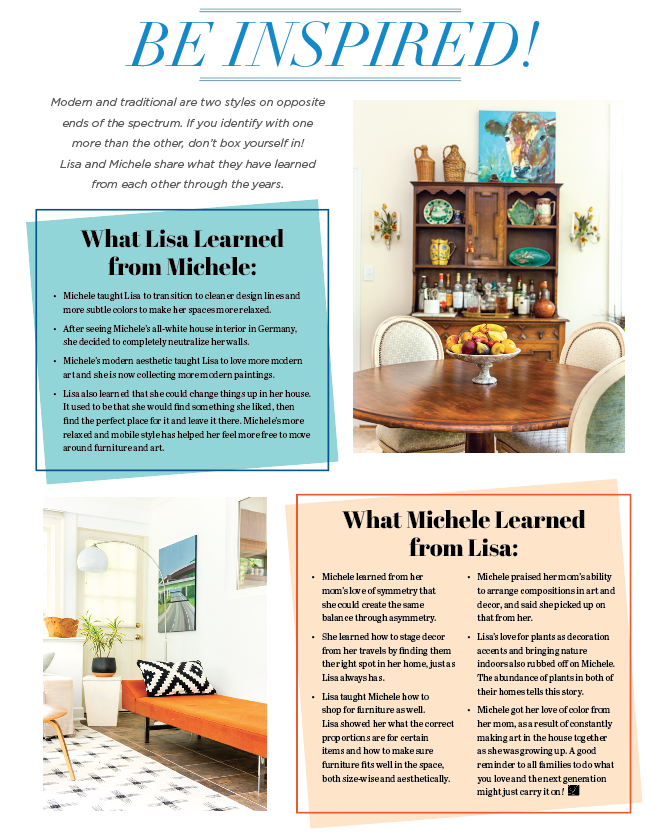
Lisa Richards and Michele Fredericks both love design. One might say it’s in their genes. Mother and daughter share the same bright blue eyes that light up with mutual passion when discussing a home’s form and function. Their individual styles, however, play out in unique fashion in each of their Boonsboro homes. Lisa is an artist who appreciates traditional architecture, French furniture, and lush gardens. Michele is an architectural designer and gravitates toward what she describes as “warm modern” design.

They invited Lynchburg Living into their homes to talk about their distinct approaches to home design.

modern home decorMichele’s Home: “Making Mid-Century Modern”
It was not initially the kind of home Michele thought she would buy. As a “never-Split-Level” kind of girl, she was surprised to find herself attracted to the 1958 split four-level home on a large swatch of land just a few miles from her parents’ home. Still, Michele had confidence she could transform the ho-hum house into a light-filled modern retreat for herself, her husband Jonathan, and their two sons.

The one challenge? “We were on a tight budget for all of our renovations, just the two of us quitting our jobs, not having new jobs, and moving from one country to the next,” Michele said.

Before landing back in Lynchburg, Jonathan’s job took them to such far off places as Germany and Hawaii, where they picked up some valuable aesthetic preferences. Topping the list of their renovation desires: opening up the floor plan and the ceiling, overhauling the kitchen and bath spaces, and adding more natural light throughout.

Though Michele designs project schematics for clients every day in her role at the architecture firm Atelier 11, she knew she could use some reinforcements to make faster decisions for her own home. Enter Bryn Namavari, Michele’s friend from grad school and a designer for the company CB2 in California. The two put their heads together to check the boxes the family wanted. Once the floor plan was created, they partnered with contractor John Joyer of Driven Builders and job super Mike Wright to bring their vision to life.

The duo’s decisions paid off. Walking into the home today, what was once a walled apart and dark layout now soars high with vaulted ceilings and warm white walls. Light pours in through large, drape-free windows and skylights in the kitchen. Pendant lights by AllModern glint off the large Quartzite slab from Roanoke Granite atop the kitchen island. IKEA cabinets with custom fronts from Semihandmade further modernize without being stark. Carefully selected pieces from antique shops, former home locations, and Michele’s lineage adorn the home.

“A lot of the Asian influences are things from my grandmother because my grandfather was in the Navy and they lived in Okinawa. So that is her original silk painting [hanging in the entry] from the ’50s in the original frame, so I started with that,” Michele said.
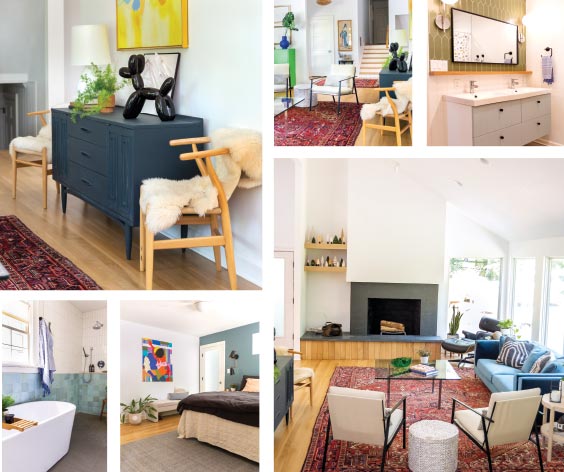
traditional home decorAdjoining the fireplace, with its soapstone hearth and surround from a quarry in Schuyler, VA, are two shelves that host Michele’s one and only true collection, an assortment of wooden trees handmade in the black forest in Germany.

“When I found those—I don’t collect things, but that became an obsession for me because I really like the form of those and how simple they are so now I have a little typology going on,” she explained.

Once the main floor living space renovation plans were complete, Michele turned her attention to the home’s three bathrooms and master bedroom. Tight on money and space, she had to get creative, knocking out hall closets to steal extra space for the bathrooms. In the master bedroom, the problem was too much space, so Michele subtracted some square footage to create a walk-in closet. In the bathrooms, she once again sourced IKEA for vanities with Semihandmade custom fronts. Smaller splurges in the master bath came in the form of an acrylic soaking tub and Cloe Baby Blue tile from Bedrosians Tile surrounding the integrated shower-tub area.

The dust has now settled on the 1.5 years of renovations at the Fredericks’ home and what remains is an airy and eclectic mix of old and new, calming and colorful—exactly as Michele planned it.

“I love an unexpected pop of color,” she said. “I do white walls everywhere because I love color but I don’t love color on the walls. So I want my weird, found, and very bright objects to speak for themselves.”

traditional home decorLisa’s Home: Stylish Symmetry with Gardens Galore
When Lisa and her husband, Jim, decided to finally build their stately brick home in 1995, it had been a long time coming. Lisa, a studio artist whose work ranges from pencil sketching and portraits to oil paintings and watercolors, points to a self-portrait she painted at that time of a 33-year-old version of herself with a certain,
shall we say, “expression” on her face.

“The look I have in that portrait is, ‘If you don’t build me this house soon, I’m selling the property’,” she laughed, recalling that the couple first bought the land and paid it off over six years before they started their new build.

Today the telling self-portrait hangs in Lisa’s art studio inside her quarter-century-old home that has seen a lot of life and expansion over the years. Lisa chose to model her home after the George Wythe house in Colonial Williamsburg, a timeless classic she knew would age beautifully over the years. Michele was just 11 when she and her sister, Laura, picked their bedrooms in the family’s home.

In the time that has passed, Lisa has thoughtfully filled the home with a mixture of antiques, finds from markets in places such as Atlanta, Charlottesville, and France, and an abundance of art. The home’s art collection includes portraits of Michele and her sister as children, “Covid portraits” Lisa painted of her three grandchildren, and a framed still life that was Michele’s first true piece of art at 16, which won an award at the Lynchburg Art Festival. It’s items like these, infused with meaning, that comprise much of what fills the home today.

“I have collected things over the years, over time. Everything has a memory,” Lisa said.

In the living room, for example, six patterned plates hang on the wall, a gift from a close friend who passed away in 1999 from breast cancer. As Lisa carefully collected items over time, her home watched her kids grow up and have children of their own, itself remaining a constant place of gathering for family and friends around the kitchen island.

“I have memories of sitting here sewing Halloween costumes with a day’s notice. And all the family dinners, and making curtains,” Lisa said. “Everything happened here in the kitchen; all of life happened here.”

While the kitchen, with its warm white cabinets, blue toile curtains, double gas range, and hanging copper pans, has not changed much over the years, Lisa did decide to swap out the backsplash and countertops. A slab of granite with beveled edges from Rockfab now adorns that well-loved kitchen island. Off the kitchen, a laundry room was added with creamy cabinets and a place to wash the Richards’ two Yorkies.

traditional home decor and gardensAnother addition off the back of the house came in the form of an oversized sunroom, filled with Parisian-style pieces and offering the feel of a tree house with wall-to-wall windows surrounded by greenery.

“My main goal [with the sun room addition] was to see outside,” Lisa explained. “I wanted everything low, everything subtle, because I’m an avid gardener so our big thing is the gardens and the outdoors.”

Indeed, the yard at the Richards’ house is something to behold. From the large Magnolia tree in the front yard and the newly planted Camellias in the back beds to the quaint potting shed overlooking the lush landscape, it’s little wonder why Lisa’s home was chosen to be on the 2022 Lynchburg Garden Tour. She is self-taught as a gardener, and the grounds of her home are now a designated habitat, which means pesticide-free growing, and also contain several bee houses.

“I’m really into my bees,” Lisa said. “Lynchburg is now a ‘Bee City’ and our Lynchburg Garden Club and Hillside Garden Club are working together to promote this.”

From entry to exit at both Lisa’s and Michele’s homes, each provides a serene space to let daily life with family unfold, filled with equal parts practicality and an effusive creative spark. Like mother. Like daughter.

be inspired


Photos by Daryl Calfee