2023 Lynchburg Living Idea House: The Stories These Walls Could tell

Lynchburg Living’s 2023 Idea House is Full of History

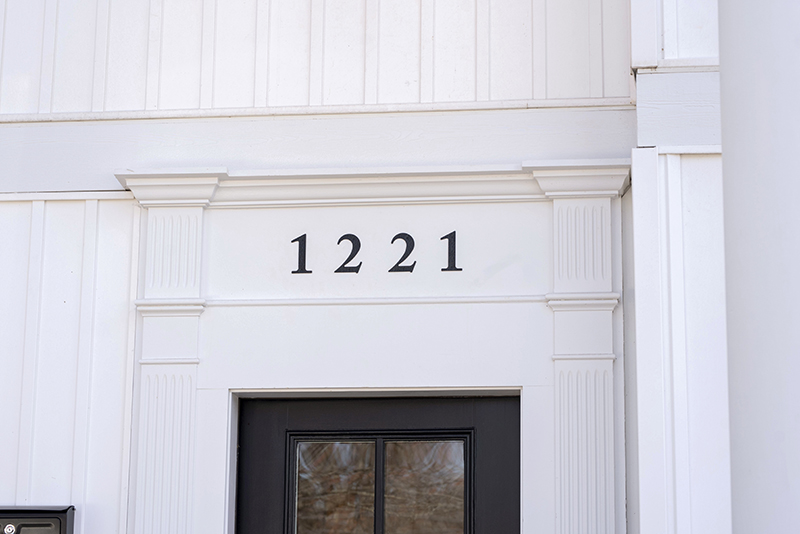
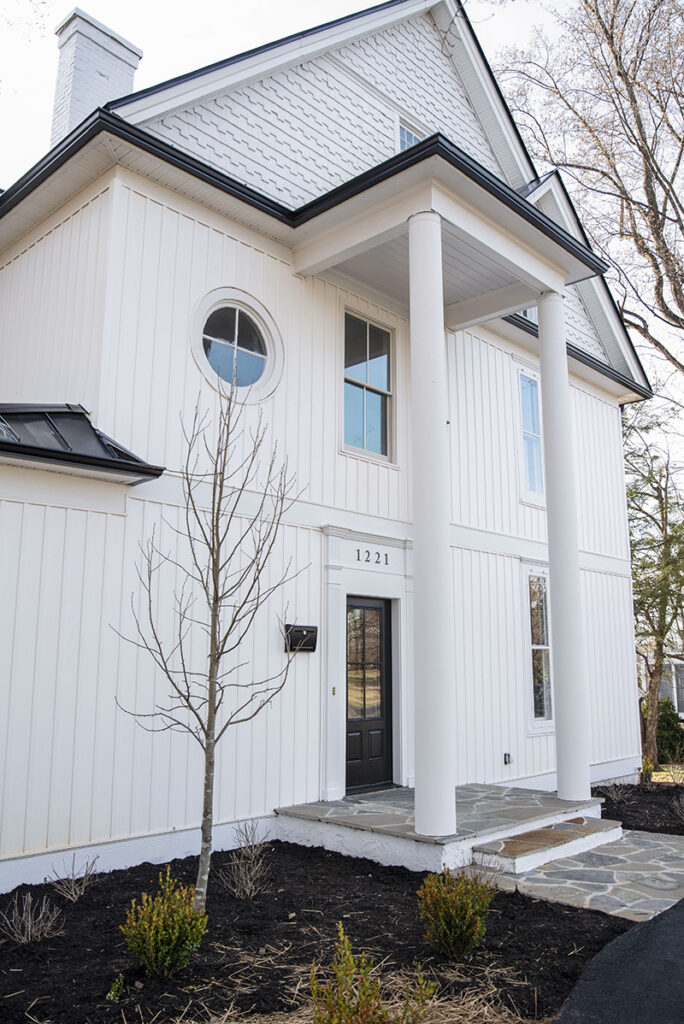
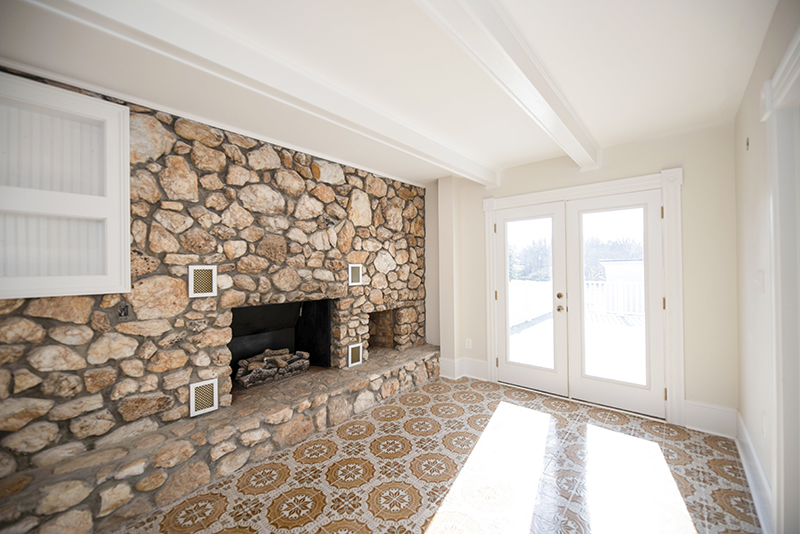
The walls at 1221 Oakwood Street in Bedford practically sing with stories from its past. They tell tales of summertime pool parties, when neighborhood kids would flock in mass to its backyard, barely kicking their shoes off before cannon-balling into the 12-foot-deep pool. They recount quiet spring mornings, when the chill of the air beckoned for a fire to be lit in the stone fireplace, cup of coffee perched just so on an armchair while its owner gazed out the glass door into the misty acreage beyond. If you were to listen closely enough, you’d hear the subtle thrum of a record playing, its music keeping time with the bustling party that weaves throughout the first floor and gushes into the front and back porches—nothing but shrills of excitement, outbursts of laughter, and maybe some neighborhood gossip for good measure.

Photos by Ashlee Glen

The story of 1221 Oakwood Street—this year’s Lynchburg Living Idea House—begins with General William R. Terry of the Confederate Army. Terry was a merchant who became brigadier general in the Confederate Army during the Civil War and later served part-time in the Virginia Senate, representing Bedford County. A native of the Town of Bedford, then called Liberty, Terry returned home after the war and worked to further establish his roots.

“General Terry is well known in Bedford,” said Scott Elliott, President of Custom Structures, this year’s partner in the 2023 Idea House. “He came back here after the Civil War and lived in the house across the street. He ended up getting with his brother-in-law, Beaufort, and they developed Longwood Avenue and Oakwood Street. Around 1860, his sister and brother-in-law built this house.”

The “house across the street” is none other than Historic Oakwood Plantation, a looming manor home that dates back to 1780 and was originally owned by Terry’s grandfather.

It’s unclear who owned 1221 Oakwood Street after Terry’s death in 1897, but the next owner of note was another well-known local, Earl Childers.

Childers had only a 9th-grade education, but it was clear that he was a man of considerable mechanical ingenuity and resourcefulness. As the owner of Childers Foods, Inc., Childers developed a “belt machine” that was designed to facilitate the separation of chicken meat from the bone. Just a few years later, he developed a second machine known as the “shaker machine,” which further refined the processing of deboned chicken parts. In the mid-1960s, he began selling that food product to Gerber Company for use in baby food. Later, his company was purchased by McCormick & Company, of commercial spice fame.

“Earl Childers lived here for 68 years,” explained Elliott. “He was an inventor and developer and was known to have a lot of parties here. He added onto the house numerous times and is the one who added the pool.”

In those 68 years under Childers’ ownership, the Bedford community came to know the Oakwood home as a gathering space. In fact, Lynchburg Living’s editor even swam there as a child.

Of course, over time, as historic homes can do, 1221 Oakwood fell from its original glory. When Elliott and his wife, Meredith, purchased the home in 2020, they had an undertaking ahead of them.

“This is the oldest home Scott and I have worked on together, but certainly not the oldest home Custom Structures has worked on,” said Meredith.

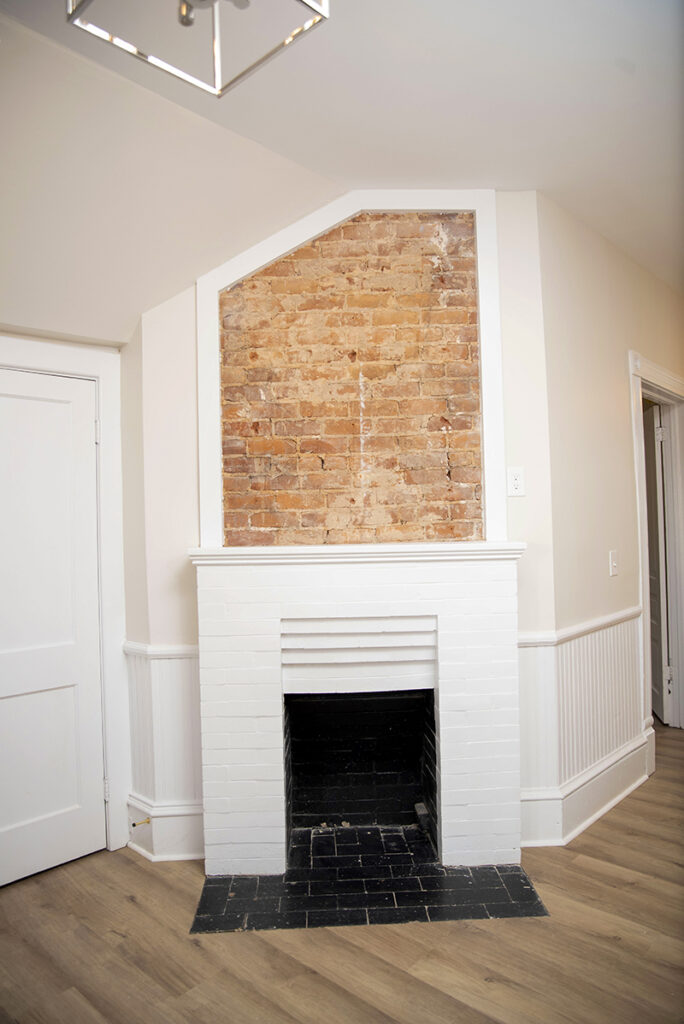
“When we started doing work on the house after we purchased it, we had to jack up the rear addition and put up proper structural supports,” furthered Scott. “We also discovered eight fireplaces in the home, on every level of the home.”

A New Story for an Old Home

As Meredith and Scott walked through their new purchase, they took their time getting to know its nuances and quirks, including the happy discovery of hidden fireplaces throughout the home.

“That was the fun part about this,” Meredith remembered. “Going room by room and trying to find all of the fireplaces. That’s the neat thing about a home with this much history, you never know what you’ll find—it’s like a treasure hunt.”

It was a priority for the Elliotts, the Custom Structures team, and their Idea House partners to maintain the integrity of the 19th-century home while bringing it into the modern era,
suitable for a large family to live, play, and grow in.

Communal Spaces

“My main priority was that I wanted to make it more modern,” Meredith said. “I wanted to make the eating and living spaces feel open, where families could eat and have TV time.”

Between the kitchen and dining area, the Idea House team removed a dividing wall between the pantry and kitchen to create a more open-concept space that allowed for an easier flow from one room to the next.

“The kitchen was very small originally, with just one small window,” Meredith said. “We really worked to open up that space and I love what the oval windows, which aren’t original, added.”

Nestled between the two oval windows is an impressive Bertazzoni 48-inch gas stove, a high-performance stove that uses the same paint as Ferrari, the luxury car company. Throughout the downstairs space, original glass weighted windows cast light through their waved panes, and original wainscoting adds texture and charm.

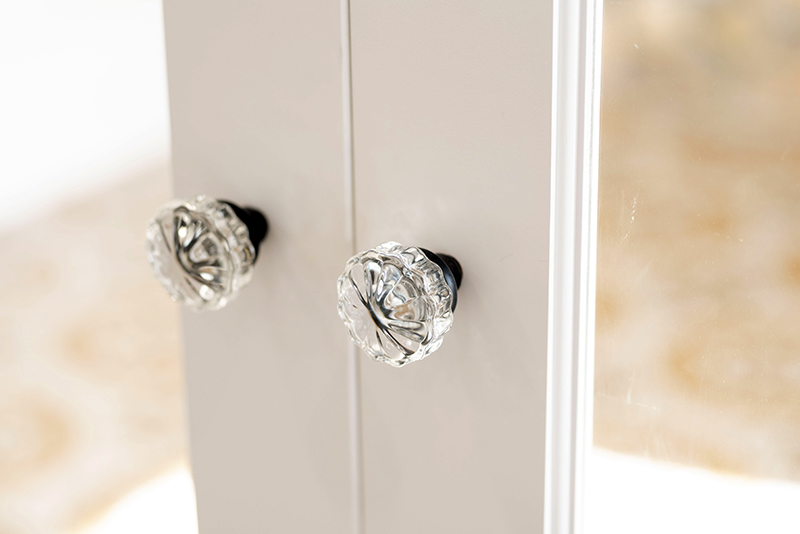
The built-ins in the dining room—added when Childers owned the home—were given an upgrade with white quartz countertops and elongated gold hardware to match the kitchen to serve as a casual buffet area for morning breakfasts or late-night parties.

“We tried to keep as much of the existing features as we could,” said Scott. “But at the same time, we made sure we updated the home to make it more of an open floor plan.”

A House with Many Rooms

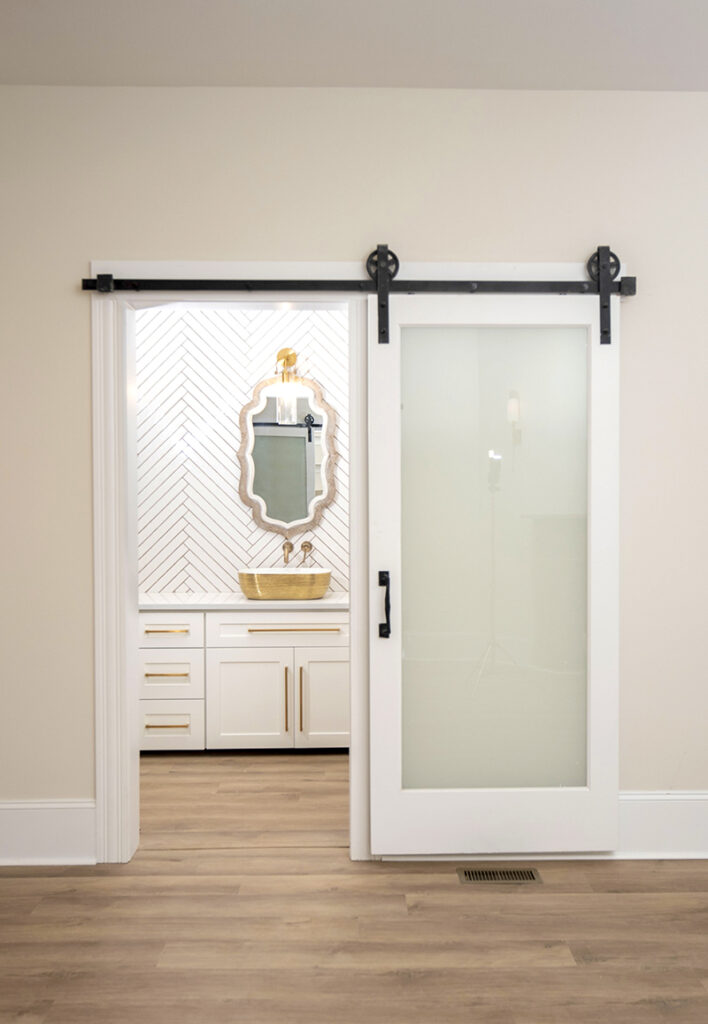
The impressive 4,100+-square-foot home has five bedrooms and three and a half bathrooms, with one main bedroom on the first floor and one main bedroom upstairs. The walk-in closets in the main bedrooms—complete with rows of shelves for shoes and bags—were original to the home, which came as a surprise to the Elliotts. Each main bedroom has its own bathroom, with the downstairs bathroom featuring sleek brass fixtures and a soaking tub you could get lost in.

“When we bought the house, there was a hot tub where the bathroom is now and it was all covered in carpet,” laughed Meredith.

In the upstairs bathroom, meant to be shared by the youngest members of the family, the Idea House team added three identical vessel sinks rather than little ones elbowing each other for room while they brush their teeth.

Ready for the Next Hundred Years

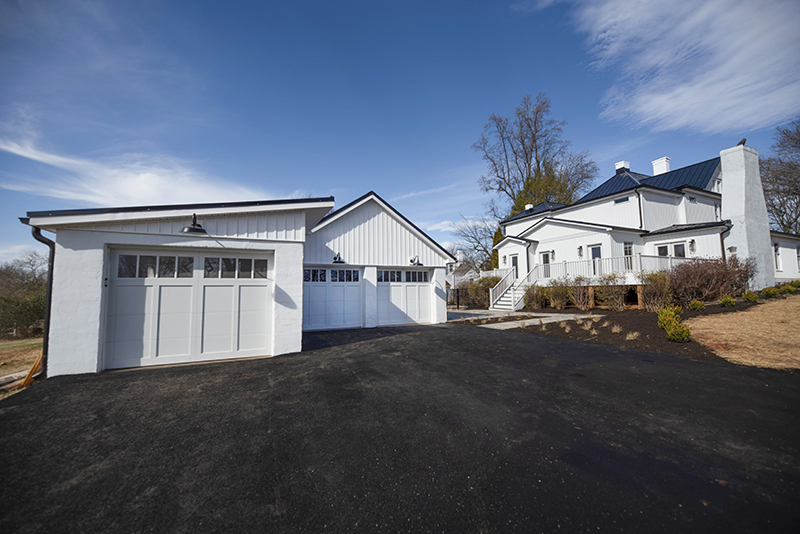
In addition to the interior restoration, the Idea House team built an entirely new deck, converted the existing two-car garage to a three-car garage and a pool room, and replaced the metal roof.

“We added new board and batten vinyl siding to the house and parged the foundation with a similar texture that is on the front wall,” Scott said.

The historic home also received the addition of two HVAC systems, one for the downstairs and one for the upstairs.

“The house originally had oil heat, so we rewired the entire house,” Scott furthered. “The deck was also in bad shape, so we tore it all down and built a new deck.”

The 12-foot pool, beloved in its heyday, was converted to salt and received a stunning facelift around its perimeter.

“They don’t make 12-foot pools like that anymore,” Scott ruminated. 

In truth, that same sentiment could be applied to the entirety of the 1221 Oakwood Street home. From its grandiose structure to its nearly innumerable fireplaces to the masonry work that has weathered the home’s long history, “they don’t make them like that anymore.” However, thanks to the craftsmanship of the Idea House team, the house will continue into a new chapter, one that’s hopefully full of summer pool days and evenings that turn into mornings with strangers that quickly become friends.  

Photos by Ashlee Glen.


Stormy Weather Iris Gardens 

A Historic Iris Display Garden in Lynchburg

Kansas City, Missouri, native, Shana Gammon has been around irises her whole life and the familiar has become her passion. Gammon is the owner of Stormy Weather Iris Gardens, a private house garden that sits on a quarter acre within Lynchburg City limits.

Consisting of five beds and 200 different varieties of tall bearded iris, the garden officially opened to the public in 2017.

“I started doing floral photography in 2006 or 2007,” Gammon said of how the garden got its start. “I exhibited nationally and worked with hospitals around the country, providing photos for their galleries and so on. With four children, it was easier to grow what I wanted to photograph rather than travel around to shoot. Irises were one of the flowers I started growing at that time and they became one of my favorite flowers.”

Stormy Weather Iris Garden grows irises in every color and color pattern, from Plicata and Broken Color irises to Amoena and several Space Age varieties.

Photos courtesy of Gammon Imagery

“All are tall bearded, but each is different,” said Gammon.

As if walking among a sea of multicolored irises weren’t special enough, Stormy Weather Iris Garden is also one of two Historic Iris Display Gardens in Virginia, with the second being Tufton Farm at Monticello.

“I love history, so joining the Historic Iris Society was a perfect fit for me,” explained Gammon. “One of the requirements is that you have to have at least 15 historic iris varieties in your garden and the garden should be open to the public. We have more than 15 historic varieties, but we also have many newer introductions.”

To qualify as a historic iris, the iris must have been introduced to the American Iris Society 30 years ago or earlier. 

To visit Stormy Weather Iris Gardens, simply email stormyweatheriris@yahoo.com to schedule a visitation time. They will begin scheduling in the first week of April and visits are free.  


Growing Up

Take Your Green Thumb to New Heights with Vertical Gardens

The urge to cultivate is an innate human quality, and it always has been. No matter where we put down roots—from coast to desert, rural to urban—people always find a way to enhance their environment with living plants. For many, vertical gardening is a way to bring a little green energy into small spaces. The best part: Vertical gardening can often be both aesthetically pleasing, and functional!

Many credit the vertical gardening approach we recognize today to a man named Stanley Hart White, who patented his “Botanical Bricks” in 1938. As a landscape architect, he designed modular, vertical gardening blocks that could be quickly stacked, rearranged, and moved for displays and events. They were great for gardening indoors and outdoors, especially in small spaces.

However, we have been growing upward for centuries, and it’s likely that White took his inspiration from the landscape architects of the ancient world. Some of the earliest known vertical gardens come from about 3,000 B.C., when the vineyards of ancient Greece were planted to produce both a plentiful yield of grapes, but also shade for gathering places. The vines grew from boxes and were trained to climb trellises and arches. This produced shelter from the rain and sun, as well as a visually stunning landscape. Many of these gardens can still be seen today.

The Hanging Gardens of Babylon, one of the Seven Wonders of the Ancient World, were constructed, allegedly, by King Nebuchadnezzar for his wife between 605 – 562 B.C. Though archaeologists and historians dispute the details, writers of the time described the gardens as huge, terraced rooftops, upheld by columns which were iconic in the architecture of the period. The rooftops were heavily planted with everything from flowers and small shrubs to full-sized trees. The vining plants were designed to climb down the columns and walls, giving the illusion that the garden was hanging from mid-air. This was also one of the earliest known gardens to be planted purely for aesthetic pleasure, and not for food production. Unfortunately, this garden has been lost to time, but many artists, both modern and ancient, have created representations of what the famed Hanging Gardens of Babylon may have looked like.

Fast forward several thousand years and vertical gardening is very popular, not just in tight urban environments, but just about everywhere. There are “planted walls” clinging to the exteriors of city skyscrapers with fancy hydroponic systems and scientifically blended soil. Home DIYers build indoor wall-hanging gardens to display their succulent collections, or outside to grow tomatoes and veggies without sacrificing the yard space. The beauty of vertical gardening is that it can be done by almost anyone, and on almost any budget. All you need is some sort of frame or structure, and a few pockets to stuff soil or growth medium.

Of course, for the gardener willing to front a little cash, there are tons of options for both indoor and outdoor vertical gardening systems. Some even include hydroponic irrigation systems and grow lights for an easy, hands-off approach.

But for the crafty, low-budget gardener, pallets can often be found for free, and are easily converted into vertical growing surfaces that can be affixed to walls, or simply leaned against them, inside or outside. With enough pallets, you can quickly create large, eye-catching vertical structures for your plants. Shelves can also be adapted to growing plants vertically up strings, dowels, or mesh. Vining plants can be grown from boxes on top of trellises or pergolas and add intrigue and a touch of romance to windows, patios, or porches. Strawberries are an excellent candidate for hanging baskets and elevated grow boxes because they look great, and produce fruit!

Pothos – These plants are affordable, available at every garden supply center, and require little maintenance. They are great climbers, thrive in low lighting, and grow relatively quickly! They are also proven to purify air.

Ferns – Ferns like moisture, but many varieties do not require much light at all. They also do not have deep root systems, or require many nutrients, so they make excellent candidates for living walls. There are several varieties of ferns that, when planted together, can create visual intrigue while all requiring the same growth conditions.

Heartleaf Philodendron – Another popular houseplant, the Philodendron is a low-maintenance fast-grower with long, dangling vines and heart-shaped leaves.

Dragon Plant – If you’re looking to add a plant with a little more structure, the Dragon Plant is a popular choice for indoor gardens. Like the others on this list, they are known to purify air. The sturdy, dark green leaves stand in contrast to the more gangly vining plants, and they are conveniently low maintenance.

For inspiration, a quick online search for “living walls,” “vertical gardening,” or “planted walls” will yield more than a few ideas that you could try in your home or outdoor space.   


Stewards of Ivy Cliff

One Family’s Journey to Preserve History

We want to figure out who the enslaved were,” Sophie Taylor resolutely said. Clad in duck boots and flannel, she leaned across the granite kitchen countertop—the newest element in her home by about a century—as she poured over census records, family trees, and local history books.

That journey—one that began in March of 2021 when she and her husband, Mike, purchased the Ivy Cliff estate—really began much longer ago, in 1772.

Ivy Cliff was built by Revolutionary War hero Captain Henry Brown, who completed three terms in the Continental Army and served under Colonel Charles Lynch. It’s estimated that the Brown family acquired the Ivy Cliff tract of land—3,400 acres in total—in 1755, with the brick Federal style home being built and completed by the late 18th century.

The 4,900-square-foot home features sweeping 10-foot ceilings, original long plank wood floors, and ten fireplaces in total. Historical records show that the home originally had more rooms than what stand today, but all that remains of them is a swath of exterior wall that stretches from the east side of the home.

Photos by Ashlee Glenn

Captain Brown and his wife had six children together, all of whom were raised at Ivy Cliff, and the property remained in the Brown family until the 1920s.

Ivy Cliff, which at one time was referred to as Otter Hills plantation, was a booming tobacco farm.

“We found a census from September 1860 that shows 29 enslaved men and women on the property at the time,” Taylor said. “Thirteen men and sixteen women. Though it’s certainly possible that more than that were living here under a different owner’s name. We found evidence that there were six different enslaved dwellings on the property at one time.”

One of those dwellings is still standing today, downhill and largely out of view from the main house. 

The enslaved cabin is a “dogtrot” style cabin, which means that it’s essentially two separate cabins connected by a breezeway. The west side of the cabin was completed in 1810, with the east side of the cabin following shortly after in 1830.

Photo by Ashlee Glenn

“There are four separate rooms in the cabin, but we’re not sure if four different families lived in this one cabin, or if the rooms were separated by males and females,” Taylor explained.

When the Taylor family purchased the property in 2021—a pandemic move from Florida—they knew that there was a rich history behind the property, which had been meticulously preserved by previous owners. But the surprise came from how much the community became invested in its history.

“There are so many people in this town who love history,” Taylor recounted. “They saved everything and gave it back.”

Since they arrived at Ivy Cliff, neighbors have been “returning” pieces of property history that had been salvaged over the years. From the original louvered shutters, which a neighbor salvaged when a previous owner remodeled, to Independent State of the Congo coins circa 1888, which were dug up on the property, neighbors and history buffs alike have flocked to Ivy Cliff to return memorabilia and help piece the history together.

Part of connecting those dots was ensuring that the history remained preserved.

In 2022, the Taylors made great strides in ensuring the entirety of their property—now 17.3 acres of the original 3,400—became a historical site. They worked with Preservation Virginia, a nonprofit organization that sustains Virginia’s historic places through leadership in advocacy, education, revitalization, and stewardship, to have the slave dwelling added to the “Virginia’s Most Endangered Historic Places” list.

Photos by Ashlee Glenn

In Virginia, extant dwellings of enslaved people are rare and often overlooked. Constantly subject to time, elements, and lack of resources of the property owners, many have fallen into ruin or vanished from history altogether.

“Having this Preservation Virginia designation helps us advocate for resources and grant funding,” Taylor explained.

In addition to the Virginia’s Most Endangered Historic Places list, the Taylors applied for the Threatened Sites Program with the Virginia Department of Historic Resources, which offers emergency funding for archaeological sites endangered by erosion or other factors like impending development or vandalism.

That grant, in particular, connected the Taylors with local engineering and surveying firm, Hurt & Proffitt.

“We had Hurt & Proffitt out with their archaeology team completing a site survey of the hillside with the extant cabin searching for likely locations of the other slave dwellings,” Taylor explained. “They are still studying the thousands of artifacts found at their lab at Historic Sandusky.”

Shovel tests and test unit excavations were completed by the Hurt & Proffitt team, which runs the only engineering student lab in the state.

Photos by Ashlee Glenn

Every artifact found around the slave dwelling as well as the surrounding land where other dwellings may have stood were bagged in acid-free bags for storage and identification.

“The most significant findings were the ones that couldn’t be bagged,” said Jess Gantzert, Hurt & Proffitt’s laboratory director. “We found quartz cornerstones, which were religiously significant [to the enslaved] as well as a number of Hoodoo markings on the enslaved cabin.”

Photos by Ashlee Glenn

In addition to the cornerstones and markings, the Hurt & Proffitt team was able to collect nails, bricks, bottle glass, pottery, and window glass, all of which will help them begin painting the picture of the everyday lives of the enslaved living on the property.

“We have the technology now to identify what type of liquid bottles used to hold,” Gantzert explained.

“So we will be able to determine if they held medicine, drinks, or liquids that were significant to their
Hoodoo culture.”

While processing and identification is still ongoing, the Taylors and the Hurt & Proffitt team are hopeful that the history of the enslaved people on the property will start to be told.

“We are able to use archaeology to find and tell the stories of the people who weren’t considered people,” Gantzert said.

“Our plans include a complete renovation of the cabin with the intention of sharing it with local school groups as a means of learning local Virginia history,” Taylor furthered. “Due to the historical importance of the cabin, we want to ensure that any renovation is completed with special care, which is why we are seeking the assistance from historical architects, archaeologists, contractors, and stone masons.”

Under the Taylors’ care and stewardship, the story of Ivy Cliff continues to unfold with the hopes of one day identifying the names of those who were enslaved on the property and reconstructing their stories.  

If you’re a Lynchburg native, are familiar with Ivy Cliff’s history, and have information that may help,
reach out to the 501(c)(3) that the Taylors established at https://ivycliff.wixsite.com/ivycliff.


The Great Barn House Escape

A Family Pandemic Project Comes to Life in the Nick of Time

Sometimes, it takes a worldwide pandemic to push you to do the thing you’ve been dreaming about. For Tim and Tonya Pafford, it was the COVID-19 lockdowns of early 2020 that made them realize it was time to stop thinking about building a “barndominium” on the 30 acres they owned in Evington and actually go for it. The result is a peaceful spot in the world that readily welcomes their family and many guests for gatherings year-round, including the holidays.

The Paffords are high school sweethearts and have three daughters, Emory, 19, Avery, 17, and Hadley, 15, and first bought the larger 155-acre farm with friends a few years prior for use as an outdoor playground. The land adjoins part of the Big Otter River so their family would come out and fish, kayak, camp, and explore the property with four-wheelers. But it was a far cry from buildable at first.

“Someone had clear cut it and sold the timber, so there were no trees, the dirt was all dug up,” Tonya said. “I couldn’t envision anything liveable to be honest, but it had really cool views and river frontage, so we all decided to take the plunge and bought it together and subdivided it.”

The original 1920s farm was named Otter Oaks Farm and, along with lots of clearing, planting, and prepping, the Paffords also re-incorporated their 30 acres and brought back the farm’s original name. Tim drew out plans for what they now call “The Barndo” on a flight from Florida to Virginia, so the general framework was ready when they broke ground in January 2020. Soon however,
the project became a family sanity saver.

Photo by Daryl Calfee

All Hands on Deck

“It became a COVID party of sorts,” Tonya said. “We had wood delivered on the day Tim was told, ‘Don’t come back to work.’ And the girls were told not to come back to school. I’m a nurse so I knew I was going to be going to work, and it would be kind of a war zone. So, we just thought, this is our moment—we are selling our house and building The Barndo.”

Photo by Daryl Calfee

In no time, Tim was spending long days at Otter Oaks building the project mostly by himself, with help from the girls and food runs from Tonya.

“The kids would work with Tim, but they did have to do homeschooling so they would do their schoolwork and I would bring food and we would have dinner in the construction zone, and it was our way to be together,” Tonya recalled.

Photo by Daryl Calfee

Emory, their oldest daughter, is now a pole vaulter at Liberty University but she readily comes home to The Barndo.

“Helping to build the house is a core memory,” she said.

While it required all Pafford hands on deck, the vision for The Barndo was fairly straightforward, with 1,600 square feet of living space upstairs and 1,600 square feet of entertaining space below.

“Functional was the first key,” Tim said. “Good use of space. This concept was very simplistic, but we wanted to maximize every square inch possible with the simple design.”

Photo by Daryl Calfee

Exterior in, The Barndo strikes a balance between rustic-industrial and warm farmhouse style. The home’s roof and metal siding are exposed galvanized metal, installed by Karlin’s Construction of Lynchburg, in a charcoal color on the house and left an unpainted natural metal on the roof. The home’s cupola was handmade in Amish country, Pennsylvania, and driven down on a truck. The oversized barn doors, perhaps The Barndo’s crowning feature, were crafted by Tim using oak harvested on a neighbor’s property.

“It actually worked out better than I thought it would,” Tim said. “It’s cool because it’s actually wood from right here. It has imperfections and they are unique planks of wood. It came together.”

Photo by Daryl Calfee

Start to finish, the house build took 11 months of work from January to November 2020, moving the family in just in time for their first holiday season there.

“The first snow here was beautiful, it looked like a Hallmark card,” Tonya recalled. “It was such a relief when all of us were finally here!”

Tim added, “There’s something about crawling into your bed two minutes after unplugging your tools versus packing everything up and driving home at 3 in the morning.”

Living Large in a Smaller Space

Photo by Daryl Calfee

While The Barndo has been a welcome change of scenery for the family, it did get some getting used to after moving from a larger home in Forest.

“We moved from a little over 4,000 square feet, so 1,600 square feet felt small to us at first, but we quickly learned to minimize and live more streamlined. It’s bigger than you think and there’s a lot more space than you think,” Tonya said.

The open layout flows from sitting area to dining space to kitchen, each point accommodating sweeping views of the outdoors.

“Tonya wanted the big windows, so we wrestled them up here. It took a couple of engineering minds to figure out how to crank them up, but the whole layout was based around the view,” Tim said.

Photo by Daryl Calfee

The room’s height also bolsters the larger sense of space, reaching 14 feet at its peak. The family worked together to install the tongue-in-groove Southern pine on the ceiling, and Tim sealed it using a matte, non-yellowing poly from Benjamin Moore.

With the open room putting the kitchen on full display, Tonya needed it to perform well in both form and function. She chose a long navy island with quartz countertops and plenty of seating, open shelving to keep the visual space light, and even managed to squeeze in a pantry closet. The kitchen is now a place Tonya and her daughters often find themselves congregating.

Photo by Daryl Calfee

“I love the big open space. You can have a lot of people in here at one time and it makes it feel super homey,” Emory said.

As they were thoughtfully designing the layout, the family made trade-offs to accommodate their lifestyle. Smaller bedroom sizes meant more living space for all. A shared room for their oldest and youngest daughters hosts a queen size bed with a bunk above. Upstairs, a loft bedroom with a vaulted wood ceiling was designed for their middle child, Avery.

Photo by Daryl Calfee

“I like that it is my own room that I don’t have to share with anyone. And I like the built-in bookshelves a lot, and the ceiling,” she said of her cozy bedroom.

Tim and Tonya also added a separate drop zone on the first-floor entry to corral all the family’s belongings as they come and go. Five IKEA bookshelves were reconfigured together to make cubbies, an old barn light was rewired for the space, and a piece of wood from a 1920s home in Rivermont was hung as a coat rack. A door from the drop zone leads into the downstairs space of The Barndo, revealing perhaps its biggest asset—a large entertaining area.

Rocking Around the Christmas Trees

Photo by Daryl Calfee

What began as raw concrete floors and sheetrock on the first floor quickly transformed as the family anticipated holding Emory’s graduation party in May 2021, their first big get-together in the party space. Now, channel rustic pine sourced from Blue Ridge Lumber in Fishersville, VA, covers the walls, a platform stage invites musically minded guests to pick up a guitar or sing karaoke, and circle tables decorated in holiday greenery invite all to sit back and enjoy the season’s gatherings. A roll-up glass garage door in the back lets natural light in and creates a seamless transition to the outdoors.

“We just want a big, fun family space,” Tonya said. “The house was super important to us when we first came out here, but we learned that we don’t need nearly as much as we thought. And we live so much on the outside here.”

Eventually, Tim and Tonya would like to build a larger main house and keep The Barndo as a house for the girls to stay as they all go to college, a place for guests, an Airbnb, or maybe even a future pool house.

“We want a place that our kids always want to come back to,” Tonya explained.

Home for the Holidays

Photo by Daryl Calfee

Reflecting back this holiday season, the family can see how much the project created a calmer mindset for them when so much was uncertain.

“It kept us from getting caught up in what was happening. We didn’t have television,” Tonya said. “So being here, we weren’t afraid, we were all together, and if someone needed somewhere to get away, we had the ability to offer a wide open space and take walks when you couldn’t do that. It meant a lot to have a place to escape.”

Photo by Daryl Calfee

It’s also not lost on them that they were able to transform their slice of land into a place of tranquility; one they can now readily offer to others, simply by opening their big barn doors.

“Both of us are very appreciative of this place,” Tonya said, “and how cool it is to look out those windows every day and see nothing but creation.”


“It’s Like Living in an Art Project”

A Lynchburg Midcentury Time Capsule Meets Its Perfect Match

Is it possible that sometimes a house chooses its owners?

Much like a rare antique sitting boxed up for decades in an attic, or a valuable painting relegated to the back rack at a thrift store, it waits for just the right old soul who will lift it up with a sense of reverence and say, “There you are.” It seems an impossible idea given the recent real estate market, but when you hear the kismet story of Hannah Poucher and Grant Kittrell, it may lead you to wonder if maybe, just maybe, their house chose them.

Photos Courtesy of Daryl Calfee

The Discovery
“We knew the second we looked through the windows that we wanted to live here forever,” Hannah, now 32, said of their love-at-first-home-sighting experience.

It was August 2019, and she and Grant, now 30, were making plans for a wedding and their future together, when something akin to Zillow lightning struck. A little listing with just five vague pictures popped up—a circa 1954 midcentury modern in the middle of Lynchburg. Within the hour, the couple found themselves peering through the windows, unable to believe their own eyes. It was meant for them, they knew it, but they needed to move fast.

“We weren’t pre-qualified, we had never looked at any houses before, we had to Google after we saw this place—’how to get a mortgage’—we didn’t know anything!” Hannah, a military recruiter for Liberty University, said. “But we knew if we didn’t jump at this, we wouldn’t get another shot at something like this in town.”
A bidding war ensued, but the home seemed to intuitively know who it wanted as its next caretaker. The couple closed in November 2019 and made a defining decision in honor of their new-old home.

“We wanted to live in the space for at least a year before doing anything radical,” Hannah explained. “We wanted to understand what it was like to be here as people within a space where it was designed to work like this. So, we decided no big changes for the first year.”

An Intentional Interior
It turns out, there was much the home wanted to teach them. Grant and Hannah took pleasure in learning about its history and thoughtful layout, taking note of each delightful detail, like how the abundant natural light shifted across the open-beamed ceiling throughout the day.

“We both, perhaps in different ways, came to this space with appreciation for art and design,” Grant, a writer, illustrator, and musician who works at Randolph College, said. “The midcentury modern style is very intentional and leans in the direction of sculptural, so there’s not a day that we don’t look around and say, ‘Hey look at that! Isn’t that really amazing?’ So, we are living in this space that we see as a piece of art, and really it is.”

Photos Courtesy of Daryl Calfee

Within that first learning year, they came to understand the unique reason for the way things were designed. Like the greater abundance of windows on one side of the house to allow for passive solar heat. Or the fact that the floors, which look like stone, are in fact stamped concrete designed to hold thermal mass, making what should be a cold underfooting somehow warm and earthy.

The biggest discovery, however, came in the form of a large manila folder filled with the home’s blueprints, original building materials, past pictures, and a booklet of original paint colors from The Frank Lloyd Wright Sierra Sunset Collection.

“When we found that folder, with the Frank Lloyd Wright paint palette, we realized that there was incredible intention behind it,” Hannah said. “So, for example, this color isn’t black, this is the Midnight color from that collection that is part of a larger palette. It was already here. We only painted the kitchen cabinets.”

Furnishings with Soul
While their commitment not to change the home’s interior held strong after moving in, it did need some furnishings. Some true-to-the-era furnishings.

They dove in with both feet and hands.

“Pretty quickly, Hannah became a master of the Facebook Marketplace,” Grant laughed. “She would stay up late at night looking for furniture. So as soon as I got off work, we would take off and go to places we had never seen before, out in the countryside, and pick up an old piece of furniture that someone maybe didn’t really know what they had.”

The hunt for pieces soon evolved into restoration of those finds as needed. Grant and Hannah became quick students of the specific approach to refinishing midcentury pieces.

“We aren’t talking about just sanding and staining, you’re talking about burning through wood veneer if you mess it up and how things aren’t stained, they are toned and sealed and lacquered,” Hannah said.

Photos Courtesy of Daryl Calfee

“I think the more work we put into a piece, the more we favor it.”

Her current favorite piece? A hutch from Lane Furniture, whose factory was once headquartered in Altavista. They discovered the piece in Rustburg, and it is now situated proudly in the area that opens from the kitchen into the dining area.

“We got it on Facebook Marketplace and the seller’s mother had bought it originally from Lane. So it’s a Virginia piece and the time period is right,” she recalled.

What you won’t find a lot of on the home’s ever-evolving furniture front are many new items.

Not because they are purists, Hannah explained, but because of what’s available on Marketplace, what’s within their budget, and what they can restore back to life now and perhaps replace later.

“I can probably count on one hand the number of new things that are in this house,” she said. “And while sustainability might not be the first thing we think about, it’s definitely a driving force. I think in terms of a level of purism, that’s what we are working towards.

It feels like such a perfect space, and we want to honor it with things from that time period.”

Photos Courtesy of Daryl Calfee

An Apartment Evolution
Of course, as with most self-imposed rules, there is almost always an exception. For Hannah and Grant’s “no changing the house for a year” rule, that exception came in the form of an efficiency apartment just across the home’s attached breezeway, where they cut their teeth on the basics of home renovation.

“We focused a lot of our initial energy there because it was a smaller space; we weren’t as overwhelmed and we figured we could learn in there and not have to live in it if we made any mistakes,” Hannah said.

While the essential layout existed when the couple bought it, the apartment needed some finishing work. They took to painting the kitchen cabinets the same green as the main home’s kitchen, updated the floors with a light luxury vinyl tile they laid themselves, and furnished the small bedroom, kitchen, and bath with interesting finds, such as a 1965 Sears Roebuck & Co. bar sourced in Roanoke and a white 1930s stove from Farmville. While not decade-specific to the home, Grant said, “when you bring something this old from the 30s, you’re bringing a long history into this space and the possibilities of whatever life it lived before.”

The renovations came with inherent lessons for the couple, and they reflect now that it better prepared them for future renovation jobs still ahead, like their dream of expanding the home’s main kitchen.

“We have learned to work with each other a little better and be patient with each other in different ways we didn’t know at that point,” Grant said. “Coming home each day and laying flooring every day…we learned a lot!”

From the Inside Out
Much is to be made of the home’s interior, and for good reason, but the property’s grounds are stunning in their own right. In fact, it is the marriage of the two, one spilling by design into the other, that creates a zen-like cohesion with nature from nearly every vantage point.

Photos Courtesy of Daryl Calfee

“We both love and appreciate a lush, green space and this has a lot of bamboo, a big maple, and some really intentional plant life,” Hannah said. “So when you’re looking out these windows, the lines are blurred between outside and inside.

It feels like a really natural space and really a sacred space almost.”

The pair have worked diligently to make conscious updates to the home’s exterior, including retrimming the formerly gray windows to a crisp black, something akin to adding eyeliner to an already lovely face. They cut back layers of bamboo and, as a reward, have witnessed more wildlife at play, from a family of foxes to finches taking up residence in one of the many birdhouses Grant made to a shy resident doe the couple affectionately calls “Jean.”

Most warmer nights of the year, you will find Hannah and Grant on their back patio area, nestled in wicker egg chairs, beverage in hand, dreaming into the future about their vision for the space. Their ultimate hope is to continue to collaborate with their cherished home in order to share it with others—an ever-welcoming, one-of-a-kind retreat.

“Mixing the inside and outside is always a goal,” Grant said. “Having a nature trail on the property is a dream, or hosting yoga or meditation classes here, maybe along with some creative writing workshops.

I would also love to make this place more sustainable, perhaps with solar power.”

It is little wonder that whatever the pair chooses to do next will be with great planning and purpose for the home that somehow, some way, chose them. Three years into their adventure, they still wake every morning with a wide-eyed sense of awe for their surroundings.

“I think, ‘How is this even a possibility? How could this even possibly be our home?’” Hannah smiled. “There is a lingering sense of wonder and excitement every day that we are in this space.”

Photos Courtesy of Daryl Calfee

Follow Along
Want to follow along with the home’s furnishing adventures and projects?

Check out Hannah and Grant’s Instagram page dedicated to the home @clerestorymod. “Clerestory” is the word for windows that are above normal ceiling height
and project into the roofline, which their home boasts in abundance.


“We Bought a Manor!”

A Family of 5 Brings Urban Homesteading to a Historic Rivermont Home

Jennifer Woofter opened the door of her circa 1907 Rivermont Avenue home in Lynchburg wearing red lipstick and a wisteria-colored linen dress she sewed herself, looking every bit the chic urban homesteader she appears to be on Instagram (@weboughtamanor).

“I am living my best ‘Lady of the Manor’ life!” she said with a laugh, as she ushered us inside the impressively proportioned property she shares with her husband of 13 years, Bill Bohn, and their three children. The grand dame of the home, with its red brick and soaring white columns, cleverly conceals a large swatch of land out back that is host to a lush garden and a gaggle of pets, all living happily in the center of the city. It’s a place that invites life at every turn, and the story of how the family landed at such an address is just as surprising as the way they have chosen to live in it.

Photos by Daryl Calfee

“The Manor House”
“We were living in Northern Virginia, and we had just adopted two of our kids and were suddenly going from a two-person household to a four-person household and paying outrageous fees for daycare and it was just really expensive and a fast pace of life,” Jennifer said as she began the story of their big life change in 2013.

One day Bill found the stately Georgian-style home on a website for old houses and sent it to Jennifer with a text jokingly saying, “We should buy this house.” But things quickly got serious at Christmastime when the family visited Bill’s parent’s home in Charlottesville and decided to drive down for a look.

“We left the kids with their grandparents, and came down to Lynchburg and spent the night. And we toured the house and we were like, ‘This is really cool, we should buy it’—so we did!” Jennifer exclaimed.

Within 60 days, the family had uprooted their old lives, sold their home in NoVA, and moved into their new-old home in Lynchburg.

Photos by Daryl Calfee

“We didn’t know a single person, we had no connection to the community, but I think what we quickly found is that Lynchburg is a place where you can make a home and find your community. That was 8 years ago and we have been here ever since,” Jennifer recalled.

One of the aspects that attracted Bill and Jennifer to the home is its rich history. The 115-year-old property has had many chapters, beginning as a single family residence before transforming in the 1960s into part of a private girls school known as the Seven Hills School. Later, it became rooms and dormitories for the Virginia School of the Arts, then had a stint as a commercial office space before finally being converted back into a single family home.

“I think a lot about honoring the history of this house,” Jennifer said. “I think a lot about what was happening in this house when women got the right to vote. Who was living here and what did that feel like? What happened on Pearl Harbor? Throughout all of these momentous points in history, people were living here, living through it.”

Photos by Daryl Calfee

The Kitchen
In a home this large and this old, there will always be projects. But Jennifer and Bill decided right after moving in that the only major renovation they wanted to undertake was the kitchen. What used to be two rooms—“a tiny little breakfast room and then a quite small kitchen”—soon joined to make space for an expansive kitchen the family could comfortably enjoy for years to come.

“We’ve got three kids and Bill loves to cook and while [the former kitchen] was beautifully done, it just wasn’t functional for the way that we live,” she said.

It took 11 months, but the result is a kitchen that remains aesthetically true to the home. Among the many thoughtful changes to the footprint is an expanded door frame with custom pocket doors made to match the originals that opens to the area they now use for dining. They also married in multiple modern amenities, including a few splurges. For Jennifer, that included two dishwashers and two sinks—one for cooking prep and one for washing produce.

Photos by Daryl Calfee

“Bill is the cook of the family, so he definitely had a perspective of the kind of stove he wanted and the functionality of the ovens, and I just wanted it to be pretty,” she said.

Throughout the kitchen are reminders of the vibrant life happening just out the window, from leafy greens soaking in a sink and canning preserves in glass-front cabinets, to chicken and duck eggs resting on a custom egg holder made by Jennifer’s dad. A little bit country, a little bit glamour, the kitchen at the heart of the home now represents exactly the kind of life the family has worked to build there.

Photos by Daryl Calfee

The Animals
To visit the manor is to run straight into animals of all varieties. Greeting you at the door is Lucy, the black rescue dog. Four black cats also flit throughout the home because “we are an only black pet household,” Jennifer said unapologetically.

Out back in an expansive gated area next to the even more impressive garden space are even more critters—three goats and about 14 chickens and ducks to be precise.

“Hello friends,” Jennifer greeted the goats, Jezebel, Charlemagne, and Scheherazade, as she walked past a teal chicken coop while the yardbirds scrambled around underfoot.

The coop’s bright color was at one point a topic of much debate, Jennifer said, but she loved it and won that round. Where she often concedes is the “how” of what Bill prefers when it comes to structures.

Photos by Daryl Calfee

“Because Bill’s profession [as an engineer] is dealing with natural disasters, everything he builds is apocalypse-ready. Everything is sunk into concrete. If there’s a hurricane, we are coming out to the chicken coop,” she said.

With this many living creatures in one place, funny stories are never far behind. A memorable one took place right after the family first got the goats.

“When we first brought home the goats six years ago, they escaped and got on the roof of the house. People were calling us, like ‘There are goats on your roof!’ And I said, ‘Yeah, I know… I will get to that later!’” she laughed.

Photos by Daryl Calfee

The Garden
“I don’t think I ever saw myself as a farmer,” Jennifer conceded as she walked under the kiwi-vined arched trellis into the family’s massive garden project.

The family has taken full advantage of their 1.7 acre lot, which now boasts 1800 square feet of garden area with 52 raised beds and a full drip irrigation system. An area is cleared for a future greenhouse build. The space is verdant with growth, and each season brings something new to do.

“Our process is, Bill grows and plants and I harvest and process in whatever format that looks like,” Jennifer said.

Photos by Daryl Calfee

The backyard didn’t always look like this. It once held three tennis courts and, by the time Jennifer’s family moved in, the two remaining tennis courts were in bad shape. So they saved up and removed them and built the raised beds in their place.

Jennifer relayed that many lessons have been learned as she and Bill have dialed in what they wanted in the garden and how they wanted it to function for their daily life. Some of those lessons came down to marital compromise.

“Bill has the patience of a saint,” Jennifer said. “I decided I wanted all those raised beds painted white instead of natural wood, and heavens if he didn’t spend all summer painting those, along with the kids.”


How Does Your Garden Grow?
In any one calendar year, about 75 different herbs, vegetables, and fruits grow in the family’s garden, including:
Peas, Lettuce, Bok Choy, Garlic, Shallots, Scallions, Asparagus, Soybeans, Strawberries, Blackberries, Kiwi, Peach, Pear & Apple Trees, Rhubarb, Jerusalem Artichoke, Potatoes, Tomatoes, Broccoli, Chives, Fennel, Oregano, Sage, Rosemary, Curry, Thyme & more!


Photos by Daryl Calfee

The Mission
Perhaps the most rewarding part about the work of their hands is that the family is able to benefit others from it as well. With so much shareable produce growing, they set up a self-serve stand on the porch for people to come year-round, with the goal of one day building a full farm stand. They also donate a lot of their bounty to the Lynchburg Daily Bread. The rest sustains them throughout the year.

While the historic home and its grounds have certainly been a major undertaking, the benefits of the lifestyle they created have also helped them to put down intentional roots in their adopted city.

Photos by Daryl Calfee

“One of the most rewarding parts of having the animals and the garden is it has really connected us to our neighbors, people who stop by and say hi all the time, the neighbor kids come by. Moms walking their kids around in the afternoon stop by and feed the goats,” Jennifer said. “It’s just been fun.”


Simple Chive Blossom Vinegar Recipe
Jennifer discovered that the chive blossoms from her garden “make a beautiful pink vinaigrette.” Using the guidance of The Spruce Eats website, she places the chive blossoms in a clean jar and pours white wine vinegar over them until they are completely covered. “Let it steep for a few days and voilà, so easy!” she said.


Bringing New Life into a Historic Home

Couple continues their 110-year old Tudor’s story—with a modern eclectic twist

April marks one year since newlyweds Victoria Bartholomew and Jordan Reeves bought their Tudor on Rivermont Avenue. Bartholomew, a local REALTOR®, renovator and historic home lover, had been keeping her eye on the home for a while—25 years to be exact.

“I moved to Lynchburg when I was eight years old and the house we lived in was literally across the street,” she explained. “I looked at this house a lot when I was a little kid and I really liked it.”

The couple put in an offer on the 2,600-square-foot home without even seeing the inside yet, but it did not disappoint once they did—offering an abundance of natural light, unique woodwork and some untouched mid-century updates. It also helped that they knew the home’s architect was the famed Stanhope Johnson, who designed hundreds of houses and buildings in Lynchburg in the first half of the 20th century.

Victoria-Bartholomew-Jordan-Reeves

“All of the [Stanhope] houses are different. Stylistically, there are some similarities, there is a symmetrical look to his homes… but the details are all different,” Bartholomew said.

They were also drawn to the upkeep; although built in 1913, this home needed the least work of any other home they had considered. Most of the improvements they have made in the past year have been cosmetic—such as adding wallpaper, installing new light fixtures and reverting the fireplace’s original tile back to its former glory.

“We stripped years and years of paint off of the fireplace. It was peach. They painted the original tile peach,” Reeves laughed. “Which is extremely offensive if you like the original details of old houses.”

Reeves and Bartholomew not only like original details, they respect them—or, as I noticed as they excitedly showed me around their beloved home, they celebrate them.

“We think it’s those details that make the houses really unique and special,” Bartholomew explained.

historic-home

That doesn’t mean the couple holds back on infusing the old home with their own unique style. Bartholomew and Reeves have found they often agree on interior design choices, with Bartholomew describing her style as leaning towards “maximalist”—making the most out of her spaces—and modern eclectic.

“But we are not stuck on a certain style. I’m always a believer that if you paint the walls, you have good rugs and you have art… it’s a beautiful space,” she said.

“We also really like saturated colors.”

This is particularly evident in the home’s living room, where a mustard yellow couch from Interior Define contrasts gorgeously with rich blue-gray walls (Inchyra Blue by Farrow & Ball) and a red Persian rug.

The couch is actually the only “new” piece of furniture they have in the home. Everything else was purchased secondhand, such as estate sales or on Facebook Marketplace.

inside-historic-home

“There are stories to every single piece of furniture in this house, which is a lot of fun,” Bartholomew said. “There is definitely something warm and nice about giving something new life.”

One example is the living room’s mid-century storage unit, part of a set, which holds records and other collectibles. Bartholomew purchased the furniture locally from a man whose grandparents had brought it over from Denmark.

Behind the living room is what the couple has lovingly dubbed “the grandpa room”—partly because of its iconic wood panel walls that give off that “gentleman’s library” vibe. The room was added to the home during a major renovation in the ’50s and hasn’t been changed since; Reeves describes it as a perfect “slice” of mid-century style.

The grandpa room is also the place where the couple proudly displays items from their grandparents. Bright green chairs were a gift from Bartholomew’s step-grandparents and a flag from Reeves’ grandparents’ house hangs on the wall.

wood-panelling-revival

“My grandfather was an architect so we have some of his books in here and framed some of his plans,” Bartholomew added.

A powder room off the grandpa room was also a later renovation to the home and was a practical addition, serving as the only bathroom on the lower level. Of course, this couple was curious to see what the original space looked like.

“We found the original house plans and this used to be a pass through and there was a door leading in to the kitchen,” she said.

In the foyer, floor-to-ceiling black wallpaper (by Hygge & West) with an eye-catching metallic floral design is more proof of the couple’s willingness to take bold risks.

“We love it because it looks different depending on the light or the angle,” said Reeves.

There is minimal artwork in the foyer, so as not to cover up the wallpaper, which is a work of art itself, they explained. But they did allow one of Bartholomew’s large eccentric cat paintings—one of three cat-focused paintings downstairs. The foyer’s gorgeous crystal chandelier light fixture was not changed, since it was original to the home.

In the dining room, warm yellow walls (India Yellow by Farrow & Ball) are covered in colorful artwork Bartholomew has accumulated over the years. Throughout our tour, she pointed out piece after piece, many of them created by family members, including her grandfather and mother.

Some pieces of furniture can be considered works of art as well. Bartholomew bought the side chairs in the dining room on Facebook Marketplace from a missionary who had just returned to the area.

“The wooden part of the chair was handmade by a builder in Kenya when they were there. The man who bought them did the leatherwork,” Reeves explained.

Plants are another décor essential in this home—and they play the most prominent role in the dining room.

“It’s a jungle in here. I’m a sucker for living things!” Bartholomew laughed. The couple has five “elderly” cats and two dogs—a pit bull, Otis, and Great Dane, Ida, who nudged her way into the photo shoot numerous times.

A unique half-door leading to the kitchen helps keep the pets separated at times. The kitchen was renovated in 2007 and while the couple would love to update the style at some point, they don’t feel like it’s a “need” right now.

“It’s hard to justify going into a full kitchen reno, since it’s perfectly functional,” said Reeves.

They did update the lighting over the island; it coordinates with the dining room fixture found along the same sight line. Red Persian runners in the kitchen break up some of the light wood in the floor and cabinets.

Moving into year two in their beloved home, Bartholomew and Reeves plan to stay busy with more home projects, such as new wallpaper in their bathrooms that were also last updated in the ’50s. But the colorful tile is staying, they say.

“A lot of people will buy these homes, and you can get them very cheap, and they will pull out everything and replace it,” said Reeves.

But as is proof by their dedication to saving fireplace tile and preserving wood-paneled nooks, Bartholomew and Reeves see themselves almost as long-term visitors in their historic home, characters in its evolving story.

“You are not the forever owner of a house,” Bartholomew explained. “You are just a piece in its history.”


PHOTOS BY ASHLEE GLEN


The Best Gardens of Virginia

MAKE PLANS TO VISIT THESE HORTICULTURE-FOCUSED DESTINATIONS IN 2022

It’s no secret that Virginia is a beautiful place to live, and every season brings out a new aspect of its beauty. Right now, while the air is cold and the trees are bare, we can appreciate that unhindered view of the Blue Ridge, maybe capped with a dusting of white. We can also plan for what we will do once the weather warms up again.

With that in mind, and to coordinate with our annual “Best Of Issue,” we have worked with some of Lynchburg Living’s most beloved contributors to curate a list of Virginia’s “best,” must-see gardens. Without further ado, here are our recommendations:

Charlottesville

Thomas Jefferson’s Gardens at Monticello
www.monticello.org/house-gardens/farms-gardens
Thomas Jefferson was an avid observer of nature, and a dedicated and methodical gardener. The gardens at Monticello served not only as a functional producer of food, but also as a lab for Jefferson’s experimentation with imported and exotic vegetables and botanicals. In fact, he documented his gardening experiments in his “Garden Kalendar,” which he wrote with a scientific exactitude, reflecting his passion for horticulture. Today, visitors can tour the lovingly restored flower gardens, the stunning 1,000-foot-long vegetable garden terrace, and the sprawling orchards maintained by the Thomas Jefferson Foundation. You will also have the opportunity to learn about 19th-century cultivation and the rich history of Virginia as a critical state in our nation’s development.
Recommended by Kaye Moomaw

Pavilion Gardens at University of Virginia
While you’re in town exploring Monticello, you’ll want to take a quick drive over to the University of Virginia, founded by—you guessed it—Thomas Jefferson. At UVA, TJ really flexed his truly inspired talent for landscaping. There are 10 unique pocket gardens spaced symmetrically along both sides of the famous “Lawn.” Many of the flowers and shrubs on display at UVA in Jefferson’s time were cultivated at Monticello and transplanted into the university gardens, which were traced and outlined by Jefferson’s own invention—serpentine brick walls. You’ll want to find a shady spot to sit with a cup of tea and a good book, because the small size and elegance of some of these spaces truly project a “secret garden” feel.
Recommended by Kaye Moomaw


Lexington

Boxerwood Gardens
boxerwood.org
The Boxerwood Education Association maintains over 15 acres of protected property, where they have identified and cultivated five unique ecosystems, all available for the inspiration and education of anyone with an interest in environmental preservation. The Pioneer Forest— complete with a “fairy forest” the kids are sure to love—is a great place to experience forest succession. The Wetlands is a habitat teeming with life, and is home to wonderful critters. As you transition into The Field, you can observe the different fauna that are attracted to this grassy, open space. The Hedgerow provides a transition between forest and field, and serves as a sort of highway for smaller critters and sun-loving trees and shrubs. Finally, the Established Woods is the picture of an old-growth, healthy and active forest full of large trees, and three distinct levels of growth: the upper, middle, and lower stories.
Recommended by Shannon Brennan


Nelson County

The Quarry Gardens at Schuyler
quarrygardensatschuyler.com
This one is a bit out of the way from our other suggestions, but well worth the trip because of its truly unique offerings. Once a very profitable soapstone quarry, the Quarry Gardens are spread out over two distinct geological formations, which foster a wide array of diverse ecosystems. In fact, maintained within these 40 acres is the largest concentration of Virginia native plants in the entire commonwealth. A large and winding trail system boasts 34 “galleries,” where you’ll find everything from pollinator gardens and vernal pools to wetlands, barrens and a fern gully.
Recommended by Shannon Brennan


Greater Lynchburg Region

Lynchburg Grows
www.lynchburggrows.org
Lynchburg Grows is a seven-acre, nonprofit urban garden that employs individuals with disabilities and provides fresh, organic produce for the community. Veggies are grown in greenhouses with all sorts of gardening techniques, including hydroponics. They also run a CSA, a farm store, and FreshRX, a super-inventive vegetable prescription program aimed at helping people with diet-related illnesses make healthy lifestyle changes.
Recommended by Susan Timmons

Anne Spencer House and Garden Museum
www.annespencermuseum.com
The Anne Spencer House and Garden Museum was home to late Harlem Renaissance poet Anne Spencer, who was an essential voice, both locally and nationally, for civil rights and equality. Her garden was a place of solitude and peace amid the very turbulent and racially segregated period of history in which she lived. The time she spent in reflection while tending to her garden inspired her writing; the house and gardens also played host to intellectuals, creatives, and African American travelers. The gardens have been restored with the help of Spencer’s direct descendants, as well as old photographs. Tours are available, which we highly recommend. Not only is this a beautiful, creative space, but it is also an invaluable piece of history.
Recommended by Susan Timmons and Ashleigh Meyer

Old City Cemetery
www.gravegarden.org
No local garden list would be complete without mentioning Old City Cemetery, with its peaceful rolling hills, sculptures, ponds, and, of course, Virginia’s largest public collection of heirloom roses. Yes, it’s also a cemetery, but it’s such a beautiful place. I personally think the cemetery adds an intriguing historical element to the whole experience, which you can learn about by visiting the gift shop/museum on the grounds—but if you’re just there for the flowers, you may not even notice the cemetery at all. Admission is free, so take advantage of a sunny winter afternoon and stop by.
Recommended by Susan Timmons and Ashleigh Meyer

Cloverlea at Claytor Nature Center
www.lynchburg.edu/academics/academic-and-community-centers/claytor-nature-center
Owned by Lynchburg College, Claytor Nature Center is a hidden gem located off Route 43 in Bedford County. The gardens enshroud a stunning 1780s farmhouse (Cloverlea) with breathtaking views of the Peaks of Otter. The grounds are free and open to the public, and feature meticulously trimmed boxwoods, a variety of flowers and shrubs, and one of Virginia’s largest white ash trees. I find it to be a truly calming and inspiring landscape. Also at Claytor Nature Center are multiple trails through forests and wetlands along Big Otter River. The Education and Research Center on site houses the Ramsey-Freer Herbarium, a collection of more than 63,000 dried and preserved plant specimens from all around the region.
Recommended by Ashleigh Meyer


Richmond

Lewis Ginter Botanical Gardens
www.lewisginter.org
This destination has more than a dozen themed gardens across 50 acres, complete with a really gorgeous glass-domed conservatory. A designated rose garden, an “Asian Valley” incorporating the stunning design features of Japanese gardens, and a fun and educational children’s garden are just a few of the reasons you need to visit the Lewis Ginter Botanical Gardens. In fact, you can even make a stop in the winter! Lewis Ginter is open year-round for guests and also offers membership options.
Recommended by Susan Timmons and Kaye Moomaw