Grilled Asparagus & Mushroom Crostini

Recipe by Anne Leonard | Serves: 2

While many people use the grill solely for poultry and seafood, you can throw pretty much anything on there… including your appetizers. But just a warning—this summer snack is hearty and, for many, will eat like a full meal.

Of course, be sure to save room for something to sip. A glass of Sauvignon Blanc or any light, citrusy white wine of your choice pairs nicely with asparagus.
Enjoy!


Ingredients
8 asparagus spears, tough ends trimmed
A pint of baby Portobello mushrooms
4 slices of rustic bread
A few leaves of fresh basil

Basting Sauce
1 tablespoon balsamic vinegar
1 tablespoon olive oil
Juice from half a lemon
Salt and pepper to taste

Artichoke Spread
1 tablespoon balsamic vinegar
1 tablespoon olive oil
Salt and pepper to taste
1 15-oz can of artichoke hearts, drained

Directions

Light grill and turn heat on low.

Mix together ingredients for basting sauce and brush on asparagus and mushrooms. Thread mushrooms on skewers.

Grill mushrooms for about 8 minutes total, turning skewers halfway through. The asparagus will need to be grilled for about 10 minutes. Just watch closely so they do not char too much. Once done grilling, slice asparagus spears into thirds (or to fit in rows on your bread) and slice mushrooms.

Toast 4 slices of bread.

Blend ingredients for artichoke spread until a creamy consistency is reached.

Chop basil leaves into ribbons: roll leaves tightly into a scroll and cut vertically so the basil becomes thin “ribbons.”

Assemble: spread artichoke spread on bread, align spears on bread, layer with mushrooms and top with basil ribbons.


Southern Fried Oysters

We are excited to kick off a new spin on the Local Flavor section of Lynchburg Living. Each issue, we will put local dishes and their creators in the spotlight. It’s a chance to give them some kudos while giving you some fresh, attainable ideas for your kitchen.

Lisa Woodroof is the proud mother of a “super-kindergartener” and wife to a “local Lynchburg-ian.” In her previous life, she owned a restaurant on the Rappahannock River and a catering business in Northern Virginia. These days, you will find Lisa working as a proposal manager by day but chef extraordinaire come dinnertime.

Lisa writes a fabulous food blog called Bourbon in the Kitchen (www.bourboninthekitchen.com) and is published in the book A Taste of Virginia History.

She warns when you try one of her recipes, you may never be the same!


10 Steps to Perfectly Fried Oysters, Every Time

Ingredients:
1 quart of Virginia Oysters
8 cups of flour or House of Autry
Seafood Breader
1 cup of panko bread crumbs
1/4 cup of Old Bay, Chesapeake Seasoning or Cajun Seasoning
2 tablespoons of sea salt

2 tablespoons of course ground black pepper
Pinch of Cayenne (Optional if you like spicy)
6 large eggs
1 lemon
50-60 ounces of cooking oil
Cocktail sauce
Tartar sauce

DIRECTIONS:
Step 1: Pour the quart of oysters into a strainer and drain for five minutes (do not rinse oysters).

Step 2: Pull out a large platter and prepare the southern seasoned breader by combining the House of Autry Seafood Breader, panko, Old Bay seasoning, sea salt, black pepper and cayenne.

Fork together the ingredients.

Step 3: Beat your six eggs and place nearby the breader platter.

Step 4: Place your drained oysters into your egg mix (if you have small eggs, you may need to add more eggs). Oysters should be well submersed. Lightly move around your oysters in the eggs to ensure they are coated well.

Step 5: Grab a pair of kitchen tongs, and place your oysters in that mixed southern seasoned breader one at a time. Using a fork, make sure each oyster is coated (not drenched in thick breader but coated). Move those tasty oysters to a clean large platter (I put parchment paper down on the platter first). Once all oysters are breaded, place this platter in your freezer for 5-8 mins just before frying.

Step 6: Fire up the deep fryer or get a deep cooking pan and add enough oil where you have approximately 1.5-2 inches of standing oil. If you are doing this on your stove, remember that your oil should be somewhere between 360 to 375 degrees for frying. Medium to high temperature will get you there on the stove top.

Step 7: Pull out your cocktail sauce. Do yourself a favor and kick up the recipe: add a pinch of cayenne, Old Bay, black pepper and a smidgen of horseradish. Squeeze a lemon slice too. Tartar sauce: add a pinch of cayenne, Old Bay, black pepper, squeeze a lemon slice, and toss in fresh parsley.

Step 8: Drop a test oyster into your pan/fryer to confirm your oil is good to go. If your oil isn’t hot enough, your oysters will be soggy. If it’s too hot, you will burn them. Bring over each oyster individually allowing enough space in the pan between each oyster for frying.

Step 9: Place cooked oysters on a large platter (I like to drain the oil by placing paper towels down on the platter). But immediately pinch sea salt over while the oysters are hot. (This is an important tip).

Step 10: Have someone pour your favorite beverage and serve these hot and amazing oysters, with a pinch of sea salt and that Old Bay on top. Don’t forget to scoot over the kicked-up cocktail and tartar too.


By Lisa Woodroof


Quitting Cold Turkey

Forgo The Typical Holiday Main Dish in Favor of These Tasty Alternatives

Stop us if this sounds familiar. Every year around this time, you lug home an enormous turkey and spend hours brining it, stuffing it, seasoning it, basting it, roasting it … or deep frying it, for heaven’s sake. Your guests put an obligatory two pieces on their plates because you’ve gone through all that trouble to cook it and carve it. Then they engulf it in gravy because—let’s face it—it’s still dry.

Do we as a society truly enjoy eating turkey? Or do we spend countless hours preparing it for one meal a year simply because it’s tradition?
There are some holiday traditions that, quite frankly, shouldn’t be messed with, but food doesn’t have to be one of them. While turkey, or even ham in some families, is considered the norm at holiday gatherings, there are plenty of tasty alternatives that can impress guests and please palates. Here are three dishes that may inspire you to change things up this year.


crown-roast-of-porkCrown Roast of Pork with Cranberry, Apple and Orange Stuffing
Rest assured that when you present this decadent dish, no one’s going to ask, “Where’s the turkey?” Encased with sausage, filled with an extravagant, fruit-forward stuffing and drizzled with an impeccable sauce, this crown roast of pork will be considered the crown jewel of your table.

Ingredients
Pork Roast
10–11-pound pork rib roast—butcher prepared (it’s best to call ahead to order)
2 pounds bulk sausage
Stuffing
(Recipe from Emi’s aunt, Joyce Miller)
1 bag of prepared stuffing mix
1 cup chicken stock
1/2 cup dried cranberries
1 cup Virginia apples (Granny Smith or Honeycrisp), diced
1/2 cup fresh oranges, segmented
Sauce
1/2 dripping of the pork rib roast
1/2 cup all-purpose flour
16 ounces of cold chicken stock

Directions
Preheat oven 375 F.
Spread bulk sausage around the outside of the pork rib roast.
In a baking pan that’s larger than the roast, invert the pork roast so the bones are facing down. Add the scraps to the bottom of the pan alongside the roast to add flavor to your sauce.
Roast for approximately 2 hours, 20 minutes. Check temperature with an instant- read meat thermometer; the center of the roast should reach at least 150 F.
Let pork roast rest for about 30 minutes before serving.
When the pork is almost done, prepare the stuffing. Mix all ingredients together on the stovetop in a pan for about 15 minutes.
To make the sauce, whisk half the drippings from the pork roast with flour until a paste forms. Add chicken stock, and whisk to combine.
Place the stuffing in the center of the pork roast, and drizzle sauce on the pork roast to keep moist.

Recipe created and prepared by Chef Emi Ostrander.


roasted-acorn-squashRoasted Acorn Squash with Black Rice and Pecan Filling and Roasted Red Bell Pepper Sauce

This recipe is simple to prepare, yet special and satisfying enough for the main course of a holiday meal. It is most striking prepared with black rice, which contrasts beautifully with the golden flesh of the squash, but use whatever rice you prefer.

Ingredients
Acorn Squash and Filling
2 acorn squash, halved horizontally, stems, seeds and pulp removed
1 tablespoon olive oil
1 medium yellow onion, finely diced
1/8 teaspoon sea salt
2 large cloves garlic, minced
4 ounces fresh sliced mushrooms (any type)
1 teaspoon rubbed sage
1/4 teaspoon fresh thyme leaves
2 cups cooked black rice; allow to remain moist by not evaporating all of the liquid (I prefer to cook the rice in vegetable stock with 3 sprigs of fresh rosemary to infuse flavor)
1 cup toasted pecan halves or pieces + a few additional for garnish
Sea salt and freshly ground black pepper to taste
Roasted Red Bell Pepper Sauce (recipe follows)
Garnishes: fresh rosemary and thyme sprigs and toasted pecan halves
Roasted Red Bell Pepper Sauce
1/2 cup roasted red bell peppers
2 tablespoons dried rosemary
1 large clove garlic
1/4 teaspoon smoked paprika
1/4 teaspoon sherry wine vinegar
Sea salt and freshly ground black pepper to taste

Directions
Preheat oven to 400 degrees.
Cut a thin slice from the bottom of each half of the squash so that it will sit flat. Lightly spray both a metal or ceramic roasting dish and the squash with nonstick spray, and roast for 45 minutes or until tender and lightly caramelized on the top surface. Squash should hold its shape.
Meanwhile, heat the olive oil in a large skillet over medium-high heat.
Add onion and salt and sauté, stirring, approximately 2–3 minutes or until tender. Add garlic and sauté another 30 seconds. Stir in mushrooms, and continue sautéing for another 2–3 minutes or until tender. Stir in sage, thyme, rice, pecans, salt and pepper. Taste and adjust seasoning as desired; remove from heat.
When squash has finished roasting, mound one-quarter of the filling into each squash half. If serving immediately, drizzle each half with sauce, allowing some to cascade down the sides, and garnish with rosemary and thyme sprigs, finishing with toasted pecan halves. If not serving immediately, allow squash to cool, cover with foil, and refrigerate. When ready to serve, remove squash from refrigerator about a half hour before placing in oven, then reheat at 350 F, covered, for about 20 minutes or until heated through.

Roasted Red Bell Pepper Sauce
Place all ingredients in the bowl of a food processor and process until smooth. Taste, adjust seasoning, process again, and, if serving immediately, gently warm in a small saucepan over medium heat or in a small bowl in the microwave. If not serving immediately, store in an airtight container, refrigerated. Heat before serving.

Recipe created and prepared by Betsy DiJulio, author of The Blooming Platter Cookbook, a celebration of the seasons, featuring a wide range of accessible and elegant vegan recipes for the home cook. Learn more at TheBloomingPlatter.com.


rockfishRockfish with Cranberry, Sage and Orange Stuffing AND Cranberry Puree
Who says pork is the only other white meat? Give fish a go on your holiday table this year. We used rockfish, but any delicate-flavored white fish will work. And since the flavor is mild, much like turkey, we thought to stuff it with it an aromatic dressing of dried cranberries, fresh sage and orange rind. Sitting in for the typical cranberry sauce is a tangy and tart cranberry puree.

Ingredients
Stuffed Rockfish
4 rockfish fillets
1/2 loaf bread
1/2 cup pecans, chopped
1 medium yellow onion, diced
1/2 bunch fresh parsley, finely chopped, plus more for garnishing
1/2 bunch fresh sage, finely chopped
1/2 bunch fresh thyme, finely chopped, plus more for garnishing
Zest of 1 orange, plus more for garnishing
1/4 cup dried cranberries
Fresh cranberries for garnishing (optional)

Directions
Preheat oven to 350 F.
Butterfly the rockfish fillets, keeping one side connected and ensuring that both sides are even in thickness.
Place bread in a food processor and process into crumbs.
Heat a skillet over medium heat, add pecans, and cook 3–4 minutes or until golden brown, ensuring to toss frequently for even toasting. Remove from heat and set aside.
In a large skillet over medium heat, add olive oil and sauté onion for
3–4 minutes or until translucent. Add the breadcrumbs, chopped herbs, pecans, cranberries and orange zest. Drizzle with olive oil, and season with
salt and pepper to taste.
Spoon one-quarter of the stuffing into each rockfish fillet.
Line a baking tray with foil and parchment paper. Place the rockfish fillets on top. Scatter parsley, orange zest, salt and pepper on top, and drizzle with olive oil. Wrap the fish with the foil and parchment paper and cook for 30 minutes or until fish flakes with a fork.
While the fish is baking, prepare your puree. Empty the frozen fruit juice concentrate into a small saucepan, and bring to a boil over medium to medium-high heat. Reduce and simmer for 10 minutes, stirring occasionally. Remove from heat.
Place cranberries, apple chucks and orange slices into a food processor and blend until smooth. Add fruit juice and pulse all ingredients together.
Pour into a serving dish.
Place the rockfish fillets on individual dishes, and garnish with fresh cranberries and thyme. Serve with cranberry puree.

Recipe created and prepared by Angela Blue, editor-in-chief of Coastal Virginia Magazine and casually creative home chef.


Winter Wine-derland Recipes

mulled-wine

Mulled Wine
Pictured Above. (Sans Soucy Vineyards)

Ingredients
1 bottle Sans Soucy Oak N’ Berry wine
1 quart apple cider
1 cup orange juice
1/4 tsp. nutmeg
1/4 tsp. ground cloves
1/4 tsp. orange zest
2 tsp. butter (not margarine)
Cayenne pepper, to taste
1 tsp. ground cinnamon
Handful of cinnamon sticks

Directions
Mix first nine ingredients in a pot or slow cooker and simmer on low one to two hours. DO NOT BOIL. Serve in cups with a cinnamon stick. Enjoy!


dates
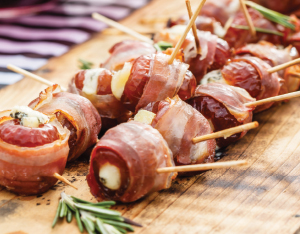
Bacon-Wrapped Dates Stuffed with Blue Cheese
(Pairs well with ports, www.allrecipes.com)

Ingredients
1 pound thin-sliced bacon, cut in half
1 pound pitted dates
4 ounces blue cheese

Directions
Preheat oven to 375 degrees. Slice dates in half and stuff with blue cheese. Wrap a half-slice of bacon around each stuffed date. Secure with toothpick. Arrange dates on rack in baking dish. Bake 30 to 40 minutes, turning halfway, until bacon is crispy.


Whisky Mac
Ingredients
2 shots whisky or bourbon
1 shot ginger wine
Ice

Directions
Mix ingredients, stir, enjoy.


Cocoa with a Kick

A Spicy Twist on the Typical Hot Chocolate

When it’s too late for coffee and not the right time for tea, a steaming cup of hot chocolate is the perfect way to spend the evening when the weather turns cold. But don’t settle for the powder-in-a-pouch stuff you keep in your pantry all year long. Check out this recipe that’s a grown up version of this childhood favorite.

Mexican Hot Chocolate With Peppermint Marshmallow Creme
Yield: 2 Servings
Total Time: 30 Mins
Active Time: 15 Mins

Ingredients
Peppermint
Marshmallow Creme
2 egg whites
1/8 cup sugar
1/8 tsp peppermint extract
Mexican Hot Chocolate
2 cups milk
2 tbsp brown sugar
4 oz bittersweet chocolate, chopped, reserve shavings to garnish
1/8 tsp nutmeg
1/4 tsp cinnamon
dash of cayenne pepper
1/2 tsp vanilla extract

Directions
Make peppermint marshmallow creme. In a stand mixer, add egg whites to the bowl. With a whip attachment, whip on high speed until frothy. Slowly add sugar, and whip until medium peaks form. Lower to medium speed, and add peppermint extract. Increase to high speed, and whip until you have dense, stiff peaks. Set aside in refrigerator.

In a saucepan on medium heat, add milk and brown sugar. Whisk until brown sugar is dissolved. Add remainder of ingredients and whisk until chocolate is completely melted. Allow to simmer for about 6–8 minutes for the spices to steep. Ladle into two mugs, then spoon dollops of marshmallow creme over top. Sprinkle chocolate shavings over top and serve immediately.


Recipe by Anne Leonard


Brunswick Stew: Georgia claims it, but Virginia owns it!

They say imitation is the sincerest form of flattery. If that’s the case then the state of Georgia really likes us here in Virginia.

It’s been an on-going debate since the first squirrel was skinned: did the rich, savory, comforting bowl of goodness known as Brunswick stew originate there—or here? Spoiler alert: it was here.

Tradition says that in 1828, while on a hunting expedition with Dr. Creed Haskins and several others, African-American cook “Uncle” Jimmy Matthews concocted a thick, rich stew of squirrel, slow-simmered in a large iron pot with butter, onions, bread and seasonings.

It was a hit, according to legend, and today is open to interpretation and inspiration as ingredients go. Rabbit and squirrel were once the primary components, while today chicken and pork are used. Most Brunswick stews are tomato-based and augment an animal protein with lima beans, corn, potatoes and even okra.

The result is a rich, thick, hearty stew with complex and complementary flavors ranging from savory to sweet to smoky. Make a big pot; the leftovers taste even better as the ingredients mesh and meld and become more unified. Cornbread is the quintessential accompaniment.

Make it at home (my recipe is below), enjoy it at a local restaurant (see “Dishing it Up” on page 97) or celebrate it at the annual Taste of Brunswick Festival (this year on Oct. 8; www.TasteOfBrunswickFestival.com) up the road in Brunswick County.

As for Georgia, the town there put up a display of a big cast iron pot and a plaque saying their stew was first cooked in 1898—some 70 years after Virginia’s first bowl was served. Goober state: claim denied.


Brunswick Stew Recipe

From my cookbook Dishing Up Virginia

CHICKEN INGREDIENTS
1 large (4–5 pound) boiler chicken
1 large onion, unpeeled and quartered
3 carrots, unpeeled and quartered
3 celery stalks, quartered
2 garlic cloves, unpeeled and crushed
1 small bunch fresh Italian parsley
1 bay leaf
1 tablespoon whole black peppercorns
1 teaspoon sea salt

STEW INGREDIENTS
4–6 slices thick-cut bacon, chopped
3 pounds new potatoes, quartered
2 medium onions, chopped
3 tablespoons tomato paste
6 cups crushed tomatoes, stewed or canned
2 cups prepared lima beans
2 cups corn kernels
1 tablespoon sugar
1⁄2 teaspoon salt
1⁄4 teaspoon freshly ground black pepper
1⁄4 teaspoon ground red pepper
4 tablespoons butter

METHOD
1. Make the chicken. Place the chicken in a large stockpot and cover with water.
Add the onion, carrots, celery, garlic, parsley, bay leaf, peppercorns and sea salt.
Cover the pot and bring the liquid to a boil, then reduce the heat to a slow boil and cook until the chicken is tender and the meat is falling off the bone, 45 to 90 minutes.

2. Remove the pot from the heat and allow to sit for 10 to 15 minutes. Transfer the chicken to a plate or cutting board to cool; do not discard the broth. Debone the chicken and shred or chop the meat. Strain the broth; cool, and skim off the fat.

3. Make the stew. Cook the bacon, stirring frequently, in a
large stockpot over high heat until cooked. Add 4 cups of the reserved chicken broth to the stockpot. (If you don’t have
4 full cups, use additional chicken or vegetable stock, or water to make up the difference) Add the potatoes and onion, and bring to a boil. Continue boiling until the potatoes begin to soften, about 10 minutes.

4. Stir in the tomato paste. Add the reserved chicken. Reduce to a simmer and add the tomatoes, lima beans, corn, sugar, salt, black pepper and red pepper. Stir well and simmer, uncovered, for about 1 hour, stirring occasionally. Add additional broth or water if needed, but stew should be thick.

5. Remove the stew from the heat. Stir in the butter until it melts and serve immediately.

Yields 8-12 servings


By Patrick Evans-Hylton


Berried Treasure

Somehow, it just isn’t spring until we eat our fill of ripe, red, sinfully delicious strawberries.

Throughout the season, folks can either pick their own berries or grab a pint (or two, or six) and go.

One of my favorite ways to enjoy strawberries is in a salsa, which is great with chips, atop seafood (try it on crab cakes!), on chicken breasts grilled out on the barbecue or atop small, pre-baked pizza crusts.


Strawberry Salsa
INGREDIENTS
1 pint fresh strawberries
1 medium avocado
1 medium mango
1 lime
2 plum tomatoes
1 jalapeño
2 garlic cloves
1 tablespoon extra virgin olive oil
Coarse sea salt, to taste

METHOD

Cap, hull and dice one pint of fresh strawberries. Pit and dice one medium avocado. Pit and dice one medium mango.

Add to a medium bowl and toss with the juice of one freshly-squeezed lime.

Add the two seeded and chopped plum tomatoes, one seeded and minced jalapeño, two cloves of minced garlic, 1 tablespoon extra virgin olive oil and a sprinkling of coarse sea salt.

Toss to mix and coat, cover and refrigerate for two hours before serving.


By Patrick Evans-Hylton


Recipe Restoration

Reclaiming Virginia’s delicious dishes

Throughout its history, Virginia has been a leading tastemaker in food and foodways. Our Commonwealth is rich in ingredients and hospitality, and our recipes tell not just the story of the state, but the story of our people.

From the first roasted oysters eaten by English colonists in 1607 to current day dishes, these are the things that make us who we are. Nourishing our bodies and souls, they connect us like an edible time machine to our collective past.

Recipe Restoration is an ongoing look at these recipes, and you are encouraged to share some of your favorites from your family’s heritage. Perhaps it was a casserole your mother made or a pound cake perfected by your grandmother. Maybe it was fried chicken from an aunt or scuppernong wine made by a cousin. Share the recipes and the stories behind them with us!

Here are a few recipes to get things started from my book, Dishing Up Virginia:

Ramp & Mushroom Strata

(Pictured Above) Each spring, ramps (a type of wild leek) grow nearby. These pungent greens are foraged wild and provide a strong garlic-and-onion flavor in dishes. Here, that taste is tempered in a classic custard dish with eggs, milk, and cheese, and accented with the early addition of mushrooms and a sweet onion like Vidalia.

Ingredients

6–8 ramps, trimmed
2 tablespoons extra-virgin olive oil
1 pound mushrooms, chopped
1⁄2 sweet onion, such as Vidalia, diced
Nonstick cooking spray
12 slices white bread, cubed
1 pound Swiss cheese, shredded (3–4 cups)
8 eggs
4 cups whole milk
1 teaspoon dry mustard
1 teaspoon salt
1⁄2 teaspoon cayenne pepper
1⁄2 teaspoon freshly ground black pepper
3 tablespoons butter

Method
Bring a medium-sized pot of water to a boil and prepare an ice-water bath. Drop the ramps in the boiling water for about 1 minute, then plunge quickly in the ice-water bath to stop cooking and set the color.

Remove from the bath, pat dry and roughly chop.

Heat the olive oil in a large skillet over medium heat. Stir in the mushrooms and cook for about 20 minutes or until tender. Transfer the mushrooms to a medium bowl with a slotted spoon and set aside. Add the onion to the skillet and cook for 5 minutes longer. Add the ramps, cook for 5 minutes longer, and drain. Combine the mushrooms, ramps and onions in the bowl.

Lightly coat a 9- by 13-inch pan with nonstick cooking spray and evenly distribute the bread cubes into the pan. Top with the “mushroom-onion-ramp” mixture and then the cheese.

Whisk the eggs, milk, dry mustard, salt, cayenne and black pepper together in a medium bowl. Pour the egg mixture on top of the bread and cheese. Dot the top of the strata with the butter, cover and refrigerate at least 8 hours or overnight. Remove the strata from the refrigerator, uncover, and allow to sit at least 30 minutes before baking.

Bake the strata for about 1 hour or until the top is bubbly and golden brown and a knife inserted in the center comes out clean. Allow to stand about 10 minutes before serving.

Makes 8 servings.


pan-fried-trout

Pan-Fried Trout With Honey-Pecan Butter

It’s not just the Atlantic Ocean and Chesapeake Bay that provide Virginia with delicious fish. Streams, lakes and ponds yield a variety of catches as well, including trout. In Virginia, there is brook, brown and rainbow trout, all tasty in their own ways, especially prepared simply like this.

Honey-Pecan Butter Ingredients
1⁄2 cup (1 stick) butter, softened
1 tablespoon honey
1 teaspoon ground cinnamon
1⁄8 teaspoon ground cloves
1⁄8 teaspoon freshly cracked black pepper
1⁄8 teaspoon salt
1⁄4 cup pecans, toasted and finely chopped
Pan-Fried Trout Ingredients
1⁄2 cup all-purpose flour
1⁄2 cup cornmeal
1 teaspoon salt
1 teaspoon freshly ground black pepper
1⁄4 teaspoon garlic powder
1⁄4 teaspoon dried thyme
1⁄8 teaspoon cayenne pepper
4 whole trout, dressed
3 tablespoons canola oil
1 tablespoon butter
4 fresh thyme sprigs

Method
Make the butter. Combine the butter, honey, cinnamon, cloves, black pepper and salt in a small bowl. Fold in the pecans, incorporating thoroughly. Shape the mixture into a log on a piece of wax paper, roll tightly, and refrigerate at least 2 hours.

Prepare the trout. Whisk the flour, cornmeal, salt, black pepper, garlic powder, thyme and cayenne together in a large, shallow bowl. Rinse the fish under cold water and lightly pat dry. Dredge both sides of each fish in the flour-cornmeal mixture.

Heat the canola oil and butter in a large skillet over medium heat until the butter melts. Carefully lay the fish in the skillet, cooking just 1 or 2 fish at a time so as not to overcrowd. Cook the fish, turning once, until golden and the flesh flakes, about 4 to 6 minutes. Cover cooked trout with a clean kitchen towel or place on an ovenproof plate in a slow oven to keep warm.

Slice the honey-pecan butter into 1⁄4-inch rounds. Divide the fish among four plates and place a pat of butter atop each piece of fish. (Reserve the remaining butter for another use.) Garnish each serving with a thyme sprig and serve immediately.

Note: Pan-frying is a traditional way of cooking trout. For this recipe, you need to gut the fish and remove the scales and gills but leave the head and tail intact.


macaroni-pie

A Pie Called Macaroni

While abroad in Italy, Thomas Jefferson tried a dish unknown to him—macaroni—and was smitten. He shipped a pasta machine back to Virginia and began serving it to guests.

Congressman Manasseh Cutler of Massachusetts wrote this of the dinner he attended at the White House on February 6, 1802: “Dined at the President’s—Rice soup, round of beef, turkey, mutton, ham, loin of veal, cutlets of mutton or veal, fried eggs, fried beef, a pie called macaroni.”

Here’s our take on a classic recipe from Mary Randolph’s 1824 The Virginia Housewife cookbook:

Macaroni Ingredients
1 1⁄2 tablespoons plus 1 1⁄2 teaspoons salt
1⁄4 teaspoon freshly ground black pepper
1⁄4 teaspoon red pepper flakes
1⁄4 teaspoon freshly ground nutmeg
2 cups elbow macaroni
2 cups milk
2 tablespoons butter
2 tablespoons flour
1 teaspoon Dijon mustard
5 1⁄2 ounces sharp cheddar cheese, shredded (about 1 1⁄2 cups)

Topping Ingredients
3 tablespoons butter
1 cup fine breadcrumbs
1⁄2 cup grated Parmesan cheese

Method
Make the macaroni. Preheat the oven to 350°F. Butter a 2-quart baking dish and set aside.

Combine 1 1⁄2 teaspoons of the salt, the black pepper, pepper flakes and nutmeg in a small bowl. Set aside.

Bring 4 quarts of water to a boil in a large stockpot over medium-high heat and add the remaining salt. Add the pasta and stir. Cook, stirring frequently, until the pasta is al dente, 7 to 11 minutes.

Remove the stockpot from the heat, add 1 cup cold water, and stir. Drain the pasta well in a colander and rinse lightly under warm water. Shake dry, transfer the pasta to a large bowl, and set aside.

Heat the milk in a small saucepan over medium heat until warm. Meanwhile melt the butter in a large skillet over medium heat. Whisk the flour into the butter, stirring until blended and smooth, about 1 minute. Gradually pour the milk into the butter-flour mixture, whisking constantly until the mixture thickens, 5 to 6 minutes.

Whisk in the reserved spice mix and Dijon mustard. Add the cheese and stir until melted and smooth. Pour the sauce over the pasta, stirring to coat, and transfer to the prepared baking dish.
Make the topping. Heat the butter in a medium skillet over medium- high heat until melted.

Add the breadcrumbs, and toss to coat. Remove from the heat, and stir in the Parmesan.

Evenly sprinkle the topping on the pasta. Bake for 25 to 30 minutes or until the top is bubbly and golden.

Makes 4-6 servings.


By Patrick Evans-Hylton


Give Peas A Chance

A look at one of Mr. Jefferson’s favorite vegetables

It’s spring, and all sorts of good things are beginning to pop up at area farmers markets. That includes peas, which, by all accounts, was one of Thomas Jefferson’s favorite vegetables. At Monticello, he grew 19 varieties!

Each spring, the president held a competition with area gentlemen farmers to see who could produce the first pea of the season with a dinner to follow featuring the legume.

This dish, Garden Pea Pilaf with Mint-Basil Chimichurri (from my book, Dishing Up Virginia), would have made a great dish for that meal.

Remember, fresh peas taste best, though peas that have been quickly frozen while still fresh are a good substitute.


Garden Pea Pilaf Recipe

with Mint-Basil Chimichurri

Mint-Basil Chimichurri Ingredients
2 cups fresh mint
1 cup fresh basil
1 cup fresh Italian parsley
2 garlic cloves
1⁄3 cup distilled white vinegar
1⁄2 cup extra-virgin olive oil
1⁄2 teaspoon salt
1⁄2 teaspoon freshly ground black pepper
1⁄4 teaspoon red pepper flakes
Garden Pea Pilaf Ingredients
2 tablespoons butter
1⁄2 medium white onion, finely chopped
2 garlic cloves, minced
1 cup long grain white rice
1⁄4 teaspoon dry mustard
1⁄4 teaspoon turmeric
2 cups chicken broth
3⁄4 cup shelled peas, preferably fresh
1 teaspoon salt
1⁄4 cup pine nuts, toasted

Method
Make the chimichurri. Pulse the mint, basil, parsley and garlic in the bowl of a food processor fitted with the steel blade attachment. Drizzle in the vinegar then the olive oil with the motor running and continue processing until the herbs are finely chopped.
Add the salt, black pepper, and pepper flakes, and pulse until combined.

Prepare the pilaf. Heat the butter in a large skillet over medium-low heat until melted. Add the onion and cook, stirring frequently, until soft and translucent, 2 to 3 minutes. Add the garlic, and cook about 1 minute. Add the rice, mustard, and turmeric, and stir to coat, about 1 minute.

Add the chicken broth, increase the heat to high, and bring the mixture to a rapid boil. Reduce the heat to medium-low, cover, and simmer until the liquid is absorbed, and the rice is tender, 18 to 22 minutes.

When the rice is nearly done cooking, place the peas in a steamer basket set over a saucepan of boiling water. Cook the peas until they are bright green and crisp-tender, about 2 minutes.

Remove the rice from the heat and let stand, covered, for 3 to 5 minutes.
Fluff the rice with a fork, then stir in the peas and salt. Divide the pilaf among the plates. Sprinkle each serving with pine nuts and drizzle with chimichurri. Serve immediately.
Makes 4-6 servings.


Pick Some Peas

Looking for some fresh peas? Check out these area farmers markets and other green grocers in the region:

Lynchburg Community Market
1219 Main St., Lynchburg • (434) 455-4485
www.LynchburgCommunityMarket.com

Forest Farmers’ Market
15583 Forest Rd., Forest • (434) 665-5475
www.ForestFarmersMarket.com


By Patrick Evans-Hylton