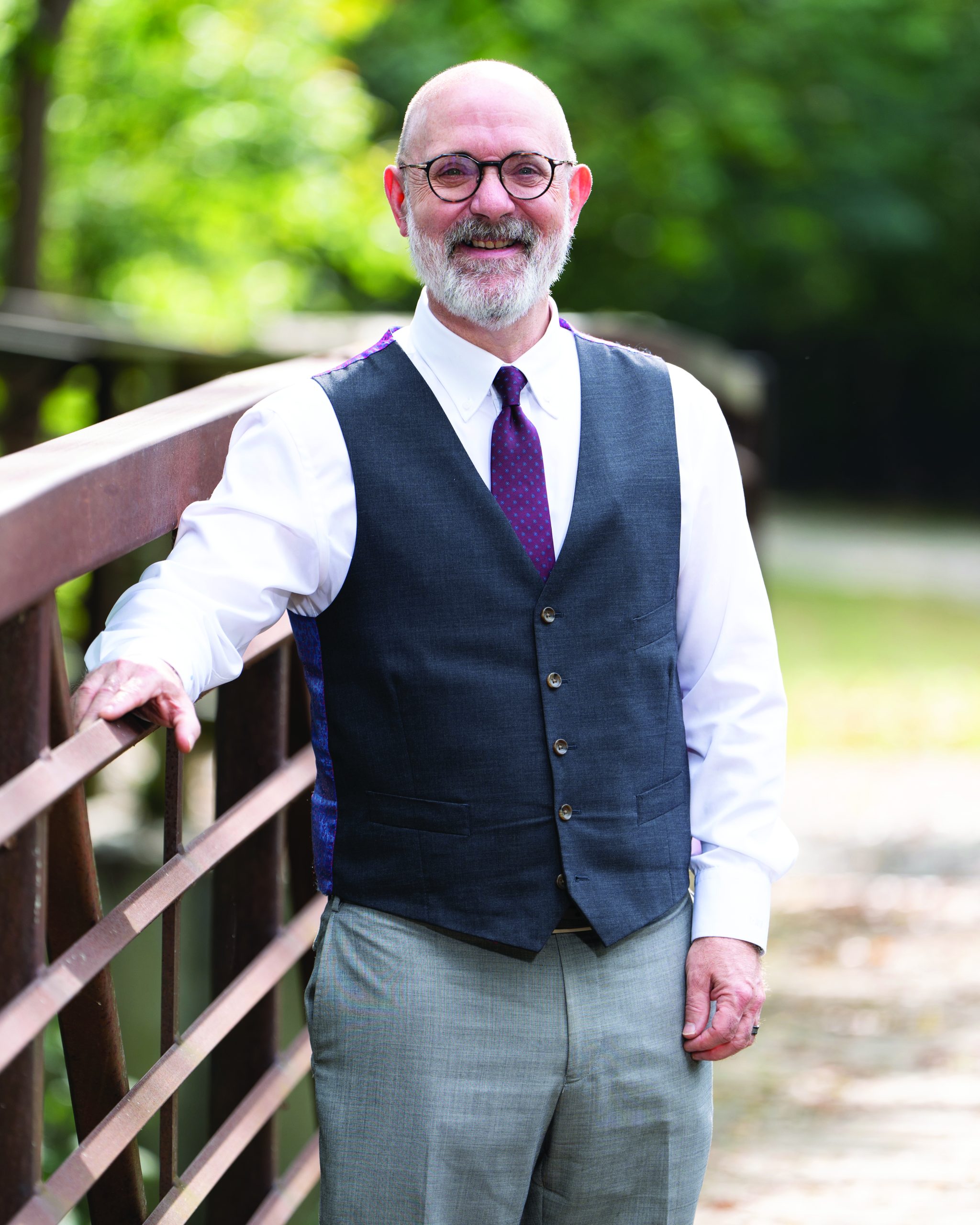
2026 Lynchburg Dental Guide

Not sure where to go for your oral health or dental treatments in the Lynchburg area?

Look no further than the experts referenced in our Area Dental Guide. From braces for your kids to the dental professionals you want in your corner when there’s an issue, we have you covered.


Farm-Fresh & Friendly

Rivermont Farmers Market Offers Organic Products and Opportunities for Connection

By: Olivia Carter | Photos By: Ashlee Glen

When Brian Ray first floated the idea of creating a neighborhood farmers market in Rivermont, he wasn’t necessarily planning to be the one running it.
Today, that idea is known as the Rivermont Farmers Market, which brings together local farmers, bakers, artisans, food vendors, and neighbors on Wednesday evenings at Riverside Park.

And though it’s a place to purchase food each week, it’s also become a tradition for area families.

Ray, owner of Slowpoke Sourdough, said it all started when he noticed there wasn’t a farmers market serving the Rivermont neighborhood.

“We started floating around the idea of a Wednesday market in Rivermont,” he said.

“We really wanted this one to be focused around farms and food and community—similar to the Forest Farmers Market.”

Finding the right location was the first challenge. Ray approached First Christian Church after seeing its large parking lot and central location along Rivermont Avenue.

Rivermont Farmers Market

“The church community was really on board with the market,” he said. “They were huge supporters.”

The inaugural market opened there on May 6, but the celebration was short-lived.

The following day, organizers received a call from zoning after someone filed a complaint about the event.

Rather than create uncertainty for vendors, Ray and his team paused operations while they searched for another location.

“We knew we wanted to stay in Rivermont,” he said. “We’re not trying to compete with other farmers markets. We wanted it to be really community-oriented. It’s where we live.”

That search led them to Riverside Park, where the market resumed on May 27. Although the move meant losing some of the visibility that came from being directly on Rivermont Avenue, it also created new opportunities.

“The advantage to First Christian was that we were right there on the road,” Ray said. “With Riverside Park, we’re positioned around the swing set, there’s a caterpillar sculpture the kids love to climb on, and tons of families are coming out. The vibes are the same.”

The biggest challenge now is making sure people know it’s there.
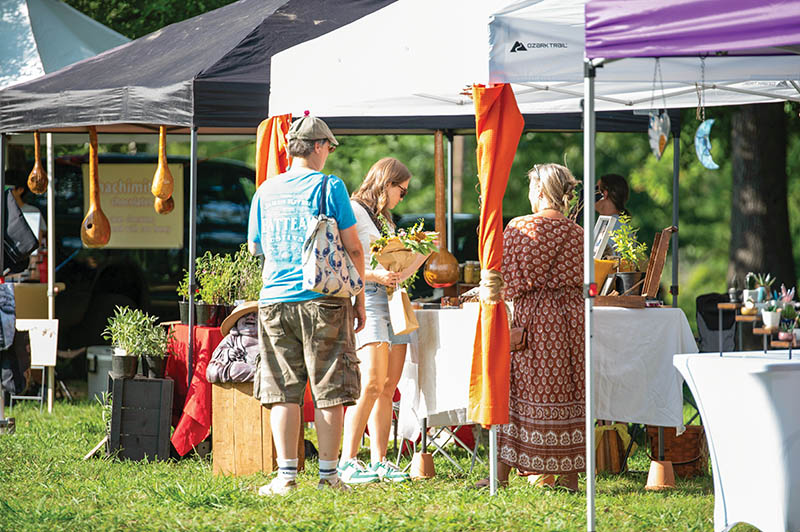
Rivermont Farmers Market

“We hear from people every week, ‘I didn’t even know this was here,’” Ray said. “‘My friend or my neighbor told me about it.’ Word of mouth is huge.”

Visitors who make the trip will find a market centered on locally-grown food and locally-made products. Vendors include Great Day Gardens from Forest, SoulShine Farms from Bedford, and Restoration Acres from Big Island, along with bakers, beekeepers, potters, artists, and prepared food vendors.

Ray said one of the market’s priorities has been creating a true producer-focused experience.

“You can’t really have a farmers market without farmers,” he said.

Current offerings include fresh vegetables, fruit, eggs, honey, baked goods, meats, and artisan products. Restoration Acres also operates a convenient farm truck where customers can place orders online and pick them up through a drive-through service during the market.

New vendors continue to add variety. One chocolatier travels to Ecuador to source cacao beans before sweetening his chocolate with raw honey. A local apiary offers honey tastings that allow visitors to sample the distinct flavors created by bees pollinating different plants. Food options range from barbecue to smash burgers.

As the market grows, Ray hopes to continue filling gaps by adding more local beef producers and eventually additional dairy vendors.

“It’s not even just about the food,” he said. “Obviously what we put in our bodies contributes to our well-being more than a lot of people know.”

Most of the participating farms use organic growing practices, even if they aren’t USDA-certified organic.

Rivermont Farmers Market

“When you buy chicken from Restoration Acres, it’s not being pumped full of antibiotics,” Ray said. “You’re going to get a cleaner product when you come to the farmers market.”

Supporting local agriculture also keeps dollars circulating within the community.

“When you’re shopping at a farmers market, you’re supporting a local economy,” he said. “I know all these people now. We’ve created relationships and friendships. I don’t mind spending maybe a dollar or two more because I want to support them.”

But perhaps the greatest benefit is something that’s increasingly difficult to find: genuine face-to-face connection.

At a grocery store, shoppers often rush through aisles, use self-checkout, and head home. At the farmers market, conversations happen naturally.


“You’re actually interacting with the people who are raising the chickens, growing the vegetables, your beekeepers, your bakers,” Ray said. “You can learn so much and you can also just get to know them.”

The atmosphere encourages visitors to slow down rather than hurry through another errand.

“Sometimes going to the grocery store feels like a drag,” Ray said. “Whereas with the market, it’s just fun.”

That slower pace has become even more meaningful in the years following the COVID-19 pandemic.

“I think people are starting to figure this out,” Ray said. “You hear a lot about the mental health epidemic and isolation, especially among younger people. Screens became more central to our lives.”

Rivermont Farmers Market

The market offers a simple antidote.

“You’re outside. You’re getting sunlight. You’re breathing fresh air. It’s a really good opportunity to disconnect,” Ray said.

“I have people tell me, ‘I saw my neighbor I haven’t seen in so long,’ and they caught up. You don’t really see people sitting around on their phones.”

Ray added that community gathering spaces like farmers markets have become increasingly important as traditional opportunities for connection have declined.

“Not everybody goes to church,” he said. “The market is a place where everybody can come together. Everybody’s got different beliefs, different backgrounds, and different ideas. That’s just part of life.”

Ray isn’t interested in rapid expansion of the market but does hope the market grows steadily and organically while maintaining the sense of community that inspired it.

“I’m trying not to grow the market too quickly,” he said. “The really cool thing is that a lot of our core vendors have already said, ‘You guys are doing this
next year, right?’”

Future goals include bringing in more farms, increasing attendance, partnering more closely with the Lynchburg Community Market on programs such as SNAP benefits, and eventually hiring someone to help manage operations.

“I really don’t like to take so much credit for this thing,” Ray said. “It doesn’t exist without all the cool things other people are doing. This is just about bringing everybody together.”



Digital Fatigue Is Real

Here’s How to Reset Your Attention Span

Somewhere along the way, many of us stopped doing just one thing at a time.

We watch television while scrolling social media, we answer emails during meetings, and we listen to podcasts while folding laundry, only to interrupt both when a text message appears. Even moments that were once naturally quiet—waiting in line, sitting in a doctor’s office, or standing on the sidelines during a soccer game—are now filled by the glow of a screen.

The result isn’t simply that we’re busier. Many of us have become mentally tired in a way that feels difficult to explain.

If you’ve ever picked up your phone to check the weather and found yourself reading restaurant reviews 15 minutes later, or discovered that reading a chapter of a book feels harder than it used to, you’re certainly not alone. More and more people describe feeling distracted, overstimulated, and mentally scattered despite spending much of the day sitting still.

Digital fatigue has become one of the defining experiences of modern life.

A Mind That Rarely Gets to Rest

Although digital fatigue isn’t an official medical diagnosis, it is a very real experience. The term generally describes the mental exhaustion that comes from spending much of the day interacting with screens while constantly processing notifications, emails, headlines, text messages, and social media updates.

Our brains evolved to focus on one meaningful task at a time. Modern technology, however, asks us to divide our attention into smaller and smaller pieces throughout the day.

Researchers have found that switching between tasks isn’t as effortless as it feels. Each interruption leaves behind what psychologists often refer to as “attention residue,” meaning part of your mind remains focused on the previous task even after you’ve moved on to something else. As those interruptions accumulate, concentrating becomes increasingly difficult.

Reading on Dock Ext GettyImages-1126748708

Technology itself isn’t the problem. Smartphones help us navigate unfamiliar places, stay connected with family and friends, and complete countless everyday tasks more efficiently. The challenge is that many of the apps we use every day are intentionally designed to capture and hold our attention for as long as possible. Infinite scrolling, autoplay videos, and personalized content all encourage us to keep looking just a little longer.

Over time, our brains begin to expect constant novelty, making slower activities like reading, gardening, crafting, or even enjoying a conversation feel more difficult than they once did.

Fortunately, attention is a skill that can be strengthened.

Let Yourself Be Bored Again

One of the simplest ways to begin rebuilding your attention span is by allowing yourself to experience moments of boredom.

For much of human history, waiting simply meant waiting.

People stared out the window, watched the world around them, or allowed their thoughts to wander. Today, many of us instinctively reach for our phones the moment a few seconds of silence appear.

Consider leaving your phone in your pocket while waiting for coffee or standing in the grocery line. Spend a few quiet minutes on the porch without listening to a podcast. Although these moments may initially feel uncomfortable, they give your brain an opportunity to slow down and recover from constant stimulation.

Make Mindless Scrolling Less Convenient

Most people don’t consciously decide to check their phones dozens of times each day. The habit often happens automatically.

Small changes to your environment can make a surprising difference. Charging your phone outside the bedroom, silencing nonessential notifications, or moving social media apps off your home screen creates just enough friction to interrupt habitual checking. Leaving your phone in another room while reading, eating dinner, or spending time with family can also help reinforce that your attention belongs where you intentionally place it.

Spend More Time Fully Absorbed

Digital fatigue often leaves us in a state of partial attention. We may be occupied for hours, but very little of that time feels deeply satisfying.

Activities that encourage sustained concentration can help restore that sense of mental immersion. Reading a physical book, tending a garden, baking bread, completing a puzzle, painting, woodworking, or taking a quiet walk all require a different kind of focus than scrolling through a feed.

Many people discover that after an hour spent creating, building, or exploring, they feel more mentally refreshed than they do after spending the same amount of time online.

Happy african american young woman lying in a hammock

Protect the Beginning and End of Your Day

The first and last moments of the day have an outsized influence on how we feel.

Instead of reaching for your phone immediately after waking up, consider spending the first 20 or 30 minutes reading, enjoying a cup of coffee, stretching, or simply sitting outside. Likewise, replacing the final few minutes of evening scrolling with a book, a journal, or conversation can help your mind gradually settle before sleep.

These routines do not have to be lengthy to be effective. Even small pockets of screen-free time create opportunities for your attention to recover.

Give One Thing Your Full Attention

For years, multitasking was celebrated as a valuable skill. Researchers now understand that what we call multitasking is usually rapid task-switching, and each switch places another demand on the brain.

Whenever possible, try completing one activity before moving to the next. If you’re eating lunch, allow yourself to simply enjoy the meal. If you’re reading to your child, focus entirely on the story.

If you’re having coffee with a friend, let the conversation hold your attention without checking your phone every few minutes.

These moments of undivided attention often feel restorative because they allow the mind to settle rather than constantly shifting from one stimulus to another.

Choosing Where Your Attention Belongs

Few people want to give up technology entirely, and there is no reason to. Digital tools have made many parts of life easier, richer, and more connected.

The goal is not to reject technology but to develop a healthier relationship with it. Rebuilding your attention span rarely requires a dramatic digital detox. More often, it happens through dozens of small decisions that gradually teach your brain how to focus again.

Our attention is one of our most valuable resources. In a world where so many things compete for it, protecting that attention is one of the simplest—and most meaningful—ways to care for our overall well-being.


Let The Ride Begin

Hill City native shares his passion for bringing the community together through biking.

By: Megan L. Horst  |  Photos By: Ashlee Glen

For Jeremy Ramsey, owner of The Bike Porch, opening the shop was a part of a larger dream. A dream to provide people with a way to connect through enjoying nature and bikes. He hopes the shop gives people an opportunity and a place to come together to ride bikes and learn about bikes. Before he opened the shop, he enjoyed riding bikes himself and started several community ride events that have brought riders together over the past five years.  

“It’s definitely a passion to share what I love,” Ramsey said. 

The shop, located on Burnbridge Road in Forest, also sponsors several rides from the store throughout the week. Although the shop is less than a year old, Ramsey said bikes are not new to him or his team. 

“I have one guy [on staff] who was at a previous bike shop for 49 years, and we worked together,” Ramsey said. “I used to manage another bike shop for nine years.” 

They have two other mechanics who are also knowledgeable about bikes and have 20 years of experience. 

“When you walk in our shop, you’re talking to a rider,” Ramsey said. “We all ride bikes—we’re all in love with bicycles.” 

Their shop offers a variety of services, including bike repair and the sale of new and used bikes. 

“Bikes have gotten expensive, just like everything else,” he said. “We want people to have quality bikes. So if you can have a bike that’s 10 years old, that’s way more quality than what you can pick up in a box store; we feel like you’ll have a better experience.” 

He hopes everyone who wants to ride will have that opportunity. Whether you buy a new, used, or consigned bike from them, he explained that they not only sell you a bike, but they also offer their expertise.

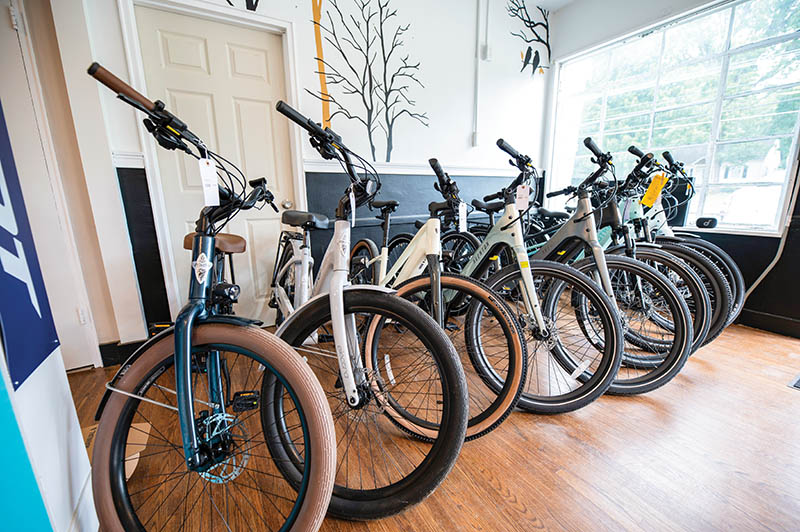
They sell a variety of bike styles from kids’ bikes to mountain bikes, road bikes, hybrid bikes, and electric bikes.

“In the last three years, the market has flipped with recreational bikes,” he said. “I would say seven out of 10 recreational bikes we sell are e-bikes.” He attributes this growing trend to the older population, largely due to retirees wanting to get back into riding bikes.

He explained that this is a great area with so many trails, perfect for biking, including Blackwater Creek, Percival’s Island in Lynchburg, and others in Roanoke and Farmville.

“A lot of folks are buying these e-bikes and going to check out these trails, and instead of being able to ride five miles now, they are having the same workout, but they’re being able to see the whole trail,” Ramsey said. An e-bike is equipped with an electric motor to assist the rider with pedaling.

“E-bikes are cool because you can get whatever you want,” Ramsey said. “There are different assist modes in them, so you can have zero assist and ride it normally…up to a turbo on them.” Ramsey is confident in the bikes the shop sells, even the used ones, and they offer a 90-day guarantee.
In addition to a wide selection of adult bikes, the shop also offers bikes for children.

“One of our number one goals is to get kids on bikes, and quality bikes,” Ramsey said. His concern with bikes purchased from major box stores is not only the quality of the materials used, but they are often not put together correctly.

“Bikes can be a lot of fun, but they can also be dangerous,” he said. “I always recommend, if you buy a bike from a box store, bring it in, let us check it out.” Most of the kids’ bikes he sells are used, since kids outgrow their bikes so quickly.

“A lot of times I provide a bike that is more affordable than a box store bike, and higher quality,” Ramsey said. Driven by a passion for making bikes accessible to everyone, they created a Kids Bike Fund.

“In the past seven months, we’ve averaged giving away one bike per month,” he said. The giveaways are not always exclusively children’s bikes.

“During Christmas, we gave away two bikes,” he said. One bike was donated by a customer, and the other by Ramsey, allowing them to give bikes to two families for Christmas.

“It makes my day when we can put people on bikes,” Ramsey said. He believes that everyone needs to take a break from technology for at least an hour a day to “unplug” and enjoy exercise and
the outdoors.

“We want to create community,” he said. “We want people to want to ride bikes and hang out.”  

The Bike Store is open Tuesdays through Fridays from 10 a.m. to 6 p.m. and Saturdays from 10 a.m. to 5 p.m.


Inspiration, Perspiration, and Transformation

Four women took control of their health and happiness by getting a gastric sleeve or bypass surgery. These surgeries kickstarted lifestyle adjustments that have enabled each woman to live her best life. 

Written by Stacey Manganelli / Photos courtesy of Adriana Sorenson

Opting for Surgery

Elizabeth Kiefer, Kristen Guthrie, Katie Kelley, and Adriana Sorensen struggled with their weight for multiple reasons: pregnancies that came close together, food addiction, or an inability to incorporate exercise into daily life.

After trying tons of weight loss programs and pharmaceutical-strength pills and shots, they pursued weight loss surgery at between 300 and 350 pounds. They were nervous for surgery, but also excited and hopeful that it would be the thing that finally worked. 

The Myth of the Quick Fix

Weight loss surgery requires profound lifestyle changes. Even when surgery goes optimally, it takes a physical and psychological toll on surgical patients. Recovery and adapting to the new body present myriad challenges. 

Elizabeth Kiefer has consequently felt frustrated over the years that people view weight loss surgery as an “easy way out.” After surgery, she struggled with transitioning from eating a regular-sized meal to one the size of an egg. She also had to learn how to incorporate exercise into her daily life. 

Katie Kelley got so sick in post-op that she spent three additional nights in the hospital. Even once she was discharged and finally went home, she couldn’t pick her three small children up or do daily activities, and she didn’t have a support network. 

Both she and Sorensen also struggled with feeling overweight even when they weren’t anymore, a condition known as dysmorphia. 

Guthrie drank mostly protein shakes and water for six weeks before and after her surgery and had to train herself to stop eating before she felt full. She also experienced temporary but intense changes in hormones caused by rapid weight loss. 

No one had it easy. However, after surviving a period of disillusionment, and in Kelley’s case even “immediate regret,” they have made it through to the other side. 

Health and Career Benefits

Prior to surgery, Kiefer was unable to get herself up off the floor independently. After losing 200 pounds, she started incorporating more movement into her daily routine than she ever thought she’d be capable of. 

To get into shape, she started Zumba and was immediately hooked, transported by the music and movement. After honing her skills for a few years, she got certified to teach. She eventually took over teaching the very same class in which she started as a student. She said, “I never thought I’d be able to enjoy exercising, let alone become a fitness instructor. Now I can’t go a day without working out!”

Kelley said that her health would be worse if not for the surgery. It has healed her heart condition, prediabetes, and Polyendocrine Metabolic Ovarian Syndrome.

For Sorensen, the changes after surgery felt like a “complete 180.” She learned how important protein is in losing weight, started looking more closely at what is actually in food, and cut out processed foods over time. 

She will likely need a knee replacement at some point, but losing 150 pounds has greatly reduced her knee strain. Her doctor believes she’ll be able to push the surgery off for several more years as a result. 

Guthrie once “despised” her body, but after her weight loss, she wore a bikini for the first time since she was a teenager and had boudoir pictures taken. 

Her newfound confidence even helped her launch a new career. She said, “I landed an amazing job in medical device sales that I never would have had the confidence to even apply for before surgery.” 

Helping Others

These women have turned their transformations into a tool that supports not just them, but also others.

Dozens of people escape the daily grind for an hour each week when taking Kiefer’s Zumba classes. In a cortisol-fueled world, gym patrons forget their troubles and become immersed in the same music and movement that made Kiefer fall in love with this type of dance. They described Kiefer’s classes as “pure fun,” and Kiefer as “pouring her heart and soul” into her role as an instructor. 

Kelley and Sorensen are grateful that they’re able to more fully participate in their kids’ lives since losing weight. Kelley coaches her kids’ sports and provides better food options for them since she started eating healthier herself. 

Sorensen has a nonverbal 15-year-old autistic son. Because he will never live independently, Sorensen plans to be his caretaker for many more years. She needed to be healthier to care for him, and now she is. 

Sorensen’s daughter is also benefitting from her mom’s increased fitness level. She and Sorensen bonded by running a 4K together two years after her surgery—something Sorensen never thought would be possible.

In her job in medical device sales, Guthrie experiences the satisfaction of educating surgeons, doctors and hospital staff on new medical technologies. Thanks to her work, these technologies can get into the hands of those who need them and will benefit from them. 

Despite encountering different health challenges as a result of the surgery, the gastric bypass and gastric sleeve have opened up life possibilities far beyond what they once hoped for. 

Knowing how hard recovery was and how many challenges they would face, would they do it again?

“Absolutely,” they agreed.


2026 Top Docs of the Roanoke Valley & Greater Lynchburg

We’re excited to present this year’s Top Doctors, recognized by the colleagues who know their work best.

Through peer voting, this list highlights outstanding physicians across our region, reflecting the strength, depth, and collaboration of our local healthcare community. These professionals play a vital role in supporting the health and well-being of patients right here at home, and we’re proud to spotlight the incredible practitioners and partners who make high-quality care accessible in our area.

This list is meant as a guide and a starting point in your search for a physician. There are many reasons excellent doctors may not appear here, including hospital affiliations, recent moves, or specialties not captured in the survey. These results do not suggest you should change from a doctor with whom you have a positive relationship. When choosing a physician, consider all available resources, including recommendations from family and friends.

Methodology & Disclaimers

Summary.
DataJoe Research is a software and research company specializing in data collection and verification, and conducts various nominations across the United States on behalf of publishers. To create the “top doctors” list, DataJoe Research facilitated an online peer-nomination process, also referencing government sources. In addition, DataJoe often conducts media analysis through Internet research to factor in public perception. DataJoe then tallied the nominations per category for each doctor to isolate the top nominees in each category. After collecting nominations and factoring additional information from the media analysis, DataJoe checked and confirmed that each published winner had a current, active license status with the state regulatory board. If we were not able to find evidence of a doctor’s current, active registration with the state regulatory board, that doctor was excluded from the list. In addition, any doctor who has been disciplined, up to the time-frame of our review process for an infraction by the state regulatory board, was excluded from the list. Finally, DataJoe presented the tallied result to the magazine staff for final review and adjustments.  

Final note.
We recognize that there are many good doctors who are not shown in this representative list. This is only a sampling of the huge array of talented professionals within the region. Inclusion in the list is based on the opinions of responding doctors in the region and the results of our research campaign. We take time and energy to ensure fair voting, although we understand that the results of this survey nomination are not an objective metric. We certainly do not discount the fact that many, many good and effective doctors may not appear on the list.

Disclaimers.
DataJoe uses best practices and exercises great care in assembling content for this list. DataJoe does not warrant that the data contained within the list are complete or accurate. DataJoe does not assume, and hereby disclaims, any liability to any person for any loss or damage caused by errors or omissions herein whether such errors or omissions result from negligence, accident, or any other cause. All rights reserved. No commercial use of the information in this list may be made without written permission from DataJoe.

Questions?
For research/methodology questions, contact the research team at surveys@datajoe.com.


Medical Professional Profiles

This special section features local medical practices and providers who are helping shape the delivery of care across our region.

SPONSORED CONTENT

Representing a range of specialties, these professionals are part of a broader network committed to access, innovation, and patient-focused care close to home. Through their work, these practices contribute to the strength of our local healthcare landscape—offering services, expertise, and resources that support individuals and families throughout every stage of care.


7 Ways Parents Can Help Prevent Teen Drinking and Driving This Summer

June is National Safety Month—Here’s How You Can Help Keep Your Teen Safe

By: Lauren Edwards, Community Outreach Coordinator at Virginia Recovery Centers

June is National Safety Month, making it the perfect time for families to talk about habits and behaviors that can impact safety both on and off the road. While conversations often focus on topics like seat belts, distracted driving, and road safety, drinking and driving remains one of the most serious risks facing teens. While parents can’t control every choice their teen makes, they can strongly influence attitudes, expectations, and behaviors around alcohol and driving.

As Community Outreach Coordinator at Virginia Recovery Centers (an alcohol and drug rehab in Virginia), I’ve seen how summer can be a particularly vulnerable time. School is out, schedules are more relaxed, and teens often have greater independence. Parties, vacations, and social gatherings can increase exposure to alcohol, raising the risk of poor decisions. With that in mind, here are ways parents can help reduce the risk of teen drinking and driving this summer.

Start the Conversation Early and Keep It Going

One of the biggest mistakes parents make is treating alcohol and driving as a one-time discussion. Effective communication happens through ongoing conversations that evolve as teens grow and encounter new situations. Rather than waiting until your teen is headed to a social gathering, look for opportunities to discuss the topic throughout the year. News stories, television shows, social media posts, and everyday experiences can all serve as natural conversation starters.

The goal isn’t to lecture, but rather to create an environment where your teen feels comfortable asking questions and sharing concerns. When communication is open, teens are more likely to seek guidance before making difficult decisions.

Discuss the Real Consequences of Drinking and Driving

Many teens understand that drinking and driving is dangerous, but they may underestimate the potential consequences. Talk openly about how alcohol affects judgment, reaction time, coordination, and decision-making. Explain that even small amounts of alcohol can impair driving ability, particularly for inexperienced drivers.

It’s also important to discuss the broader impact. A single poor decision can result in injuries, fatalities, legal consequences, financial burdens, and lasting emotional trauma for multiple families. Focusing on real-life outcomes often resonates more strongly than simply repeating rules.

Create a “No Questions Asked” Ride Home Policy

One of the most effective safety measures parents can implement is a “no questions asked” ride home policy. Let your teen know that they can call you for a ride at any time if they ever find themselves in an unsafe situation, whether they’ve been drinking, their driver has been drinking, or they simply feel uncomfortable.

Many teens hesitate to reach out because they fear punishment or disappointing their parents. Make it clear that getting home safely is always the priority. Any conversations about consequences can happen later. Knowing they have a reliable safety net can make it easier for teens to avoid dangerous choices in the moment.

Help Them Plan Ahead for Social Events

Good decisions are easier to make when they’re made before emotions, peer pressure, or alcohol enter the picture. Encourage your teen to think through transportation plans before attending parties, concerts, sporting events, or other gatherings. Ask questions such as: Who will be there? How are you getting there? Who is driving? How will you get home?

Having a plan reduces the likelihood of last-minute decisions that could compromise safety. It also reinforces the idea that responsible behavior starts before an event begins.

Teach Them How to Handle Peer Pressure

Even teens who understand the risks of drinking and driving can struggle when faced with social pressure. Talk about common scenarios they might encounter, such as being offered alcohol, riding with someone who has been drinking, or feeling pressured to stay at an event longer than planned. Help them practice responses they can use confidently, such as:

  • “I’m not getting in the car if you’ve been drinking.”
  • “My parents are expecting me home.”
  • “I’ll call for a ride instead.”

Role-playing these situations may feel awkward, but it can increase confidence and make it easier for teens to respond when faced with real-world pressure.

Set Clear Expectations and Boundaries

Teens benefit from knowing exactly where their parents stand on important issues. Clearly communicate your family’s expectations regarding alcohol use and driving. Discuss the rules, explain the reasoning behind them, and outline any consequences for breaking them. Research consistently shows that parental expectations influence teen behavior. Even when teens appear resistant, they often take their parents’ values into account when making decisions.

The key is consistency. Mixed messages can create confusion, while clear and predictable boundaries help establish trust and accountability.

Model Responsible Behavior Yourself

Parents are often more influential than they realize. Teens pay close attention to how adults handle alcohol, transportation, and decision-making. If you drink alcohol, demonstrate responsible behavior by never driving impaired and openly discussing how you plan for safe transportation. Use designated drivers, rideshare services, or alternative transportation when appropriate.

Modeling healthy decision-making sends a powerful message that safety is a priority, not just a rule for teenagers. Actions often speak louder than words, and teens are more likely to adopt behaviors they consistently observe at home.

Safety Starts With Communication

National Safety Month is a reminder that preventing tragedies starts with proactive conversations and thoughtful planning. While parents can’t eliminate every risk teens may face, they can provide the knowledge, confidence, and support needed to help them make safer choices. By maintaining open communication, setting clear expectations, and creating practical safety plans, families can reduce the risk of teen drinking and driving this summer.

Lauren Edwards is the Community Outreach Coordinator at Virginia Recovery Centers, a leading alcohol and drug rehab in Virginia. In her role, Lauren connects individuals and families with the center’s comprehensive addiction treatment programs, including outpatient care, medication-assisted treatment, and holistic therapies such as art and music therapy. She is dedicated to raising awareness about substance use disorders and providing compassionate support to those seeking lasting recovery, helping them navigate treatment options and access the resources they need to thrive.


Ask The Expert on Elder Law & Estate Planning

Sponsored Content

The Expert: Robert W. Haley | The Estate & Elder Law Center of Central Virginia, PLLC
Protecting Your Assets from Long-Term Care Costs

“You mean to tell me we don’t have to lose everything to pay for long-term care?”
Families facing long-term care decisions often share the same concern: how to secure quality care without losing everything they’ve worked for. The reality is, without proper planning, long-term care costs can quickly drain a lifetime of savings. But there are often more options available than people realize. Here are three of the most common questions:

1. “How will we pay for long-term care?”
The cost of long-term care can exceed $100,000 per year, making it one of the greatest financial risks families face. Many assume they must “spend down” their life savings, but that’s not always the case. With the right legal strategies, it may be possible to cover care costs while preserving a significant portion of your assets. Planning ahead offers the most protection, but even in crisis situations, options may still be available.

2. “When should we start planning to protect our assets?”
The best time to plan is long before care is needed. Many asset protection strategies involve a five-year look-back period, meaning early planning can make a significant difference in what you’re able to preserve.

It’s also never too early to start. Even younger families benefit from having basic estate planning in place, ensuring children are protected and decisions are clearly outlined if something unexpected happens. These plans aren’t permanent; they can and should be updated over time as your financial situation and goals evolve.

3. “How do we protect our assets while covering these costs?”
This is where experienced guidance makes the greatest difference. Without a plan, long-term care expenses can quickly deplete savings and put your home at risk. However, strategies such as asset protection trusts and other legal planning techniques may help preserve what you’ve worked so hard to build. The key is acting early and working with a professional who understands how to navigate these complex rules.

Planning ahead gives families more control, more options, and greater peace of mind. Even in urgent situations, there are often steps that can be taken to protect what matters most.

ABOUT THE EXPERT

Robert W. Haley is a Certified Elder Law Attorney (CELA) with nearly 30 years of experience helping families protect their assets from the high cost of long-term care. As managing attorney at The Estate & Elder Law Center of Central Virginia, PLLC, he focuses on asset protection strategies, elder law, and estate planning. Haley is the only attorney in the Lynchburg area to hold both the CELA designation and Certified Advanced Practitioner (CAP) credential, bringing a rare level of expertise to safeguarding what clients have worked a lifetime to build.

The Estate & Elder Law Center of Central Virginia, PLLC
810 Main Street, Lynchburg, VA 24504
(3rd Floor of the Truist Building)
(855) 608-0177
VaElderLaw.com
Location also in Danville, VA


Ask The Expert on Sports Medicine

Sponsored Content

The Expert: Ben Ferry, MD | Collaborative Health Sports Medicine

Do you have to be an athlete to see a sports medicine doctor?
No. While we do work with local teams and athletes, you don’t need to be an athlete to benefit from sports medicine. We evaluate and treat a wide range of musculoskeletal conditions across all ages and activity levels. Your “sport” might be gardening, walking, or staying active day-to-day — if pain is impacting your quality of life, seeing a sports medicine doctor may help.

What kinds of everyday aches and pains are commonly treated?
We treat both acute injuries and chronic conditions, with or without a clear cause. Common examples include knee pain from arthritis or meniscus issues, ankle sprains, and back pain from everyday activities like yardwork.

Additional conditions include: Patellar tendinitis (jumper’s knee), Rotator cuff tendinitis / shoulder bursitis, Hip tendinitis / bursitis, Osteoarthritis (hip, knee, shoulder), Hand and wrist conditions (trigger finger, carpal tunnel), Tennis elbow (lateral epicondylitis), and Concussions and post-concussion syndrome.

What treatment options are typically used?
We focus first on non-surgical care. This may include home exercise programs, physical therapy, bracing, and medications. In some cases, injections such as cortisone or steroid can reduce pain and inflammation to support recovery. We may also use regenerative medicine treatments like prolotherapy or platelet-rich plasma (PRP) to stimulate healing.

Diagnostics may include X-rays, ultrasound, or MRI. X-ray and ultrasound are available in-office to complement a thorough physical exam. MRIs are used when more detailed imaging is needed or when symptoms are not improving with conservative care.

“I’m not injured, but exercise causes pain. Can you help?”
Yes. We can identify the source of pain, assess movement patterns, and guide training adjustments. We also help patients safely return to activity while working toward their fitness goals and reducing injury risk.

“I think I have a concussion. Why see sports medicine?”
Concussions, a form of mild traumatic brain injury, are commonly treated in sports medicine and can result from everyday incidents like falls or car accidents. Symptoms may include headache, dizziness, and difficulty concentrating.

While many concussions improve with time, guided care is important. We take an active recovery approach, helping patients return to work, school, and daily life safely and efficiently, moving beyond the outdated advice of complete rest.

If you develop worsening symptoms — such as repeated vomiting, severe headache, confusion, weakness, seizure, or trouble waking — call 911 or go to the nearest emergency room immediately.

ABOUT THE EXPERT

Originally from Orlando, Dr. Ferry completed his undergraduate training at the University of Notre Dame. He then attended the University of South Florida SELECT program for medical school, which included training in both Tampa, FL and Allentown, PA and additional work in leadership development and emotional intelligence. He completed his residency training in Charleston, SC at the Medical University of South Carolina, where he trained in both an academic and community setting. He completed a sports medicine fellowship at Duke University, where he had the opportunity to work with athletes of a variety of levels.

He provides sideline coverage for the Liberty University Division I and club sports athletics teams and enjoys working with students and residents through his role with the Liberty University College of Medicine.

Collaborative Health
Sports Medicine
2321 Wards Road*
Lynchburg, VA 24502
*Will be relocating to the Collaborative Healthplex in May of 2026 – 800 Graves Mill Road, Lynchburg, VA 24502