Mini Golf, Big Benefits

Senior Putt-Putt League celebrates 15 years of fitness, fun and friendship on the green
Photos by Ashlee Glen

Lois Mason may be 91 years old, but she hasn’t let that keep her from enjoying two of her favorite things: “I love sports. Anything to do with a ball. I’m also an outside person.”

The Senior Putt-Putt League, a program of Lynchburg Parks and Recreation that’s run by two faithful community volunteers, lets her do both.

2021 marks 15 years since this spunky, close-knit group started meeting at the Putt-Putt Fun Center on Timberlake Road. It’s advertised for anyone 50 or older, but most participants are over the age of 65.

Willie Perry decided to form the league upon his retirement. He had previously worked with children in the Junior Putters of America organization for 23 years.

“So when I retired, I said I want to start working with these older kids,” he laughed.

The group meets every Monday morning from April through October and typically averages about 30 participants each time. They start at 10 a.m. but then shift the time to 9 a.m. when the summer heat settles in.

Putt-Putt Fun Center opens the facility up for the group to enjoy exclusively and offers a reduced rate to participants, which Perry says is important for seniors on fixed incomes.

“They also get outdoors, get some sun and some exercise,” he explained.

However, the most important benefit, he believes, is the socialization with other seniors.

“We have some who come just to be around other people. Some widows who have lost their husbands. It helps fill in some times of loneliness for them,” he said.

But that doesn’t mean the game isn’t taken seriously. There also are plenty of members who are slowly improving their putting scores and come to compete—including Mason, whose younger partner says the 91-year-old will sometimes ask for a do-over on a putt.

“She doesn’t respect her elders!” Mason joked.

The top ranking elder of the league is Gladys Cantrell. At 95 years old, she still makes her weekly putt-putt outing a priority. She also is a true champion off the course as well;
Cantrell contracted COVID-19 last year, was hospitalized, but managed to beat the virus and come back to join her beloved putt-putt group just as strong and spirited.

“Some days I’m better, other days I’m not,” she laughed. “But I love playing, I love all of the people. It’s just fun.”


Want to Join?
All you have to do is come to the Putt-Putt Fun Center on Timberlake Road and you can be a part of the fun! They meet every Monday at 9 a.m. during the summer months.


Losing It

Local woman says accountability and faith helped her shed 150 pounds

As Melody Hicks stood on the scale, the numbers flashed 299.8 pounds. It was at that moment she realized she needed to make a change.

“Once I saw that number, I realized I was done,” Hicks said. “At the time, I was working with kids and I broke my wrist trying to get off the floor. I realized that if I wanted to keep working with kids, I needed to do something about my weight.”

Hicks wasn’t sure where to start. Over the years she had tried programs, but nothing seemed to stick. But after her father offered to pay for a year of personal training, Hicks decided to look into finding someone to help her lose the weight for good.

“I had always made fun people that were into gym culture,” she said. “It’s kind of ironic now that I’m in that world, but I never understood why people wanted to go to the gym so much.”

Around this time, her brother Mark was working with local trainer Ben Crosswhite. Mark had already lost nearly 90 pounds himself. During his training sessions, Mark confided in Crosswhite about wanting to see his sister lose weight.

“I finally decided to reach out to Ben, and I was thinking, ‘Nothing is going to happen. He’s not even going to happen,’” Hicks said. “But he ended up emailing me back and said, ‘I’ve been waiting for this email for two years.’”

melody in the gym

For Hicks, the thought of working out was intimidating, especially for someone who considered walking down the street as her only form of exercise.

“I had played sports in middle school,” she said. “As I started to get bigger, I stopped. My father was a pastor and we moved around a lot so I saw food as a comfort. You know how some people can eat whatever they want and stay skinny? For me it was the complete opposite. I felt like if I ate a few cookies, I would gain two pounds.”
But Hicks powered through her fear and began training with Crosswhite.

“I remember day one like it was yesterday,” she said. “I did a few squats, battle rope, and walked on the treadmill. My body was about to get the shock of my lifetime. As I kept seeing my weight go down, I was more encouraged to keep going. I became accustomed to my new lifestyle and diet.”

By the end of the first week, Hicks lost eight pounds.

Then four. Then six. Each week, she saw progress and continued to gain confidence.

“I think what made me so comfortable around Ben is that he’s a faith-based trainer,” Hicks said. “God is my rock and my everything, I loved being able to train in that kind of environment.”

Within a year and a half, Melody lost 150 pounds.

“That’s unheard of,” she said. “But I had accountability. I kept a food journal where I was writing down everything I was eating and bringing it to my trainer to check off on.”

And now nearly six years later, Hicks has still kept the weight off.

“The next part of my journey is getting excess skin removal surgery,” she said. “Last year, I had my first surgery where they basically did a 360-degree cut all around my body. I had a year of recovery but removed the source of chronic pain I was having post–weight loss. I have come back stronger and am still seeing progress in my journey of a healthier me.”

Now, Hicks wants to encourage others with her story. So far she’s spoken at local churches about her weight loss journey, but she hopes to touch people all around the world. Hicks also now works at Crosswhite Athletic Club as an executive assistant.

“I continue to strive toward my best self: physically, emotionally, and spiritually,” Hicks said. “This has been the journey of a lifetime, my life change. I have fallen in love with exercise and eating healthy. I’ve also realized that God wants the very best for me and He was waiting for me to call out to Him and ask for His help.”


By Tobi Walsh
PHOTOS BY LUCAS MOORE


Fed Up With Allergies?

How an alternative treatment could offer relief

By Olivia Carter

Disclaimer: Always consult your doctor first before trying any new treatments or therapies.

For anyone who is tired of avoiding a food group or hibernating every spring, there may be relief found in the form of a small needle.

Deborah Farley, a licensed acupuncturist and Doctor of Oriental Medicine, says a specialized acupuncture treatment could be the answer to curing and treating allergies.
Acupuncture is the insertion of needles into the body that trigger chemical and electrical responses for healing purposes.

“We’re actually working with the body’s electrical system because you have an electromagnetic field where the acupuncture points are located,” Farley, who owns Acupuncture Works, LLC in Wyndhurst, said. “And when the needle hits that electromagnetic field, it creates an electrical response that stimulates all those chemical and electrical reactions for healing.”

Farley’s specialty is allergies, treating mainly for the alpha-gal allergy—an allergy to red meat brought on by a bite from the Lone Star tick.

The specialized procedure is called “Soliman Auricular Allergy Treatment,” or SAAT, and it isn’t taught in acupuncture schools or in China, Farley said.

The treatment uses the body’s electrical system to confirm that a client does indeed have alpha-gal or any other allergy. Not only can Farley use this procedure on people but also on cats and dogs. It’s the same treatment she uses on seasonal allergies as well.

“We use the body’s own electrical system to confirm the allergy, and then to help us confirm the location of where the needle is placed in the ear and then that needle is worn for three to five weeks,” she said.

After three to five weeks, Farley removes the needle and tests the client again to ensure the allergy has cleared.

“What we’re doing is we’re blocking the body’s signal to the allergen, and de-sensitizing the body to where it doesn’t respond to that allergen anymore,” she explained.
About a year ago Farley treated Rebecca Raybon, who struggled for 40 years with alpha-gal.

No doctor could figure out what caused her to wake up in the middle of the night covered in hives.

It would happen, and then maybe not happen again, for six months, she said.

“We did food diaries, etcetera, and could not narrow anything down,” she said. “I did allergy testing, but nothing was conclusive.”

A couple of years ago Raybon woke up with a swollen mouth and face and drove to the emergency room. The doctor suggested it might be alpha-gal and gave her an EpiPen to carry.
When Raybon decided to try acupuncture, Farley explained that the procedure wouldn’t necessarily get rid of the condition but would train her body not to respond to it when she ate red meat.

“I have had no hives or swelling since we did this last year, and I eat anything I like,” Raybon said. “I recommend her highly as a professional who makes sure you are educated on what she is doing and what to expect.”

Farley said she has treated more than 900 cases of alpha-gal and has seen a 100% success rate for those who have followed up with her.

“If they want to have mammal again they can. Many don’t but they don’t have to worry about cross-contamination anymore,” she said.

She has treated allergies for 20 years using regular acupuncture and has been able to help build up her clients’ immune systems again—but it would take 12 to 18 months with weekly treatments.

With SAAT she can do it in just three weeks.

“I had never heard of this technique until 2018, now I’m putting my entire practice into it,” Farley said. “It’s so much more effective, works better, and is cost-efficient.”


Homeopathy Mental Health

Using natural remedies to treat anxiety, depression

Disclaimer: Always consult your doctor first before stopping prescription medications and/or trying new treatments.

Kari Wagner realized the risk of opening a shop during a pandemic, particularly one that sold homeopathic remedies. Even so, she saw the need in the community, and could sense how the uncertainty and isolation of our current reality was causing more people to feel afraid, worried, anxious and overwhelmed.

“So many of these young people right now, especially with all the lockdowns and not being able to interact with friends, you can see the anxiety that they’re experiencing,” Wagner says. “There are so many unknowns right now.”
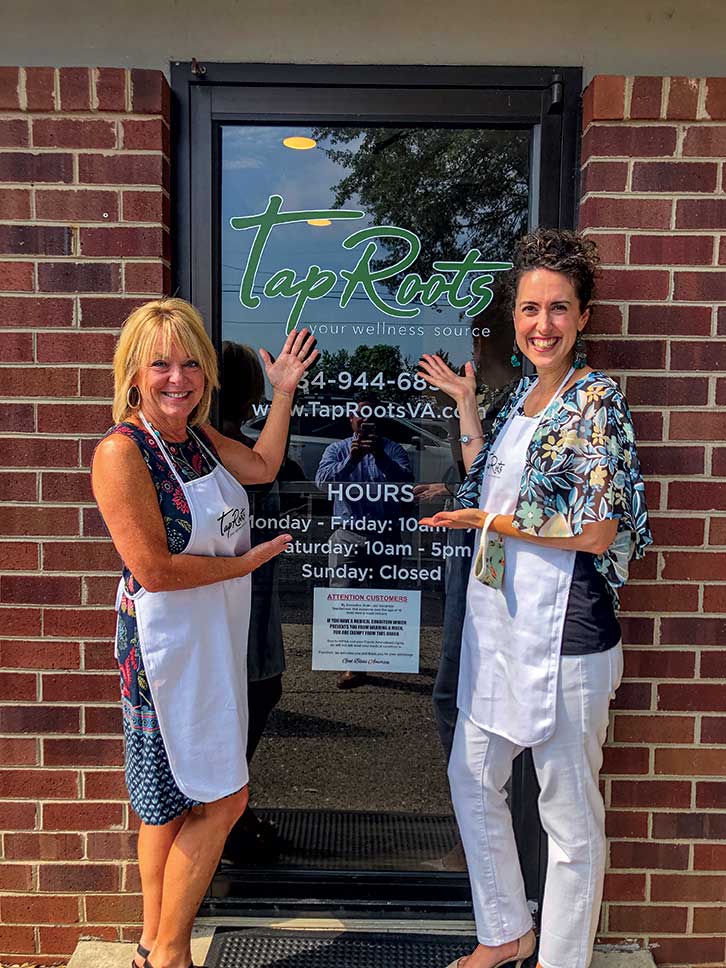
Kari Wagner owner tap roots
Against all odds, TapRoots was established, together with co-founders Carolyn Keeling and Dr. Keith Austin. With it, a wellspring of information and resources became available for Lynchburg residents who were looking for a more natural solution for their ailments.

Faced with the option of habit-forming, side effect–laden prescription medications, for many, homeopathic medicine is an attractive alternative.

What is homeopathy?
According to the National Center for Complementary and Integrative Health, homeopathy, also known as homeopathic medicine, is a medical system that was developed in Germany more than 200 years ago. It operates on two theories: “like cures like,” the concept that a disease can be alleviated by a substance that creates similar symptoms in healthy people, and the “law of minimum dose,” which surmises that the lower a medication dosage, the more effective it is.

“Homeopathy treats a person as a whole whereas a prescription medicine is going after that one symptom,” Wagner explains. “With homeopathy, all of the medicines are made from plants, minerals, some chemicals, things like that. But when they’re homeopathically prepared, they’re diluted to such a minute amount that there’s not even a molecule left of the original substance—in that little pill.”

For example, in order to treat poison ivy, the poison ivy plant is diluted and used to counteract the poison ivy in the bloodstream, Keeling explains.

At TapRoots, the owners stress that they maintain a network of medical doctors who practice integrated medicine to refer to their customers who may have acute symptoms that need more attention.

Dr. Kimberly Combs of Central Virginia Family Physicians often has patients who are concurrently taking homeopathic remedies for a variety of conditions. Dr. Combs says that she always checks to make sure whatever they are taking is not interfering with what she has prescribed. However, as a proponent of the benefits and uses of CBD (Cannabidiol), she feels it is only appropriate to remain open to the alternative treatments being presented to her.

“I always try to give them a chance. And I would say, you know, ‘What do you think?’ And [the patient says], ‘Well, I would like to try this.’ And I say, ‘Okay, so what do you think the benefits are?’” she says, adding that she and the patient make a decision together about whether the remedy is a good fit.

Dr. Combs says there are situations that necessitate a traditional physician. But since psychiatrists in particular stay so busy with higher risk patients, she understands why some try to circumvent the system with other methods.
“With homeopathy, there are no known interactions and the medicines have been around for over 200 years,” Wagner says. “So you would think if something was going on, we’d know about it right? So it’s safe, it’s effective, it’s affordable and it’s non-habit forming—it’s not a prescription med.”

How does homeopathy heal the mind?
Depression and anxiety are among the most sought after concerns Wagner and her team hear at their new store. They recently held a Facebook Live event featuring 20-year certified homeopath Melissa Crenshaw, who answered commonly asked questions about anxiety and depression treatments and gave some insight into how these remedies work in comparison to an antidepressant.

“A lot of people know about the gut-brain connection.
So, when the gut is damaged, oftentimes, the mind is unwell. Homeopathy can go in and heal the gut, which then helps the mind,” Crenshaw explained. “So, the antidepressants are a manmade chemical that goes in and changes the way you think. And yes, it can help you feel better.”

But she goes on to ask: “When you stop taking that antidepressant, what happens? You go right back. Homeopathy actually uproots the condition so that you don’t have to take the homeopathic medicines anymore.”

Crenshaw said she started using homeopathy because of her anxiety and depression. “I was on a medication,” she said. “And I liked it, it made me feel better. But when I learned that there was a better way that could actually uproot it that wouldn’t have long-term side effects, I wanted to give it a try. And it worked. And I haven’t looked back.”

What are the remedies for mental health issues?
Crenshaw says sepia is what changed her outlook on homeopathy 20 years ago, and highly recommends the remedy for both acute and chronic anxiety.

Wagner says they have a few other tried-and-true remedies they share with their customers: Aurum metallicum: For those who have an exaggerated sense of duty combined with feelings of guilt and anxiety about perceived failings. Treats severe depression and chronic insomnia.

Lycopodium: Can help those who lack confidence, feel intimidated by people they perceive as powerful, fear failure and experience intense, vivid fears.

Gelsemium: Relieves apprehension accompanied by weakness, trembling, dizziness, headaches and difficulty to focus. Often effective for people who feel inadequate.

Ignatia amara: Helps with grief or loss and mood swings.

Phosphorus: Thought to be good for social people with anxiety. When anxious or vexed, their thoughts get scattered and they have a difficult time focusing or getting things done.

With all of the available remedies to be had, homeopathy can be an overwhelming venture for those looking to dig in. But, Wagner says there are ways to safely and correctly find the appropriate remedy.

“You connect yourself with like-minded people, you find a doctor who’s open to integrative medicine, you plug into whether it’s online groups, or coming into a place like TapRoots,” she says. “And you share stories, you do your research.”

Keeling believes that homeopathy can be empowering. “There is a kind of power that you feel when you realize that you can come in, you can find the solution or the remedy, you’re not having all these copays, and you’re able to help self-diagnose, and self-treat. And you have these kind of incredible results.”


The Easiest Homemade Guacamole Recipe Ever

Need to whip up an easy, yet healthy, appetizer? This recipe is for you.

Avocados are an excellent source of healthy fats such as omega-3 fatty acids, which are beneficial to your brain and skin. They are also an excellent source of vitamins C, E, K and B-6, as well as folate, magnesium and potassium. Better yet? Homemade guacamole is a winter-friendly dish. Avocados are typically available year-round, thanks to the hard work of growers in Mexico and parts of South America.

Gluten Free
Paleo | Vegan

Ingredients:
3 avocados, peeled, pitted and diced—dicing gives it a chunkier texture
1 lime, juiced
1 teaspoon sea salt
1 large jalapeño, diced (seeds removed)
1/4 cup of fresh cilantro, chopped
1 teaspoon minced garlic
(or garlic powder)

Directions:

Mix the ingredients together in a bowl (yep, that’s it!) and enjoy with chips or over your favorite tacos or tortilla soup—but do so quickly, because it will go fast!


April Likins lives in Forest and is an Institute for Integrative Nutrition- and Duke Integrative Medicine-trained health coach. Learn more at aprillikins.com.


Central Virginia Fitness Bucket List

Recommendations for a range of fitness levels

Beginner
Sign up for your first 5K.

In a normal year, there is no shortage of race opportunities in Central Virginia, especially for those seeking a shorter distance such as a 5K. While the pandemic canceled many races or made them go virtual last year, we are hopeful that the 5K lineup will return to normal (or close to normal) at some point in 2021. Beginners can find a range of 5K training plans online, or seek out support from a trainer or friend with running experience.

Join an obstacle race with your family or friends.
From climbing walls to balancing teeter-totters, the Face the Forest race at Thomas Jefferson’s Poplar Forest in partnership with the YMCA is the only family-friendly event of its kind in our area. All ages are welcome at this annual event that also includes lots of mud—so don’t wear your brand new running shoes!

Face the Forest
Date/time TBA
poplarforest.org.

Get out of your comfort zone with a new fitness activity.
Fitness amateurs can often catapult themselves into a healthier lifestyle simply by trying something new. A couple of ideas to get you started: try indoor rock climbing at Rise Up in downtown Lynchburg, play disc golf at one of the area’s numerous courses such as Peaks View Park, or rent a bike from Bikes Unlimited on Jefferson Street and explore the Blackwater Creek Trail.

Moderate
Dip your toe into the world of triathlons.
For active adults who are ready to try the challenge of a triathlon, the Smith Mountain Lake Triathlon is a great place to start—but it’s also one that experts love competing in year after year due to the excellent conditions and mountain views. The swim features a sandy beach start and a crisp, clear lake.

The bike and run courses are rolling, but not too challenging.

Kinetic SML Sprint Triathlon
May 1, 2021
kineticmultisports.com/races/smithmountainlakesprint/

Hike a moderate/strenuous peak at sunrise.
We are beyond lucky to live in an area with so many gorgeous hiking opportunities. Typically, those boasting a level of moderate to strenuous have the best reward: a spectacular view of Central Virginia. A sunrise hike adds an extra layer of challenge because it likely requires an early weekend wakeup time—which we all know is difficult.

Tackle a long-distance bike race.
You don’t have to travel far to find a long-distance cycling opportunity right here in Central Virginia: the Storming of Thunder Ridge, hosted by Beacon Credit Union and the YMCA. With breathtaking views, this race has options for a range of abilities with a choice of 27-, 45-, 49-, 75- and 100-mile routes. The 27- and 45-mile routes are better for moderate cyclists, featuring rolling hills and back roads.

Storming of Thunder Ridge
May 23, 2021
ymcacva.org/storming-thunder-ridge

Advanced
Set a new long-distance running goal.

For those who have plenty of 5K T-shirts sitting in their dresser, and consistently beat your PR, it might be time to transition to a long-distance race. The Virginia 10-Miler is a great option because many local runners are already familiar with the shorter version. Or you could take a “racecation” to Richmond and join the city’s marathon, half-marathon or 8K.

Virginia 10-Miler
September 25, 2021
virginiatenmiler.com

Richmond Marathon
November 13, 2021
richmondmarathon.org

Take your running skills to the next level with a trail race.
The Mountain Masochist Trail Race is a 50-mile course through the Blue Ridge Mountains that is a physically challenging combination of roads, jeep trails, and single track. You must train hard for this race—both physically, mentally and even spiritually, organizers say. This year, the race will start and end at Camp Montebello in Nelson County.

Mountain Masochist Trail Race
November 6, 2021
eco-xsports.com/events/mountain-masochist

Start training for a long-course triathlon.
One of the most popular, and most difficult, long-course triathlon races is the Ironman—consisting of a 2.4-mile swim, 112-mile bicycle ride and a marathon 26.22-mile run. We are fortunate to have an Ironman race in Roanoke that’s set for June of this year. If you haven’t started training yet, you may want to set your sights on the 2022 race to give yourself more time to prepare.

Ironman 70.3 Virginia’s Blueridge
June 6, 2021
ironman.com/im703-virginia-blue-ridge


It’s Not Your Mother’s Botox

In 2020, 2002’s miracle drug is not only used for wrinkles… (and people aren’t afraid to admit getting it!)

Smart phones. Electric cars. Botox. Twenty years ago (remember Y2k?) none of these items were exactly mainstream yet.

Out of them, only one hasn’t really changed much since its inception—and that’s Botox, an injectable, skin-improving drug that can only be administered by a licensed medical professional. What has changed since Botox debuted in 2002 is its range of uses as well as the stigma it carries.

For those unfamiliar with the lingo, Botox differs from filler, which is also used to improve the look of the skin. Botox freezes the muscle to reduce the look of wrinkles, while filler does what its name implies, fills out wrinkles and creates smoother skin.

When it comes to Botox, most patients are looking to erase wrinkles, but according to Craig Petry, M.D., owner of Wyndhurst Medical Aesthetics, it only temporarily binds the neuromuscular junction so the nerve cannot cause a contraction of the muscle. Botox generally lasts about four months and wears off as the muscle regains its function. Dermal filler can last between six months and two years.

Dr. Petry says one of the most important things to consider when it comes to injectables is that experience matters. “Any medical professional with a license can order Botox and, because of such, we often have to correct errors in injection,” he explains. Dr. Petry also has a master’s level training in Botox and fillers. “Be sure that your injector knows facial anatomy and has experience with thousands and thousands of patients because every patient is different and needs Botox in slightly different areas and amounts. A skilled injector is worth the price.”

With all the hype surrounding Botox and dermal filler, Dr. Petry is pleased to see training improve for injectors. Instead of just correcting a fine line, there is now more of an emphasis on fixing the underlying problem. “We see more of filling the cheeks to work against gravity and atrophy whereas before injectors would see lines around the mouth and think, ‘let’s just fill these lines.’ But now training emphasizes that the injectors work up and out with cheeks and then down and in,” he explained.

Fillers can be used in the lips, and small amounts of Botox can correct a lip flip or “gummy smile,” Dr. Petry says, adding that he has also used Botox to correct some minor facial asymmetries such as one brow being higher than the other.

Botox is not just cosmetic but could be therapeutic in some cases. Some people who suffer from chronic migraines are turning to Botox for relief. Botox is injected around pain fibers that are involved in headaches; it blocks the release of chemicals involved in pain transmission. According to the American Migraine Foundation, Botox is only FDA-approved for those with chronic migraines (more than 15 per month).

Botox also could be an option to consider for excessive sweating. In the face, the drug cuts down on the output of the sebaceous gland so people are less oily and sweaty. It is used in the hands and armpits to reduce sweating from a condition called hyperhidrosis.

According to a review in the June issue of Current Sports Medicine Reports, there also is growing evidence that Botox can be an effective treatment for certain sports injuries and chronic pain conditions.

In terms of cosmetic Botox, Dr. Petry says the risks are minimal, but bleeding and bruising are the most common side effects. “In all the years and hundreds of thousands of units of Botox that I’ve injected, I’ve never seen an allergic reaction, infection or any adverse events,” he said. “It is probably one of the safest cosmetic procedures ever invented.”

Another major change in the Botox world—the drug isn’t nearly as taboo as it once was. While the industry is still dominated by women, more and more men are interested in the benefits of Botox. According to the 2018 Plastic Surgery Statistics Report, about half a million men try Botox every year.

Botox Parties are the latest trend. Wyndhurst Medical Aesthetics offers discounted group rates for 8-10 people in their office, meaning you would not be keeping your Botox injection a secret but instead sharing the experience with a few friends. Lynchburg native and life purpose coach Kessley McCormick says when she was beginning her own research on injectables, not many people were talking about it.

Once she began to receive Botox from Dr. Petry, McCormick says she talked about her experience with anyone who was interested, describing the process as liberating and a major confidence boost. “This wasn’t just about vanity,” she said. “This was about doing something for myself no matter what anyone else thought.”


Staying Active During the Holiday Season

It’s Easier Than It Seems

Somewhere in my house, my scale is shoved in a box, hidden away from the rest of the world. And as the holiday season looms closer and closer, it’s not coming back any time soon.

If you’re like me, then COVID-19 has not been great for your fitness routine. At the beginning of 2020, I found myself in the gym at least three times a week, hammering out long workouts. Now the only thing I use my workout clothes for is napping.

It hasn’t made me too confident heading into Thanksgiving and Christmas. If I’m struggling to be active now, then how will I ever stay active during the busiest time of year? Especially when I know my jeans are looking pretty tight (and not in a good way).

But according to Lauren Morris, owner and personal trainer at New London Athletics, even the smallest of habits can help jump start a return to the fitness world.

“Exercise looks different for everyone,” Morris said. “But being active even 10 to 15 minutes a day can make a difference. Sometimes, that looks like taking the dog for a walk or parking further away from the entrance of the store. Getting 10,000 steps in a day is a good place to begin.”

High-tech accessories like an Apple Watch or a FitBit can encourage getting those extra steps in and are a great way to keep track of your movement. According to Morris, the true key is being more active more days than none. “[The pandemic] easily changed things for a lot of us, so you’re not alone,” she said. “You can start slow and ease your way back into being active.”

Thanks to my Apple Watch, implementing small habits during the week has been helpful. I added the step counter to my phone to make sure I’m hitting those 10,000 steps each day, even when I don’t close my activity rings.

But what about my ultimate weakness? Holiday sweets. Usually during Thanksgiving and Christmas, you can find cookies and pies stuffed into our fridge.

Morris said good nutrition is all about balance, especially when it comes to food-centered events during the holidays.

“Everything in moderation,” Morris said. “The average person can gain five to seven pounds during the holiday season. But you still want to be able to enjoy yourself and you should. It doesn’t mean that you need to avoid foods you love.”

Switching out a mixed drink or a soda for a sparkling water can be a great way to save calories for the things that matter, Morris said. You can also avoid the extra calories by swapping some ingredients for healthier alternatives, such as apple sauce as a butter substitute, coconut milk instead of heavy cream, or wheat flour versus white flour.

“And don’t keep those extra treats on the counter,” she adds. “Throw them away after a few days or send them home with someone if you need to.”

For those who do want to get back into working out before New Year’s Resolutions hit but are nervous to go back into a gym mid-pandemic (like me), Morris said there are plenty of resources out there.

“Start by looking at beginner workouts on Pinterest or look into virtual classes or training at a boutique gym in town,” she said. “For a smaller gym like ours, our clients have plenty of space to work out, but we’ve also been holding outdoor classes or meeting with clients online.”

Also, Morris says remember to build in some rest time between workout days.

“Your body needs time recover and to rebuild,” she said. And though social media can be a great place to find workouts or follow fitness influencers, remember that everything isn’t always what it seems.

“Trainers have busy lives too,” she said. “I love working out, but I don’t have time to always work out four or five times a week. Sometimes, I record my workouts all on the weekend and switch out outfits. Don’t be discouraged by what you see.” That’s always the kicker, but after talking with Morris, the holiday season in a COVID-19 world doesn’t seem too overwhelming.

(Just as long as I can get a sugar cookie or two in there.)


Healing Vegetable & Beef Soup

If you’re feeling under the weather or are looking for a healing anti-inflammatory soup, you’ll love this recipe! It’s packed with garlic, which is anti-inflammatory, full of antioxidants and vitamins, and it acts like a natural antibiotic.

Turmeric is a powerful antioxidant best known for fighting inflammation. According to Anya Guy, a Mayo Clinic dietitian, “Turmeric has natural anti-inflammatory compounds called curcuminoids, and these curcuminoids have been associated with a positive effect on various diseases.” Onions are rich in antioxidants, in particular quercetin, which is a powerful anti-inflammatory compound that helps your body fight free radical damage. Onions also support your digestion because they are rich in inulin, a prebiotic-like fiber.

Gluten Free | Paleo | Anti-Inflammatory | Low Histamine | Low Oxilates

Ingredients:

1 lb of ground grass-fed beef
(or shredded hormone/antibiotic-free chicken)
8 cups of bone broth
1-2 cups each of chopped carrots and celery
1 large onion, chopped
2 cloves of garlic, diced
1 tbsp Herbs de Provence
1/2 tbsp salt
1/2 tsp white pepper
1/2 tbsp onion powder
1 tbsp garlic powder
1 tbsp basil
1/2 tsp sage
1/2 tsp turmeric

Directions:
If you’re adding protein, sear the beef until brown and add all ingredients to a soup pot or crockpot. I prefer to put all the ingredients in a crockpot for 6-10 hours on low for a richer flavor.

This recipe can also be done in an Instant Pot on the soup setting on high for about 10 minutes or in a stockpot on the stove for 15-20 minutes.


April Likins lives in Forest and is an Institute for Integrative Nutrition- and Duke Integrative Medicine-trained health coach. Learn more at aprillikins.com.


Natural Cold Cure?

Why many are turning to elderberries as a way to avoid the doctor’s office

What if someone told you that to build up your immune system, prevent sickness, reduce length of sick days, and possibly even help with chronic or autoimmune diseases… all you had to do was take a daily dose of syrup? After this year, your answer would likely be a quick, resounding YES.

Maybe you have heard of elderberry products before but aren’t quite sure what the hype is all about. They are made from the fruits produced by the black elderberry shrub (officially called Sambucus nigra)—the berries are loaded with vitamin A, vitamin C, potassium, zinc and antioxidants.

Morgan Powell turned to elderberries in 2016 after her three young children always seemed to be sick. While researching herbs and natural remedies, she learned about elderberries and decided to whip up a batch of syrup for her family to try. In a matter of weeks, she noticed a significant improvement in her children’s health and wellbeing. “My husband and I thought it would be great to spread the word and help other families build their own immune systems and keep their children healthy, and the idea to create a small business out of it came naturally,” she explained.

Powell started her Central Virginia–based business, The Enchanted Elderberry, in the fall of 2018. She sells elderberry-infused syrup, vinegar, gummies and loose teas at the Bedford and Forest farmers’ markets. Powell says she grows her own fruit but sometimes has to order from Croatia when her supply is limited. The berries are generally harvested in the fall.

Elderberry syrup isn’t just a natural remedy with no credible support. Powell shared that before she spread the word, she wanted to know that elderberries were not only a safe option but also had the science to back them up. “What elderberry does on a molecular level is attach to a virus, preventing it from entering or replicating in a cell inside,” she explained.

Many of the benefits of the elderberry can be attributed to the antioxidant anthocyanin.

While scientific studies on the effects of the berries have only been conducted on a small scale, the National Institutes of Health believes they have anti-diabetic, anti-cancer, anti-inflammatory, antimicrobial, and anti-obesity effects. More reasons to consider adding this small, dark purple berry into your daily routine include aid to the upper respiratory system, ease of joint and muscle pain, and blood vessel support.

Ready to stock up? When purchasing your elderberry products, always consider the source and make sure you are buying a credible product. Also, never eat elderberries raw as this can cause nausea and dizziness; side effects are not experienced when consuming the product in any cooked form.

Finally, the most important piece of advice, doses and concentration can vary, so always check with a physician or pediatrician before adding elderberry into your diet. Powell says most children take one teaspoon a day while adults may take two, even three if fighting an illness.

According to Powell, her results are measurable. Her children have not been to the doctor in over three years for a virus since taking elderberry syrup year-round. “Since starting this entrepreneurship, we’ve been humbled at the amount of people we have helped live healthier lives,” she said. “Elderberry can be a great addition to your daily routine.”

The Enchanted Elderberry is available at the Bedford and Forest farmers’ markets. Elderberry products can also be found locally at Health Nut Nutrition (Wyndhurst) and Nature’s Outlet (Graves Mill Shopping Center).