The Living Music of the Hill City

Every time I go to a concert, I notice the feeling of anticipation that builds as you get closer to the start of the show.

By: Charlotte Farley / Photos By: Becky Lambert Photography, Courtesy Of Seven Hills Chamber

That moment feels especially charged when it happens inside the historic Lynchburg Museum, where people registered to vote where they got married, and where the fate of defendants on trial for murder hung in the air.

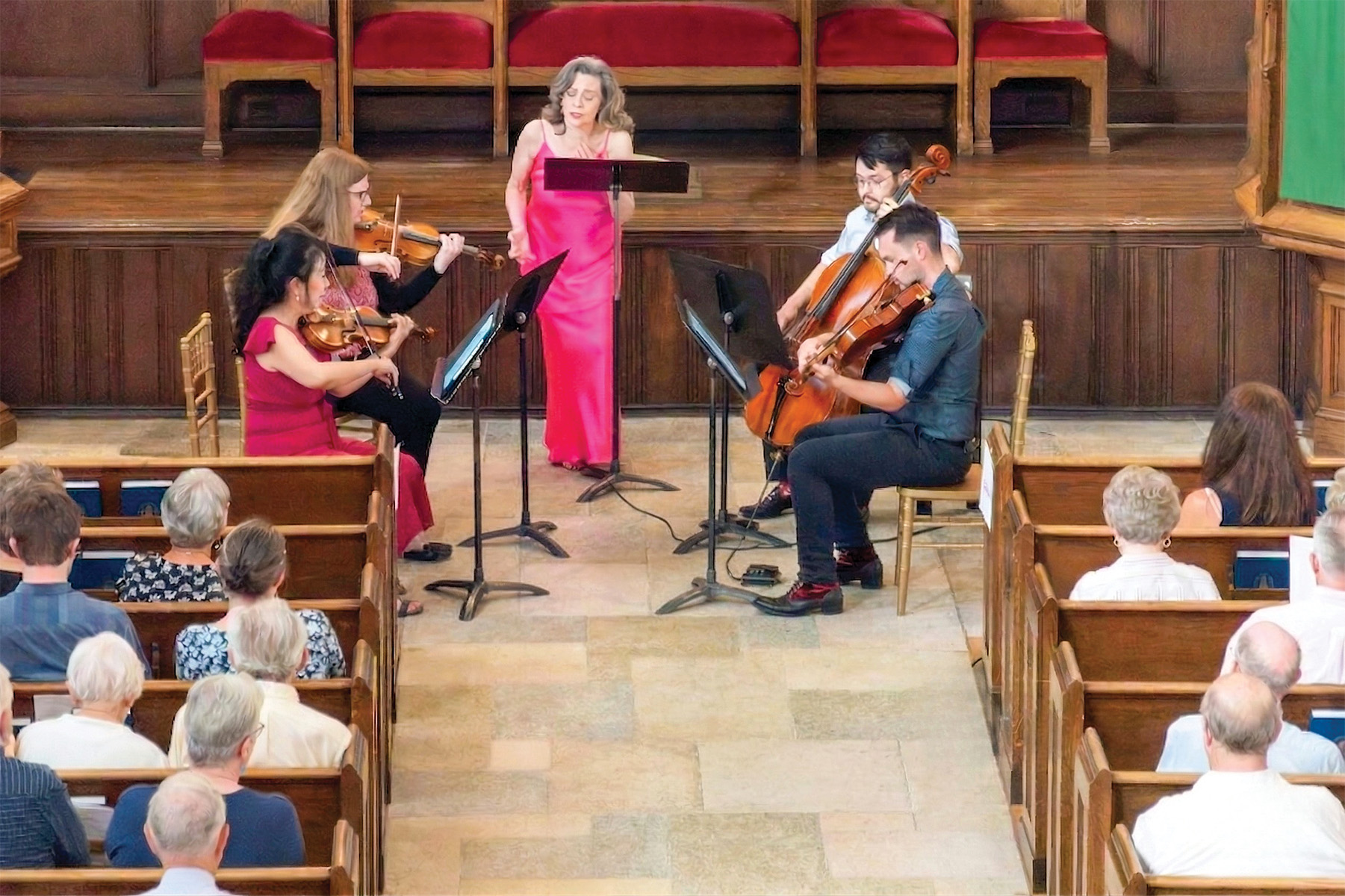
On most days, the building feels quiet, with pieces of its past on display: artifacts, photographs, and other fragments of lives that once moved through the same streets we do. But in August, the Seven Hills Chamber Music Festival will open its summer concert series inside the museum’s main hall: the former courtroom of an 1855 building designed for voices to carry. 

Opening night will layer a Louis Armstrong tribute for trumpet and string quartet, Jessie Montgomery’s Strum, and newly unearthed music by Lynchburg-connected composers into a single evening.

“We have the concerts in what used to be the courtroom,” said museum director Ted Delaney. “We put the performers on the judge’s platform. And if you think about it, the building was designed for that—a group of people gathered to listen to something happening at the front of the room.”

He thinks about it a lot. “It lends itself so naturally to music,” he added. “Having live music performed in that space, to me, is one of the best uses of our very beautiful historic structure.”
Music that Lives in the Room

The Seven Hills Chamber Music Festival is heading into its sixth season this summer.
If you’re a music aficionado, that might bring a spark of excitement. On the other hand, you might hear the words “chamber music” and immediately picture old-world royalty having a private concert, seeing it as formal and untouchable—and you won’t be alone there. (Back in the day, I thought chamber music meant Gregorian chanting monks!)

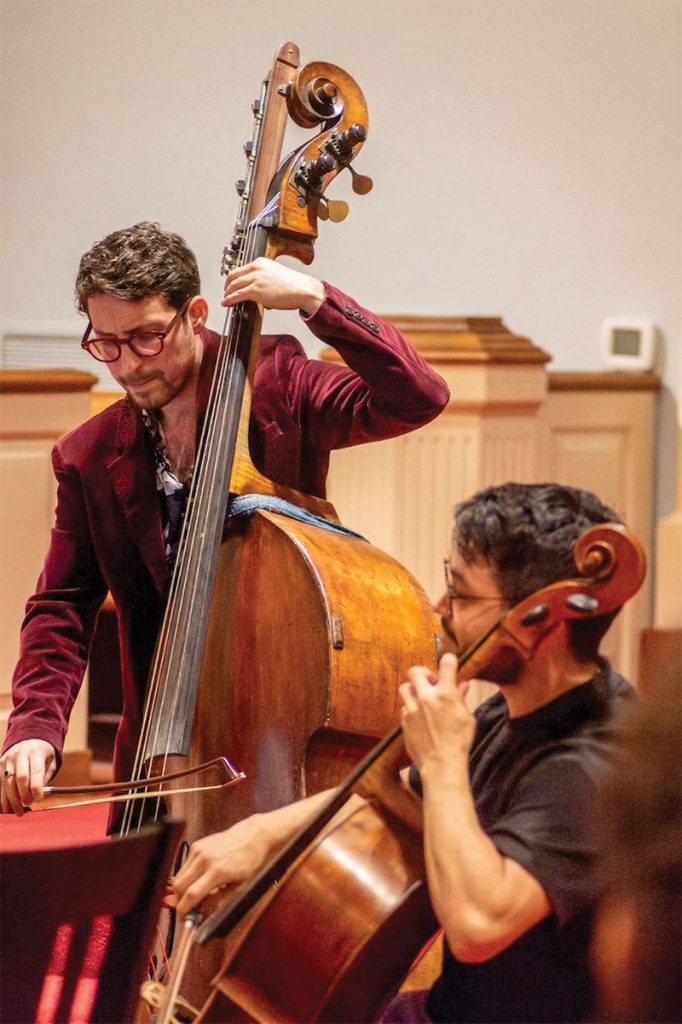
In reality, chamber music simply means a small group of musicians playing together—often one player to a part—in spaces where you can hear and see every detail. It’s music built for conversation: between instruments, between performers, and, if it’s working, between the people onstage and the people listening. 

Seven Hills Chamber Music delivers a stunning Bach Brandenburg Concerto. And yes, there’s a sense of intimacy inherent to this genre with its smaller ensembles, closer quarters, and music that asks you to lean in. But Seven Hills is just as committed to contemporary work and performing (and sometimes commissioning) pieces by living composers. I still think about last season’s performance of Stir Crazy by Carlos Simon and the way the flute and violin captured, through sound, what so many of us were experiencing during that time.

More than a Venue: A Partner

For festival co-founder and Lynchburg native Dudley Raine IV, the museum concert started simply: try something different. “We had been playing in a lot of churches, and we wanted to find a space that felt a little less expected. The museum seemed like a great place to try it. We try to use Lynchburg’s history to build a theme,” Raine said, “to tell stories that might have been forgotten.” 

Working with Delaney, “he found a whole trove of pieces in the archives and we found pieces and composers I never would have known about otherwise.”

That was three years ago. Since then, the relationship has grown from “a concert in a cool building” into a partnership with its own rhythm.  

Festival co-founder Nicole Brancato helps shape the arc of each concert so the music, the space, and the stories all feel like they’re in conversation with one another. One past program drew on the story of Blind Billy and Tom Perkins, a local 19th-century fife-and-fiddle duo. To echo their sound inside the old courtroom, Seven Hills chose works for modern instruments carrying forward the rhythms that once floated over these same hills.

“It’s been really interesting to see the exhibits when we’re there and to start learning about Lynchburg’s history in a deeper way—especially the music,” he said. 

Over time, that curiosity has started to shape the concerts themselves. That curiosity led to more research, more local names, and an expanded program, this year supported in part by a Virginia Humanities grant. 

The Exchange of Energy

And then there’s the part no one can plan for: the energy the audience brings to the show.

“The last piece we did last year was [by] Kathleen O’Moore,” Raine said. “We gave the audience the music and had them sing along. It was incredible. Just this shared energy—everyone in the room participating. That was one of those moments where you think, ‘This is why we’re doing this.’”

For Delaney, that shift matters.

“Our mission is to connect people to local history,” he said. “But not everyone comes to a museum for that. Some people need a different way in.” 
Music, it turns out, can be that way in. 

“If someone comes for the performance, and that’s what brings them into this building, then they’re also encountering history,” he said.

A space once used for judgment, record, and decision-making is now holding something less about what was decided, and more about what can still be felt. “To have live music in that space,” Delaney said, “after everything that’s happened there—it’s really special.”

He hopes people walk back out onto Monument Terrace with a different sense of the city they just looked down on. “I want people to be so impressed that such beautiful music was composed here and that such talented composers lived here, walked the streets we do, lived in the same places we live, and work and go to school,” he said. “So many people discount Lynchburg and think, ‘Nobody of any note lived here, nothing important happened here,’ but I see the opposite. This concert is just one small way to have people see what we see.”

It helps that the music itself is anything but small. About half of the festival’s roster has roots in Virginia, and all of them bring serious credentials with them—players who have performed with major orchestras and ballet companies, on Broadway stages and at Carnegie Hall, with institutions like the Juilliard School and the New York Philharmonic, on HBO and Netflix, and at venues around the world. Some are voting members of the Recording Academy, some are Yamaha artists, and all are chamber musicians in the truest sense: collaborators who know how to listen as intensely as they play. When they gather in Lynchburg, the room is holding world-class artistry and hometown memory at the same time.

“I just couldn’t believe how good the music was,” Delaney said, remembering his first experience with this chamber music festival. “And thinking, this came from Lynchburg. Not from Europe or New York. From here.” 

On August 12, the room will decide again what it’s going to be. And if you’re there, sitting in that brief, electric pause before the first note, you’ll feel it happen.  


From Pierce Street to Point of Honor

A Theater Rooted in Place

By: Charlotte Farley / Photos Courtesy: Enstation Theatre Company

By the time I finally clicked on Endstation Theatre Company’s website, I felt that particular brand of guilt reserved for English majors like myself. After all, I’ve lived in this area for over twenty years. I’ve taught literature, worked with local arts agencies, and waxed poetic about “place.” And yet somehow I had missed that Lynchburg has had its own professional theater company for nearly two decades.

Sitting across from Producing Artistic Director Patrick Earl, though, my guilt turned into curiosity. Endstation isn’t trying to compete with touring blockbusters or turn out jukebox musicals. Instead, it’s doing something more rooted in this region and the people who call it home.

A Lynchburg Original

Endstation was incorporated in 2006, starting life as a small company at Sweet Briar College mounting original works, intimate Shakespeare, and adapted classics. From the beginning, its focus was to “advance the cultural history and landscape of this region,” language Earl calls “very poetic and awesome,” but also quite practical.

Underneath the lofty phrasing is a simple guiding principle he repeats to his company: serve the audience you actually have. For Endstation, that means the neighborhoods, histories, and unresolved stories of the greater Lynchburg area. “We are telling a people’s story,” he says, and he means “people” in the most local sense: the families who’ve walked Pierce Street for generations, the students bused in from area high schools, the patrons who might not see themselves on stage anywhere else.

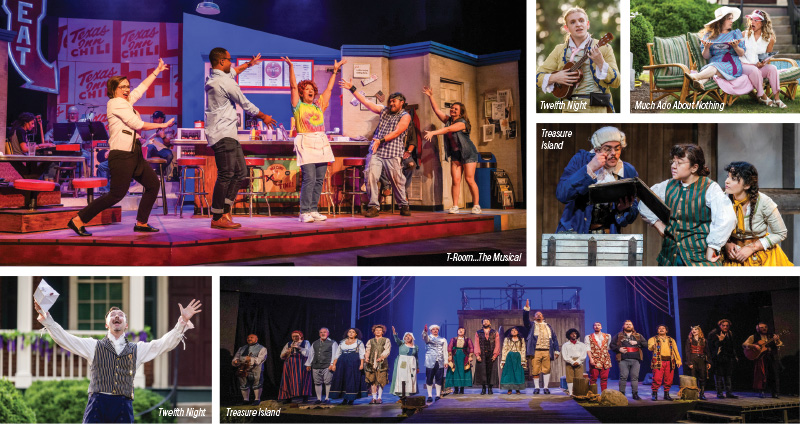
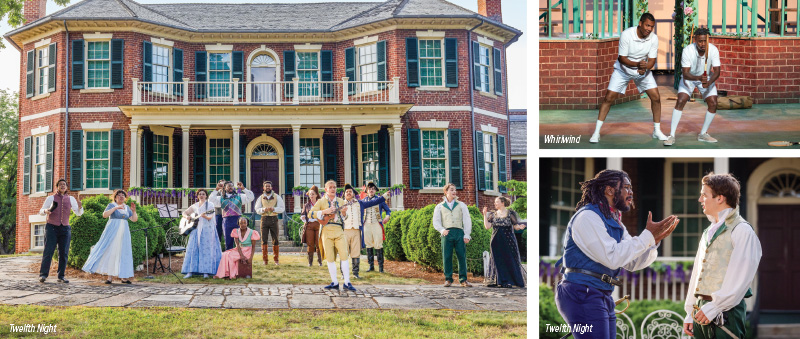
Over the years, the company has produced more than a dozen original plays, many commissioned or developed through its playwright pipeline. Whirlwind, for instance, explored the life of Dr. Robert Walter “Whirlwind” Johnson, the first Black physician permitted to practice at Lynchburg General Hospital and a tennis coach who mentored Arthur Ashe and Althea Gibson on a court in his side yard on Pierce Street.

That attention to place isn’t metaphorical: Endstation has staged performances inside historic homes, at Point of Honor, and even in the basin of a long-closed public pool while tracing the buried history of segregated swimming in Riverside Park. There’s something sacred about telling a story in the very space where it unfolded, as if proximity itself deepens the act of remembering.

Twenty Years of Evolution

Of course, no arts organization moves through twenty years unchanged. After its early seasons at Sweet Briar, Endstation experimented with larger productions and more commercially recognizable shows, the sort many regional companies rely on to stay solvent.

On July 1, 2024, Endstation officially came under the umbrella of Randolph College while retaining its own distinct nonprofit identity. As the college’s professional theater, it enjoys a stable home base, a campus full of students, and local connections.

Fringe, Fields, and Memories

The Central Virginia Fringe Festival—launched just last year—is another extension of that impulse. “We have so many talented folks, so many talented companies,” Earl says. “We need something to celebrate that. So we said, ‘You know what, let’s start a Fringe Festival.’”

The premise is simple but generous: Endstation provides a venue and modest tech support, and invites theater companies, community groups, and individual performers to show what they’ve been making. In its inaugural year, 14 companies (including Endstation) presented nearly 20 performances over the course of the week, spread across spaces at Randolph like Smith Hall Theater and another campus performance hall.

This summer’s festival will again run Saturday to Saturday in mid-June, opening with a concert and “Fringe Feast” and closing with the world premiere of Earl’s new play, Good Birth, alongside the launch of the summer Shakespeare production.

Beginning in fall 2026, Endstation will also take over the Old City Cemetery’s candlelit tour, partnering with staff to create a theatrical experience that weaves history, performance, and memory in one of Lynchburg’s most significant landmarks. If theater at its best is an act of collective remembering, there may be few settings more suited to that than a location where names are literally carved into stone.

Shakespeare on the Hill, Free for All

If you’ve never made it to Shakespeare at the Point, you’re not alone. But the series, now heading into its third summer, may be the clearest expression of Endstation’s commitment to accessibility.

What began as a small-scale experiment at Point of Honor has grown into a cornerstone of the season. Tickets for Endstation productions top out at $35 for special events (galas excluded), with many offerings around $15 (and less for students).Through the “Serving the Audience Initiative,” Endstation has made a portion of its outdoor Shakespeare performances free to the public in recent years, with a long-term goal of making the entire run free.

“We are working to make professional theater accessible to everyone,” Earl says. That includes scholarships for their Embark Youth Theatre Conservatory, where at least 15 of 40–50 spots each year are full or partial tuition scholarships, and Theater Day at Randolph, when high school students come to campus for workshops in technical theater, stage combat, and Shakespeare.

This summer’s production, The Merry Wives of Lynchburg, adapts The Merry Wives of Windsor, keeping the language largely intact while setting it here at home. It’s a playful nod to place that still takes the text seriously, much like the company itself.

What’s Next

“If I could choose, I’d want our legacy to be that we created essentially a staged history of our community, a dramatic, historical canon for the area,” he adds. “After being around 20 years and doing 14 original shows—that’s a lot for any theater company—and that doesn’t even account for the dozens of original plays from our Playwrights Initiative.

For Earl, the heart of Endstation’s work is empathy. “Theater is uniquely suited to helping audiences experience how someone else sees the world. That is, in its essence, what theater really is,” he says.

“I want Endstation to be the end station for theater. Every community deserves somewhere they can go and hear their story, and hear their story done well, and see live performance at the best possible level without having to drive to New York or to their nearest large city—at a high level, at a professional level, and a dependable level.”

As Endstation enters its third decade, it faces the same challenge every arts organization does: persuading people to show up in person. Earl is realistic about the competition. “Every platform, screen, and phone is rival for attention, but it’s something more than that,” he says. “People go into their phones trying to find happiness and humanity. But you know where it is: humanity is going to watch humans.”

That humanity lives here: on a hillside at Point of Honor as the sun goes down, in a darkened hall at Randolph, inside a reclaimed pool basin at Riverside Park.

It’s in the moment when a familiar street name, a long‑ignored plaque, or an old family story suddenly stands up, steps into the light, and, for a moment, seems to be speaking directly to you.


Maier Museum’s New Art Exhibition is a Celebration of Paint

Exploring Real, Tangible Art in an Age of Algorithms

By: Charlotte Farley | Photos By: Ashlee Glen

I don’t know about you, but I’ve been craving a return to a more analog kind of life, gravitating toward something that I can touch and hear without needing screens and Internet service. For my birthday, my husband gave me a stereo system complete with a turntable and CD player. When I finally listened to music through those killer speakers after years of streaming on Pandora or Spotify, the sound startled me in the best way possible. It was rich. It was bold. It was beautiful. That small shift back to analog made me feel what I’d been missing, which is exactly the energy behind the Maier Museum’s new exhibition Audacity: The 114th Annual Exhibition of Contemporary American Painting.

For more than a century, this annual exhibition has showcased contemporary American art in all its shifts and reinventions, and this year’s focus on painting feels both timely and strikingly fresh. This show is indeed a vivid display of what it means to have the audacity to create something purely from one’s own hands, with one’s own imagination and heart. In other words, how dare we be human.

The History of Maier Museum’s Annual Art Exhibition

The Maier’s annual exhibition series began in 1911, when Randolph-Macon Woman’s College committed to bringing the strongest contemporary American art to its students each year. For decades, that meant painting. The show functioned as a cultural gateway that introduced both the college community and Lynchburg at large to the best work emerging in the medium.

For the first half-century, the annual exhibition centered almost entirely on painting, but in the decades since, it has expanded to reflect the growing range of media explored by contemporary American artists. This year marks the first time in nearly thirty years that the exhibit returns to painting alone, echoing its earliest roots.

“It felt like time to revisit painting,” said Martha Johnson, director of the Maier Museum.

Maier’s annual exhibition

The Spirit Behind the Art Exhibition

Johnson explained that the spirit behind Audacity grows out of the moment we’re living in. Conversations about AI—its speed, its opacity, its uncanny output—have become impossible to ignore, and so much of the imagery we encounter now is generated instantly by software. In that landscape, returning to painting feels purposeful.

“We’re all feeling some uncertainty about where AI is going—or has already gone,” she said. “It isn’t something that’s ‘coming’; it’s blown past us, and that can feel very untethering.”

For Johnson, this exhibition is “a kind of answer to what’s happening. It’s a reaffirmation, a fearless reaffirmation, of the medium of painting.” And even as the show responds to all that technological drift, she hopes its effect is simple and human. “I want visitors to be delighted.”

Meet the Artists Behind Audacity: The 114th Annual Exhibition of Contemporary American Painting

The exhibition brings together four large-scale painters (Sally Egbert, Julia Jo, Sue McNally, and Walter Price) whose canvases radiate gesture and presence, inviting visitors into the physical presence of work shaped directly by human hands. Each selection embraces that physicality. One navigates gigantic, state-by-state landscapes after time spent outdoors. Another literally tosses paint onto canvas.

“Whether you’re using a brush, tossing paint like softballs, or pouring it the way Sally [Egbert] does,” Martha said, “there’s such physical pleasure in the act itself. What painting is, for all of these artists, is the pure joy of painting—the tactility, the sensuousness, the sheer joy of a pure color.”

The Experience of Maier Museum

The Maier Museum is intentionally welcoming. Admission is always free and there are various community programs, talks, and even camps for kids and other programs for high school students. Johnson wants a visit to the Maier to feel as normal as a stop at the library or a walk in the park.

“The default for a lot of people is thinking they don’t know enough to come here, or that it’s going to be expensive,” she said. “There’s no test at the end. We’re not trying to stump anyone. We just want people to come in and spend time with the art.”

Staff members aim to offer visitors a “hook”—just enough context about process or history to spark curiosity—without flattening a painting into a lecture.
For many regulars, the museum’s permanent collection has become something of a community of familiar faces. Visitors return to particular works like old friends within the richly colored galleries.

Maier Museum’s Hours and Exhibition Details

Above all, this exhibition extends an invitation: slow down, step close, and let color work on you. As Johnson puts it, “I would love for people to have had a joyful experience—to feel that painting is still a vital force—and to have set their anxieties aside for a moment and get lost in the art.”

Audacity reminds us that standing in front of paintings can be as surprising and alive as hearing music on real speakers again. It turns up the volume on what it means to be human. And painting, it turns out, still has plenty left to say.

ON VIEW:
October 19, 2025 – March 8, 2026
More Information: maiermuseum.org
Hours: Wed–Sun, 1–5 p.m.

RELATED CONTENT:

The Cold War History of the Maier Museum

Inside the Lynchburg Art Club and Gallery


Dice & Community

The Magic Behind Creatures & Cocktails

By: Charlotte Farley | Photos By: Ashlee Glen

Once a week, it’s as if someone chanted a few magic words to transform The Music Hall at 722 Commerce Street into an alternate world where dice determine destiny and strangers become heroes.

In a way, someone did.

The Creatures & Cocktails event is the brainchild of David Gallaher, a Harvey Award-winning writer best known for his work with Marvel Comic titles like The Hulk, The X-Men, and DC’s Green Lantern alongside projects for Ubisoft, MTV, and Taliespin. But for one night each week, he trades his writer’s desk for the role of Game Master, guiding groups of adventurers—many of whom have never played—through immersive events.

From Brooklyn to Lynchburg

A self-professed rapscallion, raconteur, and roustabout, Gallaher’s path to Lynchburg was as winding as any Dungeons & Dragons campaign. Originally from Hawaii, he grew up as a military kid, living everywhere from California to Washington to Maryland. After two decades in Brooklyn and a short stint in Paris, he relocated to Lynchburg to be closer to his parents, who relocated to the Hill City in recent years.

It didn’t take long for him to discover the Academy Center of the Arts. He began working part-time as house manager, a position that came with a perk he couldn’t pass up: two free tickets to every show. “I gave them to my mom,” Gallaher said. “And she loved it.”

But while he was there, he noticed that the Academy’s versatile Music Hall was only being used for weekend concerts, and he saw its potential as more than just a performance venue. From that spark came the idea for something approachable, creative, and unlike anything else downtown.

From Panic to Play

For those unfamiliar, Dungeons & Dragons is a collaborative role-playing game where participants take on characters, make choices, and let the roll of the dice determine what happens next. It’s focused on creativity, teamwork, and shared storytelling. And let’s be clear: there’s nothing diabolical or scary about rolling dice and playing pretend.

The spirit is whimsical, collaborative, and sociable.

“It’s all about exploring stories and experiencing fantasy together,” said Gallaher. He laughs when he recalls growing up in the 1980s, during the so-called “satanic panic” that stigmatized Dungeons & Dragons. “I wasn’t allowed to play,” he said. Ironically, he discovered the game at Scout camp and ultimately fell in love with this style of telling stories. “But even before that, one of my first role-playing experiences was a Star Trek RPG where,
for some reason, we all had to play as Muppet Babies. So Kermit ended up being a paladin.

It was ridiculous—and perfect. That kind of silly, lighthearted energy is what I try to bring into Creatures & Cocktails today.”

Elevated for Everyone

“We wanted to make an elevated experience and create an opportunity that’s only five dollars—and free for members of the Academy,” Gallaher explains. What begins as a modern music hall becomes an enchanting space complete with atmospheric lighting, thematic decorations, and carefully curated details that transport guests into another realm entirely.

Though it’s called Creatures & Cocktails, “it could have been Monsters and Mocktails,” he noted with a grin, since the event is designed for ages “8 to 80. Anyone who comes to this gets to play.”

A Night of Adventure

The doors open at 6:30, and guests can sign up for a journey, grab coloring sheets, and select a character that best represents them for the evening. These characters might include tongue-in-cheek, lighthearted versions of bards, paladins, rogues, wizards, or fighters. (Picture a bard who can’t carry a tune or curmudgeonly wizard, for example). Participants can also draw their own pieces, which the Game Master weaves into each night’s tale. “Nothing is rote,” Gallaher explained. “It’s unique to each party or group.”

What about someone whose only knowledge of D&D comes from overhearing their teenage son’s gaming sessions? “We’ll show you how to play, and you cannot fail,” he emphasized. Every adventure is designed to be welcoming, stress-free, and fun. There’s no requirement to know any rules up front.

Fantastical Friendships

Ask Gallaher why tabletop games, and his answer is simple: “I love D&D and I love people.”

That love shows in the details. Volunteers arrive an hour early to help set up, and friendships are forming organically. Gallaher loves kicking off the festivities, of course, but he most enjoys seeing the camaraderie and how people pull together to help pack up at the end of the night. “In a time when we’re all divided,” he reflected, “we can share dice, have a game, laugh, have a couple of drinks, and be present. We can forget about the outside world for a little while and enter this high-fantasy imaginary world.”

That sense of belonging clearly resonates: attendance averages 60 to 80 participants each week, and the 120-seat venue often fills to capacity.

The Team

Gallaher isn’t a one-man show here.

He’s quick to credit Allistar Barrett, who co-produces the weekly magic by inventing many of the themed cocktails and menu items, designing set pieces and decor, and more. He acknowledges the support of the Academy, as well. “They’ve been awesome,” he said. “It’s all about storytelling and creating a unique experience.”

Looking Ahead

Since debuting in July, the event has been met with such enthusiasm that Gallaher and Barrett recently secured an educational license from Hasbro to use official Dungeons & Dragons materials for the next five years.

Gallaher’s goal is to create opportunities to engage in D&D in a way that everyone feels welcome, whether that’s at the Academy Center of the Arts, in Lynchburg, or across the country. He’s already fielded inquiries about taking Creatures & Cocktails on tour, a testament to how this blend of speakeasy-meets-storytelling has resonated in Lynchburg.

From writing for The Hulk and The X-Men to guiding a table of first-time players, the medium may change, but the mission is the same: Gallaher invites people to escape and delight in a world of imagination. “Shared stories make us co-creators,” he said. “At the end of the day, people love stories. And that’s what this is all about.”

Creatures & Cocktails

When: Wednesday nights, doors open at 6:30 p.m. and the game runs from 7:30 p.m.-10:00 p.m.
Where: The Music Hall at 722 Commerce Street
Cost: $5 to enter and play (free for Academy members)
More info: www.creaturesandcocktails.com


Breathe Easy

How to Keep the Air in Your Home Fresh and Clean

By Charlotte Farley

We obsess over meal prepping, skincare routines, and picking the perfect throw pillow, but when’s the last time we thought about the very air we breathe? Spring cleaning isn’t just about tackling that junk drawer or finally dealing with the mysterious sticky spot under the fridge—it’s also prime time to revitalize the atmosphere in your house.

If your home’s air had a Yelp review, would it be five stars or “would not recommend”? Indoor air quality is a big deal, and the good news is that keeping it fresh and clear doesn’t require a degree in environmental science. With a few simple changes, you can breathe a little easier.

1. Vacuum Like You Mean It
Your floors and furniture are basically giant screens, trapping dust, pet hair, and allergens. Vacuuming regularly (with a HEPA filter, if possible) and wiping down surfaces keeps all those sneaky particles from floating around and making your sinuses miserable.

2. Don’t Forget About the Ducts
If you’ve never had your air ducts cleaned, let’s just say… you might not want to look inside. Over time, allergens, dust, and debris build up, affecting both your air quality and your HVAC’s efficiency. A professional duct cleaning can help reduce contaminants and extend the life of your unit—Chris Glass of Duct Dusters of Virginia says it’s a game-changer for anyone who suffers from allergies or asthma.

3. Change Those Filters
Your HVAC unit works hard year-round, and those filters? They’re like little air bouncers, keeping dust, pollen, and pet dander from circulating in your living space. Glass recommends using pleated filters with a MERV 6 to MERV 8 rating and swapping them out every three months—or every two months if your household is, shall we say, high-energy (kids, pets, constant foot traffic).

And while we’re talking HVAC, let’s show it some love. Your HVAC system acts as the lungs of your home, and when that system gets dirty, you’re breathing in all that gunk. Get your setup serviced at least once a year, including cleaning the fans, coils, and HVAC cabinets. And don’t forget about the drains and condensate pumps—sanitizing them helps keep nasty contaminants from creeping into your air supply.

4. Tame The Humidity
Too much humidity can invite mold and mildew to move in rent-free, while air that’s too dry can irritate your skin and respiratory system. Keep humidity levels balanced by using dehumidifiers when needed and fixing any leaks or moisture issues around your household.

5. Open The Windows
Modern dwellings are designed to be airtight, which is great for energy efficiency but not so great for circulation. Crack a window for a few minutes each day to let fresh air in and stale air out.

(If it’s peak pollen season, consider airing out your home in the early morning or late evening when pollen counts are lower.)

6. Choose Greener Household Products
Some household cleansers and air fresheners can actually make indoor environments worse, releasing chemicals known as volatile organic compounds (VOCs). Opt for non-toxic, fragrance-free, or plant-based products to keep the air (and your surfaces) truly clean.

7. Keep Pets Groomed and Tidy
We love our furry friends, but let’s be real—they’re basically walking tumbleweeds of dander. Regular grooming and baths (sorry, Rover) can help keep the air in your home a little less… fuzzy.

8. Maintain Your Home Inside and Out
Glass points out that air quality isn’t just about what’s happening inside. Clogged gutters and drainage issues can lead to excess moisture, which means mold and mildew aren’t far behind. Keep up with your maintenance chores to prevent these problems before they start.

9. Smoke-Free is the Way to Be
This one’s a no-brainer—smoking indoors is basically inviting a cloud of toxins to set up camp in your indoor space. If someone in your household smokes, take it outside—your air, your furniture, and your future self will thank you.

The air in your house should be as crisp as newly washed sheets and it’s not hard to make that happen. With a few simple habits and regular maintenance, you can breathe easy knowing your home is as healthy as it is cozy.

So go ahead and breathe easy! Inhale, exhale, and enjoy that fresh, pure air.


Your Invitation to Live, Move, and Be

By: Charlotte Farley | Photos by: Ashlee Glen

Going to the gym can feel intimidating, expensive, or isolating, but Live Move Be (LMB) Fitness Studio & Center isn’t your typical gym.

Ever since LMB transitioned from a traditional business model to a nonprofit organization in 2023, they’ve redefined what group fitness looks like in the Lynchburg area. Known as “the little studio with the big heart,” LMB has opened its doors—and arms—to offer no-cost group exercise classes and wellness programs for mind, body, and spirit to anyone who walks through the door.

“We want people to come as they are,” said Kat Seay, LMB’s founder. “Fitness isn’t about perfection; it’s about moving with joy and purpose.”

That mindset drives everything at LMB.

A Shift in Mission

Live Move Be began five years ago as a small, for-profit studio with a community-minded heart. That mission only grew stronger when Seay, a longtime group fitness instructor, underwent hip resurfacing surgery.

“During my recovery, I realized I didn’t just want to teach classes anymore. I wanted to build something bigger—something that could serve others beyond just fitness,” Seay explained.

And that’s exactly what LMB has become: a wellness hub where classes are free and open to all.

live move be

Fitness with Heart

With more than 20 programs each week, LMB combines exercise and connection in a way that can appeal to everyone. The lineup includes something for every level and preference, from upbeat dance, circuit training, and functional low-impact workouts to yoga, pilates, and barre—even boot camps and faith-centered sessions.

While LMB removes financial barriers to wellness, it’s the environment and the people that set LMB apart. There’s no pressure there—just encouragement and support.

In LMB’s group classes, you can always make the choice to simplify a move or add a challenge to a routine.

“Fitness isn’t one-size-fits-all,” Seay explained.

“We focus on creating an atmosphere where people feel loved, supported, and excited to keep showing up.”

While donations are welcome, they’re never required.

LMB is able to offer no-cost classes thanks to monthly partners (some giving just $10 a month), individual donations, and grants that keep the studio thriving.

“We’re able to offer this because of the people who believe in what we’re doing,” Seay said. “And we hope that when people walk in, they’ll feel that belief too—that they’re worth showing up for.”

live move be

More Than Movement

Seay has a unique ability to unite people—through movement and through shared purpose.

“People have good intentions to give back, but we all get busy,” Seay shared. “You’ll see things riding around in the back of someone’s car for months because they mean to drop them off, but they just don’t have the time. So I thought—bring it to
the studio, and we’ll do it together in a way that’s more productive.

That idea led to LMB’s Caring Initiatives, which are donation drives tied to LMB’s mission and calendar. Participants packed shoeboxes with essential items for families in need, gathered blankets for the Agape Center, and partnered with HumanKind to collect backpacks for local students starting school. Seay and her team made sure everything reached the people who needed it most.

“Not only do I get to do what I love, but I get to organize my community to support the good work others are doing and helping those organizations in the ways we can,” she said.

Wellness for Mind and Spirit

Beyond movement and service, LMB nurtures the whole person. The studio hosts Bible studies, book clubs, and creative Girls’ Night Out gatherings that foster a sense of belonging and togetherness.

In the past year alone, LMB hosted an all-natural product make-and-take night and an evening of fresh floral arrangement—creative ways to bring people together. They even organized a Daddy-Daughter Dance around Valentine’s Day, providing a space for families to create meaningful memories.

“Fitness is a need everyone has,” said Seay. “But for some people, the need is deeper. Some people are looking for connection; some people are looking for spiritual support.”

New in 2025: Expanding Offerings

LMB continues to grow, and 2025 will bring even more opportunities to the table. Thanks to a grant from the Greater Lynchburg Community Foundation, LMB will introduce Human Reformer Pilates—a new offering that’s as exciting as it is transformative.
So how can you support LMB? “We’d love for people to come alongside us—partner with us—even at $10 a month,” Seay explained.

“It’s a small investment with a huge impact.”

Live Move Be proves that fitness can be joyful, inclusive, and—most importantly—full of heart. After all, every day at LMB is heart day.

To see class schedules, explore upcoming events, or learn more about how to support the mission, visit livemovebefitness.com.


A Lynchburg Teacher Finds Her Path

Spanish teacher at Rustburg Middle School, trades the familiar confines of the classroom for the ancient paths of Spain.

By: Charlotte A.F. Farley  |  Photos Courtesy: Jennifer Irwin

Jennifer Irwin, a Spanish teacher at Rustburg Middle School, traded the familiar confines of her classroom for the ancient paths of Spain when she joined the Accessible Caminos program. Drawn to the allure of the Camino de Santiago, a 500-mile pilgrimage to the Cathedral of Santiago de Compostela, Irwin was inspired by a profound blend of personal connection and a desire to give back.

The Camino has captivated the hearts of millions, but its physical demands often prevent many from experiencing it. The Accessible Caminos program aims to change that by offering wheelchair users a way to experience the Camino, creating a unique opportunity for both wheelchair users and volunteers.

Irwin was inspired to embark on the Camino de Santiago after reading “I’ll Push You,” a poignant account of a man who pushed his friend who used a wheelchair along the famed route. Inspired by the story as well as the memory of her cousins who had muscular dystrophy, Irwin decided to apply and volunteer as a “pusher.” The idea of using her bodily strength to help someone else along the way was deeply appealing. 

Jennifer Irwin

“I felt like here I am, healthy and able-bodied,” Irwin shared, “and if I can help somebody fulfill a dream of doing the Accessible Camino, then I absolutely want to do that.” 

Irwin applied in August 2023 and learned in the winter of 2024 that she was selected as one of just a few from a pool of 180 applicants to assist wheelchair users on the final 100 kilometers of the Camino, known as “the Portuguese Way” which starts in Vigo, Spain.

Irwin’s role as a pusher was demanding. The group, which was composed of six wheelchair users (“captains”), six pushers, two photographers, five guides, and a travel agent, navigated pathways ranging from smooth asphalt to uneven cobblestone and rough, rocky ground. Despite the physical rigor, the camaraderie among the group fueled their spirits. 

“Honestly, I was never tired on the trip,” Irwin shared. “We had an amazing group of people, and everyone pitched in. Most times it didn’t feel like I was doing any ‘heavy lifting.’ Everyone got along with everyone.”

The daily routine established a rhythm for the group. Mornings began with breakfast and prayer followed by the day’s walk. The longest day covered nearly 14 miles, with planned rest stops and lunch breaks. Evenings were dedicated to rest, fellowship, and preparation for the following day’s adventure.

The wheelchair users faced unique trials throughout the journey. Navigating ancient cobblestone streets, enduring long hours in a wheelchair, and overcoming the physical limitations imposed by their disabilities demanded incredible courage and resilience. 

©Jennifer Irwin

“The Roman Roads on days two and five were the most challenging,” Irwin recalled, adding that sometimes it required six or more people to lift the captains’ chairs and walk them over the rocky terrain. Their determination to experience the Camino, despite the obstacles, was an inspiration to everyone involved.

The pilgrimage culminated at the Cathedral of Santiago de Compostela, a bittersweet moment for Irwin. She recalled one of her favorite moments: The team was waiting to meet Vincenzo, an Italian man with a disability they’d met several times along the route. The group knew he was nearing the cathedral and arranged for champagne and tapas to greet him. Once they saw him, they began a flamenco clap to applaud his arrival. 

“He made his way to the center of the square and he was literally like a rockstar!” Irwin said. “Everyone was cheering for him! Our group loved on him, and so did so many others who were lucky enough to witness his arrival. It was a beautiful moment that I will cherish forever.”

Attending the Pilgrim’s Mass and visiting the tomb of St. James were profoundly moving experiences for Irwin. Though not particularly religious, she found herself deeply affected by the solemnity of the occasion. As she reflected on the journey, she realized that while reaching Santiago was a significant accomplishment, it was the profound human connections forged along the way that truly defined the experience. 

This adventure—filled with service, culture, and newness—has deepened her appreciation for the simple joys of life and strengthened her belief in the power of human connection. As she continues to share her story, Irwin hopes to encourage her students to embrace challenges and inspire others, seek out extraordinary opportunities, pursue their passions, and make a positive impact on the world.  


Art For All

The Bower Center’s mission continues to evolve, with new offerings in 2021

The year 2021 marks 15 years since the Bower Center for the Arts first opened its doors. What initially began as the Bedford Academy for the Arts with a broad mission of “promoting the cultural arts” has evolved—big time.

The Bower Center

Over the years, the center has become an access point for the arts in Central Virginia and a downtown anchor for the Town of Bedford. And even though the center hosts national juried exhibitions that attract artists from across the nation, it continues to honor its original mission of providing cultural arts to the community with an enhanced focus on making the arts accessible to all, which serves as the heartbeat for this nonprofit.

Celebrating Creativity & Self-Expression
On any given day, you might find executive director Susan Martin greeting a host of tiny toddler ballerinas skipping through the Bower Center’s doors, or you might find her collaborating with professional artists and educators on how to best deliver a watercolor workshop over a digital platform. She might be answering questions on upcoming pottery classes or overseeing the next community art installation in the front window of the center.

Gallery admission is always free of charge—that’s just one way the Bower Center fulfills its mission of eliminating barriers and improving accessibility to the arts. “Providing high-quality art classes at an affordable price tops the list,” Martin explains, noting that the center plans to expand its current scholarship program to include adults.

“We want to be available to different audiences and more individuals in the community in different ways,” she adds, which includes expanding existing partnerships and entering collaborations with Bedford Domestic Violence Services and the Department of Social Services.

Equal parts community art center, renowned gallery, and performance venue, the Bower Center serves as a gathering place for anyone interested in any kind of art. From community art events to “2nd Friday” programs and paint nights, “we want this to be a place for community connections, for building relationships, growing your creativity,” Martin explains. “That’s the direction we’re going in—we want to celebrate creativity in all its shapes and forms.”

the bower center live music

Serving the Community
The center serves up offerings from a diverse menu of creative programs and opportunities designed to inspire, encourage, and promote artistic expression in a variety of forms. Some classes take place year-round, and others are Saturday morning one-time workshops; many are now available online. Whether someone is interested in photography, fiber arts, creative writing, jewelry-making, or learning to play the bass guitar, the options are varied and nearly endless. Essentially, if someone is interested in learning more about the visual, literary, or performance arts, they will find a class or workshop to meet their needs at the Bower Center—and if they can’t, they can make a request.

In fact, the center invites those requests as it relies on community feedback to curate appealing offerings and to meet community needs. It was because of such input that classes in fiber arts and pottery appeared on the class schedule along with more single-session workshops and an extensive youth art program, including a new program for homeschool students.

While the center was providing after-school enrichment classes to students through its partnership with Bedford County Public Schools, it also recognized that Bedford County is home to one of the largest populations of homeschool families in the state. With that in mind, the Bower Center created Homeschool Mondays in order to better serve the homeschooling community. This program, made possible by grants from the Pacific Life Foundation, the Nora Roberts Foundation, and the Rea Charitable Trust, invites homeschoolers to the center every Monday for age-appropriate art classes and workshops.

Expanding Services in Times of Uncertainty
Martin shares that the recent pandemic compelled the center to consider ways to improve services and reach more people, including those unable to take part in multi-week, live classes.

“It made us start looking at how we better serve our community instead of just doing what we always did,” she says.

With that in mind, the Bower Center pivoted, putting all of their exhibits online along with the family art scavenger hunts to encourage families to appreciate and enjoy art together. Even paint nights went virtual, with Bower supplying at-home art kits. Even in the midst of pandemic-related challenges, the center sought out ways to make the arts fun, interesting, available, and safe.

Adding virtual components and live-streamed classes helped the Bower Center continue providing services during an otherwise uncertain time, and these changes have helped guide future plans. “Even though life won’t always be the way it’s been during the pandemic, we want to continue growing and offering things in different ways,” Martin explains.

wellness bower center

Wellness, Creativity, & the Healing Arts
Not only will the Bower Center welcome new faces onto its board in 2021, but it will also support the expansion of a dream that has been long-discussed ever since it opened its doors 15 years ago. This will be the year the center brings expressive arts therapy and the healing arts into focus. The healing arts, which consist of music, movement, poetry, and visual art, are frequently used to promote wellness, deal with stress, and provide avenues for meaningful self-expression.

The center has offered wellness classes periodically over the years, and yoga and Tai Chi have been calendar mainstays. The demand for more “Music and Mindfulness” workshops continues to grow along with requests for more workshops in the healing arts. The center will launch regular workshops and offerings in the healing arts in 2021. Plans also include partnering with area funeral homes to provide art therapy sessions with local grief support groups.

“We know that art is healing and we want to help each other connect, communicate, and share through the arts,” Martin explains. “Through this pandemic, we know people have to have opportunity to express themselves, and we want to help them in any way we can to provide a safe and healthy environment to engage in the arts.”


A Warm Welcome

A rustic, yet refined, home where self-expression is EMBRACED
photography by Heather Kidd

A record player rests atop a faux fur throw with a vintage record player at the ready. “I collect vinyl—it’s soft, and I like the sound,” Ellen Dorman says of the display on her entry console table. Indeed, softness seems to be a dominant theme in the Dorman family home: everything feels warm and inviting in this space, from the earth tone walls to the abundance of soft throw rugs to the natural wood furnishings. It’s the kind of home that welcomes you the instant you walk through the door.

The front hallway is a vignette unto itself, offering family photos from a few falls ago hanging in charming old window panes beside whimsical paintings of roosters, flowers and cows—a carefully curated homage to what the Dorman family holds dear.

Despite the open floor plan and lofty ceilings, the neutral palette helps the Dorman home feel cozy and intimate. And although her home is dressed in neutrals, it doesn’t feel dull or one-note thanks to Ellen’s expert application of layering techniques. Here, beiges, greys, and creams exist harmoniously beside bountiful textures: wood, textiles, and stone. Stone serves as a stand-out feature that ties together the kitchen and living room of the home.

The muted color scheme works overtime. Not only does it offer warmth, but it also serves as the perfect foil for Ellen’s vibrant gallery walls. Her thoughtful design choices work to draw the eye to these focal points. Each room serves as a sort of gallery revealing vivid expressions of cherished memories preserved in time. From the staircase to the family room wall to the children’s playroom, you’ll see handcrafted collections of family portraits, pastoral symbols and other meaningful moments, each one depicted in brilliant colors.

The layered neutrals, which consist of grays and browns—such as Colonnade Gray, Foothills, and Stone Lion by Sherwin-Williams—are very different from the colors Ellen used in her previous home. “Our last house was completely colorful,” Ellen explains, sharing that she painted every room a different color after living with white walls for many years. “It was a rainbow house!” she adds. When building this home, however, she decided to use a neutral palette instead. “I knew I wanted neutrals so I could easily change out the art… that’s where I bring in color,” she explains.

The Dormans left their earlier (and colorful) home several years ago in search of a halfway point between husband Erik’s workplace in Lynchburg and Altavista Combined School, where Ellen taught art. After spending over a year driving around, attending open houses, and scouring real estate listings, they came upon Evington’s Hickory Hill neighborhood, which ended up being the ideal place for their family.

“It feels like you’re outside of town, but you’re still close to everything—and this lot was woods, and I really wanted a wooded lot,” Ellen says. “We love being outside.”

Surrounded by woodlands, Ellen’s two children are free to play outside to their hearts’ content. Here, they have the chance to engage in good, old-fashioned play: building forts and constructing teepees are just a few of the ways that Ethan and Elliott have fun on the three-acre property. The family often gathers around the fire pit, and the boys play in what Ellen jokingly refers to as their “dirt pile.” She explains that when they were constructing the patio and fire pit, she asked the contractors to flatten out a mound of earth where she had intended to install a swing set. She reconsidered when she saw how much fun the boys had just playing in the dirt. “I thought, ‘Shoot, I’m not gonna ruin that. Let ’em play in the dirt!’” she laughs.

Ellen takes an equally easy-going, child-friendly approach with the interior. For example, the dining room finds itself in regular use, not just on holidays. It’s not your typical dining room. A roll of brown craft paper runs down the center of the table, and instead of traditional dining chairs, stools, poufs, and benches serve as seating. “This isn’t a ‘formal dining room’ unless we’re entertaining at the holidays and whenever we have family over,” she explains. Instead, the room serves as a convenient place for the kids to dabble with colored pencils and paint and engage in art making. And it’s not just for the kids: “Anybody’s allowed to scribble, doodle, or leave notes here!” says Ellen.

The table itself, worn with paint splatters and carved markings, is a remnant from the former Patriotic Peacock art studio in Downtown Lynchburg, where Ellen spent time as an art instructor. It should come as no surprise, then, that Ellen, who spent 13 years teaching art for Campbell County Public Schools, encourages creativity and has designed this space—and this home—as a safe place in which to foster self-expression. “A lot of these pieces tell a story,” Ellen says, such as the family room’s end tables, which were fashioned from wood from her family’s farm in Charlotte County. Although Ellen grew up in Altavista, the farm holds special meaning. As the birthplace of her father, it’s a true homeplace, where the family still gathers for summer cookouts and the traditional Fall Stew event.

Ellen celebrates family life through her artwork—this was even the theme of her senior art exhibit at Emory & Henry (and a few pieces from that show hang upstairs). Even the family pet— a beloved English bulldog—has made it onto a gallery wall in the family room. With its deep leather couches and abundance of throw blankets, the family room feels just as inviting as all of the other spaces, and this is intentional. While Ellen appreciates the modern design aesthetic, she finds the straight lines to be “too stiff. To me they’re not as inviting, and I wanted my home to be user-friendly,” she says.

And user-friendly it is, indeed. Equally rustic and refined, the home epitomizes the Danish concept of hygge—loosely translated as extraordinarily cozy and comfortable. Featuring a stacked stone fireplace that’s topped with rows of candles, the space summons the feeling of sumptuous mountain ski lodge, which is fitting since the Dormans love to spend time in the mountains and on the slopes.

The wing chairs that flank the fireplace belonged to Ellen’s grandmother; the desk is another heirloom piece. This combination of heirloom furniture, original artwork, and natural finishes creates a home that not only tells the story of their family and their history but also serves as a reflection into what they hold dear: memories, comfort, and each other.


An Old Classic for A New Decade: Grandmillennial Style

Over the past few years, shiplap, barn doors, and whitewash saturated rooms on cable makeover shows as well as houses in our very own zip codes. Much like the hunter greens and oversized couches of the 1990s and the shabby chic craze of the early aughts, the modern farmhouse look took hold of the better half of the past decade.

Well, the times are always changing—and that means interior design trends come and go.
However, the latest look for the new decade isn’t really anything “new” at all. Even though some refer to it as New Traditional, the most recent term is grandmillennial.

Grandmillenials grew up with AOL and early cell phones, and they don’t shy away from modern perks—they just happen to be drooling over the period costumes and gorgeous set design when streaming “The Crown” or “The Marvelous Mrs. Maisel.” This group of millennials adores traditional decor, and they’re updating the classics in a way that’s all their own.

Artistic Classics in Bedford
Reagan Flaherty Sampson lives in a charming country home that she bought and restored two years ago. You might expect to see a farmhouse- or cottage-style at the end of the gravel lane, but once you make your way through the front porch and into the home, you’ll feel like you were transported to a high-end tea room or gallery. “It’s very cozy, but I still have some grand tastes!” she laughs.

Reagan’s mixing of patterns and use of watery hues lends a contemporary effect to an otherwise traditional living space. A wall of gold framed mirrors catches and bounces natural light around the room—a smart design choice that helps balance the visual weight of a wooden armoire.
Reagan purchased many of these at consignment shops over the years, but friends and loved ones also bring them to her when they unearth them during renovation projects or when cleaning out their attics.

The living room is also home to an eye-catching piece of artistic glasswork positioned in the corner. Reagan found the piece at the Bedford Farmer’s Market for $20, but it looks like a million bucks. “It’s actually an old window! I love the way the light passes through it,” she says. She displays the glass on an easel that belonged to her stepfather’s father in the 1940s.

Reagan has a love for older homes—both her current home and previous home are well over 100 years old. “I love bringing things back to their original state while making them functional,” she says.

It’s no surprise that she also has an affinity for furnishings and accessories that come with their own stories. Her favorite piece in this “new” house is a giant armoire in the dining room. “It’s a King Louis XV, and there’s still a sticker on it from when it was shipped over by a boat from Paris!” she explains.

Continuing Traditions in Lynchburg
Another local grandmillennial not only embraces traditional style, but also puts her cherished treasures on full display. Kate Blickenstaff Poats is a local realtor who sets foot in professionally designed interiors daily; however, she chose to style her 1950s ranch home herself. “I like to build my style around things I cherish and things that make me happy,” she explains, such as the framed Gucci scarf hanging on the wall. Kate’s mother owned the scarf and proudly showcased it in Kate’s childhood home. Kate had always admired its beauty and colors.
The scarf is just one symbol of what inspires Kate’s touching sentimentality.

“I want my space to feel warm and inviting, like the way I feel about the home I grew up in,” she explains.

She achieves her design goals in a variety of ways, from shopping local estate sales to surrounding herself with furnishings and accessories that carry special meaning. For example, a framed gold leaf oil painting depicting a Mediterranean afternoon reminds Kate of her time studying abroad in Spain and Italy, and her love for collecting ginger jars led her to buy a set of six paintings of jars by local artist Claudia Stubstad.

A love for traditional style indicates that someone also has an appreciation for the past. “I’m definitely an old soul,” Kate admits.

“I think that’s why I love traditional style—it makes me think of my grandmother and my parents.”

She also prefers rooms that looks collected and curated, so she incorporates heirloom pieces with newer furnishings to create a space with a healthy dose of personality and plenty
of visual interest. A classic Persian rug in the dining room was a local estate sale find.

“I love that it is being passed down from one Lynchburg family to another,” she explains.
Other antique treasures include chairs upholstered with chinoiserie fabric, a collection of blue and white porcelain, floral side chairs—all are at home in Kate’s living space.

Grandmillennial Style for Everybody
If you’re drawn to classic design and furnishings or accessories with history and meaning, then you, too, can develop your own spin on traditional style that looks elegant, refined, and refreshed—even with Grandma’s hutch and china collection on display. Mady Greer of Curtains, Blinds & Bath in Forest works with many younger clients who embrace traditional style.

She believes this style appeals to a new generation because it offers a high-end look and usually incorporates some heirloom pieces.

“Mix in pieces that are timeless,” suggest Greer.

“Use real wooden pieces as opposed to metal furnishings, and start with your living room and
dining room, which tend to have larger, more traditional pieces to begin with.”

It can feel overwhelming to transition out of your current style. Greer recommends sticking to classic shapes for tables, sideboards, and couches—think rolled arms, tufted, or Chesterfield sofas. “All of our customers add their eclectic, niche pieces in their accessories and artwork,” she says.

In a time where the world is moving forward faster than you can download a new app, there’s something inviting and comforting about traditional design, and millennials have caught hold of it and made it their own.