Little Town, Big Talent

Little Town Players Continues to Shine a Spotlight on Bedford with Topnotch Productions

Beloved community theatre nonprofit Little Town Players has been making a big impact in Bedford—and beyond—for nearly 50 years, and it will undoubtedly continue to do so in the future. With its rich and decorated history, generous and talented volunteers, and commitment to presenting dynamic and high-quality productions, LTP is a triumphant testament to the power of close-knit communities.

“Bedford is thought of as a tight-knit community, and Little Town Players is very much a tight-knit community as well,” says LTP Board President Lisa Butler.

Little Town Players’ story began in 1975 with a group of enthusiastic thespians, many of whom were members of St. John’s Episcopal Church in Bedford.

PHOTOS COURTESY OF LITTLE TOWN PLAYERS

“At that time, there had not been any local theatre in Bedford for at least two decades,” Butler notes. “Roy and Karen Thorpe led a production of Our Town at St. John’s. Karen directed the play, and the majority of the cast was comprised of the church congregation. The show was a great success, so LTP officially began in 1976 with its first season of shows.”

Shortly thereafter, Little Town Players gained 501(c)(3) status and brought on its first Board of Directors. The Board originally had seven members, and now it has nine. The organization also found its permanent home at a former movie house.

“Somebody at the church found out that there was an old movie house that was not being utilized on the campus of the Elks National Home,” Butler recalls. “LTP has had a home in that space, which is called the Fred Harper Theatre, ever since. We have a great working relationship with The Elks: A Noble Senior Living Community.”

PHOTOS COURTESY OF LITTLE TOWN PLAYERS

In 1983, a historic honor solidified Little Town Players’ status as a top-tier theatre organization: then-President Ronald Reagan awarded LTP a Volunteer Action Award for the Arts and Humanities. The Volunteer Action Awards were designed to honor outstanding volunteer achievements. In 1982, more than 2,000 groups were nominated nationally for 20 awards in 10 categories.

“In addition to having fantastic volunteers, I think that LTP was chosen for the award because of our ability to make the most of our fairly limited resources,” Butler says. “For instance, if we needed a stove for a production, we would get a cardboard box that a stove came in from a local electric company and paint it to look like the real thing. We’ve certainly come a long way!”

The Fred Harper Theatre specifically has come a long way thanks to many improvements over the years.

PHOTOS COURTESY OF LITTLE TOWN PLAYERS

“We took the booth area from the former movie house and turned it into a booth for our sound and light controls,” notes Butler. “We’re working on getting all of our lights switched over to LED lighting, we’ve recovered our seats, and we’ve added lights above the stage. We’ve also built dressing rooms, installed heating and air conditioning, added bathrooms downstairs for the cast, and enclosed the lobby. We are able to use the space rent-free, so we do whatever we can to help the Elks continue to remain vibrant. It’s an ideal partnership.”

Since it was founded, Little Town Players has presented a wide variety of productions including Driving Miss Daisy, The Sound of Music, Fiddler on the Roof, Cat on a Hot Tin Roof, A Christmas Story: The Musical, Steel Magnolias, A Streetcar Named Desire, My Fair Lady, The Secret Garden: A Musical, and many more. Butler’s personal favorites are The Wizard of Oz, in which she portrayed Dorothy, and Always… Patsy Cline, in which she portrayed the titular character. See the sidebar for LTP’s upcoming lineup of productions.

Although LTP presents shows with apparent ease, a great deal of behind-the-scenes work goes into each production.

PHOTOS COURTESY OF LITTLE TOWN PLAYERS

“We have a play-reading committee that consists of six to 10 people,” Butler says. “Each person brings suggestions of productions within three different categories: musicals, comedies, and dramas. We typically start out with 60 to 70 possibilities. The committee starts discussing pros and cons of each of the shows: the feasibility of building certain sets, whether or not patrons are likely to enjoy the production, how difficult the production would be to cast, etc. Once the committee limits the choices and votes on a slate, they present it to the Board for approval. The whole process generally takes five to six months.”

The members of that committee, Board members, actors, and a myriad of others involved in each production are volunteers. Directors, music directors, and choreographers receive small stipends.

“Without volunteers, LTP simply would not exist,” Butler remarks. “We are very lucky to have so many wonderful volunteers. Anyone can get involved by checking out our website and filling out our volunteer form. We can always use stage managers, light and sound workers, costumers, set designers, builders, painters, ushers, box office assistants, play-reading committee members, and more.”

According to Butler, LTP has a dual primary mission.

PHOTOS COURTESY OF LITTLE TOWN PLAYERS

“Our mission is to both entertain and educate our audiences through theatre,” she says. “You may not think you’ll be entertained by a production that is laden with facts or educated by a comedy, but we aim to make those things happen. My mission as Board President is to ensure that all that is done within our theatre is done to uphold and support LTP’s mission and to ensure that LTP is around for generations to come.”

Little Town Players offers an annual scholarship to encourage involvement among young people in its and other organizations’ theatre programs.

PHOTOS COURTESY OF LITTLE TOWN PLAYERS

“For over 20 years, we’ve offered a $1,000 scholarship each year to a Bedford County graduating high school senior,” notes Butler. “Preference is given to graduating seniors who have been involved with Little Town Players, but it is not a requirement. The student needs to be very involved with theatre, but they do not need to be pursuing a theatre degree.”

There is no doubt that community is the cornerstone of Little Town Players. Butler, who met her husband through the organization and was involved in LTP’s production of Little Women: The Musical with her husband and two of her children, believes that anyone who gets involved with LTP will find a home away from home.

PHOTOS COURTESY OF LITTLE TOWN PLAYERS

“Little Town Players is truly like a family,” she says.

“For us, community theatre is all about getting together and having fun while making beautiful art that is representative of our community.”


UPCOMING LITTLE TOWN PLAYERS SEASON
Shows are presented on Fridays and Saturdays at 7:30 p.m. and Sundays at 2:00 p.m.

The Mousetrap
Sept. 9-18, 2022

Blithe Spirit
Nov. 4-13, 2022

12 Angry Men
Feb. 24-March 5, 2023

Little Shop of Horrors
May 12-21, 2023


Art Across the Ages

Lynchburg Art Club & Gallery Continues to Preserve—and Make—Local Art History

As I toured the Lynchburg Art Club & Gallery’s headquarters on Rivermont Avenue, I was struck by the balance between tradition and innovation and by a sense of nostalgia alongside a sense of excitement about what the future of art could look like in Lynchburg. Founded in 1895 and still going strong today, the Lynchburg Art Club is both a steward of Lynchburg’s rich visual arts history and a leading player in building its future.

LAC’s permanent collection, which currently consists of over 90 paintings, features the work of LAC members past and present and serves as an account of Lynchburg’s visual arts history. “We have the responsibility of restoring, preserving, and protecting that incredible body of work,” says Jennifer Staton, Manager of the Lynchburg Art Club. “The way I see it, we are the ones who get to tell the stories of the brilliant and forward-thinking founders who, really just as the Civil War was ending, recognized that it is the arts that bring communities together. Lynchburg truly was so far ahead of its time and an arts and culture mecca of sorts then.”

The oldest pieces in the permanent collection are those created by the founders: Bernhart Gutmann, Louise Jordan Smith, and Georgia Morgan. Gutmann was the first supervisor of art in the Lynchburg Public Schools, Smith was once head of the art department at Randolph-Macon Women’s College (now Randolph College), and Morgan was once chair of the art department at Lynchburg College (now University of Lynchburg).

“The permanent collection is used as a teaching tool for our members and the community to study, appreciate, and learn from these accomplished pieces of original art from our talented members,” says Kelly Mattox, President of LAC. “To be featured in the collection, a work has to be an original piece of art, it has to have been done by a member of the club, and it has to be in good to excellent condition. We also need the artist bio, any accolades they accomplished in their medium and artistic career, and information about the donor if they have a connection to the artist.”

lunchburg art show

The permanent collection is one of many things that found a permanent home when LAC purchased the 1011 Rivermont Avenue building and became incorporated in 1961. “We finally had a permanent home for monthly exhibits, lectures, large classroom space, special events, dinners, receptions, and First Fridays openings for the community to enjoy,” Mattox notes. “It became a destination to experience the arts in Lynchburg.”

Monthly exhibits are organized by an exhibition committee. This committee creates an annual calendar that highlights a wide variety of styles and mediums and features the work of a diverse group of artists. Exhibits often have overarching themes; for instance, a STEAM-themed show happening this September will highlight Lynchburg’s long history as an engineering and design hub.

LAC’s classes and workshops are selected by the volunteer education committee, which is led by Carolyn Prince. This committee chooses the classes, instructors, and formats based on feedback and requests from LAC members and from the general public. Both member artists and guest artists are invited to teach. “One class that has a very loyal following is Ron Boehmer’s ‘Theory and Practice of Drawing and Painting,’” Staton notes. “The class sees new students join each eight weeks or so but there is definitely a core group. I love to be in my office on Tuesday mornings when they are meeting. Ron is incredibly gifted and has created a great atmosphere where everyone is so encouraging of each other, and the works that his students produce are just spectacular.”

Additionally, the club’s event calendar, which can be found on LAC’s website, is always full of exciting options. On May 14, LAC will hold an event called “Plein air painting of a landscape with roses in oil” at Old City Cemetery. The roses will be in full bloom, and artist Julia Lesnichy will demonstrate the technique of painting these delicate flowers. On June 6, Georgia Morgan Civic Art Show winner David Eakin will be conducting a special gouache workshop. A date for the 49th autumn Lynchburg Art Festival at E.C. Glass High School will be announced in June.

For more than 20 years, the Lynchburg Art Festival has funded four scholarships for rising high school seniors from Lynchburg who major in the arts for their four academic college years. LAC also works with Beacon of Hope to help students in need. “As part of our outreach mission to the community, we have partnered with Beacon of Hope for their ‘Art for Achievement’ fundraiser for a few years,” says Mattox. “Lynchburg Art Club members paint over 100 paintings to be auctioned at their gala event. It is such a rewarding experience to generate the funds that will assist students in need with their future education.”

Mattox, who moved to Lynchburg from Richmond, believes that Lynchburg is a can’t-miss art destination for several reasons. “I was so impressed with the large number of artists who are so incredibly talented in Central Virginia and who were so helpful to me when I arrived,” she says. “I think Lynchburg stands out in Central Virginia because it has colleges that have degrees in visual arts programs and their own collections: The Maier Museum of Art at Randolph College, the Daura Museum of Art at University of Lynchburg, and Sweet Briar College’s Art Gallery.”

LAC has also helped make the Rivermont area a hub of creativity. “Along with Point of Honor, Lynchburg Art Club serves as the arts and culture anchor to this area of town,” says Staton. “LAC has shown that lower Rivermont is a safe and beautiful area that is worthy of preservation. We are excited to be the visual arts center of this up-and-coming pedestrian and biker-friendly area of town.”

Lynchburg Art Club & Gallery is undoubtedly an integral part of Lynchburg’s art culture and history. Its staff’s dedication to growing and evolving while also honoring and preserving the past points to another century—at least—of esteemed service.

“We are one of the oldest nonprofit volunteered membership art clubs in America,” notes Mattox. “This history is so valuable. Of course, we always need to change with the times and add more diversity of classes, develop more outreach programs and partnerships, welcome new members, and embrace all social media outlets. We encourage everyone to visit and celebrate our past and experience our future.”


By Emily Mook | Photos By Ashley Glen


Home is Where The Art Is

Madison House of The Arts Uplifts the Community Through Art and Outreach

The energy in the room was palpable.

The sounds of voices and live music intermingled jubilantly as the tantalizing smell of pizza wafted through the air.

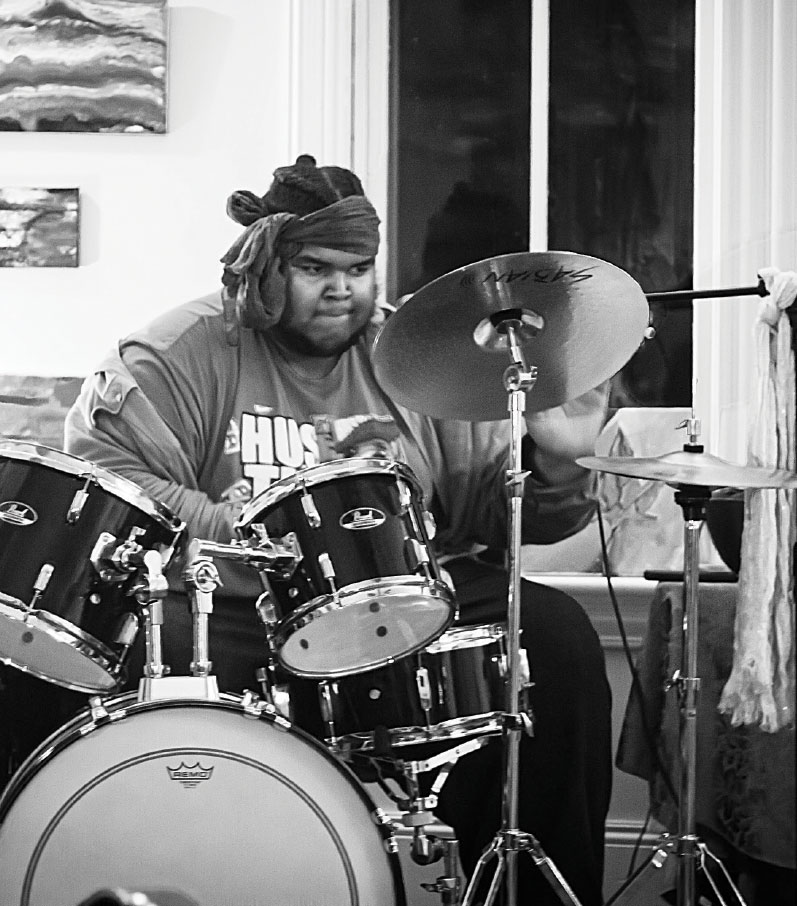
At the center of the scene was a young man playing his bass, his entire being radiating joy. It was his 18th birthday, and he was celebrating it at Madison House of the Arts, a nonprofit organization dedicated to uplifting the Lynchburg community through art.

“I don’t think I’ve ever seen an 18-year-old that happy before,” recalls Christopher Townsend, Director of Madison House of the Arts. “His birthday will be memorable because Madison House gave him what he needed at that time. It was a sober environment, he was surrounded by most of his close friends, and they were just enjoying pizza, cake, music, and conversation.”

This and other experiences of joy, belonging, healing, and hope are everyday occurrences at Madison House, which has evolved a great deal since it opened about five years ago.

Madison House began as a small arthouse gallery in the basement of Carrie Robinson’s home on Madison Street. “Carrie started it to help local artists get their work out in the community and keep the money they make from their art and to allow people—especially those living in lower-income housing—to get together to see that art,” Townsend says.

When Robinson moved, Townsend wanted to continue to run the gallery while also adding a community outreach component. His outreach ideas centered around helping people fulfill basic human needs and providing a safe space for people to express themselves.

“I know an investor named Rachel Burns,” he says. “She was very interested in the arthouse and in the mission that I had for it, which was basically to use art as a stepping stone to community outreach: feeding people, clothing people, giving individuals a bigger voice, and allowing people to start programs within the arthouse. I also wanted to create a safe, sober environment for individuals who are on their recovery journeys.”

On July 30, 2021, Madison House officially became a nonprofit. The Board of Directors was selected thoughtfully to ensure that the nonprofit can succeed in its missions; to that end, two board members work in the mental health field.

artist profile“When forming a board, I wanted to make sure that we were using art in the right way,” Townsend notes. “We try to create a therapeutic environment where we can use encouragement and sincere love to breathe life into people.

It comes down to actually listening and caring about people’s dreams and about where they want to go in their lives.”

In addition to listening and encouraging self-expression, Madison House first and foremost helps people take care of their basic needs.

Two of the most pressing issues that Madison House tackles are food insecurity and clothing needs, and it does so through a community table in front of the house.

The community table offers free canned and boxed foods, beverages, hygiene products, and clothing items to anyone who needs them. Cash and item donations from the community help keep this table—and a recently opened pantry inside the house—stocked. Everyone at Madison House is a volunteer, and all donations go toward services and programs.

“We now have a pantry inside called Leah’s Place,” says Townsend. “It allows individuals to come inside, have coffee, and get food essentials and clothing items.”

Madison House also offers use of bathroom and shower facilities, counseling, and connection to shelter resources for homeless individuals.

When it comes to art, Madison House offers a myriad of different programs that allow participants to express themselves creatively and observe others doing the same.

Currently, open jam and art sessions take place Monday, Thursday, and Sunday nights from 6:00 to 10:15 p.m., and the Blacklight Poetry Lounge occurs Saturday nights from 7:30 to 11:30 p.m.

“The poetry lounge allows individuals to come in and do spoken-word poetry,” Townsend notes. “We’ll be streaming outside spoken-word artists in and [streaming] in-house artists out. One of our board members, Angelina Dawn, is a spoken-word artist who draws a large crowd. The spoken-word community has a powerful voice, especially in the African American community. A program like this offers a really good platform for people to speak, and the only rule we have about speaking is that we don’t allow hate speech.”

Townsend is particularly excited about a program planned for the spring that will allow young people to enjoy a comprehensive music-making experience, the “in Tune” music program.

“We’re partnering with the UP Foundation and a business called The Vinyl Foundry,” he says. “The program is going to be a donor-based program, where individuals can donate on a monthly basis. We’re hoping to take on at least ten participants under the age of 21 at a time. Participants will get to learn about the basics of music, write music, and record music.”

In an effort to further convey the importance of giving back to the community, Madison House will require participants to perform community service.

“In order to get their recording time at the music foundry, participants have to do community service, and the funds from the donations will be dispersed from us to The Vinyl Foundry to record their music,” adds Townsend. “I spent the majority of my professional career before COVID on the road with artists and musicians, and I try to let young people know that being an artist or a musician is a form of serving. You are serving a basic human need by connecting.”

After all, meaningful connection is the cornerstone of Madison House’s mission.

“We pride ourselves in going out into the community and asking people what they need,” Townsend notes. “I think that all of our artists really try to connect with the community and use their art to try to relate to and raise awareness about those needs. A lot of our youth especially have something to say about what’s going on around them. I feel like the house has become a place for youth to learn more about who they are.”

The fact that Madison House is just that—a house—contributes to its ability to make people feel comfortable and safe.

“There’s something about this home that’s really inviting,” says Townsend. “A house is made up of different rooms with different personalities, and when people step in here, they’re immediately drawn to different parts of the house. It doesn’t matter if we all get along; it just matters that we’re all a part of the home. We all bring something to the table.”

In the future, Townsend hopes that Madison House will “grow responsibly” and that he and other volunteers can continue to help people in the same way that a certain musician helped him years ago.

“I don’t think I ever would have been able to get here without two things: God and the experience of touring with the musician Matisyahu, who gave me a chance when I needed it the most,” he says. “Because an artist breathed life into an artist, it gave me hope for my future. You’ve got to breathe life into people and let them know that they’re going to be OK.”


Photos by ROGER PRICE


Private School Philosophies

A Guide to the Guiding Principles of Five Local Private Schools

Choosing the best private school for your child involves a great deal of decision-making, and it can be hard to know where to start. Fortunately, many answers you seek stem from an understanding of a school’s overarching philosophy. To aid in your research of these guiding principles and how they can help children succeed, we asked five local private schools to share and expound their philosophies.

James River Day School
Fostering a lifelong love of learning is the cornerstone of James River Day School’s educational philosophy. The school serves qualified children in kindergarten through eighth grade.

“We cherish [students] as individuals, challenge them as scholars, and help them develop as leaders,” says Peter H. York, Head of School. “Character education is not only built into our curriculum but is also deeply embedded in our everyday routines and practices.”

James River’s curriculum emphasizes both educational and life skills, with York adding that students develop strong skills in the areas of reading, writing, problem-solving, calculating, creating, critical thinking, and reflecting.

“Essential life skills such as organization, time management, and self-regulation are also woven into their educational journey,” York explains. “Our curriculum is carefully developed and constantly reviewed by our educational experts to make sure our students are well prepared for high school and beyond.”

Arts, athletics, and citizenship also play important roles in James River’s philosophy. Beginning in kindergarten, students are exposed to visual and fine arts, world languages, physical education, and community service opportunities.

“With this intentional focus during these developmentally formative years [K-8], we are able to give each student an opportunity to create a strong foundation to tackle any challenge that may come their way,” says Maryanna Stands, Associate Head of School for Advancement and Director of Admissions.

Liberty Christian Academy
Liberty Christian Academy’s philosophy focuses on building strong relationships among students, families, and teachers.

“Our educational philosophy begins with a partnership,” says Amy Love, Director of Curriculum. “Our role is to come alongside parents as they raise and educate their children. We also believe that every student has God-given potential and we provide opportunities for students to realize that potential.”

A wide variety of academic, artistic, and athletic opportunities are available to LCA students.

“We provide a wide variety of opportunities for students because we know our students have different gifts and areas of interest,” Love notes. “By offering so many different opportunities for students, we can better meet their individual needs.”

LCA’s curriculum emphasizes active and engaging instruction and meeting students where they are academically.

“We offer AP, Dual Enrollment, and Honors classes for students who want a higher level of academic rigor,” says Love. “We also offer a Resource program to provide additional support for students with specific learning needs.”

The school’s extensive selection of electives, fine/applied arts programs and clubs can also help students realize their potential.

“We want students to get involved and to try different activities, so we offer a variety of clubs, National Honor Society, Beta Club, an award-winning theater program, and a strong athletic program,” says Love.

New Covenant Schools
New Covenant Schools was founded in the classical, Christian tradition, and its educational philosophy is built upon the three tenets of the Trivium: knowledge, understanding, and wisdom.

According to Headmaster John Heaton, classical education does not adhere to a specific curriculum, but is considered an approach or a way of looking at the world.

private school uniforms“In its broadest objectives it is concerned with promulgating the best of that which has been thought and said by great minds of the past,” says Heaton. “It is helpful to think of it as a conversation into which we lead our students as participants. We introduce them to the primary languages of that conversation—Latin and Greek—and we introduce them to the great questions that have been the subject of this long discussion.”

That being said, New Covenant’s curriculum is comprehensive and dynamic. They begin younger students with reading, writing and basic arithmetic, but along the way students begin to learn the “languages of music, math, and persuasion,” Heaton explains.

“They are required to study art, which is yet another means of human expression. Broadly speaking, classical, Christian education will include as much as it can of all that is good, all that is true, and all that is beautiful. With these guiding principles, the classical, Christian educator creates a curriculum that stands apart from contemporary educational fads,” says Heaton.

New Vistas School
New Vistas School’s philosophy centers around the belief that students with learning, attention, and social/emotional challenges learn best from a variety of educational approaches.

“New Vistas provides a safe, nurturing environment that fosters the development of personal characteristics, including responsibility, self-discipline, and respect for others—all necessary for productive citizenship,” says Sally James, Development Director.

The school’s approach to academics helps students adapt and succeed, by using the most recent research in Learning Disabilities, Dyslexia, Attention Deficit Hyperactivity Disorder, and High-Functioning Autism Spectrum Disorders.

“Multisensory education involves the use of visual, auditory, and tactile pathways used simultaneously to enhance memory and learning, as well as daily homework and regular quizzes, tests, and progress reviews to determine learning and continued learning needs,” says James.

Community service and enrichment programs also play integral roles in the school’s curriculum.

“All young people benefit from adult guidance regarding social skills, civic responsibilities, and service to the wider community,” says James.

New Vistas also offers an overarching system of support and encouragement.

“Faculty and staff realize learning has not always had a pleasant outcome for some of our students,” says Lori Eaglin, Ed. S., Head of School. “We teach in a way where students can build on their own strengths while being supported in areas of weaknesses.”

ONE Forest School
ONE Forest School utilizes a traditional forest school philosophy, which focuses on emotional intelligence—a child’s EQ or Emotional Quotient.

“This can be holistically accomplished by connecting children with nature,” says Catherine Eubank, Director.

She adds that a forest school philosophy also promotes an active teaching approach where children are asked to engage in their own learning, leading to benefits such as improved critical thinking skills and increased retention and transfer of new information.

A project-based STREAM (Science, Technology, Robotics, Engineering, Arts, and Math) curriculum reinforces this philosophy.

“Our STREAM focus is on American history, which helps foster a sense of community and belonging, as well as a feeling of patriotism for our country,” says Eubank.

“We utilize a place-based education for our learning so we center our focus on Virginia history as much as possible.”

The school’s outdoor setting allows students to engage in activities such as shelter and campfire building, whittling, and forest exploration.

“Using the forest as our classroom, with no desks or textbooks, has many benefits,” says Eubank. “They include improved energy levels, physical and emotional resilience, conflict resolution, higher self-esteem, and bolstered leadership skills. A mindful nature connection can also provide opportunities for positive social interactions and help give one a sense of meaning and purpose in life.”


Back in the Groove

Lynchburg Salsa Returns to the Dance Floor

Photos by Ashlee glen

Salsa dancing is much more than a series of steps, it is a conversation between two partners built on mutual coordination, trust, and passion. It also takes fortitude and patience to master salsa, and as Abram and Genette Dahlby know firsthand, all of these things are invaluable when it comes to running a salsa dance studio as well. The Dahlbys have owned Lynchburg Salsa since January 2017, and they have navigated several challenges with the same deftness that characterizes the style of dance they teach.

Chief among these challenges is the COVID-19 pandemic. “The pandemic hit us hard,” says Abram. “We had to close our doors in March 2020 when the mandate for gyms and other things fell under the workout classification and only reopened in August 2021. It was almost 18 months in total and we are ready to build up our numbers and get people back to dancing.”

Changes in locations and times over the past several years have also affected participation. Lynchburg Salsa was originally founded by Elizabeth Pfister in 2009 and took place on Friday nights in the former Dance Theatre of Lynchburg on Commerce Street. The studio subsequently moved to The Glass House and then to Riverviews Artspace before coming back to the original Commerce Street building—now the home of Mission House Coffee—in October 2019. Classes and events now occur primarily on Thursday nights.

“Over the last couple years, we have seen Lynchburg Salsa ebb and sway with our weekly numbers due to having to change to multiple locations and different days and times,” Genette notes. “Regardless of the hardship of having to communicate new locations, times, or days, we have always had a great community that looks forward to dancing and we have seen a lot more interest in dancing since COVID has lightened up. We hope to get to the point of the fire code being the big issue each week.”

The Dahlbys fondly remember the days when participants came out in full force to dance. “When I started dancing about seven years ago, it felt like every Friday was the hottest the room could get,” Abram says. “People were always ready to dance and came out religiously.”

“The early days were so much fun,” Genette recalls. “It was the thing to do on a Friday night in Downtown Lynchburg. We always had a packed house, with a minimum of 75 students for the beginner class.
I’ve seen as many as 150 in my beginner classes before; that seems like a chaotic number, but it’s amazing to teach so many people at one time.”

According to the Dahlbys, the majority of participants are college students. Luckily, the fact that many of these students move away after graduating hasn’t proven to be much of an issue. “Since most of our population of dancers is the students in the area, we have seen them graduate and move away, but more students have come in,” Genette says.

“Lynchburg has a lot of young students constantly looking for a place to dance and get energy out,” adds Abram. “We have locals who love coming out and students who have graduated and stayed in the area and have become regulars. We have multiple colleges and an ever-revolving door of new students and people who might just want to try out salsa.”

Of course, Lynchburg Salsa isn’t just for students; it’s for everyone, including those who have no dance experience at all.

“We have some dancers who are able to pick up on the steps quickly and others who need a bit more time,” notes Genette. “We want people to come to our beginner class as many times as they want to understand the steps. We also make sure to help those who are having a harder time, typically during social dancing. Since we have a group lesson, it’s not always easy to give one-on-one help during class, but we make sure everyone knows we are here to help.”

Although mastery takes a great deal of time and effort, beginning is as easy as walking and counting to eight.

“When we walk, we transfer our weight to each foot and it’s the same in salsa,” says Abram. “We transfer our weight to different feet while counting and communicating with our body what we are doing. The count lets you and your partner move on the same timing, so the moves start and complete on the same timing. The music is the base structure and gives the dancers the same starting point and then the footwork follows the timing.”

Lynchburg Salsa’s Thursday Night Salsa events run from 8 p.m. to 11 p.m.; the first hour is a beginner salsa lesson, and the remaining two hours are allotted for social dancing. Additionally, the studio occasionally offers intermediate salsa lessons for those who are interested in more advanced instruction.

“The beginners usually are taught the basic eight count with a fun turn and cross body lead,” Abram says. “After a couple weeks and classes, participants are usually confident in leading those moves as well as maybe picking up one or two more from other dancers or instructors. The basics are the most important, but if you want to learn more intermediate moves and combinations, we offer intermediate classes when we have those who show interest.”

Special outdoor and themed events are also back on the docket. In September, Lynchburg Salsa partnered with The Lot on Jefferson to offer an outdoor salsa event, and in October, the studio held their “Salsaween” Costume Dance Party. The Dahlbys are hoping to bring back their popular Valentine’s Day Masquerade event in February.

The couple also hopes to ultimately expand their instruction offerings and be involved in more extensive salsa workshops.

Photo courtesy: Lynchburg Salsa

“We want to see over 100 people every time our doors are open—beginner, intermediate, and advanced dancers on the dance floor,” Genette says. “We also want to be able to provide more instruction beyond the basics of the class. We would even love to see weekend-long salsa fests so that more people can learn from other instructors and improve their dance skills.”

Above all else, the Dahlbys hope that Lynchburg Salsa can provide a fun and comfortable atmosphere that facilitates friendship—and perhaps even romance.

“Abe and I met at Lynchburg Salsa on the dance floor; that’s where he asked me out for the first time,” recalls Genette. “Lynchburg Salsa is a part of our love story and we hope that it is a part of others’ stories too where they have met friends and maybe, one day, their forever dance partner.”


The BackYard

Variety with a View

COMING RIGHT UP

If you’re looking for an outdoor, family-friendly, and highly customizable dining experience, look no further than The BackYard, a new food court on Route 221 in Forest. Featuring nearly a dozen food trucks with diverse offerings, The BackYard is the perfect spot for casual outdoor dining.

The BackYard is part of Duff Development Group’s Burnbridge Crossing development. The process of breathing new life into the 12-acre development has happened in many stages, and the demolition of Carol’s Place was one of the most important—and bittersweet—of those stages.

“Carol’s Place was a landmark,” says Charles C. “Chip” Duff, Jr., founder of Duff Development Group. “We really wanted it to be there, but the building was in too bad of shape to save it, so we started looking at other ideas for that piece of property.”

After considering opening a farmers market, Duff Development ultimately decided to proceed with an outdoor food court. A highly successful grand opening event on May 1 indicated this was the right decision.

“We’re fortunate to have the right product at the right time,” Duff says. “People are anxious to get out and do things. Food courts are something you’re going to see happening more and more in the future. They allow everyone in a family or group to get what they want but still spend time together.”

The BackYard also boasts something most food courts don’t have: a spectacular view.

“The great thing about the location is that you can look across the road and see a beautiful vista and mountain,” Duff notes. “That property is in a conservation easement and will be there for a long time to come. That view will not change.”

Additionally, select Friday and Saturday nights are designated “Campfire Nights” and feature wood-burning fire pits. Plans for drive-in movies and live music are also in the works.

At the time of writing this article, ten food trucks are confirmed vendors at The BackYard: Papa O’s Dog House, The Pied Piper, Pok-E-Joe’s BBQ, Blue Ribbon Pie Shop, Tacos Al Pastor, JD’s Mobile Café, Cowlicks Homemade Ice Cream, Wings N Things, Corny Kettlers, and Rolled or Bowled. Another truck is in the process of being added to the lineup, and Duff says that there is room for one more. Food truck hours are set by each individual truck

“The group of vendors we have is fantastic,” says Duff. “They all work together to avoid stepping on each other’s toes with their menu offerings. There really is something for everyone.”

Duff also appreciates the community partners who help The BackYard thrive.

“You’ll notice that a variety of businesses have sponsored tabletops and benches to get visibility in the community,” he says.

As COVID-19 restrictions continue to ease and warm weather draws more and more people outside, The BackYard stands to have a flourishing summer season filled with food, family, and fun.


The BackYard
15173 Forest Rd, Forest
thebackyardforestva.com
Follow them on Facebook for upcoming events: @backyardeventsforestva


“Our Stories Matter”

Group of artists craft original play to explain the diversity of blackness

Photos by Jenna Burling

The creation of the play Color Me Beautiful: An American Odyssey has itself been a kind of odyssey. What began as a therapeutic exercise in connection during 2020’s stay-at-home orders is now an important production that stands to change the future of theater.

Local actor, singer, writer, and director Joshua Carter decided to reach out when the isolation of last year had him feeling boxed in.

“I was in quarantine by myself in an apartment, and in the midst of me feeling sorry for myself, it hit me that if you think you’re alone, there are about ten other people who everybody may have forgotten about,” Carter says. “So I decided to gather some people and say, ‘Hey, let’s read plays on Zoom. Let’s pick plays every week and we’ll read.’”

Zoom calls led to Facebook readings, which led to Carter proposing that people share their original works to be read and reviewed virtually. Taking part in these creative exchanges ultimately inspired Carter to begin a virtual writing workshop.

“I thought to myself, ‘One of my goals is to get new works for Black theater, so let me do a writing workshop,’” he recalls. “I reached out to a few people, and we did a workshop all the way through George Floyd and everything. It was very therapeutic that we got to write from our hearts and share with each other during that time.”

What happened next was nothing short of serendipitous. Without knowing about his writing workshop,Alluvion Stage Company called Carter and asked for, as Carter puts it, “a play explaining why black lives matter.”

“We had no idea; we were just doing our therapy!” Carter exclaims. “Luckily, we were in place and had the tools to make it happen.”

Carter, along with writers Cameron Dashiell, Jasmine Pierce, and Joel Ashur, composed Color Me Beautiful: An American Odyssey, a play in which “a Black teen, overwhelmed by a chaotic world, meets a dark fate and must pursue the weight of his existence on a journey through the stars.”

The play, which is a collaboration among Carter, Dashiell, Pierce, Ashur, choreographer Meagan King, Alluvion Stage Company, and Building Bridges Productions, Inc., will be presented at The Black Box Theater in Lynchburg July 23-25.

Carter says that the process of creating the play was fueled by questions, both external and internal.

“I love to write with questions,” he notes. “When I was asked, ‘Why do Black lives matter?’ I was initially like, ‘Isn’t it obvious? Why do you need to ask that question?’ But then I asked myself that as an artist, and the answer is that our stories matter. The things people don’t see matter.”

“We knew we wanted to have a strong ‘why’,” added Pierce. “At the end of the day, we want people to look at Black people as just that: people. Not threats, not people who should be demonized. Just people with intrinsic beauty and value.”

Carter says one of the major themes of the play is the diversity of blackness. “Being African American comes with so many experiences and so many stories, and in our play, we travel through several stories,” he says. “We’re not always struggling through civil rights, although that’s a big part of how people understand who we are. It’s the conversations at the dinner table, it’s the moments before divorce, it’s the moments before death; we don’t see those things on stage because that’s not what people often see in reality. That’s what the humanities are for: we fill the gaps with life.”

When Carter looked inward at his own personal experience as a Black man as he worked on the play, the question he found there shook him to his core.

“My question as a creator on this project from my personal life was, ‘What if it was me?’” says Carter. “Take the case of Elijah McClain. He was very similar to me in that he was very calm and meek. He played the violin. He was caught up in a moment. He said, ‘My name is Elijah McClain. I play the violin, and I would never hurt anyone. I’m not that type of person.’ That put a little fear in my heart that sometimes it doesn’t matter what education you have or who you are; you don’t get time to share your credentials before you’re in a moment. A lot of the scenes I wrote came from a place of reflection on that question: ‘What if it was me?’”

In addition to addressing these and other complex and important questions, Color Me Beautiful will also help create opportunities for children, especially those who are underprivileged and at risk, through collaboration with local nonprofit theater organization Building Bridges Productions, Inc. Its founder, Janice Atkins Benejan, joined as a producer of the show.

Pierce says the partnership with Building Bridges means putting words into action.

“The arts offer a safe place to express the joys but also hurts of the world,” she says. “It provides people with a place to be vulnerable and oftentimes forces one to look at the world through someone else’s lens, creating a deeper sense of sympathy among people. This is vital for youth.”

One aspect of the partnership is Carter’s involvement with Building Bridges’ Story Makers Theater Camp this summer (June 28-July 9) for youth ages 12-18.

“Story Makers was already an idea in Janice’s head, but it really fit with Color Me Beautiful because it’s the same process of writing a script and producing it yourself,” Carter says. “I was brought into the team as an instructor to help make a curriculum for kids to write their own stories, produce them, and perform them for their families. Any child can sign up, but one of Janice’s goals is to reach underprivileged children, so scholarships will be offered.”

Carter believes that involvement in theater can help children—and adults—learn invaluable communication skills that will serve them in their real-world relationships.

“One of the skills that all people need to work on is communication: the abilities to step back, think, empathize, and be not only reactive, but also reflective,” he notes. “I think theater gives you tools for working on these things. Theater is a very spiritual exchange from one soul to another.”

Carter hopes that the production will create positive change on multiple levels.

“Tyler Perry famously said, ‘Stop asking to be at someone else’s table; build your own,’” he says. “I hope that this play inspires someone to say, ‘I can write a five-minute script.’ I hope that some actor, whether they be young or old, Black or white or Latino, will take authority of their narratives and their stories. I pray that when they come to see this, they feel like they can do the same. I also hope that it will help people understand a perspective that they may not have seen before.”

“I personally hope people will just see the utter beauty of engaging with new stories and cultures and people,” Pierce adds. “I hope they will feel immersed in our world that it encourages them to step outside of their own after the show in order to better get to know people they wouldn’t usually engage with.”

For Carter, Pierce and the rest of the Color Me Beautiful team, the ultimate dream is to see the play find success beyond Lynchburg so it can reach more audiences and spark even more transformative dialogue about race, representation, empathy, and life itself.

Says Carter: “This is just the beginning.”


Save the Date
Color Me Beautiful: An American Odyssey
July 23-25, 7:30 p.m.
The Black Box Theater
601 Mountain View Road (LU Campus)
Find tickets at Eventbrite.com.


Ahead of the Curve

New Championship Disc Golf Course Sure to Be Huge Boon to Bedford

With five highly-rated courses currently in operation, Bedford County is already a standout spot for disc golf in the U.S.; with its sixth course now open, it is likely to garner attention worldwide.

The New London Tech Disc Golf course, which boasts a finalized design by five-time disc golf world champion Paul McBeth, is slated to open at the New London Business and Technology Center (NLBTC) this spring. Bedford County Parks & Recreation Operations Coordinator Kenny Palmer first saw potential for the course in 2014.

“In 2014, I became aware of the disc golf course potential at the NLBTC due to the utility easements and clearing on the property,” Palmer recalls. “I filed it away in the back of my mind because developing the trail system was the focus at that time. This past summer, I presented the Bedford County Economic Development Board and the Bedford Regional Water Authority with a plan for the course.” After some slight modifications and a finalized design by McBeth, work on the course began late last fall.

McBeth’s involvement in the course stemmed from an unlikely source: the pandemic.

Last spring, Palmer offered McBeth the opportunity to play a new course at Independence Park that was not yet completed. The Professional Disc Golf Assocation was encouraging its professionals not to play on public courses, and McBeth took the opportunity and played the then-private course. McBeth was so impressed by the course that he designed a pro layout for it, and he decided to do the same at NLBTC after Palmer took him on a tour of the property.

“Paul immediately recognized the potential for a top tier professional style course [at NLBTC] and was on board from there,” Palmer says. “It’s been a great experience working with Paul. He has disc golf insight well beyond anyone I’ve met.” According to Palmer, McBeth believes that the New London Tech Disc Golf Course “could be one of the top courses in the world.”

Several things set the new championship course apart from others in the area. “The long and relatively wide fairways through the woods with very little elevation change is unique and gives the course a European course–feel, according to Paul,” notes Palmer.

Additionally, this 18-hole course is more than 11,500 feet long with three par 5s, eight par 4s, and seven par 3s, whereas most Virginia courses are between 4,000 and 8,000 feet with mostly par 3s and 4s. The course also features an abundance of out-of-bounds, so, as Palmer says, “players must focus on both accuracy and distance.”

The course officially opened on Friday, April 9 after a grand opening and ribbon cutting ceremony. Members of the general public are able to play, but it is important to note that this is a professional level course. Luckily, an amateur level course option is in the works.

Palmer expects that Bedford County tourism, which is already on the rise, will skyrocket with the opening of this new course. People from around the state and country are already traveling to Bedford County just to play our courses, and this course is like “the cherry on top,” he says. “A Paul McBeth–designed championship course is going to cause an influx of professional players as well as fans from everywhere.

We already see it at Independence Park.”

“The most remarkable thing about the new disc golf course is that it checks three important boxes: it provides recreation, it boosts tourism, and it promotes quality of life,” says Bedford County EDA Chairman Jim Messier.

Business recruitment at NLBTC is also likely to surge due to not only an influx of outside visitors, but also to an increased focus on quality of life for employees.
“We believe it’s easier for businesses to attract great employees when quality of life in an area is present,” says Palmer.

“A business park with miles of multi-use trails and a world class disc golf course certainly offers prospective employees and employers ample opportunity to improve their quality of living. Playing a round of disc golf at lunch or after work is an opportunity to get outside, exercise, and have fun.”

Simplimatic Automation CFO Sara Orange agrees. Her company moved to NLBTC in 2015, and she says that she and other employees make use of the trails often and look forward to trying out the course as well. “The trails are great for walking, jogging or biking,” she notes. “Many employees—and their families—enjoy them during their lunch break, after work or on the weekends. We are very excited about this addition to the park and think it will provide another option for people to get outdoors and enjoy what the park has to offer.”

Palmer has high hopes for the New London Tech Disc Golf Course, and the community response to the project thus far has given him every reason to do so.

“The community support for the project has been incredible,” he says. “So many people have contacted me expressing thanks and support. I’d like to think that this course will be regarded as one of the best in the world and that that reputation will bring people from around the world to Bedford County. We’ll see.”

</hr/>

Photos by Jenna Burling


Dare to Prepare

Five Tips from 2 Birds Meal Prep

For 2 Birds Meal Prep owner Ivy Olivier, food and community are inextricably linked. After working in restaurants for more than a decade, she switched to a career as a social worker before ultimately realizing that her passion lies where food and community intersect.

Shortly after launching an Instagram account showcasing her meal prep for her family, Olivier began getting an influx of requests to purchase her meals. She also read a book called Tattoos on the Heart: The Power of Boundless Compassion by Greg Boyle, which is about a café in Los Angeles that hires ex-gang members. These events inspired Olivier to take a leap of faith and start her own meal prep business.

“Between my love for food and my desire to give back to the community, I saw a need that could be filled with 2 Birds Meal Prep,” she says. “I enrolled in culinary school and wrote a business plan! It’s very exciting to transition from my career in social work to owning my own business. I think my background definitely helped prepare me to serve people in our community in a unique way.”

Olivier preps and sells a variety of individual and family meals, many of which are also available as vegan meals. Olivier herself is a vegan and is determined to offer delicious plant-based options. “We don’t want to make food that tastes ‘almost as good’ as the carnivorous version,” she says. “I want to present a happy medium to people—like, here’s how to eat in a way that doesn’t hurt the only earth we have, but it’s also so delicious you’d order it either way!”

After taking a short break, 2 Birds is slated to reopen by May 1st with an even greater emphasis on community outreach. “We have partnered with a local church to be able to do more ministry work and give back to the Lynchburg community in a big way,” Olivier says.

Olivier is also passionate about sharing her meal prep knowledge.

Here are five of her top tips!
1. Start Small
Although a certain amount of enthusiasm is necessary when it comes to meal prep, resist the urge to pre-prepare every meal—doing so will inevitably cause burnout. “Remember, this is something that is supposed to help you, not be a massive, overwhelming burden!” notes Olivier. “If you’re prepping for yourself, maybe start with just one family-sized meal (or double one if you have a large family) so you’ll have leftovers for lunches.”

Olivier adds that preparing single versatile items rather than full meals is also optimal. “Here’s an example: if you roast a chicken on Sunday, you could have shredded chicken to use in enchiladas, make some chicken salad to eat for lunch, and use the bones to make soup,” she says.

3. Shop Selectively
Choosing high-quality foods is an essential part of any healthy and delicious meal prep plan. Olivier recommends shopping at farmers markets when possible. “There are so many benefits to shopping farmers markets: you support local farmers, you know exactly where your food is coming from, and it gives you the opportunity to eat ‘in season,’ which can keep you from getting bored eating the same old thing week to week,” she notes.

Shopping selectively also means staying true to yourself and your preferences. “Do not prep anything for yourself that you don’t like to eat,” says Olivier. “This is a mistake I see so many people making. If you hate kale, don’t force yourself to eat it. There are literally hundreds of other veggies. Eat the ones you like!”

2. Don’t Underestimate Staples
Integrating basic foods into your meal prep plan is ideal in more ways than one. Not only do many staples lend themselves perfectly to advance prep, but they are also budget-friendly. “If you want to prep healthy on a budget, keep it simple,” notes Olivier. “Stick with the staples: apples, carrots, potatoes, a bag of salad, frozen steam veggie bags, canned tuna, pouches of salmon, peanut butter, etc.

You don’t have to reinvent the wheel.”
Beans are Olivier’s personal favorite staple. “Dry beans are my number one favorite versatile ‘cheap’ healthy food,” she says. “They go great in wraps, stews, as a stand-alone item. I make a big pot of rice and beans pretty much every week because they’re so versatile.”

4. Explore Different Cuisines
If you find yourself getting into a meal prep rut, Olivier suggests incorporating foods from other cultures or simply from outside your comfort zone. “I stay motivated by exploring new cuisines often,” she says. “For the home chef, try to make something complicated once a month to remind yourself why you love cooking. Cooking can be a form of self-care, and there is nothing better than surprising yourself with a new flavor combination you haven’t tried yet!”

5. Don’t Get Discouraged
As is the case with any venture, meal prep will have its share of hiccups. Embrace the process and try to view mistakes as opportunities rather than obstacles. “If you try something and it’s gross, don’t be discouraged!” Olivier exclaims. “Every chef will tell you that they have made some questionable concoctions before. It’s just part of the process. The only way any of us got better at this thing was through experience.”


Bigger Than Bagels

Bacon St. Bagels Offers Fresh Breakfast and Work Culture Perspective

When Jordan Nickerson and Jordan Hawkins sat down to discuss potential business ventures in January 2019, they didn’t know that their meeting would end with serendipity in the shape of a bagel.

“I said, ‘I know this is kind of out there, but I’ve always thought it would be really cool to open a bagel shop,’” Hawkins says. “Jordan was taken aback because that morning he and his wife, Holly, were on a walk and he mentioned to her that having a bagel shop in Lynchburg would be awesome.

We saw it as a sign to move forward.”

On November 6, 2020, their vision became a reality when Bacon St. Bagels opened on Rivermont Avenue. The community response to the grab-and-go bagel shop was immediately—and continues to be—overwhelmingly positive.

bagelThe menu boasts several types of New York–style bagels with a variety of toppings, specialty breakfast sandwiches, and coffee from Staunton-based coffee shop Crucible Coffee.

New York–style bagels are boiled before they’re baked, a process that locks in flavor and gives the bagels a delicious chewy density.

Hawkins’ favorite sandwich on the menu, The Lenora, is named after his grandmother. “She was Italian, so the sandwich has mozzarella, tomato, basil pesto, and a balsamic glaze,” he says.

The Nickersons and Hawkinses first met and became friends at Liberty University. The Nickersons opened the successful ice cream shop Rookie’s in Forest and Hawkins worked in local restaurants before deciding to start a business together.
When it came to selecting a location, downtown Lynchburg was the clear winner. Nickerson specifically was very taken with the standalone building on Rivermont that now houses the shop.

“I love standalone buildings,” he says.

“They offer so much space for charm, creativity, and flair.”

The shop got its name from Nickerson’s childhood home street in Massachusetts.

“I’m a huge breakfast food fan, so it’s ironic that I lived on Bacon Street!” says Nickerson. “We had about five names on the board, and Holly came up with that one.”

The brand is built not only on affordable and delicious breakfast options, but also on a positive work culture that values individual employees and customers as well as the community at large.

“I’m very thankful that I get an opportunity to sink my teeth every single day into what I’m passionate about: entrepreneurship and creating healthy and exciting workplace cultures,” Nickerson notes. “I would say we’ve already established a really healthy culture in our building. I love the opportunity to kind of challenge the status quo in the food work culture industry.”

“Our motto is ‘bigger than bagels’,” says Hawkins. “A lot of people are miserable going to work because they feel that they aren’t cared for or valued, and if we can change that, even just for our employees, then it will be worth it.”

In the future, the team hopes to add a takeout window and online ordering and to ultimately expand.

“We want the shop to grow into its potential, and we want to steward it really well,” Nickerson says.


Bacon St. Bagels

306 Rivermont Ave., Lynchburg
Open daily from 7 a.m. to 2 p.m. or until items sell out
www.baconstbagels.com