A Weekend at Caesars Virginia

A New Chapter for Danville

Photos by: Ashlee Glen

Imagine stepping into a world of bright lights and anticipation, where the thrill of the roulette wheel competes with the high-energy sounds of slot machines. Every step you take brings you closer to the electric buzz of excitement—a buzz that encapsulates the new heart of Danville, where Caesars Virginia reigns as a beacon of both luxury and possibility.

For those unfamiliar with the region, Danville has long been known for its industrial past, primarily tied to tobacco and textiles. Yet in recent years, the city has reinvented itself. Once a hub of manufacturing, Danville has begun to flourish as a small city of innovation, bringing in new businesses, restaurants, and attractions. The arrival of Caesars Virginia, located on the site of a historic textile mill, is both a testament to this transformation and a catalyst for even more development.

The Building: Merging History & Modernity

Caesars Virginia’s location—just off the Dan River—has been carefully chosen to reflect both the city’s industrial heritage and its bright future. The casino sits on the same grounds that once housed a textile mill, with the iconic smokestacks still standing tall as a symbol of the city’s past. This historical integration is particularly meaningful in Danville, where old factories are being repurposed into trendy restaurants, breweries, and offices. Caesars preserving these smokestacks during construction was part of a broader effort to honor the city’s roots while building for its future.

Inside, the property radiates modern luxury. The Caesars name brings with it a promise of world-class amenities, and the resort does not disappoint. With 320 hotel rooms, including 28 suites, the space offers a welcoming atmosphere for all visitors. Whether you’re a high-roller or someone just looking to unwind, the accommodations are designed for comfort and luxury. The hotel’s grand aesthetic extends to the casino floor itself, where 1,500 slot machines and numerous table games create a buzz of activity. The venue also features a World Series of Poker room and a state-of-the-art sportsbook, making it an exciting destination for both seasoned gamblers and those looking for a little thrill.

A New Experience for the Region

The allure of Caesars Virginia isn’t just in the gaming. The resort has a strong emphasis on providing a full experience for visitors, with something for everyone—whether you’re a foodie, a spa enthusiast, or someone looking for a relaxing weekend. The highlight for many is Ramsay’s Kitchen, by multi-Michelin-starred chef and television personality Gordon Ramsay—the first of its kind in Virginia—where diners can indulge in world-class dishes. Additionally, there’s Dan Dan Noodle Bar, where guests can enjoy Pan-Asian inspired dishes such as sushi or stir fry; Starbucks; and a variety of local eateries like those found at the 500 Block—managed by local restaurateur Steve Parry and local property developer Rick Barker—offering everything from pizza to BBQ.

For those looking to relax and unwind, the spa and pool areas provide serene retreats, while The Pantheon, a 2,500-seat entertainment venue with 30,000 square feet of showroom space, promises a variety of entertainment options. Scheduled to host headliners such as Wynonna Judd and ZZ Top, The Pantheon is poised to become one of the area’s premier venues for major acts. Visitors can expect performances ranging from country and rock to stand-up comedy, further establishing the casino as a vibrant cultural hub.

Despite its focus on gaming, Caesars Virginia also caters to those who might not be interested in placing bets. Families, couples, and even solo travelers can enjoy the resort’s non-gaming offerings, making it a versatile destination for a weekend retreat.

The resort’s integration with the Danville community is also a key element of its success. Partnerships with local businesses and attractions—such as wineries, breweries, and sports teams—allow visitors to experience the best of Danville beyond the casino walls.

Danville’s Revival

The impact of Caesars Virginia on Danville has been significant.

The casino’s opening has sparked a wave of new investment in the area, with construction cranes dotting the skyline and new businesses popping up regularly. The local economy has seen a noticeable boost, as more visitors are flocking to the region to experience the resort. Caesars has hired hundreds of local residents, injecting much-needed jobs into the community. It’s clear that the property’s success is tied closely to its relationship with the local community.

“We are not just a casino,” said Chris Albrecht, SVP & General Manager of Caesars Virginia. “We are part of the fabric of Danville’s growth, and we
want to be a positive influence for years to come.”

The casino’s offerings—ranging from gaming to dining and entertainment—are designed to complement the local economy, with a focus on collaboration rather than competition. By working with local partners, Caesars is helping to create a stronger, more diverse economy for the region.

Center BarPhoto Courtesy Caesars Entertainment

Center Bar. Photo Courtesy Caesars Entertainment

A Weekend Experience at Caesars Virginia

A weekend at Caesars Virginia is an immersive experience. Whether you are drawn to the gaming floor, looking to indulge in fine dining, or seeking relaxation in the spa, there’s no shortage of things to do. For those staying overnight, the hotel’s luxurious rooms provide a quiet sanctuary after a day filled with activity. Guests can unwind with a drink at the casino bar, take in a live performance at The Pantheon, or simply enjoy the scenic beauty of the Dan River.

On Saturday night, the casino floor is bustling, and the excitement is palpable. Guests move from one machine to the next, trying their luck on everything from classic slots to the latest video games.

The energy is contagious, and for many, it’s the perfect way to spend an evening. For those less inclined to gamble, the live music and comedy acts
provide another form of entertainment. You can stroll through the casino, taking in the excitement of the environment, without feeling the pressure to place a bet.

For those looking for a slower pace, a visit to the spa is the perfect way to rejuvenate. The wellness offerings at Caesars Virginia are designed to provide guests with the ultimate relaxation experience, with massages, facials, and other treatments that focus on well-being. The resort’s commitment to offering something for everyone is evident in its diverse array of amenities.

Looking Ahead

Caesars Virginia is more than just a weekend destination; it’s a glimpse into the future of Danville, where history meets modern luxury and a city’s potential is being realized with each passing day.

As the casino continues to grow and evolve, one thing is clear: the best is yet to come for Danville—and for those who choose to make it their getaway.


Wholesome & Hearty

4 Plant-Based Recipes to Try

Eating plant-based doesn’t mean you have to sacrifice flavor or satisfaction. In fact, plant-based meals can be as filling and comforting as any traditional dish, without missing a beat. Whether you’re a long-time plant-based eater or just starting to explore, these recipes offer inventive and accessible options that anyone can try. From a hearty curry to a zesty salad, these dishes are packed with fresh, nutritious ingredients that will keep you feeling energized. Ready to dive into some delicious plant-based cooking? These four recipes are here to inspire your next meal.

Chickpea & Spinach Curry (photo above)

A one-pot wonder, this creamy and flavorful curry brings together chickpeas, spinach, and a blend of aromatic spices. The coconut milk creates a rich base while the spices add warmth and depth to every bite. Served with basmati rice or quinoa, this dish makes for a satisfying meal that’s as comforting as it is healthy.

Ingredients:
2 tbsp olive oil
1 onion, chopped
3 cloves garlic, minced
1 tbsp grated fresh ginger
1 tbsp curry powder
1 tsp ground cumin
1/2 tsp ground turmeric
1 can (14 oz) coconut milk
1 can (15 oz) chickpeas,
drained and rinsed
1 can (14.5 oz) diced tomatoes
4 cups fresh spinach
Salt and pepper, to taste
Fresh cilantro, for garnish
Cooked basmati rice or quinoa, for serving

Directions:
1. In a large pot, heat olive oil over medium heat. Add the onion and sauté until softened, about 5 minutes. Add garlic and ginger, cooking for another 1-2 minutes.
2. Stir in the curry powder, cumin, and turmeric, and cook for 1 more minute until fragrant.
3. Add coconut milk, chickpeas, and diced tomatoes. Stir well and bring to a simmer. Let it cook for about 10-15 minutes, allowing the flavors to meld together.
4. Stir in spinach and cook until wilted, about 3-5 minutes. Season with salt and pepper to taste.
5. Serve over basmati rice or quinoa and garnish with fresh cilantro.

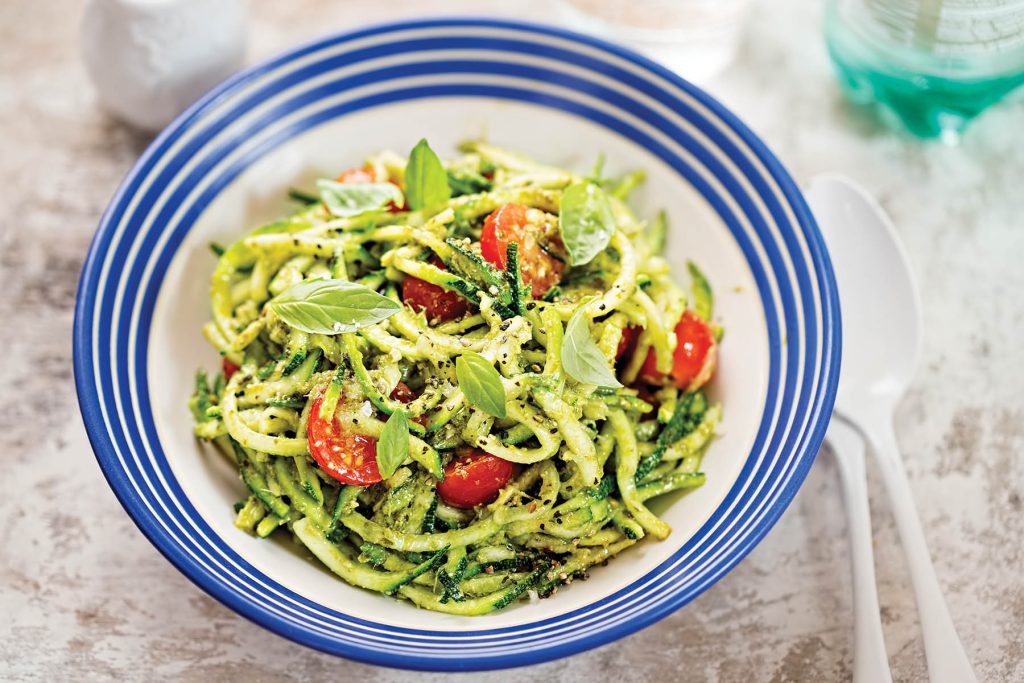
Spiralled courgette spaghetti with green pesto and cherry tomatoes

Zucchini Noodles with Pesto & Cherry Tomatoes

This fresh, vibrant dish is light yet satisfying, with spiralized zucchini noodles tossed in homemade pesto and juicy cherry tomatoes. It’s a gluten-free, plant-based alternative to traditional pasta, perfect for a quick and delicious weeknight dinner.

Ingredients:
4 medium zucchinis, spiralized
1 pint cherry tomatoes, halved
1/4 cup toasted pine nuts (optional)
1/4 cup fresh basil, chopped
1/2 cup pesto (store-bought or homemade)
Salt and pepper, to taste

Directions:
1. In a large bowl, toss the spiralized zucchini noodles with pesto until well coated.
2. Gently fold in the halved cherry tomatoes and chopped basil.
3. If desired, sprinkle with toasted pine nuts for added crunch. Season with salt and pepper to taste.
4. Serve immediately as a light lunch or dinner option.

Cooking Roasted Cauliflower and roasted chickpeas salad, with pomegranate, kale, with spices, oil and lemon dressing. Vegetable winter season food on a light background. Vertical image.

Roasted Cauliflower & Chickpea Salad with Tahini Dressing

This roasted cauliflower and chickpea salad is a warm, hearty meal packed with protein and fiber. The smoky, roasted cauliflower pairs beautifully with crispy chickpeas, all tied together with a creamy tahini dressing. The perfect balance of flavors and textures, this salad works well as a main or a side dish.

Ingredients:
1 head cauliflower, cut into florets
1 can (15 oz) chickpeas, drained and rinsed
1 tbsp olive oil
1 tsp ground cumin
1 tsp smoked paprika
Salt and pepper, to taste
4 cups fresh arugula or kale
1/4 cup tahini
2 tbsp lemon juice
1 tbsp maple syrup
1 garlic clove, minced Pomegranate seeds, for garnish
Water, as needed to thin the dressing

Directions:
1. Preheat the oven to 400°F (200°C). Line a baking sheet with parchment paper.
2. Toss cauliflower florets and chickpeas with olive oil, cumin, smoked paprika, salt, and pepper. Spread evenly on the prepared baking sheet and roast for 25-30 minutes, until cauliflower is golden and chickpeas are crispy.
3. While the vegetables roast, whisk together tahini, lemon juice, maple syrup, garlic, and a pinch of salt in a small bowl. Add water a tablespoon at a time until the dressing reaches your desired consistency.
4. Once the cauliflower and chickpeas are done, toss them with the arugula or kale in a large bowl. Drizzle with tahini dressing and garnish with pomegranate seeds if desired. Serve immediately.

Baked sweet potato stuffed with tomatoes, chickpeas, onion and avocado. Close up. Vegan food concept

Stuffed Sweet Potatoes with Black Beans & Guacamole

These roasted sweet potatoes are the perfect vessel for a savory black bean filling and topped with creamy guacamole. It’s a nutrient-dense dish that’s packed with fiber, healthy fats, and protein. Plus, it’s easily customizable with your favorite toppings.

Ingredients:
4 medium sweet potatoes
1 can (15 oz) black beans, drained and rinsed
1 tsp ground cumin
1 tsp chili powder
Salt and pepper, to taste
1/2 cup guacamole (store-bought or homemade)
Fresh cilantro, for garnish
Lime wedges, for serving

Directions:
1. Preheat the oven to 400°F (200°C). Pierce sweet potatoes with a fork and place them on a baking sheet. Roast for 40-45 minutes, or until tender.
2. While the potatoes roast, heat black beans in a small saucepan over medium heat. Stir in cumin, chili powder, salt, and pepper. Simmer for 5-7 minutes until heated through.
3. Once sweet potatoes are done, slice them open and fluff the insides with a fork. Top with black beans, a generous scoop of guacamole, and fresh cilantro.
4. Serve with lime wedges on the side for an added burst of freshness.


2025 LL Fun Guide

As summer settles in, there’s no better time to explore the rich history and vibrant arts scene that define our region.

From captivating theater performances to immersive historical sites, Lynchburg offers a unique blend of culture and storytelling that brings the past to life. Whether you’re rediscovering familiar landmarks or venturing to new experiences, this guide is your perfect companion for an unforgettable summer filled with adventure.


Gardens for Mindful Eating

Growing Your Own Nutrient-Rich Produce

Gardening offers a pathway to better nutrition, improved mental well-being, and a closer connection to the food on the plate.

As communities increasingly seek ways to enhance overall wellness, the garden emerges as both a source of nutrient-rich produce and a sanctuary for mindful living. Numerous studies affirm that time spent tending a garden not only boosts physical health but also nurtures mental clarity and emotional balance.

Research also indicates that regular gardening can lower stress hormones, improve mood, and even enhance cognitive function.

A garden is more than a plot of land—it is a living classroom where the journey from seed to table unfolds. Each step, from selecting seeds to harvesting a ripe tomato, deepens an appreciation for nature’s cycles. For example, a study in environmental psychology noted that individuals who engage in gardening experience measurable reductions in cortisol levels, the body’s primary stress hormone (van den Berg and Custers, 2011). Such findings support the idea that the focused, repetitive tasks of gardening encourage qualities like patience and reflection, which are central to the practice of mindful eating.

When produce is grown in a backyard or community garden, its nutritional value is often superior to that of mass-produced items. Soil enriched with organic matter fosters robust microbial ecosystems that help plants absorb a full spectrum of vitamins, minerals, and antioxidants. Research in soil science has demonstrated that nutrient-dense, homegrown produce can contain higher levels of essential nutrients—such as vitamin C, potassium, and magnesium—compared to items that have traveled long distances before reaching the consumer. This reinforces the notion that what nourishes the body truly begins in the soil.

Nutrition experts assert that a diet abundant in homegrown vegetables, fruits, and herbs can lower the risk of chronic diseases while enhancing overall health. Diets rich in leafy greens, cruciferous vegetables, and aromatic herbs have been linked in longitudinal studies to reduced rates of heart disease, certain cancers, and metabolic disorders. In addition, research also suggests that incorporating fresh, nutrient-dense produce into one’s diet improves overall diet quality by increasing fiber intake and reducing reliance on processed foods. For those striving for a healthier lifestyle, planting a garden becomes a proactive step toward integrating more nutrient-rich ingredients into daily meals.

The benefits of gardening extend far beyond the harvest. Daily routines such as watering, weeding, and pruning provide moderate exercise that can improve cardiovascular health, build strength, and enhance flexibility. Regular gardening activities burn calories at a rate comparable to other forms of low-impact exercise. Such physical activity, combined with the restorative influence of nature, creates an environment where both body and mind flourish. Moreover, exposure to fresh air and natural sunlight boosts vitamin D production, a critical component in maintaining bone health, immune function, and mood regulation.

The garden also offers a welcome respite from the constant distractions of daily life—from incessant cell phone notifications to the onslaught of the daily news cycle.

Even short periods of time spent in a natural setting can decrease heart rate and lower blood pressure, while also promoting a state of mental calm.

The journey toward mindful eating begins with a deeper understanding of one’s local environment and the seasonal opportunities it offers. Gardeners across the country face unique challenges and rewards dictated by their specific climate and soil conditions. For instance, in zone 7, where we are, early spring presents a narrow window for planting cool-weather crops that thrive before the heat of summer arrives (see sidebar for foods that can be planted in this spring season). Recognizing these regional differences allows gardeners to plan and adapt their practices, ensuring that each seed planted can flourish and contribute to a healthier diet.

In a time when the origins of food are increasingly opaque, cultivating a garden can restore a sense of trust and transparency to your diet. The simple acts of planting, tending, and harvesting reaffirm that healthy eating is attainable through a blend of basic horticultural knowledge, patience, and a willingness to reconnect with nature.

Zone 7 Garden Planting: March & April Produce

Leafy Greens: Lettuce, spinach, and Swiss chard thrive in cooler temperatures.

Root Vegetables: Radishes, carrots, and beets can be sown early for a quick harvest.

Cruciferous Vegetables: Broccoli, cabbage, and kale tolerate the chill of early spring.

Legumes: Peas, including sugar snap and snow varieties, benefit from early planting.

Herbs: Parsley, cilantro, and chives begin well in the cooler months.


Budget-Friendly Home Updates with Big Impact

Want to refresh your home without breaking the bank? You don’t need a major renovation to make a noticeable difference. Small, strategic updates can breathe new life into your space, enhance functionality, and even boost home value—all on a budget. From simple DIY projects to affordable swaps, these quick wins can transform your home without the hassle of a full remodel.

1. Swap Out Cabinet Hardware
One of the easiest ways to modernize your kitchen or bathroom is by replacing outdated cabinet hardware. Cabinet hardware is like jewelry for your home. Choose finishes that complement your overall style—sleek black or brushed brass for modern appeal, or vintage-style knobs for a more classic touch. New knobs, handles, or pulls can instantly update the space.

Pro Tip: If your cabinets have standard screw placements, hardware swaps are a quick DIY project. If not, use a hardware template to ensure accurate drilling for new holes.

2. Refresh Walls with Paint and Wallpaper
A fresh coat of paint can completely change the feel of a room. Opt for light, neutral tones to make a space feel larger and brighter, or go bold with a statement wall in a rich, moody hue. For added texture and interest, try peel-and-stick wallpaper—a renter-friendly option that offers high impact without a long-term commitment.

Pro Tip: Choose high-quality paint with a washable finish for durability, especially in high-traffic areas like hallways and kitchens.

3. Update Light Fixtures
Lighting plays a huge role in a home’s ambiance. Replacing outdated light fixtures with modern pendant lights, sconces, or chandeliers can enhance a room’s style and functionality. For a quick and budget-friendly fix, swap out lamp shades or add LED bulbs for better energy efficiency.

Pro Tip: If rewiring is required, consider plug-in sconces or battery-operated LED options for an easy installation.

4. Upgrade Interior Doors and Trim
Doors and trim often go unnoticed, but a fresh coat of paint or modern hardware can make them pop. Try painting doors in a contrasting color (like deep charcoal or navy) for a sophisticated look. Adding decorative trim or wainscoting can also elevate the space affordably.

Pro Tip: Peel-and-stick molding is a budget-friendly alternative to traditional wainscoting and is easy to install.

5. Replace Outlet Covers and Switch Plates
Old, yellowed switch plates can make a space feel dated. Swapping them out for crisp white, matte black, or metallic options provides a subtle but effective refresh.

Pro Tip: Coordinating your outlet covers with your wall color can create a more seamless, polished appearance.

6. Enhance Your Entryway
First impressions matter, and the entryway sets the tone for your home. Refresh the front door with a bold color, add a new doormat, and upgrade house numbers or your mailbox for a stylish curb appeal boost.

Pro Tip: A large potted plant or seasonal wreath can add warmth and charm to your front entrance without a big expense.

7. Install a Backsplash
A new backsplash can redefine a kitchen or bathroom without the need for a full remodel. Peel-and-stick tiles offer an affordable and renter-friendly alternative to traditional tile installations.

Pro Tip: For a classic, timeless look, opt for subway tiles in a neutral shade.

8. Refresh Flooring with Rugs or Peel-and-Stick Tiles
If replacing floors isn’t in the budget, consider layering large area rugs or using peel-and-stick vinyl tiles to cover
outdated flooring.

Pro Tip: Rugs not only enhance aesthetics but also provide warmth and noise reduction in high-traffic areas.

9. Improve Storage and Organization
Decluttering and incorporating smart storage solutions can make your home feel instantly more polished. Use baskets, floating shelves, and storage ottomans to keep everyday items neatly tucked away.

Pro Tip: Rearranging furniture to create better flow can make rooms feel larger and more functional without spending a dime.

10. Modernize Window Treatments
Ditch outdated blinds and heavy drapes in favor of light-filtering curtains or sleek roller shades. Window treatments can dramatically change the feel of a room while enhancing natural light.

Pro Tip: Hanging curtains higher than the window frame can create the illusion of taller ceilings.

Upgrading your home doesn’t have to be costly or time-consuming. These budget-friendly projects can breathe new life into your space, increase functionality, and enhance your home’s overall appeal. Whether you’re planning to sell or just want to love your home a little more, small changes can have a big impact.


Preserving Garden Goodness

How to Dry Herbs & Vegetables Without a Dehydrator

Drying herbs and vegetables is a fantastic way to preserve your garden’s bounty or leftover farmer’s market produce for use year-round. While a food dehydrator can speed up the process, you don’t need special equipment to successfully dry your produce. Many herbs and vegetables can be air-dried or dried in the oven with minimal effort. Here’s how to do it, plus tips to ensure the best results.

Herbs & Vegetables That Can Be Dried Without a Dehydrator

Herbs
• Basil
• Oregano
• Thyme
• Rosemary
• Sage
• Mint
• Parsley
• Dill
• Chives
• Marjoram

Vegetables
• Tomatoes (for making sun-dried tomatoes in the oven)
• Peppers (hot or sweet)
• Onions
• Garlic
• Mushrooms
• Kale
• Spinach
• Carrots (grated or sliced thin)
• Zucchini (sliced or shredded)

Air-Drying Method
Air-drying is ideal for herbs and certain vegetables that don’t have a high moisture content. This method works best in a dry, warm, and well-ventilated area.

Steps for Air-Drying Herbs
1. Harvest herbs in the morning after the dew has evaporated but before the heat of the day.
2. Gently shake off any dirt or rinse lightly and pat dry with a towel.
3. Gather small bunches (about five to ten stems) and tie them together with twine or a rubber band.
4. Hang the bunches upside down in a warm, dark, and well-ventilated space, like a pantry or a covered porch.
5. Depending on humidity levels, herbs will dry in 1-2 weeks. They are ready when they crumble easily.
6. Remove the leaves from the stems and store them in airtight containers away from direct sunlight.

Steps for Air-Drying Vegetables
• Thinly slice low-moisture vegetables like peppers and onions.
• Lay them out on a clean, breathable surface like a mesh rack or parchment paper in a dry, warm area.
• Turn them every few days to ensure even drying.
• Once brittle, store them in airtight containers.

Oven-Drying Method
For vegetables and moisture-rich herbs, oven drying is a more reliable option.

Steps for Oven-Drying Herbs & Vegetables
1. Preheat your oven to the lowest setting (typically 150-200°F).
2. Arrange herbs or vegetable slices in a single layer on a baking sheet lined with parchment paper.
3. Leave the oven door slightly open to allow moisture to escape (you can prop it open with a wooden spoon).
4. Check herbs after 1-2 hours; they should crumble easily.
5. Vegetables may take 4-6 hours depending on thickness. Flip them halfway through drying.
6. Once fully dry, cool completely before storing in airtight containers.

Tips for Successful Drying
• Choose the best produce: Only dry fresh, unblemished herbs and vegetables for the best flavor and storage quality.
• Avoid damp conditions: Humidity can slow drying and promote mold.

Ensure a dry environment for air-drying.
• Store properly: Keep dried herbs and vegetables in airtight containers in a cool, dark place to retain freshness.
• Label your jars: Include the drying date to track freshness. Most dried herbs last up to a year, while dried vegetables can last even longer.
• Test for dryness: If a vegetable bends instead of breaking, it needs more drying time.


Landscaping Upgrades That Add Comfort (and Value)

A well-designed outdoor space does more than just enhance curb appeal—it adds real value to your home and creates a retreat where you can truly relax. Whether you’re preparing to sell or simply want to make your backyard a more inviting oasis, strategic landscaping upgrades can make a big impact.

1. Invest in Hardscaping for Long-Term Impact
Adding pathways, patios, or retaining walls creates structure in your yard and boosts property value.

Well-designed hardscaping defines outdoor spaces, and improves accessibility. Stone walkways, paver patios, and fire pits are some of the best long-term investments.

For added comfort, consider incorporating built-in benches, an outdoor rug, or a pergola to create a welcoming, shaded retreat.

2. Upgrade Your Lawn (or Replace It Entirely)
A lush lawn is appealing, but it requires significant upkeep. If you’re tired of the maintenance, consider alternatives.

Drought-tolerant landscaping or native ground covers can reduce water consumption and maintenance while still looking beautiful.

For those committed to traditional grass, aerate and overseed in the fall to keep your lawn soft and resilient—perfect for barefoot summer days.

A tranquil outdoor scene featuring a woman relaxing on a sofa under a pergola adorned with string lights. The warm glow of the lights and the lush greenery surrounding the area create a cozy and inviting atmosphere. The setting sun adds a soft, ambient light, perfect for unwinding in the garden.

3. Create Functional Outdoor Living Spaces
Your backyard should feel like an extension of your home. A patio with a pergola or an outdoor kitchen adds value and usability.

Think about your lifestyle—whether it’s grilling, hosting gatherings, or simply unwinding, tailor the space accordingly. Cozy additions like cushioned seating, an outdoor daybed, or a hammock can turn your backyard into a personal retreat.

4. Prioritize Smart Drainage Solutions
Poor drainage can lead to erosion, foundation issues, and soggy unusable areas. French drains, rain gardens, and permeable pavers can help redirect excess water while keeping your yard functional.

If you experience standing water or erosion, addressing drainage should be your first landscaping upgrade before moving on to aesthetics and comfort-enhancing features.

5. Incorporate Low-Maintenance Plantings
Choose plants that thrive in your region with minimal upkeep. Native plants are the best choice for homeowners who want a beautiful yard without constant maintenance—not to mention they are the best choice for our environment.

Perennials, drought-tolerant shrubs, and ornamental grasses can create a lush look without requiring frequent watering or pruning. Group plants with similar water needs together to make irrigation more efficient and allow for a more hands-off approach.

6. Install Outdoor Lighting for Safety and Ambiance
Strategic lighting enhances both curb appeal and security while making your outdoor space feel more inviting.

Pathway lighting, uplighting for trees, and LED accents around patios or decks can make outdoor spaces feel warm and cozy.

Soft, warm lighting instantly creates an intimate atmosphere—ideal for evening gatherings or quiet nights under the stars.

7. Add Trees for Shade and Comfort
Trees provide natural cooling, privacy, and long-term property value. A well-placed tree can reduce cooling costs by shading your home in summer.

Fast-growing shade trees like maples or oaks offer long-term benefits, while smaller ornamental trees can add beauty and create a peaceful retreat. For extra coziness, hang a hammock or string lights between trees to create a serene lounging spot.

Urban backyard

8. Define Borders and Edging for a Polished Look
Installing clean edging around garden beds and walkways creates a tidy, intentional appearance. Steel, stone, or brick edging not only enhances curb appeal but also helps keep mulch and plants contained.

This small upgrade makes maintenance easier and ensures your yard always looks well-kept, making it a more relaxing space to enjoy.

9. Set Up an Irrigation System for Effortless Maintenance
Watering your yard manually can be time-consuming and inefficient. A drip irrigation system or smart sprinkler system ensures plants get the right amount of water without waste.

Newer smart irrigation systems can be controlled from your phone, adjusting automatically based on weather conditions—giving you more time to relax and enjoy your outdoor space.

10. Add a Fire Feature for Year-Round Enjoyment
A fire pit or outdoor fireplace extends the usability of your yard into cooler months. Fire features create a cozy focal point and encourage outdoor gatherings even in colder weather.

Choose a wood-burning fire pit for a rustic feel or a gas-powered option for convenience. Surround it with plush outdoor seating, throw blankets, and lanterns to create the ultimate outdoor lounge area.

Landscaping isn’t just about aesthetics—it’s about creating functional, comfortable spaces that add long-term value to your home. Whether it’s improving drainage, incorporating native plants, or installing hardscaping elements, these upgrades can make your outdoor space more enjoyable, efficient, and valuable. Start with small, strategic changes and build from there—your future self (and your home’s resale value) will thank you.


Pro Tips for a Successful Home Upgrade

Advice Straight from the Experts

Upgrading your home doesn’t always mean knocking down walls or embarking on expensive renovations. Sometimes, small, strategic changes can have the biggest impact. To help homeowners make the most of their spaces, we spoke with local interior designer Britney Good, owner and principal designer at Britney Good Interiors, to get expert advice on easy, budget-friendly ways to refresh a home without a full remodel.

Simple and Affordable Ways to Make a Home Feel Stylish and Updated
If your home is feeling outdated but a major renovation isn’t in the budget, consider these quick and effective updates: Rearrange the Furniture: Sometimes, a fresh perspective is all you need. “Try a new space plan that still allows for optimal traffic flow while offering a new layout,” said Good. Simply moving pieces around can transform how a room feels.

Add Something Leafy: Plants breathe life into a room. Choose a bold or uniquely shaped pot to add character and dimension.

Upgrade Your Lighting: “New light fixtures can make a big difference in the overall look and feel of a room,” Good explained. For an easy update without hiring an electrician, swap out a lamp to create a new ambiance.

Swap Out Throw Pillows and Blankets: Incorporate fresh colors, textures, and patterns to instantly revitalize a space.

“Adding a woven basket for storage creates a functional yet stylish touch,” Good suggested.

Introduce Artwork: Whether it’s framed prints, canvas paintings, or wallpaper accents, wall decor adds personality and depth.

Good recommends making a statement with chunky, detailed frames or even wallpapering the ceiling to draw the eye upward.

Declutter and Organize: “One of the best ways to make a home feel intentionally designed is to declutter,” advised Good. Find creative storage solutions to organize essentials and maintain a curated, polished look.

Small Design Changes That Make a Big Impact
Sometimes, a single change can completely shift a home’s aesthetic. Two of the most effective transformations? Paint and rugs.

Refresh with Paint: “Colors have the ability to affect a person’s mood and productivity,” Good explained. Choosing the right hue can set the tone of a room, whether you want to create a calming retreat or an energizing space.

Invest in a Good Rug: “Pattern is key,” Good advised.

Like paint, a well-chosen rug influences a room’s overall theme. She recommends selecting a colorway that complements existing furnishings while balancing comfort and practicality. Soft textures work well in living spaces, while low-pile rugs allow for easy movement in dining areas.

Avoiding Common Design Mistakes
One of the biggest mistakes homeowners make is overlooking the importance of furniture scale. “Many people work with an interior designer for construction materials but not furnishings, which can lead to choosing furniture that is too large for a space,” said Good. Oversized pieces can make even a spacious room feel cramped.

To avoid this, Good suggests: Working with a Designer for Space Planning: Designers can help ensure proper furniture placement and scale.

Measuring Before Buying: Always check dimensions before purchasing new pieces. Allow at least 36 inches of walkway space to maintain an open flow.
Choosing Appropriately Scaled Furniture: For smaller rooms, opt for lighter, streamlined pieces rather than bulky ones.

Considering Multi-Functional Pieces: Items like sofas with hidden storage or expandable dining tables maximize function without cluttering the space.

Balancing Personal Style with Broad Appeal
If you’re considering selling your home, you may need to strike a balance between personal expression and broad market appeal. Good recommends:
Highlighting Key Features: Ensure elements like built-ins, natural light, and architectural details are well-lit and clutter-free.

Adding Subtle Personality: While it’s best to remove overly personal decor, small touches—such as wallpaper, decorative hardware, or unique mirrors—can still reflect your style while appealing to buyers.

Scandinavian interior design living room 3d render with beige colored furniture and wooden elements

Budget-Friendly Staging Tips for Showings
Staging can make a huge difference when selling a home, but it doesn’t have to be expensive. Good suggests focusing on key areas: Main Living Spaces: Add rugs and light furniture in living and dining areas to define the space.

Bedrooms: If a room is empty, a styled air mattress can help potential buyers visualize its use.

Kitchen Islands: Simple additions like stools can make the kitchen feel more inviting and functional.

Final Takeaway
Upgrading your home doesn’t have to mean tearing down walls or spending a fortune. By making strategic updates—whether it’s rearranging furniture, refreshing lighting, or incorporating well-scaled furnishings—you can create a space that feels fresh, stylish, and functional. And if you’re considering selling, thoughtful staging and a balance between personal style and market-friendly design can help make a lasting impression on buyers.


The Renovation Cheat Sheet

What to Know Before Tackling a Big Project

A home renovation can be an exciting fresh start or a stressful, over-budget headache. The difference? Knowing what to expect before the dust starts flying. Whether you’re gutting a kitchen, updating a bathroom or adding square footage, smart planning is key to a smooth renovation—because when it comes to home projects, knowledge is just as important as a solid foundation.

1. Budget Like a Pro (and Then Add More)
It’s no secret that renovations cost more than expected. But rather than hoping for the best, experts recommend a more strategic approach.

A good rule of thumb is to add at least 20 percent to your budget for unexpected expenses. Hidden water damage, outdated wiring, or material delays—something always comes up. If you don’t need the extra cushion, it’s a win. But if you do, you won’t be scrambling.

Prioritize spending on structural and functional improvements first—think electrical, plumbing and insulation—before splurging on aesthetics. And when it comes to high-ticket items like custom cabinetry or stone countertops, get quotes from multiple suppliers.

Senior couple planning room renovation.

2. Understand the Permit Process
Skipping permits might seem like an easy way to cut red tape, but it can backfire. Unpermitted work can delay selling your home and even force you to redo the
project later.

The good news? Not every project requires a permit. Cosmetic changes like painting, flooring and cabinetry swaps usually don’t. But structural modifications, plumbing, electrical work, and additions almost always do. Call your local building department early to find out what’s required.

3. Hire (and Vet) the Right People
Choosing a contractor is one of the biggest decisions in any renovation.

The lowest bid isn’t always the best—look for experience, licensing, insurance and solid references.

Ask for a portfolio of past work and talk to former clients. And don’t just check online reviews—ask the contractor directly about any projects that didn’t go as planned and how they handled them. You’ll learn a lot from their response.

For larger projects, consider hiring a project manager to oversee timelines, budget and subcontractors. And if you’re going the DIY route, be honest about your skills—some projects are best left to the pros.

4. Expect the Unexpected (and Stay Flexible)
No matter how well you plan, surprises will happen. Old homes often hide outdated wiring or structural issues.

Even newer homes can reveal problems like improper drainage or poorly installed HVAC systems.

Be flexible with your timeline. If you expect things to take longer, you won’t be as frustrated when delays inevitably happen.

If you’re living in your home during the renovation, set up a temporary kitchen or alternative living space. And if it’s a major remodel, consider renting a short-term space—it might save your sanity (and your relationship).

Young black couple and manual worker cooperating while examining blueprints in moving apartment.

5. Plan Your Design for Function, Not Just Looks
Trendy tile and statement lighting are fun, but don’t overlook the flow and function of your space.

The biggest mistake homeowners make is not considering how they actually live in their home. That gorgeous open shelving?

It might not be practical if you hate dusting.

Think long-term—choose timeless materials and designs that will age well.

And before finalizing your layout, map out where appliances, storage and furniture will go. The last thing you want is a beautiful new kitchen that doesn’t have enough counter space.

6. Source Materials Wisely
Supply chain issues and rising costs have made material sourcing more complicated than ever. Order key materials—flooring, cabinetry, fixtures—well in advance to avoid delays.

If you’re on a budget, explore cost-saving alternatives. Look for remnant stone for countertops or consider semi-custom cabinetry instead of full custom. And don’t overlook local salvage shops—sometimes you can find high-end materials at a fraction of the price.

7. Protect Your Investment
Once the work is done, don’t forget the final steps: Get copies of all warranties and receipts for appliances and materials.

Request a final walkthrough with your contractor to check for any missed details.

Keep a record of all permit approvals and inspections—they’ll be useful if you sell your home in the future.


Planning a Vegetable Garden: A Step-by-Step Guide

A well-planned vegetable garden can provide fresh, nutritious produce while maximizing space and resources efficiently. Whether you’re a beginner or an experienced gardener, careful planning is key to a successful harvest. We’re here to walk you through every step—from selecting a location to harvesting your crops, ensuring a productive, and enjoyable gardening experience.

Selecting the Right Location

The success of your vegetable garden begins with choosing the best location. Most vegetables require at least six to eight hours of direct sunlight daily. Look for an area with well-draining soil to prevent waterlogging, and avoid spots where water pools after rain. A nearby water source is essential for convenient irrigation, as vegetables need consistent moisture. Additionally, consider wind protection—installing a fence or planting shrubs can shield delicate plants from harsh gusts. Accessibility is also important; placing your garden near your home makes it easier to maintain and harvest.

Determining Your Garden Size and Type

The size of your garden depends on your available space, time commitment, and experience level. Beginners may start with a smaller plot, such as a 4×4-foot raised bed, before expanding. Traditional in-ground gardens require more space and effort but can accommodate a greater variety of crops. Raised beds offer better drainage and soil quality control, while container gardening works well for patios and small spaces. If you’re new to gardening, it’s wise to start small and gradually increase the size as you gain confidence.

Choosing the Right Crops

Selecting vegetables that thrive in your climate is essential. We are in Zone 7, which means we have a temperate climate and a medium-length growing season. Also consider your family’s eating habits—growing what you enjoy eating makes the effort worthwhile. Some beginner-friendly crops include:

  • Leafy Greens (Lettuce, Spinach, Kale) – Quick to mature and suitable for small spaces.
  • Tomatoes and Peppers – Require warm weather and staking for support.
  • Root Vegetables (Carrots, Radishes, Beets) – Ideal for loose, well-draining soil.
  • Herbs (Basil, Parsley, Cilantro) – Easy to grow in containers and require minimal space.

For maximum efficiency, incorporate succession planting—replacing harvested crops with new ones to extend the growing season.

Designing the Garden Layout

A well-planned layout optimizes space and ensures healthy plant growth. Consider these design principles:

  • Rows vs. Raised Beds: Traditional row planting works well for large gardens, while raised beds improve drainage and reduce soil compaction.
  • Companion Planting: Some plants support each other’s growth—basil enhances tomatoes, while beans add nitrogen to the soil for corn.
  • Vertical Gardening: Trellises and stakes save space and provide support for climbing plants like peas and cucumbers.
  • Pathways: Ensure easy access to all plants for watering, weeding, and harvesting.

Sketch a rough garden plan before planting to visualize spacing and arrangement.

Understanding Planting Schedules

Timing your plantings correctly ensures a steady harvest. Begin by checking your area’s last frost date, as this determines when you can safely plant outdoors. In Lynchburg, our final frost date is projected to be April 23 this year (2025). Many vegetables can be grouped into three seasonal categories:

  • Cool-Season Crops (Spring & Fall): Lettuce, broccoli, and peas thrive in cooler temperatures.
  • Warm-Season Crops (Summer): Tomatoes, peppers, and squash require heat to flourish.
  • Succession Crops: Radishes and lettuce can be planted in intervals to provide continuous harvests.

Consider keeping a garden journal to track planting dates, growth progress, and harvest yields for future reference.

Preparing the Soil

Healthy soil is the foundation of a productive garden. Follow these steps to ensure nutrient-rich soil:

  1. Conduct a Soil Test: Kits are available at garden centers to measure pH and nutrient levels.
  2. Amend as Needed: Adjust pH with lime (to raise) or sulfur (to lower) and enrich the soil with compost, aged manure, or organic matter.
  3. Aerate and Loosen: Till or manually turn over the soil to improve drainage and root penetration.
  4. Apply Mulch: A layer of straw, leaves, or wood chips helps retain moisture and suppress weeds.

Planting and Caring for Your Garden

Once your soil is ready, it’s time to plant. Follow these guidelines for best results:

  • Seeds vs. Transplants: Some plants, like beans and carrots, grow best from direct-seeded plants, while others, like tomatoes and peppers, benefit from nursery transplants.
  • Proper Spacing: Overcrowding leads to poor air circulation and increased disease risk. Follow spacing recommendations on seed packets.
  • Watering: Vegetables need about one inch of water per week. Water deeply in the morning to prevent evaporation and disease.
  • Weeding and Pest Control: Regular weeding prevents competition for nutrients. Use natural pest deterrents like neem oil, insecticidal soap, or row covers.

Harvesting and Storing Your Produce

Each vegetable has an optimal harvesting time. Picking at peak ripeness ensures the best flavor and texture. General harvesting tips include:

  • Lettuce and Herbs: Harvest outer leaves as needed to encourage continued growth.
  • Tomatoes: Pick when fully colored but still firm.
  • Zucchini and Cucumbers: Pick frequently to encourage more production.
  • Root Vegetables: Gently pull from the soil when they reach the recommended size.

Proper storage extends the shelf life of your harvest. Leafy greens last longer when wrapped in damp paper towels and stored in the fridge, while root vegetables keep well in cool, dark conditions. Tomatoes should be stored at room temperature for the best flavor.

End-of-Season Cleanup and Future Planning

Once the growing season ends, cleaning up the garden prepares it for next year’s success. Remove spent plants and compost healthy plant material to enrich the soil. Avoid composting diseased plants to prevent future issues. Consider planting a cover crop like clover or rye to replenish nutrients and prevent soil erosion over winter.

Additionally, reflect on what worked well and what didn’t. Keeping notes on crop performance, pest challenges, and harvest yields helps refine your approach for next season. Properly clean and store gardening tools to extend their lifespan and maintain efficiency.