Chosen by the people, for the people of greater Lynchburg.
After gathering a staggering 106,000 votes on our website, the results of the 2020 Best Of Lynchburg Awards are in. Dozens of area businesses, destinations, people and more are getting recognition for their strong local following—all thanks to you, our loyal readers.
Flip through to see who earned gold, silver, bronze and honorable mention in numerous categories—and congratulations to this year’s winners!
Living Out Loud Jan/Feb 2020
Idea House Prep Begins We are excited to announce that Lynchburg Living is partnering once again with Custom Structures for our next Idea House! The 2020 home will be built in Boonsboro. Watch for more details in upcoming issues!
Business Booster We love spreading the word about new businesses—and we love it even more when our articles help them attract new customers!
Hannah Frazier of Father’s Café and Bakery wrote to us: “We cannot express how grateful we are for the article (July/August 2019). It was so well done and I easily have at least 10 people a week who say the article is what brought them into my shop. Some have even said they never even knew the [Lynchburg] Community Market as a whole was even here—so not only did they discover our bakery but all the other wonderful vendors we share the space with!”
Giving Back Awards We received so many positive comments about our 2019 Giving Back Awards on November 12. It may go down in the books as our best yet!
“Had a wonderful time last night. Thanks so much for letting us be a part of it all. I did a break on my show today talking about what an honor it is to be counted among so many amazing nonprofits.” – Mike Weston, The Journey Find more comments and a full photo recap of the reception/ceremony on page 22!
Santa’s Helpers The Lynchburg Living team decided to make a group contribution to the local “Be a Santa to a Senior” program in December. With staff donations and a company match, we were able to serve as the “rescue squad” and purchase last minute gifts for 10 local residents.
We want to extend a huge thank you to Home Instead Senior Care for organizing this program every year and making a difference in the lives of local seniors!
We Want To hear From You! Send us an e-mail to shelley@lynchburgmag.com. Correspondents must identify themselves; names may be withheld on request. Lynchburg Living may edit or condense.
Hearty but Healthy
4 Soul-Warming Recipes That Won’t Ruin Your Diet
Laura Miner has come a long way since her cash-strapped days of college, when she recalls calling her Italian grandmother to get some help in the kitchen.
“I would be like, ‘Grandma, I have a can of beans, and some broth. What can I make?’” she laughs.
Now, the Lynchburg resident, also known as “Cook at Home Mom” on her blog and Instagram, has developed a strong following for her healthy, crowd-pleasing recipes. She started the blog as a hobby in 2014 right after moving to Lynchburg.
“I didn’t even know people made a job out of Instagram or their blogs at that point. I didn’t even know people took pictures of food professionally!” she says.
Also around that time, Laura decided to try the Whole30 diet to see if she could clear up some health issues. “I struggled with inflammation and rosacea. Just not feeling well. After doing Whole30 I felt so much better, so it changed the way I cooked a lot,” she says.
Laura groups her recipes into categories from Whole30 to Paleo to Gluten-Free—some even meet multiple requirements! But she doesn’t let diet restrictions limit your choices. Many of her recipes are what you’d call satisfying “meat and potatoes” dishes (her husband’s preference). And, as a mom of three kids under 6, she’s also a big fan of the Crock-Pot or Instant Pot.
Here, Laura shares with us a few of her favorite “tried and true” wintertime meals. “It’s cold and dreary. I think we all look towards comforting foods at this point!” she says. “But they are healthy. You will still get those happy feelings without indulging in things that are going to make you feel bad.”
Find more of Laura’s recipes on her blog: cookathomemom.com. For each of the following recipes, you will also find instructions for how to make these dishes in both the Crock-Pot and Instant Pot.
Guys and Dolls Jan. 30 – Feb. 23 Let the fantastic performers of Wolfbane Productions in Appomattox take you back in time to Depression-era New York City with this classic romantic comedy. Shows on Thursday, Friday and Saturday are at 8 p.m. or catch a matinee on Sunday at 3 p.m. Find tickets at wolfbane.org.
Arctic 5K Feb. 1, 9 a.m. Don’t let the chilly temps stop you from meeting those 2020 fitness goals! Head to Hydaway Outdoor Recreation Center and tackle this cold morning run that takes you through the forest. Register at runsignup.com/Race/VA/Lynchburg/Arctic5kTrailRace.
The Best Of Lynchburg Party Feb. 1, 7 p.m. Join Lynchburg Living at The Virginian Hotel as we celebrate the winners of our popular Best Of Lynchburg contest! Enjoy tastings from local restaurants and catering companies, live entertainment and more. Find more information at lynchburgbestof.com.
The Second City: Laughing for All the Wrong Reasons Feb. 13, 7:30 p.m. Beat the winter blues with this hilarious revue at the Historic Academy Theatre that’s breaking all of the comedy rules—and may even make you rethink what’s funny! The Second City is celebrating nearly 60 years of comedy performances. Learn more at academycenter.org.
Local Openings & Closings Hello! to Batter Bar, a crepe food truck in Lynchburg.
Hello! to C-Ann’s Southern Bistro off Timberlake Road at The Clubhouse.
Hello! to Iron & Ale Bistro located inside River Ridge Mall.
Goodbye to Main St. Eatery and Catering Company, a downtown favorite since 1997.
Hello! to Simply Vanilla Gourmet Cheesecakes in Forest.
Goodbye to Gabe’s restaurant in Madison Heights.
Goodbye to Farmer’s Seed & Supply, a downtown business for more than 110 years.
Hello! to a new location of Blue Ridge BBQ on Graves Mill Road.
Hugelkultur: Self-Sustaining Garden Practice of the Ancients
For me, winter is a struggle. I can’t grow much more than lettuce, and I crave the dirt and the smell of tomato vines. It’s during the cold season that I do all of my planning. My husband gets anxious when he sees the graph paper strewn about our dining table—he knows that I’m designing my latest garden expansion idea, and he’s going to be out there digging in just a few months.
In an effort to minimize the hard work of garden tilling, he began building me raised beds several seasons ago.
I thought I would hate them, but I love them. Fewer weeds, no tilling—there are tons of benefits. So now, I’m always on the hunt for the next thing in raised bed gardening and permaculture—which brought me to hugelkultur.
First off, the word is ridiculous. Of German origin, it’s pronounced, “hoogle-culture,” and it means “hill culture.” It’s actually a practice that has been around for thousands of years—by various, probably less silly-sounding, names.
Essentially, hugelkultur is one of many methods of building raised, self-composting garden beds from layered, organic material. This one results in mound-shaped beds built from piling wood, mulch, and compost, and then covering the pile with soil, where plants will grow.
The great thing about hugelkultur is that it is self-watering, self-tilling, and self-fertilizing. Though building a hugel bed takes some effort, you’ll love how easy it is to maintain. The ingredients for a perfect hugel bed are probably already in your yard, and winter is the perfect time to take on a hugelkultur project, because the beds benefit from having a bit of time to get established before your spring veggie plantings.
Steps to building your own Step One: Dig a trench. It doesn’t have to be very deep, but it should be about the size of the bed you want to create. Then, you will fill the trench with dead logs. Ideally, the logs will be in various states of decomposition. As these logs decompose, they will provide long-term, vital nutrients to the soil. Use hardwoods, because they break down more slowly, and you’ll want to stay away from wood varieties that contain toxins or will adversely affect the pH levels in the soil, such as black walnut and locust. Some ideal options are apple, maple, oak, and poplar, all of which can be found in abundance in our region.
Step Two: On top of the logs, you’ll pile smaller woody materials, such as branches and brush. This is likely where you will get the hill or mound shape of the bed itself. I wanted to build a fairly tall mound (three feet in height) but didn’t want large gaps or air pockets in the structure, inviting future collapse, so I layered with mulch between branch pilings. Pro-tip: The mulch I used is just chippings from a local tree business, and usually, they deliver at no cost. Again, just make sure that the wood type is appropriate for gardening purposes. Dead leaves and grass clippings are also terrific options and break down quickly, giving your garden a boost.
The size of the bed is entirely up to you. The important thing is that the organic materials below your growing medium are layered in such a way as to encourage long-term nutrient enrichment and sustained growth. Keep in mind also that if your bed is particularly tall, you’ll have one side receiving less sunlight, and you’ll want to consider that aspect when planting.
Step Three: After you’ve piled on your branches and the bed is still a manageable size (you’ll need to be able to reach the top), it’s time for the top mulch layer. Again, leaves and grass clippings are terrific, and I decided to reuse some of the turf I pulled up to dig the trench (grass-side down). This adds a little support and stability.
Step Four: After the top layer of mulch, you’ll need a compost layer. You won’t need a whole lot of compost, just enough to give your bed a jump start, so that the first year plantings will have nutrients while the woody materials slowly decompose.
Step Five: The final layer of your hugelkultur bed will be top soil. Start by reusing all the dirt you dug out of the trench, then add more if needed. Obviously, you want a good depth for planting, so take that into consideration as you cover the mound. In order to retain the structure of the bed, you’ll want to have something growing and setting down roots quickly. If building in winter, it’s a good idea to plant a cover crop such as rye or winter wheat, which will prevent erosion and help to keep the soil aerated.
The Benefits There are many other techniques to try for raised bed gardening, but I like hugelkultur for a few reasons—one is that these beds can be massive, and my eyes are always bigger than my appetite when it comes to gardening. One of the most interesting qualities of hugelkultur, in my opinion, is that the structure of the bed actually results in a unique microclimate that keeps plants warm, because the process of decomposition generates heat. It also stays hydrated, as the decaying material retains moisture. These factors really encourage plant growth and can even extend the growing season. The mound shape offers more planting surface without requiring more precious garden real estate.
In the spring, you’ll have a healthy and unique garden bed ready for your veggies!
You can really plant anything in a hugelkultur bed.
Squash, melons and leafy veggies do especially well.
I’m a big fan of polyculture, or planting a variety of species in the same bed. Just be aware of companion plants that help each other grow! Your new hugelkultur bed, when properly constructed and planted, should last for years, and is sure to intrigue your garden-loving friends.
By Ashleigh Meyer
Person of Interest: David Rubinberg Jan/Feb 2020
Kapap Krav Maga Expert at FEKS Martial Arts
Lynchburg Living: David, we hear you had a surprise visitor recently! Tell us about your award.
David Rubinberg: Israeli Defense Forces Major Avi Nardia flew in to present the highest award one can earn in the Israeli Martial Arts—the blue and white belt. It is a lifetime achievement award that represents being a leading expert and senior counsel to all Israeli Martial Arts students worldwide. It came along with the rank of 8th degree black belt. I will also serve as the Head State of VA representative for FIMA (Federation of Israeli Martial Arts)—a gathering of the only top Israeli Martial Artists in the world. You must be invited into this group.
LL: How rare is this?
DR: Blue and white belts are extremely rare and are not presented to people that have not had at least 50 years of Israeli Martial Arts experience behind them. I am currently the only 8th degree black belt in the world in Kapap Krav Maga, which is studied in over 60 countries and has well over half a million students.
LL: Wow! That’s quite an accomplishment and certainly puts Lynchburg on the map. For those that aren’t familiar, what is Kapap Krav Maga?
DR: The Kapap or “face-to-face combat” system was developed in the late 1930s within the Jewish Aliyah camps as part of preparatory training before their arrival in Mandatory Palestine. The main focus was to upgrade physical endurance, elevate and strengthen the spirit, and develop a defensive and offensive skill set. The term Krav Maga or “close combat” started when the state of Israel was given back to the Jewish people in 1948. This was and still is the fighting form of the Israeli Defense Forces.
LL: How long have you been a martial arts instructor?
DR: I was 10 years old when I started my martial arts training in 1958 at Stewart Air Force Base. I continued my studies in Judo and Karate at community college. Then, upon coming to Lynchburg in 1967, I attended Slaughter’s School of Karate.
I began teaching my first class at Lynchburg College in 1967.
So, I have been an instructor for 52 years. My Krav Maga training began in 1957, as part of a family focus.
LL: How has your family played a role in your passion for martial arts?
DR: My grandfather came to this country alone in the early 1900s. He worked and saved enough money to bring my grandmother and father to New York. He then continued to work and save enough to bring members of the family over one at a time. My father is an only child. With the decimation of the remaining family in Europe from the Holocaust, what family we had left in New York, and what family escaped to Israel, our family here was very close. The talk was always centered around the possibility of all of us moving to Israel. Krav Maga training was an important part of that dream. Please understand, members of my family were in the concentration camps of Germany and would cover the stamped numbers on their arms with clothing. The training, the thought of “never again” was and still is very real for us.
Artists Profile: Robert Pennix Jan/Feb 2020
Pencil Portraits, Paintings and Photography
Lynchburg Living Editor Shelley Basinger: We hear you come from a pretty big family, Robert. How did that help you develop a love of art?
Robert Pennix: I grew up in a very large family. My grandmother lived with us, and realatives were always dropping in to visit—aunts, uncles and cousins. Because I was an introverted child, I would look for places where I could find some solitude. I would find a space in a room away from everyone and just draw or sketch. That’s where it started.
SB: When did you really start to develop your technique?
RP: I took art all four years in high school. My high school teacher taught me to recognize the importance of shapes, shading, color, and perspective. He was very serious about art and the rules that applied to art. His class was not an easy “A.”
SB: Where did life take you after high school?
RP: After graduation, I worked a factory job for about a year. Then I started working in the culinary arts field as a cook in training at the local college. Within a few years, I had worked my way up to a shift leader and head cook. I decided to go back to school to take some management and business courses. After finishing my general education courses, I took my first art class as an elective at Central Virginia Community College. I enjoyed the class so much that I switched my major to art and received my associate’s degree in commercial art. After I graduated, I attended Old Dominion University for a semester. But because I was much older than most of the students on campus with more personal obligations and financial responsibilities, I returned to Lynchburg and went back into the food service field as a food operational manager, then as a regional food service director.
I had a great career in the food service industry and retired with 30 years of state service.
SB: Sometimes we have to make those decisions to provide for our families! But you still kept art as a side hobby, right?
RP: I have been married for 32 years to my wife who is my biggest supporter. She has watched me struggle to find time for art. As we were raising our children and people found out that I was an artist, they would ask me to draw portraits of their children. This would happen occasionally, especially around life events and the holidays. She encouraged me to take these opportunities.
Many times, the portraits were for family and friends. After our children graduated college, I decided to give art another try—I decide to focus on the art I loved to do. In the last six or seven years, I have really put myself out there.
SB: You are very well known for your pencil portraits. Why are those your favorite?
RP: It just feels more at ease. I love the black and white look. I primarily work with pencil, and I like to do portraits in pencil. I have worked in charcoal, but it’s a little messy. For me pencils have a better flow and I don’t have to think about mixing colors.
SB: We’ve noticed you like to draw some notable figures in the African American community. Why did you choose those particular individuals? And was it hard to “get them right”?
RP: Some of the portraits I have drawn are of local people who have done some significant things in our city’s history. Most of them are from an African American background. I think more African American history should be taught especially about our local citizens. There is so much rich African American history that younger generations should learn in order to preserve traditions and culture.
My approach when I start a drawing is I try to capture the image of the person to the best of my ability. It is my perception; I also tell a client it will not be perfect but it will be the best reproduction that I can achieve.
SB: Aside from pencil, what other mediums do you work in?
RP: I have done some pastel portraits when people ask. I have sold some paintings on a commission basis. A couple years ago a lady wanted a portrait of her grandchildren. When I saw the image, I did not think it was a pencil portrait. It was clearly something that needed to be painted.
She allowed me to paint the image as I saw it and she later commissioned me for a second painting. I dabble a little in photography as well. If I have my camera with me, I am shooting—scenery, landscapes and whatever I find interesting. I like to use the camera and feel no pressure. Sometimes I get useable shots.
SB: In the past couple of years, you’ve been part of a vocal group that encourages the community to support African American artists.
RP: I grew up in a community where most of the people did something artistic but they never saw it as an artistic endeavor. I remember some of the older gentlemen in my neighborhood carving wood. (They would call it whittling.) The ladies would cut small pieces of fabric to make quilts. My grandmother would spend weeks or even months on one quilt. They were incredible, amazing pieces of art. Many times, she sold them for a few dollars.
A couple of years ago I was honored to be part of the Legacy Museum’s two-year exhibit celebrating the local visual artists who are African American. Every few months they would have an artist talk—I was one of the first artists to volunteer to speak. Last year a group of us from the exhibit did an open forum discussion at the Lynchburg Public Library moderated by Tony Camm and sponsored by the Legacy Museum. I have also spoken at the local nonprofit The Listening. I enjoy art in all forms and I believe we should keep the community actively involved. Art is something that should not be removed from our schools.
SB: What advice do you have for aspiring artists? Particularly minority artists?
RP: The love of art has no color, no class distention, and no educational requirements. Passion prevails in your work; keep working and they will see the real you. There is no prejudice once people know who you are. Prejudice is a preconceived emotion that is only changed by the individual.
Photos by LUCAS MOORE
Editor’s Letter Jan/Feb 2020
One of my favorite pieces of furniture is tucked into a corner of my 17-month-old son’s rarely used bedroom. It’s my Great Aunt Louise’s hope chest—a dark cherry wood heirloom my mother had for many years before passing it down to me.
After receiving the chest, I developed an even stronger pull to this antique when I saw the original paper from the furniture company inside: “Made in Altavista, Virginia,” it read. A place that probably seemed far away at the time to my Great Aunt Louise in North Carolina—but ended up being in my backyard.
There is certainly a tone of nostalgia in this issue of Lynchburg Living—a sub-theme that quite honestly developed organically during story assignments. Starting with our Travel feature, we went “antiquing.” Writer Shannon Brennan and myself spent a day visiting a few regional shops to see what we could glean from owners about what’s popular, what’s not and what you could learn on an antique daytrip.
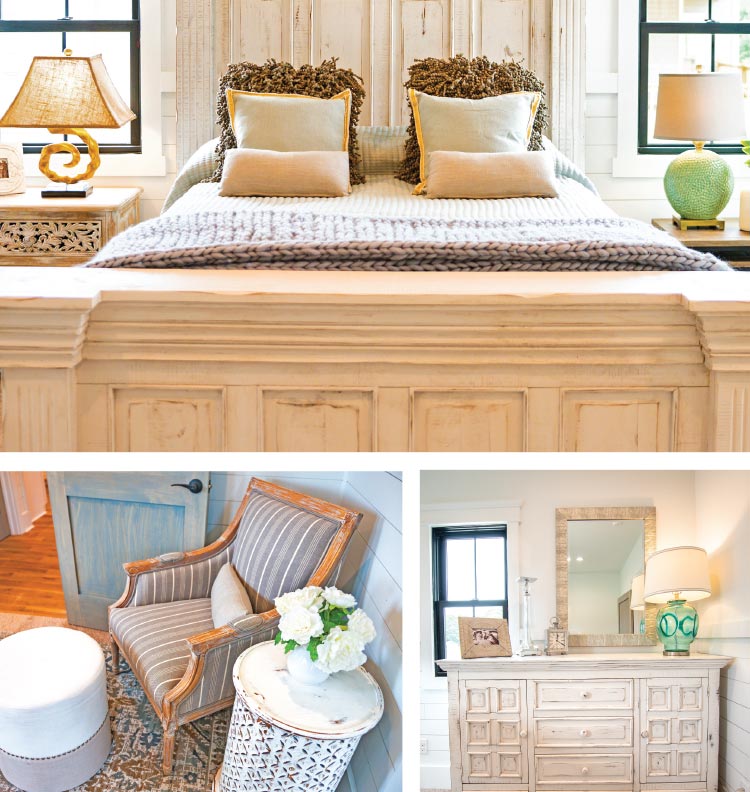
Tying into a love for antiques is a focus on traditional home décor. Of course, this isn’t a new style—but what is new(er) is that younger people seem to be embracing the interior design preferences of their grandparents. We caught up with two “grandmillennials” (a term used by some in the design industry) and show you how they are mixing traditional style with their own flair.
Alongside antiques and “grandmillennials,” you’ll also find a feature on the art of quilting and how Lynchburg’s thriving local groups are staying current. And our This City story explains a unique church merger—a younger congregation moving into one of Lynchburg’s oldest church buildings.
Of course, this is also our ever-popular “Best Of Lynchburg” issue—recognizing local businesses, people, destinations and more in dozens of categories. Lynchburg, you certainly come out in force for this effort. We received more than 106,000 votes on our website! Flip to page 66 to see who is proudly displaying our teal banners in 2020.
As we usher in a new year, here’s to being proud of your “best” and looking forward, while also not forgetting to look back.
Makes me realize… I think it’s about time to move Great Aunt Louise’s hope chest down to the living room where it belongs.
The Buzz Jan/Feb 2020
BEHIND THE SCENES Lynchburg Living relies on a fabulous team of freelance photographers to fill the pages of our magazine with local, current photography.
It’s something we are very proud of!
In November, when photographer Heather Kidd wasn’t able to secure child care for her 8-month-old son, editor Shelley Basinger said, “Bring him on!” Shelley heldWyatt while Heather took photos for this issue’s Home feature.
It was a tough job but someone had to do it.
See this issue’s Home feature on Grandmillennial Style starting on page 35.