Alexandria in Bloom: A Spring Weekend Getaway on the Potomac

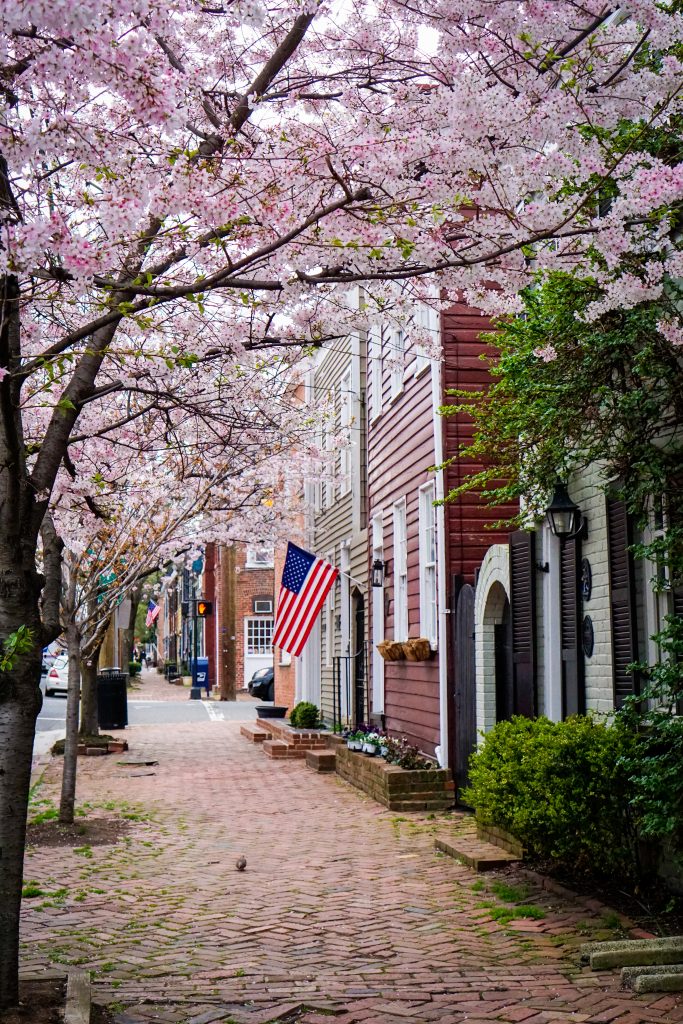
When spring arrives in Virginia, it has a way of transforming historic places into something almost cinematic. Brick sidewalks soften under the canopy of blooming trees, café tables return to the sidewalks, and waterfront promenades fill with people eager to feel the first warm breezes of the season.

Just under four hours from Lynchburg, Alexandria offers one of the most charming spring escapes in the Commonwealth. The city’s historic streets, boutique-lined avenues, and riverfront views make it easy to craft a perfect weekend that blends culture, shopping, dining, and a little outdoor adventure—all at a slower, more relaxed pace than neighboring Washington, D.C.

Here’s how to spend a spring weekend in Alexandria.

Seasonal Experiences Worth Planning Around

Spring in Alexandria arrives with a calendar full of experiences that take advantage of the city’s proximity to the nation’s capital while maintaining its own unique sense of place.

During the National Cherry Blossom Festival (March 20 – April 12, 2026), Alexandria becomes an ideal home base for visitors hoping to experience the iconic blooms without the stress of navigating D.C. traffic. One of the most scenic options is the Cherry Blossom Water Taxi, which departs from Alexandria’s waterfront and travels directly to the Tidal Basin. The boat ride itself becomes part of the experience—gliding along the Potomac River before stepping off just moments from the blooming trees.

Back in Alexandria, Waterfront Park offers its own springtime draw. Opening this March, artist Alicia Eggert’s immersive installation “Now or Never” will transform the park with monumental billboards designed to spark conversation about time, place, and the surrounding landscape. Positioned along the riverfront, the installation creates a striking visual dialogue between the city and the water.

The New Boutique Shopping Scene

Old Town Alexandria has long been known for its independent shops, but the city’s boutique scene continues to evolve with new concepts that blend craftsmanship, sustainability, and sensory exploration.

At Eliana Curated, founder Angelika O’Reilly transforms vintage designer buttons into one-of-a-kind jewelry pieces. The result is a collection that feels both nostalgic and modern, offering a thoughtful approach to sustainable luxury.

Just a few blocks away, Arielle Shoshana invites visitors into a “fragrance library” filled with rare and gender-neutral scents. The boutique encourages a slower shopping experience—one where visitors sample fragrances, learn about their notes, and discover new olfactory favorites.

Wine lovers will soon have another reason to explore King Street. Opening later this year, DCanter will introduce a high-end wine boutique focused on curated pairings and expert-led tastings.

Al Fresco Dining Along the Potomac

Spring weather in Alexandria practically begs for outdoor dining, and the city’s restaurant scene makes it easy to linger over a meal while soaking in the river views.

At Ada’s on the River, wood-fired cooking takes center stage. Prime steaks and fresh seafood—often including perfectly grilled swordfish—anchor the menu, while the riverside patio allows guests to enjoy dinner alongside sweeping views of the Potomac. Save room for dessert: the restaurant’s caramel-apple beignets have become something of a signature finale.

For a quintessential Old Town experience, stroll to King Street where sidewalk tables offer a front-row seat to the neighborhood’s historic charm. Classic spots like Landini Brothers and Vaso’s Mediterranean provide the perfect “see and be seen” dining atmosphere, with lively patios and the glow of historic architecture all around.

Charming Stays and Waterfront Adventures

A spring weekend in Alexandria feels especially complete when paired with a stay that embraces the season.

At Hotel AKA Alexandria, visitors can book a special spring package featuring floral-themed amenities and curated seasonal perks. The hotel’s contemporary design offers a relaxing contrast to the surrounding historic district while still keeping guests within walking distance of Old Town’s restaurants and shops.

For those who prefer to explore on two wheels, the property also offers access to e-bikes—an ideal way to experience the nearby Mount Vernon Trail, an 18-mile scenic route that hugs the Potomac River. From Alexandria, cyclists can ride north toward Washington, D.C., or head south toward George Washington’s Mount Vernon estate, passing river overlooks, historic landmarks, and blooming landscapes along the way.

A Spring Escape Close to Home

Part of Alexandria’s appeal is its balance of experiences. It offers the energy of a historic waterfront city, the creativity of a thriving arts and boutique scene, and the easy accessibility of a weekend trip.

For Lynchburg travelers looking to shake off winter and welcome the new season, Alexandria delivers exactly what spring should feel like—fresh air, blooming landscapes, and the simple pleasure of wandering a beautiful place with nowhere particular to be.


Meet the Spring Regulars

Birds You’ll See This Spring

s winter loosens its grip and daylight stretches a little longer each evening, Central Virginia’s soundscape begins to change. The hush of cold months gives way to birdsong—clear whistles, chatter from the hedgerow, and rhythmic tapping from nearby trees. March and April are prime months for spotting familiar feathered neighbors as they establish territories, build nests, and feed hungry mates and hatchlings.

Whether you’re watching from a kitchen window, strolling a neighborhood trail, or working in the yard, these are the spring regulars you’re most likely to see—and hear—this time of year. Here’s how to recognize them, where they tend to gather, and what brings them back season after season.

Eastern Bluebird (photo above)

Habitat: Open yards, fence lines, meadows
Behavior: Nesting, insect hunting, gentle warbling
What attracts them: Nest boxes, open grassy areas, mealworms

Few birds signal spring quite like the Eastern bluebird. Males arrive early, often in late winter, flashing their brilliant blue backs as they perch on fence posts or low branches. Bluebirds favor open spaces where they can swoop down to catch insects emerging from warming soil.

By March, pairs begin nesting—often in cavities or birdhouses placed at the edge of lawns or fields.

Unlike many backyard birds, bluebirds aren’t frequent feeder visitors, but a well-placed nest box and a supply of mealworms can make your yard irresistible.

Robin bird sitting on a branch

American Robin

Habitat: Lawns, parks, wooded edges
Behavior: Ground foraging, dawn singing
What attracts them: Soft soil, fruiting trees, open lawns

Robins are often among the first birds people notice in spring, thanks to their bold orange chests and early-morning songs. They’re most active on the ground, cocking their heads as they listen for earthworms beneath the soil.

In March and April, robins are busy feeding and scouting nesting sites in trees and shrubs. While they’ll visit feeders occasionally, they’re more interested in berry-producing plants like holly and serviceberry—and freshly turned garden beds where worms are easy pickings.

Male Northern Cardinal (Cardinalis) - Isolated on white background

Northern Cardinal

Habitat: Shrubs, gardens, wooded neighborhoods
Behavior: Singing, pair bonding, territorial displays
What attracts them: Dense shrubs, sunflower seeds

Year-round residents, cardinals become especially noticeable in early spring. Males sing persistently from treetops, announcing territory and courting mates. Their bright red plumage stands out against still-bare branches, making them easy to spot.

Cardinals prefer thick vegetation for nesting and cover, so layered landscaping with shrubs and small trees is ideal. They’re also reliable feeder birds, favoring sunflower seeds scattered on a platform or tray feeder.

Carolina Chickadee

Habitat: Wooded areas, mature yards
Behavior: Constant movement, cavity nesting
What attracts them: Trees, suet, sunflower seeds

Small but endlessly energetic, Carolina chickadees flit through branches in tight-knit pairs, calling their distinctive “chick-a-dee-dee-dee.” In early spring, they begin inspecting cavities—both natural holes and nest boxes—for nesting.

Chickadees are among the friendliest backyard birds, often returning repeatedly to feeders stocked with sunflower seeds or suet. Leaving dead trees or snags (when safe) can also provide valuable nesting sites.

Red Winged Black Bird - Isolated Perched - Green Background

Red-winged Blackbird

Habitat: Creeks, wetlands, ponds, open fields
Behavior: Territorial singing, flocking
What attracts them: Wetland vegetation, open water edges

If you live near water, you’ll likely hear red-winged blackbirds before you see them. Males perch atop cattails or fence posts, flashing their red-and-yellow shoulder patches while delivering a distinctive, buzzy call.

These birds are among the first migrants to return in late winter and early spring. They favor marshy areas and field edges, especially near creeks and retention ponds. While they may visit feeders occasionally, natural wetland habitat is their biggest draw.

Woodpeckers: Downy & Red-bellied

Habitat: Wooded yards, tree-lined neighborhoods
Behavior: Drumming, insect foraging, cavity nesting
What attracts them: Mature trees, suet feeders, dead wood

Woodpeckers bring a different rhythm to spring—literally. Their drumming echoes through neighborhoods as they establish territories and communicate with potential mates.

The downy woodpecker, the smallest in North America, is a frequent backyard visitor, often spotted clinging to tree trunks or suet feeders. The larger red-bellied woodpecker is equally common, known for its rolling call and bold presence.

Both species benefit from mature trees and standing dead wood, which harbor insects and provide nesting opportunities. Suet feeders placed near tree trunks are a reliable way to draw them closer.

Creating a Spring-Friendly Yard

You don’t need acres of land to enjoy spring birdlife. Simple choices—planting native shrubs, leaving seed heads through winter, offering fresh water, and avoiding pesticides—can transform even a modest yard into a seasonal haven.

March and April are a time of renewal, not just for plants but for the birds that depend on them. As you step outside this spring, pause and listen. Chances are, one of these familiar voices is already welcoming the season back.


The Front Porch Effect

Why Outdoor Living Still Matters

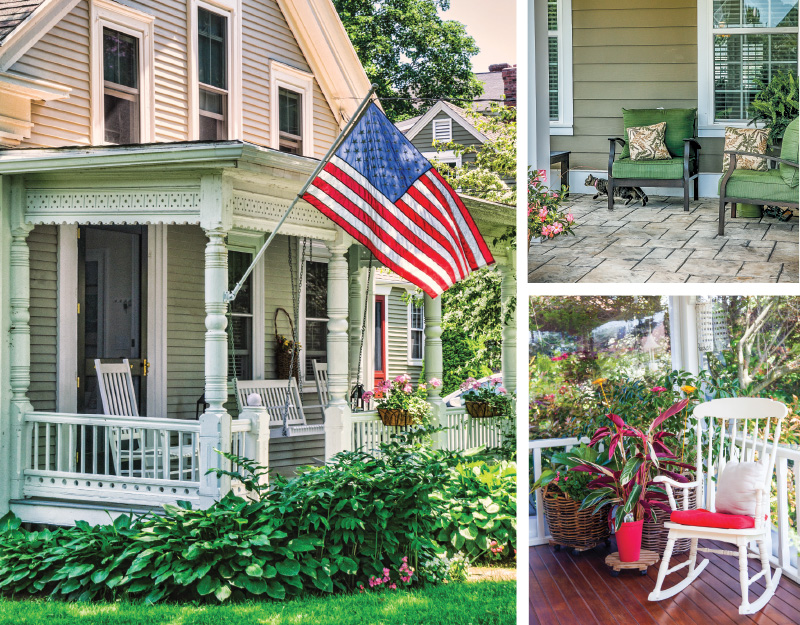
There’s a particular kind of quiet that happens on a porch in the early morning. The house is awake enough to hum—coffee brewing, a door creaking open—but the day hasn’t fully arrived yet. You sit for a minute longer than you planned. You breathe. You watch light move across the yard. Nothing is urgent, and that’s the point.

Long before outdoor living became a category of furniture or a Pinterest board, porches, patios, and backyards were simply where life spilled out.

They were places to pause and places to gather, rooms without walls that asked very little of us beyond presence. In a world increasingly defined by speed
and screens, these spaces still matter—not because they’re trendy, but because they quietly hold together the rhythms of daily life.

A Room That Belongs to Everyone

The front porch, especially, has always been a kind of social contract. It’s private, but not too private. Public-facing, but gentle. A place where neighbors wave, conversations begin without ceremony, and time stretches just enough to allow connection.

Historically, porches were designed for exactly this purpose. They cooled homes before air conditioning, yes—but they also cooled people. Rocking chairs encouraged lingering. Railings framed views of the street. Steps became seats for kids waiting on friends or adults swapping stories at dusk. Even now, a porch light left on in the evening still sends a quiet signal: you’re welcome here.

Patios and backyards carry that same spirit, just turned inward. Where the porch invites the neighborhood, the backyard gathers the household.

It’s where kids invent entire worlds with sticks and chalk, where dogs find their favorite patch of sun, where dinners stretch later than expected because the air feels kind.

porches

The Rituals That Root Us

Outdoor living spaces endure because they become containers for ritual. Not the grand, ceremonial kind—but the everyday ones that anchor us.

Morning coffee tastes different outside. It’s slower, less transactional. You notice birdsong, the weather, the way your body wakes up when it’s not immediately pulled toward a screen. In the evening, a porch or patio becomes a soft landing place—a transition between the busyness of the day and the quiet of night. Conversations meander. Kids play until the light fades. You sit without agenda.

These rituals matter because they repeat. They mark time. They give shape to days that might otherwise blur together. In seasons of change—new jobs, new babies, new phases of life—these small, consistent moments offer a sense of continuity.

Rest That Isn’t Performative

So much of modern rest has become curated: wellness routines, productivity breaks, optimized self-care. Outdoor spaces offer something simpler. They allow rest without instruction.

You don’t have to do anything on a porch. You can scroll, sure—but you’re just as likely to put the phone down.

You can read half a page and stare off into the distance. You can sit with someone and talk about nothing in particular. This kind of rest isn’t about improvement; it’s about allowance.

There’s also something grounding about being partially exposed to the elements—feeling the breeze, adjusting to temperature, watching clouds roll in.

It reminds us that we’re part of something larger than our schedules and to-do lists. That awareness, subtle as it is, can be deeply calming.

Spaces That Grow With a Family

Outdoor living spaces evolve alongside the people who use them. A porch that once hosted late-night conversations might later hold a swing for a sleeping baby. A backyard that started as a blank slate becomes a patchwork of memories: the tree that held a tire swing, the corner where a garden finally took, the patio where birthdays were celebrated year after year.

For children especially, these spaces are formative. Outdoor play encourages creativity, independence, and a sense of belonging to a place. It’s where scraped knees happen—and where resilience quietly takes root. Long after toys are outgrown, the feeling of those spaces often remains.

Why It Still Matters

At its core, the front porch effect isn’t about architecture or square footage. It’s about permission. Permission to slow down. To be seen without being on display. To connect without scheduling. To rest without justification.

As communities grow more dispersed and lives become more digitally mediated, these spaces offer something increasingly rare: unstructured togetherness. They don’t demand productivity or performance. They simply hold space—for conversation, for quiet, for the ordinary moments that, over time, add up to a life.

You don’t need a sprawling wraparound porch or a magazine-worthy patio to experience it. A small stoop, a folding chair, a string of lights—sometimes that’s enough. What matters most is the intention to step outside, to linger, to let life happen just beyond the threshold of your door.

Because sometimes, the most meaningful moments aren’t planned at all. They’re the ones that happen when you sit down for a minute—and decide to stay.


Nature Therapy

A mindful guide to walking and hiking your way into spring renewal

There is something about early spring in Lynchburg that feels like permission.

Permission to begin again. Permission to go slower. Permission to breathe a little deeper after months of gray skies and indoor routines.

While gym memberships and structured workouts certainly have their place, one of the most accessible—and restorative—forms of wellness is already woven through our city: walking. Not the distracted, earbuds-in, email-checking kind. But intentional walking. Mindful walking. What some call “nature therapy.”

In a season defined by renewal, our local trails offer more than scenic backdrops.

They offer space to reset your nervous system, quiet mental noise, and reconnect with your body in a way that feels gentle and grounding.

Percival’s Island Natural Area
For gentle grounding and river calm

Tucked between the James River and downtown Lynchburg, Percival’s Island feels like a pause button. The flat path stretches just over a mile one way, making it ideal for beginners, families, or anyone easing back into movement after winter.

From a wellness perspective, this is the place to start if you’re feeling overwhelmed.

The river does something remarkable to the body. Studies show that proximity to water—sometimes called “blue space”—can lower cortisol levels and reduce stress. As you walk the island loop, notice the sound of water moving against rocks, the rhythmic hum of the pedestrian bridge, and the way sunlight reflects off the surface.

Try this mindful practice: Walk the first five minutes without your phone. Notice five things you can see, four you can hear, three you can feel (the breeze, the ground beneath your shoes), two you can smell, and one thing you’re grateful for. This simple grounding exercise pulls you out of mental clutter and into the present moment.

Because the terrain is level, Percival’s Island is also a wonderful place to focus on posture.

Let your shoulders soften. Unclench your jaw.

Allow your arms to swing naturally. Even 20 to 30 minutes of this kind of intentional walking can shift your mood and energy for the rest of the day.

Blackwater Creek Trail
For rhythmic movement and stress release

If Percival’s Island is the exhale, Blackwater Creek Trail is the steady heartbeat.

Winding through wooded areas, open stretches, and alongside the creek itself, this trail system offers both paved and natural-surface paths.

The variety makes it ideal for those who want a slightly more immersive experience without committing to a strenuous hike.

Spring along Blackwater Creek feels especially alive. Wildflowers dot the edges of the trail.

The trees bud in layers of green. The creek moves steadily, a reminder that forward motion doesn’t have to be frantic to be meaningful.

From a wellness standpoint, longer, uninterrupted stretches of walking help regulate the nervous system. When you settle into a consistent pace—breathing in for four steps, out for four steps—you create a rhythm that calms the body and clears mental fog.

Try this stress-release technique: As you walk, imagine that each exhale releases something you’ve been holding onto—an unresolved email, a lingering frustration, a worry about the week ahead. With each inhale, picture drawing in fresh energy, like the new growth around you.

Blackwater Creek is also a wonderful trail for walking conversations. Research shows that side-by-side movement often makes deeper conversations easier. If you’ve been meaning to catch up with a friend or have a heart-to-heart with your spouse, consider swapping a coffee date for a trail walk.

There’s something about moving forward together that makes hard topics feel lighter.

Peaks View Park
For perspective and renewal

For those craving a bit more elevation—and perhaps a symbolic fresh start—Peaks View Park delivers.

With wooded trails that gently climb and open spaces that offer sweeping views, this park invites you to look outward as much as inward. Even modest elevation gains increase heart rate and circulation, which can boost endorphins and improve mental clarity.

Spring hikes here feel like a metaphor for the season: the effort of the climb rewarded by a wider perspective.

When you reach a higher vantage point, pause. Take in the view. Notice how small the meandering creek looks from above. It’s a subtle but powerful reminder that many of our stressors shrink when we step back from them.

Try this renewal ritual: At the top of a hill or overlook, set a quiet intention for the season ahead.

It doesn’t need to be grand. It might be “more patience,” “more time outside,” or “less rushing.” Let the intention anchor itself to the place. Each time you return to Peaks View, you’ll reconnect with that commitment.

Because some sections are more rugged, Peaks View is also an opportunity to practice presence. Uneven terrain requires attention. And attention, in itself, is therapeutic.

The Science (and Simplicity) of Nature Therapy

You don’t have to call it forest bathing or nature therapy for it to work. The science behind outdoor movement is compelling: exposure to natural light regulates circadian rhythms, green spaces reduce anxiety, and moderate walking improves cardiovascular health and cognitive function.

But perhaps the deeper benefit is harder to measure.

In a culture that celebrates productivity and speed, walking—especially slow, mindful walking—can feel countercultural. It asks nothing of you except that you show up.

No metrics. No competition. No performance.

Just breath and step. Step and breath.

And in a city like Lynchburg, where trails thread through neighborhoods, along waterways, and into wooded parks, that kind of therapy is available without a membership fee or appointment.

A Gentle Invitation

As the days grow longer and dogwoods begin to bloom, consider building a simple ritual into your week: one intentional walk.
Leave the headphones behind. Notice what’s changing—buds where branches were bare, birdsong where winter was quiet, the way the air feels different against your skin.

Spring renewal doesn’t always require dramatic resolutions. Sometimes it begins with something as small as lacing up your shoes and stepping onto a familiar path with fresh awareness.

Nature, after all, has been practicing renewal long before we ever thought to call it wellness.


Keep This On Hand: A no-bake classic for when guests pop by

There’s a certain kind of hospitality that doesn’t require a dinner party or a perfectly set table. It’s the midweek knock at the door. A neighbor returning a borrowed tool.

A friend who “just happened to be in the area.” The early-spring afternoons when the light lingers a little longer and you find yourself inviting someone in without much notice.

For moments like that, it helps to have one recipe memorized.

Preacher cookies—those chocolatey, oat-filled, no-bake drops—earned their name for good reason. Legend has it they were quick enough to whip up if the preacher stopped by unexpectedly. No oven to preheat. No dough to chill. Just a saucepan, a wooden spoon, and about 10 minutes at the stove.

In a season when we’re opening windows, tidying porches (see The Front Porch Effect on page 31), and welcoming people back into our homes, they feel especially fitting.

Classic Preacher Cookies

No-Bake Chocolate Oatmeal Drops

Ingredients
1/2 cup butter
2 cups sugar
1/2 cup milk
1/4 cup unsweetened cocoa powder
1/2 cup peanut butter
1 tsp vanilla extract
3 cups quick oats
Pinch of salt

Instructions
1. Line a baking sheet with parchment paper and set aside.
2. In a medium saucepan over medium heat, combine the butter, sugar, milk, and cocoa powder.
3. Bring the mixture to a full rolling boil and boil for exactly 1 minute, stirring occasionally. (Editor’s Note: Timing matters here: too short and they won’t set, too long and they’ll crumble.)
4. Remove from heat and immediately stir in the peanut butter, vanilla, and salt until smooth.
5. Fold in the oats until fully coated.
6. Drop spoonfuls onto the prepared parchment and let sit at room temperature for 20–30 minutes, until set.

Makes about 2 dozen cookies.

NO FUSS = Big Plus
They’re not fancy. They won’t win a decorating contest.

But they’re dependable—the kind of recipe that lives on a handwritten card in a kitchen drawer.

And sometimes, that’s exactly what a home needs.


Curated, Not Cluttered

How to strike the balance between styled layers and lived-in comfort—without tipping into chaos here’s a fine line between a home that feels thoughtfully layered and one that feels…busy.

We’ve all walked into both. One feels collected over time, rich with story and texture. The other feels like every surface was filled simply because it could be. The difference isn’t necessarily how much is in the room—it’s how intentionally it’s arranged.

If you love books stacked on side tables, ceramics collected from travels, framed photos, woven baskets, vintage finds, and a healthy mix of new and old, but you worry about crossing into clutter, this guide is for you.

Here’s how to create a home that feels curated, not crowded.

Start with Breathing Room

Before adding anything, step back.

Every well-styled space begins with negative space—the empty areas that allow your eye to rest. Think of it as visual oxygen. Without it, even beautiful objects begin to compete.

As a general rule: not every wall needs art, not every shelf needs to be filled, and not every tabletop needs décor. If you’re styling built-ins, leave a few shelves partially empty. If you’re working with a gallery wall, allow for consistent spacing between frames.

Editing is often more powerful than adding.

©PHOTOS BY DARYL CALFEE

©PHOTO BY DARYL CALFEE

Create Visual Anchors

Clutter often happens when a room lacks a focal point. When everything is competing for attention, nothing stands out.

Choose one or two anchor elements per room:
• A statement light fixture
• A large piece of art
• A bold rug
• A beautifully styled mantel
• A sculptural chair

Once your anchor is established, let the surrounding décor support it rather than rival it. Smaller objects should feel like supporting characters, not co-stars.

Think in Layers, Not Piles

Layering creates depth; piling creates chaos.

The difference? Intention and variation.

Instead of lining up objects of similar height and size, vary scale and shape.

Pair something tall with something low. Combine smooth ceramics with woven textures. Place art behind a lamp or slightly overlap framed pieces on a shelf.
A simple formula to try on coffee tables
or consoles:
1. Something vertical (a vase, candlestick,
or lamp)
2. Something organic (greenery, a bowl of fruit, a branch)
3. Something personal (a book, photo, or collected object)

Three elements often feel balanced without feeling busy.

Photo by Daryl Calfee

©PHOTO BY DARYL CALFEE

Corral the Small Stuff

Small objects are usually what push a room from curated to cluttered.

The fix? Containment.

Use trays, bowls, baskets, or decorative boxes to group smaller items. Instead of five separate candles scattered across a surface, place two or three on a tray. Instead of loose mail on the counter, use a woven basket. Instead of remotes floating on a coffee table, use a lidded box.

When small items are visually grouped, they read as a single design moment rather than visual noise.

Stick to a Cohesive Color Story

Even eclectic homes benefit from a defined palette.

This doesn’t mean everything must match. But choosing a general color direction—warm neutrals, moody jewel tones, soft coastal hues—helps diverse pieces feel connected.

If you’re unsure, look at what you already own. What colors repeat? What tones do you naturally gravitate toward?

Then, when adding something new, ask: Does this complement what’s already here?

When color feels cohesive, layering feels intentional.

Mix Eras—But With Restraint

A home filled entirely with brand-new pieces can feel flat. A home filled entirely with vintage can feel heavy. The magic is in the mix.

Pair an antique wooden chest with a modern lamp. Style heirloom china inside streamlined cabinetry. Hang contemporary art above a traditional console.

The key is balance. If everything is ornate, it becomes overwhelming. If everything is minimal, it lacks warmth. Let contrasting elements enhance one another.

Leave Room for Function

Sometimes what feels like clutter is simply poor function.

Decor should never interfere with daily life. If you’re constantly moving objects to use a surface, that surface is over-styled.

Coffee tables should still hold coffee. Nightstands should still hold a book and a glass of water. Kitchen counters should allow space for meal prep.
When décor supports the way you live—rather than complicates it—your home feels calmer instantly.

Rotate, Don’t Accumulate

You don’t have to display everything at once.

One of the simplest tricks professional stylists use is rotation. Store seasonal pieces or extra décor in labeled bins and swap them throughout the year.
Shelves feel refreshed, and you avoid the slow build-up of excess.

This also allows sentimental objects to shine when they’re displayed—rather than disappearing into visual overload.

Make It Personal (But Edit Thoughtfully)

A curated home tells a story.

Photographs, children’s art, travel souvenirs, inherited pieces—these are the elements that make a house yours. The goal isn’t to remove personality in the name of minimalism. It’s to showcase it well.

Choose your favorite pieces. Frame the art instead of taping it to the fridge.

Give that inherited bowl a place of honor rather than tucking it behind other items. Display collections together instead of scattering them throughout the house.

When personal items are presented intentionally, they feel meaningful—not messy.

Do the “Squint Test”

When you feel unsure, try this: stand in the doorway and squint.

What do you notice first? Does your eye know where to land? Or does it bounce around the room?

If everything feels loud, remove one or two things and reassess. Often, subtracting just 10 percent of a room’s décor dramatically shifts how it feels.

Remember: Curated Doesn’t Mean Perfect

The most beautiful homes aren’t museum displays. They feel lived in.

Books are dog-eared. Throws are slightly rumpled. A stack of mail sits on the desk—contained, but present.

Striking the balance between styled and sincere takes practice. It requires stepping back, editing bravely, and choosing pieces that truly resonate rather than simply fill space.

A curated home isn’t about having less. It’s about choosing well.

And when each object has room to breathe, your home doesn’t just look better—it feels better.


Pour, Stir, Savor: Two Whisky Cocktail Recipes to Try

There are whiskies made for collecting—and then there are whiskies made for sharing.

With three new limited releases from Virginia Distillery Co., now feels like the right time to gather a few friends, clear the kitchen counter, and let American Single Malt take center stage.

While these expressions are beautiful neat, their layered flavor profiles also lend themselves to thoughtful, spirit-forward cocktails—drinks that don’t mask the whisky, but elevate it.

The Blue Ridge Black Forest

A dessert-leaning cocktail inspired by the stout cask finishes

Best with: Virginia Distillery’s Brewer’s Coalition stout cask finishes (4 Hands Madagascar Stout or North Coast Old Rasputin)

These whiskies already lean into dark chocolate, roasted nuts, and berry notes. This cocktail amplifies that richness without becoming overly sweet.

Ingredients

  • 2 oz stout cask-finished American Single Malt
  • ½ oz crème de cacao (dark)
  • ½ oz cherry liqueur (or high-quality cherry syrup)
  • 2 dashes chocolate bitters
  • Optional: Luxardo cherry for garnish

Instructions

  1. Add all ingredients to a mixing glass with ice.
  2. Stir until well chilled (about 20–30 seconds).
  3. Strain into a chilled coupe or Nick & Nora glass.
  4. Garnish with a single cherry or a light shave of dark chocolate.

Why it works:
The whisky’s natural cocoa and raspberry notes shine through, while the bitters keep everything structured. It feels like Black Forest cake—but grown up. Perfect for a late-winter dinner party or an after-dinner pour by the fire.

The Nelson County Nightcap

A contemplative, cigar-worthy sipper

Best with: Virginia Distillery’s First Cut Cigar Blend

The Cigar Blend is layered—leather, walnut, candied citrus, subtle smoke—so this cocktail keeps things simple and structured.

Ingredients

  • 2 oz First Cut Cigar Blend
  • ¼ oz rich demerara syrup (2:1 sugar to water)
  • 2 dashes Angostura bitters
  • 1 dash orange bitters
  • Expressed orange peel

Instructions

  1. Add syrup and bitters to a mixing glass.
  2. Add whisky and ice; stir until chilled.
  3. Strain over a large ice cube in a rocks glass.
  4. Express orange peel over the drink and drop it in.

Optional: Lightly smoke the glass beforehand for added depth.

Why it works:
The demerara syrup enhances the whisky’s date cake and walnut notes, while the orange oils highlight its candied lemon peel character. The result is structured, warm, and quietly powerful.

Whether paired with a cigar or simply enjoyed on a porch at dusk, it invites you to slow down.

A Note on Mixing Limited Releases

When working with small-batch whiskies, the goal isn’t to bury complexity under citrus and sugar. Instead:

  • Lean spirit-forward.
  • Keep ingredients minimal.
  • Let the whisky remain the star.

If you’re lucky enough to secure a bottle this season, try it neat first. Notice what unfolds. Then experiment.

Because the beauty of American Single Malt—especially when it’s made in the foothills of the Blue Ridge—is that it rewards attention.

And the best cocktails? They do the same.

RELATED CONTENT:

A Bold Season for American Single Malt Whiskey in Lovingston


A Bold Season for American Single Malt in Lovingston

In the quiet hills of Nelson County, something bold is happening inside the rickhouses at Virginia Distillery Co. Fresh off being named Best American Single Malt at the 2026 World Whiskies Awards, the Lovingston-based distillery is leaning into what it does best: thoughtful craftsmanship, creative cask finishes, and just enough risk to keep things interesting.

This season brings three limited releases—two collaborations in its Brewer’s Coalition series and the debut of a contemplative new Cigar Blend—that feel less like products and more like experiences waiting to be poured.

When Beer Meets Single Malt

The Brewer’s Coalition series has always been about cross-industry creativity, and this year’s additions continue that spirit.

The first, created in partnership with 4 Hands Brewing Co., finishes Virginia Distillery Co.’s American Single Malt in Madagascar Stout barrels. Only six barrels were sourced, making this a small-batch moment in every sense.

Photo Courtesy Virginia Distillery Co.

Aged more than five years in ex-bourbon casks before its stout-barrel finish, the whisky leans indulgent without tipping into excess. Think juicy raspberries, lemon-curd brightness, dark chocolate cake, roasted pecans, and warm ginger snaps. Bottled at 100 proof, it holds its structure beautifully, with a finish that lingers in dark cocoa and raspberry cola.

For those who love to chase nuance, a Cask Strength Select version will be available in limited quantities at the St. Louis brewery itself—a quiet nod to the collaboration at its core.

In March, the second Brewer’s Coalition release partners with North Coast Brewing Co., finishing the distillery’s American Single Malt in Old Rasputin Stout barrels. Eight barrels were selected for this expression.

Photo Courtesy Virginia Distillery Co.

Also made from 100% malted barley and aged more than five years before finishing, this release opens with aromas of almond kringle and honeycomb before shifting into bright citrus zest, dark chocolate, and malty hops. At 100 proof, it strikes that increasingly sought-after balance: robust, but refined.

Together, these collaborations underscore something important about Virginia’s whisky scene—it isn’t insular. It’s curious. It’s collaborative. And it’s willing to let stout barrels from across the country leave their imprint on Blue Ridge–born spirit.

A Whisky Built for the Ritual

If the Brewer’s Coalition expressions feel celebratory, the new First Cut Cigar Blend feels almost meditative.

Crafted specifically to pair with a fine cigar, this American Single Malt is aged a minimum of seven years and matured in an imaginative collection of casks: Spanish Oak, Sherry, Port, STR, Château Palmer Cabernet, Armagnac, Cognac, and Fino—with a whisper of smoke from Islay casks layered in for depth.

The result is complex but intentional. Aromas of red berries and leather give way to walnut and date cake, candied lemon peel, allspice, and clove. The finish lingers in dark chocolate and subtle smoke. Bottled at 108 proof, it’s bold—but not brash. This is a whisky for slowing down. For lingering. For conversation that stretches long past sunset.

Even for those who don’t light cigars, the spirit itself invites a ritual: a porch chair in early spring, a low hum of evening, a glass that evolves as it opens.

A Defining Moment for Virginia Whisky

Virginia Distillery Co. has long positioned itself at the forefront of the American Single Malt category, producing its flagship Courage & Conviction alongside a steady stream of innovative limited releases. But the recent World Whiskies Awards recognition feels like a larger marker—not just for the distillery, but for Virginia’s growing influence in the global whisky conversation.

These three releases underscore that momentum. Collaboration. Complexity. Craft without compromise.

All expressions will be available in limited quantities in February and March through the distillery’s online shop and select retailers nationwide. As with most limited releases from Lovingston, they likely won’t linger long on shelves.

For Virginia whisky lovers, this is a season worth savoring.

RELATED CONTENT:

Two Bold Whiskey Recipes to Try


How Healthy Habits Can Stack Up One Step at a Time

Despite the best of intentions, it’s common for plans to build healthier habits to fall flat. Often, the culprit isn’t a lack of motivation or discipline; rather, it’s unrealistic expectations.

Overhauling your lifestyle requires a level of commitment that isn’t always practical. Understanding your personal health needs and the challenges you need to overcome can help give you a more realistic roadmap toward better health.

Photo Courtesy: Shutterstock and Feature Impact

Tools to Guide You

Every plan needs a starting point and there are many reputable sources that can help guide you toward a plan that addresses your personal health needs.

For example, the American Heart Association introduced My Life Check, a simple, free tool to help individuals understand their heart health and what’s driving it. Users answer simple questions about their daily habits and health factors to get a personalized Heart Health Score in minutes.

The results are private and downloadable, giving you full control of your information. The tool turns big goals into small, specific actions you can start right away. Knowing your numbers relative to your heart health (and where you are in comparison to target ranges for optimal health) can help you decide how to build a better map to get you where you want to be.

While the report is customized to each individual, no personal data is stored and answers are only used to calculate health scores and provide personalized recommendations and practical steps to improve your health, so you can use your results to focus on what matters most to you. Every small step you take, such as moving more, eating smarter, sleeping better or managing stress, can add up over time.

Finding Your Path

Once you’re armed with data and know where you stand on your heart health numbers, small steps become clearer and more manageable. That knowledge makes it easier to choose one area to focus on, such as getting more sleep, taking daily walks or adding more color to your meals.

Healthy changes don’t need to be expensive or complicated. The best habits are ones that fit real life when every action you take moves you closer to your goals.

Staying motivated and on track is also easier when you can check back in, see your progress and realize the steps you’re taking are making an impact. Checking in every few months to see how you can grow gives you the chance to celebrate your progress, learn from challenges and keep building lasting habits that feel good.

To get started with personalized tips to set your own health goals, visit heart.org/mylifecheck.

Healthy Habits for Everyday Life

Eat Smart

Choose foods that help you feel your best, one meal at a time. Add more color to your plate and focus on balance, not restriction. Simple, affordable swaps can make a real difference.

Smart Tip: Aim for an overall healthy eating pattern that includes whole foods, fruits and vegetables, lean protein, nuts, seeds and cooking in non-tropical oils such as olive and canola.

Move More

Find movement that fits your life, such as a walk, a stretch or dancing while you cook. Every bit of activity counts and it all supports your heart and mind. Move for joy, not just for results.

Smart Tip: Adults should get 150 minutes of moderate physical activity (or 75 minutes of vigorous activity) per week. Kids should aim for 60 minutes every day, including play and structured activities.

Sleep Well

Rest is a foundation of good health, not a reward. Protect your bedtime routine and give your body the recovery it deserves. Notice how good sleep makes everything else easier.

Smart Tip: Most adults need 7-9 hours of sleep each night. Children require more. Adequate sleep promotes healing, improves brain function and reduces the risk for chronic diseases.

Manage Stress

Check in with yourself regularly, both mentally and emotionally. Create simple moments to pause, breathe, laugh or step outside. Connection, kindness and calm all support a healthy heart.

Smart Tip: The first step to stress management is awareness. Step “away from yourself” for a moment. Objectively ask yourself, “Is my stress level too high?” If so, look at what might be causing that stress.

Ideas for Incremental Changes

  • Dedicate 15 minutes at the beginning or end of the day to focus on self-care, whether it’s unwinding with some music, writing down your goals or reflecting on the highlights of the day.
  • Aim to add an extra serving of fruits or veggies each day, such as creating a savory veggie omelet or exploring new smoothie blends that let you pack in the produce on the go.
  • Give your cabinets a quick update and put the smaller plates front and center. When you use a smaller plate, you can fill it while still sticking to recommended serving sizes.
  • If you’re not a fan of the gym, think about how your hobbies can play a role in your physical activity. Even gardening counts as physical activity, so get creative to get moving with an activity you truly enjoy.
  • Establish a bedtime routine that allows you to ease into sleep more easily. Once you feel the impact of better-quality rest, you may find yourself more motivated to make a regular bedtime a priority.


Here’s How the World’s Longest Living Communities Eat—So Can You

“Blue Zone” diets explore how everyone can try to extend their life by making a few key food changes.

“Longevity diet” sounds like a trend, but what it really describes is a way of eating that feels almost old-fashioned: simple meals, cooked at home, shared often, and built from foods your great-grandparents would recognize.

As researchers look closely at communities where people remain active into their 80s and 90s, patterns emerge. They aren’t built on powders or promises. They’re built on beans simmering on a weekday stove, vegetables filling half the plate, olive oil glinting on a salad, and sweets saved for when they’re worth it. It’s less about chasing youth and more about giving your future self a better shot at feeling well.

In Central Virginia, the pieces are easy to find. A longevity-minded plate can come together from the farmers market, the produce aisle, or even your freezer: roasted broccoli beside brown rice, a ladle of lentil soup, a bowl of berries after dinner. The magic isn’t in any single ingredient. It’s in the steady, daily rhythm of choices that lower inflammation, steady blood sugar, and protect the heart and brain. Over time, those small advantages compound.

How to Eat a Blue Zone Diet

Protein is often the first question. Are we eating enough? Too much? The most durable longevity patterns hit a comfortable middle. They don’t fear protein; they simply choose it thoughtfully. Beans and lentils appear often, not as a penance but as comfort food—tucked into tacos, stirred into pasta, folded into soups. Eggs, yogurt, and modest portions of poultry or fish show up, too, usually as supporting players rather than headliners. For households avoiding fish, walnuts, chia, flax, and fortified products can help fill omega-3 gaps. The aim is to preserve muscle as we age without leaning on processed meats that add risk without much benefit.

Carbohydrates aren’t villains here, either. The difference between a grain that supports longevity and one that saps energy is mostly in the milling. Intact grains—oats, farro, barley, brown rice—bring fiber, minerals, and texture; highly refined flours bring speed but little staying power. In practice, that looks like pairing your carbs with something slow and satisfying: peanut butter on an apple, tahini over roasted sweet potatoes, a drizzle of olive oil and a handful of olives tossed through warm pasta and vegetables. You feel fuller, longer, and your blood sugar stays steadier between meals.

Woman enjoying a nutritious breakfast of fried eggs, salad, and cherry tomatoes with orange juice in her modern kitchen, focusing on a healthy start to the day

Simple Food Swaps For A Healthier Diet

Fat—so often maligned—plays a protective role when it comes from the right places. Extra-virgin olive oil is the backbone in most long-lived regions for good reason; its blend of monounsaturated fat and polyphenols supports heart health and helps the body absorb fat-soluble vitamins from all those vegetables. Nuts and seeds add crunch and calm, turning a simple salad into a meal and offering a bridge from lunch to dinner that doesn’t end in a 3 p.m. slump.

If there is a true hero of longevity eating, it’s fiber. Not the kind you buy in a tub, but the kind that grows: vegetables, fruits, legumes, and whole grains. Fiber feeds the gut microbiome—the trillions of microorganisms that help regulate inflammation, immunity, and even mood. When you give that ecosystem diverse, plant-rich meals, it returns the favor by producing compounds that protect the lining of the gut and the health of your arteries. It’s a quiet exchange you never see, but you feel it in stable energy and the ability to bounce back.

Fermented foods are another quiet helper. Cultures that age well often include yogurt, kefir, kimchi, sauerkraut, or miso in ordinary meals. You don’t need a fermentation crock on your counter; a spoonful beside dinner or a pour over granola is enough to diversify the beneficial bacteria in your gut. The point isn’t perfection. It’s frequency.

Lifestyle Changes to Extend Your Life

What about fasting? The most reasonable, sustainable approach is simpler than the trend stories suggest: finish dinner a little earlier, and allow your body a natural overnight fast—about 12 hours—most days. That gentle rhythm gives your metabolism time to reset without the stress of strict windows or skipped meals. It’s not appropriate for everyone, and it shouldn’t overshadow the basics: regular, unhurried meals with plenty of plants.

Alcohol sits in the “choose carefully” category. In long-lived places, it’s consumed modestly, usually with food, often in community. You won’t find nightly heavy pours in longevity research’s success stories. You will find tea, coffee, and lots of water—small rituals that mark the day and keep you hydrated.
Supplements? They’re the supporting cast at best.

A well-rounded longevity plate usually covers the bases, though a conversation with your clinician about vitamin D, vitamin B12 (especially if your diet is mostly plant-based), and algae-based omega-3s for non-fish eaters can be sensible. Be skeptical of “anti-aging” blends that promise sweeping results;
if something sounds like an elixir, it probably functions more like marketing.

Captured in a heartfelt moment, the man delights in his homemade salad while standing in the brightly lit kitchen. The comfortable blue sweater and elegant counter design highlight the joyful ease of his daily routine in a harmonious home environment.

Longevity Diets Are About…Well…The Long Run

Perhaps the greatest thing about a longevity diet is how well it pairs with an ordinary Tuesday.

You don’t need a chef’s kitchen or an afternoon free. You need a few staples you can reach for without thinking: a good olive oil, a jar of beans, a sturdy grain, frozen vegetables for nights when fresh isn’t in the cards, and a spice you love. Start meals by asking, “What’s the vegetable?” Then build around it. Roast a pan of whatever vegetables you have, toss with olive oil and herbs, and add protein to suit your household. Boil pasta and fold in white beans, cherry tomatoes, and spinach. Warm a pot of soup on Sunday and let it carry you through midweek.

And eat together when you can. The research on longevity always circles back to the table, not just what’s on it. Shared meals slow us down. They help us notice when we’re full. They anchor children’s routines and adults’ stress levels. In a culture tempted by speed, the decision to sit—truly sit—for dinner might be the most protective habit of all.

Longevity isn’t a cleanse, and it isn’t a finish line. It is, in the best sense, local: a way of stocking your pantry and shaping your week so that future you gets more mornings on the trail, more afternoons in the garden, more celebrations worth toasting. Start where you are. Choose the plant first. Drizzle the olive oil. Keep dessert special. Then repeat, quietly, in the background of a life that feels more energetic and clear. Years may be the headline, but day-to-day vitality is the real story—and that’s something you can taste.

RELATED CONTENT:

Healthy Restaurants in Lynchburg

Plant Based Eating Can Reduce Your Carbon Footprint