LiteSheet

Announces New Generation of Popular Disinfecting Cabinet

Alittle over a year after releasing its revolutionary UV-C Disinfecting Cabinet, the Bedford County–based LiteSheet Solutions has come out with a second version that is even more powerful and effective.

LiteSheet is an LED lighting technology company with notable projects completed in New York City’s Woolworth Building and Virginia’s Monitor-Merrimac Tunnel,
among others.

As the COVID-19 pandemic gripped our world last spring, a door opened for LiteSheet to enhance its AC-Direct LED lighting products to include UV-C LED disinfection.

“At the outset of the pandemic, the federal government and Commonwealth of Virginia were making calls to all manufacturers saying, ‘How can you help?’ For the most part, they were looking for fabric manufacturers to produce masks, but I turned to our engineering and manufacturing departments and we developed the UV-C Disinfecting Cabinet,” said Roger Whyte, company president and CEO.

The UV-C Disinfecting Cabinets are manufactured at the company’s Forest facility, which is registered with the Environmental Protection Agency. They are also in full compliance with the Food and Drug Administration as well.

The cabinet uses UV-C LEDs to kill pathogens—including viruses, bacteria, mold and spores—specifically targeting viruses and bacteria that are commonly found in schools, offices and healthcare settings. UV-C wavelengths differ from UV-A and UV-B rays in that they are blocked by the ozone layer so they must be created here on Earth.

However, all three damage cells in a similar way.

“Pathogens are susceptible to UV-C wavelengths,” Whyte explains. “When UV-C strikes a pathogen, it actually permeates the cell of the pathogen, damages its strand of DNA or RNA and kills it.”

Using UV-C as a disinfecting tool has been around for a while and is well researched, Whyte says. But it had traditionally been generated with mercury-vapor lamps, which don’t last long and aren’t easily transported. There are also some environmental concerns if they aren’t disposed of properly.

LiteSheet’s UV-C Disinfecting Cabinet is a much safer option that works similar to a microwave: open up the door, place items inside, shut the door, press start and wait 60 seconds. When the cycle is complete, the items inside have been surface disinfected of common pathogens. There also are safety features on the cabinet, including a digital timer and lock, that ensure the modules will not power on unless the door is securely closed.

In the fall of 2020, LiteSheet’s Gen-1 cabinet was tested by Virginia Tech’s Class 3 Virology lab. Researchers tested the capacity of the SARS-Cov-2 virus to infect cells after spending 15 minutes in the cabinet versus outside the cabinet.

“We found that the level of infectious SARS-Cov-2 on a surface was reduced by 99.97% after 15 minutes in the cabinet,” says Dr. Nisha Duggal, assistant professor in the Department of Biomedical Sciences and Pathobiology.

“The validation from an independent lab is essential,” Whyte adds. “It’s an extra step we took to ensure the cabinet works.”

Now, over a year later, LiteSheet is unveiling the second generation of the UV-C Disinfecting Cabinet that is higher powered and more efficient to kill surface pathogens in under 60 seconds. Shorter cycle times can help facilities disinfect items or equipment even more quickly than before.

“We kill 95 percent of common pathogens in less than a minute now,” Whyte says.

According to Whyte, the cabinets can play a role in overall patient outcomes in hospitals by mitigating the transmission of healthcare-acquired illnesses. They can also be used by schools to disinfect shared items such as tablets and books.

The cabinet is also finding use in other fields as well, such as broadcasting agencies and departments of transportation, he says.

LiteSheet Solutions is now looking at other ways they can expand this technology in the future.

“We’ve been asked to look at quite a few applications, such as air purification; we’re also looking at conveyor system scenarios where items are continuously fed, like at an airport, for example,” he says. “We think the product line will definitely be expanding.”


Cold Weather Crops

Prepping a productive winter garden

Wow, what a summer. If you’re a gardener, your garden this year has been a labor of love. Drought, peppered by random, short-lived downpours and scorching hot days, made this a difficult season.

Soon, our days will grow shorter and cooler, marching slowly toward autumn. Maybe you’re not ready to be done yet. Your green thumb is still a little itchy. Well, I’ve got great news for Virginia growers: gardening doesn’t have to be reserved for the warm months of May through August!

With a little planning, you can grow and harvest fresh veggies all year, and keep your soil healthy for early and easy spring planting.

There are just a few things you need to know before hitting the dirt:
1. When is the first “killing frost”?
2. Which veggies are frost-hardy?
3. When do you need to plant them?

Here in zone 7a, our average first killing frost date is around October 14. This is the date that the frost becomes strong enough to kill tender plants. Generally speaking, you’ll want your fall/winter vegetable garden started well before this date, in August or September. However, gardening hacks such as cold frames and hoop houses can protect those more tender plants through the frost and extend the growing season well into winter. (See sidebar on page 71.)

Since most hobby gardeners stop growing in the fall, it’s not always easy to find garden-ready plants for sale after August.

This means you may have to start from seed. When purchasing veggie seeds for the winter garden, you’ll want to look for the words “hardy” or “frost-tolerant.” These are the varieties especially equipped to handle the cold.

winter garden lettuceSo what exactly can you grow through the colder months?
Some of the most nutrient-packed produce we enjoy thrives with a little frost. Here’s a list:
Brassicas: Veggies in this family such as broccoli, kale, and kohlrabi actually grow better in the fall, and can even survive snow if they’re planted early enough to get established before the really cold weather sets in.

Carrots and their friends (such as radishes & turnips) love a little frost and actually get sweeter, because they naturally produce a surge of sugar to protect themselves from the cold. That means tastier harvests for us!

Peas: This is probably my favorite.

Snow peas and sugar snap peas grow well in the fall garden. Plant new seeds every two weeks for a constant harvest as long as they’ll hold out. Depending on the harshness of our winter, you can plant right through November!

Brussels Sprouts: Like carrots, they actually get sweeter after a frost.

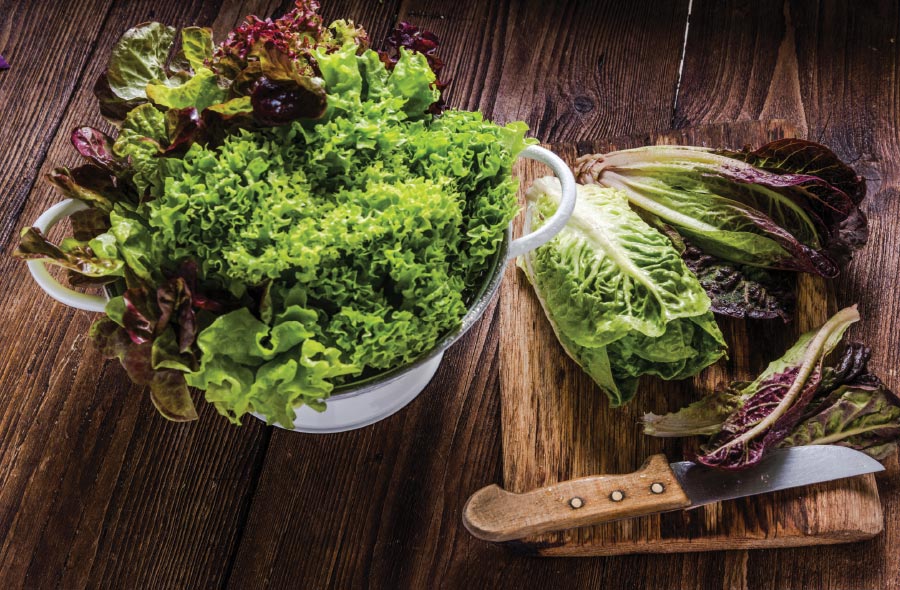
Lettuces and greens: Little leafy guys such as collards, lettuces, mustards, arugula and endive are tender, but given the right conditions they can tolerate the cold and provide a long harvest of healthy veggies. Plant these in cold frames or hoop houses in a sunny location to protect them from the chill, and reseed every few weeks.

Garlic and onions: These can be planted as late as October and November, and love a nice, long growing season. But don’t expect a winter harvest, they’re slow to grow (but worth the wait).

green onions winter gardenThere are some really nice benefits to cold weather gardening. For one, I’m not on my hands and knees in 90 degree weather pulling weeds and plucking cherry tomatoes. But also, there are far fewer pests and diseases to worry about, fewer weeds, and—I hesitate to say this, but—a winter garden requires a bit less work. It also keeps your soil loose and productive so that it’s ready in the spring.

Winter gardening is fun and experimental, because our winters are a little unpredictable. I love trying new things to see what can survive.

How to Extend the Season withCold Frames
A cold frame, defined: A cold frame is a shelter from frost that uses sunlight to maintain warmth and moisture for your veggies. You can spend a lot of money on cold frames, but they don’t have to be fancy or expensive at all.

My method
I use my collection of old windows—which can be found everywhere on the internet for cheap and sometimes free—and whatever I have laying around my yard to construct cold frames.

If you have good sunlight on a particular side of your house, you can even use your wall as the fourth wall for your cold frame. I build a little box, usually out of wood or hay bales, and then I place a window on top of it. I like my window to have a little angle to it in order to capture the most sunlight. You can find plans for cold frames online. The more airtight and sealed, the warmer the temperature will remain inside.

Why they work
Cold frames allow you to harvest longer, and even plant later, in the season. They keep the soil warm and they keep ice off of tender leaves. For most of the list of vegetables I mentioned, you’ll want to get them planted no later than the end of September, especially the tender ones like greens. But if you use a cold frame, you can plant continuously much later into the season.

For example, carrots like a good frost, but they (like most vegetables) can’t survive extreme low temperatures or constant freezing. So after the first fall frost, or once it starts to get consistently cold outside, you can plant your next carrot harvest into cold frames. I succession-plant carrots and greens all winter long in my cold frames. They get a little slower to mature in the cold, but planting every week or two gives me a nice consistent harvest.

Final tip
One thing to remember about cold frames is that on warmer days, you’ll want to crack the top open a bit to allow some air flow and moisture reduction. Then close them overnight and on those bitter cold days.


A Historic Hidden Gem

A team of neighbors adopts the Timberlake Tavern with the hope of bringing it back to its former glory

Take a right past the Koffee Kup restaurant on busy Timberlake Road and weave about one mile through the Timber Lake neighborhood, and you’ll find the cozy Timberlake Tavern, an event center offering three Airbnb rentals.

New owners Etta Legner, DD Gillett, and DD’s husband Tom closed on the 1.2-acre property in October 2020 and have worked consistently since then to repair the tavern by adding a new roof, gutters, fresh landscaping, bathroom updates, as well as giving attention to other cosmetic issues.

Legner and the Gilletts are all retired homeowners living in the Timber Lake neighborhood and say they have a passion not only for the tavern but also the history of the lake.

“In the ’30s and ’40s this was a much sought-after site for entertainment in this area,” DD Gillett said.

“Our hope is that Timberlake Tavern will once again become a popular choice for events of simple elegance where lasting memories are made.”

The event space can host weddings, receptions, holiday gatherings, corporate retreats, reunions, birthdays and memorial celebrations in the downstairs area, wrap-around porch and outdoor space. The upstairs has been renovated into three separate Airbnb rentals.

The tavern was built in 1929 by Edley Craighill and Fred Showalter, the same men who built Timber Lake in 1926. They wanted the tavern to be a community center for lake residents, who used it as a place for dining, music and celebrations until the 1950s.

Upstairs, groups such as the Girl Scouts used 12 rooms—six rooms on the front of the tavern and six on the back—for accommodations while they visited the area and learned to swim, boat and fish in the summers.

The tavern has served as a worship center and a first home for Timberlake United Methodist Church, a meeting place for clubs and service groups, and was even a private home for a number of years. It was modernized as an event center with apartments in the early 2000s.

But the 1929 building has hardly changed and guests can still admire its symmetrical charm featuring original hardwood floors, a central staircase leading to a charming library, oak mantles and flooring, wood beam ceilings and dual fireplaces, which Gillett says adds to the overall aesthetic.

The property also includes a waterfront dock enabling guests to use the water to swim, kayak, boat or sunbathe.

“It’s such a happy special place,” Gillett said. “It’s just a fun, fun place.”

It’s a small venue, Legner added, but that’s the way they want it to be.

If they get creative and guests don’t use the dance floor, they can allow for 112 inside and a total of 135 on the premises for a sit-down event.

“But we don’t really want to do that though,” Gillett said of making the space too crowded. “We are hands-on owners and we think that’s a real perk, that we’re very personal about meeting with clients and meeting their needs. We try to be adaptable and versatile and flexible in what we do because we like people, we want this to be a people place.”

The Gilletts and Legner are always on site during an event.

“It’s a 1929 building, and anything could happen so we need to be here,” Gillett said. “This is like our house, it’s just like another one of our homes and if something’s going to happen we need to know about it. Plus we might meet some really cool people we want to know for the rest of our lives.”

Between the three Airbnbs and event hosting, the tavern has stayed busy every single weekend since the beginning of April, Legner said.

“We like what we’re doing, we want it to be like this,” Legner said, but added that moving forward: “My plan is to do less physical labor.”

For now, Legner and the Gilletts do everything—everything except catering.

“If you want someone to make you more than a Pop Tart, get someone else. I’m not your girl,” Gillett joked.

But they make the beds, do the laundry, scrub the toilets and mow the lawn. At least for now.

“We’re doing everything because we want to do it ourselves first,” Legner said. “We don’t want other people to help us before we know what we’re doing.

We want to do it ourselves so we’ll really know how long it takes to do this. So then when we get people to help us, we’ll be aware, rather than not knowing how long it will take to do the laundry.”

She said their goal is to be flexible and easy to be around but at the same time offer clients a professional event.

“I think that we have managed that,” she said. “That was one of our goals and we have accomplished that.”

Legner and Gillett have since renovated the apartments into three Airbnb rentals called the Sunshine Suite, the Showalter Suite and the Birdhouse Suite.

Gillet said there was a hidden section of the tavern on the third floor, which is only visible from the back of the building and was formerly used as the maid’s quarters in the 1930s.

“It was just a dark, dingy, dreamy place,” Gillett said.

Gillett, along with Legner, the decorator of all the rentals, decided to convert that space into the third, cozy Airbnb.

“It’s the most popular Airbnb spot now,” Gillett said.

Each suite is charming and cozy with a coffee bar, fresh flowers and chocolates, and since not much has been altered from the original tavern, it makes guests feel like they are staying at a summer cottage in Cape Cod.

Guests have access to a deck overlooking the lake on the second floor where they can lounge, relax and read.

“Airbnb was a new stroke for both of us so I’m extremely proud of the fact that Etta and I have worked as hard as we have to the point that the Timberlake Tavern Airbnb has a five-star rating,” said Gillett.

They are only about a year into their new endeavor and free weekends are sparse. But this team wouldn’t have it any other way as they see this hidden landmark into the future.

“It’s been a labor of love,” Legner said.


Photos by Ashlee Glen


Functional Fungi

Mushroom supplements are growing in popularity

Over the last several years, functional mushrooms have emerged as a growing health trend.

The rise in popularity is partly credited to mycologist and entrepreneur Paul Stamets, who has given multiple TED Talks and appeared on “The Joe Rogan Experience” podcast two separate times to talk about the benefits of consuming different fungi.

Thanks largely to Stamets and his company, Host Defense Mushrooms, functional mushrooms are now available in health food stores around the country, including here in Lynchburg. Nature’s Outlet in the Graves Mill Shopping Center has sold and advocated for functional mushrooms for several years since partnering with Host Defense.

While functional mushrooms might be a new trend, different types of fungi have been eaten for their health benefits since the beginning of human history, Nature’s Outlet Director of Education John Rigdon said.

“Back when [humans] were hunters and gatherers, you could hunt animals, but you also had to gather berries and roots and mushrooms,” Rigdon said. “Humans early on figured out which mushrooms were edible and provided health benefits.”

While early humans may not have understood the science behind the phenomenon, they knew that eating certain mushrooms boosted their health in a variety of ways, Rigdon explained. Throughout history, certain types of mushrooms were celebrated for their healing benefits.

“One of my favorites are reishi mushrooms,” Rigdon said. “That [mushroom] was used by the ancient Chinese. …It was a very revered and special [food]. Only the wealthiest people would have access to this.”

Some other functional mushrooms that are commonly available today are lion’s mane, cordyceps and chaga, which have health benefits ranging from cardiovascular and kidney support to easing nerve pain and stimulating brain function.

“There’s a lot of overlap, because almost every mushroom is going to be good for your immune system, but then you have those specialty attributes, like the brain support, heart support or lung support,” Rigdon said.

At Nature’s Outlet, functional mushrooms are sold in capsule form or in liquid tinctures, although they can also be found as powders to be added to smoothies, or even cooked and eaten whole. Mushrooms should never be consumed raw, Rigdon warns.

He compares functional mushrooms to adaptogens, which are medicinal herbs used to create stability of different physiological processes in the body. According to Rigdon, mushrooms are one of the best natural remedies for overall immune health.

“Every living organism has an immune system and because mushrooms grow in such a dirty place, they have some of the strongest immune systems of any living organism,” Rigdon said.

“So, when we consume certain mushrooms, we get the benefits of their really strong immune system.”

With so many different health benefits, Rigdon believes mushrooms will only continue to become more popular.

“[Adaptogens and mushrooms] have this bizarre intelligence that works with the intelligence of your body and your immune system and helps provide the balance that your body should have,” Rigdon said.


Artist Hangout

Restaurant owner opens creative co-op beer house

Sean Bailey, the owner of Crisp restaurants, has always had plans for the warehouse space nestled behind the store’s downtown location, even though it has been vacant for years.

Over the past few months, that plan has turned into action with the creation of greenhaus, a one-of-kind beer garden that serves not only as Lynchburg’s latest restaurant, but what Bailey calls a “creative hub.”

“[The space was designed] to foster creativity,” Bailey said. “This is about taking some of the best creative talent in Lynchburg and making a space that’s unique, special, and serves the larger population.”

Right as you walk through the door, you get that feel. Customers are greeted with a custom, vibrant piece designed by local artist Andrew Riscart, who was featured as the Artist Profile in the July/August issue of Lynchburg Living.

“He even added a UFO on there for me,” Bailey noted.

As you enter the main dining area the space is welcoming, with lots of natural light from the garage door windows. Plants are strategically placed around the space curated by Susan Hertzler, plant supplier and manager for the greenhaus.

Even the plants serve a purpose. Hertzler curated each plant, picking out those that would thrive in the space. Each pot has a QR code, which talks about each plant and how to take care of it.

“The plants liven [the space] up. They’re alive. There’s literally life around you,” Hertzler said.

“There are also so many different colors. I don’t think people realize how many different species of plants there are that you can grow indoors or outdoors.”

Other elements include local woodwork, such as the carved bateau above the seating area, and a geometrical wall sculpture that was designed by Bailey. The sound system was designed by Lynchburg musician Ben Jacobs and was specially created to allow for anyone to perform regardless of whether they have equipment.

To summarize, if Bailey couldn’t find it, he found someone who created it. He even took on the task of constructing the back wall leading to the patio and the bar, which has self-serve taps for different kinds of beer.

“People recognize when something is built by hand,” he said. “They recognize when something is done creatively. Those are the type of places neighborhoods want to turn into an institution. They’re inspired by local creativity they find there. That’s really what we’re going for. I want people to realize that this wasn’t bought at Ikea.”

The menu serves to inspire as well. Bailey wants the food offerings to be a way for chefs and cooks to express themselves. While the greenhaus will serve traditional beer garden food, the team hopes to have rotating menus and pop-up brunches.

Bailey believes that bringing in more artists to the downtown scene will continue to help Lynchburg build a unique identity.

“The artists come in and make the place special and then everyone gets involved,” he said.

While Bailey didn’t grown up in Lynchburg, he moved to the city when he was 19 so he has seen downtown go from a ghost town to a thriving area full of shops and restaurants. He believes the momentum is there to keep thinking outside of the box and make each business become more entwined with the local creative community.

“As a person that’s slowly started one business after another, it’s easy to say, ‘Oh it’s Lynchburg. They’re not ready for it.’ But that’s a bunch of baloney,” Bailey said. “People are dying for a taste of the city. When places like this come in, it ushers the way for other people to do the same. Downtown will become the better alternative.”


Photos by Ashlee Glen


Your Best Foot Forward

A local expert helps navigate the often-complicated world of athletic shoes

If you’re like me, no purchasing decision is easy these days. What’s supposed to be a simple transaction can turn into hours of scrolling through customer reviews, which then leads to a Google search and all of those catchy blogs people write about products. (Aren’t those addicting?) Next thing you know, two hours have passed and not only have you still not made a decision, but you are likely even more confused than when you started.

This scenario played out recently for me as I searched for new athletic shoes. My current pair was worn out after about a year of heavy use in daily HIIT (high-intensity interval training) classes. I felt overwhelmed by my options, and realized that I wasn’t alone. Conversations about what kind of shoes to buy often surrounded me at the gym.

I tracked down Perry Mundy, a certified pedorthist for Virginia Sport and Spine Institute, to see if he could share some shoe insight. A pedorthist is a healthcare professional specifically trained in comprehensive foot care using therapeutic foot wear and supportive orthotic devices for the foot.

He was upfront that his answer to my question, “What kind of shoes do I need?” might be disappointing at first.

“One of my teachers in college said, ‘The answer to every question is, it depends. But if you ever answer that on a test it’s wrong’,” Mundy recalls. “The right shoe completely depends on the individual and that individual’s activity. There are a wide range of variables that are specific to each person.”

But he acknowledges there is a lot of information to sort through regarding athletic shoes. Here, we asked him a few of the top questions.

How important is fixing a shoe issue to overall health?

Feel like your foot is slipping from side to side during that CrossFit workout?

Notice substantial arch aches during those early morning runs? This is not the time to channel those popular fitness mantras such as “no pain, no gain.”

“The foot is the foundation of the house, everything else is up the line,” Mundy says.

The pain in your calves, knees, even hips, could be due to an improperly fitting shoe or, in some cases, a structural problem with your body, such as leg length inequality. If one leg is even just a tiny bit longer than the other, that foot will not pronate properly in your shoes. Your doctor may recommend you to a certified pedorthist to see if a special shoe insert could help.

Mundy typically stops his evaluation “at about hip level,” so if you have shoulder pain for example, you probably don’t need to blame your shoes.

What exactly is pronation?
“Pronation is our natural ability to absorb shock, an inward rotation of the foot that occurs very quickly, every time we step,” Mundy explains.

When he says quickly, he means quickly—300 microseconds is all it takes. But it’s a crucial split second of time for our bodies.

“Pronation is necessary, we have to do it to absorb shock the right way, if not, something else in our bodies will,” says Mundy, adding that abnormal amounts of pronation (either overpronating or underpronating) can cause a wide range of difficulties.

What about all of those words you see describing shoes?
While there is a lengthy shoe vocabulary companies like to use when describing their shoes, Mundy says running shoes can generally be classified into three categories: control, stability and neutral. You will see these words written out in the description of the shoe either on the box or online.

A control shoe is a very strong “posted” shoe, with a variety of different materials intended to decelerate the speed of excessive pronation in the foot.

A stability shoe is less “controlling” and can include mild to moderate levels of “posting” but could also include neutral shoes based on how they function with the foot. “Some shoe companies are moving to ‘dynamic posts’ in response to increased research on how the foot behaves during running,” Mundy says.

A neutral shoe is just that, a shoe without additional materials for controlling pronation. “They are cushioned to aid in shock absorption. This is a large category that is not limited to running shoes but functionally includes sport-specific shoes like tennis, basketball, volleyball, crosstraining and even CrossFit-style shoes.”

What are some signs I’m in the wrong shoe?
Let’s say you are at a shoe store—or maybe you even ordered some shoes online to try out at home. First and foremost, Mundy says the top test of the “right” shoe is pretty simple: “What is the most comfortable? When our feet hit the ground and we have pain, we have a problem.”

Next, he recommends the pinch test.

While standing up, pinch the inside of the shoe near the toe box to see how much space there is.

“See how much of your foot, your pinky toe, is hanging off the edge of the shoe. If you are sliding off the outer edge of it in the store, don’t buy it. Because in a few weeks of use, your foot is definitely going to be off the edge.”

Finally, check what he calls dynamic alignment. March in place for a bit, stop, and unlock your knees: “If your knees are over top of your second toes, that’s where they need to be. If they are not, you need to look for something else.”

Is there a good “universal” shoe out there?
“Some shoes can cross over, some cannot,” explains Mundy. “Again, it depends on what you are trying to do.”

Take running shoes for example. Trail running is very different from road running. Distance running is different than sprinting.

“Can you play basketball in a running shoe?
I wouldn’t recommend it due to the lateral motion. But you could run in a basketball shoe if need be,” says Mundy.

Cross-training shoes may come the closest to being a “universal” shoe and have become a popular category because they can do a little bit of everything.

Mundy recommends looking at four components for cross-training shoes: durability, versatility, specificity and price.

“You want a shoe to hold up to the demands you place on it (durability), to be able to do multiple activities (versatility), contain components that help your foot do its job better (specificity) and you don’t want to break the bank when buying the shoe (price),” Mundy says. “Finding the correct shoe is a fairly daunting task so soliciting professionals to help with these characteristics will help guide you towards the correct shoe choice for your specific activity.”


Expanded Bridal Section with Best of Bridal Picks

Flip through the pages of this Expanded Bridal Section that includes the Best of Bridal Picks: who brides and their wedding parties recommend!


Dudes Can Cook

A pep talk from Lynchburg Living’s tried-and-true (and sometimes bearded) food contributor

Anyone calling themselves a Man should be able to cook. No, I’m not talking about grilling a hot dog or microwaving leftovers, but a proper, kitchen-made meal, from scratch. Gone are the days when the kitchen was the realm of women. A modern man should be self-sufficient enough to feed himself without depending on his better half—or on takeout.

The good news for cooking-challenged dudes is that most anyone who can read and follow basic instructions can cook a fully edible meal. Why not make this the day when you step away from the sideline and join the game!

Cooking is not only a skill that will keep you alive and healthy, it will surely also score you some points with the ladies!

The three keys to cooking success:
1. Read the recipe from beginning to end before you start.
2. Make a time plan by counting backwards from the start time of your meal.
3. Measure out all ingredients in separate bowls/cups.

Get great recipes
I’m just going to come out and say it: Most cookbooks are garbage. They may tell fun stories and feature pictures of celebrities, but it’s not unusual that the recipe measurements are off or ingredients are left out altogether. Instead, search online for recipes by Ina Garten and Alton Brown, or get a cookbook from “America’s Test Kitchen” and you will not be disappointed by the outcome.

The truth about knives
Unlike what you’ll hear on an infomercial on late night TV, you seriously don’t need a lot of tools. Instead, use that money to get a good chef’s knife. An 8-inch Victorinox Fibrox will set you back less than $40 but will do the job better than most 15-knife sets that you’ll pay hundreds for.

Pro tip: Don’t fall for the siren song coming from that hand-forged $500 Burlwood and Damascus steel show piece. It might look good in your kitchen, but it won’t make you a better cook.

What about skillets?
You need two basic skillets; one cast iron and one non-stick. Generally speaking, cast iron is your go-to for browning meats, and a great Lodge brand cast iron skillet will only set you back about $35. The second skillet you need is a basic non-stick pan. You use that for fragile things that may stick in cast iron, such as fried eggs or fish. You can even go for the cheapest for about $20.

Pro tip: Replace your non-stick skillet every year or so because they get scratched up and you don’t want pieces of the coating in your food.

Ingredients matter
Splurge on quality ingredients when you can because they taste better and are better for you. Eggs from a local farm have higher nutrient density than factory-farmed eggs. Wild-caught fish from Alaska tastes better than the sewer-farmed stuff from China. And fresh produce from your neighborhood farmers market can’t be beat by the supermarket greens that were picked weeks ago and likely travelled from across the country—or the world!

Pro tip: If you can’t find local produce, explore the frozen veggie section of your supermarket for flavorful, affordable and long-lasting goodness.

Ok, now you know more about cooking than 90 percent of all home cooks, so let’s put your skills to the test with this easy, flavorful and filling Chicken Pot Pie recipe on the following page.

chicken pot pie

Chicken Pot Pie
SERVINGS: Makes 4 individual pot pies

TIME: Takes about 1h 45 min from start to finish
Special equipment: Four oven-safe ramekins, 12-14 oz each

INGREDIENTS:
3 chicken breasts (should make about 3 cups cooked, cubed)
1 sheet of frozen puff pastry, thawed in fridge overnight
1 egg (for egg-wash)
4 cups of chicken stock
1 stick of unsalted butter (that’s 8 tablespoons)
1 large onion (should make about 1.5 cups, chopped)
3/4 cup of all-purpose flour
1/4 cup heavy cream
3 carrots (should make about 1.5 cups, diced)
1.5 cups frozen peas
1.5 cups pearl onions (not critical but great!)
1 bunch parsley (should make 1/2 cup, chopped)
3 teaspoons kosher salt (Diamond Crystal kosher salt is seriously a magic ingredient!)
1 teaspoon black pepper, freshly ground

INSTRUCTIONS:
Preheat oven to 350 degrees. Place chicken breasts on a baking sheet, smooth side up. Rub with olive oil on both sides and sprinkle with a few pinches of salt and pepper. Cook in the middle of the oven until the internal temp reaches 165 degrees, about 30 minutes. Let cool slightly, then dice into half-inch cubes. Set aside.

In a large saucepan, melt the butter over medium heat. Add the chopped onions and cook until translucent, about 5 minutes. Add the flour and stir for about 2 minutes, then add the chicken stock and bring to a simmer. Stir until the stock starts to thicken, then add the salt, pepper, and heavy cream. Add the cubed chicken, carrots, peas, pearl onions and parsley and give everything a good stir to combine. Bring out your four ramekins and fill 90% full with chicken-veg mixture.

Go get your thawed sheet of puff pastry from the fridge. Unfold and place on a slightly floured surface. Using a rolling pin, roll out the dough until the sheet is about 25 percent larger. Cut out four circles, half an inch larger than the top of your ramekins.

In a cup, mix the egg with 1 tablespoon tap water to make an egg wash. Brush the top of each ramekin with the egg wash. Place one dough circle on each ramekin, crimping the edges slightly to seal. Brush the dough with egg wash and cut a few slits in the top to allow steam to escape. Place your pot pies on a baking sheet and cook on middle rack for about an hour or until the top looks golden brown and delicious!


Photos by Ashlee Glen


We Dig It

Local Gardens That Give Back

Growing & Teaching
Located on the campus at HumanKind, the Davis Instruction Garden is a demonstration garden with plots that concentrate on production for those in need.

In July, Hill City Master Gardeners harvested Yukon Gold potatoes for distribution along with other summer vegetables. All were distributed to local community organizations. Last year, more than 1,400 pounds of Irish and sweet potatoes, tomatoes, cucumbers, beans, melons, squash, and more were provided to local nonprofits.

The Davis Instruction Garden also provides gardening training for the community. Although still restrained by virus precautions, this year’s garden includes 15 leased plots for beginning gardeners.

For information contact Gene Wolanski: genew36456@aol.com or 434-426-2371.


Nurturing a Community
A local group has been getting their hands dirty in the Pierce Street neighborhood to create a raised bed community garden.

When planning their Leadership Lynchburg service project, Team Big Hearts researched food deserts and poverty statistics in the area. They also spoke with local officials to pinpoint areas with the greatest need.

“We met with Dr. Nina Salmon, a board member of the nonprofit Pierce Street Gateway, and our causes intertwined,” said team member Sarah Blankenship. “They desired to build a garden on the lawn of the first black-owned business in Lynchburg in an effort to take the first step to raise awareness of the importance of the historical site; we were hooked.”

The garden is located on the site of the Spencer Calloway General Store. So far, Blankenship says neighborhood turnout and support has been “superb.”

With help from businesses such as Lowe’s in Madison Heights and JMJ Landscape Supply Center, they planted late season crops; once those are ready, neighbors will harvest and distribute the produce to area residents.

If you want to help out, email piercestreetgarden@gmail.com.


Purposeful Jobs
Aside from growing food for the community through its numerous programs, part of the mission of Lynchburg Grows is to provide meaningful work for people with disabilities.

The nonprofit currently employs four individuals with physical and/or mental disabilities who are responsible for all farm chores as well as planting, harvesting and processing produce. They also look for ways to develop their social and communication skills in various leadership roles.

“They all seem to love it here and think of it as their second family and that’s the atmosphere that we cultivate,” said Stuart Overbey, marketing director.

“I think it’s important to all of them that they feel part of something bigger than themselves.”

Lynchburg Grows also oversees regular volunteers with disabilities who come from local organizations such as The Arc.

Learn more about this organization at lynchburggrows.org.


Lynchburg Living Area Dental Guide 2021

Your Resource to Local Dental Care