Artist Profile: Mitchell Bryant

Photos courtesy of Mitchell Bryant

Lynchburg Living Editor Megan Williams: You’ve been seriously pursuing photography since you were in the 10th grade; were you initially interested in adventure and landscape photography?

Mitchell Bryant: The outdoors was often the subject of a lot of those early photographs as I didn’t know what I was doing. I could practice by myself and learn with no real boundaries. I’d grab my camera, go for a walk behind our house, and shoot through a roll of film. Now, my love for the outdoors is a much more holistic endeavor. I love being in nature. My camera has become a faithful hiking/backpacking partner throughout the years and one that I lean on to retell the stories in vivid detail. 

MW: Who or what has most inspired you, or driven you forward in your growth as a photographer?

MB: In the early parts of my career I religiously followed Jeremy Cowart. He had such a creative and innovative approach to image-making, while maintaining such a lovely balance of technical prowess and experimental creativity. I learned a lot from his images and continue to follow his work closely today. 

One of my favorites to keep up with is painter and traditional artist Mark Maggiori. His method of reproducing massive landscapes with impeccable detail and visceral color leaves me scratching my head often saying, “How?!”

Another no-brainer follow is Chris Burkard. 

Photos courtesy of Mitchell Bryant

MW: How do you approach your outdoor/adventure/travel photography? Do you set out with a specific vision in mind, or do you tend to capture moments that are more spontaneous or real-time?

MB: If I’m traveling to a new place, I’m like a kid seeing the world for the first time. Almost everything is image-worthy. I want to remember it all, and some of it might be considered art. When I return to a place, experience or environment that I love, I’m much more particular and premeditated. There are certain aspects of that adventure or that story that I want my viewers to experience and “remember” even if it’s something they’ve never experienced. That often involves wide context imagery, action/journey of some kind, and, of course, my layered, textured, patterned, artful landscapes. 

MW: In your opinion, what makes a good photograph?

MB: Technically speaking there are rules, a prescription of aesthetics that you can follow, like many art forms, that are the “compositional elements of a great, technically sound photograph”. Those elements come together to create a well-structured, beautiful, pleasing image.

Great photography is found at the intersection of innovation, expertise, courage, and creativity—knowing everything you “should do” and daring to abandon that appropriately. My favorite images (and most art for that matter) transport us to another time and place where presence—the power of here and now—is visceral and transformative.

MW: Looking back at your work, what are some of your favorite photographs that you’ve shot? What makes them special to you?

MB: I’m big on Type 2 fun (look it up). Any images that help me recall a certain moment, adventure, or experience of course have a special place in my book. My wife can tell you I’m constantly scrolling through my phone looking through old photographs and laughing, or sighing, or saying, “Oh man look at this, wow that was 2015?!” It is absolutely one of my favorite things. My friends and family probably get tired of me taking over the TV so I can Airplay an image and tell them about what was going on again and again. 

Also in terms of favorites or images that are special to me—anytime someone seeks out my work for a large print in their home or workspace—that is the ultimate compliment. 

MW: Do you have any photos or styles that you want to explore? Where do you see your photography going from here in terms of subject and style?

MB: This is fun for me to think about. In the future I want to involve my family more. Photography can tend to be a solo venture. I want my boys in particular to find a love and appreciation for this world and a love and respect for all of nature’s beauty and the people within it. If I could bottle the reactions my boys have, their wonder and imagination running rampant, and pour that all over my images, I’d be doing just fine.

The work I want to focus on involves being outside more and more. There is a lot left to be explored in that regard. 

I’m also working on having more of my images printed/installed on a massive scale, whether that be in retail spaces, custom residential builds, or hospitality projects.  


2023 Lynchburg Living Idea House: The Stories These Walls Could tell

Lynchburg Living’s 2023 Idea House is Full of History

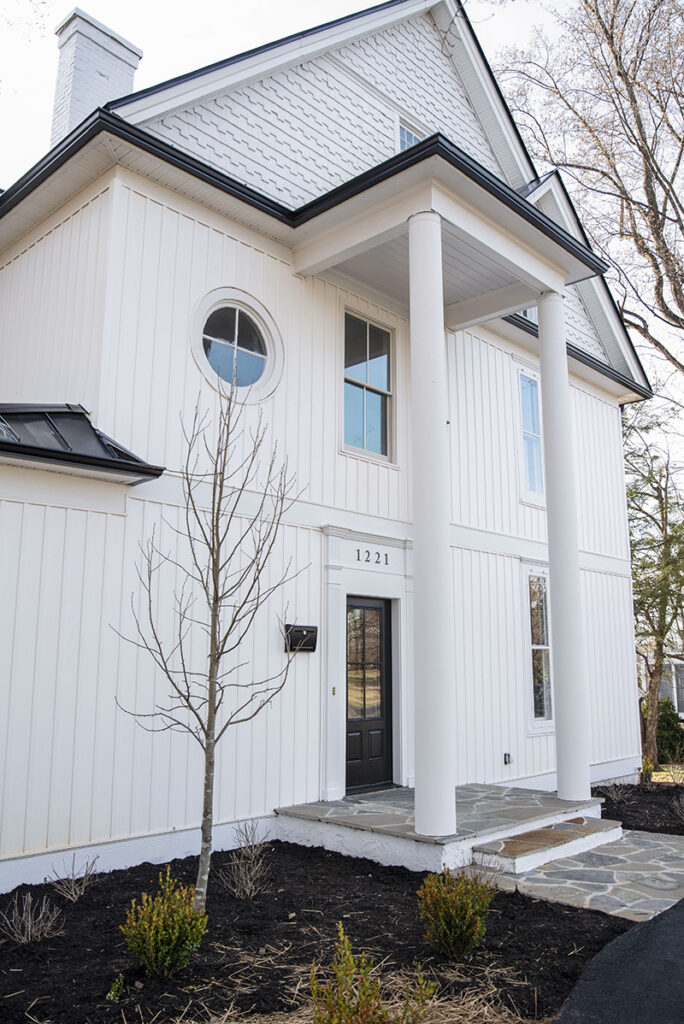
The walls at 1221 Oakwood Street in Bedford practically sing with stories from its past. They tell tales of summertime pool parties, when neighborhood kids would flock in mass to its backyard, barely kicking their shoes off before cannon-balling into the 12-foot-deep pool. They recount quiet spring mornings, when the chill of the air beckoned for a fire to be lit in the stone fireplace, cup of coffee perched just so on an armchair while its owner gazed out the glass door into the misty acreage beyond. If you were to listen closely enough, you’d hear the subtle thrum of a record playing, its music keeping time with the bustling party that weaves throughout the first floor and gushes into the front and back porches—nothing but shrills of excitement, outbursts of laughter, and maybe some neighborhood gossip for good measure.

Photos by Ashlee Glen

The story of 1221 Oakwood Street—this year’s Lynchburg Living Idea House—begins with General William R. Terry of the Confederate Army. Terry was a merchant who became brigadier general in the Confederate Army during the Civil War and later served part-time in the Virginia Senate, representing Bedford County. A native of the Town of Bedford, then called Liberty, Terry returned home after the war and worked to further establish his roots.

“General Terry is well known in Bedford,” said Scott Elliott, President of Custom Structures, this year’s partner in the 2023 Idea House. “He came back here after the Civil War and lived in the house across the street. He ended up getting with his brother-in-law, Beaufort, and they developed Longwood Avenue and Oakwood Street. Around 1860, his sister and brother-in-law built this house.”

The “house across the street” is none other than Historic Oakwood Plantation, a looming manor home that dates back to 1780 and was originally owned by Terry’s grandfather.

It’s unclear who owned 1221 Oakwood Street after Terry’s death in 1897, but the next owner of note was another well-known local, Earl Childers.

Childers had only a 9th-grade education, but it was clear that he was a man of considerable mechanical ingenuity and resourcefulness. As the owner of Childers Foods, Inc., Childers developed a “belt machine” that was designed to facilitate the separation of chicken meat from the bone. Just a few years later, he developed a second machine known as the “shaker machine,” which further refined the processing of deboned chicken parts. In the mid-1960s, he began selling that food product to Gerber Company for use in baby food. Later, his company was purchased by McCormick & Company, of commercial spice fame.

“Earl Childers lived here for 68 years,” explained Elliott. “He was an inventor and developer and was known to have a lot of parties here. He added onto the house numerous times and is the one who added the pool.”

In those 68 years under Childers’ ownership, the Bedford community came to know the Oakwood home as a gathering space. In fact, Lynchburg Living’s editor even swam there as a child.

Of course, over time, as historic homes can do, 1221 Oakwood fell from its original glory. When Elliott and his wife, Meredith, purchased the home in 2020, they had an undertaking ahead of them.

“This is the oldest home Scott and I have worked on together, but certainly not the oldest home Custom Structures has worked on,” said Meredith.

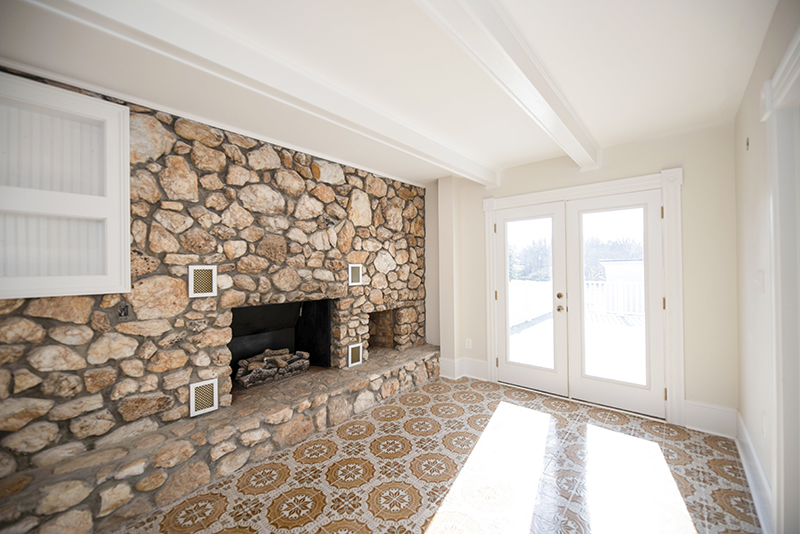
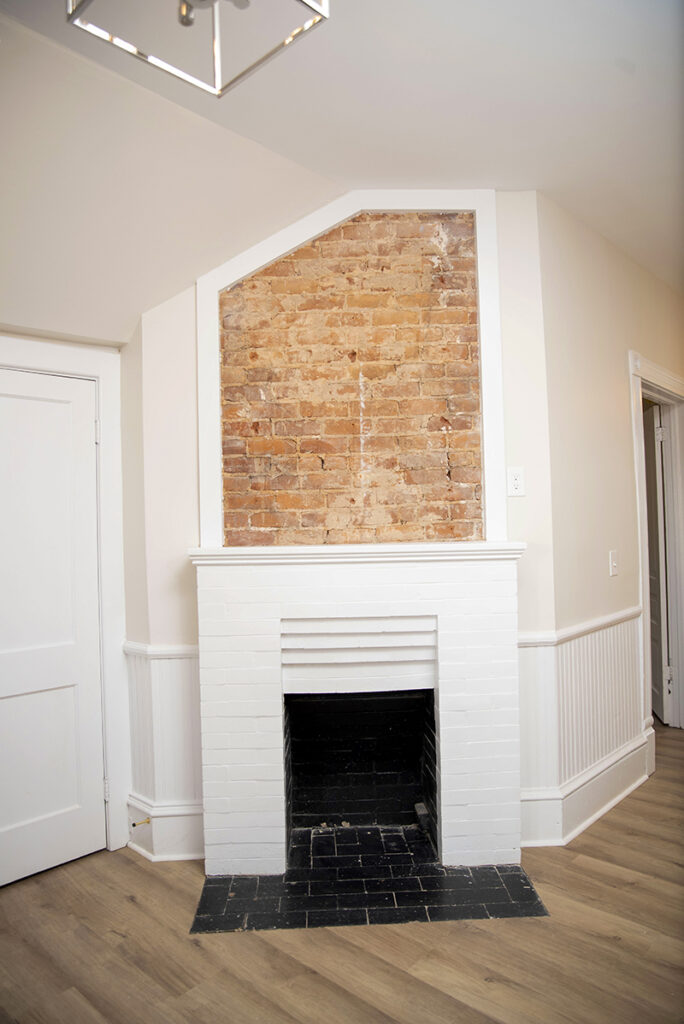
“When we started doing work on the house after we purchased it, we had to jack up the rear addition and put up proper structural supports,” furthered Scott. “We also discovered eight fireplaces in the home, on every level of the home.”

A New Story for an Old Home

As Meredith and Scott walked through their new purchase, they took their time getting to know its nuances and quirks, including the happy discovery of hidden fireplaces throughout the home.

“That was the fun part about this,” Meredith remembered. “Going room by room and trying to find all of the fireplaces. That’s the neat thing about a home with this much history, you never know what you’ll find—it’s like a treasure hunt.”

It was a priority for the Elliotts, the Custom Structures team, and their Idea House partners to maintain the integrity of the 19th-century home while bringing it into the modern era,
suitable for a large family to live, play, and grow in.

Communal Spaces

“My main priority was that I wanted to make it more modern,” Meredith said. “I wanted to make the eating and living spaces feel open, where families could eat and have TV time.”

Between the kitchen and dining area, the Idea House team removed a dividing wall between the pantry and kitchen to create a more open-concept space that allowed for an easier flow from one room to the next.

“The kitchen was very small originally, with just one small window,” Meredith said. “We really worked to open up that space and I love what the oval windows, which aren’t original, added.”

Nestled between the two oval windows is an impressive Bertazzoni 48-inch gas stove, a high-performance stove that uses the same paint as Ferrari, the luxury car company. Throughout the downstairs space, original glass weighted windows cast light through their waved panes, and original wainscoting adds texture and charm.

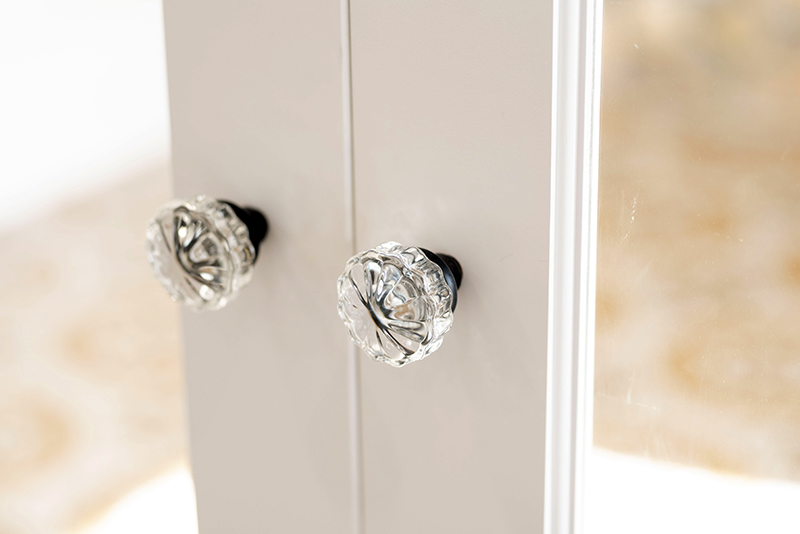
The built-ins in the dining room—added when Childers owned the home—were given an upgrade with white quartz countertops and elongated gold hardware to match the kitchen to serve as a casual buffet area for morning breakfasts or late-night parties.

“We tried to keep as much of the existing features as we could,” said Scott. “But at the same time, we made sure we updated the home to make it more of an open floor plan.”

A House with Many Rooms

The impressive 4,100+-square-foot home has five bedrooms and three and a half bathrooms, with one main bedroom on the first floor and one main bedroom upstairs. The walk-in closets in the main bedrooms—complete with rows of shelves for shoes and bags—were original to the home, which came as a surprise to the Elliotts. Each main bedroom has its own bathroom, with the downstairs bathroom featuring sleek brass fixtures and a soaking tub you could get lost in.

“When we bought the house, there was a hot tub where the bathroom is now and it was all covered in carpet,” laughed Meredith.

In the upstairs bathroom, meant to be shared by the youngest members of the family, the Idea House team added three identical vessel sinks rather than little ones elbowing each other for room while they brush their teeth.

Ready for the Next Hundred Years

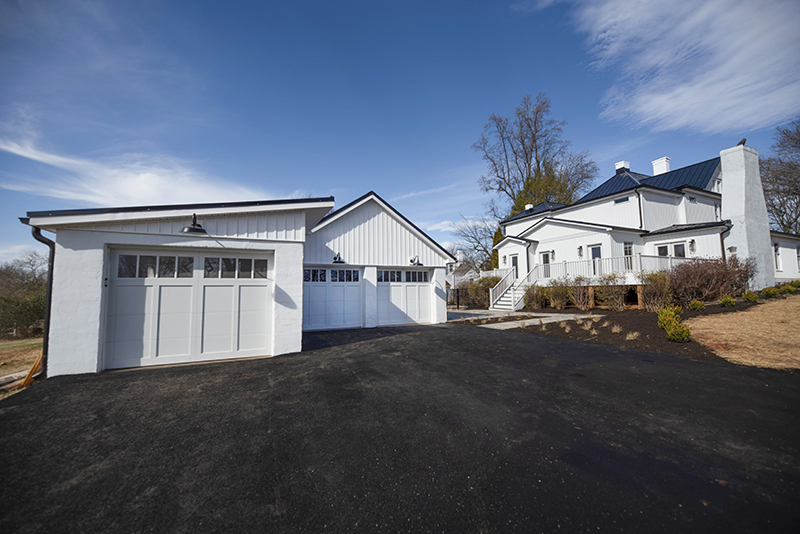
In addition to the interior restoration, the Idea House team built an entirely new deck, converted the existing two-car garage to a three-car garage and a pool room, and replaced the metal roof.

“We added new board and batten vinyl siding to the house and parged the foundation with a similar texture that is on the front wall,” Scott said.

The historic home also received the addition of two HVAC systems, one for the downstairs and one for the upstairs.

“The house originally had oil heat, so we rewired the entire house,” Scott furthered. “The deck was also in bad shape, so we tore it all down and built a new deck.”

The 12-foot pool, beloved in its heyday, was converted to salt and received a stunning facelift around its perimeter.

“They don’t make 12-foot pools like that anymore,” Scott ruminated. 

In truth, that same sentiment could be applied to the entirety of the 1221 Oakwood Street home. From its grandiose structure to its nearly innumerable fireplaces to the masonry work that has weathered the home’s long history, “they don’t make them like that anymore.” However, thanks to the craftsmanship of the Idea House team, the house will continue into a new chapter, one that’s hopefully full of summer pool days and evenings that turn into mornings with strangers that quickly become friends.  

Photos by Ashlee Glen.


An Artful Weekend in Charlottesville

From the Culinary Backstreets to the Community Hubs

It is said that you can’t truly understand a culture until you know their language and have tasted their food. Even for the intrepid weekend traveler—the one who ventures not outside of their country, but simply outside of their city—the sentiment is still true. For many, Charlottesville brings up images of UVA football games, laps around the historic downtown mall, and the breweries and tasting rooms that pepper the perimeter of the eight-block pedestrian walkway. While those activities do make for a fun-filled, joyous weekend, there is something to be said for veering off of the well-trodden footpath for a little while. Get to know the culinary backstreets and community hubs that help define Charlottesville’s culture.

Photos by Megan Williams

Eastwood Farm & Winery
Just minutes outside of downtown Charlottesville, but seemingly a world away, is the 77-acre Eastwood Farm & Winery. Owned and operated by Athena Eastwood and two of her daughters, Eastwood Farm & Winery grows pears, apples, blueberries, and raspberries on-site—ingredients that fuel their cider that’s made and fermented in-house. It’s a delightful crossroad between a dry cider that Virginia is often known for and the sweet ciders that make for easy drinking on a warm day. Also offered is Eastwood’s limited but reliable menu of house-brewed beers, ranging from a crisp lager and an IPA that is more balanced than overtly hoppy and a chocolate stout that feels like a true indulgence.

But what Eastwood Farm & Winery is most known for is their Virginia Governor’s Cup–winning wine. Customers flock to their horse-barn-turned-stunning-tasting-room to sample from an impressive menu of Virginia classics like the viognier and petit manseng and their Bordeaux varieties like merlot and meritage. For a festive treat, their blanc de blanc, served in a stunning coupe, is delightfully crisp and effervescent with notes of almond and lemon zest.

Eastwood is family-friendly as well—in fact, it’s encouraged to bring children and dogs in tow. Alongside a full tasting and food menu, Eastwood also offers non-alcoholic beverages that are ideal for those who don’t drink or for the littlest ones in the group. Children can even order their own juice tasting flight where they can sample from apple juice, fruit punch, lemonade, and grape juice. They can also order their own special charcuterie board, complete with fruit snacks, animal crackers, string cheese, and dried apricots.

Eastwood Farm & Winery isn’t a “stop along the way” type of place—it’s where friends and families gather for hours-long conversations while they sip on some truly delectable beverages.

The Wool Factory
Just 12 minutes away from Eastwood Farm & Winery, but in an entirely separate part of town, is The Historic Woolen Mills. Located at the confluence of the Rivanna River and Moores Creek, the expansive warehouse complex was once nationally known for its production of woolen textiles. The textile mill closed its doors in 1962, after 100 years in operation, but it now has new life and purpose as a gathering space for locals and travelers alike. Inside of the warehouse footprint are office spaces, Selvedge Brewing, The Workshop, and Broadcloth—all names paying homage to the building’s history.

Selvedge Brewing offers a chance to grab a quick bite and a beer before dinner while The Workshop offers a full-service coffee shop, complete with locally roasted beans, and the opportunity to shop for a special bottle or two of wine to take home.

Just next door to Selvedge Brewing is Broadcloth, a unique dining experience where Chef Tucker Yoder guides guests through the current season with culinary ingenuity and poise. With the option of a four-course, six-course, or chef-tasting menu, and optional wine pairings to match, diners may find themselves indulging in dry-aged duck with smoked beets or roasted spaghetti squash in a browned butter sauce so perfectly nutty and golden. As the menu changes every week, however, guests will always have a surprise in store when they visit.

Quirk Hotel
After an indulgent day, of course, an indulgent night is in order. The Quirk Hotel is unassuming from the street. Built upon two 19th-century homes that currently house the Quirk Gallery and Quirk Cafe, the interior of the hotel itself is expansive. Entering through the front doors, guests are introduced to a light-filled lobby with a sweeping ivy-like art installation lining the wall that draws the eye forward and upward, where it inevitably finds the ceiling of rolling arches high above.

Art and beauty are the story of the Quirk Hotel, and it’s evident from the lobby bar and hallways through to the spacious rooms and rooftop bar with 180-degree terrace views of the city. No matter where a guest may go or look, they will find something beautiful to look at.

Cou Cou Rachou
Every early morning deserves coffee on a cozy patio with a delicious cup of something to keep warm. Cou Cou Rachou, a classically French bakery run by a Le Cordon Bleu–trained pastry chef, is tucked into a modest shopping plaza. Walking through the front doors, you’re hit with warmth from the ovens and an intoxicating aroma from the lineup of perfectly glazed and sugar-dusted pastries. Deep brown canelé, mildly tart Meyer lemon financiers, and buttery, flakey pain aux chocolats draw guests in, beckoning them to hover over the glass case to choose which pastry (or two) will be their morning treat.

A coffee menu perches just above the pastry case, where guests can choose creamy cafe au laits, sweet and salty maple lattes, or simply a delicious cup of black coffee.

IX Art Park & The Looking Glass
Charlottesville isn’t just indulgent food, of course. The creative thread that runs through the city’s culinary experiences extends throughout its public spaces, as well. The IX Art Park is a nonprofit outdoor art gallery that is brimming from sidewalk to sky with murals, art installations, sculptures, and community. The IX Art Park is home to free festivals, weekly events, and a weekly farmers market that welcomes around 3,000 hungry shoppers every Saturday morning.

The IX Art Park also provides free art kits (from Thursday to Sunday) including watercolors, paint sticks, chalk, and more to visitors of all ages. They also host Arts From Underground, which is a free weekly series that provides adults with an opportunity to make art and explore their inner creativity.

Just inside of the building space that serves as a backdrop to the Art Park is The Looking Glass, Virginia’s first and only immersive art space. The Looking Glass is an extension of the IX Art Park, though it is a ticketed experience. At first entry, guests are greeted by a painted bookcase and mirror that contain the most clever of secrets: Hidden doors that lead them through an enchanted woodland scene, through the glowing, neon belly of a caterpillar, and into a cozy gnome cottage. Everything within the space is meant to be touched or interacted with, for an art experience that is truly for all senses.

Tonic
At Tonic, Chef Emerson Ross has created a masterful menu with ingredients sourced from local farmers and growers. The snackboards, designed to share with the table, feature in-season produce that have been pickled, fermented, whipped, or marinated, culminating in a customizable appetizer that clues your taste buds in on the journey ahead. The entrees—which Chef Ross and owner Courtenay Tyler both agree are also best when shared amongst the table—continue the local story. Mushrooms from nearby Sharondale Mushroom Farm are piled high on freshly baked sourdough bread. Bloody butcher grits from Wade’s Mill—Virginia’s oldest continuously operating grist mill—meet shaved brussels sprouts in a dish that’s so unbelievably creamy that you’d be shocked to learn it’s vegan. A plate-sized katsu-style pork chop sits atop smoky local carrots for a bite that’s stunningly balanced thanks to a drizzle of sauerkraut aioli, which the chef makes with his mother each year using locally grown cabbage.

Tonic prides itself on creating an “unpretentious” atmosphere, and that’s a promise you can count on whenever you step through its doors. Diners are encouraged to eat family-style with their companions for good reason—there is a tearing down of walls and an invitation to conversation that naturally happens over a shared plate of delicious food.  


The Power of Potluck

Jason Fowler grew up going to covered-dish dinners after church, a familiar scene for a lot of us. Unfortunately, more often than not, these dishes were not very appetizing. They were too fried, too jello-y. The potlucks that Fowler now hosts in the Lynchburg area with fellow farmers, homesteaders, and local food-lovers are a stark contrast to those covered dish dinners of the past. 

These monthly potlucks aren’t held at a church but a farm. People who are excited about local food bring their dishes made with care and passion. There are meaningful connections being made over the enjoyment of natural, simple food. The reason for these potlucks stems all the way back to 2011, when the local food movement of Land & Table began. 

The idea for Land & Table was sparked when Fowler worked at the Region 2000 Tech Council, now the Central Virginia Planning District Commission. He noticed plenty of economic development but a lack in agricultural development. This inspired an in-depth report on the economic impacts of the local food movement, and a small group of local residents began meeting and laying the groundwork for Land & Table. 

Photos courtesy of Land & Table

 “At the beginning, we basically asked two questions. ‘What do we want from regional leaders to help grow and support the local food movement?’ And the other was, ‘What are we going to do to grow and support the local food movement?’” Fowler said. 

From those two questions, Land & Table grew and became a grassroots community focused on mobilizing a strong local food system in the Lynchburg area. 

At first glance, Lynchburg may not appear to be a prominent farming area, but the surrounding counties of Bedford, Appomattox, Amherst, and Campbell, with their rural landscapes and farmland, provide many opportunities to bring in locally grown food. 

“The reason we exist is because of this idea of thinking our area doesn’t have a lot of agriculture and local food—well actually it does. Land & Table exists because the local food movement is not very developed, and that’s what we hope to change,” Fowler said. 

Land & Table is striving to make this change through its resources and educational opportunities. They just started a book club in partnership with Bedford County Library to review books on homesteading and living off the land. Throughout the year, they host workshops on concepts like apple tree pruning and soil fertility. Their most recent project, currently in the works, is a local food guide called Local Food Lynchburg. 

Each Land & Table meet-up is different. One month, attendees could learn about beekeeping while the next they could be attending a seed swap with heirloom seeds their peers have carefully saved. The ultimate purpose? A deeper connection with the land around them. Photos courtesy of Land & Table.

Local Food Lynchburg will start off as a website and later be developed into a book and app. The guide will be a compilation of information on all things local food—where to pick apples, where to find local eggs, where the breweries are, where the farmers markets are. Most importantly, the guide will bring everyday consumers, local farmers, and food entrepreneurs into the same circles. 

Building a network is fundamental for the local food movement, whether it be consumer to farmer, farmer to farmer, or chef to farmer, but particularly among farmers. Fowler described how living off the land often results in a sense of “intense independence” and “rugged individualism,” which leads to a lack of community, but community is essential. 

“We’re looking to fill a gap and connect people that maybe often don’t have a way to connect with other people interested in the same kinds of things. Out of these connections, we feel that a lot of things can happen. This idea of community and the effects of community can become economic. It’s all intertwined in an ecological way,” he said. 

A consumer buys a cucumber from a farmer who gives their seeds to another farmer who then sells their cucumbers to a local chef. Everyone is connected to the land whether they realize it or not, a concept that has been lost. With grocery stores and supermarkets, getting produce has never been easier. Realizing those fruits and vegetables came from the ground usually doesn’t cross a shopper’s mind and building a relationship with the land doesn’t necessarily mean you have to go “off the grid.” 

“It’s not just for rural people, like everybody is dependent on the land, and you need to rekindle that relationship, whatever that means. It could mean you grow a garden, or you have chickens,
or at least you just have a relationship with farmers,” Fowler noted. 

What better way to build those relationships than over a plate of good food? The early meetings of Land & Table that started with a few local residents have grown into monthly potlucks where everyone is welcome, and they are unlike any other potluck. 

“If everyone knew how good the potlucks were, there’d be too many people showing up to taste it,” Fowler said. “It’s that kind of level. Like have you ever had chocolate hummus?” 

The goal of these potlucks is to experience delicious local food but also to bring everyone to one table: farmers, beginner homesteaders, business owners, chefs, everyday consumers. People convening to simply be together and enjoy food and where it comes from is something truly special. 

“Everyone is bringing something to the table,” Fowler continued. “The meal itself becomes the metaphor for community. We believe in the power of the potluck because it builds community and creates a space for people to connect.” 

For more information follow Land & Table on Instagram @land_and_table. Find them on Facebook at Land and Table.  


Flexing Mussels

Many of us first think of mussels when they’re presented to us on a menu at a seafood restaurant. 

Well, it turns out, those are not the only kinds of mussels. Freshwater mussels like the Yellow Lampmussel are important to our local aquaculture as they filter up to 30 gallons of water per day in the James River, creating a cleaner space for all of us. They are also an important member of the food web, as they serve as a food source for otters and other animals that live around the river.

The James River Association (JRA), a nonprofit that monitors the river, responds to problems, seeks policy changes, and implements on-the-ground projects to restore the river’s health, is doing its part in planting 10,000 of those freshwater mussels into the river.

Photos Courtesy of James River Association

Erin Reilly, Senior Staff Scientist at JRA, manages the mussel restoration program and said altogether the organization has put in 580 Yellow Lampmussels near Percival’s Island in downtown Lynchburg.

The James River Association has been working on freshwater mussel restoration for the past four years and one of the biggest initiatives has been planting mussels that were grown in a hatchery in Charles City County at the Harrison Lake National Fish Hatchery. 

Freshwater mussels are filter feeders and have similar characteristics as oysters in the saltwater areas, particularly in the way they both make water cleaner. They can remove sediments, nutrients, and different kinds of bacteria which helps stabilize the sediment.

“Oysters can filter around 50 gallons of water a day and a full-grown mussel can filter close to
30 gallons of water in a day,” explained Rob Campbell, Upper James River Senior Regional Manager. “So, when we have thousands and thousands upon thousands of those in the James River, we’re having virtually all of that water run through a nice, natural filter and it’s just an amazing thing for the sediment and keeps the water clear.”

Reilly said the mussels have a parasitic relationship with fish that helps them grow and mature into the hardworking mussels that are vital to the health of our river. 

“So what happens is during one of their life stages, they create little Pac-Men that clamp onto fish gills,” she said. “They’ve all adapted different ways to attract the fish, so they can clamp on to the gills and then they move around with the fish.”

Photos Courtesy of James River Association

She said they drop off after a few days or even months depending on the species and, when they do, they are fully-formed mussels.

Campbell said mussels are important to the native forage and critters who live around the river.

“We see certain piles where raccoons, muskrats, and otters are going in foraging for these critters in the river. So not only are they important for aquaculture and cleaning the river, but they successfully have also played a big role in the food web,” he said. “Everyone loves otters and one of their main food sources is mussels.”

Virginia has around 30 species of freshwater mussels and five are endangered.

Reilly said the Department of Wildlife Resources (DWR) and the U.S. Fish and Wildlife Hatchery have been planting endangered mussel species in the James River as well. 

“It’s really an exciting time in the world of freshwater mussel restoration because, for a long time, the hatcheries weren’t really able to produce a lot of mussels and it was kind of a niche thing,” Reilly said. “But they’ve now upgraded their technology and made some discoveries about life history and how to actually make this work. So now we can grow more mussels and it’s really taking a leap in the world of freshwater mussel restoration because now we have this ability to put greater quantities and new mussels in the water.”

Mussels can live for 50 to 80 years. Heavy metal pollutants can be tracked through their tissues because they’re filter feeders and the heavy metals accumulate in their tissues, Reilly said, which can be a really good indicator of pollution, but they also are threatened if the water quality conditions aren’t good. 

“One of the reasons why we’re starting to increase a lot of these restoration efforts is because we’ve improved water quality and we think the water quality is now good enough that these mussels can survive,” she said. “Not only did we not have the technology but the mussels we put in probably wouldn’t have survived until now.”

For example, one of the places that JRA has gone out with the DWR is near an old power station on the banks of the James River which has its outfall into the river.

“So, when you have a power plant, a lot of times what they do is take water in from the river, pass it around their cooling towers to cool everything down, and then release the heated water back into the river,” Reilly said. “And that’s what they did in the case of this power plant. And it was really stark to see that above the outfall there were still mussels and things like that. And then below the outfall there were no mussels because the heated water had actually made it so that the mussels couldn’t survive there.”

Reilly said JRA went back in 2020 to look at the location after the power plant had been closed and the situation with the mussels had remained the same.

Last year, the General Assembly pushed to receive funding to create a statewide freshwater mussel restoration plan, which is starting now.

The James River Association received a grant to create a freshwater mussel restoration plan specifically for the James River, Reilly said.

“So, we’re convening a group of experts to talk specifically about what’s going on in the James and what areas we should be protecting, what species we should be working with, that sort of thing,” she said. 

Photos Courtesy of James River Association

She said staff went out to look at the mussels that were planted two years ago and found some great growth on them, which indicates that the area is a successful place to plant them.

“It’s really exciting for us to know that not only are they still there, but they’re also growing really well and they’re thriving. So, it’s a success story and we’re hoping to be able to keep doing that and create more of these successes,” she said.

Through a grant, JRA is continuing its work on creating a restoration plan for the James River and its hope is to start implementing that plan soon, but it will require partnerships with the state and different agencies within the federal government and the hatcheries.

“But we’re hoping to be able to take the steps in the plan and implement them, continue to do restoration and hopefully make sure that these beds of mussels can be reestablished and thriving and self-supporting,” Reilly said.  


Navigating the Private School Decision


As your children reach school age—or perhaps they’ve been in school for some time now—you may find yourself considering whether private school is the right choice for them. It could be that you are currently homeschooling your child but are looking for a bit more day-to-day structure. It could be that they’re currently in public school, or it could even be that the private school they’re attending just isn’t the right fit for them. Or, like many new parents, you’re simply trying to get a jumpstart on school research so you’re prepared to make a decision once your child reaches preschool or kindergarten age. One thing is certain: Choosing when and what private school is an incredibly important decision and it’s one that looks different for every family. As a parent, you’ll know what’s best for your unique child and the way they learn in certain environments.

As you navigate the private school decision, we have a handful of tips to help make the decision easier and to guide you on the questions you should ask during private school visitations.

The Factors to Consider
Whether your child is too young to weigh in on the decision about which private school they’ll attend, or they’re old enough to consider the options, there are a number of factors to consider. 

First and foremost, consider the type of environment your child already thrives in. Do they benefit from a highly structured learning environment or does their curiosity call for a more freeform learning experience? One of the benefits of choosing private school over public school is that you can place your child in an environment that is more tailored to their individual needs. Class sizes are smaller, education is more tailored, and course offerings can vary more.

If you are the parent of a very young child and are considering private school just as they reach preschool age, there are certain queues that can help you identify what type of learner your child is. As a general rule, all people are kinesthetic, visual, or auditory learners. Typically, we are a balance of all three but have a tendency to lean toward one specific style. Understanding, even at the most basic level, what type of learner your child is will help you identify which private school may be best for them.

“The five top factors for parents and students to consider when deciding on a private school should be accreditations, course offerings, Biblical foundation, mission, and opportunity,” explained Ashley Saunders, Director of Marketing and Communications for Liberty Christian Academy. “At LCA, we are able to support our students by recognizing each student’s individual needs. We combine small class sizes, our guidance team, and full-time campus pastor to create a team of support for our students.”

Choosing whether or not to enroll your child in a parochial school—or a school that is affiliated with a religious or spiritual organization—is also a factor to consider. Within the Lynchburg, Campbell, and Bedford footprints, there is an incredible diversity among private schools so you can align your child with a curriculum that matches your family’s lifestyle and spiritual beliefs.

Also take into consideration the extracurriculars and athletics available to your child. Each private school offers a different set of opportunities—some of which aren’t often found at our local public schools, like lacrosse. Consider the musical opportunities that may be available to your child as well.

“A parent or student should consider the educational philosophy and curriculum of the school, as well as the school’s culture and values, outcomes, extracurriculars and athletic programs, and classroom size and student-teacher ratio,” said Maryanna Stands, Associate Head of School for Advancement and Director of Admissions for James River Day School.

Common Misconceptions
There are certain misconceptions attached to private schools that should be debunked as you’re navigating the private school decision, as well.

“A common misconception is that parents think there are less opportunities for their students, whether it be extracurricular or academic,” said Saunders.

“People think private schools are only for wealthy students and provide a less diverse student body,” continued Stands. “James River Day School is more diverse, both socioeconomically and culturally, than most people think. Nearly a quarter of our families receive some amount of need-based tuition assistance, and 21-percent of our students come from ethnically diverse backgrounds. We continue to focus some of our strategic efforts on diversity, equity, and inclusion as a more diverse school is what’s best for all of our students.”

As you’re visiting the local private schools that you’ve identified as potential options for your child, have a running list of some of the assumptions that you may have about that particular private school, or just private school in general. Ask pointed questions to challenge those assumptions—you may just be pleasantly surprised at the answers.  


2023 Lynchburg Living Top Teacher Awards

Being a teacher is more than just a job. It’s more than a just career. It’s a calling.

Our annual Top Teacher Awards are a way to honor deserving educators who have not only answered this call for public service, but they also go above and beyond to make sure their students are thriving.

This list—made up of various school districts, grade levels and subjects—is only a snapshot of the incredible teacher talent we have in our region.

Thank you to Chick-fil-A Wards Road/River Ridge for partnering with us again on this campaign and providing each teacher with a bag of gifts and coupons.


Rain, Rain, Go This Way

Rainwater becomes plant fuel with rain chains

utters and drains along a roof are one of the most important elements to maintain and take care of in a home. When water is effectively guided to the ground, your home’s roof, attic, or interior can be spared from damage. While most homes in the United States have a metal downspout that carries rainwater away from the home, there are additional downspout options that can be implemented on your home that are functional, beautiful, and effortlessly water your garden.

The History of the Rain Chain
Rain chains originated in Japan and are still used in many Japanese homes to keep water runoff away from roofs and foundations. Originally called kusari-doi, rain chains attach to gutters and guide rain down to the ground or to a water harvesting receptacle like a rain barrel. 

Rain chains can be DIY-ed by feeding a weather-resistant chain through copper or aluminum cups that have had holes added to them for drainage. They can also be store-bought, are incredibly affordable, and can be found in a number of different designs—from simple cups to pineapples to owls. Either way, they add a unique charm that “regular” metal downspouts just can’t offer.

Why Choose a Rain Chain?
If you’ve been considering harvesting your rainwater or have plans for a zen rock garden in your backyard, a rain chain can effortlessly guide rainwater to your desired location. 

If you don’t harvest your rainwater, you can use a rain chain to guide the water to a rock garden, planter, or fountain. Rain chains also work well as added garden components if you don’t want to entirely redirect the rain flow. Decorative rain chains can channel water into a large planter for the thirstiest plants in your garden.

Store-bought rain chains come in a variety of colors and finishes, though most are made of copper or metal. This level of customization will allow you to add a tiny pop of color or whimsy to your home.

Best yet? A rain chain could be added along the gutter channel without removing the existing downspout. Of course, your home’s unique gutter system will determine if that’s actually possible. However, many rain chains can be added by simply using tin snips to open a small hole in the gutter where the rain chain can be hung. 

There’s something to be said for the steady trickle of rain down tiny copper barrels to make you instantly feel like your home is an oasis.  


Gardens the Restore

The Herbs and Flowers You Need to Create a Stunning, and Healing, Medicinal Garden

Herbal medicine predates written language and recorded history. Archaeologists have found evidence of herbal medicine usage as far back as 60,000 years at research sites in present day Iraq. Now, we have chemically synthesized medicines that, without a doubt, save lives and cure disease, however, our modern medicine doesn’t nullify the value and importance of natural medicine. In fact, some of our most powerful drugs are still derived from plants! Did you know that two common drugs used in fighting childhood leukemia come from Madagascar periwinkle?

The plant has been used by indigenous peoples for ages to treat diabetes, however it was discovered to have cancer-fighting properties in the 1950s. We have not yet figured out how to synthesize these chemicals, so we still use the plant extract itself to make these life-saving medicines, reminding us that science is amazing, but sometimes you just can’t beat nature.

As a matter of fact, there are MANY modern medicines that come from plants, or that were developed because of our understanding of plant science. And traditional herbal medicine is still practiced today in much of the world. But you don’t have to be an expert or consult a mysterious medicine woman to add herbal medicines to your cabinet. Here are a few safe and simple herbs you can incorporate into your health and wellness routine:

For Insomnia: Chamomile, Lavender, Valerian Root
All three of these herbs have long been used to reduce tension and settle the mind and body in preparation for sleep. Valerian Root is especially trusted as a natural sleep aid. Drinking a hot tea in the evening of any one or more of these herbs is a great way to treat yourself to a little R&R.

For Pain: Feverfew, Ginger, Turmeric
If you suffer from chronic pain or frequent headaches, or deal with muscle soreness after a workout or a day on your feet, these options may help to relieve your discomfort. They’re great options to try for anyone looking to lessen their use of over-the-counter pain medications. Ginger is known to have anti-inflammatory properties, as well as a host of other health benefits. Feverfew, as you might guess, is used to reduce fever, but also helps curb pain from rheumatoid arthritis and toothaches. Turmeric is a powerful anti-inflammatory and has shown in some studies to be as effective as Ibuprofen in pain relief. It’s also easily incorporated into the diet in juices, smoothies, soups, or curry.

For Energy: Ginseng, Peppermint, Ashwagandha
All three of these herbs have been shown to improve energy, brain function, focus, and physical performance. Peppermint is probably the easiest to grow in your home garden and is great when used as an essential oil in a diffuser, as studies suggest that simply inhaling the scent of peppermint sharpens your focus and enhances your mood. Ginseng is popular for athletes and is commonly found in supplements and beverages. Ashwagandha is truly ancient and has continually proven to have a powerful effect on cognitive function, alertness, and even reaction time.

Powerhouse Herbs to Keep on Hand

There are a few herbs that are just good to have around, as they can address all sorts of ailments and issues. This is only a short list. In fact, most medicinal herbs have more than one use, and it’s a good idea to get an herbal guide or do some research if you’re interested in knowing more!

Ginger is one of them. I have frequent migraines, and I keep ginger in my kitchen, purse, and my desk at work, to deal with the resulting nausea. It’s also known to be hugely helpful for expectant mothers dealing with morning sickness. I prefer to eat dried ginger (you can find it at almost any grocery store), ginger chews, or cook with fresh ginger. But it is also available in supplements and teas. Even my kids enjoy the chews and get one any time they complain of an upset stomach.

Echinacea is very well-known and is used for building up the immune system. If someone in your family is already sick, giving this to other household members may help prevent them from catching the bug. The root of the plant is especially powerful. It’s also good for relieving a sore throat.

Oregano is not only delicious, but it’s also a great herb to grow in your garden, as it is antimicrobial, meaning it fights fungal, viral, and bacterial germs. It’s also high in antioxidants.

Bee Balm/Bergamot is charming in the flower garden and is also a wonderful herb with many benefits. Like oregano, it is antimicrobial. It also soothes cough, skin irritations, and stomach cramping. 

There are so many more valuable herbs that can play a role in your family’s health. Don’t be afraid to give nature a try! Afterall, it has sustained us for thousands of years.

As spring approaches, it’ll soon be time to get your herbs in the ground! Visit the medicinal garden at Old City Cemetery for inspiration as you plan and plant your own medicinal garden at home.  

Please note: While the above herbs are generally considered safe, allergic reactions and drug interactions are always possible. It’s important to consult with your doctor and conduct your own research before adding an herbal regiment to your wellness routine.


Bring an Old Home into the Modern World

Tips for Navigating Well-Loved Homes with Character

Lynchburg and the surrounding areas are full of timeworn homes full of potential. Whether it’s a colossal Victorian that neighbors a well-known historic street or a 19th-century farmhouse that’s been clearly well-loved and weathered, there are ways to unlock the potential of these old homes and bring them into the modern world—without sacrificing their charm.

Tackle the Big Needs First
If you’re in the process of renovating, restoring, or even maintaining an older home, it’s wise to start slow and truly look at the bigger picture. For example, if the old metal roof on the home is showing signs of wear or is already leaking, prioritize those crucial repairs first before moving on to smaller projects. It’s important to catch those issues while they’re smaller problems first, rather than waiting and potentially running into a larger problem that could cause wide-scale damage.

Once the bigger, immediate needs are taken care of, approach the home systematically by discovering the resolving problems one by one. Walk room by room with your phone’s Notes app or just with pen and paper and make note of every issue that you see. Is plaster cracking in the guest bedroom? Is the toilet randomly running throughout the day? Is there a light fixture that isn’t working? Are the wooden floorboards on your porch showing signs of rot or wear? Do all of the windows open with ease or do the old pulley systems need to be replaced?

Invest in Experts
Older homes and historic buildings are entirely different from new constructions—even the materials originally used are nowhere to be found in modern constructions today. For the most part, that is a positive. There’s a reason why people lament, “They don’t make them like they used to,” when referring to older buildings. The wood was infinitely stronger, and the metal or slate roofing materials used were meant to withstand the test of time—and they have.

However, it’s completely normal to feel intimidated by your older home. You want to do its “good, old bones” justice so it continues to last.

As you take time to explore the history of your home and identify the character-defining features that you want to keep, you can work with experts that you trust to keep those elements intact while updating any technology or infrastructure around them. For example, if your 100-year-old home has the original wavy glass in its windows, those may be elements that you want to keep—because they really don’t make them like they used to in that regard. However, those windows are often not as energy efficient, or they may need components replaced so they continue to raise and lower. Or, if you are renovating a midcentury that has loads of built-in cabinets but some of the doors no longer close the way that they should, an expert will help you by sourcing era-appropriate hardware that will restore them to their original glory.

If you happen to be more handy and want to tackle the work on your own, hire an expert—either an interior designer or a construction consultant—who has worked with homes from your era who will help you identify the special features in your home and point you toward the right direction for repairing them.

Set Expectations
The average homeowner doesn’t have an HGTV-level renovation budget (but one can dream!), so when you’re planning your renovation plan, it’s important to set realistic estimates alongside each item. Whether you’re hiring an expert or handling the renovations on your own, it’s always wise to add 20% to your estimated total in case of a worst-case scenario. For example, if the construction team starts replacing the floorboards on your porch and notices termite damage on the support beams that they originally assumed were stable, those will be additional costs that you will incur.

As you’re making your renovation plan, consider what is an immediate need (like fixing the leaking roof), an important need, or simply something that is nice to have, and then prioritize your budget from there. Save the “nice to haves” for anything that is left over in the budget after the rest of the work is done.

And keep an eye out for any local or state government preservation incentives like tax credits that your property may qualify for!

Know When You Can Modernize
If your home still has its original coal-burning fireplaces, that doesn’t mean you have to rely on them to heat your home. You also don’t have to furnish your home in era-specific furniture that may not bring your joy or comfort.

The goal with renovating or restoring an older home should be about preserving the elements in your home that can adapt to modern needs. For example, if your home has the original tongue-and-groove longboard wood floors, don’t replace them with modern flooring if they’re still in good shape and can be restored. Or if your home has high ceilings with the original crown molding, factor its restoration into your budget rather than replacing it with newer materials.

Putting the time, energy, and money into salvaging these defining features will still maintain the character and history of your home without sacrificing modern conveniences. As you bring in those modern touches, like an updated electrical system or a new heating and cooling system, you can still be thoughtful of where they’re placed. New air conditioning returns may be carefully and inconspicuously placed so they don’t draw attention. Furniture can be laid out in a way that works with the home’s original floor plan but still works with how you live day-to-day.

Finally, focus on craft and quality as much as you can. The original builders of your home were experts with a deep knowledge of brick, wood, and plaster, so it’s important to focus on bringing in materials that maintain the same level of craftsmanship.