Artist Profile: JoAnne Becker

Making a Difference

A local artist uses her skillset to create beautiful works and foster Lynchburg’s growing art scene

By: Christian Shields | Photos By: Ashlee Glen

Tucked away on the third floor of the Bailey Spencer Hardware building on Lynchburg’s main street, the Studio 3 Art Gallery provides patrons with a wide range of artistic expertise, all courtesy of owner JoAnne Becker.

From woodworking to abstract paintings, portrait photography, family history books, and more, Becker has a self-described “compulsion to create things.” This desire to create beauty causes her to try her hand at many different art disciplines with a high level of success. This often leads to unique combinations of photography intertwined in other art forms, such as her custom cigar boxes.

“It’s a good day when I create something interesting,” she said with a smile.

Becker originally moved to Lynchburg from Maine eight years ago. During a conversation with Bailey Spencer owner Michael Pearl five years later, she was offered the chance to rent the third-floor studio space and she jumped at the opportunity.

While Becker places high value on her creations and takes pride in her work, she refuses to hoard these treasures or over price them for her own personal gain. She instead keeps her prices reasonable and also features low cost items to ensure everyone who walks into her studio can take something home if they choose.
“Really the impetus for this is I love what I do, and I want to share that with people,” she said. “It makes people feel good to have their portraits done.
I get satisfaction taking photographs, but it’s also really rewarding to see them go somewhere where people will enjoy them. Whether I give them away or sell them, it’s the same feeling.

It’s not about the money, it’s about sharing what I do.”

This heart for the community extends beyond Becker’s approach for selling her own products. On Saturdays, she hosts a maker’s market in which local artists of any age can set up a table in her gallery to sell their wares. Rather than seeing other artists as competition, she sees them as fellow craftsmen.

“Art is very personal, so it’s hard for some artists to put their work out there for everyone to see, it definitely was for me,” she said. “I am grateful to be able to help young artists at Studio 3 and watch them gain the confidence and fortitude they need for success.”

This summer, Becker will hold her first solo art show, “Beauty of the Unexpected,” at the Up Front Gallery at the Academy Center of the Arts, with an opening night on June 6 from 5 to 8 p.m. The show will run through July 26.

Explore JoAnne’s paintings and photography at joannebecker.com and connect with Studio 3 Art Gallery on Instagram at @studio3lynchburg.

You can find JoAnne’s custom cigar boxes online at creativecigarboxes.com.


A Cozy Corner of Norfolk Avenue

The Milams’ Craftsman Home Filled with Love, Laughter, and Good Food

By: Megan Williams | Photos By: Ashlee Glen

On a warm Spring Wednesday night, the red door on a cozy 1920’s Craftsman swings open. Warm light spills onto the porch and the sounds of a ruthless game of Clue pierce the otherwise quiet street. Amidst the squeals of a guess-gone-wrong, you hear chips clanking into a bowl, ready to be served alongside freshly made onion dip. If a neighborhood kid were to pass by at this moment, they’d surmise their own clue: Game night at the Milam’s is on and all are invited.

“If the red door is open, you’re welcome to come in,” said Hart Milam, who has lived in the charming one-and-a-half story home since 2019 alongside her husband Nick, their two children Wesley (11) and Cora (8), and their dog Mojo, who joined the family a few years after they moved in. “This is a very close-knit street. My kids are always included in neighborhood activities, and we always do the same.”

Hart and Nick met in 2012 while they were both living in DC. Neither had any intention of leaving the Northern Virginia area but a job opportunity relocated the Milams to Lynchburg in July of 2019.

“We had no intention to staying for more than a year and were actively seeking rental opportunities,” Hart recalled. “We decided that purchasing a home might be a better option because of the interest rates at the time. We did not like a single house we looked at, and we searched for about two months until I was told about our current home. It sat vacant, so I reached out to the owner in late September, and we walked through it the next day. Nick and I remained silent during the walkthrough with the owner, but as soon as we got in the car, we knew it was the house for us. We put the offer in, and it was officially ours in October 2019. It’s hard to believe it will be almost 6 years.”

Hart had always had an affinity for Craftsman-style homes, gravitating toward the timeless functionality that the homes have.

“I love the characteristics and charm,” she said. “When we were house hunting, we looked at a few homes for sale on Norfolk Avenue. Having lived in Washington, DC, then eventually when we lived in Winchester, and our suburb in Northern Virginia, I loved the ability to walk to restaurants and shops. When we were walking the sidewalks of Norfolk Avenue, knowing how convenient businesses on Rivermont are to the street, it was a no-brainer for me. I was determined to live on Norfolk.”

The Milams immediately got to work transforming the home into a space that worked for their family, and that would continue to work well as their children grew.

The original kitchen had a peninsula countertop that was, according to Hart, “perfectly workable and fine,” however the counter height was six-inches higher than standard height and needed to be adjusted. They were able to retain most of the overhead cabinets but renovated the base cabinets to a more accessible height.

“We renovated the kitchen with Ikea cabinets!” Hart said. “It took over 250 boxes being delivered to our home and a lot of manpower from our family to help build out. My father-in-law, Mike, would leave his day job as a pulmonologist to help Nick build cabinets after work. We subcontracted the work in the kitchen to gut, place tile, but the rest of it was a lot of DIY. We had moving boxes everywhere in the middle of renovations, refinishing floors, building kitchen cabinets, and we eventually moved in December 2019 with a lot of work still to be done. I was determined to have Christmas breakfast in our new home, so we had to have our granite countertops installed on Christmas Eve!”

For the Milams, the kitchen is the heart of their home and family. After Hart returns home from work, where she is in Admissions at Randolph College, just a three-minute walk away, she can be found in the kitchen, doling out snacks for her kids or assessing the ingredients in the fridge for dinner.

“Coming from a strong Filipino and Italian background, I was taught not to waste,” she said.

“If all you have is rice and eggs, in Asian culture, that’s a meal in and of itself.”

Go-to meals on busy weeknights while the Milams navigate work schedules, their daughter’s dance practice schedule, and both children’s lacrosse schedules include pasta, salmon rice bowls, and even charcuterie platters where the kids can graze while catching up on homework after a practice.

“I try to incorporate as many of the same ingredients as possible across the week to avoid waste. But if I walk by a full lobster tank at the Boonsboro Kroger, I will make an impulse purchase for lobster rolls,” she laughed.

While the Milams keep meals simple during weeknights, Hart will go over the top for certain occasions or meals.

“One afternoon this winter, all of the neighborhood kids came in from playing outside. For snacks, I brought out the Brookstone S’mores Maker and they made s’mores in the dining room. Nick and I love to have people over, planned or unplanned—anywhere from pizza parties with the Ooni to me forcing everyone to watch Duke Basketball—and everyone knows we will always have some snacks or a cocktail waiting for you whenever you come over! I love to be a little over the top in parties and themes, and I’m so glad my family and friends indulge my sometimes-unhinged behavior,” she smiled. “Last year, I threw my daughter a [Taylor Swift] Eras themed birthday party complete with t-shirts, koozies, and a ‘merch table’ with glasses and tattoos!”

Hart and Nick’s children are front and center in their home, from the snacks they love to the hobbies they are cultivating. It’s a space of warmth, joy, and color, and it creates a beautiful background where their children can experiment and thrive.

The built-ins in the living room, original to the home, are brimming with family photos, assembled Lego projects, records their daughter is enjoying, and books that the kids can quickly grab and tuck into. It’s the home of a family who loves being together and loves to be at home.

“On a Saturday morning, Cora will wake up first and turn on the record player—usually Taylor Swift. That’s what we will wake up to,” Hart shared. “If it’s a warm morning, we will take out the flat top grill and make breakfast outside.”

The Milams’ home is more than just a place to live—it’s a hub of connection, creativity, and community. Whether it’s a spontaneous game night, a themed party, or simply sharing a quiet breakfast outdoors, Hart, Nick, and their children have built a space that reflects their love for each other and the neighborhood they’ve come to call home. It’s a place where the door is always open, and everyone is invited to join in the warmth and joy that fills their home.


Trafficked for Adoption

A Lynchburg Woman Learns to Forgive After Being Kidnapped as a Child

By: Megan L. Horst | Photos By: Ashlee Glen

In the small rural village of Kakinada, India, lived a young girl. Born into poverty, captured, and trafficked before she was even eight years old, Devi reflects on her hardships and faith in Christ that has not only sustained her but allowed her to forgive those who kidnapped and abused her.

When Devi was a young girl, her mother ended up living on the streets and, out of necessity, turned to a life of prostitution.

“[At the brothel] we lived in one bedroom with six people,” Devi said. Her two brothers also lived with them. Devi worked a number of jobs, as do many children in India who are born into poverty. She recalls cleaning houses, selling snacks at the theater, and her favorite job—selling spices at the bazaar.

“Child labor is very common in India,” Devi said.

When the brothel was eventually shut down, Devi and her family ended up on the streets. Her mother became ill, and she was taken to a hospital with horrendous living conditions. Regardless, Devi did not want to leave her mother’s side.

“I slept under her bed on the floor,” Devi said.

“I just wanted to be with her.” After nearly a month of taking care of her mother in the hospital, a man who noticed their situation approached them, offering to take Devi to find work.

“Again, child labor is common in India,” Devi said. He promised to take Devi to a workplace and bring the money Devi earned back to her mom, assuring Devi she could come back to visit. Although she did not want to go, she knew her wages would help with her mother’s medical care. She never imagined that her mother would pass away that same night, and that would be the last time she saw her.

The man took Devi on a nine-hour train ride to an orphanage, where he was compensated for bringing her.

“He sold me to that orphanage,” Devi said.

“I remember them exchanging money in front of me.” At that moment, Devi knew she had been trafficked.

Devi soon discovered that she was not alone.

There were many other children who had been trafficked. The “orphanage” had a valid license; however, it was, in fact, a front for child trafficking. All the children at the orphanage had been kidnapped and were held until someone overseas wanted to adopt them.

“Every kid in that orphanage had a story to tell,” Devi said. When a child was brought to the orphanage, their hair would be cut, their names would be changed, and they would be told that their families were dead. Changing their identity and leading them to believe there was no family to be reunited with was a deterrent to running away.

Devi explained that they were not treated well and were put to work in the rice field, on the farm, and in charge of caring for the younger children. The girls were physically, sexually and mentally abused, but whenever prospective parents came from overseas to visit the orphanage, they would “put on a show.”

“They’d get all these workers to come and pretend they were working there,” Devi said. “We put on nice clothes, and they fed us. It was like a showcase.” Although the children were all kept in one room, there were other rooms in the orphanage, such as a dining room, that were kept nice and only used when prospective parents came to give the illusion that the children were well cared for.

“It was all a lie,” Devi said. “Behind the curtains, no one knew what was happening.” Most of the children were eventually adopted. The international parents who paid high adoption fees had no knowledge that the child they adopted had been a victim of human trafficking.
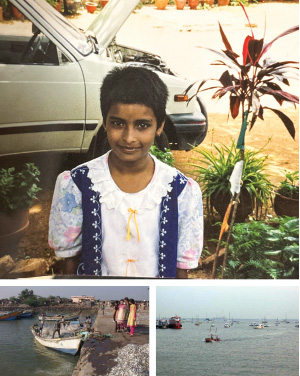
Like many of the children, when Devi learned she was going to be adopted and taken away from India, she tried to run away with other girls from the orphanage. Their plan did not work, and they were caught, brought back to the orphanage, and badly beaten.

In 1998, after being in the orphanage for two years, Devi was adopted by a family in Virginia.

“I didn’t want to be here,” Devi said, remembering the days following her arrival. “I hated it here.” Aside from dealing with the trauma she had endured, without knowing any English, coming to the U.S. was challenging for Devi, and she struggled to communicate with her new American family.

“She [adoptive mom] labeled everything in the house to teach me,” Devi said.

Once she was able to communicate, Devi told her adoptive parents what had happened to her and explained she was not even an orphan; however, they were skeptical of what she claimed.

“Who would believe a kid?” Devi said. Her adoptive parents were given death certificates of Devi’s biological parents, however, the certificates were fabricated. Around the same time Devi was trying to convince them of her story, there were two other girls from the same orphanage who had been adopted by a family in Alabama, and they were speaking out about their story. Their adoptive dad worked to bring awareness to the child trafficking ring that was fronting these adoptions. The orphanage was eventually exposed, and the owner was arrested.

When Devi was in high school, she returned to India and was reunited with her family.

“When we got there the first day, to my hometown, the streets where I grew up, everyone was still there,” Devi said.

She discovered that her town and family had looked for her after she disappeared, but with limited resources, they could never find her and assumed she was dead.
Although Devi’s parents were Hindu, she had heard about Jesus as a young child. While in the orphanage, she did not know Jesus as her Savior yet, but there were times as a child when she felt the Lord’s presence and comfort.
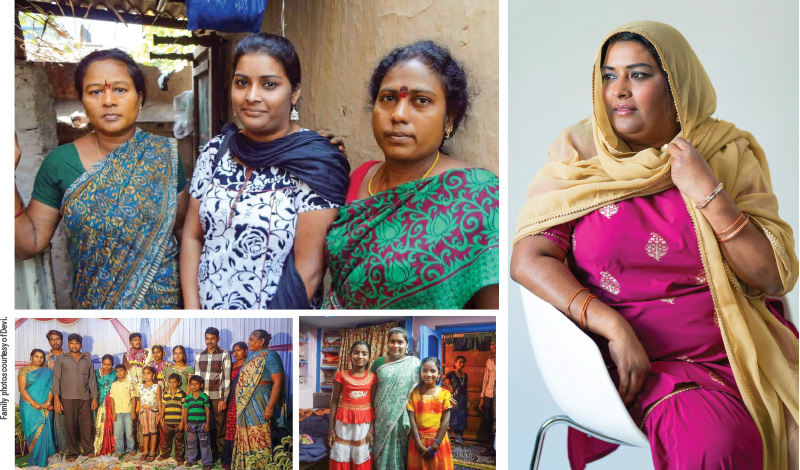
“I didn’t become a believer until I came to my U.S. adoptive parents,” Devi said.

“It came easy to accept it because I was aware of it. It clicked.”

Trying to heal from her experiences, in 2012, Devi again returned to India for a visit and decided to find the location of the orphanage, which had been converted into a glass business. Upon visiting the location, she came face-to-face with one of the people who had run the orphanage. He claimed not to remember her, but she remembered him.

“You don’t have to remember me,” Devi told him. “I was just a number to you. You were making money out of us.”

When Devi was about to leave, he asked if she hated him, and she said no, but she hated the system and what was done to so many children. She explained that the only reason she was able to forgive him and the others who abused her was because of the Lord.

There are still times that Devi strives to feel close to her Indian heritage by cooking Indian food, watching a movie, and crying over the memories of her past, but then she can let go of the hurt and move forward, giving it “all to the Lord.” She said you must decide how you allow your past experiences to affect you.

“You have to make that decision,” she said. “It can eat you up; let the poison get the best of you, or you can make peace with it and move forward.”


Lynchburg Restaurant Week 2025

Experience Lynchburg Restaurant Week
June 14-21, 2025!

Get ready to indulge in the culinary delights of Lynchburg during this year’s Lynchburg Restaurant Week, brought to you by Lynchburg Living magazine. From June 14 to June 21, nearly thirty of our city’s best restaurants will open their doors, offering specially crafted three-course menus that showcase the local flavors and talent that make our food scene so exceptional. Whether you’re revisiting old favorites or trying something new, this is the perfect opportunity to savor the hard work and creativity of our local chefs.

From innovative appetizers to mouthwatering entrees and decadent desserts, Lynchburg Restaurant Week invites you to enjoy delicious meals, all while supporting our community’s vibrant restaurant culture.

And don’t forget—if one of our participating restaurants leaves you wowed, you can cast your vote at lynchburgrestaurantweek.com!

The winning restaurant will receive well-deserved recognition and exciting prizes. We hope you’ll join us in celebrating the flavors that make Lynchburg unique.