Upfront September/October 2022

Mark Your Calendars

For a full list of events, be sure to check out our Calendar of Events page. Also, if you have an event you would like to submit, you can do that too!

September 17
Lynchburg Beer, Wine, and Cider Festival

The 13th Annual Lynchburg Beer, Wine, & Cider Festival will be held on Saturday, September 17,
at the Riverfront Festival Park from 12 to 7 p.m.

Enjoy over 50 different options of craft beer, ciders, and wine all hand-picked and selected from right here in the state of Virginia. Over 50 local artisans, delicious food, and live music round out this event. Visit lynchburgbeerandwinefestival.com for info.

September 17
Lynchburg Art Festival

Join the Lynchburg Art Club for the 49th Annual Lynchburg Art Festival on September 17th (rain date: September 18th) from 10 a.m. to 4 p.m. under the big oak trees on E.C. Glass High School’s grounds. For nearly 50 years, the Lynchburg Art Festival has served as a significant cultural touchstone for our region, bringing together a diverse range of artists, small businesses, and community members. Professional and student artists will show and sell their work, forging meaningful connections within our community. More info at lynchburgartclub.org.

September 30 – October 2
Masterworx Community Theater Presents: Beauty and the Beast

Based on the 1991 Disney animated feature and the late 18th-century classic French fairy tale, Beauty
and the Beast tells the story of Belle and her capture by the Beast, a grisly and fearsome monster, who was long ago trapped in his gruesome form by an enchantress. Audience members will be entranced in this classic tale. Visit academycenter.org for ticket information.

October 1
Get Downtown

Get Downtown returns after a two-year hiatus! Covering eight blocks on Main Street in downtown Lynchburg, Get Downtown is Lynchburg’s biggest street festival. The best part? It’s completely FREE to attend. Enjoy the sights and sounds of street performers and musicians, and shop from local makers, artisans, and food vendors. Visit getdowntownlynchburg.com for more details.

October 8-9
Virginia Wine & Garlic Festival

The 30th Annual Virginia Wine & Garlic Festival takes place on the grounds of Rebec Vineyards. Enjoy a variety of garlic and garlic foods, four stages featuring live bands, and unique vendors. Plus, sample delicious Virginia wine from over ten wineries. It’ll be a fun-filled day for everyone. Visit rebecwinery.com for tickets and event details.


Local Openings & Closings

Hello! to 221 Tap & Table
Hello! to Mission House Coffee in Cornerstone
Hello! to Insomnia Cookies
Hello! to Market at Main on Wards Road
Goodbye to Ebb & Flow
Hello! to Berglund Toyota’s new location on Forest Road
Hello! to Apocalypse Cidery & Winery in Forest
Hello! to Amazing Lash Studio in Forest
Hello! to Hill City Donuts in Downtown Lynchburg



Editor’s Letter September/October 2022

I remember the first time I felt truly impacted by art. I was on a class trip to Washington, D.C., and we were in the middle of a tour of the National Gallery. Along an unassuming wall amidst stunning landscape paintings was Thomas Cole’s four-part allegorical series, The Voyage of Life. In it, Cole depicted a pilgrim’s journey through childhood, adolescence, adulthood, and old age. Each scene showed an aging man’s voyage along the River of Life and the various trials and influences to be found along the way.

What was so moving about the quartet of paintings wasn’t the weight of the brush strokes, or the way Cole used light to mesmerize the viewer and move their eye across the scene. Rather, it was the unspoken message that the paintings conveyed. Even as a young student, I sensed the urgency and eternal hope that Cole depicted in those paintings. Now, whenever I am in D.C., I make my own pilgrim’s journey back to those paintings—each time finding a new detail that adds another piece to the narrative.

That’s what is so special about art: It makes you pause, consider your own position, and it sticks with you.

In putting together this issue, I discovered something else that makes art so special. It builds community.

Our city is full of inspiring, hardworking, and creative artists, and this issue only begins to brush the surface of that community. Within these pages, you’ll read stories of veterans using art to overcome their service injuries—which you’ll find on page 49—as well as stories of art working alongside medicine to bring a new level of healing to patients. You’ll find that story on page 31. You’ll also find stories of people coming together because of art, like the LoveLYH Flea Market on page 53, and the legacy of the Academy Center of the Arts on page 62.

If you haven’t taken the time to explore the art and artists within our city, I hope this issue encourages you to. Start with a First Fridays tour of Lynchburg’s galleries, or simply pop into one that catches your eye. Visit any local coffee shop and appreciate the local art they have on display. Or even try your hand at creating art yourself at one of the many classes our city has to offer—such as the Jackson Heights Studio on page 45. At the very least, take a moment to support the artists in your own circle, whether that means buying a piece for your home or simply supporting them on social media. Our city is vibrant and alive because of them.

I hope you find a piece of art—whether it’s music, pottery, paintings, or dance—that speaks to you like The Voyage of Life did to me so many years ago. I’m grateful that I don’t have to travel to D.C. any time I am looking to be inspired by art, though—I simply need to turn a corner in our own beautiful city.

Megan Williams, Managing Editor
megan@lynchburgmag.com


A Garden Oasis

Create a calming landscape with low-maintenance plants

Imagine stepping into your yard in the early morning with a cup of coffee in hand. The steam from your mug gently rolls into the thin layer of fog that has settled over the space.

It’s that perfect time of day when the crickets have ceased their nightly chatter, but the birds have yet to rise. It’s quiet and calm.

You deeply inhale the crisp morning air, open your eyes, and take in the stunning landscape before you. You’re not overwhelmed by the weeding that needs to get done, or the plants that are overgrown. Why? Because you’ve created a calming landscape with low-maintenance plants, so you can continue to enjoy peaceful moments just like this.

If this type of restful scenario is exactly what you’re looking for at home, we have rounded up a few native plants, upright perennials, and ornamental grasses that are inspired by nature and guaranteed to create a no-fuss garden oasis right in your backyard.

Upright Perennials

Perennials are plants that return year-after-year with no need to replant. When you’re planning your low-maintenance garden oasis, look for sturdy perennials that grow well in our zone—7a.

Russian Sage
Russian sage has the same stunning pale green foliage that common garden sage has, but it’s accompanied by gorgeous purple flowers. A full sun perennial, Russian sage is deer resistant, drought tolerant, and pollinator friendly. It also grows in pretty much any soil type and requires zero maintenance—win, win.

Because this is a relatively tall plant, consider how your overall garden will layer and plant these toward the back or up against your walls or fencing.

Bloom Time: Early summer to fall
Height: 2 – 4 feet
Spread: 2 – 4 feet

Autumn Joy Sedum
Autumn Joy Sedum is considered a succulent because it stores its water in its leaves and prefers dry, poorly fertilized soil, making it the perfect no-water, low maintenance plant!

When the flowers bloom, they start out pink and turn into a beautiful bronze color as the weather cools. Because it blooms fairly late in the season, it’s a great cool weather nectar source for pollinators.

Bloom Time: Late summer to fall
Height: 18 – 24 inches
Spread: 18 – 24 inches

Daffodils
You’re undoubtedly familiar with these cheerful yellow beauties. They’re a landscaping favorite along roadsides and cityscapes because they’re a “plant it and forget it” type of flower.

To stick with a more pastel or neutral color palette for your calming oasis, opt for white or coral varieties rather than bright yellow.

Bloom Time: Spring
Height: 18 – 24 inches
Spread: 12 inches

Ornamental Grasses

Ornamental grasses are not only low maintenance, attractive additions to your landscape, but they are excellent at providing food and shelter for birds.

Pink Muhly Grass
This grass is a showstopper due to its pink pillowy plumes.

Plus, it blooms in late summer to fall, so it’s a great option for introducing subtle color late in the season.

Pink muhly grass is less invasive than other ornamental grasses, so you can keep it relatively contained within your planned landscape.

Bloom Time: Late summer to fall
Height: 3 – 4 feet
Spread: 3 – 4 feet

Blue Oat Grass
Blue oat grass is an easy-to-care-for ornamental grass with a mounding habit, which means it stays self-contained. With steel blue blades of grass, it will add a serene color to your garden oasis.

And while the color doesn’t typically arrive until fall, you will still benefit from gorgeous beige and golden colors starting in June.

Bloom Time: Fall
Height: 2 – 4 feet
Spread: 2 – 4 feet

Maiden Grass
Maiden grass boasts a graceful form on a large frame.

With coppery flower heads that appear in early fall and become silvery white in the winter, it’s a landscape addition that provides visual interest almost year-round.
Maiden grass can become very tall, so only plant this ornamental grass if you have the space.

Bloom Time: Fall to winter
Height: 3 to 8 feet
Spread: 3 to 5 feet

Whether you pace yourself through planting to build your garden oasis over time, or jump right into a complete garden at once, these perennials will put you at ease and allow you more time to simply enjoy your beautiful landscape.


City Spinnin’

A group of break dancers get an upside-down glimpse of downtown Lynchburg during Get Downtown. In past years, Get Downtown, the largest street festival in Lynchburg, has welcomed over 10,000 festival goers across eight city blocks. Vendors, artists, crafters, musicians, and dancers all take to the streets and multiple stages to celebrate life in Lynchburg.

Get Downtown returns this year after a two-year hiatus. Mark your calendars to Get Downtown with the Lynchburg community on October 1 from 4 p.m. to 9 p.m. This family-friendly event is a local and visitor favorite and one you won’t want to miss.


Photo Courtesy of Downtown Lynchburg Association


2022 Best of Bridal Picks Winners

For many newly engaged couples, wedding planning seems like a dream—until you are faced with dozens of choices all at once. From the venue to the dress (and all of those little details in between), it’s hard to know where to start!

We are here to help. Our Best Of Bridal Picks list tells you who recent brides and members of their wedding parties recommend in 27 categories. Read below to see who made the list!


Our 2022 Bridal Pick Winners


Our 2021 Bridal Pick Winners


Our 2020 Bridal Pick Winners


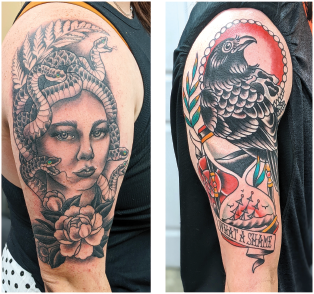
Hill City Ink

What’s better than art that stays with you wherever you go?

Tattoos have been around for thousands upon thousands of years—since around 8000 B.C.! To pay tribute to an ancient art form that is still widely loved today, we talked with a handful of Lynchburg’s tattoo artists to hear what they have to say about their favorite tattoo styles and why you should consider one or more of those styles for your next (or first!) tattoo.

Will Hunter, Owner of Hill City Tattoo

Artist: Will Hunter, Owner of Hill City Tattoo
STUDIO: Hill City Tattoo
Favorite Style: Neo-traditional/new school style
What Will has to say about this style: “I enjoy doing tattoos in a neo-traditional/new school style. The thick lines and bright colors are just fun. As old school artists say, ‘Bold will hold!’”
To make an appointment: (434) 237-5037

Jonathan Schultz, Caspian Tattoo

Artist: Jonathan Schultz
STUDIO: Caspian Tattoo
Favorite Style: Neo-traditional
What Jonathan has to say about this style: “I prefer Neo-Traditional designs because they are bright and bold with high contrast. They age well and are fun to look at. If you can tell what it is from across the room, then you can tell what it is for the rest of your life.”
To view Jonathan’s portfolio: Instagram: @jonnschultz
To make an appointment: JsTattooer@gmail.com

Hannah Burnside, Caspian Tattoo

Artist: Hannah Burnside
STUDIO: Caspian Tattoo
Favorite Style: Black and gray illustrative
What Hannah has to say about this style: “I love having creativity with the design and doing all the little details. I gravitate toward bold outlines and high contrast. I enjoy tattooing botanicals and traditional inspired designs in this style.”
To make an appointment: (434) 237-1900

Andrew Montgomery, Caspian Tattoo

Artist: Andrew Montgomery
STUDIO: Caspian Tattoo
What Andrew has to say about tattooing: “Tattooing is a unique art form that allows an individual to be marked for a lifetime. Choosing one style from an artform that’s as ancient as humanity is difficult. What I enjoy about tattooing is the bond that can be created between an artist and client when creating a permanent piece of art.”
To make an appointment: (434) 237-1900


Artist Profile: Bosco Bae

Grief Work AND the Art of Intention

Potter Bosco Bae blends emotion and clay

Imagine having the opportunity to grab ahold of your grief—to shape it, swipe it away, and turn it into something durable and beautiful. Potter Bosco Bae’s most recent series, called Grief Work, is exploring the different forms that grief and healing can take.

“A lot of my work nowadays is trying to capture grief and work through the myriad of emotions involved with love and loss. The work can get pretty dark, but I try to remain true to the idea that there is meaning and beauty within struggle, within hardships, and imperfection,” Bae explained.

Potter Bosco Bae
Potter Bosco Bae

While the acceptance and celebration of imperfection is something that Bae, a Ph.D. and professor of Religion at University of Lynchburg, has been exploring artistically for years, the expression of that has shifted since the passing of his brother last year. Bae takes inspiration from the moon jar, which is a Korean form in ceramics and traditionally combines two symmetrical bowls to create one large vessel. While the two bowls individually are perfect, they come together to create an asymmetrical, imperfect union. Traditional moon jars feature a white glaze and a very thin base, which make the vessel look like it’s floating—like a moon. “It’s minimalistic yet sophisticated in its evocation of a calm and serene ideal,” said Bae.

But he takes the form a step further.

“The moon jar, in its traditional form, is romantic, normative, ideal. My work aims to be a bit more descriptive, flawed, messy—to allow suffering to speak and find expression,” he said. “How does a form retain, embody, or convey lament?”

One of the first pieces that Bae created in his Grief Work series began with the moon jar form. Using his hands, Bae tore a hole through one side of the vessel to exemplify a piece of him that is now gone.

“After that part of the vessel was ripped out, I went to the other side and started taking pieces out to patch the hole.

When that patch was mended, of course, another hole emerged on the other side. I then started digging into the bottom and scraping out any clay I could use to patch up the side that was given up to mend the first hole” Bae said. “So, in this particular piece, you’ll see where I’ve scraped from the bottom.”

In another piece from the Grief Work series, Bae began with a moon jar, cut it apart, and reassembled it.

“After deconstructing the piece and breaking it down, there was an active attempt to try and put the pieces back together—to go back and recreate what it was before breaking down—kind of like drawing somebody from memory,” he explained. “But during that process it changed and it was clear that the reconstruction wasn’t going to be the same. The vessel was transformed into something else with only traces, shadows, or memories of what it was before.”

Metaphorically, the piece showed just how different a person can be after grief, trauma, or hardship.

“All the pieces in this series begin with the moon jar form, thrown as a singular piece, as opposed to combining two.

The piece is then altered, stressed, and it endures—sometimes it doesn’t—and accepts the distortions, rips, and unanticipated irregularities that emerge from the process. I think a lot of the uncertainties and unintended consequences from the intentional moves and gestures I put into the piece make it interesting, perhaps, even difficult, or uncomfortable to look at,” Bae said. “Grieving is an uncomfortable process in which bracketed realities can intersect and break into the forefront of our consciousness at any given moment. Grappling with difficult truths is a process of reconciling with a dissonance that jars against tacit presuppositions about ideals and expectations, whether we acknowledge them or not. Sometimes, words are insufficient and talking about it isn’t always the best way to express ourselves. Being intentional through nonverbal forms of expression can be just as, if not more, relevant in the healing process.”

This level of intention—of dissecting an emotion or experience—is what encapsulates Bae as an artist. Whether he is throwing teapots or mugs with perfect, ergonomic form, or exploring just how beautifully imperfect a piece can be, Bae reverently approaches each piece and accepts it exactly the way it is.

Nina Simone once said, “It’s an artist’s duty to reflect the times,” which is a charge that Bae has fervently accepted. While his most recent body of work reflects his current experience of grief and healing, the journey isn’t over and his art will surely evolve again.

One thing is certain, however—it will be beautiful.

To connect with Bosco Bae, find him on Instagram at @potsbosco.


Photos by Ashlee Glenn


Finding Your Home’s Art Style

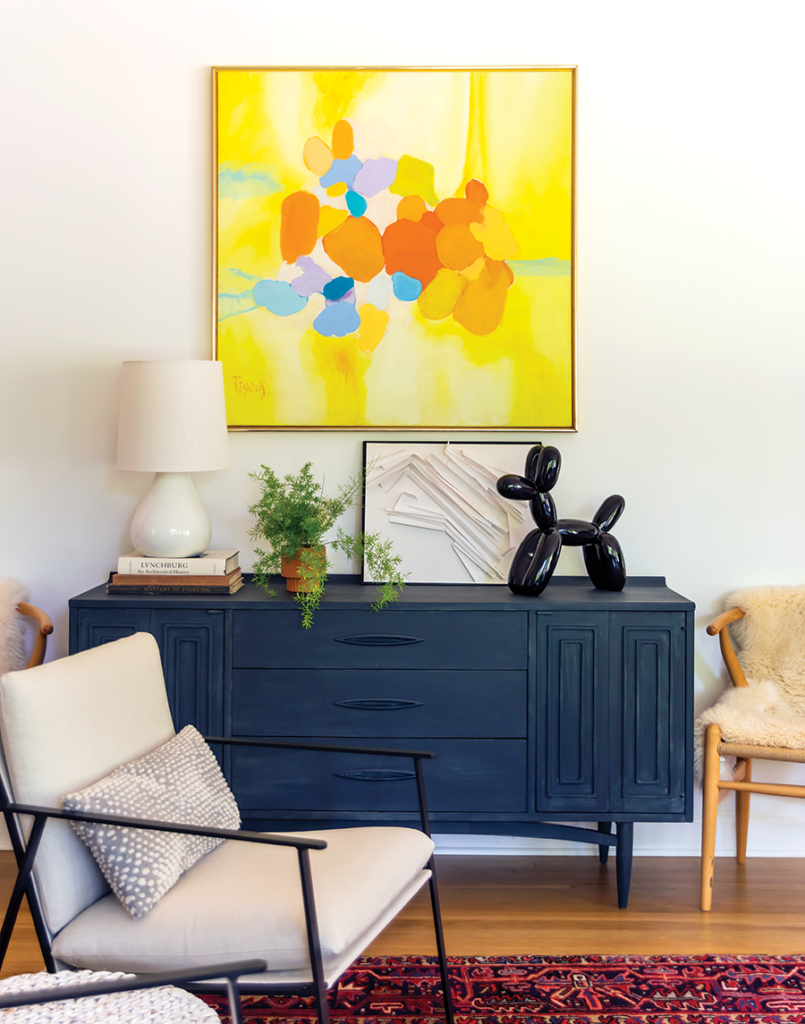
Curating art for your home is a big investment, and a lifelong journey. The first step in that journey is finding an art style that resonates with you. That art style will ultimately set the stage for the artists that you gravitate toward, the mediums that you prefer, and the overall tone that each room in your home will have.

But how do you determine which art style you love when there are so many talented artists out there? It starts with spending time with art before ever making the first purchase.

The Different Types of Art Styles
Walk into any art gallery or art museum and you’ll see myriad art styles. An expert would be able to immediately note the nuances in brush strokes, the relevancy of the time period, or the backstory of the art that makes it so powerful. But for those of us who simply want to curate an aesthetically pleasing and uniquely styled home, here are the primary art styles you can focus on.

Home Featured in Lynchburg Living September/October 2021. Photo by Daryl Calfee

Abstract Art
Abstract art is an art style in which an artist uses shapes, colors, and textures to create an image that’s not based on reality. Abstract art can take the form of a painting, sculpture, photography, design, or any other art form that doesn’t accurately represent a subject or object.

One of the most unique aspects of abstract art is that it’s always open to interpretation. A viewer doesn’t always immediately know what the piece is about—it is abstract after all—but over time, certain emotional or intellectual qualities can be seen in the piece that can make it uniquely special to the viewer.

Contemporary Art
In short, contemporary art is art that’s made today by living artists. Because of that broad sweeping definition, it’s an art style that is ever-evolving and often reflects the complex issues that shape our diverse and rapidly changing world.

While the art world is still debating what eras technically define the contemporary art style, most can agree that the starting point is the late 1960s or early 1970s.

Within the contemporary art style, more niche movements can be found. Pop art, photo realism, conceptualism, minimalism, and street art are all styles that can be explored if you want your home’s art style to make a statement.

Fine Art
Fine art is artwork that has been created for the sole purpose of being appreciated for its beauty and intellectual or emotional influence, rather than its function. Of course, with art being so subjective, what distinguishes something as “fine art” can be left to the interpretation of the viewer.

Within the fine art style, painting, sculpture, and photography can all be explored for your home. And while there are countless fine artists across different mediums and centuries, a few examples of visual fine artists are Rembrandt, Matisse, Van Gogh, Monet, and Degas.

Home Featured in Lynchburg Living January/February 2020. Photo by Heather Kidd

Determining Your Home’s Art Style
Your goal is to create a stylish and cohesive home, so it’s important to choose not only an art style that resonates with you, but also to find an art style that accents your existing home furnishings.

When you walk into an art gallery or store, have the space you’re hoping to find art for in mind. Maybe even have a photo or two on your phone to use as a reference. Know what the dimensions of the wall are, and the existing color palette of the wall paint, furnishings, and rugs.

From there, slowly walk through the art selections and pay careful attention to the art that evokes an immediate reaction. The old adage “I’ll know it when I see it” has never been more true when it comes to choosing art for your home. If you see a piece of art and it creates a feeling of excitement or positive emotion, it may be something you can work with.

This feeling of excitement and emotion may even help you eliminate the art styles that aren’t quite for you, making your future art shopping trips even easier.
After you’ve narrowed your selections down to the pieces that resonate with you, pull out your handy reference photos and measurements and consider how the piece will work within your existing space. Consider how the colors will play with each other, or how much wall space the piece may occupy. Consider the frame that it’s currently in—if it’s framed at all—and whether the style suits your tastes or if you’ll have to budget for a reframe.

It’s important at this stage to avoid talking yourself into an art purchase. Remember, art is a big investment in and of itself, so if you have to completely rework the rest of your space to accommodate your new purchase, it may not be worth it.

Your art style is a way to express your personality within your home. And just like with any other personal style, opinions can change over time. Allow yourself to continuously explore art of all styles by supporting local art galleries and artists. Learn the colors that strike an emotion, or the details that draw you in. Over time, your home’s art style will become even more honed and beautiful.


Healthy Body, Healthy Smile

The Foods that Keep Your Teeth in Shape

You are what you eat” may be an adage geared toward teaching children healthy eating habits—but it’s also true. Now more than ever, studies are being released that show a definitive link between our gut health and whole-body health. And if there is a connection between what we eat and how we feel, wouldn’t the same ring true for the more granular aspects of our health?

As it turns out, there are plenty of ways to improve your dental health—one bite at a time.

Top 10 Foods for Teeth and Gum Health
You aren’t the only one who craves starchy or sugary foods (we’re looking at you, plate of loaded fries). The bacteria in your mouth craves it too. In fact, the more starch and sugars that are present in your mouth, the more active your mouth bacteria can be, which ultimately can lead to an increased risk of tooth decay and gum disease.

Alternatively, foods that are nutrient rich—like fruits, vegetables, and protein—as well as foods that are calcium rich—like milk, yogurt, almonds, and leafy greens—can do wonders for keeping your smile at its best.

Cheese
You hereby have permission to eat cheese! Low in sugar, but high in calcium, cheese contains a protein called casein which is particularly useful for fortifying your tooth enamel. Not only that, but cheese is high in calcium, which helps maintain bone density, and it’s high in phosphate which helps keep your mouth’s pH levels balanced.

carrotts salmon kiwi

Carrots
Carrots aren’t just great for your eyes, they’re great for your teeth as well.

For that matter, any crunchy, firm food that has high water content (i.e., celery) acts as a natural tooth cleaner because it stimulates the flow of saliva, which helps scrub away food particles and bacteria.

Walnuts
Walnuts are the ultimate superfood because they contain everything from fiber and folic acid to iron, potassium, and vitamin B6. Potassium and magnesium work hand-in-hand to regulate your body’s acidity. When you have too much acidity, the acids can remove calcium from your teeth and jawbone, which weakens them.

Salmon
Most meats and fatty fish contain a ton of important nutrients for your dental and whole-body health. Salmon in particular is loaded with phosphorus, which helps your body absorb calcium and strengthens your teeth by protecting and rebuilding tooth enamel. Who knew food could do all of that?

Kiwi
Fresh fruit is great for you in general, but kiwis specifically offer a very high concentration of vitamin C. Vitamin C works to boost immunity by increasing the production of blood cells that destroy harmful microorganisms. With adequate vitamin C intake, your body will have better resistance against infections throughout the body, which include tooth decay.

Sweet Potatoes
Sweet potatoes are packed with a healthy dose of vitamin A, which works to maintain the mucus membranes and soft tissue in the gums. Vitamin A is also vital in maintaining keratin, which is a protein that promotes the formation of tooth enamel.

Garlic
It may not be the best ally for keeping your breath fresh, but garlic works wonders at fighting tooth decay and periodontal disease. That’s because garlic contains allicin, which has incredibly strong antimicrobial properties.

tea walnuts garlic

Tea
Routine cleanings will help remove any stains that come with routinely drinking tea, so you can enjoy the teeth-strengthening benefits of this hot or cold beverage. A chemical called polyphenol naturally occurs in tea (and coffee, for all of you coffee lovers!), which combats cell damage, reduces inflammation, and is high in antioxidants.

Leafy Greens
Your parents weren’t wrong when they encouraged you to eat your greens as a kid. Whether they realized it or not, they were also encouraging better oral health! Leafy greens like spinach, lettuce, and kale are rich in calcium, folic acid, and minerals that your teeth and gums love. Crunchier greens like romaine lettuce or crisp kale also help keep your teeth clean!

Water
Okay, maybe it’s not a food that will fill you up, but the single most important thing for your teeth (and your well-being in general) is hydration, hydration, hydration. Our bodies are made of 60% water, and staying hydrated helps our system distribute nutrients, eliminate waste, keeps muscles moving, and keeps saliva levels high so bacteria can be easily kept at bay.


The Art of Healing

One doctor explores the connection between art and wellness

There is a saying that medicine heals the body, art heals the soul. This concept is put into practice right here in Central Virginia at KAYA Health. The direct primary care, subscription-based medical practice on Forest Road is the brainchild of Dr. Andrew Anderson. As a man of medicine but also of his community, Dr. Anderson wanted to spark an art initiative within his office to help him go further with his patients, beyond their medical needs and delve more into their emotional ones.

“There is so much more to a patient’s well-being than I can treat as a physician. This project allows me to address more than anatomy and physiology.

Dr. Andrew Anderson
Dr. Andrew Anderson

The sentiment is summed up well in one of my favorite quotes by Dr. William Osler, co-founder of Johns Hopkins Hospital, ‘The good physician treats the disease; the great physician treats the patient who has the disease,’” asserted Dr. Anderson.

So, what is this heartwarming community-focused project?

Local artists, thus far high school students, create art and positive quotes to hang on the considerable amount of wall space at the new location of KAYA Health in Forest. This has helped the business achieve two objectives simultaneously: a lifelong mission of Dr. Anderson’s to serve the community
and to decorate the walls with uplifting artwork to those who need it most.

Of course, it’s aesthetically pleasing when patients come to the office, but more so, these pieces serve as a sign of hope and are actually a gift to anyone who feels connected to a piece and wants to take it home. Originally the project was for terminal patients only, but as Dr. Anderson shared, “It is actually intended to help with a much broader and pervasive set of needs.”

He continued, “Of course, people who have severe and terminal diseases may choose a painting, but I find that they are most appreciated by those who have and are dealing with the silent and unseen illnesses that plague their everyday. We’ve given our paintings to people with depression, patients with fibromyalgia, and a woman whose mother recently passed away. It is intended for families who recently had a child diagnosed with type 1 diabetes, a disease they will carry for the next 70 years. It is intended for the newly single mother who is dealing privately with the compounding complications of a divorce.”

In a move to respond to our current emotional climate, Dr. Anderson launched a Depression Clinic, where patients certainly appreciate the art project—but is also an indicator that more art is always needed.

Dr. Anderson encourages anyone within the community to contribute art to the project, even if one doesn’t think of themself as particularly artistic.

“Just give it a try,” he suggests. To submit art to KAYA, just drop off the piece at the office anytime between 9 and 5, Monday through Friday, and they will take care of hanging it on the wall.

Photo Courtesty of KAYA Health

Preferred pieces focus on encouraging quotes or scripture with really anything painted in the background. Something that speaks to the artist and could be bright and colorful, dark and subdued, funny, inspirational—really anything goes. All submissions are welcome and appreciated.

If your family, church, scout group, or school is looking for a service project, look no further.

Dr. Anderson hopes to get more submissions, and in turn be able to share more artwork with his patients.

Patients and artists may have not connected in the past, but the office keeps a record of artist and recipient in case that connection is desired by the patient.

After a patient chooses a piece, they are able to keep the artwork forever as a gift from the community, which is part of the beauty of the project. When asked what some of the more memorable pieces of art patients have connected to are, Dr. Anderson shared, “When someone paints or draws art and chooses a quote inspired by their own experience or that of a loved one; those are powerful!”