The Enchanting World of Lillian Merritt

Fine Art Photography and Ethereal Self Portraiture

By: Emeri Glen | Photos by: Ashlee Glen

Lillian Merritt works in avenues of redemption, but this may not be evident upon first glancing at her work. Filled with beautifully rich tones, breathtaking scenery, and packed with ample opportunity for different interpretations, Merritt’s fine art photography exists to create shared meaning.

Merritt grew up in the small military town of Eden, Oklahoma, with an older sister, two scientifically inclined parents, and a love for the arts. At the surprisingly young age of two, Merritt was already learning ballet at a studio, and it was at this establishment that she was first exposed to photography at the age of eleven.

For Merritt, photography just clicked.

“I was just like, this is it. This is what I [want to] do long-term,” she said.

Merritt began to explore the different avenues of photography and eventually landed on self-portraiture with a twist; she added the component of fine art-style post-editing to create something ethereal.

“I instantly fell into this other-worldly, fanciful style,” she remembered. “I’d never seen it anywhere before.”

Encouraged by her ballet studio’s photographer and an online teacher (who Merritt has since met and worked with), Merritt began to flourish in her newfound venture.

In an almost eerie way, Merritt’s pieces often have subtle connections to her childhood. One piece, “Jadis,” is based off of the popular Chronicles of Narnia book series. The picture portrays a white dress-clad Merritt trapped and suspended behind a fractured pane of ice. The whole piece is a chilling blue, much like the environment of The Lion, the Witch, and the Wardrobe. Merritt excitedly reminisced about how she grew up listening to her mother read the books in the series.

“The books are amazing. … Edmund is my favorite,” she said. “There is a special place in my heart for people who are like the black sheep, the people who need extra love and saving.”

Merritt and her family have lived in the Lynchburg area since 2015, and it was around this time that she truly began to invest in her natural talent.

By 2017, Merritt had gained the opportunity to send her art to a gallery in The Louvre. While she wasn’t able to travel with her art that year, she has since visited France, England, several states in the U.S. (her favorite is Montana), and several other countries. On each trip, she’s made sure to add to her photo reserves.

Merritt’s artistic process begins with coming up with a theme, envisioning what she wants to communicate through her art, packing up her tripod, camera, and any props that she may need, and setting off for her shoot location. After the shoot, which typically takes thirty minutes or so, Merritt heads back to her studio and resizes her photos to fit her standard template. Then comes the fun part, where Merritt plays with light and magic in the colors and landscape of her photos.

When she’s not creating with her camera and laptop, working her day job, seeking out new shoot locations, or choreographing for a production, Merritt is planning her next steps. Her love for “black sheep” and the Edmunds of the world has played a part in her vision for redeeming things very near and dear to her heart: Old abandoned homes.

“I’ve always loved the surrealness about abandoned properties,” she said. “I’ve always wanted to restore them. They need—they deserve—a second chance at life.”

Merritt hopes to start a nonprofit in the near future where she redeems these old homes (she’s already purchased her first and is ecstatic) and creates an environment for other artists to thrive and grow in. Its name? “Restory.”

To contact or learn more about Merritt and the stories that she tells through her work, visit her website (www.strengthofatlantis.com) or
Instagram account (@strengthofatlantis).


Finding Your Home’s Art Style

Curating art for your home is a big investment, and a lifelong journey. The first step in that journey is finding an art style that resonates with you. That art style will ultimately set the stage for the artists that you gravitate toward, the mediums that you prefer, and the overall tone that each room in your home will have.

But how do you determine which art style you love when there are so many talented artists out there? It starts with spending time with art before ever making the first purchase.

The Different Types of Art Styles
Walk into any art gallery or art museum and you’ll see myriad art styles. An expert would be able to immediately note the nuances in brush strokes, the relevancy of the time period, or the backstory of the art that makes it so powerful. But for those of us who simply want to curate an aesthetically pleasing and uniquely styled home, here are the primary art styles you can focus on.

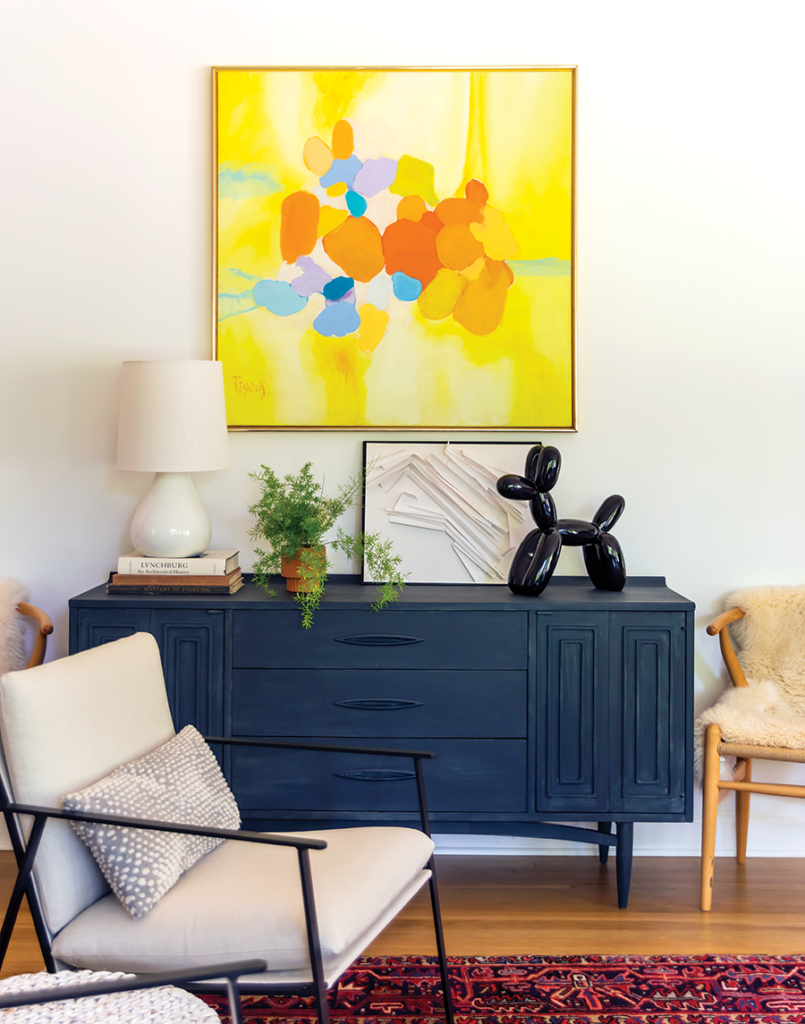
Home Featured in Lynchburg Living September/October 2021. Photo by Daryl Calfee

Abstract Art
Abstract art is an art style in which an artist uses shapes, colors, and textures to create an image that’s not based on reality. Abstract art can take the form of a painting, sculpture, photography, design, or any other art form that doesn’t accurately represent a subject or object.

One of the most unique aspects of abstract art is that it’s always open to interpretation. A viewer doesn’t always immediately know what the piece is about—it is abstract after all—but over time, certain emotional or intellectual qualities can be seen in the piece that can make it uniquely special to the viewer.

Contemporary Art
In short, contemporary art is art that’s made today by living artists. Because of that broad sweeping definition, it’s an art style that is ever-evolving and often reflects the complex issues that shape our diverse and rapidly changing world.

While the art world is still debating what eras technically define the contemporary art style, most can agree that the starting point is the late 1960s or early 1970s.

Within the contemporary art style, more niche movements can be found. Pop art, photo realism, conceptualism, minimalism, and street art are all styles that can be explored if you want your home’s art style to make a statement.

Fine Art
Fine art is artwork that has been created for the sole purpose of being appreciated for its beauty and intellectual or emotional influence, rather than its function. Of course, with art being so subjective, what distinguishes something as “fine art” can be left to the interpretation of the viewer.

Within the fine art style, painting, sculpture, and photography can all be explored for your home. And while there are countless fine artists across different mediums and centuries, a few examples of visual fine artists are Rembrandt, Matisse, Van Gogh, Monet, and Degas.

Home Featured in Lynchburg Living January/February 2020. Photo by Heather Kidd

Determining Your Home’s Art Style
Your goal is to create a stylish and cohesive home, so it’s important to choose not only an art style that resonates with you, but also to find an art style that accents your existing home furnishings.

When you walk into an art gallery or store, have the space you’re hoping to find art for in mind. Maybe even have a photo or two on your phone to use as a reference. Know what the dimensions of the wall are, and the existing color palette of the wall paint, furnishings, and rugs.

From there, slowly walk through the art selections and pay careful attention to the art that evokes an immediate reaction. The old adage “I’ll know it when I see it” has never been more true when it comes to choosing art for your home. If you see a piece of art and it creates a feeling of excitement or positive emotion, it may be something you can work with.

This feeling of excitement and emotion may even help you eliminate the art styles that aren’t quite for you, making your future art shopping trips even easier.
After you’ve narrowed your selections down to the pieces that resonate with you, pull out your handy reference photos and measurements and consider how the piece will work within your existing space. Consider how the colors will play with each other, or how much wall space the piece may occupy. Consider the frame that it’s currently in—if it’s framed at all—and whether the style suits your tastes or if you’ll have to budget for a reframe.

It’s important at this stage to avoid talking yourself into an art purchase. Remember, art is a big investment in and of itself, so if you have to completely rework the rest of your space to accommodate your new purchase, it may not be worth it.

Your art style is a way to express your personality within your home. And just like with any other personal style, opinions can change over time. Allow yourself to continuously explore art of all styles by supporting local art galleries and artists. Learn the colors that strike an emotion, or the details that draw you in. Over time, your home’s art style will become even more honed and beautiful.