The Living Music of the Hill City

Every time I go to a concert, I notice the feeling of anticipation that builds as you get closer to the start of the show.

By: Charlotte Farley / Photos By: Becky Lambert Photography, Courtesy Of Seven Hills Chamber

That moment feels especially charged when it happens inside the historic Lynchburg Museum, where people registered to vote where they got married, and where the fate of defendants on trial for murder hung in the air.

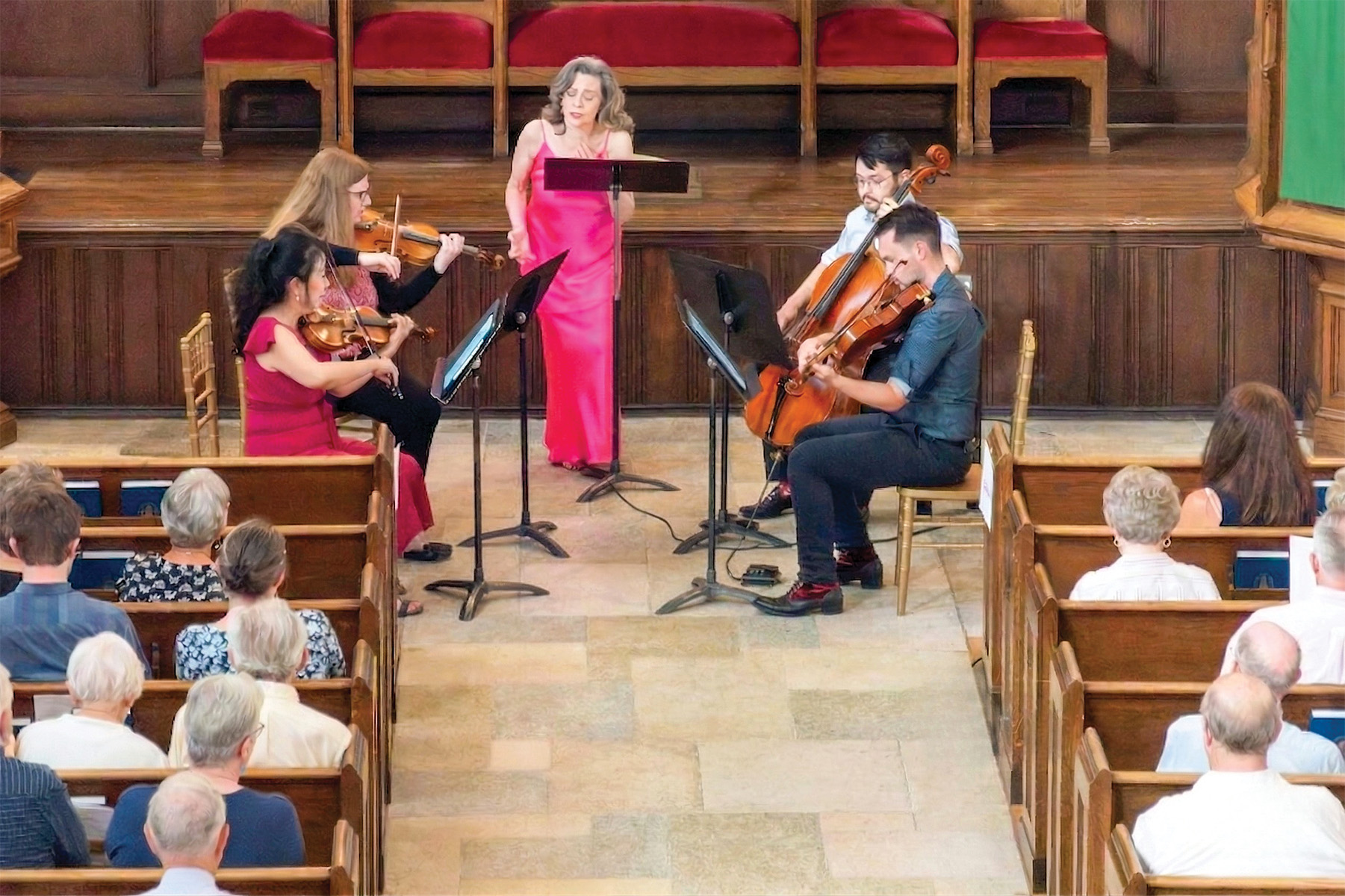
On most days, the building feels quiet, with pieces of its past on display: artifacts, photographs, and other fragments of lives that once moved through the same streets we do. But in August, the Seven Hills Chamber Music Festival will open its summer concert series inside the museum’s main hall: the former courtroom of an 1855 building designed for voices to carry. 

Opening night will layer a Louis Armstrong tribute for trumpet and string quartet, Jessie Montgomery’s Strum, and newly unearthed music by Lynchburg-connected composers into a single evening.

“We have the concerts in what used to be the courtroom,” said museum director Ted Delaney. “We put the performers on the judge’s platform. And if you think about it, the building was designed for that—a group of people gathered to listen to something happening at the front of the room.”

He thinks about it a lot. “It lends itself so naturally to music,” he added. “Having live music performed in that space, to me, is one of the best uses of our very beautiful historic structure.”
Music that Lives in the Room

The Seven Hills Chamber Music Festival is heading into its sixth season this summer.
If you’re a music aficionado, that might bring a spark of excitement. On the other hand, you might hear the words “chamber music” and immediately picture old-world royalty having a private concert, seeing it as formal and untouchable—and you won’t be alone there. (Back in the day, I thought chamber music meant Gregorian chanting monks!)

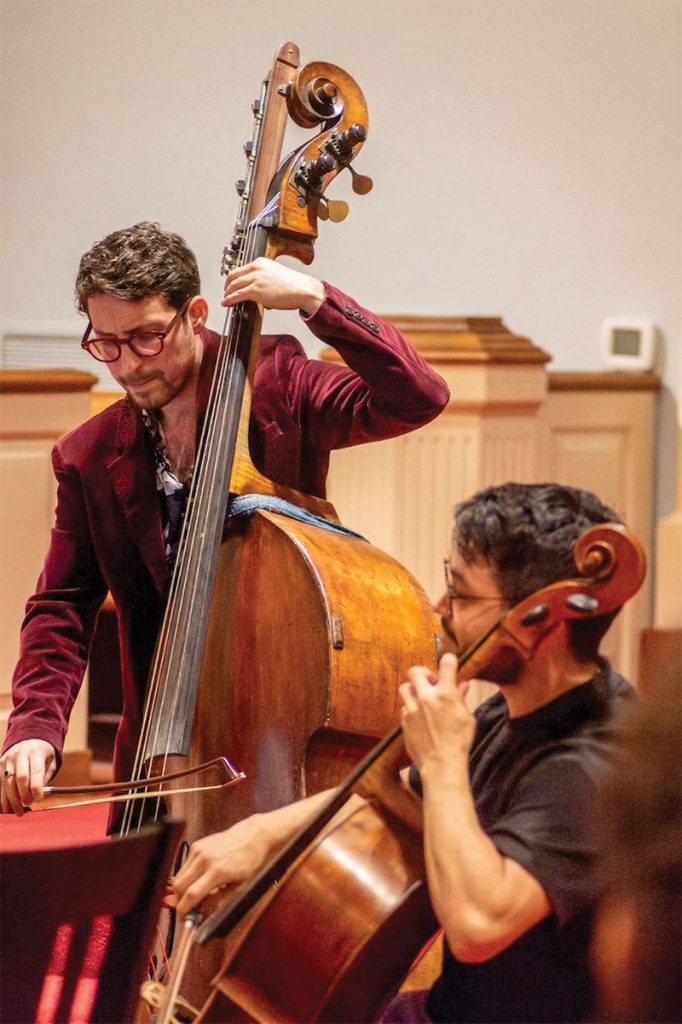
In reality, chamber music simply means a small group of musicians playing together—often one player to a part—in spaces where you can hear and see every detail. It’s music built for conversation: between instruments, between performers, and, if it’s working, between the people onstage and the people listening. 

Seven Hills Chamber Music delivers a stunning Bach Brandenburg Concerto. And yes, there’s a sense of intimacy inherent to this genre with its smaller ensembles, closer quarters, and music that asks you to lean in. But Seven Hills is just as committed to contemporary work and performing (and sometimes commissioning) pieces by living composers. I still think about last season’s performance of Stir Crazy by Carlos Simon and the way the flute and violin captured, through sound, what so many of us were experiencing during that time.

More than a Venue: A Partner

For festival co-founder and Lynchburg native Dudley Raine IV, the museum concert started simply: try something different. “We had been playing in a lot of churches, and we wanted to find a space that felt a little less expected. The museum seemed like a great place to try it. We try to use Lynchburg’s history to build a theme,” Raine said, “to tell stories that might have been forgotten.” 

Working with Delaney, “he found a whole trove of pieces in the archives and we found pieces and composers I never would have known about otherwise.”

That was three years ago. Since then, the relationship has grown from “a concert in a cool building” into a partnership with its own rhythm.  

Festival co-founder Nicole Brancato helps shape the arc of each concert so the music, the space, and the stories all feel like they’re in conversation with one another. One past program drew on the story of Blind Billy and Tom Perkins, a local 19th-century fife-and-fiddle duo. To echo their sound inside the old courtroom, Seven Hills chose works for modern instruments carrying forward the rhythms that once floated over these same hills.

“It’s been really interesting to see the exhibits when we’re there and to start learning about Lynchburg’s history in a deeper way—especially the music,” he said. 

Over time, that curiosity has started to shape the concerts themselves. That curiosity led to more research, more local names, and an expanded program, this year supported in part by a Virginia Humanities grant. 

The Exchange of Energy

And then there’s the part no one can plan for: the energy the audience brings to the show.

“The last piece we did last year was [by] Kathleen O’Moore,” Raine said. “We gave the audience the music and had them sing along. It was incredible. Just this shared energy—everyone in the room participating. That was one of those moments where you think, ‘This is why we’re doing this.’”

For Delaney, that shift matters.

“Our mission is to connect people to local history,” he said. “But not everyone comes to a museum for that. Some people need a different way in.” 
Music, it turns out, can be that way in. 

“If someone comes for the performance, and that’s what brings them into this building, then they’re also encountering history,” he said.

A space once used for judgment, record, and decision-making is now holding something less about what was decided, and more about what can still be felt. “To have live music in that space,” Delaney said, “after everything that’s happened there—it’s really special.”

He hopes people walk back out onto Monument Terrace with a different sense of the city they just looked down on. “I want people to be so impressed that such beautiful music was composed here and that such talented composers lived here, walked the streets we do, lived in the same places we live, and work and go to school,” he said. “So many people discount Lynchburg and think, ‘Nobody of any note lived here, nothing important happened here,’ but I see the opposite. This concert is just one small way to have people see what we see.”

It helps that the music itself is anything but small. About half of the festival’s roster has roots in Virginia, and all of them bring serious credentials with them—players who have performed with major orchestras and ballet companies, on Broadway stages and at Carnegie Hall, with institutions like the Juilliard School and the New York Philharmonic, on HBO and Netflix, and at venues around the world. Some are voting members of the Recording Academy, some are Yamaha artists, and all are chamber musicians in the truest sense: collaborators who know how to listen as intensely as they play. When they gather in Lynchburg, the room is holding world-class artistry and hometown memory at the same time.

“I just couldn’t believe how good the music was,” Delaney said, remembering his first experience with this chamber music festival. “And thinking, this came from Lynchburg. Not from Europe or New York. From here.” 

On August 12, the room will decide again what it’s going to be. And if you’re there, sitting in that brief, electric pause before the first note, you’ll feel it happen.  


A Weeklong Celebration of Community, Faith, & Purpose

How the Hill City celebrates Kwanzaa

For the uninitiated, Kwanzaa is a weeklong celebration—beginning on December 26 and ending on January 1—where family and community join in fellowship to honor their ancestors, tighten bonds, celebrate African heritage, and enjoy meals, readings, storytelling, drums, and poetry.

The holiday was created by Dr. Maulana Karenga, a professor and chair of Black Studies at California State University in 1966, with each day of the week representing one of seven principles. The seven principles are:

Umoja
Unity

Kujichagulia
Self Determination

Ujima
Collective Work and Responsibility

Ujamaa
Cooperative Economics

Nia
Purpose

Kuumba
Creativity

Imani
Faith

A candle is lit nightly on the Kinara (candleholder), usually by a child surrounded by family to signify that day’s principle. These principles, called Nguzo Saba in Swahili, are a set of ideals that emphasize the importance of tradition, family, community, and heritage. For those who celebrate, Kwanzaa is an opportunity to study and reflect on history, tradition, and legacy.

Photos courtesy of Sheron Simpson

Sheron Simpson, a Lynchburg native and founder of Kuumba Dance Ensemble, a nonprofit West African Dance group, has been integral in bringing Kwanzaa celebrations to the Hill City.

“It’s been an opportunity to learn more about my African roots,” reflected Simpson, recalling the discoveries she’s made while personally celebrating Kwanzaa. “It has been said that if you do not know where you come from, you will not know where you are going.”

Kuumba Dance Ensemble alongside The Legacy Museum of African American History and the Lynchburg Parks and Recreation, have been providing an annual Kwanzaa Celebration for years.

“The museum committee invited various members of the community to represent the principles and Kuumba Dance Ensemble, Inc. participated, with the children lighting the candles, singing, dancing, poetry reading, along with the performance of the drummers,”
explained Ramona Battle, Chair of the Exhibit Committee and the Governance Committee at the Legacy Museum. “The program was held in the Miller Center theater. After the celebration program, various food offerings were available to all who attended and participated.”

Photos courtesy of Sheron Simpson

“Kuumba Dance Ensemble has become one of the instructors of Kwanzaa thanks to the Legacy Museum and Lynchburg Parks and Recreation,” Simpson furthered. “These two groups provided the opportunities for us to teach about Kwanzaa one bite at a time. So, we started in 2019 sharing one piece of Kwanzaa that could be ingested in a two-hour format. Last year, the Legacy Museum gave the charge to the Kuumba children to create the celebration and activities that they would like. They created videos that canvassed over a period of 7 days, presenting Kwanzaa in its entirety. For me, I simply enjoy sharing how Kwanzaa is for everyone, because it is a celebration of family values.”

During the pandemic, the event was held virtually via YouTube and Channel 15, and it will continue to be held virtually this year as well. Everyone—regardless of age, race, or background—is encouraged to join in the Kwanzaa celebrations.

Photos courtesy of Sheron Simpson

“Kwanzaa has been one of the premier programs of the Museum,” explained Battle. “I share the responsibility of coordinating the program with long-time board member, Mrs. Phyllistine Mosley. We depend on the members of the community to enhance the festival through their participation, which allows us to showcase this important celebration.”

Folks hoping to participate in this year’s Kwanzaa celebrations can continue to do so virtually via Channel 15, where it will air each day, or via YouTube where it will be uploaded after its initial air on television. All event details can be found on the Legacy Museum and Parks and Recreation website.

Photos courtesy of Sheron Simpson

“Kwanzaa does not take away from those who celebrate Christmas, it is in addition to Christmas and begins the day after Christmas. This is a time to celebrate unity, family, cooperative economics and instead of buying gifts use your hands to make gifts for children and family,” Simpson concluded.


Have Paint, Will Travel

Raleigh artist, Chris Jones, finds beauty and inspiration in the Hill City

In the early 19th century, French painter Pierre-Henri de Valenciennes wrote a treatise entitled Reflections and Advice to a Student on Painting, Particularly on Landscape where he encouraged fellow artists to paint “en plein air”, or to paint landscapes while in the landscape. The act of immersing oneself in the elements, and painting the lines, light, and contrast exactly as they were rather than exactly as memory served, became the backbone of French landscape painting transforming from minor genre to primary art form as the 19th century progressed.

Today, artists around the globe still choose to paint en plein air—opting for mobile canvases and ever-changing environments as a way to keep their perspectives fresh and inspired. Chris Jones, a Raleigh-based artist, is one of them.

A renaissance man of sorts, Jones has always been a creator.

Chris Jones paints en plein air on Grace Street. Photo by Ashlee Glen.

“When I was 8 or 9 years old, there was a guy on TV named Jon Gnagy [host of the TV series You Are an Artist and Learn to Draw],” he explained. “He would draw something and show how a shadow might follow the contour of the land. It was all black and white TV back then, but he was drawing with charcoal so it didn’t matter. I ordered his book, which was on sale, and I devoured it. I drew everything in it and learned a lot about composition and perspective.”

Jones continued to pursue art through adolescence and into high school, when he became interested in photography, architecture, and design. After graduating high school, he began pursuing a degree in architecture and design from NC State University’s College of Design while supplying photography to local ad agencies.

“When I got to College, though, I realized it was design and art that I wanted, rather than architecture,” he remembered. “The closest art school was in Chapel Hill, so I took a semester there. It was a young program at the time, so I went on to look at Baltimore College of Art and California Institute of Art. Somewhere along the way, I got sidetracked a bit.”

At the time, Jones was a drummer in a band—a passion that started when he was six years old and still continues to this day.

“I ended up recording two albums with a band named Glass Moon at Electric Lady Studios and then toured for two years,” he said. “We had recorded in the West Village of New York, and I loved the city, so I ended up moving to New York after the tour was over. I left design school and decided to pursue photography full-time instead.”

Within six months in New York, Jones was getting work as a location photographer—and that work continued for the next 25 or so years.

“When I wasn’t traveling on assignment, I would hang out with artists and friends, and I would draw or paint on and off throughout those years. After my wife and I raised our children, we retired and moved to the west coast. I moved back to Raleigh in 2019, and when COVID hit, I put my camera down, picked up a paintbrush again, and started painting everyday. Now I have a stack of paintings that I don’t know what to do with,” he laughed.

Photo by Ashlee Glen

In a journey that may seem all too familiar to artists—one where passions are pursued and given the space to transform—Jones’s creative life has been a whimsical dance between music, photography, and painting. Each medium has offered a unique chance to view life in just a slightly different way.

“When COVID hit, there was this existential fear that we all had of, ‘What can I touch? Am I going to die? How many years do I have left to do what I’m doing?’” he explained. “I had already done photography and I had played drums all my life. I wanted to do painting and fine art. That was the third leg of my desires as a child, and COVID allowed me to explore it because I was at home.”

Now, Jones has been painting almost daily for over two years. He leverages his early love for architecture and design, and explores composition, light, shadows, and intensity of colors in architectural spaces in and around his home base of Raleigh.

Photo by Ashlee Glen

“Raleigh is a very happening place that’s growing very fast,” he said. “Part of my job as an artist is to document that. I like drawing and painting buildings. Because of the architectural influence I had as a kid, I love seeing how Raleigh is growing and trying to paint that.”

But Jones’s exploration of architectural beauty and growing cities doesn’t stop in Raleigh. Jones recently traveled to Lynchburg and found inspiration.

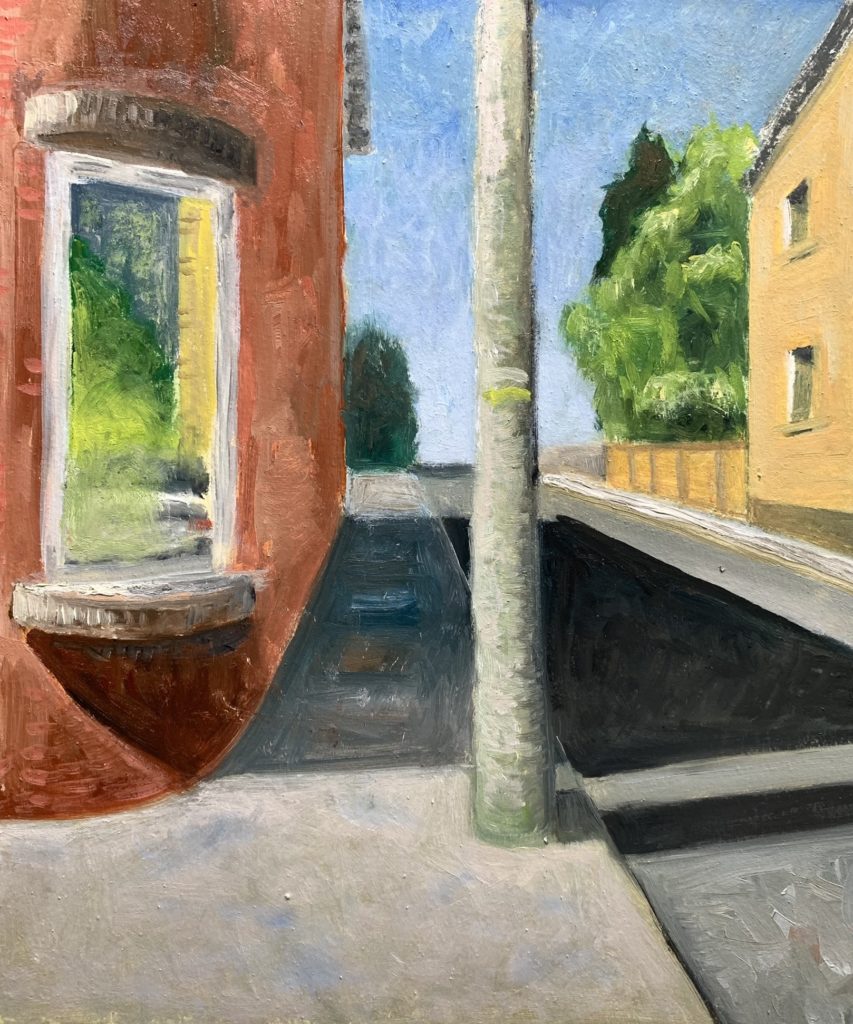
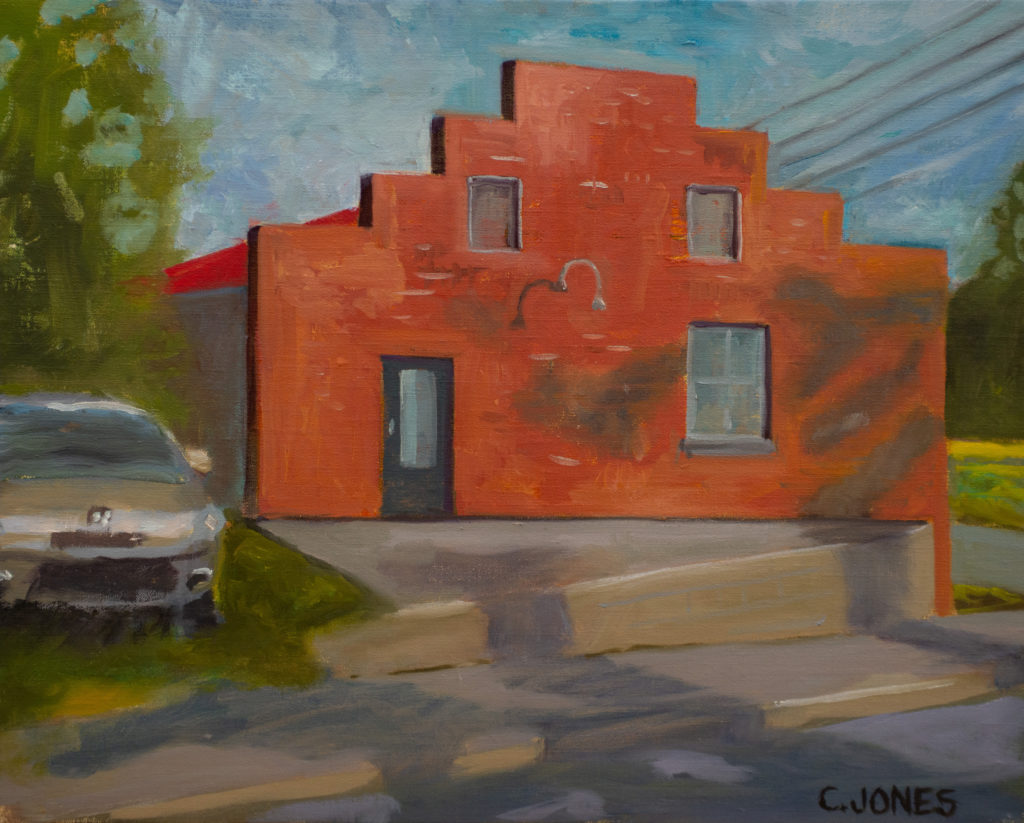
“When I drove to Lynchburg, I drove down Grace Street by mistake,” Jones explained. “As I drove down Grace Street, I immediately saw two scenes that begged to be painted—the first was the historic Fire Station No. 2 building and the second was a gorgeous brick building where you could see where the facade had been at one point. When I have that instant strike, it says to me, ‘Let’s see if I can paint it.’ The same happened on Church Street. I could have easily painted there for two weeks.”

Engine Company Number 2- 24×24 oil on panel
Church Street- 11×14 oil on paper
Old Facade on Grove Street- 16×20 oil on panel

With his canvas and paint tools in tow, Jones stopped and painted the two Grace Street buildings en plein air.

“I was struck by [the Fire Station No. 2 building] because of the way the light hit it, plus it was beautifully designed in the first place,” Jones recounted. “I had this fantastic feeling of having been there in the day when it was being used, and seeing fire trucks come out of the door.”

Jones spent an afternoon getting the architectural lines and sunlight reflecting off the fire station just right before returning back home to Raleigh, but not before Lynchburg had a chance to leave an impression on him.

“Lynchburg is going through a renaissance of sorts, it seems,” he said. “I loved to see all of the hip looking youngsters walking around. If I didn’t love living in Raleigh, I’d be hard pressed not to want to move to Lynchburg.”

To see more of Chris Jones’s art, visit his portfolio at www.chrisjonespaints.com and find him on Instagram at @chrisjonespaints. He is currently accepting commissions, and his Lynchburg paintings are available for purchase.