Curated, Not Cluttered

How to strike the balance between styled layers and lived-in comfort—without tipping into chaos here’s a fine line between a home that feels thoughtfully layered and one that feels…busy.

We’ve all walked into both. One feels collected over time, rich with story and texture. The other feels like every surface was filled simply because it could be. The difference isn’t necessarily how much is in the room—it’s how intentionally it’s arranged.

If you love books stacked on side tables, ceramics collected from travels, framed photos, woven baskets, vintage finds, and a healthy mix of new and old, but you worry about crossing into clutter, this guide is for you.

Here’s how to create a home that feels curated, not crowded.

Start with Breathing Room

Before adding anything, step back.

Every well-styled space begins with negative space—the empty areas that allow your eye to rest. Think of it as visual oxygen. Without it, even beautiful objects begin to compete.

As a general rule: not every wall needs art, not every shelf needs to be filled, and not every tabletop needs décor. If you’re styling built-ins, leave a few shelves partially empty. If you’re working with a gallery wall, allow for consistent spacing between frames.

Editing is often more powerful than adding.

©PHOTOS BY DARYL CALFEE

©PHOTO BY DARYL CALFEE

Create Visual Anchors

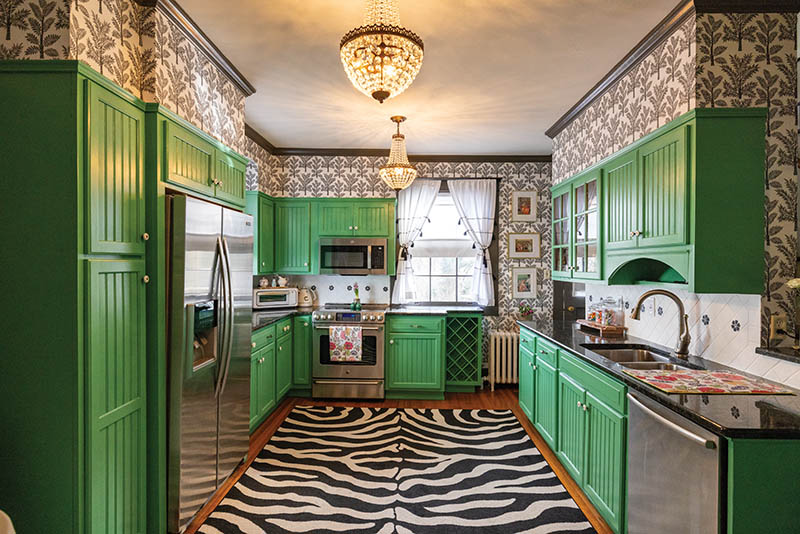
Clutter often happens when a room lacks a focal point. When everything is competing for attention, nothing stands out.

Choose one or two anchor elements per room:
• A statement light fixture
• A large piece of art
• A bold rug
• A beautifully styled mantel
• A sculptural chair

Once your anchor is established, let the surrounding décor support it rather than rival it. Smaller objects should feel like supporting characters, not co-stars.

Think in Layers, Not Piles

Layering creates depth; piling creates chaos.

The difference? Intention and variation.

Instead of lining up objects of similar height and size, vary scale and shape.

Pair something tall with something low. Combine smooth ceramics with woven textures. Place art behind a lamp or slightly overlap framed pieces on a shelf.
A simple formula to try on coffee tables
or consoles:
1. Something vertical (a vase, candlestick,
or lamp)
2. Something organic (greenery, a bowl of fruit, a branch)
3. Something personal (a book, photo, or collected object)

Three elements often feel balanced without feeling busy.

Photo by Daryl Calfee

©PHOTO BY DARYL CALFEE

Corral the Small Stuff

Small objects are usually what push a room from curated to cluttered.

The fix? Containment.

Use trays, bowls, baskets, or decorative boxes to group smaller items. Instead of five separate candles scattered across a surface, place two or three on a tray. Instead of loose mail on the counter, use a woven basket. Instead of remotes floating on a coffee table, use a lidded box.

When small items are visually grouped, they read as a single design moment rather than visual noise.

Stick to a Cohesive Color Story

Even eclectic homes benefit from a defined palette.

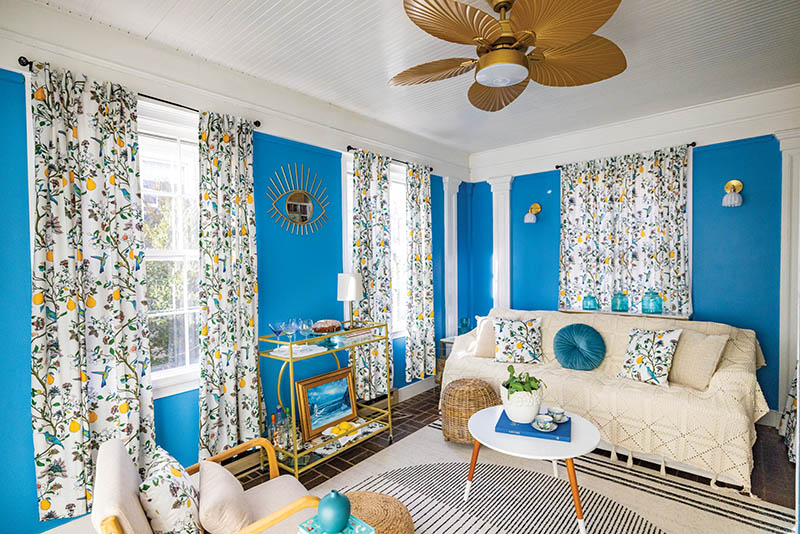
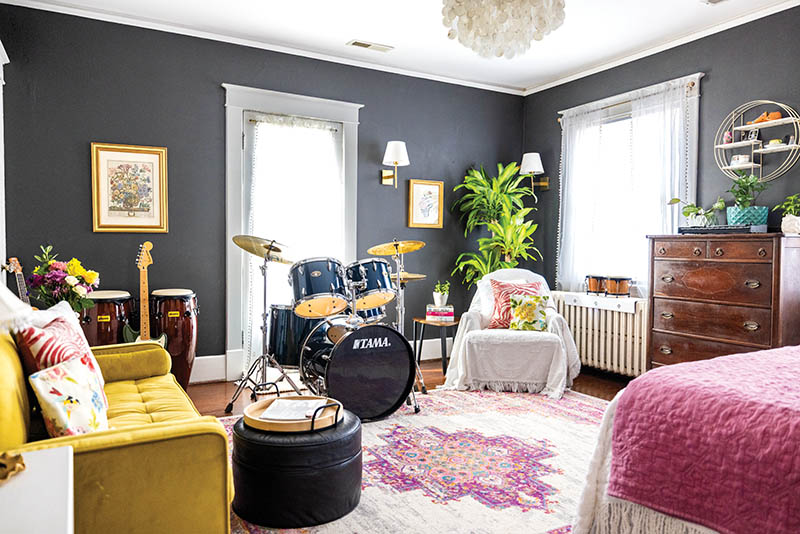
This doesn’t mean everything must match. But choosing a general color direction—warm neutrals, moody jewel tones, soft coastal hues—helps diverse pieces feel connected.

If you’re unsure, look at what you already own. What colors repeat? What tones do you naturally gravitate toward?

Then, when adding something new, ask: Does this complement what’s already here?

When color feels cohesive, layering feels intentional.

Mix Eras—But With Restraint

A home filled entirely with brand-new pieces can feel flat. A home filled entirely with vintage can feel heavy. The magic is in the mix.

Pair an antique wooden chest with a modern lamp. Style heirloom china inside streamlined cabinetry. Hang contemporary art above a traditional console.

The key is balance. If everything is ornate, it becomes overwhelming. If everything is minimal, it lacks warmth. Let contrasting elements enhance one another.

Leave Room for Function

Sometimes what feels like clutter is simply poor function.

Decor should never interfere with daily life. If you’re constantly moving objects to use a surface, that surface is over-styled.

Coffee tables should still hold coffee. Nightstands should still hold a book and a glass of water. Kitchen counters should allow space for meal prep.
When décor supports the way you live—rather than complicates it—your home feels calmer instantly.

Rotate, Don’t Accumulate

You don’t have to display everything at once.

One of the simplest tricks professional stylists use is rotation. Store seasonal pieces or extra décor in labeled bins and swap them throughout the year.
Shelves feel refreshed, and you avoid the slow build-up of excess.

This also allows sentimental objects to shine when they’re displayed—rather than disappearing into visual overload.

Make It Personal (But Edit Thoughtfully)

A curated home tells a story.

Photographs, children’s art, travel souvenirs, inherited pieces—these are the elements that make a house yours. The goal isn’t to remove personality in the name of minimalism. It’s to showcase it well.

Choose your favorite pieces. Frame the art instead of taping it to the fridge.

Give that inherited bowl a place of honor rather than tucking it behind other items. Display collections together instead of scattering them throughout the house.

When personal items are presented intentionally, they feel meaningful—not messy.

Do the “Squint Test”

When you feel unsure, try this: stand in the doorway and squint.

What do you notice first? Does your eye know where to land? Or does it bounce around the room?

If everything feels loud, remove one or two things and reassess. Often, subtracting just 10 percent of a room’s décor dramatically shifts how it feels.

Remember: Curated Doesn’t Mean Perfect

The most beautiful homes aren’t museum displays. They feel lived in.

Books are dog-eared. Throws are slightly rumpled. A stack of mail sits on the desk—contained, but present.

Striking the balance between styled and sincere takes practice. It requires stepping back, editing bravely, and choosing pieces that truly resonate rather than simply fill space.

A curated home isn’t about having less. It’s about choosing well.

And when each object has room to breathe, your home doesn’t just look better—it feels better.


A Home That Doesn’t Perform

In her 1924 Colonial Revival, Mia Mangold has created a space shaped by history, humor, and intention

By: Megan Williams | Photos By: Andria Fontenot

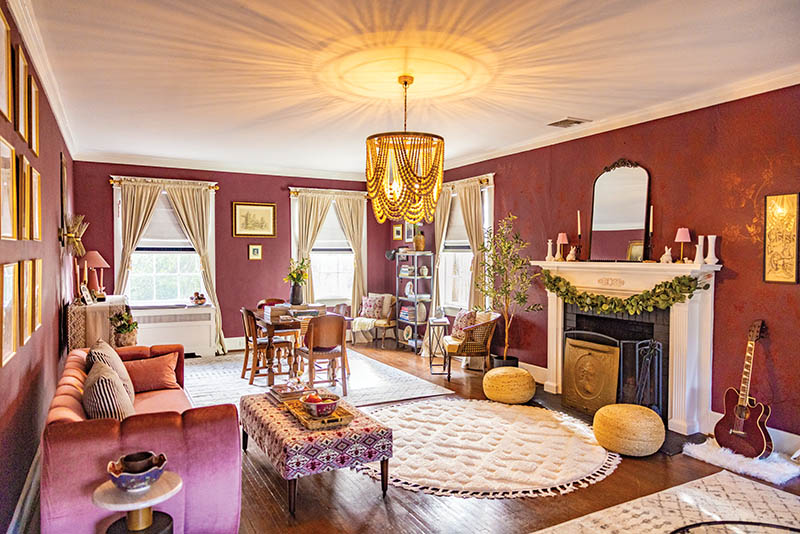
Life changes exponentially when you stop performing and stop caring who’s watching,” Mia Mangold said, standing in the dining room of her 1924 Colonial Revival home—a space layered with collected furniture, hand-upholstered pillows, and just enough evidence of daily life to make it clear no one here is trying to impress anyone.

Mangold laughed, almost as if to soften the weight of the statement. “It took me a long time to actually mean that,” she added.

It’s not a catchphrase she uses lightly. It’s an earned mantra—one shaped over decades of movement, reinvention, and saying yes to experiences that most people only daydream about, then learning when to stop performing altogether.

Mangold bought her Lynchburg home in 2019 after renovating a string of historic houses across the Hill City. The story of those homes—and the life she built around them—is literally displayed on the walls.

Decorative plates from Oxide Pottery line her living room built-ins, each illustrating a house she has owned, loved, and renovated in Lynchburg. She gestures toward them as if they’re old friends rather than milestones (though, to the outsider looking in, they are both).

“I’ve owned seven houses in Lynchburg, plus one in St. Pete [Florida], one in Austin [Texas], and one in New Jersey—so 10 total,” she said. “My first house in New Jersey was built around 1865, and it’s where Walt Whitman used to stay in the summer. There was a natural spring—I picture him sitting down there writing poetry.

It sounds cheesy, but as a kid I was an old soul, weird kid. New Jersey has so many old Victorians.”

To hear her describe her journey—from “old soul, weird kid” who grew up on the New Jersey–Philadelphia line to home renovator in Lynchburg—is to realize that Mangold’s life has never followed a straight line.

It’s shaped by an innate curiosity, a desire to see the world, and a penchant for never saying no to a good time.

“I basically grew up in Philadelphia,” she said. “I lived 15 minutes away in New Jersey, near the Ben Franklin Bridge. Then I left for a while—lived in a car with my friends and went cross-country, ended up in San Francisco. I came back when I was 21 because my grandma got really sick. We thought she was going to pass, but she lived four more years and couldn’t be alone. I spent days with her; my mom slept there at night. I worked while getting my photography degree—I was a photo lab tech—and I worked at the Camden County Library in periodicals. I even worked at Staples, which was fun.”

By 24, Mangold had saved up enough money to buy her first home. It was then, staring down the beams of a 19th century Victorian, that her gumption grew even more.

“I didn’t have YouTube tutorials. I had old home and garden handyman books that taught me how to change a faucet or fix something,” she remembered, nodding to the corner bookshelf where her handyman books still reside. “My uncle worked at a lumber yard—he helped me with trim and molding.”

At the same time that she was teaching herself how to renovate her New Jersey home, she was also working at the historic Trocadero Theatre in Philadelphia’s Chinatown, where she worked until she turned 30. While she loved working as a concert promotor and then later a booking agent, the early load-ins and late-night shows eventually became too much. The housing market in New Jersey was booming and Mangold took a chance and sold her house.

“The housing market got high—when balloon loans were everywhere and rates were low—and I sold my house for three times what I paid,” she said. “Then I flew to Spain and didn’t come back for two years. I lived in Turkey, spent a lot of time in Greece, went to Australia, Asia… India for a while because it was affordable and I could stay longer. I was saving money because I knew I’d have to come back eventually and I wanted to buy another house.”

And she did.

After flying to Austin, Texas, for a wedding, Mangold planted roots once again—working at the legendary Red 7 venue, popular for hosting rock, punk, and metal shows. She also purchased a condo, which she sold a few years later for enough money to buy her first 5,000-square-foot home in Rivermont—with enough money left over for renovations.

“I saw a house online—I think it was on Madison—and I was like, ‘Where is this place?’ I thought: Is this magical fairyland? I could buy two old houses for what I could sell my one house for. So I made a list of 10 houses, found a local realtor, and she showed me all of them. I chose the Rivermont house—the big white house—it had an apartment in the back and had been a rooming house. It was fun to renovate. I was still tiptoeing into color because I was accommodating guests. I rented downstairs as an Airbnb. I didn’t want an all-white Airbnb with the same horse picture everyone has. I wanted it to feel interesting—bright, funky—something you don’t live in every day.”

From there flowed a series of home purchases and renovations—some of which she held onto for a time as short-term rentals, and others she lived in or sold. All the while, Mangold was rolling up her sleeves, doing the work herself, and evolving her style even further.

“On Arlington [Street], I was taking out a vanity and the plumbing was corroded—it broke off and sprayed everywhere. I’m soaked, running into the basement, crawl space… water pouring everywhere—hardwood floors exposed,” she remembered, noting that the journey has been far from picture perfect, and that’s exactly how she’d prefer it. “Or when I moved here [to this house] the plumbing started leaking so I had to go in and fix it, patch the wall, put up a new ceiling… a week later, water’s dripping out of the vent. That stuff happens.”

Mangold doesn’t shy away from the uncomfortable. Rather, those messy moments are what make her story all the more interesting and all the more relatable. A small woman in stature, her lived experiences have made her a force of will and determination.

And it’s an interesting juxtaposition—the know-how to fix plumbing and patch the wall alongside of the person who can effortlessly style a room all while wearing vintage Doc Martens that have been meticulously preserved since the ‘80s.

Mangold’s life has never followed a straight line, and she has no interest in pretending it should have. The houses, the travel, the work—even the setbacks—have all been part of the same ongoing experiment: figuring out what feels honest, useful, and worth keeping.

In her Lynchburg home, there’s no performance—only layers of intention, curiosity, and care. It’s a place where old windows are left intact, mistakes are patched and repatched, and nothing is precious unless it’s personal.

For Mangold, that’s the point. Not perfection, not polish, just a life and a home that reflects exactly who she is, right now.


Water & Colors

A Forest Home Renovation Sparkles Like the Sea

In a design world often filled with grays and neutrals, Rachele Novak sees her home in color. Though it didn’t begin that way when Novak purchased her house 12 years ago in a well-loved Forest neighborhood. The upsides of the home at the time included good bones and a decent layout, but dark cherry kitchen cabinets, brownish-green backsplash tile, and peachy taupe paint told the tale of a builder-grade home that had been sitting on the market for a year following the 2008 recession. Then there was the driveway, which slants sharply toward the garage.

“I was just driving around the neighborhood, and I drove by this house and I thought, ‘What idiot would buy that house with that crazy driveway?’” Novak recalled with a laugh. But the home did have one major selling point in her eyes. “It has a phenomenal private backyard with a creek and spectacular sunsets,” she said.

Today, both that “crazy driveway” and “phenomenal backyard” act as welcome mats for Novak, her two teenage children, and their 8-year-old Shih Tzu named Honey. Thanks to some grading and landscaping help from Southern Landscaping Group, the driveway is no longer the first thing visitors notice. Instead, the front door, painted in Ming Jade by Sherwin Williams, acts as a wink and a nod to the colorful surprise awaiting inside.

Stepping through the door, a shimmering flush mount light envelopes the foyer with glamour and warmth. To the right of the foyer is a lush “piano room” as Novak calls it, though the room no longer holds a piano. To the left, a dining space gleams bright with a chrome and crystal chandelier above the dining table, deep blue grasscloth on the walls, and large-scale art above the sideboard.

“Art for me is really interesting and calming,” Novak said. “The art in the dining room—I call it ‘The Asian Lady’—is actually a mosaic when you get up close to it. And that just fascinates me. I can just sit in there and look at that for a long time and that engages me.”

The art in the first two rooms of the home is a fitting preview to what the rest holds. Lush with texture, tile, and textiles, a calming green and blue colorway runs from the foyer to the back deck and beyond, paying homage to Novak’s childhood by the water in Virginia Beach. The finished product is the result of Novak’s instinct that the house could become something special, and her wisdom in bringing in expert help six years after she moved in.

An accountant for her family’s company, Velocity Construction, Novak knows what she likes but she also realized her limitations, so she hired interior designer Kate Avello to guide and bring her ideas to life.

“I just think she is phenomenal. I can’t say enough how well she picks up on what you want and what you like and pulls that into a vision, even though your vision might be in 15 different places,” Novak said. “She just had a whole vision and brought it all together and it was true to the house structurally.”

Because there were multiple design projects to tackle, they decided to start in the kitchen, removing a large arch that visually cluttered the area and adding a clean white column for structural support and an open air feel. Novak’s budget led to some creative innovations when it came to the original dark kitchen cabinets, with Avello leading the charge on how to cut meaningful corners while splurging on key details.

“Cabinets are super expensive—I have no idea why but they are—and we hated the cabinets so we knew we would paint them but Kate said you need to get new door fronts and drawers because the existing ones were so traditional,” Novak explained. “We found an online source for it and it was super cost efficient to do it that way, to not have to order entirely new base and upper cabinets. We just changed those out.”

Once the cabinets were refaced, the uppers were painted a crisp white, the lowers went light gray, and trim board was added to the room-facing side of the lowers to create the illusion of custom moulding. New cabinet pulls and quartz countertops were installed, a glittering sun-catcher style pendant was hung above the high-top eating bar, and a lucid blue tile backsplash was stacked vertically in modern rows. Novak also had a wall of custom wood cabinets made and installed just beyond the eating area for more pantry and storage space.

As the kitchen was transforming, so did the adjacent living room. Custom drapes and pillows by local seamstress Michelle Bonheim brought in patterns with Eastern world flair, and a teal crushed velvet ottoman, recovered by Phil’s upholstery in Lynchburg, added more color and texture sitting beneath a glass coffee table. But the home’s transformations didn’t end there.

“As we started to open things up, Kate said if you want to do anything in your master bath, this is the time because we have the ceiling open which exposed all the plumbing and I wanted to put in a heated tile floor. So that brought in my master bath. I’m still not sure how the powder room got brought into that, but it did!” Novak recalled.
The last minute choice to redo the powder room is still one of Novak’s favorite decisions. The geometric wallpaper alone is a show-stopper, boasting on its label that it is “on order to her Majesty the Queen.” That alone would have made many a homeowner happy but Avello and Novak weren’t finished and kicked the dazzle up a notch further by adding glimmering 3D glass tile above an aqua vessel sink and artwork by Novak’s 16-year-old daughter, Elle.

Upstairs, the master bath also underwent an overhaul with the installation of a large soaking tub, glass-enclosed shower, and sparkling wall tile reminiscent of mermaid gills above the double vanity. The master bedroom itself also received a modern makeover. Soft custom made drapes and linens by Bonheim line the room with luxury, while a wooden sleigh bed, intimate art by NYC artist Kristen Somody Whalen, and abundant mirrors create a calm but colorful atmosphere. The showpiece of the master bedroom, however, is undoubtedly the ceiling. Avello transformed the tray ceiling into a work of art by creating a pattern with moulding, topped with a crystal chandelier.
“My bedroom is my sanctuary. To me, it feels like a spa,” Novak said. “Sometimes I stare up at my ceiling because I love the geometry of it and the whole room is very soothing.”

Soothing is also how Novak describes her back yard, which she has a bird’s eye view of from her new deck. The Trex seating area, cable railing, and black spiral metal staircase lead down to a stone landscaped area with a firepit, all of which were created by Southern Landscaping Group.

“In the summer, everything is in bloom and grows up like a jungle and you feel like you are just in privacy, on your own,” Novak said.

From the emerald front door to the scenic backyard, Novak’s total home transformation took several years but these days, when she often works from home, she finds each detail well worth the investment.

“This whole house is my happy place,” she reflected. “I am just so comfortable here. I can relax and I feel safe. It’s just kind of everything to me.”


PHOTOGRAPHY BY DARYL CALFEE


Summer Refreshment

Finding ideas for color, pattern, and your own sense of style from two of the industry’s top voices

Lynchburg Living writer Charlotte Farley sat down for an exclusive interview with Steele Marcoux (style director at Country Living and former editor-in-chief at Coastal Living) and Meg Braff (Long Island-based interior designer) when they were in town for Design on Stage, presented by the Academy of Center of the Arts. Charlotte, Steele, and Meg discussed the best ways to refresh your space. They talked everything from how to use trendy colors to imbuing your space with personality and timelessness—and according to Steele, farmhouse isn’t going anywhere yet.

Summer is a time to slow down and savor. From taking long-awaited (and much-needed) vacations to trying out new summer cocktail recipes, we look for ways to relax and refresh ourselves in the summertime. Before you settle down with a glass of lemonade and a Pinterest marathon, see what renowned designer Meg Braff and style director Steele Marcoux have to say about revitalizing your home (and yourself) this summer.

Incorporate Trends Without Going Overboard
From chintz to farmhouse, there’s a kind of design that speaks to you, and it can be tempting to go a bit, shall we say, overboard on trends. After all, you want your home to look like it belongs to you and not Mrs. Everybody Fixer Farmhouse, so how can you incorporate a trend (such as the ubiquitous but enduring) farmhouse look or millennial pink and make sure your home doesn’t look stuck in 2018?

Steele explains that she looks to trends for color inspiration. “I was just at market in New York and saw a lot of yellow, so maybe I’ll bring in a yellow pillow or accessory to freshen things up because I don’t currently own a single yellow thing. But I’m not going to go full tilt with (something like) lemon patterns everywhere,” she points out.

According to Meg, one great way to adapt to trends is to look to professional designers that you admire and take cues from them. “If you have a monochromatic living room and lavender happens to be the color du jour, you could have a pair of lavender lamps, or add some artwork with some lavender in it, or even just a cashmere throw on your sofa. It kind of takes you in a different direction.” That’s one advantage of having a very neutral, monochromatic house, she says: you can always play around with your décor and palette.

Approach trends with small changes, just as you would with your fashion. Meg says, “if there’s some great new wedge heel out, you might buy a pair and find that it updates the rest of your outfits, and that’s the same with interior style.”

Earthy is Always in Style
By adding a few small touches, you can enliven your space without taking on the task and investment of a major overhaul. The experts agree that fresh flowers and plants can add a great impact for little effort. “Bring in flowers! Anyone can go to the grocery store and pick up a seasonal bouquet,” says Steele.

Meg points out that ferns last for a long time and don’t require a lot of fuss. “I have ferns all winter in my house. I bring the outdoors in to keep it feeling fresh,” she explains. Following that train of thought, don’t be afraid of using other earthy elements throughout the year to speak to the season.

Look in Unexpected Places for Insight
Something Steele always tries to channel is the mantra of returning to the things you’ve always loved. For example, she loves china. “I love tabletop, and sometimes I feel like things need a refresh, so I’ll go back and look at china patterns that I love and pull a color from there. Because that’s something that I’ve always loved, I can find inspiration there.”

Of course, it’s ok if china isn’t your thing—but it’s a good idea to figure out what is. “If you have things you collect, or a rug that you love, or if you love art—go look towards that for a new idea,” Steele suggests.

Also, look at your wardrobe—what color do you see repeated throughout? Do you have more polka dot dresses than you have places to where them? Is there a certain pattern or fabric that you keep reaching for? You can always go and evaluate your closet for insight and ideas.

Reorganize to Achieve Elegance and Relaxation in One Space
The phrase “timeless style” refers to a style that, like a true lady, never reveals its age. “Timeless style” weds elegance and panache into one relevant space. Sounds lovely, doesn’t it? So how can you breathe new life into your space for a look that’s both timeless and of-the-moment?

If you have a collection of some kind (and most of us do), consider how you have it displayed. Is everything simply stacked together on a shelf, or is it a truly eye-catching arrangement?

Try exhibiting your otherwise traditional collection in a way that’s a bit more modern.
Meg believes that—along with a blue and white palette—items made from organic materials never go out of vogue. A beautiful farm table with a rich patina, an intriguing grouping of stoneware—these are enduring elements of style, as are mainstays like paintings that portray scenes from nature (such as landscapes) or artwork sculpted from natural materials. “People look to country living or beach living as aspirational, in a sense that those are relaxed environments,” she explains. As time goes on, modern living, even with all of its amenities, has more of us yearning for something simpler, so when we see reminders of those places, we, in turn, establish a more relaxed setting in our homes.

Not everything has to be Whole Foods–organic, of course. Everything from antiques to modern sofas can look timeless—the trick is all in how you look at it, literally. Juxtaposing a piece of fine furniture against a piece of modern art or layering textures creates visual interest. Steele refers to Meg, the master of mixing textures: “Some of her greatest spaces have really beautiful antiques—with a jute rug. That just takes the edge off of everything.”

Figure Out What Makes You Happy
It doesn’t matter what time of year it is—we all want to come home and unwind at day’s end. The summer, with its bounty of daylight, begs us to linger a bit longer over cold drinks and conversation, so it’s the prime time to create a great space at home to do just that.

According to Steele, creating the right surrounding for yourself can really affect your mood, and Meg agrees that the right arrangements can help make you feel rested as well as more productive. She believes that figuring out who you are and what you need to feel fulfilled to start your day is so important.

To guide your direction, ask yourself what you want to see when you wake up in the morning: Do you like a lot of spare space or do you want to have all the things that you love around you? Do you want a room that’s completely monochromatic, or do you prefer contrasting colors?

“Start with the core of what makes you happy and build it out from there. You can start with visuals, and you can find that in a magazine,” says Meg.

Steele strongly suggests that you study a space that draws you in. “Ask yourself—what is it about this room? Study it.

Is it the color? The furniture? The level of accessorization?”
Having a space that’s well-organized and tidy is the best starting point, of course—getting rid of messes and visual clutter has an instant and calming effect. After that, Meg advises that we should be mindful about what new items we’re bringing in. “Most of us don’t live in such enormous places where you have a space for everything. You have to be selective and think about your choices.”

The next step: make sure you have warmth and personality—which Meg describes as bringing in a variety of textures and items. “Have a good balance of things you love and things that are functional, things that are upholstered and things that aren’t, and you’ll achieve balance. Finding balance is important,” Meg says. “Stay true to what you love and what feels good to you, and what you feel best represents you.

Give Yourself Plenty Of Time
It’s so tempting to want to have your house done pronto, especially if you’ve spent time poring over loads of images for inspiration. Just remember that you’re not on a deadline for having your home “done.”

Steele advises all of us to slow down. “That was advice that a really good friend of ours gave me when I bought my first house. She said, ‘Just go slow. Add a piece here or a piece there and have the confidence to go slow’.”

Meg agrees: “You don’t have to have it done! I’m still doing my house, and in theory, I moved in 18 months ago. I mean, I’m still doing my dining room. I can’t figure out my dining room!” she laughs. “It does take confidence to feel like, ‘oh, my friends are coming over, and I’m having a dinner party, and my dining room isn’t done.’ We’re all a work in progress, and the house is a work in progress, too.”

The moral of the story here: don’t forgo having people over just because things aren’t photo-ready.

Steele laughs, admitting that’s the mistake she makes. “I won’t have anyone over because I don’t have curtains in my dining room—and no one cares whether there are curtains up or there or not!” she laughs.

So, this summer, maybe you’ll get around to hanging those curtains up, or changing them out, or taking them down altogether. Take your time to enjoy freshening things up, enjoying the process, and doing what you need to do in order to make your home feel lighter, fresher, and more you.