Finding Sanctuary

HOW TO TRANSFORM YOUR THOUGHTS WHEN LIFE GETS TOUGH

“The unthankful heart discovers no mercies; but the thankful heart will find, in every hour, some heavenly blessings.” – Henry Ward Beecher

We often see cards, plaques and decorations boasting words such as “grateful” or “give thanks.” Don’t we all wish for more sentiments of gratitude and appreciation these days? Yeah, me too!

Rising quickly in my professional journey, this driven, energetic and successful young professional was on her way to a life of comfort and contentment. But what happens when the plans you’ve made, the life you’ve built, comes to a screeching halt? Can you be grateful? Can you find the good?

How do you find and maintain gratitude and joy when you get a cancer diagnosis? When you lose a family member suddenly? When you walk alongside an addict who’s trying to get sober? When you can’t get up every day and do the job you love?

Well, I learned how because that was my life in 2017. My husband and I had purchased a 17-acre farm in Bedford County and were on our way to open the vision God had given us—the Sanctuary Farm and Retreat Center, a place for people to come for rest, peace, dreaming and praying in solitude.

Our full-time jobs were going great. Our families were happy. And just like that, everything changed. Within one year, I was on hiatus from work after having a double mastectomy due to breast cancer, my father-in-law died of pancreatic cancer, we were caregiving for loved ones as a result of a family member’s addiction—all within the same year. We learned how to fight for the very thing we were building, for “Sanctuary,” and we were learning how to live a life of gratitude, despite all that was happening in our lives.

With a background in psychology and as a life transformation coach, I had studied the brain. But knowing how the brain works and leaning into the research are two different things. Research has proven that thoughts create actions, and actions create habits, and habits create life patterns. Meaning, what you think about matters.

People tend to filter events and circumstances in one of two ways: with a positive lens or negative lens. You know the old adage, “Is your glass half full or half empty?” Turns out, science has proven that if you’re a glass-half-empty thinker, it leads to more mental and physical stress and has been known to increase the prevalence of certain health conditions such as cardiovascular disease, hypertension, immune function, and panic attacks, just to name a few.

But, there’s hope! By shifting the way you look at things on a regular basis, numerous studies show you can transform your thinking patterns and, ultimately, transform your life. I learned how to do this through my own hard circumstances and you can too.

Here are four ways to find your own Sanctuary and live “in gratitude.”

1. Think about what you’re thinking about. By bringing your default negative thoughts to the forefront and questioning them, you actually stop the subconscious negativity from having free reign.

2. Eliminate extremes. “I’ll never be able to.” “Things can’t change.” “That won’t work.” All of these statements limit or rule out possibilities. Instead of these statements, open your mind up to possibilities. Here are some questions to help get you out of extreme thinking:
• What’s possible here?
• What could I do differently?
• What’s one step I can take?
• What am I in control of?

3. Reframe. When negative things happen or you find yourself defaulting to glass-half-empty thinking, learn to reframe. When I received my breast cancer diagnosis, fear, worry and dread for what was to come were consuming me. I had to learn to reframe thoughts and feelings away from the negative. Here are some questions to help you reframe:
• What are my options?
• How can I best prepare for the journey ahead?
• What can I learn through this about myself and my strength?
• What are the opportunities in the midst of the “hard”?
• What can I still do despite this challenge?

4. Celebrate what’s good. When life isn’t going as planned or you have a season of hardship, it’s important to find and celebrate the good. Some ways to do this include:
• Slow down and savor the first sip of your morning coffee.
• Play your favorite music and linger in your comfy chair for a few minutes.
• Journal the positives in your life.
• Do something healthy for yourself daily.
• Subscribe to positive podcasts or TED talks, and get in the habit of making these part of your daily or weekly routine.
• Be a “noticer” of the beauty in a day.


Sources:

www.mayoclinic.org/healthy-lifestyle/stress-management/in-depth/positive-thinking/art-20043950

www.amazon.com/Deadly-Emotions-Understand-Mind-Body-Spirit-Connection/dp/0785288082

greatergood.berkeley.edu/article/item/how_gratitude_changes_you_and_your_brain


Homeopathy Mental Health

Using natural remedies to treat anxiety, depression

Disclaimer: Always consult your doctor first before stopping prescription medications and/or trying new treatments.

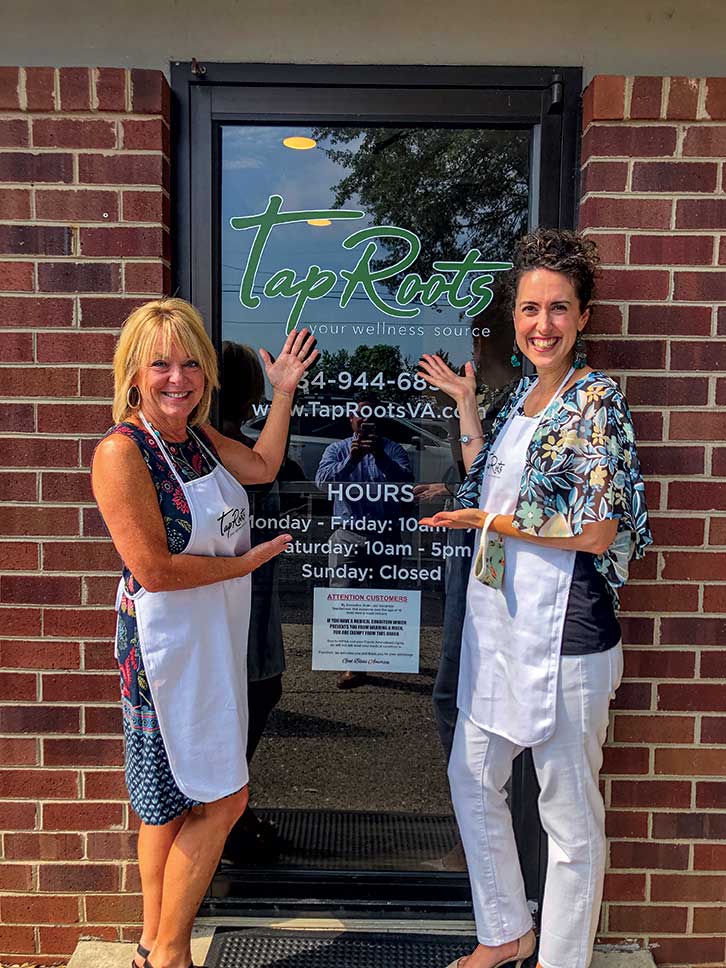
Kari Wagner realized the risk of opening a shop during a pandemic, particularly one that sold homeopathic remedies. Even so, she saw the need in the community, and could sense how the uncertainty and isolation of our current reality was causing more people to feel afraid, worried, anxious and overwhelmed.

“So many of these young people right now, especially with all the lockdowns and not being able to interact with friends, you can see the anxiety that they’re experiencing,” Wagner says. “There are so many unknowns right now.”

Kari Wagner owner tap roots
Against all odds, TapRoots was established, together with co-founders Carolyn Keeling and Dr. Keith Austin. With it, a wellspring of information and resources became available for Lynchburg residents who were looking for a more natural solution for their ailments.

Faced with the option of habit-forming, side effect–laden prescription medications, for many, homeopathic medicine is an attractive alternative.

What is homeopathy?
According to the National Center for Complementary and Integrative Health, homeopathy, also known as homeopathic medicine, is a medical system that was developed in Germany more than 200 years ago. It operates on two theories: “like cures like,” the concept that a disease can be alleviated by a substance that creates similar symptoms in healthy people, and the “law of minimum dose,” which surmises that the lower a medication dosage, the more effective it is.

“Homeopathy treats a person as a whole whereas a prescription medicine is going after that one symptom,” Wagner explains. “With homeopathy, all of the medicines are made from plants, minerals, some chemicals, things like that. But when they’re homeopathically prepared, they’re diluted to such a minute amount that there’s not even a molecule left of the original substance—in that little pill.”

For example, in order to treat poison ivy, the poison ivy plant is diluted and used to counteract the poison ivy in the bloodstream, Keeling explains.

At TapRoots, the owners stress that they maintain a network of medical doctors who practice integrated medicine to refer to their customers who may have acute symptoms that need more attention.

Dr. Kimberly Combs of Central Virginia Family Physicians often has patients who are concurrently taking homeopathic remedies for a variety of conditions. Dr. Combs says that she always checks to make sure whatever they are taking is not interfering with what she has prescribed. However, as a proponent of the benefits and uses of CBD (Cannabidiol), she feels it is only appropriate to remain open to the alternative treatments being presented to her.

“I always try to give them a chance. And I would say, you know, ‘What do you think?’ And [the patient says], ‘Well, I would like to try this.’ And I say, ‘Okay, so what do you think the benefits are?’” she says, adding that she and the patient make a decision together about whether the remedy is a good fit.

Dr. Combs says there are situations that necessitate a traditional physician. But since psychiatrists in particular stay so busy with higher risk patients, she understands why some try to circumvent the system with other methods.
“With homeopathy, there are no known interactions and the medicines have been around for over 200 years,” Wagner says. “So you would think if something was going on, we’d know about it right? So it’s safe, it’s effective, it’s affordable and it’s non-habit forming—it’s not a prescription med.”

How does homeopathy heal the mind?
Depression and anxiety are among the most sought after concerns Wagner and her team hear at their new store. They recently held a Facebook Live event featuring 20-year certified homeopath Melissa Crenshaw, who answered commonly asked questions about anxiety and depression treatments and gave some insight into how these remedies work in comparison to an antidepressant.

“A lot of people know about the gut-brain connection.
So, when the gut is damaged, oftentimes, the mind is unwell. Homeopathy can go in and heal the gut, which then helps the mind,” Crenshaw explained. “So, the antidepressants are a manmade chemical that goes in and changes the way you think. And yes, it can help you feel better.”

But she goes on to ask: “When you stop taking that antidepressant, what happens? You go right back. Homeopathy actually uproots the condition so that you don’t have to take the homeopathic medicines anymore.”

Crenshaw said she started using homeopathy because of her anxiety and depression. “I was on a medication,” she said. “And I liked it, it made me feel better. But when I learned that there was a better way that could actually uproot it that wouldn’t have long-term side effects, I wanted to give it a try. And it worked. And I haven’t looked back.”

What are the remedies for mental health issues?
Crenshaw says sepia is what changed her outlook on homeopathy 20 years ago, and highly recommends the remedy for both acute and chronic anxiety.

Wagner says they have a few other tried-and-true remedies they share with their customers: Aurum metallicum: For those who have an exaggerated sense of duty combined with feelings of guilt and anxiety about perceived failings. Treats severe depression and chronic insomnia.

Lycopodium: Can help those who lack confidence, feel intimidated by people they perceive as powerful, fear failure and experience intense, vivid fears.

Gelsemium: Relieves apprehension accompanied by weakness, trembling, dizziness, headaches and difficulty to focus. Often effective for people who feel inadequate.

Ignatia amara: Helps with grief or loss and mood swings.

Phosphorus: Thought to be good for social people with anxiety. When anxious or vexed, their thoughts get scattered and they have a difficult time focusing or getting things done.

With all of the available remedies to be had, homeopathy can be an overwhelming venture for those looking to dig in. But, Wagner says there are ways to safely and correctly find the appropriate remedy.

“You connect yourself with like-minded people, you find a doctor who’s open to integrative medicine, you plug into whether it’s online groups, or coming into a place like TapRoots,” she says. “And you share stories, you do your research.”

Keeling believes that homeopathy can be empowering. “There is a kind of power that you feel when you realize that you can come in, you can find the solution or the remedy, you’re not having all these copays, and you’re able to help self-diagnose, and self-treat. And you have these kind of incredible results.”