Farm-Fresh & Friendly
Rivermont Farmers Market Offers Organic Products and Opportunities for Connection
By: Olivia Carter | Photos By: Ashlee Glen
When Brian Ray first floated the idea of creating a neighborhood farmers market in Rivermont, he wasn’t necessarily planning to be the one running it.
Today, that idea is known as the Rivermont Farmers Market, which brings together local farmers, bakers, artisans, food vendors, and neighbors on Wednesday evenings at Riverside Park.
And though it’s a place to purchase food each week, it’s also become a tradition for area families.
Ray, owner of Slowpoke Sourdough, said it all started when he noticed there wasn’t a farmers market serving the Rivermont neighborhood.
“We started floating around the idea of a Wednesday market in Rivermont,” he said.
“We really wanted this one to be focused around farms and food and community—similar to the Forest Farmers Market.”
Finding the right location was the first challenge. Ray approached First Christian Church after seeing its large parking lot and central location along Rivermont Avenue.

“The church community was really on board with the market,” he said. “They were huge supporters.”
The inaugural market opened there on May 6, but the celebration was short-lived.
The following day, organizers received a call from zoning after someone filed a complaint about the event.
Rather than create uncertainty for vendors, Ray and his team paused operations while they searched for another location.
“We knew we wanted to stay in Rivermont,” he said. “We’re not trying to compete with other farmers markets. We wanted it to be really community-oriented. It’s where we live.”
That search led them to Riverside Park, where the market resumed on May 27. Although the move meant losing some of the visibility that came from being directly on Rivermont Avenue, it also created new opportunities.
“The advantage to First Christian was that we were right there on the road,” Ray said. “With Riverside Park, we’re positioned around the swing set, there’s a caterpillar sculpture the kids love to climb on, and tons of families are coming out. The vibes are the same.”
The biggest challenge now is making sure people know it’s there.
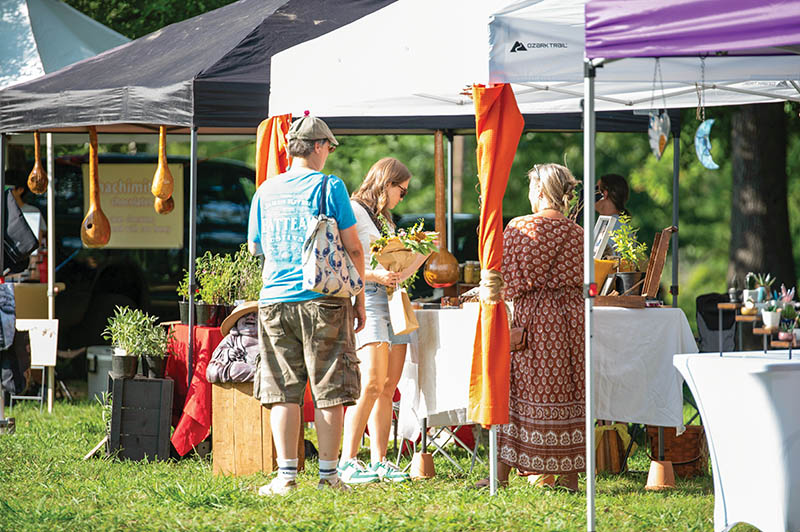
“We hear from people every week, ‘I didn’t even know this was here,’” Ray said. “‘My friend or my neighbor told me about it.’ Word of mouth is huge.”
Visitors who make the trip will find a market centered on locally-grown food and locally-made products. Vendors include Great Day Gardens from Forest, SoulShine Farms from Bedford, and Restoration Acres from Big Island, along with bakers, beekeepers, potters, artists, and prepared food vendors.
Ray said one of the market’s priorities has been creating a true producer-focused experience.
“You can’t really have a farmers market without farmers,” he said.
Current offerings include fresh vegetables, fruit, eggs, honey, baked goods, meats, and artisan products. Restoration Acres also operates a convenient farm truck where customers can place orders online and pick them up through a drive-through service during the market.
New vendors continue to add variety. One chocolatier travels to Ecuador to source cacao beans before sweetening his chocolate with raw honey. A local apiary offers honey tastings that allow visitors to sample the distinct flavors created by bees pollinating different plants. Food options range from barbecue to smash burgers.
As the market grows, Ray hopes to continue filling gaps by adding more local beef producers and eventually additional dairy vendors.
“It’s not even just about the food,” he said. “Obviously what we put in our bodies contributes to our well-being more than a lot of people know.”
Most of the participating farms use organic growing practices, even if they aren’t USDA-certified organic.

“When you buy chicken from Restoration Acres, it’s not being pumped full of antibiotics,” Ray said. “You’re going to get a cleaner product when you come to the farmers market.”
Supporting local agriculture also keeps dollars circulating within the community.
“When you’re shopping at a farmers market, you’re supporting a local economy,” he said. “I know all these people now. We’ve created relationships and friendships. I don’t mind spending maybe a dollar or two more because I want to support them.”
But perhaps the greatest benefit is something that’s increasingly difficult to find: genuine face-to-face connection.
At a grocery store, shoppers often rush through aisles, use self-checkout, and head home. At the farmers market, conversations happen naturally.
“You’re actually interacting with the people who are raising the chickens, growing the vegetables, your beekeepers, your bakers,” Ray said. “You can learn so much and you can also just get to know them.”
The atmosphere encourages visitors to slow down rather than hurry through another errand.
“Sometimes going to the grocery store feels like a drag,” Ray said. “Whereas with the market, it’s just fun.”
That slower pace has become even more meaningful in the years following the COVID-19 pandemic.
“I think people are starting to figure this out,” Ray said. “You hear a lot about the mental health epidemic and isolation, especially among younger people. Screens became more central to our lives.”

The market offers a simple antidote.
“You’re outside. You’re getting sunlight. You’re breathing fresh air. It’s a really good opportunity to disconnect,” Ray said.
“I have people tell me, ‘I saw my neighbor I haven’t seen in so long,’ and they caught up. You don’t really see people sitting around on their phones.”
Ray added that community gathering spaces like farmers markets have become increasingly important as traditional opportunities for connection have declined.
“Not everybody goes to church,” he said. “The market is a place where everybody can come together. Everybody’s got different beliefs, different backgrounds, and different ideas. That’s just part of life.”
Ray isn’t interested in rapid expansion of the market but does hope the market grows steadily and organically while maintaining the sense of community that inspired it.
“I’m trying not to grow the market too quickly,” he said. “The really cool thing is that a lot of our core vendors have already said, ‘You guys are doing this
next year, right?’”
Future goals include bringing in more farms, increasing attendance, partnering more closely with the Lynchburg Community Market on programs such as SNAP benefits, and eventually hiring someone to help manage operations.
“I really don’t like to take so much credit for this thing,” Ray said. “It doesn’t exist without all the cool things other people are doing. This is just about bringing everybody together.”