The Living Music of the Hill City
Every time I go to a concert, I notice the feeling of anticipation that builds as you get closer to the start of the show.
By: Charlotte Farley / Photos By: Becky Lambert Photography, Courtesy Of Seven Hills Chamber
That moment feels especially charged when it happens inside the historic Lynchburg Museum, where people registered to vote where they got married, and where the fate of defendants on trial for murder hung in the air.
On most days, the building feels quiet, with pieces of its past on display: artifacts, photographs, and other fragments of lives that once moved through the same streets we do. But in August, the Seven Hills Chamber Music Festival will open its summer concert series inside the museum’s main hall: the former courtroom of an 1855 building designed for voices to carry.
Opening night will layer a Louis Armstrong tribute for trumpet and string quartet, Jessie Montgomery’s Strum, and newly unearthed music by Lynchburg-connected composers into a single evening.
“We have the concerts in what used to be the courtroom,” said museum director Ted Delaney. “We put the performers on the judge’s platform. And if you think about it, the building was designed for that—a group of people gathered to listen to something happening at the front of the room.”
He thinks about it a lot. “It lends itself so naturally to music,” he added. “Having live music performed in that space, to me, is one of the best uses of our very beautiful historic structure.”
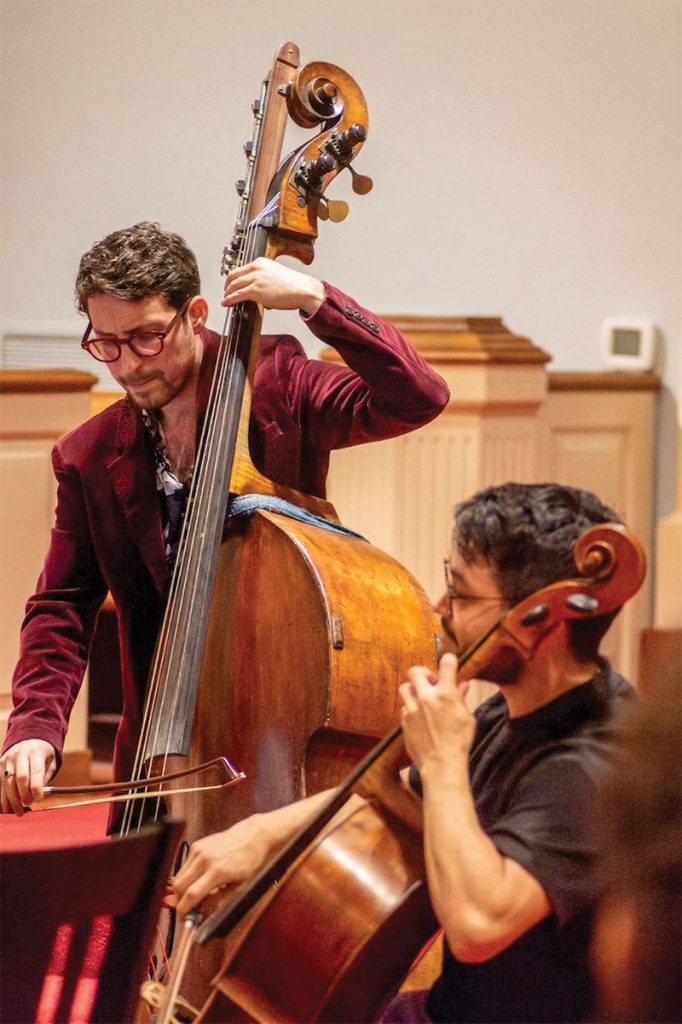
Music that Lives in the Room
The Seven Hills Chamber Music Festival is heading into its sixth season this summer.
If you’re a music aficionado, that might bring a spark of excitement. On the other hand, you might hear the words “chamber music” and immediately picture old-world royalty having a private concert, seeing it as formal and untouchable—and you won’t be alone there. (Back in the day, I thought chamber music meant Gregorian chanting monks!)
In reality, chamber music simply means a small group of musicians playing together—often one player to a part—in spaces where you can hear and see every detail. It’s music built for conversation: between instruments, between performers, and, if it’s working, between the people onstage and the people listening.
Seven Hills Chamber Music delivers a stunning Bach Brandenburg Concerto. And yes, there’s a sense of intimacy inherent to this genre with its smaller ensembles, closer quarters, and music that asks you to lean in. But Seven Hills is just as committed to contemporary work and performing (and sometimes commissioning) pieces by living composers. I still think about last season’s performance of Stir Crazy by Carlos Simon and the way the flute and violin captured, through sound, what so many of us were experiencing during that time.
More than a Venue: A Partner
For festival co-founder and Lynchburg native Dudley Raine IV, the museum concert started simply: try something different. “We had been playing in a lot of churches, and we wanted to find a space that felt a little less expected. The museum seemed like a great place to try it. We try to use Lynchburg’s history to build a theme,” Raine said, “to tell stories that might have been forgotten.”
Working with Delaney, “he found a whole trove of pieces in the archives and we found pieces and composers I never would have known about otherwise.”
That was three years ago. Since then, the relationship has grown from “a concert in a cool building” into a partnership with its own rhythm.
Festival co-founder Nicole Brancato helps shape the arc of each concert so the music, the space, and the stories all feel like they’re in conversation with one another. One past program drew on the story of Blind Billy and Tom Perkins, a local 19th-century fife-and-fiddle duo. To echo their sound inside the old courtroom, Seven Hills chose works for modern instruments carrying forward the rhythms that once floated over these same hills.
“It’s been really interesting to see the exhibits when we’re there and to start learning about Lynchburg’s history in a deeper way—especially the music,” he said.
Over time, that curiosity has started to shape the concerts themselves. That curiosity led to more research, more local names, and an expanded program, this year supported in part by a Virginia Humanities grant.
The Exchange of Energy
And then there’s the part no one can plan for: the energy the audience brings to the show.
“The last piece we did last year was [by] Kathleen O’Moore,” Raine said. “We gave the audience the music and had them sing along. It was incredible. Just this shared energy—everyone in the room participating. That was one of those moments where you think, ‘This is why we’re doing this.’”
For Delaney, that shift matters.
“Our mission is to connect people to local history,” he said. “But not everyone comes to a museum for that. Some people need a different way in.”
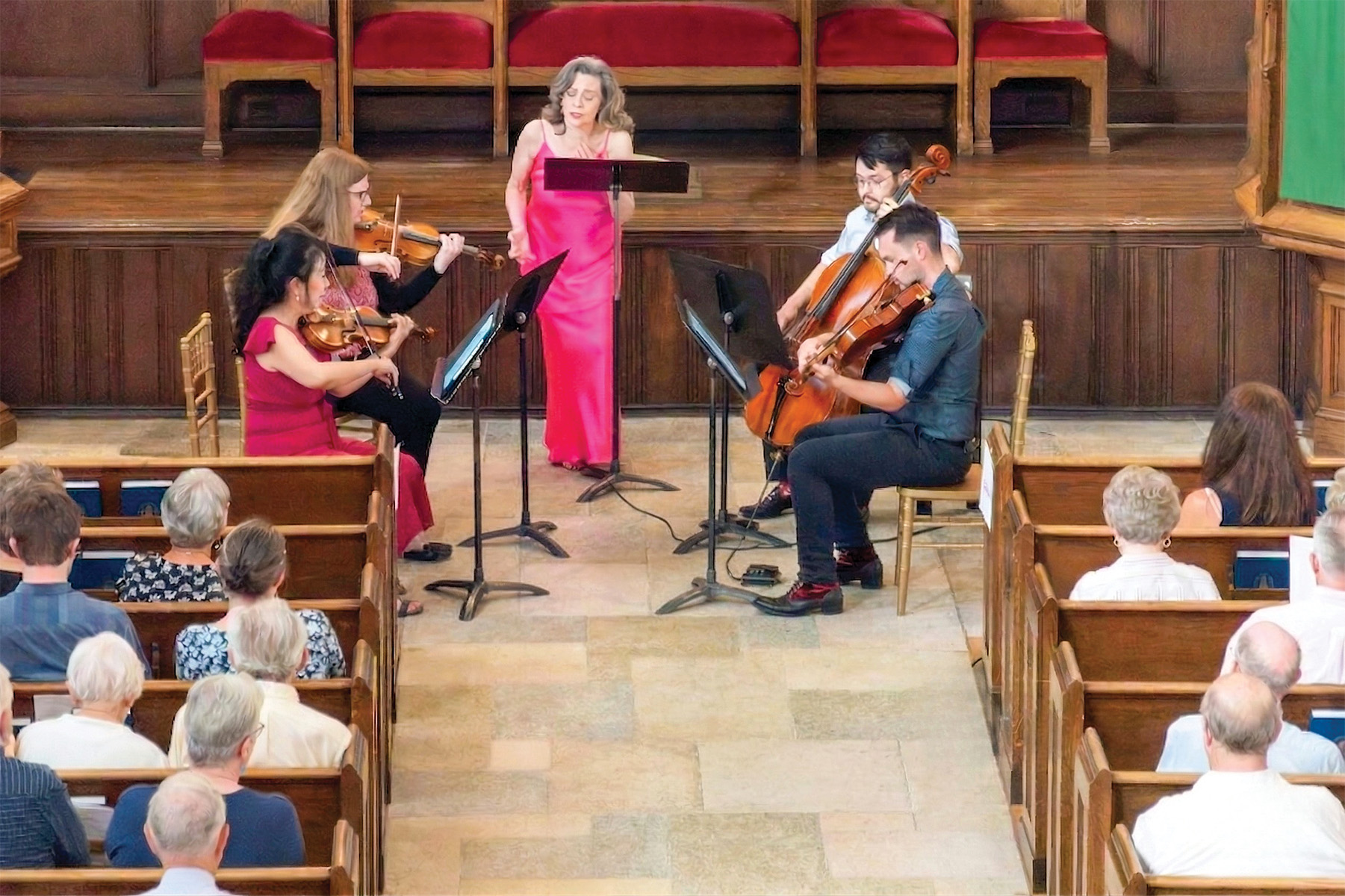
Music, it turns out, can be that way in.
“If someone comes for the performance, and that’s what brings them into this building, then they’re also encountering history,” he said.
A space once used for judgment, record, and decision-making is now holding something less about what was decided, and more about what can still be felt. “To have live music in that space,” Delaney said, “after everything that’s happened there—it’s really special.”
He hopes people walk back out onto Monument Terrace with a different sense of the city they just looked down on. “I want people to be so impressed that such beautiful music was composed here and that such talented composers lived here, walked the streets we do, lived in the same places we live, and work and go to school,” he said. “So many people discount Lynchburg and think, ‘Nobody of any note lived here, nothing important happened here,’ but I see the opposite. This concert is just one small way to have people see what we see.”
It helps that the music itself is anything but small. About half of the festival’s roster has roots in Virginia, and all of them bring serious credentials with them—players who have performed with major orchestras and ballet companies, on Broadway stages and at Carnegie Hall, with institutions like the Juilliard School and the New York Philharmonic, on HBO and Netflix, and at venues around the world. Some are voting members of the Recording Academy, some are Yamaha artists, and all are chamber musicians in the truest sense: collaborators who know how to listen as intensely as they play. When they gather in Lynchburg, the room is holding world-class artistry and hometown memory at the same time.
“I just couldn’t believe how good the music was,” Delaney said, remembering his first experience with this chamber music festival. “And thinking, this came from Lynchburg. Not from Europe or New York. From here.”
On August 12, the room will decide again what it’s going to be. And if you’re there, sitting in that brief, electric pause before the first note, you’ll feel it happen.
