Destination Sweet Briar 

Summa Cum Surprising!

By: Marisa A. Marsey / Photos Courtesy: Sweet Briar College / Photo Above Courtesy: Cole Pillow and Susan Sietz

Psst. Want the name of Central Virginia’s most appealing getaway you’ve never heard of? Sweet Briar College (SBC). OK, so you probably have heard of the esteemed women’s liberal arts and sciences college in Amherst County, hugging the base of the Blue Ridge Mountains, but bet you didn’t know that it should be on your “must-visit” list. Even if you’re not looking to matriculate.

Sweet Briar is in a sweet spot between Charlottesville and Lynchburg, and its on-campus Elston Inn—an inviting, 38-room, pet-friendly boutique hotel decorated with a light Early American touch—makes an excellent launching pad for touring the area’s rich history and natural splendor. But if
you’re into food and wine, you don’t necessarily have to venture beyond its rolling verdant hills.

That’s because sprawled across 2,840 acres, SBC grows its own vegetables, makes its own honey, and begets award-winning wines. As you drive along U.S. Route 29, you’ll espy sloping rows of cabernet franc and cabernet sauvignon vines. That’s the campus’s lower vineyard. There’s also an upper vineyard planted with chardonnay and merlot.

The focus on agriculture and sustainability at the 125-year-old college has mushroomed since devoted alumnae swooped in to save their alma mater from closure through a successful legal challenge and generous donations in 2015.

“We have an incredible campus landscape that has long been integrated with our curriculum, and with the addition of the 26,000-square-foot greenhouse, 20-hive apiary, and nearly 18 acres of grapes, we have enhanced the hands-on experiential learning opportunities for our students,”
said Dr. Lisa Powell, vice president of academic affairs and dean of the college.

In the vineyards, the syllabus covers everything from pruning and estimating yields to determining when grapes are ready to be picked. The wine is then made in a custom crush facility near Charlottesville founded by Michael Shaps, a leader in Virginia’s wine industry, where students help work the bottling line.

Apparently, someone’s been doing their homework. Sweet Briar College Farm’s debut independent vintage from the 2023 harvest shone at the Virginia Governor’s Cup competition in 2025. “Earned the Rosé,” a dry, merlot-based rosé named for the school’s tradition of bestowing a rose along with a diploma at graduation per its motto, “She who earns the rose may bear it,” captured gold, while “Leading the Way Chardonnay” and “Meadow Merlot” took home silver medals.

Over at the greenhouse, which features both soil and hydroponic growing spaces, an automated environmental control system, and pink grow lights (for an effect that upholds the school’s colors: pink and green), any of the college’s 400 students taking Ag Op (Agricultural Operations) courses get their own plot and the autonomy to cultivate whatever they choose.

The result is brilliantly colored, crinkly rainbow chard as gargantuan as if sprouted from magic beans, candy-sweet cherry tomatoes, plump eggplants, brisk lettuces like romaine, red gem, and Batavia, peppers spanning the alphabet from bell and habanero to shishito, cucumbers, a plethora of fragrant herbs, and more.

The bounty is sold to local restaurants, caterers, a retirement facility, a private school, and a distributor, and fills C.S.A. (Community Supported Agriculture) baskets for the community. The lion’s share (make that the Vixen’s share, since SBC’s mascot is a female fox) supplies Prothro, the airy student dining hall. If you stay at the Elston Inn (which serves complimentary continental breakfast including apple cake and SBC honey), you’re welcome to dine there, to savor the hyperlocal fruits of their labor, er, learning.

For a postprandial, apply yourself to 20 miles of trails that meander past two lakes and a boathouse, stables, a butterfly research garden, and a wildflower meadow. Stroll amidst the stunning Georgian Revival buildings, one of the largest collections of Ralph Adams Cram architecture in the nation.

“It’s really an all-season destination,” shared Brian Stanley, director of hospitality for the Elston Inn and its adjoining conference center which border a sanctuary of white oaks hundreds of years old. He catalogs the many campus events open to the public throughout the year such as a Van Der Meer adult tennis clinic, Richmond Symphony performances, equestrian competitions, and gourmet tastings.

Elston Inn guests are welcome to use the Fitness & Athletic Center (yes, there’s a men’s locker room—though you may prefer showering back in your room as it’s stocked with hair and skincare products showcasing SBC honey). Later, sink into a plush chair with a good book at Daisy’s Café, a cozy corner for specialty coffees, light lunches, and snacks.

There’s no whiff of institution here, especially at The Book Shop. It sells textbooks, certainly, but with fabulous fashions, home, and gift items, so much dripping in pink and green, this store deserves a Pulitzer. A Lilly Pulitzer.

If you can pull yourself away, visit Ankida Ridge, Lovingston, and Rebec, all celebrated wineries nearby, or venture into the quaint town of Amherst. Ruffles, Lace & Grace Boutique offers lovely women’s apparel, while Old Soul Vintage and Warehouse Antiques entice with shabby-chic and eclectic treasures.

You’ll find SBC wines at The Briar Patch, where three generations take pride in scratch-made American comfort food. Bonfire, known for its Southern-rooted, wood-fired cuisine, features the college’s wines, too. Chef-owner Brandon Castro Pruett established his locavore bona fides at the Biltmore, and sources SBC’s produce as well as beef from Tucker Family Farms, 5 miles away.

You might just run into Bill and Claudia Tucker there (such are the charms of small towns). They were named “Commercial Producers of the Year” in 2000 by the Beef Improvement Federation, and Bill will passionately describe how he calculates the marbling differential among his multiple breeds (though you might need a Ph.D. to comprehend his formula; just nod and savor that luscious burger).

Back at school, check out the Sweet Briar Museum and art galleries (by appointment) whose collections contain medieval manuscripts, 20th-century femmage (feminist collage), and works on paper by Rembrandt, Picasso, and Goya. Thankfully, there’s a full-service post office on campus, too; you’ll want to send postcards to all your friends saying, “Wish you were here!”  

134 Chapel Road, Sweet Briar, VA, 24595. 434-381-6100.
sbc.edu


From Pierce Street to Point of Honor

A Theater Rooted in Place

By: Charlotte Farley / Photos Courtesy: Enstation Theatre Company

By the time I finally clicked on Endstation Theatre Company’s website, I felt that particular brand of guilt reserved for English majors like myself. After all, I’ve lived in this area for over twenty years. I’ve taught literature, worked with local arts agencies, and waxed poetic about “place.” And yet somehow I had missed that Lynchburg has had its own professional theater company for nearly two decades.

Sitting across from Producing Artistic Director Patrick Earl, though, my guilt turned into curiosity. Endstation isn’t trying to compete with touring blockbusters or turn out jukebox musicals. Instead, it’s doing something more rooted in this region and the people who call it home.

A Lynchburg Original

Endstation was incorporated in 2006, starting life as a small company at Sweet Briar College mounting original works, intimate Shakespeare, and adapted classics. From the beginning, its focus was to “advance the cultural history and landscape of this region,” language Earl calls “very poetic and awesome,” but also quite practical.

Underneath the lofty phrasing is a simple guiding principle he repeats to his company: serve the audience you actually have. For Endstation, that means the neighborhoods, histories, and unresolved stories of the greater Lynchburg area. “We are telling a people’s story,” he says, and he means “people” in the most local sense: the families who’ve walked Pierce Street for generations, the students bused in from area high schools, the patrons who might not see themselves on stage anywhere else.

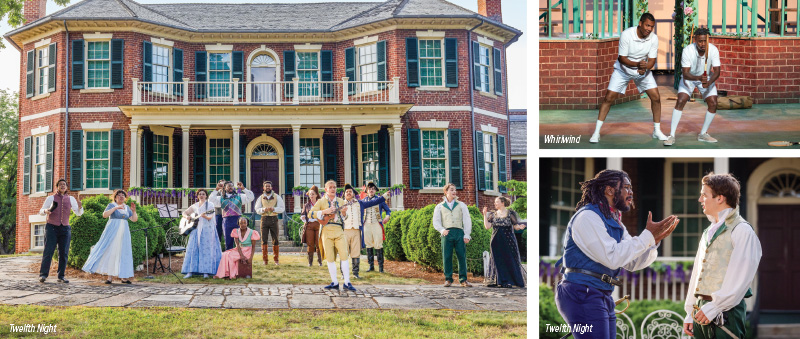
Over the years, the company has produced more than a dozen original plays, many commissioned or developed through its playwright pipeline. Whirlwind, for instance, explored the life of Dr. Robert Walter “Whirlwind” Johnson, the first Black physician permitted to practice at Lynchburg General Hospital and a tennis coach who mentored Arthur Ashe and Althea Gibson on a court in his side yard on Pierce Street.

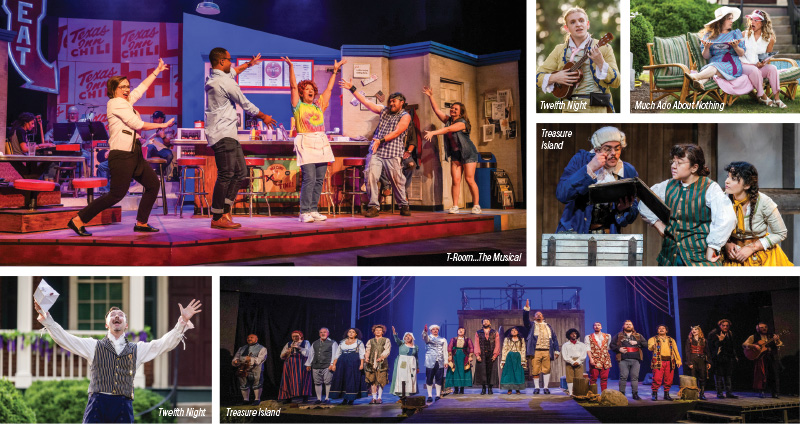
That attention to place isn’t metaphorical: Endstation has staged performances inside historic homes, at Point of Honor, and even in the basin of a long-closed public pool while tracing the buried history of segregated swimming in Riverside Park. There’s something sacred about telling a story in the very space where it unfolded, as if proximity itself deepens the act of remembering.

Twenty Years of Evolution

Of course, no arts organization moves through twenty years unchanged. After its early seasons at Sweet Briar, Endstation experimented with larger productions and more commercially recognizable shows, the sort many regional companies rely on to stay solvent.

On July 1, 2024, Endstation officially came under the umbrella of Randolph College while retaining its own distinct nonprofit identity. As the college’s professional theater, it enjoys a stable home base, a campus full of students, and local connections.

Fringe, Fields, and Memories

The Central Virginia Fringe Festival—launched just last year—is another extension of that impulse. “We have so many talented folks, so many talented companies,” Earl says. “We need something to celebrate that. So we said, ‘You know what, let’s start a Fringe Festival.’”

The premise is simple but generous: Endstation provides a venue and modest tech support, and invites theater companies, community groups, and individual performers to show what they’ve been making. In its inaugural year, 14 companies (including Endstation) presented nearly 20 performances over the course of the week, spread across spaces at Randolph like Smith Hall Theater and another campus performance hall.

This summer’s festival will again run Saturday to Saturday in mid-June, opening with a concert and “Fringe Feast” and closing with the world premiere of Earl’s new play, Good Birth, alongside the launch of the summer Shakespeare production.

Beginning in fall 2026, Endstation will also take over the Old City Cemetery’s candlelit tour, partnering with staff to create a theatrical experience that weaves history, performance, and memory in one of Lynchburg’s most significant landmarks. If theater at its best is an act of collective remembering, there may be few settings more suited to that than a location where names are literally carved into stone.

Shakespeare on the Hill, Free for All

If you’ve never made it to Shakespeare at the Point, you’re not alone. But the series, now heading into its third summer, may be the clearest expression of Endstation’s commitment to accessibility.

What began as a small-scale experiment at Point of Honor has grown into a cornerstone of the season. Tickets for Endstation productions top out at $35 for special events (galas excluded), with many offerings around $15 (and less for students).Through the “Serving the Audience Initiative,” Endstation has made a portion of its outdoor Shakespeare performances free to the public in recent years, with a long-term goal of making the entire run free.

“We are working to make professional theater accessible to everyone,” Earl says. That includes scholarships for their Embark Youth Theatre Conservatory, where at least 15 of 40–50 spots each year are full or partial tuition scholarships, and Theater Day at Randolph, when high school students come to campus for workshops in technical theater, stage combat, and Shakespeare.

This summer’s production, The Merry Wives of Lynchburg, adapts The Merry Wives of Windsor, keeping the language largely intact while setting it here at home. It’s a playful nod to place that still takes the text seriously, much like the company itself.

What’s Next

“If I could choose, I’d want our legacy to be that we created essentially a staged history of our community, a dramatic, historical canon for the area,” he adds. “After being around 20 years and doing 14 original shows—that’s a lot for any theater company—and that doesn’t even account for the dozens of original plays from our Playwrights Initiative.

For Earl, the heart of Endstation’s work is empathy. “Theater is uniquely suited to helping audiences experience how someone else sees the world. That is, in its essence, what theater really is,” he says.

“I want Endstation to be the end station for theater. Every community deserves somewhere they can go and hear their story, and hear their story done well, and see live performance at the best possible level without having to drive to New York or to their nearest large city—at a high level, at a professional level, and a dependable level.”

As Endstation enters its third decade, it faces the same challenge every arts organization does: persuading people to show up in person. Earl is realistic about the competition. “Every platform, screen, and phone is rival for attention, but it’s something more than that,” he says. “People go into their phones trying to find happiness and humanity. But you know where it is: humanity is going to watch humans.”

That humanity lives here: on a hillside at Point of Honor as the sun goes down, in a darkened hall at Randolph, inside a reclaimed pool basin at Riverside Park.

It’s in the moment when a familiar street name, a long‑ignored plaque, or an old family story suddenly stands up, steps into the light, and, for a moment, seems to be speaking directly to you.