2026 Best Of Hall Of Fame Winners

Earning a Best of Lynchburg award should be celebrated, and earning this recognition year after year earns a business a spot in the Hall of Fame.

To place in our Best Of Lynchburg Hall of Fame, a business, person, or place needs to have won a gold level award in a particular category for the majority of the years since VistaMedia first launched the contest in 2014. 

Flip through to see who is the best of the best in the region! 

(Voting for the 2027 Best Of Lynchburg Awards begins July 25 on LynchburgLiving.com.
Look for those winners in the January/February issue of Lynchburg Living!)


For Those Who’d Rather Be on the Water

Unsalted Water Co. celebrates the best of lake life

By: Jeremy Angione / Photos Courtesy: Unsalted Water Co.

Although many Central Virginia residents have to drive a few hours for a relaxing day at the beach, local apparel brand Unsalted Water Co. celebrates the lake day activities just within reach. Founder Michelle Novak started Unsalted Water Co. earlier this year with a hope of curating all the feelings the lake gives her into fun and fashionable designs.

“Unsalted Water Co. isn’t just apparel to me,” Novak said. “It’s a lifestyle rooted in memories, tranquility, freedom, and the feeling you get every time you step out on a dock or look out at the water. That is the emotional heartbeat behind everything I create.”

Despite its recent launch, Novak insists that Unsalted Water Co. was brewing as an idea for years. Fun and formative lake experiences throughout her life helped shape the future of the company in her mind.

“From learning to ski on Lake Lanier, vacations spent on Lake Cumberland, houseboating on Lake Havasu, time spent on Lake Erie and Norris Lake, and now building my brand around Smith Mountain Lake, I realized that there were many brands that celebrated the ocean lifestyle,
but not a national brand that celebrates lake life for everyone,” Novak said.

On Left: Michelle Novak with her dog, Lulu. 

For Novak, starting her brand was not meant to simply highlight logos or designs. Unsalted Water Co. means to encapsulate the feelings of being on the lake and making memories however you and your loved ones choose to.

“Our core demographic is really anyone who feels emotionally connected to lake life, but especially adults who see the lake as part of their identity and lifestyle,” Novak said.

Unsalted Water Co. has several unique collections to highlight specific lake staples and Activities.

“Every collection has a personality behind it,” Novak said. “Wags on Water celebrates the time with our furry family members in and around the lake or Sips Ahoy is for those who indulge in their favorite beverage around the water.”

Unsalted Water Co. will also be launching a new collection called Wake Warrior. This newest collection will celebrate the more athletic lake-goers seeking a thrill by wakeboarding.

Currently, Unsalted Water Co. apparel is only available online. According to Novak, the brand has already seen success from local support and nationwide. Despite originating with Smith Mountain Lake, Novak assured that Unsalted Water Co. is for anyone who enjoys lake life anywhere.

“We have customers from the West Coast to the East Coast that include: Arizona, Texas, Minnesota, Ohio, Michigan, New Jersey, North Carolina, and Virginia, to name just a few,” Novak said.

While the majority of Unsalted Water Co.’s offerings are shirts, sweatshirts, and hats, Novak wants to expand the brand to feature more accessories, experiential marketing, and ways to give back to the community.

“We also plan to become more involved locally through lake events, festivals, pop-up opportunities, collaborations, and future lake conservation initiatives,” Novak said.

Despite the Unsalted Water Co.’s youth, Novak believes expansion beyond Smith Mountain Lake is a distinct possibility.

“One of my biggest goals is to continue to expand Unsalted Water Co. into a full national lake lifestyle brand, not just apparel,” Novak said.

A small but important step to that larger nationwide goal is continuing to earn spots in retail spaces and boutiques that specialize in lake lifestyle products.

Although the ambition seems fast-paced, Novak has been intentional about every step of the business. She says that she’s worn many hats to propel the business forward, including creative director, customer service, marketing, and social media.

The products themselves are especially curated to be both quality and affordable.

“I also wanted the apparel itself to feel boutique quality—soft fabrics, premium blanks, and designs that people genuinely want to wear on and off the water,” Novak said. “I’m very intentional about the fit, feel, colors, and overall aesthetic because I want people to feel the difference when they put it on.”

Aside from curated collections which highlight different aspects of lake life, Unsalted Water Co. also plans to roll out customization options. Customers will be able to create custom apparel with the lake names of their choice.

“Since lake life is such a personal experience tied to specific memories and traditions, I wanted our customers to feel even more connected to the places that they love most,” Novak said.

While Unsalted Water Co. continues to grow, the most evident constant is Novak’s love for Smith Mountain Lake.

“The Smith Mountain Lake community has been extremely supportive, and that means so much to me because living on the lake for the past five years has profoundly shaped the heart, lifestyle, and identity of Unsalted Water Co.,” Novak said.  

To check out Unsalted Water Co.’s apparel collections, go to unsaltedwaterco.com.


Slow Down & Sew Awhile

Needle Ninja adds color and tactile arts to downtown Lynchburg

By: Olivia Carter  |  Photos By: Ashlee Glen

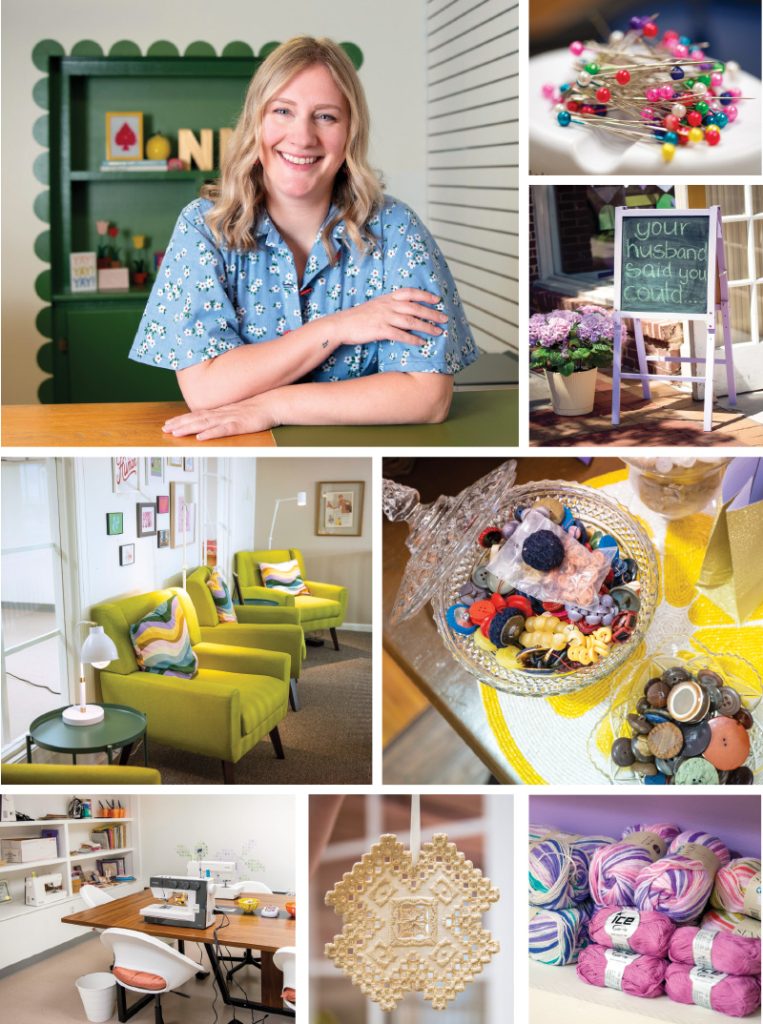
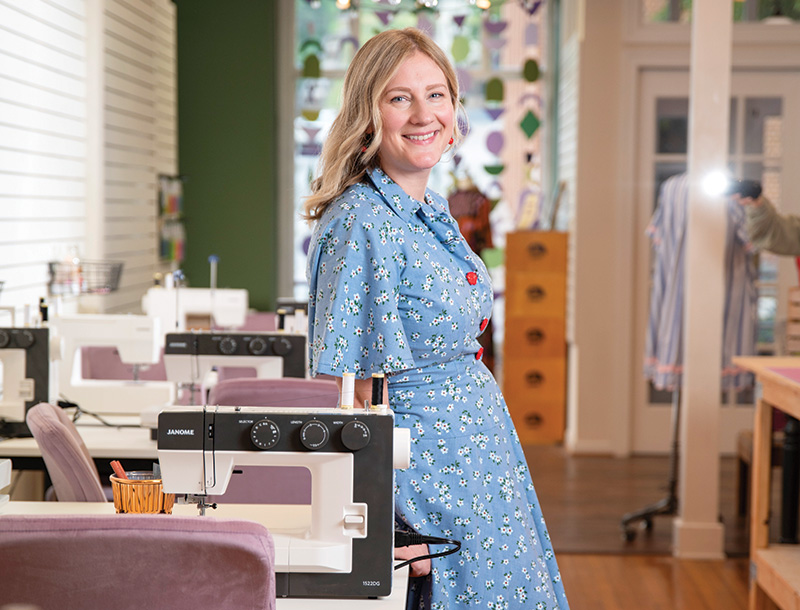
When customers step through the doors of Needle Ninja, they are immediately welcomed by color.

The entryway, painted in alternating lavender and lilac stripes, is intentionally playful and is the first clue that this is not a traditional fabric store. Inside, sunlight pours through tall windows onto tables filled with vintage buttons sold by the ounce, bolts of linen and denim, sewing machines waiting for their next makers, and carefully curated cross-stitch kits featuring literary icons such as Jane Eyre, Mary Poppins, and Anne of Green Gables. 

It’s a space owner Lynne Forth says people often describe the same way: “happy, light-filled, airy.”

That atmosphere is exactly what Forth hoped to create when she opened Needle Ninja in downtown Lynchburg—a place where creativity feels approachable and sewing feels less like a niche hobby and more like an invitation.

“I’ve always had entrepreneurial goals and dreamed of having my own shop,” Forth said. “This really combines a few different passions and loves for me.”

For Forth, sewing is much more than a business model. It’s a language.

This began about 15 years ago, when she took her first sewing class while earning a degree in fashion merchandising. Though she had grown up watching her mother sew, she wasn’t sure at first whether the craft was for her.

That changed after making a simple pillowcase.

“I just thought, ‘Oh my gosh, I made a pillowcase with my own two hands, with just some thread and some fabric. This is incredible,’” she said. “And it just kind of took off from there.”

Her passion deepened while working at Liberty University, where she designed and created costumes for theater productions. There, she learned that fabric could tell stories before an actor ever spoke a line.

“I fell in love with color theory and what color can convey on stage,” she said. “What can I tell the audience without using words just by using fabric or shape or pattern?”

That fascination eventually shaped her graduate work in strategic communication, where she studied how clothing communicates identity and emotion. It also helped define the mission behind Needle Ninja: not just selling fabric, but teaching people how to make something meaningful.

“As a way of showing other people, this is something you can do, something you can be passionate about, use to make an income, or use to empower yourself,” Forth said. “If you are sewing something and it turns out well and you’re proud of it, it’s a beautiful way to gain confidence.”

Needle Ninja arrives at a time when handmade skills are experiencing renewed interest. In an age dominated by online shopping and fast fashion, Forth believes many people are craving something slower and more tactile.

“People want to make something with their own two hands,” she said. “They want to do something in person. They’re tired of trying to look things up on YouTube and not having someone next to them who can say, ‘That’s right, but if you do it this way, it’ll be even better.’”

She believes people are looking for even more than just sewing. They’re looking
for connection.

“People are craving community,” Forth said. “A lot of arts can feel isolating because you’re often doing them alone. Here, you get the creative world and community together.”

Some of the vintage fabrics displayed throughout the store belonged to Forth’s late grandmother, an avid collector and sewer.

“The fact that we’re getting to use that again is really, really special,” she said. “It kind of makes it so that she’s all over the store with us.”

Her mother’s influence is even more visible.

Forth describes her mother as both a lifelong maker and one of her biggest inspirations. A master of Norwegian Hardanger embroidery, or Hardangersøm, her mother now spends part of the year in Lynchburg helping teach at Needle Ninja.

“She’s one of my best friends,” Forth said. “To be able to do this with her, to give her a space where she can teach people and meet people, is just so special.”

That family legacy helps explain why Needle Ninja feels less like a store and more like a gathering place. Customers wander in for different reasons. Some are experienced sewists thrilled to have a dedicated downtown creative space. Others are complete beginners who saw the shop’s bright windows and simply got curious.

“We’ve had people walk in and say, ‘I saw the word needle and wondered what that meant,’” Forth said with a laugh. “And then we get people who say, ‘My grandmother sewed all our clothes growing up, and I’d love to carry that on for my children.’”

Needle Ninja is built for both groups.

Its large communal cutting table, a feature many home sewists don’t have space for, invites customers to spread out and work. Rows of sewing machines sit ready for classes and open studio sessions. The goal, Forth says, is not just to teach people to sew, but to create a place where they want to stay.

That mission also has an environmental edge. Forth is outspoken about the waste generated by fast fashion and hopes sewing can offer an alternative.

“There’s this steady pipeline of cheaply made garments that’s taking up landfills,” she said. “For me, it’s not always about making something cheaper than buying it. It’s about having something unique to you.”

That uniqueness, she believes, especially resonates with younger generations.

“Gen Z and millennials are looking for something personalized,” she said. “What’s more personalized than making your own clothes?”

Forth’s ambitions extend beyond retail. She hopes to launch a sponsorship program that would allow local middle school, high school, and college-age students to take sewing classes for free, funded by businesses and community donors.

“I would love to see local companies and philanthropists invest in kids who want to learn this skill,” she said. “It could become a career, a side hustle, or just something that gives them confidence and purpose.”

She also envisions future summer camps, after-school programs, and an expanded roster of instructors so students can learn a wider range of textile arts.

“My goal is not to always be the one teaching every class,” she said. “I’m always learning, myself. There’s always someone who knows something different, and I want our students to benefit from that.”

For now, though, Forth is focused on what’s directly in front of her, opening the doors each day and watching people discover, sometimes for the first time, the joy of making something by hand.  


A Century at the Counter

Moore’s Country Store celebrates 100 years of hot dogs, heritage, and a community that keeps coming back

By: Jeremy Angione / Photos By: Ashlee Glen

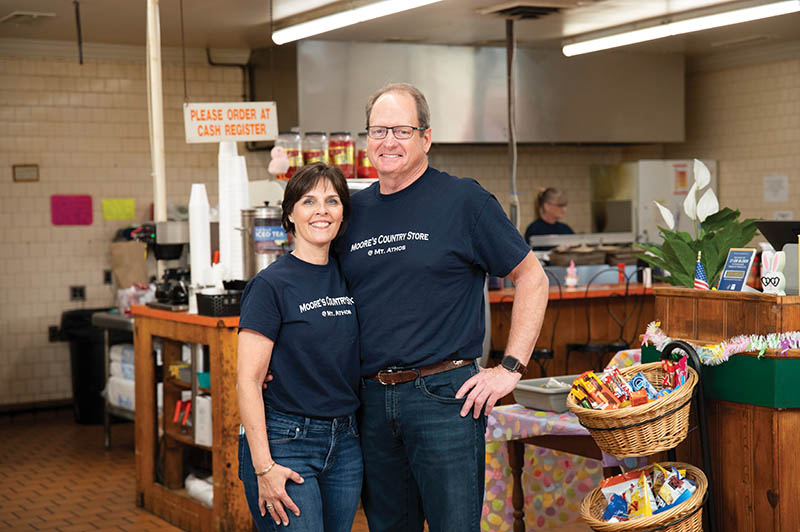
Moore’s Country Store recently celebrated its 100-year anniversary by opening its doors to the community that has supported it for generations—serving its trademark hotdogs and other festive favorites.

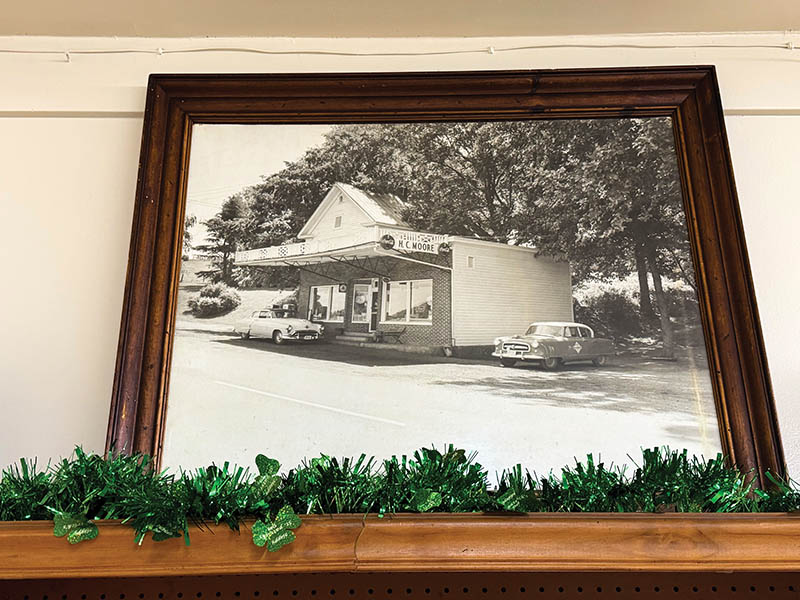
Owner and Vice President of Moore’s Country Store, Jennifer Moore, said Herman and Della Moore originally opened the business on July 4, 1926, under the name Riverside Station. Over time, local patrons dubbed the eatery as Moore’s Country Store, a name that has endured to this day.

“Moore’s is built around a long-standing tradition of community, food, and family. This dedication to being welcoming and attentive is what helps us maintain the sense of community that Moore’s is known for,” Jennifer said.

David Moore grew up in and around the store that his grandparents opened. After he and Jennifer married, they went on to purchase the business from David’s parents in 1999.

Jennifer began her career at Moore’s as a cashier, but quickly recognized the value of understanding every role within the business.

Moore’s centennial celebration drew a crowd of loyal customers and first-timers alike who enjoyed desserts, festive decorations, and Moore’s trademark hotdogs.

“We couldn’t have asked for a better day. We were able to spend time with almost everyone that came in, even meeting new people throughout the day. It was truly memorable,” Jennifer recalled.

One of the most consistent themes behind Moore’s continued success is its commitment to authentic relationships with the community—relationships that extend far beyond transactions.

“We have long lasting friendships with many of the customers, former and current employees, and vendors. We’ve watched children grow into adults. We have been part of celebrations from birthdays, graduations, and even weddings. We’ve been part of the hard and sad parts of people’s lives and they have been part of ours,” Jennifer mused.

Admittedly, after years of driving past Moore’s flagship location swearing I’d try it one day, I finally stopped in for the first time on the day of the celebration. The shop was bustling as guests trickled in and staff members continued to decorate. Despite the busyness of the store, the atmosphere still felt warm and welcoming, just as Jennifer suggested.

To feel like my visit was complete, I made it my mission to have at least two of Moore’s famous hotdogs. I made sure to load mine with cheese and Moore’s equally famous chili. The ingredients are simple, fresh, and housemade, but still manage to make for a memorable meal that even its owners can’t resist.

Jennifer says her favorites are a “Moore’s Original Hot Dog, without onions, with a mix of the sweet, beefy chili and the hot spicy chili. I also love our house-made chicken salad and our fresh ground beef burgers. You just can’t pick one item.”

To commemorate the history of Moore’s Country Store, the Moores commissioned muralist Michael Twery to paint a visual history of the shop, from its humble beginnings to the current day.

“Michael worked closely with our daughter, Savannah, to ensure the mural captured the spirit and legacy of Moore’s,” Jennifer explained.

One of the most memorable parts of the Moore’s experience is the tree growing right through the roof of the store’s front entrance. Not only is it a unique visual marker for any passersby, but more poignantly, it serves as a visual representation of the Moore’s legacy.

According to Jennifer, in 1974, the original store was badly burned by a fire caused by fireworks in the store that had been set alight by a stray cigarette. Bill Moore, David’s father, saw the reconstruction as an opportunity to add a small tree as a unique element of Moore’s next phase of life.

“What started as a slender trunk only three inches wide has since grown and become a distinctive part of Moore’s.

The tree is nourished by a creek that runs beneath the store, making it an integral element of both the structure and the story of Moore’s Country Store,” Jennifer said.

Of course, over 100 years of operation, Moore’s has seen its fair share of changes. From new locations to creating its own line of products distributed throughout Virginia, Jennifer asserts that the most challenging pivots have been the move to more viable employee benefits, such as health coverage, and the implementation of up to date internet and technology that any century old business would have to adjust to.

“Despite these obstacles, we remained determined to move forward. Our entire crew adapted to every new hurdle, embracing a ‘let’s do this’ attitude. Through every change, we worked together, stayed positive, and kept finding ways to succeed as a team,” Jennifer said.

According to Jennifer, Moore’s Country Store plans to stay the course in order to keep the doors open for the next 100 years.

“We will continue to serve the community to the best of our ability. We will keep our sense of family, tradition, and great, quality food. Our goal is to maintain this location and to extend the reach of our hotdogs, Moore’s Coleslaw, Moore’s Beef Chili and Moore’s Original Hot Dog Chili with Moore’s Original Brands,” Jennifer said.

For anyone who has yet to experience the rich legacy of Moore’s Country Store and all of its products, the flagship location is right on Richmond Highway, marked by that peculiar tree jutting through the front entrance roof.  

You can also find more information about Moore’s and find where all their products are available at moorescountrystore.com.


Minding Midtown

Penny Lane Properties Focuses Revitalization Efforts on Fort Avenue

By: Emily Mook / Photos Courtesy: Daryl Calfee / Photo Above: Palmera House Photo by Ashlee Glen

Daryl Calfee holds—and has historically held—an impressive number of professional titles, but his self-appointed moniker “Big Believer in Lynchburg” may very well be his most prominent, enduring, and inspiring designation.

You do not need to converse with Calfee for long to become aware of his steadfast passion for and action-backed investment in the Lynchburg community, but you will undoubtedly want to keep the conversation going to see what he has planned next in his ongoing efforts to improve and enrich life in the Hill City.

As the owner of Penny Lane Properties, a Class A Commercial and Residential Construction and Development firm that he (along with his first wife, Johanna, who passed away in 2023 after a courageous battle with cancer) established in 2009, Calfee has spearheaded adaptive reuse projects that now house some of Lynchburg’s most beloved commercial spaces: Casa Nueva Events, Palmera House, Taco Jesús, Golf Park Coffee Co., Farm Basket, Bentley’s on Bedford, Mission Thrift on Bedford Avenue, Marsh Roots Seafood Company, Truss Restaurant, Scratch Pasta Co., Bacon St. Bagels, Teachable Moments Preschool, Benaiah Prints Co., and Super Rad Arcade Bar, among others.

Over time, Calfee and the Penny Lane team—which currently includes COO John Rerick, Jesús Ochoa on project management, Brittany Sydnor on interior design, Brandon Sydnor on budget and finance, and Billy Hansen on commercial real estate—have shifted from an initial focus on rebuilding and restoring residential properties to a focus on commercial projects that more directly impact the community as a whole.

“We started out mostly doing residential flips, and that moved into commercial spaces,” Calfee remarked. “Our first project was a commercial space downtown in 2009, but after that, we couldn’t find anything else downtown, so we ended up doing a couple of residential projects next. Then, we moved on from those back into commercial because I wanted to hold on to everything that we did. I know that fixing and flipping are cool and show-worthy, but for long-term redevelopment and the betterment of our city, I wanted to do bigger projects that we could hold on to.”

When it comes to choosing commercial projects, Penny Lane seeks out spaces that have storied pasts and the potential to tell new—and often very different—stories in the future.

“We love doing the projects that nobody else wants to do,” noted Calfee. “When things have character, patina, and age to them, they create a different nature in your community than new construction does—not that there’s anything wrong with building new construction commercial, because we all need that for development—but old buildings just have so much character of their own, and we love bringing that back to life.”

As indicated by the aforementioned list of the firm’s commercial projects, Penny Lane has effectively breathed new life into Bedford Avenue. Having gained valuable insights from that work, the firm is now focusing its revitalization efforts on a bustling but largely underutilized area in Lynchburg: Fort Avenue.

“Fort Avenue was an untapped space,” Calfee said. “You’ve got a high traffic count and a key location in the middle of the city, but the truth is that it’s been underutilized and forgotten for so long. I had the opportunity to buy five buildings in a row from an old friend, and we were about to finish up Bedford Avenue. Looking at what we learned from Bedford Avenue, we said, ‘If we had acquired all of our Bedford Avenue properties at one time and redeveloped them as we went there, we would have paid less and we would have seen the benefit of increasing the property values around us—which, instead, we just had to pay for.’ I think that what we learned from Bedford Avenue is what we want to take to Fort Avenue.”

After buying those five buildings, Calfee—along with his wife, Erica Kerns-Calfee—discovered a former dry cleaner’s building on Fort Avenue and transformed it into event venue Casa Nueva, which opened last year. They subsequently bought the Bee Line garage building from Kevin Jones, owner and president of Bee Line Transport, Inc., and they plan to bolt Casa Nueva and the garage together and build up on the garage.

“We’re planning to add some rooftop terraces,” Calfee added. “If you can imagine, it’s the Fourth of July at the Hillcats Stadium and there’s a semi-pro soccer game happening over there—it’d be a cool spot to be in to watch fireworks.”

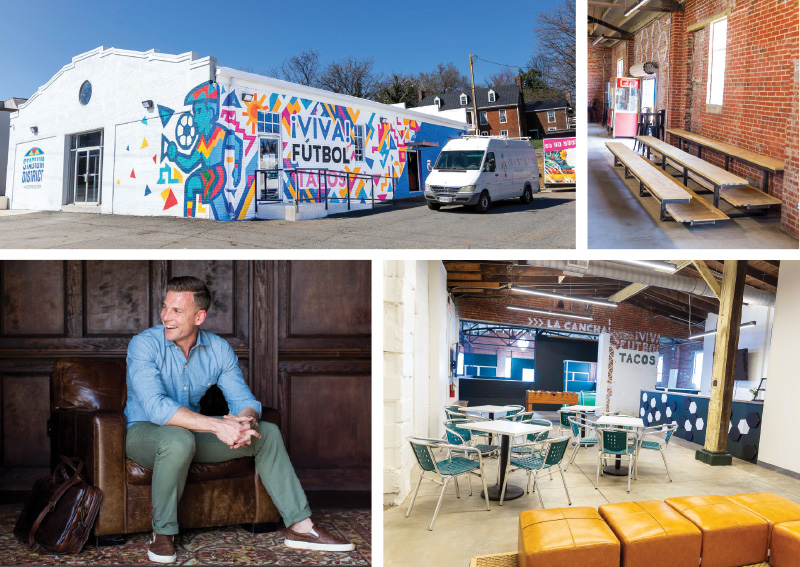
Penny Lane’s work at the other five Fort Avenue buildings has kickstarted with an exciting dual development that marries a fan-favorite sport (soccer) with a fan-favorite cuisine (Mexican): Stadium District Indoor Soccer and a second Taco Jesús location, both of which launched in March.

The project has been one of the most involved that Penny Lane has taken on yet—the Taco Jesús building did not have a roof—but Calfee said that it has also been one of the most rewarding projects yet.

“These buildings, every day, once you rebuild them, move into a state of decay if you’re not constantly maintaining them,” he remarked.

“As people age and end their careers, and as their financial resources change, they just don’t have the ability to maintain these buildings in the same way. That creates opportunities for guys like me to come along and say, ‘Hey, I can look at this with new eyes, and we can put something different in here.’ That place has been auto parts for the last 70 years or more. What we saw was something completely different, and I think that’s part of the ‘American Dream’ story. Not only are these old buildings getting new life, but there’s also this idea that there are people who might have been marginalized before who now have the opportunity to chase down that ‘American Dream’ by being part of these kinds of projects.”

Depending on how the venture goes, Calfee noted that an expansion into the building next door is possible and could allow for the addition of more fields and bigger fields. Redevelopment is also currently ongoing at the former site of The Carpet Shop, and Penny Lane is adding a new building and an infill lot in the middle of the two buildings for a mixed-use commercial, residential, and office space. The firm also recently completed work on the Humbles Building on Fifth Street.

With so many irons in the fire—Calfee is also the director of marketing at Hurt & Proffitt and a father of three children, among other roles—one may wonder how he does it all. While that question seems unanswerable, Calfee credits Kerns-Calfee, his friends and colleagues from both of his occupations, and others for their own tireless work and for their unwavering support of his endeavors.

“For me to have been carrying so much for so long, then for Johanna to pass, then for me to be a single dad, and then to find love and a partner in Erica—that’s an important part of my journey,” he said. “Having friends locally is a big part of my journey, too. When you think about the subcontractors and partners that we have in redevelopment, we’ve got some really great friends who do great work. We couldn’t do what we do without them. And then you think about finances; we couldn’t do what we do without folks like Luke Towles at Pinnacle [Financial Partners], Sherri Sackett at Select [Bank], H.B. Hunter at First Bank [and Trust], and Brent Jenkins at Freedom First [Credit Union].”

No matter what the future holds for Calfee in his many ventures, one thing is for certain: his love for and commitment to the Lynchburg community are for life.

“Being part of our city and improving our city are the most rewarding things about what I do,” he stated. “I love Lynchburg. Yes, my primary residence is across the county line, but that doesn’t change the fact that my entire portfolio of properties is in Lynchburg because I love it! We want to be here. We’re not outsiders—we don’t come in from somewhere else, make our money, and move out. In fact, we’re the opposite: We’ve invested all of our own money into these properties in order to make Lynchburg a better place to be. We’re just big believers in Lynchburg.”  

This article was originally published in the April/May 2026 issue of Lynchburg Business magazine.


Where Home Begins

Inside Dimora, A Thoughtfully Curated Home Goods Shop That Feels As If It Has Always Belonged In Downtown Lynchburg

By: Olivia Carter | Photos By: Ashlee Glen

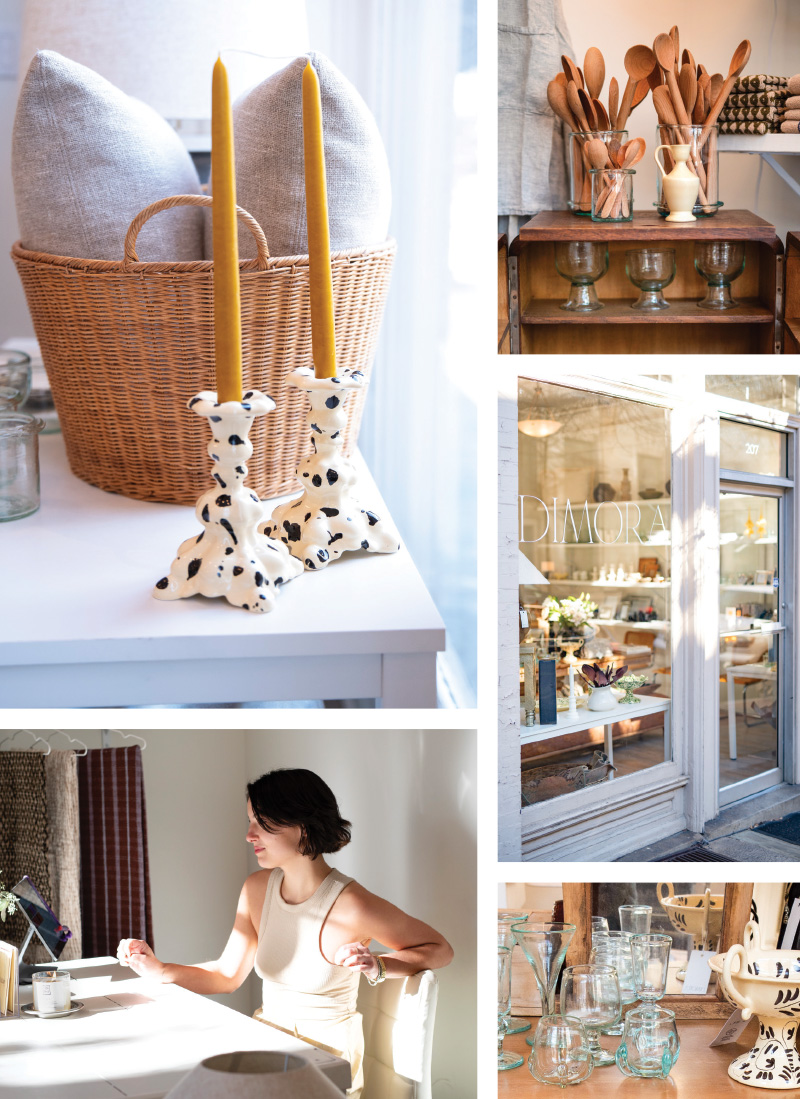
When Jess Felicione opened Dimora in downtown Lynchburg in November 2025, the shop felt less like a brand-new retail space and more like a place that had always belonged there. Located inside the historic Krise Building, Dimora is intimate, thoughtfully styled, and filled with objects that invite customers to slow down including wooden spoons, hand-blown glassware, softly patterned linens, and small details that feel chosen rather than stocked.

“It’s been great,” Felicione said. “The response has been better than I could’ve imagined.”

Before opening Dimora, Felicione spent the last five years living in Philadelphia and working as a nanny; a job she loved, but one she knew wasn’t her forever path. Though she didn’t have formal training in interiors, she had always been drawn to design, a passion nurtured by her older sister, an interior designer, who moved to Lynchburg in 2019.

“One day, it was as random as could be, it just occurred to me that if I wanted to, I could probably open up a home décor store,” Felicione said. “I texted
my sister out of the blue and said, ‘What if I moved to Lynchburg and opened a home décor store?’ And she said, ‘Yep, that’s what you’re doing.’”

Dimora

That encouragement, paired with Felicione’s long-standing affection for Lynchburg, set the idea into motion. She had been visiting the city since she was a teenager and felt an immediate pull toward downtown, one strengthened by her sister’s own connection to the area.

The space Felicione ultimately chose once housed her sister’s interior design studio, making the decision feel almost fated.

“It felt like all the pieces were aligning,” she said. “I loved being a nanny, but it didn’t feel like a forever thing. This idea just kept coming back to me.”

That sense of inevitability traces back even further, to Felicione’s childhood love of romantic comedies.

“I know it sounds corny,” she laughed, “but when I was little, all my favorite rom-coms had main characters who owned little shops like in You’ve Got Mail and Practical Magic. I always pictured myself one day having a store, even though I had no idea what kind.”

The name Dimora, Italian for “small dwelling” or “home”, perfectly reflects that vision. The word was discovered during a week-long naming exchange between Felicione and her sister, and it immediately felt right.

“We wanted something that rolled off the tongue,” she said. “It didn’t feel overused or saturated, and it just felt like home.”

That feeling of home is central to Dimora’s identity. Rather than filling the shop with mass-produced décor, Felicione focuses on pieces that are handmade, thoughtfully sourced, and rich with intention. She describes the shop’s offerings as “storied objects”— items that feel like they have a soul.

“There’s so much mass production now, and it doesn’t always feel rewarding to buy new things,” she said.

“I wanted to fill a gap especially downtown by offering pieces made by creators and artisans who care deeply about materials and design.”

Much of Dimora’s inventory comes from individual artists and small makers, some discovered through careful research, others through word-of-mouth. Mouth-blown recycled glassware. Textiles designed using archived patterns. Kitchen linens, bathrobes, makeup bags, candles, and lamps that feel elevated but approachable.

Dimora
“For me, it’s a gut thing,” Felicione said of her curation process. “If I like it, and it feels right, it belongs here.”

As the shop has settled into its rhythm, Felicione has begun learning from her customers as well. Smaller, everyday items like wooden spoons, taper candles, simple kitchen towels, have quickly become favorites.

“It’s really sweet to me,” she said. “People love grabbing that one small thing to bring home. It feels wholesome.”

Dimora’s customer base, she said, has been one of the most unexpected joys of opening the shop. New to retail after years of working with children, Felicione wasn’t sure what to expect but the experience has exceeded her hopes.

“I already have a handful of regulars,” she said. “People come in curious, they ask questions, they want to know where things come from. Even if they don’t buy anything, that curiosity feels like such a compliment.”

As spring approaches, Felicione is looking forward to refreshing the shop’s palette and mood. Lighter colors, brighter patterns, and seasonal scents are on the way.

“I just ordered a candle that smells like tomato and basil,” she said. “It’s the kind of thing that immediately makes you feel the change of season.”

That sensitivity to atmosphere reflects Felicione’s belief in the emotional power of home.

“Your environment totally dictates your mood,” she said. “Every object in my own home is intentional, whether it’s passed down, thrifted, or handmade. Material really brings warmth into a space.”

Opening Dimora downtown wasn’t just a business decision, it was a commitment to the Lynchburg community.

“That’s the main reason I wanted to do this here,” she said. “Downtown Lynchburg values locally owned shops in a way I’ve never seen anywhere else.

I’ve only lived here since March, and I’ve never walked down the street without knowing someone.”

In the future, Felicione hopes to open the shop’s back room, currently unfinished, to create more space for customers and future inventory. It’s a small step forward, but one that fits Dimora’s measured, intentional growth.

“I wanted to take my time,” she said. “Let it evolve naturally.”


Fabric at the Forefront

The Linnen Shoppe Celebrates Small Batch Designs

By: Jeremy Angione | Photos By: Ashlee Glen

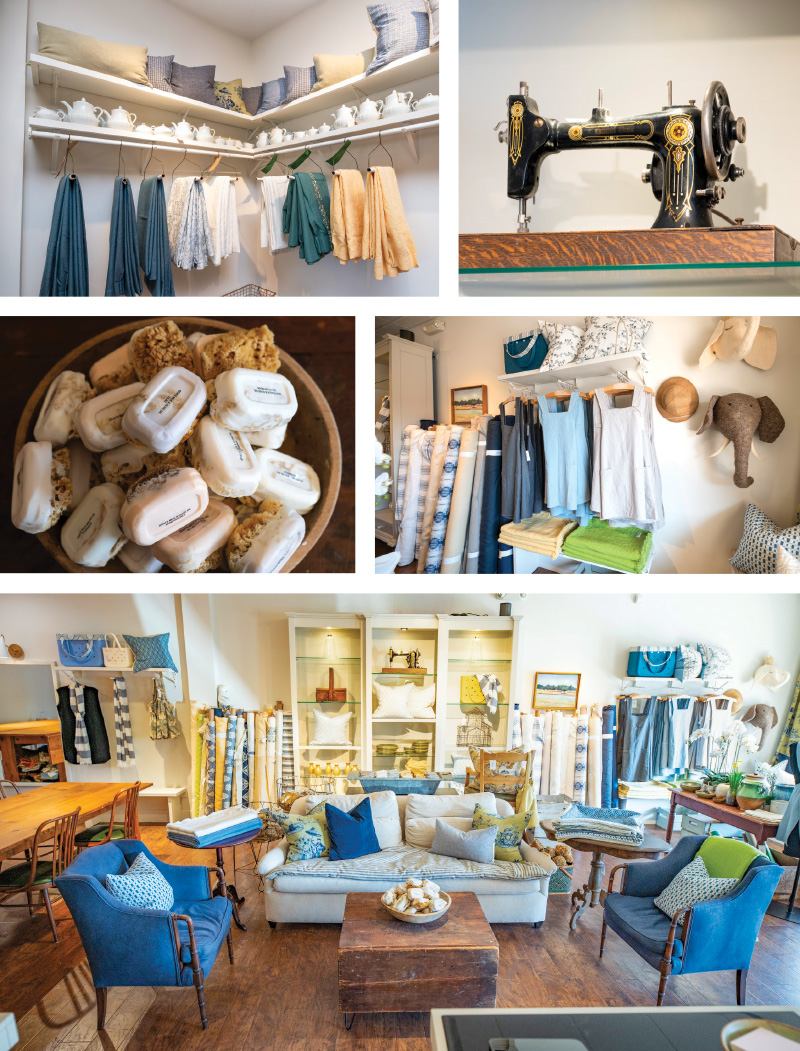
Rebekah Moody opened the Linnen Shoppe in October 2025, giving Lynchburg and Boonesboro shoppers a curated, boutique fabric experience. The Linnen Shoppe sells clothing and a variety of everyday items such as pillow covers, dish towels, and blankets, all hand made by Moody.

“We have seen a good reception from the community,” Moody said.

The Linnen Shoppe was not Moody’s first fabric business venture. She previously owned a business called Southern Provisions Company on Langhorne Road, that operated as a full design house with a whole team helping her.

Southern Provision Company was sold during COVID and Moody moved to Southport, North Carolina to open the first Linnen Shoppe.

“It did really well there, and we loved it, but my family was still here in Lynchburg, and I was commuting back and forth between Southport and Lynchburg,” Moody recalled.

She brought the business back to Lynchburg with “much simpler offerings”. Moody’s business model and team have also been simplified since the Southern Provision days.

“Linnen Shoppe is just my husband and me. I make a small category of home goods, and I make a lot of it,” Moody said.

Moody affectionately refers to Linnen Shoppe’s offerings as “small batch”. While she may not carry the inventory of a larger retailer, her items have distinct purposes and are thoughtfully crafted and added based on the season and customer feedback.

Despite the Linnen Shoppe’s various iterations, Moody says simply that “fabric has always been the goal.”

Although the Linnen Shoppe does not offer custom pieces, because of her involvement in every piece sold, coupled with her fabric sourcing methods, her inventory still has a custom, or one-of-a-kind quality.

A cornerstone of the Linnen Shoppe’s structure is its commitment to sustainability.

The fabrics Moody uses are acquired from large fabric liquidators. She sources raw fabric that would otherwise be considered “industry waste” for a variety of reasons.

“The industry throws away thousands and thousands of yards of fabric a year. There’s nothing wrong with this fabric,” Moody insisted.

Because of the variety of fabrics Moody can acquire, she is able to consistently create “one-of-a-kind” products.

According to Moody, her fabric sourcing methods allow her to pass on her savings to the customer, who might otherwise pay much more for the same fabric, combined with her artisanal approach to crafting these items.

“We’re really approachable with price,” Moody said.


Another unique aspect of the Linnen Shoppe is its seasonal operation. While the store is open Monday through Friday with reasonable hours, when all inventory is exhausted, the Linnen Shoppe closes for weeks at a time for Moody to create a new collection.

“That allows me the opportunity as a creative to be able to create uninterrupted,” Moody explained.

Moody conceptualizes, designs, and creates new fabric collections based on the seasons or time of the year. This approach gives the Linnen Shoppe an endless appeal as she sources and utilizes fabrics that allow for unlimited variety for its products.

“If you like it, buy it, because it won’t be here again. Certainly, there is a process of educating people on what we do, because it’s very unique to retail,” Moody said.

The different pigments and designs of unused fabrics from large manufacturers allows Moody to visualize her future collections based on what colors she feels embody that season. The variety of colors in the Linnen Shoppe at any given time create what Moody playfully calls a “candy shop of fabric” in her store.
The Linnen Shoppe is currently offering its Spring collection.

According to Moody, the store will close July 1 through Labor Day to design and produce the Linnen Shoppe’s Fall collection.

“One of the things that we’ve found in retail is that pop-ups can be really successful,” Moody said.

She explained that this seasonal approach creates a sense of urgency, excitement, and motivation for her customers to see what’s new and get it before it’s gone.
According to Moody, the Linnen Shoppe’s best seller is the Everyday Dish Towel.

Moody’s ability to create entire, unique collections is attributed to her years of experience in sewing and fabrics.

“I am completely self-taught.

I started sewing when I was six years old. Sewing is a lost art, so to find people who can sew for production is really hard to do,” Moody explained.

Moody recalled that she’d taken a hiatus from sewing, but returned to it when she needed curtains for her new home and the options she saw in stores weren’t to her liking.

While having a few friends over, they noticed the curtains she’d made in her foyer. They asked if they could buy the curtains which spurred her decision to use her sewing skills to go into business.

“That’s where it all started. In the foyer of my house,” Moody remembered.

Moody would like to use the Linnen Shoppe as a space to embrace community engagement with crafting. She has and wants to continue to hold classes that would teach artistic skills like floral arrangements, knitting, painting, and more.

“I think there’s a real need in the community for connection,” Moody insisted.


How Lynchburg’s Music Scene Is Evolving in 2026

As Lynchburg’s Long-Awaited Riverfront Park Amphitheater Nears Completion, Excitement Builds for a Venue Poised to Reshape the City’s Cultural and Economic Landscape.

By: Olivia Carter / Photos Courtesy: City of Lynchburg

After years of anticipation, construction, and community chatter, Lynchburg’s Riverfront Park Amphitheater is entering its final stretch toward completion.

The city of Lynchburg chose Mason Lane Entertainment to operate, run, and program the venue and its President and Owner, Ty McBride, is already envisioning what the amphitheater will mean not just for downtown, but for all of Central Virginia.

According to McBride, the amphitheater’s physical progress is moving quickly.

“The structure—the amphitheater itself—[it neared completion] in December,” he said, adding that final details will follow soon after. “We’ll probably have a punch list of things to get done in January, some testing that will go on.”

The timeline places the venue on track for its first public events in spring 2026, something McBride says he’s eager to deliver.

“Our goal is to do a couple of free shows, or at least one free show in April,” he said. “It’s a soft opening so we can test everything out.”

Full-scale, ticketed performances are expected to kick off in May.

Though the venue will undoubtedly serve local residents, McBride sees its reach extending far beyond Lynchburg city limits.

“This thing is going to be incredible.

It’s going to change how people view Lynchburg from a city itself,” he said. “People are going to come from Roanoke and Charlottesville to see shows here because they won’t be able to see them there.”

That broad appeal will come from a programming slate designed to cross genres, decades, and energy levels.

“We’ll bring all different types of programs—country, Americana, rock and roll, some old-school 80s type music, yacht rock—different genres for different people,” he said.

From national touring acts to multi-day festival concepts, he expects the venue to become a lively entry on regional concert calendars.

Lynchburg already has a roster of annual events, and McBride emphasized that Mason Lane doesn’t intend to disrupt that harmony.

“There’s already a lot of local, established events here in Lynchburg and they’re going to continue to be on the calendar. We’re not necessarily trying to rearrange things here,” he said.

Riverfront Park Amphitheate

Instead, he plans to partner with them and ensure the amphitheater complements, rather than replaces, existing community traditions.

He also hopes to plan new festivals with a local flavor.

“We might tie [local acts] into a blues festival or a jazz festival, maybe even connect it with food,” McBride said, adding that ideas range from barbecue festivals to oyster-themed events. “When you connect food and music together, it brings people together.”

Even emerging Lynchburg musicians aren’t off the table.

“We can put [local bands] on stage and really help them elevate their platform a little bit,” he said.

Some residents have wondered how the amphitheater will fit alongside existing venues like the Academy Center of the Arts. McBride says the relationship is friendly and collaborative.

“I’ve already met with them and we discussed exactly that—how do we not interfere with what they have going on versus them not interfering with us? We’ll work together. We’ll share schedules, and really just enhance each other more than compete,” he said.

While the venue is new, its design pays homage to Lynchburg’s past. McBride pointed out several details that make the amphitheater stand out architecturally.
“In the brick wall that’s on the back of the stage, the inlay is all historical brick from Lynchburg buildings,” he said.

“And then the front of the stage at the base, it’s all historic cobblestone from Lynchburg streets.”

He also highlighted the acoustical engineering.

“The arch of the stage itself is designed to push sound out. It’s incredibly sturdy. A hurricane won’t take that place out,” he said.

Parking and accessibility have long been hot topics downtown and McBride didn’t shy away from acknowledging the logistical realities.

“Parking is going to be a challenge,” he said, “But we have some solutions in place. We’re going to help with that through some shuttling. We’re working with the city on different plans.”

Still, he believes Lynchburg’s residents will adapt quickly once they develop their own concert-night routines—arriving early, grabbing dinner, exploring downtown, and lingering afterward.

“It will become part of the Lynchburg life, so to speak,” he said. And in doing so, it will amplify the visibility of existing businesses.
“It will open everybody’s eyes to these other great places.”

McBride said the amphitheater’s impact extends beyond live entertainment.

“This will actually become an economic generator for other businesses and for other companies to come to Lynchburg,” he said.

Companies scouting new cities look at the overall quality of life for their employees and a venue like this, he said, “puts a big stamp on Lynchburg.”

Consumer spending on experiences like events and festivals is the most efficient way to generate local tax revenue, both in direct spending on ticket sales but also indirectly to generate meals, sales and lodging revenue, Anna Bentson, Director of Communications & Public Engagement for the City of Lynchburg said.

“For example, $500 spent at a Lynchburg big box store generates $5 in sales tax for the locality,” she said. “The same $500 spent on experiences — at hotels, restaurants, and on event tickets — would generate about $39 worth of tax revenue. That kind of return—generated by those coming into the City to spend money—helps to relieve pressure on our existing local tax base and residents.”

According to the 2022 Economic Impact of Visitors in Virginia by Tourism Economics, spending by visitors to Lynchburg saved each Lynchburg household about $880 in annual state and local tax collections.

According to the Americans for the Arts’ Arts & Economic Prosperity report, when people attend a cultural event, they also spend on other activities—dining at a restaurant, paying for parking or public transportation, enjoying dessert after the show, and returning home to pay for child or pet care, Bentson said.

Based on the 224,677 audience surveys conducted for this study, the typical attendee spends $38.46 per person per event, in addition to the cost of event admission. Those who travel from out of town to attend arts or cultural entertainment events spend more, an average of more than $60 per person.

Bottom line, more visitors to the destination increases spending in restaurants, retail, transportation, lodging, and more associated with event attendance, across the city.

Despite running a Charlotte-based company, McBride has been coming to Lynchburg for about 30 years.

His weekly visits often include informal polling at restaurants, breweries, and shops.

“I’ll ask people, ‘What do you want to hear at this new venue?’ and get their input. I keep a list going,” he said. That level of community engagement is what will make the venue thrive, McBride said.

“The energy around this place is so palpable. It’s encouraging for us because we know we’re going to bring really good shows here,” he said.

“I have a feeling they’re going to be super successful right away.”

RELATED CONTENT:

The Academy Center of the Arts’ Music Hall Offers Big Sound in an Intimate Setting

The Academy Center of the Arts’ 120 Year Legacy


The Everyday Law: Legal Questions You Should Be Asking

Top 5 Times in Life You Should Call a Lawyer (and Why It’s Not Just for Crises)

When most people picture hiring a lawyer, they imagine a courtroom, a crisis, or a contract gone wrong. But in reality, some of the most important legal conversations happen quietly, well before any conflict begins. Everyday legal matters—like setting up a business, buying a home, or protecting digital assets—rarely make headlines, but they can have lasting financial and personal consequences if handled without guidance.

Here are five moments in life when picking up the phone to call a lawyer could save you money, time, and future headaches.

1. When You’re Starting a Business

Launching a business is exciting, but it’s also full of legal decisions that can have lasting consequences. Choosing the wrong business structure, for example, could expose your personal assets to liability or lead to higher taxes. A business attorney can help determine whether an LLC, S Corporation, or partnership best fits your goals, and draft the proper formation documents to protect you from future disputes.

Beyond formation, a lawyer can review vendor contracts, employee agreements, and intellectual property protections—key safeguards that are often overlooked when entrepreneurs rely on online templates. Even small oversights, like unclear profit-sharing terms or missing non-compete clauses, can snowball into significant issues later.

The foundation you build now will determine how well your business weathers challenges later. A well-structured business minimizes legal exposure and allows you to focus on growth instead of damage control.

2. When You’re Planning for the Future

Estate planning isn’t just for the wealthy—it’s for anyone who wants a say in what happens to their assets, dependents, or healthcare decisions. Without a legally binding plan, the state determines how your property is distributed, which can lead to confusion, delays, and disputes among loved ones.

Working with an estate attorney ensures you have a will, power of attorney, and advanced healthcare directive that reflect your wishes. Depending on your situation, you may also benefit from setting up a trust to manage property, minimize taxes, or support a family member with special needs.

Many people mistakenly believe they can “get by” with a handwritten will or online form. However, these documents are often incomplete or unenforceable under Virginia law. Estate planning attorneys ensure your plans comply with state requirements and remain valid even as your circumstances change.

Having proper estate documents in place protects your family, your legacy, and your peace of mind.

3. When You’re Buying or Selling Property

Real estate transactions are among the most common—and most expensive—legal interactions the average person will ever have. A lawyer’s review of your purchase agreement, title, and closing documents can reveal issues that might otherwise be missed, such as unresolved liens, unclear boundaries, or improperly transferred ownership.

For buyers, a real estate attorney ensures contract contingencies, inspection results, and financing terms are clearly stated and enforceable. For sellers, legal counsel helps with disclosure obligations and limits liability after closing.

In commercial property transactions, an attorney’s role becomes even more critical, as zoning laws, lease terms, and liability exposure can significantly affect long-term profitability.

Real estate contracts are binding. Having a lawyer review them before you sign ensures that the investment you make today won’t turn into a dispute tomorrow.

4. When Your Life Moves Online

Digital privacy has become one of the most overlooked areas of personal and business law. From social media accounts and digital photos to cryptocurrency and cloud-stored documents, much of what we value now exists entirely online. Yet few people include these assets in their estate or business planning.

An attorney versed in digital privacy law can help you establish who has access to your digital accounts if you become incapacitated or pass away. They can also help businesses develop privacy policies and cybersecurity procedures that comply with data protection laws like the Virginia Consumer Data Protection Act.

For small businesses, the stakes are especially high: data breaches, even accidental ones, can result in penalties and loss of customer trust. Creating a formal privacy policy and clear data-handling plan can reduce this risk significantly.

Your digital presence is part of your legacy. Legal guidance ensures it’s protected, accessible, and compliant with evolving privacy regulations.

5. When You’re Facing a Major Life Transition

Marriage, divorce, adoption, retirement—life’s biggest milestones often come with legal implications that aren’t immediately obvious. Marriage may affect property ownership and beneficiary designations. Divorce can change tax obligations and estate plans. Retirement often triggers complex financial and healthcare decisions that require coordination between legal and financial advisors.

Even smaller transitions—such as adding a name to a deed, starting a new job, or taking in an aging parent—can benefit from a brief consultation to confirm what’s required under state law. A lawyer can review documents, clarify obligations, and prevent costly misunderstandings before they occur.

Life changes quickly, and legal paperwork doesn’t always keep up. Proactive planning ensures that your new chapter begins on solid ground.

A Different Way to Think About Legal Help

Legal advice isn’t just a reactive measure—it’s a preventive one. A single conversation with a lawyer at the right time can prevent years of complications, confusion, or regret.

Think of a lawyer as part of your personal advisory team—alongside your financial planner, accountant, and healthcare providers. Their expertise can help you make informed decisions, avoid common pitfalls, and protect what matters most.

Whether you’re signing a contract, growing a business, or simply planning for the future, taking a proactive approach to legal matters isn’t about anticipating conflict. It’s about ensuring clarity and confidence in every stage of life.


Sole Purpose

LaneyKickz adds a bold new step to downtown’s revival

By: Jeremy Angione | Photos By: Ashlee Glen

During the ongoing revitalization of historic downtown Lynchburg, several new businesses have been born with the help of Downtown Lynchburg Association’s Launch LYH grant program. One of the most recent grant winners was 23-year-old Delaney Armenti, who opened LaneyKickz October 4.

LaneyKickz is, in essence, the expansion of a business Armenti was already running through social media and local popups, which buys, resells, and showcases new and used sneakers.

Armenti is a Lynchburg native who always considered herself a “sneakerhead”. Despite her passion, Armenti seemingly always prioritized her own growth.

“One of the hardest things I had to do was sell pretty much my entire sneaker collection to afford a MacBook for college,” Armenti said.

She attended Sweet Briar College to study performing arts and later transferred to Randolph College.

“I knew this small sacrifice would be an investment in my future,” she shared.

According to Armenti, opening LaneyKickz was a necessity to meet the growing demands of her customers in and beyond the Lynchburg area. She recalls being unable to walk across the Randolph College campus without engaging in some sort of business with a potential customer.

“I realized from selling my collection that there was a demand and people wanted affordable sneakers in Lynchburg. So from there, I literally would buy as many shoes as possible. Then I realized that just selling and flipping shoes wasn’t enough. I needed connections, I needed to reach people outside of the area, because I started to get online orders,” Armenti explained.

At 23 years old, Armenti believes her youth is an asset to her business’ growth and potential. With the opening of LaneyKickz, she’s made accessibility and affordability for her products a priority.

Despite now having a permanent location, Armenti keeps herself immersed in the fluid culture that often accompanies fashion and trends. She goes to conventions, boasts a growing social media presence, and ultimately, she knows and caters to her consumer base.

“Yeah, I’m 23 years old, but I’m smart enough to know that when your community will show up for you, you better show up for them,” Armenti said.
LaneyKickz nestled itself into 1107 Main Street. For those familiar with the downtown area, Armenti’s space was previously home to bike and skate shop Scene3.

“It’s clear and evident that people miss his business and that they loved it,” Armenti said.

LaneyKickz offers footwear popular in skate culture and keeps some of the skateboards up from Scene3 as a way to pay tribute to the history of the space Armenti now inhabits.

The rest of the shop, unsurprisingly, is adorned from floor to ceiling and wall to wall, with sneakers. LaneyKickz sells a variety of new and used sneakers, curated vintage clothing, and the latest in streetwear brands.

“Every single day there are new items hitting the floor,” Armenti said.

Perhaps the most unique aspect of LaneyKickz is the stage at the back of the store. While it serves as a focal point for the space, its eventual purpose is to be a hub for producing in-house online content in the form of podcasts, live music, and live content and inventory showcases, broadcasted to Armenti’s growing online audience.

No matter what she is doing for her business, Armenti likes to express her creativity, which she suggests is a cornerstone of sneakerhead culture. She credits her performing arts experience for her lively online and in person presence.

“That art is something that never really leaves your soul,” Armenti said.

She has a thriving online business due to her consistent social media presence, and due, in part, to her word-of-mouth marketing and personable attitude.

“I think being a Lynchburg native plays a big role. When you’re from this area, understand the culture, and where people come from, I can better serve you.

The Lynchburg community and the people are so deserving of nice things, and they will show up for you,” Armenti said.

She says that she wanted the space to have an upscale, city feeling.

“I wanted to provide an atmosphere that doesn’t feel like we’re in Lynchburg,” Armenti explained.

To expand her visibility, Armenti often visits larger cities like Miami, Chicago, and New York City to explore conventions and the differences in business practices and sneakerhead cultures.

Armenti says that her community often asks why she didn’t choose to open a store in one of the bigger cities where sneakerhead culture is more pervasive.

“Cause it starts where home is. It starts where people make sacrifices, and they’re invested in what you have to offer. How can you not work hard? How does that not motivate you?” Armenti exclaimed.

Compared to her passion for sneakerhead culture, Armenti’s passion for people and her community is just as strong. She recalled a time when her Instagram account was taken down due to the influx of traffic because of the recent announcement of her Launch LYH win.

Armenti’s supporters sprang into action and began to contact Instagram to have her account reinstated. She was brought to tears when thinking about
her success and being able to give back to her community.

“Some of my customers come from nothing, and some of my customers have it all, and it just feels really healing to see people getting things they’ve always wanted,” Armenti explained.

There is no LaneyKickz website, although she posts frequently to Instagram, where she showcases her latest inventory. You can find her at @LaneyKickz.