Rich in Arts

The Richmond Scene Needs to Be Seen

By: Butch Maier

Virginia Repertory Theatre actor McLean Fletcher has worked in the arts around the world but always comes back to Richmond. “I think it’s beautiful,” said Fletcher, who also is a filmmaker and a painter. “The walkability, the drivability, the climate, the tree-lined streets.

“I feel like Richmond is an oasis for me. I have an artistic community that challenges me in a positive way. “It’s big enough to find work but small enough that you can be heard.” No matter your voice.

“It’s diverse and bigger than I think people think—broader,” Virginia Rep artistic director Rick Hammerly said. “There is everything. There is so much music.

A lot of live music, which is amazing. Actual art—painting, photography—it’s everywhere. And I think the theater scene here is really dynamic.

“D.C. has grown into a behemoth, in terms of theater. But here, there are a smaller number, but what I like is the diversity that there is. While we [Virginia Rep] are the largest theater in town, there is another theater that specializes in new plays, there’s another theater which is the gay theater, there is another that does Shakespeare.

“You have all these niches so that if you’re a Richmonder, all of your theater needs are met.”

VIRGINIA REPERTORY THEATRE

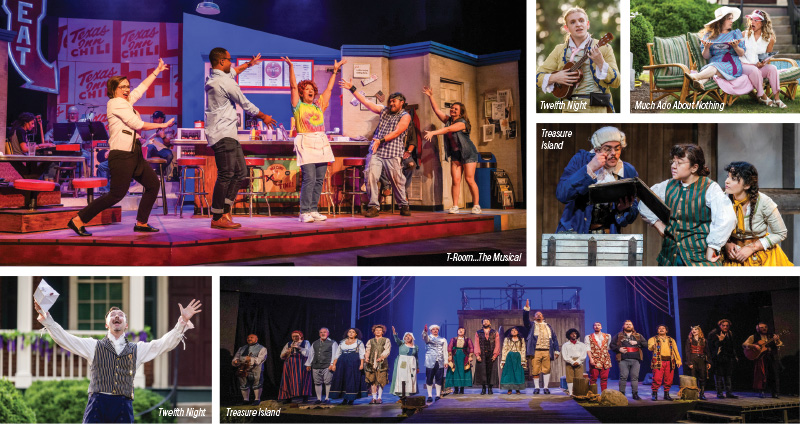
Virginia Rep, a regional professional theater headquartered in downtown Richmond, staged Deathtrap (see page 96) in December and January at the Hanover Tavern.

Deathtrap actor Nathan Whitmer and his wife, actor Emelie Faith Thompson, moved to Richmond from Northern Virginia to upsize their home as well as to “hop on the elevator as it’s on its way up” while the Richmond arts scene reaches greater heights.

“We chose this community because we knew that we could come in and keep doing the art we wanted to do and hopefully grow with this community,” Whitmer said. “There’s a bunch of driven artists here—not just in the theater but in the visual arts. We have done a lot of film projects down here over the last eight years, whether it’s commercials or short narratives, so we’ve been down to Richmond a lot, and we’ve really enjoyed getting to know the arts scene down here. We want to help to grow that.”

Upcoming Virginia Rep shows include:
• Primary Trust, March 5-29, at Theatre Gym in the November Theatre complex
• The Cottage, March 27-April 26, at Hanover Tavern
• The Musical Adventures of Flat Stanley, April 11-May 3, part of the Jessie Bogese Family Series at the November Theatre
Website: va-rep.org

RICHMOND SHAKESPEARE

Fletcher will portray Lady Macbeth in Richmond Shakepeare’s March 27-April 18 run of Macbeth at Dominion Energy Center’s Gottwald Playhouse.
Website: richmondshakespeare.org

THE BYRD THEATRE (photo above)

I had never been to the Byrd.

I have longed to have one of my movies shown in that sensational cinema location, but I have yet to make something grand enough that makes it Byrd-worthy.

In the meantime, a few hundred other audience members and I gathered to see someone else’s Byrd-worthy pic: Steven Spielberg’s Jurassic Park…a movie I had neglected to see in a theater the first time around.

I know, I know. Why? I was a college graduate when it premiered in 1993. I was “too cool” to go see a dinosaur movie. I admit my mistake. Sure, I had watched it dozens of times in the past three decades, and it was impressive every time I saw it on TV, but at the Byrd in January, it was magnificent.
The creatures were enormous.

The action was incredible. And the laughs! Every joke played. What a wonderful time was had by all. Well, except for those who were eaten.
Website: byrdtheatre.org

VIRGINIA MUSEUM OF FINE ARTS

The Virginia Museum of Fine Arts bills itself as a world-class art museum with hometown hospitality.

Case in point: The VMFA displayed a collection of more than 50,000 works of art from almost every major world culture, welcomed indie filmmakers for the James River Short Films Showcase, and hosted an elegant private wedding reception—all in one weekend.

The top prizes in the short film competition went to Richmond’s Jeremy Drummond for Monument, the Texas duo Adam Dietrich and Elliott Gilbert for J.J., Richmond’s Nathan Conrad Piskator for Computer Blue, and D.C.’s Justin Lamb for Work From Home.
Websites: vmfa.museum, jamesriverfilm.org


Givens Books Celebrates 50 Years of Adventure, Serendipity, and Curiosity

By: Anna Eileen White | Photos By: Ashlee Glen

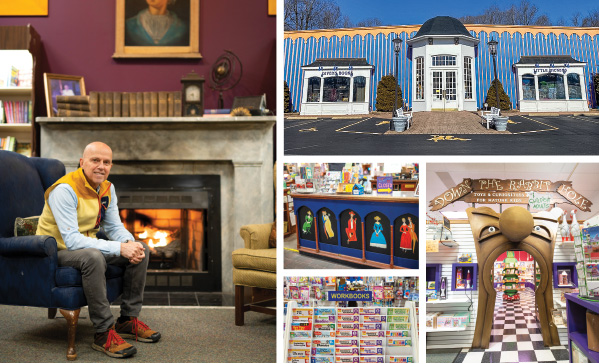
Voices ebb and flow with enthusiasm as newcomers wonder whether they’ve tumbled down the rabbit hole. Roasty aromas entice visitors past Jack and the bean sprout, between tomes, and toward the cafe.

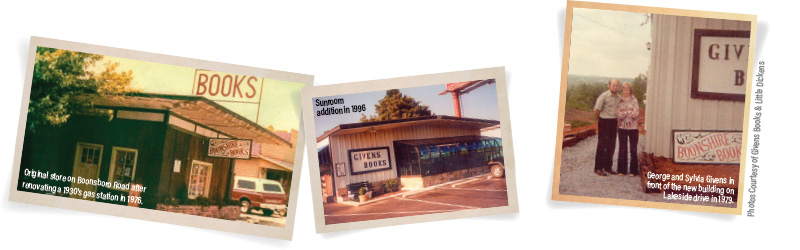
This multi-generational wonderland began as two separate stores; Givens Books, founded by George and Sylvia Dickens in 1976, and Little Dickens, founded by their son Danny and his former wife in 1999.

The spots have been havens of play and learning for decades.

“Play and learning are just integral to being human,” said Danny Givens, owner of the now-merged stores. “I think most of us humans are born innately curious, but that can flicker out if you don’t have the right teachers.”

Danny speaks from experience.

His “insatiably curious” teacher-father and “game-for-anything” mother spent years as voluntary nomads with Danny and his siblings. They chased regional novelties; deserts and archeological digs. They chased simplicity; campfires and evening poetry readings. Danny even recalls chasing road runners across the desert on his minibike, unhindered by thoughts of safety. Above all, they chased adventure. By the time Danny was 13, he’d visited 45 states.

givens book old photos

Unknown to him and his siblings, their explorations served more than one purpose. “I didn’t know that at the same time, my father was scoping out places to open up a bookstore, which was his childhood dream.”

When their wanderings brought them through Lynchburg in 1969 they found it had no official bookstore. “My father loved the feel of Lynchburg,” recalled Danny. Four years later, in 1973, the family loaded everything they owned into a moving van, including George’s personal 8,000-book library.

“If the washer and dryer didn’t fit, they stayed, but the books went,” Danny said amusedly. “Books always took priority.”

Once settled, a run-down gas station on Boonsboro Road caught their attention.

It was their next adventure. Danny, 16 at the time, helped his father renovate. Dubbed Booneshire Books, they opened the used bookstore in August 1976.
Danny’s little sister Sarah was 3 at the time and played with Barbie dolls behind the counter as books flew off the shelves over her head. “It took off,” said Danny. “There was a strong need for a bookstore.”

Boonshire Books expanded multiple times in its original location, eventually outgrowing the space and moving to a custom-built structure, where they rebranded as Givens Books. “It may not have been possible in another town,” Danny reflected. Lynchburg was small enough that residents cared about supporting local businesses, and large enough to supply sufficient clientele. It was also welcoming.

“It does say a lot about Lynchburg’s ability to accept outsiders,” Danny shared, recounting the time that a customer joked through a thick southern drawl, “Yeah, you’re Yankees all right, but we’ve accepted you.”

In 1989, Danny built Little Dickens next to Givens Books. Inspired by a toy store in Chapel Hill, North Carolina and made necessary when Danny’s teacher salary was halved, Little Dickens was more than a business venture. He calls it serendipity. When Jefferson Forest High School introduced German to their language program, Danny, an English and Spanish teacher, lost hours, forcing him to find another means of support. Ever a child at heart, Danny recalled the quaint Chapel Hill toy store and wanted to recreate the allure in his own style.

“In retrospect, isn’t that funny?

That little act of German being introduced acts like that can change the course of your entire life,” Danny marveled. “Little happenstance events turn into really momentous things.”

Danny outfitted Little Dickens as both a teacher supply and toy store. “This was my dream when I built it; I wanted to make it memorable, so that when you came in, you felt attached to the store, to the atmosphere, to the ambience, whatever you want to call it,” he shared. “So it just made touching toys and books much more appealing than ordering them online.”

From the start, Danny knew online shopping could drive shops like his out of business. His solution? Embrace mentalities the big retailers didn’t. “I could bore myself to tears reading books on how to be successful,” he explained.

“I’ll read poetry or psychology, but it won’t be anything on finances.” Leading with emotional intelligence, he shaped the store around curiosity, evaluating new toys based on how well they facilitated play.

In 1999, when George retired, Danny bought the bookstore. With English designer Paul Kitchens at the helm, they built the tent-striped showplace, now known and loved as Givens Books Little Dickens, on Lakeside Drive. “I was so lucky to find him,” said Danny of Kitchens. “He came up with this whimsical design and helped to make it magical inside.”

Inside, gargoyles on the surrounding walls oversee visitors’ ramblings far below. It’s “a place away from the busyness and hecticness of life,”
says Danny. Weathered gold-leaf, stuffed animals, and art supplies beckon.

While Danny envisioned competing with online retailers, he didn’t envision competing with a pandemic. Quarantine and social distancing during COVID-19 changed shopping habits, and many local businesses didn’t survive. “It was frightening at first,” said Danny.

They relied on purchases through the newly updated website. Months dragged on and they saw online sales grow.

“We were touched by that—the town has been really wonderful,” said Danny.

“I think localism has grown even stronger over the last 10 years, and we felt that during COVID.”

Now, doors wide open once again, visitors lean over their tables in shadowed corners, sharing ideas.

“I love that this is a place where there are no limits to conversation,” said Danny. “It’s safe to talk about anything.”

Danny’s family is having conversations too. Will two generations of Givens Books Little Dickens become three? Beyond the traditions of books and toys, Danny’s children don’t want to lose the hide-and-seek grounds of their childhood, a tradition they hope to carry on with their own children. While Danny doesn’t plan on disappearing any time soon, he will pass the torch to one of his daughters, allowing the store’s legacy to live on, while keeping it in the family.

“If Lynchburg wants more magic and more toys and more books, we’ll try to deliver,” he promised.

Often asked how he became “successful,” Danny eschews the word. “There are so many good people who went before me that made this possible,” he said. From his sister Sarah, who still plays an active role, to his parents, Danny won’t take credit for what he builds upon. “They had vision, guts, adventure and energy,” he said of parents George and Sylvia Givens, “and [they] took amazing risks to make the dream a reality.”


From Pierce Street to Point of Honor

A Theater Rooted in Place

By: Charlotte Farley / Photos Courtesy: Enstation Theatre Company

By the time I finally clicked on Endstation Theatre Company’s website, I felt that particular brand of guilt reserved for English majors like myself. After all, I’ve lived in this area for over twenty years. I’ve taught literature, worked with local arts agencies, and waxed poetic about “place.” And yet somehow I had missed that Lynchburg has had its own professional theater company for nearly two decades.

Sitting across from Producing Artistic Director Patrick Earl, though, my guilt turned into curiosity. Endstation isn’t trying to compete with touring blockbusters or turn out jukebox musicals. Instead, it’s doing something more rooted in this region and the people who call it home.

A Lynchburg Original

Endstation was incorporated in 2006, starting life as a small company at Sweet Briar College mounting original works, intimate Shakespeare, and adapted classics. From the beginning, its focus was to “advance the cultural history and landscape of this region,” language Earl calls “very poetic and awesome,” but also quite practical.

Underneath the lofty phrasing is a simple guiding principle he repeats to his company: serve the audience you actually have. For Endstation, that means the neighborhoods, histories, and unresolved stories of the greater Lynchburg area. “We are telling a people’s story,” he says, and he means “people” in the most local sense: the families who’ve walked Pierce Street for generations, the students bused in from area high schools, the patrons who might not see themselves on stage anywhere else.

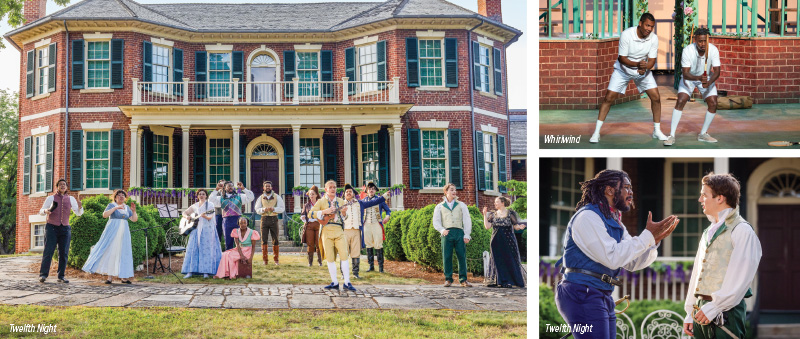
Over the years, the company has produced more than a dozen original plays, many commissioned or developed through its playwright pipeline. Whirlwind, for instance, explored the life of Dr. Robert Walter “Whirlwind” Johnson, the first Black physician permitted to practice at Lynchburg General Hospital and a tennis coach who mentored Arthur Ashe and Althea Gibson on a court in his side yard on Pierce Street.

That attention to place isn’t metaphorical: Endstation has staged performances inside historic homes, at Point of Honor, and even in the basin of a long-closed public pool while tracing the buried history of segregated swimming in Riverside Park. There’s something sacred about telling a story in the very space where it unfolded, as if proximity itself deepens the act of remembering.

Twenty Years of Evolution

Of course, no arts organization moves through twenty years unchanged. After its early seasons at Sweet Briar, Endstation experimented with larger productions and more commercially recognizable shows, the sort many regional companies rely on to stay solvent.

On July 1, 2024, Endstation officially came under the umbrella of Randolph College while retaining its own distinct nonprofit identity. As the college’s professional theater, it enjoys a stable home base, a campus full of students, and local connections.

Fringe, Fields, and Memories

The Central Virginia Fringe Festival—launched just last year—is another extension of that impulse. “We have so many talented folks, so many talented companies,” Earl says. “We need something to celebrate that. So we said, ‘You know what, let’s start a Fringe Festival.’”

The premise is simple but generous: Endstation provides a venue and modest tech support, and invites theater companies, community groups, and individual performers to show what they’ve been making. In its inaugural year, 14 companies (including Endstation) presented nearly 20 performances over the course of the week, spread across spaces at Randolph like Smith Hall Theater and another campus performance hall.

This summer’s festival will again run Saturday to Saturday in mid-June, opening with a concert and “Fringe Feast” and closing with the world premiere of Earl’s new play, Good Birth, alongside the launch of the summer Shakespeare production.

Beginning in fall 2026, Endstation will also take over the Old City Cemetery’s candlelit tour, partnering with staff to create a theatrical experience that weaves history, performance, and memory in one of Lynchburg’s most significant landmarks. If theater at its best is an act of collective remembering, there may be few settings more suited to that than a location where names are literally carved into stone.

Shakespeare on the Hill, Free for All

If you’ve never made it to Shakespeare at the Point, you’re not alone. But the series, now heading into its third summer, may be the clearest expression of Endstation’s commitment to accessibility.

What began as a small-scale experiment at Point of Honor has grown into a cornerstone of the season. Tickets for Endstation productions top out at $35 for special events (galas excluded), with many offerings around $15 (and less for students).Through the “Serving the Audience Initiative,” Endstation has made a portion of its outdoor Shakespeare performances free to the public in recent years, with a long-term goal of making the entire run free.

“We are working to make professional theater accessible to everyone,” Earl says. That includes scholarships for their Embark Youth Theatre Conservatory, where at least 15 of 40–50 spots each year are full or partial tuition scholarships, and Theater Day at Randolph, when high school students come to campus for workshops in technical theater, stage combat, and Shakespeare.

This summer’s production, The Merry Wives of Lynchburg, adapts The Merry Wives of Windsor, keeping the language largely intact while setting it here at home. It’s a playful nod to place that still takes the text seriously, much like the company itself.

What’s Next

“If I could choose, I’d want our legacy to be that we created essentially a staged history of our community, a dramatic, historical canon for the area,” he adds. “After being around 20 years and doing 14 original shows—that’s a lot for any theater company—and that doesn’t even account for the dozens of original plays from our Playwrights Initiative.

For Earl, the heart of Endstation’s work is empathy. “Theater is uniquely suited to helping audiences experience how someone else sees the world. That is, in its essence, what theater really is,” he says.

“I want Endstation to be the end station for theater. Every community deserves somewhere they can go and hear their story, and hear their story done well, and see live performance at the best possible level without having to drive to New York or to their nearest large city—at a high level, at a professional level, and a dependable level.”

As Endstation enters its third decade, it faces the same challenge every arts organization does: persuading people to show up in person. Earl is realistic about the competition. “Every platform, screen, and phone is rival for attention, but it’s something more than that,” he says. “People go into their phones trying to find happiness and humanity. But you know where it is: humanity is going to watch humans.”

That humanity lives here: on a hillside at Point of Honor as the sun goes down, in a darkened hall at Randolph, inside a reclaimed pool basin at Riverside Park.

It’s in the moment when a familiar street name, a long‑ignored plaque, or an old family story suddenly stands up, steps into the light, and, for a moment, seems to be speaking directly to you.


Rediscovering Jefferson’s Landscape

By: Ashleigh Meyer / Photos Courtesy: Poplar Forest

When we think about archaeology, most of us probably have a similar image come to mind: Sand swept deserts, long-buried pottery, delicate bones. At Thomas Jefferson’s Poplar Forest, archaeology is paramount to the preservation and restoration efforts of the property, but it often takes on an unexpected appearance.

Dr. Eric Proebsting has been a key part of the archaeological efforts at Poplar Forest since 2008. Much of his attention has focused on reconstructing Jefferson’s original landscape. Proebsting and a team of six other archaeologists slowly uncover layers of earth looking for evidence that they have reached the Jefferson-era. But they rarely uncover large artifacts. Instead, subtle clues in the soil tell them when they have hit their mark. Changes in soil color and density reveal long hidden planting sites. Plate fragments and other sundries once tossed out a kitchen window to the compost help to date the dig location.

Even the Jefferson layer itself reveals that the president tinkered with his design plan, making changes as the Virginia climate rejected his original vision or he didn’t like the way something looked.

In true Jeffersonian fashion, science and technology play a key role in rediscovering the original landscape. Phytoliths are trace minerals left over in decaying plant material that reveal important information about grass types, specifically if a grass preferred shade or sun. Through the study of these phytoliths, Proebsting’s team has been able to identify where clumps of trees were once planted. Pollen testing can give us clues about environmental changes and planting sites, and in the case of Poplar Forest, trace amounts of mulberry pollen were discovered in the archaeological layer, pointing to the species that had been planted there which was echoed in Jefferson’s own notes.

The property, once around 5,000 acres in size, was meticulously designed by Jefferson to serve as both a productive agricultural plantation, and as a retreat where he could clear his mind, collect his thoughts and enjoy intellectual pursuits. He was influenced heavily by the large, grandiose English gardens that he witnessed during his travels with John Adams, as well as contemporary landscape design. A shift had occurred by the end of the 18th century as designers turned from the rigid, symmetrical layouts that were popular previously and started creating spaces that reflected a more natural landscape. Observers can see Jefferson balancing these two ideals in his own plans for Poplar Forest.

A ten-acre square around the octagonal Retreat House was reserved for ornamental plantings where Jefferson explored his interest in landscape design. While Jefferson was the visionary, it was enslaved labor that brought it to life. Even while Jefferson was away at Monticello, traveling abroad, or otherwise absent, work on Poplar Forest continued in accordance with his design. The cobblestone carriage circle at the front of the retreat house was hand-dug and laboriously laid with stone, as revealed by the original road surface which had been excavated as part of the archaeological work on the property. Thanks to generous support from the Garden Club of Virginia, the original Jefferson-era road is protected under a new cobbled surface and a viewing box allows visitors to see underground, into the original cobbles.

While there is not an overabundance of source material to draw from, Jefferson did keep some notes on his landscape plans for Poplar Forest. We know that oval-shaped beds were placed on both sides of the north lawn of the retreat house, as well as directly in front of the home. During Proebsting’s excavation of the front lawn, archaeologists were able to identify the outline of the oval beds, as well as the remnants of planting holes where roses were once grown. Drawing on the gardening books known to be in Jefferson’s library, as well as what was planted at Monticello and accessible to the Poplar Forest plantation, antique roses were replanted in the oval beds and have now grown to be about the size that Jefferson likely would have seen during his lifetime.

Considerable work has been done to restore the double row of paper mulberry trees on the west side of the house, which would have provided shade to the porch as well as visual intrigue. Among other things, the particular species speaks to Jefferson’s interest in studying plantlife across the globe and bringing it home to test in the Virginia soil.

The clumps of trees near the front of the home have also been a large part of the archaeological restoration and reveal an intriguing fact about the third president. In 1812, Jefferson ordered four clumps of trees to be planted at the corners of the house. Species included black locust, tulip poplar, redbud, dogwood, and calycanthus shrubs, among others. The intention was for it to appear very natural, in keeping with the modern design ideas of his time. However, also in the same month it is noted that Jefferson borrowed a surveyors chain from a neighbor; a 66-foot length of chain used for mapping purposes. Despite his plan to make the tree clumps appear very natural, the trees are spaced at a precise 33-foot distance from one end to the other. He never could completely shake his love for symmetry, mathematics, and geometry.

His interest in Palladian symmetry served to create one of the largest and most noticeable geographic features on the property which remain clearly visible today. Two large mounds flank the east and west sides of the house, creating a sort-of visual frame and uniting the ornamental grounds with the built architecture. The dirt to create the mounds was removed from the south side of the house, where a large sunken lawn also creates visual intrigue. Archaeological investigation has suggested that the lawn was planted with geometric rows of shrubs and ornamental trees, while the mounds were adorned with willow trees and aspen to create an almost Greco-Roman oasis.

The digging of the rear lawn was carried out by enslaved laborers, with an enslaved man named Phill Hubbard leading the project. Hubbard had been born at Poplar Forest and often travelled back and forth from Monticello to work on various projects at both estates. Jefferson had inherited 11 enslaved individuals along with the property in 1773, and the number grew to just below 100, with the population ebbing and flowing over the course of his lifetime. In addition to bringing Jefferson’s ornamental vision to life, these enslaved individuals also labored in the agricultural fields. A project on the horizon for 2026 is the excavation of one of the quarters where enslaved people lived on the property, including their subsistence gardens, fence lines, and other archaeological data.

Restoring the landscape to its original grandeur is interesting and inspiring, and reveals a lot about Jefferson’s thought process and mind. However, Dr. Proebsting and the whole team at Poplar Forest is driven by more than a desire to create a beautiful landscape.

“It’s about people,” he said. “About all the people who lived here at Poplar Forest.”

His ultimate vision is to draw connections between modern day visitors and the folks who lived, worked and died on the grounds. With little written record of their day-to-day lives, archaeology is the looking glass that allows us to peer into the past and set our eyes on the actual evidence that remains of their lives and legacies, even if it is sometimes as quiet as a whisper, or as delicate as a change in the color of the earth.


2026 Top Doctors Peer-To-Peer-Survey

ATTENTION AREA DOCTORS!!

Lynchburg Living Magazine’s Top Docs is a reputable peer-to-peer survey conducted by a third-party research company, Data Joe. This survey identifies and honors the doctors across a variety of specialties that doctors trust and recommend the most. For example if you are a General Practitioner, what doctor would you refer a loved one to that was experiencing a cardiac issue? If you’re a doctor in Roanoke Valley or the Greater Lynchburg area, we ask you to take part in our poll and nominate the physicians that you trust and refer your patients to when in need.

Nominations in our annual Top Docs Contest is officially open and will conclude on March 8, 2026.


Selected honorees will be featured in the July/August 2026 issue of Lynchburg Living Magazine and The Roanoker Magazine . You must have a medical license in order to participate.

Click Here to Nominate a Top Doctor >>


Maier Museum’s New Art Exhibition is a Celebration of Paint

Exploring Real, Tangible Art in an Age of Algorithms

By: Charlotte Farley | Photos By: Ashlee Glen

I don’t know about you, but I’ve been craving a return to a more analog kind of life, gravitating toward something that I can touch and hear without needing screens and Internet service. For my birthday, my husband gave me a stereo system complete with a turntable and CD player. When I finally listened to music through those killer speakers after years of streaming on Pandora or Spotify, the sound startled me in the best way possible. It was rich. It was bold. It was beautiful. That small shift back to analog made me feel what I’d been missing, which is exactly the energy behind the Maier Museum’s new exhibition Audacity: The 114th Annual Exhibition of Contemporary American Painting.

For more than a century, this annual exhibition has showcased contemporary American art in all its shifts and reinventions, and this year’s focus on painting feels both timely and strikingly fresh. This show is indeed a vivid display of what it means to have the audacity to create something purely from one’s own hands, with one’s own imagination and heart. In other words, how dare we be human.

The History of Maier Museum’s Annual Art Exhibition

The Maier’s annual exhibition series began in 1911, when Randolph-Macon Woman’s College committed to bringing the strongest contemporary American art to its students each year. For decades, that meant painting. The show functioned as a cultural gateway that introduced both the college community and Lynchburg at large to the best work emerging in the medium.

For the first half-century, the annual exhibition centered almost entirely on painting, but in the decades since, it has expanded to reflect the growing range of media explored by contemporary American artists. This year marks the first time in nearly thirty years that the exhibit returns to painting alone, echoing its earliest roots.

“It felt like time to revisit painting,” said Martha Johnson, director of the Maier Museum.

Maier’s annual exhibition

The Spirit Behind the Art Exhibition

Johnson explained that the spirit behind Audacity grows out of the moment we’re living in. Conversations about AI—its speed, its opacity, its uncanny output—have become impossible to ignore, and so much of the imagery we encounter now is generated instantly by software. In that landscape, returning to painting feels purposeful.

“We’re all feeling some uncertainty about where AI is going—or has already gone,” she said. “It isn’t something that’s ‘coming’; it’s blown past us, and that can feel very untethering.”

For Johnson, this exhibition is “a kind of answer to what’s happening. It’s a reaffirmation, a fearless reaffirmation, of the medium of painting.” And even as the show responds to all that technological drift, she hopes its effect is simple and human. “I want visitors to be delighted.”

Meet the Artists Behind Audacity: The 114th Annual Exhibition of Contemporary American Painting

The exhibition brings together four large-scale painters (Sally Egbert, Julia Jo, Sue McNally, and Walter Price) whose canvases radiate gesture and presence, inviting visitors into the physical presence of work shaped directly by human hands. Each selection embraces that physicality. One navigates gigantic, state-by-state landscapes after time spent outdoors. Another literally tosses paint onto canvas.

“Whether you’re using a brush, tossing paint like softballs, or pouring it the way Sally [Egbert] does,” Martha said, “there’s such physical pleasure in the act itself. What painting is, for all of these artists, is the pure joy of painting—the tactility, the sensuousness, the sheer joy of a pure color.”

The Experience of Maier Museum

The Maier Museum is intentionally welcoming. Admission is always free and there are various community programs, talks, and even camps for kids and other programs for high school students. Johnson wants a visit to the Maier to feel as normal as a stop at the library or a walk in the park.

“The default for a lot of people is thinking they don’t know enough to come here, or that it’s going to be expensive,” she said. “There’s no test at the end. We’re not trying to stump anyone. We just want people to come in and spend time with the art.”

Staff members aim to offer visitors a “hook”—just enough context about process or history to spark curiosity—without flattening a painting into a lecture.
For many regulars, the museum’s permanent collection has become something of a community of familiar faces. Visitors return to particular works like old friends within the richly colored galleries.

Maier Museum’s Hours and Exhibition Details

Above all, this exhibition extends an invitation: slow down, step close, and let color work on you. As Johnson puts it, “I would love for people to have had a joyful experience—to feel that painting is still a vital force—and to have set their anxieties aside for a moment and get lost in the art.”

Audacity reminds us that standing in front of paintings can be as surprising and alive as hearing music on real speakers again. It turns up the volume on what it means to be human. And painting, it turns out, still has plenty left to say.

ON VIEW:
October 19, 2025 – March 8, 2026
More Information: maiermuseum.org
Hours: Wed–Sun, 1–5 p.m.

RELATED CONTENT:

The Cold War History of the Maier Museum

Inside the Lynchburg Art Club and Gallery


A Good and Pleasant Company Book Chronicles 250 Local Residents

250 Years of Lynchburg’s Story

By: Megan Loranger

Next year, the United States will celebrate the 250th anniversary of the signing of the Declaration of Independence. Across the nation, localities are marking this milestone through the America 250 initiative, which invites communities to reflect on their own histories and the people who shaped them. In Virginia, the effort is known as VA250, and here in Lynchburg, it takes the form of LYH250—a yearlong commemoration highlighting the individuals and stories that define Central Virginia’s past and present.

One of the signature projects of LYH250 is a forthcoming book titled A Good and Pleasant Company, set to be published in 2026. The book will feature biographies of 250 Lynchburg residents who lived and worked in the city between 1776 and 2026, capturing the breadth of lives that have contributed to the region’s story.
Ashleigh Meyer, a member of the LYH250 committee and one of more than 70 contributing writers, helped research and write several of the biographies. “We decided to create a very accessible collection of bios appropriate for students and adults alike,” Meyer said. “We also wanted something tangible to commemorate the 250th anniversary that could contribute to the ongoing conversation about regional history.”

Many of the featured names will be familiar—such as John Lynch and Anne Spencer—while others may be new to readers. Together, they represent a sweeping tapestry of Central Virginia’s history, from educators and community leaders to inventors, athletes, and advocates for freedom.

For Meyer, the project was both educational and deeply meaningful. “I came across people I hadn’t heard of before, and getting to know their stories was incredibly impactful,” she said. “It reminded me that we can all have an impact on our community and our time.”

The collaborative nature of the book reflects the spirit of the celebration itself. With contributions from more than 70 local authors, researchers, and historians, A Good and Pleasant Company stands as a true community effort—one that honors those who came before us while inspiring future generations to recognize their own role in the region’s ongoing story.

“I think there’s a lot more history under our feet than a lot of people realize, and I hope this book helps to bring more awareness,” Meyer said. “I also hope readers will remember the lives of the people who came before us and respect the work that they did—no matter how big or small—to contribute to the world we live in today.”

At its core, A Good and Pleasant Company reminds us that revolution isn’t a single moment in time but something continually renewed with each generation.
Pre-orders for the book are now open through Old City Cemetery for $15. Copies will also be distributed to public spaces and schools throughout the region. To reserve yours, visit oldcitycemetery.ticketspice.com/a-good-and-pleasant-company-pre-order.

RELATED CONTENT:

A Q&A on the VA250 Celebrations


How Lynchburg’s Music Scene Is Evolving in 2026

As Lynchburg’s Long-Awaited Riverfront Park Amphitheater Nears Completion, Excitement Builds for a Venue Poised to Reshape the City’s Cultural and Economic Landscape.

By: Olivia Carter / Photos Courtesy: City of Lynchburg

After years of anticipation, construction, and community chatter, Lynchburg’s Riverfront Park Amphitheater is entering its final stretch toward completion.

The city of Lynchburg chose Mason Lane Entertainment to operate, run, and program the venue and its President and Owner, Ty McBride, is already envisioning what the amphitheater will mean not just for downtown, but for all of Central Virginia.

According to McBride, the amphitheater’s physical progress is moving quickly.

“The structure—the amphitheater itself—[it neared completion] in December,” he said, adding that final details will follow soon after. “We’ll probably have a punch list of things to get done in January, some testing that will go on.”

The timeline places the venue on track for its first public events in spring 2026, something McBride says he’s eager to deliver.

“Our goal is to do a couple of free shows, or at least one free show in April,” he said. “It’s a soft opening so we can test everything out.”

Full-scale, ticketed performances are expected to kick off in May.

Though the venue will undoubtedly serve local residents, McBride sees its reach extending far beyond Lynchburg city limits.

“This thing is going to be incredible.

It’s going to change how people view Lynchburg from a city itself,” he said. “People are going to come from Roanoke and Charlottesville to see shows here because they won’t be able to see them there.”

That broad appeal will come from a programming slate designed to cross genres, decades, and energy levels.

“We’ll bring all different types of programs—country, Americana, rock and roll, some old-school 80s type music, yacht rock—different genres for different people,” he said.

From national touring acts to multi-day festival concepts, he expects the venue to become a lively entry on regional concert calendars.

Lynchburg already has a roster of annual events, and McBride emphasized that Mason Lane doesn’t intend to disrupt that harmony.

“There’s already a lot of local, established events here in Lynchburg and they’re going to continue to be on the calendar. We’re not necessarily trying to rearrange things here,” he said.

Riverfront Park Amphitheate

Instead, he plans to partner with them and ensure the amphitheater complements, rather than replaces, existing community traditions.

He also hopes to plan new festivals with a local flavor.

“We might tie [local acts] into a blues festival or a jazz festival, maybe even connect it with food,” McBride said, adding that ideas range from barbecue festivals to oyster-themed events. “When you connect food and music together, it brings people together.”

Even emerging Lynchburg musicians aren’t off the table.

“We can put [local bands] on stage and really help them elevate their platform a little bit,” he said.

Some residents have wondered how the amphitheater will fit alongside existing venues like the Academy Center of the Arts. McBride says the relationship is friendly and collaborative.

“I’ve already met with them and we discussed exactly that—how do we not interfere with what they have going on versus them not interfering with us? We’ll work together. We’ll share schedules, and really just enhance each other more than compete,” he said.

While the venue is new, its design pays homage to Lynchburg’s past. McBride pointed out several details that make the amphitheater stand out architecturally.
“In the brick wall that’s on the back of the stage, the inlay is all historical brick from Lynchburg buildings,” he said.

“And then the front of the stage at the base, it’s all historic cobblestone from Lynchburg streets.”

He also highlighted the acoustical engineering.

“The arch of the stage itself is designed to push sound out. It’s incredibly sturdy. A hurricane won’t take that place out,” he said.

Parking and accessibility have long been hot topics downtown and McBride didn’t shy away from acknowledging the logistical realities.

“Parking is going to be a challenge,” he said, “But we have some solutions in place. We’re going to help with that through some shuttling. We’re working with the city on different plans.”

Still, he believes Lynchburg’s residents will adapt quickly once they develop their own concert-night routines—arriving early, grabbing dinner, exploring downtown, and lingering afterward.

“It will become part of the Lynchburg life, so to speak,” he said. And in doing so, it will amplify the visibility of existing businesses.
“It will open everybody’s eyes to these other great places.”

McBride said the amphitheater’s impact extends beyond live entertainment.

“This will actually become an economic generator for other businesses and for other companies to come to Lynchburg,” he said.

Companies scouting new cities look at the overall quality of life for their employees and a venue like this, he said, “puts a big stamp on Lynchburg.”

Consumer spending on experiences like events and festivals is the most efficient way to generate local tax revenue, both in direct spending on ticket sales but also indirectly to generate meals, sales and lodging revenue, Anna Bentson, Director of Communications & Public Engagement for the City of Lynchburg said.

“For example, $500 spent at a Lynchburg big box store generates $5 in sales tax for the locality,” she said. “The same $500 spent on experiences — at hotels, restaurants, and on event tickets — would generate about $39 worth of tax revenue. That kind of return—generated by those coming into the City to spend money—helps to relieve pressure on our existing local tax base and residents.”

According to the 2022 Economic Impact of Visitors in Virginia by Tourism Economics, spending by visitors to Lynchburg saved each Lynchburg household about $880 in annual state and local tax collections.

According to the Americans for the Arts’ Arts & Economic Prosperity report, when people attend a cultural event, they also spend on other activities—dining at a restaurant, paying for parking or public transportation, enjoying dessert after the show, and returning home to pay for child or pet care, Bentson said.

Based on the 224,677 audience surveys conducted for this study, the typical attendee spends $38.46 per person per event, in addition to the cost of event admission. Those who travel from out of town to attend arts or cultural entertainment events spend more, an average of more than $60 per person.

Bottom line, more visitors to the destination increases spending in restaurants, retail, transportation, lodging, and more associated with event attendance, across the city.

Despite running a Charlotte-based company, McBride has been coming to Lynchburg for about 30 years.

His weekly visits often include informal polling at restaurants, breweries, and shops.

“I’ll ask people, ‘What do you want to hear at this new venue?’ and get their input. I keep a list going,” he said. That level of community engagement is what will make the venue thrive, McBride said.

“The energy around this place is so palpable. It’s encouraging for us because we know we’re going to bring really good shows here,” he said.

“I have a feeling they’re going to be super successful right away.”

RELATED CONTENT:

The Academy Center of the Arts’ Music Hall Offers Big Sound in an Intimate Setting

The Academy Center of the Arts’ 120 Year Legacy


The Everyday Law: Legal Questions You Should Be Asking

Top 5 Times in Life You Should Call a Lawyer (and Why It’s Not Just for Crises)

When most people picture hiring a lawyer, they imagine a courtroom, a crisis, or a contract gone wrong. But in reality, some of the most important legal conversations happen quietly, well before any conflict begins. Everyday legal matters—like setting up a business, buying a home, or protecting digital assets—rarely make headlines, but they can have lasting financial and personal consequences if handled without guidance.

Here are five moments in life when picking up the phone to call a lawyer could save you money, time, and future headaches.

1. When You’re Starting a Business

Launching a business is exciting, but it’s also full of legal decisions that can have lasting consequences. Choosing the wrong business structure, for example, could expose your personal assets to liability or lead to higher taxes. A business attorney can help determine whether an LLC, S Corporation, or partnership best fits your goals, and draft the proper formation documents to protect you from future disputes.

Beyond formation, a lawyer can review vendor contracts, employee agreements, and intellectual property protections—key safeguards that are often overlooked when entrepreneurs rely on online templates. Even small oversights, like unclear profit-sharing terms or missing non-compete clauses, can snowball into significant issues later.

The foundation you build now will determine how well your business weathers challenges later. A well-structured business minimizes legal exposure and allows you to focus on growth instead of damage control.

2. When You’re Planning for the Future

Estate planning isn’t just for the wealthy—it’s for anyone who wants a say in what happens to their assets, dependents, or healthcare decisions. Without a legally binding plan, the state determines how your property is distributed, which can lead to confusion, delays, and disputes among loved ones.

Working with an estate attorney ensures you have a will, power of attorney, and advanced healthcare directive that reflect your wishes. Depending on your situation, you may also benefit from setting up a trust to manage property, minimize taxes, or support a family member with special needs.

Many people mistakenly believe they can “get by” with a handwritten will or online form. However, these documents are often incomplete or unenforceable under Virginia law. Estate planning attorneys ensure your plans comply with state requirements and remain valid even as your circumstances change.

Having proper estate documents in place protects your family, your legacy, and your peace of mind.

3. When You’re Buying or Selling Property

Real estate transactions are among the most common—and most expensive—legal interactions the average person will ever have. A lawyer’s review of your purchase agreement, title, and closing documents can reveal issues that might otherwise be missed, such as unresolved liens, unclear boundaries, or improperly transferred ownership.

For buyers, a real estate attorney ensures contract contingencies, inspection results, and financing terms are clearly stated and enforceable. For sellers, legal counsel helps with disclosure obligations and limits liability after closing.

In commercial property transactions, an attorney’s role becomes even more critical, as zoning laws, lease terms, and liability exposure can significantly affect long-term profitability.

Real estate contracts are binding. Having a lawyer review them before you sign ensures that the investment you make today won’t turn into a dispute tomorrow.

4. When Your Life Moves Online

Digital privacy has become one of the most overlooked areas of personal and business law. From social media accounts and digital photos to cryptocurrency and cloud-stored documents, much of what we value now exists entirely online. Yet few people include these assets in their estate or business planning.

An attorney versed in digital privacy law can help you establish who has access to your digital accounts if you become incapacitated or pass away. They can also help businesses develop privacy policies and cybersecurity procedures that comply with data protection laws like the Virginia Consumer Data Protection Act.

For small businesses, the stakes are especially high: data breaches, even accidental ones, can result in penalties and loss of customer trust. Creating a formal privacy policy and clear data-handling plan can reduce this risk significantly.

Your digital presence is part of your legacy. Legal guidance ensures it’s protected, accessible, and compliant with evolving privacy regulations.

5. When You’re Facing a Major Life Transition

Marriage, divorce, adoption, retirement—life’s biggest milestones often come with legal implications that aren’t immediately obvious. Marriage may affect property ownership and beneficiary designations. Divorce can change tax obligations and estate plans. Retirement often triggers complex financial and healthcare decisions that require coordination between legal and financial advisors.

Even smaller transitions—such as adding a name to a deed, starting a new job, or taking in an aging parent—can benefit from a brief consultation to confirm what’s required under state law. A lawyer can review documents, clarify obligations, and prevent costly misunderstandings before they occur.

Life changes quickly, and legal paperwork doesn’t always keep up. Proactive planning ensures that your new chapter begins on solid ground.

A Different Way to Think About Legal Help

Legal advice isn’t just a reactive measure—it’s a preventive one. A single conversation with a lawyer at the right time can prevent years of complications, confusion, or regret.

Think of a lawyer as part of your personal advisory team—alongside your financial planner, accountant, and healthcare providers. Their expertise can help you make informed decisions, avoid common pitfalls, and protect what matters most.

Whether you’re signing a contract, growing a business, or simply planning for the future, taking a proactive approach to legal matters isn’t about anticipating conflict. It’s about ensuring clarity and confidence in every stage of life.


ReviveLYH Is Combating Invasive Plant Species in Lynchburg

Inside Lynchburg Parks and Recreation’s Volunteer-Driven Program to Restore Native Ecosystems

By: Anna Eileen White / Photos Courtesy: Lynchburg Parks & Recreation

Honeysuckle’s sugary notes often signal its presence long before you can see it. But, despite its graceful appearance and aroma, its story is complex. Japanese honeysuckle and amur honeysuckle are both common in the Lynchburg area—too common, it turns out.

Neither species is native, and along with plants such as wineberry, autumn olive, bull thistle, and Japanese stiltgrass, they pose significant problems for native ecosystems. Considered invasive, they spread quickly, choking out native plants. The result: degraded soil health, altered wildlife habitats, and poor air and water quality.

Much like kudzu as it envelops hillsides and forests, the damage is not isolated or minimal, though it may be less visible if you’re unsure how to identify invasive species.

“You’re going to see them everywhere,” said Lynchburg Parks and Recreation Park Services Manager Howard Covey, explaining that invasive species are not a new problem in Lynchburg.

“It’s been an issue for a while. We’ve tried to address it as we were rebuilding, remodeling, or making park improvements, but obviously, resources and power are never going to be adequate through the city using just staff to control it.”

As the threat of invasive species grew over the years, so did efforts to combat the problem.

“We were bouncing around ideas on how we can get on top of this and we settled on building a sustainable volunteer corps, similar to the Master Gardeners, Master Naturalists, or Tree Stewards,” said Covey.

In 2024, ReviveLYH was born, and is now galvanizing volunteers dedicated to tackling the issue.

Led by Public Works operations coordinator Jerry Whitmore, ReviveLYH is part of Lynchburg’s Department of Public Works Sustainability and Environmental Initiatives. It operates in conjunction with Explore Nature by Nurture, an LLC founded by Danielle Racke who is passionate about helping educators facilitate outdoor learning.

Though they’re currently concentrating efforts at Ivy Creek Park, ReviveLYH hopes to expand across the city as they build a sustainable infrastructure and recruit more volunteers.

“There was an issue with invasive species there when the park was built,” Covey said of the Park. “We chose that spot to begin with because it’s one of the newer parks in the system. It’s also designated as the Nature Park, and we felt it would be a good place to start because there were a lot of different types of invasives in there, so it would be a good training spot in order to teach people how to map and how to identify what’s invasive compared to what’s native.”

With over 100 volunteers stepping up since the program’s launch and 300 hours spent on pilot projects and education, the progress is tangible. A 0.6-acre hillside located on the northwest side of Clemmons Lake at Ivy Creek Park has seen the bulk of volunteer efforts. Overgrown with invasive amur honeysuckle, autumn olive, and oriental bittersweet, native plants on the hillside needed room to breathe. In fall 2025, 76 volunteers spent 211 hours removing invasive species and restoring the habitat there.

“We have already seen some native vegetation springing up where we have cleared autumn olive this fall, which is very promising,” shared Lynchburg Parks & Recreation volunteer coordinator Jamey Love. “Eventually, our goal is to net 2080+ volunteer hours a year to tackle the work at Ivy Creek Park, as well as some of the other invasive species in other parks.”

Covey says invasive plant management is an ongoing process. “It’s one of those things that will never be completely finished,” he explained. “That’s why we recruit people who have it as a passion.”

With volunteers hailing from local colleges, businesses, nature organizations, and more, coordinating the effort is a multi-step process. Volunteers first undergo training on herbicide application, plant identification, and vegetation removal. After training, they can participate in field workdays, serve in administrative roles, and help with vegetation mapping. As vegetation is documented in a geographic mapping system, volunteer groups will eventually operate with more independence, accessing the maps through an app to guide and track their work. Finally, when a field workday rolls around, everyone gets their hands dirty uprooting invasive species and cultivating native species as plants or seeds.

Screenshot

“It doesn’t do any good to pull the invasives out unless we’re putting natives back in,” said Covey. “The invasives are notorious for spreading quickly and choking out a lot of the natives, and that’s why it’s really important to go back in there with those native plantings as soon as we can after getting rid of the invasives.”

Though hillsides, forests, and hedges across the city call for ReviveLYH’s attention, and new projects continue to sprout as they work, Covey is optimistic. “We’re making a lot of progress,” he shared. Enthusiasm is growing among outdoor-lovers who care about the environment or even want to learn about managing invasive species on their own property. “The responses have been overall positive,” Covey explained. “People are excited that we’re trying to put together this effort.”

As momentum spreads through word of mouth and social media, Jamey Love, Volunteer Coordinator for the Lynchburg Parks and Recreation, says they’re grateful for the support of past and present volunteers and welcome inquiries, “We are interested in working with all curious citizens,” she shared. “The more interest we receive, the more education we can offer, and the more we can do.”

RELATED CONTENT:

A Native Gardener’s Guide to Long-Term Success

Why Prioritizing Native Plant Habitats is So Important