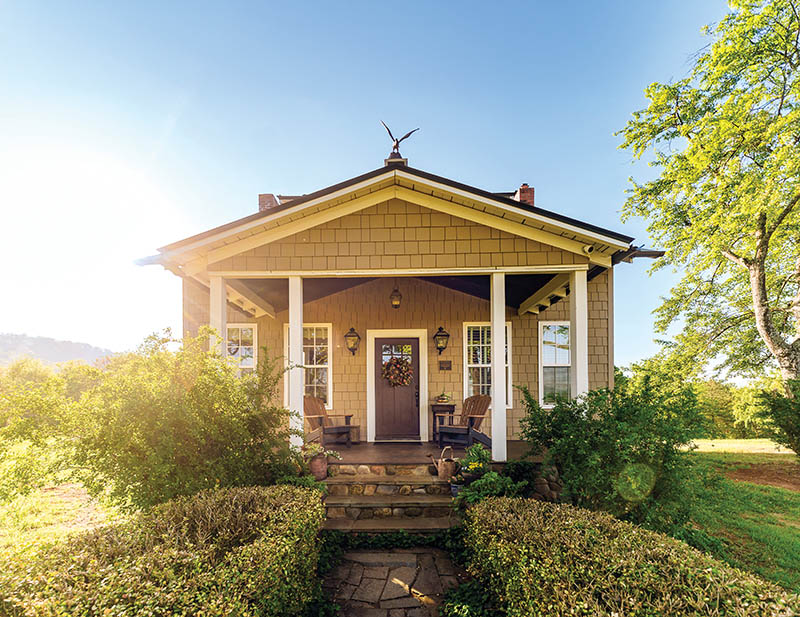
A Husband and Wife Team Restored Tappahannock’s Essex Inn

Tappahannock’s Essex Inn was restored, then the team behind it turned a cross-street historic home into a flagship fine-dinery

By Eric J. Wallace / Photos Courtesy: 1710 Tavern and Essex Inn

Pushing through the red, oversized front door of Tappahannock’s recently renovated Essex Inn is like stepping through a portal to a bygone era. The grand, Greek Revival style manor dates to 1850, and new owners, Greg and Jennifer Huff, lovingly showcase its history through a cozy, museum-like array of 19th- and early 20th-century furnishings, paintings, light fixtures, wallpaper and more.

A spacious off-foyer parlor, for instance, boasts 14-foot ceilings hung with a 1920s wedding cake crystal chandelier that’s counterbalanced by original, wide-plank heart pine floors. Large, mullioned windows are ensconced by ornately layered trim and impressive gilt pediments. A remarkably preserved mahogany drum table perches on a Persian rug between brocaded camelback sofas. Flames crackle behind an Antebellum era cast iron grate in one of twelve original hearth fireplaces.

“We want our guests to feel like the past has come alive,” said Jennifer. The Essex Inn sits in the heart of a designated historic district that dates to 1680. Jennifer and Greg love to regale curious visitors like myself with tales of items’ provenance, the home’s former personages and the history-making events they lived through.

Tappahannock’s Essex Inn_

“It’s not something we push,” Greg said, “but if guests are interested, it’s fun to pour some wine and take them on a tour.”

The experience is highly recommended and part of what makes a stay at the new and improved Essex Inn so special: Virtually every antique four-poster bed, china hutch, wall sconce and wingback chair has a story. Many were purchased or donated from area estates or families after the Huffs bought the inn in 2021—and the couple delights in showcasing their collection.

Greg, a 55-year-old former gym teacher and swim coach, wears khaki chinos and a navy blue polo over an athletic build. He gestures at showpiece-grade objects with the animated excitement of a documentary historian.

“It’s a neat way to introduce the town and its evolution from an important Colonial and Civil War era port to today,” he said. The walkabouts also give the innkeepers a chance to connect with visitors. “I think it helps people relax and feel more at home,” added Jennifer, which boosts camaraderie during evening wine hours and three-course breakfasts that come with stays.

“And you never know who you’ll meet,” she said, “or what you might discover.”

A question about an intricately painted, porcelain chandelier in the butler’s pantry, for instance, sparked an emotional revelation. The piece came from the Titanic-rivaling, German luxury cruise liner, Wilhelm II, which the U.S. seized then stripped at the start of World War I. A guest teared up and “told us his grandparents had immigrated to America on that boat,” said Greg.

The intimate interactions validate the couple’s decision to gamble their savings and chase a longtime dream of running a historic boutique inn.

“We wanted to create something so unique and inviting visitors will want to come back again and again,” said Greg.

And spoiler alert: Gauging from a pair of 2025 visits, they’ve more than succeeded.

Funny thing is, the Huffs didn’t set out to intentionally purchase the Essex—much less found its cross-street sister fine-dinery, 1710 Tavern. Greg said, “dumb luck and stubborn persistence” helped them stumble onto a pair of “dream opportunities.”

The couple moved from Charlotte, North Carolina, to the Philadelphia suburbs in 2012, when Jennifer was promoted to a senior supply chain management role in Pfizer’s vaccine division. The job demanded two weeks of travel a month, so Greg focused on parenting and coached a fleet of local swim teams on evenings and weekends. The couple began to plot next chapters as their kids looked ahead to college.

“I loved my work, but being away so much was hard,” said Jennifer. Vacations around the U.S. and beyond had inspired a love for historic homes, inns, and B&Bs. “We’d mused about buying a big old house with some land, fixing it up, and spending our retirement as innkeepers,” she added. With the empty nest phase approaching, “we thought, ‘Why not now?’”

The Huffs’ set broad parameters: “Somewhere in the South that isn’t snowy or blistering hot,” Greg chuckled. He spent weeks combing real estate listings from northeast Georgia to Virginia for affordable fixer-uppers with a backstory. A getaway to the Northern Neck and Middle Peninsula narrowed the search.

“We fell in love with the Colonial architecture, rural scenery and laidback, Chesapeake Bay vibe,” said Jennifer. Research brought a list of potential properties and return visits to tour them. “We’d actually bought a place, but the deal fell through within 24 hours of closing.”

The couple were devastated.

“We had a contractor lined up to come in and start renovations that week,” said Greg. Frustrated, “we decided to find a house that worked for us personally and move anyway.”

Then their contractor called with a tip: The Essex Inn was for sale—and at a great price. “There were no listings anywhere online, not even a sign in the yard,” said Greg. So the Huffs paid a visit and knocked on the door. Talks with the elderly owner revealed the house, which was converted to an inn in the late 1990s, had been sliding toward disrepair. Then the combination of COVID and fluke storm damage brought foreclosure.

“We offered to buy the place as-is, then and there,” said Greg. The owner accepted and left pretty much everything beyond her personal belongings.

“It was crazy how it happened, because we’d always assumed we couldn’t afford to buy a finished inn and would have to convert a place to suit.”

Initial excitement aside, the Huffs had their work cut out for them. A leaky roof had collapsed ceilings in all four upstairs suites, damaging floors, beds and décor. Paint and wallpaper were peeling throughout; bathrooms were outdated; there was no central heat and air; landscaping needed taming; carpets and furniture were worn—and the list goes on.

“But we could see the potential,” said Jennifer. “So we basically just worked our butts off nonstop” and overhauled both the main inn and four, cottage-style guest suites in an adjacent, stucco-over-brick rowhome that once served as enslaved quarters.

With improvements chugging along, the Huffs fixed their gaze on an abandoned home across the street. Research revealed the dilapidated structure dated to 1710 and was once a tavern frequented by Colonial town luminaries and visiting elites like George Washington.

“On one hand, it was an eyesore,” laughed Jennifer. On the other, the historic landmark had a storied past—and Tappahannock lacked a flagship fine-dinery and craft cocktail bar. The Huffs rolled the dice on an expansion in 2022, not long after the Essex reopened.

“We’d basically just run with the existing inn concept, which was great,” said Greg. Guests raved about the makeover and bookings were slammed. But the Huffs had looked forward to the creativity of a full buildout and longed for something “that was 100 percent ours from the ground up.”

The building that now houses 1710 required a herculean restoration.

The stone foundation was unstable, floors were partially collapsed, electrical wiring was unsafe, “and that was really just the tip of the iceberg,” said Greg. He worked with familial volunteers like his son and brother, and a team of contractors to transform the space into a restaurant that places its legacy front and center.

1710 Tavern opened to a packed house in September 2023. The beautifully reconstructed interior pays homage to its roots with touches like original wide-plank flooring, cast iron wall sconces, fireplaces, exposed beams and rafters, lead glass windows and a handcrafted, Old World style wooden bar where a framed menu from the original 18th century establishment is on proud display.

Chef Jordan West builds seasonal menus that use local, farm-sourced ingredients to create “the kinds of dishes you’d find being served in the homes of [Colonial aristocrats,] but with a modern twist.” A seared lamb lollipop starter, for instance, is served in a pool of creamy butternut squash puree alongside crisped Idaho gold potato cubes and topped with a dollop of house-made salsa verde.

Veteran bar manager Mickey Slusser takes a similar approach to cocktails.

Menus boast nifty concoctions like a Cherry Bounce, which was a favorite of George Washington. “I got the idea from a seminar I took at Stratford Hall,” said Slusser, referring to the historic estate of Robert E. Lee. The drink is built around a 45-day, secondary fermentation that combines top shelf rum and bourbon with fresh cherries and sugar. The boozy syrup is then mixed with charged mineral water and offers a wonderful balance of sweet and bitter warmth that’s great for early spring.

1710’s ambience, over-the-top service, and delicious attention to detail have inspired a strong regional following and won accolades like a 2025 Best Of Virginia restaurant award.

“If you’d told me 15 years ago that Greg and I would own a boutique inn and restaurant one day, I’d have called you insane,” said Jennifer. But now that the Huffs are living that future?

The innkeepers’ lives seem to fit like a custom-tailored glove.

RELATED CONTENT:

The Western Front Hotel is Where Charm and Adventure Collide

Saxapahaw, North Carolina, is Where the River Meets Revival


12 Cakes of Christmas

From festive loaves to show-stopping layer cakes, these holiday bakes bring joy to every table—and they’re simple enough for first-time bakers yet satisfying for seasoned pros.

Photos By: Ashlee Glen

There’s something magical about cake during the holidays. Unlike cookies, which are made by the dozen, or cocktails that vanish in a glass, cake makes a statement. It’s celebratory, sharable, and versatile enough to be a gift, centerpiece, or midnight indulgence after a holiday gathering.

This year, we’re embracing the season with a collection of bakes that range from simple mug cakes for a cozy night into elegant layer cakes worthy of a holiday table. Some can be made ahead and wrapped as gifts, others will shine as the star of a party spread. Best of all, each one is approachable, whether you’re a twenty-something baking in a tiny kitchen for the first time or a seasoned home cook looking for new flavors.

Think peppermint and white chocolate, spiced gingerbread, cranberry citrus, and even a twist on hot chocolate itself. Consider this your countdown to Christmas, one festive cake at a time.

Discover All 12 Cakes of Christmas Recipes:

  1. White Chocolate Cake with Peppermint Frosting
  2. Red Velvet Cake Balls
  3. Traditional Christmas Fruit Cake with Brandy
  4. Gingerbread Mug Cake
  5. Vanilla-Orange Gingerbread Cream Cake
  6. Cranberry Loaf Cake
  7. Pumpkin Pecan Upside-Down Cake
  8. Hot Chocolate Cupcakes
  9. Eggnog Bundt Cake
  10. Cranberry White Chocolate Donuts
  11. Citrus Glazed Gingerbread Mug Cake
  12. Cranberry White Chocolate Loaf Cake


23rd Annual Gift Guide

Look What I Found

Not sure where to start with that holiday shopping list? You’ve come to the right place!

Our annual Holiday Gift Guide is an overview of unique gift ideas, all found from local businesses. So you’ll not only feel good about what’s under the tree, but you’ll also know your purchase helped support the local economy.


Dice & Community

The Magic Behind Creatures & Cocktails

By: Charlotte Farley | Photos By: Ashlee Glen

Once a week, it’s as if someone chanted a few magic words to transform The Music Hall at 722 Commerce Street into an alternate world where dice determine destiny and strangers become heroes.

In a way, someone did.

The Creatures & Cocktails event is the brainchild of David Gallaher, a Harvey Award-winning writer best known for his work with Marvel Comic titles like The Hulk, The X-Men, and DC’s Green Lantern alongside projects for Ubisoft, MTV, and Taliespin. But for one night each week, he trades his writer’s desk for the role of Game Master, guiding groups of adventurers—many of whom have never played—through immersive events.

From Brooklyn to Lynchburg

A self-professed rapscallion, raconteur, and roustabout, Gallaher’s path to Lynchburg was as winding as any Dungeons & Dragons campaign. Originally from Hawaii, he grew up as a military kid, living everywhere from California to Washington to Maryland. After two decades in Brooklyn and a short stint in Paris, he relocated to Lynchburg to be closer to his parents, who relocated to the Hill City in recent years.

It didn’t take long for him to discover the Academy Center of the Arts. He began working part-time as house manager, a position that came with a perk he couldn’t pass up: two free tickets to every show. “I gave them to my mom,” Gallaher said. “And she loved it.”

But while he was there, he noticed that the Academy’s versatile Music Hall was only being used for weekend concerts, and he saw its potential as more than just a performance venue. From that spark came the idea for something approachable, creative, and unlike anything else downtown.

From Panic to Play

For those unfamiliar, Dungeons & Dragons is a collaborative role-playing game where participants take on characters, make choices, and let the roll of the dice determine what happens next. It’s focused on creativity, teamwork, and shared storytelling. And let’s be clear: there’s nothing diabolical or scary about rolling dice and playing pretend.

The spirit is whimsical, collaborative, and sociable.

“It’s all about exploring stories and experiencing fantasy together,” said Gallaher. He laughs when he recalls growing up in the 1980s, during the so-called “satanic panic” that stigmatized Dungeons & Dragons. “I wasn’t allowed to play,” he said. Ironically, he discovered the game at Scout camp and ultimately fell in love with this style of telling stories. “But even before that, one of my first role-playing experiences was a Star Trek RPG where,
for some reason, we all had to play as Muppet Babies. So Kermit ended up being a paladin.

It was ridiculous—and perfect. That kind of silly, lighthearted energy is what I try to bring into Creatures & Cocktails today.”

Elevated for Everyone

“We wanted to make an elevated experience and create an opportunity that’s only five dollars—and free for members of the Academy,” Gallaher explains. What begins as a modern music hall becomes an enchanting space complete with atmospheric lighting, thematic decorations, and carefully curated details that transport guests into another realm entirely.

Though it’s called Creatures & Cocktails, “it could have been Monsters and Mocktails,” he noted with a grin, since the event is designed for ages “8 to 80. Anyone who comes to this gets to play.”

A Night of Adventure

The doors open at 6:30, and guests can sign up for a journey, grab coloring sheets, and select a character that best represents them for the evening. These characters might include tongue-in-cheek, lighthearted versions of bards, paladins, rogues, wizards, or fighters. (Picture a bard who can’t carry a tune or curmudgeonly wizard, for example). Participants can also draw their own pieces, which the Game Master weaves into each night’s tale. “Nothing is rote,” Gallaher explained. “It’s unique to each party or group.”

What about someone whose only knowledge of D&D comes from overhearing their teenage son’s gaming sessions? “We’ll show you how to play, and you cannot fail,” he emphasized. Every adventure is designed to be welcoming, stress-free, and fun. There’s no requirement to know any rules up front.

Fantastical Friendships

Ask Gallaher why tabletop games, and his answer is simple: “I love D&D and I love people.”

That love shows in the details. Volunteers arrive an hour early to help set up, and friendships are forming organically. Gallaher loves kicking off the festivities, of course, but he most enjoys seeing the camaraderie and how people pull together to help pack up at the end of the night. “In a time when we’re all divided,” he reflected, “we can share dice, have a game, laugh, have a couple of drinks, and be present. We can forget about the outside world for a little while and enter this high-fantasy imaginary world.”

That sense of belonging clearly resonates: attendance averages 60 to 80 participants each week, and the 120-seat venue often fills to capacity.

The Team

Gallaher isn’t a one-man show here.

He’s quick to credit Allistar Barrett, who co-produces the weekly magic by inventing many of the themed cocktails and menu items, designing set pieces and decor, and more. He acknowledges the support of the Academy, as well. “They’ve been awesome,” he said. “It’s all about storytelling and creating a unique experience.”

Looking Ahead

Since debuting in July, the event has been met with such enthusiasm that Gallaher and Barrett recently secured an educational license from Hasbro to use official Dungeons & Dragons materials for the next five years.

Gallaher’s goal is to create opportunities to engage in D&D in a way that everyone feels welcome, whether that’s at the Academy Center of the Arts, in Lynchburg, or across the country. He’s already fielded inquiries about taking Creatures & Cocktails on tour, a testament to how this blend of speakeasy-meets-storytelling has resonated in Lynchburg.

From writing for The Hulk and The X-Men to guiding a table of first-time players, the medium may change, but the mission is the same: Gallaher invites people to escape and delight in a world of imagination. “Shared stories make us co-creators,” he said. “At the end of the day, people love stories. And that’s what this is all about.”

Creatures & Cocktails

When: Wednesday nights, doors open at 6:30 p.m. and the game runs from 7:30 p.m.-10:00 p.m.
Where: The Music Hall at 722 Commerce Street
Cost: $5 to enter and play (free for Academy members)
More info: www.creaturesandcocktails.com


Growing Good

How Lynchburg Grows Is “Planting Seeds” to Feed and Impact our Community

by: Megan L. Horst | Photos Courtesy: Lynchburg grows

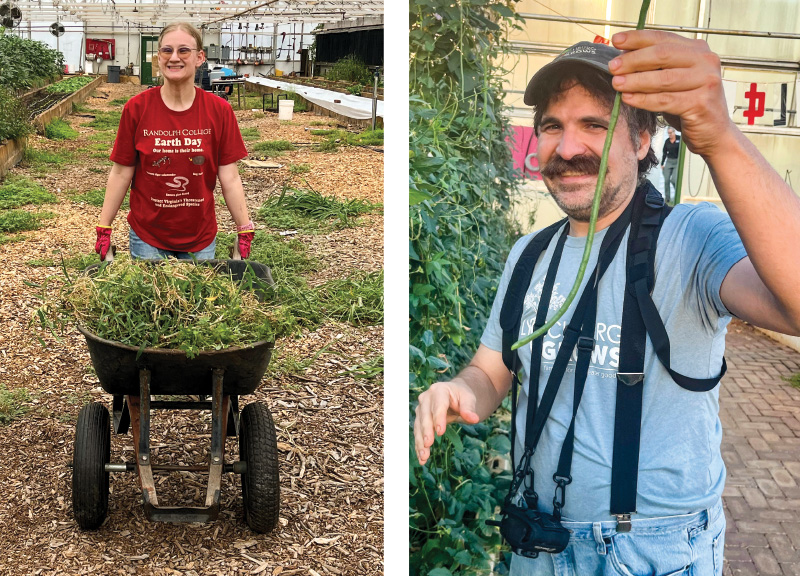
Lynchburg Grows has been serving the community for nearly 21 years. Their seven-acre urban farm offers meaningful job opportunities for individuals with disabilities, while also providing fresh, local produce to the community, restaurants, and organizations.

“Our mission is to work with the community to provide access to healthy food, and then also to provide purposeful jobs to people with disabilities,” said Shelley Blades, executive director of Lynchburg Grows. Currently, they have five paid farmers and two farm coaches who assist with harvesting and farm chores.

“Their coach is there to help answer any questions they may have, make sure everything is being done properly, and that they are doing their job safely,” Blades explained. Farm coaches also work with the farmers to ensure they meet their work and personal goals.

Recently, Lynchburg Grows was one of the ten recipients of the Kubota Hometown Proud Grant® and was awarded $25,000 in cash and $25,000 in Kubota equipment. The grant was awarded to nonprofits nationwide that are making a positive impact on their local communities.

“The work they do to feed the Lynchburg community resonated with the spirit of the Kubota Hometown Proud grant program,” said local dealer Zach Jones, general manager of Kubota of Lynchburg. “Their application made it very clear that they needed the grant resources to be able to increase the number of people they feed, teach, and empower in our community for years to come. At the heart of it all is dependable equipment that is needed to scale the project and to power real change for the goals of their operation.”


Blades expressed that they were pleasantly surprised and excited to have been chosen for the grant.

“It’s really great because we get some Kubota equipment, which will be very helpful,” Blades said. “That will help us in all aspects of the farm. It will help us post-harvest moving produce around, not having to carry 50 to 80 pounds of tomatoes from one greenhouse to another.” The grant funds will be used to expand their operation. They also expect the funds to increase their produce output by 25 percent, enhance nutrition education and provide additional vocational training opportunities for individuals with disabilities.

“We are looking forward to reaching our community in different ways and expanding,” Blades said.

Lynchburg Grows additionally provides opportunities for youth in the community to learn and have fun. A portion of the grant funds will be used to expand their education greenhouse, which is solely dedicated to learning, and used for classes, field trips, and camps.

“This will be a space for students to explore and learn and play without interfering with the day-to-day farm operations,” Blades said. They hope to include a “tasting kitchen” in the learning greenhouse, allowing them to transition from planting to harvesting to tasting all in one space. In the summer, Lynchburg Grows hosts a variety of day camps for kids. At the week-long camps, participants have the opportunity to work alongside farmers with disabilities and harvest produce.

“They learn about plant cycles and planting and growing,” Blades said.

“They learn about nutrition, they’ll cook the food that they are harvesting, and so they get some cooking lessons. They also help clean up, so they’re learning to work together as a team and then also they help us with our donations.” Lynchburg Grows donates to many local organizations, including Park View Community Mission, Miriam’s House, Lynchburg Daily Bread, Connecting Point, and others.

“They [campers] help pack donations up so they’re learning philanthropy and why it’s good to give back to your community,” Blades shared.


A wide variety of produce is grown on their farm, which changes depending on the season. Currently, they are growing a variety of root vegetables, including turnips, beets, carrots, radishes, and leafy greens, as well as eggplant, beans, herbs, tomatoes, cucumbers, cabbage, and more.

“We are lucky to be able to grow year-round,” Blades said. For members who join at the beginning of their growing season, in March, they can pick up their share on Wednesdays; however, their Farm Store is open to the public every Thursday from 9 a.m. through 1 p.m.

“We accept SNAP, which is great,” Blades said. They also participate in the Senior Farmers’ Market Nutrition Program, a government initiative designed to provide seniors with access to fresh produce.

“Lots of ways you can shop,” she said. Another way to support Lynchburg Grows is to volunteer at the farm. They are always looking for help with tasks around the farm.

“Not all of [the volunteer work] is really, really hard,” Blades said. “We can definitely modify it to each person’s abilities.”

Blades expressed that they are incredibly grateful to Kubota. The new equipment and funds will make a substantial impact on their operation.

“We are proud to have selected Lynchburg Grows for this opportunity,” Jones added. “And even more so to see what they’re able to accomplish with
our equipment.”


Turning Over a New Leaf

Canadian & British Tea Service in the Heart of Lynchburg

By: Izzi Diaz Young | Photos By: Ashlee Glen

A place known and loved by all in Lynchburg stood at 1215 Commerce Street for fourteen years. A place where pinkies were raised, cups were poured, and forever memories were created: The Ploughcroft Tea Room. More than a Lynchburg staple, it was a treasure to all who visited.

When the news rang of its closure after over a decade, Cheryl Carter and Anthony (Tony) Quaranta knew it was time to start brewing the next chapter in their own lives, becoming owners of The Maple Leaf Tea Room.

Now open at the identical address but with a new title, The Maple Leaf Tea Room has the same exact warm-hug-feeling as it did before. Serving lunch, pouring afternoon tea, and providing a cozy ambience to all who enter, this renovated spot is the perfect location for all ages to come and enjoy a cuppa.

Hailing from Saint John, New Brunswick, Canada, owner Cheryl Carter and her partner, Tony Quaranta are the newest tea sommeliers on the block. Carter relocated to Lynchburg in 1988, around the same time Quaranta found himself in the city as well.

Quaranta, owner of The Little Dinner Theater Players, was introduced to The Ploughcroft Tea Room years ago as a result of producing several dinner theater performances at the venue.

“We had been friends with the owner, Patricia Hutto, for several years before I came to work for her part time a few years ago,” stated Carter. “I had been working as a sort of assistant manager for Ms. Pat when she announced that she would be retiring after fourteen years, and closing The Ploughcroft in December of 2024. After her announcement, the outpouring of sadness that there would no longer be a tea room in Lynchburg was really quite amazing. So many of her patrons came in the last few months that it was beyond busy, and we did our best to accommodate everyone who wanted to come one last time.”

This display of love and admiration for the tea room pulled on Carter’s heartstrings, signaling that maybe this beloved place’s story wasn’t over quite yet, and that she might be the one to continue it.


“I was frequently asked if I would purchase the restaurant and continue the tea room, but at the time it hadn’t been something I was considering,” Carter noted. The former owner, Patricia Hutto, had dubbed the name The Ploughcroft tea room in honor of her family home, and had no plans to transfer the name alongside the restaurant when the time came.

“With so many people asking, and hoping that someone would take up the mantle, Tony and I decided to give it a go,” Carter remarked. “Afternoon tea is also a Canadian tradition, and my Canadian heritage is from the British Isles, so The Maple Leaf Tea Room was born.”

Upon opening its doors, the space now welcomes guests with the perfect essence. From gorgeous decorative teapots to vintage furniture, the tone for your visit will be instantly set.

“We wanted to keep the eclectic feel, and being theater folk, we love a theme,” Carter noted. “So, an Anne of Green Gables vibe was included, with fresh paint and antique decor. I’m super happy with how the dining room feels so cozy and warm.”

For fans of the old Ploughcroft menu, there are a few old staples that outlived the transformation to Maple Leaf.


Carter remarked that some of the lunch favorites on the current menu do remain the same as before, all of their offerings include something for everyone.

The mouthwatering lunch cuisine is served from 11:00 a.m. through 1:30 p.m., where visitors can expect a range of salads, pies, scones, and much more. Carter noted that they have even included a few new delicacies as a nod to her Canadian background, such as poutine and Halifax donairs. Although the cooking area is a wheat kitchen, there are also now a few gluten-free options on the lineup for those with any allergies.

“Afternoon tea is much the same, except we now include Canadian and English sweet treats,” Carter stated. “Following with the Anne of Green Gables theme, we also offer sparkling raspberry cordial, black currant herbal iced tea, and sparkling lemonade.”

To enjoy all of these delectable menu offerings, reservations are not required, but Carter highly recommends making them to ensure the utmost enjoyment out of your experience.

“Tea is meant to be spent time on,” she said. She advises those planning their visits to make arrangements by calling, emailing, or messaging the business’ social media directly.

When asked what else visitors can expect from the tea room other than old-fashioned fun and herbal infusions, Carter noted, “The Room offers a cozy atmosphere all throughout the year, and we have great fun decorating for the holidays.”

The future of the tea room is only getting brighter, too. They now offer private party rentals on Sundays, perfect for any celebration or event. From baby showers to engagement parties, birthdays, and more, Maple Leaf is a must-book location.

Carter looked forward to the future, stating, “We plan on having live music from time to time, and keep an eye out for special ‘tea’ events!”

The legacy of The Ploughcroft Tea Room—a destination that served Lynchburg over a decade—lives on within stories shared across the city still today. From past celebrations to memories made over a cuppa, the afterglow of this place’s impact remains ever present.

Now, these memories can still be cherished while new ones are created. Fresh moments in The Maple Leaf Tea Room will blossom like florals, forever linked to the magic made within its walls. Maple Leaf is a fresh pot ready to be poured, welcoming visitors from across the city and beyond who will soon be enchanted by the warmth of it, whether it be found within the ambiance, the cups of tea, or the people inside.

On their menu is a quote by Bindi Irwin, stating, “A cup of tea makes everything better,” and doesn’t it? Because a cup of tea welcomes so much more than just a hot beverage, it welcomes a community—a bond created and shared right there between two cups, as sweet as a brew of Darjeeling.

Seeing folks find joy in the knick knacks and decor, sharing stories, and enjoying the food, that’s what I think makes it special,” Carter said. “The Maple Leaf Tea Room is for making memories, and we love being a part of that.”


From Grass to Garden

A Beginner’s Guide to Rewilding Your Landscape

For decades, a lush green lawn was the hallmark of a well-kept home. But more and more homeowners are trading in their turfgrass for something wilder—and more purposeful. Whether inspired by declining pollinator populations, increasing water bills, or the simple desire for a more beautiful and ecologically rich yard, rewilding is having a moment.

Rewilding your landscape doesn’t mean letting it go untamed. Rather, it’s a thoughtful process of transitioning away from traditional grass lawns to native plantings, meadows, or habitat gardens that support biodiversity and require fewer resources to maintain. If you’ve been eyeing your patch of grass and wondering how to begin, fall is actually the perfect time to start laying the groundwork. Here’s how.

Step 1: Start with a Plan

Before you dig in, take a step back. Consider how much of your yard you want to rewild—some people begin with just a corner or border, while others go all-in. Walk your property and note areas of full sun, part shade, drainage issues, or spots prone to foot traffic. These observations will influence the types of plants you choose.

Then, ask yourself a few key questions:
• Do you want a wildflower meadow, a pollinator garden, or a mix of native grasses and shrubs?
• How formal or natural should it look?
• Will you need to maintain some lawn for pets or play?

Sketching out a rough map or plan can help you visualize the change—and stick with it when the grass starts to go.

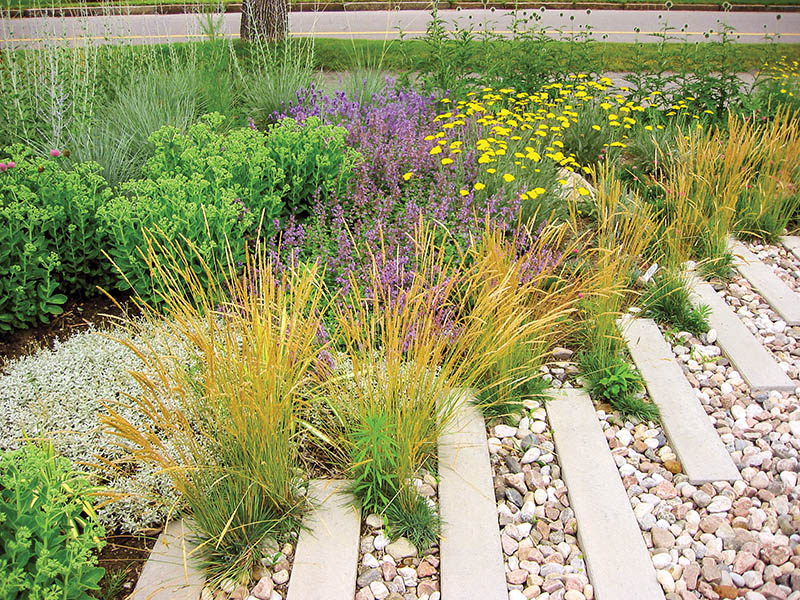
planting suitable for dry climates

Step 2: Remove the Turf

Turfgrass is persistent. Removing it is the first and most labor-intensive part of rewilding. There are a few methods to consider:
• Sheet Mulching (Lasagna Method): Best started in fall. Lay down cardboard or newspaper directly over the grass, then top with layers of compost and mulch. By spring,
the grass will be smothered, and the soil will be richer.
• Sod Cutting: Use a sod cutter to remove grass manually. This provides an immediate blank slate but can disrupt soil health.
• Solarization: Place clear plastic sheeting over the area during the heat of summer. This “bakes” the grass and weed seeds, preparing the site for fall planting.

For small patches, a shovel and persistence may do the trick. For larger spaces, combining methods—like solarizing one area and sheet mulching another—can be effective.

Step 3: Test and Amend the Soil

While many native plants are forgiving, it’s helpful to know your soil type (clay, loam, sandy) and pH. Home soil test kits or local extension offices can help you assess.

Avoid the temptation to over-amend—many native plants thrive in poor soil. Still, incorporating a bit of compost into compacted or depleted areas can give young roots a boost.

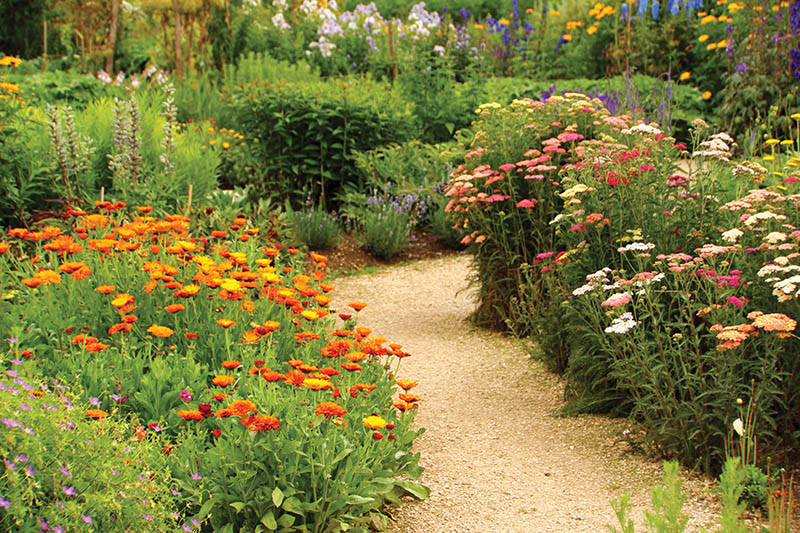
Footpath in awonderful herb and flower garden

Step 4: Choose the Right Plants

One of the joys of rewilding is discovering the diversity of plants native to your region. For Central Virginia, that includes black-eyed Susans, purple coneflower, bee balm, milkweed, little bluestem, switchgrass, and more.

Fall is an ideal time to plant perennials and grasses—cooler temperatures and autumn rains help roots establish before the dormant winter period. Even if you don’t plant this fall, it’s a great time to plan and source plants for a spring installation.

Consider using a mix of:
• Native grasses like little bluestem or Virginia wild rye
• Perennials for color and pollinators—think goldenrod, asters, and Joe-Pye weed
• Shrubs like buttonbush or winterberry holly for structure and wildlife value

Local native plant nurseries or Master Gardener groups can help you find plants well-suited for your yard’s conditions.

Step 5: Planting and Mulching

Planting in fall typically runs from late September through mid-November in our region. Space plants according to their mature size, even if they look sparse now.

Mulch around new plants with shredded leaves or natural wood mulch (but avoid dyed mulch). This helps suppress weeds and retain moisture, especially in the first year.

If you’re seeding a meadow, fall is also ideal for “dormant seeding”—spreading seed just before winter so it naturally stratifies and germinates in spring. Prepare the soil surface, rake lightly to incorporate seed, and press down gently to ensure good contact.

Step 6: Embrace the First-Year Wildness

The first growing season will look different than a manicured garden. It may take a year or two for your rewilded landscape to fill in and begin to self-sustain.

Expect some weeds—early maintenance includes hand-pulling or cutting back aggressive invaders. Watering is also crucial in the first season, especially during dry spells.

In winter, leave seed heads and stems standing to provide food and habitat for birds and beneficial insects. What might look “messy” to some is actually part of a healthy, functioning ecosystem.

A group of brightly colored Monarch butterflies, or Danaus plexippus, feeds on a Buttonbush, or Cephalanthus, on a very warm summer morning near a lake in Texas. A lone honeybee approaches to join them.

Step 7: Long-Term Care and Evolution

After the first year, your rewilded garden will require far less work than a traditional lawn. Native plantings generally don’t need fertilizer, and once established, they’re drought-tolerant and low-maintenance.

Cut back dead stalks in early spring (not fall) to allow overwintering insects to emerge. Re-seed or divide as needed, and enjoy the evolving beauty of a space that reflects nature’s rhythm.

Small Steps Make a Big Impact

If the idea of transforming your entire yard feels overwhelming, start small. Convert a strip by the sidewalk into a pollinator border. Replace part of the backyard with native grasses. Every square foot of rewilded land makes a difference—for butterflies, birds, bees, and for you.

With fall on the horizon, now is the perfect time to begin the transformation. The rewards are plentiful: less mowing, more beauty, and a yard that gives back.


The Case for Keeping It

Rethinking the Renovation Mindset

It’s easy to get swept up in the promise of a fresh start. The blank slate. The trendy backsplash.

The Pinterest-worthy after photo. But what if the most compelling, most personal design choice you could make wasn’t new at all?

As the renovation boom continues across the country, many homeowners are beginning to rethink the impulse to gut, replace, or cover up what’s already there. Whether it’s original tile, natural wood trim, a quirky built-in cabinet, or an antique fireplace, there’s a growing movement toward preservation—and for good reason.

Holding onto original features isn’t just about honoring the past. It’s about embracing character, sustainability, and in many cases, a better return on investment.

Before you pick up the sledgehammer, it might be worth asking: What’s worth saving?

Embracing the Charm of Imperfection

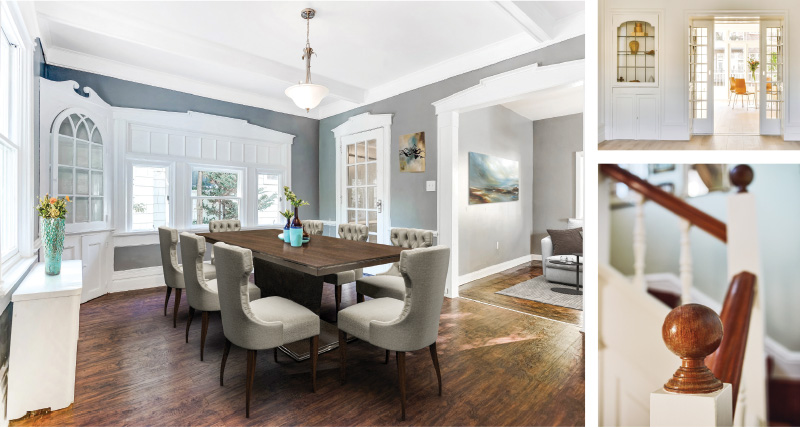
The truth is, older homes were built differently—and often more durably. Solid wood doors, hand-crafted trim, plaster walls, and detailed millwork can be difficult and expensive to replicate today. Even common elements, like mid-century tile or built-in shelving, were designed with a level of intention that mass-produced materials sometimes lack.

There’s a soul to an old house. When you walk in and see worn hardwood floors or a creaky staircase, there’s a story.

Those imperfections can be beautiful if you let them be.

Preserving original features can create a layered, lived-in feel that brings depth and authenticity to a space. It can also help your home stand out in a sea of renovations that often follow the same trends.

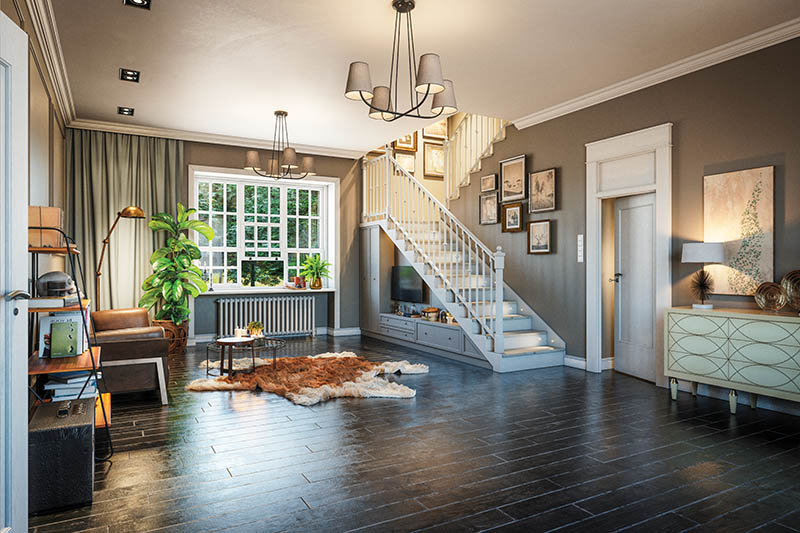
Digitally generated elegant Scandinavian style home interior scene.The scene was rendered with photorealistic shaders and lighting in Autodesk® 3ds Max 2020 with V-Ray 5 with some post-production added.

Digitally generated elegant Scandinavian style home interior scene.
The scene was rendered with photorealistic shaders and lighting in Autodesk® 3ds Max 2020 with V-Ray 5 with some post-production added.

From Functional to Focal Point

Rather than viewing older elements as obstacles to be updated, consider how they might become focal points instead.

Take vintage tile, for example. That powder blue bathroom tile from the 1950s might not match your usual aesthetic—but with the right supporting elements, it can become a retro-chic statement. Brass or matte black fixtures, white walls, and minimal accessories can help highlight the tile rather than fight against it.

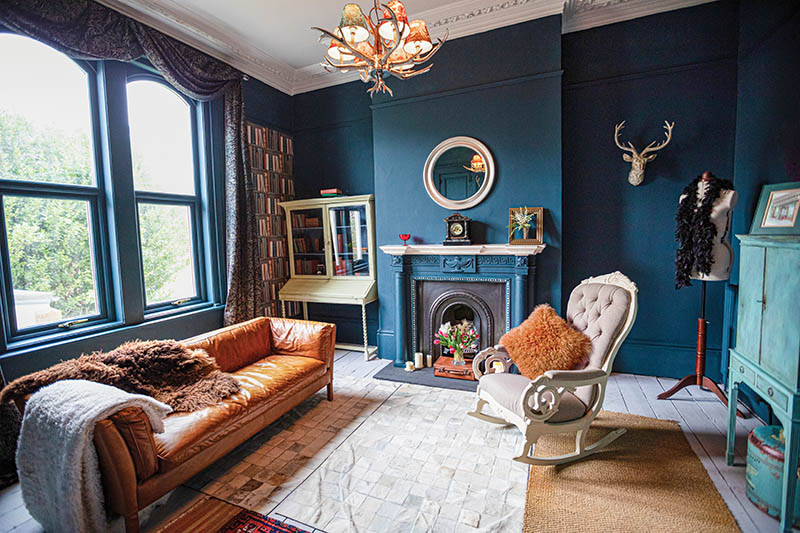
The same goes for original fireplaces. Instead of covering up a dated mantel or painting over brick, lean into it. Restore the wood, limewash the brick, or simply keep it as-is and let it ground the room with texture and warmth.

Sometimes the best design decision is doing nothing at all. Or doing just enough to protect and showcase what’s already there.

Tips for Thoughtful Preservation

If you’re ready to rethink your renovation mindset, here are a few ways to preserve character while still meeting modern needs:
1. Restore, Don’t Replace
Refinish wood floors rather than replacing them. Strip and reseal original doors or trim. If cabinets are solid wood, consider repainting or refacing rather than tearing them out.

2. Blend Old and New
Let original features shine by surrounding them with modern, minimal design. A sleek sofa or contemporary light fixture can balance the patina of an older space.

3. Respect Scale and Proportion
Many original elements—like doorways, ceilings, or moldings—were designed with specific proportions in mind. Keep additions and updates in harmony with those original lines for a cohesive look.

4. Update Function, Not Just Style
Keep that quirky built-in, but make it useful—add lighting, repaint the interior, or use it for a modern purpose like barware or board games. You can also retrofit older cabinets with soft-close hardware or install energy-efficient inserts in old windows.

5. Salvage and Reuse
If you must remove something, consider salvaging it for another part of the house—or donating it to a local reuse center. Vintage materials are not only valuable but often higher in quality than what’s available today.

Sustainability and Storytelling

Choosing to preserve instead of replace is also a deeply sustainable choice. Demolition and new materials contribute to landfill waste and increased carbon emissions. In contrast, restoring what already exists minimizes waste and often reduces overall renovation costs.

And then there’s the emotional value. That worn banister your child slides down every morning. The original transom windows that let in just the right slant of afternoon light. These elements tell a story—your home’s and your family’s.

When you live in a space that’s not perfect but has a history, it grounds you.

You become part of something bigger than just the latest trend.

When to Let Go

Of course, not everything can or should be saved. Water damage, mold, structural issues, and hazardous materials like lead paint or asbestos may require removal for safety reasons. In some cases, preservation isn’t practical—and that’s okay.

But for everything else? It’s worth pausing before you replace.

The best homes often reflect a balance between old and new, polished and worn. They evolve slowly, lovingly. And sometimes the most meaningful design choice isn’t about what you add—but what you choose to keep.

5 Original Features Worth Saving

Before you demo, take a second look—these vintage details can add charm, value, and character to your home.
1. Hardwood Floors
Even if they’re scuffed or hiding under carpet, original wood floors are often solid and salvageable. Refinishing can restore their luster and preserve their timeless appeal.

2. Trim and Molding
Crown molding, picture rails, baseboards, and window casings add architectural depth. Solid wood trim is hard to replicate and worth keeping whenever possible.

3. Built-In Cabinets or Nooks
From hallway linen closets to breakfast benches and phone niches, built-ins offer functional storage and personality. Fresh paint or hardware can give them new life.

4. Original Doors and Hardware
Solid wood doors—especially those with panels or glass—are sturdy and stylish. Keep the vintage knobs and hinges for added character (or clean them up for a polished antique finish).

5. Fireplace Surrounds
Whether brick, stone, or tile, an original fireplace brings warmth and texture to a space. Even a non-functioning fireplace can serve as a cozy design anchor.

Drawing room with high ceilings and architectural features

Drawing room with high ceilings and architectural features


Carved in Stone

Craftsmanship and Collaboration Leave an Enduring Mark at the Woodsmalls’ Nelson County Home

By: Anna Eileen White / Photos Courtesy: Jonathan Mitchell, Simply Branding

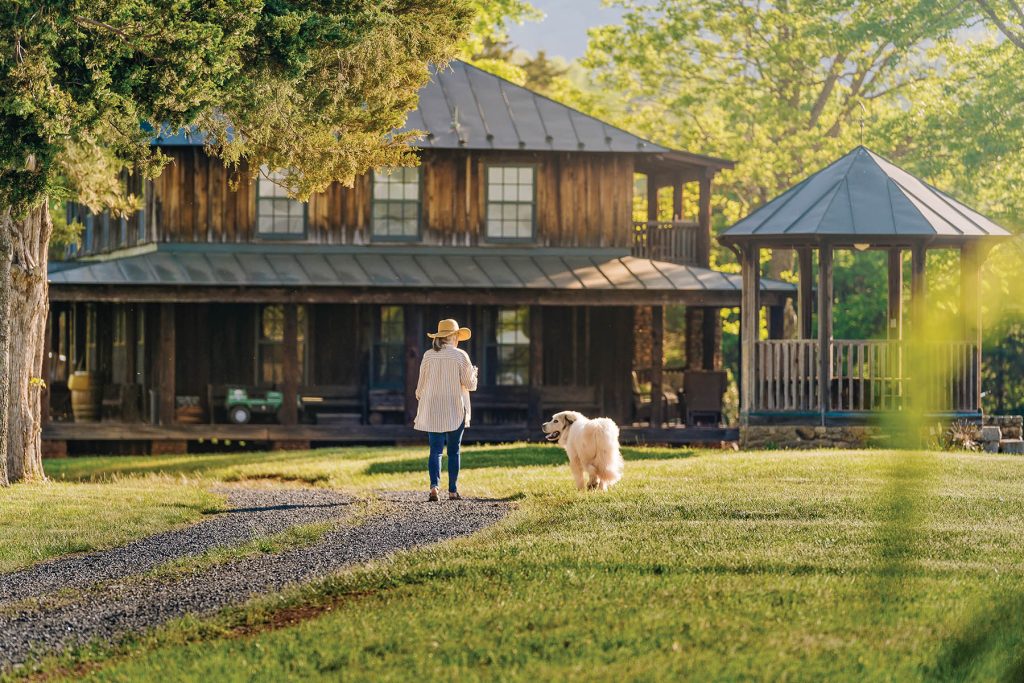
Tucked where winds sweep between blue peaks and race among receding foothills, a lodge and cottage stand. Framed by summer’s mature greens, panoramic pastureland, and layered ridges, the two buildings watch over storied grounds—grounds that owners Don and Barb Woodsmall have spared no expense coaxing back to life and infusing with their own stories. These buildings are Roseland Lodge and Helen’s Cottage.

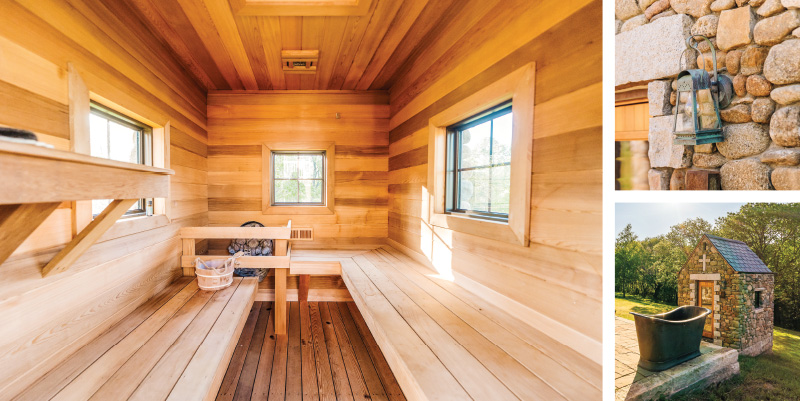
Since 2005, Don and Barb have completed project after project here, most recently engaging Corey and Lindsey, founders of Shrader Stone, to build a sauna using river rock gathered from the property and granite lintels salvaged from Danville textile mills. The natural edges and organic tones seem to breathe in tandem with the surrounding landscape, a result of “thinking about what nature and the landscape are telling us,” according to Lindsey.

Don first thought the property had potential when he saw the 180-degree views; “It’s just unbelievable,” he said. A lover of history, he values the location’s authenticity, a quality that Corey says made their collaboration a good fit, “having other people around you that share the same vision and level of care about what’s happening is really nice.”

Corey and Lindsey specialize in creating unique outdoor spaces using Old World stone masonry techniques and natural gardens that emphasize native plants. Though they both have their own specialty—Corey, masonry and Lindsey, gardening—they’re closely involved in each other’s process and share a love of sustainability, history, and working with their hands. “I love that type of project where the last time it was reassembled and touched by human hands was maybe 200 years ago,” said Corey. The Woodsmall estate fits the bill.

Roseland Lodge, which the Woodsmalls reserve as a guest space for friends both local and from distances as far away as Germany and Ireland, was constructed in 1922.

It was originally built using dead American Chestnut trees harvested from the area that were killed by the Chestnut blight. The original owner could hardly have imagined that an emphasis on local and salvaged materials would be revered so many years later.

In 1990, the building stood in disrepair and was acquired by Mark Smith, a Lynchburg figure known for his collection of rare automobiles housed at the corner of Main and 13th Streets in downtown Lynchburg prior to his passing. “He loved bringing things back to their original glory, but not making them unnaturally shiny and sparkly,” Barb said of Smith.

The Woodsmalls bought the property from Smith in 2005.

The Cottage, which the Woodsmalls have made their home, holds its own touching history. Upon learning that a nearby 80-year-old neighbor was born in the cottage in 1928, the Woodsmalls lovingly designated it “Helen’s Cottage.” A plaque now hangs in her honor by the front door, commemorating the friendship that grew between them before her death in 2015.

While both the lodge and the cottage have been through many iterations since Helen’s birth and death, the Woodsmalls’ updates all have one element in common: permanence. That’s what draws Don to stone.

“You never have to do anything to it, and 200 years from now, it’ll still be there,” he explained.

Corey said they’d originally thought of building double-faced stone walls on the sauna, but landed on a single-faced stone wall to preserve heat efficiency in the winter. Some of the river rocks were pulled from the perimeter of nearby fields where farmers deposited them over the centuries, others directly out of the Tye River where Corey and his team often retreated for lunch during construction. “It is just impossible to leave a good rock sitting there on the riverbank once you’ve seen it,” he said.

The sauna was Corey’s first experience with Cotswold architecture, a special request from Don, who loves the English style featuring stonework and a steep roof pitch with no overhang. Don also requested that Corey use minimal mortar, a technique which means the mason must work with the natural contours of the stones. “A lot of guys put stone up and put a foot of mortar around it and then another rock way over here,” Don explained. “That’s easy, anybody can do that, but to make them all fit together like Corey did, that takes talent.”

The salvaged lintels, some still sporting flecks of paint from their more polished days, form steps descending from the patio to the sauna. Quoins and headers chiseled from the same lintels accent the doorframe along with a cross. Don says the cross represents his and Barb’s worldview, a worldview he hopes his grandsons know and share when they own the property one day.

One more step forward through the doorway and the resinous scent of cedar hangs in the air—this spot is Don’s retreat at the end of most days, an easy choice seeing as he can heat the sauna with the touch of a button on his phone.

“It was great collaborating with a long-time friend and long-time customer,” said Corey, whose craftsmanship is seen elsewhere across the property in the form of lintel steps, pillars, and foundation work. Lindsey agreed, “We have the most fun clients. There are faster and cheaper ways to do this, but I think we’re all getting tired of things that break.”

For the Woodsmalls, these thoughtfully crafted outdoor spaces are perfect for enjoying mornings and evenings accented by bird songs and wildlife sightings, but the stories of friends from far and near enjoying the spaces with them seem to be their favorites. Barb’s top memories on the patio? “I think it would always involve grandkids,” she said, smiling.


Let the Floor Do the Talking

When it comes to home design, we often focus on what’s at eye level—paint colors, artwork, statement lighting. But some of the most impactful design choices happen beneath our feet. Bold area rugs, painted wood floors, vintage tile, and graphic runners can define a space just as effectively as a feature wall or chandelier. In fact, when thoughtfully incorporated, the floor becomes the feature.

Whether you’re decorating from scratch or looking for a way to refresh an existing room, letting the floor take center stage can elevate your home’s personality while still remaining functional. Here’s how to make the most of what’s underfoot—without overwhelming your space.

Go Bold with Area Rugs

Rugs are one of the easiest and most flexible ways to introduce color, pattern, and texture. They can serve as a visual anchor, define distinct zones in an open floor plan, or breathe life into a neutral room.

Oversized or graphic rugs work especially well in minimalist spaces, where they can become the central focal point without competing with other decor. Vintage or Persian-style rugs can add warmth and history, particularly when layered into contemporary or industrial rooms.

Painted Wood Floors with Personality

Painting a wood floor might sound sacrilegious to some homeowners, especially in historic homes—but under the right circumstances, it’s a design-forward move that can completely transform a space.

Painted floors can brighten a dark room, hide imperfections, or add unexpected charm. From classic white or soft gray to checkerboard patterns and colorful borders, the options are practically endless. Painted stairs in particular offer a narrow canvas for creativity—try numbers, stripes, or even ombré effects.

Painted floors tend to work best in rooms where wood isn’t pristine to begin with—think enclosed porches, attic bedrooms, or cottage-style kitchens.

TIPS FOR SUCCESS
• Choose the rug first when possible, and let its colors inspire the rest of the palette.
• Don’t be afraid of color, but consider sticking to one bold element—if the rug is loud, keep furniture and accessories more subdued.
• Use rug pads to add cushioning and prevent slipping, especially in high-traffic areas like hallways or kitchens.

Free standing bathtub in a stylish bathroom

Celebrate Original Tile

There’s a reason vintage tile has made a major comeback in recent years—it’s full of character, often handcrafted, and always full of story. Whether it’s a patterned hex tile from the 1920s or a colorful mid-century mosaic, original tilework deserves to be celebrated, not torn out.

In older bathrooms, lean into the nostalgia by pairing vintage elements with updated fixtures that complement its character—perhaps a modern sink or floating vanity that doesn’t block the view of the floor. In entryways or sunrooms, patterned tile can become the entire design concept.

Even newer homes can benefit from tiled floors with personality. Consider encaustic-look tiles in laundry rooms, bold cement tiles in powder rooms, or terrazzo in modern kitchens.

TIPS FOR SUCCESS
• Prep is key. Sand, clean, and prime thoroughly for a durable finish.
• Choose a floor paint formulated for high-traffic use, and allow plenty of curing time.
• Consider stencils or masking tape to achieve crisp lines or geometric designs.

Hardwood hallway with red round rug and palm tree. View of staircase with blue rug

Statement Runners for Style & Function

Hallways and staircases are often overlooked when it comes to design, yet they’re some of the most frequently used spaces in the home. A vibrant runner can soften these transitional areas while adding unexpected color and energy.

Patterned or vintage runners are especially effective on stairs, where the repetition of each step enhances the visual impact.

In long hallways, a runner can break up monotony and create rhythm. Bonus: They help reduce noise and protect high-traffic surfaces.

TIPS FOR SUCCESS
• Clean and reseal vintage tile to restore vibrancy and protect from moisture.
• If the pattern feels too busy, balance it with solid colors on the walls and ceiling.
• Avoid placing rugs over tile unless it’s for warmth or safety—let the craftsmanship show.

A stylish living room interior featuring modern designer furniture, wall paneling and elegant accessories

Balance Is Everything

The key to using the floor as a design element is balance.

If your flooring is loud, keep the surrounding elements clean and intentional. If your room is minimal, a floor with personality can become the showstopper. Not every room needs a statement floor—but every home can benefit from at least one.

Entryways, powder rooms, and stairwells are great candidates for bolder underfoot choices, while main living areas might benefit from subtler grounding tones.

When done thoughtfully, floors don’t just support the design of a room—they define it. They set the tone, carry the eye, and tell a story that no wall color can quite match. So next time you’re planning a room refresh, look down. You might already be standing on your next design idea.

Tips for Success
• Use a stair rod or rug tape to ensure safety on stair runners.
• In hallways, leave a few inches of flooring visible on each side for a tailored look.
• Don’t shy away from layering—a flatweave runner over hardwood or tile adds texture and warmth.