The Great Barn House Escape

A Family Pandemic Project Comes to Life in the Nick of Time

Sometimes, it takes a worldwide pandemic to push you to do the thing you’ve been dreaming about. For Tim and Tonya Pafford, it was the COVID-19 lockdowns of early 2020 that made them realize it was time to stop thinking about building a “barndominium” on the 30 acres they owned in Evington and actually go for it. The result is a peaceful spot in the world that readily welcomes their family and many guests for gatherings year-round, including the holidays.

The Paffords are high school sweethearts and have three daughters, Emory, 19, Avery, 17, and Hadley, 15, and first bought the larger 155-acre farm with friends a few years prior for use as an outdoor playground. The land adjoins part of the Big Otter River so their family would come out and fish, kayak, camp, and explore the property with four-wheelers. But it was a far cry from buildable at first.

“Someone had clear cut it and sold the timber, so there were no trees, the dirt was all dug up,” Tonya said. “I couldn’t envision anything liveable to be honest, but it had really cool views and river frontage, so we all decided to take the plunge and bought it together and subdivided it.”

The original 1920s farm was named Otter Oaks Farm and, along with lots of clearing, planting, and prepping, the Paffords also re-incorporated their 30 acres and brought back the farm’s original name. Tim drew out plans for what they now call “The Barndo” on a flight from Florida to Virginia, so the general framework was ready when they broke ground in January 2020. Soon however,
the project became a family sanity saver.

Photo by Daryl Calfee

All Hands on Deck

“It became a COVID party of sorts,” Tonya said. “We had wood delivered on the day Tim was told, ‘Don’t come back to work.’ And the girls were told not to come back to school. I’m a nurse so I knew I was going to be going to work, and it would be kind of a war zone. So, we just thought, this is our moment—we are selling our house and building The Barndo.”

Photo by Daryl Calfee

In no time, Tim was spending long days at Otter Oaks building the project mostly by himself, with help from the girls and food runs from Tonya.

“The kids would work with Tim, but they did have to do homeschooling so they would do their schoolwork and I would bring food and we would have dinner in the construction zone, and it was our way to be together,” Tonya recalled.

Photo by Daryl Calfee

Emory, their oldest daughter, is now a pole vaulter at Liberty University but she readily comes home to The Barndo.

“Helping to build the house is a core memory,” she said.

While it required all Pafford hands on deck, the vision for The Barndo was fairly straightforward, with 1,600 square feet of living space upstairs and 1,600 square feet of entertaining space below.

“Functional was the first key,” Tim said. “Good use of space. This concept was very simplistic, but we wanted to maximize every square inch possible with the simple design.”

Photo by Daryl Calfee

Exterior in, The Barndo strikes a balance between rustic-industrial and warm farmhouse style. The home’s roof and metal siding are exposed galvanized metal, installed by Karlin’s Construction of Lynchburg, in a charcoal color on the house and left an unpainted natural metal on the roof. The home’s cupola was handmade in Amish country, Pennsylvania, and driven down on a truck. The oversized barn doors, perhaps The Barndo’s crowning feature, were crafted by Tim using oak harvested on a neighbor’s property.

“It actually worked out better than I thought it would,” Tim said. “It’s cool because it’s actually wood from right here. It has imperfections and they are unique planks of wood. It came together.”

Photo by Daryl Calfee

Start to finish, the house build took 11 months of work from January to November 2020, moving the family in just in time for their first holiday season there.

“The first snow here was beautiful, it looked like a Hallmark card,” Tonya recalled. “It was such a relief when all of us were finally here!”

Tim added, “There’s something about crawling into your bed two minutes after unplugging your tools versus packing everything up and driving home at 3 in the morning.”

Living Large in a Smaller Space

Photo by Daryl Calfee

While The Barndo has been a welcome change of scenery for the family, it did get some getting used to after moving from a larger home in Forest.

“We moved from a little over 4,000 square feet, so 1,600 square feet felt small to us at first, but we quickly learned to minimize and live more streamlined. It’s bigger than you think and there’s a lot more space than you think,” Tonya said.

The open layout flows from sitting area to dining space to kitchen, each point accommodating sweeping views of the outdoors.

“Tonya wanted the big windows, so we wrestled them up here. It took a couple of engineering minds to figure out how to crank them up, but the whole layout was based around the view,” Tim said.

Photo by Daryl Calfee

The room’s height also bolsters the larger sense of space, reaching 14 feet at its peak. The family worked together to install the tongue-in-groove Southern pine on the ceiling, and Tim sealed it using a matte, non-yellowing poly from Benjamin Moore.

With the open room putting the kitchen on full display, Tonya needed it to perform well in both form and function. She chose a long navy island with quartz countertops and plenty of seating, open shelving to keep the visual space light, and even managed to squeeze in a pantry closet. The kitchen is now a place Tonya and her daughters often find themselves congregating.

Photo by Daryl Calfee

“I love the big open space. You can have a lot of people in here at one time and it makes it feel super homey,” Emory said.

As they were thoughtfully designing the layout, the family made trade-offs to accommodate their lifestyle. Smaller bedroom sizes meant more living space for all. A shared room for their oldest and youngest daughters hosts a queen size bed with a bunk above. Upstairs, a loft bedroom with a vaulted wood ceiling was designed for their middle child, Avery.

Photo by Daryl Calfee

“I like that it is my own room that I don’t have to share with anyone. And I like the built-in bookshelves a lot, and the ceiling,” she said of her cozy bedroom.

Tim and Tonya also added a separate drop zone on the first-floor entry to corral all the family’s belongings as they come and go. Five IKEA bookshelves were reconfigured together to make cubbies, an old barn light was rewired for the space, and a piece of wood from a 1920s home in Rivermont was hung as a coat rack. A door from the drop zone leads into the downstairs space of The Barndo, revealing perhaps its biggest asset—a large entertaining area.

Rocking Around the Christmas Trees

Photo by Daryl Calfee

What began as raw concrete floors and sheetrock on the first floor quickly transformed as the family anticipated holding Emory’s graduation party in May 2021, their first big get-together in the party space. Now, channel rustic pine sourced from Blue Ridge Lumber in Fishersville, VA, covers the walls, a platform stage invites musically minded guests to pick up a guitar or sing karaoke, and circle tables decorated in holiday greenery invite all to sit back and enjoy the season’s gatherings. A roll-up glass garage door in the back lets natural light in and creates a seamless transition to the outdoors.

“We just want a big, fun family space,” Tonya said. “The house was super important to us when we first came out here, but we learned that we don’t need nearly as much as we thought. And we live so much on the outside here.”

Eventually, Tim and Tonya would like to build a larger main house and keep The Barndo as a house for the girls to stay as they all go to college, a place for guests, an Airbnb, or maybe even a future pool house.

“We want a place that our kids always want to come back to,” Tonya explained.

Home for the Holidays

Photo by Daryl Calfee

Reflecting back this holiday season, the family can see how much the project created a calmer mindset for them when so much was uncertain.

“It kept us from getting caught up in what was happening. We didn’t have television,” Tonya said. “So being here, we weren’t afraid, we were all together, and if someone needed somewhere to get away, we had the ability to offer a wide open space and take walks when you couldn’t do that. It meant a lot to have a place to escape.”

Photo by Daryl Calfee

It’s also not lost on them that they were able to transform their slice of land into a place of tranquility; one they can now readily offer to others, simply by opening their big barn doors.

“Both of us are very appreciative of this place,” Tonya said, “and how cool it is to look out those windows every day and see nothing but creation.”


Finding Your Home’s Art Style

Curating art for your home is a big investment, and a lifelong journey. The first step in that journey is finding an art style that resonates with you. That art style will ultimately set the stage for the artists that you gravitate toward, the mediums that you prefer, and the overall tone that each room in your home will have.

But how do you determine which art style you love when there are so many talented artists out there? It starts with spending time with art before ever making the first purchase.

The Different Types of Art Styles
Walk into any art gallery or art museum and you’ll see myriad art styles. An expert would be able to immediately note the nuances in brush strokes, the relevancy of the time period, or the backstory of the art that makes it so powerful. But for those of us who simply want to curate an aesthetically pleasing and uniquely styled home, here are the primary art styles you can focus on.

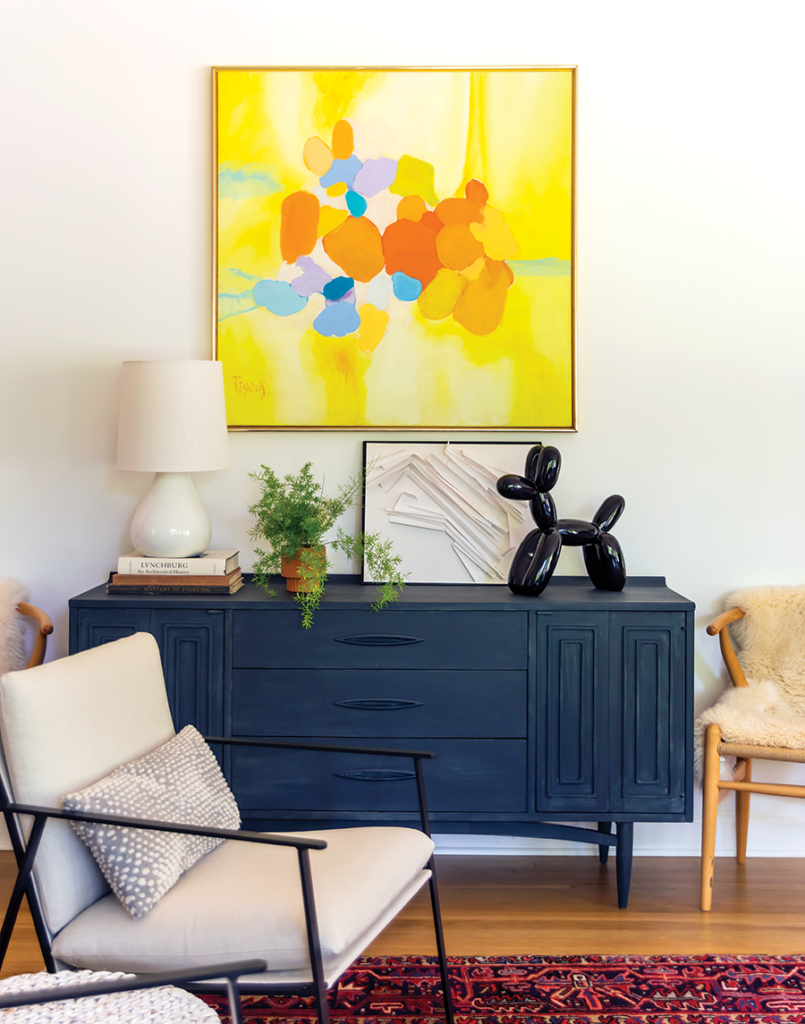
Home Featured in Lynchburg Living September/October 2021. Photo by Daryl Calfee

Abstract Art
Abstract art is an art style in which an artist uses shapes, colors, and textures to create an image that’s not based on reality. Abstract art can take the form of a painting, sculpture, photography, design, or any other art form that doesn’t accurately represent a subject or object.

One of the most unique aspects of abstract art is that it’s always open to interpretation. A viewer doesn’t always immediately know what the piece is about—it is abstract after all—but over time, certain emotional or intellectual qualities can be seen in the piece that can make it uniquely special to the viewer.

Contemporary Art
In short, contemporary art is art that’s made today by living artists. Because of that broad sweeping definition, it’s an art style that is ever-evolving and often reflects the complex issues that shape our diverse and rapidly changing world.

While the art world is still debating what eras technically define the contemporary art style, most can agree that the starting point is the late 1960s or early 1970s.

Within the contemporary art style, more niche movements can be found. Pop art, photo realism, conceptualism, minimalism, and street art are all styles that can be explored if you want your home’s art style to make a statement.

Fine Art
Fine art is artwork that has been created for the sole purpose of being appreciated for its beauty and intellectual or emotional influence, rather than its function. Of course, with art being so subjective, what distinguishes something as “fine art” can be left to the interpretation of the viewer.

Within the fine art style, painting, sculpture, and photography can all be explored for your home. And while there are countless fine artists across different mediums and centuries, a few examples of visual fine artists are Rembrandt, Matisse, Van Gogh, Monet, and Degas.

Home Featured in Lynchburg Living January/February 2020. Photo by Heather Kidd

Determining Your Home’s Art Style
Your goal is to create a stylish and cohesive home, so it’s important to choose not only an art style that resonates with you, but also to find an art style that accents your existing home furnishings.

When you walk into an art gallery or store, have the space you’re hoping to find art for in mind. Maybe even have a photo or two on your phone to use as a reference. Know what the dimensions of the wall are, and the existing color palette of the wall paint, furnishings, and rugs.

From there, slowly walk through the art selections and pay careful attention to the art that evokes an immediate reaction. The old adage “I’ll know it when I see it” has never been more true when it comes to choosing art for your home. If you see a piece of art and it creates a feeling of excitement or positive emotion, it may be something you can work with.

This feeling of excitement and emotion may even help you eliminate the art styles that aren’t quite for you, making your future art shopping trips even easier.
After you’ve narrowed your selections down to the pieces that resonate with you, pull out your handy reference photos and measurements and consider how the piece will work within your existing space. Consider how the colors will play with each other, or how much wall space the piece may occupy. Consider the frame that it’s currently in—if it’s framed at all—and whether the style suits your tastes or if you’ll have to budget for a reframe.

It’s important at this stage to avoid talking yourself into an art purchase. Remember, art is a big investment in and of itself, so if you have to completely rework the rest of your space to accommodate your new purchase, it may not be worth it.

Your art style is a way to express your personality within your home. And just like with any other personal style, opinions can change over time. Allow yourself to continuously explore art of all styles by supporting local art galleries and artists. Learn the colors that strike an emotion, or the details that draw you in. Over time, your home’s art style will become even more honed and beautiful.


Lynchburg Living’s Best Of 2022


To View Best of Business Directory: Click Here


HANDMADE HOME FOR THE HOLIDAYS

Photos by Daryl Calfee

All Belinda Kelly wants for Christmas is power tools and vintage furniture.

Walking through the pink door of Belinda’s home explains why these are a few of her favorite things. The mid-mod furniture rehabber and decor DIY-er has managed to bring both a heaping handful of holiday magic and modern style to her once unassuming 1950s brick house in Campbell County. But the transformation couldn’t have happened without her trusty tools.

“We bought it from the original owners and builder, which was really fun,” she said. “They had maintained it really well but it visually still looked like it was 1959. Which is what we wanted actually, we wanted something that was well maintained but we could come in and make it exactly what we wanted. So we were super happy to find it.”

The home is the second fixer-upper for Belinda and her husband, Ian. Their first home was in truly rough shape when they bought it and, without much in the way of reno resources, Belinda decided to take matters into her own creative hands.

“My husband wasn’t super into building things when we first married but I was like, let’s get some power tools! We can totally do this! And he was totally down,” she recalled with a laugh. “When we bought our first home, I had just had a baby and I’m looking around this house and we didn’t have stuff to fill it and I thought, this feels sad. So I started picking pieces up and refinishing them or painting them, finding things that I liked and changing them to make them more of what I wanted, for less.”

Before long, Belinda’s talent for hunting down that perfect piece in imperfect shape led to not only lovely furnishings for her own home but also new opportunities as others began to take notice. She began selling her refurbished furniture on Facebook Marketplace, gained a following on Instagram (@belinda_fern), and started getting asked by followers and friends alike to help them design their spaces.

“It turned from selling to also people saying, ‘I like the style of your house, can you help me decorate? Can you come help me with my Airbnb? Can you help me design this space?’ So it’s turned slowly into me doing things for other people, from designing to decorating, redoing furniture to furnishing places, and things like that. It’s been a really fun creative outlet,” Belinda explained.

With more experience under their tool belt, the Kellys bought their current house and second fixer-upper. Dark wood walls, walled-up rooms, and centrally located stairs to the basement posed some unique challenges. Belinda focused on the positives she saw, like the original brass hardware and the mid-century style front door, and decided that—once again—it was power tools to the rescue.

“We took down a bunch of walls, took out a couple of doors,” she recalled. “We built the [stair] railings and installed those [around the newly opened stairwell] and built the cabinets on the other side. I love it now. It turned out to be one of my favorite things about the house.”

With the small footprint now much larger and brighter on the main floor, Belinda shifted her focus to the kitchen, where she painted the cabinets and backsplash, built a cabinet to surround the refrigerator, added new pulls, sewed curtains for the windows, and installed new IKEA countertops.

Unsurprisingly, Belinda’s hands-on approach to life has rubbed off on her son, who has been around the couple’s numerous projects since he was born.

“He has his own little hand tools and he will come and do things with us. He is definitely interested in building things, he is constantly creating things out of cardboard, and has shown interest in the projects we are working on,” she said.

As evidenced by the carefully curated pieces and the “where’s all your stuff?” vibe, Belinda has given thought and intention to each part of her home. Neither sparse nor superfluous, each room is warmly but precisely styled, with a place for everything and everything in its place.

“I like things a little more minimal than probably most people. I’m not a hard-core minimalist at heart but I like things to be pared down and feel like they can breathe and be uncluttered,” she explained. “This is also why I like the streamlined feel of mid-century pieces. They have a lot of clean edges, there aren’t a lot of extra curves and things like that going on. They just feel nice and modern, which appeals to me.”

This love for mid-mod style did pose a bit of a challenge for Belinda when it came to holiday decor. With a husband she describes as a “Clark Griswald Christmas lights” kind of guy and a son still young enough to appreciate the wonder of the season, Belinda has invested in discovering items and ornaments that she loves.

“I definitely lean a little Scandinavian anyway, so I started searching for Scandinavian Christmas decor, which is a lot of reds, which I don’t normally do, but I do like little touches of red at Christmas, and little ceramic houses and little trees. So I feel like I’m finally finding what I really like, which is kind of a mix of a bit traditional but also a bit more modern. I really like how it looks this year,” she said.

The one departure from her “less is more” mantra is the tree, which is strategically busting at the seams with ornaments that somehow appear both artfully placed and perfectly at home on each branch.

“It’s big, it’s got lots of stuff on it, [my son] loves to stand and look at the different ornaments and pull them off, and sometimes the dog pulls them off too!” Belinda said. “It’s different than I would normally lean if I were to go pick something, but I actually really love this tree. It has a lot of family ornaments. I really like that we have handmade ones that my husband’s grandmother made and stuff my son has made. It all gets thrown on there.”

Included among her favorite ornaments are those her son has created over the years and one that a friend made for them the year Belinda and Ian got engaged. Traditions in the Kelly household are simple but memorable: making Christmas crafts and an abundance of cookies, plus an annual voyage to Busch Gardens Christmastown. The presents under the tree are carefully chosen, reflecting their home as a whole.

With stockings hung by the chimney with care, no power tools in sight, and unfinished furniture projects tucked away in the basement (for now), Belinda enjoys pressing pause on all of the busywork so she can be present for her family during the memorable holiday season.

But when the New Year arrives, she already plans to add a new skill to her list: “I really want to learn to weld.”


An Old Classic for A New Decade: Grandmillennial Style

Over the past few years, shiplap, barn doors, and whitewash saturated rooms on cable makeover shows as well as houses in our very own zip codes. Much like the hunter greens and oversized couches of the 1990s and the shabby chic craze of the early aughts, the modern farmhouse look took hold of the better half of the past decade.

Well, the times are always changing—and that means interior design trends come and go.
However, the latest look for the new decade isn’t really anything “new” at all. Even though some refer to it as New Traditional, the most recent term is grandmillennial.

Grandmillenials grew up with AOL and early cell phones, and they don’t shy away from modern perks—they just happen to be drooling over the period costumes and gorgeous set design when streaming “The Crown” or “The Marvelous Mrs. Maisel.” This group of millennials adores traditional decor, and they’re updating the classics in a way that’s all their own.

Artistic Classics in Bedford
Reagan Flaherty Sampson lives in a charming country home that she bought and restored two years ago. You might expect to see a farmhouse- or cottage-style at the end of the gravel lane, but once you make your way through the front porch and into the home, you’ll feel like you were transported to a high-end tea room or gallery. “It’s very cozy, but I still have some grand tastes!” she laughs.

Reagan’s mixing of patterns and use of watery hues lends a contemporary effect to an otherwise traditional living space. A wall of gold framed mirrors catches and bounces natural light around the room—a smart design choice that helps balance the visual weight of a wooden armoire.
Reagan purchased many of these at consignment shops over the years, but friends and loved ones also bring them to her when they unearth them during renovation projects or when cleaning out their attics.

The living room is also home to an eye-catching piece of artistic glasswork positioned in the corner. Reagan found the piece at the Bedford Farmer’s Market for $20, but it looks like a million bucks. “It’s actually an old window! I love the way the light passes through it,” she says. She displays the glass on an easel that belonged to her stepfather’s father in the 1940s.

Reagan has a love for older homes—both her current home and previous home are well over 100 years old. “I love bringing things back to their original state while making them functional,” she says.

It’s no surprise that she also has an affinity for furnishings and accessories that come with their own stories. Her favorite piece in this “new” house is a giant armoire in the dining room. “It’s a King Louis XV, and there’s still a sticker on it from when it was shipped over by a boat from Paris!” she explains.

Continuing Traditions in Lynchburg
Another local grandmillennial not only embraces traditional style, but also puts her cherished treasures on full display. Kate Blickenstaff Poats is a local realtor who sets foot in professionally designed interiors daily; however, she chose to style her 1950s ranch home herself. “I like to build my style around things I cherish and things that make me happy,” she explains, such as the framed Gucci scarf hanging on the wall. Kate’s mother owned the scarf and proudly showcased it in Kate’s childhood home. Kate had always admired its beauty and colors.
The scarf is just one symbol of what inspires Kate’s touching sentimentality.

“I want my space to feel warm and inviting, like the way I feel about the home I grew up in,” she explains.

She achieves her design goals in a variety of ways, from shopping local estate sales to surrounding herself with furnishings and accessories that carry special meaning. For example, a framed gold leaf oil painting depicting a Mediterranean afternoon reminds Kate of her time studying abroad in Spain and Italy, and her love for collecting ginger jars led her to buy a set of six paintings of jars by local artist Claudia Stubstad.

A love for traditional style indicates that someone also has an appreciation for the past. “I’m definitely an old soul,” Kate admits.

“I think that’s why I love traditional style—it makes me think of my grandmother and my parents.”

She also prefers rooms that looks collected and curated, so she incorporates heirloom pieces with newer furnishings to create a space with a healthy dose of personality and plenty
of visual interest. A classic Persian rug in the dining room was a local estate sale find.

“I love that it is being passed down from one Lynchburg family to another,” she explains.
Other antique treasures include chairs upholstered with chinoiserie fabric, a collection of blue and white porcelain, floral side chairs—all are at home in Kate’s living space.

Grandmillennial Style for Everybody
If you’re drawn to classic design and furnishings or accessories with history and meaning, then you, too, can develop your own spin on traditional style that looks elegant, refined, and refreshed—even with Grandma’s hutch and china collection on display. Mady Greer of Curtains, Blinds & Bath in Forest works with many younger clients who embrace traditional style.

She believes this style appeals to a new generation because it offers a high-end look and usually incorporates some heirloom pieces.

“Mix in pieces that are timeless,” suggest Greer.

“Use real wooden pieces as opposed to metal furnishings, and start with your living room and
dining room, which tend to have larger, more traditional pieces to begin with.”

It can feel overwhelming to transition out of your current style. Greer recommends sticking to classic shapes for tables, sideboards, and couches—think rolled arms, tufted, or Chesterfield sofas. “All of our customers add their eclectic, niche pieces in their accessories and artwork,” she says.

In a time where the world is moving forward faster than you can download a new app, there’s something inviting and comforting about traditional design, and millennials have caught hold of it and made it their own.


2019 Lynchburg Living Home Feature

Home Made
When a local actor/artist can’t find the modern décor she craves, she creates it herself
By Jennifer Redmond

This is the declaration of a bona fide creative, Mary Catherine Garrison, who channels her artistic energies into a diverse mix of mediums, colors and shapes. Entering her home just off historic Rivermont Avenue is to step into an artistic statement—each element placed purposefully to continue a theme or elevate the senses.

Though she’s an experienced actor with plenty of Broadway and television credits to her name, Garrison says, “Art has always been my first love.” Today, two years into making a home in Lynchburg along with her husband Marshall and son James, Garrison says she’s “sort of obsessed with interior design; I love it.”

Her eye for design is more than evident; one would be hard-pressed to find a single item that doesn’t contribute to the overall atmosphere. If Garrison didn’t already own the “right item” for a certain spot, she simply made it herself. In fact, only a few minutes into our home tour, I quickly noticed a pattern. Nine times out of 10, when asked, “Oh! Where did you find ‘such and such item’?” Garrison’s response would be: “I made it.” The entryway of their 1922 Stanhope Johnson home prominently features one of her own original oil paintings—the subject a tribute to women and the bonds they share. The living room is flanked by shelves she and Marshall built together; a bench they built that she covered with a woven fabric design; and the chair opposite was reupholstered by Garrison. Like many of her projects, she taught herself how to recover the chair as she went. “Anything you want to learn is on YouTube,” she says. “You just have to start.”

Her own pillows grace the couch, custom linen curtains shade the dining room, and—perhaps the most remarkable for its finished effect—the side hutch in the dining room was also her creative vision. By cutting each geometric shape individually with a jigsaw, adding them in an asymmetrical design to simple Ikea base cabinets, sanding them down for a flush surface and staining them to match, she elevated the piece to a dramatic finished product.

Such creative ability is amazing considering the breadth of her endeavors. From macramé plant hangers and wall décor to oil and acrylic painting and from custom ceramic pieces to furniture upholstery (and even building the furniture itself), Garrison says the only medium she avoids is knitting, simply because she doesn’t like it. (One gets the impression she would soon be a master if she did care for it!) She even creates her own clothes and custom earrings—a collection of handcrafted and thrifted vintage finds that grew so large, she launched an Etsy shop.

Her creative vision has filled their 97-year-old house with a fusion of mid-century, vintage and even “80s’ Italian stuff” such as the solid marble table prominently centered in the home’s spacious dining room.

That table, coincidentally, is the result of an online auction that Garrison didn’t expect to win, but win she did. The result was a silent Marshall when she first told him about the table, explaining, “It’s so beautiful, you’re not going to believe it!” Of course, she also had to share the table’s substantial size and weight, which is close to 2,000 pounds. Three trips to New Jersey and a lot of sweat equity later, they successfully moved the table in. Garrison says Marshall “loves it now!” Plus, they have quite the story to tell about its origin.

Moving from their previous home in the Hudson Valley, where they lived in a modest 900 square feet, Garrison was thrilled to have 2,700 square feet to work with in their new home. Not only can she fit items like their dining table, she has space to expand her style too.

“I love the juxtaposition of new and old,” she says. “And I really wanted all of these details,” Garrison says, noting the wood floors and French doors in their home plus the character of details like wainscoting, decorative trim and transom windows. “I wanted to place that against all of the modern.”

The entry represents that well with a mix of personal art, family heirlooms—the secretary belonged to Marshall’s grandmother— and statement pieces—such as the sculptural side table gifted from local family friends.

“I justify my design by saying the house was built in the Art Deco period, which was super modern,” Garrison says.

She has also incorporated plenty of plants throughout; her preference is for succulents and sculptural plants in the rooms that receive less light because they still thrive and add “visual interest.” But in the rear breakfast nook—a light-filled space—plants of all kinds surround the smaller dining table, bringing nature indoors. She says plants add soul to a room and loves having a variety of them.

Garrison has plenty more home improvement plans up that vintage sleeve of hers—fresh colors for the dining room wall, recovering a chair with leather from Moore & Giles, even making the ceramic tiles to redo the fireplace surround. One thing is for sure, where Garrison is, there will be something wonderful to discover.


Customize It
How to Bring Made-to-Order Fabrics into Your Home
By Jennifer Redmond

As much as we can all appreciate scoring a great sale item or that “too hard to resist” trend of the moment à la “The Big Box Store” down the road, there comes a time when high-quality, custom features have their place in each home. Perhaps you’ve moved into a house that you truly want to settle into and are ready to put your own unique spin on. Maybe you spotted that “one-of-a-kind, fall in love at first sight” pattern and just have to find a way to work it into your décor. Or, like me, perhaps you’ve endured enough bargains that had to be discarded far too soon and are now willing to pay the ticket price for items of quality because they’re built to last.

For all of these reasons, choosing to include some custom fabric in your home can be a wise investment. First, there are plenty of ways to use it,
from a duvet cover to window treatments and from a reupholstered chair to throw pillows.

Local design shop Southern Provisions Company offers customized items that could accommodate any style or color scheme. Clients can select any kind of various fabrics, trims and designs such as French pleats or Roman shades for window treatments.

Rebekah Moody, CEO, says that creamy linen is trending locally, especially for drapes, but it’s also okay to “mix and match patterns and, yes, you want to mix up the scale of pattern,” she says. “Too much of the same thing never looks good.”

In terms of why you would want to pay for custom items, Moody says it will look and fit much better, yielding a high-end finish. So, an investment in custom drapery would be a great choice for a visible window or a room that has more prominence in the home. Store-bought, “standard drapes are too long,” Moody says, plus “the finish is cheap.” If you have a traditional eight-foot ceiling but purchase a 96-inch curtain panel, Moody explains that the result will be a puddle of fabric on the floor.

While linen is all the rage right now, Moody explains that pure linen actually “wrinkles and the folds never come out,” so she recommends a linen blend, which is “about 55% linen [and] 45% poly; it has the look of linen, and the drape of poly.” She says the ideal uses for a linen blend are drapes, bed skirts and pillows.

If you’re considering reupholstering some chairs, Katrina Morris, owner of The Morris Manor, recommends focusing on a side chair if you choose a more delicate fabric so it isn’t worn out too quickly. Moody agrees, saying linen will stretch like “a bad pair of jeans” if used for upholstery—unless it has a backing.

Morris also recommends that you consider functionality. She asks, “Do you have children? Then upgrade and get a nice washable velvet or a performance fabric that’s thicker—there’s no reason to get a thin linen if you have children.” If you like the look of linen (which most do!), consider a performance-based fabric that has the look but will last longer. These kinds of fabric are costly but the quality can be worth the investment.

She also recommends opting for a more timeless color scheme and pattern when choosing pricey fabrics; some can run $30 to $50 per yard. So Morris says her current favorite cheetah print is something “I would get tired of, so it’s not worth the cost for a long term investment. I would go for something more timeless that will last longer” such as a striped fabric.

For throw pillows, an easy and personalized option is a monogramed pillow cover, like the ones offered at Moody’s shop. Or, you can “mix patterns and colors for whatever your favorite look might be,” she says. “The trend is to keep large items neutral and make your ‘pops’ [the] items that are relatively inexpensive,” she explains. Taking this approach means less of a cost investment when you’re ready to switch the look, whether out of preference or to create some variety throughout the seasons of the year.


Make a Statement
Turn Heads with a Ceiling Made to Shine
By Jennifer Redmond | Photography by Tera Janelle Design

Coffered Ceilings

“Adding architectural elements is our favorite way to make that ‘fifth wall’ shine,” says Tera Janelle, owner of Tera Janelle Design. These elements include coffered ceilings, or recessed panels that can be trimmed in a variety of materials to create a grid-like pattern. According to ThisOldHouse.com, one popular style is “bold beams” set in a square or rectangular grid, which then adds “dimension and character to a plain room.”

The depth and size of coffers can affect price and work outlay, and though box beams (hollow wood beams) are larger and more involved to install, they have a more dramatic effect as well.
“To me [box beams] just announce quality, stating ‘this builder took the time and expense to add beautiful detailing’,” Janell Beals writes for Houzz.com. “The millwork adds timeless character and is seen most often in traditionally-styled homes, but [it] does occasionally show up in unexpected places with success.”

Once placed, you can paint the beams and coffers the same color, or, for a more dramatic statement, or especially high ceilings, paint the inside, recessed portions of the grid a darker, more striking hue. One of those “unexpected places” that Beals notes may be using the style in a home with a rustic or farmhouse style.

Katrina Morris, owner of a 100-year-old local farmhouse known as The Morris Manor, says she has been seeing much more bead board in coffered ceilings lately. “It doesn’t have to be wide and overstated,” she says. “It’s more understated…they add a nice element.” Benefits to this look is that it’s less work-intensive, “adds timeless character,” and is less expensive. For a small bedroom, Morris says you would need only 4’x8’ sheets of bead board (these run around $20), which are then trimmed with 1”x4” pieces of wood to create the grid pattern. After install, “painting it white gives it more of a cottage flair,” Morris says. “And, it can actually help the room feel bigger; you can do this on an 8’ ceiling; it doesn’t take up ceiling space and adds great visual interest.”

Colored Ceilings

“Paint and wallpaper are a great, cost-effective way to customize your ceiling,” Janelle says, recommending that you consider darker colors. “Two shades darker than your walls [will make] a cohesive but impactful statement.”

Morris agrees, countering the myth that dark ceilings would make a room feel smaller or closed in. “If you extend the wall color onto the ceiling, you don’t create a visual break,” she explains; this approach actually has an expansive effect. Morris also adds that a room with natural light can handle a darker color—even black or navy! “With great natural light, black makes a room feel cozy but not closed in.”

Janelle adds that using the trim color in a flat finish for the ceiling will “connect your home’s color palette;” in contrast, “traditional ‘ceiling paint’ can sometimes feel cold” and detached.

Wallpaper is also an option with more removable and highly artistic choices hitting the market all of the time from a wide variety of vendors. Price points range widely as does the quality and ease of placement. For a playroom or a kid’s bedroom, a colorful or bold pattern works well to draw attention up and create a fun atmosphere. In a bedroom or larger communal space, a subtle pattern or even textured paper can work quite well to add dimension and character to the room as a whole.

“Look Up!”

In choosing the best place to make your statement, Janelle favors bedrooms. “These are the rooms where we most often lay and stare at the ceilings, making bedrooms especially fun to embrace a ceiling change,” she says.

Powder baths are a great option as well, Morris says, especially for a darker ceiling or the bead board coffers. She’s also seen bead board on ceilings all throughout the main living areas of a home, especially if it has an open layout. Morris has also seen cedar beams used but those should be left unstained or unpainted. “This choice is more for the rustic or farmhouse look,” she explains.

Whatever you choose, remember the words of designer Albert Hadley: “Ceilings must always be considered. They are the most neglected surface in a room.”


Choosing the Perfect Patio Furniture
What to keep in mind before making a big purchase
By Chris Templeton, Owner, CLC Landscaping and Rustic View Home and Garden Center

Your outdoor space can serve as a second family room. Whether you have a porch, patio, or firepit, any outdoor furniture you choose can add comfort and function. You want it to be welcoming and comfortable with beautiful, durable and functional patio furniture of all styles, sizes, colors and materials.

We’ve had our share of cold and rain in Lynchburg this past year, so you are definitely going to want to get outside with family and friends and enjoy the outdoors this spring! The perfect living space can make all the difference, and hey—why not have it look great, too?

Planning

Before selecting your outdoor furniture, you want to be crystal clear about what it is you want. Are you simply looking to add some functional space to your outdoor area? Or do you want to provide a certain aesthetic appeal using your new furniture? Your lifestyle should play a big role in choosing patio furniture, so think about how you live and how you entertain.

Without this level of planning, your outdoor space could soon consist of mismatched pieces that don’t serve any real functional purpose. Done right, however, your yard can offer you the promise of relaxation, entertainment, and fun!

Sizing Issues

Each piece of furniture will occupy space, right? It seems obvious, I know. However, while most homeowners and designers understand this, they don’t always remember to take into consideration how much space they have. For example, a simple patio won’t be able to accommodate an entire backyard’s worth of furniture without looking very cluttered and taking away from its functional use. But a gigantic garden with a couple of benches won’t make use of all the available space you have.

Take detailed measurements of the outdoor spaces you intend to place your new furniture in. This will help with your initial design selections by choosing appropriately sized pieces for each of the areas. It will also help narrow down the available options, since each piece of outdoor furniture will measure differently. It’s good to have a thorough understanding of what’s available to you.

Consider Function

Once you have your plan in place, and you know what size furniture you can accommodate, you need to think about the visual appeal that your furniture can bring to your outdoor space. However, only considering the aesthetics is very short-sighted. Any furniture, especially outdoors, must serve a purpose.

Functionality is best determined by making sure any given piece of outdoor furniture or set will work in your specific outdoor area. Since you’ve already measured the areas, you know what space you need to fill and what’s available. Once you know what furniture may fit where, and what looks good, you want to test for practical function. What do you plan to do there? If you want to be able to eat meals at your outdoor table, make sure it’s stable and sturdy. Or if you plan on hosting parties, make sure your furniture will accommodate enough people!

Don’t forget to sit down and test it out yourself! There’s little point buying several pieces of outdoor furniture that are uncomfortable and unpleasant to use, especially if you plan on sharing your outdoor space with guests.

Consider Materials

The durability of outdoor furniture is often overlooked in favor of aesthetic appeal. Outdoor furniture will be put up against the elements on a regular basis. Make sure you’re getting solid, durable pieces of furniture that can handle our temperamental Lynchburg weather! Weather-resistant cushions should also be a staple purchase when choosing any piece of outdoor furniture.

Quality

Don’t select your outdoor furniture on price alone. While it can be tempting to save money, it will ultimately be costlier if corners are cut in the interest of saving money. Buy the best quality outdoor furniture you can afford. A low-priced set of patio furniture won’t end up saving you money if it falls apart in just a few years. Invest in quality—you will not regret it.

Finally, don’t rush the process of selecting your outdoor furniture. Try to avoid the impulse to buy the first patio set you see sitting out in front of hardware stores when the weather gets nice. Keep these tips in mind and select the right furniture for your outdoor living space. Whether it’s enjoying the sunshine and warm weather outdoors with friends, or gathering by the fire pit, getting the right furniture will make a world of difference!