As summer settles in, there’s no better time to explore the rich history and vibrant arts scene that define our region.
From captivating theater performances to immersive historical sites, Lynchburg offers a unique blend of culture and storytelling that brings the past to life. Whether you’re rediscovering familiar landmarks or venturing to new experiences, this guide is your perfect companion for an unforgettable summer filled with adventure.
Service through Sustenance & Skills
Park View Community Mission’s Comprehensive Fight Against Food Insecurity
By: Emily Mook | Photos By: Ashlee Glen
For many of us, food can be both fun and frustrating. When it comes to our culinary experiences, our emotions may range from excitement about trying a new recipe or restaurant to ennui over planning and preparation. We consider notions of form, function, and perhaps even presentation, and we may forget what a privilege it is to think about food in such certain terms and to contend with things like indecision and overwhelm rather than hunger and food insecurity.
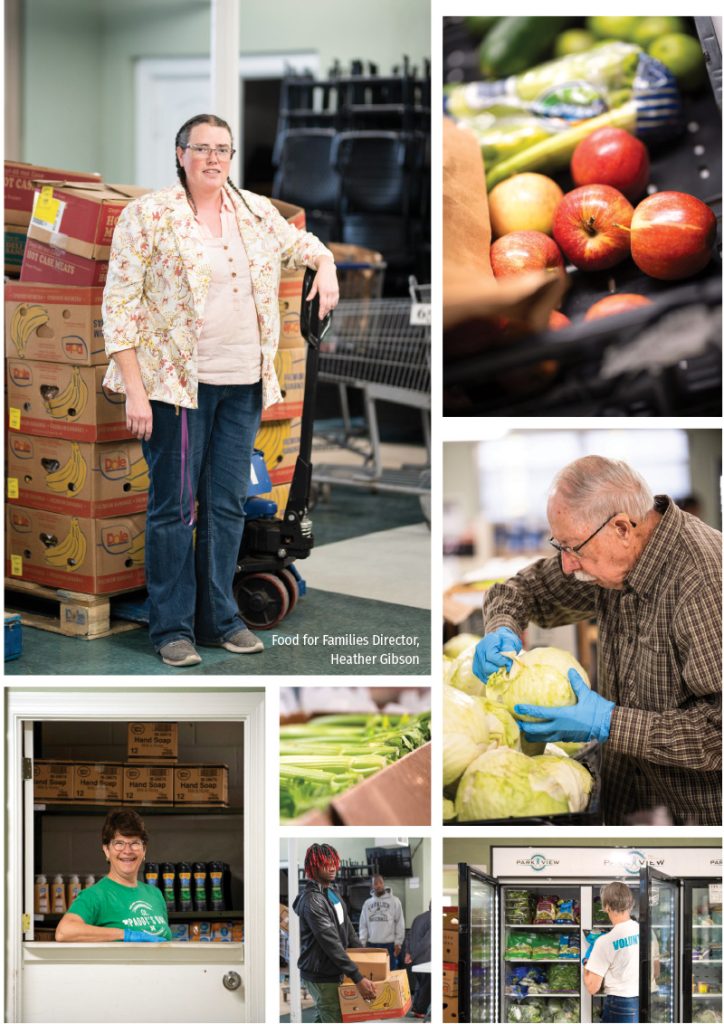
Merriam-Webster defines food insecurity as “the fact or an instance of being unable to consistently access or afford adequate food,” and according to the 2024 USDA Food Security Report (the latest data available), a staggering 13.5 percent of U.S. households experienced food insecurity in 2023. Lynchburg’s statistics mirror that figure very closely; according to Park View Community Mission’s Food for Families Director Heather Gibson, the latest Feeding America’s “Map the Meal Gap” data indicates that 13.6 percent of Lynchburg’s citizens are food insecure. That data also indicates that surrounding counties aren’t too far behind: Appomattox is at 12.1 percent, Amherst is at 11.8 percent, Campbell County is at 11.2 percent, and Bedford is at 10.7 percent. As these numbers continue to climb globally, nationally, and locally, food-distributing nonprofits are experiencing more demand than ever before and thus need more attention and community support than ever before. Lynchburg is home to several such organizations, including the outstanding and uniquely comprehensive 501(c)(3) Park View Community Mission.
Located at the corner of Memorial Avenue and Wadsworth Street, Park View Community Mission began as a weekly Wednesday night dinner service in 1996. It was spearheaded by the late Fred Fauber and the late Larry Brooks and initially run by members of the now-disbanded congregation of Park View United Methodist Church. Those weekly dinners continue today as the Park View Café, providing at least 100 meals each Wednesday from 4:30 to 5:30 p.m. A carryout setup—introduced after the onset of the COVID-19 pandemic—allows neighbors to dine in or take their meals to go. Volunteers (and Park View staff, as needed) conduct all steps of the process.
“Typically, we have various groups cook and serve the food,” Gibson noted. “Volunteers can come and help set up, serve, and take down at the end of the dinner. If they want to cook, they can reach out to the director of the Café and she can schedule a time for them to cook. If we don’t have enough volunteers, then the staff pitches in. Due to the bad weather in February, we had a group cancel, so I cooked chili for 100.”
After 20 years of providing weekly meals, Park View added a service that would ultimately become the cornerstone of their organization: a food pantry called Food for Families. Since its creation in 2006, Food for Families has grown into Lynchburg’s largest food pantry and into the largest client-choice pantry in the state west of Richmond.
The pantry is open from 9:30 a.m. to 2:00 p.m. on Thursdays and Saturdays, and emergency food bags are available to anyone who needs them on the days the pantry isn’t open.
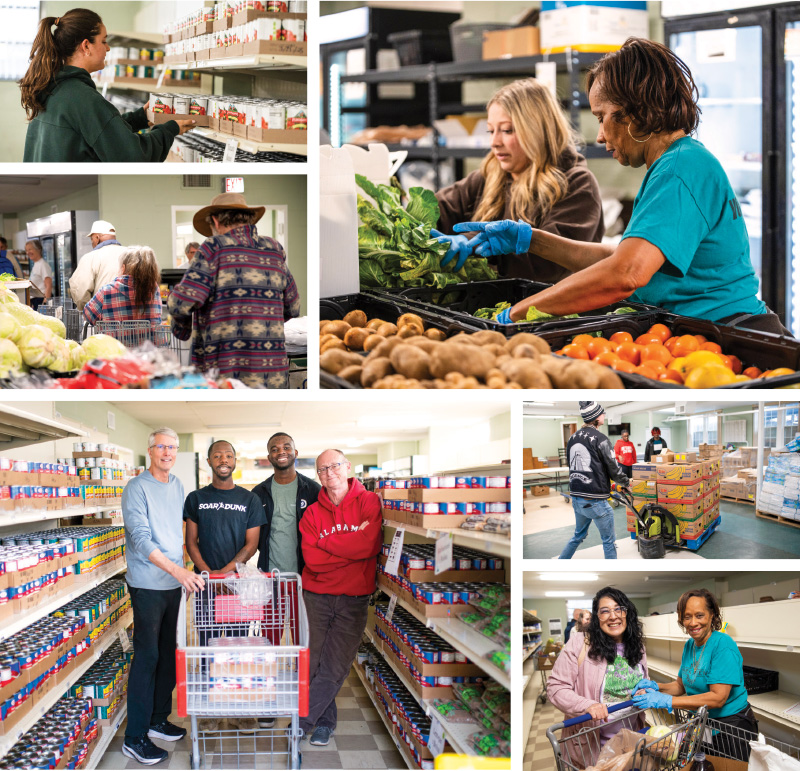
“We began serving groceries to about 40 families per week, and we now serve over 400 families each week,” said Gibson. “In 2024, Food for Families served 16,479 families from Lynchburg, Amherst, Appomattox, and Bedford and Campbell Counties. We receive USDA food from the Blue Ridge Area Food Bank; this food is given free to anyone living in Virginia whose yearly income is below 250% over the poverty line. We also receive weekly donations from Walmart, Kroger, Panera, Little Caesars Pizza, Flowers Foods, Tree of Life Midtown, and Starbucks. Along with these donations, we receive donations from food drives done by churches and businesses along with donations from individuals. We can always use non-perishable donations.”
Park View also welcomes non-perishable donations for its Food for Thought initiative, which provides food during the weekends to Lynchburg students in need. Launched in 2018, this initiative provides elementary school students with bags including two breakfasts, two lunches, and three dinners and middle and high school students with access to food pantries.
“Students are identified by the guidance counselors of the schools, and parents sign a permission slip to allow their children to receive food,” Gibson stated. “Each school decides how to distribute the bags at the end of the day on Fridays. Some do it in the hallways and some in the last class of the day. Foods given out include ravioli, tuna, chicken noodle soup, cups of mac & cheese, individual cereal cups, shelf-stable milk, and snacks. Food for Thought provided 38,865 weekend meal bags last year.”
Food insecurity is a complex issue that extends beyond food scarcity, and thus the fight against it necessitates holistic education and support.
Park View’s remaining initiatives—the Clothing Connection, the Community Resource Center, and the Life Skills Institute—allow the organization to address and mitigate other roadblocks to food security.
The Clothing Connection provides free clothing, the Community Resource Center provides eviction and utility assistance and matches neighbors with other organizations as needed, and the Life Skills Institute imparts practical life and career skills.
“Our Life Skills Institute provides job readiness training through the ‘Vital Skills with Jeff from CVCC’ series,” remarked Gibson. “It teaches the necessary soft skills for retention, interviews, making career goals, and networking. LSI has classes on financial wellness and computer skills, as well as a series of cooking classes through the VA Extension Office. We also provide clothing for job interviews and to start your new job.”
In addition to offering these six invaluable initiatives, Park View is dedicated to raising community awareness about food insecurity and about how to join in the fight against it.
“We have an educational component to make people in the community aware of food insecurity,” Gibson said. “The directors of the programs are always willing to discuss Park View with civic groups, college classes, and churches. We also have the Teal Bag Initiative that has a food drive and educational components. We will give any organization a presentation and will provide teal reusable shopping bags with lists of needed items. We then arrange a pickup time for the bags.”
As demand for these comprehensive services continues to rise, Park View is hoping to find a larger physical space to meet that demand.
“With the increase in neighbors, we have outgrown our physical space,” noted Gibson. “Our neighbors have to wait outside until their numbers are called before they can come inside. We are looking at options to be able to serve more families in our community.”
Community awareness and support are critical in ensuring that Park View Community Mission can continue to serve our most vulnerable neighbors. As we consider our feelings about and relationships with food, may we also consider the feelings and needs of those whose relationships with food are less secure.
“Individuals can help in the fight against food insecurity by donating to local food pantries in both time and money,” Gibson stated. “It takes quite a few people to help stock the pantry and then help our neighbors grocery shop during distributions. The most rewarding thing about my job is knowing I am helping to feed our neighbors, but the most challenging thing is making sure I have enough food to go around.”
Weed Less, Grow More
A Native Gardener’s Guide to Long-Term Success
By: Lindsey Cline-Shrader
In the early days of my garden, weeding became a kind of ritual. I’d save phone calls for the task—earbuds in, kneeling in the dirt, losing track of time while I yanked out invasive plants and tried to stay ahead of the chaos. There was something satisfying about the rhythm, but I realized I was also giving weeds the perfect conditions to thrive.
Weeds are opportunists. Bare soil, open space, and soil disturbance create the perfect storm for unwanted plants to thrive. Remember you can follow these tips and plan like a pro—but weeding is still part of the garden contract, written in clay and weed seeds.
Learn Your Weeds and Pull Them Early
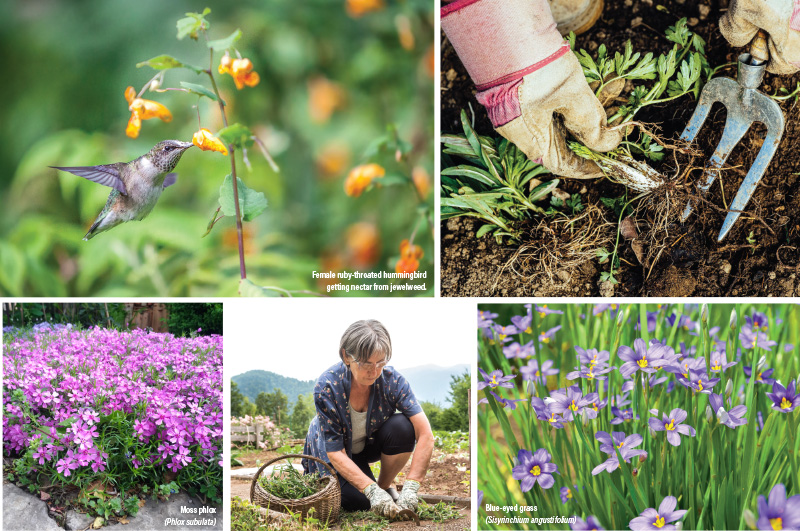
First, knowing what you’re dealing with can maximize your efforts and help avoid pulling beneficial plants. I once mulched right over jewelweed—now one of my favorite native “weeds” that provides crucial nectar for migrating hummingbirds. While apps aren’t perfect, I’ve found PictureThis highly accurate in identifying common weeds and native lookalikes. Double-check IDs when possible through extension offices, the Virginia Native Plant Society Facebook group, or a field guide. Then you can look up its life cycle, how it spreads, and how to remove it if needed. It’s helpful to know if weed root pieces can resprout, like mugwort, so you know it’s worth extra time to dig it out thoroughly or if a quick pull makes a difference.
Weeds tend to show up most in disturbed areas and during the first few seasons of a new garden.
The key is to pull them while they’re small. At this stage, the plant’s roots haven’t established deeply, nor have they had a chance to set seed.
Weekly walkthroughs in the garden allow you to catch trouble spots early. A five-minute weed pull now can save hours down the road by preventing seed spread or fast-growing rhizomes.
Dense Planting: Crowd Out the Competition
One of the most effective tools in weed mitigation is dense planting. Closely spaced plants shade the ground with their foliage, blocking sunlight from reaching weed seeds and preventing them from germinating. This method mimics plantings found in nature where the ground is always covered with plants (except in mature forests, where deep leaf litter takes over).
Groundcover plants are key—adding color and interest and outcompeting weeds for light, moisture, and nutrients. My favorites are violets, moss phlox for sun (Phlox subulata), woodland phlox for shade (Phlox divaricata), native coral bells (Heuchera Americana), or the many varieties of sedges (Carex spp.). You could also try partridge berry (Mitchella repens), lyre-leaf sage (Salvia lyrata), or blue-eyed grass (Sisyrinchium angustifolium).
Go Easy on the Compost
It’s tempting to add compost or fertilizer to “support your plants,” but richer soil can work against you when it comes to weeds. Many fast-growing weeds thrive in nutrient-rich soils, and research shows that weeds can absorb added nitrogen and phosphorus more quickly than many ornamental or native species, giving them a competitive edge. Native plants are adapted to native soils and grow beautifully without added nutrients.
Say No to Systemic Herbicides
While chemical herbicides promise convenience, systemic products—including pre-emergent granules—can have serious ecological consequences. These chemicals persist in soil, harming beneficial fungi, bacteria, and invertebrates critical to healthy plant growth. Herbicides have been linked to pollinator decline, affecting bees and butterflies that rely on garden plants for food. A new study published in Science magazine recently showed that butterfly populations in the US are down 22 percent in the last 20 years.
Organic methods call for time and planning, but they protect the biodiversity we rely on for pollination and pest control.
A Living Solution to a Persistent Problem
Mulching and pulling sprouts early help beat the weeds while your ground covers fill in the gaps.
That early attention can stave off the July jungle, giving your plants time to fill in before invasive plants gain ground.
I still take calls from the garden with my favorite weeding tool in hand—because some things, like death, taxes, and weeds, are just part of life. But with the right approach, there’s a lot less of it. The goal isn’t perfection—it’s balance. With the right approach, the weeding gets easier, the soil gets healthier, and the garden starts to take care of itself.
What to Pull & What to Let Be
A quick guide to common weeds in Central Virginia
Japanese Stiltgrass
(Microstegium vimineum)
An aggressive annual grass that spreads by seed. Smother with mulch or wood chips in early spring and densely plant over. Mow once in late summer, just before flowering. Cut low to remove the hidden cleistogamous (self-pollinating) flowers tucked in at the base of the leaves.
Creeping Charlie
(Glechoma hederacea)
A low-growing, creeping ivy that thrives in disturbed, shady lawns. Suppress it with healthy plant cover and regular mowing.
Mugwort
(Artemisia vulgaris)
A fast-spreading perennial by rhizomes.
Mow before seeds mature in summer to prevent spread. Pull young plants in spring before rhizomes develop. Smother with landscape fabric, and stabilize bare soil to reduce future growth.
Better Left Alone (or Tolerated):
Native Strawberry
(Fragaria virginiana)
Often mistaken for a weed, this spreading ground cover feeds bees and birds and helps stabilize soil in sunny or partly shaded spots.
Violets
(Viola spp.)
Native, early-spring bloomers that spread easily. While not everyone wants them in their lawn, they’re great for pollinators and ground cover in shady spots.
3 Days, 30 Attractions, 30 Miles
A scenic 3-Day drive offers much to do in the southern gateway to the Shenandoah Valley.
SPONSORED CONTENT / Written by Hope S. Philbrick, Editor Foodie Travel USA.
Make the most of a three-day weekend by visiting Rockbridge County, Virginia. More than 30 attractions are located within a mere 30 miles of one another, so it’s easy to pack as much adventure as you’d like into your stay.
Flanked by the Blue Ridge and Allegheny Mountains, Rockbridge County offers heart-pumping adventures, charming towns, farm-fresh cuisine, historic sites, and so much more.
Use this south-to-north guide to drive scenic U.S. Route 11.
Southern Rockbridge
One of Virginia’s most historic thoroughfares, Route 11 has a 200-year history and is also known as “The Wilderness Road.”
Described by Thomas Jefferson as “the most sublime of nature’s work,” Natural Bridge State Park is a genuine “wow.” Estimated to be at least 500 million years old, this 30-story high natural wonder is simply magnificent.
Descend 34 stories into the earth at The Caverns at Natural Bridge, the deepest on the East Coast, to see formations on a 45-minute guided tour.
Walk through the weirdly hilarious Dinosaur Kingdom II, an artistic display that imagines how the Civil War might have been fought using prehistoric creatures.
At the 180-acre Virginia Safari Park, the state’s only drive-through safari adventure, drive through in your own car, feeding hundreds of animals along the way. Stroll through a ten-acre village for encounters with graceful giraffes, bright birds, and other content creatures.
Great Valley Farm Brewery & Winery produces Belgian-style ales using ingredients from its 27-acre farm.
Halcyon Days Cider Company produces hard ciders from 50 different apple varieties grown in an orchard that’s a stunning labyrinth that’s an adventure itself.
Virginia Gold Orchard is a small farm best known for its juicy Asian pears. Blackberries, raspberries, persimmons, chestnuts, jujubes, local honey, and heirloom vegetables are also available.
Lexington
Several attractions are clustered in close proximity in the charming college town of Lexington, so park your car for free at the Visitor Center and explore on foot.
Local “wild farmhouse beers” made from regional ingredients are on tap at Heliotrope Brewery. Sip your pick alongside creative brick oven pizzas.
Climb aboard a horse-drawn tour with Lexington Carriage Company, and a team of spunky horses will roll you through town while a friendly guide highlights local history.
Oak Grove Cemetery honors more than 3,000 people including General Thomas “Stonewall” Jackson, 144 Confederate veterans, two Virginia governors, and Margaret Junkin Preston, “the Civil War Poet Laureate of the South.” Book a Haunting Tales Ghost Tour to delve into the city’s eerie past.
Jackson House Museum, the only home ever owned by General Thomas “Stonewall” Jackson, shares the story of family life on the eve of Civil War. Visit, tour, shop and stroll the gardens.
Campbell House, a historic house built in 1845, displays local furniture and artifacts indoors and lovely gardens outside.
University Chapel & Galleries, a part of the university’s Institutional History Museum and Galleries, shares the post-Civil War Reconstruction story of Robert E. Lee, through artifacts such as the Recumbent Lee statue, an exhibition on President Lee’s Office, and exhibitions that detail the history of the chapel.
Virginia Military Institute Museum houses 15,000 artifacts, from a Revolutionary War musket to seven Medals of Honor awarded to VMI alumni. The firearms collection includes more than 450 rare and one-of-a-kind pieces.
Miller’s House Museum at Jordan’s Point presents the area’s industrial and transportation history inside a house built in the early 1800s.
Buena Vista
The Chessie Nature Trail connects Lexington and Buena Vista, two delightful Virginia Main Street Communities that straddle I-81. The seven-mile trail is located along the former Chesapeake and Ohio Railroad.
A short 6 mile drive, visit the quaint town of Buena Vista, which is nestled in the majestic Blue Ridge Mountains and flanked by the Maury River and George Washington National Forest. Among its attractions is Glen Maury Park, a 315-acre playground that boasts wooded hiking/cycling trails, Kids in Park TRACK Trail, an Olympic-sized pool, campgrounds, disc golf course, and more.
Meander the River Walk alongside the Maury River. See the Paxton House, a National Historic Place built between 1828 and 1831. Roll onto or hike alongside the Blue Ridge Parkway for spectacular views along what’s billed as “America’s Favorite Drive.” The famed Appalachian Trail is just nine miles outside of town.
Northern Rockbridge
Virginia Horse Center is a world-class, 600-acre equestrian event facility with eight barns, 11 show rings, two arenas, a cross-country jumping course, and huge coliseum. Over 80 events take place each year, including horse shows, rodeos, and Balloons Over Rockbridge Hot Air Balloon Festival.
Devils Backbone Outpost Tap Room & Kitchen produces more than 50 different beers based on European brewing traditions throughout the year.
Roadmap CoffeeWorks focuses on sourcing top-quality beans from Latin America and Africa roasted on-site. Enjoy a coffee flight, sip hot or cold coffee drinks, and grab a pastry.
Hull’s Drive-In Theatre, a local landmark since the 1950s, boasts the area’s largest movie screen. Watch a double feature sitting in your car.
Built in 1756, Timber Ridge Presbyterian Church sits behind a marker for the Sam Houston Birthplace. Born in 1793, Houston served as commander-in-chief of the Texas army, President of Texas, U.S. Senator, and Governor.
The Lavender Fields at Tantivy Farm is a pleasant stop for all of your senses. Whiff blooming fields (in season), hike to a picturesque waterfall, taste lavender ice cream, shop for lavender-infused soaps, enjoy peaceful quiet, and more.
A must-stop for quilters and the people who love them, The Quiltery is a supply store packed with patterns, fabrics, notions and more.
At Cyrus McCormick Farm enjoy a picturesque setting then tour a barn filled with exhibits about the invention of the grain reaper that kick-started the mechanical revolution in agriculture.
Rockbridge Vineyard & Brewery produces small-batch wines and beers in a range of styles. Enjoy a glass while gazing out at the 17-acre vineyard.
See the oldest continuously operating commercial grist mill in the Shenandoah Valley at Wade’s Mill, where local grains have been stone-ground in the traditional way since 1750. Stock up on grits, cornmeal, flour and other treats to take home.
To quench thirst and hunger along Route 11 there’s nothing like a country store to sample true local flavor while stocking up on road-trip snacks plus goodies to take home. From salty country hams to sweet jams, Virginia peanuts to Route 11 Potato chips, fresh-made pies to slow-smoked barbecue, there’s much to make mouths water at a country store. Visitors and locals flock to Coiner Country Store, Gertie’s Country Store, Layne’s Country Store, and Natty B’s Country Store.
More To Explore…
To the north – Discover the North Rockbridge Trail, which is comprised of some of the attractions mentioned above plus additional farms, farm shops, antique stores, fabric shops, vineyards, and bed and breakfast accommodations.
To the west – Explore Goshen Pass Natural Area Preserve, a 936-acre preserve protecting the 3.7-mile Goshen Pass gorge on the Maury River. This natural treasure boasts steep slopes, jagged rocks, cliffs, river and shoreline, as well as forests and woodlands.
Wanna Go?
LexingtonVirginia.com
540-463-3777
Artist Profile: Anthony Bowes
Painting with Purpose: Artist uses his talent and love for art and nature to inspire others
By: Megan L. Horst | Photos by: Ashlee Glen
As a born and raised Virginian, Anthony Bowes grew to love and appreciate the Blue Ridge Mountains and has drawn inspiration from the beauty of God’s creation.
“I’ve always enjoyed the outdoors and getting outside, so that plays a big part in my inspiration coming from the landscape,” Bowes said. He explained that when he looks at something, he sees it from the point of view of an artist.
“Ultimately, my goal is to represent the thing that I’m depicting while drawing attention to how I experience God’s natural world,” Bowes said. “It’s my hope to invite the viewer to pause and reflect on the landscape in a way that is both intimate while expansive, capturing the restless beauty of the Blue Ridge Mountains.”
Bowes began his career as an artist at a young age. With the encouragement of his grandmother, who was an art teacher, Bowes first showcased his artwork at the age of seventeen. Shortly thereafter, he painted a portrait of a fallen State Trooper, gifting it to the trooper’s family.
“Their reaction to my painting changed my life forever,” Bowes recalled. “It was this painting, and how I saw it affect a family in such a positive way, that led me to truly believe in myself and my art.” This experience gave him a passion to bless families who have lost loved ones with paintings.
“I want to continue to give back in that way,” he said.
Since his career launched, Bowes has sold over 400 paintings. He has also won “Best Artist Under 30” for Plein Air Magazine, and one of his oil paintings won a second-place award at the 31st Annual Art Show of Moneta, Virginia.
Although he has been successful, he made a point to note that it has not always been an easy journey.
He desires to encourage other artists to continue pursuing their talent even when it is challenging or when you must work a side job to support yourself as an artist.
“Just because you’re doing something on the side doesn’t mean you are not an artist or any less of an artist,” Bowes said. “Just because things aren’t going the best now doesn’t mean God still doesn’t have a plan for you and the gifts that he has given you.”
Bowes said he never takes the gift the Lord has given him for granted.
He has a desire to use his talent to help others and has found ways to not only inspire people through his paintings, but also raise funds for various organizations. One of the charities he participated in was a series of auctions that benefited the Virginia Capital Trail Foundation and the Christian Wood Scholarship Fund.
“Originally, I tried to do all this stuff for myself in trying to find my identity,” Bowes said. “But now I just give glory to God for the gifts he has given to me and not take them for granted.”
Gardens for Mindful Eating
Growing Your Own Nutrient-Rich Produce
Gardening offers a pathway to better nutrition, improved mental well-being, and a closer connection to the food on the plate.
As communities increasingly seek ways to enhance overall wellness, the garden emerges as both a source of nutrient-rich produce and a sanctuary for mindful living. Numerous studies affirm that time spent tending a garden not only boosts physical health but also nurtures mental clarity and emotional balance.
Research also indicates that regular gardening can lower stress hormones, improve mood, and even enhance cognitive function.
A garden is more than a plot of land—it is a living classroom where the journey from seed to table unfolds. Each step, from selecting seeds to harvesting a ripe tomato, deepens an appreciation for nature’s cycles. For example, a study in environmental psychology noted that individuals who engage in gardening experience measurable reductions in cortisol levels, the body’s primary stress hormone (van den Berg and Custers, 2011). Such findings support the idea that the focused, repetitive tasks of gardening encourage qualities like patience and reflection, which are central to the practice of mindful eating.
When produce is grown in a backyard or community garden, its nutritional value is often superior to that of mass-produced items. Soil enriched with organic matter fosters robust microbial ecosystems that help plants absorb a full spectrum of vitamins, minerals, and antioxidants. Research in soil science has demonstrated that nutrient-dense, homegrown produce can contain higher levels of essential nutrients—such as vitamin C, potassium, and magnesium—compared to items that have traveled long distances before reaching the consumer. This reinforces the notion that what nourishes the body truly begins in the soil.
Nutrition experts assert that a diet abundant in homegrown vegetables, fruits, and herbs can lower the risk of chronic diseases while enhancing overall health. Diets rich in leafy greens, cruciferous vegetables, and aromatic herbs have been linked in longitudinal studies to reduced rates of heart disease, certain cancers, and metabolic disorders. In addition, research also suggests that incorporating fresh, nutrient-dense produce into one’s diet improves overall diet quality by increasing fiber intake and reducing reliance on processed foods. For those striving for a healthier lifestyle, planting a garden becomes a proactive step toward integrating more nutrient-rich ingredients into daily meals.
The benefits of gardening extend far beyond the harvest. Daily routines such as watering, weeding, and pruning provide moderate exercise that can improve cardiovascular health, build strength, and enhance flexibility. Regular gardening activities burn calories at a rate comparable to other forms of low-impact exercise. Such physical activity, combined with the restorative influence of nature, creates an environment where both body and mind flourish. Moreover, exposure to fresh air and natural sunlight boosts vitamin D production, a critical component in maintaining bone health, immune function, and mood regulation.
The garden also offers a welcome respite from the constant distractions of daily life—from incessant cell phone notifications to the onslaught of the daily news cycle.
Even short periods of time spent in a natural setting can decrease heart rate and lower blood pressure, while also promoting a state of mental calm.
The journey toward mindful eating begins with a deeper understanding of one’s local environment and the seasonal opportunities it offers. Gardeners across the country face unique challenges and rewards dictated by their specific climate and soil conditions. For instance, in zone 7, where we are, early spring presents a narrow window for planting cool-weather crops that thrive before the heat of summer arrives (see sidebar for foods that can be planted in this spring season). Recognizing these regional differences allows gardeners to plan and adapt their practices, ensuring that each seed planted can flourish and contribute to a healthier diet.
In a time when the origins of food are increasingly opaque, cultivating a garden can restore a sense of trust and transparency to your diet. The simple acts of planting, tending, and harvesting reaffirm that healthy eating is attainable through a blend of basic horticultural knowledge, patience, and a willingness to reconnect with nature.
Zone 7 Garden Planting: March & April Produce
Leafy Greens: Lettuce, spinach, and Swiss chard thrive in cooler temperatures.
Root Vegetables: Radishes, carrots, and beets can be sown early for a quick harvest.
Cruciferous Vegetables: Broccoli, cabbage, and kale tolerate the chill of early spring.
Legumes: Peas, including sugar snap and snow varieties, benefit from early planting.
Herbs: Parsley, cilantro, and chives begin well in the cooler months.
A Home to All
Palmera House Opens on Bedford Avenue
By: Izzi Diaz Young | Photos By: Ashlee Glen
Cozied up near the corner of Bedford Avenue is a brand new place where friends, family, and co-workers alike can gather. This venue combines a love of community, a passion for beautiful spaces, and an appreciation for healthy meals. Open since January of 2025, Palmera House has quickly become a pillar in the downtown-adjacent community, welcoming guests with its stunning design, heavy use of natural elements, and comfortable nooks.
Owner Erica Kerns-Calfee always had the concept of a place just like this within her heart. She began her professional career in varying corporate industries, spanning from transportation to interior design. She later transitioned into retail, where she worked at Pottery Barn and J.Crew. Through these career steps, Kerns-Calfee began to better understand the customer experience: what a shopper encounters both visually and experientially is crucial to the bigger picture of any business.
As a longtime lover of Bedford Avenue in Lynchburg, Kerns-Calfee reunited with the street and the city after spending a decade in Texas. She was then, and still is, a frequenter of the businesses that are now her own business’s neighbors, such as Golf Park Coffee and The Dahlia.
“I love spaces that have a magnetic pull,” she said. “I always thought, one day, I want to create something like that. A place where people love to be.”
After returning to Lynchburg, Kerns-Calfee joined the Moore & Giles team as VP of Product Development, Merchandising, and Design, where she worked for three years.
“I have such an appreciation for leather now; its history, anomalies, and how we should choose this material over things manufactured,” she noted. “Taking what could have been waste and turning it into something beautiful and loved for generations. It’s the patina that happens over time to furniture, vessels, leather, and art that makes them so coveted and special. These are the same layers you’ll find in Palmera House.”
Her unique vision and love for all things reclaimed soon took shape into a clear picture. She discovered that the establishment once holding Elliott’s Cleaners was under new ownership by Penny Lane Properties.
“I’ve been in the corporate world for nearly 30 years, so the thought of stepping away and taking this risk felt equal parts terrifying and invigorating,” she added. “We have this one little life to live and to learn, and taking chances is a big part of what gives our lives meaning. So, I decided to go for it.”
She crossed her fingers, pitched her concept, and just like that, Palmera House was in the works.
But the transformation didn’t happen overnight. The building had nearly no roof, no working water or sewer, no working electrical, and broken windows. With the goal of adding two additional floors for apartments above the future shop, there was work to do.
Despite all the challenges these issues may have presented, her imagination cut through.
“I saw it. The exact shop, just as it stands today,” she recalled. “I could see the bodega counter, the living wall, the rugs hanging, all of it.”
From there, the process of turning an aged structure into a new and modern cafe, lounge, and boutique truly began.
“I started with the layout of the space and identifying the partnerships I would need to make it all happen,” Kerns-Calfee remembered. “Then, the collecting began. The basement of my home became an incredible Tetris-like room of furniture pieces. I love that all of them have lived a long life before now and are being rebirthed in a new space to be enjoyed and loved again.”
The intricate and distinctive design choices within the main lounge area itself are only part of the overall picture. When visitors arrive at Palmera House, it might also be in their best interest to come hungry, ready to indulge in some of the flavorful options that span across the menu of Palmera Bodega, the cafe within the business.
“The menu was another fun creative moment,” Kerns-Calfee added. “I love smoothies, bowls, and salads, so I went to work crafting a menu of items that were recognizable, but with a few fun differentiators.”
Palmera Bodega, open from 7 a.m. to 7 p.m., offers guests a menu filled with salads, smoothies, and frozen paletas, to cold brew directly from the shop’s adjacent establishment, Golf Park Coffee. After patrons enjoy their meal, they are invited to travel to the retail side of the shop, where they can discover esteemed brands such as Abigail Ahren, Berg’s Potter, and John Derian.
The living wall serves as any plant-lover’s dream and beyond, as it is overflowing with a variety of alluring plants, pots, plant-care, plant accessories, and more.
The unmistakable comfort and relaxed feel of the shop comes from Kerns-Calfee herself, as she relayed how much it resembles her own living space.
“It’s an explosion of plants and greenery, layered with antique pieces, and stacks of books in every corner,” she continued.
“Home is about surrounding yourself with the things that you love. That is what Palmera House is for me. I hope others fall in love with those things too.”
In conjunction with serving as a bustling cafe during the day, Kerns-Calfee noted her favorite time in the shop is from 4 p.m. to 7 p.m.
“I love when the sun dips, the lights are low, and there is this incredible energy shift.
We pour natural wines and open craft beers,” she said. “Friends are gathering to catch up, play cards, or decompress from the workday.”
The community that surfaces during these hours creates an extremely special time for all who step inside, including Kerns-Calfee, who is reminded of her initial prescience of the space.
When inquired about any future dreams for her business, Kerns-Calfee hopes that it will be a place where people simply love to be. She said she wants it to be the first place someone thinks of when deciding where to go, a place where people enter the doors and immediately feel home.
“I want everyone who walks in to enjoy being here: working, having meetings, and spending time with friends,” she explained. “I want them to always find warmth and kindness from our team.”
The love that Kerns has for the city of Lynchburg is evident. She fondly referred to her town as a “boomerang city,” a place where many of the current residents arrived in their youth and then left to explore other cities and opportunities. But, like so many, Kerns-Calfee made the decision to come home.
“The magnet-pull of Lynchburg stays in the heart. It is such a special place,” she gushed. “I speak to so many people who, like me, have left and returned. To come back to a city I love and create something beautiful for the people who call Lynchburg home truly feels like a gift.”
What’s next for Palmera House? In 2025, the business’s sister company, Casa Nueva on Fort Avenue near the City Stadium, will open as well. Kerns-Calfee described this venture as “a large and incredibly beautiful space that, like Palmera House, will be filled with greenery, bringing the outdoors in for private events.”
The Casa Nueva space will be available for rent, where it can hold larger events or special occasions with an overall ambience that resembles Palmera House.
“If you dream of an outdoor event, but fear the unpredictability of weather, Casa Nueva could be the perfect location! We’re hoping to have the space ready to rent in April of 2025,” noted Kerns-Calfee.
Palmera House reaches out to the community of Lynchburg, welcoming everyone in with not only idyllic ambience, noteworthy meals, and specially curated products, but with a hug and a warm presence that reminds any who enter that this place is their home, too.
Breathe Easy
How to Keep the Air in Your Home Fresh and Clean
By Charlotte Farley
We obsess over meal prepping, skincare routines, and picking the perfect throw pillow, but when’s the last time we thought about the very air we breathe? Spring cleaning isn’t just about tackling that junk drawer or finally dealing with the mysterious sticky spot under the fridge—it’s also prime time to revitalize the atmosphere in your house.
If your home’s air had a Yelp review, would it be five stars or “would not recommend”? Indoor air quality is a big deal, and the good news is that keeping it fresh and clear doesn’t require a degree in environmental science. With a few simple changes, you can breathe a little easier.
1. Vacuum Like You Mean It
Your floors and furniture are basically giant screens, trapping dust, pet hair, and allergens. Vacuuming regularly (with a HEPA filter, if possible) and wiping down surfaces keeps all those sneaky particles from floating around and making your sinuses miserable.
2. Don’t Forget About the Ducts
If you’ve never had your air ducts cleaned, let’s just say… you might not want to look inside. Over time, allergens, dust, and debris build up, affecting both your air quality and your HVAC’s efficiency. A professional duct cleaning can help reduce contaminants and extend the life of your unit—Chris Glass of Duct Dusters of Virginia says it’s a game-changer for anyone who suffers from allergies or asthma.
3. Change Those Filters
Your HVAC unit works hard year-round, and those filters? They’re like little air bouncers, keeping dust, pollen, and pet dander from circulating in your living space. Glass recommends using pleated filters with a MERV 6 to MERV 8 rating and swapping them out every three months—or every two months if your household is, shall we say, high-energy (kids, pets, constant foot traffic).
And while we’re talking HVAC, let’s show it some love. Your HVAC system acts as the lungs of your home, and when that system gets dirty, you’re breathing in all that gunk. Get your setup serviced at least once a year, including cleaning the fans, coils, and HVAC cabinets. And don’t forget about the drains and condensate pumps—sanitizing them helps keep nasty contaminants from creeping into your air supply.
4. Tame The Humidity
Too much humidity can invite mold and mildew to move in rent-free, while air that’s too dry can irritate your skin and respiratory system. Keep humidity levels balanced by using dehumidifiers when needed and fixing any leaks or moisture issues around your household.
5. Open The Windows
Modern dwellings are designed to be airtight, which is great for energy efficiency but not so great for circulation. Crack a window for a few minutes each day to let fresh air in and stale air out.
(If it’s peak pollen season, consider airing out your home in the early morning or late evening when pollen counts are lower.)
6. Choose Greener Household Products
Some household cleansers and air fresheners can actually make indoor environments worse, releasing chemicals known as volatile organic compounds (VOCs). Opt for non-toxic, fragrance-free, or plant-based products to keep the air (and your surfaces) truly clean.
7. Keep Pets Groomed and Tidy
We love our furry friends, but let’s be real—they’re basically walking tumbleweeds of dander. Regular grooming and baths (sorry, Rover) can help keep the air in your home a little less… fuzzy.
8. Maintain Your Home Inside and Out
Glass points out that air quality isn’t just about what’s happening inside. Clogged gutters and drainage issues can lead to excess moisture, which means mold and mildew aren’t far behind. Keep up with your maintenance chores to prevent these problems before they start.
9. Smoke-Free is the Way to Be
This one’s a no-brainer—smoking indoors is basically inviting a cloud of toxins to set up camp in your indoor space. If someone in your household smokes, take it outside—your air, your furniture, and your future self will thank you.
The air in your house should be as crisp as newly washed sheets and it’s not hard to make that happen. With a few simple habits and regular maintenance, you can breathe easy knowing your home is as healthy as it is cozy.
So go ahead and breathe easy! Inhale, exhale, and enjoy that fresh, pure air.
Budget-Friendly Home Updates with Big Impact
Want to refresh your home without breaking the bank? You don’t need a major renovation to make a noticeable difference. Small, strategic updates can breathe new life into your space, enhance functionality, and even boost home value—all on a budget. From simple DIY projects to affordable swaps, these quick wins can transform your home without the hassle of a full remodel.
1. Swap Out Cabinet Hardware
One of the easiest ways to modernize your kitchen or bathroom is by replacing outdated cabinet hardware. Cabinet hardware is like jewelry for your home. Choose finishes that complement your overall style—sleek black or brushed brass for modern appeal, or vintage-style knobs for a more classic touch. New knobs, handles, or pulls can instantly update the space.
Pro Tip: If your cabinets have standard screw placements, hardware swaps are a quick DIY project. If not, use a hardware template to ensure accurate drilling for new holes.
2. Refresh Walls with Paint and Wallpaper
A fresh coat of paint can completely change the feel of a room. Opt for light, neutral tones to make a space feel larger and brighter, or go bold with a statement wall in a rich, moody hue. For added texture and interest, try peel-and-stick wallpaper—a renter-friendly option that offers high impact without a long-term commitment.
Pro Tip: Choose high-quality paint with a washable finish for durability, especially in high-traffic areas like hallways and kitchens.
3. Update Light Fixtures
Lighting plays a huge role in a home’s ambiance. Replacing outdated light fixtures with modern pendant lights, sconces, or chandeliers can enhance a room’s style and functionality. For a quick and budget-friendly fix, swap out lamp shades or add LED bulbs for better energy efficiency.
Pro Tip: If rewiring is required, consider plug-in sconces or battery-operated LED options for an easy installation.
4. Upgrade Interior Doors and Trim
Doors and trim often go unnoticed, but a fresh coat of paint or modern hardware can make them pop. Try painting doors in a contrasting color (like deep charcoal or navy) for a sophisticated look. Adding decorative trim or wainscoting can also elevate the space affordably.
Pro Tip: Peel-and-stick molding is a budget-friendly alternative to traditional wainscoting and is easy to install.
5. Replace Outlet Covers and Switch Plates
Old, yellowed switch plates can make a space feel dated. Swapping them out for crisp white, matte black, or metallic options provides a subtle but effective refresh.
Pro Tip: Coordinating your outlet covers with your wall color can create a more seamless, polished appearance.
6. Enhance Your Entryway
First impressions matter, and the entryway sets the tone for your home. Refresh the front door with a bold color, add a new doormat, and upgrade house numbers or your mailbox for a stylish curb appeal boost.
Pro Tip: A large potted plant or seasonal wreath can add warmth and charm to your front entrance without a big expense.
7. Install a Backsplash
A new backsplash can redefine a kitchen or bathroom without the need for a full remodel. Peel-and-stick tiles offer an affordable and renter-friendly alternative to traditional tile installations.
Pro Tip: For a classic, timeless look, opt for subway tiles in a neutral shade.
8. Refresh Flooring with Rugs or Peel-and-Stick Tiles
If replacing floors isn’t in the budget, consider layering large area rugs or using peel-and-stick vinyl tiles to cover
outdated flooring.
Pro Tip: Rugs not only enhance aesthetics but also provide warmth and noise reduction in high-traffic areas.
9. Improve Storage and Organization
Decluttering and incorporating smart storage solutions can make your home feel instantly more polished. Use baskets, floating shelves, and storage ottomans to keep everyday items neatly tucked away.
Pro Tip: Rearranging furniture to create better flow can make rooms feel larger and more functional without spending a dime.
10. Modernize Window Treatments
Ditch outdated blinds and heavy drapes in favor of light-filtering curtains or sleek roller shades. Window treatments can dramatically change the feel of a room while enhancing natural light.
Pro Tip: Hanging curtains higher than the window frame can create the illusion of taller ceilings.
Upgrading your home doesn’t have to be costly or time-consuming. These budget-friendly projects can breathe new life into your space, increase functionality, and enhance your home’s overall appeal. Whether you’re planning to sell or just want to love your home a little more, small changes can have a big impact.
The Best Way to Mulch
When, Why, and How to Get It Right
By: Lindsey Cline-Shrader
Mulch can be an unsung garden hero; it helps soil retain moisture, regulates temperature, reduces weeds, and prevents erosion.
I recommend filling bare soil in garden beds with plants or leaf piles, but in the meantime, mulch provides a fresh look and a boost to soil health during the first several years of a new garden’s life.
When to Mulch
Although any time is fine, the best times to mulch are early spring and late fall. In spring, mulch helps soil stay moist before the summer heat sets in and gives plants a head start against weeds. Mulch helps regulate soil temperature, keeping it cooler during the summer by absorbing the sun’s ultraviolet rays and converting them into less intense, long-wave rays.
During the fall, mulch helps maintain soil temperature, safeguards plant roots from the damaging effects of frost heave—the upwards swelling of soil during a frost or freeze—and protects plant roots as they transition into dormancy. If you need to overwinter potted plants, mound mulch around them to insulate their roots and keep moisture levels steady.
Choosing the Right Mulch
Different types of mulch serve various purposes. Here are a few common options throughout Central Virginia: Bark Mulch: Readily available and long-lasting, bark mulch is ideal for trees and shrubs. Hardwood mulch tends to become alkaline, suitable for most plants that don’t require acidic soil. Avoid dyed or colored mulches, which may contain harmful chemicals, and rubber mulch, which offers no ecological benefits.
Wood Chips: Similar to bark mulch but often longer lasting. Many bagged wood chips contain chemicals or artificial coloring, but arborists frequently provide untreated chips for free or minimal cost.
Landscape Fabric: Landscape fabric may be sold as a weed-blocking miracle, but it quickly becomes a soil and maintenance nightmare. It prevents organic matter from enriching the soil and smothers soil life by reducing oxygen and water exchange. Over time, weeds grow on top and through it, creating an entangled mess of plastic fibers and soil that’s tedious to remove.
Shredded Leaves & Leaf Mold: Nutrient-rich and excellent for vegetable and flower beds. They break down quickly, improving soil texture and moisture retention. However, they can mat down if applied too thickly, reducing air circulation and water penetration. Shredding leaves before application or using a thin layer helps prevent this issue. The Xerces Society notes that a loose layer of leaf litter provides habitat for ground-nesting bees. Small leaf piles between plants create excellent habitat for insects.
Pine Straw or Pine Chips: Light and easy to spread, this is a good choice for plants that prefer acidic soil, like blueberries, rhododendrons, hydrangeas, and azaleas.
Straw: Useful in vegetable gardens but should be sourced carefully to avoid weed seeds—and double-check that you avoid livestock hay with crop seeds. Some vegetables, like garlic, tomatoes, strawberries, and potatoes, thrive in straw mulch.
Compost: While compost offers similar benefits to mulch like improving soil nutrients and suppressing weeds, compost is not to be confused with mulch. Excessive compost can disrupt soil nutrient balance, making plants weak, floppy, and susceptible to disease. Compost is best as a soil amendment, particularly for restoring degraded or compacted soils.
Gravel & Stone: Suitable for dry, arid landscapes where leaf litter is not a natural ecosystem function but not ideal for temperate regions like Central Virginia. Gravel does not improve soil health and can increase heat reflection, potentially stressing plants in hot summers. As weed seeds are typically spread by wind, they quickly settle in gravel, making it ineffective for weed suppression unless applied in a deep layer.
Recycle Yard Waste: Thick layers of grass clippings can become a barrier that seals the soil’s surface and repels water. Instead, a simple dry mixture of leaves and grass clippings is a beneficial, easy, and free option.
Pitfalls to Avoid
While mulch provides many benefits, some organic mulches, shredded bark, and particularly wood chips are essentially carbon bombs. When wood chips decompose, the microbes that break them down take nitrogen from the soil, temporarily reducing the available nitrogen for plants.
This brief exchange usually lasts a few months; some sensitive plants may turn yellowish to pale green. The microbial populations rebound as the mulch breaks down, and plants typically recover. Over time, the mulch will improve soil health as decomposition progresses.
Add about one-half pound of high-nitrogen fertilizer per 1,000-square-feet to balance nutrients when using wood chips. Or stick to a thin layer of these mulches (two-inches or less) and avoid mixing them directly into the soil.
Avoid piling mulch directly against tree trunks or plant stems, which can trap moisture and lead to rot or disease. The infamous “mulch volcano” buries part of the tree’s stem and roots, increasing the likelihood of basal rot and even death. Instead, keep mulch away from the base of trees and shrubs and lay no more than 3 inches extending to the tree’s drip line.
How to Mulch Effectively
First, remove any existing weeds before mulching. Mulch prevents new weeds from growing but won’t kill most established weeds. Second, apply a one- to three-inch layer—too little won’t stop weeds, while too much can suffocate plant roots. Most gardeners mulch yearly, which is all most gardens will need.
Mulching is an easy and effective way to conserve water, reduce weeds, and improve soil quality. Whether preparing for summer droughts or protecting plants from winter cold, mulch is a simple tool that provides a fresh look and, when used correctly, improves plant growth and soil health in new gardens.


 3. Update Light Fixtures
 Choosing the Right Mulch