

By: Charlotte Farley | Photos by: Ashlee Glen
Imagine learning that one of the places you loved most from childhood had fallen into disrepair and that someone might someday carve the 30 acres around it into a subdivision. If you could protect it, preserve it, restore it, and claim it as your own…would you? (I myself peek around the real estate websites from time to time to see if my childhood home on Long Island ever hits the market.) If you’re lucky enough to have a deep connection to a homeplace, then you’ll understand why Stephanie Lane simply couldn’t let this one go.

Growing up in Amherst, she spent countless days at her neighbor Lona Gilbert’s house. The place was like her second home—and now it actually is.
A Place Already Loved
“I spent a lot of time up here with her [Gilbert],” Lane said. “We would plant trees.” Some of those trees are still there, like the small grove of ginkgoes that she says came from Gilbert’s cousin at UVA. “I have since taken them and planted some at my parents’ house,” she said. “I’m trying to grow some at my house in Forest.”
Years later, when the property became available, Lane and her husband, Joey, bought it. The acreage was a major part of the decision. Her parents still live nearby, and Lane couldn’t stand the thought of returning home someday to find the land carved into lots and covered with houses.
Built in 1889, it had been empty for several years and had fallen into serious disrepair. Lane admits that, initially, she wasn’t even sure they would save it. “Originally, I thought maybe we’d tear it down and eventually just build something new,” she said. “But I couldn’t do it.
I started thinking, ‘I just can’t tear this down.’”
Keeping the Character
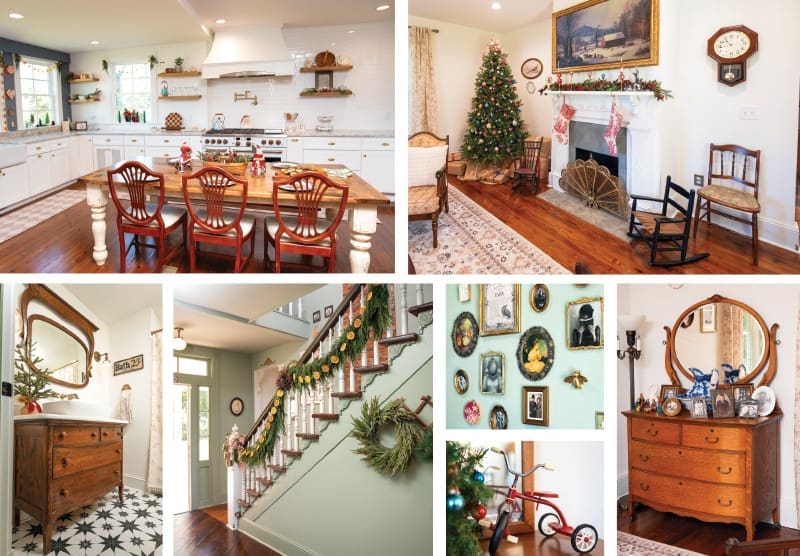
What followed was an 18-month renovation that was far more extensive than choosing paint colors and shopping for antiques. For starters, the house had no air conditioning, and the electrical system included old knob-and-tube wiring. All of the plumbing needed to be replaced, and previous designs—particularly in the kitchen—had not aged particularly well. “The kitchen was disgusting,” Lane said.
FOI Builders took on the project, and Lane credits the builder with understanding exactly what she was trying to do. “He made my dream come true,” she said. “He really did.” But her dream didn’t involve making a 137-year-old house look brand new; on the contrary, Lane remembers telling her contractor, “‘Don’t make it look perfect; I want it to look old!’” If something could be saved, Lane wanted it saved. Perfection was never really the goal anyway. “If you’ll notice, there’s not a straight wall,” she said, adding that there isn’t a level floor in the house, either.
During the renovation, the walls revealed original framing from the 1800s, some of it with bark still attached. Lane’s reaction was immediate: “When we saw it, I was like, ‘That’s so cool. Don’t touch it, anybody. Stay in there. It’s going back!’” The floors required more compromise. Later renovations had replaced sections of the original wood, and much of what remained could not be reused, but one section of old hand-sawn oak survived. “This is the only 1800s floor we could salvage, and I was like, ‘Well, we’ve got to put it back,’” she said.
Found, Saved, and Handed Down
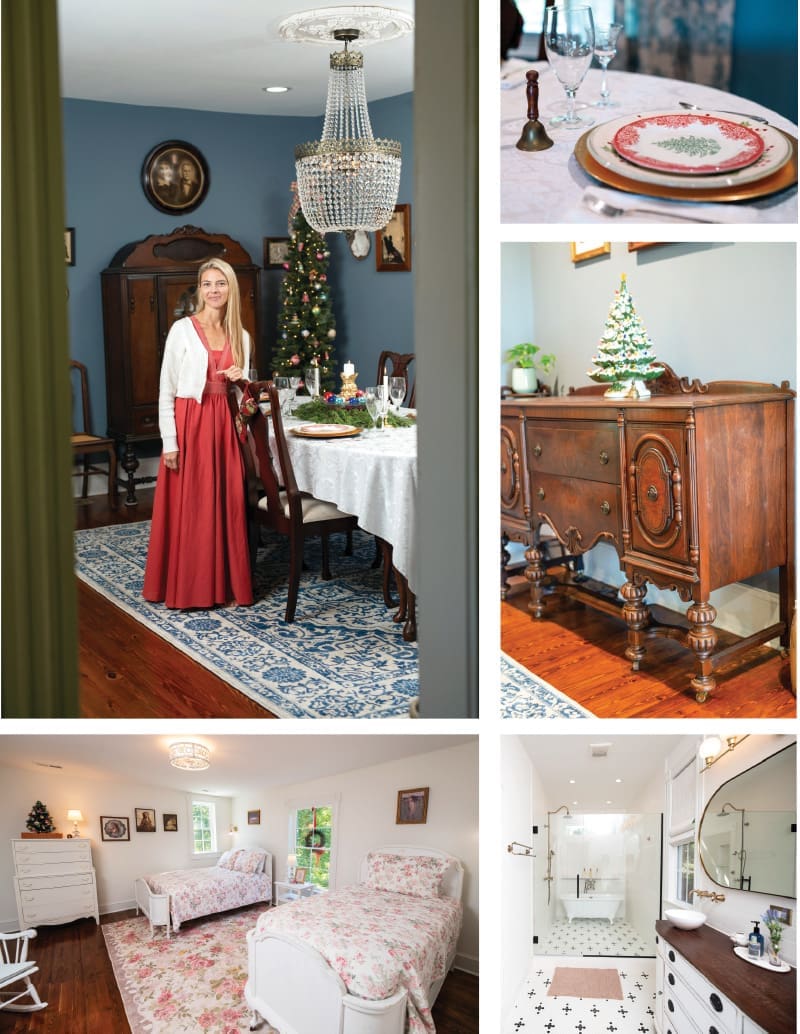
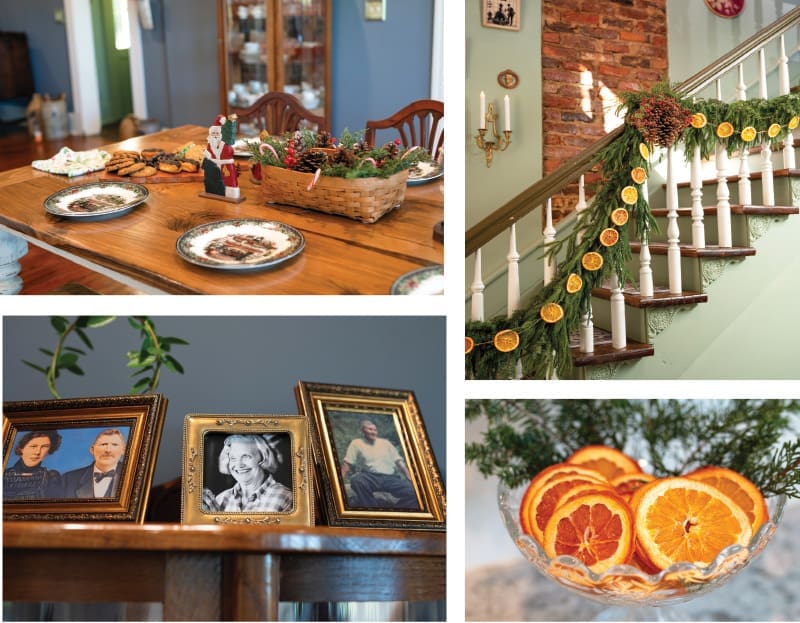
However, saving the house didn’t mean returning it to 1889. For Lane, it meant keeping as much of its history as she could while making room for her own family’s story, too. As we walked from room to room, I found myself asking the same question repeatedly: Where did you find that? Almost everything seems to come with a story, like the chair Lane discovered hiding in the basement and her grandmother’s old basin that sits in the parlor. Lane also uncovered pieces of old wallpaper from beneath the plaster and turned them into artwork; colorful glass bottles unearthed on the property now line the kitchen windowsill.
Upstairs, a wide old dresser finds new life as a bathroom vanity. “This was my parents’ first dresser when they got married,” Lane said. “So I turned it into a vanity.” And the kitchen table is one that her brother and sister made for her. Other furnishings came from antique and thrift stores, Habitat for Humanity, and Facebook Marketplace, often from people who had inherited pieces they no longer wanted.
Funnily enough, Facebook Marketplace is also how I came to sit at that kitchen table, sipping tea with the new steward of this old home. My teenage son started a small furniture-flipping side hustle a couple of years ago, and this summer I listed a little white table he had refinished. The buyer’s name looked familiar, and because I only use Facebook for Marketplace these days, I clicked over to see whether this was the same woman I had known years ago when our children were toddlers. It was, and now that little white table sits upstairs in a bedroom surrounded by floral quilts, vintage pictures, and an enormous rose-covered rug. It looked as if it had always belonged there.
Making It Her Own
That ability to mix old and new is part of what makes the house feel less like a historical reproduction and more like a home. Lane describes her style as late Victorian with more modern elements mixed in, and some of the most striking spaces are, in fact, new.
The only addition to the original footprint is a first-floor primary suite, and when I asked what determined where it would go, her answer was simple: “The view. I want to wake up to that every morning,” she said, pointing out the window to grassy fields rolling toward a creek against a Blue Ridge Mountain backdrop that seems to go on forever.
Elsewhere, the old house remains very much present. Original spindles line the staircase, and standing there, I found myself imagining the hands that must have held onto them over more than a century of mornings, bedtimes, and everyday trips up and down the stairs.
What Comes Next
Lane is still working on the land, too. Parts of the property were cut for timber, and she is working with the forestry department to replant pines and address invasive autumn olive. Looking out onto the expansive fields, she says that in her dreams, she could see it becoming a small wedding venue. “I’m picturing a little teeny-tiny church with a steeple on it.”
When I asked how this house compares with the family’s home in Forest, Lane admitted, “I actually like this house more.” The renovation was completed only this summer—and with five children ranging from elementary school through high school, the Lanes are still figuring out exactly how the property will fit into family life—yet their connection to it began long before the renovation was finished. Lane recalls coming to the property for Easter egg hunts even before the house was restored, finding colorful eggs among daffodils planted years earlier.
There are reminders of Gilbert throughout the property, but one of the simplest is in an enclosed porch. Lane pointed toward a small corner and said, “She used to sit in this little corner right here all day long.”
That’s a simple, ordinary detail of someone’s life, but after all, it’s the ordinary things that make a life: the favorite chair out on the porch, the percussion of footsteps coming down the stairs each morning, the daffodils that return in early spring, and the places where families gather.
When I toured the house, the renovation had been finished for only about a month. Lane was still deciding on curtains, moving things around, and taking care of a few little details. But she already knew what she wanted to do for the holidays. “I’m hosting Thanksgiving here this year,” she told me. Her family will be there, along with her parents, gathered inside a house that very nearly disappeared.


