

Hill City Mahj Offers Opportunities for Connection and Cognitive Wellness Benefits
By: Shannon Kelly | Photos By: Ashlee Glen
Opportunities to pursue physical wellness abound—but what about ways to potentially elevate social and cognitive wellness, two aspects of overall health that often go less recognized?

A game rising in popularity could offer just such an opportunity.
When Andrea Carothers played Mahjong for the first time, she left believing it wasn’t for her. One of her best friends introduced it to her.
“When she first taught my daughter and me the game, I honestly felt overwhelmed and didn’t like it, and so I just thought it wasn’t for me,” Carothers said. >> However, Carothers gave the game a chance, especially since other friends and family members were learning it.
That chance developed into a passion she now shares with others, growing a community around the American version of an ancient Chinese game.
“I noticed that Mahjong was gaining popularity,” Carothers said. “Not necessarily that I was aware of in Lynchburg, but just around the country.”
After 15 years as a stay-at-home mom, Carothers’ children reached an age where they needed her a little less. It was around that time she got into Mahjong, and she eventually launched Hill City Mahj.
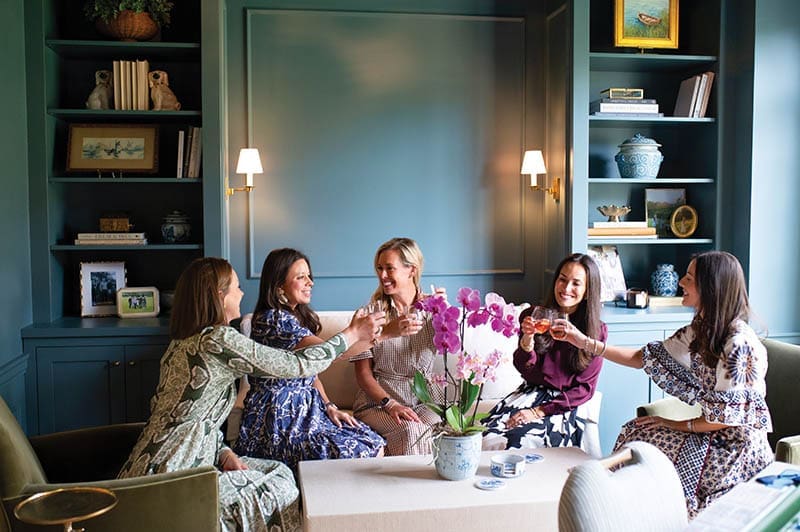
The tile-based game originated in ancient China. In the 1930s, Mahjong came to the United States and quickly gained popularity. The result was an “American version” of Mahjong, which is rather different from the original Chinese, Carothers explained, and it is American Mahjong Carothers uses at Hill City Mahj.
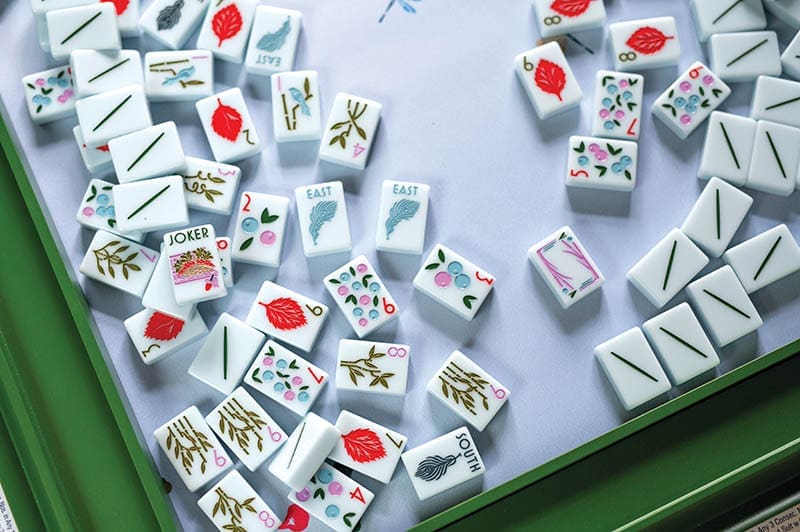
The National Mahjong League releases a new card every year, and players get roughly 70 lines.
“The goal is to be the first player who has 14 tiles that match one of the lines on the National Mahjong League card,” Carothers explained. “What keeps the game exciting and fun and interesting is, when you sit at the table, you never play the same game twice. It’s always a different game based on the hand that you’re dealt and the year of the card that you’re playing with.”
The genesis of Hill City Mahj came from Carothers’ observation that there was a lack of people in her Lynchburg community who knew how to play the game or who were interested in it. She played avidly online but wanted an in-person connection. She also wanted to bring the social opportunity to others and create a gathering space.
Talking with a friend in North Carolina helped inspire the club that grew into a business.
It started with Tuesday night Mahjong sessions in Palmera House. Nestled in among plants, artistic decor, and a varied menu of refreshments, Carothers partnered with Palmera House’s owner, Erica Kerns-Calfee, to introduce a new social opportunity. “Tile Tuesday” grew until Carothers started getting requests from other venues asking her to host Mahjong events in their spaces.
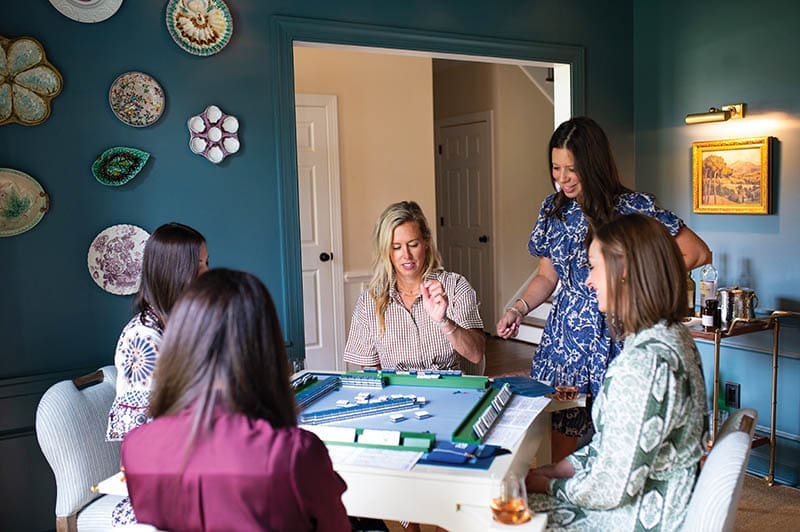
“I told her [Kerns-Calfee] what I was envisioning and what I was hoping to create through Hill City Mahj, and I think she really loved the idea,” Carothers said. “So we agreed to start hosting a Tile Tuesday every Tuesday night at Palmera House, where people who wanted to learn how to play could come, and then people who already know how to play could come sit at a table, meet someone new, have a great drink—a mocktail, a cocktail—and enjoy a social evening of community.”
Palmera House opened in January 2025 on Bedford Avenue in Lynchburg. Tile Tuesday was a fitting event for the business, Kerns-Calfee said.
“I felt like it fit,” she said. “I think because of me wanting this to be a community space…yes, we’re a café. Yes, we’re a plant shop. But how are we bringing people together for other reasons? This just felt like such a no-brainer, and we’ve seen it be very successful.”
Carothers taught Kerns-Calfee and the other staff of Palmera House how to play Mahjong so they would be equipped to help participants as needed with basic questions. The Palmera House team then started getting together to play on their own last December to hone their familiarity and skills in the game,
Kerns-Calfee said.
Mahjong is more than mere entertainment. Although she emphasized she is not a physician, researcher, or any type of expert, Carothers believes Mahjong can play a part in holistic wellness. Specifically, it may function as a social and cognitive wellness exercise.
In cognitive terms, the game requires strategy, adaptability, and pattern recognition, Carothers explained. For instance, learning to read a hand and more or less predict what is necessary to build up to a winning position—while also being able to make quick decisions in real time as circumstances change—may help condition the mind. The stronger a player’s pattern recognition and strategy skills are, Carothers added, the more successful the outcome of the game will likely be.
“With that said, I believe it’s similar to any skill. The more that you practice it, the better you become at the game, so I don’t think anyone is excluded, per se,” Carothers said.
Kerns-Calfee said the game is a fun way to challenge oneself.
“If you’ve played games in the past, I think there are a lot of connection points to other card games that kind of help make things feel…like it clicks a little bit faster, but the card is overwhelming,” she said. “The game itself, you sort of understand the rhythm, but until you truly understand the meaning of the card, it is very difficult to connect the dots at the beginning. Now, this many people wouldn’t be playing if it was an alienating game, so obviously, you figure it out. I do think that’s part of the draw, is, you feel challenged every single time. You have different tiles every time; you’re having to think differently about it; you’re leaning into a part of the card that you’ve never worked in before, so you constantly leave the end of the night going, ‘OK, I feel like I really challenged my brain today.’”
Beyond potential cognitive benefits, Carothers said the social wellness aspect of Mahjong cannot be overstated. The game brings people together.
Mahjong lends itself well to socializing, Carothers said.
While strategy and attention are certainly part of gameplay, it is not so heavy on intensive focus that the social aspect is lost. Players can laugh and chat with each other as they go.
“This game is not as difficult as bridge, for example, where you’re required to be entirely focused, and so there’s very little socializing during a game of bridge because everybody’s concentrating really hard on the game,” Carothers said. “Mahjong, it’s a challenge, but there’s still room for socializing and chatting, and the game can be as competitive or as social as you want it to be.”
Some of the regular players have started getting together as a small group outside of Tuesday nights at Palmera House, Carothers said.
“Once people learn, they do set up weekly nights or weekly mornings where they get together, and it’s on your calendar.
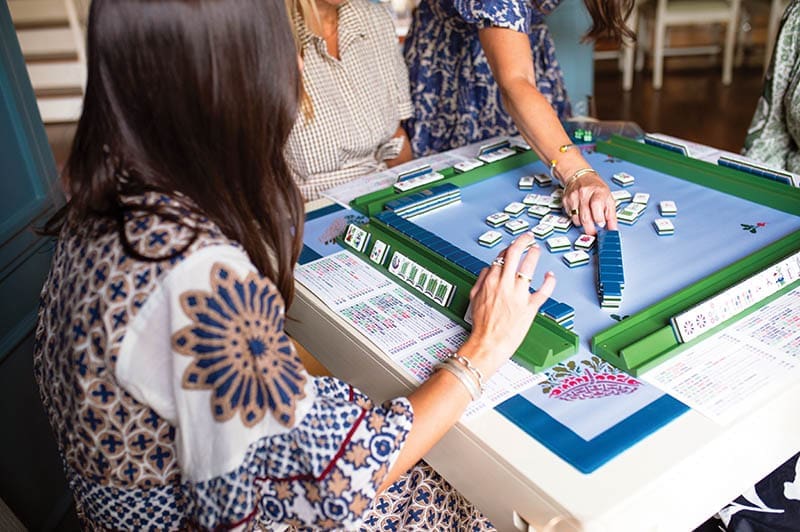
It’s something that you get to look forward to every week; it’s an excuse to get out of your house, to go do something, to meet with other people in person, to put away your phone, and then engage your mind,” she said.
Mahjong encourages people to get off their phones, stop doomscrolling, and engage on a deeply human level with others—something that feels lacking in a modern, chronically online world.
“We’re more connected than ever through social media, but it’s superficial,” Carothers said. “Mahjong allows you to sit at a table, be present, put away your phone, and casually talk to someone. What I love to see is people truly developing authentic community and becoming known by another person—not just scrolling on Instagram and seeing what someone’s doing, but actually knowing someone, and being known by someone.”
Mahjong is also a game for all ages, Carothers said. From children to seniors, it is accessible to anyone who wants to learn.
“What I love about this game is that it’s multigenerational.
It really does appeal to all ages, and when I’m at the beach, I’ll play with my mom and my sister, and my daughter will join us,” she said.
Carothers’ 14-year-old daughter has started teaching Mahjong to area children on Saturdays, a session she calls the “Tiny Tile” club.
Carothers groups players primarily based on skill level to help everyone be well-matched and get the most out of each game.
She and Kerns-Calfee both emphasized that this space is designed to be laid back and enjoyable, not seriously competitive and stressful for others. Generally, everyone is learning together.
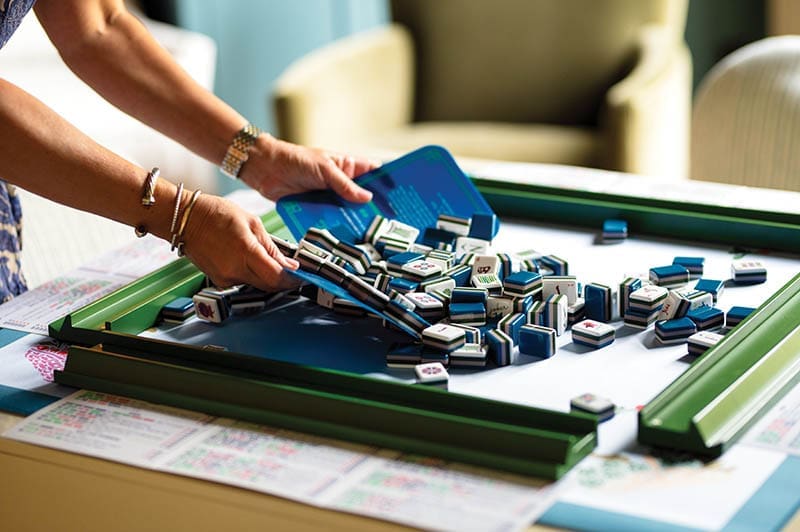
“It’s not that we don’t take it seriously, but it’s about having a good time,” Kerns-Calfee said.
Hill City Mahj has grown steadily over the past few years since its founding. An increasing number of calls from venues and event organizers request Carothers to host Mahjong sessions. She also offers private lessons in people’s homes.
This fall, Carothers opened up another offering: private Mahjong lessons in a home studio.
Carothers transformed an unused family room into a color-drenched, intimate, relaxing Mahjong room where she will offer private lessons to anyone who wants them. Walls swathed in a deep blue-green beneath a coffered ceiling surround an artistic Mahjong table and built-in bookcases. A beverage cart is available to offer coffee, tea, wine, or whatever students fancy.
The design goal was to create “a space that people are excited [about] and look forward to gathering in, and where they feel like they can relax, and connect, and enjoy time with others,” Carothers said.
In all her branding, Carothers pays homage to the game’s roots.
“My logo is a ginger jar, and it was to pay tribute to the Chinese roots of the game, because it did originate in China,” she said.
The ginger jar has three flowers on it, representing Carothers’ philosophy of “Gather; Play; Connect.”
The tiles also honor Chinese Mahjong by paying tribute to the original Chinese characters.
Carothers offers tiered pricing for various Mahjong services: Beginners can get a two-hour Mahjong 101 lesson for $50 per person. The session includes instruction and walking through an open gameplay, and all materials are provided. Mahjong 102, also called “guided play,” is the next tier at $35 per person.
Finally there is Open Play, which costs $15 per person.
For more information about Hill City Mahj, visit hillcitymahj.co or follow its Instagram page, @hillcitymahj.


